

The DOI matches its Crossref record; 189 of the 190 references it cites were found in a registry or an index.
Impending extinction crisis of the world’s primates: Why primates matter
Open accessAbstract
Impending extinction of the world’s primates due to human activities; immediate global attention is needed to reverse the trend.
Overview
The claims and statistics of this paper haven’t been checked yet.
Run the check — free, no account needed. It reads the open-access text and checks the sources it cites.
Integrity signals
Registry
Cites
Statistics
Figures
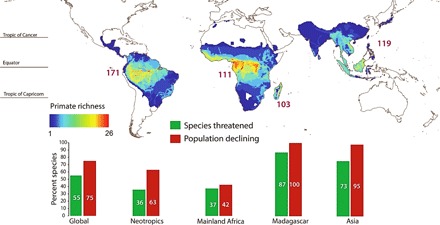
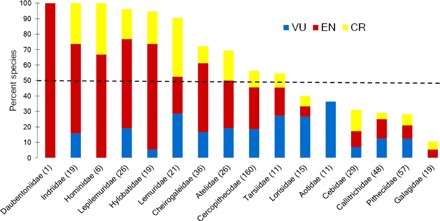
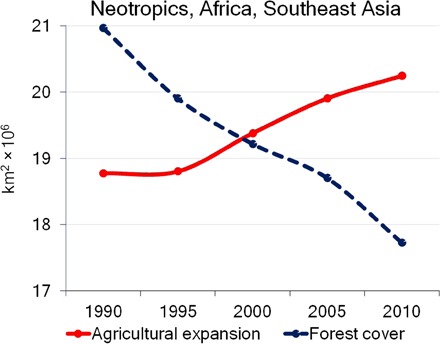
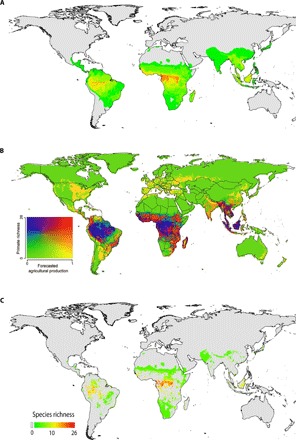
Verification
Claims the paper makes
The claims and statistics of this paper haven’t been checked yet.
Run the check — free, no account needed. It reads the open-access text and checks the sources it cites.
Claims other papers make about this one
Each is checked against this paper’s own text: does it say what the citing paper says it does?
The cited source says what the claim attributes to it.
In the citing paper
“Many species that are large, slowgrowing,habitat specialist, or carnivorous -such as large cats ( 35 ), large sharks ( 36 ), primates ( 37 ), reef-building corals ( 38 ), and woody plants ( 39 ) -are declining rapidly in, and being lost from, many places.”
From Pervasive human-driven decline of life on Earth points to the need for transformative change (2019) · cites this paper as [37]
Self-check
Percentages, sums and reported differences re-computed from the paper’s own numbers.
The self-check needs the paper’s full text.
Citations
Cites
High-Resolution Global Maps of 21st-Century Forest Cover Change
Hansen, M. C., Potapov, P. V., Moore, R., Hancher, M., Turubanova, S. A., Tyukavina, A., Thau, D., Stehman, S. V., Goetz, S. J., Loveland, T. R., et al. (2013) · Science · doi:10.1126/science.1244693 · Cited by 11,704
Mammal Species of the World: A Taxonomic and Geographic Reference
Schmid, R., Wilson, D. E., & Reeder, D. M. (1993) · Taxon · doi:10.2307/1223169 · Cited by 5,384
Habitat fragmentation and its lasting impact on Earth’s ecosystems
Haddad, N. M., Brudvig, L. A., Clobert, J., Davies, K. F., Gonzalez, A., Holt, R. D., Lovejoy, T. E., Sexton, J. O., Austin, M. P., Collins, C. D., et al. (2015) · Science Advances · doi:10.1126/sciadv.1500052 · Cited by 4,773
Global land use change, economic globalization, and the looming land scarcity
Lambin, E. F., & Meyfroidt, P. (2011) · Proceedings of the National Academy of Sciences · doi:10.1073/pnas.1100480108 · Cited by 3,160
Global change and species interactions in terrestrial ecosystems
Tylianakis, J. M., Didham, R. K., Bascompte, J., & Wardle, D. A. (2008) · Ecology Letters · doi:10.1111/j.1461-0248.2008.01250.x · Cited by 2,526
Livestock production: recent trends, future prospects
Thornton, P. K. (2010) · Philosophical Transactions of the Royal Society B Biological Sciences · doi:10.1098/rstb.2010.0134 · Cited by 2,217
Wilson, D. E. (2005) · Johns Hopkins University Press eBooks · doi:10.56021/9780801882210 · Cited by 1,880
Climate Change, Deforestation, and the Fate of the Amazon
Malhi, Y. S., Roberts, J. T., Betts, R., Killeen, T. J., Li, W., & Nobre, C. A. (2007) · Science · doi:10.1126/science.1146961 · Cited by 1,788
Balancing hydropower and biodiversity in the Amazon, Congo, and Mekong
Winemiller, K. O., McIntyre, P. B., Castello, L., Fluet-Chouinard, E., Giarrizzo, T., Nam, S., Baird, I. G., Darwall, W., Lujan, N. K., Harrison, I., et al. (2016) · Science · doi:10.1126/science.aac7082 · Cited by 1,569
Agricultural expansion and its impacts on tropical nature
Laurance, W. F., Sayer, J., & Cassman, K. G. (2014) · Trends in Ecology & Evolution · doi:10.1016/j.tree.2013.12.001 · Cited by 1,522
Research works printed but not linked: 14
- C. Campbell A. Fuentes K. MacKinnon S. Bearder R. Stumpf Eds. Primates in Perspective (Oxford Univ. Press ed. 2 2010).
- A. Lanjouw H. Rainer A. White Apes overview in State of the Apes: Industrial Agriculture and Ape Conservation H. Rainer A. White A. Lanjouw Eds. (Arcus/Cambridge Univ. Press 2015) pp. 164–192.
- A. Lanjouw in State of the Apes: Extractive Industries and Ape Conservation H Rainer A. White A. Lanjouw Eds. (Arcus/Cambridge Univ. Press 2014) pp. 127–161.
- B. Mercer Tropical Forests: A Review (The Prince’s Charities’ International Sustainability Unit 2015).
- E. Efiom thesis Consequences of bushmeat hunting in tropical forests Lund University (2013).
- Millennium Ecosystem Assessment Ecosystems and Human Well-Being: Synthesis (Island Press 2005).
- W. Liu, C. Huang, C. Roos, Q. Zhou, Y. Li, F. Wei, Identification of the species, origin and sex of smuggled douc langur (Pygathrix sp.) remains. Vietnamese J. Primatol. 1–2, 63–69 (2008).
- M. L. Gore, J. Ratsimbazafy, A. Rajaonson, A. Lewis, J. S. Kahler, Public perceptions of poaching risks in a biodiversity hotspot: Implications for wildlife trafficking interventions. J. Trafficking Organ. Crime Secur. 2, 1–20 (2016).
- C. P. Groves Primate Taxonomy (Smithsonian Institution Press 2001).
- C. P. Groves Order Primates in Mammal Species of the World: A Taxonomic and Geographic Reference D. E. Wilson D. M. Reeder Eds. (Johns Hopkins Univ. Press ed. 3 2005) pp. 111–184.
- A. Casson Oil Palm Soybeans and Critical Habitat Loss: A Review (WWF Forest Conversion Initiative 2003).
- J. M. Linder, African primate diversity threatened by “new wave” of industrial oil palm expansion. Afr. Primates 8, 25–38 (2013).
- I. Koné, K. Ouattara, A. D. Koffi, A top priority site for primate conservation in Côte d’Ivoire soon designated as a protected area? Afr. Primates 10, 59–60 (2015).
- K. Kakaes F. Greenword M. Lippincott S. Dosemagen P. Meier S. A. Wich Drones and Aerial Observation: New Technologies for Property Rights Human Rights and Global Development: A Primer (New America 2015); http://drones.newamerica.org/primer/DronesAndAerialObservation.pdf
Cited by
Sorted by citations
Emerging threats and persistent conservation challenges for freshwater biodiversity
Reid, A. J., Carlson, A. K., Creed, I. F., Eliason, E. J., Gell, P. A., Johnson, P. T. J., Kidd, K. A., MacCormack, T. J., Olden, J. D., Ormerod, S. J., et al. (2019) · Biological Reviews · doi:10.1111/brv.12480 · Cited by 3,645
Pervasive human-driven decline of life on Earth points to the need for transformative change
Díaz, S., Settele, J., Brondízio, E. S., Ngo, H. T., Agard, J., Arneth, A., Balvanera, P., Brauman, K. A., Butchart, S. H. M., Chan, K. M. A., et al. (2019) · Science · doi:10.1126/science.aax3100 · Cited by 2,926
Population Responses to Patchy Environments
Wiens, J. A. (1976) · Annual Review of Ecology and Systematics · doi:10.1146/annurev.es.07.110176.000501 · Cited by 1,073
The interaction of human population, food production, and biodiversity protection
Crist, E., Mora, C., & Engelman, R. (2017) · Science · doi:10.1126/science.aal2011 · Cited by 733
Damas, J., Hughes, G. M., Keough, K. C., Painter, C. A., Persky, N. S., Corbo, M., Hiller, M., Koepfli, K.-P., Pfenning, A. R., Zhao, H., et al. (2020) · Proceedings of the National Academy of Sciences · doi:10.1073/pnas.2010146117 · Cited by 633
Predicting the clinical impact of human mutation with deep neural networks
Sundaram, L., Gao, H., Padigepati, S. R., McRae, J. F., Li, Y., Kosmicki, J. A., Fritzilas, N., Hakenberg, J., Dutta, A., Shon, J. C., et al. (2018) · Nature Genetics · doi:10.1038/s41588-018-0167-z · Cited by 505
The Effects of Captivity on the Mammalian Gut Microbiome
McKenzie, V. J., Song, S. J., Delsuc, F., Prest, T. L., Oliverio, A., Korpita, T. M., Alexiev, A., Amato, K. R., Metcalf, J. L., Kowalewski, M. M., et al. (2017) · Integrative and Comparative Biology · doi:10.1093/icb/icx090 · Cited by 471
Self-citationThe functional roles of mammals in ecosystems
Lacher, T. E., Davidson, A. D., Fleming, T. H., Gómez‐Ruiz, E., McCracken, G. F., Owen‐Smith, N., Peres, C. A., & Wall, S. B. V. (2019) · Journal of Mammalogy · doi:10.1093/jmammal/gyy183 · Cited by 381
Global change biology: A primer
Sage, R. F. (2019) · Global Change Biology · doi:10.1111/gcb.14893 · Cited by 380
Genomic and epidemiological monitoring of yellow fever virus transmission potential
Faria, N. R., Kraemer, M. U. G., Hill, S. C., de Jesus, J. G., Aguiar, R. S., Iani, F. C. D. M., Xavier, J., Quick, J., du Plessis, L., Dellicour, S., et al. (2018) · Science · doi:10.1126/science.aat7115 · Cited by 359
Capitalismo e colapso ambiental
Marques, L. (2018) · Editora da Unicamp eBooks · doi:10.7476/9788526815032 · Cited by 314
The microbiome in threatened species conservation
West, A. G., Waite, D. W., Deines, P., Bourne, D. G., Digby, A., McKenzie, V. J., & Taylor, M. W. (2018) · Biological Conservation · doi:10.1016/j.biocon.2018.11.016 · Cited by 324
Proud, R., Handegard, N. O., Kloser, R. J., Cox, M. J., & Brierley, A. S. (2018) · ICES Journal of Marine Science · doi:10.1093/icesjms/fsy037 · Cited by 228
The conservation value of human-modified landscapes for the world’s primates
Galán‐Acedo, C., Arroyo‐Rodríguez, V., Andresen, E., Arregoitia, L. D. V., Vega, E., Peres, C. A., & Ewers, R. M. (2019) · Nature Communications · doi:10.1038/s41467-018-08139-0 · Cited by 215
Self-citationKnowing What It Makes: How Product Transformation Salience Increases Recycling
Winterich, K. P., Nenkov, G. Y., & Gonzales, G. E. (2019) · Journal of Marketing · doi:10.1177/0022242919842167 · Cited by 209
Estrada, A., Garber, P. A., Mittermeier, R. A., Wich, S. A., Gouveia, S. F., Dobrovolski, R., Nekaris, K. A. I., Nijman, V., Rylands, A. B., Maisels, F. G., et al. (2018) · PeerJ · doi:10.7717/peerj.4869 · Cited by 220
Self-citationA global catalog of whole-genome diversity from 233 primate species
Kuderna, L. F. K., Gao, H., Janiak, M. C., Kuhlwilm, M., Orkin, J. D., Bataillon, T. M., Manu, S., Valenzuela, A., Bergman, J., Rousselle, M. M. C., et al. (2023) · Science · doi:10.1126/science.abn7829 · Cited by 222
Self-citationThe landscape of tolerated genetic variation in humans and primates
(2023) · doi:10.1126/science.abn8197 · Cited by 182
Self-citationComparative ACE2 variation and primate COVID-19 risk
Melin, A. D., Janiak, M. C., Marrone, F., Arora, P. S., & Higham, J. P. (2020) · Communications Biology · doi:10.1038/s42003-020-01370-w · Cited by 185
McLennan, M. R., Spagnoletti, N., & Hockings, K. J. (2017) · International Journal of Primatology · doi:10.1007/s10764-017-9962-0 · Cited by 174
Estrada, A., Garber, P. A., Gouveia, S. F., Fernández‐Llamazares, Á., Ascensão, F., Fuentes, A., Garnett, S. T., Shaffer, C. A., Bicca‐Marques, J. C., Fa, J. E., et al. (2022) · Science Advances · doi:10.1126/sciadv.abn2927 · Cited by 184
Self-citationPhylogenomic analyses provide insights into primate evolution
Shao, Y., Zhou, L., Li, F., Zhao, L., Zhang, B.-L., Shao, F., Chen, J., Chen, C., Bi, X., Zhuang, X.-L., et al. (2023) · Science · doi:10.1126/science.abn6919 · Cited by 185
Self-citationDevaux, C. A., Mediannikov, O., Medkour, H., & Raoult, D. (2019) · Frontiers in Public Health · doi:10.3389/fpubh.2019.00305 · Cited by 163
Global distribution and conservation status of ecologically rare mammal and bird species
Loiseau, N., Mouquet, N., Casajus, N., Grenié, M., Guéguen, M., Maitner, B., Mouillot, D., Ostling, A., Renaud, J., Tucker, C. M., et al. (2020) · Nature Communications · doi:10.1038/s41467-020-18779-w · Cited by 158
Economics for the future – Beyond the superorganism
Hagens, N. J. (2019) · Ecological Economics · doi:10.1016/j.ecolecon.2019.106520 · Cited by 144
Cafaro, P., Hansson, P., & Götmark, F. (2022) · Biological Conservation · doi:10.1016/j.biocon.2022.109646 · Cited by 152
Bogoni, J. A., Peres, C. A., & Ferraz, K. M. P. M. D. B. (2020) · Scientific Reports · doi:10.1038/s41598-020-72010-w · Cited by 140
Primate responses to anthropogenic habitat disturbance: A pantropical meta-analysis
de Almeida‐Rocha, J. M., Peres, C. A., & Oliveira, L. D. C. (2017) · Biological Conservation · doi:10.1016/j.biocon.2017.08.018 · Cited by 138
Major perturbations in the Earth's forest ecosystems. Possible implications for global warming
Prăvălie, R. (2018) · Earth-Science Reviews · doi:10.1016/j.earscirev.2018.06.010 · Cited by 137
Pathogen Transmission from Humans to Great Apes is a Growing Threat to Primate Conservation
Dunay, E., Apakupakul, K., Leard, S., Palmer, J. L., & Deem, S. L. (2018) · EcoHealth · doi:10.1007/s10393-017-1306-1 · Cited by 136
Global assessment of primate vulnerability to extreme climatic events
Zhang, L., Ameca, E. I., Cowlishaw, G., Pettorelli, N., Foden, W., & Mace, G. M. (2019) · Nature Climate Change · doi:10.1038/s41558-019-0508-7 · Cited by 129
Ganivet, E. (2019) · Environment Development and Sustainability · doi:10.1007/s10668-019-00446-w · Cited by 141
Go, V., Bowley, B. G. E., Pessina, M. A., Zhang, Z. G., Chopp, M., Finklestein, S. P., Rosene, D. L., Medalla, M., Buller, B., & Moore, T. L. (2019) · GeroScience · doi:10.1007/s11357-019-00115-w · Cited by 114
Human-mediated impacts on biodiversity and the consequences for zoonotic disease spillover
Glidden, C. K., Nova, N., Kain, M. P., Lagerstrom, K. M., Skinner, E. B., Mandle, L., Sokolow, S. H., Plowright, R. K., Dirzo, R., Leo, G. A. D., et al. (2021) · Current Biology · doi:10.1016/j.cub.2021.08.070 · Cited by 123
Godet, L., & Devictor, V. (2018) · Trends in Ecology & Evolution · doi:10.1016/j.tree.2018.07.004 · Cited by 129
A Severe Lack of Evidence Limits Effective Conservation of the World's Primates
Junker, J., Petrovan, S. O., Arroyo‐Rodríguez, V., Boonratana, R., Byler, D., Chapman, C. A., Chetry, D., Cheyne, S. M., Cornejo, F. M., Cortés‐Ortiz, L., et al. (2020) · BioScience · doi:10.1093/biosci/biaa082 · Cited by 108
Self-citationGreen Criminology and Environmental Crimes and Harms
Brisman, A., & South, N. (2018) · Sociology Compass · doi:10.1111/soc4.12650 · Cited by 107
Estrada, A., Garber, P. A., & Chaudhary, A. (2020) · PeerJ · doi:10.7717/peerj.9816 · Cited by 109
Self-citationPalma, A. D., Sánchez-Ortiz, K., Martin, P. A., Chadwick, A. J., Gilbert, G., Bates, A. E., Börger, L., Contu, S., Hill, S. L. L., & Purvis, A. (2018) · Advances in ecological research/Advances in Ecological Research · doi:10.1016/bs.aecr.2017.12.004 · Cited by 113
A global assessment of primate responses to landscape structure
Galán‐Acedo, C., Arroyo‐Rodríguez, V., Cudney‐Valenzuela, S., & Fahrig, L. (2019) · Biological reviews/Biological reviews of the Cambridge Philosophical Society · doi:10.1111/brv.12517 · Cited by 108
A role for gut microbiota in host niche differentiation
Greene, L. K., Williams, C. V., Junge, R. E., Mahefarisoa, K. L., Rajaonarivelo, T., Rakotondrainibe, H., O’Connell, T. M., & Drea, C. M. (2020) · The ISME Journal · doi:10.1038/s41396-020-0640-4 · Cited by 99
Face Recognition: Primates in the Wild
Deb, D., Wiper, S., Gong, S., Shi, Y., Tymoszek, C., Fletcher, A., & Jain, A. K. (2018) · IEEE International Conference on Biometrics: Theory, Applications and Systems (BTAS) · doi:10.1109/btas.2018.8698538 · Cited by 96
Bidding evidence for primate vocal learning and the cultural substrates for speech evolution
Lameira, A. R. (2017) · Neuroscience & Biobehavioral Reviews · doi:10.1016/j.neubiorev.2017.09.021 · Cited by 94
Ecological traits of the world’s primates
Galán‐Acedo, C., Arroyo‐Rodríguez, V., Andresen, E., & Arasa‐Gisbert, R. (2019) · Scientific Data · doi:10.1038/s41597-019-0059-9 · Cited by 93
A global ecological signal of extinction risk in terrestrial vertebrates
Munstermann, M. J., Heim, N. A., McCauley, D. J., Payne, J. L., Upham, N. S., Wang, S. C., & Knope, M. L. (2021) · Conservation Biology · doi:10.1111/cobi.13852 · Cited by 99
Deforestation on the Indonesian island of Sulawesi and the loss of primate habitat
Supriatna, J., Shekelle, M., Fuad, H. A. H., Winarni, N. L., Dwiyahreni, A. A., Farid, M. N., Mariati, S., Margules, C. R., Prakoso, B., & Zakaria, Z. (2020) · Global Ecology and Conservation · doi:10.1016/j.gecco.2020.e01205 · Cited by 92
Hayakawa, T., Nathan, S. K. S. S., Stark, D. J., Saldivar, D. A. R., Sipangkui, R., Goossens, B., Tuuga, A., Clauß, M., Sawada, A., Fukuda, S., et al. (2018) · Environmental Microbiology Reports · doi:10.1111/1758-2229.12677 · Cited by 91
The what and where of primate field research may be failing primate conservation
Bezanson, M., & McNamara, A. (2019) · Evolutionary Anthropology Issues News and Reviews · doi:10.1002/evan.21790 · Cited by 91
Howler monkey tolerance to habitat shrinking: Lifetime warranty or death sentence?
Bicca‐Marques, J. C., Chaves, Ó. M., & Hass, G. P. (2020) · American Journal of Primatology · doi:10.1002/ajp.23089 · Cited by 90
Projected Global Loss of Mammal Habitat Due to Land-Use and Climate Change
Baisero, D., Visconti, P., Pacifici, M., Cimatti, M., & Rondinini, C. (2020) · One Earth · doi:10.1016/j.oneear.2020.05.015 · Cited by 93
Oil palm monoculture induces drastic erosion of an Amazonian forest mammal fauna
de Oliveira, A. C. M., Peres, C. A., Almeida-Maués, P., de Oliveira, G. L., Mineiro, I. G. B., de Maria, S. L. S., & de Lima, R. (2017) · PLoS ONE · doi:10.1371/journal.pone.0187650 · Cited by 91
Nekaris, K. A. I., Poindexter, S. A., Reinhardt, K. D., Sigaud, M., Cabana, F., Wirdateti, W., & Nijman, V. (2017) · International Journal of Primatology · doi:10.1007/s10764-017-9960-2 · Cited by 87
Self-citationHaslam, M., Hernandez-Aguilar, R. A., Proffitt, T., Arroyo, A., Falótico, T., Fragaszy, D. M., Gumert, M. D., Harris, J. W. K., Huffman, M. A., Kalan, A. K., et al. (2017) · Nature Ecology & Evolution · doi:10.1038/s41559-017-0286-4 · Cited by 90
The primate extinction crisis in China: immediate challenges and a way forward
Li, B., Li, M., Li, J., Fan, P., Ni, Q., Lu, J., Zhou, X., Long, Y., Jiang, Z., Zhang, P., et al. (2018) · Biodiversity and Conservation · doi:10.1007/s10531-018-1614-y · Cited by 86
Self-citationToussaint, A., Brosse, S., Bueno, C. G., Pärtel, M., Tamme, R., & Carmona, C. P. (2021) · Nature Communications · doi:10.1038/s41467-021-25293-0 · Cited by 88
Fernández, D., Kerhoas, D., Dempsey, A., Billany, J., McCabe, G. M., & Argirova, E. (2021) · International Journal of Primatology · doi:10.1007/s10764-021-00242-2 · Cited by 80
Primate Seed Dispersal: Old and New Challenges
Andresen, E., Arroyo‐Rodríguez, V., & Robles, M. I. R. (2018) · International Journal of Primatology · doi:10.1007/s10764-018-0024-z · Cited by 79
Sales, L. P., Ribeiro, B. R., Pires, M. M., Chapman, C. A., & Loyola, R. A. (2019) · Ecography · doi:10.1111/ecog.04499 · Cited by 79
Zhang, H., Wang, C., Turvey, S. T., Sun, Z., Tan, Z., Qi, Y., Long, W., Wu, X., & Yang, D. (2020) · Global Ecology and Conservation · doi:10.1016/j.gecco.2020.e01101 · Cited by 79
A global risk assessment of primates under climate and land use/cover scenarios
Carvalho, J. S., Graham, B. P., Rebelo, H., Bocksberger, G., Meyer, C. F. J., Wich, S. A., & Kühl, H. S. (2019) · Global Change Biology · doi:10.1111/gcb.14671 · Cited by 77
Self-citationCampos, F. A., Morris, W. F., Alberts, S. C., Jeanne Altmann, A., Brockman, D. K., Cords, M., Pusey, A. E., Stoinski, T. S., Strier, K. B., & Fedigan, L. M. (2017) · Global Change Biology · doi:10.1111/gcb.13754 · Cited by 82
Animals as potential reservoirs for dengue transmission: A systematic review
Gwee, S. X. W., John, A. L. S., Gray, G. C., & Pang, J. (2021) · One Health · doi:10.1016/j.onehlt.2021.100216 · Cited by 76
SDG 15: Life on Land – The Central Role of Forests in Sustainable Development
Sayer, J. A., Sheil, D., Galloway, G. E., Riggs, R. A., Mewett, G., MacDicken, K. G., Arts, B. J. M., Boedhihartono, A. K., Langston, J. D., & Edwards, D. P. (2019) · Cambridge University Press eBooks · doi:10.1017/9781108765015.017 · Cited by 79
Parasites of Neotropical Primates: A Review
Solórzano‐García, B., & de León, G. P. (2018) · International Journal of Primatology · doi:10.1007/s10764-018-0031-0 · Cited by 73
Nanglu, K., de Carle, D., Cullen, T. M., Anderson, E. B., Arif, S., Castañeda, R. A., Chang, L. M., Iwama, R. E., Fellin, E., Manglicmot, C., et al. (2023) · Ecology and Evolution · doi:10.1002/ece3.10621 · Cited by 76
dos Santos, A. R., Araújo, E. F., Barros, Q. S., Fernandes, M. M., Fernandes, M. R. D. M., Moreira, T. R., de Souza, K. B., da Silva, E. F., Silva, J. P. M., Santos, J. S., et al. (2020) · Ecological Indicators · doi:10.1016/j.ecolind.2020.106423 · Cited by 70
Primate conservation: Lessons learned in the last 20 years can guide future efforts
Chapman, C. A., & Peres, C. A. (2021) · Evolutionary Anthropology Issues News and Reviews · doi:10.1002/evan.21920 · Cited by 70
Wiltshire, C., Lewis‐Cheetham, J., Komeda, V., Matsuzawa, T., Graham, K. E., & Hobaiter, C. (2023) · Journal of Animal Ecology · doi:10.1111/1365-2656.13932 · Cited by 69
Breaking Through Disciplinary Barriers: Human–Wildlife Interactions and Multispecies Ethnography
Parathian, H. E., McLennan, M. R., Hill, C. M., Frazão-Moreira, A., & Hockings, K. J. (2018) · International Journal of Primatology · doi:10.1007/s10764-018-0027-9 · Cited by 62
Estimating encounter location distributions from animal tracking data
Noonan, M. J., Martínez‐García, R., Davis, G. H., Crofoot, M. C., Kays, R., Hirsch, B. T., Caillaud, D., Payne, E., Sih, A., Sinn, D. L., et al. (2021) · Methods in Ecology and Evolution · doi:10.1111/2041-210x.13597 · Cited by 66
Liu, Z., Zhang, L., Yan, Z.-Z., Ren, Z., Han, F., Tan, X., Xiang, Z., Dong, F., Yang, Z., Liu, G., et al. (2019) · Molecular Biology and Evolution · doi:10.1093/molbev/msz301 · Cited by 68
Self-citationRuppert, N., Holzner, A., See, K. W., Gisbrecht, A., & Beck, A. (2018) · International Journal of Primatology · doi:10.1007/s10764-018-0032-z · Cited by 65
Lappan, S., Malaivijitnond, S., Radhakrishna, S., Riley, E. P., & Ruppert, N. (2020) · American Journal of Primatology · doi:10.1002/ajp.23176 · Cited by 65
Barelli, C., Albanese, D., Stumpf, R. M., Asangba, A. E., Donati, C., Rovero, F., & Hauffe, H. C. (2020) · mSystems · doi:10.1128/msystems.00061-20 · Cited by 67
Self-citationNutrient‐specific compensation for seasonal cold stress in a free‐ranging temperate colobine monkey
Guo, S., Hou, R., Garber, P. A., Raubenheimer, D., Righini, N., Ji, W., Jay, O., He, S., Wu, F., Li, F., et al. (2018) · Functional Ecology · doi:10.1111/1365-2435.13134 · Cited by 63
Self-citationThe disappearing Dry Chaco, one of the last dry forest systems on earth
de la Sancha, N. U., Boyle, S. A., McIntyre, N. E., Brooks, D. M., Yanosky, A. A., Soto, E. C., Mereles, F., Camino, M., & Stevens, R. D. (2021) · Landscape Ecology · doi:10.1007/s10980-021-01291-x · Cited by 62
Self-citationPoelstra, J. W., Salmona, J., Tiley, G. P., Schüßler, D., Blanco, M. B., Andriambeloson, J., Bouchez, O., Campbell, C. R., Etter, P. D., Hohenlohe, P. A., et al. (2020) · Systematic Biology · doi:10.1093/sysbio/syaa053 · Cited by 63
Multiple dimensions of climate change on the distribution of Amazon primates
Sales, L. P., Ribeiro, B. R., Chapman, C. A., & Loyola, R. A. (2020) · Perspectives in Ecology and Conservation · doi:10.1016/j.pecon.2020.03.001 · Cited by 62
Moraes, A. M., Ruiz-Miranda, C. R., Galetti, P. M., Niebuhr, B. B., Alexandre, B. R., Muylaert, R. L., Grativol, A. D., Ribeiro, J. W., Ferreira, A. N., & Ribeiro, M. C. (2018) · Biological Conservation · doi:10.1016/j.biocon.2018.05.023 · Cited by 63
Drivers of the spatial scale that best predict primate responses to landscape structure
Galán‐Acedo, C., Arroyo‐Rodríguez, V., Estrada, A., & Ramos‐Fernández, G. (2018) · Ecography · doi:10.1111/ecog.03632 · Cited by 60
Self-citationPredicting Yellow Fever Through Species Distribution Modeling of Virus, Vector, and Monkeys
de Almeida, M. A. B., dos Santos, E., Cardoso, J. D. C., da Silva, L. G., Rabelo, R. M., & Bicca‐Marques, J. C. (2018) · EcoHealth · doi:10.1007/s10393-018-1388-4 · Cited by 60
Characterisation of the gut microbial community of rhesus macaques in high-altitude environments
Wu, Y., Yao, Y., Dong, M., Xia, T., Li, D., Xie, M., Wu, J., Wen, A., Wang, Q., Zhu, G., et al. (2020) · BMC Microbiology · doi:10.1186/s12866-020-01747-1 · Cited by 60
Orkin, J. D., Montague, M. J., Tejada-Martínez, D., de Manuel, M., del Campo, J., Hernández, S. C., Fiore, A. D., Fontsere, C., Hodgson, J. A., Janiak, M. C., et al. (2021) · Proceedings of the National Academy of Sciences · doi:10.1073/pnas.2010632118 · Cited by 59
A National-Level Assessment of Lemur Hunting Pressure in Madagascar
Borgerson, C., Johnson, S. E., Underwood, E. L., Brown, K. A., Narváez‐Torres, P. R., Rasolofoniaina, B. J. R., Razafindrapaoly, B. N., Merson, S. D., Thompson, K. E. T., Holmes, S. M., et al. (2021) · International Journal of Primatology · doi:10.1007/s10764-021-00215-5 · Cited by 59
Noninvasive Technologies for Primate Conservation in the 21st Century
Piel, A., Crunchant, A., Knot, I. E., Chalmers, C., Fergus, P., Mulero-Pázmány, M., & Wich, S. (2021) · International journal of primatology · doi:10.1007/s10764-021-00245-z · Cited by 5
Self-citationModelling human influences on biodiversity at a global scale–A human ecology perspective
Cepic, M., Bechtold, U., & Wilfing, H. (2021) · Ecological Modelling · doi:10.1016/j.ecolmodel.2021.109854 · Cited by 63
Estrada, A., & Garber, P. A. (2022) · International Journal of Primatology · doi:10.1007/s10764-022-00283-1 · Cited by 56
Self-citationMelin, A. D., Hogan, J. D., Campos, F. A., Wikberg, E. C., King‐Bailey, G., Webb, S. E., Kalbitzer, U., Asensio, N., Murillo‐Chacon, E., Hernández, S. C., et al. (2020) · Biotropica · doi:10.1111/btp.12867 · Cited by 60
Transcending capitalism growth strategies for biodiversity conservation
Moranta, J., Figuerola, C. M. T., Murray, I., Hidalgo, M., Hinz, H., & Gouraguine, A. (2021) · Conservation Biology · doi:10.1111/cobi.13821 · Cited by 67
Mekonnen, A. D., Fashing, P. J., Bekele, A., Hernandez-Aguilar, R. A., Rueness, E. K., & Stenseth, N. C. (2018) · BMC Ecology · doi:10.1186/s12898-018-0161-4 · Cited by 56
Hofner, A. N., Robinson, C. A. J., & Nekaris, K. A. I. (2018) · International Journal of Primatology · doi:10.1007/s10764-018-0020-3 · Cited by 55
Self-citationPrimate population dynamics: variation in abundance over space and time
Chapman, C. A., Bortolamiol, S., Matsuda, I., Omeja, P. A., Paim, F. P., Reyna‐Hurtado, R., Sengupta, R., & Valenta, K. (2017) · Biodiversity and Conservation · doi:10.1007/s10531-017-1489-3 · Cited by 53
Non‐invasive genetic censusing and monitoring of primate populations
Arandjelovic, M., & Vigilant, L. (2018) · American Journal of Primatology · doi:10.1002/ajp.22743 · Cited by 55
Effects of seed size and frugivory degree on dispersal by Neotropical frugivores
Fuzessy, L., Janson, C. H., & Silveira, F. A. O. (2018) · Acta Oecologica · doi:10.1016/j.actao.2018.10.004 · Cited by 53
Primate Responses to Changing Environments in the Anthropocene
Kalbitzer, U., & Chapman, C. A. (2018) · Developments in primatology · doi:10.1007/978-3-319-98285-4_14 · Cited by 55
A Review of Experimental, Natural, and Anthropogenic Hybridization in Callithrix Marmosets
Malukiewicz, J. (2018) · International Journal of Primatology · doi:10.1007/s10764-018-0068-0 · Cited by 53
Climate change, grazing, and collecting accelerate habitat contraction in an endangered primate
Zhao, X., Ren, B., Li, D., Garber, P. A., Zhu, P., Xiang, Z., Grueter, C. C., Liu, Z., & Li, M. (2019) · Biological Conservation · doi:10.1016/j.biocon.2019.01.007 · Cited by 53
Self-citationExpanding global commodities trade and consumption place the world’s primates at risk of extinction
Estrada, A., Garber, P. A., & Chaudhary, A. (2019) · PeerJ · doi:10.7717/peerj.7068 · Cited by 55
Self-citationEppley, T. M., Santini, L., Tinsman, J. C., & Donati, G. (2020) · American Journal of Primatology · doi:10.1002/ajp.23104 · Cited by 54
Wildlife is imperiled in peri-urban landscapes: threats to arboreal mammals
Chaves, Ó. M., Júnior, J. C. S., Buss, G., Hirano, Z. M. B., Jardim, M. M. D. A., Amaral, E. L. S., Godoy, J. C., Peruchi, A. R., Michel, T., & Bicca‐Marques, J. C. (2022) · The Science of The Total Environment · doi:10.1016/j.scitotenv.2021.152883 · Cited by 52
Metadata
- Authors
- Estrada, A., Garber, P. A., Rylands, A. B., Roos, C., Fernandez-Duque, E., Di Fiore, A., Nekaris, K. A.-I., Nijman, V., Heymann, E. W., Lambert, J. E., Rovero, F., Barelli, C., Setchell, J. M., Gillespie, T. R., Mittermeier, R. A., Arregoitia, L. V., de Guinea, M., Gouveia, S., Dobrovolski, R., Shanee, S., Shanee, N., Boyle, S. A., Fuentes, A., MacKinnon, K. C., Amato, K. R., Meyer, A. L. S., Wich, S., Sussman, R. W., Pan, R., Kone, I., & Li, B.
- Affiliations
- Universidad Nacional Autónoma de México (MX)
- University of Illinois Urbana-Champaign (US)
- Conservation International (US)
- German Primate Center (DE)
- Department of Anthropology, Yale University, New Haven, CT 06511, USA.
- Department of Anthropology, University of Texas, Austin, TX 78705, USA.
- Oxford Brookes University (GB)
- University of Colorado Boulder (US)
- Museo delle Scienze (IT)
- Durham University (GB)
- Emory University (US)
- Naturhistorisches Museum Bern, Bernastrasse 15, CH-3005 Bern, Switzerland.
- Department of Social Sciences, Oxford Brookes University, Oxford OX3 0BP, U.K.
- Universidade Federal de Sergipe (BR)
- Universidade Federal da Bahia (BR)
- Neotropical Primate Conservation, 23 Portland Road, Manchester M32 0PH, U.K.
- Rhodes College (US)
- Department of Anthropology, University of Notre Dame, Notre Dame, IN 46556, USA.
- Saint Louis University (US)
- Northwestern University (US)
- Universidade Federal do Paraná (BR)
- Liverpool John Moores University (GB)
- Washington University in St. Louis (US)
- The University of Western Australia (AU)
- Centre Suisse des Recherches Scientifiques, Université de Cocody, Abidjan, Côte d’Ivoire.
- Chinese Academy of Sciences (CN)
- Corresponding author
- Estrada, Alejandro
- Garber, Paul A.
- ORCID
- Estrada, Alejandro
- Garber, Paul A.
- Rylands, Anthony B.
- Roos, Christian
- Fernandez-Duque, Eduardo
- Di Fiore, Anthony
- Nekaris, K. Anne-Isola
- Nijman, Vincent
- Heymann, Eckhard W.
- Lambert, Joanna E.
- Rovero, Francesco
- Barelli, Claudia
- Setchell, Joanna M.
- Gillespie, Thomas R.
- Mittermeier, Russell A.
- Gouveia, Sidney
- Dobrovolski, Ricardo
- Shanee, Sam
- Shanee, Noga
- Boyle, Sarah A.
- MacKinnon, Katherine C.
- Amato, Katherine R.
- Meyer, Andreas L. S.
- Wich, Serge
- Pan, Ruliang
- Li, Baoguo
- Venue
- Science Advances
- Published
- 2017-01-06
- Volume
- 3
- Issue
- 1
- Pages
- e1600946-e1600946
- ISSN
- 2375-2548 (ISSN-L)
- PMC
- PMC5242557
- OpenAlex
- W2581828022
- Cited by
- 1,466
- References
- 190
- Citations by year
- 2026: 103 · 2025: 130 · 2024: 150 · 2023: 224 · 2022: 195 · 2021: 157 · 2020: 204 · 2019: 142 · 2018: 109 · 2017: 50
- FWCI
- 21.39
- Type
- journal article
- Language
- en
- Open access
- gold
- doi.org
- Licence
- cc-by-nc
- Locations
- Science Advances (publishedVersion, cc-by-nc)
- PubMed Central (publishedVersion, cc-by-nc)
- PubMed (publishedVersion)
- Liverpool John Moores University (acceptedVersion)
- Durham Research Online (Durham University) (acceptedVersion, other-oa)
- UvA-DARE (University of Amsterdam) (submittedVersion, cc-by-nc)
- Durham Research Online (Durham University) (submittedVersion, cc-by)
- UWA Profiles and Research Repository (UWA) (submittedVersion, cc-by-nc)
- Florence Research (University of Florence) (submittedVersion)
- Radar (Oxford Brookes University) (submittedVersion, cc-by-nc)
- Data Archiving and Networked Services (DANS) (submittedVersion, other-oa)
- Funders
- CNPq (ID0EGCFM13839, 476528/2013-5)
- CAPES, FAPESB, CNPq (ID0EHIFM13840, 461665/2014-0)
- PRODOC/UFBA (ID0E2MFM13841, 5849/2013)
- Topics
- Life Sciences › Agricultural and Biological Sciences › Ecology, Evolution, Behavior and Systematics › Primate Behavior and Ecology
- Physical Sciences › Environmental Science › Ecology › Wildlife Ecology and Conservation
- Physical Sciences › Environmental Science › Management, Monitoring, Policy and Law › Conservation, Ecology, Wildlife Education
- Keywords
- primate extinction, primate conservation, habitat loss, bushmeat hunting, illegal wildlife trade, climate change, emerging infectious diseases, human evolution, tropical biodiversity, forest regeneration, anthropogenic pressure, Neotropical region, Madagascar, Africa, Asia
- MeSH terms
- Animals, Cercopithecidae, Ecosystem, Extinction, Biological
About these checks
Registry, retraction, Cites and statistics results are computed, not judged, with one exception: a printed reference that no index lists is read once by a model before it counts as a citation error. Claims are extracted by a model and kept only when their quote appears verbatim in the text; each cited source is then checked, with a model’s help, for whether it says what the claim relies on. Those verdicts can be wrong — read the claim’s quote and the cited source before relying on one.
Statistics and arithmetic are recomputed, not judged.
Confidence bands are shown only for fields calibrated on our annotated test set. None is calibrated yet, so no band is shown.
What counts as a claim ›How we measure confidence ›How we check this ›
Are you an author, or do you see a problem with this page? Request a review
