

Vomocytosis of live pathogens from macrophages is regulated by the atypical MAP kinase ERK5
Open accessThe DOI matches its Crossref record; 32 of the 34 references it cites were found in a registry or an index.
Abstract
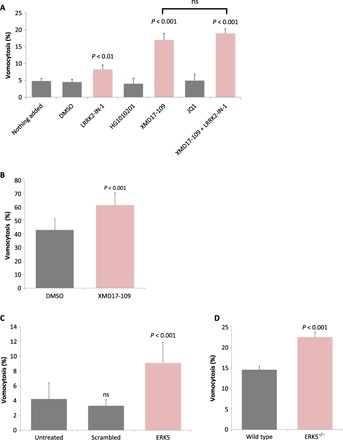
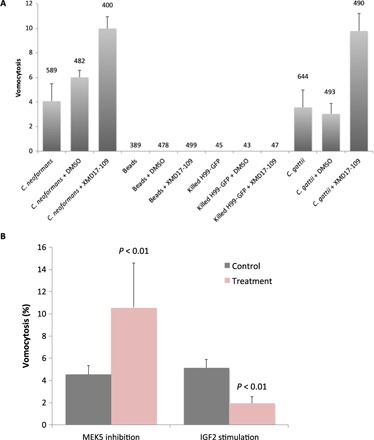
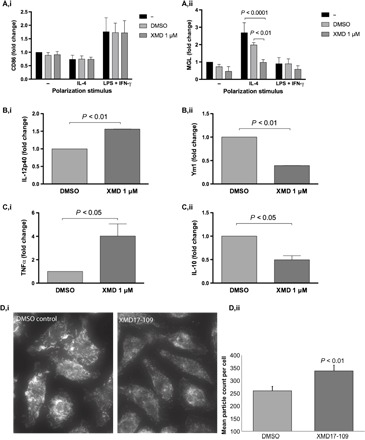
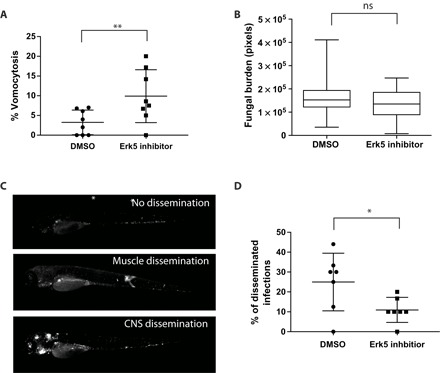
ERK5 regulates nonlytic expulsion of live pathogens from phagocytes to limit dissemination of infections.
Overview
The claims and statistics of this paper haven’t been checked yet.
Free: it reads the open-access text and checks the first 5 claims that cite a source we can check. Create a free account to check every claim.
Integrity signals
Registry
Cites
Statistics
Figures
Verification
Claims the paper makes
The claims and statistics of this paper haven’t been checked yet.
Free: it reads the open-access text and checks the first 5 claims that cite a source we can check. Create a free account to check every claim.
Claims other papers make about this one
Each is checked against this paper’s own text: does it say what the citing paper says it does?
In the citing paper
“Conversely, C. neoformans can exit macrophages via non-lytic exocytosis, or vomocytosis. Vomocytosis is mediated by phagosomal extrusion: a process in which mature phagosomes containing cryptococcal cells fuse with the plasma membrane and release fungi into the extracellular milieu [43–46].”
From Mechanisms of fungal dissemination (2021) · cites this paper as [45]
Self-check
Percentages, sums and reported differences re-computed from the paper’s own numbers.
The self-check needs the paper’s full text.
Citations
Cites
NIH Image to ImageJ: 25 years of image analysis
Schneider, C. A., Rasband, W. S., & Eliceiri, K. W. (2012) · Nature Methods · doi:10.1038/nmeth.2089 · Cited by 64,638
Macrophage activation and polarization: nomenclature and experimental guidelines
Murray, P. J., Allen, J. E., Biswas, S. K., Fisher, E. A., Gilroy, D. W., Goerdt, S., Gordon, S., Hamilton, J. A., Ivashkiv, L. B., Lawrence, T., et al. (2014) · Immunity · doi:10.1016/j.immuni.2014.06.008 · Cited by 6,337
Watterson, K. R., Bestow, D., Gallagher, J., Hamilton, D. L., Ashford, F. B., Meakin, P. J., & Ashford, M. L. J. (2013) · Neurosignals · doi:10.1159/000334144 · Cited by 3,389
The selectivity of protein kinase inhibitors: a further update
Bain, J., Plater, L., Elliott, M., Shpiro, N., Hastie, C. J., Mclauchlan, H., Klevernic, I., Arthur, J. S. C., Alessi, D. R., & Cohen, P. (2007) · Biochemical Journal · doi:10.1042/bj20070797 · Cited by 2,520
Self-citationHuang, D. W., Sherman, B. T., Tan, Q., Kir, J., Liu, D., Bryant, D., Guo, Y., Stephens, R., Baseler, M. W., Lane, H. C., et al. (2007) · Nucleic Acids Research · doi:10.1093/nar/gkm415 · Cited by 2,213
Harnessing Connectivity in a Large-Scale Small-Molecule Sensitivity Dataset
Seashore-Ludlow, B., Rees, M. G., Cheah, J. H., Cokol, M., Price, E. V., Coletti, M. E., Jones, V., Bodycombe, N. E., Soule, C. K., Gould, J., et al. (2015) · Cancer Discovery · doi:10.1158/2159-8290.cd-15-0235 · Cited by 813
Characterization of a selective inhibitor of the Parkinson's disease kinase LRRK2
Deng, X., Dzamko, N., Prescott, A., Davies, P., Liu, Q., Yang, Q., Lee, J.-D., Patricelli, M. P., Nomanbhoy, T. K., Alessi, D. R., et al. (2011) · Nature Chemical Biology · doi:10.1038/nchembio.538 · Cited by 417
Self-citationPhagosome Extrusion and Host-Cell Survival after Cryptococcus neoformans Phagocytosis by Macrophages
Alvarez, M., & Casadevall, A. (2006) · Current Biology · doi:10.1016/j.cub.2006.09.061 · Cited by 414
Evidence of a Role for Monocytes in Dissemination and Brain Invasion by Cryptococcus neoformans
Charlier, C., Nielsen, K., Daou, S., Brigitte, M., Chretien, F., & Dromer, F. (2009) · Infection and Immunity · doi:10.1128/iai.01065-08 · Cited by 362
Dual kinase-bromodomain inhibitors for rationally designed polypharmacology
Ciceri, P., Müller, S., O'Mahony, A., Fedorov, O., Filippakopoulos, P., Hunt, J. P., Lasater, E. A., Pallares, G., Picaud, S., Wells, C., et al. (2014) · Nature Chemical Biology · doi:10.1038/nchembio.1471 · Cited by 338
Cited by
Van Dijck, P., Sjollema, J., Camue, B. P. A., Lagrou, K., Berman, J., d’Enfert, C., Andes, D. R., Arendrup, M. C., Brakhage, A. A., Calderone, R., et al. (2018) · Microbial Cell · doi:10.15698/mic2018.07.638 · Cited by 129
“Among these model systems, the most used are Caenorhabditis elegans [161, 238], Drosophilla melanogaster [177, 179, 239], zebrafish larvae (Danio rerio) [140, 141], the silk worm Bombyx mori [145, 240], the heat tolerant two-spotted cricket [241] and the larvae of the greater wax moth Galleria mellonella [140, 242, 24…”
MethodFu, M. S., Coelho, C., De Leon-Rodriguez, C. M., Rossi, D. C. P., Camacho, E., Jung, E. H., Kulkarni, M., & Casadevall, A. (2018) · PLOS Pathogens · doi:10.1371/journal.ppat.1007144 · Cited by 138
Mechanisms of fungal dissemination
Strickland, A. B., & Shi, M. (2021) · Cellular and Molecular Life Sciences · doi:10.1007/s00018-020-03736-z · Cited by 127
Dinoflagellate symbionts escape vomocytosis by host cell immune suppression
Jacobovitz, M. R., Rupp, S., Voss, P. A., Maegele, I., Gornik, S. G., & Guse, A. (2021) · Nature Microbiology · doi:10.1038/s41564-021-00897-w · Cited by 104
Pathways of host cell exit by intracellular pathogens
Flieger, A., Frischknecht, F., Haecker, G., Hornef, M. W., & Pradel, G. (2018) · Microbial Cell · doi:10.15698/mic2018.12.659 · Cited by 95
“Vomocytosis has also been observed upon in vivo infections of mice and zebrafish [227, 228].”
BackgroundHow Environmental Fungi Cause a Range of Clinical Outcomes in Susceptible Hosts
Denham, S. T., Wambaugh, M. A., & Brown, J. C. S. (2019) · Journal of Molecular Biology · doi:10.1016/j.jmb.2019.05.003 · Cited by 68
Mechanisms of Pulmonary Escape and Dissemination by Cryptococcus neoformans
Denham, S., & Brown, J. (2018) · Journal of Fungi · doi:10.3390/jof4010025 · Cited by 67
“Vomocytosis is also regulated by the mitogen-activated protein kinase (MAP kinase), extracellular-signal-regulated kinase 5 (ERK5), and pharmacological inhibition of ERK5 increases vomocytosis [63].”
BackgroundNutritional Requirements and Their Importance for Virulence of Pathogenic Cryptococcus Species
Watkins, R. A., King, J., & Johnston, S. A. (2017) · Microorganisms · doi:10.3390/microorganisms5040065 · Cited by 53
Self-citationPulmonary Macrophage and Dendritic Cell Responses to Cryptococcus neoformans
Nelson, B. N., Hawkins, A. N., & Wozniak, K. L. (2020) · Frontiers in Cellular and Infection Microbiology · doi:10.3389/fcimb.2020.00037 · Cited by 53
“Inhibition of ERK5 increases vomocytosis, while stimulation of ERK5 decreases vomocytosis (Gilbert et al., 2017).”
BackgroundMacrophage Mediated Immunomodulation During Cryptococcus Pulmonary Infection
Wang, Y., Pawar, S., Dutta, O., Wang, K., Rivera, A., & Xue, C. (2022) · Frontiers in Cellular and Infection Microbiology · doi:10.3389/fcimb.2022.859049 · Cited by 52
“Lastly, Gilbert et al. demonstrated the role of host mitogen-activated kinase ERK5 in the regulation of Frontiers in Cellular and Infection Microbiology | www.frontiersin.org 8 non-lytic exocytosis (Gilbert et al., 2017).”
BackgroundA Fun-Guide to Innate Immune Responses to Fungal Infections
Burgess, T. B., Condliffe, A. M., & Elks, P. M. (2022) · Journal of Fungi · doi:10.3390/jof8080805 · Cited by 50
“Viral infection and type I interferon signalling have been associated with enhanced rates of vomocytosis in vitro [55,56].”
BackgroundAl-Huthaifi, A. M., Radman, B. A., Al-Alawi, A. A., Mahmood, F., & Liu, T. (2024) · Journal of Fungi · doi:10.3390/jof10080586 · Cited by 46
“However, C. neoformans can exit macrophages through a non-destructive process known as vomocytosis, where mature phagosomes containing cryptococcal cells fuse with the cell membrane, releasing the fungi into the external environment [87].”
BackgroundAnticipatory Stress Responses and Immune Evasion in Fungal Pathogens
Pradhan, A., Ma, Q., de Assis, L. J., Leaves, I., Larcombe, D. E., Rondon, A. V. R., Nev, O. A., & Brown, A. J. P. (2020) · Trends in Microbiology · doi:10.1016/j.tim.2020.09.010 · Cited by 46
The cause and effect of Cryptococcus interactions with the host
Ballou, E. R., & Johnston, S. A. (2017) · Current Opinion in Microbiology · doi:10.1016/j.mib.2017.10.012 · Cited by 44
“The atypical kinase Erk5 was identified in a compound screen to be a negative regulator of vomocytosis[58].”
BackgroundSelf-citationHarnessing Macrophages for Controlled-Release Drug Delivery: Lessons From Microbes
Visser, J. G., Staden, A. D. P. V., & Smith, C. (2019) · Frontiers in Pharmacology · doi:10.3389/fphar.2019.00022 · Cited by 42
Evans, R. J., Pline, K., Loynes, C. A., Needs, S. H., Aldrovandi, M., Tiefenbach, J., Bielska, E., Rubino, R. E., Nicol, C. J. B., May, R. C., et al. (2019) · PLoS Pathogens · doi:10.1371/journal.ppat.1007597 · Cited by 40
Self-citationVomocytosis: What we know so far
Seoane, P. I., & May, R. C. (2019) · Cellular Microbiology · doi:10.1111/cmi.13145 · Cited by 39
“Gilbert et al. provided the first direct evidence that vomocytosis plays a role in dissemination of C. neoformans, because pharmacological enhancement of vomocytosis leads to reduced fungal dissemination in the zebrafish model (Gilbert et al., 2017).”
BackgroundInfluentialSelf-citationWatkins, R. A., Andrews, A., Wynn, C., Barisch, C., King, J., & Johnston, S. A. (2018) · Frontiers in Cellular and Infection Microbiology · doi:10.3389/fcimb.2018.00108 · Cited by 35
“…that vomocytosis is suppressed by host actin polymerization (Johnston and May, 2010) and can be modulated by host Annexin A2 and Mitogen Activated Protein kinase (ERK5) activity (Stukes et al., 2016; Gilbert et al., 2017) little is known of the underlying molecular mechanisms underlying expulsion.”
BackgroundSelf-citationDangerous Liaisons: Interactions of Cryptococcus neoformans with Host Phagocytes
Gaylord, E. A., Choy, H. L., & Doering, T. L. (2020) · Pathogens · doi:10.3390/pathogens9110891 · Cited by 33
“showed that stimulation of the MEK5/ERK5 pathway inhibited NLE, while disruption of this pathway significantly increased expulsion rates [81].”
BackgroundScherer, A. K., Blair, B. A., Park, J., Seman, B. G., Kelley, J. B., & Wheeler, R. T. (2020) · PLOS Pathogens · doi:10.1371/journal.ppat.1008414 · Cited by 30
“albicans in the absence of blood flow, and we know that macrophages are key for spread of other fungal and bacterial pathogens [24, 53].”
BackgroundGibson, J. F., Bojarczuk, A., Evans, R. J., Kamuyango, A. A., Hotham, R., Lagendijk, A. K., Hogan, B. M., Ingham, P. W., Renshaw, S. A., & Johnston, S. A. (2022) · PLoS Pathogens · doi:10.1371/journal.ppat.1010389 · Cited by 27
Self-citationGarelnabi, M., Taylor-Smith, L. M., Bielska, E., Hall, R. A., Stones, D. H., & May, R. C. (2018) · PLoS ONE · doi:10.1371/journal.pone.0194615 · Cited by 27
“Lastly, we found no evidence for variation being driven by polymorphisms in three key immune signaling genes: in TLR2 [28, 29], Dectin-1 [29, 30] and ERK5 [31, 32], suggesting that the underlying basis for the variation we detect either lies elsewhere in the genome or occurs at the level of environmental stimuli and n…”
BackgroundInfluentialSelf-citationCryptococcus neoformans Secretes Small Molecules That Inhibit IL-1β Inflammasome-Dependent Secretion
Bürgel, P. H., Marina, C. L., Saavedra, P. H. V., Albuquerque, P., de Oliveira, S. A. M., Júnior, P. H. D. H. V., de Castro, R. J. A., Heyman, H. M., Coelho, C., Cordero, R. J. B., et al. (2020) · Mediators of Inflammation · doi:10.1155/2020/3412763 · Cited by 26
Self-citationDepierre, M., Pompili, C., & Niedergang, F. (2025) · Journal of Cell Science · doi:10.1242/jcs.263833 · Cited by 22
Elements of dissemination in cryptococcosis
Bednarek, J. M., & Brown, J. C. S. (2024) · mBio · doi:10.1128/mbio.02155-23 · Cited by 22
“It was initially described in vitro using murine macrophage cell lines but has since been studied in primary cells from mice, humans, birds, and fish (111–115).”
Illuminating Macrophage Contributions to Host-Pathogen Interactions In Vivo : the Power of Zebrafish
Rosowski, E. E. (2020) · Infection and Immunity · doi:10.1128/iai.00906-19 · Cited by 18
“Larval zebrafish experiments also helped to identify the mitogen-activated protein (MAP) kinase ERK5 as a suppressor of this mechanism (81).”
BackgroundNeuro-Immune Mechanisms of Anti-Cryptococcal Protection
Drummond, R. A. (2017) · Journal of Fungi · doi:10.3390/jof4010004 · Cited by 17
“neoformans has also been shown to exit macrophages following phagocytosis using a non-lytic extrusion mechanism (termed vomocytosis) that is prevented by actin polymerization [9] and ERK5 signaling in macrophages [10].”
BackgroundInfluentialERK5 signalling pathway is a novel target of sorafenib: Implication in EGF biology
Ortega‐Muelas, M., Roche, O., Fernández‐Aroca, D. M., Encinar, J. A., Albandea‐Rodríguez, D., Arconada‐Luque, E., Pascual‐Serra, R., Muñoz, I., Sánchez‐Pérez, I., Belandia, B., et al. (2021) · Journal of Cellular and Molecular Medicine · doi:10.1111/jcmm.16990 · Cited by 15
“Figure S2B and S2D show the calculated values of Gibbs free energy variation ( Δ G, kcal/mol) and the calculated KD, respectively, for different compounds, described as ERK5 inhibitors, 35-37 and sorafenib.”
BackgroundFrom phagocytosis to metaforosis: Calcineurin’s deadly role in innate processing of fungi
Armstrong-James, D. P. H., de Boer, L. L., Bercusson, A., & Shah, A. (2018) · PLoS Pathogens · doi:10.1371/journal.ppat.1006627 · Cited by 14
Vomocytosis: Too Much Booze, Base, or Calcium?
Cruz‐Acuña, M., Pacifici, N. J., & Lewis, J. S. (2019) · mBio · doi:10.1128/mbio.02526-19 · Cited by 14
“demonstrated its critical role in suppressing the frequency of vomocytic events (64).”
BackgroundInfluentialAre macrophages the heroes or villains during cryptococcosis?
Rudman, J., Evans, R. J., & Johnston, S. A. (2019) · Fungal Genetics and Biology · doi:10.1016/j.fgb.2019.103261 · Cited by 13
Self-citationVomocytosis of Cryptococcus neoformans cells from murine, bone marrow-derived dendritic cells
Pacifici, N. J., Cruz‐Acuña, M., Diener, A., Tu, A. B., Senthil, N., Han, H., & Lewis, J. S. (2023) · PLoS ONE · doi:10.1371/journal.pone.0280692 · Cited by 12
Loss of the scavenger receptor MARCO results in uncontrolled vomocytosis of fungi from macrophages
Onyishi, C. U., Jeon, Y., Fejér, G., Mukhopadhyay, S., Gordon, S., & May, R. C. (2024) · European Journal of Immunology · doi:10.1002/eji.202350771 · Cited by 11
“Previous studies have identified the mitogen-activated protein kinase ERK5 and the phospholipid-binding protein Annexin A2 (ANXA2) as regulators of vomocytosis, with ERK5 inhibition and ANXA2-deficiency leading to increased and decreased vomocytosis, respectively [12, 13].”
BackgroundMethodInfluentialSelf-citationThe role of lipids in regulating macrophage antifungal immunity
Rouvray, S., & Drummond, R. A. (2024) · mBio · doi:10.1128/mbio.03057-23 · Cited by 12
“Inhibition of ERK5, a member of the MAPK family, promoted a pro-inflammatory polarization in macrophages and resulted in enhanced vomocytosis of live C. neoformans (75), while the membrane-binding protein annexin A2 appears to promote both the phagocytosis and vomocytosis of C. neoformans (76).”
BackgroundMichiels, L., Shameem, M., Vanhoffelen, E., Reséndiz-Sharpe, A., Johnston, S. A., Bézière, N., & Velde, G. V. (2025) · npj Imaging · doi:10.1038/s44303-025-00105-y · Cited by 9
Self-citationHigh-throughput zebrafish intramuscular recording assay
Cho, S., Kang, Y. J., & Kim, S. (2019) · Sensors and Actuators B Chemical · doi:10.1016/j.snb.2019.127332 · Cited by 9
Francis, E. A., & Heinrich, V. (2018) · PubMed Central · Cited by 8
Zhou, X., Zafar, H., Sephton-Clark, P., Mohamed, S. H., Chapuis, A. F., Makarova, M., MacCallum, D. M., Drummond, R. A., Dambuza, I. M., & Ballou, E. R. (2020) · bioRxiv (Cold Spring Harbor Laboratory) · doi:10.1101/2020.01.03.894709 · Cited by 6
Self-citationVomocytosis By Macrophages: A Crucial Event In The Local Niche of Tumors
Sharma, N. K., Sarode, S. C., Sarode, G. S., & Patil, S. (2019) · Future Oncology · doi:10.2217/fon-2019-0078 · Cited by 4
Mahadevan, A., & Krishna, S. S. (2019) · Springer eBooks · doi:10.1007/978-3-030-06088-6_12 · Cited by 4
A subset of neutrophil phagosomes is characterised by pulses of Class I PI3K activity
Muir, C. F., Reyes‐Aldasoro, C. C., Prajsnar, T. K., Michno, B. J., Cholewa-Waclaw, J., Ho, Y. X., Bernut, A., Loynes, C. A., Elworthy, S., Bowden, K. A., et al. (2025) · Disease Models & Mechanisms · doi:10.1242/dmm.052042 · Cited by 3
“We titrated the dose of PI3K γ inhibitor AS605240 [IC50=8 nM (Williams et al., 2010); EC50=117 nM (Gilbert et al., 2017)] to identify that a delayed 30 min incubation with 1 µm of this compound significantly decreased the percentage of PHAkt-eGFP-positive phagosomes, but not the number of…”
Manipulation of macrophage phagocytosis - development of an endogenous delivery system
Visser, J. G. (2020) · SUNScholar (Stellenbosch University) · Cited by 2
Silva, V. K. A., Min, S., Yoo, K., & Fries, B. C. (2024) · Journal of Fungi · doi:10.3390/jof10040279 · Cited by 1
“This facultative intracellular organism has adapted to reside and replicate within the acidic phagosome and to escape via a non-lytic process called vomocytosis [2].”
BackgroundMethodVomocytosis of Cryptococcus neoformans from Macrophages: from discovery to current understanding
Onyishi, C. U. (2025) · Biomedical Journal · doi:10.1016/j.bj.2025.100891 · Cited by 1
Evans, R. J., Pline, K., Loynes, C. A., Needs, S. H., Aldrovandi, M., Tiefenbach, J., Bielska, E., Rubino, R. E., Nicol, C. J., May, R. C., et al. (2017) · bioRxiv (Cold Spring Harbor Laboratory) · doi:10.1101/113167 · Cited by 1
Self-citationBürgel, P. H. (2018) · RIUnB Institutional Repository (University of Brasília) · doi:10.26512/2018.12.t.34845 · Cited by 1
Gupta, A. (2019) · Minerva Access (University of Melbourne) · Cited by 1
Avaliação da ocorrência de exocitose não-lítica em isolados clínicos de Cryptococcus spp
Frazão, S. D. O. (2018) · RIUnB Institutional Repository (University of Brasília) · doi:10.26512/2018.02.d.41423 · Cited by 1
Häfner, S. J. (2017) · Microbes and Infection · doi:10.1016/j.micinf.2017.11.007
Host Mediated Mechanisms of Fungal Cell Spread in a Transparent Zebrafish Infection Model
Scherer, A. K. (2018) · DigitalCommons (California Polytechnic State University)
Marina, C. L. (2019) · Americanae (AECID Library)
Fluorescent antibiotics, vomocytosis, vaccine candidates and the inflammasome
Lundie, R. J., Helbig, K. J., Pearson, J. S., & Fairfax, K. A. (2019) · Clinical & Translational Immunology · doi:10.1002/cti2.1083
“Professor May used the invasive fungal pathogen Cryptococcus to demonstrate that this phenomenon is regulated by extracellular signal-regulated kinase 5.(17) The underlying principle of vomocytosis is that spitting the pathogen out of the cell at earlier time points limits dissemination and thus controls the pathogen.”
MethodGibson, J. F., Bojarczuk, A., Evans, R. J., Kamuyango, A., Hotham, R., Lagendijk, A. K., Hogan, B. M., Ingham, P. W., Renshaw, S. A., & Johnston, S. A. (2020) · bioRxiv (Cold Spring Harbor Laboratory) · doi:10.1101/2020.03.17.995571
Self-citationPline, K., & Johnston, S. A. (2020) · bioRxiv (Cold Spring Harbor Laboratory) · doi:10.1101/2020.04.08.032268
“Furthermore, vomocytosis of fungal cells is associated with dissemination in vivo (15), and recent work suggests that C.”
BackgroundSelf-citationEstudo funcional do fator de transcrição Pdr802 na biologia do patógeno Cryptococcus neoformans
Reuwsaat, J. C. V. (2021) · Lume (Universidade Federal do Rio Grande do Sul)
Onyishi, C. U. (2023) · University of Birmingham Institutional Research Archive (University of Birmingham)
Crosstalk between Stromal Cells and Macrophages Shapes Host Immunity to MycobacteriaPreprint
Lößlein, A. K., Baasch, S., Wagner, L., Ritter, K., Lohrmann, F., Gräwe, K., Ghanem, N., Neuber, J., Hölscher, A., Markus, S., et al. (2026) · bioRxiv (Cold Spring Harbor Laboratory) · doi:10.64898/2026.02.05.704052
Lai, F., Dong, X., Zhao, E., Zhou, Y., Zhao, Z., Liang, Y., Zhou, Y., Xiang, X., Xia, L., Wang, Q., et al. (2026) · Pathogens · doi:10.3390/pathogens15090902
“Vesicles from infected macrophages, together with vomocy-tosis, also show that host cells can both limit fungal growth and help move viable fungi to new sites [78,94,96,97].”
Gibson, J. F., Bojarczuk, A., Evans, R. J., Kamuyango, A. A., Hotham, R., Lagendijk, A. K., Hogan, B. M., Ingham, P. W., Renshaw, S. A., & Johnston, S. A. (2022) · doi:10.1371/journal.ppat.1010389.r005
Self-citation
Metadata
- Authors
- Gilbert, A. S., Seoane, P. I., Sephton-Clark, P., Bojarczuk, A., Hotham, R., Giurisato, E., Sarhan, A. R., Hillen, A., Velde, G. V., Gray, N. S., Alessi, D. R., Cunningham, D. L., Tournier, C., Johnston, S. A., & May, R. C.
- Affiliations
- University of Birmingham (GB)
- University of Sheffield (GB)
- University of Siena (IT)
- University of Dundee (GB)
- KU Leuven (BE)
- Harvard University (US)
- University of Manchester (GB)
- Corresponding author
- May, Robin C.
- ORCID
- Venue
- Science Advances
- Published
- 2017-08-04
- Volume
- 3
- Issue
- 8
- Pages
- e1700898-e1700898
- ISSN
- 2375-2548 (ISSN-L)
- PMC
- PMC5559206
- OpenAlex
- W2747986502
- Cited by
- 54
- References
- 34
- Citations by year
- 2026: 2 · 2025: 4 · 2024: 6 · 2023: 1 · 2022: 4 · 2021: 3 · 2020: 10 · 2019: 10 · 2018: 9 · 2017: 5
- FWCI
- 4.96
- Type
- journal article
- Language
- en
- Open access
- gold
- doi.org
- Licence
- cc-by-nc
- Locations
- Science Advances (publishedVersion, cc-by-nc)
- Europe PMC (PubMed Central) (publishedVersion, cc-by-nc)
- PubMed Central (publishedVersion, cc-by-nc)
- PubMed (publishedVersion)
- Discovery Research Portal (University of Dundee) (publishedVersion, cc-by-nc)
- University of Birmingham Research Portal (University of Birmingham) (publishedVersion, cc-by-nc)
- Research Explorer (The University of Manchester) (publishedVersion, cc-by-nc)
- White Rose Research Online (University of Leeds, The University of Sheffield, University of York) (acceptedVersion)
- Digital Access to Scholarship at Harvard (DASH) (Harvard University) (submittedVersion, cc-by)
- Use Siena air (University of Siena) (submittedVersion, cc-by-nc)
- Funders
- FP7 People: Marie-Curie Actions (award334627, Postdoctoral Fellowship)
- European Research Council (award329061, MitoFun (FP/2007-2103)/ERC)
- Worldwide Cancer Research (award334628)
- MRC (award334625, MR/J009156/1)
- FWO (award334626, Postdoctoral Fellowship)
- Krebs Institute Fellowship (award335333, MRF Grant R/140419)
- Medical Research Council Center (award335335, G0700091)
- Topics
- Life Sciences › Biochemistry, Genetics and Molecular Biology › Cell Biology › Cellular transport and secretion
- Health Sciences › Medicine › Infectious Diseases › Fungal Infections and Studies
- Life Sciences › Biochemistry, Genetics and Molecular Biology › Cell Biology › Autophagy in Disease and Therapy
- Keywords
- macrophages, ERK5, MAPK signaling, host-pathogen interaction, cryptococcosis, Cryptococcus, pathogen dispersal, zebrafish infection model
- MeSH terms
- Animals, Cell Line, Humans, Macrophages, Actin Cytoskeleton, Zebrafish, Cytokines, Protein Kinase Inhibitors, Mitogen-Activated Protein Kinase 7, Mice, Host-Pathogen Interactions
About these checks
Registry, retraction, Cites and statistics results are computed, not judged, with one exception: a printed reference that no index lists is read once by a model before it counts as a citation error. Claims are extracted by a model and kept only when their quote appears verbatim in the text; each cited source is then checked, with a model’s help, for whether it says what the claim relies on. Those verdicts can be wrong — read the claim’s quote and the cited source before relying on one.
Statistics and arithmetic are recomputed, not judged.
Confidence bands are shown only for fields calibrated on our annotated test set. None is calibrated yet, so no band is shown.
What counts as a claim ›How we measure confidence ›How we check this ›
Are you an author, or do you see a problem with this page? Request a review
Data sources
Bibliographic data: Semantic Scholar, OpenAlex, Crossref.
Contains information from the Semantic Scholar Academic Graph Datasets, made available under the ODC Attribution License (ODC-BY 1.0).
Semantic Scholar’s data is described in: Kinney, R., et al. (2023). The Semantic Scholar Open Data Platform. arXiv:2301.10140.
