

Vomocytosis of live pathogens from macrophages is regulated by the atypical MAP kinase ERK5
Open accessThe DOI matches its Crossref record; 32 of the 34 references it cites were found in a registry or an index.
Abstract
ERK5 regulates nonlytic expulsion of live pathogens from phagocytes to limit dissemination of infections.
Overview
The claims and statistics of this paper haven’t been checked yet.
Free: it reads the open-access text and checks the first 5 claims that cite a source we can check. Create a free account to check every claim.
Integrity signals
Registry
Cites
Statistics
Figures
Verification
Claims the paper makes
The claims and statistics of this paper haven’t been checked yet.
Free: it reads the open-access text and checks the first 5 claims that cite a source we can check. Create a free account to check every claim.
Claims other papers make about this one
Each is checked against this paper’s own text: does it say what the citing paper says it does?
In the citing paper
“Conversely, C. neoformans can exit macrophages via non-lytic exocytosis, or vomocytosis. Vomocytosis is mediated by phagosomal extrusion: a process in which mature phagosomes containing cryptococcal cells fuse with the plasma membrane and release fungi into the extracellular milieu [43–46].”
From Mechanisms of fungal dissemination (2021) · cites this paper as [45]
Self-check
Percentages, sums and reported differences re-computed from the paper’s own numbers.
The self-check needs the paper’s full text.
Citations
Cites
NIH Image to ImageJ: 25 years of image analysis
Schneider, C. A., Rasband, W. S., & Eliceiri, K. W. (2012) · Nature Methods · doi:10.1038/nmeth.2089 · Cited by 64,638
Macrophage activation and polarization: nomenclature and experimental guidelines
Murray, P. J., Allen, J. E., Biswas, S. K., Fisher, E. A., Gilroy, D. W., Goerdt, S., Gordon, S., Hamilton, J. A., Ivashkiv, L. B., Lawrence, T., et al. (2014) · Immunity · doi:10.1016/j.immuni.2014.06.008 · Cited by 6,337
Watterson, K. R., Bestow, D., Gallagher, J., Hamilton, D. L., Ashford, F. B., Meakin, P. J., & Ashford, M. L. J. (2013) · Neurosignals · doi:10.1159/000334144 · Cited by 3,389
The selectivity of protein kinase inhibitors: a further update
Bain, J., Plater, L., Elliott, M., Shpiro, N., Hastie, C. J., Mclauchlan, H., Klevernic, I., Arthur, J. S. C., Alessi, D. R., & Cohen, P. (2007) · Biochemical Journal · doi:10.1042/bj20070797 · Cited by 2,520
Self-citationHuang, D. W., Sherman, B. T., Tan, Q., Kir, J., Liu, D., Bryant, D., Guo, Y., Stephens, R., Baseler, M. W., Lane, H. C., et al. (2007) · Nucleic Acids Research · doi:10.1093/nar/gkm415 · Cited by 2,213
Harnessing Connectivity in a Large-Scale Small-Molecule Sensitivity Dataset
Seashore-Ludlow, B., Rees, M. G., Cheah, J. H., Cokol, M., Price, E. V., Coletti, M. E., Jones, V., Bodycombe, N. E., Soule, C. K., Gould, J., et al. (2015) · Cancer Discovery · doi:10.1158/2159-8290.cd-15-0235 · Cited by 813
Characterization of a selective inhibitor of the Parkinson's disease kinase LRRK2
Deng, X., Dzamko, N., Prescott, A., Davies, P., Liu, Q., Yang, Q., Lee, J.-D., Patricelli, M. P., Nomanbhoy, T. K., Alessi, D. R., et al. (2011) · Nature Chemical Biology · doi:10.1038/nchembio.538 · Cited by 417
Self-citationPhagosome Extrusion and Host-Cell Survival after Cryptococcus neoformans Phagocytosis by Macrophages
Alvarez, M., & Casadevall, A. (2006) · Current Biology · doi:10.1016/j.cub.2006.09.061 · Cited by 414
Evidence of a Role for Monocytes in Dissemination and Brain Invasion by Cryptococcus neoformans
Charlier, C., Nielsen, K., Daou, S., Brigitte, M., Chretien, F., & Dromer, F. (2009) · Infection and Immunity · doi:10.1128/iai.01065-08 · Cited by 362
Dual kinase-bromodomain inhibitors for rationally designed polypharmacology
Ciceri, P., Müller, S., O'Mahony, A., Fedorov, O., Filippakopoulos, P., Hunt, J. P., Lasater, E. A., Pallares, G., Picaud, S., Wells, C., et al. (2014) · Nature Chemical Biology · doi:10.1038/nchembio.1471 · Cited by 338
Expulsion of Live Pathogenic Yeast by Macrophages
Ma, H., Croudace, J. E., Lammas, D. A., & May, R. C. (2006) · Current Biology · doi:10.1016/j.cub.2006.09.032 · Cited by 310
Self-citationMEK5/ERK5 pathway: The first fifteen years
Drew, B. A., Burow, M. E., & Beckman, B. S. (2012) · Biochimica et Biophysica Acta (BBA) - Reviews on Cancer · doi:10.1016/j.bbcan.2011.10.002 · Cited by 184
Bojarczuk, A., Miller, K. A., Hotham, R., Lewis, A., Ogryzko, N. V., Kamuyango, A. A., Frost, H., Gibson, R. H., Stillman, E., May, R. C., et al. (2016) · Scientific Reports · doi:10.1038/srep21489 · Cited by 170
Self-citationCarnell, M., Zech, T., Calaminus, S. D., Ura, S., Hagedorn, M., Johnston, S. A., May, R. C., Soldati, T., Machesky, L. M., & Insall, R. H. (2011) · Journal of Cell Biology · doi:10.1083/jcb.201009119 · Cited by 159
Self-citationVoelz, K., Lammas, D. A., & May, R. C. (2009) · Infection and Immunity · doi:10.1128/iai.00297-09 · Cited by 155
Self-citationJohnston, S. A., & May, R. C. (2010) · PLoS Pathogens · doi:10.1371/journal.ppat.1001041 · Cited by 141
Self-citationNicola, A. M., Robertson, E. J., Albuquerque, P., Derengowski, L. D. S., & Casadevall, A. (2011) · mBio · doi:10.1128/mbio.00167-11 · Cited by 135
Brain Penetrant LRRK2 Inhibitor
Choi, H. G., Zhang, J., Deng, X., Hatcher, J. M., Patricelli, M. P., Zhao, Z., Alessi, D. R., & Gray, N. S. (2012) · ACS Medicinal Chemistry Letters · doi:10.1021/ml300123a · Cited by 132 · cited 1×
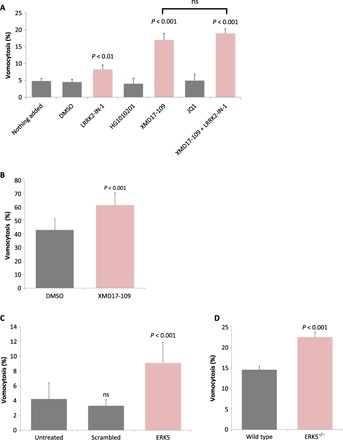
“Testing an independent second series of inhibitors revealed a potent and reproducible enhancement of vomocytosis with the ERK5 inhibitors XMD17-109 (12) or AX15836, but not with a specific inhibitor of BRD4 [JQ1 (13)] or with an alternative inhibitor of LRRK2 [HG1010201 (14)] (Fig.”
BackgroundSelf-citationWeygant, N., Qu, D., Berry, W. L., May, R. J., Chandrakesan, P., Owen, D. B., Sureban, S. M., Ali, N., Janknecht, R., & Houchen, C. W. (2014) · Molecular Cancer · doi:10.1186/1476-4598-13-103 · Cited by 122
Self-citationBarros, J. C., & Marshall, C. J. (2005) · Journal of Cell Science · doi:10.1242/jcs.02308 · Cited by 109
Peroxisome Function Regulates Growth on Glucose in the Basidiomycete Fungus Cryptococcus neoformans
Idnurm, A., Giles, S. S., Perfect, J. R., & Heitman, J. (2007) · Eukaryotic Cell · doi:10.1128/ec.00214-06 · Cited by 93
Mechanisms of microbial escape from phagocyte killing
Smith, L. M., & May, R. C. (2013) · Biochemical Society Transactions · doi:10.1042/bst20130014 · Cited by 78
Self-citationTenor, J. L., Oehlers, S. H., Yang, J. L., Tobin, D. M., & Perfect, J. R. (2015) · mBio · doi:10.1128/mbio.01425-15 · Cited by 78
Regulation of neuronal survival by the extracellular signal-regulated protein kinase 5
Finegan, K. G., Wang, X., Lee, E.-J., Robinson, A., & Tournier, C. (2009) · Cell Death and Differentiation · doi:10.1038/cdd.2008.193 · Cited by 72
Self-citationAutomated Analysis of Cryptococcal Macrophage Parasitism Using GFP-Tagged Cryptococci
Voelz, K., Johnston, S. A., Rutherford, J. C., & May, R. C. (2010) · PLoS ONE · doi:10.1371/journal.pone.0015968 · Cited by 69
Self-citationJohnston, S. A., Voelz, K., & May, R. C. (2016) · Scientific Reports · doi:10.1038/srep20977 · Cited by 49 · cited 1×
“Vomocytosis has subsequently been observed with a diverse range of pathogens (3) and in phagocytic cells from mammals (4), birds (5), fish (6), and amoebae (7), suggesting that it is an evolutionarily conserved phenomenon.”
BackgroundSelf-citationMEK5 and ERK5 are mediators of the pro-myogenic actions of IGF-2
Carter, E. J., Cosgrove, R. A., Gonzalez, I., Eisemann, J. H., Lovett, F. A., Cobb, L. J., & Pell, J. M. (2009) · Journal of Cell Science · doi:10.1242/jcs.045757 · Cited by 40 · cited 1×
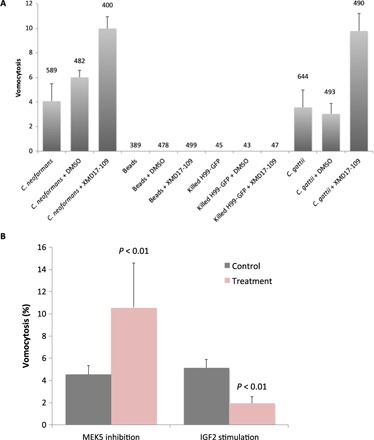
“To test this possibility further, we exposed cells to insulin-like growth factor 2 (IGF2),whichhaspreviously been shown to activateMEK5-ERK5 signaling up to eightfold (17) and to be implicated in phagocyte behavior (18).”
BackgroundX-ray Crystal Structure of ERK5 (MAPK7) in Complex with a Specific Inhibitor
Elkins, J. M., Wang, J., Deng, X., Pattison, M. J., Arthur, J. S. C., Erazo, T., Gómez, N., Lizcano, J. M., Gray, N. S., & Knapp, S. (2013) · Journal of Medicinal Chemistry · doi:10.1021/jm4000837 · Cited by 39
Self-citationMEK5/ERK5 Signaling Modulates Endothelial Cell Migration and Focal Contact Turnover
Spiering, D., Schmolke, M., Ohnesorge, N., Schmidt, M., Goebeler, M., Wegener, J., Wixler, V., & Ludwig, S. (2009) · Journal of Biological Chemistry · doi:10.1074/jbc.m109.042911 · Cited by 38
Suh, H.-S., Cosenza-Nashat, M. A., Choi, N., Zhao, M., Li, J.-F., Pollard, J. W., Jirtle, R. L., Goldstein, H., & Lee, S. C. (2010) · American Journal Of Pathology · doi:10.2353/ajpath.2010.100399 · Cited by 31
ERK5 Activation Is Essential for Osteoclast Differentiation
Amano, S., Chang, Y., & Fukui, Y. (2015) · PLoS ONE · doi:10.1371/journal.pone.0125054 · Cited by 31
Qiu, F., Yang, L., Fang, W., Li, Y., Yang, R., Yang, X., Deng, J., Huang, B., Xie, C., Zhou, Y., et al. (2013) · Mutagenesis · doi:10.1093/mutage/get033 · Cited by 14
Cited by
Van Dijck, P., Sjollema, J., Camue, B. P. A., Lagrou, K., Berman, J., d’Enfert, C., Andes, D. R., Arendrup, M. C., Brakhage, A. A., Calderone, R., et al. (2018) · Microbial Cell · doi:10.15698/mic2018.07.638 · Cited by 129
“Among these model systems, the most used are Caenorhabditis elegans [161, 238], Drosophilla melanogaster [177, 179, 239], zebrafish larvae (Danio rerio) [140, 141], the silk worm Bombyx mori [145, 240], the heat tolerant two-spotted cricket [241] and the larvae of the greater wax moth Galleria mellonella [140, 242, 24…”
MethodFu, M. S., Coelho, C., De Leon-Rodriguez, C. M., Rossi, D. C. P., Camacho, E., Jung, E. H., Kulkarni, M., & Casadevall, A. (2018) · PLOS Pathogens · doi:10.1371/journal.ppat.1007144 · Cited by 138
Mechanisms of fungal dissemination
Strickland, A. B., & Shi, M. (2021) · Cellular and Molecular Life Sciences · doi:10.1007/s00018-020-03736-z · Cited by 127
Dinoflagellate symbionts escape vomocytosis by host cell immune suppression
Jacobovitz, M. R., Rupp, S., Voss, P. A., Maegele, I., Gornik, S. G., & Guse, A. (2021) · Nature Microbiology · doi:10.1038/s41564-021-00897-w · Cited by 104
Pathways of host cell exit by intracellular pathogens
Flieger, A., Frischknecht, F., Haecker, G., Hornef, M. W., & Pradel, G. (2018) · Microbial Cell · doi:10.15698/mic2018.12.659 · Cited by 95
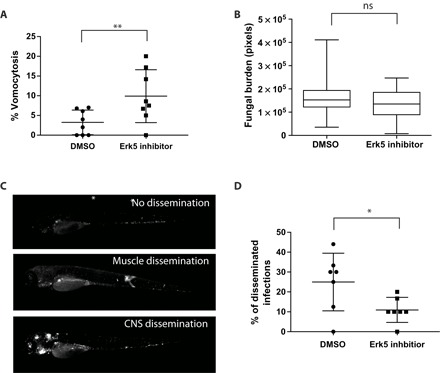
“Vomocytosis has also been observed upon in vivo infections of mice and zebrafish [227, 228].”
Background
Metadata
- Authors
- Gilbert, A. S., Seoane, P. I., Sephton-Clark, P., Bojarczuk, A., Hotham, R., Giurisato, E., Sarhan, A. R., Hillen, A., Velde, G. V., Gray, N. S., Alessi, D. R., Cunningham, D. L., Tournier, C., Johnston, S. A., & May, R. C.
- Affiliations
- University of Birmingham (GB)
- University of Sheffield (GB)
- University of Siena (IT)
- University of Dundee (GB)
- KU Leuven (BE)
- Harvard University (US)
- University of Manchester (GB)
- Corresponding author
- May, Robin C.
- ORCID
- Venue
- Science Advances
- Published
- 2017-08-04
- Volume
- 3
- Issue
- 8
- Pages
- e1700898-e1700898
- ISSN
- 2375-2548 (ISSN-L)
- PMC
- PMC5559206
- OpenAlex
- W2747986502
- Cited by
- 54
- References
- 34
- Citations by year
- 2026: 2 · 2025: 4 · 2024: 6 · 2023: 1 · 2022: 4 · 2021: 3 · 2020: 10 · 2019: 10 · 2018: 9 · 2017: 5
- FWCI
- 4.96
- Type
- journal article
- Language
- en
- Open access
- gold
- doi.org
- Licence
- cc-by-nc
- Locations
- Science Advances (publishedVersion, cc-by-nc)
- Europe PMC (PubMed Central) (publishedVersion, cc-by-nc)
- PubMed Central (publishedVersion, cc-by-nc)
- PubMed (publishedVersion)
- Discovery Research Portal (University of Dundee) (publishedVersion, cc-by-nc)
- University of Birmingham Research Portal (University of Birmingham) (publishedVersion, cc-by-nc)
- Research Explorer (The University of Manchester) (publishedVersion, cc-by-nc)
- White Rose Research Online (University of Leeds, The University of Sheffield, University of York) (acceptedVersion)
- Digital Access to Scholarship at Harvard (DASH) (Harvard University) (submittedVersion, cc-by)
- Use Siena air (University of Siena) (submittedVersion, cc-by-nc)
- Funders
- FP7 People: Marie-Curie Actions (award334627, Postdoctoral Fellowship)
- European Research Council (award329061, MitoFun (FP/2007-2103)/ERC)
- Worldwide Cancer Research (award334628)
- MRC (award334625, MR/J009156/1)
- FWO (award334626, Postdoctoral Fellowship)
- Krebs Institute Fellowship (award335333, MRF Grant R/140419)
- Medical Research Council Center (award335335, G0700091)
- Topics
- Life Sciences › Biochemistry, Genetics and Molecular Biology › Cell Biology › Cellular transport and secretion
- Health Sciences › Medicine › Infectious Diseases › Fungal Infections and Studies
- Life Sciences › Biochemistry, Genetics and Molecular Biology › Cell Biology › Autophagy in Disease and Therapy
- Keywords
- macrophages, ERK5, MAPK signaling, host-pathogen interaction, cryptococcosis, Cryptococcus, pathogen dispersal, zebrafish infection model
- MeSH terms
- Animals, Cell Line, Humans, Macrophages, Actin Cytoskeleton, Zebrafish, Cytokines, Protein Kinase Inhibitors, Mitogen-Activated Protein Kinase 7, Mice, Host-Pathogen Interactions
About these checks
Registry, retraction, Cites and statistics results are computed, not judged, with one exception: a printed reference that no index lists is read once by a model before it counts as a citation error. Claims are extracted by a model and kept only when their quote appears verbatim in the text; each cited source is then checked, with a model’s help, for whether it says what the claim relies on. Those verdicts can be wrong — read the claim’s quote and the cited source before relying on one.
Statistics and arithmetic are recomputed, not judged.
Confidence bands are shown only for fields calibrated on our annotated test set. None is calibrated yet, so no band is shown.
What counts as a claim ›How we measure confidence ›How we check this ›
Are you an author, or do you see a problem with this page? Request a review
Data sources
Bibliographic data: Semantic Scholar, OpenAlex, Crossref.
Contains information from the Semantic Scholar Academic Graph Datasets, made available under the ODC Attribution License (ODC-BY 1.0).
Semantic Scholar’s data is described in: Kinney, R., et al. (2023). The Semantic Scholar Open Data Platform. arXiv:2301.10140.
