

Diversified transcriptional responses of myeloid and glial cells in spinal cord injury shaped by HDAC3 activity
Open accessThe DOI matches its Crossref record; 58 of the 58 references it cites were found in a registry or an index.
Abstract
Transcriptional maps reveal diverse responses of immune and glial cells in spinal cord injury.
Overview
The claims and statistics of this paper haven’t been checked yet.
Free: it reads the open-access text and checks the first 5 claims that cite a source we can check. Create a free account to check every claim.
Integrity signals
Registry
Cites
Statistics
Figures
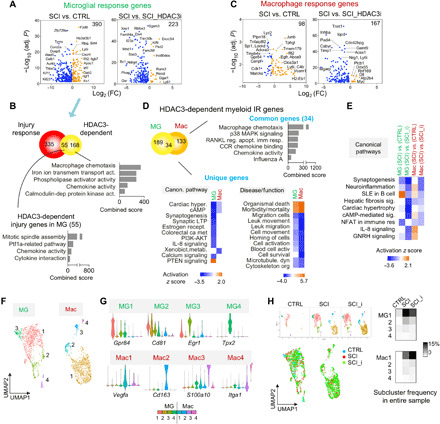
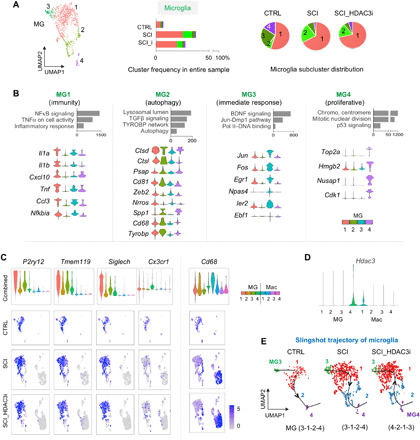
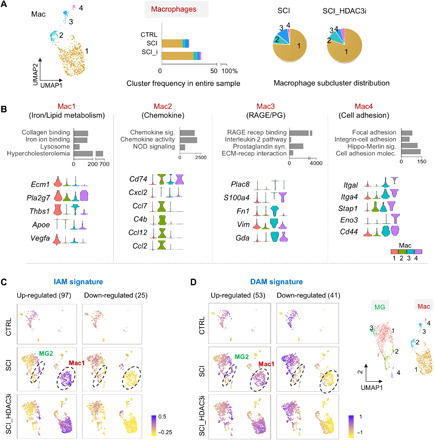
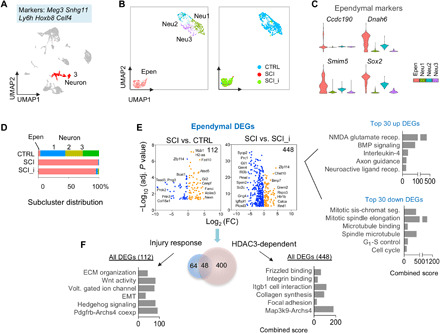
Verification
Claims the paper makes
The claims and statistics of this paper haven’t been checked yet.
Free: it reads the open-access text and checks the first 5 claims that cite a source we can check. Create a free account to check every claim.
Claims other papers make about this one
Each is checked against this paper’s own text: does it say what the citing paper says it does?
The cited source says what the claim attributes to it.
In the citing paper
“Recently, using scRNA-seq, a proliferative subtype controlled by HDAC3 is also unveiled in the context of spinal cord injury (7).”
From Arresting the bad seed: HDAC3 regulates proliferation of different microglia after ischemic stroke (2024) · cites this paper as [7]
Self-check
Percentages, sums and reported differences re-computed from the paper’s own numbers.
The self-check needs the paper’s full text.
Citations
Cites
Controlling the False Discovery Rate: A Practical and Powerful Approach to Multiple Testing
Benjamini, Y., & Hochberg, Y. (1995) · Journal of the Royal Statistical Society Series B: Statistical Methodology · doi:10.1111/j.2517-6161.1995.tb02031.x · Cited by 109,482
Fast and accurate short read alignment with Burrows-Wheeler transform
Li, H., & Durbin, R. (2009) · Bioinformatics · doi:10.1093/bioinformatics/btp324 · Cited by 58,607
Robinson, M. D., McCarthy, D. J., & Smyth, G. K. (2010) · Bioinformatics · doi:10.1093/bioinformatics/btp616 · Cited by 41,364
featureCounts: an efficient general purpose program for assigning sequence reads to genomic features
Liao, Y., Smyth, G. K., & Shi, W. (2014) · Bioinformatics · doi:10.1093/bioinformatics/btt656 · Cited by 27,219
Comprehensive Integration of Single-Cell Data
Stuart, T., Butler, A., Hoffman, P., Hafemeister, C., Papalexi, E., Mauck, W. M., Hao, Y., Stoeckius, M., Smibert, P., & Satija, R. (2019) · Cell · doi:10.1016/j.cell.2019.05.031 · Cited by 15,453
Learning the parts of objects by non-negative matrix factorization
Lee, D. D., & Seung, H. S. (1999) · Nature · doi:10.1038/44565 · Cited by 13,868
Integrating single-cell transcriptomic data across different conditions, technologies, and species
Butler, A., Hoffman, P., Smibert, P., Papalexi, E., & Satija, R. (2018) · Nature Biotechnology · doi:10.1038/nbt.4096 · Cited by 13,174
Enrichr: a comprehensive gene set enrichment analysis web server 2016 update
Kuleshov, M. V., Jones, M. R., Rouillard, A. D., Fernandez, N. F., Duan, Q., Wang, Z., Koplev, S., Jenkins, S. L., Jagodnik, K. M., Lachmann, A., et al. (2016) · Nucleic Acids Research · doi:10.1093/nar/gkw377 · Cited by 10,799
Neurotoxic reactive astrocytes are induced by activated microglia
Liddelow, S. A., Guttenplan, K. A., Clarke, L. E., Bennett, F. C., Bohlen, C. J., Schirmer, L., Bennett, M. L., Münch, A. E., Chung, W.-S., Peterson, T. C., et al. (2017) · Nature · doi:10.1038/nature21029 · Cited by 7,971
Enrichr: interactive and collaborative HTML5 gene list enrichment analysis tool
Chen, E. Y., Tan, C. M., Kou, Y., Duan, Q., Wang, Z., Meirelles, G. V., Clark, N. R., & Ma’ayan, A. (2013) · BMC Bioinformatics · doi:10.1186/1471-2105-14-128 · Cited by 7,814
Cited by
Matson, K. J. E., Russ, D. E., Kathe, C., Hua, I., Maric, D., Ding, Y., Krynitsky, J., Pursley, R. H., Sathyamurthy, A., Squair, J. W., et al. (2022) · Nature Communications · doi:10.1038/s41467-022-33184-1 · Cited by 160
Single-cell and spatial atlases of spinal cord injury in the Tabulae Paralytica
Skinnider, M. A., Gautier, M., Teo, A. Y. Y., Kathe, C., Hutson, T. H., Laskaratos, A., de Coucy, A., Regazzi, N., Aureli, V., James, N. D., et al. (2024) · Nature · doi:10.1038/s41586-024-07504-y · Cited by 161
Schwann Cell-Derived Exosomes and Methylprednisolone Composite Patch for Spinal Cord Injury Repair
Zhu, B., Gu, G., Ren, J., Song, X., Li, J., Wang, C., Zhang, W., Huo, Y., Wang, H., Jin, L., et al. (2023) · ACS Nano · doi:10.1021/acsnano.3c08046 · Cited by 104
Wang, M., Song, W., Chen, M., Wang, Q., Zhou, X., Xu, P., Krek, A., Yoon, Y., Ho, L., Orr, M. E., et al. (2022) · Molecular Neurodegeneration · doi:10.1186/s13024-022-00517-z · Cited by 110
“scRNA-seq studies have been widely conducted in many research fields, such as oncology [9], developmental biology [10], immunology [11], and neurosciences [12].”
Self-citationFrancos-Quijorna, I., Sánchez-Petidier, M., Burnside, E. R., Badea, S. R., Espin, A. T., Marshall, L., de Winter, F., Verhaagen, J., Moreno‐Manzano, V., & Bradbury, E. J. (2022) · Nature Communications · doi:10.1038/s41467-022-30467-5 · Cited by 112
Metadata
- Authors
- Wahane, S., Zhou, X., Zhou, X., Guo, L., Friedl, M.-S., Kluge, M., Ramakrishnan, A., Shen, L., Friedel, C. C., Zhang, B., Friedel, R. H., & Zou, H.
- Affiliations
- Icahn School of Medicine at Mount Sinai (US)
- Ludwig-Maximilians-Universität München (DE)
- Chalmers University of Technology (SE)
- Corresponding author
- Shen, Li
- ORCID
- Venue
- Science Advances
- Published
- 2021-02-26
- Volume
- 7
- Issue
- 9
- ISSN
- 2375-2548 (ISSN-L)
- PMC
- PMC7909890
- OpenAlex
- W3132313589
- Cited by
- 67
- References
- 58
- Citations by year
- 2026: 8 · 2025: 17 · 2024: 12 · 2023: 14 · 2022: 12 · 2021: 4
- FWCI
- 7.00
- Type
- journal article
- Language
- en
- Open access
- gold
- doi.org
- Licence
- Locations
- Science Advances (publishedVersion, cc-by-nc)
- PubMed Central (publishedVersion, cc-by-nc)
- PubMed (publishedVersion)
- Funders
- National Institutes of Health (R01/R56 NS073596, R01 AG046170, RF1 AG054014, U01 AG052411, RF1 AG057440, R01 AG057907)
- Craig H. Neilsen Foundation (476516)
- Deutsche Forschungsgemeinschaft (FR2938/7-1, FR2938/10-1)
- Chinese Scholarship Council
- New York State Spinal Cord Injury Research Board (DOH01-C30603GG, DOH01-C30832GG, DOH01-C32634GG)
- Topics
- Health Sciences › Medicine › Clinical Neurology › Spinal Cord Injury Research
- Life Sciences › Neuroscience › Neurology › Neuroinflammation and Neurodegeneration Mechanisms
- Health Sciences › Medicine › Clinical Neurology › Multiple Sclerosis Research Studies
- Keywords
- spinal cord injury, microglia, macrophages, myeloid cells, glial cells, HDAC3, histone deacetylase, transcriptional heterogeneity, microglial subtypes, neuroinflammation, innate immune response, neurodegeneration, phagocytosis, autophagy, TYROBP, epigenetic regulation, functional recovery
- MeSH terms
- Humans, Macrophages, Phagocytosis, Spinal Cord, Spinal Cord Injuries, Microglia, Recovery of Function
About these checks
Registry, retraction, Cites and statistics results are computed, not judged, with one exception: a printed reference that no index lists is read once by a model before it counts as a citation error. Claims are extracted by a model and kept only when their quote appears verbatim in the text; each cited source is then checked, with a model’s help, for whether it says what the claim relies on. Those verdicts can be wrong — read the claim’s quote and the cited source before relying on one.
Statistics and arithmetic are recomputed, not judged.
Confidence bands are shown only for fields calibrated on our annotated test set. None is calibrated yet, so no band is shown.
What counts as a claim ›How we measure confidence ›How we check this ›
Are you an author, or do you see a problem with this page? Request a review
Data sources
Bibliographic data: Semantic Scholar, OpenAlex, Crossref.
Contains information from the Semantic Scholar Academic Graph Datasets, made available under the ODC Attribution License (ODC-BY 1.0).
Semantic Scholar’s data is described in: Kinney, R., et al. (2023). The Semantic Scholar Open Data Platform. arXiv:2301.10140.
