

Diversified transcriptional responses of myeloid and glial cells in spinal cord injury shaped by HDAC3 activity
Open accessThe DOI matches its Crossref record; 58 of the 58 references it cites were found in a registry or an index.
Abstract
Transcriptional maps reveal diverse responses of immune and glial cells in spinal cord injury.
Overview
The claims and statistics of this paper haven’t been checked yet.
Free: it reads the open-access text and checks the first 5 claims that cite a source we can check. Create a free account to check every claim.
Integrity signals
Registry
Cites
Statistics
Figures
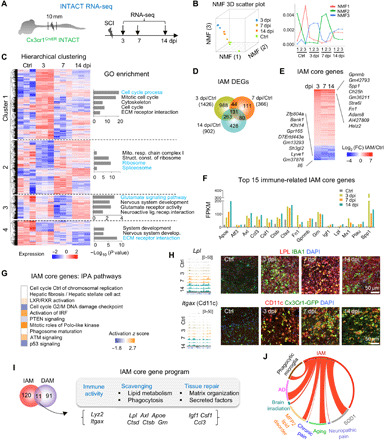
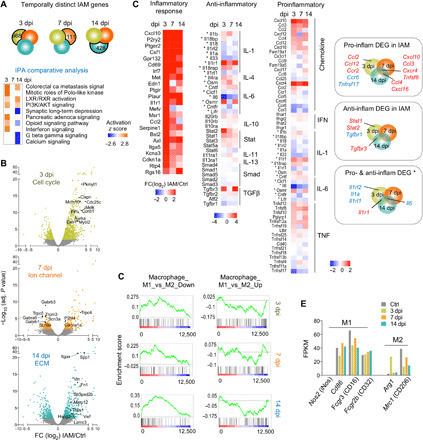
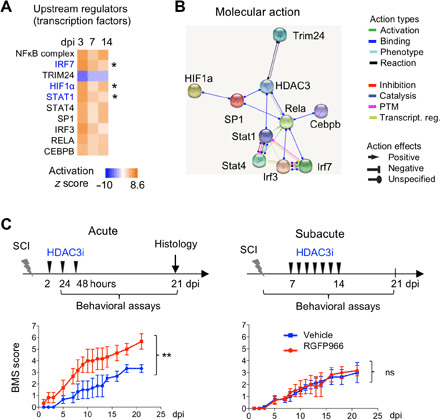
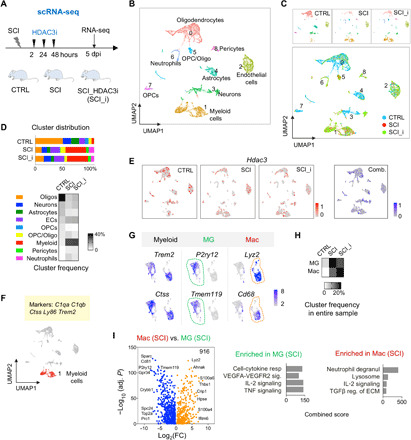
Verification
Claims the paper makes
The claims and statistics of this paper haven’t been checked yet.
Free: it reads the open-access text and checks the first 5 claims that cite a source we can check. Create a free account to check every claim.
Claims other papers make about this one
Each is checked against this paper’s own text: does it say what the citing paper says it does?
The cited source says what the claim attributes to it.
In the citing paper
“Recently, using scRNA-seq, a proliferative subtype controlled by HDAC3 is also unveiled in the context of spinal cord injury (7).”
From Arresting the bad seed: HDAC3 regulates proliferation of different microglia after ischemic stroke (2024) · cites this paper as [7]
Self-check
Percentages, sums and reported differences re-computed from the paper’s own numbers.
The self-check needs the paper’s full text.
Citations
Cites
Controlling the False Discovery Rate: A Practical and Powerful Approach to Multiple Testing
Benjamini, Y., & Hochberg, Y. (1995) · Journal of the Royal Statistical Society Series B: Statistical Methodology · doi:10.1111/j.2517-6161.1995.tb02031.x · Cited by 109,482
Fast and accurate short read alignment with Burrows-Wheeler transform
Li, H., & Durbin, R. (2009) · Bioinformatics · doi:10.1093/bioinformatics/btp324 · Cited by 58,607
Robinson, M. D., McCarthy, D. J., & Smyth, G. K. (2010) · Bioinformatics · doi:10.1093/bioinformatics/btp616 · Cited by 41,364
featureCounts: an efficient general purpose program for assigning sequence reads to genomic features
Liao, Y., Smyth, G. K., & Shi, W. (2014) · Bioinformatics · doi:10.1093/bioinformatics/btt656 · Cited by 27,219
Comprehensive Integration of Single-Cell Data
Stuart, T., Butler, A., Hoffman, P., Hafemeister, C., Papalexi, E., Mauck, W. M., Hao, Y., Stoeckius, M., Smibert, P., & Satija, R. (2019) · Cell · doi:10.1016/j.cell.2019.05.031 · Cited by 15,453
Learning the parts of objects by non-negative matrix factorization
Lee, D. D., & Seung, H. S. (1999) · Nature · doi:10.1038/44565 · Cited by 13,868
Integrating single-cell transcriptomic data across different conditions, technologies, and species
Butler, A., Hoffman, P., Smibert, P., Papalexi, E., & Satija, R. (2018) · Nature Biotechnology · doi:10.1038/nbt.4096 · Cited by 13,174
Enrichr: a comprehensive gene set enrichment analysis web server 2016 update
Kuleshov, M. V., Jones, M. R., Rouillard, A. D., Fernandez, N. F., Duan, Q., Wang, Z., Koplev, S., Jenkins, S. L., Jagodnik, K. M., Lachmann, A., et al. (2016) · Nucleic Acids Research · doi:10.1093/nar/gkw377 · Cited by 10,799
Neurotoxic reactive astrocytes are induced by activated microglia
Liddelow, S. A., Guttenplan, K. A., Clarke, L. E., Bennett, F. C., Bohlen, C. J., Schirmer, L., Bennett, M. L., Münch, A. E., Chung, W.-S., Peterson, T. C., et al. (2017) · Nature · doi:10.1038/nature21029 · Cited by 7,971
Enrichr: interactive and collaborative HTML5 gene list enrichment analysis tool
Chen, E. Y., Tan, C. M., Kou, Y., Duan, Q., Wang, Z., Meirelles, G. V., Clark, N. R., & Ma’ayan, A. (2013) · BMC Bioinformatics · doi:10.1186/1471-2105-14-128 · Cited by 7,814
Massively parallel digital transcriptional profiling of single cells
Zheng, G. X. Y., Terry, J. M., Belgrader, P., Ryvkin, P., Bent, Z. W., Wilson, R., Ziraldo, S. B., Wheeler, T. D., McDermott, G. P., Zhu, J., et al. (2017) · Nature Communications · doi:10.1038/ncomms14049 · Cited by 7,353
A General Framework for Weighted Gene Co-Expression Network Analysis
Zhang, B., & Horvath, S. (2005) · Statistical Applications in Genetics and Molecular Biology · doi:10.2202/1544-6115.1128 · Cited by 5,684
Self-citationA Unique Microglia Type Associated with Restricting Development of Alzheimer’s Disease
Keren-Shaul, H., Spinrad, A., Weiner, A., Matcovitch-Natan, O., Dvir-Szternfeld, R., Ulland, T. K., David, E., Baruch, K., Lara-Astaiso, D., Toth, B., et al. (2017) · Cell · doi:10.1016/j.cell.2017.05.018 · Cited by 5,493 · cited 17×
“An important question is whether IAM and DAM share hallmark genes and regulatory mechanisms.”
BackgroundMethodInfluentialDimensionality reduction for visualizing single-cell data using UMAP
Becht, E., McInnes, L., Healy, J., Dutertre, C.-A., Kwok, I. W. H., Ng, L. G., Ginhoux, F., & Newell, E. W. (2019) · Nature Biotechnology · doi:10.1038/nbt.4314 · Cited by 5,358
ATP mediates rapid microglial response to local brain injury in vivo
Davalos, D., Grutzendler, J., Yang, G., Kim, J. V., Zuo, Y., Jung, S., Littman, D. R., Dustin, M. L., & Gan, W.-B. (2005) · Nature Neuroscience · doi:10.1038/nn1472 · Cited by 3,913
Kettenmann, H., Hanisch, U.-K., Noda, M., & Verkhratsky, A. (2011) · Physiological Reviews · doi:10.1152/physrev.00011.2010 · Cited by 3,547
Fate Mapping Reveals Origins and Dynamics of Monocytes and Tissue Macrophages under Homeostasis
Yona, S., Kim, K.-W., Wolf, Y., Mildner, A., Varol, D., Breker, M., Strauss-Ayali, D., Viukov, S., Guilliams, M., Misharin, A., et al. (2013) · Immunity · doi:10.1016/j.immuni.2012.12.001 · Cited by 3,245
Slingshot: cell lineage and pseudotime inference for single-cell transcriptomics
Street, K., Risso, D., Fletcher, R. B., Das, D., Ngai, J., Yosef, N., Purdom, E., & Dudoit, S. (2018) · BMC Genomics · doi:10.1186/s12864-018-4772-0 · Cited by 3,159
Krasemann, S., Madore, C., Cialic, R., Baufeld, C., Calcagno, N., El Fatimy, R., Beckers, L., O’Loughlin, E., Xu, Y., Fanek, Z., et al. (2017) · Immunity · doi:10.1016/j.immuni.2017.08.008 · Cited by 2,979
An Integrative Model of Cellular States, Plasticity, and Genetics for Glioblastoma
Neftel, C., Laffy, J., Filbin, M. G., Hara, T., Shore, M. E., Rahme, G. J., Richman, A. R., Silverbush, D., Shaw, M. L., Hebert, C. M., et al. (2019) · Cell · doi:10.1016/j.cell.2019.06.024 · Cited by 2,873
Jung, S., Aliberti, J., Graemmel, P., Sunshine, M. J., Kreutzberg, G. W., Sher, A., & Littman, D. R. (2000) · Molecular and Cellular Biology · doi:10.1128/mcb.20.11.4106-4114.2000 · Cited by 2,632
Microglia promote learning-dependent synapse formation through brain-derived neurotrophic factor
Parkhurst, C. N., Yang, G., Ninan, I., Savas, J. N., Yates, J. R., Lafaille, J. J., Hempstead, B. L., Littman, D. R., & Gan, W.-B. (2013) · Cell · doi:10.1016/j.cell.2013.11.030 · Cited by 2,599
Molecular Architecture of the Mouse Nervous System
Zeisel, A., Hochgerner, H., Lönnerberg, P., Johnsson, A., Memic, F., van der Zwan, J., Häring, M., Braun, E., Borm, L. E., La Manno, G., et al. (2018) · Cell · doi:10.1016/j.cell.2018.06.021 · Cited by 2,552
Identification of a unique TGF-β–dependent molecular and functional signature in microglia
Butovsky, O., Jedrychowski, M. P., Moore, C. S., Cialic, R., Lanser, A. J., Gabriely, G., Koeglsperger, T., Dake, B., Wu, P. M., Doykan, C. E., et al. (2014) · Nature Neuroscience · doi:10.1038/nn.3599 · Cited by 2,543
Kigerl, K. A., Gensel, J. C., Ankeny, D. P., Alexander, J. K., Donnelly, D. J., & Popovich, P. G. (2009) · The Journal of Neuroscience · doi:10.1523/jneurosci.3257-09.2009 · Cited by 2,130 · cited 4×
“We further examined the expression of classic M1 and M2 genes described in SCI models (3, 22) and found that M1 marker genes iNos, Cd86, Fcgr3 (Cd16), and Fcgr2b (Cd32) were not significantly up-regulated in IAM; whereas M2 marker gene arginase-1 (Arg1) was up-regulated in IAM at 3 dpi, but mannose receptor (Mrc1 and…”
BackgroundInfluentialthe Immunological Genome Consortium, Gautier, E. L., Shay, T., Miller, J., Greter, M., Jakubzick, C., Ivanov, S., Helft, J., Chow, A., Elpek, K. G., et al. (2012) · Nature Immunology · doi:10.1038/ni.2419 · Cited by 1,972
New tools for studying microglia in the mouse and human CNS
Bennett, M. L., Bennett, F. C., Liddelow, S. A., Ajami, B., Zamanian, J. L., Fernhoff, N. B., Mulinyawe, S. B., Bohlen, C. J., Adil, A., Tucker, A., et al. (2016) · Proceedings of the National Academy of Sciences · doi:10.1073/pnas.1525528113 · Cited by 1,804
Integrated Systems Approach Identifies Genetic Nodes and Networks in Late-Onset Alzheimer’s Disease
Zhang, B., Gaiteri, C., Bodea, L.-G., Wang, Z., McElwee, J., Podtelezhnikov, A. A., Zhang, C., Xie, T., Tran, L., Dobrin, R., et al. (2013) · Cell · doi:10.1016/j.cell.2013.03.030 · Cited by 1,657
Self-citationPanglaoDB: a web server for exploration of mouse and human single-cell RNA sequencing data
Franzén, O., Gan, L.-M., & Björkegren, J. L. M. (2019) · Database · doi:10.1093/database/baz046 · Cited by 1,551
Detecting differential usage of exons from RNA-seq data
Anders, S., Reyes, A., & Huber, W. (2012) · Genome Research · doi:10.1101/gr.133744.111 · Cited by 1,545
The microglial sensome revealed by direct RNA sequencing
Hickman, S. E., Kingery, N. D., Ohsumi, T. K., Borowsky, M. L., Wang, L.-C., Means, T. K., & El Khoury, J. (2013) · Nature Neuroscience · doi:10.1038/nn.3554 · Cited by 1,511
Role of LXRs in control of lipogenesis
Schultz, J. R., Tu, H., Luk, A., Repa, J. J., Medina, J. C., Li, L., Schwendner, S., Wang, S., Thoolen, M., Mangelsdorf, D. J., et al. (2000) · Genes & Development · doi:10.1101/gad.850400 · Cited by 1,499
Genetics of gene expression and its effect on disease
Emilsson, V., Thorleifsson, G., Zhang, B., Leonardson, A. S., Zink, F., Zhu, J., Carlson, S., Helgason, A., Walters, G. B., Gunnarsdottir, S., et al. (2008) · Nature · doi:10.1038/nature06758 · Cited by 1,296
Self-citationuPAR: a versatile signalling orchestrator
Blasi, F., & Carmeliet, P. (2002) · Nature Reviews Molecular Cell Biology · doi:10.1038/nrm977 · Cited by 1,223
Origin, fate and dynamics of macrophages at central nervous system interfaces
Goldmann, T., Wieghofer, P., Jordão, M. J. C., Prutek, F., Hagemeyer, N., Frenzel, K., Amann, L., Staszewski, O., Kierdorf, K., Krueger, M., et al. (2016) · Nature Immunology · doi:10.1038/ni.3423 · Cited by 1,209
TREM2-mediated early microglial response limits diffusion and toxicity of amyloid plaques
Wang, Y., Ulland, T. K., Ulrich, J. D., Song, W., Tzaferis, J. A., Hole, J. T., Yuan, P., Mahan, T. E., Shi, Y., Gilfillan, S., et al. (2016) · Journal of Experimental Medicine · doi:10.1084/jem.20151948 · Cited by 840
Sex-specific transcriptional signatures in human depression
Labonté, B., Engmann, O., Purushothaman, I., Menard, C., Wang, J., Tan, C., Scarpa, J. R., Moy, G., Loh, Y.-H. E., Cahill, M., et al. (2017) · Nature Medicine · doi:10.1038/nm.4386 · Cited by 748
Self-citationEpigenomic Signatures of Neuronal Diversity in the Mammalian Brain
Mo, A., Mukamel, E. A., Davis, F. P., Luo, C., Henry, G. L., Picard, S., Urich, M. A., Nery, J. R., Sejnowski, T. J., Lister, R., et al. (2015) · Neuron · doi:10.1016/j.neuron.2015.05.018 · Cited by 739
Kroner, A., Greenhalgh, A. D., Zarruk, J. G., Passos dos Santos, R., Gaestel, M., & David, S. (2014) · Neuron · doi:10.1016/j.neuron.2014.07.027 · Cited by 655
Beck, K. D., Nguyen, H. X., Galvan, M. D., Salazar, D. L., Woodruff, T. M., & Anderson, A. J. (2010) · Brain · doi:10.1093/brain/awp322 · Cited by 646 · cited 1×
“Upon injury, microglia are activated within minutes and, together with macrophages derived from blood-borne monocytes, constitute the innate immunity, serving as the first line of defense (2).”
BackgroundTREM2 variants: new keys to decipher Alzheimer disease pathogenesis
Colonna, M., & Wang, Y. (2016) · Nature Reviews Neuroscience · doi:10.1038/nrn.2016.7 · Cited by 418
Deficiency of ABCA1 Impairs Apolipoprotein E Metabolism in Brain
Hirsch-Reinshagen, V., Zhou, S., Burgess, B. L., Bernier, L., McIsaac, S. A., Chan, J. Y., Tansley, G. H., Cohn, J. S., Hayden, M. R., & Wellington, C. L. (2004) · Journal of Biological Chemistry · doi:10.1074/jbc.m407962200 · Cited by 385
Untangling the brain’s neuroinflammatory and neurodegenerative transcriptional responses
Srinivasan, K., Friedman, B. A., Larson, J. L., Lauffer, B. E., Goldstein, L. D., Appling, L. L., Borneo, J., Poon, C., Ho, T., Cai, F., et al. (2016) · Nature Communications · doi:10.1038/ncomms11295 · Cited by 336
Wang, M., Roussos, P., McKenzie, A., Zhou, X., Kajiwara, Y., Brennand, K. J., De Luca, G. C., Crary, J. F., Casaccia, P., Buxbaum, J. D., et al. (2016) · Genome Medicine · doi:10.1186/s13073-016-0355-3 · Cited by 314
Self-citationZhou, X., Wahane, S., Friedl, M.-S., Kluge, M., Friedel, C. C., Avrampou, K., Zachariou, V., Guo, L., Zhang, B., He, X., et al. (2020) · Nature Neuroscience · doi:10.1038/s41593-020-0597-7 · Cited by 275
Self-citationKigerl, K. A., McGaughy, V. M., & Popovich, P. G. (2006) · Journal of Comparative Neurology · doi:10.1002/cne.20827 · Cited by 270
A functional genomics predictive network model identifies regulators of inflammatory bowel disease
Peters, L. A., Perrigoue, J., Mortha, A., Iuga, A., Song, W.-M., Neiman, E. M., Llewellyn, S. R., Di Narzo, A., Kidd, B. A., Telesco, S. E., et al. (2017) · Nature Genetics · doi:10.1038/ng.3947 · Cited by 255
Self-citationGrabiec, A. M., Krausz, S., de Jager, W., Burakowski, T., Groot, D., Sanders, M. E., Prakken, B. J., Maslinski, W., Eldering, E., Tak, P. P., et al. (2010) · The Journal of Immunology · doi:10.4049/jimmunol.0901467 · Cited by 224
Re-evaluating microglia expression profiles using RiboTag and cell isolation strategies
Haimon, Z., Volaski, A., Orthgiess, J., Boura-Halfon, S., Varol, D., Shemer, A., Yona, S., Zuckerman, B., David, E., Chappell-Maor, L., et al. (2018) · Nature Immunology · doi:10.1038/s41590-018-0110-6 · Cited by 209
Zhu, Y., Soderblom, C., Krishnan, V., Ashbaugh, J., Bethea, J. R., & Lee, J. K. (2015) · Neurobiology of Disease · doi:10.1016/j.nbd.2014.10.024 · Cited by 199
Coates, P. J., Rundle, J. K., Lorimore, S. A., & Wright, E. G. (2008) · Cancer Research · doi:10.1158/0008-5472.can-07-3050 · Cited by 159
Parikh, P., Hao, Y., Hosseinkhani, M., Patil, S. B., Huntley, G. W., Tessier-Lavigne, M., & Zou, H. (2011) · Proceedings of the National Academy of Sciences · doi:10.1073/pnas.1100426108 · Cited by 156
Self-citationMilner, R., Crocker, S. J., Hung, S., Wang, X., Frausto, R. F., & del Zoppo, G. J. (2007) · The Journal of Immunology · doi:10.4049/jimmunol.178.12.8158 · Cited by 123
Abutbul, S., Shapiro, J., Szaingurten‐Solodkin, I., Levy, N., Carmy, Y., Baron, R., Jung, S., & Monsonego, A. (2012) · Glia · doi:10.1002/glia.22343 · Cited by 122
GO-function: deriving biologically relevant functions from statistically significant functions
Wang, J., Zhou, X., Zhu, J., Gu, Y., Zhao, W., Zou, J., & Guo, Z. (2011) · Briefings in Bioinformatics · doi:10.1093/bib/bbr041 · Cited by 87
Self-citationHDAC3 inhibition ameliorates spinal cord injury by immunomodulation
Kuboyama, T., Wahane, S., Huang, Y., Zhou, X., Wong, J. K., Koemeter-Cox, A., Martini, M., Friedel, R. H., & Zou, H. (2017) · Scientific Reports · doi:10.1038/s41598-017-08535-4 · Cited by 74
Self-citationContextMap 2: fast and accurate context-based RNA-seq mapping
Bonfert, T., Kirner, E., Csaba, G., Zimmer, R., & Friedel, C. C. (2015) · BMC Bioinformatics · doi:10.1186/s12859-015-0557-5 · Cited by 64
Self-citationEder, C. (2010) · Journal of Neuroimmunology · doi:10.1016/j.jneuroim.2010.05.008 · Cited by 55
Cited by
Matson, K. J. E., Russ, D. E., Kathe, C., Hua, I., Maric, D., Ding, Y., Krynitsky, J., Pursley, R. H., Sathyamurthy, A., Squair, J. W., et al. (2022) · Nature Communications · doi:10.1038/s41467-022-33184-1 · Cited by 160
Single-cell and spatial atlases of spinal cord injury in the Tabulae Paralytica
Skinnider, M. A., Gautier, M., Teo, A. Y. Y., Kathe, C., Hutson, T. H., Laskaratos, A., de Coucy, A., Regazzi, N., Aureli, V., James, N. D., et al. (2024) · Nature · doi:10.1038/s41586-024-07504-y · Cited by 161
Schwann Cell-Derived Exosomes and Methylprednisolone Composite Patch for Spinal Cord Injury Repair
Zhu, B., Gu, G., Ren, J., Song, X., Li, J., Wang, C., Zhang, W., Huo, Y., Wang, H., Jin, L., et al. (2023) · ACS Nano · doi:10.1021/acsnano.3c08046 · Cited by 104
Wang, M., Song, W., Chen, M., Wang, Q., Zhou, X., Xu, P., Krek, A., Yoon, Y., Ho, L., Orr, M. E., et al. (2022) · Molecular Neurodegeneration · doi:10.1186/s13024-022-00517-z · Cited by 110
“scRNA-seq studies have been widely conducted in many research fields, such as oncology [9], developmental biology [10], immunology [11], and neurosciences [12].”
Self-citationFrancos-Quijorna, I., Sánchez-Petidier, M., Burnside, E. R., Badea, S. R., Espin, A. T., Marshall, L., de Winter, F., Verhaagen, J., Moreno‐Manzano, V., & Bradbury, E. J. (2022) · Nature Communications · doi:10.1038/s41467-022-30467-5 · Cited by 112
Metadata
- Authors
- Wahane, S., Zhou, X., Zhou, X., Guo, L., Friedl, M.-S., Kluge, M., Ramakrishnan, A., Shen, L., Friedel, C. C., Zhang, B., Friedel, R. H., & Zou, H.
- Affiliations
- Icahn School of Medicine at Mount Sinai (US)
- Ludwig-Maximilians-Universität München (DE)
- Chalmers University of Technology (SE)
- Corresponding author
- Shen, Li
- ORCID
- Venue
- Science Advances
- Published
- 2021-02-26
- Volume
- 7
- Issue
- 9
- ISSN
- 2375-2548 (ISSN-L)
- PMC
- PMC7909890
- OpenAlex
- W3132313589
- Cited by
- 67
- References
- 58
- Citations by year
- 2026: 8 · 2025: 17 · 2024: 12 · 2023: 14 · 2022: 12 · 2021: 4
- FWCI
- 7.00
- Type
- journal article
- Language
- en
- Open access
- gold
- doi.org
- Licence
- Locations
- Science Advances (publishedVersion, cc-by-nc)
- PubMed Central (publishedVersion, cc-by-nc)
- PubMed (publishedVersion)
- Funders
- National Institutes of Health (R01/R56 NS073596, R01 AG046170, RF1 AG054014, U01 AG052411, RF1 AG057440, R01 AG057907)
- Craig H. Neilsen Foundation (476516)
- Deutsche Forschungsgemeinschaft (FR2938/7-1, FR2938/10-1)
- Chinese Scholarship Council
- New York State Spinal Cord Injury Research Board (DOH01-C30603GG, DOH01-C30832GG, DOH01-C32634GG)
- Topics
- Health Sciences › Medicine › Clinical Neurology › Spinal Cord Injury Research
- Life Sciences › Neuroscience › Neurology › Neuroinflammation and Neurodegeneration Mechanisms
- Health Sciences › Medicine › Clinical Neurology › Multiple Sclerosis Research Studies
- Keywords
- spinal cord injury, microglia, macrophages, myeloid cells, glial cells, HDAC3, histone deacetylase, transcriptional heterogeneity, microglial subtypes, neuroinflammation, innate immune response, neurodegeneration, phagocytosis, autophagy, TYROBP, epigenetic regulation, functional recovery
- MeSH terms
- Humans, Macrophages, Phagocytosis, Spinal Cord, Spinal Cord Injuries, Microglia, Recovery of Function
About these checks
Registry, retraction, Cites and statistics results are computed, not judged, with one exception: a printed reference that no index lists is read once by a model before it counts as a citation error. Claims are extracted by a model and kept only when their quote appears verbatim in the text; each cited source is then checked, with a model’s help, for whether it says what the claim relies on. Those verdicts can be wrong — read the claim’s quote and the cited source before relying on one.
Statistics and arithmetic are recomputed, not judged.
Confidence bands are shown only for fields calibrated on our annotated test set. None is calibrated yet, so no band is shown.
What counts as a claim ›How we measure confidence ›How we check this ›
Are you an author, or do you see a problem with this page? Request a review
Data sources
Bibliographic data: Semantic Scholar, OpenAlex, Crossref.
Contains information from the Semantic Scholar Academic Graph Datasets, made available under the ODC Attribution License (ODC-BY 1.0).
Semantic Scholar’s data is described in: Kinney, R., et al. (2023). The Semantic Scholar Open Data Platform. arXiv:2301.10140.
