

The DOI matches its Crossref record; 55 of the 55 references it cites were found in a registry or an index.
SIP2 is the master transcription factor of Plasmodium merozoite formation
Open accessPublished version of a preprint
Abstract
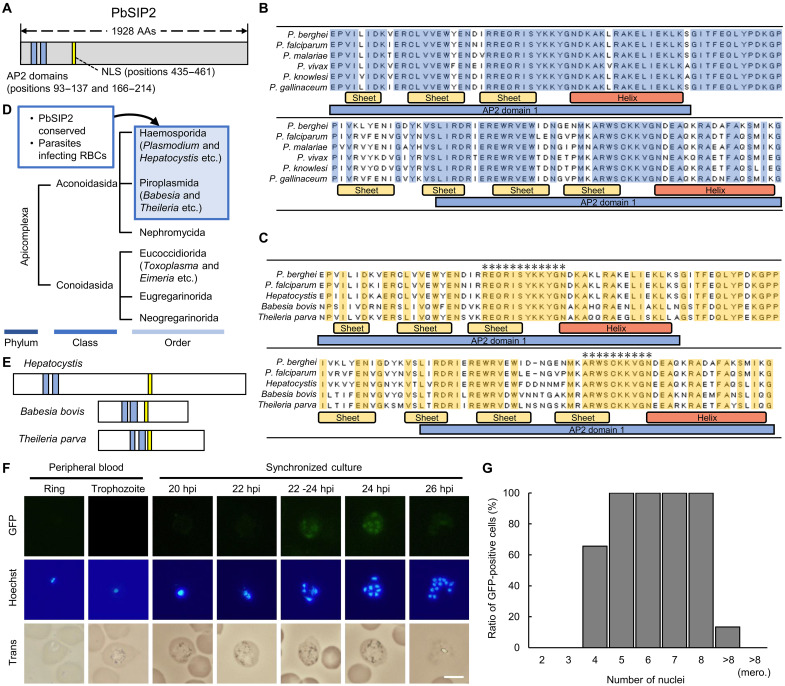
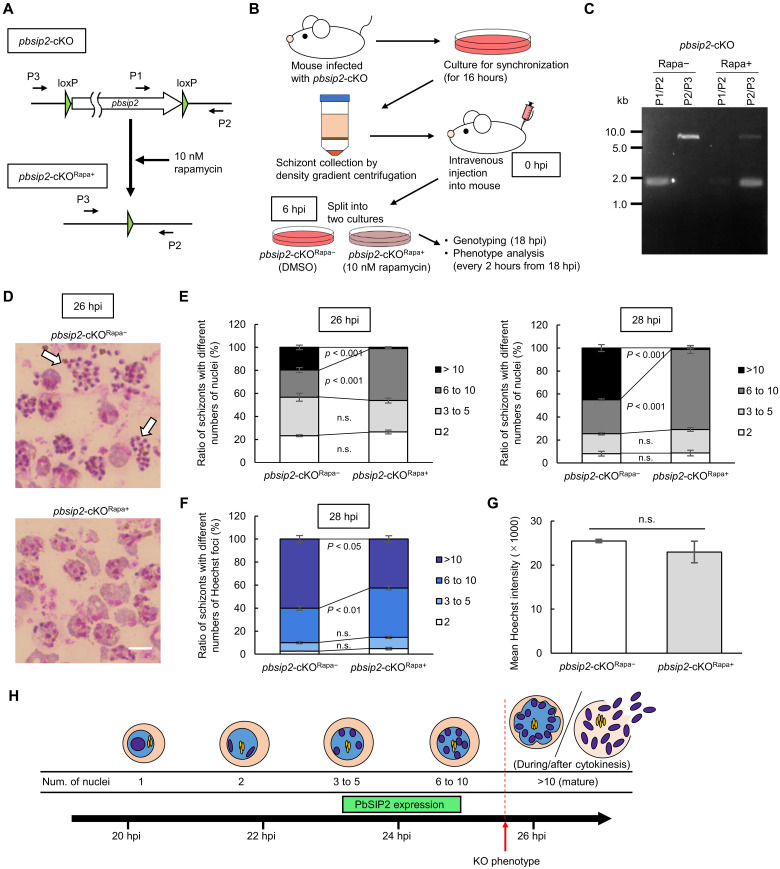
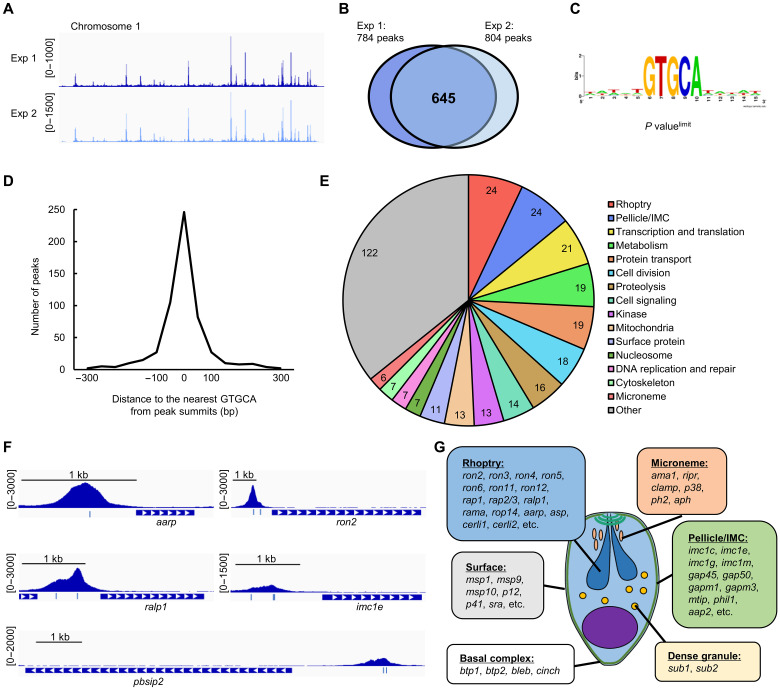
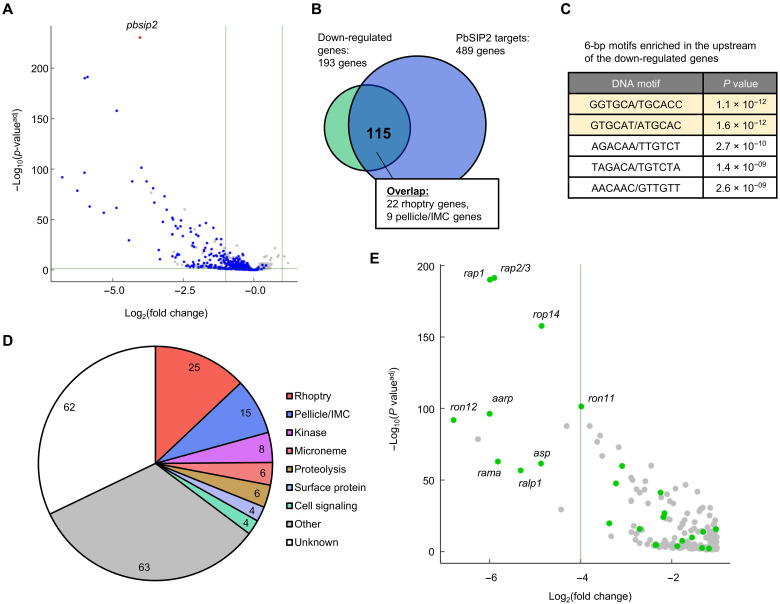
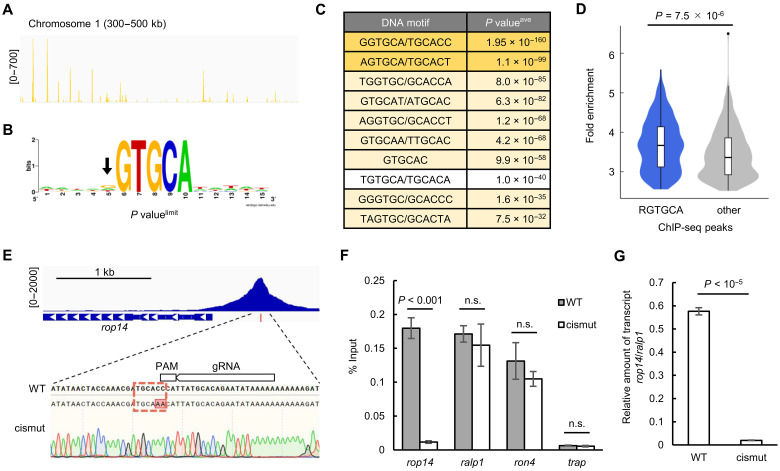
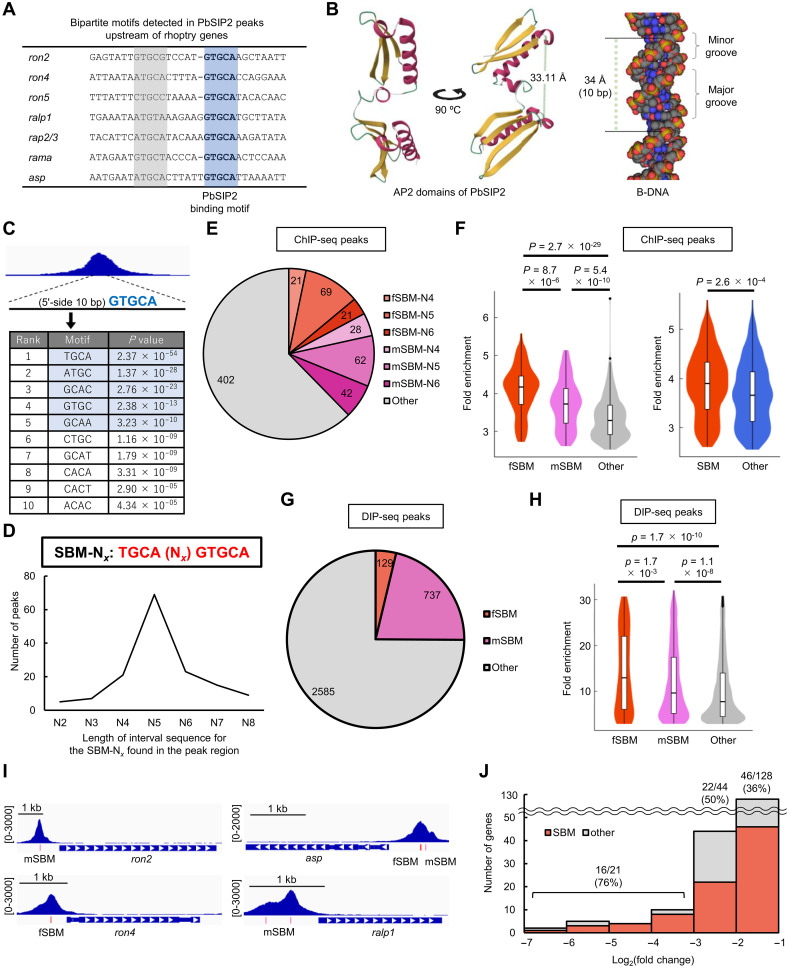
Malaria, one of the most serious infectious diseases worldwide, is caused by the proliferation of Plasmodium parasites through repeated cycles of intraerythrocytic development. The parasite replicates via schizogony in host erythrocytes, producing multiple progeny merozoites that invade new erythrocytes. Although merozoite formation is the most crucial step in malaria pathogenesis, its molecular mechanism remains unclear. SIP2 is an AP2 transcription factor expressed during schizogony and is particularly conserved among erythrocyte-infecting apicomplexan parasites. Here, we reveal that SIP2 in Plasmodium berghei (PbSIP2) functions as the master transcription factor for merozoite formation. Conditional disruption of pbsip2 resulted in developmental arrest before merozoite formation and notable down-regulation of merozoite-related genes. ChIP-seq showed that PbSIP2 comprehensively activated merozoite-related genes by binding to previously reported cis-regulatory elements of merozoite invasion-related genes, including the bipartite motif (TGCAN 4–6 GTGCA). Collectively, our results indicate that SIP2 is a transcription factor that establishes erythrocyte infectivity and may have an evolutionary origin from the common ancestor of erythrocyte-infecting apicomplexan parasites.
Overview
The claims and statistics of this paper haven’t been checked yet.
Run the check — free, no account needed. It reads the open-access text and checks the sources it cites.
Integrity signals
Registry
Cites
Statistics
Figures
Verification
Claims the paper makes
The claims and statistics of this paper haven’t been checked yet.
Run the check — free, no account needed. It reads the open-access text and checks the sources it cites.
Self-check
Percentages, sums and reported differences re-computed from the paper’s own numbers.
The self-check needs the paper’s full text.
Citations
Cites
Highly accurate protein structure prediction with AlphaFold
Jumper, J., Evans, R., Pritzel, A., Green, T., Figurnov, M., Ronneberger, O., Tunyasuvunakool, K., Bates, R., Žídek, A., Potapenko, A., et al. (2021) · Nature · doi:10.1038/s41586-021-03819-2 · Cited by 43,764
The Transcriptome of the Intraerythrocytic Developmental Cycle of Plasmodium falciparum
Bozdech, Z., Llinás, M., Pulliam, B. L., Wong, E. D., Zhu, J., & DeRisi, J. L. (2003) · PLoS Biology · doi:10.1371/journal.pbio.0000005 · Cited by 1,728
Antibiotic Modulation of Capsular Exopolysaccharide and Virulence in Acinetobacter baumannii
Geisinger, E., & Isberg, R. R. (2015) · PLOS Pathogens · doi:10.1371/journal.ppat.1004691 · Cited by 548
Xi, Z., Gavotte, L., Xie, Y., & Dobson, S. L. (2008) · BMC Genomics · doi:10.1186/1471-2164-9-1 · Cited by 531
Balaji, S. (2005) · Nucleic Acids Research · doi:10.1093/nar/gki709 · Cited by 520
Allen, M. D., Yamasaki, K., Ohme-Takagi, M., Tateno, M., & Suzuki, M. (1998) · The EMBO Journal · doi:10.1093/emboj/17.18.5484 · Cited by 492
Identifying critical state of complex diseases by single-sample Kullback–Leibler divergence
Zhong, J., Liu, R., & Chen, P. (2020) · BMC Genomics · doi:10.1186/s12864-020-6490-7 · Cited by 472
A cascade of DNA-binding proteins for sexual commitment and development in Plasmodium
Sinha, A., Hughes, K. R., Modrzynska, K. K., Otto, T. D., Pfander, C., Dickens, N. J., Religa, A. A., Bushell, E., Graham, A. L., Cameron, R., et al. (2014) · Nature · doi:10.1038/nature12970 · Cited by 438
Malaria Parasites and Other Haemosporidia
Brown, H. W. (1967) · JAMA: The Journal of the American Medical Association · doi:10.1001/jama.1967.03130050070044 · Cited by 398
David, P. H., Hommel, M., Miller, L. H., Udeinya, I. J., & Oligino, L. D. (1983) · Proceedings of the National Academy of Sciences · doi:10.1073/pnas.80.16.5075 · Cited by 344
Metadata
- Authors
- Nishi, T., Kaneko, I., & Yuda, M.
- Affiliations
- Mie University (JP)
- Corresponding author
- Yuda, Masao
- Venue
- Science Advances
- Published
- 2025-03-21
- Volume
- 11
- Issue
- 12
- Pages
- eads5458-eads5458
- ISSN
- 2375-2548 (ISSN-L)
- PMC
- PMC11927625
- OpenAlex
- W4408718230
- Cited by
- 5
- References
- 55
- Citations by year
- 2026: 3 · 2025: 2
- FWCI
- 4.53
- Type
- journal article
- Language
- en
- Open access
- gold
- doi.org
- Licence
- cc-by
- Locations
- Science Advances (publishedVersion, cc-by)
- bioRxiv (Cold Spring Harbor Laboratory) (acceptedVersion, cc-by)
- PubMed Central (publishedVersion, cc-by)
- PubMed (publishedVersion)
- Funders
- Japan Society for the Promotion of Science (24K10187, 23K27400)
- Topics
- Health Sciences › Medicine › Public Health, Environmental and Occupational Health › Malaria Research and Control
- Life Sciences › Immunology and Microbiology › Parasitology › Toxoplasma gondii Research Studies
- Life Sciences › Immunology and Microbiology › Parasitology › Bird parasitology and diseases
- Keywords
- SiP2, Plasmodium berghei, schizogony, AP2 transcription factor, erythrocyte invasion, transcriptional regulation, cis-regulatory elements, conditional gene disruption, malaria pathogenesis
- MeSH terms
- Animals, Erythrocytes, Gene Expression Regulation, Malaria, Plasmodium berghei, Transcription Factors, Protozoan Proteins, Mice, Merozoites
About these checks
Registry, retraction, Cites and statistics results are computed, not judged, with one exception: a printed reference that no index lists is read once by a model before it counts as a citation error. Claims are extracted by a model and kept only when their quote appears verbatim in the text; each cited source is then checked, with a model’s help, for whether it says what the claim relies on. Those verdicts can be wrong — read the claim’s quote and the cited source before relying on one.
Statistics and arithmetic are recomputed, not judged.
Confidence bands are shown only for fields calibrated on our annotated test set. None is calibrated yet, so no band is shown.
What counts as a claim ›How we measure confidence ›How we check this ›
Are you an author, or do you see a problem with this page? Request a review
How to cite
Cite CoChat for the checks on this page, and the paper for its own findings.
- This page
- CoChat. (2026). Citation check: SIP2 is the master transcription factor of Plasmodium merozoite formation. https://app.cochat.ai/papers/10.1126/sciadv.ads5458
- The paper
- Nishi, T., Kaneko, I., & Yuda, M. (2025). SIP2 is the master transcription factor of Plasmodium merozoite formation. Science Advances. https://doi.org/10.1126/sciadv.ads5458
Data sources
Bibliographic data: Semantic Scholar, OpenAlex, Crossref.
Contains information from the Semantic Scholar Academic Graph Datasets, made available under the ODC Attribution License (ODC-BY 1.0).
Semantic Scholar’s data is described in: Kinney, R., et al. (2023). The Semantic Scholar Open Data Platform. arXiv:2301.10140.
