

Loss of PILRA promotes microglial immunometabolism to reduce amyloid pathology in cell and mouse models of Alzheimer’s disease
Open accessThe DOI matches its Crossref record; 101 of the 101 references it cites were found in a registry or an index; none of the 41 sources its claims cite is checked for support yet.
Abstract
The Alzheimer’s disease (AD) genetic landscape identified microglia as a key disease-modifying cell type. Paired immunoglobulin-like type 2 receptor alpha (PILRA) is an immunoreceptor tyrosine–based inhibitory motif domain–containing inhibitory receptor, expressed by myeloid cells such as microglia. The known protective PILRA G78R gene variant reduces AD risk in apolipoprotein E4 ( APOE4 ) carriers and is enriched in a cohort of healthy centenarians. However, mechanisms underlying protective effects in microglia are undefined. Here, we identified biological functions of PILRA in human induced pluripotent stem cell–derived microglia (iMG) and chimeric AD mice. PILRA knockout (KO) in iMG rescued ApoE4-mediated immunometabolic deficits and prevented lipotoxicity through increased lipid storage, improved mitochondrial bioenergetics, and antioxidant activity. PILRA KO also enhanced microglial chemotaxis and attenuated inflammation. With pharmacological inhibitor studies, we showed that peroxisome proliferator–activated receptor and signal transducer and activator of transcription 1/3 mediated PILRA -dependent microglial functions. AD mice transplanted with human PILRA KO microglia exhibited reduced amyloid pathology and rescued synaptic markers. A high-affinity ligand blocking PILRA antibody phenocopied PILRA KO iMG. These findings suggest that PILRA is a pharmacologically tractable therapeutic target for AD.
Overview
CoChat Summary
TL;DR
PILRA knockout in human iPSC-derived microglia and xenotransplanted human microglia shifts cells toward an anti-inflammatory, lipid-storing but metabolically fit state, with improved mitochondrial and lysosomal function and reduced cytokine responses. The authors validate a PILRA–APOE4 genetic interaction in ROSMAP and identify an antagonist PILRA antibody that phenocopies PILRA loss, supporting PILRA as a candidate AD therapeutic target.
Key findings
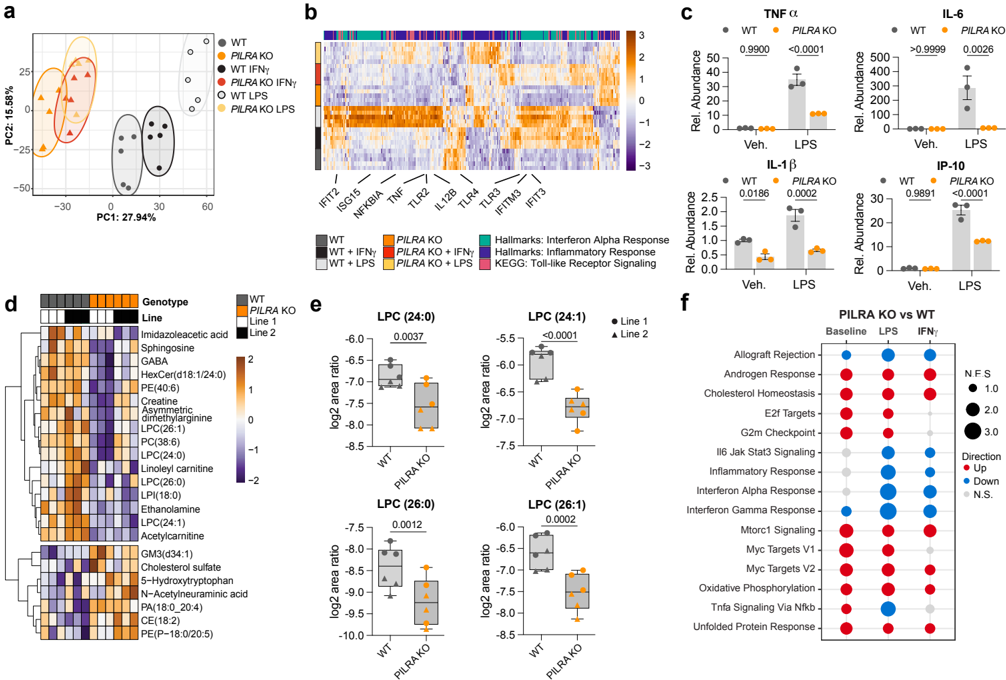
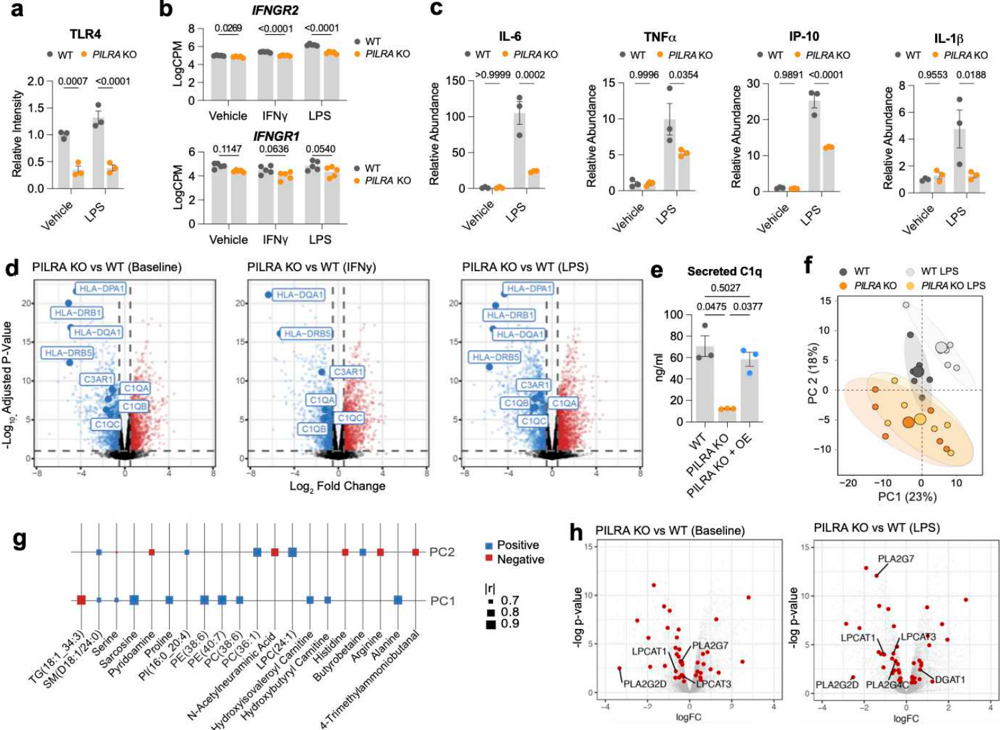
- PILRA KO iMG show attenuated inflammatory responses: after LPS, secretion of IL-6, TNF, IP-10, and IL-1β was significantly reduced; TLR4, IFNGR1/2, HLA, and complement pathway genes were downregulated; C1q secretion was reduced and restored by PILRA overexpression.
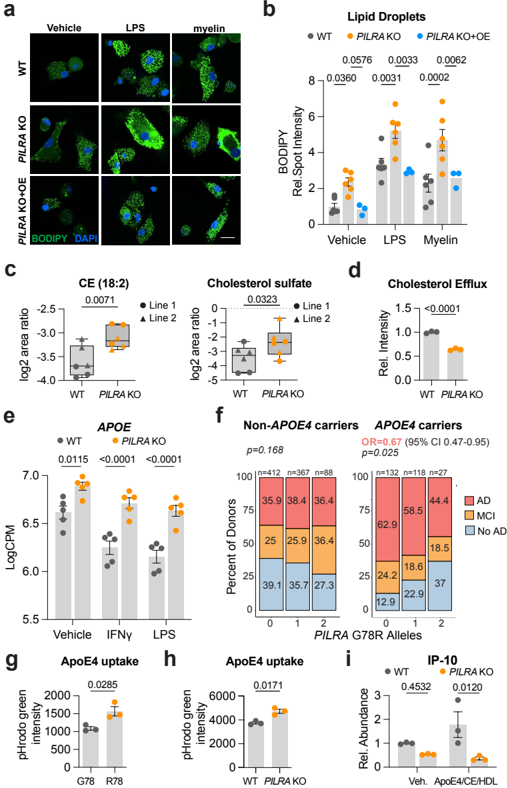
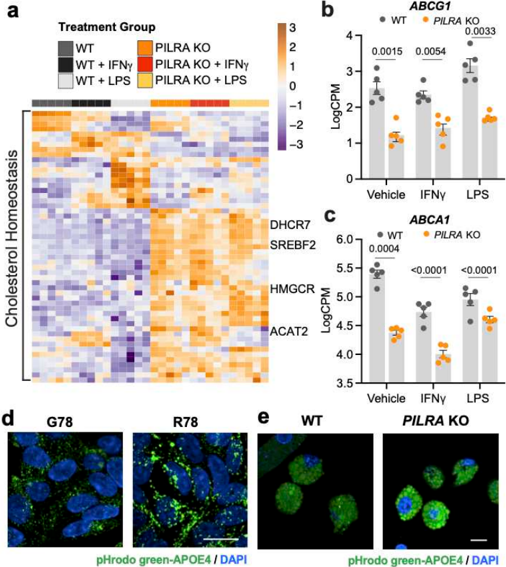
- PILRA KO iMG have altered lipid/cholesterol handling: increased BODIPY lipid droplets after LPS or myelin challenge, increased cholesteryl ester and cholesterol sulfate, reduced cholesterol efflux, increased APOE expression and ApoE4 uptake; all LPC lipids in the panel were significantly reduced and ethanolamine plasmalogens were elevated.
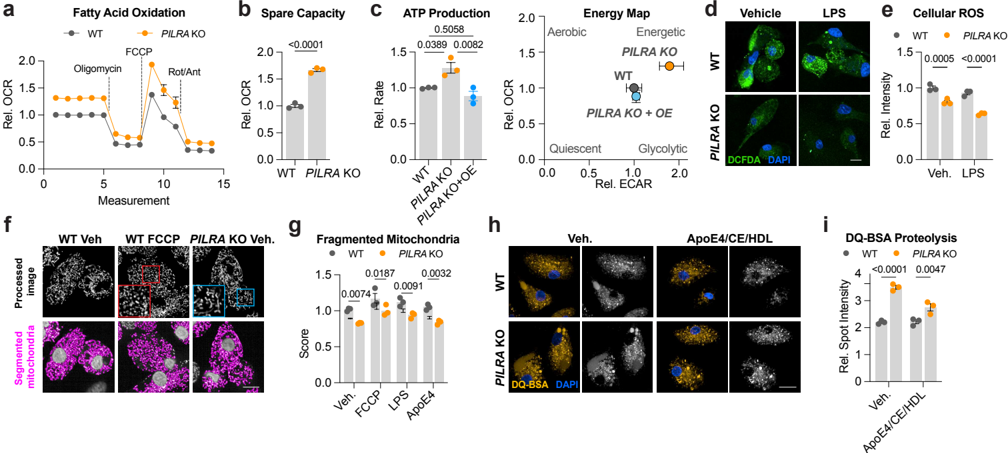
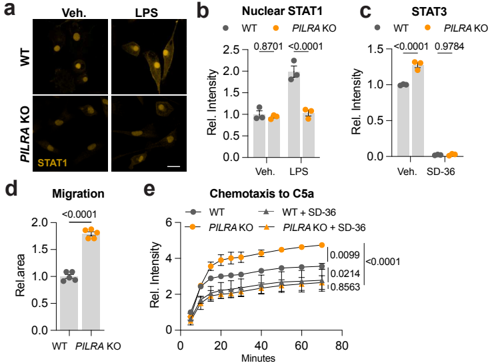
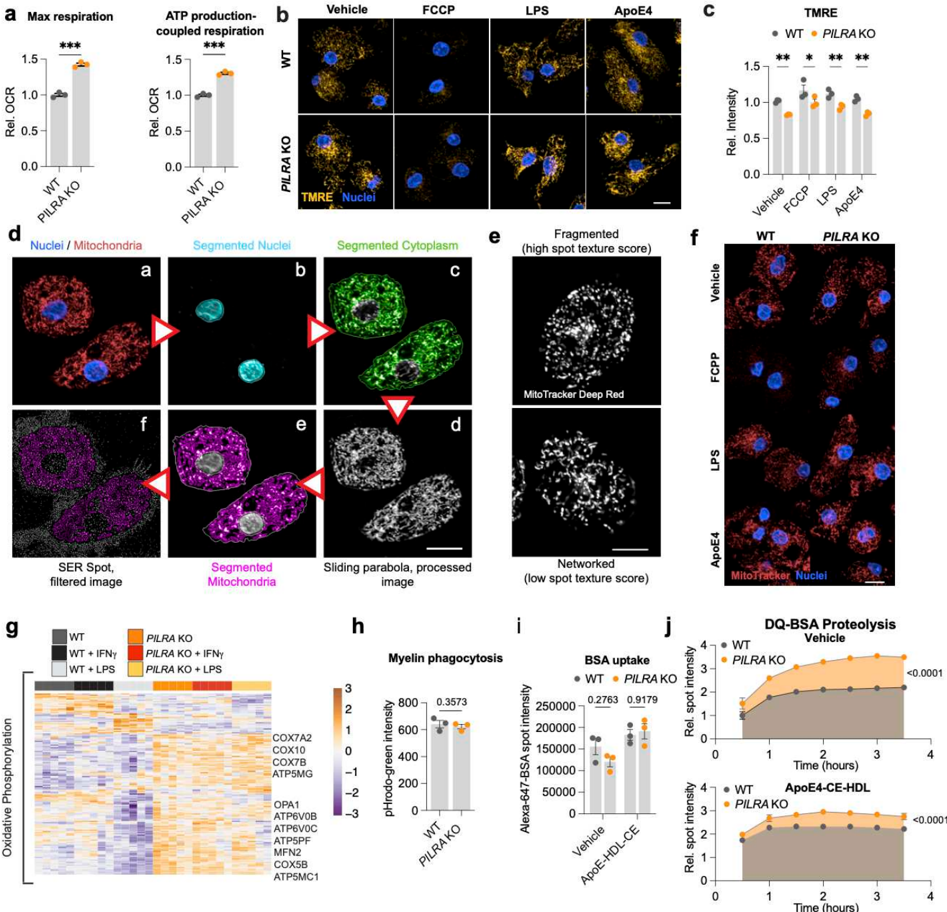
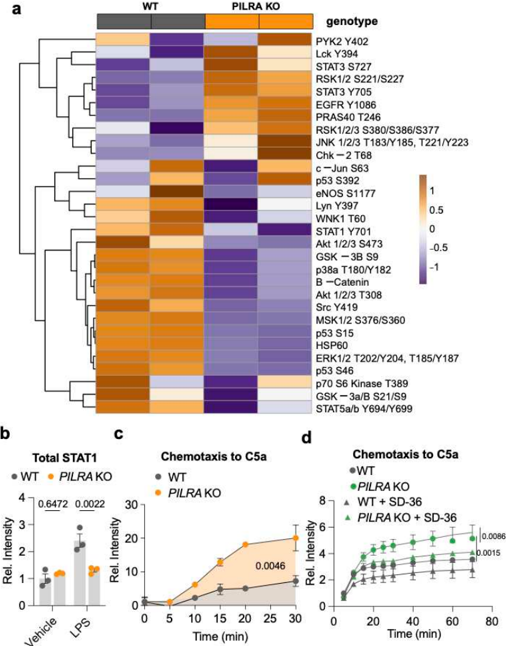
- Despite lipid storage, PILRA KO iMG show increased fatty acid oxidation, spare respiratory capacity, ATP production, mitochondrial membrane potential, reduced ROS and mitochondrial fragmentation, increased lysosomal DQ-BSA proteolysis, and increased migration; STAT1/3 mediate downstream effects, and the STAT3 degrader SD-36 reduces migration.
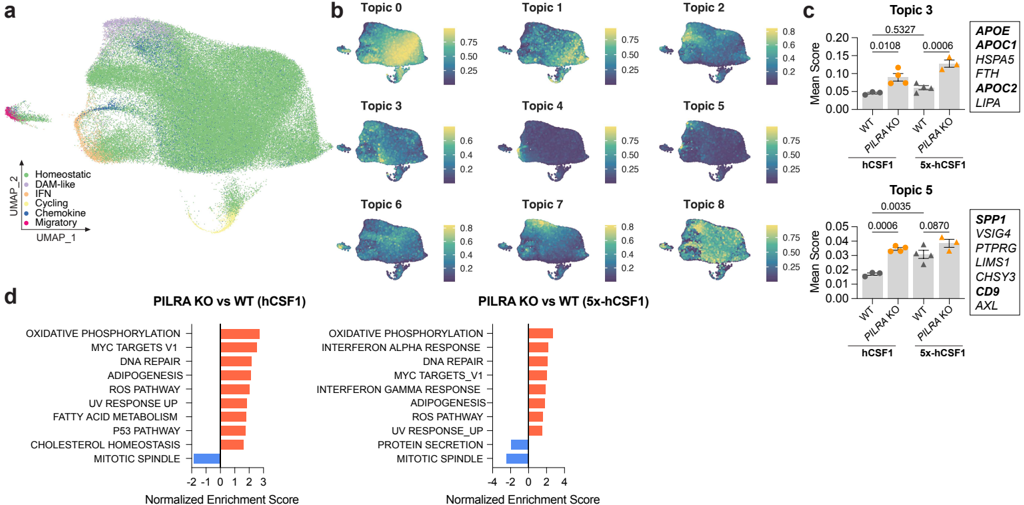
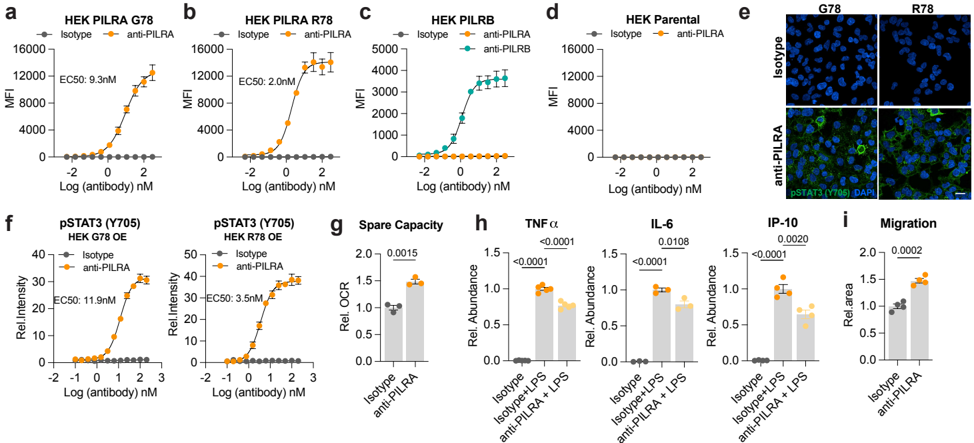
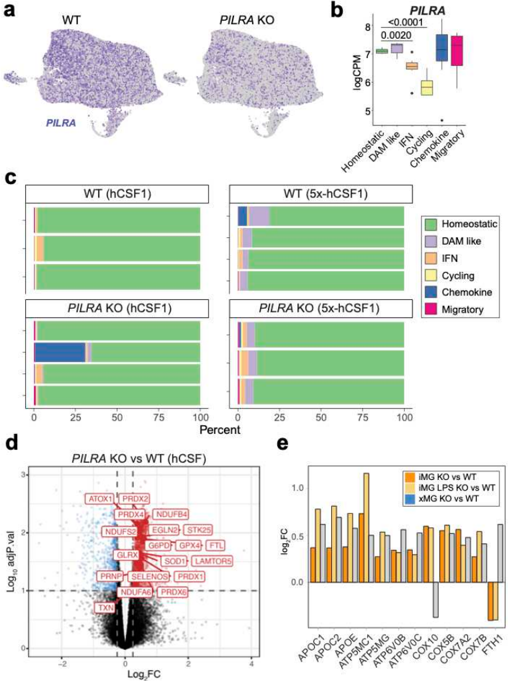
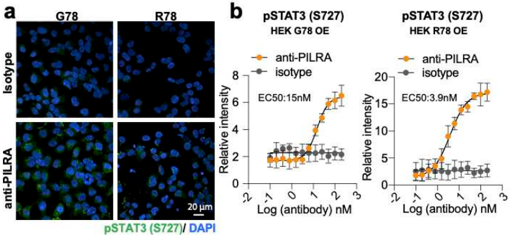
- In ROSMAP, the PILRA G78R protective effect was selective in APOE4 carriers: OR=0.67, p=0.025 (N=277) versus non-carriers p=0.168 (N=867); normal cognition increased from 12.9% to 22.9% with one G78R allele and to 37% with two. In vivo scRNA-seq of xMG showed PILRA KO enriched topics 3/5 (APOE/APOC1/APOC2; SPP1/CD9/AXL) and upregulated oxidative phosphorylation, ROS, and DNA repair pathways. An antagonist PILRA antibody bound G78/R78 PILRA with KD 2.48E-10 M and 9.99E-09 M, respectively, and >10× reduced affinity to PILRB (7.08E-08 M); it phenocopied KO by increasing mitochondrial respiration, reducing LPS-induced cytokines, and promoting migration.
Methods
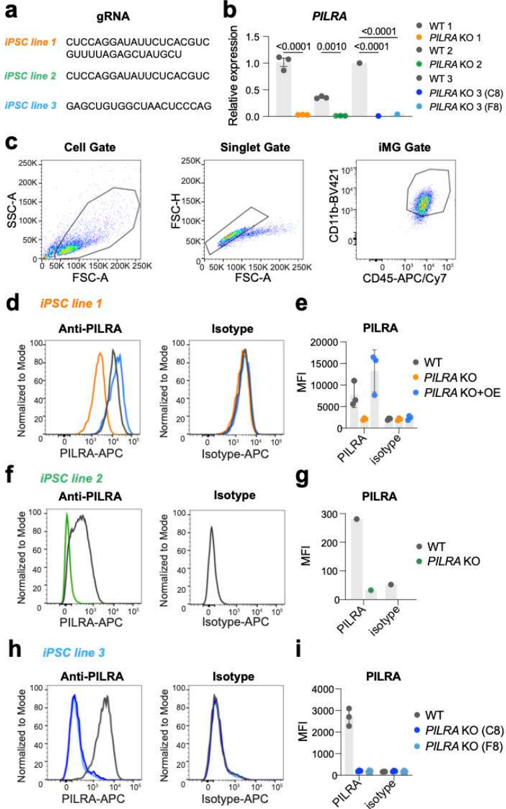
- CRISPR-mediated PILRA KO in three human iPSC lines using three distinct guide RNAs; differentiated into iMG; bulk RNA-seq 24 h after vehicle, IFNγ, or LPS; targeted metabolomics/lipidomics (227 features), Seahorse respiration, confocal imaging, phospho-proteome, cytokine, lysosomal, and migration assays.
- Xenotransplantation: WT or PILRA KO human microglial progenitors carrying CSF1R-G795A were transplanted into hCSF1 and 5x-hCSF1 mice; at 6.5 months, human microglia were isolated for scRNA-seq, with LDA topic modeling and pseudobulk GSEA.
- Human genetics: ROSMAP WGS/metadata; ordinal logistic regression of cognitive diagnosis on PILRA G78R allele count + sex, stratified by APOE4 carrier status (N=1,144 evaluated; 277 APOE4 carriers, 867 non-carriers). Antibody discovery used single B-cell screening, SPR, cell binding, and functional assays.
Limitations
- The paper states: the human genetic link should be further validated in larger cohorts; additional studies are needed to understand how PILRA LOF modifies APOE4; whether KO phenotypes translate to the protective PILRA variant is unknown; lack of murine PILRA homology necessitates humanized models; antibody CNS access is limited by the blood-brain barrier, so ATV:PILRA models are needed; antibody efficacy in AD mouse models is not addressed.
- Text-evident: one in vivo scRNA-seq sample was excluded because of a sporadic infection; microglial state abundance was not altered by PILRA KO at 6.5 months; no direct amyloid plaque pathology outcome is reported in the provided full text despite the bibliographic title; the ROSMAP analysis is observational and cannot establish causality.
Model-written summary. Check it against the paper before relying on it.
Integrity signals
Registry
Cites
Statistics
Figures
Verification
Claims the paper makes
0 Valid · 2 Not valid · 30 Not checked · 143 Own results and interpretations
A result the paper reports from its own data — it cites no other source for it, so there is none to check. The quote shows it is in the paper.
In the paper
“concomitant with reduced gene expression of the lipid efflux transporters ABCG1 and ABCA1 (Extended Data Fig. 3B, C)”
§ PILRA regulates microglial neuroinflammation and lipid metabolism as a candidate therapeutic target for Alzheimer's disease > PILRA regulates cholesterol metabolism and modifies AD risk in APOE4 carriers
plainstates a cause- Asserted: passes — The authors put it forward as true.
- Checkable: passes — It can be checked against evidence.
- Load-bearing: passes — The paper’s conclusions depend on it.
- Based: passes — The paper gives a reason why it holds.
A result the paper reports from its own data — it cites no other source for it, so there is none to check. The quote shows it is in the paper.
In the paper
“Topics 3 and 5 were strongly enriched for average per-cell membership among PILRA KO xMG (Fig. 5C).”
§ PILRA regulates microglial neuroinflammation and lipid metabolism as a candidate therapeutic target for Alzheimer's disease > PILRA regulates microglial transcriptional responses in an AD mouse model
boostedstates an association- Asserted: passes — The authors put it forward as true.
- Checkable: passes — It can be checked against evidence.
- Load-bearing: passes — The paper’s conclusions depend on it.
- Based: passes — The paper gives a reason why it holds.
A result the paper reports from its own data — it cites no other source for it, so there is none to check. The quote shows it is in the paper.
In the paper
“Topic 5 was most strongly defined by the DAM genes SPP1 (Osteopontin), CD9, and AXL.”
§ PILRA regulates microglial neuroinflammation and lipid metabolism as a candidate therapeutic target for Alzheimer's disease > PILRA regulates microglial transcriptional responses in an AD mouse model
boostedstates an association- Asserted: passes — The authors put it forward as true.
- Checkable: passes — It can be checked against evidence.
- Load-bearing: unclear — It is unclear whether the paper’s conclusions depend on it.
- Based: passes — The paper gives a reason why it holds.
A result the paper reports from its own data — it cites no other source for it, so there is none to check. The quote shows it is in the paper.
In the paper
“APOE4 carriers 0 1 2 p=0.025OR=0.67 (95% CI 0.47-0.95)”
§ PILRA regulates microglial neuroinflammation and lipid metabolism as a candidate therapeutic target for Alzheimer's disease > Recombinant expression and antibody purification
plainstates an association- Asserted: passes — The authors put it forward as true.
- Checkable: passes — It can be checked against evidence.
- Load-bearing: unclear — It is unclear whether the paper’s conclusions depend on it.
- Based: passes — The paper gives a reason why it holds.
A result the paper reports from its own data — it cites no other source for it, so there is none to check. The quote shows it is in the paper.
In the paper
“Pro-inflammatory cytokine secretion, including IL-6, TNF, IP-10 (CXCL10), and IL-1, was significantly reduced in PILRA KO iMG compared to WT in two iPSC lines after LPS treatment (Fig. 1C, Extended Fig. 2C).”
§ PILRA regulates microglial neuroinflammation and lipid metabolism as a candidate therapeutic target for Alzheimer's disease > PILRA KO microglia demonstrate anti-inflammatory responses
plainstates a cause- Asserted: passes — The authors put it forward as true.
- Checkable: passes — It can be checked against evidence.
- Load-bearing: passes — The paper’s conclusions depend on it.
- Based: passes — The paper gives a reason why it holds.
90 more claims
Create a free account to see all 175 claims and every source verdict.
- It may state two separate claims as one. 53
- Probably not a substantial claim. 39
Self-check
Percentages, sums and reported differences re-computed from the paper’s own numbers.
Each contradiction between two passages listed here was confirmed by an independent check.
Rated minor: it would not touch a result — a value no result rests on, a p-value that stays on the same side of the significance level, or a conflict that is clerical, resolved elsewhere in the paper, or outside its own findings.
In the paper
§ PILRA regulates microglial neuroinflammation and lipid metabolism as a candidate therapeutic target for Alzheimer's disease > Identification of a PILRA antagonist antibody that functionally impacts microglia
“including binding to both human G78 and R78 PILRA, and >10x reduced affinity to human PILRB (Table 1).”
§ PILRA regulates microglial neuroinflammation and lipid metabolism as a candidate therapeutic target for Alzheimer's disease > Recombinant expression and antibody purification
“Human R78 PILRA 9.99E-09 Heat killed HSV-1 virus Y hPILRA R78 2.0+/-0.433.5+/-0.293.9+/-1.7Human PILRB 7.08E-08”
Rated minor: it would not touch a result — a value no result rests on, a p-value that stays on the same side of the significance level, or a conflict that is clerical, resolved elsewhere in the paper, or outside its own findings.
In the paper
§ PILRA regulates microglial neuroinflammation and lipid metabolism as a candidate therapeutic target for Alzheimer's disease > PILRA KO microglia demonstrate anti-inflammatory responses
“Notably, all lysophosphatidylcholine (LPC) lipids in the panel were significantly reduced in PILRA KO iMG (Fig. 2D, E).”
§ PILRA regulates microglial neuroinflammation and lipid metabolism as a candidate therapeutic target for Alzheimer's disease > Recombinant expression and antibody purification
“(d) Cholesterol efflux measured by BODIPY-labeled cholesterol in the supernatant iMG.Abundance was normalized to WT for each experiment (n=3; Unpaired t-test; Mean +/-SEM).(e) APOE gene expression 24 hours after stimulation”
Citations
Cites
Subramanian, A., Tamayo, P., Mootha, V. K., Mukherjee, S., Ebert, B. L., Gillette, M. A., Paulovich, A., Pomeroy, S. L., Golub, T. R., Lander, E. S., et al. (2005) · Proceedings of the National Academy of Sciences · doi:10.1073/pnas.0506580102 · Cited by 53,625
STAR: ultrafast universal RNA-seq aligner
Dobin, A., Davis, C. A., Schlesinger, F., Drenkow, J., Zaleski, C., Jha, S., Batut, P., Chaisson, M., & Gingeras, T. R. (2013) · Bioinformatics · doi:10.1093/bioinformatics/bts635 · Cited by 51,709
limma powers differential expression analyses for RNA-sequencing and microarray studies
Ritchie, M. E., Phipson, B., Wu, D., Hu, Y., Law, C. W., Shi, W., & Smyth, G. K. (2015) · Nucleic Acids Research · doi:10.1093/nar/gkv007 · Cited by 40,458
featureCounts: an efficient general purpose program for assigning sequence reads to genomic features
Liao, Y., Smyth, G. K., & Shi, W. (2014) · Bioinformatics · doi:10.1093/bioinformatics/btt656 · Cited by 27,219
Phaser crystallographic software
McCoy, A. J., Grosse-Kunstleve, R. W., Adams, P. D., Winn, M. D., Storoni, L. C., & Read, R. J. (2007) · Journal of Applied Crystallography · doi:10.1107/s0021889807021206 · Cited by 20,612
A global reference for human genetic variation
The 1000 Genomes Project Consortium, authors, C., Auton, A., Abecasis, G. R., Steering committee, Altshuler, D. M., Durbin, R. M., Abecasis, G. R., Bentley, D. R., Chakravarti, A., et al. (2015) · Nature · doi:10.1038/nature15393 · Cited by 18,247
Comprehensive Integration of Single-Cell Data
Stuart, T., Butler, A., Hoffman, P., Hafemeister, C., Papalexi, E., Mauck, W. M., Hao, Y., Stoeckius, M., Smibert, P., & Satija, R. (2019) · Cell · doi:10.1016/j.cell.2019.05.031 · Cited by 15,453
Second-generation PLINK: rising to the challenge of larger and richer datasets
Chang, C. C., Chow, C. C., Tellier, L. C., Vattikuti, S., Purcell, S. M., & Lee, J. J. (2015) · Gigascience · doi:10.1186/s13742-015-0047-8 · Cited by 12,709
The mutational constraint spectrum quantified from variation in 141,456 humans
Karczewski, K. J., Francioli, L. C., Tiao, G., Cummings, B. B., Alföldi, J., Wang, Q., Collins, R. L., Laricchia, K. M., Ganna, A., Birnbaum, D. P., et al. (2020) · Nature · doi:10.1038/s41586-020-2308-7 · Cited by 9,434
Dictionary learning for integrative, multimodal and scalable single-cell analysis
Hao, Y., Stuart, T., Kowalski, M. H., Choudhary, S., Hoffman, P., Hartman, A., Srivastava, A., Molla, G., Madad, S., Fernandez-Granda, C., et al. (2024) · Nature Biotechnology · doi:10.1038/s41587-023-01767-y · Cited by 5,631
Cited by
Elyaman, W., Stern, L. J., Jiang, N. J., Dressman, D., Bradley, P. H., Klatzmann, D., Bradshaw, E. M., Färber, D. L., Kent, S. C., Chizari, S., et al. (2025) · Alzheimer s & Dementia · doi:10.1002/alz.14548 · Cited by 23
Alzheimer’s disease and age-related macular degeneration: Shared and distinct immune mechanisms
Butovsky, O., & Rosenzweig, N. (2025) · Immunity · doi:10.1016/j.immuni.2025.04.013 · Cited by 22
Papetti, A. V., Jin, M., Ma, Z., Stillitano, A. C., & Jiang, P. (2025) · Neuron · doi:10.1016/j.neuron.2025.03.036 · Cited by 19
Therapeutic targeting of neuroimmune mechanisms in neurodegeneration
Monroe, K. M., Hong, S. Y., Lewcock, J. W., & Yang, A. C. (2026) · Nature Reviews Drug Discovery · doi:10.1038/s41573-025-01370-7 · Cited by 17
Self-citationZhan, H., Cammann, D., Cummings, J. L., Dong, X., & Chen, J. (2025) · Journal of Translational Medicine · doi:10.1186/s12967-025-06317-5 · Cited by 17
Metadata
- Authors
- Weerakkody, T. N., Sabelström, H., Andrews, S. V., Chadarevian, J. P., Chin, M. Y., Tatarakis, D., Propson, N. E., Kim, D. J., Theolis, R., Parico, G. C. G., Misker, H., Kung, J. E., Bandyopadhyay, A., Robles Colmenares, Y., Jackson, T.-N., Qerqez, A. N., Balasundar, S., Davis, S. S., Ha, C., Ghosh, R., Ravi, R., Rana, A., Germain, K., Tao, A., Xiong, K., Braun, D., Raju, K., Huang, K.-C., Zhan, L., Guo, J. L., Safari Yazd, H., Sarrafha, L., Capocchi, J. K., Hasselmann, J., Chadarevian, A. L., Tu, C., Mansour, K., Eskandari-Sedighi, G., Tesi, N., van der Lee, S., Hulsman, M., Oshegov, G., Pijnenburg, Y., Calvert, M., Holstege, H., Suh, J. H., Di Paolo, G., Davtyan, H., Lewcock, J. W., Blurton-Jones, M., & Monroe, K. M.
- Affiliations
- Denali Therapeutics (United States) (US)
- University of California, Irvine (US)
- Denali Therapeutics Inc., South San Francisco, CA 94080 USA.
- Institute for Memory Impairments and Neurological Disorders, Irvine, CA 92697 USA.
- Delft Bioinformatics Lab, Delft University of Technology, Mekelweg 2, 2628CD Delft, Netherlands.
- Amsterdam Neuroscience (NL)
- Amsterdam UMC (NL)
- Corresponding author
- Weerakkody, Tanya N.
- Sabelström, Hanna
- Blurton-Jones, Mathew
- Monroe, Kathryn M.
- ORCID
- Weerakkody, Tanya N.
- Sabelström, Hanna
- Andrews, Shan V.
- Chadarevian, Jean Paul
- Chin, Marcus Y.
- Tatarakis, David
- Propson, Nicholas E.
- Kim, Do Jin
- Theolis, Richard
- Parico, Gian Carlo G.
- Misker, Hiwot
- Kung, Jennifer E.
- Bandyopadhyay, Abira
- Jackson, Taggra-Nicole
- Qerqez, Ahlam N.
- Davis, Sonnet S.
- Ha, Connie
- Ghosh, Rajarshi
- Ravi, Ritesh
- Germain, Kyla
- Xiong, Ken
- Braun, Dylan
- Huang, Kang-Chieh
- Zhan, Lihong
- Guo, Jing L.
- Sarrafha, Lily
- Capocchi, Joia Kai
- Hasselmann, Jonathan
- Tu, Christina
- Mansour, Kimiya
- Eskandari-Sedighi, Ghazaleh
- Tesi, Niccolò
- van der Lee, Sven
- Hulsman, Marc
- Pijnenburg, Yolande
- Calvert, Meredith
- Holstege, Henne
- Suh, Jung H.
- Di Paolo, Gilbert
- Davtyan, Hayk
- Lewcock, Joseph W.
- Blurton-Jones, Mathew
- Monroe, Kathryn M.
- Venue
- Science Translational Medicine
- Published
- 2025-12-03
- Volume
- 17
- Issue
- 827
- Pages
- eadw7428-eadw7428
- ISSN
- 1946-6234 (ISSN-L)
- 1946-6242
- OpenAlex
- W4416965452
- Semantic Scholar
- 1bbf3fac7e3d8dc65a37959d5e1c968d8f2b3514
- Cited by
- 21
- References
- 90
- Citations by year
- 2026: 12 · 2025: 8
- FWCI
- 5.75
- Type
- journal article
- Language
- en
- Open access
- green
- doi.org
- Licence
- cc-by
- Locations
- Science Translational Medicine (publishedVersion)
- Research Square (submittedVersion, cc-by)
- PubMed (publishedVersion)
- Lirias (publishedVersion)
- Pure Amsterdam UMC (publishedVersion)
- Funders
- National Institutes of Health (AG066519, AG069701, AG073787, AG061895, T32 AG073088, T32 AG000096)
- U.S. Department of Energy (DE-AC02-76SF00515, P30-GM133894)
- National Institute of Diabetes and Digestive and Kidney Diseases (U2C-DK119886)
- National Institute of Aging (P30-AG10161, R01-AG15819, R01-AG17917, U01-AG32984, U01-AG46152, U01-AG046170, U01-AG046139, U24-AG061340, U01-AG61356)
- Topics
- Life Sciences › Neuroscience › Neurology › Neuroinflammation and Neurodegeneration Mechanisms
- Life Sciences › Neuroscience › Cellular and Molecular Neuroscience › Alzheimer's disease research and treatments
- Life Sciences › Biochemistry, Genetics and Molecular Biology › Molecular Biology › Inflammasome and immune disorders
- Keywords
- Alzheimer's disease, microglia, immunometabolism, amyloid pathology, APOE ε4, lipotoxicity, fat deposition, mitochondrial bioenergetics, antioxidant activity, microglial chemotaxis, neuroinflammation, PPAR signaling, STAT1/3 signaling, induced pluripotent stem cell-derived microglia, chimeric mouse model, synaptic markers, therapeutic target
- MeSH terms
- Alzheimer Disease, Amyloid, Animals, Disease Models, Animal, Humans, Inflammation, Mitochondria, Receptors, Immunologic, Microglia, Mice, Knockout, Mice, Induced Pluripotent Stem Cells
About these checks
Registry, retraction, Cites and statistics results are computed, not judged, with one exception: a printed reference that no index lists is read once by a model before it counts as a citation error. Claims are extracted by a model and kept only when their quote appears verbatim in the text; each cited source is then checked, with a model’s help, for whether it says what the claim relies on. Those verdicts can be wrong — read the claim’s quote and the cited source before relying on one.
A language model drew the claims from the paper on 2026-11-26, under version 3 of the claim definition (model deepseek-v4.1-flash, prompt extract-v3).
A second model labelled each claim on 2026-11-26 (model jev-1.13-20260917, definition revision gold-guideline-v0.2).
Statistics and arithmetic are recomputed, not judged.
Confidence bands are shown only for fields calibrated on our annotated test set. None is calibrated yet, so no band is shown.
What counts as a claim ›How we measure confidence ›How we check this ›
Are you an author, or do you see a problem with this page? Request a review
Data sources
Bibliographic data: Semantic Scholar, OpenAlex, Crossref.
Contains information from the Semantic Scholar Academic Graph Datasets, made available under the ODC Attribution License (ODC-BY 1.0).
Semantic Scholar’s data is described in: Kinney, R., et al. (2023). The Semantic Scholar Open Data Platform. arXiv:2301.10140.
