

Safety and Pharmacokinetics of CD101 IV, a Novel Echinocandin, in Healthy Adults
Open accessThe DOI matches its Crossref record; 36 of the 36 references it cites were found in a registry or an index.
Abstract
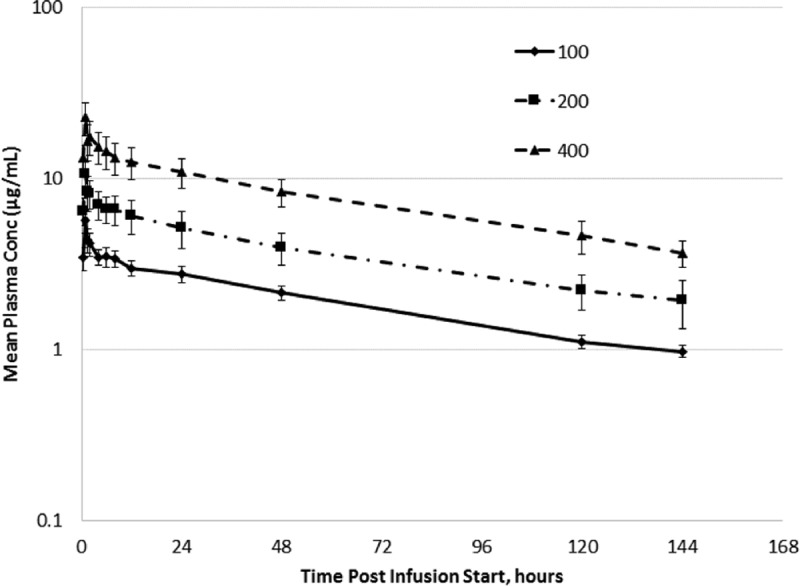
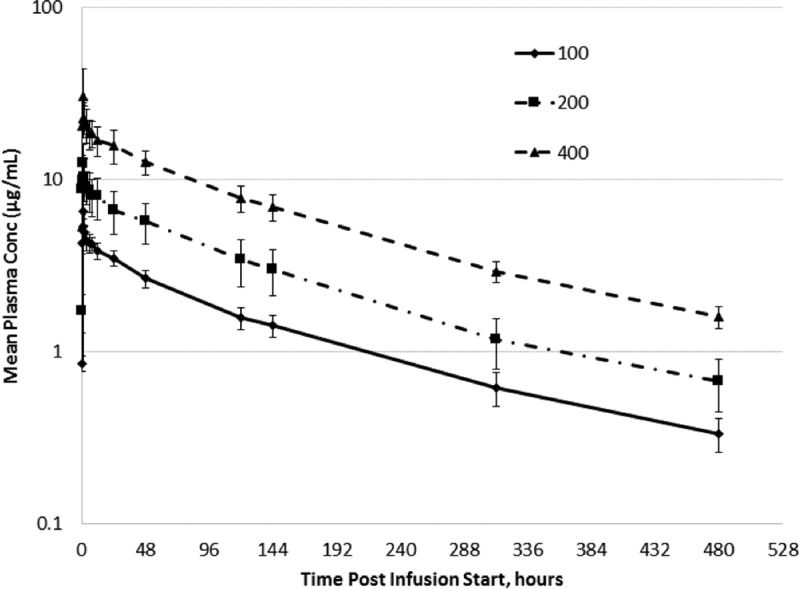
CD101 IV is a novel echinocandin with distinctive pharmacokinetic properties that is being developed as a once-weekly treatment for candidemia and invasive candidiasis. CD101 has potent in vitro activity and in vivo efficacy against a broad range of Candida and Aspergillus species. The primary objective of two randomized, double-blind, placebo-controlled, dose-escalation studies in healthy adults was to determine the safety and tolerability of CD101 IV. Sequential cohorts of 8 subjects ( n = 6, active; n = 2, placebo) were administered single (50, 100, 200, 400 mg) or multiple once-weekly (100 mg given once weekly for two weeks [×2], 200 mg ×2, 400 mg ×3) doses of CD101 IV infused over 1 h. There were no deaths, serious adverse events (SAEs), severe adverse events (AEs), or withdrawals from the study due to an AE. The majority of AEs were mild, and all completely resolved. There was a higher incidence of total AEs and mild transient infusion reactions in the 400-mg ×3 dose group. There were no clinically meaningful trends in postbaseline laboratory abnormalities and no safety issues related to electrocardiograms, vital signs, or physical exams. CD101 showed dose-proportional plasma exposures, minor accumulation (30% to 55%), low apparent clearance (<0.28 liter/h), long half-life ( t 1/2 ) (>80 h), and minimal urine excretion. CD101 IV was safe and well tolerated at single and multiple doses of up to 400 mg given once weekly for 3 weeks and exhibited a long t 1/2 , minimal accumulation over several weeks, negligible renal excretion, and high plasma exposures enabling once-weekly dosing.
Overview
The claims and statistics of this paper haven’t been checked yet.
Free: it reads the open-access text and checks the first 5 claims that cite a source we can check. Create a free account to check every claim.
Integrity signals
Registry
Cites
Statistics
Figures
Verification
Claims the paper makes
The claims and statistics of this paper haven’t been checked yet.
Free: it reads the open-access text and checks the first 5 claims that cite a source we can check. Create a free account to check every claim.
Claims other papers make about this one
Each is checked against this paper’s own text: does it say what the citing paper says it does?
The source backs part of the claim, not all of it — or backs it for a different population, condition or comparison.
In the citing paper
“It is highly soluble in aqueous systems and has a half-life of over 130 h in humans, compared to 24, 9–11, 10–17 h half-lives of anidulafungin, caspofungin, and micafungin, respectively (Kofla and Ruhnke, 2011; Sandison et al., 2017).”
From Fungal Cell Wall: Emerging Antifungals and Drug Resistance. (2019) · cites this paper as Sandison et al., 2017
Experimental — accuracy not yet measured
Self-check
Percentages, sums and reported differences re-computed from the paper’s own numbers.
The self-check needs the paper’s full text.
Citations
Cites
Wisplinghoff, H., Bischoff, T., Tallent, S. M., Seifert, H., Wenzel, R. P., & Edmond, M. B. (2004) · Clinical Infectious Diseases · doi:10.1086/421946 · Cited by 4,496
Multistate point-prevalence survey of health care-associated infections
Magill, S. S., Edwards, J. R., Bamberg, W., Beldavs, Z. G., Dumyati, G., Kainer, M. A., Lynfield, R., Maloney, M., McAllister-Hollod, L., Nadle, J., et al. (2014) · New England Journal of Medicine · doi:10.1056/nejmoa1306801 · Cited by 3,931
Craig, W. A. (1998) · Clinical Infectious Diseases · doi:10.1086/516284 · Cited by 2,908
Pappas, P. G., Kauffman, C. A., Andes, D. R., Clancy, C. J., Marr, K. A., Ostrosky-Zeichner, L., Reboli, A. C., Schuster, M. G., Vazquez, J. A., Walsh, T. J., et al. (2016) · Clinical Infectious Diseases · doi:10.1093/cid/civ1194 · Cited by 1,298
Morrell, M., Fraser, V. J., & Kollef, M. H. (2005) · Antimicrobial Agents and Chemotherapy · doi:10.1128/aac.49.9.3640-3645.2005 · Cited by 1,286
Garey, K. W., Rege, M., Pai, M. P., Mingo, D. E., Suda, K. J., Turpin, R. S., & Bearden, D. T. (2006) · Clinical Infectious Diseases · doi:10.1086/504810 · Cited by 1,171
Antifungal drug resistance: mechanisms, epidemiology, and consequences for treatment
Pfaller, M. A. (2012) · The American Journal of Medicine · doi:10.1016/j.amjmed.2011.11.001 · Cited by 903
Epidemiology of Invasive Mycoses in North America
Pfaller, M. A., & Diekema, D. J. (2010) · Critical Reviews in Microbiology · doi:10.3109/10408410903241444 · Cited by 901 · cited 2×
“5) 699 (97) 696 (97) 969 (98) 790 (98) Abnormal—not clinically significant 19 (4) 0 16 (3) 5 (1) 18 (3) 21 (3) 24 (3) 21 (2) 20 (3)”
Alexander, B. D., Johnson, M. D., Pfeiffer, C. D., Jiménez-Ortigosa, C., Catania, J., Booker, R., Castanheira, M., Messer, S. A., Perlin, D. S., & Pfaller, M. A. (2013) · Clinical Infectious Diseases · doi:10.1093/cid/cit136 · Cited by 778 · cited 2×
“Hematologyc Normal 78 (87) 80 (99) 89 (99) 88 (98) 115 (96) 136 (94) 137 (95) 198 (100) 159 (98) Abnormal—not clinically significant 12 (13) 2 (2) 1 (1) 2 (2) 5 (4) 8 (6) 7 (5) 0 3 (2)”
BackgroundCorrelation of Antimicrobial Pharmacokinetic Parameters with Therapeutic Efficacy in an Animal Model
Vogelman, B., Gudmundsson, S., Leggett, J., Turnidge, J., Ebert, S., & Craig, W. A. (1988) · The Journal of Infectious Diseases · doi:10.1093/infdis/158.4.831 · Cited by 720 · cited 1×
“All TEAEs 3 (50) 0 3 (50) 1 (17) 5 (63) 3 (50) 2 (33) 4 (67) 2 (33) Abdominal distension 0 0 0 0 0 0 0 1 (17) 0 Abdominal pain 0 0 1 (17) 0 0 0 0 1 (17) 0 Abdominal pain lower 0 0 0 0 1 (13) 0 0 0 0 Alopecia 0 0 0 0 0 0 0 1 (17) 0 Aphthous stomatitis 0 0 1 (17) 0 0 0 0 1 (17) 0 Arthralgia 0 0 0 0 2 (25) 0 0 0 0 Arthro…”
Research works printed but not linked: 1
- Pfizer Roerig. 11 2013 Eraxis (anidulafungin) (package insert). Pfizer Roerig, New York, NY http://labeling.pfizer.com/showlabeling.aspx?id=566 Accessed 19 October 2016.
Cited by
Items 101–165 of 165
Balázsi, D., Tóth, Z., Locke, J. B., Borman, A. M., Forgács, L., Balla, N., Kovács, F., Kovács, R., Amano, C., Baran, T. I., et al. (2024) · Journal of Fungi · doi:10.3390/jof10090617 · Cited by 17
“…profile of rezafungin in humans is favorable; one study showed that a single dose of 400 mg resulted in a C max of 22.7 ± 3.59 mg/L, AUC 0–168 of 1160 ± 170 mg · h/L, and half-life of 129 ± 18.6 h, which are significantly higher than those of the three previously approved echinocandins [34].”
BackgroundInfluentialHonoré, P. M., Bassetti, M., Cornely, O. A., Dupont, H., Fortün, J., Kollef, M. H., Pappas, P. G., Pullman, J. R., Vázquez, J. A., Bielicka, I., et al. (2024) · Critical Care · doi:10.1186/s13054-024-05152-2 · Cited by 19
“As noted by Thompson et al. in the primary publication from the ReSTORE study [22], the efficacy of echino-candins is dependent on drug concentrations within the target tissues, as the echinocandin class exhibits concentration-dependent fungal killing [20].”
BackgroundResultSelf-citationInnovative therapies for invasive fungal infections in preclinical and clinical development
Yu, Y., Albrecht, K., Gröll, J., & Beilhack, A. (2020) · Expert Opinion on Investigational Drugs · doi:10.1080/13543784.2020.1791819 · Cited by 19
Arendrup, M. C., Arıkan-Akdağlı, S., Castanheira, M., Guinea, J., Locke, J. B., Meletiadis, J., & Zaragoza, Ó. (2022) · Journal of Antimicrobial Chemotherapy · doi:10.1093/jac/dkac373 · Cited by 15
Extrapolating Antifungal Animal Data to Humans—Is It Reliable?
Stevens, V. M., Mueller, S. W., Reynolds, P., MacLaren, R., & Kiser, T. H. (2020) · Current Fungal Infection Reports · doi:10.1007/s12281-020-00370-x · Cited by 12
Sharma, D., & Vázquez, J. A. (2024) · Expert Opinion on Pharmacotherapy · doi:10.1080/14656566.2024.2331775 · Cited by 12
“The safety profile, in conjunction with significant plasma exposures, suggests the viability of a once-weekly dosing for Rzfgn [31].”
BackgroundInfluentialRezafungin: A Review in Invasive Candidiasis
Fung, S. S.-P., & Shirley, M. (2025) · Drugs · doi:10.1007/s40265-024-02134-0 · Cited by 17
“…also results in high front-loaded exposures and achieves a higher maximum plasma concentration of drug [40], compared with daily administration of other echinocandins, which could potentially lead to better fungicidal activity since echinocandins have concentration-dependent killing [25, 40].”
Novel Insights into Fungal Infections Prophylaxis and Treatment in Pediatric Patients with Cancer
Bossù, G., Sario, R. D., Muratore, E., Leardini, D., Pession, A., Esposito, S., & Masetti, R. (2022) · Antibiotics · doi:10.3390/antibiotics11101316 · Cited by 14
Soriano, À., Locke, J. B., Cornely, O. A., Roilides, E., Ramos, A., Honoré, P. M., Castanheira, M., Carvalhaes, C. G., Nseir, S., Bassetti, M., et al. (2024) · Clinical Microbiology and Infection · doi:10.1016/j.cmi.2024.11.029 · Cited by 15
Self-citationNew Perspectives on Antimicrobial Agents: Rezafungin
Forrister, N. M., McCarty, T. P., & Pappas, P. G. (2024) · Antimicrobial Agents and Chemotherapy · doi:10.1128/aac.00646-23 · Cited by 16
Flanagan, S. D., Ong, V. S., Marbury, T. C., Jandourek, A., Gandhi, R. G., & Sandison, T. (2024) · Pharmacotherapy The Journal of Human Pharmacology and Drug Therapy · doi:10.1002/phar.2943 · Cited by 9
“15 Rezafungin also had an acceptable tolerability profile: most adverse events (AEs) were mild and all resolved completely.”
BackgroundSelf-citationBassetti, M., Stewart, A. G., Bartalucci, C., Vena, A., Giacobbe, D. R., & Roberts, J. A. (2024) · Expert Opinion on Drug Metabolism & Toxicology · doi:10.1080/17425255.2024.2424899 · Cited by 12
“Rezafungin is highly protein bound and has a slow mean total body clearance of approximately 0.2 L/h [19].”
InfluentialPechacek, J., Yakubu, I., Vissichelli, N. C., Bruno, D. A., & Morales, M. K. (2022) · Journal of Antimicrobial Chemotherapy · doi:10.1093/jac/dkac206 · Cited by 10
Soriano, À., Honoré, P. M., Cornely, O. A., Chayakulkeeree, M., Bassetti, M., Haihui, H., Dupont, H., Kim, Y. K., Kollef, M. H., Kullberg, B. J., et al. (2024) · Clinical Infectious Diseases · doi:10.1093/cid/ciae363 · Cited by 10
“These pharmacokinetic advantages may suppress the development of secondary antifungal resistance [13–15].”
InfluentialSelf-citationEfficacy of rezafungin in a case of Candida spondylodiskitis
Lahouati, M., Tinévez, C., Gabriel, F., Xuereb, F., Lefranc, M., & Dauchy, F. (2024) · Journal of Bone and Joint Infection · doi:10.5194/jbji-9-213-2024 · Cited by 9
Antifungal Penetration and Distribution into Organs and Tissue
Stover, K. R., & Cleary, J. D. (2020) · Current Fungal Infection Reports · doi:10.1007/s12281-020-00390-7 · Cited by 10
Management of invasive candidiasis: A focus on rezafungin, ibrexafungerp, and fosmanogepix
August, B., & Kale-Pradhan, P. B. (2024) · Pharmacotherapy The Journal of Human Pharmacology and Drug Therapy · doi:10.1002/phar.2926 · Cited by 11
“9,24 In the SAD study, rezafungin was administered once weekly intravenously over 1 h at a dose of 50, 100, 200, and 400 mg.”
MethodTherapeutic Approaches for Combating Aspergillus Associated Infection
Chhillar, A. K., Punia, A., Choudhary, P., Sharma, N., Dahiya, S., & Gulia, P. (2022) · Current Drug Targets · doi:10.2174/1389450123666220623164548 · Cited by 10
Serris, A., Coussement, J., Pilmis, B., LASTOURS, V. D., Dinh, A., Parquin, F., Epailly, É., Ader, F., Lortholary, O., Morélon, E., et al. (2023) · Transplant International · doi:10.3389/ti.2023.11859 · Cited by 8
Rezafungin and invasive candida infections: a new game changing antifungal?
Guinea, J. (2022) · The Lancet · doi:10.1016/s0140-6736(22)02371-6 · Cited by 8
Yang, S., Wan, F., Zhang, M., Lin, H., Hu, L., Zhou, Z., Wang, D., Zhou, A., Ni, L., Guo, J., et al. (2024) · Journal of Fungi · doi:10.3390/jof10060397 · Cited by 8
“Advanced data are provided that support the use of rezafungin in China following its approval.”
BackgroundStack, M. A., Ostrosky-Zeichner, L. L., Hasbun, R., Park, S. O., Babic, J. T., & Kapadia, M. (2025) · IDCases · doi:10.1016/j.idcr.2025.e02232 · Cited by 8
“Rezafungin is a newly-approved echino-candin that is structurally similar to the other existing echinocandins and offers the added advantage of pharmacokinetics that allow for once-weekly administration [7].”
Gu, K., Ruff, D. A., Key, C., Thompson, M., Jiang, S., Sandison, T., & Flanagan, S. D. (2022) · Clinical and Translational Science · doi:10.1111/cts.13286 · Cited by 7
Self-citationWinkler, M., Deshpande, L. M., Kimbrough, J. H., Karr, M. H., Rhomberg, P. R., Klauer, A. L., & Castanheira, M. (2025) · Journal of Clinical Microbiology · doi:10.1128/jcm.01129-24 · Cited by 5
Thompson, G. R., Huang, H., Feng, S., Yu, Y., Soriano, À., Cornely, O. A., Kullberg, B. J., Pappas, P. G., Kollef, M. H., Vázquez, J. A., et al. (2025) · Open Forum Infectious Diseases · doi:10.1093/ofid/ofaf555 · Cited by 7
“The low clearance and prolonged half-life of rezafungin ( ∼ 133 h) facilitate front-loaded, extended-interval dosing [27, 36].”
Design, synthesis and biological evaluation of natural product echinocandin derivatives
Chu, S., Zheng, Y., Wang, G., Su, S., Wang, H., Chen, S., & Wu, X. (2025) · European Journal of Medicinal Chemistry · doi:10.1016/j.ejmech.2025.117896 · Cited by 3
Kaur, A., Sharma, K., Sharma, N., & Aggarwal, G. (2024) · Infectious Disorders - Drug Targets · doi:10.2174/0118715265282411240119061441 · Cited by 3
New Antifungal Drugs: Discovery and Therapeutic Potential
Vicente, F., Reyes, F., & Genilloud, O. (2024) · Springer eBooks · doi:10.1007/978-981-99-5696-8_12 · Cited by 6
Vishkautsan, P., Sykes, J. E., & Papich, M. G. (2021) · Elsevier eBooks · doi:10.1016/b978-0-323-50934-3.00011-2 · Cited by 4
Novel agents in the treatment of invasive fungal infections in solid organ transplant recipients
Cabrera, N. L., George, I. A., Rauseo, A. M., Mazi, P. B., & Spec, A. (2022) · Current Opinion in Organ Transplantation · doi:10.1097/mot.0000000000000995 · Cited by 3
Safety and efficacy of echinocandin antifungal agents in Candida albicans endophthalmitis
Zhang, Y., Tang, Y. R., Zhou, Y., & Wu, H. (2026) · Antimicrobial Agents and Chemotherapy · doi:10.1128/aac.01670-25 · Cited by 2
“RZF maintains broad fungicidal activity against Candida species, including azole-resistant strains such as Candida glabrata and Candida auris (41).”
The Upcoming Antifungal Drugs in Clinical Development for the Treatment of Invasive Candidiasis
Zubovskaia, A., & Vázquez, J. A. (2026) · Infection and Drug Resistance · doi:10.2147/idr.s547511 · Cited by 3
“56,57 Rezafungin acts as an inhibitor of cell wall formation by inhibiting the 1,3-β-d-glucan synthase enzyme complex, which leads to osmotic instability and cell wall lysis.”
Yan, X., Huang, Y., Xie, J., Wu, Q., Yang, S., Yang, X., Chen, H., Huang, J., & Yang, G. (2024) · Antimicrobial Agents and Chemotherapy · doi:10.1128/aac.00524-24 · Cited by 2
“…specifically the MTD of rhesus monkeys (100 mg/kg), and clinical study data of the similar product Rezafungin (tolerance observed up to 1,400 mg administration) (6), it was concluded that the safety risk associated with the 1,200 mg dose was manageable, rendering it suitable as the maximum dose.”
Case Commentary: Extending our therapeutic range against multidrug-resistant Candida
Adelman, M. W., & Andes, D. R. (2024) · Antimicrobial Agents and Chemotherapy · doi:10.1128/aac.00847-24 · Cited by 2
“Enter rezafungin, a novel echinocandin approved in the United States in 2023 which has the primary benefit of a long half-life (133 h) allowing for weekly dosing and avoidance of daily OPAT (16).”
Real-world experience with rezafungin for the treatment of biofilm-forming Candida infections
Albanell‐Fernández, M., Soriano, À., Herrera, S., Tuset, M., Arranz, N., Deckers, C., & Honoré, P. M. (2025) · Future Microbiology · doi:10.1080/17460913.2025.2604475 · Cited by 3
Finkina, E. I., Shevchenko, O. V., Gerasimova, А. А., Fateeva, S. I., Баландин, С. В., & Ovchinnikova, T. V. (2026) · International Journal of Molecular Sciences · doi:10.3390/ijms27188141 · Cited by 1
Rezafungin in fluconazole-resistant and refractory candidiasis: the first Brazilian experience
Kruschewsky, W. L. L., Nakagawa, J. A. D. S., Siqueira, L. P. M., Taborda, M., de Oliveira, V. F., Abdala, E., Magri, A. S. G. K., & Magri, M. M. C. (2026) · Revista do Instituto de Medicina Tropical de São Paulo · doi:10.1590/s1678-9946202668020 · Cited by 1
Promising antimycotics for the treatment of invasive infections
Ortenberg, E. A. (2023) · Clinical Microbiology and Antimicrobial Chemotherapy · doi:10.36488/cmac.2023.2.165-170 · Cited by 2
Espinel-Ingroff, A. V. (2014) · Elsevier eBooks · doi:10.1016/b978-0-12-801238-3.02386-2 · Cited by 1
Current and potential treatment options for invasiveCandidainfections
Pyrpasopoulou, A., Iosifidis, Ε., & Roilides, E. (2017) · Expert Opinion on Orphan Drugs · doi:10.1080/21678707.2017.1379392
An introduction to the future of echinocandin therapy
Bassetti, M. (2017) · Journal of Antimicrobial Chemotherapy · doi:10.1093/jac/dkx443
Análisis del perfil de expresión de microARN en pacientes con candidemia
Ragozzino, S. (2018) · Gredos (University of Salamanca) · doi:10.14201/gredos.139739
Cotner, S. E., & Dawson, K. L. (2019) · Current treatment options in infectious diseases/Current treatment options in infectious disease · doi:10.1007/s40506-019-00208-2
Hu, J., & Hu, J. (2020) · Pharmacology & Pharmacy · doi:10.4236/pp.2020.116008
“The PK parameters of Rezafungin were derived from published literature [6], and the data are derived from the results of single-dose measurements in healthy adult persons.”
BackgroundMethodPilzinfektionen in der Intensivmedizin
Richter, D., Lichtenstern, C., Brinkmann, A., & Weigand, M. A. (2020) · Intensivmedizin up2date · doi:10.1055/a-1067-2797
“J Antimicrob Chemother 2016; 71: 2868–2873 [110] Sandison T, Ong V, Lee J et al.”
BackgroundPilzinfektionen in der Intensivmedizin
Richter, D., Lichtenstern, C., Brinkmann, A., & Weigand, M. A. (2021) · Krankenhaushygiene up2date · doi:10.1055/a-1338-9359
“Rezafungin wird nur gering renal eliminiert [110].”
Lepak, A. J., & Andes, D. R. (2020) · Elsevier eBooks · doi:10.1016/b978-0-12-819990-9.00018-4 · Cited by 2
Invasive Fungal Disease in Immunocompromised Children: Current and Emerging Therapies
Brophy‐Williams, S., Ewe, K. Y. H., & Yeoh, D. K. (2024) · Current Infectious Disease Reports · doi:10.1007/s11908-024-00848-6
“[41] Rezafungin is a next generation echinocandin with high early therapy plasma concentrations and an extended half-life, supporting less frequent dosing [42].”
Choudhary, P., & Chhillar, A. K. (2025) · Anti-Infective Agents · doi:10.2174/0122113525358342250120105938
Current challenges and advances on Infectious Diseases in Solid Organ Transplantation
(2025) · Frontiers Media SA eBooks · doi:10.3389/978-2-8325-6011-2
Rezafungin: A β-(1,3)-D-glucan synthase inhibitor as antifungal drug derived from Echinocandin B0
Luo, H., Zang, Y., & Zhang, D. (2025) · Elsevier eBooks · doi:10.1016/b978-0-443-33885-4.00014-7 · Cited by 1
Cortegiani, A., PASCALE, G. D., Angelis, G. D., Falcone, M., Ferrini, A., Forniti, A., Gatti, M., Girardis, M., Grasselli, G., Pea, F., et al. (2025) · Journal of Anesthesia Analgesia and Critical Care · doi:10.1186/s44158-025-00299-y · Cited by 1
“Conversely, the lack of clinically relevant drug-drug interactions may represent a significant advantage with the use of echinocandins [47].”
LOWE, A., King, S. T., & Hand, J. M. (2026) · JHLT Open · doi:10.1016/j.jhlto.2026.100482
“53,61 Rezafungin’s activity is analogous to other echinocandins in that it is active against a broad population of Candida spp ., including C auris , as well as, Aspergillus spp. 54 Interestingly, rezafungin has shown activity against pneumocystis in animal models.”
Ostrosky-Zeichner, L. L., Aram, J. A., Redell, M. A., Thompson, G. R., Cornely, O. A., McKinnell, J. A., Spec, A., & Pappas, P. G. (2026) · Open Forum Infectious Diseases · doi:10.1093/ofid/ofag143
“Such characteristics, which allow high initial plasma concentrations, are generally favored and may help prevent the development of drug-resistant Candida species [16, 22, 25].”
Antifungal activity of rezafungin in invasive candidiasis: From bench to bed
Quindós, G., García‐Vidal, C., Martin-Martitegui, X., & Zaragoza, R. (2026) · Revista Iberoamericana de Micología · doi:10.1016/j.riam.2026.02.001 · Cited by 1
“…the current therapeutic options and contribute to improving patient survival due to its PK/PD advantages, limited drug–drug interactions, and good tolerability However, further research is required to address the knowledge that will be filled once reza-fungin is used in real-world clinical scenarios”
Developing a novel antifungal strategy by targeting an epigenetic reader domain
Wei, K. (2020) · theses.fr (ABES) · doi:10.70675/ce7dc30ezfb21z43adz8835zf9a2e73daf67
Soriano, A., Thompson, G. R., Cornely, O. A., Bassetti, M., Kullberg, B. J., Honoré, P. M., Dupont, H., Vazquez, J. A., Haihui, H., 张婴元, et al. (2026) · Mycoses · doi:10.1111/myc.70205
“The early treatment benefits of rezafungin may be related to its differentiated pharmacokinetic/pharmacodynamic profile, with low clearance and a prolonged half-life (~133 h) that enables front-loaded exposure [33, 47].”
Emerging antifungal agents in human medicine: Mechanisms, clinical progress, and future perspectives
Al‐Zoubi, R. M., Farhan, A., Hanbali, B., Al-Zoubi, S. R., Al-Zoubi, Y. R., Shkoor, M., Alkharraz, L. M., Agouni, A., & Al-Jabiry, A. (2026) · European Journal of Medicinal Chemistry · doi:10.1016/j.ejmech.2026.119194
Lodise, T. P., & Patel, N. (2026) · Open Forum Infectious Diseases · doi:10.1093/ofid/ofag563
“…to reduce reliance on daily inpatient antifungal administration and facilitate earlier discharge in selected clinically stable patients, including transition to outpatient parenteral antifungal therapy (OPAT) or completion of therapy with limited additional outpatient dosing [12, 14, 17, 21].”
Rezafungin in ocular candidiasis: First paired plasma and aqueous-humour concentrations
Souhail, B., Bournaud, L. F., Dinh, A., Saliba, M., Botterel, F., Baixas, P., Brézin, A. P., Benaboud, S., Canouï, É., & Charlier, C. (2026) · Journal of Infection · doi:10.1016/j.jinf.2026.106856
Xie, F., Zhou, Y., Liu, C., Li, Q., Lu, Y., Wei, H., Zhou, L., Guo, X., Yan, S., Lin, S., et al. (2026) · Frontiers in Cellular and Infection Microbiology · doi:10.3389/fcimb.2026.1891369
“Unlike caspofungin, micafungin, and anidulafungin, rezafungin exhibits long-acting pharmacokinetics with a half-life of approximately 130 – 133 hours, enabling once-weekly intravenous dosing (Sandison et al., 2017).”
A rapid and simple method for quantifying rezafungin in human plasma
Aubin-Beale, E., Kolmayer, M., Kolodziej, A., PALMA, H., Novy, E., Gillet, P., Pape, E., & Scala‐Bertola, J. (2026) · Journal of Infection · doi:10.1016/j.jinf.2026.106867
Andreev, S. S., Yatskov, K. V., Ryazantseva, E. V., Isaev, T. K., Николаевич, Т. Р., Kuznetsova, D. S., Желнова, Е. И., & Анатольевна, Л. М. (2026) · Clinical Microbiology and Antimicrobial Chemotherapy · doi:10.36488/cmac.2026.2.344-352
BindingDB (2022) · UC San Diego · doi:10.7270/q2348q30
Metadata
- Authors
- Sandison, T., Ong, V., Lee, J., & Thye, D.
- Affiliations
- Cidara Therapeutics (United States) (US)
- Corresponding author
- Sandison, Taylor
- Venue
- Antimicrobial Agents and Chemotherapy
- Publisher
- American Society for Microbiology
- Published
- 2017-02
- Volume
- 61
- Issue
- 2
- ISSN
- 0066-4804 (ISSN-L)
- 1098-6596
- PMC
- PMC5278714
- OpenAlex
- W2560804544
- Cited by
- 161
- References
- 36
- Citations by year
- 2026: 13 · 2025: 17 · 2024: 20 · 2023: 13 · 2022: 16 · 2021: 17 · 2020: 22 · 2019: 14 · 2018: 11 · 2017: 16
- FWCI
- 12.93
- Type
- journal article
- Language
- en
- Open access
- hybrid
- doi.org
- Licence
- cc-by
- creativecommons.org/licenses/by/4.0/ (vor)
- journals.asm.org/non-commercial-tdm-license (tdm)
- Locations
- Antimicrobial Agents and Chemotherapy (publishedVersion, cc-by)
- PubMed Central (publishedVersion, cc-by)
- PubMed (publishedVersion)
- Topics
- Health Sciences › Medicine › Infectious Diseases › Antifungal resistance and susceptibility
- Health Sciences › Medicine › Pharmacology (medical) › Antibiotics Pharmacokinetics and Efficacy
- Health Sciences › Medicine › Pediatrics, Perinatology and Child Health › Pharmaceutical studies and practices
- Keywords
- CD101, echinocandins, candidemia, invasive candidiasis, pharmacokinetics, safety and tolerability, weekly dosing, Candida, Aspergillus, dose escalation, infusion reactions, drug accumulation, renal excretion
- MeSH terms
- Adult, Drug Administration Schedule, Female, Humans, Male, Middle Aged, Echinocandins, Healthy Volunteers
About these checks
Registry, retraction, Cites and statistics results are computed, not judged, with one exception: a printed reference that no index lists is read once by a model before it counts as a citation error. Claims are extracted by a model and kept only when their quote appears verbatim in the text; each cited source is then checked, with a model’s help, for whether it says what the claim relies on. Those verdicts can be wrong — read the claim’s quote and the cited source before relying on one.
Statistics and arithmetic are recomputed, not judged.
Confidence bands are shown only for fields calibrated on our annotated test set. None is calibrated yet, so no band is shown.
What counts as a claim ›How we measure confidence ›How we check this ›
Are you an author, or do you see a problem with this page? Request a review
Data sources
Bibliographic data: Semantic Scholar, OpenAlex, Crossref.
Contains information from the Semantic Scholar Academic Graph Datasets, made available under the ODC Attribution License (ODC-BY 1.0).
Semantic Scholar’s data is described in: Kinney, R., et al. (2023). The Semantic Scholar Open Data Platform. arXiv:2301.10140.
