

Safety and Pharmacokinetics of CD101 IV, a Novel Echinocandin, in Healthy Adults
Open accessThe DOI matches its Crossref record; 36 of the 36 references it cites were found in a registry or an index.
Abstract
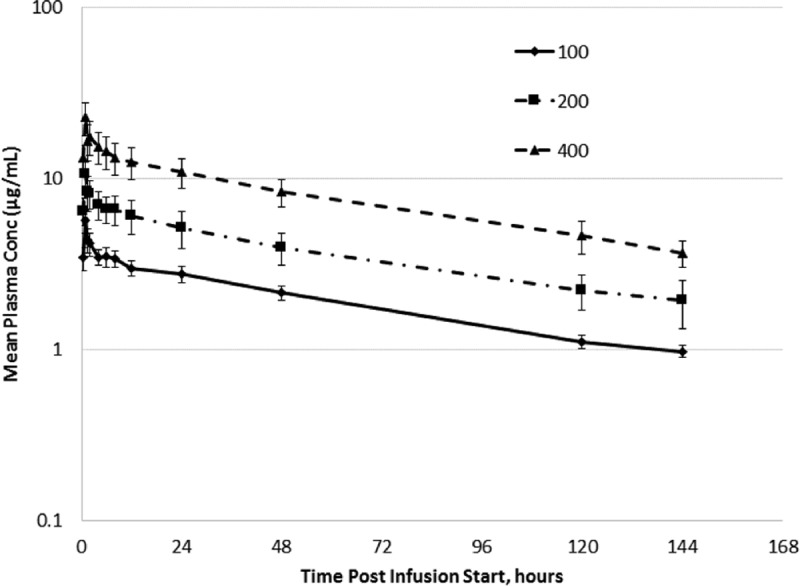
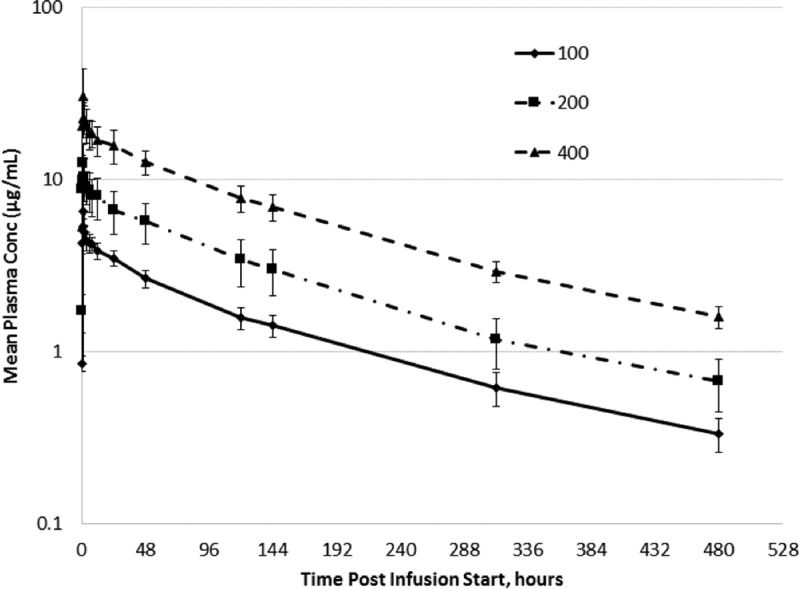
CD101 IV is a novel echinocandin with distinctive pharmacokinetic properties that is being developed as a once-weekly treatment for candidemia and invasive candidiasis. CD101 has potent in vitro activity and in vivo efficacy against a broad range of Candida and Aspergillus species. The primary objective of two randomized, double-blind, placebo-controlled, dose-escalation studies in healthy adults was to determine the safety and tolerability of CD101 IV. Sequential cohorts of 8 subjects ( n = 6, active; n = 2, placebo) were administered single (50, 100, 200, 400 mg) or multiple once-weekly (100 mg given once weekly for two weeks [×2], 200 mg ×2, 400 mg ×3) doses of CD101 IV infused over 1 h. There were no deaths, serious adverse events (SAEs), severe adverse events (AEs), or withdrawals from the study due to an AE. The majority of AEs were mild, and all completely resolved. There was a higher incidence of total AEs and mild transient infusion reactions in the 400-mg ×3 dose group. There were no clinically meaningful trends in postbaseline laboratory abnormalities and no safety issues related to electrocardiograms, vital signs, or physical exams. CD101 showed dose-proportional plasma exposures, minor accumulation (30% to 55%), low apparent clearance (<0.28 liter/h), long half-life ( t 1/2 ) (>80 h), and minimal urine excretion. CD101 IV was safe and well tolerated at single and multiple doses of up to 400 mg given once weekly for 3 weeks and exhibited a long t 1/2 , minimal accumulation over several weeks, negligible renal excretion, and high plasma exposures enabling once-weekly dosing.
Overview
The claims and statistics of this paper haven’t been checked yet.
Free: it reads the open-access text and checks the first 5 claims that cite a source we can check. Create a free account to check every claim.
Integrity signals
Registry
Cites
Statistics
Figures
Verification
Claims the paper makes
The claims and statistics of this paper haven’t been checked yet.
Free: it reads the open-access text and checks the first 5 claims that cite a source we can check. Create a free account to check every claim.
Claims other papers make about this one
Each is checked against this paper’s own text: does it say what the citing paper says it does?
The source backs part of the claim, not all of it — or backs it for a different population, condition or comparison.
In the citing paper
“It is highly soluble in aqueous systems and has a half-life of over 130 h in humans, compared to 24, 9–11, 10–17 h half-lives of anidulafungin, caspofungin, and micafungin, respectively (Kofla and Ruhnke, 2011; Sandison et al., 2017).”
From Fungal Cell Wall: Emerging Antifungals and Drug Resistance. (2019) · cites this paper as Sandison et al., 2017
Experimental — accuracy not yet measured
Self-check
Percentages, sums and reported differences re-computed from the paper’s own numbers.
The self-check needs the paper’s full text.
Citations
Cites
Wisplinghoff, H., Bischoff, T., Tallent, S. M., Seifert, H., Wenzel, R. P., & Edmond, M. B. (2004) · Clinical Infectious Diseases · doi:10.1086/421946 · Cited by 4,496
Multistate point-prevalence survey of health care-associated infections
Magill, S. S., Edwards, J. R., Bamberg, W., Beldavs, Z. G., Dumyati, G., Kainer, M. A., Lynfield, R., Maloney, M., McAllister-Hollod, L., Nadle, J., et al. (2014) · New England Journal of Medicine · doi:10.1056/nejmoa1306801 · Cited by 3,931
Craig, W. A. (1998) · Clinical Infectious Diseases · doi:10.1086/516284 · Cited by 2,908
Pappas, P. G., Kauffman, C. A., Andes, D. R., Clancy, C. J., Marr, K. A., Ostrosky-Zeichner, L., Reboli, A. C., Schuster, M. G., Vazquez, J. A., Walsh, T. J., et al. (2016) · Clinical Infectious Diseases · doi:10.1093/cid/civ1194 · Cited by 1,298
Morrell, M., Fraser, V. J., & Kollef, M. H. (2005) · Antimicrobial Agents and Chemotherapy · doi:10.1128/aac.49.9.3640-3645.2005 · Cited by 1,286
Garey, K. W., Rege, M., Pai, M. P., Mingo, D. E., Suda, K. J., Turpin, R. S., & Bearden, D. T. (2006) · Clinical Infectious Diseases · doi:10.1086/504810 · Cited by 1,171
Antifungal drug resistance: mechanisms, epidemiology, and consequences for treatment
Pfaller, M. A. (2012) · The American Journal of Medicine · doi:10.1016/j.amjmed.2011.11.001 · Cited by 903
Epidemiology of Invasive Mycoses in North America
Pfaller, M. A., & Diekema, D. J. (2010) · Critical Reviews in Microbiology · doi:10.3109/10408410903241444 · Cited by 901 · cited 2×
“5) 699 (97) 696 (97) 969 (98) 790 (98) Abnormal—not clinically significant 19 (4) 0 16 (3) 5 (1) 18 (3) 21 (3) 24 (3) 21 (2) 20 (3)”
Alexander, B. D., Johnson, M. D., Pfeiffer, C. D., Jiménez-Ortigosa, C., Catania, J., Booker, R., Castanheira, M., Messer, S. A., Perlin, D. S., & Pfaller, M. A. (2013) · Clinical Infectious Diseases · doi:10.1093/cid/cit136 · Cited by 778 · cited 2×
“Hematologyc Normal 78 (87) 80 (99) 89 (99) 88 (98) 115 (96) 136 (94) 137 (95) 198 (100) 159 (98) Abnormal—not clinically significant 12 (13) 2 (2) 1 (1) 2 (2) 5 (4) 8 (6) 7 (5) 0 3 (2)”
BackgroundCorrelation of Antimicrobial Pharmacokinetic Parameters with Therapeutic Efficacy in an Animal Model
Vogelman, B., Gudmundsson, S., Leggett, J., Turnidge, J., Ebert, S., & Craig, W. A. (1988) · The Journal of Infectious Diseases · doi:10.1093/infdis/158.4.831 · Cited by 720 · cited 1×
“All TEAEs 3 (50) 0 3 (50) 1 (17) 5 (63) 3 (50) 2 (33) 4 (67) 2 (33) Abdominal distension 0 0 0 0 0 0 0 1 (17) 0 Abdominal pain 0 0 1 (17) 0 0 0 0 1 (17) 0 Abdominal pain lower 0 0 0 0 1 (13) 0 0 0 0 Alopecia 0 0 0 0 0 0 0 1 (17) 0 Aphthous stomatitis 0 0 1 (17) 0 0 0 0 1 (17) 0 Arthralgia 0 0 0 0 2 (25) 0 0 0 0 Arthro…”
Research works printed but not linked: 1
- Pfizer Roerig. 11 2013 Eraxis (anidulafungin) (package insert). Pfizer Roerig, New York, NY http://labeling.pfizer.com/showlabeling.aspx?id=566 Accessed 19 October 2016.
Cited by
Antifungal resistance: current trends and future strategies to combat
Wiederhold, N. (2017) · Infection and Drug Resistance · doi:10.2147/idr.s124918 · Cited by 468
The Antifungal Pipeline: Fosmanogepix, Ibrexafungerp, Olorofim, Opelconazole, and Rezafungin
Hoenigl, M., Sprute, R., Egger, M., Arastehfar, A., Cornely, O. A., Krause, R., Lass-Flörl, C., Prattes, J., Spec, A., Thompson, G. R., et al. (2021) · Drugs · doi:10.1007/s40265-021-01611-0 · Cited by 467
“Renal clearance plays a minor role in the excretion of rezafungin with fractions excreted < 1% at all dose concentrations [190].”
BackgroundInfluentialHusain, S., & Camargo, J. F. (2019) · Clinical Transplantation · doi:10.1111/ctr.13544 · Cited by 302
Echinocandins – structure, mechanism of action and use in antifungal therapy
Szymański, M., Chmielewska, S., Czyżewska, U., Malinowska, M., & Tylicki, A. (2022) · Journal of Enzyme Inhibition and Medicinal Chemistry · doi:10.1080/14756366.2022.2050224 · Cited by 270
Aspiring Antifungals: Review of Current Antifungal Pipeline Developments
Gintjee, T., Donnelley, M., & Thompson, G. (2020) · Journal of Fungi · doi:10.3390/jof6010028 · Cited by 225
“Dose-proportional pharmacokinetics have been demonstrated with little interpatient variability and a favorable safety profile [14].”
BackgroundFungal Cell Wall: Emerging Antifungals and Drug Resistance.
Lima, S. L., Colombo, A. L., & de Almeida Junior, J. N. (2019) · Frontiers in Microbiology · doi:10.3389/fmicb.2019.02573 · Cited by 223
“This antifungal is a structural analog of anidulafungin, but with a choline moiety replacing the hemiaminal group at the C5 ornithine position, resulting in a stable compound with prolonged half-life (Sandison et al., 2017).”
BackgroundAntifungal drugs: What brings the future?
Van Daele, R., Spriet, I., Wauters, J., Maertens, J., Mercier, T., Van Hecke, S., & Brüggemann, R. (2019) · Medical Mycology · doi:10.1093/mmy/myz012 · Cited by 223
Cornely, O. A., Hoenigl, M., Lass‐Flörl, C., Chen, S. C. ‐., Kontoyiannis, D. P., Morrissey, C. O., Thompson, G. R., & for the Mycoses Study Group Education and Research Consortium (MSG‐ERC) and the European Confederation of Medical Mycology (ECMM) (2019) · Mycoses · doi:10.1111/myc.12960 · Cited by 215
Hope on the Horizon: Novel Fungal Treatments in Development
Rauseo, A. M., Coler-Reilly, A., Larson, L., & Spec, A. (2020) · Open Forum Infectious Diseases · doi:10.1093/ofid/ofaa016 · Cited by 199
“A phase 1 study showed low toxicity and a favorable safety profile in humans with no serious or severe adverse events (AEs) or withdrawals from the study due to an AE, with the majority of AEs being mild and all with complete resolution [21].”
BackgroundInfluentialFungal resistance to echinocandins and the MDR phenomenon in Candida glabrata
Healey, K., & Perlin, D. S. (2018) · doi:10.20944/preprints201808.0306.v1 · Cited by 194
Fungal Resistance to Echinocandins and the MDR Phenomenon in Candida glabrata
Healey, K. R., & Perlin, D. S. (2018) · Journal of Fungi · doi:10.3390/jof4030105 · Cited by 194
“As stated above, rezufungin can reportedly penetrate into deep tissue lesions better than micafungin [31] and exhibits a long half-life in PK studies [58,59].”
BackgroundThompson, G. R., Soriano, A., Cornely, O. A., Kullberg, B. J., Kollef, M., Vazquez, J., Honore, P. M., Bassetti, M., Pullman, J., Chayakulkeeree, M., et al. (2023) · The Lancet · doi:10.1016/s0140-6736(22)02324-8 · Cited by 192
Self-citationConsensus guidelines for the diagnosis and management of invasive aspergillosis, 2021
Douglas, A. P., Smibert, O. C., Bajel, A., Halliday, C. L., Lavee, O., McMullan, B., Yong, M. K., van Hal, S. J., Chen, S. C. ‐., & the Australasian Antifungal Guidelines Steering Committee (2021) · Internal Medicine Journal · doi:10.1111/imj.15591 · Cited by 179
Novel Agents and Drug Targets to Meet the Challenges of Resistant Fungi
McCarthy, M. W., Kontoyiannis, D. P., Cornely, O. A., Perfect, J. R., & Walsh, T. J. (2017) · The Journal of Infectious Diseases · doi:10.1093/infdis/jix130 · Cited by 169
Update on Candida krusei , a potential multidrug-resistant pathogen
Jamiu, A. T., Albertyn, J., Sebolai, O. M., & Pohl, C. H. (2020) · Medical Mycology · doi:10.1093/mmy/myaa031 · Cited by 213
Thompson, G. R., Soriano, A., Skoutelis, A., Vazquez, J. A., Honore, P. M., Horcajada, J. P., Spapen, H., Bassetti, M., Ostrosky-Zeichner, L., Das, A. F., et al. (2021) · Clinical Infectious Diseases · doi:10.1093/cid/ciaa1380 · Cited by 163
“Dose-proportional pharmacokinetics have demonstrated minimal interpatient variability and a favorable safety profile [11].”
BackgroundSelf-citationHoenigl, M., Arastehfar, A. A., Arendrup, M. C., Brüggemann, R. J. M., Carvalho, A., Chiller, T. M., Chen, W., Egger, M., Feys, S., Gangneux, J., et al. (2024) · Clinical Microbiology Reviews · doi:10.1128/cmr.00074-23 · Cited by 187
García‐Effrón, G. (2020) · Journal of Fungi · doi:10.3390/jof6040262 · Cited by 143
Activity of CD101, a long-acting echinocandin, against clinical isolates of Candida auris
Berkow, E. L., & Lockhart, S. R. (2018) · Diagnostic Microbiology and Infectious Disease · doi:10.1016/j.diagmicrobio.2017.10.021 · Cited by 110
John, J., Loo, A. S., Mazur, S., & Walsh, T. J. (2019) · Expert Opinion on Drug Metabolism & Toxicology · doi:10.1080/17425255.2019.1671971 · Cited by 112
Zhao, Y., Prideaux, B., Nagasaki, Y., Lee, M. H., Chen, P.-Y., Blanc, L., Ho, H., Clancy, C. J., Nguyen, M. H., Dartois, V., et al. (2017) · Antimicrobial Agents and Chemotherapy · doi:10.1128/aac.01009-17 · Cited by 102
“Because of substantially reduced toxicity due to chemical stability and enhanced PK properties, CD101 can be safely dosed at much higher levels than other echinocandin drugs (25, 33, 34).”
BackgroundWhat has changed in the treatment of invasive candidiasis? A look at the past 10 years and ahead
Bassetti, M., Righi, E., Montravers, P., & Cornely, O. A. (2018) · Journal of Antimicrobial Chemotherapy · doi:10.1093/jac/dkx445 · Cited by 98
Sofjan, A. K., Mitchell, A., Shah, D. N., Nguyen, T., Sim, M., Trojcak, A., Beyda, N. D., & Garey, K. W. (2018) · Journal of Global Antimicrobial Resistance · doi:10.1016/j.jgar.2018.02.013 · Cited by 95
Hager, C. L., Larkin, E. L., Long, L. A., & Ghannoum, M. A. (2018) · Journal of Antimicrobial Chemotherapy · doi:10.1093/jac/dky153 · Cited by 96
Antifungal Resistance in Candida auris: Molecular Determinants
Frías-De-León, M. G., Hernández-Castro, R., Vite-Garín, T., Arenas, R., Bonifaz, A., Castañón-Olivares, L., Acosta-Altamirano, G., & Martínez-Herrera, E. (2020) · Antibiotics · doi:10.3390/antibiotics9090568 · Cited by 93
Aspergillus fumigatus and pan-azole resistance: who should be concerned?
Wiederhold, N. P., & Verweij, P. E. (2020) · Current Opinion in Infectious Diseases · doi:10.1097/qco.0000000000000662 · Cited by 94
“It is structurally similar to anidulafungin, and has an extended half-life ( 130 h) because of the replacement of the hemiaminal group with a choline aminal ether [69,70], which results in”
BackgroundWiederhold, N. P., Locke, J. B., Daruwala, P., & Bartizal, K. (2018) · Journal of Antimicrobial Chemotherapy · doi:10.1093/jac/dky280 · Cited by 91
Drug Resistance and Novel Therapeutic Approaches in Invasive Candidiasis
Murphy, S. E., & Bicanic, T. (2021) · Frontiers in Cellular and Infection Microbiology · doi:10.3389/fcimb.2021.759408 · Cited by 83
Thompson, G. R., Soriano, À., Honoré, P. M., Bassetti, M., Cornely, O. A., Kollef, M. H., Kullberg, B. J., Pullman, J. R., Hites, M., Fortün, J., et al. (2023) · The Lancet Infectious Diseases · doi:10.1016/s1473-3099(23)00551-0 · Cited by 95
Self-citationRecent Progress in the Discovery of Antifungal Agents Targeting the Cell Wall
Liu, W., Yuan, L., & Wang, S. (2020) · Journal of Medicinal Chemistry · doi:10.1021/acs.jmedchem.0c00748 · Cited by 89
Lepak, A. J., Zhao, M., & Andes, D. R. (2018) · Antimicrobial Agents and Chemotherapy · doi:10.1128/aac.01572-18 · Cited by 79
“once every 7 days resulted in an AUC from 0 to 168 h of 1,840 mg · h/liter (1).”
BackgroundInvestigational Antifungal Agents for Invasive Mycoses: A Clinical Perspective
Lamoth, F., Lewis, R. E., & Kontoyiannis, D. P. (2022) · Clinical Infectious Diseases · doi:10.1093/cid/ciab1070 · Cited by 85
Novel antifungal agents in clinical trials
Jacobs, S. E., Zagaliotis, P., & Walsh, T. J. (2021) · F1000Research · doi:10.12688/f1000research.28327.1 · Cited by 83
James, K. D., Laudeman, C. P., Malkar, N. B., Krishnan, R., & Polowy, K. (2017) · Antimicrobial Agents and Chemotherapy · doi:10.1128/aac.01541-16 · Cited by 73
“Likewise, CD101 has recently demonstrated a longer half-life ( 80 h) in clinical trials (22).”
BackgroundPfaller, M. A., Carvalhaes, C., Messer, S. A., Rhomberg, P. R., & Castanheira, M. (2020) · Antimicrobial Agents and Chemotherapy · doi:10.1128/aac.00099-20 · Cited by 68
“) is a novel echinocandin that exhibits a prolonged half-life and 84 displays chemical stability in plasma, aqueous solution, and at elevated temperature (15, 21-27).”
BackgroundWiederhold, N. P. (2022) · Journal of Fungi · doi:10.3390/jof8080857 · Cited by 67
Rezafungin: a novel antifungal for the treatment of invasive candidiasis
Ham, Y. Y., Lewis, J. S., & Thompson, G. R. (2021) · Future Microbiology · doi:10.2217/fmb-2020-0217 · Cited by 66
Syed, Y. Y. (2023) · Drugs · doi:10.1007/s40265-023-01891-8 · Cited by 65
“Following single and multiple once-weekly IV doses in healthy subjects, rezafungin AUC and the maximum plasma drug concentration (Cmax) increased in a dose-proportional manner over a range of 50–400 mg [36].”
BackgroundTreatment of Invasive Aspergillosis: How It’s Going, Where It’s Heading
Boyer, J., Feys, S., Zsifkovits, I., Hoenigl, M., & Egger, M. (2023) · Mycopathologia · doi:10.1007/s11046-023-00727-z · Cited by 78
“mean halflife of * 150 h after two dosages), will allow, amongst other options, outpatient therapy in combination with oral agents [42].”
Lepak, A. J., Zhao, M., VanScoy, B., Ambrose, P. G., & Andes, D. R. (2018) · Antimicrobial Agents and Chemotherapy · doi:10.1128/aac.02154-17 · Cited by 63
“It is a chemical analog of anidulafungin but has toxicological and pharmacokinetic advantages, including a terminal half-life of approximately 130 h in humans that allows for extended interval dosing (13).”
BackgroundInfluentialTolerability profile of the current antifungal armoury
Mourad, A., & Perfect, J. R. (2018) · Journal of Antimicrobial Chemotherapy · doi:10.1093/jac/dkx446 · Cited by 62
Helleberg, M., Jørgensen, K. M., Hare, R. K., Datcu, R., Chowdhary, A., & Arendrup, M. C. (2020) · Antimicrobial Agents and Chemotherapy · doi:10.1128/aac.02438-19 · Cited by 61
“004 Micafungin 18 221 295 24 6 (6) 4 (4) 1 (1) 0.”
BackgroundInfluentialSalazar, S. B., Simões, R., Pedro, N. A., Pinheiro, M. J. F., Carvalho, M. F. N. N., & Mira, N. P. (2020) · Journal of Fungi · doi:10.3390/jof6010023 · Cited by 63
“Compared to the already available echinocandins, rezafungin and biafungin show higher activity, lower toxicity and fewer drug interactions [18]–[19,20].”
Review of the Novel Echinocandin Antifungal Rezafungin: Animal Studies and Clinical Data
Zhao, Y., & Perlin, D. S. (2020) · Journal of Fungi · doi:10.3390/jof6040192 · Cited by 77
“Based on the dosage determined by Phase 1 clinical studies [8], the stasis target would be expected to be achieved against both C.”
BackgroundPharmacokinetics of the Novel Echinocandin CD101 in Multiple Animal Species
Ong, V., James, K. D., Smith, S., & Krishnan, B. R. (2017) · Antimicrobial Agents and Chemotherapy · doi:10.1128/aac.01626-16 · Cited by 51
“The half-life of CD101 in human is about 3-fold longer (about 90 h) than that of anidulafungin (about 30 h) (10).”
BackgroundSelf-citationPalmieri, F., Koutsokera, A., Bernasconi, E., Junier, P., von Garnier, C., & Ubags, N. D. J. (2022) · Frontiers in Medicine · doi:10.3389/fmed.2022.832510 · Cited by 66
New developments and directions in the clinical application of the echinocandins
Chang, C. C., Slavin, M. A., & Chen, S. C. A. (2017) · Archives of Toxicology · doi:10.1007/s00204-016-1916-3 · Cited by 56
Next-generation antifungal drugs: Mechanisms, efficacy, and clinical prospects
Lu, X., Zhou, J., Ming, Y., Wang, Y., He, R., Li, Y., Feng, L., Zeng, B., Du, Y., & Wang, C. (2025) · Acta Pharmaceutica Sinica B · doi:10.1016/j.apsb.2025.06.013 · Cited by 57
“These characteristics make it well suited for complex dosing regimens, particularly in multidrug therapy settings 102,103 (Table 2).”
Lipopeptides development in cosmetics and pharmaceutical applications: A comprehensive review
Pilz, M., Cavelius, P., Qoura, F., Awad, D., & Brück, T. (2023) · Biotechnology Advances · doi:10.1016/j.biotechadv.2023.108210 · Cited by 51
Miesel, L., Cushion, M. T., Ashbaugh, A., Lopez, S. R., & Ong, V. S. (2020) · Antimicrobial Agents and Chemotherapy · doi:10.1128/aac.01992-20 · Cited by 53
“metabolic stability and lack of hepatotoxicity, in contrast to anidulafungin (35, 36).”
ResultSelf-citationMcCarty, T. P., & Pappas, P. G. (2021) · Frontiers in Cellular and Infection Microbiology · doi:10.3389/fcimb.2021.732223 · Cited by 53
“The phase 1 safety studies did not reveal any deaths or severe adverse events, and no participant withdrew from the study with participants receiving either a single dose or up to 3 weekly doses (Sandison et al., 2017).”
BackgroundWe can do better: a fresh look at echinocandin dosing
Bader, J. C., Bhavnani, S. M., Andes, D. R., & Ambrose, P. G. (2018) · Journal of Antimicrobial Chemotherapy · doi:10.1093/jac/dkx448 · Cited by 46
Hoenigl, M., Sprute, R., Arastehfar, A., Perfect, J. R., Lass-Flörl, C., Bellmann, R., Prattes, J., Thompson, G. R., Wiederhold, N. P., Al Obaidi, M. M., et al. (2022) · Expert Opinion on Investigational Drugs · doi:10.1080/13543784.2022.2086120 · Cited by 45
“Mean plasma Cmax and AUC increase in proportion to dose [69].”
BackgroundInfluentialMiesel, L., Lin, K., & Ong, V. (2019) · Pharmacology Research & Perspectives · doi:10.1002/prp2.546 · Cited by 47
Self-citationCurrent Infections of the Orofacial Region: Treatment, Diagnosis, and Epidemiology
Tahmasebi, E., Keshvad, A., Alam, M. M. R., Abbasi, K., Rahimi, S., Nouri, F., Yazdanıan, M., Tebyanian, H., Heboyan, A. G., & Fernandes, G. V. O. (2023) · Life · doi:10.3390/life13020269 · Cited by 57
Arendrup, M. C., Meletiadis, J., Zaragoza, O., Jørgensen, K. M., Marcos-Zambrano, L. J., Kanioura, L., Cuenca-Estrella, M., Mouton, J. W., & Guinea, J. (2018) · Clinical Microbiology and Infection · doi:10.1016/j.cmi.2018.02.021 · Cited by 45
Rivero-Menéndez, O., Navarro-Rodríguez, P., Bernal‐Martínez, L., Martin-Cano, G., Lopez-Perez, L., Sánchez‐Romero, I., Pérez‐Ayala, A., Capilla, J., Zaragoza, Ó., & Alastruey‐Izquierdo, A. (2019) · Frontiers in Microbiology · doi:10.3389/fmicb.2019.01585 · Cited by 47
“…against echinocandin resistant C. glabrata isolates (Wiederhold et al., 2018), or rezafungin (Cidara, San Diego, CA, United States), which has an extended-interval administration due to its improved pharmacodynamics (Sandison et al., 2017) could help to overcome echinocandin resistance.”
BackgroundBader, J. C., Lakota, E. A., Flanagan, S., Ong, V., Sandison, T., Rubino, C. M., Bhavnani, S. M., & Ambrose, P. G. (2018) · Antimicrobial Agents and Chemotherapy · doi:10.1128/aac.02614-17 · Cited by 45
“This structural analog of anidulafungin exhibits a concentration-dependent pattern of fungal killing (24) and a remarkably long half-life in humans of approximately 133 h (25).”
BackgroundMethodResultSelf-citationEmerging Issues in Antifungal Resistance
Perfect, J. R., & Ghannoum, M. (2020) · Infectious Disease Clinics of North America · doi:10.1016/j.idc.2020.05.003 · Cited by 47
Kovács, R., Tóth, Z., Locke, J. B., Forgács, L., Kardos, G., Nagy, F., Borman, A. M., & Majoros, L. (2021) · Microorganisms · doi:10.3390/microorganisms9040863 · Cited by 46
“Moreover, a sin‐ gle 400‐mg dose of rezafungin produces ≥8 mg/L serum levels even after 48–72 h, which is capable of early enhanced killing and sustained therapeutic effect to maintain elimina‐ tion of the fungus, including isolates from Israel (South American clade) and the South African clade, against which other ec…”
BackgroundMethodResultInfluentialEmerging and future strategies in the management of recalcitrant Candida auris
Bandara, N., & Samaranayake, L. P. (2022) · Medical Mycology · doi:10.1093/mmy/myac008 · Cited by 52
Pharmacological basis of CD101 efficacy: exposure shape matters
Lakota, E. A., Bader, J. C., Ong, V., Bartizal, K., Miesel, L., Andes, D. R., Bhavnani, S. M., Rubino, C. M., Ambrose, P. G., & Lepak, A. J. (2017) · Antimicrobial Agents and Chemotherapy · doi:10.1128/aac.00758-17 · Cited by 40
“Compared to andidulafungin and other 49 echinocandins, CD101 has a considerably longer half-life [4-8].”
BackgroundSelf-citationCarvalhaes, C. G., Klauer, A. L., Rhomberg, P. R., Pfaller, M. A., & Castanheira, M. (2022) · Journal of Clinical Microbiology · doi:10.1128/jcm.02449-21 · Cited by 45
“PK/PD studies have shown that rezafungin provides advantages over other echinocandins, including a prolonged half-life (;133 h) and high plasma drug concentrations (24, 25).”
BackgroundPopulation Pharmacokinetic Analyses for Rezafungin (CD101) Efficacy Using Phase 1 Data
Lakota, E. A., Ong, V. S., Flanagan, S., & Rubino, C. M. (2018) · Antimicrobial Agents and Chemotherapy · doi:10.1128/aac.02603-17 · Cited by 42
“previously described by Sandison et al [8].”
InfluentialSelf-citationGupta, A. K., Talukder, M., Carviel, J., Cooper, E. A., & Piguet, V. (2023) · Journal of the European Academy of Dermatology and Venereology · doi:10.1111/jdv.19217 · Cited by 43
The antifungal pipeline for invasive fungal diseases: what does the future hold?
Neoh, C. F., Jeong, W., Kong, D. C. M., & Slavin, M. A. (2023) · Expert Review of Anti-infective Therapy · doi:10.1080/14787210.2023.2203383 · Cited by 45
“Owing to its improved stability and solubility, and reduced rate of elimination [109], rezafungin possesses a considerably long half-life (125–146 hours) [110] (Table 1).”
BackgroundThe Role of Novel Antifungals in the Management of Candidiasis: A Clinical Perspective
Ordaya, E. E., Clement, J., & Vergidis, P. I. (2023) · Mycopathologia · doi:10.1007/s11046-023-00759-5 · Cited by 45
“Despite the higher front-loaded exposure, the safety and tolerability of reza-fungin have been reported to be similar to other echinocandins [27, 29].”
BackgroundAntifungal drugs: An updated review of central nervous system pharmacokinetics
Wirth, F., & Ishida, K. (2020) · Mycoses · doi:10.1111/myc.13157 · Cited by 39
Chandra, J., & Ghannoum, M. A. (2018) · Antimicrobial Agents and Chemotherapy · doi:10.1128/aac.01750-17 · Cited by 36
“to 168 h [AUC0 –168] of 813 g · h/ml for 200 mg and 1,840 g · h/ml for 400 mg) (17) and its distribution to sites of infection are promising (25, 26).”
BackgroundNew antifungal strategies and drug development against WHO critical priority fungal pathogens
Li, Y., Liu, Y., Jiang, Y., Yang, Y., Ni, W., Zhang, W., & Tan, L. (2025) · Frontiers in Cellular and Infection Microbiology · doi:10.3389/fcimb.2025.1662442 · Cited by 54
How urgent is the need for new antifungals?
Stewart, A. G., & Paterson, D. L. (2021) · Expert Opinion on Pharmacotherapy · doi:10.1080/14656566.2021.1935868 · Cited by 36
Antifungals in Clinical Use and the Pipeline
Johnson, M. D. (2021) · Infectious Disease Clinics of North America · doi:10.1016/j.idc.2021.03.005 · Cited by 35
The evolution of antifungal therapy: Traditional agents, current challenges and future perspectives
de Souza, C. M., Bezerra, B. T., Mellon, D. A., & de Oliveira, H. C. (2025) · Current Research in Microbial Sciences · doi:10.1016/j.crmicr.2025.100341 · Cited by 53
Metabolism, Excretion, and Mass Balance of [ 14 C]-Rezafungin in Animals and Humans
Ong, V. S., Wills, S., Watson, D., Sandison, T., & Flanagan, S. (2021) · Antimicrobial Agents and Chemotherapy · doi:10.1128/aac.01390-21 · Cited by 34
“Furthermore, rezafungin has demonstrated chemical and metabolic stability and no hepatotoxicity compared with anidulafungin (12, 13).”
BackgroundSelf-citationLepak, A. J., Zhao, M., & Andes, D. R. (2019) · Antimicrobial Agents and Chemotherapy · doi:10.1128/aac.01556-19 · Cited by 34
“The PK of rezafungin in humans has been well characterized (6), including population PK modeling and target attainment analysis for C.”
BackgroundBiofilms and beyond: Expanding echinocandin utility
Larkin, E. L., Dharmaiah, S., & Ghannoum, M. A. (2018) · Journal of Antimicrobial Chemotherapy · doi:10.1093/jac/dkx451 · Cited by 31
Egger, M., Bellmann, R., Krause, R., Boyer, J., Jakšić, D., & Hoenigl, M. (2023) · Infection and Drug Resistance · doi:10.2147/idr.s372546 · Cited by 31
“92 These could include combinations with fosmanogepix, olorofim, LAmB or conventional azoles, with data on potential synergistic/antagonistic effects needed.”
BackgroundEpstein, D. J., Seo, S. K., Brown, J. W., & Papanicolaou, G. A. (2018) · Journal of Antimicrobial Chemotherapy · doi:10.1093/jac/dkx450 · Cited by 33
Extended Dosing Regimens for Fungal Prophylaxis
Lehrnbecher, T., Bochennek, K., Klingebiel, T. E., Gastine, S., Hempel, G., & Groll, A. H. (2019) · Clinical Microbiology Reviews · doi:10.1128/cmr.00010-19 · Cited by 31
“There were no serious or severe AEs, or no individual was withdrawn from the study due to an AE (35).”
BackgroundLack of Effect of Rezafungin on QT/QTc Interval in Healthy Subjects
Flanagan, S., Goodman, D. B., Jandourek, A., O'Reilly, T., & Sandison, T. (2020) · Clinical Pharmacology in Drug Development · doi:10.1002/cpdd.757 · Cited by 27
Self-citationAndes, D. R., Brüggemann, R. J. M., Flanagan, S., Lepak, A. J., Lewis, R. E., Ong, V. S., Rubino, C. M., & Sandison, T. (2024) · Journal of Antimicrobial Chemotherapy · doi:10.1093/jac/dkae415 · Cited by 35
Self-citationAntifungal pipeline: New tools for the treatment of mycoses
Wolfgruber, S., Salmanton‐García, J., Kuate, M. P. N., Hoenigl, M., & Brunelli, J. G. P. (2024) · Revista Iberoamericana de Micología · doi:10.1016/j.riam.2024.11.001 · Cited by 31
Small molecules for combating multidrug-resistant superbug Candida auris infections
Tu, J., Liu, N., Huang, Y., Yang, W., & Sheng, C. (2022) · Acta Pharmaceutica Sinica B · doi:10.1016/j.apsb.2022.08.001 · Cited by 29
Absence of Clinically Meaningful Drug-Drug Interactions with Rezafungin: Outcome of Investigations
Flanagan, S., Walker, H., Ong, V. S., & Sandison, T. (2023) · Microbiology Spectrum · doi:10.1128/spectrum.01339-23 · Cited by 28
“coadministration with commonly used medications (34, 36, 37, 41, 42).”
MethodSelf-citationCushion, M. T., & Ashbaugh, A. (2021) · Journal of Fungi · doi:10.3390/jof7090747 · Cited by 29
“Rezafungin was safe and well tolerated in single- and multiple-dose studies of intravenous rezafungin administered up to 400 mg once weekly [24,43,44], as well as in the completed Phase 2 trial of rezafungin for treatment of candidemia and invasive candidiasis (STRIVE; NCT02734862) [44].”
BackgroundCell Wall-Modifying Antifungal Drugs
Perlin, D. S. (2019) · Current topics in microbiology and immunology · doi:10.1007/82_2019_188 · Cited by 30
Ex vivo Rezafungin Adsorption and Clearance During Continuous Renal Replacement Therapy
Jang, S. M., Hough, G., & Mueller, B. A. (2018) · Blood Purification · doi:10.1159/000489212 · Cited by 27
Extended-Interval Dosing of Rezafungin against Azole-Resistant Aspergillus fumigatus
Wiederhold, N. P., Najvar, L. K., Jaramillo, R., Olivo, M., Wickes, B. L., Catano, G., & Patterson, T. F. (2019) · Antimicrobial Agents and Chemotherapy · doi:10.1128/aac.01165-19 · Cited by 24
“The extended-interval dosing used in this previous study and in the current work mimicked the pharmacokinetics achieved with once-weekly regimens studied in humans (13, 14, 19).”
MethodPopulation pharmacokinetics of rezafungin in patients with fungal infections
Rubino, C. M., & Flanagan, S. (2021) · Antimicrobial Agents and Chemotherapy · doi:10.1128/aac.00842-21 · Cited by 22
“All blood samples were assayed for plasma rezafungin concentration using a liquid chromatography coupled to tandem mass spectrometry (LC/MS/MS) method that has been described previously (11, 12).”
MethodThe Significance of Mono‐ and Dual‐Effective Agents in the Development of New Antifungal Strategies
Zobi, C., & Algül, Ö. (2025) · Chemical Biology & Drug Design · doi:10.1111/cbdd.70045 · Cited by 27
Azole-Resistant Aspergillus fumigatus: Epidemiology, Diagnosis, and Treatment Considerations
Zubovskaia, A. (2025) · Journal of Fungi · doi:10.3390/jof11100731 · Cited by 24
“Rezafungin, a long-acting echinocandin, has a long half-life (~80 h after the first dose and ~150 hrs after the second dose) and a good safety profile with mostly mild adverse events and a lack of clinically significant drug–drug interactions [166,167].”
Honoré, P. M., Girardis, M., Kollef, M. H., Cornely, O. A., Thompson, G. R., Bassetti, M., Soriano, À., Haihui, H., Vázquez, J. A., Kullberg, B. J., et al. (2024) · Critical Care · doi:10.1186/s13054-024-05117-5 · Cited by 25
“These characteristics, along with overall cure and TTNBC results from STRIVE and ReSTORE [10, 11, 20], support the potential benefits of infrequent, front-loaded dosing of drugs that exhibit concentration-dependent antimicrobial killing [13] and the potential for rapid infection clearance [14, 20].”
BackgroundResultSelf-citationAdvances in anti-fungal therapies
WATERER, G. W. (2021) · Mycopathologia · doi:10.1007/s11046-021-00560-2 · Cited by 21
Rezafungin in special populations with candidaemia and/or invasive candidiasis
Cornely, O. A., Dupont, H., Mikulska, M., Rautemaa‐Richardson, R., García‐Vidal, C., Thompson, G. R., & Hoenigl, M. (2025) · Journal of Infection · doi:10.1016/j.jinf.2025.106435 · Cited by 24
Challenges in the diagnosis and treatment of candidemia due to multidrug-resistant Candida auris
Giacobbe, D. R., Mikulska, M., Vena, A., Pilato, V. D., Magnasco, L., Marchese, A. E., & Bassetti, M. (2023) · Frontiers in Fungal Biology · doi:10.3389/ffunb.2023.1061150 · Cited by 20
“Rezafungin is a second generation echinocandin, administered intravenously once weekly thanks to its prolonged half-life (Sandison et al., 2017).”
BackgroundTrapani, F., Viceconte, G., Morena, V., Tiseo, G., Mori, G., Kölking, B., & Khatamzas, E. (2025) · Open Forum Infectious Diseases · doi:10.1093/ofid/ofaf034 · Cited by 18
Quiles‐Melero, I., & García‐Rodríguez, J. (2021) · Revista Iberoamericana de Micología · doi:10.1016/j.riam.2021.04.004 · Cited by 32
Pharmacological management of antifungal agents in pulmonary aspergillosis: an updated review
Echeverría-Esnal, D., Martín‐Ontiyuelo, C., Navarrete-Rouco, M. E., Barceló‐Vidal, J., Conde‐Estévez, D., Carballo, N., de Antonio-Cuscó, M., Ferrández, O., Horcajada, J. P., & Grau, S. (2021) · Expert Review of Anti-infective Therapy · doi:10.1080/14787210.2021.1962292 · Cited by 22
Activity of rezafungin against Candida auris
Locke, J. B., Andes, D. R., Flanagan, S., Redell, M. A., Ong, V. S., Aram, J. A., Pappas, P. G., Castanheira, M., & Thompson, G. R. (2025) · Journal of Antimicrobial Chemotherapy · doi:10.1093/jac/dkaf124 · Cited by 20
Self-citationEUCAST Reference Testing of Rezafungin Susceptibility and Impact of Choice of Plastic Plates
Arendrup, M. C., Jørgensen, K. M., Hare, R. K., Cuenca‐Estrella, M., & Zaragoza, Ó. (2019) · Antimicrobial Agents and Chemotherapy · doi:10.1128/aac.00659-19 · Cited by 19
Metadata
- Authors
- Sandison, T., Ong, V., Lee, J., & Thye, D.
- Affiliations
- Cidara Therapeutics (United States) (US)
- Corresponding author
- Sandison, Taylor
- Venue
- Antimicrobial Agents and Chemotherapy
- Publisher
- American Society for Microbiology
- Published
- 2017-02
- Volume
- 61
- Issue
- 2
- ISSN
- 0066-4804 (ISSN-L)
- 1098-6596
- PMC
- PMC5278714
- OpenAlex
- W2560804544
- Cited by
- 161
- References
- 36
- Citations by year
- 2026: 13 · 2025: 17 · 2024: 20 · 2023: 13 · 2022: 16 · 2021: 17 · 2020: 22 · 2019: 14 · 2018: 11 · 2017: 16
- FWCI
- 12.93
- Type
- journal article
- Language
- en
- Open access
- hybrid
- doi.org
- Licence
- cc-by
- creativecommons.org/licenses/by/4.0/ (vor)
- journals.asm.org/non-commercial-tdm-license (tdm)
- Locations
- Antimicrobial Agents and Chemotherapy (publishedVersion, cc-by)
- PubMed Central (publishedVersion, cc-by)
- PubMed (publishedVersion)
- Topics
- Health Sciences › Medicine › Infectious Diseases › Antifungal resistance and susceptibility
- Health Sciences › Medicine › Pharmacology (medical) › Antibiotics Pharmacokinetics and Efficacy
- Health Sciences › Medicine › Pediatrics, Perinatology and Child Health › Pharmaceutical studies and practices
- Keywords
- CD101, echinocandins, candidemia, invasive candidiasis, pharmacokinetics, safety and tolerability, weekly dosing, Candida, Aspergillus, dose escalation, infusion reactions, drug accumulation, renal excretion
- MeSH terms
- Adult, Drug Administration Schedule, Female, Humans, Male, Middle Aged, Echinocandins, Healthy Volunteers
About these checks
Registry, retraction, Cites and statistics results are computed, not judged, with one exception: a printed reference that no index lists is read once by a model before it counts as a citation error. Claims are extracted by a model and kept only when their quote appears verbatim in the text; each cited source is then checked, with a model’s help, for whether it says what the claim relies on. Those verdicts can be wrong — read the claim’s quote and the cited source before relying on one.
Statistics and arithmetic are recomputed, not judged.
Confidence bands are shown only for fields calibrated on our annotated test set. None is calibrated yet, so no band is shown.
What counts as a claim ›How we measure confidence ›How we check this ›
Are you an author, or do you see a problem with this page? Request a review
Data sources
Bibliographic data: Semantic Scholar, OpenAlex, Crossref.
Contains information from the Semantic Scholar Academic Graph Datasets, made available under the ODC Attribution License (ODC-BY 1.0).
Semantic Scholar’s data is described in: Kinney, R., et al. (2023). The Semantic Scholar Open Data Platform. arXiv:2301.10140.
