

N-Glycosylation of Campylobacter jejuni Surface Proteins Promotes Bacterial Fitness
Open accessThe DOI matches its Crossref record; 47 of the 47 references it cites were found in a registry or an index.
Abstract
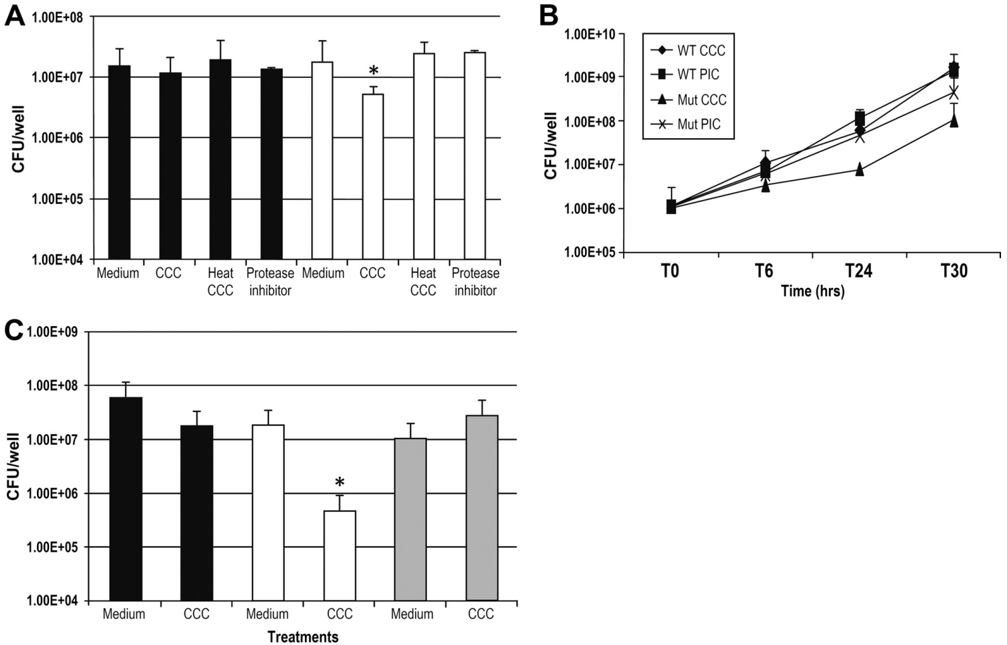
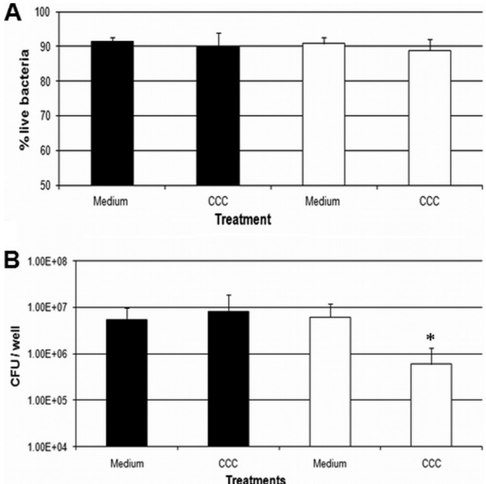
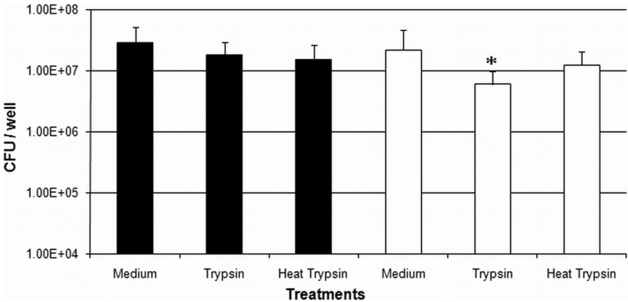
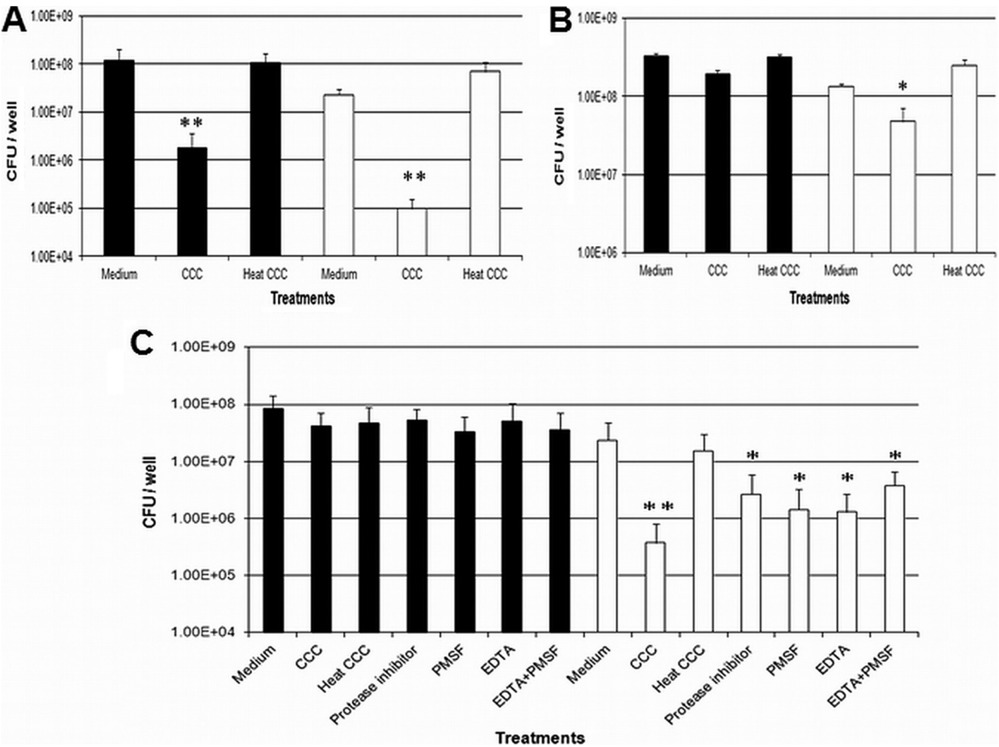
Campylobacter jejuni is the etiologic agent of human bacterial gastroenteritis worldwide. In contrast, despite heavy colonization, C. jejuni maintains a commensal mode of existence in chickens. The consumption of contaminated chicken products is thought to be the principal mode of C. jejuni transmission to the human population. C. jejuni harbors a system for N-linked protein glycosylation that has been well characterized and modifies more than 60 periplasmic and membrane-bound proteins. However, the precise role of this modification in the biology of C. jejuni remains unexplored. We hypothesized that the N-glycans protect C. jejuni surface proteins from the action of gut proteases. The C. jejuni pglB mutant, deficient in the expression of the oligosaccharyltransferase, exhibited reduced growth in medium supplemented with chicken cecal contents (CCC) compared with that of wild-type (WT) cells. Inactivation of the cecal proteases by heat treatment or with protease inhibitors completely restored bacterial viability and partially rescued bacterial growth. Physiological concentrations of trypsin, but not chymotrypsin, also reduced C. jejuni pglB mutant CFU. Live or dead staining indicated that CCC preferentially influenced C. jejuni growth as opposed to bacterial viability. We identified multiple chicken cecal proteases by mass fingerprinting. The use of protease inhibitors that target specific classes indicated that both metalloproteases and serine proteases were involved in the attenuated growth of the oligosaccharyltransferase mutant. In conclusion, protein N-linked glycosylation of surface proteins may enhance C. jejuni fitness by protecting bacterial proteins from cleavage due to gut proteases.
Overview
The claims and statistics of this paper haven’t been checked yet.
Free: it reads the open-access text and checks the first 5 claims that cite a source we can check. Create a free account to check every claim.
Integrity signals
Registry
Cites
Statistics
Figures
Verification
Claims the paper makes
The claims and statistics of this paper haven’t been checked yet.
Free: it reads the open-access text and checks the first 5 claims that cite a source we can check. Create a free account to check every claim.
Claims other papers make about this one
Each is checked against this paper’s own text: does it say what the citing paper says it does?
The cited source says what the claim attributes to it.
In the citing paper
“In a prokaryotic example, N-glycosylation in Campylobacter improves fi tness, by providing protection against proteases in the gut (513).”
From Biological roles of glycans (2017) · cites this paper as [513]
Self-check
Percentages, sums and reported differences re-computed from the paper’s own numbers.
The self-check needs the paper’s full text.
Citations
Cites
Ishihama, Y., Oda, Y., Tabata, T., Sato, T., Nagasu, T., Rappsilber, J., & Mann, M. (2005) · Molecular & Cellular Proteomics · doi:10.1074/mcp.m500061-mcp200 · Cited by 2,055 · cited 2×
“(26, 27), to estimate the relative protein abundances in 1-week and 5-week CCC (Table 1).”
BackgroundMethodThe genome sequence of the food-borne pathogen Campylobacter jejuni reveals hypervariable sequences
Parkhill, J., Wren, B. W., Mungall, K., Ketley, J. M., Churcher, C., Basham, D., Chillingworth, T., Davies, R. M., Feltwell, T., Holroyd, S., et al. (2000) · Nature · doi:10.1038/35001088 · Cited by 1,976
Mucins in the mucosal barrier to infection
Linden, S. K., Sutton, P., Karlsson, N. G., Korolik, V, & McGuckin, M. A. (2008) · Mucosal Immunology · doi:10.1038/mi.2008.5 · Cited by 1,234 · cited 1×
“The gut, which contains digestive proteases and other innate immune mechanisms against invading pathogens (3), is a harsh environment for a fastidious organism such as C.”
BackgroundN-Linked Glycosylation in Campylobacter jejuni and Its Functional Transfer into E. coli
Wacker, M., Linton, D., Hitchen, P. G., Nita-Lazar, M., Haslam, S. M., North, S. J., Panico, M., Morris, H. R., Dell, A., Wren, B. W., et al. (2002) · Science · doi:10.1126/science.298.5599.1790 · Cited by 777
Campylobacter jejuni: molecular biology and pathogenesis
Young, K. T., Davis, L. M., & DiRita, V. J. (2007) · Nature Reviews Microbiology · doi:10.1038/nrmicro1718 · Cited by 764 · cited 3×
“jejuni displays a propensity for the deep cecal crypts, where it colonizes mucus with avidity and in high numbers (2).”
BackgroundProtein glycosylation in bacteria: sweeter than ever
Nothaft, H., & Szymanski, C. M. (2010) · Nature Reviews Microbiology · doi:10.1038/nrmicro2383 · Cited by 530 · cited 1×
“N-linked protein glycosylation has been demonstrated to occur in all 3 domains of life: in eukaryotes, in bacteria, and in archaea (7).”
BackgroundSelf-citationFeldman, M. F., Wacker, M., Hernandez, M., Hitchen, P. G., Marolda, C. L., Kowarik, M., Morris, H. R., Dell, A., Valvano, M. A., & Aebi, M. (2005) · Proceedings of the National Academy of Sciences · doi:10.1073/pnas.0500044102 · Cited by 442
Reduced O Glycosylation of Sp1 Is Associated with Increased Proteasome Susceptibility
Han, I., & Kudlow, J. E. (1997) · Molecular and Cellular Biology · doi:10.1128/mcb.17.5.2550 · Cited by 437 · cited 1×
“In previous studies, O-linked glycosylation has been shown to protect proteins and peptides from proteolytic cleavage (45, 46).”
BackgroundEvidence for a system of general protein glycosylation in Campylobacter jejuni
Szymanski, C. M., Yao, R., Ewing, C. P., Trust, T. J., & Guerry, P. (1999) · Molecular Microbiology · doi:10.1046/j.1365-2958.1999.01415.x · Cited by 412 · cited 3×
“In addition, N-glycosylation-deficient mutants show altered immunoreactivity (9), and the C.”
BackgroundSelf-citationProtein glycosylation in bacterial mucosal pathogens
Szymanski, C. M., & Wren, B. W. (2005) · Nature Reviews Microbiology · doi:10.1038/nrmicro1100 · Cited by 402 · cited 1×
“jejuni modifies its flagellar proteins with O-linked glycans and modifies numerous periplasmic and membrane proteins with N-linked glycans (6).”
BackgroundSelf-citation
Cited by
Varki, A. (2017) · Glycobiology · doi:10.1093/glycob/cww086 · Cited by 2,635
“Campylobacter improves fitness, by providing protection against proteases in the gut (513).”
BackgroundCampylobacter virulence and survival factors
Bolton, D. J. (2015) · Food Microbiology · doi:10.1016/j.fm.2014.11.017 · Cited by 372
Glycointeractions in bacterial pathogenesis
Poole, J., Day, C. J., von Itzstein, M., Paton, J. C., & Jennings, M. P. (2018) · Nature Reviews Microbiology · doi:10.1038/s41579-018-0007-2 · Cited by 271
Campylobacter jejuni: collective components promoting a successful enteric lifestyle
Burnham, P. M., & Hendrixson, D. R. (2018) · Nature Reviews Microbiology · doi:10.1038/s41579-018-0037-9 · Cited by 231
Pinho, S. S., Alves, I., Gaifem, J., & Rabinovich, G. A. (2023) · Cellular & Molecular Immunology · doi:10.1038/s41423-023-01074-1 · Cited by 206
“C. jejuni N -linked glycosylation was described to promote bacterial fi tness in the intestine [128].”
BackgroundKim, B.-S., Choi, C. W., Shin, H., Jin, S.-P., Bae, J.-S., Han, M., Seo, E. Y., Chun, J., & Chung, J. H. (2019) · Journal of Microbiology and Biotechnology · doi:10.4014/jmb.1811.11023 · Cited by 149
“N-glycan biosynthesis can enhance bacterial fitness by protecting bacterial proteins from gut proteases [57].”
BackgroundThe Sweet Tooth of Bacteria: Common Themes in Bacterial Glycoconjugates
Tytgat, H. L. P., & Lebeer, S. (2014) · Microbiology and Molecular Biology Reviews · doi:10.1128/mmbr.00007-14 · Cited by 146
“jejuni proteins [283]), enhance activity (e.”
The bacterial communities associated with fecal types and body weight of rex rabbits
Zeng, B., Han, S., Wang, P., Wen, B., Jian, W., Guo, W., Yu, Z., Du, D., Fu, X., Kong, F., et al. (2015) · Scientific Reports · doi:10.1038/srep09342 · Cited by 143
Emerging facets of prokaryotic glycosylation
Schäffer, C., & Messner, P. (2016) · FEMS Microbiology Reviews · doi:10.1093/femsre/fuw036 · Cited by 159
“It is hypothesised that N-linked glycosylation of surface proteins may enhance C. jejuni fitness by protecting bacterial proteins from cleavage by gut proteases (Alemka et al. 2013).”
BackgroundThe Interaction of the Gut Microbiota with the Mucus Barrier in Health and Disease in Human
Corfield, A. P. (2018) · Microorganisms · doi:10.3390/microorganisms6030078 · Cited by 133
“Evidence for N-linked glycosylation genes has been reported [394] [395] [396] and N-glycans with a heptasaccharide structure, GalNAcα1-4GalNAcα1-4(Glcβ1-3)GalNAcα1-4GalNAcα1-4GalNAcα1-3Bac, where Bac is bacillosamine, 2,4-diacetamido-2,4,6-trideoxyglucose, have been shown [397, 398] .”
BackgroundGlycans in pathogenic bacteria – potential for targeted covalent therapeutics and imaging agents
Tra, V. N., & Dube, D. H. (2014) · Chemical Communications · doi:10.1039/c4cc00660g · Cited by 130
Sweet Talk: Protein Glycosylation in Bacterial Interaction With the Host
Lu, Q., Li, S., & Shao, F. (2015) · Trends in Microbiology · doi:10.1016/j.tim.2015.07.003 · Cited by 113
“surface proteins may function to protect bacterial proteins from digestion by gut proteases, thereby promoting fitness of the bacterium in the host environment [43].”
BackgroundChemical Reporters for Bacterial Glycans: Development and Applications
Banahene, N., Kavunja, H. W., & Swarts, B. M. (2021) · Chemical Reviews · doi:10.1021/acs.chemrev.1c00729 · Cited by 100
Engineering the Campylobacter jejuni N-glycan to create an effective chicken vaccine
Nothaft, H., Davis, B., Lock, Y. Y., Pérez-Muñoz, M. E., VINOGRADOV, E. V., Walter, J., Coros, C., & Szymanski, C. M. (2016) · Scientific Reports · doi:10.1038/srep26511 · Cited by 91
Self-citationMorrison, M. J., & Imperiali, B. (2014) · Biochemistry · doi:10.1021/bi401546r · Cited by 88
Cain, J. A., Dale, A. L., Niewold, P., Klare, W. P., Man, L., White, M. Y., Scott, N. E., & Cordwell, S. J. (2019) · Molecular & Cellular Proteomics · doi:10.1074/mcp.ra118.001199 · Cited by 73
“Wider studies have shown a requirement for glycosylation in binding host lectins (41), and a potential role in protection from host-derived proteases (42), although the proteins for which this is required have not been identified.”
BackgroundNovel Components of the Flagellar System in Epsilonproteobacteria
Gao, B., Lara-Tejero, M., Lefebre, M. D., Goodman, A. L., & Galán, J. E. (2014) · mBio · doi:10.1128/mbio.01349-14 · Cited by 72
Mousavi, S., Bereswill, S., & Heimesaat, M. M. (2020) · Microorganisms · doi:10.3390/microorganisms8040482 · Cited by 69
“jejuni N-glycan as a potential antigenic structure for vaccine development, since it constitutes a surface carbohydrate with immunogenic properties in rabbits and humans [170,171].”
BackgroundSugar and Spice Make Bacteria Not Nice: Protein Glycosylation and Its Influence in Pathogenesis
Valguarnera, E., Kinsella, R. L., & Feldman, M. F. (2016) · Journal of Molecular Biology · doi:10.1016/j.jmb.2016.04.013 · Cited by 61
Update on Campylobacter vaccine development
Poly, F., Noll, A. J., Riddle, M. S., & Porter, C. K. (2018) · Human Vaccines & Immunotherapeutics · doi:10.1080/21645515.2018.1528410 · Cited by 69
Sugar Coating the Envelope: Glycoconjugates for Microbe–Host Crosstalk
Tytgat, H. L. P., & de Vos, W. M. (2016) · Trends in Microbiology · doi:10.1016/j.tim.2016.06.004 · Cited by 60
Singh, A., Nisaa, K., Bhattacharyya, S., & Mallick, A. I. (2019) · Molecular Immunology · doi:10.1016/j.molimm.2019.04.016 · Cited by 47
Mannion, A. J., Shen, Z., & Fox, J. G. (2018) · BMC Genomics · doi:10.1186/s12864-018-5171-2 · Cited by 49
Bridging the Gap: A Role for Campylobacter jejuni Biofilms
Tram, G., Day, C. J., & Korolik, V. (2020) · Microorganisms · doi:10.3390/microorganisms8030452 · Cited by 48
“jejuni cells [39], evidence emerged only recently that N-linked protein glycosylation plays a role in C.”
BackgroundDeshpande, N., Kaakoush, N. O., Wilkins, M. R., & Mitchell, H. M. (2013) · BMC Genomics · doi:10.1186/1471-2164-14-585 · Cited by 50
“jejuni fitness by protecting bacterial proteins from cleavage by gut proteases [30], differences within this pathway may influence the role C.”
BackgroundA Systematic Review of Campylobacter jejuni Vaccine Candidates for Chickens
Pumtang-on, P., Mahony, T. J., Hill, R. A., & Vanniasinkam, T. (2021) · Microorganisms · doi:10.3390/microorganisms9020397 · Cited by 41
Identifying the targets and functions of N -linked protein glycosylation in Campylobacter jejuni
Cain, J. A., Dale, A. L., Sumer‐Bayraktar, Z., Solis, N., & Cordwell, S. J. (2020) · Molecular Omics · doi:10.1039/d0mo00032a · Cited by 37
Effect of glycosylation on protein folding: From biological roles to chemical protein synthesis
Hao, C., Zou, Q., Bai, X., & Shi, W.-W. (2025) · iScience · doi:10.1016/j.isci.2025.112605 · Cited by 45
Protein glycosylation: Sweet or bitter for bacterial pathogens?
Bhat, A. H., Maity, S., Giri, K., & Ambatipudi, K. (2019) · Critical Reviews in Microbiology · doi:10.1080/1040841x.2018.1547681 · Cited by 33
“…in C. jejuni has been implicated in the colonization of gastrointestinal tract of chickens and mice, and adherence to human epithelial cells, suggesting a role in pathogenesis (Szymanski et al. 2002; Hendrixson and DiRita 2004; Karlyshev et al. 2004; Alemka et al. 2013; Lu et al. 2015).”
BackgroundDismantling the bacterial glycocalyx: Chemical tools to probe, perturb, and image bacterial glycans
Luong, P., & Dube, D. H. (2021) · Bioorganic & Medicinal Chemistry · doi:10.1016/j.bmc.2021.116268 · Cited by 28
A glimpse into the modulation of post-translational modifications of human-colonizing bacteria
Bastos, P. A. D., da Costa, J. P., & Vitorino, R. M. P. (2016) · Journal of Proteomics · doi:10.1016/j.jprot.2016.11.005 · Cited by 29
“mutans [64] and Campylobacter jejuni [70].”
Live-Attenuated Oral Vaccines to Reduce Campylobacter Colonization in Poultry
Jeon, B., Saisom, T., Sasipreeyajan, J., & Luangtongkum, T. (2022) · Vaccines · doi:10.3390/vaccines10050685 · Cited by 23
“jejuni glycosylates proteins [30]; since protein glycosylation promotes an immunomodulatory function in C.”
BackgroundGeneration of Free Oligosaccharides from Bacterial Protein N‐Linked Glycosylation Systems
Dwivedi, R., Nothaft, H., Reiz, B., Whittal, R. M., & Szymanski, C. M. (2013) · Biopolymers · doi:10.1002/bip.22296 · Cited by 25
Self-citationArming the troops: Post-translational modification of extracellular bacterial proteins
Forrest, S., & Welch, M. (2020) · Science Progress · doi:10.1177/0036850420964317 · Cited by 25
Zwanenburg, L., Borloo, J., Decorte, B., Bunte, M. J. M., Mokhtari, S., Serna, S., Reichardt, N., Seys, L., van Diepen, A., Schots, A., et al. (2023) · Scientific Reports · doi:10.1038/s41598-023-47480-3 · Cited by 18
“…ways to the increased protective immunogenicity: On a structural level, N-glycans play a crucial role in maintaining the stability of the antigen, aiding in its solubility in aqueous environments 24 , promoting proper protein folding 25 , and protecting against proteolytic activity 26 (CLR) 27–29 .”
Cao, H., Xu, H., Ning, C., Li, X., Ren, Q., Zhang, T., Zhang, Y., & Gao, R. (2021) · Frontiers in Microbiology · doi:10.3389/fmicb.2021.665858 · Cited by 22
The Role of Glycosylation in Infectious Diseases
Zhang, X., & Qu, H. (2021) · Advances in experimental medicine and biology · doi:10.1007/978-3-030-70115-4_11 · Cited by 19
Bouché, L., Panico, M., Hitchen, P. G., Binet, D., Sastre, F., Faulds‐Pain, A., Valiente, E., VINOGRADOV, E. V., Aubry, A. J., Fulton, K. M., et al. (2016) · Journal of Biological Chemistry · doi:10.1074/jbc.m116.749481 · Cited by 18
“They have been described variously as being important in adhesion, motility, DNA uptake, biofilm formation, autoaggregation, invasion, serum resistance, immune evasion and animal colonization (19-25) (1-7).”
BackgroundThioglycosides Act as Metabolic Inhibitors of Bacterial Glycan Biosynthesis
Quintana, I. D. L. L., Paul, A., Chowdhury, A., Moulton, K. D., Kulkarni, S. S., & Dube, D. H. (2023) · ACS Infectious Diseases · doi:10.1021/acsinfecdis.3c00324 · Cited by 16
“21 In P. aeruginosa , pilin glycosylation is a virulence factor that led to establishment and maintenance of infection in the lung.”
BackgroundSuganthan, B., Rogers, A. M., Crippen, C. S., Asadi, H., Zolti, O., Szymanski, C. M., & Ramasamy, R. P. (2024) · Biosensors · doi:10.3390/bios14080402 · Cited by 20
Self-citationPina-Mimbela, R., Arcos, J., Kumar, A., Torrelles, J. B., & Rajashekara, G. (2015) · Emerging Microbes & Infections · doi:10.1038/emi.2015.77 · Cited by 16
Insights into bacterial protein glycosylation in human microbiota
Zhu, F., & Wu, H. (2015) · Science China Life Sciences · doi:10.1007/s11427-015-4980-7 · Cited by 18
“jejuni fitness by protecting bacterial proteins from cleavage by gut proteases (Alemka et al., 2013).”
InfluentialCohen, E. J., Drobnič, T., Ribardo, D. A., Yoshioka, A., Umrekar, T. R., Guo, X., Fernández, J., Brock, E. E., Wilson, L. G., Nakane, D., et al. (2024) · Developmental Cell · doi:10.1016/j.devcel.2024.09.008 · Cited by 16
Multivalent poultry vaccine development using Protein Glycan Coupling Technology
Mauri, M., Sannasiddappa, T. H., Vohra, P., Corona-Torres, R., Smith, A. A., Chintoan‐Uta, C., Bremner, A., Terra, V. S., Abouelhadid, S., Stevens, M. P., et al. (2021) · Microbial Cell Factories · doi:10.1186/s12934-021-01682-4 · Cited by 17
Passmore, I. J., Andrejeva, A., Wren, B. W., & Cuccui, J. (2019) · BMC Veterinary Research · doi:10.1186/s12917-018-1751-2 · Cited by 14
“Although some glycoproteins are insoluble or membrane bound [37, 38], glycosylation is a soluble phenomenon and we speculated that the formation of inclusions bodies would hinder cytoplasmic glycosylation of our acceptors by NGT.”
BackgroundRussell, J. F., Kim, S., Duma, J., Nothaft, H., Himmel, M. E., Bomble, Y. J., Szymanski, C. M., & Westpheling, J. (2018) · Biotechnology for Biofuels · doi:10.1186/s13068-018-1266-x · Cited by 13
Self-citationCampylobacter jejuni and Postinfectious Autoimmune Diseases: A Proof of Concept in Glycobiology
Stein, R. A. (2022) · ACS Infectious Diseases · doi:10.1021/acsinfecdis.2c00397 · Cited by 14
Vijayaraghavan, J., Kumar, V., Krishnan, N. P., Kaufhold, R. T., Zeng, X., Lin, J., & van den Akker, F. (2018) · PLoS ONE · doi:10.1371/journal.pone.0197136 · Cited by 14
Characterization of ecotin homologs from Campylobacter rectus and Campylobacter showae
Thomas, C., Nothaft, H., Yadav, R., Fodor, C., Alemka, A., Oni, O., Bell, M., Rada, B., & Szymanski, C. M. (2020) · PLoS ONE · doi:10.1371/journal.pone.0244031 · Cited by 11
Self-citationHeterogeneous glycosylation and methylation of the Aeromonas caviae flagellin
Lowry, R. C., Allihaybi, L., Parker, J. L., Couto, N. A. S., Stafford, G. P., & Shaw, J. G. (2022) · MicrobiologyOpen · doi:10.1002/mbo3.1306 · Cited by 8
“protect proteins from gut proteases (Alemka et al., 2013).”
BackgroundThe glycopatterns of Pseudomonas aeruginosa as a potential biomarker for its carbapenem resistance
Dang, J., Shu, J. H., Wang, R., Yu, H., Chen, Z., Yan, W., Zhao, B., Li, D., Wang, Y., Hu, H., et al. (2023) · Microbiology Spectrum · doi:10.1128/spectrum.02001-23 · Cited by 10
“…on the bacterial cell surface not only plays a crucial role in colonization (9–12), adhe sion (13–18), symbiosis (10, 11), virulence factors (19), pathogenesis (20–22), cell-ce ll interactions, and immune evasion (10, 23–26) but also contributes directly to bacte rial resistance (19, 27–33).”
BackgroundArbour, C. A., Vuksanovic, N., Bernstein, H. M., Allen, K. N., & Imperiali, B. (2023) · Biochemistry · doi:10.1021/acs.biochem.3c00564 · Cited by 9
Kaakoush, N. O., Mitchell, H. M., & Man, S. M. (2014) · Elsevier eBooks · doi:10.1016/b978-0-12-397169-2.00067-6 · Cited by 21
Helicobacter pylori glycan biosynthesis modulates host immune cell recognition and response
Barrett, K. A., Kassama, F. J., Surks, W., Mulholland, A. J., Moulton, K. D., & Dube, D. H. (2024) · Frontiers in Cellular and Infection Microbiology · doi:10.3389/fcimb.2024.1377077 · Cited by 6
Bi, K., Du, J., Chen, J., Wang, H., Zhang, K., Wang, Y., Hou, L., & Meng, Q. (2023) · Fish & Shellfish Immunology · doi:10.1016/j.fsi.2023.108810 · Cited by 5
Varying Pathogenicity of Campylobacter jejuni Isolates
Oyarzábal, O. A., & Backert, S. (2017) · Springer eBooks · doi:10.1007/978-3-319-56836-2_2 · Cited by 5
Therapeutic and protective approaches to combat Campylobacter jejuni infections
Sharafutdinov, I., Linz, B., Tegtmeyer, N., & Backert, S. (2025) · Frontiers in Pharmacology · doi:10.3389/fphar.2025.1572616 · Cited by 9
Ruvkun, G., Ji, F., & Sadreyev, R. I. (2021) · bioRxiv (Cold Spring Harbor Laboratory) · doi:10.1101/2021.09.11.459891 · Cited by 4
Arbour, C. A., Vuksanovic, N., Allen, K. N., & Imperiali, B. (2024) · Biochemistry · doi:10.1021/acs.biochem.4c00351 · Cited by 2
Control of Campylobacter spp. in Commercial Poultry Production
Oyarzábal, O. A., & Backert, S. (2016) · Springer eBooks · doi:10.1007/978-3-319-29907-5_8 · Cited by 3
Glycosylation Circuit Enables Improved Catalytic Properties for Recombinant Alkaline Phosphatase
Bozkurt, E. U., Çağıl, İ. N., Kehribar, E. Ş., Işılak, M. E., & Şeker, U. Ö. Ş. (2023) · ACS Omega · doi:10.1021/acsomega.3c04669 · Cited by 3
Shen, Z., Wang, Y., & Shen, J. (2024) · Elsevier eBooks · doi:10.1016/b978-0-12-818619-0.00075-7 · Cited by 4
Pathogen-Host Infection Via Glycan Recognition and Interaction
Kim, C. (2022) · Springer eBooks · doi:10.1007/978-981-16-9081-5_5 · Cited by 3
A chicken vaccine to protect humans from diarrheal disease
Avci, F. Y. (2016) · Glycobiology · doi:10.1093/glycob/cww097 · Cited by 3
“jejuni N-glycan is a major virulence factor that protects the bacterium from proteolytic attack and is required for colonization, adherence and infection of the host (Alemka et al. 2013).”
BackgroundSurvival strategies of mycoplasmas: the critical role of post-translational modifications
Li, T., Yuan, H., Zhang, W., & Guo, F. (2025) · Frontiers in Cellular and Infection Microbiology · doi:10.3389/fcimb.2025.1688880 · Cited by 2
MicroGlycoDB: A database of microbial glycans using Semantic Web technologies
Lee, S., Leclercq, L.-D., Guérardel, Y., Szymanski, C. M., Hurtaux, T., Doering, T. L., Katayama, T., Fujita, K., Aoki, K., & Aoki-Kinoshita, K. F. (2024) · BBA Advances · doi:10.1016/j.bbadva.2024.100126 · Cited by 3
“N-glycosylation of Campylobacter jejuni ( C. jejuni) proteins protects them from cleavage by host proteases [15] and its mimicry of host glycans enhances host-pathogen interactions [16].”
Self-citationSanford, J. W., Mobley, J. A., Dybvig, K. F., Atkinson, T. P., & Daubenspeck, J. M. (2025) · PLoS ONE · doi:10.1371/journal.pone.0329506 · Cited by 2
“PTMs can inhibit protease accessibility in the immediate area around the modification site [43].”
A novel DNA-binding protein fromCampylobacter jejunibacteriophage NCTC12673
Arutyunov, D., & Szymanski, C. M. (2015) · FEMS Microbiology Letters · doi:10.1093/femsle/fnv160 · Cited by 2
Self-citationColonization of Campylobacter jejuni in Poultry
Batistão, D. W. D. F., Fonseca, B. B., Júnior, Á. F., & Beletti, M. E. (2016) · Springer eBooks · doi:10.1007/978-3-319-29907-5_3 · Cited by 2
Applications of “Omics” Technologies to Study Gut Health in Poultry
Upadhyaya, I., Upadhyay, A., & Venkitanarayanan, K. (2019) · Springer eBooks · doi:10.1007/978-3-030-05011-5_10 · Cited by 3
Cohen, E. J., Drobnič, T., Ribardo, D. A., Yoshioka, A., Umrekar, T. R., Guo, X., Fernández, J., Brock, E. E., Wilson, L. G., Nakane, D., et al. (2023) · bioRxiv (Cold Spring Harbor Laboratory) · doi:10.1101/2023.09.08.556628 · Cited by 2
Glycoproteomics of Gastrointestinal Cancers and Its Use in Clinical Diagnostics
Bertók, T., Pinkeová, A., Lorencová, L., Ďatková, A., Híreš, M., Jáné, E., & Tkáč, J. (2025) · Journal of Proteome Research · doi:10.1021/acs.jproteome.5c00095 · Cited by 4
Lenza, M. P., Carluccio, C. D., Molinaro, A., Silipo, A., & Marchetti, R. (2025) · Methods in molecular biology · doi:10.1007/978-1-0716-4722-6_1 · Cited by 2
Protein mannosylation in actinobacteria an enigmatic post-translational modification
King, C. B., & Wakarchuk, W. W. (2025) · RSC Chemical Biology · doi:10.1039/d5cb00270b · Cited by 1
Alsafar, S. H. H., Abd, A. R., AL-Shemmari, I. G. M., & Al-tameemi, T. T. A. (2023) · Journal of Kerbala for Agricultural Sciences · doi:10.59658/jkas.v10i4.1289 · Cited by 1
“This result was agree with [30],who identified Campylobacter spp . from stool samples by PCR assay, while much higher than that found by [31], who demonstrated that PCR was more sensitive (100”
ResultUng, P., Paul, A., Maji, S., Saavedra-Weis, P., Moulton, K. D., Kulkarni, S. S., & Dube, D. H. (2025) · ACS Infectious Diseases · doi:10.1021/acsinfecdis.5c00559 · Cited by 1
Proteomics Analyses Applied to the Human Foodborne Bacterial Pathogen Campylobacter spp.
Tresse, O. (2017) · Elsevier eBooks · doi:10.1016/b978-0-12-804007-2.00027-8 · Cited by 1
Glycan ligation reactions in the periplasmic space
Valvano, M. A. (2020) · Elsevier eBooks · doi:10.1016/b978-0-12-820954-7.00002-5 · Cited by 1
Acid Adaptive Mechanisms of Campylobacter jejuni in the Gastrointestinal Tract
Askoura, M. (2015) · uO Research (University of Ottawa) · doi:10.20381/ruor-2806 · Cited by 1
“jejuni virulence and host pathogenesis (2).”
Protein Engineering with A Glycosylation Circuit Enables Improved Enzyme CharacteristicsPreprint
Bozkurt, E. U., Çağıl, İ. N., Kehribar, E. Ş., Işılak, M. E., & Şeker, U. Ö. Ş. (2021) · bioRxiv (Cold Spring Harbor Laboratory) · doi:10.1101/2021.11.15.468597
“The glycosylated proteins play role on contributing to the fitness of the bacterium in the gut and protecting it from proteases (Alemka et al., 2013; Lu et al., 2015).”
BackgroundMannion (2018) · Digital Repository Service (Northeastern University) · doi:10.17760/d20293569
Glikozylacja białek w infekcjach bakteryjnych i wirusowych
Kot, K., & Pocheć, E. (2023) · Postępy Biochemii · doi:10.18388/pb.2021_488 · Cited by 1
“jejuni nie posiadające N-glikanów na powierzchni białek błonowych są bardziej narażone na destrukcyjny wpływ enzymów gospodarza [19].”
Investigation of microbes and surface carbohydrates using atomic force microscopy
Sijmons, D., Collett, S., Coff, L., Kim, J. H., Atwell, E., Walduck, A. K., Elbourne, A. J., & Ramsland, P. A. (2024) · Methods in microbiology · doi:10.1016/bs.mim.2023.10.003
Vital Functions of Glycans in the Biological Systems
Rani, R., Malik, P., Singh, R., Kumar, R., Patel, V. H., & Mukherjee, T. K. (2025) · BENTHAM SCIENCE PUBLISHERS eBooks · doi:10.2174/9789815322521125010004
Alsafar, S. H. H., Abd, A. R., & AL-Shemmari, I. G. M. (2023) · Academic International Journal of Veterinary Medicine · doi:10.59675/v117
Sijmons, D., Rios, H. I., Turner, B. R., Wanicek, E., Holien, J. K., Walduck, A. K., & Ramsland, P. A. (2025) · Biomolecules · doi:10.3390/biom15101480
“To date, C. jejuni is the best-characterized bacteria in terms of glycosylation and was the first identified to be capable of complex glycosylation [3,18,20,55].”
Recherche et caractérisation d'antigènes vaccinaux contre Campylobacter par vaccinologie inverse
Meunier, M. (2017) · theses.fr (ABES) · doi:10.70675/ab7b868dz2347z4f62za69fz0cb0617ff2f3
Post-translational modifications in bacteria: From identification to function
Dale, A. L., White, M. Y., & Cordwell, S. J. (2026) · Cell chemical biology · doi:10.1016/j.chembiol.2026.08.018
Glycoconjugate diversification in Campylobacter concisus is determined by two glycosyltransferases
Knox, H. L., Arbour, C. A., Xia, C., Costello, C. E., Imperiali, B., & Allen, K. N. (2026) · Journal of Biological Chemistry · doi:10.64898/2026.05.23.727390
Metadata
- Authors
- Alemka, A., Nothaft, H., Zheng, J., & Szymanski, C. M.
- Affiliations
- University of Alberta (CA)
- Venue
- Infection and Immunity
- Publisher
- American Society for Microbiology
- Published
- 2013-05
- Volume
- 81
- Issue
- 5
- Pages
- 1674-1682
- ISSN
- 0019-9567 (ISSN-L)
- 1098-5522
- PMC
- PMC3648013
- OpenAlex
- W2116817862
- Cited by
- 90
- References
- 47
- Citations by year
- 2026: 2 · 2025: 10 · 2024: 8 · 2023: 11 · 2022: 4 · 2021: 8 · 2020: 6 · 2019: 6 · 2018: 8 · 2017: 3 · 2016: 10 · 2015: 6 · 2014: 6 · 2013: 2
- FWCI
- 11.92
- Type
- journal article
- Language
- en
- Open access
- hybrid
- doi.org
- Licence
- cc-by
- journals.asm.org/non-commercial-tdm-license (tdm)
- Locations
- Infection and Immunity (publishedVersion, cc-by)
- Europe PMC (PubMed Central) (publishedVersion)
- PubMed Central (publishedVersion)
- PubMed (publishedVersion)
- Funders
- Alberta Innovates
- Topics
- Life Sciences › Agricultural and Biological Sciences › Food Science › Salmonella and Campylobacter epidemiology
- Life Sciences › Biochemistry, Genetics and Molecular Biology › Molecular Biology › Glycosylation and Glycoproteins Research
- Life Sciences › Immunology and Microbiology › Microbiology › Bacterial Infections and Vaccines
- Keywords
- Campylobacter jejuni, N-glycosylation, surface proteins, oligosaccharyltransferase, bacterial fitness, metalloproteinases, serine protease, bacterial gastroenteritis, trypsin, live/dead staining
- MeSH terms
- Animals, Bacterial Outer Membrane Proteins, Campylobacter Infections, Cecum, Chickens, Glycosylation, Hexosyltransferases, Membrane Proteins, Peptide Hydrolases, Polysaccharides, Bacterial, Poultry Diseases, Colony Count, Microbial, Campylobacter jejuni
About these checks
Registry, retraction, Cites and statistics results are computed, not judged, with one exception: a printed reference that no index lists is read once by a model before it counts as a citation error. Claims are extracted by a model and kept only when their quote appears verbatim in the text; each cited source is then checked, with a model’s help, for whether it says what the claim relies on. Those verdicts can be wrong — read the claim’s quote and the cited source before relying on one.
Statistics and arithmetic are recomputed, not judged.
Confidence bands are shown only for fields calibrated on our annotated test set. None is calibrated yet, so no band is shown.
What counts as a claim ›How we measure confidence ›How we check this ›
Are you an author, or do you see a problem with this page? Request a review
Data sources
Bibliographic data: Semantic Scholar, OpenAlex, Crossref.
Contains information from the Semantic Scholar Academic Graph Datasets, made available under the ODC Attribution License (ODC-BY 1.0).
Semantic Scholar’s data is described in: Kinney, R., et al. (2023). The Semantic Scholar Open Data Platform. arXiv:2301.10140.
