

Genomic Epidemiology of a Protracted Hospital Outbreak Caused by a Toxin A-Negative Clostridium difficile Sublineage PCR Ribotype 017 Strain in London, England
Open accessThe DOI matches its Crossref record; 38 of the 38 references it cites were found in a registry or an index.
Abstract
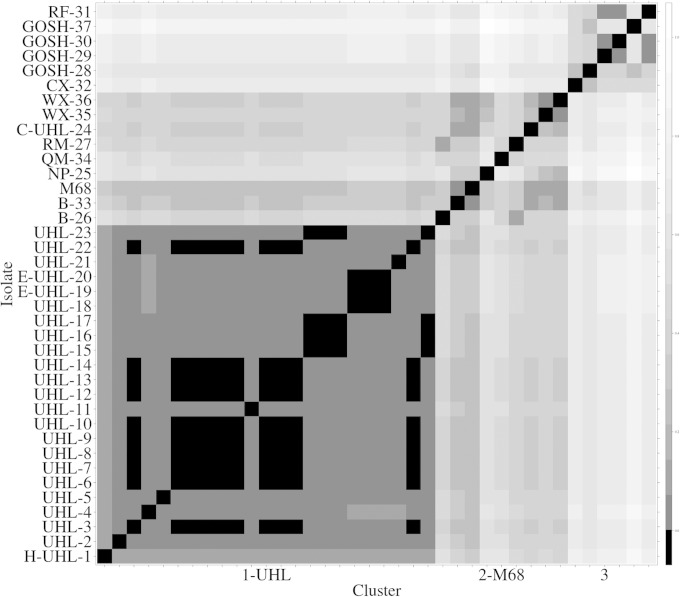
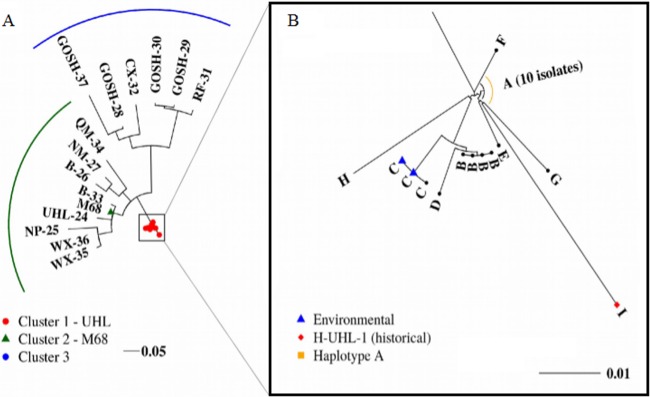
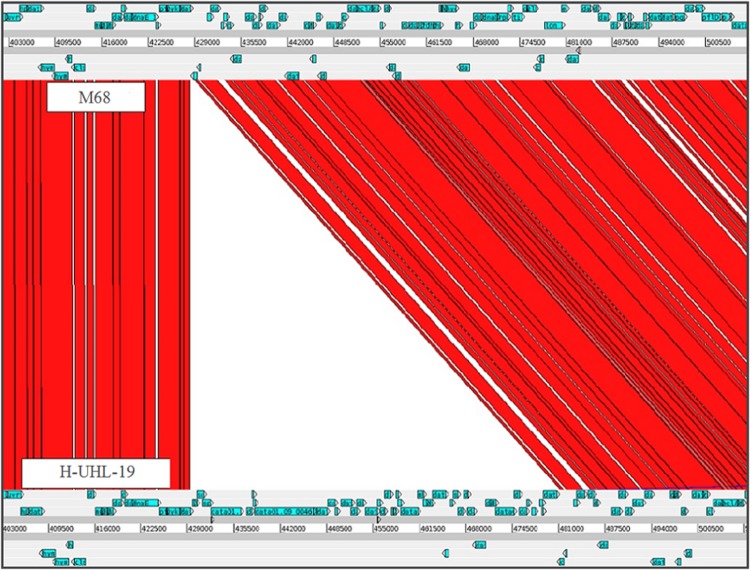
Clostridium difficile remains the leading cause of nosocomial diarrhea worldwide, which is largely considered to be due to the production of two potent toxins: TcdA and TcdB. However, PCR ribotype (RT) 017, one of five clonal lineages of human virulent C. difficile , lacks TcdA expression but causes widespread disease. Whole-genome sequencing was applied to 35 isolates from hospitalized patients with C. difficile infection (CDI) and two environmental ward isolates in London, England. The phylogenetic analysis of single nucleotide polymorphisms (SNPs) revealed a clonal cluster of temporally variable isolates from a single hospital ward at University Hospital Lewisham (UHL) that were distinct from other London hospital isolates. De novo assembled genomes revealed a 49-kbp putative conjugative transposon exclusive to this hospital clonal cluster which would not be revealed by current typing methodologies. This study identified three sublineages of C. difficile RT017 that are circulating in London. Similar to the notorious RT027 lineage, which has caused global outbreaks of CDI since 2001, the lineage of toxin-defective RT017 strains appears to be continually evolving. By utilization of WGS technologies to identify SNPs and the evolution of clonal strains, the transmission of outbreaks caused by near-identical isolates can be retraced and identified.
Overview
The claims and statistics of this paper haven’t been checked yet.
Free: it reads the open-access text and checks the first 5 claims that cite a source we can check. Create a free account to check every claim.
Integrity signals
Registry
Cites
Statistics
Figures
Verification
Claims the paper makes
The claims and statistics of this paper haven’t been checked yet.
Free: it reads the open-access text and checks the first 5 claims that cite a source we can check. Create a free account to check every claim.
Claims other papers make about this one
Each is checked against this paper’s own text: does it say what the citing paper says it does?
The source backs part of the claim, not all of it — or backs it for a different population, condition or comparison.
In the citing paper
“Until now it is uncommon for sortase enzymes to be found on conjugative transposons of C. difficile, with the only previous evidence in the related element in RT017 strains from a London hospital17.”
From Clostridium difficile clade 3 (RT023) have a modified cell surface and contain a large transposable island with novel cargo (2019) · cites this paper as [17]
Experimental — accuracy not yet measuredThe cited source says what the claim attributes to it.
In the citing paper
“023_CTn2 shows partial sequence identity to the 49 kb chromosomal genetic region observed in the C. difficile RT017 1-UHL cluster17 (Fig. 4a).”
From Clostridium difficile clade 3 (RT023) have a modified cell surface and contain a large transposable island with novel cargo (2019) · cites this paper as [17]
In the citing paper
“RT017 strains from a London hospital also contain some cargo genes of 023_CTn2”
From Clostridium difficile clade 3 (RT023) have a modified cell surface and contain a large transposable island with novel cargo (2019) · cites this paper as [17]
Self-check
Percentages, sums and reported differences re-computed from the paper’s own numbers.
The self-check needs the paper’s full text.
Citations
Cites
R: A Language and Environment for Statistical Computing
R Core Team (2025) · doi:10.32614/r.manuals · Cited by 352,181
Trimmomatic: a flexible trimmer for Illumina sequence data
Bolger, A. M., Lohse, M., & Usadel, B. (2014) · Bioinformatics · doi:10.1093/bioinformatics/btu170 · Cited by 65,548
The Sequence Alignment/Map format and SAMtools
Li, H., Handsaker, B., Wysoker, A., Fennell, T., Ruan, J., Homer, N., Marth, G., Abecasis, G., Durbin, R., & 1000 Genome Project Data Processing Subgroup (2009) · Bioinformatics · doi:10.1093/bioinformatics/btp352 · Cited by 62,041
Fast and accurate short read alignment with Burrows-Wheeler transform
Li, H., & Durbin, R. (2009) · Bioinformatics · doi:10.1093/bioinformatics/btp324 · Cited by 58,607
RAxML version 8: a tool for phylogenetic analysis and post-analysis of large phylogenies
Stamatakis, A. (2014) · Bioinformatics · doi:10.1093/bioinformatics/btu033 · Cited by 32,291
Prokka: rapid prokaryotic genome annotation
Seemann, T. (2014) · Bioinformatics · doi:10.1093/bioinformatics/btu153 · Cited by 18,818
Evolution of MRSA During Hospital Transmission and Intercontinental Spread
Harris, S. R., Feil, E. J., Holden, M. T. G., Quail, M. A., Nickerson, E. K., Chantratita, N., Gardete, S., Tavares, A., Day, N., Lindsay, J. A., et al. (2010) · Science · doi:10.1126/science.1182395 · Cited by 1,091
Emergence and global spread of epidemic healthcare-associated Clostridium difficile
He, M., Miyajima, F., Roberts, P., Ellison, L., Pickard, D. J., Martin, M. J., Connor, T. R., Harris, S. R., Fairley, D., Bamford, K. B., et al. (2013) · Nature Genetics · doi:10.1038/ng.2478 · Cited by 735
Self-citationDiverse Sources of C. difficile Infection Identified on Whole-Genome Sequencing
Eyre, D. W., Cule, M. L., Wilson, D. J., Griffiths, D., Vaughan, A., O'Connor, L., Ip, C. L. C., Golubchik, T., Batty, E. M., Finney, J. M., et al. (2013) · New England Journal of Medicine · doi:10.1056/nejmoa1216064 · Cited by 648
Using the Velvet de novo Assembler for Short‐Read Sequencing Technologies
Zerbino, D. R. (2010) · Current Protocols in Bioinformatics · doi:10.1002/0471250953.bi1105s31 · Cited by 497
Research works printed but not linked: 2
- Health Protection Agency. 2012 Clostridium difficile Ribotyping Network (CDRN) for England and Northern Ireland 2010-2011 annual report. Health Protection Agency, London, United Kingdom.
- Seemann T, Gladman S 2012 VelvetOptimiser. Victorian Bioinformatics Consortium. http://bioinformatics.net.au/software.velvetoptimiser.shtml.
Cited by
Precision Public Health for the Era of Precision Medicine
Khoury, M. J., Iademarco, M. F., & Riley, W. T. (2016) · American Journal of Preventive Medicine · doi:10.1016/j.amepre.2015.08.031 · Cited by 569
Mileto, S. J., Jardé, T., Childress, K. O., Jensen, J. L., Rogers, A. P., Kerr, G., Hutton, M. L., Sheedlo, M. J., Bloch, S. C., Shupe, J. A., et al. (2020) · Proceedings of the National Academy of Sciences · doi:10.1073/pnas.1915255117 · Cited by 109
Imwattana, K., Knight, D. R., Kullin, B., Collins, D. A., Putsathit, P., Kiratisin, P., & Riley, T. V. (2019) · Emerging Microbes & Infections · doi:10.1080/22221751.2019.1621670 · Cited by 102
Current knowledge on the laboratory diagnosis ofClostridium difficileinfection
Martínez-Meléndez, A., Camacho-Ortíz, A., Morfín‐Otero, R., Maldonado-Garza, H. J., Villarreal-Treviño, L., & Garza‐González, E. (2017) · World Journal of Gastroenterology · doi:10.3748/wjg.v23.i9.1552 · Cited by 70
CRISPR Diversity and Microevolution inClostridium difficile
Andersen, J. M., Shoup, M., Robinson, C., Britton, R. A., Olsen, K. E. P., & Barrangou, R. (2016) · Genome Biology and Evolution · doi:10.1093/gbe/evw203 · Cited by 69
Cairns, M. D., Preston, M. D., Hall, C. L., Gerding, D. N., Hawkey, P. M., Kato, H., Kim, H., Kuijper, E. J., Lawley, T. D., Pituch, H. M., et al. (2016) · Journal of Clinical Microbiology · doi:10.1128/jcm.01296-16 · Cited by 69
Self-citationA Primer on Infectious Disease Bacterial Genomics
Lynch, T., Petkau, A., Knox, N., Graham, M., & Domselaar, G. V. (2016) · Clinical Microbiology Reviews · doi:10.1128/cmr.00001-16 · Cited by 53
The Environment, Farm Animals and Foods as Sources of Clostridioides difficile Infection in Humans
Bolton, D., & Marcos, P. (2023) · Foods · doi:10.3390/foods12051094 · Cited by 52
Ribotypes and New Virulent Strains Across Europe
Couturier, J., Davies, K., Gateau, C., & Barbut, F. (2018) · Advances in experimental medicine and biology · doi:10.1007/978-3-319-72799-8_4 · Cited by 49
Shoe soles as a potential vector for pathogen transmission: a systematic review
Rashid, T., VonVille, H. M., Hasan, I., & Garey, K. W. (2016) · Journal of Applied Microbiology · doi:10.1111/jam.13250 · Cited by 43
Molecular epidemiology of predominant and emerging Clostridioides difficile ribotypes
Martínez-Meléndez, A., Morfín‐Otero, R., Villarreal-Treviño, L., Baines, S. D., Camacho-Ortíz, A., & Garza‐González, E. (2020) · Journal of Microbiological Methods · doi:10.1016/j.mimet.2020.105974 · Cited by 39
Moradigaravand, D., Gouliouris, T., Ludden, C., Reuter, S., Jamrozy, D. M., Blane, B., Naydenova, P., Judge, K., Aliyu, S. H., Hadjirin, N. F., et al. (2018) · Microbial Genomics · doi:10.1099/mgen.0.000162 · Cited by 37
Isidro, J., Menezes, J., Serrano, M., Borges, V., Paixão, P., Mimoso, M., Martins, F., Toscano, C., dos Santos, A. H., Henriques, A. O., et al. (2018) · Frontiers in Microbiology · doi:10.3389/fmicb.2018.02994 · Cited by 33
National Surveillance for Clostridioides difficile Infection, Sweden, 2009–2016
Rizzardi, K., Norén, T., Aspevall, O., Mäkitalo, B., Toepfer, M., Johansson, Å., & Åkerlund, T. (2018) · Emerging infectious diseases · doi:10.3201/eid2409.171658 · Cited by 31
A human gut ecosystem protects against C. difficile disease by targeting TcdA
Martz, S., Guzmán-Rodríguez, M., He, S.-M., Noordhof, C., Hurlbut, D. J., Gloor, G. B., Carlucci, C., Weese, J. S., Allen‐Vercoe, E., Sun, J., et al. (2016) · Journal of Gastroenterology · doi:10.1007/s00535-016-1232-y · Cited by 29
Determining the cause of recurrent Clostridium difficile infection using whole genome sequencing
Sim, J. H. C., Truong, C., Minot, S. S., Greenfield, N., Budvytiene, I., Lohith, A., Anikst, V. E., Pourmand, N., & Banaei, N. (2016) · Diagnostic Microbiology and Infectious Disease · doi:10.1016/j.diagmicrobio.2016.09.023 · Cited by 29
Lynch, T., Chen, L., Peirano, G., Gregson, D. B., Church, D. L., Conly, J. M., Kreiswirth, B. N., & Pitout, J. D. D. (2016) · The Journal of Infectious Diseases · doi:10.1093/infdis/jiw240 · Cited by 29
Host Immunity and Immunization Strategies for Clostridioides difficile Infection
Naz, F., & Petri, W. A. (2023) · Clinical Microbiology Reviews · doi:10.1128/cmr.00157-22 · Cited by 28
Enterotoxic Clostridia:Clostridioides difficileInfections
Mileto, S. J., Das, A., & Lyras, D. (2019) · Microbiology Spectrum · doi:10.1128/microbiolspec.gpp3-0015-2018 · Cited by 28
Li, R., Xiao, D., Yang, J., Sun, S., Kaplan, S. E., Li, Z., Niu, Y., Qiang, C., Zhai, Y., Wang, X., et al. (2018) · Journal of Clinical Microbiology · doi:10.1128/jcm.01990-17 · Cited by 28
Kullin, B., Wojno, J., Abratt, V. R., & Reid, S. J. (2016) · European Journal of Clinical Microbiology & Infectious Diseases · doi:10.1007/s10096-016-2790-x · Cited by 27
Molecular epidemiology of endemic Clostridioides difficile infection in Japan
Senoh, M., & Kato, H. (2022) · Anaerobe · doi:10.1016/j.anaerobe.2021.102510 · Cited by 26
Epidemiological aspects of healthcare-associated infections and microbial genomics
Mirande, C., Bizine, I., Giannetti, A., Picot, N., & van Belkum, A. (2018) · European Journal of Clinical Microbiology & Infectious Diseases · doi:10.1007/s10096-017-3170-x · Cited by 26
Host response to Clostridium difficile infection: Diagnostics and detection
Usacheva, E. A., Jin, J., & Peterson, L. R. (2016) · Journal of Global Antimicrobial Resistance · doi:10.1016/j.jgar.2016.08.002 · Cited by 25
Bezlotoxumab prevents extraintestinal organ damage induced by Clostridioides difficile infection
Mileto, S. J., Hutton, M. L., Walton, S. L., Das, A., Ioannidis, L. J., Ketagoda, D., Quinn, K. M., Denton, K. M., Hansen, D. S., & Lyras, D. (2022) · Gut Microbes · doi:10.1080/19490976.2022.2117504 · Cited by 25
Dunne, W. M., Pouseele, H., Monecke, S., Ehricht, R., & van Belkum, A. (2017) · Infection Genetics and Evolution · doi:10.1016/j.meegid.2017.09.019 · Cited by 23
Markham, N. O., Bloch, S. C., Shupe, J. A., Laubacher, E. N., Thomas, A. K., Kroh, H. K., Childress, K. O., Peritore‐Galve, F. C., Washington, M. K., Coffey, R. J., et al. (2021) · Infection and Immunity · doi:10.1128/iai.00543-20 · Cited by 23
Kullin, B., Reid, S. J., & Abratt, V. R. (2018) · African Journal of Laboratory Medicine · doi:10.4102/ajlm.v7i2.846 · Cited by 23
Norsigian, C. J., Danhof, H. A., Ardis, C. K., Midani, F. S., Broddrick, J. T., Savidge, T., Britton, R. A., Palsson, B. Ø., Spinler, J. K., & Monk, J. M. (2022) · Proceedings of the National Academy of Sciences · doi:10.1073/pnas.2119396119 · Cited by 22
Kullin, B., Brock, T. E., Rajabally, N., Anwar, F., Vedantam, G., Reid, S., & Abratt, V. R. (2016) · European Journal of Clinical Microbiology & Infectious Diseases · doi:10.1007/s10096-016-2717-6 · Cited by 22
Global evolutionary dynamics and resistome analysis of Clostridioides difficile ribotype 017
Imwattana, K., Putsathit, P., Collins, D. A., Leepattarakit, T., Kiratisin, P., Riley, T. V., & Knight, D. R. (2022) · Microbial Genomics · doi:10.1099/mgen.0.000792 · Cited by 18
Drigo, I., Mazzolini, E., Bacchin, C., Tonon, E., Puiatti, C., Bano, L., Spigaglia, P., Barbanti, F., & Agnoletti, F. (2015) · Veterinary Microbiology · doi:10.1016/j.vetmic.2015.10.005 · Cited by 17
Comparative Genomics of Clostridium difficile
Janežič, S., Garneau, J. R., & Monot, M. (2018) · Advances in experimental medicine and biology · doi:10.1007/978-3-319-72799-8_5 · Cited by 15
Arca-Suárez, J., Galán‐Sánchez, F., Cano-Cano, F., García-Santos, G., & Rodríguez‐Iglesias, M. (2018) · Anaerobe · doi:10.1016/j.anaerobe.2018.09.006 · Cited by 12
Wang, S., Ju, X., Heuler, J., Zhang, K., Duan, Z., Patabendige, H. M. L. W., Song, Z., & Sun, X. (2023) · Infection and Immunity · doi:10.1128/iai.00169-22 · Cited by 11
Ribotypes and New Virulent Strains Across Europe
Couturier, J., Davies, K., & Barbut, F. (2024) · Advances in experimental medicine and biology · doi:10.1007/978-3-031-42108-2_8 · Cited by 11
Wen, X., Liu, X., Wan, K., Liu, H., Zhang, C., Zhang, X., & Wen, Q. (2025) · Frontiers in Cellular and Infection Microbiology · doi:10.3389/fcimb.2025.1641564 · Cited by 9
Boudjelal, Y., Krůtová, M., Djebbar, A., Sebaihia, M., Bekara, M. E. A., Rouabhia, S., Couturier, J., Syed-Zaidi, R., & Barbut, F. (2022) · The Journal of Infection in Developing Countries · doi:10.3855/jidc.16056 · Cited by 9
Shaw, H. A., Khodadoost, L., Preston, M. D., Corver, J., Mullany, P., & Wren, B. W. (2019) · Scientific Reports · doi:10.1038/s41598-019-51628-5 · Cited by 8
Self-citationComparative Genomics of Clostridioides difficile
Janežič, S., Garneau, J. R., & Monot, M. (2024) · Advances in experimental medicine and biology · doi:10.1007/978-3-031-42108-2_10 · Cited by 2
From FASTQ to Function: In Silico Methods for Processing Next-Generation Sequencing Data
Preston, M. D., & Stabler, R. A. (2016) · Methods in molecular biology · doi:10.1007/978-1-4939-6361-4_3 · Cited by 2
Self-citationLow Viral Diversity Limits the Effectiveness of Sequence-Based Transmission Inference for SARS-CoV-2
Farjo, M., & Brooke, C. B. (2023) · mSphere · doi:10.1128/msphere.00544-22 · Cited by 2
Clostridium difficile Infection Diagnosis by Biological Molecular Methods
Iancu, L. S., Cârlan, A. F., & Ursu, R. G. (2017) · InTech eBooks · doi:10.5772/intechopen.68692 · Cited by 1
Brock, T. E. (2015) · Open University of Cape Town (University of Cape Town) · Cited by 1
Kim, J., Seo, M.-R., Kim, B., Kim, J., Bae, M. H., & Pai, H. (2021) · Antibiotics · doi:10.3390/antibiotics10101229 · Cited by 1
Enterotoxic Clostridia: Clostridioides difficile Infections
Mileto, S. J., Das, A., & Lyras, D. (2019) · ASM Press eBooks · doi:10.1128/9781683670131.ch61
Evolution of Clostridium difficile
Cairns, M. D. (2018) · Doctoral thesis, UCL (University College London).
Self-citationAmeh, I. L. (2019) · University of Hertfordshire Research Archive (University of Hertfordshire) · doi:10.18745/th.22437
Rabold, D. (2019) · Refubium (Universitätsbibliothek der Freien Universität Berlin) · doi:10.17169/refubium-25726
Clostridioides difficile infection. Transmission dynamics
Abascal, C. R. (2023) · UCrea (University of Cantabria)
Meléndez, M., & Adrián, J. (2018) · El Repositorio Academico Digital de la UANL (Universidad Autónoma de Nuevo León)
Metadata
- Authors
- Cairns, M. D., Preston, M. D., Lawley, T. D., Clark, T. G., Stabler, R. A., & Wren, B. W.
- Affiliations
- Royal London Hospital (GB)
- London School of Hygiene & Tropical Medicine (GB)
- Wellcome Sanger Institute (GB)
- Corresponding author
- Wren, B. W.
- Venue
- Journal of Clinical Microbiology
- Publisher
- American Society for Microbiology
- Published
- 2015-10
- Volume
- 53
- Issue
- 10
- Pages
- 3141-3147
- ISSN
- 0095-1137 (ISSN-L)
- 1098-660X
- PMC
- PMC4572532
- OpenAlex
- W2113607780
- Cited by
- 46
- References
- 38
- Citations by year
- 2025: 1 · 2024: 2 · 2023: 4 · 2022: 5 · 2021: 2 · 2020: 2 · 2019: 4 · 2018: 10 · 2017: 3 · 2016: 11 · 2015: 2
- FWCI
- 6.70
- Type
- journal article
- Language
- en
- Open access
- hybrid
- doi.org
- Licence
- cc-by
- creativecommons.org/licenses/by/3.0/ (vor)
- journals.asm.org/non-commercial-tdm-license (tdm)
- Locations
- Journal of Clinical Microbiology (publishedVersion, cc-by)
- Europe PMC (PubMed Central) (publishedVersion, cc-by)
- PubMed Central (publishedVersion, cc-by)
- PubMed (publishedVersion)
- LSHTM Research Online (London School of Hygiene and Tropical Medicine) (acceptedVersion)
- Funders
- Wellcome Trust (098051, 086418)
- National Institute for Health and Care Research (HCS/D10/020)
- Medical Research Council (MR/K000551/1)
- Topics
- Health Sciences › Medicine › Infectious Diseases › Clostridium difficile and Clostridium perfringens research
- Health Sciences › Medicine › Infectious Diseases › Antimicrobial Resistance in Staphylococcus
- Health Sciences › Medicine › Microbiology (medical) › Bacterial Identification and Susceptibility Testing
- Keywords
- Clostridium difficile, nosocomial infections, hospital outbreak, clonal lineages, conjugative transposons, whole genome sequencing, single nucleotide polymorphisms, phylogenetic analysis, outbreak transmission, London
- MeSH terms
- Bacterial Toxins, Clostridium Infections, Cross Infection, Diarrhea, Disease Outbreaks, Enterotoxins, Humans, London, Phylogeny, Cluster Analysis, Polymerase Chain Reaction, Clostridioides difficile, Genome, Bacterial, Sequence Analysis, DNA, Molecular Epidemiology, Polymorphism, Single Nucleotide, Ribotyping
About these checks
Registry, retraction, Cites and statistics results are computed, not judged, with one exception: a printed reference that no index lists is read once by a model before it counts as a citation error. Claims are extracted by a model and kept only when their quote appears verbatim in the text; each cited source is then checked, with a model’s help, for whether it says what the claim relies on. Those verdicts can be wrong — read the claim’s quote and the cited source before relying on one.
Statistics and arithmetic are recomputed, not judged.
Confidence bands are shown only for fields calibrated on our annotated test set. None is calibrated yet, so no band is shown.
What counts as a claim ›How we measure confidence ›How we check this ›
Are you an author, or do you see a problem with this page? Request a review
Data sources
Bibliographic data: Semantic Scholar, OpenAlex, Crossref.
Contains information from the Semantic Scholar Academic Graph Datasets, made available under the ODC Attribution License (ODC-BY 1.0).
Semantic Scholar’s data is described in: Kinney, R., et al. (2023). The Semantic Scholar Open Data Platform. arXiv:2301.10140.
