

Cryptococcus neoformans Requires a Functional Glycolytic Pathway for Disease but Not Persistence in the Host
Open accessThe DOI matches its Crossref record; 77 of the 77 references it cites were found in a registry or an index.
Abstract
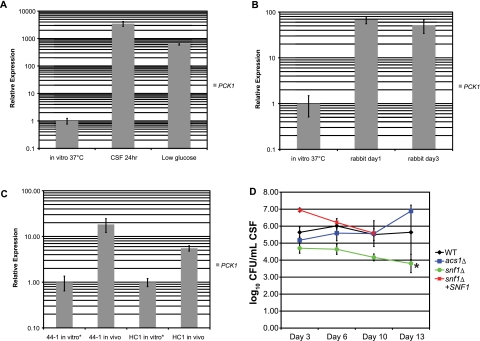
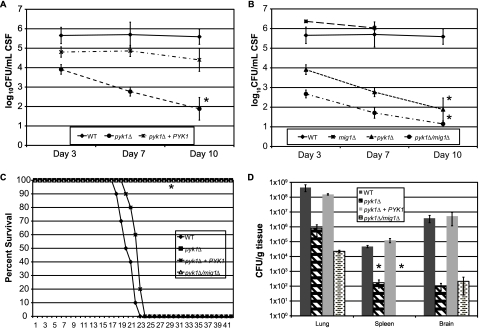
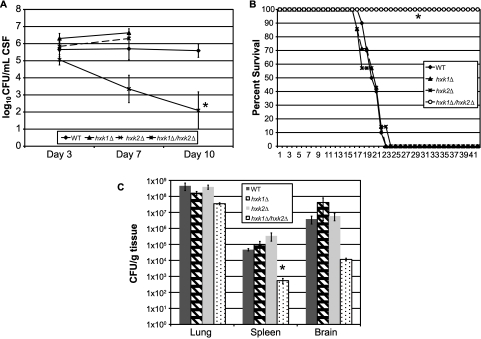
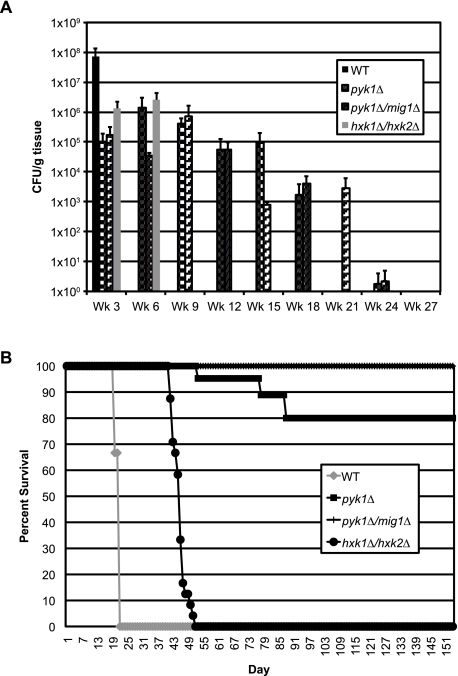
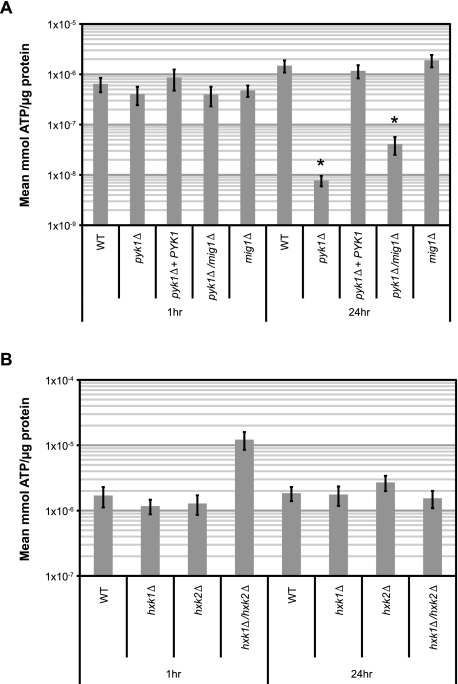
Cryptococcus neoformans is an important fungal pathogen of immunocompromised individuals, with a close relative,Cryptococcus gattii, emerging as a serious threat for the immunocompetent. During initial infection,C. neoformans colonizes the airspaces of the lungs, resulting in pneumonia, and subsequently migrates to the central nervous system (CNS). We sought to understand fungal carbon utilization during colonization of these fundamentally different niches within the host, in particular the roles of gluconeogenesis and glycolysis. We created mutants at key points in the gluconeogenesis/glycolysis metabolic pathways that are restricted for growth on lactate and glucose, respectively. A phosphoenolpyruvate carboxykinase mutant (the pck1∆mutant), blocked for entry of 2- and 3-carbon substrates into gluconeogenesis and attenuated for virulence in a murine inhalation model, showed wild-type (WT) persistence in a rabbit cerebrospinal fluid (CSF) model of cryptococcosis. Conversely, both the pyruvate kinase (pyk1∆) and the hexose kinase I and II (hxk1∆/hxk2∆) mutants, which show impaired glucose utilization, exhibited severely attenuated virulence in the murine inhalation model of cryptococcosis and decreased persistence in the CNS in both the rabbit CSF and the murine inhalation models while displaying adequate persistence in the lungs of mice. These data suggest that glucose utilization is critical for virulence of C. neoformans and persistence of the yeast in the CNS. IMPORTANCECryptococcus neoformans is an emerging fungal pathogen of humans and is responsible for approximately 625,000 deaths annually among those suffering from HIV infection/AIDS. The ability of this fungus to persist in the host, coupled with its propensity to colonize the CNS, makes the understanding of nutrient acquisition in the host a primary concern. In this study, we report a requirement of glucose utilization for virulence of C. neoformans that is separate from its role in ATP production in the pathogen. Furthermore, we show that inhibition of glycolysis is a viable antifungal drug target, and impaired ATP production via the PYK1 deletion may serve as a model for dormant/chronic fungal infection in the host. Taken together, these results demonstrate the critical importance of understanding basic metabolic processes of the fungus in the context of host-pathogen interactions.
Overview
The claims and statistics of this paper haven’t been checked yet.
Free: it reads the open-access text and checks the first 5 claims that cite a source we can check. Create a free account to check every claim.
Integrity signals
Registry
Cites
Statistics
Figures
Verification
Claims the paper makes
The claims and statistics of this paper haven’t been checked yet.
Free: it reads the open-access text and checks the first 5 claims that cite a source we can check. Create a free account to check every claim.
Self-check
Percentages, sums and reported differences re-computed from the paper’s own numbers.
The self-check needs the paper’s full text.
Citations
Cites
Bradford, M. M. (1976) · Analytical Biochemistry · doi:10.1016/0003-2697(76)90527-3 · Cited by 255,302
Detection of specific sequences among DNA fragments separated by gel electrophoresis
Southern, E. M. (1975) · Journal of Molecular Biology · doi:10.1016/s0022-2836(75)80083-0 · Cited by 32,249
Vandesompele, J., De Preter, K., Pattyn, F., Poppe, B., Van Roy, N., De Paepe, A., & Speleman, F. (2002) · Genome Biology · doi:10.1186/gb-2002-3-7-research0034 · Cited by 20,038
Understanding the Warburg Effect: The Metabolic Requirements of Cell Proliferation
Vander Heiden, M. G., Cantley, L. C., & Thompson, C. B. (2009) · Science · doi:10.1126/science.1160809 · Cited by 16,197
Sherman, F. (2002) · Methods in Enzymology · doi:10.1016/s0076-6879(02)50954-x · Cited by 4,121
[1] Getting started with yeast
Sherman, F. (1991) · Methods in Enzymology · doi:10.1016/0076-6879(91)94004-v · Cited by 4,067
Park, B. J., Wannemuehler, K. A., Marston, B. J., Govender, N., Pappas, P. G., & Chiller, T. M. (2009) · AIDS · doi:10.1097/qad.0b013e328322ffac · Cited by 2,014
Glycolysis inhibition for anticancer treatment
Pelicano, H., Martin, D. S., Xu, R.-H., & Huang, P. (2006) · Oncogene · doi:10.1038/sj.onc.1209597 · Cited by 1,516
Schibler, U., Wyler, T., & Hagenbüchle, O. (1975) · Journal of Molecular Biology · doi:10.1016/0022-2836(75)90217-x · Cited by 1,188
Xu, R.-H., Pelicano, H., Zhou, Y., Carew, J. S., Feng, L., Bhalla, K. N., Keating, M. J., & Huang, P. (2005) · Cancer Research · doi:10.1158/0008-5472.613.65.2 · Cited by 835
Cited by
Ene, I. V., Adya, A. K., Wehmeier, S., Brand, A. C., MacCallum, D. M., Gow, N. A. R., & Brown, A. J. P. (2012) · Cellular Microbiology · doi:10.1111/j.1462-5822.2012.01813.x · Cited by 313
“…drug resistance and virulence in a fungal pathogen Iuliana V. Ene,1 Ashok K. Adya,2 Silvia Wehmeier,1 Alexandra C. Brand,1 Donna M. MacCallum,1 Neil A. R. Gow1 and Alistair J. P. Brown1* 1Aberdeen Fungal Group, School of Medical Sciences, Institute of Medical Sciences, University of Aberdeen,”
BackgroundTucey, T. M., Verma, J., Harrison, P. F., Snelgrove, S. L., Lo, T. L., Scherer, A. K., Barugahare, A. A., Powell, D. R., Wheeler, R. T., Hickey, M. J., et al. (2018) · Cell Metabolism · doi:10.1016/j.cmet.2018.03.019 · Cited by 226
Shingu-Vazquez, M., & Traven, A. (2011) · Eukaryotic Cell · doi:10.1128/ec.05184-11 · Cited by 209
Systematic functional profiling of transcription factor networks in Cryptococcus neoformans
Jung, K.-W., Yang, D.-H., Maeng, S., Lee, K.-T., So, Y.-S., Hong, J., Choi, J., Byun, H.-J., Kim, H., Bang, S., et al. (2015) · Nature Communications · doi:10.1038/ncomms7757 · Cited by 203
Metabolism in fungal pathogenesis
Ene, I. V., Brunke, S., Brown, A. J. P., & Hube, B. (2014) · Cold Spring Harbor Perspectives in Medicine · doi:10.1101/cshperspect.a019695 · Cited by 169
“neoformans to a reasonable extent, as mutants with glycolytic defects ( pyk1D and hxk1D hxk2D) are severely attenuated in a murine inhalation model of cryptococcosis and display decreased persistence in the central nervous system (Price et al. 2011).”
BackgroundEne, I. V., Heilmann, C. J., Sorgo, A. G., Walker, L. A., de Koster, C. G., Munro, C. A., Klis, F. M., & Brown, A. J. P. (2012) · Proteomics · doi:10.1002/pmic.201200228 · Cited by 159
Kronstad, J., Saikia, S., Nielson, E. D., Kretschmer, M., Jung, W., Hu, G., Geddes, J. M. H., Griffiths, E. J., Choi, J., Cadieux, B., et al. (2012) · Eukaryotic Cell · doi:10.1128/ec.05273-11 · Cited by 115
Self-citationCaza, M., & Kronstad, J. W. (2019) · Frontiers in Cellular and Infection Microbiology · doi:10.3389/fcimb.2019.00212 · Cited by 107
Self-citationOverview of carbon and nitrogen catabolite metabolism in the virulence of human pathogenic fungi
Ries, L. N. A., Beattie, S., Cramer, R. A., & Goldman, G. H. (2018) · Molecular Microbiology · doi:10.1111/mmi.13887 · Cited by 103
‘Division of labour’ in response to host oxidative burst drives a fatal Cryptococcus gattii outbreak
Voelz, K., Johnston, S. A., Smith, L. M., Hall, R. A., Idnurm, A., & May, R. C. (2014) · Nature Communications · doi:10.1038/ncomms6194 · Cited by 99
Metabolic Adaptations to Infections at the Organismal Level
Troha, K., & Ayres, J. S. (2020) · Trends in Immunology · doi:10.1016/j.it.2019.12.001 · Cited by 97
Histoplasma capsulatum surmounts obstacles to intracellular pathogenesis
Garfoot, A. L., & Rappleye, C. A. (2015) · FEBS Journal · doi:10.1111/febs.13389 · Cited by 94
Mechanisms of Infection by the Human Fungal Pathogen Cryptococcus Neoformans
Sabiiti, W., & May, R. C. (2012) · Future Microbiology · doi:10.2217/fmb.12.102 · Cited by 83
Transcriptional and Proteomic Responses to Carbon Starvation in Paracoccidioides
Lima, P. D. S., Casaletti, L., Bailão, A. M., de Vasconcelos, A. T. R., Fernandes, G. D. R., & Soares, C. M. D. A. (2014) · PLoS neglected tropical diseases · doi:10.1371/journal.pntd.0002855 · Cited by 82
Childers, D. S., Raziunaite, I., Mol Avelar, G., Mackie, J., Budge, S., Stead, D., Gow, N. A. R., Lenardon, M. D., Ballou, E. R., MacCallum, D. M., et al. (2016) · PLOS Pathogens · doi:10.1371/journal.ppat.1005566 · Cited by 81
“For example, the loss of glycolysis or glucose sensing attenuates the dissemination and pathogenicity of the basidiomycete yeast Cryptococcus neoformans [46].”
BackgroundXia, F., Chen, X., Guo, M., Bai, X., Liu, Y., Shen, G., Li, Y.-L., Lin, J., & Zhou, X. (2016) · Scientific Reports · doi:10.1038/srep33437 · Cited by 79
Tenor, J. L., Oehlers, S. H., Yang, J. L., Tobin, D. M., & Perfect, J. R. (2015) · mBio · doi:10.1128/mbio.01425-15 · Cited by 78
“However, neither mammalian model allows real-time visualization of the dynamic interaction between innate immune cells and yeasts at distinct sites within the host, and neither model allows easy interrogation of large numbers of wild-type strains and mutants for screening and comparative purposes (3, 4).”
BackgroundSelf-citationKretschmer, M., Wang, J., & Kronstad, J. W. (2012) · Eukaryotic Cell · doi:10.1128/ec.00128-12 · Cited by 75
Self-citationFungal kinases and transcription factors regulating brain infection in Cryptococcus neoformans
Lee, K.-T., Hong, J., Lee, D.-G., Lee, M., Cha, S., Lim, Y.-G., Jung, K.-W., Hwangbo, A., Lee, Y., Yu, S.-J., et al. (2020) · Nature Communications · doi:10.1038/s41467-020-15329-2 · Cited by 74
Geddes, J. M. H., Croll, D., Caza, M., Stoynov, N., Foster, L. J., & Kronstad, J. W. (2015) · BMC Microbiology · doi:10.1186/s12866-015-0532-3 · Cited by 64
Self-citationNutrient and Stress Sensing in Pathogenic Yeasts
Rutherford, J. C., Bahn, Y., van den Berg, B., Heitman, J., & Xue, C. (2019) · Frontiers in Microbiology · doi:10.3389/fmicb.2019.00442 · Cited by 64
Histoplasma capsulatum Depends on De Novo Vitamin Biosynthesis for Intraphagosomal Proliferation
Garfoot, A. L., Zemska, O., & Rappleye, C. A. (2013) · Infection and Immunity · doi:10.1128/iai.00824-13 · Cited by 60
Role of CTR4 in the Virulence of Cryptococcus neoformans
Waterman, S. R., Park, Y.-D., Raja, M., Qiu, J., Hammoud, D. A., O’Halloran, T. V., & Williamson, P. R. (2012) · mBio · doi:10.1128/mbio.00285-12 · Cited by 59
Yu, C.-H., Sephton-Clark, P., Tenor, J. L., Toffaletti, D. L., Giamberardino, C., Haverkamp, M., Cuomo, C. A., & Perfect, J. R. (2021) · mBio · doi:10.1128/mbio.02313-21 · Cited by 59
Self-citationProtein kinase A and fungal virulence: A sinister side to a conserved nutrient sensing pathway
Fuller, K. K., & Rhodes, J. C. (2012) · Virulence · doi:10.4161/viru.19396 · Cited by 53
Microevolution of Cryptococcus neoformans Driven by Massive Tandem Gene Amplification
Chow, E. W. L., Morrow, C. A., Djordjevic, J. T., Wood, I. A., & Fraser, J. A. (2012) · Molecular Biology and Evolution · doi:10.1093/molbev/mss066 · Cited by 53
Macrophage Mitochondrial and Stress Response to Ingestion of Cryptococcus neoformans
Coelho, C., Souza, A. C. O., Derengowski, L. D. S., de Leon-Rodriguez, C., Wang, B., Leon-Rivera, R., Bocca, A. L., Gonçalves, T., & Casadevall, A. (2015) · The Journal of Immunology · doi:10.4049/jimmunol.1402350 · Cited by 48
Caza, M., Hu, G., Price, M., Perfect, J. R., & Kronstad, J. W. (2016) · mSphere · doi:10.1128/msphere.00080-15 · Cited by 48
Self-citationPigosso, L. L., Baeza, L. C., Tomazett, M. V., Faleiro, M. B. R., de Moura, V. M. B. D., Bailão, A. M., Borges, C. L., Rocha, J. A. P., Fernandes, G. R., Gauthier, G. M., et al. (2017) · Virulence · doi:10.1080/21505594.2017.1355660 · Cited by 48
Liu, J., Chang, H., Liu, Y., Qin, Y., Ding, Y., Wang, L., Zhao, Y., Zhang, M., Cao, S., Li, L., et al. (2018) · Environmental Microbiology · doi:10.1111/1462-2920.14112 · Cited by 47
Old Cryptococcus neoformans Cells Contribute to Virulence in Chronic Cryptococcosis
Bouklas, T., Pechuan, X., Goldman, D. L., Edelman, B., Bergman, A., & Fries, B. C. (2013) · mBio · doi:10.1128/mbio.00455-13 · Cited by 46
New insights into a complex fungal pathogen: the case of Paracoccidioides spp.
González, Á., & Hernández, O. (2016) · Yeast · doi:10.1002/yea.3147 · Cited by 45
Convergent microevolution of Cryptococcus neoformans hypervirulence in the laboratory and the clinic
Arras, S. D. M., Ormerod, K. L., Erpf, P. E., Espinosa, M. I., Carpenter, A. C., Blundell, R. D., Stowasser, S. R., Schulz, B. L., Tanurdzic, M., & Fraser, J. A. (2017) · Scientific Reports · doi:10.1038/s41598-017-18106-2 · Cited by 44
Li, C., Lev, S., Saiardi, A., Desmarini, D., Sorrell, T. C., & Djordjevic, J. T. (2016) · Scientific Reports · doi:10.1038/srep23927 · Cited by 43
Genomic Variation across a Clinical Cryptococcus Population Linked to Disease Outcome
Sephton-Clark, P., Tenor, J. L., Toffaletti, D. L., Meyers, N., Giamberardino, C. D., Molloy, S. F., Palmucci, J. R., Chan, A. K., Chikaonda, T., Heyderman, R. S., et al. (2022) · mBio · doi:10.1128/mbio.02626-22 · Cited by 42
Self-citationGriffiths, E., Hu, G., Fries, B. C., Caza, M., Wang, J., Gsponer, J., Gates‐Hollingsworth, M. A., Kozel, T. R., de Repentigny, L., & Kronstad, J. W. (2012) · Molecular Microbiology · doi:10.1111/mmi.12065 · Cited by 41
Self-citationLiu, T., Wang, Y., Baker, G. M., Fahmy, H., Jiang, L., & Xue, C. (2013) · PLoS ONE · doi:10.1371/journal.pone.0064239 · Cited by 40
Feng, J., Hwang, S., & Strelkov, S. E. (2013) · Microbiological Research · doi:10.1016/j.micres.2013.02.011 · Cited by 40
Zhang, P., Wei, D., Li, Z., Sun, Z., Pan, J., & Zhu, X. (2015) · FEMS Yeast Research · doi:10.1093/femsyr/fov072 · Cited by 40
Hu, G., Chen, S. H., Qiu, J., Bennett, J. E., Myers, T. G., & Williamson, P. R. (2014) · mBio · doi:10.1128/mbio.00941-14 · Cited by 37
Self-citationVirulence Factors in Sporothrix schenckii, One of the Causative Agents of Sporotrichosis
Tamez-Castrellón, A. K., Romeo, O., García-Carnero, L. C., Lozoya‐Pérez, N. E., & Mora-Montes, H. M. (2019) · Current Protein and Peptide Science · doi:10.2174/1389203720666191007103004 · Cited by 37
Fang, W. Y., Price, M. S., Toffaletti, D. L., Tenor, J. L., Betancourt-Quiroz, M., Price, J. L., Pan, W., Liao, W., & Perfect, J. R. (2012) · PLoS ONE · doi:10.1371/journal.pone.0038326 · Cited by 36
Self-citationShen, Q., Ray, S. C., Evans, H. M., Deepe, G. S., & Rappleye, C. A. (2020) · mBio · doi:10.1128/mbio.02712-19 · Cited by 34
A High-Throughput Screening Assay for Fungicidal Compounds against Cryptococcus neoformans
Rabjohns, J. L. A., Park, Y.-D., Dehdashti, J., Sun, W., Henderson, C., Zelazny, A., Metallo, S. J., Zheng, W., & Williamson, P. R. (2014) · SLAS Discovery · doi:10.1177/1087057113496847 · Cited by 33
Weerasinghe, H., Stölting, H., Rose, A. J., & Traven, A. (2024) · Microbiology and Molecular Biology Reviews · doi:10.1128/mmbr.00171-22 · Cited by 31
Banerjee, D., Bloom, A. L. M., & Panepinto, J. C. (2016) · Molecular Microbiology · doi:10.1111/mmi.13461 · Cited by 30
A Review: Antifungal Potentials of Medicinal Plants
Murtaza, G., Mukhtār, M., & Sarfraz, A. (2015) · Journal of Bioresource Management · doi:10.35691/jbm.5102.0018 · Cited by 30
The Triple Threat of Cryptococcosis: It’s the Body Site, the Strain, and/or the Host
Perfect, J. R. (2012) · mBio · doi:10.1128/mbio.00165-12 · Cited by 29
Self-citationPropionate metabolism in a human pathogenic fungus: proteomic and biochemical analyses
Santos, L. P. A., Assunção, L. D. P., Lima, P. D. S., Tristão, G. B., Brock, M., Borges, C. L., Bailão, M. G. S., Soares, C. M. D. A., & Bailão, A. M. (2020) · IMA Fungus · doi:10.1186/s43008-020-00029-9 · Cited by 29
Qadri, H., Qureshi, M. F., Mir, M. A., & Shah, A. H. (2021) · Microbiological Research · doi:10.1016/j.micres.2021.126725 · Cited by 28
Glenn, K. F., & Smith, K. S. (2015) · Journal of Bacteriology · doi:10.1128/jb.02380-14 · Cited by 27
Chaves, E. G. A., Parente-Rocha, J. A., Baeza, L. C., Araújo, D. S., Borges, C. L., de Oliveira, M. A. P., & Soares, C. M. D. A. (2019) · Frontiers in Microbiology · doi:10.3389/fmicb.2019.00096 · Cited by 27
Nitrogen Source-Dependent Capsule Induction in Human-Pathogenic Cryptococcus Species
Frazzitta, A. E., Vora, H., Price, M. S., Tenor, J. L., Betancourt-Quiroz, M., Toffaletti, D. L., Cheng, N., & Perfect, J. R. (2013) · Eukaryotic Cell · doi:10.1128/ec.00169-13 · Cited by 27
Self-citationAmich, J., & Bignell, E. (2016) · Current Opinion in Microbiology · doi:10.1016/j.mib.2016.06.003 · Cited by 26
Cryptococcus neoformans Secretes Small Molecules That Inhibit IL-1β Inflammasome-Dependent Secretion
Bürgel, P. H., Marina, C. L., Saavedra, P. H. V., Albuquerque, P., de Oliveira, S. A. M., Júnior, P. H. D. H. V., de Castro, R. J. A., Heyman, H. M., Coelho, C., Cordero, R. J. B., et al. (2020) · Mediators of Inflammation · doi:10.1155/2020/3412763 · Cited by 26
Transcriptomic reprogramming of genus Paracoccidioides in dimorphism and host niches
Tavares, A. H., Fernandes, L., Bocca, A. L., Silva-Pereira, I., & Felipe, M. S. S. (2014) · Fungal Genetics and Biology · doi:10.1016/j.fgb.2014.01.008 · Cited by 25
Pereira, T. C., de Menezes, R. T., de Oliveira, H. C., de Oliveira, L. D., & Scorzoni, L. (2021) · Pathogens and Disease · doi:10.1093/femspd/ftab001 · Cited by 24
Phenotypic Heterogeneity in Pathogens
Sherry, J., & Rego, E. H. (2024) · Annual Review of Genetics · doi:10.1146/annurev-genet-111523-102459 · Cited by 23
Aimless mutants of Cryptococcus neoformans: Failure to disseminate
Griffiths, E., Kretschmer, M., & Kronstad, J. W. (2012) · Fungal Biology Reviews · doi:10.1016/j.fbr.2012.02.004 · Cited by 23
Self-citationTime-kill kinetics and biocidal effect of Euclea crispa leaf extracts against microbial membrane
Alayande, K. A., Pohl, C. H., & Ashafa, A. O. T. (2017) · Asian Pacific Journal of Tropical Medicine · doi:10.1016/j.apjtm.2017.03.022 · Cited by 23
Monitoring Glycolysis and Respiration Highlights Metabolic Inflexibility of Cryptococcus neoformans
Lev, S., Li, C., Desmarini, D., Liuwantara, D., Sorrell, T. C., Hawthorne, W. J., & Djordjevic, J. T. (2020) · Pathogens · doi:10.3390/pathogens9090684 · Cited by 23
Arce, C., Lucena, C., Moreno, A. M., & Garrido, J. J. (2013) · Comparative Immunology Microbiology and Infectious Diseases · doi:10.1016/j.cimid.2013.10.008 · Cited by 23
Movahed, E., Munusamy, K., Tan, G. M. Y., Looi, C. Y., Tay, S. T., & Wong, W. F. (2015) · PLoS ONE · doi:10.1371/journal.pone.0137457 · Cited by 23
Glenn, K. F., Ingram-Smith, C. J., & Smith, K. S. (2014) · Eukaryotic Cell · doi:10.1128/ec.00055-14 · Cited by 21
McClelland, E. E., Ramagopal, U. A., Rivera, J., Cox, J. E., Nakouzi, A. S., Prabu, M. M., Almo, S. C., & Casadevall, A. (2016) · PLoS Pathogens · doi:10.1371/journal.ppat.1005849 · Cited by 21
Di, D., Jiang, H. B., Tian, L.-L., Kang, J.-L., Zhang, W., Yi, X.-P., Ye, F., Zhong, Q., Ni, B., He, Y.-Y., et al. (2016) · BMC Genomics · doi:10.1186/s12864-016-3076-5 · Cited by 21
Glucose Metabolism and Use of Alternative Carbon Sources in Medically-Important Fungi
Chew, S. Y., & Than, L. T. L. (2021) · Elsevier eBooks · doi:10.1016/b978-0-12-819990-9.00068-8 · Cited by 19
Hengardi, M. T., Liang, C., Madivannan, K., Yang, L. K., Koduru, L., Kanagasundaram, Y., & Arumugam, P. (2024) · Microbial Cell Factories · doi:10.1186/s12934-024-02365-6 · Cited by 16
Cryptococcal nutrient acquisition and pathogenesis: dining on the host
Perfect, J. R., & Kronstad, J. W. (2025) · Microbiology and Molecular Biology Reviews · doi:10.1128/mmbr.00015-23 · Cited by 16
Self-citationAlden, K. M., Jezewski, A. J., Beattie, S. R., Fox, D., & Krysan, D. J. (2022) · mBio · doi:10.1128/mbio.01279-22 · Cited by 16
Protein Kinases at the Intersection of Translation and Virulence
Leipheimer, J., Bloom, A. L. M., & Panepinto, J. C. (2019) · Frontiers in Cellular and Infection Microbiology · doi:10.3389/fcimb.2019.00318 · Cited by 15
Host Pathogen Relations: Exploring Animal Models for Fungal Pathogens
Harwood, C. A., & Rao, R. P. (2014) · Pathogens · doi:10.3390/pathogens3030549 · Cited by 15
A confocal microscopy based method to monitor extracellular pH in fungal biofilms
Schlafer, S., Kamp, A., & Garcia, J. E. (2018) · FEMS Yeast Research · doi:10.1093/femsyr/foy049 · Cited by 14
Influence of Pathogen Carbon Metabolism on Interactions With Host Immunity
Berguson, H. P., Caulfield, L., & Price, M. S. (2022) · Frontiers in Cellular and Infection Microbiology · doi:10.3389/fcimb.2022.861405 · Cited by 13
Self-citationTezcan, E. F., Demirtas, Y., Çakar, Z. P., & Ülgen, K. Ö. (2023) · Frontiers in Bioinformatics · doi:10.3389/fbinf.2023.1121409 · Cited by 13
Developing the trehalose biosynthesis pathway as an antifungal drug target
Washington, E. (2025) · npj Antimicrobials and Resistance · doi:10.1038/s44259-025-00095-2 · Cited by 13
Marina, C. L., de Castro, R. J. A., Bellozi, P. M. Q., Cruz, A. M., Bürgel, P. H., Potter, P. G. W., Beall, C., Tavares, A. H., Bem, A. F. D., Alanio, A., et al. (2024) · Infection and Immunity · doi:10.1128/iai.00487-24 · Cited by 11
Rana, A., Gupta, N., & Thakur, A. (2021) · Molecular Aspects of Medicine · doi:10.1016/j.mam.2021.101017 · Cited by 11
Yoo, K., Bhattacharya, S., Oliveira, N. K., Pereira de Sa, N., Matos, G. S., Del Poeta, M., & Fries, B. C. (2024) · mBio · doi:10.1128/mbio.01847-24 · Cited by 8
“The ability of Cn cells to produce energy through respiration is crucial for cryptococcal virulence, in vivo resilience, and antifungal resistance (48, 49).”
BackgroundNutrition-Associated Processes Govern Fungal Pathogenicity
Gao, X., Fu, Y., & Ding, C. (2021) · Infectious Microbes & Diseases · doi:10.1097/im9.0000000000000055 · Cited by 8
Genomic and phenotypic insights into the expanding phylogenetic landscape of the Cryptococcus genus
Coelho, M. A., Palma, M. D., Качалкин, А. В., Kolařík, M., Turchetti, B., Sampaio, J. P., Wingfield, M. J., Fisher, M. C., Yurkov, A. M., & Heitman, J. (2025) · PLoS Genetics · doi:10.1371/journal.pgen.1011945 · Cited by 6
Cramer, R. A., & Kowalski, C. H. (2021) · mBio · doi:10.1128/mbio.03483-20 · Cited by 6
Wang, Y., Yu, Y., Liu, J., Li, L., Chen, X., Xiong, S., Pan, Y., Tang, Q., Moses, M., Zhan, P., et al. (2025) · Virulence · doi:10.1080/21505594.2025.2546067 · Cited by 5
Glucose Transporter and Sensor Mechanisms in Fungal Pathogens as Potential Drug Targets
Navale, A. M. (2023) · Current Clinical Pharmacology · doi:10.2174/0127724328263050230923154326 · Cited by 5
Functional Characterization of the GlcNAc Catabolic Pathway in Cryptococcus deneoformans
Ye, L., Wang, S., Zheng, J., Chen, L., Shen, L., Kuang, Y., Wang, Y., Peng, Y., Hu, C., Wang, L., et al. (2022) · Applied and Environmental Microbiology · doi:10.1128/aem.00437-22 · Cited by 5
Park, Y., Jarvis, J. N., Hu, G., Davis, S. E., Qiu, J. F., Zhang, N., Hollingsworth, C., Loyse, A., Gardina, P. J., Vályi-Nagy, T., et al. (2018) · mBio · doi:10.1128/mbio.02353-18 · Cited by 5
Self-citationScott, J., & Amich, J. (2021) · Elsevier eBooks · doi:10.1016/b978-0-12-818731-9.00059-8 · Cited by 5
Molecular Triggers of Yeast Pathogenicity in the Yeast–Host Interactions
Csutak, O. E., & Corbu, V. M. (2025) · Current Issues in Molecular Biology · doi:10.3390/cimb47120992 · Cited by 3
Maccaro, J. J., Salgado, J. F. M., Klinger, E., Argueta-Guzmán, M. P., Ngor, L., Stajich, J., & McFrederick, Q. S. (2022) · Journal of Invertebrate Pathology · doi:10.1016/j.jip.2022.107804 · Cited by 3
Infectious Diseases and Clinical Complications During Treatment in CLL
Abbasi, F. (2012) · InTech eBooks · doi:10.5772/29216 · Cited by 3
Wang, G., Feng, C., Ma, Z., Zhao, L., Yosri, M., Wang, Y., Gao, X., Zhu, W., Li, H., Song, H., et al. (2025) · Cell Reports · doi:10.1016/j.celrep.2025.116658 · Cited by 2
Reyes-Chavez, B., Kerkaert, J. D., & Huberman, L. B. (2026) · PLoS Biology · doi:10.1371/journal.pbio.3003983 · Cited by 2
Al-Qiam, R. A., Dumbare, S., Graf, T. N., Vidar, W. S., Raja, H. A., Pearce, C. J., Hematian, S., & Oberlies, N. H. (2025) · Microbial Cell Factories · doi:10.1186/s12934-025-02842-6 · Cited by 2
Taylor, T. L., Bose, I., Luckie, T. M., & Smith, K. S. (2015) · Journal of Visualized Experiments · doi:10.3791/52666-v · Cited by 2
Transcriptomics of the Host–Pathogen Interaction in Paracoccidioidomycosis
Albuquerque, P., Paes, H. C., Tavares, A. H., Fernandes, L., Bocca, A. L., Silva-Pereira, I., Felipe, M. S. S., & Nicola, A. M. (2014) · Springer eBooks · doi:10.1007/978-3-319-11985-4_14 · Cited by 2
Folorunso, O. S., & Sebolai, O. M. (2023) · Preprints.org · doi:10.20944/preprints202301.0420.v1 · Cited by 2
Vreys, J., Schraepen, E., Peterson, T., Wijnants, S., & Dijck, P. V. (2026) · Fungal Biology and Biotechnology · doi:10.1186/s40694-026-00216-0 · Cited by 1
Paulo, S. (2011) · Cited by 1
Future Directions in PET Imaging of Lung Cancer
Akhurst, T. J. (2017) · PET Clinics · doi:10.1016/j.cpet.2017.09.005 · Cited by 1
Understanding and Managing C. albicans Infections
Harwood, C. A. (2015) · Digital WPI · Cited by 1
Metadata
- Authors
- Price, M. S., Betancourt-Quiroz, M., Price, J. L., Toffaletti, D. L., Vora, H., Hu, G., Kronstad, J. W., & Perfect, J. R.
- Affiliations
- Duke Medical Center (US)
- University of British Columbia (CA)
- ORCID
- Venue
- mBio
- Publisher
- American Society for Microbiology
- Published
- 2011-07
- Volume
- 2
- Issue
- 3
- Pages
- e00103-11
- ISSN
- 2150-7511 (ISSN-L)
- 2161-2129
- PMC
- PMC3110414
- OpenAlex
- W2156654507
- Cited by
- 115
- References
- 76
- Citations by year
- 2026: 5 · 2025: 7 · 2024: 7 · 2023: 4 · 2022: 5 · 2021: 9 · 2020: 8 · 2019: 5 · 2018: 5 · 2017: 5 · 2016: 8 · 2015: 11 · 2014: 9 · 2013: 9 · 2012: 13
- FWCI
- 8.64
- Type
- journal article
- Language
- en
- Open access
- gold
- doi.org
- Licence
- cc-by-nc-sa
- creativecommons.org/licenses/by-nc-sa/3.0/ (vor)
- journals.asm.org/non-commercial-tdm-license (tdm)
- Locations
- mBio (publishedVersion, cc-by-nc-sa)
- Europe PMC (PubMed Central) (publishedVersion, cc-by-nc-sa)
- PubMed Central (publishedVersion, cc-by-nc-sa)
- PubMed (publishedVersion)
- DOAJ (DOAJ: Directory of Open Access Journals) (submittedVersion, cc-by-sa)
- Funders
- National Institutes of Health
- National Institute of Allergy and Infectious Diseases (R56AI028388, R01AI073896, R01AI028388)
- Topics
- Health Sciences › Medicine › Infectious Diseases › Fungal Infections and Studies
- Health Sciences › Medicine › Infectious Diseases › Antifungal resistance and susceptibility
- Life Sciences › Biochemistry, Genetics and Molecular Biology › Molecular Biology › Fungal and yeast genetics research
- Keywords
- Cryptococcus neoformans, cryptococcosis, glycolysis, gluconeogenesis, glucose utilization, virulence, phosphoenolpyruvate carboxykinase, pyruvate kinase, fungal metabolism, host-pathogen interaction, antifungal drug targets, chronic fungal infection, immunocompromised patients
- MeSH terms
- Animals, Cryptococcosis, Cryptococcus neoformans, Disease Models, Animal, Female, Genes, Fungal, Gluconeogenesis, Glucose, Glycolysis, Humans, Male, Rabbits, Rodent Diseases, Virulence, Gene Deletion, Lactic Acid, Virulence Factors, Mice
About these checks
Registry, retraction, Cites and statistics results are computed, not judged, with one exception: a printed reference that no index lists is read once by a model before it counts as a citation error. Claims are extracted by a model and kept only when their quote appears verbatim in the text; each cited source is then checked, with a model’s help, for whether it says what the claim relies on. Those verdicts can be wrong — read the claim’s quote and the cited source before relying on one.
Statistics and arithmetic are recomputed, not judged.
Confidence bands are shown only for fields calibrated on our annotated test set. None is calibrated yet, so no band is shown.
What counts as a claim ›How we measure confidence ›How we check this ›
Are you an author, or do you see a problem with this page? Request a review
Data sources
Bibliographic data: Semantic Scholar, OpenAlex, Crossref.
Contains information from the Semantic Scholar Academic Graph Datasets, made available under the ODC Attribution License (ODC-BY 1.0).
Semantic Scholar’s data is described in: Kinney, R., et al. (2023). The Semantic Scholar Open Data Platform. arXiv:2301.10140.
