

Transcriptomic Analysis of Vulvovaginal Candidiasis Identifies a Role for the NLRP3 Inflammasome
Open accessThe DOI matches its Crossref record; 110 of the 110 references it cites were found in a registry or an index.
Abstract
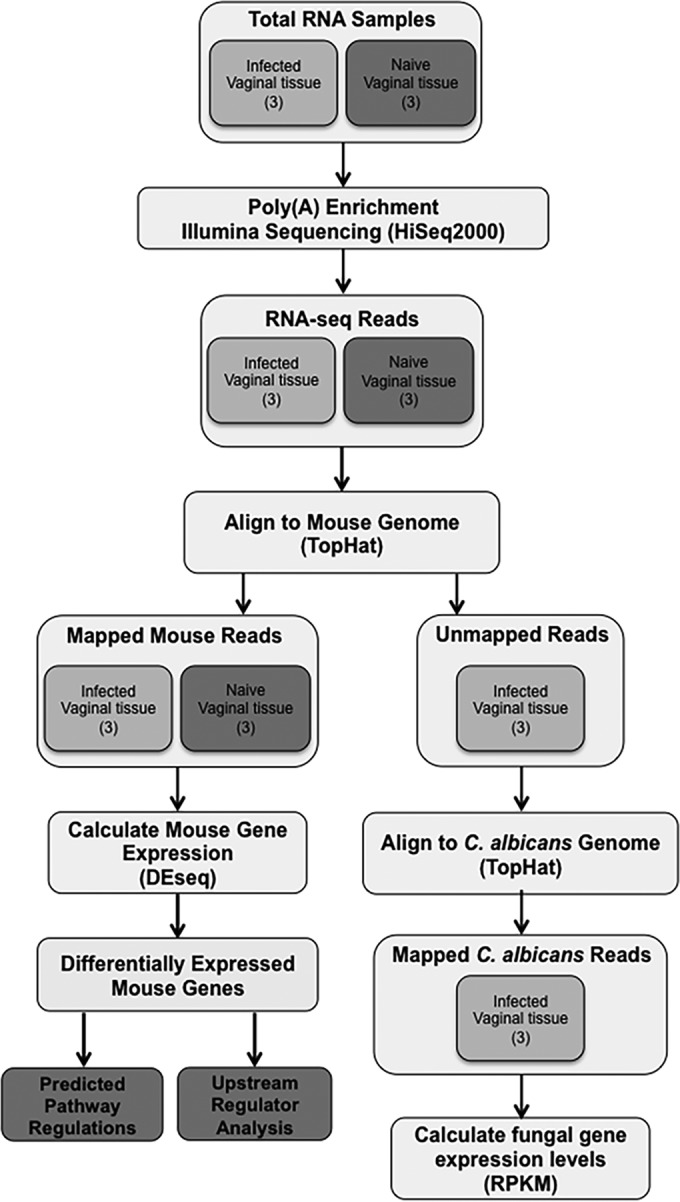
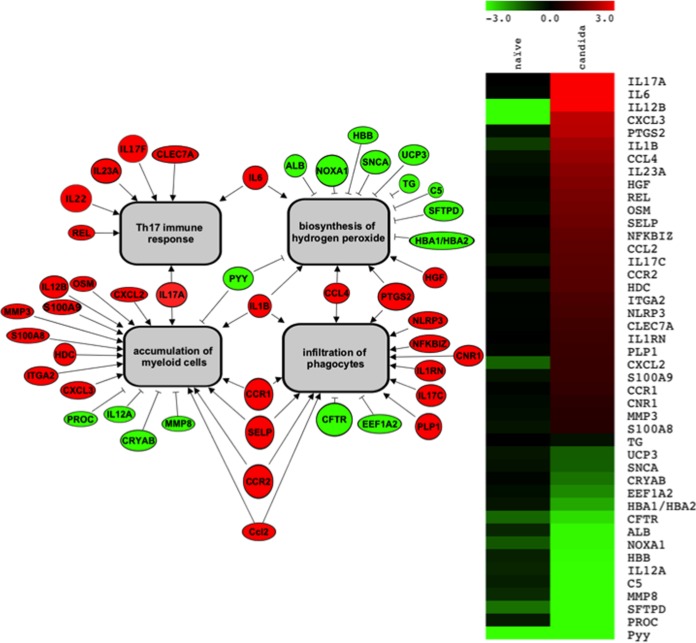
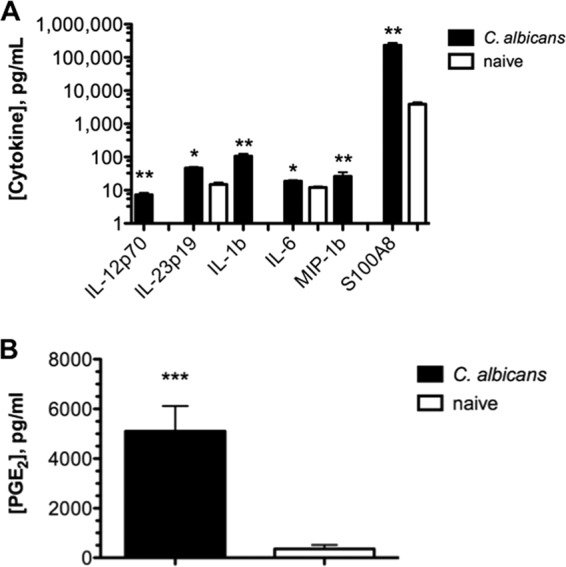
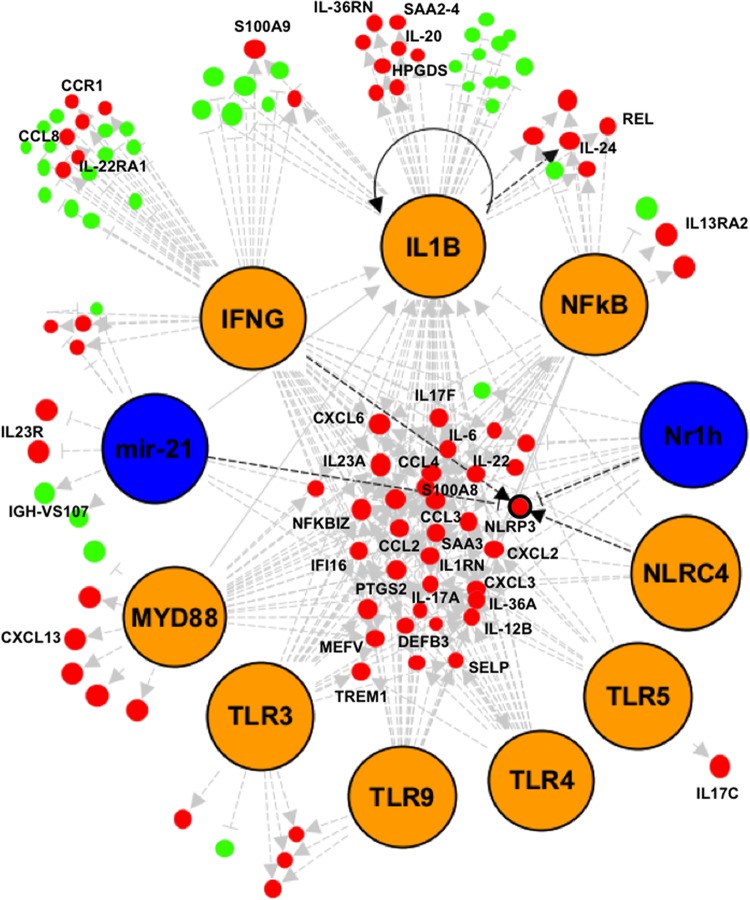
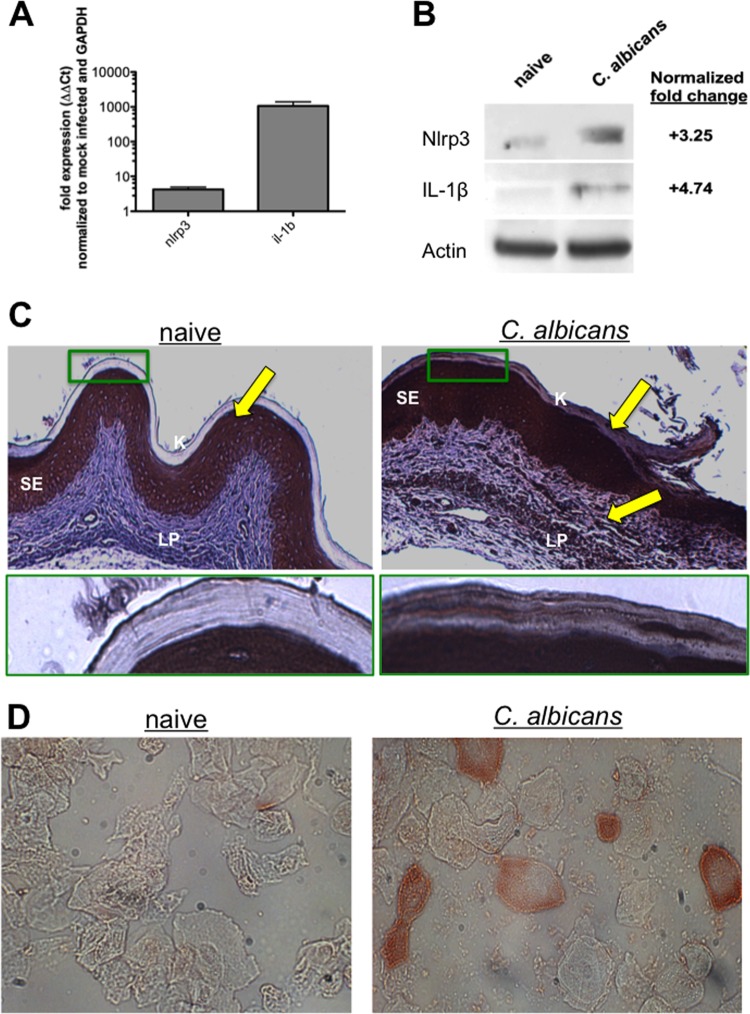
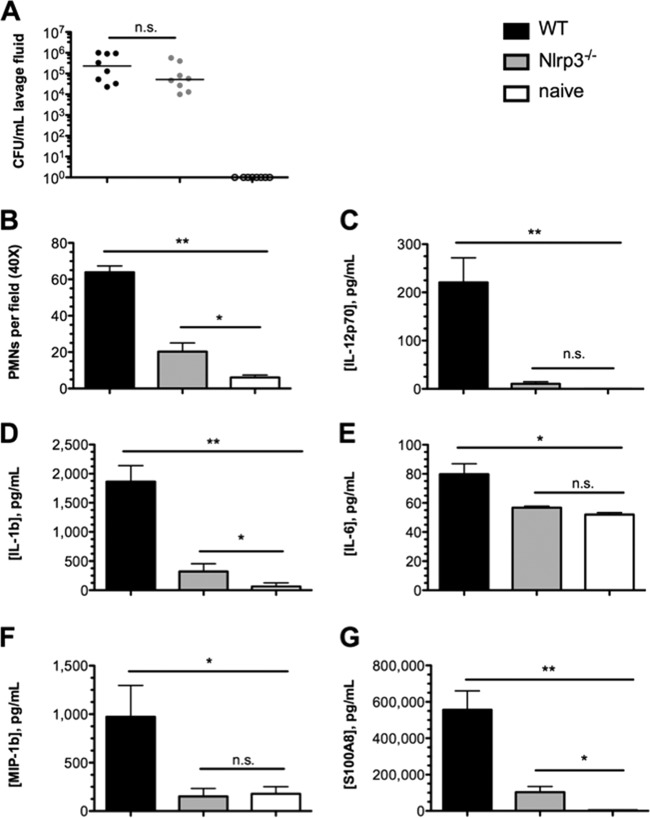
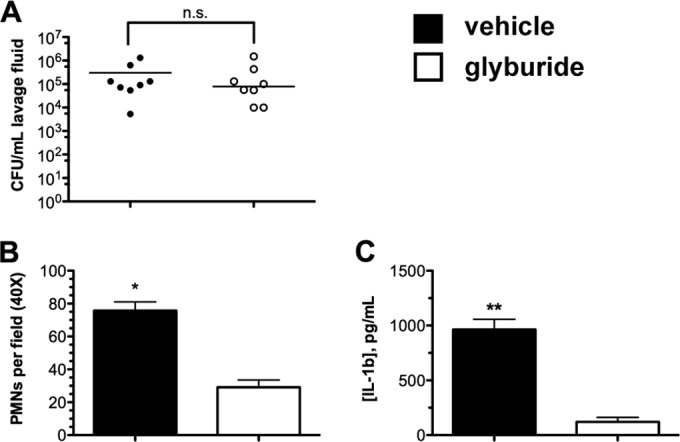
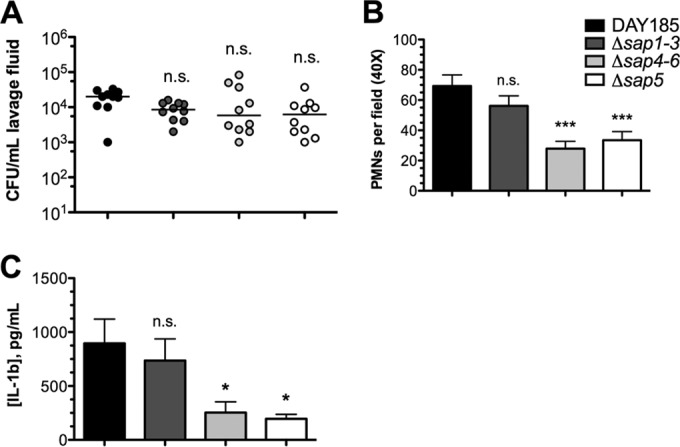
Treatment of vulvovaginal candidiasis (VVC), caused most frequently by Candida albicans , represents a significant unmet clinical need. C. albicans , as both a commensal and a pathogenic organism, has a complex and poorly understood interaction with the vaginal environment. Understanding the complex nature of this relationship is necessary for the development of desperately needed therapies to treat symptomatic infection. Using transcriptome sequencing (RNA-seq), we characterized the early murine vaginal and fungal transcriptomes of the organism during VVC. Network analysis of host genes that were differentially expressed between infected and naive mice predicted the activation or repression of several signaling pathways that have not been previously associated with VVC, including NLRP3 inflammasome activation. Intravaginal challenge of Nlrp3 −/− mice with C. albicans demonstrated severely reduced levels of polymorphonuclear leukocytes (PMNs), alarmins, and inflammatory cytokines, including interleukin-1β (IL-1β) (the hallmarks of VVC immunopathogenesis) in vaginal lavage fluid. Intravaginal administration of wild-type (WT) mice with glyburide, a potent inhibitor of the NLRP3 inflammasome, reduced PMN infiltration and IL-1β to levels comparable to those observed in Nlrp3 −/− mice. Furthermore, RNA-seq analysis of C. albicans genes indicated robust expression of hypha-associated secreted aspartyl proteinases 4, 5, and 6 (SAP4–6), which are known inflammasome activators. Despite colonization similar to that of the WT strain, Δ SAP4–6 triple and Δ SAP5 single mutants induced significantly less PMN influx and IL-1β during intravaginal challenge. Our findings demonstrate a novel role for the inflammasome in the immunopathogenesis of VVC and implicate the hypha-associated SAPs as major C. albicans virulence determinants during vulvovaginal candidiasis. IMPORTANCE Vaginitis, most commonly caused by the fungus Candida albicans , results in significant quality-of-life issues for all women of reproductive age. Recent efforts have suggested that vaginitis results from an immunopathological response governed by host innate immunity, although an explanatory mechanism has remained undefined. Using comprehensive genomic, immunological, and pharmacological approaches, we have elucidated the NLRP3 inflammasome as a crucial molecular mechanism contributing to host immunopathology. We have also demonstrated that C. albicans hypha-associated secreted aspartyl proteinases (SAP4–6 and SAP5, more specifically) contribute to disease immunopathology. Ultimately, this study enhances our understanding of the complex interplay between host and fungus at the vaginal mucosa and provides proof-of-principle evidence for therapeutic targeting of inflammasomes for symptomatic vulvovaginal candidiasis.
Overview
The claims and statistics of this paper haven’t been checked yet.
Free: it reads the open-access text and checks the first 5 claims that cite a source we can check. Create a free account to check every claim.
Integrity signals
Registry
Cites
Statistics
Figures
Verification
Claims the paper makes
The claims and statistics of this paper haven’t been checked yet.
Free: it reads the open-access text and checks the first 5 claims that cite a source we can check. Create a free account to check every claim.
Claims other papers make about this one
Each is checked against this paper’s own text: does it say what the citing paper says it does?
The cited source says what the claim attributes to it.
In the citing paper
“Filamentation endows C. albicans with proinflammatory capability [7] to elicit the production and excretion of host proinflammatory cytokines such as interleukin (IL)-1β [7–10,49] and IL-6 [11]”
From The F 1 F o -ATP synthase α subunit of Candida albicans induces inflammatory responses by controlling amino acid catabolism (2023) · cites this paper as [49]
Self-check
Percentages, sums and reported differences re-computed from the paper’s own numbers.
The self-check needs the paper’s full text.
Citations
Cites
Analysis of Relative Gene Expression Data Using Real-Time Quantitative PCR and the 2−ΔΔCT Method
Livak, K. J., & Schmittgen, T. D. (2001) · Methods · doi:10.1006/meth.2001.1262 · Cited by 180,860
Guide for the Care and Use of Laboratory Animals: Eighth Edition
(2011) · doi:10.17226/12910 · Cited by 16,199
Differential expression analysis for sequence count data
Anders, S., & Huber, W. (2010) · Genome Biology · doi:10.1186/gb-2010-11-10-r106 · Cited by 15,581
Kim, D., Pertea, G., Trapnell, C., Pimentel, H., Kelley, R., & Salzberg, S. L. (2013) · Genome Biology · doi:10.1186/gb-2013-14-4-r36 · Cited by 12,668
Schroder, K., & Tschopp, J. (2010) · Cell · doi:10.1016/j.cell.2010.01.040 · Cited by 5,475
The Danger Model: A Renewed Sense of Self
Matzinger, P. (2002) · Science · doi:10.1126/science.1071059 · Cited by 4,205 · cited 1×
“The inflammasome is a danger-sensing molecular complex that can respond to pathogenic insult at mucosal surfaces (61).”
BackgroundMutation of the mouse klotho gene leads to a syndrome resembling ageing
Kuro-o, M., Matsumura, Y., Aizawa, H., Kawaguchi, H., Suga, T., Utsugi, T., Ohyama, Y., Kurabayashi, M., Kaname, T., Kume, E., et al. (1997) · Nature · doi:10.1038/36285 · Cited by 3,837
Bauernfeind, F. G., Horvath, G., Stutz, A., Alnemri, E. S., MacDonald, K., Speert, D., Fernandes-Alnemri, T., Wu, J., Monks, B. G., Fitzgerald, K. A., et al. (2009) · The Journal of Immunology · doi:10.4049/jimmunol.0901363 · Cited by 2,959 · cited 1×
“, ATP, K efflux, reactive oxygen); basal expression levels are insufficient to generate a response (81, 82).”
BackgroundActivation and regulation of the inflammasomes
Latz, E., Xiao, T. S., & Stutz, A. (2013) · Nature Reviews Immunology · doi:10.1038/nri3452 · Cited by 2,884 · cited 1×
“inflammatory responses to microbial pathogens (37, 38).”
Sexually transmitted diseases treatment guidelines (2015)
Workowski, K., & BOLAN, G. A. (2015) · Reproductive Endocrinology · doi:10.18370/2309-4117.2015.24.51-56 · Cited by 2,698
Cited by
Items 101–159 of 159
Omosa-Manyonyi, G., Ricaño-Ponce, I., Rosati, D., Bruno, M., Kamau, N. W., Obimbo, M., Jaeger, M., van der Ven, A. J. A. M., Netea, M. G., Kumar, V., et al. (2025) · Scientific Reports · doi:10.1038/s41598-025-95772-7 · Cited by 12
“…for RVVC. Polymorphisms in NLRP3 have also been associated with RVVC 4,35 , and higher concentrations of IL-1β were detected in vaginal secretions from women carrying the RVVC-associated genotype 4 , suggesting that RVVC may be characterized by an enhanced pro-inflammatory immune response 36,37 .”
Valentine, M., Rosati, D., Dietschmann, A., Schille, T. B., Netea, M. G., Hube, B., & Gresnigt, M. S. (2025) · The Journal of Infectious Diseases · doi:10.1093/infdis/jiaf221 · Cited by 14
“NLRP3 inflammasome-controlled IL-1 β responses drive neutrophil-mediated inflam - mation [4, 7, 8].”
Opportunities for the development of novel therapies based on host-microbial interactions
Santos, P. C., Teixeira, M. M., & Souza, D. G. (2016) · Pharmacological Research · doi:10.1016/j.phrs.2016.04.005 · Cited by 9
Liu, H., Lin, J., Phan, Q. T., Bruno, V. M., & Filler, S. G. (2024) · mBio · doi:10.1128/mbio.02671-24 · Cited by 9
“Previously, we demonstrated that infection-induced changes in the host transcriptome can be used to identify signaling pathways that govern the interaction between the host and a fungal pathogen (17–19).”
Self-citationCandida albicans: a historical overview of investigations into an important human pathogen
Shrivastava, M., & Whiteway, M. S. (2025) · Canadian Journal of Microbiology · doi:10.1139/cjm-2025-0036 · Cited by 7
Novel Approaches for Fungal Transcriptomics from Host Samples
Amorim-Vaz, S., & Sanglard, D. (2016) · Frontiers in Microbiology · doi:10.3389/fmicb.2015.01571 · Cited by 11
“The different attempts to resolve the C. albicans transcriptome in vivo have turned out to be a great challenge for researchers since fungal RNA ratios in recovered infected organs were very low as compared to host RNA.”
BackgroundYano, J., Woznicki, N. A., Sobel, J. D., Meyaski‐Schluter, M., & Fidel, P. L. (2026) · Infection and Immunity · doi:10.1128/iai.00709-25 · Cited by 8
“Subsequent studies in mice have shown that activation of vaginal epithelium by C. albicans hyphae, along with damage caused by its cytolytic toxins (e.g., candidalysin), initiates inflammatory signaling, leading to the release of proinflammatory mediators including IL-1β and S100A8 (16, 17, 24, 25).”
Self-citationPeng, Y., Xu, Y., Li, S., Shao, M., Shen, Z., & Qi, W. (2024) · American Journal of Reproductive Immunology · doi:10.1111/aji.13893 · Cited by 7
“Bruno et al. reported significantly increased NLRP3 expression in the vaginal tissues of a VVC mouse model, as shown by transcriptome sequencing (RNA-seq) [9].”
Hasselrot, T., Alvendal, C., Hunt, S., Boger, M. F., Kaldhusdal, V., Damdimopoulos, A. E., Schuppe‐Koistinen, I., Edfeldt, G., Bohm‐Starke, N., & Broliden, K. (2025) · American Journal of Reproductive Immunology · doi:10.1111/aji.70040 · Cited by 9
“In VVC, the NLRP3 inflammasome is important for neutrophil recruitment and cytokine production [22–24].”
Zhu, J., He, M., Ma, C., Peng, F., Su, Y., & Huang, L. (2018) · Medical Science Monitor · doi:10.12659/msm.906157 · Cited by 6
“[2] found that NLRP3 inflammatory body is involved in the immune response of female genital vaginal candida disease.”
BackgroundIdentification of Dual-Target Compounds with Antifungal and Anti-NLRP3 Inflammasome Activity
Lowes, D. J., Miao, J., Al-Waqfi, R. A., Avad, K., Hevener, K. E., & Peters, B. M. (2021) · ACS Infectious Diseases · doi:10.1021/acsinfecdis.1c00270 · Cited by 7
Self-citationA survey on cellular RNA editing activity in response to Candida albicans infections
Huang, Y., Cao, Y., Li, J., Liu, Y., Wu, Z., Li, X., Chen, C., & Hao, P. (2018) · BMC Genomics · doi:10.1186/s12864-017-4374-2 · Cited by 7
Liu, W., Song, Y., Wang, R., Wan, Z., Li, R., & Wang, X. (2025) · Medical Mycology · doi:10.1093/mmy/myaf026 · Cited by 5
Wang, T., Zheng, R., Qu, Y., Shu, P., Ai, W., Zhao, J., & Liu, L. (2025) · Journal of Inflammation Research · doi:10.2147/jir.s537110 · Cited by 5
“60 For TV, Trichomonas vaginalis can induce human vaginal epithelial cells (ECs) and macrophages to release inflammatory factors.”
Altmeier, S., & LeibundGut‐Landmann, S. (2017) · Springer eBooks · doi:10.1007/978-3-319-50842-9_2 · Cited by 5
Nucleic acids enrichment of fungal pathogens to study host-pathogen interactions
Rodríguez, A., Guillemyn, B., Coucke, P. J., & Vaneechoutte, M. (2019) · Scientific Reports · doi:10.1038/s41598-019-54608-x · Cited by 7
Miao, J., Williams, D. L., Kruppa, M., & Peters, B. M. (2024) · mSphere · doi:10.1128/msphere.00575-24 · Cited by 4
“Therefore, we wished to determine if loss of C1_01140Cp would phenocopy the gsy1 Δ/Δ mutant in the murine model of vulvovaginal candidiasis given its similar glycogen defect (23–25).”
Self-citationCohen, S., Crossen, A. J., Jensen, O., Neely, M. N., Doaré, K. L., Nobbs, A. H., Ost, K. S., & Doran, K. S. (2026) · Cell Host & Microbe · doi:10.1016/j.chom.2026.04.013 · Cited by 6
Bondaryk, M., Grabowska‐Jadach, I., Ochal, Z., Sygitowicz, G., & Staniszewska, M. (2016) · Chemical Papers · doi:10.1515/chempap-2016-0072 · Cited by 5
“…to mucosal and systemic infections and their involvement in adhesion, tissue damage, and evasion of host immu- *Corresponding author, e-mail: mstaniszewska@pzh.gov.pl Candida albicans nity was demonstrated in numerous studies (Naglik et al., 2003; Bruno et al., 2015; Carvalho-Pereira et al., 2015).”
BackgroundInfluentialRai, M. N., Parsania, C., & Rai, R. (2022) · Microbial Pathogenesis · doi:10.1016/j.micpath.2022.105864 · Cited by 4
Novel Host Pathways Govern Epithelial Cell Invasion of Aspergillus fumigatus
Liu, H., Shetty, A. C., Ibrahim, A. S., Filler, S. G., & Bruno, V. M. (2023) · Microbiology Spectrum · doi:10.1128/spectrum.00084-23 · Cited by 4
Self-citationLi, S., Liu, Y., Weng, L., Zhao, Y., Zhang, Y., Zhang, Z., Yang, Y., Chen, Q., Liu, X., & Zhang, H. (2023) · Virulence · doi:10.1080/21505594.2023.2190645 · Cited by 3
“[11] through recognition of hyphal pathogen-associated molecular patterns [9], secretion of hyphae-specific aspartyl proteinases (SAP4–6) [49,50] or hyphae-specific toxin candidalysin [7], thus inducing host inflammatory responses.”
BackgroundSillen, M., Abyad, D. E., Vreys, N., Baldewijns, S., Palmans, I., Goethem, O. V., Cheng, K. O., Velde, G. V., Montaño, D. E., Berghmans, N., et al. (2026) · Nature Communications · doi:10.1038/s41467-026-74733-2 · Cited by 4
“ToassessthestimulationofhMDMs,thereleaseofIL-1 β wasmeasured, as it serves as an indicator of NLRP3 activation 41 . hMDMs were seeded at a density of 4 × 10 4 cells per well, as previously described.”
Kim, H.-J., Heredia, M. Y., Chen, X., Ahmed, M., Qasim, M. N., Callender, T. L., Hernday, A. D., & Rauceo, J. M. (2024) · Microbiology Spectrum · doi:10.1128/spectrum.01733-24 · Cited by 4
Hovhannisyan, H., Rodríguez, A., Saus, E., Vaneechoutte, M., & Gabaldón, T. (2023) · Frontiers in Cellular and Infection Microbiology · doi:10.3389/fcimb.2023.1093178 · Cited by 3
“In this regard, high throughput transcriptome sequencing (RNA-Seq) has proven to be a powerful method for disentangling molecular interactions between human and Candida pathogens (Amorim-Vaz et al., 2015; Bruno et al., 2015; Liu et al., 2015; Rasheed et al., 2018).”
MethodSecretory aspartyl proteinases induce neutrophil chemotaxisin vivo
Bryan, A. M., & Poeta, M. D. (2016) · Virulence · doi:10.1080/21505594.2016.1206170 · Cited by 4
“recruitment, as well as altered recognition and killing by neutrophils.(15,17) Furthermore, purified Saps were”
BackgroundYano, J., & Fidel, P. L. (2022) · Methods in molecular biology · doi:10.1007/978-1-0716-2549-1_14 · Cited by 2
Self-citationYadav, S., Verma, V., Dhanda, R. S., Khurana, S., & Yadav, M. C. (2021) · Immunological Investigations · doi:10.1080/08820139.2021.1909062 · Cited by 4
Chronic Vaginal Candidiasis Is Achievable in Outbred CD-1 Mice
Gabrielli, E., Roselletti, E., Pericolini, E., Sabbatini, S., Vecchiarelli, A., & Cassone, A. (2017) · mBio · doi:10.1128/mbio.01372-17 · Cited by 2
Lyons, N., Softley, I., Balfour, A., Williamson, C., O’Brien, H. E., Shetty, A. C., Bruno, V. M., & Diezmann, S. (2019) · bioRxiv (Cold Spring Harbor Laboratory) · doi:10.1101/693226 · Cited by 2
Self-citationTranscriptomic Analyses of Host Colonisation in Fungal Pathogens of Humans
Bignell, E. (2024) · The mycota · doi:10.1007/978-3-031-64853-3_10 · Cited by 1
Taraskina, A. E., Frolova, E. V., Uchevatkina, A. E., Oganesyan, E. G., Venchakova, V. V., Zhuk, A. S., & Vasilyeva, N. V. (2025) · Cell and Tissue Biology · doi:10.1134/s1990519x25600322 · Cited by 2
Angiolini, S. C., Rodríguez, E., Manzone-Rodríguez, C., Icely, P. A., Miró, M. S., Abiega, C. D., Riera, F. O., Iribarren, P., Caeiro, J. P., & Sotomayor, C. E. (2026) · Medical Mycology · doi:10.1093/mmy/myag028 · Cited by 1
Coleman, B. M., Cook, M. E., Khan, M. R., Vogel, A. K., Wells, A. J., Miao, J., Vyas, S., Taylor, T. C., Aggor, F. E. Y., Ponde, N. O., et al. (2026) · PLoS Pathogens · doi:10.1371/journal.ppat.1014202 · Cited by 5
Self-citationWakade, R. S., Solis, N. V., Ristow, L. C., Wellington, M. A., Filler, S. G., & Krysan, D. J. (2026) · mBio · doi:10.1128/mbio.01492-26 · Cited by 1
“NanoString-based expression profiling was performed as described previously (23).”
Shetty, A. C., Mattick, J., Chung, M. C., McCracken, C. L., Mahurkar, A., Filler, S. G., Fraser, C. M., Rasko, D. A., Bruno, V. M., & Hotopp, J. C. D. (2019) · Microbial Genomics · doi:10.1099/mgen.0.000320 · Cited by 1
“(2) The data from mice vaginas infected with Candida albicans [2] were downloaded from the National Center for Biotechnology Information (NCBI) SRA (sequence read archive), accession number SRP057050 (url – https:// trace.”
MethodSelf-citationComparison of human and mouse tissues with focus on genes with no 1-to-1 homologyPreprint
Jeong, J., & Kellis, M. (2021) · bioRxiv (Cold Spring Harbor Laboratory) · doi:10.1101/2021.05.22.445250 · Cited by 1
Dolzhykova, О. V., & Малоштан, Л. М. (2019) · Farmatsevtychnyi zhurnal · doi:10.32352/0367-3057.3.19.11
Vaginal microflora: a determinant of women’s health and disease
Pawar, K. (2018) · MOJ Women s Health · doi:10.15406/mojwh.2018.07.00197
Conrad, T. (2020) · Common Library Network (Der Gemeinsame Bibliotheksverbund) · doi:10.22032/dbt.41347
Comparative transcriptomics of host-pathogen interactions and hybridization in Candida pathogens
Hovhannisyan, H. (2020) · Tesis Doctorals en Xarxa (Consorci de Serveis Universitaris de Catalunya)
Application of Systems Biology Approaches for Host-Fungal Interaction in Animals
Kumar, R., & Ruhel, R. (2021) · Fungal biology · doi:10.1007/978-3-030-69507-1_4
Intestinal Dysbiosis in Autoimmune Diseases
de Oliveira, G. L. V. (2021) · Elsevier eBooks · doi:10.1016/b978-0-12-819265-8.00038-3
Hall, R. A. (2020) · Faculty Opinions – Post-Publication Peer Review of the Biomedical Literature · doi:10.3410/f.735513165.793575579
Hube, B., & Gresnigt, M. S. (2021) · Faculty Opinions – Post-Publication Peer Review of the Biomedical Literature · doi:10.3410/f.738437887.793577404
Pathogenicity Strategies of Candida Species During Interactions with Epithelial Cells
Pekmezovic, M. G., Hube, B., & Gresnigt, M. S. (2024) · The mycota · doi:10.1007/978-3-031-64853-3_2
Halawa, M., Gallo, A. L., & Carabetta, V. J. (2025) · Pharmaceutics · doi:10.3390/pharmaceutics17111466
“Such an arrangement gives it specificity and operational efficacy under acidic environments, akin to those found at mucosal surfaces and within phago-lysosomal compartments [44–46].”
Omosa-Manyonyi, G. (2025) · Radboud University Press eBooks · doi:10.54195/9789465151779
PERFIL DE PACIENTES COM CANDIDÍASE VULVOVAGINAL
Ferreira, A. L. S., Rovaris, A. F., Rosso, L. B., & Nuernberg, E. S. (2025) · Inova Saúde · doi:10.18616/inova.v15i4.9545
Vaginal Microbiota Dynamics as a Key Determinant of Pathogenesis in Fungal Vulvovaginitis
Ruiz-Higareda, A. F., Álvarez-Salas, B. E., García‐Juárez, M., Alanís‐Ríos, S. A., Ríos-López, A. L., Flores-Maldonado, O. E., Heredia-Torres, T. G., Villanueva‐Lozano, H., & Treviño‐Rangel, R. D. J. (2026) · Current Fungal Infection Reports · doi:10.1007/s12281-026-00522-5 · Cited by 1
“…that hypha-associated secreted aspartyl proteinases (SAP4-6) activate NLRP3 inflamma - some, inducing IL-1β release and neutrophil recruitment [90] In murine VVC, host defense balances resistance and tolerance to Candida albicans through IL-22, IL-10 producing regulatory T cells, and…”
Austermeier, S., Cheng, K. O., Dietschmann, A., Vascelli, G., Montaño, D. E., Hitzler, S. U. J., Skurk, K., Fernández-Fernández, C., Saloni, S., Westermann, S., et al. (2026) · Nature Communications · doi:10.1038/s41467-026-78761-w
“The NLRP3 in fl ammasome drives neutrophil-mediated in fl ammation during (R)VVC 7,22,23 .”
InfluentialAngiolini, S. C., Rodríguez, E., Manzone-Rodríguez, C., Icely, P. A., Miró, M. S., Riera, F. O., Iribarren, P., Caeiro, J. P., & Sotomayor, C. E. (2026) · Journal of Fungi · doi:10.3390/jof12030204 · Cited by 2
“Consistently, inhibition of NLRP3 with glyburide in infected WT animals mimicked the results observed in Nlrp3 ( − / − ) mice [51], further supporting that NLRP3 signaling is dispensable for fungal clearance in this mucosal site.”
InfluentialZhou, M., Ren, K., Mei, H., Yang, H., Li, D., Liu, W., Zhang, L., & She, X. (2026) · Pathogens · doi:10.3390/pathogens15050464
“The majority of VVC patients exhibit pathological changes such as mucosal barrier damage, abnormal elevation of local inflammatory factors, and reduced abundance of Lactobacillus [56,57].”
Cheng, K. O., Groß, V., Cseresnyés, Z., Kolchanova, M., Pullin, Ö., Gürel, E., Figge, L., Zelante, T., Dietschmann, A., Zimmermann, A.-K., et al. (2026) · Research Square · doi:10.21203/rs.3.rs-10423507/v1
The Story behind the Science: Solving the riddle for the pathogenesis of vulvovaginal candidiasis
Fidel, P. L., & Yano, J. (2026) · mBio · doi:10.1128/mbio.01787-26
“Brian Peters, our former postdoc and now a leading investigator in fungal pathogenesis, including VVC, conducted transcriptomic studies that further identified a role for the NLRP3 inflammasome and IL-1β signaling in the hallmark inflammatory response during VVC (40).”
Self-citationFrolova, E. V., Sekretareva, O. V., Uchevatkina, A. E., Venchakova, V. V., Burygina, E. V., Oganesyan, E. G., Zhuk, A. S., Dolgo-Saburova, Y. V., Taraskina, A. E., & Vasilyeva, N. V. (2026) · Cell and Tissue Biology · doi:10.1134/s1990519x26600493
Sarkar, S., Kabir, A. R., & Podder, S. (2026) · In Silico Research in Biomedicine · doi:10.1016/j.insi.2026.100677
Metadata
- Authors
- Bruno, V. M., Shetty, A. C., Yano, J., Fidel, P. L., Noverr, M. C., & Peters, B. M.
- Affiliations
- University of Maryland, Baltimore (US)
- Louisiana State University Health Sciences Center New Orleans (US)
- Corresponding author
- Bruno, Vincent M.
- Peters, Brian M.
- Venue
- mBio
- Publisher
- American Society for Microbiology
- Published
- 2015-05
- Volume
- 6
- Issue
- 2
- ISSN
- 2150-7511 (ISSN-L)
- 2161-2129
- PMC
- PMC4453569
- OpenAlex
- W2005249358
- Cited by
- 155
- References
- 109
- Citations by year
- 2026: 14 · 2025: 11 · 2024: 11 · 2023: 11 · 2022: 9 · 2021: 21 · 2020: 14 · 2019: 15 · 2018: 12 · 2017: 16 · 2016: 18 · 2015: 3
- FWCI
- 7.09
- Type
- journal article
- Language
- en
- Open access
- gold
- doi.org
- Licence
- cc-by-nc-sa
- creativecommons.org/licenses/by-nc-sa/3.0/ (vor)
- journals.asm.org/non-commercial-tdm-license (tdm)
- Locations
- mBio (publishedVersion, cc-by-nc-sa)
- Europe PMC (PubMed Central) (publishedVersion, cc-by-nc-sa)
- PubMed Central (publishedVersion, cc-by-nc-sa)
- PubMed (publishedVersion)
- DOAJ (DOAJ: Directory of Open Access Journals) (submittedVersion, cc-by-sa)
- Funders
- Friedrich-Schiller-Universität Jena
- Julius-Maximilians-Universität Würzburg
- National Institutes of Health (5r01de022069-05)
- National Institute of Allergy and Infectious Diseases (K22AI110541, R01AI116025, U19AI110820)
- National Institute of Dental and Craniofacial Research (R01-DE022069)
- Topics
- Life Sciences › Biochemistry, Genetics and Molecular Biology › Molecular Biology › Inflammasome and immune disorders
- Health Sciences › Medicine › Infectious Diseases › Antifungal resistance and susceptibility
- Life Sciences › Immunology and Microbiology › Microbiology › Reproductive tract infections research
- Keywords
- vaginal candidiasis, Candida albicans, NLRP3 inflammasome, host-virus interaction, host transcriptome, polymorphonuclear leukocytes, IL-1β, secreted aspartyl proteinases, fungal virulence factors, glibenclamide, innate immunity
- MeSH terms
- NLR Family, Pyrin Domain-Containing 3 Protein, Animals, Candida albicans, Candidiasis, Vulvovaginal, Carrier Proteins, Disease Models, Animal, Female, Mice, Inbred C57BL, Molecular Sequence Data, Neutrophils, Vagina, Sequence Analysis, DNA, Mice, Knockout, Gene Expression Profiling, Virulence Factors, Inflammasomes
About these checks
Registry, retraction, Cites and statistics results are computed, not judged, with one exception: a printed reference that no index lists is read once by a model before it counts as a citation error. Claims are extracted by a model and kept only when their quote appears verbatim in the text; each cited source is then checked, with a model’s help, for whether it says what the claim relies on. Those verdicts can be wrong — read the claim’s quote and the cited source before relying on one.
Statistics and arithmetic are recomputed, not judged.
Confidence bands are shown only for fields calibrated on our annotated test set. None is calibrated yet, so no band is shown.
What counts as a claim ›How we measure confidence ›How we check this ›
Are you an author, or do you see a problem with this page? Request a review
Data sources
Bibliographic data: Semantic Scholar, OpenAlex, Crossref.
Contains information from the Semantic Scholar Academic Graph Datasets, made available under the ODC Attribution License (ODC-BY 1.0).
Semantic Scholar’s data is described in: Kinney, R., et al. (2023). The Semantic Scholar Open Data Platform. arXiv:2301.10140.
