

Transcriptomic Analysis of Vulvovaginal Candidiasis Identifies a Role for the NLRP3 Inflammasome
Open accessThe DOI matches its Crossref record; 110 of the 110 references it cites were found in a registry or an index.
Abstract
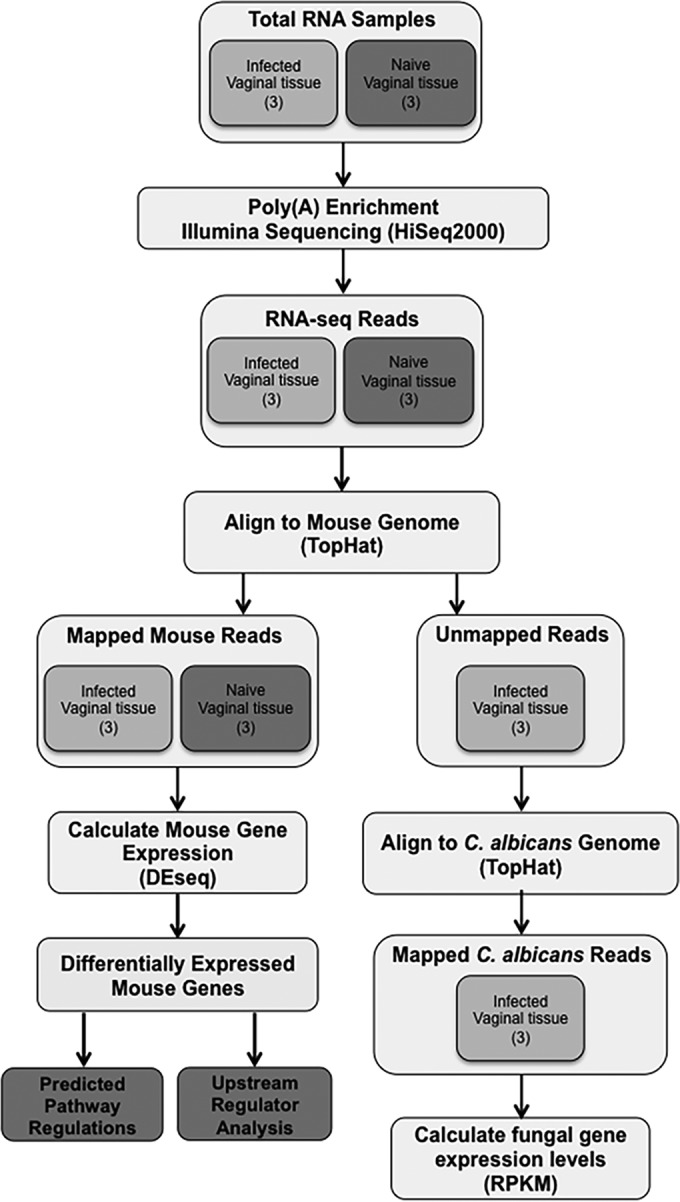
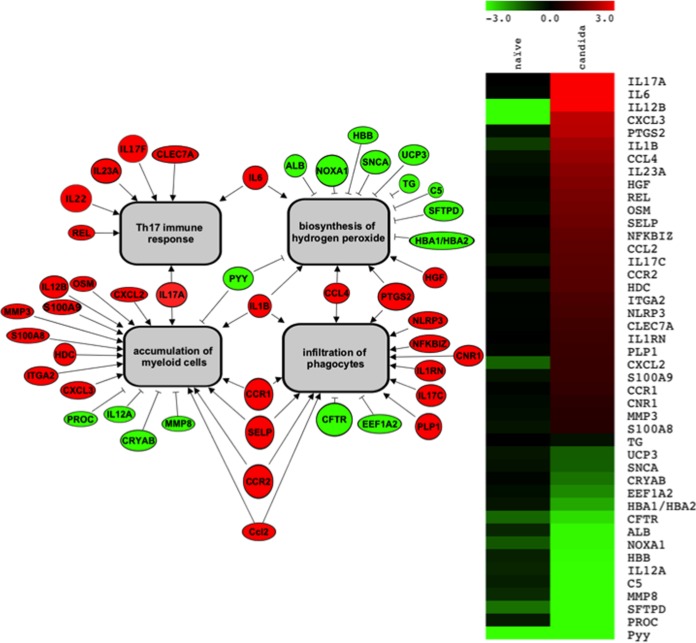
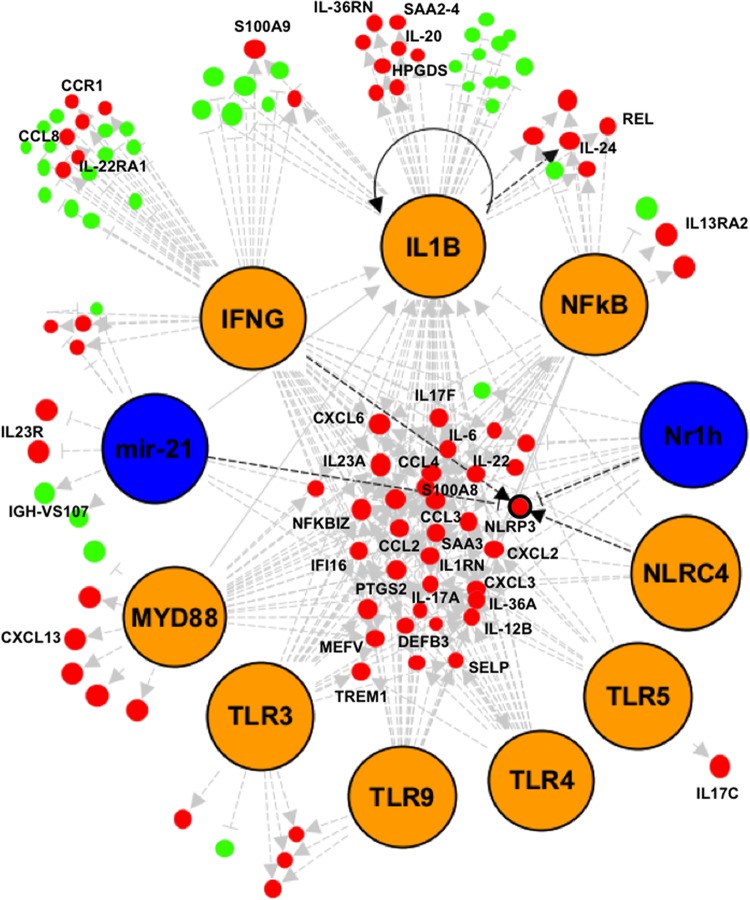
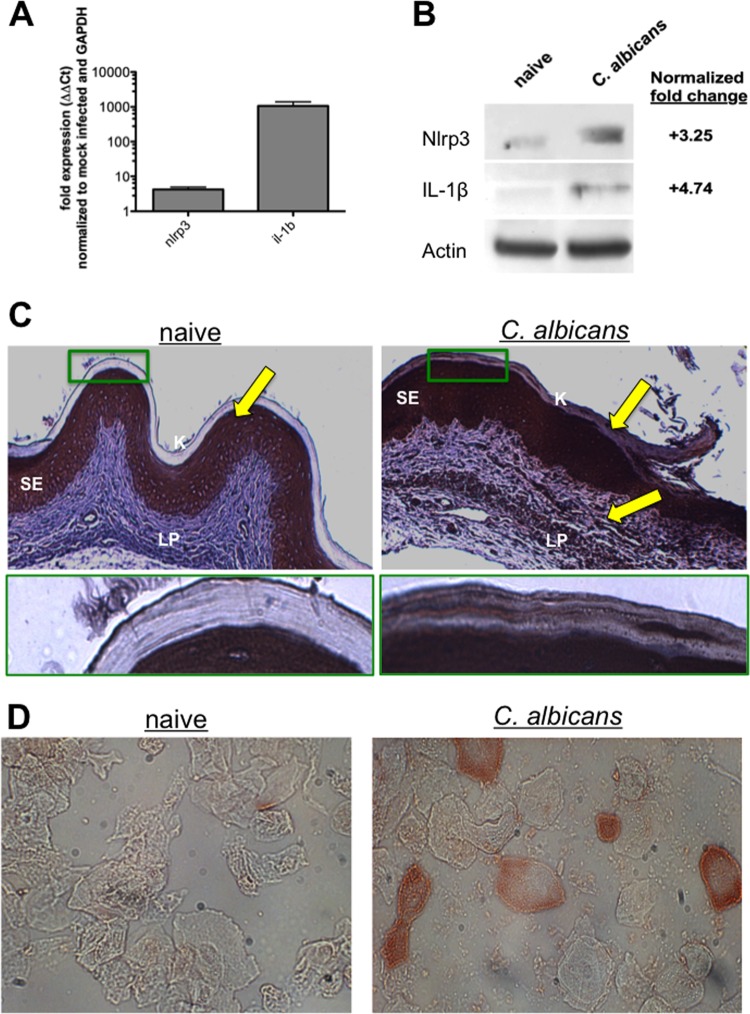
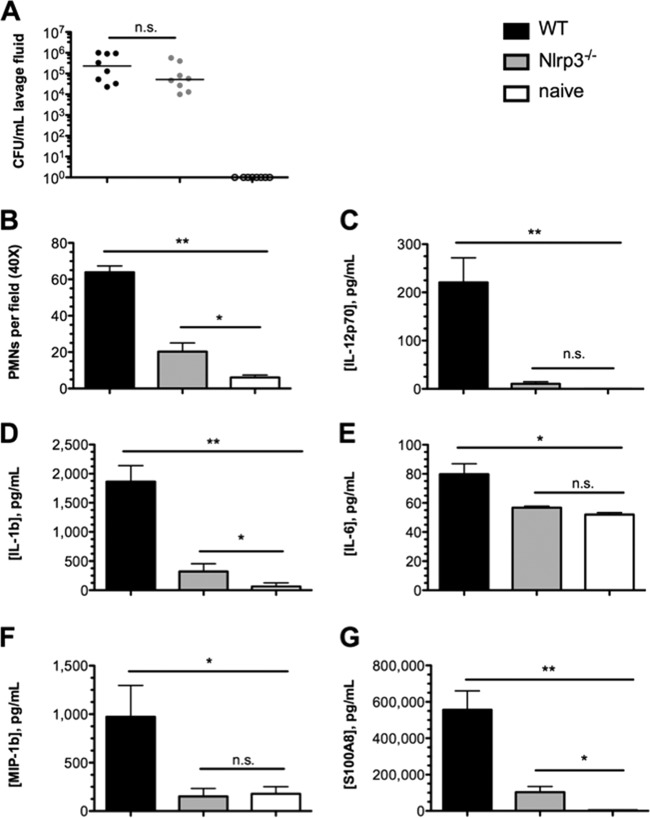
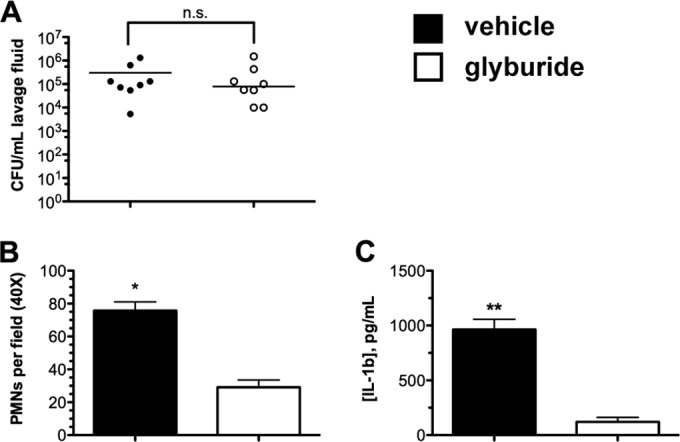
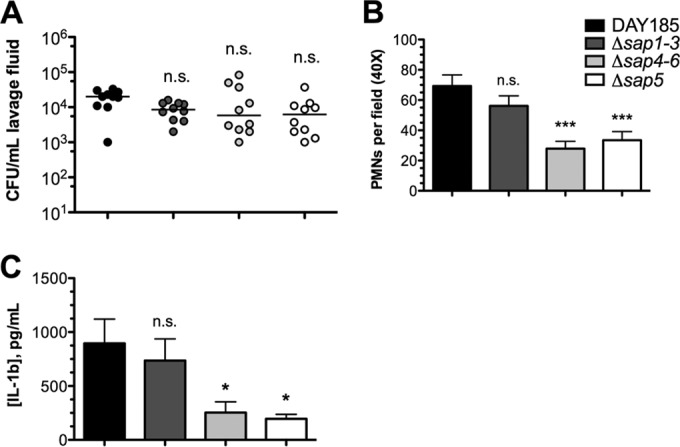
Treatment of vulvovaginal candidiasis (VVC), caused most frequently by Candida albicans , represents a significant unmet clinical need. C. albicans , as both a commensal and a pathogenic organism, has a complex and poorly understood interaction with the vaginal environment. Understanding the complex nature of this relationship is necessary for the development of desperately needed therapies to treat symptomatic infection. Using transcriptome sequencing (RNA-seq), we characterized the early murine vaginal and fungal transcriptomes of the organism during VVC. Network analysis of host genes that were differentially expressed between infected and naive mice predicted the activation or repression of several signaling pathways that have not been previously associated with VVC, including NLRP3 inflammasome activation. Intravaginal challenge of Nlrp3 −/− mice with C. albicans demonstrated severely reduced levels of polymorphonuclear leukocytes (PMNs), alarmins, and inflammatory cytokines, including interleukin-1β (IL-1β) (the hallmarks of VVC immunopathogenesis) in vaginal lavage fluid. Intravaginal administration of wild-type (WT) mice with glyburide, a potent inhibitor of the NLRP3 inflammasome, reduced PMN infiltration and IL-1β to levels comparable to those observed in Nlrp3 −/− mice. Furthermore, RNA-seq analysis of C. albicans genes indicated robust expression of hypha-associated secreted aspartyl proteinases 4, 5, and 6 (SAP4–6), which are known inflammasome activators. Despite colonization similar to that of the WT strain, Δ SAP4–6 triple and Δ SAP5 single mutants induced significantly less PMN influx and IL-1β during intravaginal challenge. Our findings demonstrate a novel role for the inflammasome in the immunopathogenesis of VVC and implicate the hypha-associated SAPs as major C. albicans virulence determinants during vulvovaginal candidiasis. IMPORTANCE Vaginitis, most commonly caused by the fungus Candida albicans , results in significant quality-of-life issues for all women of reproductive age. Recent efforts have suggested that vaginitis results from an immunopathological response governed by host innate immunity, although an explanatory mechanism has remained undefined. Using comprehensive genomic, immunological, and pharmacological approaches, we have elucidated the NLRP3 inflammasome as a crucial molecular mechanism contributing to host immunopathology. We have also demonstrated that C. albicans hypha-associated secreted aspartyl proteinases (SAP4–6 and SAP5, more specifically) contribute to disease immunopathology. Ultimately, this study enhances our understanding of the complex interplay between host and fungus at the vaginal mucosa and provides proof-of-principle evidence for therapeutic targeting of inflammasomes for symptomatic vulvovaginal candidiasis.
Overview
The claims and statistics of this paper haven’t been checked yet.
Free: it reads the open-access text and checks the first 5 claims that cite a source we can check. Create a free account to check every claim.
Integrity signals
Registry
Cites
Statistics
Figures
Verification
Claims the paper makes
The claims and statistics of this paper haven’t been checked yet.
Free: it reads the open-access text and checks the first 5 claims that cite a source we can check. Create a free account to check every claim.
Claims other papers make about this one
Each is checked against this paper’s own text: does it say what the citing paper says it does?
The cited source says what the claim attributes to it.
In the citing paper
“Filamentation endows C. albicans with proinflammatory capability [7] to elicit the production and excretion of host proinflammatory cytokines such as interleukin (IL)-1β [7–10,49] and IL-6 [11]”
From The F 1 F o -ATP synthase α subunit of Candida albicans induces inflammatory responses by controlling amino acid catabolism (2023) · cites this paper as [49]
Self-check
Percentages, sums and reported differences re-computed from the paper’s own numbers.
The self-check needs the paper’s full text.
Citations
Cites
Analysis of Relative Gene Expression Data Using Real-Time Quantitative PCR and the 2−ΔΔCT Method
Livak, K. J., & Schmittgen, T. D. (2001) · Methods · doi:10.1006/meth.2001.1262 · Cited by 180,860
Guide for the Care and Use of Laboratory Animals: Eighth Edition
(2011) · doi:10.17226/12910 · Cited by 16,199
Differential expression analysis for sequence count data
Anders, S., & Huber, W. (2010) · Genome Biology · doi:10.1186/gb-2010-11-10-r106 · Cited by 15,581
Kim, D., Pertea, G., Trapnell, C., Pimentel, H., Kelley, R., & Salzberg, S. L. (2013) · Genome Biology · doi:10.1186/gb-2013-14-4-r36 · Cited by 12,668
Schroder, K., & Tschopp, J. (2010) · Cell · doi:10.1016/j.cell.2010.01.040 · Cited by 5,475
The Danger Model: A Renewed Sense of Self
Matzinger, P. (2002) · Science · doi:10.1126/science.1071059 · Cited by 4,205 · cited 1×
“The inflammasome is a danger-sensing molecular complex that can respond to pathogenic insult at mucosal surfaces (61).”
BackgroundMutation of the mouse klotho gene leads to a syndrome resembling ageing
Kuro-o, M., Matsumura, Y., Aizawa, H., Kawaguchi, H., Suga, T., Utsugi, T., Ohyama, Y., Kurabayashi, M., Kaname, T., Kume, E., et al. (1997) · Nature · doi:10.1038/36285 · Cited by 3,837
Bauernfeind, F. G., Horvath, G., Stutz, A., Alnemri, E. S., MacDonald, K., Speert, D., Fernandes-Alnemri, T., Wu, J., Monks, B. G., Fitzgerald, K. A., et al. (2009) · The Journal of Immunology · doi:10.4049/jimmunol.0901363 · Cited by 2,959 · cited 1×
“, ATP, K efflux, reactive oxygen); basal expression levels are insufficient to generate a response (81, 82).”
BackgroundActivation and regulation of the inflammasomes
Latz, E., Xiao, T. S., & Stutz, A. (2013) · Nature Reviews Immunology · doi:10.1038/nri3452 · Cited by 2,884 · cited 1×
“inflammatory responses to microbial pathogens (37, 38).”
Sexually transmitted diseases treatment guidelines (2015)
Workowski, K., & BOLAN, G. A. (2015) · Reproductive Endocrinology · doi:10.18370/2309-4117.2015.24.51-56 · Cited by 2,698
Sexually Transmitted Diseases Treatment Guidelines, 2010
(2011) · Annals of Emergency Medicine · doi:10.1016/j.annemergmed.2011.04.006 · Cited by 2,076
Guide for the Care and Use of Laboratory Animals (8th edn)
Albus, U. (2012) · Laboratory Animals · doi:10.1258/la.2012.150312 · Cited by 1,693
AVMA Guidelines for the Euthanasia of Animals: 2013 Edition
Leary, S., Underwood, W. J., Anthony, R., Cartner, S. C., Corey, D. G., Grandin, T., Greenacre, C. B., Gwaltney-Bran, S., McCrackin, M. A., Meyer, R. E., et al. (2013) · Cited by 1,586
Sexually Transmitted Diseases 7982 Treatment Guidelines
(1982) · American Pharmacy · doi:10.1016/s0160-3450(16)31823-2 · Cited by 1,573
Sobel, J. D. (2007) · The Lancet · doi:10.1016/s0140-6736(07)60917-9 · Cited by 1,270
Gillum, A. M., Tsay, E. Y. H., & Kirsch, D. R. (1984) · Molecular and General Genetics MGG · doi:10.1007/bf00328721 · Cited by 1,251
Rajamäki, K., Lappalainen, J., Öörni, K., Välimäki, E., Matikainen, S., Kovanen, P. T., & Eklund, K. K. (2010) · PLoS ONE · doi:10.1371/journal.pone.0011765 · Cited by 1,039 · cited 1×
“Cholesterol, a sterol precursor to estrogen, is a known activator of Nlrp3 (87).”
BackgroundConti, H. R., Shen, F., Nayyar, N., Stocum, E., Sun, J. N., Lindemann, M. J., Ho, A. W., Hai, J. H., Yu, J. J., Jung, J. W., et al. (2009) · Journal of Experimental Medicine · doi:10.1084/jem.20081463 · Cited by 1,024
Sheedy, F. J., Palsson-McDermott, E., Hennessy, E. J., Martin, C., O'Leary, J. J., Ruan, Q., Johnson, D. S., Chen, Y., & O'Neill, L. A. J. (2010) · Nature Immunology · doi:10.1038/ni.1828 · Cited by 1,005
1993 Sexually Transmitted Diseases Treatment Guidelines
(1994) · Journal of School Health · doi:10.1111/j.1746-1561.1994.tb03287.x · Cited by 918
American Veterinary Medical Association 1863–1963
(1963) · New England Journal of Medicine · doi:10.1056/nejm196305302682214 · Cited by 903
Card9 controls a non-TLR signalling pathway for innate anti-fungal immunity
Gross, O., Gewies, A., Finger, K., Schäfer, M., Sparwasser, T., Peschel, C., Förster, I., & Ruland, J. (2006) · Nature · doi:10.1038/nature04926 · Cited by 853 · cited 1×
“, -glucan), signaling via their common intracellular adaptor protein CARD9 was not predicted to be activated (77).”
BackgroundSyk kinase signalling couples to the Nlrp3 inflammasome for anti-fungal host defence
Gross, O., Poeck, H., Bscheider, M., Dostert, C., Hannesschläger, N., Endres, S., Hartmann, G., Tardivel, A., Schweighoffer, E., Tybulewicz, V., et al. (2009) · Nature · doi:10.1038/nature07965 · Cited by 819
Human dectin-1 deficiency and mucocutaneous fungal infections
Ferwerda, B., Ferwerda, G., Plantinga, T. S., Willment, J. A., van Spriel, A. B., Venselaar, H., Elbers, C. C., Johnson, M. D., Cambi, A., Huysamen, C., et al. (2009) · New England Journal of Medicine · doi:10.1056/nejmoa0901053 · Cited by 752
Vulvovaginal candidiasis: Epidemiologic, diagnostic, and therapeutic considerations
Sobel, J. D., Faro, S., Force, R. W., Foxman, B., Ledger, W. J., Nyirjesy, P. R., Reed, B. D., & Summers, P. R. (1998) · American Journal of Obstetrics and Gynecology · doi:10.1016/s0002-9378(98)80001-x · Cited by 694 · cited 1×
“VVC is one of the most common vaginal infections in women of reproductive age (7).”
BackgroundInflammasome activation and IL-1β and IL-18 processing during infection
van de Veerdonk, F. L., Netea, M. G., Dinarello, C. A., & Joosten, L. A. B. (2011) · Trends in Immunology · doi:10.1016/j.it.2011.01.003 · Cited by 691 · cited 1×
“Activation of the inflammasome in response to microbial infection promotes the caspase-dependent cleavage of IL-1 and IL-18 and the subsequent production of proinflammatory cytokines, including those of the Th17 lineage (62, 63).”
BackgroundFranchi, L., Eigenbrod, T., & Núñez, G. (2009) · The Journal of Immunology · doi:10.4049/jimmunol.0900173 · Cited by 576 · cited 1×
“, ATP, K efflux, reactive oxygen); basal expression levels are insufficient to generate a response (81, 82).”
BackgroundHise, A. G., Tomalka, J., Ganesan, S., Patel, K., Hall, B. A., Brown, G. D., & Fitzgerald, K. A. (2009) · Cell Host & Microbe · doi:10.1016/j.chom.2009.05.002 · Cited by 568 · cited 1×
“albicans during both oral (64) and hematogenously disseminated (65, 66) candidiasis.”
BackgroundKummer, J. A., Broekhuizen, R., Everett, H., Agostini, L., Kuijk, L., Martinon, F., Bruggen, R. V., & Tschopp, J. (2007) · Journal of Histochemistry & Cytochemistry · doi:10.1369/jhc.6a7101.2006 · Cited by 531 · cited 1×
“The strong constitutive staining pattern of Nlrp3 in the squamous epithelia of naive and infected mice is similar to that observed in the oral mucosa, esophagus, ectocervix, and vulva (67, 68).”
BackgroundSobel, J. D. (1997) · New England Journal of Medicine · doi:10.1056/nejm199712253372607 · Cited by 449
Epidemiology and pathogenesis of recurrent vulvovaginal candidiasis
Sobel, J. D. (1985) · American Journal of Obstetrics and Gynecology · doi:10.1016/s0002-9378(85)80003-x · Cited by 331 · cited 1×
“albicans can cause mucosal diseases, such as oropharyngeal candidiasis (OPC) (1–5) and vulvovaginal candidiasis (VVC) (6).”
BackgroundSangeorzan, J. A., Bradley, S. F., He, X., Zarins, L. T., Ridenour, G. L., Tiballi, R. N., & Kauffman, C. A. (1994) · The American Journal of Medicine · doi:10.1016/0002-9343(94)90300-x · Cited by 322
Cutting Edge: Candida albicans Hyphae Formation Triggers Activation of the Nlrp3 Inflammasome
Joly, S., Ma, N., Sadler, J. J., Soll, D. R., Cassel, S. L., & Sutterwala, F. S. (2009) · The Journal of Immunology · doi:10.4049/jimmunol.0901323 · Cited by 296 · cited 1×
“albicans during both oral (64) and hematogenously disseminated (65, 66) candidiasis.”
BackgroundTLR-Dependent Human Mucosal Epithelial Cell Responses to Microbial Pathogens
McClure, R., & Massari, P. (2014) · Frontiers in Immunology · doi:10.3389/fimmu.2014.00386 · Cited by 287 · cited 1×
“suggest that these TLRs do not play a role in the detection of fungi (73).”
BackgroundSanglard, D., Hube, B., Monod, M., Odds, F. C., & Gow, N. A. (1997) · Infection and Immunity · doi:10.1128/iai.65.9.3539-3546.1997 · Cited by 282 · cited 1×
“Because of this high homology and functional redundancy, these genes are often deleted and studied together (70).”
BackgroundFidel, P. L., Barousse, M., Espinosa, T., Ficarra, M., Sturtevant, J., Martin, D. H., Quayle, A. J., & Dunlap, K. (2004) · Infection and Immunity · doi:10.1128/iai.72.5.2939-2946.2004 · Cited by 257
Self-citationNaglik, J. R., Moyes, D., Makwana, J., Kanzaria, P., Tsichlaki, E., Weindl, G., Tappuni, A. R., Rodgers, C. A., Woodman, A. J., Challacombe, S. J., et al. (2008) · Microbiology · doi:10.1099/mic.0.2008/022293-0 · Cited by 253 · cited 1×
“found that SAP5 expression was most highly induced during ex vivo infection and consistently expressed in human oral and vaginal candidiasis samples (91, 92).”
BackgroundMultiplicity of genes encoding secreted aspartic proteinases in Candida species
Monod, M., Togni, G., Hube, B., & Sanglard, D. (1994) · Molecular Microbiology · doi:10.1111/j.1365-2958.1994.tb00429.x · Cited by 245 · cited 1×
“SAP4, SAP5, and SAP6 are part of a subfamily of hypha-associated genes that share 90% codon identity with one another (69).”
BackgroundImmune Functions of Serum Amyloid A
Eklund, K. K., Niemi, K., & Kovanen, P. T. (2012) · Critical Reviews in Immunology · doi:10.1615/critrevimmunol.v32.i4.40 · Cited by 238
Naglik, J. R., Rodgers, C. A., Shirlaw, P. J., Dobbie, J. L., Fernandes‐Naglik, L. L., Greenspan, D., Agabian, N., & Challacombe, S. J. (2003) · The Journal of Infectious Diseases · doi:10.1086/376536 · Cited by 206 · cited 1×
“found that SAP5 expression was most highly induced during ex vivo infection and consistently expressed in human oral and vaginal candidiasis samples (91, 92).”
BackgroundHierarchical pattern of mucosal candida infections in HIV-seropositive women
Imam, N., Carpenter, C. C. J., Mayer, K. H., Fisher, A., Stein, M., & Danforth, S. B. (1990) · The American Journal of Medicine · doi:10.1016/0002-9343(90)90291-k · Cited by 199
Tomalka, J., Ganesan, S., Azodi, E., Patel, K., Majmudar, P., Hall, B. A., Fitzgerald, K. A., & Hise, A. G. (2011) · PLoS Pathogens · doi:10.1371/journal.ppat.1002379 · Cited by 184 · cited 2×
“42E– 05), which is required for robust expression of NLRP3 in a mouse model of oral candidiasis (53).”
BackgroundRedding, S. W., Zellars, R. C., Kirkpatrick, W. R., McAtee, R. K., Caceres, M. A., Fothergill, A. W., Lopez-Ribot, J. L., Bailey, C. W., Rinaldi, M. G., & Patterson, T. F. (1999) · Journal of Clinical Microbiology · doi:10.1128/jcm.37.12.3896-3900.1999 · Cited by 174
Steele, C., & Fidel, P. L. (2002) · Infection and Immunity · doi:10.1128/iai.70.2.577-583.2002 · Cited by 174
Self-citationChronic Vaginal Candidiasis in Women With Human Immunodeficiency Virus Infection
Rhoads, J. L. (1987) · JAMA: The Journal of the American Medical Association · doi:10.1001/jama.1987.03390220103029 · Cited by 171
Borg‐von Zepelin, M., Beggah, S., Boggian, K., Sanglard, D., & Monod, M. (1998) · Molecular Microbiology · doi:10.1046/j.1365-2958.1998.00815.x · Cited by 169 · cited 1×
“SAP4 to -6 have optimal activities at a more neutral pH, unlike SAP1 to -3, which are active at a more acidic pH (90).”
BackgroundPeters, B. M., Palmer, G. E., Nash, A. K., Lilly, E. A., Fidel, P. L., & Noverr, M. C. (2014) · Infection and Immunity · doi:10.1128/iai.01417-13 · Cited by 165 · cited 4×
“albicans-infected mice, but we aimed to determine whether IL-1 was cleaved to its mature form in vaginal tissue (19).”
BackgroundResultInfluentialSelf-citationVonk, A. G., Netea, M. G., van Krieken, J. H., Iwakura, Y., van der Meer, J. W. M., & Kullberg, B. J. (2006) · The Journal of Infectious Diseases · doi:10.1086/503363 · Cited by 162
Liver X receptor β activation induces pyroptosis of human and murine colon cancer cells
Dérangère, V., Chevriaux, A., Courtaut, F., Bruchard, M., Berger, H., Chalmin, F., Causse, S., Limagne, E., Végran, F., Ladoire, S., et al. (2014) · Cell Death and Differentiation · doi:10.1038/cdd.2014.117 · Cited by 161
Lev‐Sagie, A., Prus, D., Linhares, I. M., Lavy, Y., Ledger, W. J., & Witkin, S. S. (2009) · American Journal of Obstetrics and Gynecology · doi:10.1016/j.ajog.2008.10.039 · Cited by 158 · cited 1×
“The strong constitutive staining pattern of Nlrp3 in the squamous epithelia of naive and infected mice is similar to that observed in the oral mucosa, esophagus, ectocervix, and vulva (67, 68).”
BackgroundSchaller, M., Sander, C. A., Körting, H. C., Mailhammer, R., Graßl, G. A., & Hube, B. (2002) · Journal of Investigative Dermatology · doi:10.1046/j.1523-1747.2002.01699.x · Cited by 158
The role of inflammasome-derived IL-1 in driving IL-17 responses
Mills, K. H. G., Dungan, L. S., Jones, S. A., & Harris, J. (2013) · Journal of Leukocyte Biology · doi:10.1189/jlb.1012543 · Cited by 153 · cited 1×
“Activation of the inflammasome in response to microbial infection promotes the caspase-dependent cleavage of IL-1 and IL-18 and the subsequent production of proinflammatory cytokines, including those of the Th17 lineage (62, 63).”
BackgroundSchultz, H. W. (1981) · Springer eBooks · doi:10.1007/978-94-011-7373-5_20 · Cited by 146
Candida Vaginitis: When Opportunism Knocks, the Host Responds
Peters, B. M., Yano, J., Noverr, M. C., & Fidel, P. L. (2014) · PLoS Pathogens · doi:10.1371/journal.ppat.1003965 · Cited by 146 · cited 3×
“Estrogen has a multitude of systemic and local effects, including immunomodulation, epithelial thickening, and keratinization (72).”
BackgroundInfluentialSelf-citationRecognition of Fungal Pathogens by Toll-Like Receptors
Netea, M., Ferwerda, G., van der Graaf, C., Van der Meer, J. W., & Kullberg, B. J. (2006) · Current Pharmaceutical Design · doi:10.2174/138161206778743538 · Cited by 143
Candida albicans Yeast and Hyphae are Discriminated by MAPK Signaling in Vaginal Epithelial Cells
Moyes, D. L., Murciano, C., Runglall, M., Islam, A., Thavaraj, S., & Naglik, J. R. (2011) · PLoS ONE · doi:10.1371/journal.pone.0026580 · Cited by 127
IL-22 and IDO1 Affect Immunity and Tolerance to Murine and Human Vaginal Candidiasis
De Luca, A., Carvalho, A., Cunha, C., Iannitti, R. G., Pitzurra, L., Giovannini, G., Mencacci, A., Bartolommei, L., Moretti, S., Massi-Benedetti, C., et al. (2013) · PLoS Pathogens · doi:10.1371/journal.ppat.1003486 · Cited by 122
Yano, J., Lilly, E., Barousse, M., & Fidel, P. L. (2010) · Infection and Immunity · doi:10.1128/iai.00388-10 · Cited by 122 · cited 1×
“are secreted into vaginal lavage fluid during VVC (20).”
BackgroundSelf-citationOral candidal carriage and infection in insulin‐treated diabetic patients
Willis, A. M., Coulter, W. A., Fulton, C. R., Hayes, J. R., Bell, P. M., & Lamey, P. ‐. (1999) · Diabetic Medicine · doi:10.1046/j.1464-5491.1999.00134.x · Cited by 120
Th17 Cells and IL-17 in Protective Immunity to Vaginal Candidiasis
Pietrella, D., Rachini, A., Pines, M., Pandey, N., Mosci, P., Bistoni, F., d'Enfert, C., & Vecchiarelli, A. (2011) · PLoS ONE · doi:10.1371/journal.pone.0022770 · Cited by 119 · cited 1×
“A less stringent method of pharmacological Th17 inhibition demonstrated a modest protective effect for Th17 in reducing vaginal fungal burden (34), while our laboratories have shown that the use of IL-23A / , IL-22 / , and IL-17RA / mice seem to have no effect on fungal burden, infiltration of neutrophils, or S100 exp…”
MethodYano, J., & Fidel, P. L. (2011) · Journal of Visualized Experiments · doi:10.3791/3382 · Cited by 118 · cited 1×
“The murine model of vulvovaginal candidiasis has been reported extensively in the literature and was described previously (39).”
BackgroundSelf-citationDistinct Protective Host Defenses against oral and vaginal Candidiasis
Fidel, P. (2002) · Medical Mycology · doi:10.1080/714031126 · Cited by 117
Self-citationSecreted aspartic proteases of Candida albicans activate the NLRP 3 inflammasome
Pietrella, D., Pandey, N., Gabrielli, E., Pericolini, E., Perito, S., Kasper, L., Bistoni, F., Cassone, A., Hube, B., & Vecchiarelli, A. (2013) · European Journal of Immunology · doi:10.1002/eji.201242691 · Cited by 110 · cited 1×
“Furthermore, in the context of inflammasome activation, SAPs (including SAP6) have been shown to directly activate NLRP3, leading to subsequent IL-1 induction (93).”
BackgroundEvaluation of Methods for Sampling, Recovery, and Enumeration of Bacteria Applied to the Phylloplane
Donegan, K., Matyac, C., Seidler, R., & Porteous, A. (1991) · Applied and Environmental Microbiology · doi:10.1128/aem.57.1.51-56.1991 · Cited by 110
Yano, J., Kolls, J. K., Happel, K. I., Wormley, F., Wozniak, K. L., & Fidel, P. L. (2012) · PLoS ONE · doi:10.1371/journal.pone.0046311 · Cited by 104 · cited 1×
“A less stringent method of pharmacological Th17 inhibition demonstrated a modest protective effect for Th17 in reducing vaginal fungal burden (34), while our laboratories have shown that the use of IL-23A / , IL-22 / , and IL-17RA / mice seem to have no effect on fungal burden, infiltration of neutrophils, or S100 exp…”
MethodSelf-citationSchuman, P., Sobel, J. D., Ohmit, S. E., Mayer, K. H., Carpenter, C. C. J., Rompalo, A., Duerr, A., Smith, D. K., Warren, D., Klein, R. S., et al. (1998) · Clinical Infectious Diseases · doi:10.1086/514979 · Cited by 103
Schaller, M., Korting, H. C., Borelli, C., Hamm, G., & Hube, B. (2005) · Infection and Immunity · doi:10.1128/iai.73.5.2758-2765.2005 · Cited by 101
Systemic Cell-Mediated Immune Reactivity in Women with Recurrent Vulvovaginal Candidiasis
Fidel, P. L., Lynch, M. E., Lopez, V. R., Sobel, J. D., & Robinson, R. (1993) · Journal of Infectious Diseases · doi:10.1093/infdis/168.6.1458 · Cited by 98
Self-citationVaginal yeast colonisation, prevalence of vaginitis, and associated local immunity in adolescents
Barousse, M. M. (2004) · Sexually Transmitted Infections · doi:10.1136/sti.2002.003855 · Cited by 98
Wagner, R., & Johnson, S. J. (2012) · Journal of Biomedical Science · doi:10.1186/1423-0127-19-58 · Cited by 97
Recognition of yeast nucleic acids triggers a host‐protective type I interferon response
Biondo, C., Signorino, G., Costa, A., Midiri, A., Gerace, E., Galbo, R., Bellantoni, A., Malara, A., Beninati, C., Teti, G., et al. (2011) · European Journal of Immunology · doi:10.1002/eji.201141490 · Cited by 93 · cited 2×
“However, several reports in the literature demonstrate that both fungal RNA and chitin can signal via TLR9 (74, 75).”
BackgroundCorreia, A., Lermann, U., Teixeira, L., Cerca, F., Botelho, S., Gil da Costa, R. M., Sampaio, P., Gärtner, F., Morschhäuser, J., Vilanova, M., et al. (2010) · Infection and Immunity · doi:10.1128/iai.00248-10 · Cited by 86
de Bernardis, F., Santoni, G., Boccanera, M., Spreghini, E., Adriani, D., Morelli, L., & Cassone, A. (2000) · Infection and Immunity · doi:10.1128/iai.68.6.3297-3304.2000 · Cited by 86
Nahum, A., Dadi, H., Bates, A., & Roifman, C. M. (2011) · Autoimmunity Reviews · doi:10.1016/j.autrev.2011.10.007 · Cited by 82 · cited 1×
“Moreover, genetic polymorphisms in TLR3 can predispose a host to candidiasis (76).”
BackgroundFidel, Jr., Ginsburg, K. A., Cutright, J. L., Wolf, N. A., Leaman, D., Dunlap, K., & Sobel, J. D. (1997) · The Journal of Infectious Diseases · doi:10.1086/514097 · Cited by 82
Self-citationFidel, P. L., Lynch, M. E., & Sobel, J. D. (1995) · Infection and Immunity · doi:10.1128/iai.63.7.2403-2408.1995 · Cited by 78
Self-citationT lymphocytes in the murine vaginal mucosa are phenotypically distinct from those in the periphery
Fidel, P. L., Wolf, N. A., & KuKuruga, M. A. (1996) · Infection and Immunity · doi:10.1128/iai.64.9.3793-3799.1996 · Cited by 76
Self-citationTaylor, B. N., Saavedra, M. C., & Fidel, P. L. (2000) · Medical Mycology · doi:10.1080/mmy.38.6.419.431 · Cited by 76 · cited 1×
“Perhaps influences of estrogen or other immunomodulatory regulators at the vaginal mucosa mask potential contributions of Th17-related cytokines or curtail their effectiveness, as observed previously (52, 79, 80).”
BackgroundSelf-citationVillamón, E., Gozalbo, D., Roig, P., Murciano, C., O’Connor, J., FRADELIZI, D., & Gil, M. L. (2024) · PubMed · doi:10.5281/zenodo.21281971 · Cited by 73
Local Production of Chemokines during Experimental Vaginal Candidiasis
Saavedra, M., Taylor, B., Lukacs, N., & Fidel, P. L. (1999) · Infection and Immunity · doi:10.1128/iai.67.11.5820-5826.1999 · Cited by 70
Self-citationYano, J., Palmer, G. E., Eberle, K. E., Peters, B. M., Vogl, T., McKenzie, A. N., & Fidel, P. L. (2014) · Infection and Immunity · doi:10.1128/iai.00861-13 · Cited by 69 · cited 1×
“In light of our previous observations that Dectin-1/CLEC7A lacked noticeable immunodetection in murine vaginal epithelial cells, CLR expression in the vagina may suffer from localization issues in the epithelium or be more restricted to the infiltrating immune cells (21).”
BackgroundSelf-citationProfile of Candida albicans- Secreted Aspartic Proteinase Elicited during Vaginal Infection
Taylor, B. N., Staib, P., Binder, A., Biesemeier, A., Sehnal, M., Röllinghoff, M., Morschhäuser, J., & Schröppel, K. (2005) · Infection and Immunity · doi:10.1128/iai.73.3.1828-1835.2005 · Cited by 69 · cited 1×
“, who demonstrated SAP5 expression during a mouse model of vaginal infection (88).”
BackgroundRevankar, S. G., Dib, O. P., Kirkpatrick, W. R., McAtee, R. K., Fothergill, A. W., Rinaldi, M. G., Redding, S. W., & Patterson, T. F. (1998) · Clinical Infectious Diseases · doi:10.1086/513950 · Cited by 66
Rhodus, N. L., Bloomquist, C. G., Liljemark, W. F., & Bereuter, J. (1997) · PubMed · Cited by 66
Fungal pathogen recognition by the NLRP3 inflammasome
Joly, S., & Sutterwala, F. S. (2010) · Virulence · doi:10.4161/viru.1.4.11482 · Cited by 63
Is Vulvovaginal Candidiasis an AIDS-Related Illness?
White, M. H. (1996) · Clinical Infectious Diseases · doi:10.1093/clinids/22.supplement_2.s124 · Cited by 61
Estradiol impairs the Th17 immune response against Candida albicans
Relloso, M., Aragoneses-Fenoll, L., Lasarte, S., Bourgeois, C., Romera, G., Kuchler, K., Corbí, A. L., Muñoz‐Fernández, M. Á., Nombela, C., Rodríguez‐Fernández, J. L., et al. (2011) · Journal of Leukocyte Biology · doi:10.1189/jlb.1110645 · Cited by 59 · cited 1×
“Perhaps influences of estrogen or other immunomodulatory regulators at the vaginal mucosa mask potential contributions of Th17-related cytokines or curtail their effectiveness, as observed previously (52, 79, 80).”
BackgroundKasperkovitz, P. V., Khan, N. S., Tam, J. M., Mansour, M. K., Davids, P. J., & Vyas, J. M. (2011) · Infection and Immunity · doi:10.1128/iai.05626-11 · Cited by 59 · cited 2×
“However, several reports in the literature demonstrate that both fungal RNA and chitin can signal via TLR9 (74, 75).”
BackgroundStaib, P., Kretschmar, M., Nichterlein, T., Hof, H., & Morschhäuser, J. (2002) · Infection and Immunity · doi:10.1128/iai.70.2.921-927.2002 · Cited by 59 · cited 1×
“SAP5 was previously found to be important for organ invasion in vivo and controlled by the transcriptional regulators Efg1 and, to a lesser extent, Cph1 (89).”
BackgroundThe Role of Secreted Aspartyl Proteinases in Candida albicans Keratitis
Jackson, B. E., Wilhelmus, K. R., & Hube, B. (2007) · Investigative Opthalmology & Visual Science · doi:10.1167/iovs.07-0114 · Cited by 58
Serum Amyloid A Induces NLRP-3-Mediated IL-1β Secretion in Neutrophils
Migita, K., Izumi, Y., Jiuchi, Y., Kozuru, H., Kawahara, C., Nakamura, M., Nakamura, T., Agematsu, K., Masumoto, J., Yasunami, M., et al. (2014) · PLoS ONE · doi:10.1371/journal.pone.0096703 · Cited by 57
IL‐1b, IL‐6 and IL‐8 Levels in Gyneco‐Obstetric Infections
Basso, B., Giménez, F., & López, C. R. (2005) · Infectious Diseases in Obstetrics and Gynecology · doi:10.1155/2005/358107 · Cited by 56
Yu, N., Liu, S., Yi, X., Zhang, S., & Ding, Y. (2015) · Clinical and Experimental Immunology · doi:10.1111/cei.12458 · Cited by 50
Candida-Specific Antibodies during Experimental Vaginal Candidiasis in Mice
Wozniak, K. L., Wormley, F. L., & Fidel, P. L. (2002) · Infection and Immunity · doi:10.1128/iai.70.10.5790-5799.2002 · Cited by 48
Self-citationFidel, P. L., Barousse, M., Lounev, V., Espinosa, T., Chesson, R. R., & Dunlap, K. (2003) · Medical Mycology · doi:10.1080/714043904 · Cited by 44 · cited 1×
“els (13, 16, 32–34), or clinical samples (18, 35, 36).”
Self-citationIL-1beta, IL-6 and IL-8 levels in gyneco-obstetric infections.
Basso, B., Giménez, F., & López, C. E. V. (2005) · PubMed · doi:10.1080/10647440500240664 · Cited by 44 · cited 1×
“els (13, 16, 32–34), or clinical samples (18, 35, 36).”
Mendling, W., & Koldovsky, U. (1996) · Infectious Diseases in Obstetrics and Gynecology · doi:10.1155/s1064744996000439 · Cited by 40
Bernardis, F. D., Lucciarini, R., Boccanera, M., Amantini, C., Arancia, S., Morrone, S., Mosca, M., Cassone, A., & Santoni, G. (2006) · Infection and Immunity · doi:10.1128/iai.01714-05 · Cited by 36
Brummer, E., Sugar, A. M., & Stevens, D. A. (1985) · Infection and Immunity · doi:10.1128/iai.49.2.396-401.1985 · Cited by 36 · cited 1×
“infiltration of PMNs, their associated oxidative burst (40), and the Bruno et al.”
BackgroundProtective and pathologic immune responses against Candida albicans infection
Ashman, R. (2008) · Frontiers in Bioscience · doi:10.2741/2929 · Cited by 35 · cited 1×
“Decades of experimental and clinical research have demonstrated a protective role for the adaptive immune response against systemic, oral, and gastrointestinal candidiasis (71).”
BackgroundPredictors of HIV Disease Progression in Women
Clark, R. A., Blakley, S. A., Rice, J., & Brandon, W. (1995) · Journal of Acquired Immune Deficiency Syndromes & Human Retrovirology · doi:10.1097/00042560-199505010-00007 · Cited by 35
Female sex hormones regulate the Th17 immune response to sperm and Candida albicans
Lasarte, S., Elsner, D., Guia-Gonzalez, M. A., Ramos‐Medina, R., Sánchez‐Ramón, S., Esponda, P., Muñoz‐Fernández, M. Á., & Relloso, M. (2013) · Human Reproduction · doi:10.1093/humrep/det348 · Cited by 33 · cited 1×
“Perhaps influences of estrogen or other immunomodulatory regulators at the vaginal mucosa mask potential contributions of Th17-related cytokines or curtail their effectiveness, as observed previously (52, 79, 80).”
BackgroundFidel, P. L. (2002) · International Reviews of Immunology · doi:10.1080/08830180215015 · Cited by 33
Self-citationBernardis, F. D., Santoni, G., Boccanera, M., Lucciarini, R., Arancia, S., Sandini, S., Amantini, C., & Cassone, A. (2010) · FEMS Yeast Research · doi:10.1111/j.1567-1364.2010.00620.x · Cited by 31
Vaginal allergic response in women with vulvovaginal candidiasis
Fan, S. R., Liao, Q. P., Liu, X. P., Liu, Z. H., & Zhang, D. (2008) · International Journal of Gynecology & Obstetrics · doi:10.1016/j.ijgo.2007.08.024 · Cited by 26
Wormley, F. L., Cutright, J. L., & Fidel, P. L. (2003) · Medical Mycology · doi:10.1080/3693780310001597683 · Cited by 22
Self-citationHyaluronan in vaginal secretions: association with recurrent vulvovaginal candidiasis
Lev‐Sagie, A., Nyirjesy, P., Tarangelo, N. P., Bongiovanni, A. M., Bayer, C., Linhares, I. M., Giraldo, P. C., Ledger, W. J., & Witkin, S. S. (2009) · American Journal of Obstetrics and Gynecology · doi:10.1016/j.ajog.2009.05.010 · Cited by 21
Whiley, R. A., Cruchley, A. T., Gore, C., & Hagi‐Pavli, E. (2011) · Cytokine · doi:10.1016/j.cyto.2011.10.017 · Cited by 21
Phagocytosis and Intracellular Killing of Candida albicans by Murine Polymorphonuclear Neutrophils
Vonk, A. G., Netea, M. G., & Kullberg, B. J. (2012) · Methods in molecular biology · doi:10.1007/978-1-61779-539-8_18 · Cited by 18
Chen, S., Li, S., Wu, Y., Liu, Z., & Li, J. (2008) · Journal of Huazhong University of Science and Technology [Medical Sciences] · doi:10.1007/s11596-008-0423-z · Cited by 9
Cited by
Pathogenesis and virulence of Candida albicans
Lopes, J. P., & Lionakis, M. S. (2022) · Virulence · doi:10.1080/21505594.2021.2019950 · Cited by 477
d'Enfert, C., Kaune, A.-K., Alaban, L.-R., Chakraborty, S., Cole, N., Delavy, M., Kosmala, D., Marsaux, B., Fróis-Martins, R., Morelli, M., et al. (2021) · FEMS Microbiology Reviews · doi:10.1093/femsre/fuaa060 · Cited by 347
Vulvovaginal Candidiasis: A Current Understanding and Burning Questions
Willems, H. M. E., Ahmed, S. S., Liu, J., Xu, Z., & Peters, B. M. (2020) · Journal of Fungi · doi:10.3390/jof6010027 · Cited by 357
“Mice intravaginally challenged with a ∆sap456 triple mutant or ∆sap5 single mutant demonstrated moderate but significantly reduced immunopathological markers early during infection [66].”
BackgroundInfluentialSelf-citationComparison of gut microbiota in adult patients with type 2 diabetes and healthy individuals
Sedighi, M., Razavi, S., Navab-Moghadam, F., Khamseh, M. E., Alaei-Shahmiri, F., Mehrtash, A., & Amirmozafari, N. (2017) · Microbial Pathogenesis · doi:10.1016/j.micpath.2017.08.038 · Cited by 304
Dynamic Fungal Cell Wall Architecture in Stress Adaptation and Immune Evasion
Hopke, A., Brown, A. J. P., Hall, R. A., & Wheeler, R. T. (2018) · Trends in Microbiology · doi:10.1016/j.tim.2018.01.007 · Cited by 228
“Tools such as Nanostring profiling, RNAseq and cell intrinsic reporters have also enabled investigators to probe fungal physiology during infection [30, 40-43].”
Background
Metadata
- Authors
- Bruno, V. M., Shetty, A. C., Yano, J., Fidel, P. L., Noverr, M. C., & Peters, B. M.
- Affiliations
- University of Maryland, Baltimore (US)
- Louisiana State University Health Sciences Center New Orleans (US)
- Corresponding author
- Bruno, Vincent M.
- Peters, Brian M.
- Venue
- mBio
- Publisher
- American Society for Microbiology
- Published
- 2015-05
- Volume
- 6
- Issue
- 2
- ISSN
- 2150-7511 (ISSN-L)
- 2161-2129
- PMC
- PMC4453569
- OpenAlex
- W2005249358
- Cited by
- 155
- References
- 109
- Citations by year
- 2026: 14 · 2025: 11 · 2024: 11 · 2023: 11 · 2022: 9 · 2021: 21 · 2020: 14 · 2019: 15 · 2018: 12 · 2017: 16 · 2016: 18 · 2015: 3
- FWCI
- 7.09
- Type
- journal article
- Language
- en
- Open access
- gold
- doi.org
- Licence
- cc-by-nc-sa
- creativecommons.org/licenses/by-nc-sa/3.0/ (vor)
- journals.asm.org/non-commercial-tdm-license (tdm)
- Locations
- mBio (publishedVersion, cc-by-nc-sa)
- Europe PMC (PubMed Central) (publishedVersion, cc-by-nc-sa)
- PubMed Central (publishedVersion, cc-by-nc-sa)
- PubMed (publishedVersion)
- DOAJ (DOAJ: Directory of Open Access Journals) (submittedVersion, cc-by-sa)
- Funders
- Friedrich-Schiller-Universität Jena
- Julius-Maximilians-Universität Würzburg
- National Institutes of Health (5r01de022069-05)
- National Institute of Allergy and Infectious Diseases (K22AI110541, R01AI116025, U19AI110820)
- National Institute of Dental and Craniofacial Research (R01-DE022069)
- Topics
- Life Sciences › Biochemistry, Genetics and Molecular Biology › Molecular Biology › Inflammasome and immune disorders
- Health Sciences › Medicine › Infectious Diseases › Antifungal resistance and susceptibility
- Life Sciences › Immunology and Microbiology › Microbiology › Reproductive tract infections research
- Keywords
- vaginal candidiasis, Candida albicans, NLRP3 inflammasome, host-virus interaction, host transcriptome, polymorphonuclear leukocytes, IL-1β, secreted aspartyl proteinases, fungal virulence factors, glibenclamide, innate immunity
- MeSH terms
- NLR Family, Pyrin Domain-Containing 3 Protein, Animals, Candida albicans, Candidiasis, Vulvovaginal, Carrier Proteins, Disease Models, Animal, Female, Mice, Inbred C57BL, Molecular Sequence Data, Neutrophils, Vagina, Sequence Analysis, DNA, Mice, Knockout, Gene Expression Profiling, Virulence Factors, Inflammasomes
About these checks
Registry, retraction, Cites and statistics results are computed, not judged, with one exception: a printed reference that no index lists is read once by a model before it counts as a citation error. Claims are extracted by a model and kept only when their quote appears verbatim in the text; each cited source is then checked, with a model’s help, for whether it says what the claim relies on. Those verdicts can be wrong — read the claim’s quote and the cited source before relying on one.
Statistics and arithmetic are recomputed, not judged.
Confidence bands are shown only for fields calibrated on our annotated test set. None is calibrated yet, so no band is shown.
What counts as a claim ›How we measure confidence ›How we check this ›
Are you an author, or do you see a problem with this page? Request a review
Data sources
Bibliographic data: Semantic Scholar, OpenAlex, Crossref.
Contains information from the Semantic Scholar Academic Graph Datasets, made available under the ODC Attribution License (ODC-BY 1.0).
Semantic Scholar’s data is described in: Kinney, R., et al. (2023). The Semantic Scholar Open Data Platform. arXiv:2301.10140.
