

Mitochondrial Cochaperone Mge1 Is Involved in Regulating Susceptibility to Fluconazole in Saccharomyces cerevisiae and Candida Species
Open accessThe DOI matches its Crossref record; 79 of the 81 references it cites were found in a registry or an index; 8 of the 27 sources its claims cite were checked for support.
Abstract
MGE1 encodes a yeast chaperone involved in Fe-S cluster metabolism and protein import into the mitochondria. In this study, we identified MGE1 as a multicopy suppressor of susceptibility to the antifungal fluconazole in the model yeast Saccharomyces cerevisiae . We demonstrate that this phenomenon is not exclusively dependent on the integrity of the mitochondrial DNA or on the presence of the drug efflux pump Pdr5. Instead, we show that the increased dosage of Mge1 plays a protective role by retaining increased amounts of ergosterol upon fluconazole treatment. Iron metabolism and, more particularly, Fe-S cluster formation are involved in regulating this process, since the responsible Hsp70 chaperone, Ssq1, is required. Additionally, we show the necessity but, by itself, insufficiency of activating the iron regulon in establishing the Mge1-related effect on drug susceptibility. Finally, we confirm a similar role for Mge1 in fluconazole susceptibility in the pathogenic fungi Candida glabrata and Candida albicans . IMPORTANCE Although they are mostly neglected compared to bacterial infections, fungal infections pose a serious threat to the human population. While some of them remain relatively harmless, infections that reach the bloodstream often become lethal. Only a few therapies are available, and resistance of the pathogen to these drugs is a frequently encountered problem. It is thus essential that more research is performed on how these pathogens cope with the treatment and cause recurrent infections. Baker’s yeast is often used as a model to study pathogenic fungi. We show here, by using this model, that iron metabolism and the formation of the important iron-sulfur clusters are involved in regulating susceptibility to fluconazole, the most commonly used antifungal drug. We show that the same process likely also occurs in two of the most regularly isolated pathogenic fungi, Candida glabrata and Candida albicans .
Overview
CoChat Summary
TL;DR
Overexpression of the mitochondrial cochaperone Mge1 decreases fluconazole susceptibility in *Saccharomyces cerevisiae* by a mechanism requiring Ssq1 and Aft1-dependent iron regulon activation, while increasing residual ergosterol and reducing toxic sterol flux. The same Mge1-related effect on fluconazole susceptibility is also observed in *Candida glabrata* and *Candida albicans*.
Key findings
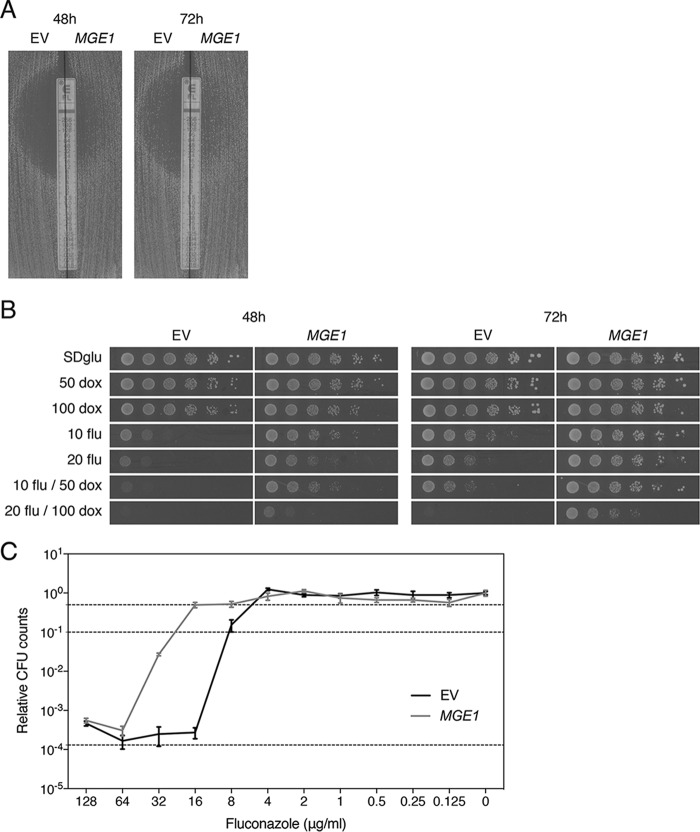
- Multicopy *MGE1* was isolated as a fluconazole susceptibility suppressor in *S. cerevisiae*; qRT-PCR showed an 11.7-fold increase (SEM, 1.40) over control. In BY4742, Etest MICflu rose from 6–8 µg/ml (empty vector) to 24–32 µg/ml (*MGE1*), and broth microdilution MIC50/MIC90 rose from 8–16/16 µg/ml to 16–32/32–64 µg/ml.
- The effect was not solely due to rho0 formation or Pdr5 efflux: *MGE1* overexpression still increased MICflu in a *pdr5Δ* strain from 0.25 to 0.75 µg/ml, and in a rho0 strain Etest MICflu increased from 24–32 µg/ml (EV) to >256 µg/ml (*MGE1*).
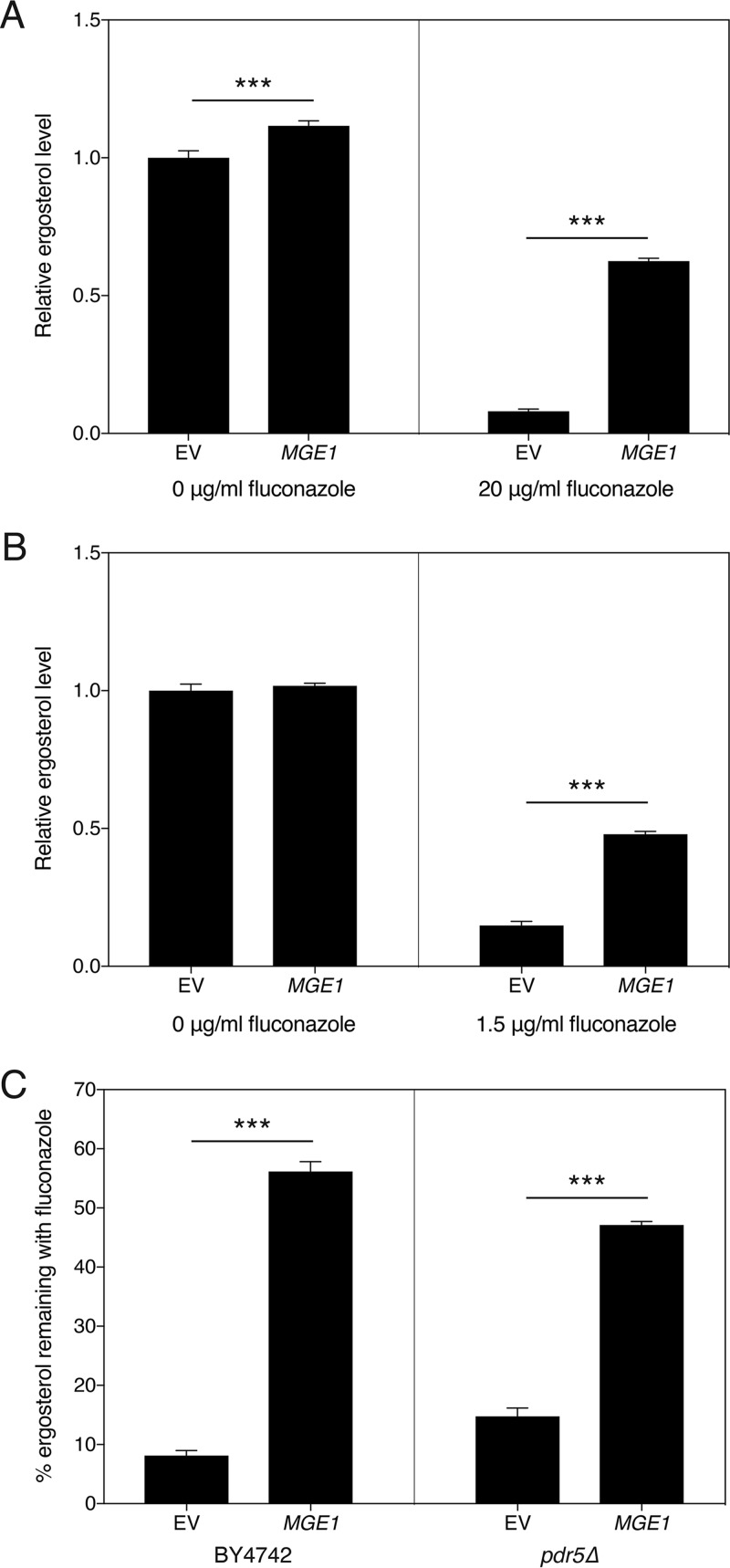
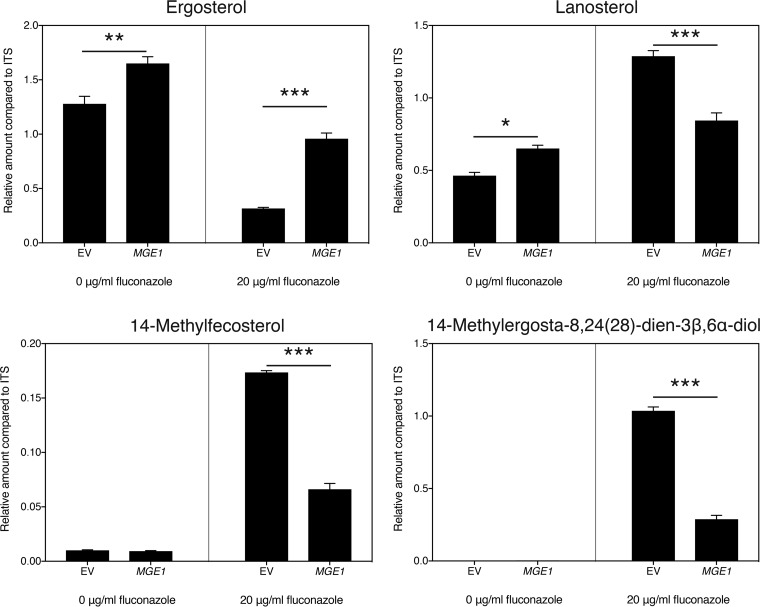
- *MGE1* overexpression increased residual ergosterol after fluconazole treatment and reduced flux toward the toxic sterol 14-methylergosta-8,24(28)-dien-3β,6α-diol, without upregulating *ERG11* or other tested *ERG* genes. The effect required Ssq1: in *ssq1Δ*, *MGE1* overexpression did not increase MICflu (Etest 2–4 µg/ml EV vs 1–1.5 µg/ml *MGE1*).
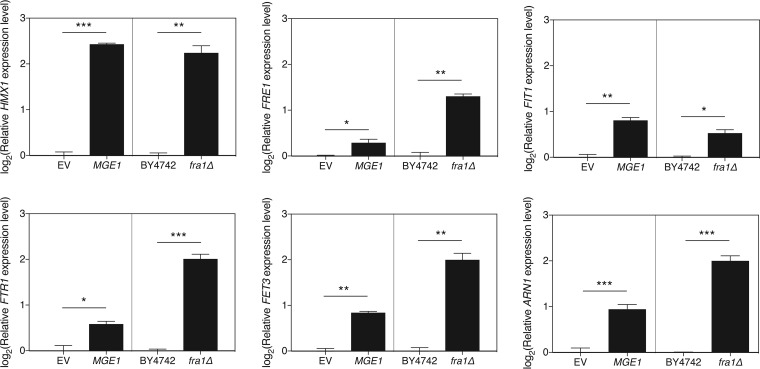
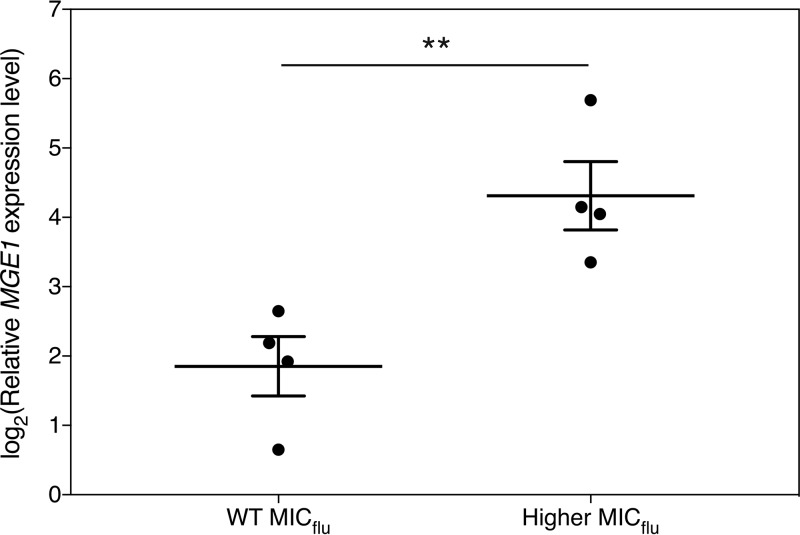
- Aft1 was necessary but iron regulon activation alone was insufficient: *MGE1* overexpression still reduced fluconazole susceptibility in *aft2Δ* but not *aft1Δ*, while *fra1Δ* activated iron regulon genes without increasing MICflu. In *C. glabrata*, CgMGE1 overexpression increased MICflu; in *C. albicans*, high CaMGE1 expression correlated with increased MICflu and decreased tolerance.
Methods
- *S. cerevisiae* BY4742 and isogenic mutants were screened for multicopy suppressors under sensitized conditions (10 µg/ml fluconazole plus 50 µg/ml doxycycline); *MGE1* was subcloned into YEplac195 and verified by qRT-PCR. Fluconazole susceptibility was measured by Etest, CLSI broth microdilution (MIC50/MIC90), spot assays, and CFU-based tolerance assays.
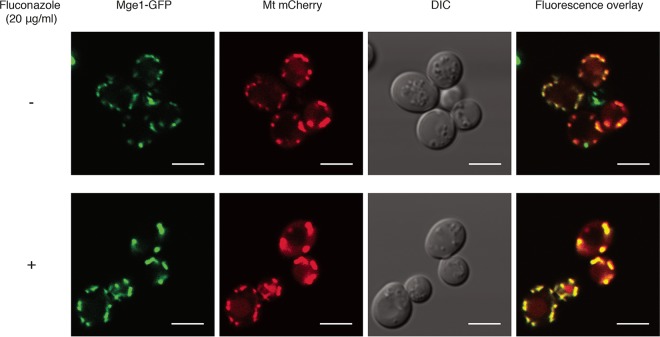
- Sterols were extracted and measured spectrophotometrically (OD281/OD230) and by GC-MS; Mge1-GFP localization was assessed by fluorescence microscopy; Erg11-HA protein levels by Western blot; gene expression by qRT-PCR.
- *C. glabrata* 2001HTL strains overexpressed CgMGE1 from CgPGK1 or CgTDH3 promoters; *C. albicans* SC5314 was transformed with CIp10-based CaMGE1 under the CaACT1 promoter. Candida MICflu was determined by Etest and broth microdilution in RPMI medium.
Limitations
- The paper states that it remains unclear how Mge1, operating in mitochondria, impacts ergosterol biosynthesis, which mainly occurs in the ER; the link between Mge1 activity, the iron regulon, and fluconazole susceptibility remains to be investigated, and the specific Fe-S species involved are unknown.
- The paper notes that *C. albicans* transformants showed highly variable CaMGE1 overexpression and plasmid copy number integration, complicating interpretation; more research is needed to uncover the exact role of the Mge1-Ssq1 module in fungal fluconazole susceptibility.
- Evident from the text: most mechanistic dissection was performed in *S. cerevisiae*, while *Candida* validation relied mainly on overexpression and MIC phenotypes rather than detailed pathway analysis.
Model-written summary. Check it against the paper before relying on it.
Integrity signals
Registry
Cites
Statistics
Figures
Verification
Claims the paper makes
6 Valid · 1 Not valid · 14 Not checked · 74 Own results and interpretations
The cited sources support only part of this claim — read each source’s verdict below.
In the paper
“We showed earlier that iron metabolism is involved in regulating susceptibility to fluconazole, since addition of the iron chelator doxycycline to fluconazole-treated Candida albicans and S. cerevisiae cells reduces or even completely abolishes tolerance (7, 27).”
What the sources say
- Not checked — no full text of the sourcecites [7] 7. Fiori A, Van Dijck P. 2012. Potent synergistic effect of doxycycline with fluconazole against Candida albicans is mediated by interference with iron homeostasis. Antimicrob Agents Chemother 56:3785-3796. https:// doi.org/10.1128/AAC.06017-11. source
- Partly supportedcites [27] 27. Prasad T, Chandra A, Mukhopadhyay CK, Prasad R. 2006. Unexpected link between iron and drug resistance of Candida spp.: iron depletion enhances membrane fluidity and drug diffusion, leading to drugsusceptible cells. Antimicrob Agents Chemother 50:3597-3606. https:// doi.org/10.1128/AAC.00653-06. sourceExperimental — accuracy not yet measured
The Abstract and Results report that iron depletion increased fluconazole susceptibility in C. albicans. The paper describes bathophenanthrolene disulfonic acid, ferrozine, and desferrioxamine as chelators; it does not establish the claimed effect of doxycycline in C. albicans and S. cerevisiae, or that tolerance was completely abolished. (LLM, conf=0.88)
boostedstates a cause- Asserted: passes — The authors put it forward as true.
- Checkable: passes — It can be checked against evidence.
- Load-bearing: passes — The paper’s conclusions depend on it.
- Based: passes — The paper gives a reason why it holds.
Every source the paper cites for this claim was checked and supports it.
In the paper
“As already shown by Arthington-Skaggs et al. for C. albicans (38), resistance to fluconazole often correlates with higher residual ergosterol levels after drug application.”
What the sources say
- Supportedcites [38] 38. Arthington-Skaggs BA, Jradi H, Desai T, Morrison CJ. 1999. Quantitation of ergosterol content: novel method for determination of fluconazole susceptibility of Candida albicans . J Clin Microbiol 37:3332-3337. source
The Results (Table 2) show that resistant C. albicans isolates retained more ergosterol than susceptible isolates at each tested fluconazole concentration. The Results also state that ergosterol biosynthesis became less sensitive to inhibition as fluconazole susceptibility decreased. (LLM, conf=0.94)
hedgedstates an association- Asserted: passes — The authors put it forward as true.
- Checkable: passes — It can be checked against evidence.
- Load-bearing: passes — The paper’s conclusions depend on it.
- Based: passes — The paper gives a reason why it holds.
- Supported
None of the sources cited for this claim have been checked yet.
In the paper
“In this study, we identified Mge1, a cochaperone involved in Fe-S cluster metabolism and protein import into the mitochondria, as a multicopy suppressor of fluconazole susceptibility (16, 17, 19).”
What the sources say
- Not checked — no full text of the sourcecites [16] 16. Miao B, Davis JE, Craig EA. 1997. Mge1 functions as a nucleotide release factor for Ssc1, a mitochondrial Hsp70 of Saccharomyces cerevisiae . J Mol Biol 265:541-552. https://doi.org/10.1006/jmbi.1996.0762. source
- Could not verifycites [17] 17. Craig EA, Kramer J, Kosic-Smithers J. 1987. SSC1, a member of the 70-kDa heat shock protein multigene family of Saccharomyces cerevisiae , is essential for growth. Proc Natl Acad Sci U S A 84:4156-4160. https:// doi.org/10.1073/pnas.84.12.4156. sourceExperimental — accuracy not yet measured
The Results discuss SSC1 and SSD1 gene disruptions, not Mge1 or fluconazole susceptibility. Searches for Mge1, multicopy suppression, fluconazole, mitochondrial protein import, and Fe-S clusters found no passage addressing the claim in our copy. (LLM, conf=0.77)
- Not checked yetcites [19] 19. Strain J, Lorenz CR, Bode J, Garland S, Smolen GA, Ta DT, Vickery LE, Culotta VC. 1998. Suppressors of superoxide dismutase ( SOD1 ) deficiency in Saccharomyces cerevisiae . Identification of proteins predicted to mediate iron-sulfur cluster assembly. J Biol Chem 273:31138-31144. https://doi.org/10.1074/jbc.273.47.31138. source
Checked before — its earlier verdict is held back until a new check runs.
plainstates a cause- Asserted: passes — The authors put it forward as true.
- Checkable: passes — It can be checked against evidence.
- Load-bearing: passes — The paper’s conclusions depend on it.
- Based: passes — The paper gives a reason why it holds.
The cited sources that could be checked couldn’t confirm or dispute this claim.
In the paper
“However, we show here that neither loss of the mitochondrial DNA nor drug efflux through Pdr5 can solely account for the increased growth of the MGE1 overexpression strain on fluconazole (33, 34).”
What the sources say
- Could not verifycites [33] 33. Dunn CD, Lee MS, Spencer FA, Jensen RE. 2006. A genomewide screen for petite-negative yeast strains yields a new subunit of the i-AAA protease complex. Mol Biol Cell 17:213-226. https://doi.org/10.1091/ mbc.E05-06-0585. sourceExperimental — accuracy not yet measured
The Results describe yeast growth after mitochondrial DNA loss, but not growth of an MGE1-overexpression strain on fluconazole. Searches for MGE1, fluconazole, Pdr5, and drug efflux found no passage addressing whether either proposed mechanism can account for that strain’s increased growth. (LLM, conf=0.76)
- Not checked — no full text of the sourcecites [34] 34. Dunn CD, Jensen RE. 2003. Suppression of a defect in mitochondrial protein import identifies cytosolic proteins required for viability of yeast cells lacking mitochondrial DNA. Genetics 165:35-45. source
plain- Asserted: passes — The authors put it forward as true.
- Checkable: passes — It can be checked against evidence.
- Load-bearing: passes — The paper’s conclusions depend on it.
- Based: passes — The paper gives a reason why it holds.
- Could not verify
A result the paper reports from its own data — it cites no other source for it, so there is none to check. The quote shows it is in the paper.
In the paper
“The MIC flu of the tom70 𝚫 strain was equal to that of the wild type (Fig. S1D; Table S4)”
plain- Asserted: passes — The authors put it forward as true.
- Checkable: passes — It can be checked against evidence.
- Load-bearing: passes — The paper’s conclusions depend on it.
- Based: passes — The paper gives a reason why it holds.
60 more claims
Create a free account to see all 95 claims and to verify the 2 references still open.
- Probably not a substantial claim. 16
- It may state two separate claims as one. 17
- The quote only partly states this claim. 1
Claims other papers make about this one
Each is checked against this paper’s own text: does it say what the citing paper says it does?
The source backs part of the claim, not all of it — or backs it for a different population, condition or comparison.
In the citing paper
“However, the accumulation of excess free sterol intermediates may become toxic for cells since it alters mitochondrial respiration, resulting in the generation of toxic methyl sterol intermediates, which raise mitochondrial oxidants and decrease the ability to synthesize iron–sulfur (Fe-S) clusters [13,42,43].”
From Regulation of Ergosterol Biosynthesis in Saccharomyces cerevisiae (2020) · cites this paper as [42]
Experimental — accuracy not yet measured
Citations
Cites
Hidden Killers: Human Fungal Infections
Brown, G. D., Denning, D. W., Gow, N. A. R., Levitz, S. M., Netea, M. G., & White, T. C. (2012) · Science Translational Medicine · doi:10.1126/scitranslmed.3004404 · Cited by 4,284 · cited 1×
“for the patient rarely exceeds 50% (1).”
Sherman, F. (2002) · Methods in Enzymology · doi:10.1016/s0076-6879(02)50954-x · Cited by 4,121
[1] Getting started with yeast
Sherman, F. (1991) · Methods in Enzymology · doi:10.1016/0076-6879(91)94004-v · Cited by 4,067
Hellemans, J., Mortier, G., De Paepe, A., Speleman, F., & Vandesompele, J. (2007) · Genome Biology · doi:10.1186/gb-2007-8-2-r19 · Cited by 4,023
Hsp70 chaperones: Cellular functions and molecular mechanism
Mayer, M. P., & Bukau, B. (2005) · Cellular and Molecular Life Sciences · doi:10.1007/s00018-004-4464-6 · Cited by 2,865 · cited 1×
“Mge1 is a cochaperone for members of the Hsp70 family of chaperones (9, 10), which serve functions in several cellular processes such as protein folding, preventing protein aggregation, protein translocation, targeted degradation, and adjusting the activity of regulatory proteins (11, 12).”
Janke, C., Magiera, M. M., Rathfelder, N., Taxis, C., Reber, S., Maekawa, H., Moreno‐Borchart, A., Doenges, G., Schwob, E., Schiebel, E., et al. (2004) · Yeast · doi:10.1002/yea.1142 · Cited by 2,119 · cited 1×
“Deletion of PDR5 in BY4742 and rho 0 strains was accomplished by amplification of the hygromycin resistance marker gene from plasmid pFA6a-hphNT1 (71) and consequent transformation.”
Dujon, B., Sherman, D., Fischer, G., Durrens, P., Casaregola, S., Lafontaine, I., de Montigny, J., Marck, C., Neuvéglise, C., Talla, E., et al. (2004) · Nature · doi:10.1038/nature02579 · Cited by 1,623 · cited 1×
“cerevisiae (55) implies that the phenotype that we observed for S.”
Translocation of Proteins into Mitochondria
Neupert, W., & Herrmann, J. M. (2007) · Annual Review of Biochemistry · doi:10.1146/annurev.biochem.76.052705.163409 · Cited by 1,481
Converging concepts of protein folding in vitro and in vivo
Hartl, F. U., & Hayer-Hartl, M. (2009) · Nature Structural & Molecular Biology · doi:10.1038/nsmb.1591 · Cited by 1,185 · cited 1×
“Mge1 is a cochaperone for members of the Hsp70 family of chaperones (9, 10), which serve functions in several cellular processes such as protein folding, preventing protein aggregation, protein translocation, targeted degradation, and adjusting the activity of regulatory proteins (11, 12).”
Function and biogenesis of iron-sulphur proteins
Lill, R. (2009) · Nature · doi:10.1038/nature08301 · Cited by 1,167
Research works printed but not linked: 1
- 76. Clinical and Laboratory Standards Institute. 2008. Reference method for broth dilution antifungal susceptibility testing of yeasts, 3rd ed. Approved standard. CLSI M27-A3 (28). Clinical and Laboratory Standards Institute, Wayne, PA.
Cited by
Regulation of Ergosterol Biosynthesis in Saccharomyces cerevisiae
Jordá, T., & Puig, S. (2020) · Genes · doi:10.3390/genes11070795 · Cited by 489
“However, the accumulation of excess free sterol intermediates may become toxic for cells since it alters mitochondrial respiration, resulting in the generation of toxic methyl sterol intermediates, which raise mitochondrial oxidants and decrease the ability to synthesize iron–sulfur (Fe-S) clusters [13,42,43].”
BackgroundGarcía, C., Burgain, A., Chaillot, J., Pic, É., Khemiri, I., & Sellam, A. (2018) · Scientific Reports · doi:10.1038/s41598-018-29973-8 · Cited by 57
Song, J., Zhou, J., Zhang, L., & Li, R. (2020) · Microorganisms · doi:10.3390/microorganisms8101574 · Cited by 51
Can Saccharomyces cerevisiae keep up as a model system in fungal azole susceptibility research?
Demuyser, L., & Dijck, P. V. (2019) · Drug Resistance Updates · doi:10.1016/j.drup.2019.02.002 · Cited by 46
Self-citationWard, D. M., Chen, O. S., Li, L., Kaplan, J., Bhuiyan, S. A., Natarajan, S. K., Bard, M., & Cox, J. E. (2018) · Journal of Biological Chemistry · doi:10.1074/jbc.ra118.001781 · Cited by 32
“(53) identified the mitochondrial chaperone protein Mge1 as a high-copy suppressor of fluconazole toxicity.”
BackgroundSugar Phosphorylation Controls Carbon Source Utilization and Virulence of Candida albicans
Wijnants, S., Riedelberger, M., Penninger, P., Kuchler, K., & Dijck, P. V. (2020) · Frontiers in Microbiology · doi:10.3389/fmicb.2020.01274 · Cited by 33
Self-citationAlves, R. M. A., Kastora, S. L., Gomes-Gonçalves, A., Azevedo, N. F., Rodrigues, C. F., Silva, S. M., Demuyser, L., Dijck, P. V., Casal, M., Brown, A. J. P., et al. (2020) · npj Biofilms and Microbiomes · doi:10.1038/s41522-020-0114-5 · Cited by 34
“5b).(65) As expected, cells grown under acidic conditions, such as RPMI at pH 5.”
BackgroundInfluentialSelf-citationDemuyser, L., Palmans, I., Vandecruys, P., & Dijck, P. V. (2020) · mSphere · doi:10.1128/msphere.00714-20 · Cited by 32
“albicans strains, CaTPK1, CaTPK2, CaSEF1, and CaRIB genes and CaFMN1 were cloned in the integrative plasmid CIp10-NAT1 (26, 41).”
BackgroundMethodInfluentialSelf-citationCandida albicans reprioritizes metal handling during fluconazole stress
Hunsaker, E. W., & Franz, K. J. (2019) · Metallomics · doi:10.1039/c9mt00228f · Cited by 22
The intricate link between iron, mitochondria and azoles in Candida species
Genechten, W. V., Vergauwen, R., & Dijck, P. V. (2023) · FEBS Journal · doi:10.1111/febs.16977 · Cited by 26
“Overexpressing MGE1 thus results in increased iron – sulfur cluster biosynthesis, and increased ergosterol contents whilst limiting toxic sterol alternatives [82].”
Self-citationPseudomonas Synergizes with Fluconazole against Candida during Treatment of Polymicrobial Infection
Hattab, S., Dagher, A.-M., & Wheeler, R. T. (2022) · Infection and Immunity · doi:10.1128/iai.00626-21 · Cited by 22
Gaspar‐Cordeiro, A., Amaral, C., Pobre, V., Antunes, W., Petronilho, A., Paixão, P., Matos, A., & Pimentel, C. (2022) · Frontiers in Microbiology · doi:10.3389/fmicb.2022.920574 · Cited by 18
Hossain, S., Veri, A. O., Liu, Z., Iyer, K. R., O’Meara, T. R., Robbins, N., & Cowen, L. E. (2021) · Genetics · doi:10.1093/genetics/iyab095 · Cited by 24
“…iron metabolism, respiration, and energy production, and are associated with virulence and drug resistance phenotypes in fungal pathogens (Dagley et al. 2011; Shingu-Vazquez and Traven 2011; Thomas et al. 2013; Long et al. 2016; Vincent et al. 2016; Demuyser et al. 2017; Song et al. 2020).”
BackgroundRor, S., & Panwar, S. L. (2019) · Frontiers in Microbiology · doi:10.3389/fmicb.2019.01528 · Cited by 17
Inhibition of Vesicular Transport Influences Fungal Susceptibility to Fluconazole
Demuyser, L., Dyck, K. V., Timmermans, B., & Dijck, P. V. (2019) · Antimicrobial Agents and Chemotherapy · doi:10.1128/aac.01998-18 · Cited by 15
“To evaluate drug tolerance, we generated dose-response curves based on CFU counts for the control and/or mutant strain as described by CLSI (39) and as established earlier (32).”
BackgroundMethodResultInfluentialSelf-citationMicrodomain Protein Nce102 Is a Local Sensor of Plasma Membrane Sphingolipid Balance
Zahumenský, J., Fernandes, C. M., Veselá, P., Poeta, M. D., Konopka, J. B., & Malínský, J. (2022) · Microbiology Spectrum · doi:10.1128/spectrum.01961-22 · Cited by 16
“5 mg/mL fluconazole for 24 h have reduced ergosterol levels by 80% (53).”
BackgroundInfluentialLiu, Q., Yao, F., Jiang, G., Xu, M., Chen, S., Zhou, L., Sakamoto, N., Kuno, T., & Fang, Y. (2018) · Antimicrobial Agents and Chemotherapy · doi:10.1128/aac.00860-18 · Cited by 13
“Mitochondrial dysfunction and antifungal drug resistance are well-documented phenomena in pathogenic yeasts (32, 33).”
BackgroundKerstens, W., Kremer, A., Holtappels, M., Borghgraef, P., Lippens, S., & Dijck, P. V. (2020) · mSphere · doi:10.1128/msphere.00981-19 · Cited by 9
Self-citationMechanisms and regulation of iron uptake and the role of iron in pathogenesis of Candida albicans
Zheng, D., Zhang, X., Ding, J., Yue, D., Yang, F., & Li, Y. (2025) · Critical reviews in microbiology · doi:10.1080/1040841x.2025.2510256 · Cited by 10
“…model, iSc system damage resulted in a complete loss of C. albicans ’ infectivity, with significantly fewer hyphal cells observed in tissue samples (Demuyser et al. 2017; Dong et al. 2017). conversely, iron deficiency, caused by iron chelators or impaired iron absorption, reduces mitochondrial…”
Fluorescent toys ‘n’ tools lighting the way in fungal research
Genechten, W. V., Dijck, P. V., & Demuyser, L. (2021) · FEMS Microbiology Reviews · doi:10.1093/femsre/fuab013 · Cited by 16
Self-citationWhat ‘Omics can tell us about antifungal adaptation
Ribeiro, G. F., Denes, E., Heaney, H., & Childers, D. S. (2021) · FEMS Yeast Research · doi:10.1093/femsyr/foab070 · Cited by 11
“Overexpression of MGE1, a yeast chaperone involved in the mitochondrial protein import system, also suppresses fluconazole susceptibility in S. cerevisiae and Candida species (Demuyser et al. 2017).”
BackgroundJe, S., Choi, B. Y., Kim, E., Kim, K. Y., Lee, Y., & Yamaoka, Y. (2023) · Plant and Cell Physiology · doi:10.1093/pcp/pcad131 · Cited by 9
The riboflavin biosynthetic pathway as a novel target for antifungal drugs against Candida species
(2024) · doi:10.1128/mbio.02502-24 · Cited by 8
“To obtain C. albicans reintegrant strains, the target gene was cloned into the integrative CIp10-NAT1 plasmid using NheI and AatII restriction enzymes (54, 55).”
Self-citationNair, R., Khandelwal, N., Shariq, M., Redhu, A. K., Gaur, N. A., Shaikh, S., & Prasad, R. (2018) · AMB Express · doi:10.1186/s13568-018-0647-7 · Cited by 9
The stress-protectant molecule trehalose mediates fluconazole tolerance in Candida glabrata
Zhu, Q., Wijnants, S., Feil, R., Genechten, W. V., Vergauwen, R., Goethem, O. V., Lunn, J. E., Ende, M. V., & Dijck, P. V. (2025) · Antimicrobial Agents and Chemotherapy · doi:10.1128/aac.01349-24 · Cited by 9
“6A) (39), it seems valid to hypothesize that Erg11 might be the enzyme linking trehalose, or its metabolic enzymes, to ergosterol biosynthesis.”
Self-citationEfficacy and Molecular Mechanisms of Nystatin Against Botrytis cinerea on Postharvest Table Grape
Wu, Y., Zhang, S., Wang, J., He, F., Wei, H., Chen, D., & Wang, Y. (2024) · Foods · doi:10.3390/foods13223624 · Cited by 7
Genechten, W. V., Demuyser, L., Duwé, S., Vandenberg, W., Dijck, P. V., & Dedecker, P. (2021) · mSphere · doi:10.1128/msphere.00146-21 · Cited by 4
Self-citationCandida albicans Hxk1 influences expression of metabolic- and virulence-related genes
Wijnants, S., Sofras, D., Genechten, W. V., Vergauwen, R., Arevalo, A. V., Gunasekaran, D., Ennis, C. L., Jenull, S., Kuchler, K., Nobile, C. J., et al. (2025) · mSphere · doi:10.1128/msphere.00395-25 · Cited by 2
“The broth dilution assays were based on previously described methods (64).”
Self-citationThe stress-protectant molecule trehalose mediates fluconazole tolerance in Candida glabrataPreprint
Zhu, Q., Wijnants, S., Feil, R., et al. (2024) · bioRxiv (Cold Spring Harbor Laboratory) · doi:10.1101/2024.07.16.603661 · Cited by 1
Self-citationGenechten, W. V., Demuyser, L., Duwé, S., Vandenberg, W., Dijck, P. V., & Dedecker, P. (2021) · bioRxiv (Cold Spring Harbor Laboratory) · doi:10.1101/2021.02.26.433138
Self-citationPatro, S. K., Panda, N. K., & Sharma, M. (2023) · Springer eBooks · doi:10.1007/978-981-19-5399-6_12
Srinivasan, R., Saravanan, T. S., Utpat, S., Shemesh, M., & Rajasekharan, S. K. (2026) · Journal of Bacteriology · doi:10.1128/jb.00184-26
“In fungi, iron is transported into the mitochondria via the Mrs3 and Mrs4 transporters, where it may be incorporated into ISC with the help of chaperones like Mge1 (38, 39).”
Metadata
- Authors
- Demuyser, L., Swinnen, E., Fiori, A., Herrera-Malaver, B., Verstrepen, K., & Van Dijck, P.
- Affiliations
- VIB-KU Leuven Center for Microbiology (BE)
- VIB-KU Leuven Center for Microbiology, Flanders, Belgium
- Venue
- mBio
- Publisher
- American Society for Microbiology
- Published
- 2017-09-06
- Volume
- 8
- Issue
- 4
- ISSN
- 2150-7511 (ISSN-L)
- 2161-2129
- PMC
- PMC5516249
- OpenAlex
- W2738665300
- Cited by
- 33
- References
- 81
- Citations by year
- 2026: 3 · 2025: 3 · 2024: 2 · 2023: 3 · 2022: 3 · 2021: 5 · 2020: 6 · 2019: 4 · 2018: 4
- FWCI
- 2.95
- Type
- journal article
- Language
- en
- Open access
- gold
- doi.org
- Licence
- cc-by
- creativecommons.org/licenses/by/4.0/ (vor)
- journals.asm.org/non-commercial-tdm-license (tdm)
- Locations
- mBio (publishedVersion, cc-by)
- PubMed Central (publishedVersion, cc-by)
- PubMed (publishedVersion)
- Lirias (submittedVersion, other-oa)
- DOAJ (DOAJ: Directory of Open Access Journals) (submittedVersion)
- DOAJ (DOAJ: Directory of Open Access Journals) (submittedVersion, cc-by-sa)
- Funders
- Fund for Scientific Research Flanders (12C8915N, 11P9814N)
- Topics
- Health Sciences › Medicine › Infectious Diseases › Antifungal resistance and susceptibility
- Life Sciences › Biochemistry, Genetics and Molecular Biology › Molecular Biology › Fungal and yeast genetics research
- Life Sciences › Agricultural and Biological Sciences › Plant Science › Fungal Plant Pathogen Control
- Keywords
- mitochondrial chaperone, fluconazole susceptibility, antifungal resistance, iron metabolism, iron regulon, mitochondrial DNA integrity, multicopy suppressor, Candida glabrata, Candida albicans, Saccharomyces cerevisiae, fungal pathogens
- MeSH terms
- Antifungal Agents, Candida albicans, Ergosterol, Iron, Saccharomyces cerevisiae, Fluconazole, Molecular Chaperones, HSP70 Heat-Shock Proteins, Mitochondrial Proteins, Drug Resistance, Fungal, Saccharomyces cerevisiae Proteins, Mitochondrial Membrane Transport Proteins, Candida glabrata
About these checks
Registry, retraction, Cites and statistics results are computed, not judged, with one exception: a printed reference that no index lists is read once by a model before it counts as a citation error. Claims are extracted by a model and kept only when their quote appears verbatim in the text; each cited source is then checked, with a model’s help, for whether it says what the claim relies on. Those verdicts can be wrong — read the claim’s quote and the cited source before relying on one.
The claim verdicts this report counts are experimental: their accuracy is not yet measured.
A language model drew the claims from the paper on 2026-10-02, under version 3 of the claim definition (model deepseek-v4.1-flash, prompt extract-v3).
A second model labelled each claim on 2026-10-02 (model jev-1.13-20260917, definition revision gold-guideline-v0.2).
Cited sources are checked with a language model’s help (gpt-6-sol).
Statistics and arithmetic are recomputed, not judged.
Confidence bands are shown only for fields calibrated on our annotated test set. None is calibrated yet, so no band is shown.
What counts as a claim ›How we measure confidence ›How we check this ›
Are you an author, or do you see a problem with this page? Request a review
Data sources
Bibliographic data: Semantic Scholar, OpenAlex, Crossref.
Contains information from the Semantic Scholar Academic Graph Datasets, made available under the ODC Attribution License (ODC-BY 1.0).
Semantic Scholar’s data is described in: Kinney, R., et al. (2023). The Semantic Scholar Open Data Platform. arXiv:2301.10140.
