

Volatile Compounds Emitted by Pseudomonas aeruginosa Stimulate Growth of the Fungal Pathogen Aspergillus fumigatus
Open accessThe DOI matches its Crossref record; 22 of the 22 references it cites were found in a registry or an index.
Abstract
Chronic lung infections with opportunistic bacterial and fungal pathogens are a major cause of morbidity and mortality especially in patients with cystic fibrosis. Pseudomonas aeruginosa is the most frequently colonizing bacterium in these patients, and it is often found in association with the filamentous fungus Aspergillus fumigatus . P. aeruginosa is known to inhibit the growth of A. fumigatus in situations of direct contact, suggesting the existence of interspecies communication that may influence disease outcome. Our study shows that the lung pathogens P. aeruginosa and A. fumigatus can interact at a distance via volatile-mediated communication and expands our understanding of interspecific signaling in microbial communities. IMPORTANCE Microbiota studies have shown that pathogens cannot be studied individually anymore and that the establishment and progression of a specific disease are due not to a single microbial species but are the result of the activity of many species living together. To date, the interaction between members of the human microbiota has been analyzed in situations of direct contact or liquid-mediated contact between organisms. This study showed unexpectedly that human opportunistic pathogens can interact at a distance after sensing volatiles emitted by another microbial species. This finding will open a new research avenue for the understanding of microbial communities.
Overview
The claims and statistics of this paper haven’t been checked yet.
Free: it reads the open-access text and checks the first 5 claims that cite a source we can check. Create a free account to check every claim.
Integrity signals
Registry
Cites
Statistics
Figures
Verification
Claims the paper makes
The claims and statistics of this paper haven’t been checked yet.
Free: it reads the open-access text and checks the first 5 claims that cite a source we can check. Create a free account to check every claim.
Claims other papers make about this one
Each is checked against this paper’s own text: does it say what the citing paper says it does?
The source backs part of the claim, not all of it — or backs it for a different population, condition or comparison.
In the citing paper
“A. fumigatus also has mastered how to compete with the myriad of soil bacteria and how to use microbial metabolites as nutritional inputs (585).”
From Aspergillus fumigatus and Aspergillosis in 2019 (2019) · cites this paper as [585]
Experimental — accuracy not yet measuredThe cited source says what the claim attributes to it.
In the citing paper
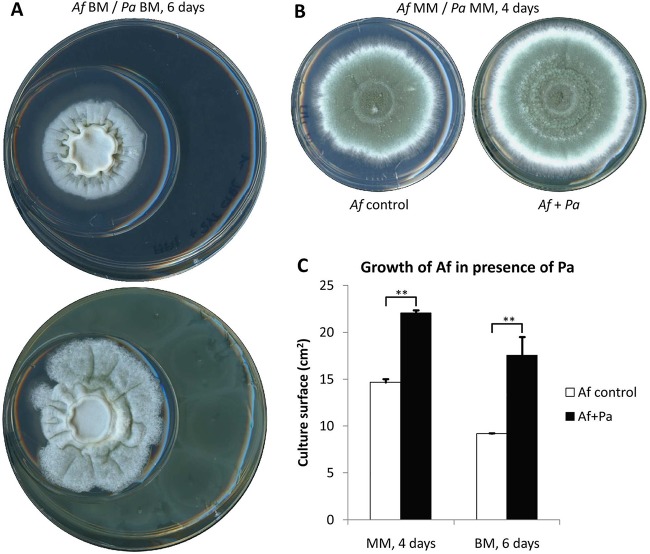
“P. aeruginosa stimulates the growth of Aspergillus fumigatus through sensing volatile metabolites at a distance130.”
From The microbiota of the respiratory tract: gatekeeper to respiratory health (2017) · cites this paper as [130]
In the citing paper
“P. aeruginosa produces volatile chemicals (VOCs) that stimulate A. fumigatus growth (585)”
From Aspergillus fumigatus and Aspergillosis in 2019 (2019) · cites this paper as [585]
In the citing paper
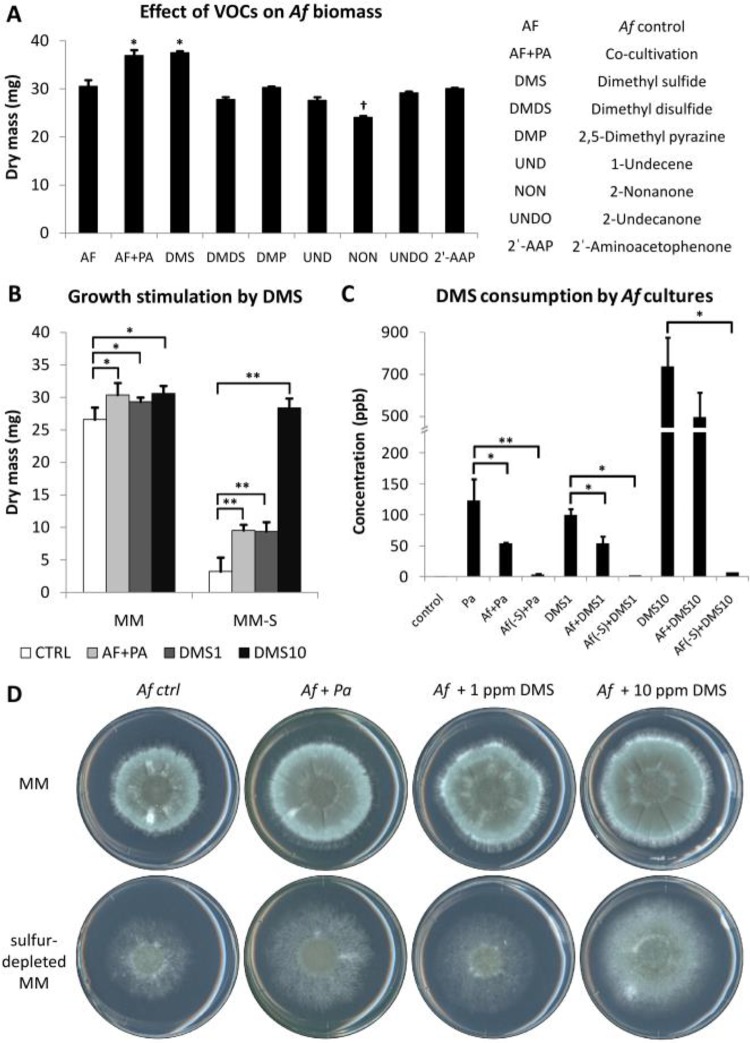
“At physiological concentrations, the bacterial dimethyl sulfoxide (DMS) significantly augmented the growth of A. fumigatus, and this effect was amplified when the fungus was grown under sulfur starvation.”
From Aspergillus fumigatus and Aspergillosis in 2019 (2019) · cites this paper as [585]
Self-check
Percentages, sums and reported differences re-computed from the paper’s own numbers.
The self-check needs the paper’s full text.
Citations
Cites
The induction and repression of nitrate reductase in the fungus Aspergillus nidulans
Cove, D. J. (1966) · Biochimica et Biophysica Acta (BBA) - Enzymology and Biological Oxidation · doi:10.1016/s0926-6593(66)80120-0 · Cited by 1,038 · cited 1×
“Two defined media were used: minimal medium (MM) (9), which supports rapid radial growth, and Brian medium (BM) (10), which supports slower growth.”
MethodFrey-Klett, P., Burlinson, P., Deveau, A., Barret, M., Tarkka, M., & Sarniguet, A. (2011) · Microbiology and Molecular Biology Reviews · doi:10.1128/mmbr.00020-11 · Cited by 913
Medically important bacterial-fungal interactions
Peleg, A. Y., Hogan, D. A., & Mylonakis, E. (2010) · Nature Reviews Microbiology · doi:10.1038/nrmicro2313 · Cited by 619
Volatile antimicrobials from Muscodor crispans, a novel endophytic fungus
Mitchell, A. M., Strobel, G. A., Moore, E., Robison, R., & Sears, J. (2010) · Microbiology · doi:10.1099/mic.0.032540-0 · Cited by 484
Volatile affairs in microbial interactions
Schmidt, R., Cordovez, V., de Boer, W., Raaijmakers, J., & Garbeva, P. (2015) · The ISME Journal · doi:10.1038/ismej.2015.42 · Cited by 481 · cited 1×
“The importance of VOCs in ecology has been underestimated for a long time, but recent and ongoing work emphasizes the role of microbial communication via the gas phase (3, 4).”
BackgroundVolatile antimicrobials from Muscodor albus, a novel endophytic fungus
Strobel, G. A., Sears, J., Dirkse, E., & Markworth, C. (2001) · Microbiology · doi:10.1099/00221287-147-11-2943 · Cited by 475 · cited 2×
“Aspergillus fumigatus was inhibited by volatile antimicrobials from an endophytic fungus (8).”
BackgroundMethodVolatiles of bacterial antagonists inhibit mycelial growth of the plant pathogen Rhizoctonia solani
Kai, M., Effmert, U., Berg, G., & Piechulla, B. (2007) · Archives of Microbiology · doi:10.1007/s00203-006-0199-0 · Cited by 428
Amin, R., Dupuis, A., Aaron, S. D., & Ratjen, F. (2010) · Chest · doi:10.1378/chest.09-1103 · Cited by 376 · cited 1×
“aeruginosa and a more rapid decline in lung functionality (19, 20).”
BackgroundFungal volatile organic compounds and their role in ecosystems
Hung, R., Lee, S., & Bennett, J. W. (2015) · Applied Microbiology and Biotechnology · doi:10.1007/s00253-015-6494-4 · Cited by 275 · cited 1×
“The importance of VOCs in ecology has been underestimated for a long time, but recent and ongoing work emphasizes the role of microbial communication via the gas phase (3, 4).”
BackgroundProduction of Bioactive Volatiles by Different Burkholderia ambifaria Strains
Groenhagen, U., Baumgartner, R., Bailly, A., Gardiner, A., Eberl, L., Schulz, S., & Weisskopf, L. (2013) · Journal of Chemical Ecology · doi:10.1007/s10886-013-0315-y · Cited by 258 · cited 1×
“For these experiments, the organisms were grown on modified minimal medium (6) with 20 mM glutamine instead of ammonium tartrate as the nitrogen source or on Brian’s broth (7).”
Method
Cited by
Items 101–153 of 153
Zhang, M., Wang, R., Khan, R. A. A., Xin, Z., Ren, S., Jiang, H., Zheng, C., Wu, Y., Yang, F., Yu, X., et al. (2025) · Plant Cell & Environment · doi:10.1111/pce.70250 · Cited by 11
Subtle relationships between Pseudomonas aeruginosa and fungi in patients with cystic fibrosis
Yan, K., Yin, H., Wang, J., & Cai, Y. (2020) · Acta Clinica Belgica · doi:10.1080/17843286.2020.1852850 · Cited by 8
Debourgogne, A., Monpierre, L., Sy, K. A., Valsecchi, I., Decousser, J., & Botterel, F. (2023) · Journal of Fungi · doi:10.3390/jof9090900 · Cited by 7
“The effect was mediated by dimethyl sulphide, which is a volatile gaseous compound [51,52].”
BackgroundBarucha, A., Mauch, R. M., Duckstein, F., Zagoya, C., & Mainz, J. G. (2022) · Expert Review of Respiratory Medicine · doi:10.1080/17476348.2022.2104249 · Cited by 6
Berry, S. B., Haack, A. J., Theberge, A. B., Brighenti, S., & Svensson, M. (2020) · Frontiers in Medicine · doi:10.3389/fmed.2020.00537 · Cited by 8
“aeruginosa-derived dimethyl sulfide (Figure 4) (15); this result is contrary to what is observed when these two pathogens are in physical or shared media contact, where P.”
BackgroundResultInterspecific cross-talk: The catalyst driving microbial biosynthesis of secondary metabolites
Yu, G., Ge, X., Li, W., Ji, L., & Yang, S. (2024) · Biotechnology Advances · doi:10.1016/j.biotechadv.2024.108420 · Cited by 7
Emily, J. B., Allcott, G. J., & Cox, J. A. G. (2024) · npj Antimicrobials and Resistance · doi:10.1038/s44259-024-00060-5 · Cited by 6
“However, once they ’ re in direct contact, the interaction becomes mutually anatagonistic 101 .”
Fungal Community for Novel Secondary Metabolites
Enespa, & Chandra, P. (2019) · Fungal biology · doi:10.1007/978-3-030-14846-1_9 · Cited by 10
Carter-House, D., Chung, J., McDonald, S., Mauck, K. E., & Stajich, J. (2020) · bioRxiv (Cold Spring Harbor Laboratory) · doi:10.1101/2020.09.07.286443 · Cited by 6
“(28), altering fungal behavior, morphology and 106 biomass.”
BackgroundIs it time to shift towards multifactorial biotic stress in plant research?
Penteriche, A., Gallan, D. Z., & Silva-Filho, M. C. (2025) · Plant Stress · doi:10.1016/j.stress.2025.100963 · Cited by 6
Microbiology of the Cystic Fibrosis Airway
McDermott, G., Reece, E., & Renwick, J. (2019) · Elsevier eBooks · doi:10.1016/b978-0-12-809633-8.90263-2 · Cited by 7
Schanzmann, H., Ruzsányi, V., Ahmad‐Nejad, P., Telgheder, U., & Sielemann, S. (2025) · Journal of Chromatography A · doi:10.1016/j.chroma.2025.466524 · Cited by 4
Zhu, Y., Zeng, Y., Liu, M., Lu, T., & Pang, X. (2024) · Microbiology Spectrum · doi:10.1128/spectrum.01195-24 · Cited by 4
“The impact of volatiles has mainly been observed between producing bacteria and recipient (perceiving) bacteria of different species (2, 14).”
The Application of Microbial Inoculants as a Green Tool towards Achieving Sustainable Agriculture
Miteu, G. D., Emmanuel, A. A., Addeh, I., Ojeokun, O., Olayinka, T., Godwin, J. S., Folayan, E. O., & Benneth, E. O. (2023) · IPS Journal of Nutrition and Food Science · doi:10.54117/ijnfs.v2i2.31 · Cited by 4
Rethinking Aspergillosis in the Era of Microbiota and Mycobiota
Barac, A. M., Vujović, A., Perić, J., Tulić, I., Stojanović, M., & Stjepanović, M. (2024) · Mycopathologia · doi:10.1007/s11046-024-00853-2 · Cited by 6
“Although they have not yet been tested on bacteria, volatiles are produced by A. fumigatus and can predispose persons to co-coloni-zation with P. aeruginosa [40, 41].”
Transcriptomics Reveals the Effect of Strain Interactions on the Growth of A. Oryzae and Z. Rouxii
Liu, Z., Fu, B., Wang, J., Li, W., Hu, Y., Liu, Z., Fu, C., Li, D., Wang, C., & Xu, N. (2023) · Journal of Agricultural and Food Chemistry · doi:10.1021/acs.jafc.3c00664 · Cited by 3
Vangrinsven, E., Fastrès, A., Taminiau, B., Billen, F., Daube, G., & Clercx, C. (2023) · BMC Microbiology · doi:10.1186/s12866-023-02828-7 · Cited by 5
Forss, R., Tolhurst, B. A., Bowyer, C. J., Brooks, E. L., & Allan, I. U. (2022) · Journal of Materials Science · doi:10.1007/s10853-022-07598-7 · Cited by 3
“5dimethylpyrazine (2,5-DMP) 1-undecene, 2-nonanone and 2’-aminoacetophenone (2-AAP) [17].”
BackgroundThe ecological role of volatile mediated interactions belowground
Bohm, K. (2018) · doi:10.18174/435386 · Cited by 4
“Besides the fungicidal effect, bacterial VOCs can also stimulate fungal growth (Vespermann et al. 2007; Briard et al. 2016).”
BackgroundZhu, M., Li, Y., Nan, F., Wang, J., Gao, B., Song, H., Bian, Z., Wang, X., Zhu, Y., & Wang, Y. (2025) · Applied and Environmental Microbiology · doi:10.1128/aem.01471-25 · Cited by 2
“Research on microbial chemical signal transduction has primarily focused on the effects of compounds secreted by bacteria on other bacteria or fungi (11, 12).”
Cho, Y.-T., Ting, H., Wang, B., Tsai, Y.-C., Wang, H.-Y., Yang, Y., & Ariyawansa, H. A. (2025) · Current Research in Microbial Sciences · doi:10.1016/j.crmicr.2025.100503 · Cited by 2
“Briard et al. (2016) found that sulfur-containing VOCs such as dimethyl sulfide and dimethyl disulfide produced from Pseudomonas aeruginosa enhance the growth of Aspergillus fumigatus under sulfur-limiting conditions.”
Liu, F., Bai, H., Zhang, X., Yang, Y., Chen, W., Ying, Y. A. N. G., & Zhu, J. (2026) · Minerva Anestesiologica · doi:10.23736/s0375-9393.25.19541-2 · Cited by 2
Dupont, C. A., Jordier, N., Bizière-Maco, H., Barbey, C., Latour, X., & Mérieau, A. (2026) · Microbiological Research · doi:10.1016/j.micres.2026.128478 · Cited by 2
Analysis and engineering of quorum sensing-based communications between bacteria and fungi
Zhou, Y., Tang, L., Chen, D., Li, Y., Wu, S., & Qiao, J. (2026) · mBio · doi:10.1128/mbio.03838-25 · Cited by 4
“Similarly, A. fumigatus in CF airways inhibits P. aeruginosa by producing gliotoxin, which significantly affects the composition of the airway microbiota (120).”
Fungal‐Bacterial Interactions in Polymicrobial Infections: Hidden Threats
Gourabi, M. J. R., Kargar, M., Kamali, A., & Sharahi, J. Y. (2026) · MicrobiologyOpen · doi:10.1002/mbo3.70320 · Cited by 2
“Animal studies show that administering these fungal proteins can prevent P. aeruginosa infection in mice, an effect neutralized by iron supplementation (Sass et al. 2019, 2018; Nazik et al. 2020; Briard et al. 2016; MacAlpine et al. 2023b).”
Pathogenesis of fungal infections
Ruiz‐Moyano, S., Nevado, F. P., Rodríguez, A., Córdoba, M. D. G., Martín, A., & Córdoba, J. J. (2024) · Elsevier eBooks · doi:10.1016/b978-0-12-818619-0.00124-6 · Cited by 4
Szlauer‐Stefańska, A., Krawczyk‐Kuliś, M., Kamińska‐Winciorek, G., Bobek‐Billewicz, B., & Giebel, S. (2020) · Transplantation Proceedings · doi:10.1016/j.transproceed.2020.01.123 · Cited by 2
Galal, F. H., ElShammari, T., & Seufi, A. M. (2019) · Journal of Pure and Applied Microbiology · doi:10.22207/jpam.13.3.35 · Cited by 2
Lupini, S., Nguyen, H. N., Morales, D., House, G. L., Paudel, S., Chain, P., & Rodrigues, D. F. (2021) · Research Square · doi:10.21203/rs.3.rs-376398/v1 · Cited by 2
Álvarez-García, S., D’Isita, I., Pistillo, O. M., Moumni, M., Germinara, G. S., & Romanazzi, G. (2025) · Postharvest Biology and Technology · doi:10.1016/j.postharvbio.2025.113619 · Cited by 1
Zheng, L. P., Huang, Q. Y., Li, X. P., Zhou, J. Q., & Wang, J. (2025) · Mycology: An International Journal on Fungal Biology · doi:10.1080/21501203.2025.2531888 · Cited by 2
“The “donut” plate, also known as the plate-in-plate method (Briard et al. 2016), was employed to assess the effects of bacterial volatiles on the host fungus Shiraia sp. S9 without direct physical contact.”
Rogers, G. B., & Huang, Y. J. (2019) · European Respiratory Society eBooks · doi:10.1183/2312508x.10016218 · Cited by 3
Liu, T., Zhang, M., Wang, R., Khan, R. A. A., Xin, Z., Ren, S., Jiang, H., Wu, Y., Yang, F., & Yu, X. (2023) · Research Square · doi:10.21203/rs.3.rs-3442164/v1 · Cited by 1
Tatke, G. (2016) · FIU - Digital Commons (Florida International University) · doi:10.25148/etd.fidc001220
Respiratory Microbiome in Children
Kim, D. H. (2019) · Pediatric Infection & Vaccine · doi:10.14776/piv.2019.26.e24
Rogers, G. B. (2018) · European Respiratory Society eBooks · doi:10.1183/2312508x.10015617
Nontuberculous mycobacteria and allergic bronchopulmonary aspergillosisin lung transplant candidate
Nadzinska, M. A., Jakjovska, T., Fushtikj, S. N., & Mladenovska, K. (2019) · Macedonian Pharmaceutical Bulletin · doi:10.33320/maced.pharm.bull.2019.65.01.006
“Briard et al. (2016) showed that P. aeruginosa stimulates Aspergillus fumigatus growth via volatile communication mediators, while Reece et al. (2018) that both pathogens had mutually antagonistic effect at the biofilm formation stage.”
BackgroundВепренцева, Т. А. (2013) · Известия Тульского государственного университета. Гуманитарные науки · Cited by 3
High-Resolution Methods to Study Microbial Interactions in Biofilms
Domínguez, K., Gannon, A. D., Miller, C. D., & Darch, S. E. (2022) · Springer series on biofilms · doi:10.1007/978-3-031-15349-5_8
The volatilome of the cnidarian-dinoflagellate symbiosis
Wuerz, M. (2023) · Open Access Victoria University of Wellington | Te Herenga Waka (Figshare) · doi:10.26686/wgtn.22976435
Franke, J. C. (2023) · Digital Library of Theses and Dissertations (Universidade de São Paulo) · doi:10.11606/d.11.2023.tde-07122023-151832
朱, 玉. (2025) · Advances in Clinical Medicine · doi:10.12677/acm.2025.152522
A hidden alliance: The potential role of bacteria in the virulence of postharvest fungal pathogens
Droby, S., Zhimo, V. Y., Sharma, V. K., Bartuv, R., Wisniewski, M., Zhang, H., Freilich, S., & Spadaro, D. (2025) · Postharvest Biology and Technology · doi:10.1016/j.postharvbio.2025.114130
Xu, R., Li, X. P., Zhang, X., Shen, W. H., Min, C. Y., & Wang, J. W. (2022) · Figshare · doi:10.6084/m9.figshare.20579742
Ren, L., Zhang, Y., Yang, X., Liu, Y., Nychas, G. E., Dong, P., & Zhou, G. (2026) · SSRN Electronic Journal · doi:10.2139/ssrn.6237629
Développement d’outils innovants pour l'étude de l’infection chronique
Berrou, K. (2019) · theses.fr (ABES) · doi:10.70675/5b4b55e3zaf2fz483ez9460z4ba0c7632874
Development of thermoplastic elastomer microfluidic systems for bio-applications
Thomée, E. (2021) · theses.fr (ABES) · doi:10.70675/d170ecfcz37b1z4139z9400z0af73d6097ea · Cited by 2
Oxylipins Direct Morphological Development in Filamentous Fungi
Calise, D. G., Estes, H. P., & Keller, N. P. (2026) · The mycota · doi:10.1007/978-3-032-15548-1_9
Li, K., Zhao, H., Meng, D., Zhang, X., Fang, Z., & Liu, J. (2026) · Microorganisms · doi:10.3390/microorganisms14061181
“Briard et al. demonstrated that VOCs emitted by Pseudomonas aeruginosa significantly enhanced the biomass of the fungus Aspergillus fumigatus , with dimethyl sulfide identified as the primary compound responsible for this growth stimulation [15].”
InfluentialWang, Z., Zhou, T., Li, X., Xie, W., & Li, L. (2026) · Atmosphere · doi:10.3390/atmos17080729
Kingsley, S. W., Ibrahim, M., Durán‐Viseras, A., Gebraeel, N., Konstantinidis, K. T., & Orlando, T. M. (2026) · Journal of the American Society for Mass Spectrometry · doi:10.1021/jasms.6c00049
Metadata
- Authors
- Briard, B., Heddergott, C., & Latgé, J.-P.
- Affiliations
- Institut Pasteur (FR)
- Corresponding author
- Latgé, Jean-Paul
- Venue
- mBio
- Publisher
- American Society for Microbiology
- Published
- 2016-05-04
- Volume
- 7
- Issue
- 2
- Pages
- e00219-e00219
- ISSN
- 2150-7511 (ISSN-L)
- 2161-2129
- PMC
- PMC4807360
- OpenAlex
- W2300302598
- Cited by
- 153
- References
- 22
- Citations by year
- 2026: 9 · 2025: 13 · 2024: 9 · 2023: 16 · 2022: 21 · 2021: 16 · 2020: 18 · 2019: 22 · 2018: 10 · 2017: 14 · 2016: 4
- FWCI
- 8.66
- Type
- journal article
- Language
- en
- Open access
- gold
- doi.org
- Licence
- cc-by
- creativecommons.org/licenses/by/4.0/ (vor)
- journals.asm.org/non-commercial-tdm-license (tdm)
- Locations
- mBio (publishedVersion, cc-by)
- PubMed Central (publishedVersion, cc-by)
- PubMed (publishedVersion)
- DOAJ (DOAJ: Directory of Open Access Journals) (submittedVersion)
- DOAJ (DOAJ: Directory of Open Access Journals) (submittedVersion, cc-by-sa)
- Funders
- Norsk Romsenter
- Topics
- Life Sciences › Biochemistry, Genetics and Molecular Biology › Molecular Biology › Bacterial biofilms and quorum sensing
- Life Sciences › Agricultural and Biological Sciences › Plant Science › Plant-Microbe Interactions and Immunity
- Health Sciences › Medicine › Infectious Diseases › Antifungal resistance and susceptibility
- Keywords
- Pseudomonas aeruginosa, Aspergillus fumigatus, volatile organic compounds, interspecies communication, fungal-bacterial interactions, cystic fibrosis, microbial communities, fungal growth stimulation
- MeSH terms
- Aspergillus fumigatus, Growth Substances, Pseudomonas aeruginosa, Volatile Organic Compounds, Microbial Interactions
About these checks
Registry, retraction, Cites and statistics results are computed, not judged, with one exception: a printed reference that no index lists is read once by a model before it counts as a citation error. Claims are extracted by a model and kept only when their quote appears verbatim in the text; each cited source is then checked, with a model’s help, for whether it says what the claim relies on. Those verdicts can be wrong — read the claim’s quote and the cited source before relying on one.
Statistics and arithmetic are recomputed, not judged.
Confidence bands are shown only for fields calibrated on our annotated test set. None is calibrated yet, so no band is shown.
What counts as a claim ›How we measure confidence ›How we check this ›
Are you an author, or do you see a problem with this page? Request a review
Data sources
Bibliographic data: Semantic Scholar, OpenAlex, Crossref.
Contains information from the Semantic Scholar Academic Graph Datasets, made available under the ODC Attribution License (ODC-BY 1.0).
Semantic Scholar’s data is described in: Kinney, R., et al. (2023). The Semantic Scholar Open Data Platform. arXiv:2301.10140.
