

Volatile Compounds Emitted by Pseudomonas aeruginosa Stimulate Growth of the Fungal Pathogen Aspergillus fumigatus
Open accessThe DOI matches its Crossref record; 22 of the 22 references it cites were found in a registry or an index.
Abstract
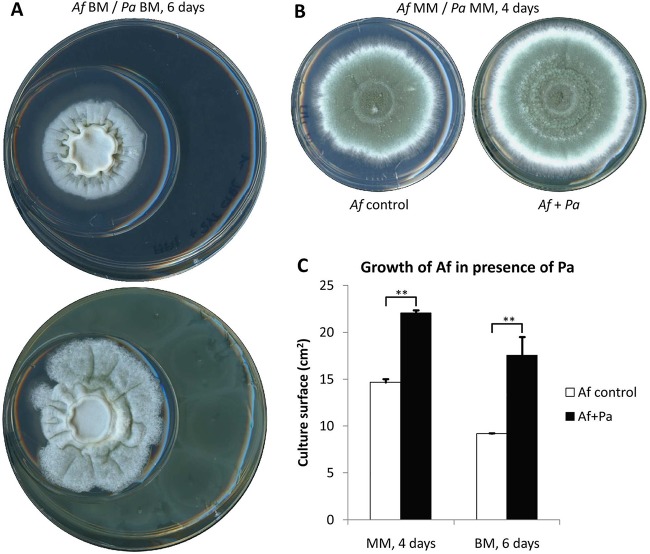
Chronic lung infections with opportunistic bacterial and fungal pathogens are a major cause of morbidity and mortality especially in patients with cystic fibrosis. Pseudomonas aeruginosa is the most frequently colonizing bacterium in these patients, and it is often found in association with the filamentous fungus Aspergillus fumigatus . P. aeruginosa is known to inhibit the growth of A. fumigatus in situations of direct contact, suggesting the existence of interspecies communication that may influence disease outcome. Our study shows that the lung pathogens P. aeruginosa and A. fumigatus can interact at a distance via volatile-mediated communication and expands our understanding of interspecific signaling in microbial communities. IMPORTANCE Microbiota studies have shown that pathogens cannot be studied individually anymore and that the establishment and progression of a specific disease are due not to a single microbial species but are the result of the activity of many species living together. To date, the interaction between members of the human microbiota has been analyzed in situations of direct contact or liquid-mediated contact between organisms. This study showed unexpectedly that human opportunistic pathogens can interact at a distance after sensing volatiles emitted by another microbial species. This finding will open a new research avenue for the understanding of microbial communities.
Overview
The claims and statistics of this paper haven’t been checked yet.
Free: it reads the open-access text and checks the first 5 claims that cite a source we can check. Create a free account to check every claim.
Integrity signals
Registry
Cites
Statistics
Figures
Verification
Claims the paper makes
The claims and statistics of this paper haven’t been checked yet.
Free: it reads the open-access text and checks the first 5 claims that cite a source we can check. Create a free account to check every claim.
Claims other papers make about this one
Each is checked against this paper’s own text: does it say what the citing paper says it does?
The source backs part of the claim, not all of it — or backs it for a different population, condition or comparison.
In the citing paper
“A. fumigatus also has mastered how to compete with the myriad of soil bacteria and how to use microbial metabolites as nutritional inputs (585).”
From Aspergillus fumigatus and Aspergillosis in 2019 (2019) · cites this paper as [585]
Experimental — accuracy not yet measuredThe cited source says what the claim attributes to it.
In the citing paper
“P. aeruginosa stimulates the growth of Aspergillus fumigatus through sensing volatile metabolites at a distance130.”
From The microbiota of the respiratory tract: gatekeeper to respiratory health (2017) · cites this paper as [130]
In the citing paper
“P. aeruginosa produces volatile chemicals (VOCs) that stimulate A. fumigatus growth (585)”
From Aspergillus fumigatus and Aspergillosis in 2019 (2019) · cites this paper as [585]
In the citing paper
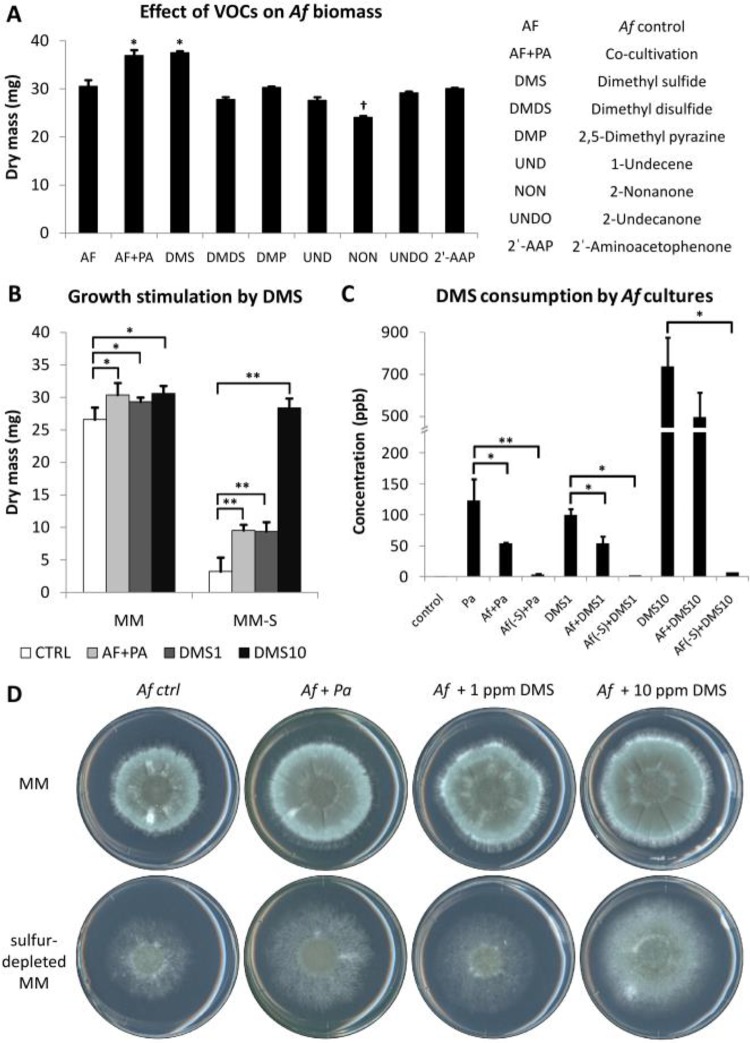
“At physiological concentrations, the bacterial dimethyl sulfoxide (DMS) significantly augmented the growth of A. fumigatus, and this effect was amplified when the fungus was grown under sulfur starvation.”
From Aspergillus fumigatus and Aspergillosis in 2019 (2019) · cites this paper as [585]
Self-check
Percentages, sums and reported differences re-computed from the paper’s own numbers.
The self-check needs the paper’s full text.
Citations
Cites
The induction and repression of nitrate reductase in the fungus Aspergillus nidulans
Cove, D. J. (1966) · Biochimica et Biophysica Acta (BBA) - Enzymology and Biological Oxidation · doi:10.1016/s0926-6593(66)80120-0 · Cited by 1,038 · cited 1×
“Two defined media were used: minimal medium (MM) (9), which supports rapid radial growth, and Brian medium (BM) (10), which supports slower growth.”
MethodFrey-Klett, P., Burlinson, P., Deveau, A., Barret, M., Tarkka, M., & Sarniguet, A. (2011) · Microbiology and Molecular Biology Reviews · doi:10.1128/mmbr.00020-11 · Cited by 913
Medically important bacterial-fungal interactions
Peleg, A. Y., Hogan, D. A., & Mylonakis, E. (2010) · Nature Reviews Microbiology · doi:10.1038/nrmicro2313 · Cited by 619
Volatile antimicrobials from Muscodor crispans, a novel endophytic fungus
Mitchell, A. M., Strobel, G. A., Moore, E., Robison, R., & Sears, J. (2010) · Microbiology · doi:10.1099/mic.0.032540-0 · Cited by 484
Volatile affairs in microbial interactions
Schmidt, R., Cordovez, V., de Boer, W., Raaijmakers, J., & Garbeva, P. (2015) · The ISME Journal · doi:10.1038/ismej.2015.42 · Cited by 481 · cited 1×
“The importance of VOCs in ecology has been underestimated for a long time, but recent and ongoing work emphasizes the role of microbial communication via the gas phase (3, 4).”
BackgroundVolatile antimicrobials from Muscodor albus, a novel endophytic fungus
Strobel, G. A., Sears, J., Dirkse, E., & Markworth, C. (2001) · Microbiology · doi:10.1099/00221287-147-11-2943 · Cited by 475 · cited 2×
“Aspergillus fumigatus was inhibited by volatile antimicrobials from an endophytic fungus (8).”
BackgroundMethodVolatiles of bacterial antagonists inhibit mycelial growth of the plant pathogen Rhizoctonia solani
Kai, M., Effmert, U., Berg, G., & Piechulla, B. (2007) · Archives of Microbiology · doi:10.1007/s00203-006-0199-0 · Cited by 428
Amin, R., Dupuis, A., Aaron, S. D., & Ratjen, F. (2010) · Chest · doi:10.1378/chest.09-1103 · Cited by 376 · cited 1×
“aeruginosa and a more rapid decline in lung functionality (19, 20).”
BackgroundFungal volatile organic compounds and their role in ecosystems
Hung, R., Lee, S., & Bennett, J. W. (2015) · Applied Microbiology and Biotechnology · doi:10.1007/s00253-015-6494-4 · Cited by 275 · cited 1×
“The importance of VOCs in ecology has been underestimated for a long time, but recent and ongoing work emphasizes the role of microbial communication via the gas phase (3, 4).”
BackgroundProduction of Bioactive Volatiles by Different Burkholderia ambifaria Strains
Groenhagen, U., Baumgartner, R., Bailly, A., Gardiner, A., Eberl, L., Schulz, S., & Weisskopf, L. (2013) · Journal of Chemical Ecology · doi:10.1007/s10886-013-0315-y · Cited by 258 · cited 1×
“For these experiments, the organisms were grown on modified minimal medium (6) with 20 mM glutamine instead of ammonium tartrate as the nitrogen source or on Brian’s broth (7).”
Method
Cited by
Aspergillus fumigatus and Aspergillosis in 2019
Latgé, J.-P., & Chamilos, G. (2019) · Clinical Microbiology Reviews · doi:10.1128/cmr.00140-18 · Cited by 1,400
Self-citationThe microbiota of the respiratory tract: gatekeeper to respiratory health
Man, W. H., de Steenhuijsen Piters, W. A. A., & Bogaert, D. (2017) · Nature Reviews Microbiology · doi:10.1038/nrmicro.2017.14 · Cited by 1,384
“Furthermore, P. aeruginosa stimulates the growth of Aspergillus fumigatus through sensing volatile metabolites at a distance 130 .”
BackgroundBacterial–fungal interactions: ecology, mechanisms and challenges
Deveau, A., Bonito, G., Uehling, J., Paoletti, M., Becker, M., Bindschedler, S., Hacquard, S., Hervé, V., Labbé, J., Lastovetsky, O. A., et al. (2018) · FEMS Microbiology Reviews · doi:10.1093/femsre/fuy008 · Cited by 794
Microbial volatile organic compounds in intra-kingdom and inter-kingdom interactions
Weisskopf, L., Schulz, S., & Garbeva, P. (2021) · Nature Reviews Microbiology · doi:10.1038/s41579-020-00508-1 · Cited by 509
Aspergillus fumigatus morphology and dynamic host interactions
van de Veerdonk, F. L., Gresnigt, M. S., Romani, L., Netea, M. G., & Latgé, J.-P. (2017) · Nature Reviews Microbiology · doi:10.1038/nrmicro.2017.90 · Cited by 490
Self-citationLactic acid bacteria as antifungal and anti-mycotoxigenic agents: A comprehensive review
Sadiq, F. A., Yan, B., Tian, F., Zhao, J., Zhang, H., & Chen, W. (2019) · Comprehensive Reviews in Food Science and Food Safety · doi:10.1111/1541-4337.12481 · Cited by 313
Fungal-Bacterial Interactions in Health and Disease
Krüger, W., Vielreicher, S., Kapitan, M., Jacobsen, I., & Niemiec, M. (2019) · Pathogens · doi:10.3390/pathogens8020070 · Cited by 227
“fumigatus that was recapitulated by the volatile compound dimethyl sulfide over distance [270].”
Effects of discrete bioactive microbial volatiles on plants and fungi
Piechulla, B., Lemfack, M. C., & Kai, M. (2017) · Plant, Cell & Environment · doi:10.1111/pce.13011 · Cited by 190
Streptomyces exploration is triggered by fungal interactions and volatile signals
Jones, S. E., Ho, L., Rees, C. A., Hill, J. E., Nodwell, J. R., & Elliot, M. A. (2017) · eLife · doi:10.7554/elife.21738 · Cited by 189
“Increasingly, these compounds are now being found to have important roles in communication between physically separated microbes (Audrain et al., 2015; Bernier et al., 2011; Briard et al., 2016; Kim et al., 2013; Jones et al. eLife 2017;6:e21738.”
BackgroundExhaled Volatile Organic Compounds of Infection: A Systematic Review
Ahmed, W., Lawal, O., Nijsen, T. M. E., Goodacre, R., & Fowler, S. J. (2017) · ACS Infectious Diseases · doi:10.1021/acsinfecdis.7b00088 · Cited by 141
Bacterial Volatile Compounds: Functions in Communication, Cooperation, and Competition
Netzker, T., Shepherdson, E. M. F., Zambri, M. P., & Elliot, M. A. (2020) · Annual Review of Microbiology · doi:10.1146/annurev-micro-011320-015542 · Cited by 127
Streptomyces Exploration: Competition, Volatile Communication and New Bacterial Behaviours
Jones, S. E., & Elliot, M. A. (2017) · Trends in Microbiology · doi:10.1016/j.tim.2017.02.001 · Cited by 133
“fumigatus [62], while other bacterial VOCs can modulate fungal spore germination and mycelial growth [63,64].”
BackgroundMicrobial volatile communication in human organotypic lung models
Barkal, L. J., Procknow, C. L., Álvarez-García, Y. R., Niu, M., Jiménez‐Torres, J. A., Brockman‐Schneider, R. A., Gern, J. E., Denlinger, L. C., Theberge, A. B., Keller, N. P., et al. (2017) · Nature Communications · doi:10.1038/s41467-017-01985-4 · Cited by 123
Reece, E., Doyle, S., Greally, P., Renwick, J. A. A., & McClean, S. (2018) · Frontiers in Microbiology · doi:10.3389/fmicb.2018.01205 · Cited by 104
Zhao, Z., Song, J., Yang, C., Yang, L., Chen, J., Li, X., Wang, Y., & Feng, J. (2021) · Frontiers in Cellular and Infection Microbiology · doi:10.3389/fcimb.2021.749905 · Cited by 95
“Current evidence on the incidence of pulmonary fungal infections accompanied by other pathogenic infections is sparse, with most studies focusing on the relationship between Aspergillus and Pseudomonas aeruginosa infection (Briard et al., 2015; Briard et al., 2016).”
Comparative analysis of the volatile metabolomes of Pseudomonas aeruginosa clinical isolates
Bean, H. D., Rees, C. A., & Hill, J. E. (2016) · Journal of Breath Research · doi:10.1088/1752-7155/10/4/047102 · Cited by 78
Let’s Get Physical: Bacterial-Fungal Interactions and Their Consequences in Agriculture and Health
Steffan, B. N., Venkatesh, N., & Keller, N. P. (2020) · Journal of Fungi · doi:10.3390/jof6040243 · Cited by 87
“, it was found that some bacterial volatile compounds could actually stimulate fungal growth [47].”
BackgroundMicrofluidic lumen-based systems for advancing tubular organ modeling
Virumbrales-Muñoz, M., Ayuso, J. M., Gong, M. M., Humayun, M., Livingston, M. K., Lugo-Cintrón, K. M., McMinn, P., Álvarez-García, Y. R., & Beebe, D. J. (2020) · Chemical Society Reviews · doi:10.1039/d0cs00705f · Cited by 76
Chemical signals driving bacterial–fungal interactions
Khalid, S., & Keller, N. P. (2021) · Environmental Microbiology · doi:10.1111/1462-2920.15410 · Cited by 80
Snelders, N. C., Rövenich, H., & Thomma, B. P. H. J. (2022) · FEMS Microbiology Reviews · doi:10.1093/femsre/fuac022 · Cited by 84
“…the airways of immuno- compromised patients with cystic fibrosis, where the mutual exploitation of secreted molecules, including proteins, to influence each other’s growth, determines the disease process (Mowat et al. 2010, Moree et al. 2012, Briard et al. 2016, 2017, Margalit et al. 2020).”
BackgroundJanbon, G., Quintin, J., Lanternier, F., & d’Enfert, C. (2019) · Genes and Immunity · doi:10.1038/s41435-019-0071-2 · Cited by 102
Briard, B., Mislin, G. L. A., Latgé, J.-P., & Beauvais, A. (2019) · Journal of Fungi · doi:10.3390/jof5020048 · Cited by 69
“fumigatus can interact at distance via volatile-mediated communication [70].”
BackgroundSelf-citationBacterial‐fungal interactions and their impact on microbial pathogenesis
MacAlpine, J., Robbins, N., & Cowen, L. E. (2022) · Molecular Ecology · doi:10.1111/mec.16411 · Cited by 80
“Finally, P. aeruginosa produces volatiles that stimulate A. fumigatus to invade the lung parenchyma when the two organisms are physically separated (Briard et al., 2016).”
BackgroundAzzollini, A., Boggia, L., Boccard, J., Sgorbini, B., Lecoultre, N., Allard, P., Rubiolo, P., Rudaz, S. L., Gindro, K., Bicchi, C. P., et al. (2018) · Frontiers in Microbiology · doi:10.3389/fmicb.2018.00072 · Cited by 74
“To this end, a bioassay that mimics the effects of the volatile induced compounds on fungi growing in vitro on solid media was adapted based on previous study (Briard et al., 2016).”
BackgroundMethodBriard, B., Rasoldier, V., Bomme, P., ElAouad, N., Guerreiro, C., Chassagne, P., Muszkieta, L., Latgé, J.-P., Mulard, L., & Beauvais, A. (2017) · The ISME Journal · doi:10.1038/ismej.2017.32 · Cited by 66
“Fungi and bacteria do not have to be in contact and volatiles from P. aeruginosa can be used as nutrients by the fungus (Briard et al., 2016).”
BackgroundSelf-citationJanbon, G., Quintin, J., Lanternier, F., & d’Enfert, C. (2019) · Microbes and Infection · doi:10.1016/j.micinf.2019.06.011 · Cited by 74
Pathogenetic Impact of Bacterial–Fungal Interactions
Nogueira, F., Sharghi, S., Kuchler, K., & Lion, T. (2019) · Microorganisms · doi:10.3390/microorganisms7100459 · Cited by 69
Reece, E., Bettio, P. H. D. A., & Renwick, J. (2021) · Antibiotics · doi:10.3390/antibiotics10070827 · Cited by 58
A Phylogenetic and Functional Perspective on Volatile Organic Compound Production byActinobacteria
Choudoir, M. J., Rossabi, S., Gebert, M. J., Helmig, D., & Fierer, N. (2019) · mSystems · doi:10.1128/msystems.00295-18 · Cited by 69
Scott, J., Sueiro-Olivares, M., Ahmed, W., Heddergott, C., Zhao, C., Thomas, R., Bromley, M., Latgé, J., Krappmann, S., Fowler, S. J., et al. (2019) · Frontiers in Microbiology · doi:10.3389/fmicb.2019.02311 · Cited by 60
Self-citationCoinfection with Pseudomonas aeruginosa and Aspergillus fumigatus in cystic fibrosis
Keown, K., Reid, A. J. M., Moore, J. E., Taggart, C. C., & Downey, D. G. (2020) · European Respiratory Review · doi:10.1183/16000617.0011-2020 · Cited by 69
Bacterial disease induced changes in fungal communities of olive tree twigs depend on host genotype
Gomes, T., Pereira, J. A., Lino‐Neto, T., Bennett, A. E., & Baptista, P. C. (2019) · Scientific Reports · doi:10.1038/s41598-019-42391-8 · Cited by 74
Host-mycobiome metabolic interactions in health and disease
Begum, N., Harzandi, A., Lee, S., Uhlén, M., Moyes, D. L., & Shoaie, S. (2022) · Gut Microbes · doi:10.1080/19490976.2022.2121576 · Cited by 49
“fumigatus within in vitro experiments.(80) These bacterial-produced compounds demonstrate the varied effects of secondary metabolites produced by the bacteriome on the mycobiome.”
BackgroundSmart, A., Costello, B. D. L., White, P., Avison, M. B., Batty, C. A., Turner, C., Persad, R. A., & Ratcliffe, N. A. (2019) · Journal of Pharmaceutical and Biomedical Analysis · doi:10.1016/j.jpba.2019.01.044 · Cited by 46
“Dimethyl disulphide has been found previously in this species [22] and benzothiazole, pentadecane and dodecane have been found in several Pseudomonas species [23].”
BackgroundGong, A., Wu, N., Kong, X., Zhang, Y., Hu, M., Gong, S., Dong, F.-Y., Wang, J., Zhao, Z., & Liao, Y. (2019) · Frontiers in Microbiology · doi:10.3389/fmicb.2019.01419 · Cited by 47
Palmieri, F., Koutsokera, A., Bernasconi, E., Junier, P., von Garnier, C., & Ubags, N. D. J. (2022) · Frontiers in Medicine · doi:10.3389/fmed.2022.832510 · Cited by 66
“fumigatus and create a positive growth environment resulting in stimulation of fungal growth (48, 55).”
BackgroundBarbosa, M. T. R., & Chalmers, J. D. (2023) · La Presse Médicale · doi:10.1016/j.lpm.2023.104174 · Cited by 56
Chatterjee, P., Sass, G., Świętnicki, W., & Stevens, D. A. (2020) · Journal of Fungi · doi:10.3390/jof6020081 · Cited by 44
“aeruginosa molecules have the potential to inadvertently benefit the economy of their rival [109].”
BackgroundA roadmap to understanding diversity and function of coral reef-associated fungi
Roik, A., Reverter, M., & Pogoreutz, C. (2022) · FEMS Microbiology Reviews · doi:10.1093/femsre/fuac028 · Cited by 44
“For instance, Pseudomonas aeruginosa produces VOCs that stimulate the growth of the opportunistic fungus A. fumigatus, favoring its invasion of lung tissue (Briard et al. 2016).”
BackgroundFungal Pathogens in CF Airways: Leave or Treat?
Singh, A., Ralhan, A., Schwarz, C., Hartl, D., & Hector, A. (2017) · Mycopathologia · doi:10.1007/s11046-017-0184-y · Cited by 47
Intermicrobial Hitchhiking: How Nonmotile Microbes Leverage Communal Motility
Muok, A. R., & Briegel, A. (2020) · Trends in Microbiology · doi:10.1016/j.tim.2020.10.005 · Cited by 43
Li, Z., Li, Y., Chen, Y., Li, J., Li, S., Li, C., Lin, Y., Jian, W., Shi, J., Zhan, Y., et al. (2021) · Emerging Microbes & Infections · doi:10.1080/22221751.2021.1894902 · Cited by 47
“compounds released by bacterial pathogens can stimulate the growth of fungal pathogens in lung infections [35].”
Backgroundla Cruz-López, N. D., Cruz‐López, L., Holguín-Meléndez, F., Guillén‐Navarro, K., & Huerta‐Palacios, G. (2022) · Current Microbiology · doi:10.1007/s00284-021-02696-2 · Cited by 39
The microbiome-metabolome crosstalk in the pathogenesis of respiratory fungal diseases
Gonçalves, S. M., Lagrou, K., Duarte-Oliveira, C., Maertens, J. A., Cunha, C., & Carvalho, A. (2017) · Virulence · doi:10.1080/21505594.2016.1257458 · Cited by 32
“directly, but at a distance via volatile-mediated communication.(101) VOCs produced by P.”
BackgroundBacterial volatiles as PGPRs: Inducing plant defense mechanisms during stress periods
Laller, R., Khosla, P. K., Negi, N., Avinash, H., Kusum, Thakur, N., Kashyap, S., Shukla, S. K., & Hussain, I. (2023) · South African Journal of Botany · doi:10.1016/j.sajb.2023.05.041 · Cited by 35
Margalit, A., Carolan, J. C., Sheehan, D., & Kavanagh, K. A. (2020) · Molecular & Cellular Proteomics · doi:10.1074/mcp.ra120.002059 · Cited by 34
Davis, T. J., Karanjia, A. V., Bhebhe, C. N., West, S. B., Richardson, M., & Bean, H. D. (2020) · mSphere · doi:10.1128/msphere.00843-20 · Cited by 38
“3-methylbutanal C5H10O Aldehyde 79 thiocyanic acid, methyl ester C2H3NS Ester 77 (53) 3-methyl-1-butanol C5H12O Alcohol 77 (58, 60, 61) pyridine C5H5N Aromatic 77 3-penten-2-one C5H8O Ketone 77 3-methyl-1-buten-1-ol C5H10O Alcohol 78 4-methyl-3-penten-2-one C6H10O Ketone 81 (28, 62) hexanal C6H12O Aldehyde 81 (58, 60,…”
Symbiosis and Dysbiosis of the Human Mycobiome
Mishra, K., Bukavina, L., & Ghannoum, M. A. (2021) · Frontiers in Microbiology · doi:10.3389/fmicb.2021.636131 · Cited by 37
Aspergillus fumigatus escape mechanisms from its harsh survival environments
Liu, F., Zeng, M., Zhou, X., Huang, F., & Song, Z. (2024) · Applied Microbiology and Biotechnology · doi:10.1007/s00253-023-12952-z · Cited by 33
“Furthermore, volatile metabolic by-products containing sulfur groups and released by P. aeruginosa benefit fungal growth via interactions with hyphal cell walls (Briard et al. 2016).”
Alsayed, A. R., Abed, A. I., Khader, H. A., Al-Shdifat, L., Hasoun, L., Al‐Rshaidat, M. M. D., Alkhatib, M., & Zihlif, M. A. (2023) · International Journal of Molecular Sciences · doi:10.3390/ijms24044086 · Cited by 39
Effect of bacterial volatiles on the mycelial growth of mushrooms
Orban, A. M., Jerschow, J. J., Birk, F., Suarez, C., Schnell, S., & Rühl, M. (2022) · Microbiological Research · doi:10.1016/j.micres.2022.127250 · Cited by 29
The Multifaceted MEP Pathway: Towards New Therapeutic Perspectives
Allamand, A., Piechowiak, T., Lièvremont, D., Rohmer, M., & Grosdemange‐Billiard, C. (2023) · Molecules · doi:10.3390/molecules28031403 · Cited by 35
Invasive aspergillosis in liver transplant recipients
Melenotte, C., Aimanianda, V., Slavin, M. A., Aguado, J. M., Armstrong-James, D. P. H., Chen, Y., Husain, S., van Delden, C., Saliba, F., Lefort, A., et al. (2023) · Transplant Infectious Disease · doi:10.1111/tid.14049 · Cited by 37
Interaction betweenPseudomonas aeruginosaandAspergillus fumigatusin cystic fibrosis
Zhao, J., & Yu, W. (2018) · PeerJ · doi:10.7717/peerj.5931 · Cited by 33
Reen, F. J., Phelan, J. P., Woods, D. F., Shanahan, R., Cano, R., Clarke, S., McGlacken, G. P., & O’Gara, F. (2016) · Frontiers in Microbiology · doi:10.3389/fmicb.2016.02074 · Cited by 28
“Hyphal stage cells typically adopt a structured biofilm, either as monospecies or multispecies, at which point the biofilmembedded cells become highly resistant to antimicrobial drug therapy (Seidler et al., 2008; Manavathu et al., 2014).”
BackgroundChaudhari, A. K., Singh, V. K., Das, S., Kujur, A., DEEPIKA, D., & Dubey, N. K. (2022) · Food Control · doi:10.1016/j.foodcont.2022.109000 · Cited by 29
Yang, M., Huang, C., Xue, Y., Li, S., Lu, L., & Wang, C. (2018) · Annals of Applied Biology · doi:10.1111/aab.12465 · Cited by 28
Development of an adaptable headspace sampling method for metabolic profiling of the fungal volatome
Ahmed, W., Geranios, P., White, I. R., Lawal, O., Nijsen, T. M. E., Bromley, M., Goodacre, R., Read, N. D., & Fowler, S. J. (2018) · The Analyst · doi:10.1039/c8an00841h · Cited by 27
Microbiology and the Microbiome in Bronchiectasis
Aogáin, M. M., & Chotirmall, S. H. (2022) · Clinics in Chest Medicine · doi:10.1016/j.ccm.2021.11.002 · Cited by 28
Mechanisms of Microbial VOC‐Mediated Communication in Plant Ecosystems and Agricultural Applications
Ali, Q., Khan, A. R., Raza, W., Bilal, M. S., Khalid, S., Ayaz, M., Khan, A., & Mundra, S. (2025) · Journal of Sustainable Agriculture and Environment · doi:10.1002/sae2.70044 · Cited by 34
Naamala, J., & Smith, D. L. (2021) · Frontiers in Microbiology · doi:10.3389/fmicb.2021.634807 · Cited by 29
Melloul, É., Roisin, L., Durieux, M.-F., Woerther, P., Jenot, D., Risco‐Castillo, V., Guillot, J., Dannaoui, É., Decousser, J., & Botterel, F. (2018) · Frontiers in Microbiology · doi:10.3389/fmicb.2018.02850 · Cited by 31
Dual functionality of natural mixtures of bacterial volatile compounds on plant growth
Song, G. C., Jeon, J., Sim, H., Lee, S., Jung, J., Kim, S., Moon, S. Y., & Ryu, C. (2021) · Journal of Experimental Botany · doi:10.1093/jxb/erab466 · Cited by 28
Stable isotope profiles reveal active production of VOCs from human-associated microbes
Phan, J. L., Meinardi, S., Barletta, B., Blake, D. R., & Whiteson, K. (2017) · Journal of Breath Research · doi:10.1088/1752-7163/aa5833 · Cited by 24
“DMS is a VOC that is well studied in the marine food web and is important in environmental sciences (Yoch 2002, Carrión et al 2015); DMS has also been detected in the breath of CF patients (Kamboures et al 2005), and P. aeruginosa has been shown to produce DMS and stimulate the growth of Aspergilles (Briard et al 2016…”
BackgroundAspergillus Is Inhibited by Pseudomonas aeruginosa Volatiles
Nazik, H., Sass, G., Déziel, É., & Stevens, D. A. (2020) · Journal of Fungi · doi:10.3390/jof6030118 · Cited by 29
“In addition, the comparison of Af with the Pa plates in prior experiments with all the controls with no Pa now mentioned did not indicate any stimulation by Pa of Af growth, in contrast to what has been reported [57,62].”
BackgroundMethodResultInfluentialSame Game, Different Players: Emerging Pathogens of the CF Lung
Gannon, A. D., & Darch, S. E. (2021) · mBio · doi:10.1128/mbio.01217-20 · Cited by 21
“Pa and Af have shown both synergistic and predator-prey interactions in vitro, which could serve to maintain community boundaries in vivo (7, 43, 65).”
BackgroundBacterial Interactions with Aspergillus fumigatus in the Immunocompromised Lung
Margalit, A., Carolan, J. C., & Kavanagh, K. A. (2021) · Microorganisms · doi:10.3390/microorganisms9020435 · Cited by 22
Key fungal coinfections: epidemiology, mechanisms of pathogenesis, and beyond
da Silva, D. L., Peres, N. T. A., & Santos, D. A. (2025) · mBio · doi:10.1128/mbio.00562-25 · Cited by 28
“It is crucial that the diagnosis is confirmed, as this impacts treatment, since azoles can interact with anti-tuberculosis drugs in the serum (168).”
Rios-Navarro, A., González, M., Carazzone, C., & Ramírez, A. M. C. (2021) · Metabolomics · doi:10.1007/s11306-021-01786-3 · Cited by 24
“fumigatus growth in pathogenic conditions (Briard et al. 2016).”
InfluentialAspergillus-Associated Endophenotypes in Bronchiectasis
Jaggi, T. K., Ter, S. K., Aogáin, M. M., & Chotirmall, S. H. (2021) · Seminars in Respiratory and Critical Care Medicine · doi:10.1055/s-0041-1730947 · Cited by 24
Margalit, A., Sheehan, D., Carolan, J. C., & Kavanagh, K. A. (2022) · Microbiology · doi:10.1099/mic.0.001164 · Cited by 21
“The studies revealed contrasting results whereby P. aeruginosa - derived sulphur-based VOCs, such as dimethyl sulphide, promote A. fumigatus growth [35], while another class of ketone-based VOCs inhibit fungal growth [37].”
Ostapska, H., Mauff, F. L., Gravelat, F. N., Snarr, B. D., Bamford, N. C., Loon, J. C. V., McKay, G. A., Nguyen, D. M., Howell, P. L., & Sheppard, D. C. (2022) · Journal of Fungi · doi:10.3390/jof8040336 · Cited by 22
“aeruginosa have been reported to stimulate fungal growth through interactions with the hyphal cell wall [21,22].”
BackgroundBaiome, B. A., Ye, X., Yuan, Z., Gaafar, Y. Z. A., Melak, S., & Cao, H. (2022) · Applied and Environmental Microbiology · doi:10.1128/aem.00155-22 · Cited by 21
“Previous studies have also reported that VOCs can sometimes have a stimulatory effect on pathogen growth (80).”
Beswick, E., Amich, J., & Gago, S. (2020) · Pathogens · doi:10.3390/pathogens9080639 · Cited by 20
Microbial Volatiles as Chemical Weapons Against Pathogenic Fungi
Enespa, & Chandra, P. (2017) · Springer eBooks · doi:10.1007/978-981-10-5553-9_12 · Cited by 20
Homa, M., Sándor, A., Tóth, E., Szebenyi, C., Nagy, G., Vágvölgyi, C., & Papp, T. (2019) · Frontiers in Microbiology · doi:10.3389/fmicb.2019.00441 · Cited by 22
“Indirect Interactions via Volatile Organic Compounds (VOCs) To examine indirect interactions via VOCs between fungi and bacteria, the so-called “plate-in-plate” method was used (Briard et al., 2016).”
BackgroundMethodDetection of Volatile Compounds Emitted by Bacteria in Wounds Using Gas Sensors
Salinas Alvarez, C., Sierra-Sosa, D., Garcia-Zapirain, B., Yoder-Himes, D., & Elmaghraby, A. (2019) · Sensors · doi:10.3390/s19071523 · Cited by 18
Mass Spectrometry: A Rosetta Stone to Learn How Fungi Interact and Talk
Calla‐Quispe, E., Fuentes-Rivera, H. L., Ramírez, P. S., Martel, C., & Ibáñez, A. J. (2020) · Life · doi:10.3390/life10060089 · Cited by 19
Cai, L., Gao, P., Wang, Z., Dai, C., Ye, N., İlkit, M., Xue, X., Xiao, J., & Chen, C. (2022) · Frontiers in Immunology · doi:10.3389/fimmu.2022.988708 · Cited by 18
“fumigatuswithout direct contact (35, 36) (Figure 1, Table 1).”
BackgroundThe Fungal and Bacterial Interface in the Respiratory Mycobiome with a Focus on Aspergillus spp.
Rozaliyani, A., Antariksa, B., Nurwidya, F., Zaini, J., Setianingrum, F., Hasan, F. N., Nugrahapraja, H., Yusva, H., Wibowo, H., Bowolaksono, A., et al. (2023) · Life · doi:10.3390/life13041017 · Cited by 22
“Aspergillus fumigatus CBS144-89, Pseudomonas aeruginosa PAO1 [107]”
Microbiota and fungal-bacterial interactions in the cystic fibrosis lung
Santos-Fernandez, E., Martin–Souto, L., Antoran, A., Areitio, M., Aparicio-Fernandez, L., Bouchara, J., Schwarz, C., Rementería, A., Buldain, I., & Ramirez‐Garcia, A. (2023) · FEMS Microbiology Reviews · doi:10.1093/femsre/fuad029 · Cited by 17
An Overview of Fungal Volatile Organic Compounds (VOCs)
Lee, S., Hung, R., & Bennett, J. W. (2024) · The mycota · doi:10.1007/978-3-031-41648-4_4 · Cited by 18
How can the cystic fibrosis respiratory microbiome influence our clinical decision-making?
Rogers, G. B., Bruce, K. D., & Hoffman, L. R. (2017) · Current Opinion in Pulmonary Medicine · doi:10.1097/mcp.0000000000000419 · Cited by 17
Zambotti, G., Capuano, R., Pasqualetti, V., Soprani, M., Gobbi, E., Natale, C. D., & Ponzoni, A. (2022) · Sensors · doi:10.3390/s22155888 · Cited by 14
Lung Microbiota: From Healthy Lungs to Development of Chronic Obstructive Pulmonary Disease
Stankovic, M. M. (2025) · International Journal of Molecular Sciences · doi:10.3390/ijms26041403 · Cited by 19
“Moreover, recent studies have emphasized microbial interactions, which could play a prominent role in the pathogenesis of COPD, but the comprehensive work required for this type of research is missing [15,18,46,52,71,72].”
Bioactive Bacterial Organic Volatiles: An Overview and Critical Comments
Piechulla, B., Lemfack, M. C., & Magnus, N. (2020) · Springer eBooks · doi:10.1007/978-981-15-7293-7_2 · Cited by 13
Hermansen, G. M. M., Sazinas, P., Kofod, D., Millard, A. D., Andersen, P. S., & Jelsbak, L. (2018) · FEMS Microbiology Letters · doi:10.1093/femsle/fny004 · Cited by 15
Bacteria and fungi of the lung: allies or enemies?
Garaci, E., Pariano, M., Nunzi, E., Costantini, C., Bellet, M. M., Antognelli, C., Russo, M. A., & Romani, L. R. (2024) · Frontiers in Pharmacology · doi:10.3389/fphar.2024.1497173 · Cited by 14
Geurts, B., Neerincx, A. H., Bertrand, S., Leemans, M. A. A. P., Postma, G., Wolfender, J., Cristescu, S. M., Buydens, L. M. C., & Jansen, J. J. (2017) · Analytica Chimica Acta · doi:10.1016/j.aca.2017.01.064 · Cited by 12
Imbert, S., Revers, M., Enaud, R., Orieux, A., Camino, A., Massri, A., Villeneuve, L., Carrié, C., Petit, L., Boyer, A., et al. (2024) · Critical Care · doi:10.1186/s13054-024-04922-2 · Cited by 13
“Nevertheless, it is unlikely that it is the sole explanation as inter-kingdom crosstalk occurs within the lower airway microbiota [12], for instance Pseudomonas aeruginosa promoting the growth of Aspergillus fumigatus [13, 14].”
BackgroundRios-Navarro, A., González, M., Carazzone, C., & Ramírez, A. M. C. (2023) · Molecules · doi:10.3390/molecules28062620 · Cited by 12
“These compounds influence the growth of Aspergillus fumigatus [22].”
BackgroundXu, R. D., Li, X. P., Zhang, X., Shen, W. H., Min, C. Y., & Wang, J. (2022) · Microbial Cell Factories · doi:10.1186/s12934-022-01897-z · Cited by 9
“The “donut” plate assay was used to measure the effects of bacterial VOCs on the fungus with a slight modification [30].”
BackgroundMethodMetabolomics: A Promising Tool to Study Disease Biomarkers and Host-Pathogen Interactions
Megha, M., Preeti, & Prasad, T. (2021) · Springer eBooks · doi:10.1007/978-981-16-0691-5_22 · Cited by 9
Symbiosis induces unique volatile profiles in the model cnidarian Aiptasia
Wuerz, M., Lawson, C. A., Ueland, M., Oakley, C. A., Grossman, A. R., Weis, V. M., Suggett, D. J., & Davy, S. K. (2022) · Journal of Experimental Biology · doi:10.1242/jeb.244600 · Cited by 10
Lung-on-a-chip platforms for modeling disease pathogenesis
Dellaquila, A., Thomée, E., McMillan, A. H., & Lesher‐Pérez, S. C. (2019) · Elsevier eBooks · doi:10.1016/b978-0-12-817202-5.00004-8 · Cited by 12
Microbiota-derived metabolites as diagnostic markers for respiratory fungal infections
Hérivaux, A., Gonçalves, S. M., Carvalho, A., & Cunha, C. (2020) · Journal of Pharmaceutical and Biomedical Analysis · doi:10.1016/j.jpba.2020.113473 · Cited by 8
Xu, Z., Premarathna, M., Liu, J., & Seneviratne, G. (2025) · Critical Reviews in Microbiology · doi:10.1080/1040841x.2025.2482658 · Cited by 10
“…P. aeruginosa produces volatile compounds that promote A. fumigatus to invade the lung parenchyma when the two organisms are physically separated (Briard, Heddergott, and latgé 2016). in various other mucosal areas of the human body, similarly to P. aeruginosa , S. aureus inhibits conidiation,…”
Chemical Ecology of Bacterial Volatiles
Schulz, S., Biwer, P., Harig, T., Koteska, D., & Schlawis, C. (2020) · Elsevier eBooks · doi:10.1016/b978-0-12-409547-2.14817-6 · Cited by 9
Rogers, G. B. (2017) · Emerging Topics in Life Sciences · doi:10.1042/etls20170043 · Cited by 10
Insight into the Physiological and Molecular Crosstalk During Bacterial-Fungal Interactions
Hazarika, D. J., Kakoti, M., Borgohain, T., Ghosh, A., & Boro, R. C. (2023) · Current Clinical Microbiology Reports · doi:10.1007/s40588-023-00206-5 · Cited by 7
Metadata
- Authors
- Briard, B., Heddergott, C., & Latgé, J.-P.
- Affiliations
- Institut Pasteur (FR)
- Corresponding author
- Latgé, Jean-Paul
- Venue
- mBio
- Publisher
- American Society for Microbiology
- Published
- 2016-05-04
- Volume
- 7
- Issue
- 2
- Pages
- e00219-e00219
- ISSN
- 2150-7511 (ISSN-L)
- 2161-2129
- PMC
- PMC4807360
- OpenAlex
- W2300302598
- Cited by
- 153
- References
- 22
- Citations by year
- 2026: 9 · 2025: 13 · 2024: 9 · 2023: 16 · 2022: 21 · 2021: 16 · 2020: 18 · 2019: 22 · 2018: 10 · 2017: 14 · 2016: 4
- FWCI
- 8.66
- Type
- journal article
- Language
- en
- Open access
- gold
- doi.org
- Licence
- cc-by
- creativecommons.org/licenses/by/4.0/ (vor)
- journals.asm.org/non-commercial-tdm-license (tdm)
- Locations
- mBio (publishedVersion, cc-by)
- PubMed Central (publishedVersion, cc-by)
- PubMed (publishedVersion)
- DOAJ (DOAJ: Directory of Open Access Journals) (submittedVersion)
- DOAJ (DOAJ: Directory of Open Access Journals) (submittedVersion, cc-by-sa)
- Funders
- Norsk Romsenter
- Topics
- Life Sciences › Biochemistry, Genetics and Molecular Biology › Molecular Biology › Bacterial biofilms and quorum sensing
- Life Sciences › Agricultural and Biological Sciences › Plant Science › Plant-Microbe Interactions and Immunity
- Health Sciences › Medicine › Infectious Diseases › Antifungal resistance and susceptibility
- Keywords
- Pseudomonas aeruginosa, Aspergillus fumigatus, volatile organic compounds, interspecies communication, fungal-bacterial interactions, cystic fibrosis, microbial communities, fungal growth stimulation
- MeSH terms
- Aspergillus fumigatus, Growth Substances, Pseudomonas aeruginosa, Volatile Organic Compounds, Microbial Interactions
About these checks
Registry, retraction, Cites and statistics results are computed, not judged, with one exception: a printed reference that no index lists is read once by a model before it counts as a citation error. Claims are extracted by a model and kept only when their quote appears verbatim in the text; each cited source is then checked, with a model’s help, for whether it says what the claim relies on. Those verdicts can be wrong — read the claim’s quote and the cited source before relying on one.
Statistics and arithmetic are recomputed, not judged.
Confidence bands are shown only for fields calibrated on our annotated test set. None is calibrated yet, so no band is shown.
What counts as a claim ›How we measure confidence ›How we check this ›
Are you an author, or do you see a problem with this page? Request a review
Data sources
Bibliographic data: Semantic Scholar, OpenAlex, Crossref.
Contains information from the Semantic Scholar Academic Graph Datasets, made available under the ODC Attribution License (ODC-BY 1.0).
Semantic Scholar’s data is described in: Kinney, R., et al. (2023). The Semantic Scholar Open Data Platform. arXiv:2301.10140.
