

Interaction of Lipocalin 2, Transferrin, and Siderophores Determines the Replicative Niche of Klebsiella pneumoniae during Pneumonia
Open accessThe DOI matches its Crossref record; 29 of the 30 references it cites were found in a registry or an index.
Abstract
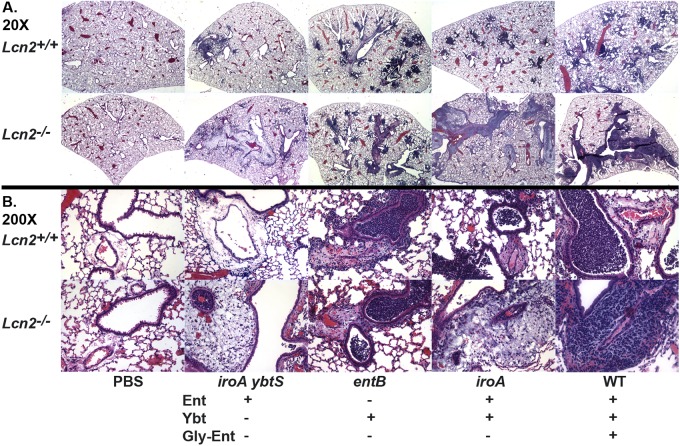
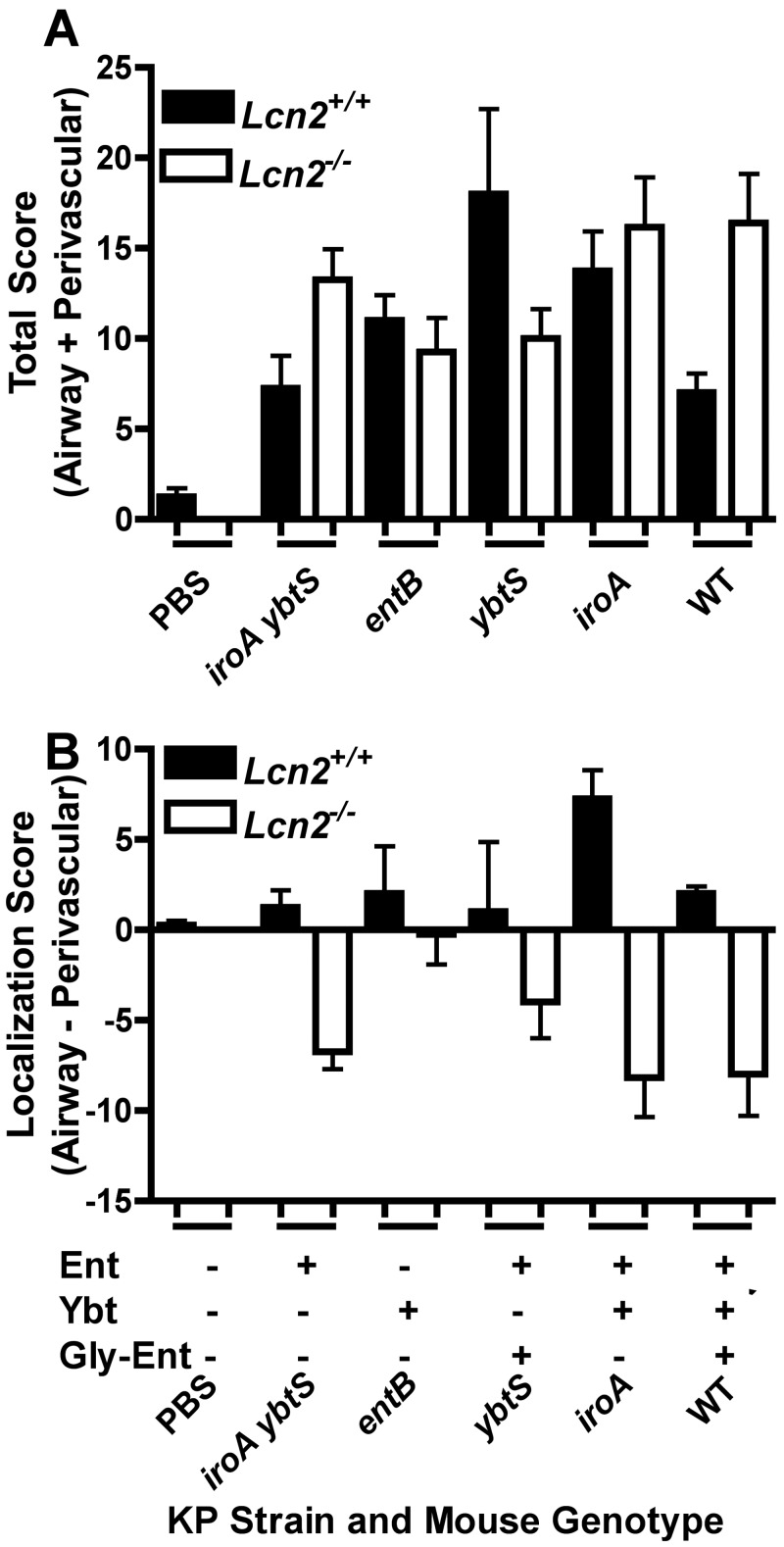
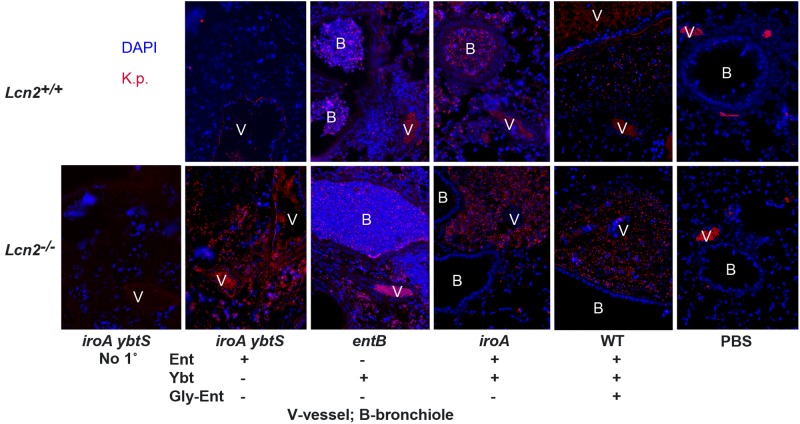
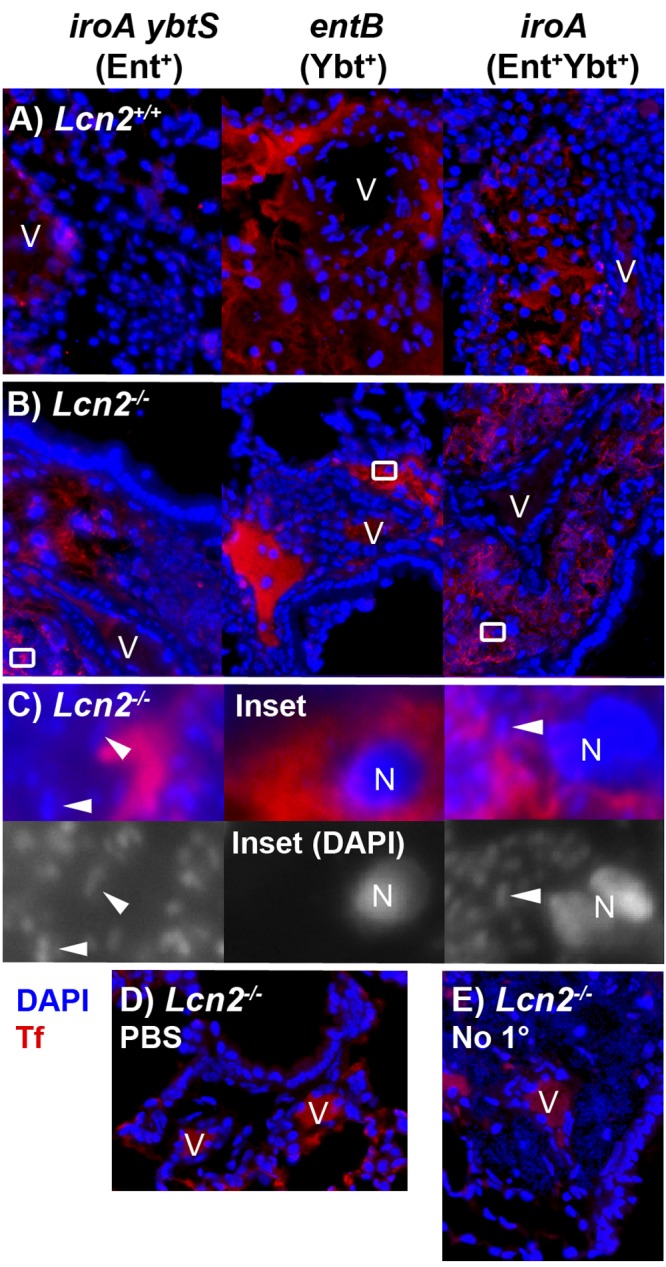
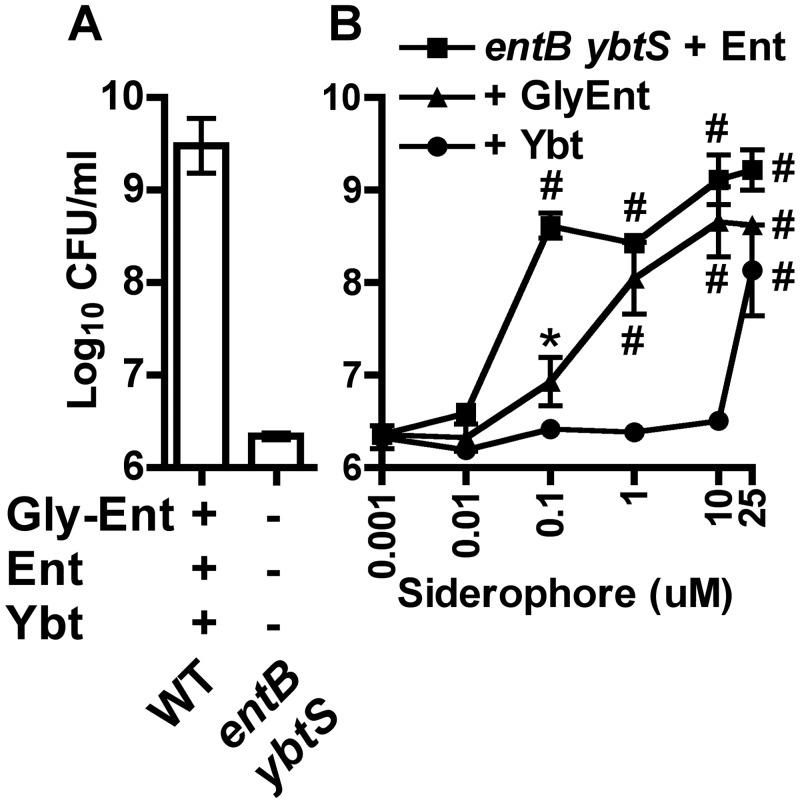
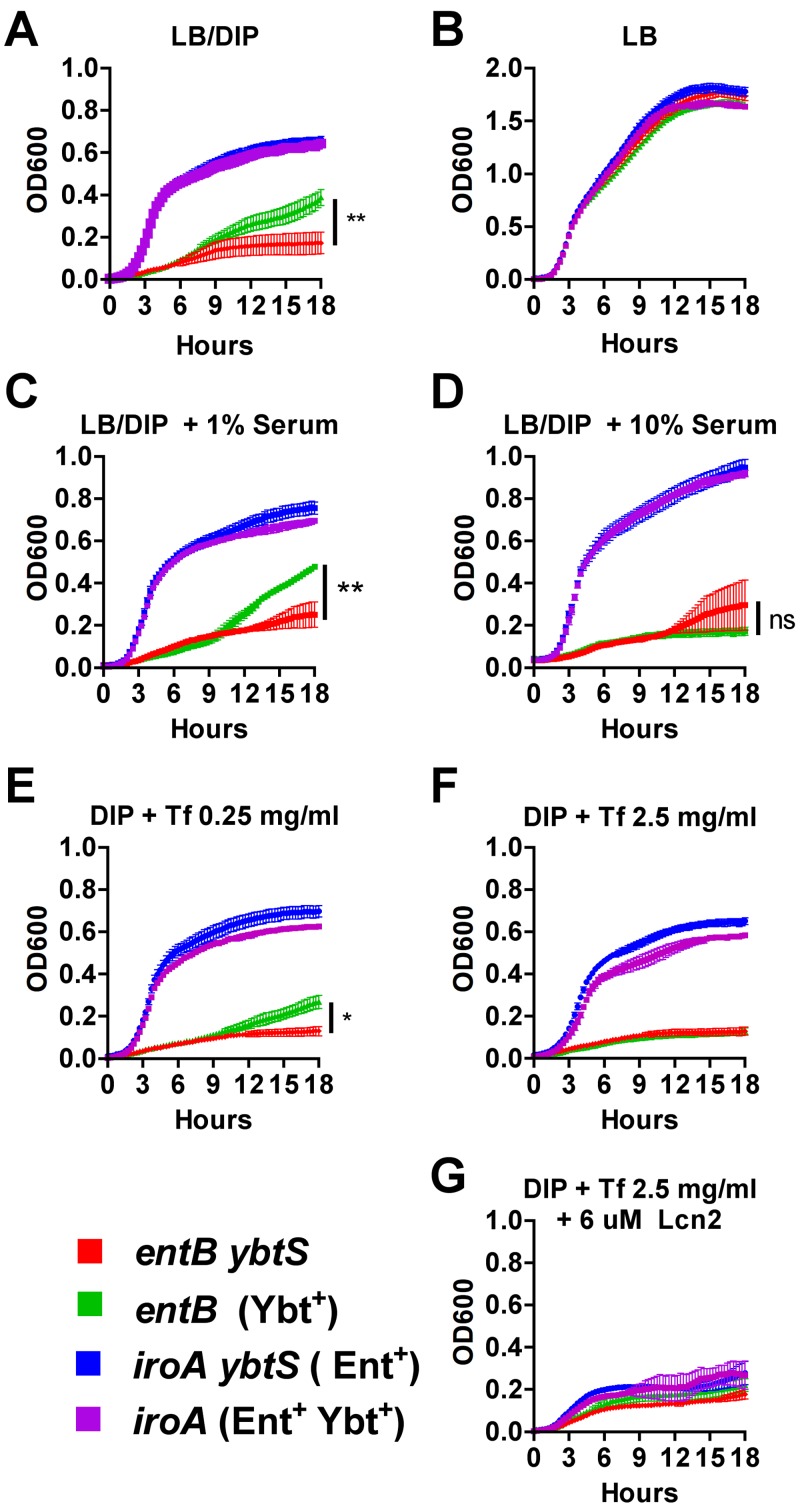
UNLABELLED: Pathogenic bacteria require iron for replication within their host. Klebsiella pneumoniae and other Gram-negative pathogens produce the prototypical siderophore enterobactin (Ent) to scavenge iron in vivo. In response, mucosal surfaces secrete lipocalin 2 (Lcn2), an innate immune protein that binds Ent to disrupt bacterial iron acquisition and promote acute inflammation during colonization. A subset of K. pneumoniae isolates attempt to evade Lcn2 by producing glycosylated Ent (Gly-Ent, salmochelin) or the alternative siderophore yersiniabactin (Ybt). However, these siderophores are not functionally equivalent and differ in their abilities to promote growth in the upper respiratory tract, lungs, and serum. To understand how Lcn2 exploits functional differences between siderophores, isogenic mutants of an Ent(+) Gly-Ent(+) Ybt(+) K. pneumoniae strain were inoculated into Lcn2(+/+) and Lcn2(-/-) mice, and the pattern of pneumonia was examined. Lcn2 effectively protected against the iroA ybtS mutant (Ent(+) Gly-Ent(-) Ybt(-)). Lcn2(+/+) mice had small foci of pneumonia, whereas Lcn2(-/-) mice had many bacteria in the perivascular space. The entB mutant (Ent(-) Ybt(+) Gly-Ent(-)) caused moderate bronchopneumonia but did not invade the transferrin-containing perivascular space. Accordingly, transferrin blocked Ybt-dependent growth in vitro. The wild type and the iroA mutant, which both produce Ent and Ybt, had a mixed phenotype, causing a moderate bronchopneumonia in Lcn2(+/+) mice and perivascular overgrowth in Lcn2(-/-) mice. Together, these data indicate that Lcn2, in combination with transferrin, confines K. pneumoniae to the airways and prevents invasion into tissue containing the pulmonary vasculature. IMPORTANCE: Gram-negative bacteria are a common cause of severe hospital-acquired infections. To cause disease, they must obtain iron and secrete the small molecule enterobactin to do so. Animal models of pneumonia using Klebsiella pneumoniae indicate that enterobactin promotes severe disease. Accordingly, the host defense protein lipocalin 2 exploits this common target by binding enterobactin and disrupting its function. However, pathogenic bacteria often make additional siderophores that lipocalin 2 cannot bind, such as yersiniabactin, which could make this host defense ineffective. This work compares the pattern and severity of pneumonia caused by K. pneumoniae based on which siderophores it produces. The results indicate that enterobactin promotes growth around blood vessels that are rich in the iron-binding protein transferrin, but yersiniabactin does not. Together, transferrin and lipocalin 2 protect this space against all types of K. pneumoniae tested. Therefore, the ability to acquire iron determines where bacteria can grow in the lung.
Overview
The claims and statistics of this paper haven’t been checked yet.
Free: it reads the open-access text and checks the first 5 claims that cite a source we can check. Create a free account to check every claim.
Integrity signals
Registry
Cites
Statistics
Figures
Verification
Claims the paper makes
The claims and statistics of this paper haven’t been checked yet.
Free: it reads the open-access text and checks the first 5 claims that cite a source we can check. Create a free account to check every claim.
Claims other papers make about this one
Each is checked against this paper’s own text: does it say what the citing paper says it does?
The cited source says what the claim attributes to it.
In the citing paper
“In addition, several pathogens are able to acquire TF-bound iron [51–54].”
From Iron deficiency or anemia of inflammation?: Differential diagnosis and mechanisms of anemia of inflammation (2016) · cites this paper as [52]
In the citing paper
“the vertebrate protein lipocalin 2 (also known as siderocalin or NGAL) is a potent innate immunity factor that functions in part through binding and sequestration of siderophores, preventing their uptake by microbes 50, 51.”
From Buried Treasure: Evolutionary Perspectives on Microbial Iron Piracy (2015) · cites this paper as [51]
In the citing paper
“The variety of siderophores produced by any given bacterial strain provides a high level of functional redundancy reflecting the enormous selective pressure imposed on pathogens to acquire Fe under the Fe-withholding conditions of the host (95–97).”
From Innate Nutritional Immunity (2018) · cites this paper as [95]
In the citing paper
“In the lung, enterobactin is not required for Klebsiella pneumoniae pneumonia but is required for invasion into surrounding tissue; its higher Fe3+ binding affinity enables K. pneumoniae to acquire iron from transferrin in the perivascular space (9).”
From Transition Metals and Virulence in Bacteria (2016) · cites this paper as [9]
Self-check
Percentages, sums and reported differences re-computed from the paper’s own numbers.
The self-check needs the paper’s full text.
Citations
Cites
Podschun, R., & Ullmann, U. (1998) · Clinical Microbiology Reviews · doi:10.1128/cmr.11.4.589 · Cited by 2,688
Robbins pathologic basis of disease
Cotran, R. S., Kumar, V., & Collins, T. (1989) · Medical Entomology and Zoology · Cited by 1,944
Lipocalin 2 mediates an innate immune response to bacterial infection by sequestrating iron
Flo, T. H., Smith, K. D., Sato, S., Rodriguez, D. J., Holmes, M. A., Strong, R. K., Akira, S., & Aderem, A. (2004) · Nature · doi:10.1038/nature03104 · Cited by 1,877 · cited 2×
“depend on Ent-scavenged iron for growth in serum (7, 8).”
BackgroundMethodSiderophore-Based Iron Acquisition and Pathogen Control
Miethke, M., & Marahiel, M. A. (2007) · Microbiology and Molecular Biology Reviews · doi:10.1128/mmbr.00012-07 · Cited by 1,774 · cited 1×
“Yersiniabactin (Ybt) is a phenolate-type siderophore that is structurally distinct from Ent (6).”
BackgroundClinical diagnosis and management by laboratory methods
Henry, J. B. (1979) · Medical Entomology and Zoology · Cited by 1,691
The Battle for Iron between Bacterial Pathogens and Their Vertebrate Hosts
Skaar, E. P. (2010) · PLoS Pathogens · doi:10.1371/journal.ppat.1000949 · Cited by 796 · cited 1×
“In the mammalian host, this requires scavenging of iron from carrier proteins, such as transferrin in the blood, lactoferrin present along the mucosal surface, or heme from red blood cells (3).”
BackgroundJones, R. N. (2010) · Clinical Infectious Diseases · doi:10.1086/653053 · Cited by 716
Stoichiometric and site characteristics of the binding of iron to human transferrin
Aisen, P., Leibman, A., & Zweier, J. (1978) · Journal of Biological Chemistry · doi:10.1016/s0021-9258(19)62337-9 · Cited by 601 · cited 1×
“Similarly, Ybt may be unable to scavenge sufficient iron for growth in the presence of competing copper and transferrin, despite promoting growth on transferrin in isolation (11, 25).”
BackgroundKitchel, B., Rasheed, J. K., Patel, J. B., Srinivasan, A., Navon-Venezia, S., Carmeli, Y., Brolund, A., & Giske, C. G. (2009) · Antimicrobial Agents and Chemotherapy · doi:10.1128/aac.00126-09 · Cited by 522 · cited 1×
“isolates resistant to almost all available antibiotics (16).”
BackgroundHenry’s Clinical Diagnosis and Management by Laboratory Methods
Chou, D. (2007) · JAMA · doi:10.1001/jama.297.16.1829 · Cited by 402
Research works printed but not linked: 2
- Earhart CF 1996 Uptake and metabolism of iron and molybdenum. In Neidhart F, E. coli and salmonella. ASM Press, Washington, DC
- Goodman LR 1999 Felson’s principles of chest roentgenology. W.B. Saunders, Philadelphia, PA.
Cited by
Items 101–196 of 196
Grubwieser, P., Hoffmann, A., Hilbe, R., Seifert, M., Sonnweber, T., Böck, N., Theurl, I., Weiß, G., & Nairz, M. (2022) · Frontiers in Cellular and Infection Microbiology · doi:10.3389/fcimb.2022.875543 · Cited by 20
“pneumoniae is capable of NGAL evasion by producing alternative siderophores, which the immunemolecule cannot bind, possibly translating into a bacterial survival advantage (Bachman et al., 2012).”
BackgroundGołębiewska, J., Krawczyk, B., Wysocka, M., Ewiak, A., Komarnicka, J., Bronk, M., Rutkowski, B., & Dębska-Ślizień, A. M. (2019) · Journal of Medical Microbiology · doi:10.1099/jmm.0.000942 · Cited by 18
Iron uptake by Escherichia coli in urinary tract infections and urosepsis
Krawczyk, B., Wityk, P., Laskowska, A., Stanisławska‐Sachadyn, A., Raczak‐Gutknecht, J., Waszczuk‐Jankowska, M., Burzyńska, M., Bronk, M., Majchrzak, T., & Markuszewski, M. J. (2025) · PLoS ONE · doi:10.1371/journal.pone.0326251 · Cited by 16
Choi, J.-A., Cho, S., Lee, J., Son, S., Nguyen, D. T., Lee, S.-A., & Song, C. (2021) · Cell & Bioscience · doi:10.1186/s13578-021-00686-2 · Cited by 16
Pajand, O., Rahimi, H., Badmasti, F., Gholami, F., Alipour, T., Darabi, N., Aarestrup, F. M., & Leekitcharoenphon, P. (2023) · Journal of Biomedical Science · doi:10.1186/s12929-023-00960-0 · Cited by 16
“Conversely, it has been revealed that CC258/ KPC+ harboring yersiniabactin shows an enhanced ability to colonize the respiratory tract and cause pneumonia in experimental infection models [49].”
BackgroundLopez, A. E., Grigoryeva, L. S., Barajas, A., & Cianciotto, N. P. (2023) · Infection and Immunity · doi:10.1128/iai.00072-23 · Cited by 16
A comprehensive perspective on a Vagococcus salmoninarum outbreak in rainbow trout broodstock
Satıcıoğlu, İ. B., Yardımcı, B., Altun, S., & Duman, M. (2021) · Aquaculture · doi:10.1016/j.aquaculture.2021.737224 · Cited by 14
Albarracín, L., Moyano, R. O., Vargas, J. M. C., Andrade, B. G. N., Zamar, J. C., Maidana, S. D., Fukuyama, K., Kurata, S., Jure, M. Á., Kitazawa, H., et al. (2022) · International Journal of Molecular Sciences · doi:10.3390/ijms23137361 · Cited by 14
“pneumoniae, but it is much more frequent in hypervirulent strains [39,42,43].”
BackgroundShen, X., Yin, L., Ma, H., Pan, X., Zhang, D., Zhao, R., Dai, Y., Hou, H., & Hu, X. (2021) · Infection Genetics and Evolution · doi:10.1016/j.meegid.2021.104768 · Cited by 13
Sreekumaran, S., Premnath, M., Prathiush, P. R., Mathew, J., Nath, C. C., Paul, N., Abraham, S. S., & Radhakrishnan, E. K. (2023) · Current Microbiology · doi:10.1007/s00284-023-03492-w · Cited by 12
“Enterobactin is the strongest siderophore present among multiple pathogens such as Escherichia coli and Klebsiella pneumoniae [25].”
Universal fluorescent sensors of high-affinity iron transport, applied to ESKAPE pathogens
Chakravorty, S., Shipelskiy, Y., Kumar, A., Majumdar, A., Yang, T., Nairn, B. L., Newton, S. M., & Klebba, P. E. (2019) · Journal of Biological Chemistry · doi:10.1074/jbc.ra118.006921 · Cited by 11
“Iron acquisition through TBDT contributes to the invasiveness of the Gram-negative ESKAPE pathogens (20), the determination of their ultimate localization in human and animal tissues (21, 22), and the overall outcome of their infections (9, 12, 14).”
BackgroundYan, R., Shen, H., Zhou, K., Chen, W., Liu, C., Zhang, Z., Zhou, W., Chen, J., Cao, X., & Lin, Y. (2025) · Microbial Pathogenesis · doi:10.1016/j.micpath.2025.107575 · Cited by 11
Mobley, H. L. T., Anderson, M. T., Moricz, B. S., Severin, G. B., Holmes, C. L., Ottosen, E. N., Eichler, T. E., Gupta, S., Paudel, S., Sinha, R., et al. (2024) · PLoS Pathogens · doi:10.1371/journal.ppat.1012495 · Cited by 11
“…serratiachelin, showed a dramatic reduction in halo radius and intensity in the mutant compared to wild-type, whereas K . pneumoniae KPPR1 [37], which produces enterobactin, sal-mochelin, and yersiniabactin [38], and C . freundii UMH14, which synthesizes only enterobac-tin [assessed by…”
Self-citationKlaper, K., Pfeifer, Y., Heinrich, L., Prax, M., Krut, O., Bekeredjian‐Ding, I., Wahl, A., Fischer, M. A., Kaspar, H., Borgmann, S., et al. (2025) · Frontiers in Cellular and Infection Microbiology · doi:10.3389/fcimb.2025.1522573 · Cited by 9
“These siderophores not only contribute to the bacterial iron acquisition but also play a signi fi cant role in modulating the host immune response, ultimately increasing the pathogenicity of the bacterium (Bachman et al., 2012; Holden et al., 2016; Russo et al., 2021; Mendes et al., 2023).”
Kot, B., Witeska, M., Szweda, P., Piechota, M., Kondera, E., Horoszewicz, E., Balak, I., Hafeez, A. B., & Synowiec, A. (2025) · Pathogens · doi:10.3390/pathogens14070648 · Cited by 9
Xia, Y., Zhou, P., Gao, H., Wu, X., Zhou, Y., Han, W., Wan, C., Wu, Q., Ding, J., & Yu, F. (2025) · Infection and Drug Resistance · doi:10.2147/idr.s523271 · Cited by 9
Xiao, J., Bu, Y., Tao, Y., Zhou, Z., Zou, J., Cui, W., & Yang, Z. (2025) · International Journal of Nanomedicine · doi:10.2147/ijn.s576272 · Cited by 10
“49 For example, petrobactin secreted by Bacillus anthracis utilizes its distinct bis-catecholate structure to avoid recognition by siderocalin, playing a central role in systemic anthrax infections.”
Salisbury, S. M., Miner, T. A., Kent, L. A., Lam, M. M. C., Holt, K. E., Miller, V. L., & Walker, K. A. (2025) · mBio · doi:10.1128/mbio.03122-25 · Cited by 8
“In the hypervirulent KPPR1 strain, yersiniabactin was specifically shown to contribute to bacterial replication in murine respiratory tracts, in part by evading the host innate immune protein lipocalin 2 (LCN2) (69–71).”
Route Connection: Mouth to Intestine in Colitis
Inohara, N. (2017) · Cell Host & Microbe · doi:10.1016/j.chom.2017.11.012 · Cited by 8
Aerobactin is a key driver of hypervirulent Klebsiella pneumoniae translocation and virulence
Hernandez, G. E., Valencia‐Bacca, J. D., Bennett, E., Islam, M. M., Maiti, S., Nutter, N. A., Young, T. M., Caudell, D. L., Costa-Terryll, A., Skelly, J. J., et al. (2026) · PLoS Pathogens · doi:10.1371/journal.ppat.1014122 · Cited by 7
Krieger, A.-K., Öhlmann, S., Mayer, L., Weiße, C., Rieckmann, K., & Baums, C. G. (2022) · Veterinary Microbiology · doi:10.1016/j.vetmic.2022.109361 · Cited by 7
Adhyaru, H. J., Mangroliya, D. B., Bhalu, A. B., Kabariya, J. H., & Ramani, V. M. (2024) · Microbial Pathogenesis · doi:10.1016/j.micpath.2024.106936 · Cited by 7
Lin, Q., Huang, E., Fan, K., Zhang, Z., Shang‐Guan, H., Zhang, W., Fang, W., Ou, Q., & Liu, X. (2024) · Neurosurgery · doi:10.1227/neu.0000000000003021 · Cited by 7
Duffin, R. N., Kelderman, J. T. A., Herdman, M. E., & Andrews, P. C. (2024) · Dalton Transactions · doi:10.1039/d4dt02440k · Cited by 6
Aslam, B., & Aljasir, S. F. (2025) · PeerJ · doi:10.7717/peerj.20296 · Cited by 6
“Other iron-binding proteins include aerobactin, salmochelin, and yersiniabactin ( Bachman et al., 2012 ).”
Lobato, A. R. F., Souza, C. D. O., Martins, W. M. B. S., Barata, R. R., de Camargo, D. S., Dutra, L. M. G., Carneiro, I. C. D. R. S., Costa, C. J. S., & Brasiliense, D. M. (2022) · The Science of The Total Environment · doi:10.1016/j.scitotenv.2022.157917 · Cited by 6
Neonatal sepsis caused by Klebsiella
Царегородцев, А. Д., Хаертынов, Х. С., Алексеевич, А. В., Nikolaeva, I. V., Semenova, D. R., Анатольевич, Л. С., Agapova, I. V., & Skvortsova, N. N. (2016) · Rossiyskiy Vestnik Perinatologii i Pediatrii (Russian Bulletin of Perinatology and Pediatrics) · doi:10.21508/1027-4065-2016-61-4-49-54 · Cited by 5
Bengoechea, J. A. (2016) · Virulence · doi:10.1080/21505594.2016.1204509 · Cited by 5
Klebsiella genus as driver of human disease: from infections to non-communicable disorders
Porcari, S., Ferrari, M., Melekhova, A., Severino, A., Fusco, W., Carlà, A. S., Maio, F. D., Tilg, H., Gasbarrini, A., Elinav, E., et al. (2026) · Nature Reviews Microbiology · doi:10.1038/s41579-026-01331-w · Cited by 4
“Interestingly, salmochelin, which is a glycosylated enterobactin 26 , and yersiniabactin, which is predominantly produced by carbap-enemase-producing strains, enable K. pneumoniae to evade LCN2-mediated inhibition, thereby facilitating respiratory infections even in the presence of host immune…”
Wahyuni, N. A. (2020) · eTheses of Maulana Malik Ibrahim State Islamic University (Maulana Malik Ibrahim State Islamic University) · Cited by 4
Hypervirulent Klebsiella pneumoniae infections: relevance of the problem
Larin, E. S., Rachina, S. A., Fedina, L. V., Kh.G., Z., Андреевич, А. В., Sidorenko, S. V., & Avdeeva, A. A. (2025) · Clinical Microbiology and Antimicrobial Chemotherapy · doi:10.36488/cmac.2025.3.289-303 · Cited by 3
Lu, P., Xue, J., & Ji, X. (2025) · Research in Microbiology · doi:10.1016/j.resmic.2025.104321 · Cited by 3
Beyond Resistance: The Virulence Determinants Fueling Hypervirulent Klebsiella pneumoniae’s Threat
Hetta, H. F., Ramadan, Y. N., Moawad, A. A., & Algammal, A. M. (2025) · IntechOpen eBooks · doi:10.5772/intechopen.1009923 · Cited by 3
Shallouf, M. (2018) · University of the Western Cape Electronic Theses and Dissertations Repository (University of the Western Cape) · Cited by 3
Role of lipocalin-2 in amyotrophic lateral sclerosis
Wang, Z., Cao, W., & Fan, D. (2025) · Frontiers in Aging Neuroscience · doi:10.3389/fnagi.2025.1672903 · Cited by 2
Ahmed, S., Saif, M., Ahmed, V., Ahmad, O., Rizvi, S. A., Jabeen, U., Khan, S., & Haq, Q. M. R. (2026) · Naunyn-Schmiedeberg s Archives of Pharmacology · doi:10.1007/s00210-025-04968-1 · Cited by 2
Huynh, D. T. N., Lim, M., & Jaiswal, R. K. (2023) · Indian Journal of Microbiology · doi:10.1007/s12088-023-01112-6 · Cited by 2
“In K. pneumoniae , sequestered iron can be sequestered by two types of siderophores called enterobactin, aerobac-tin, yersiniabactin, and salmochelin [44, 45].”
BackgroundÇam, B., Hızmalı, L., & Sevim, E. (2025) · Folia Microbiologica · doi:10.1007/s12223-025-01302-3 · Cited by 2
“This makes enterobactin essential and the primary iron acquisition system in both cKP and hvKP strains (Bachman et al. 2012; Holden et al. 2014).”
Johnson, D. I. (2017) · Springer eBooks · doi:10.1007/978-3-319-67651-7_19 · Cited by 2
Scott, J. G. (2013) · ThinkIR: The University of Louisville's Institutional Repository (University of Louisville) · doi:10.18297/etd/1290 · Cited by 2
Population structure and carriage-infection dynamics of Klebsiella pneumoniae
Gorrie, C. L. (2018) · Minerva Access (University of Melbourne) · Cited by 2
Julien, L. A. (2020) · theses.fr (ABES) · doi:10.70675/87fe6365z7ce8z43f8zbecbzf1b4ca746558 · Cited by 2
Li, Z., Wu, C., Cai, X., Song, Y., Zheng, X., He, Y., & Song, G. (2025) · Polish Journal of Microbiology · doi:10.33073/pjm-2025-007 · Cited by 1
Darniati, D., Handharyani, E., & Setiyaningsih, S. (2025) · Open Veterinary Journal · doi:10.5455/ovj.2025.v15.i8.38 · Cited by 1
“Hypervirulent K. pneumoniae strains express four siderophores: enterobactin, yersiniabactin, salmochelin, and aerobactin (Miethke and Marahiel, 2007; Bachman et al., 2012).”
Afzaruddin, S. S., Ishak, N. H., Hamid, S. B. S., Ismail, Z., & Shabani, N. R. M. (2026) · Biochimie · doi:10.1016/j.biochi.2026.06.014 · Cited by 1
New Perspectives on Fungal Siderophores
Moussa, T. A. A., Rashad, Y. M., & Baka, Z. A. M. (2023) · Springer eBooks · doi:10.1007/978-3-031-28307-9_9 · Cited by 1
Functional characterisation of asparaginase and glutaminase in Klebsiella pneumoniae KR3167
Alghamdi, R. M. (2019) · Figshare · Cited by 1
Caracterização do Sistema de Secreção do Tipo VI de Klebsiella pneumoniae: a função da proteína VgrG
do Nascimento, T. S. (2020) · Arca - Repositório Institucional da Fiocruz · Cited by 1
Caprari, S. (2021) · Anglia Ruskin Research Online (Anglia Ruskin University) · Cited by 1
Han, R., Niu, M., Liu, S., Mao, J., Yu, Y., & Yan, D. U. (2022) · SSRN Electronic Journal · doi:10.2139/ssrn.4093570 · Cited by 1
İnvaziv Klebsiella pneumoniae izolatlarının tigesiklin direncinde efluks pompasının rolü
Karacan, B. (2019) · Dspace Repository (Marmara Üniversitesi) · Cited by 1
Guern, R. L. (2019) · theses.fr (ABES) · doi:10.70675/df8d5bddz7fd8z4510za8b0z2d2b5dd1b937 · Cited by 1
Perraud, Q. (2020) · theses.fr (ABES) · doi:10.70675/108610a4z5659z4807z868bzc3a6a54df844 · Cited by 1
Merciecca, T. (2022) · theses.fr (ABES) · doi:10.70675/2278612ez2bb9z43c3z939dz808fe8435cc8 · Cited by 1
Escherichia coli Iron Acquisition Paradigms and Host Responses in the Human Urinary Milieu
Shields‐Cutler, R. R. (2015) · Open Scholarship Institutional Repository (Washington University in St. Louis) · doi:10.7936/k7w957bp
“1), consistent with several recent studies (30, 31).”
ResultStonick, J. (2016) · ScholarWorks (Boise State University)
Roles for multiple iron acquisition systems in Vibrio cholerae
Peng, E. D. (2016) · Texas ScholarWorks (Texas Digital Library) · doi:10.15781/t27m04548
“For Klebsiella pneumoniae, the production of three different siderophores contributes to infection in the mouse pneumonic model and interactions among the different siderophores and host ironrestriction mechanisms determine the pervasiveness of infection (18).”
BackgroundFUNCTIONAL REGULATION OF INTERLEUKIN-17 RECEPTOR SIGNALING
Cruz, J. A. (2018) · D-Scholarship@Pitt (University of Pittsburgh)
Detection Of The Lung Environment By Multi-Drug Resistant Gram-Negative Bacterial Pathogens
Willsey, G. G. (2018) · ScholarWorks -A service of University of Vermont Libraries (University of Vermont)
The role of iron and hepcidin in infection
Stefanova, D. (2018) · eScholarship (California Digital Library)
Mechanistic Insights Into Neutrophil Turnover During Gram-Negative Pneumonic Sepsis
Jondle, C. N. (2017) · UND Scholarly Commons (University of North Dakota)
Iron Uptake in Host Defense Against Pneumonia
Michels, K. R. (2017) · doi:10.18130/v3465h
Liu, L., Chen, Z., Wang, Q., Shi, J., Bi, W., Wang, S., Gao, Y., Lin, H., Qi, H., Zhu, S., et al. (2020) · Research Square · doi:10.21203/rs.2.21625/v1
“pneumoniae to acquire iron from the host in order to survive and propagate during infection, and the production of more than one siderophore help avoiding neutralization of one siderophore by the host [68].”
BackgroundIdentification of New Drug Targets in Multi-Drug Resistant Bacterial Infections
Gulick, A. M., Russo, T. A., Schulz, L. W., & Umland, T. C. (2014) · Defense Technical Information Center (DTIC) · doi:10.21236/ada610991
Han, R., Niu, M., Liu, S., Mao, J., Yu, Y., & Yan, D. U. (2022) · SSRN Electronic Journal · doi:10.2139/ssrn.4093568
Vastrad, B. M., & Vastrad, C. M. (2022) · bioRxiv (Cold Spring Harbor Laboratory) · doi:10.1101/2022.11.21.517323
Pajand, O., Rahimi, H., Badmasti, F., Gholami, F., Alipour, T., Darabi, N., Aarestrup, F. M., & Leekitcharoenphon, P. (2023) · Figshare · doi:10.6084/m9.figshare.24037234
Pajand, O., Rahimi, H., Badmasti, F., Gholami, F., Alipour, T., Darabi, N., Aarestrup, F. M., & Leekitcharoenphon, P. (2023) · Figshare · doi:10.6084/m9.figshare.24037231
Structural characterization of caseinolytic protease (ClpP) from Klebsiella pneumonia.
Zuma, S. (2023) · ResearchSpace (University of KwaZulu-Natal) · doi:10.29086/10413/23172
Li, J., Huang, W., & Li, Q. (2024) · Environmental Science and Pollution Research · doi:10.1007/s11356-024-35040-9
Pajand, O., Rahimi, H., Badmasti, F., Gholami, F., Alipour, T., Darabi, N., Aarestrup, F. M., & Leekitcharoenphon, P. (2023) · Figshare · doi:10.6084/m9.figshare.24037228
Sukumaran, A., Pladwig, S., & Geddes-McAlister, J. (2021) · Figshare · doi:10.6084/m9.figshare.13889094
Sukumaran, A., Pladwig, S., & Geddes-McAlister, J. (2021) · Figshare · doi:10.6084/m9.figshare.13889097
Επιδημιολογική μελέτη στελεχών Klebsiella pneumoniae με αντοχή στις καρβαπενέμες
Γκουντέλα, Χ. Α. (2023) · University of Thessaly Institutional Repository (University of Thessaly) · doi:10.26253/heal.uth.37948
Choi, J.-A., Cho, S.-N., Lee, J., Son, S., Nguyen, D. T., Lee, S.-A., & Song, C.-H. (2021) · Figshare · doi:10.6084/m9.figshare.16681712
Investigation of the role of porin proteins in Salmonella acquisition of host iron
Alruways, M. W. (2019) · Figshare · doi:10.25392/leicester.data.10292567
Sukumaran, A., Pladwig, S., & Geddes-McAlister, J. (2021) · Figshare · doi:10.6084/m9.figshare.13889091
Sukumaran, A., Pladwig, S., & Geddes‐McAlister, J. (2021) · Figshare · doi:10.6084/m9.figshare.13889100
Debergh, H. (2024) · ORBi (University of Liège)
Aslani Hoseinabad, S. (2021) · Research Information System of Ardabil University of Medical Sciences (Ardabil University of Medical Sciences)
Fluorescence measurement of metal uptake by pathogenic bacteria
Kumar, A. (2021) · K-State Research Exchange (Kansas State University)
Epidemic and Pandemic Preparedness and Management
Padilla-Raygoza, N., Parsa, A. D., & Kabir, R. (2025) · IntechOpen eBooks · doi:10.5772/intechopen.1008059
Pimentel, M. I. S. (2023) · LA Referencia (Red Federada de Repositorios Institucionales de Publicaciones Científicas)
BAŞDAĞ, Ş. (2024) · Dspace Repository (Marmara Üniversitesi)
Genome-wide identification of plasma resistance mechanisms in Klebsiella pneumoniae
Berwa, A. (2024) · theses.fr (ABES) · doi:10.70675/59bbaa2ez779dz475fz81d6z51ca3084d268
Genomic and functional approaches point to potential determinants of neonatal K. pneumoniae sepsis
Rout, M., Rani, K. A., Mahanta, J., Majhi, S., Sahoo, S. S., Mallick, S., Mohapatra, D., Som, T. K., Mahapatra, A., Mohanty, S., et al. (2026) · Microbiology Spectrum · doi:10.1128/spectrum.04118-25
A double-edged sword: iron regulation in alveolar lung epithelial repair
Mbaekwe, U., Kenny, S., Cloonan, S. M., & Kliment, C. R. (2026) · JCI Insight · doi:10.1172/jci.insight.199953
“HCP1 internalizes heme iron, while SLC22A17 mediates the uptake of lipocalin-bound (LCN2-bound) iron during immune activation (69).”
Liu, Y., Liu, R., Xu, H., & Zheng, B. (2026) · International Journal of Antimicrobial Agents · doi:10.1016/j.ijantimicag.2026.107928
Chirumbolo, J. L., Hutsell, A., Kosovac, A., Ihemis, I., Whitford, M. J., Nguy, J., Wolf, R. J., Sarajlic, D., Hunter, T., Myntti, M. F., et al. (2026) · Microbiology Spectrum · doi:10.1128/spectrum.00243-26
Morales, L. S. (2026) · Investigative News in Education (Universidad de Costa Rica)
Singer, J. R., Doyle, D. A., Kunkle, D. E., Burroughs, O. S., Service, R. J., Chazin, W., & Skaar, E. P. (2026) · bioRxiv (Cold Spring Harbor Laboratory) · doi:10.64898/2026.09.26.754270
“Prior work in hypervirulent Kpn strains that express accessory siderophores aerobactin, yersiniabactin, and salmochelin found enterobactin production is dispensable in pulmonary or nasopharyngeal infection when other siderophores are being produced (10, 11, 46).”
Guardado, S., Ojeda-Juárez, D., Ulu, A., Sveiven, S., Dominguez, E. C., Kim, S. Y., Patel, S., Kaul, M., & Nordgren, T. M. (2026) · PLoS ONE · doi:10.1371/journal.pone.0359338
Kar, S., Nakazwe, Z., Ries, S., Debowski, A. W., Sarkar‐Tyson, M., Haese, E. C., Eijkenboom, M. L. J. M., Iyer, K. S., & Barker, A. J. (2026) · Frontiers in Microbiology · doi:10.3389/fmicb.2026.1987810
Grubwieser, P., Hoffmann, A., Hilbe, R., Seifert, M., Sonnweber, T., Böck, N., Theurl, I., Weiss, G., & Nairz, M. (2022) · doi:10.3389/fcimb.2022.875543.s005
Metadata
- Authors
- Bachman, M. A., Lenio, S., Schmidt, L., Oyler, J. E., & Weiser, J. N.
- Affiliations
- University of Michigan (US)
- University of Pennsylvania (US)
- Venue
- mBio
- Publisher
- American Society for Microbiology
- Published
- 2012-12-31
- Volume
- 3
- Issue
- 6
- ISSN
- 2150-7511 (ISSN-L)
- 2161-2129
- PMC
- PMC3509427
- OpenAlex
- W2155928048
- Cited by
- 168
- References
- 30
- Citations by year
- 2026: 8 · 2025: 19 · 2024: 13 · 2023: 12 · 2022: 20 · 2021: 20 · 2020: 13 · 2019: 11 · 2018: 10 · 2017: 12 · 2016: 10 · 2015: 9 · 2014: 7 · 2013: 4
- FWCI
- 3.84
- Type
- journal article
- Language
- en
- Open access
- gold
- doi.org
- Licence
- cc-by-nc-sa
- creativecommons.org/licenses/by-nc-sa/3.0/ (vor)
- journals.asm.org/non-commercial-tdm-license (tdm)
- Locations
- mBio (publishedVersion, cc-by-nc-sa)
- PubMed Central (publishedVersion, cc-by-nc-sa)
- PubMed (publishedVersion)
- DOAJ (DOAJ: Directory of Open Access Journals) (submittedVersion, cc-by-sa)
- Funders
- National Institute of General Medical Sciences (GM085612, K08GM085612)
- National Institute of Diabetes and Digestive and Kidney Diseases (P30DK50306, P30DK050306)
- Topics
- Life Sciences › Biochemistry, Genetics and Molecular Biology › Genetics › Bacterial Genetics and Biotechnology
- Life Sciences › Immunology and Microbiology › Microbiology › Escherichia coli research studies
- Life Sciences › Biochemistry, Genetics and Molecular Biology › Molecular Biology › Bacterial biofilms and quorum sensing
- Keywords
- transferrin, siderophores, enterobactin, yersiniabactin, salmochelin, Klebsiella pneumoniae, bacterial iron acquisition, pneumonia, host defense, perivascular invasion, airway colonization, iron sequestration, innate immunity, mouse infection model
- MeSH terms
- Lipocalin-2, Acute-Phase Proteins, Animals, Enterobactin, Klebsiella Infections, Klebsiella pneumoniae, Phenols, Protein Binding, Thiazoles, Transferrin, Oncogene Proteins, Mice, Knockout, Pneumonia, Bacterial, Virulence Factors, Mice, Lipocalins, Host-Pathogen Interactions
About these checks
Registry, retraction, Cites and statistics results are computed, not judged, with one exception: a printed reference that no index lists is read once by a model before it counts as a citation error. Claims are extracted by a model and kept only when their quote appears verbatim in the text; each cited source is then checked, with a model’s help, for whether it says what the claim relies on. Those verdicts can be wrong — read the claim’s quote and the cited source before relying on one.
Statistics and arithmetic are recomputed, not judged.
Confidence bands are shown only for fields calibrated on our annotated test set. None is calibrated yet, so no band is shown.
What counts as a claim ›How we measure confidence ›How we check this ›
Are you an author, or do you see a problem with this page? Request a review
Data sources
Bibliographic data: Semantic Scholar, OpenAlex, Crossref.
Contains information from the Semantic Scholar Academic Graph Datasets, made available under the ODC Attribution License (ODC-BY 1.0).
Semantic Scholar’s data is described in: Kinney, R., et al. (2023). The Semantic Scholar Open Data Platform. arXiv:2301.10140.
