

Interaction of Lipocalin 2, Transferrin, and Siderophores Determines the Replicative Niche of Klebsiella pneumoniae during Pneumonia
Open accessThe DOI matches its Crossref record; 29 of the 30 references it cites were found in a registry or an index.
Abstract
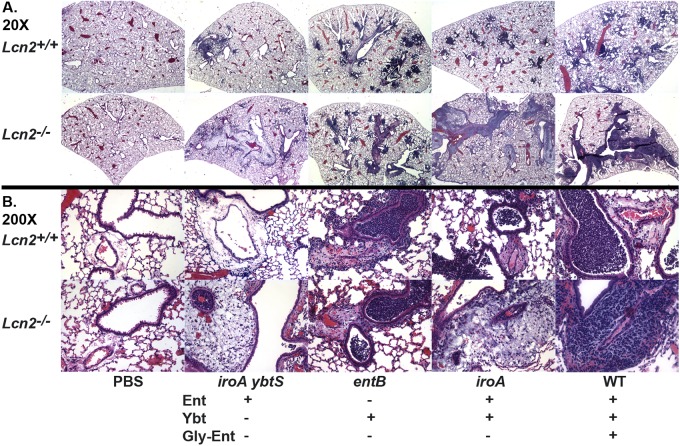
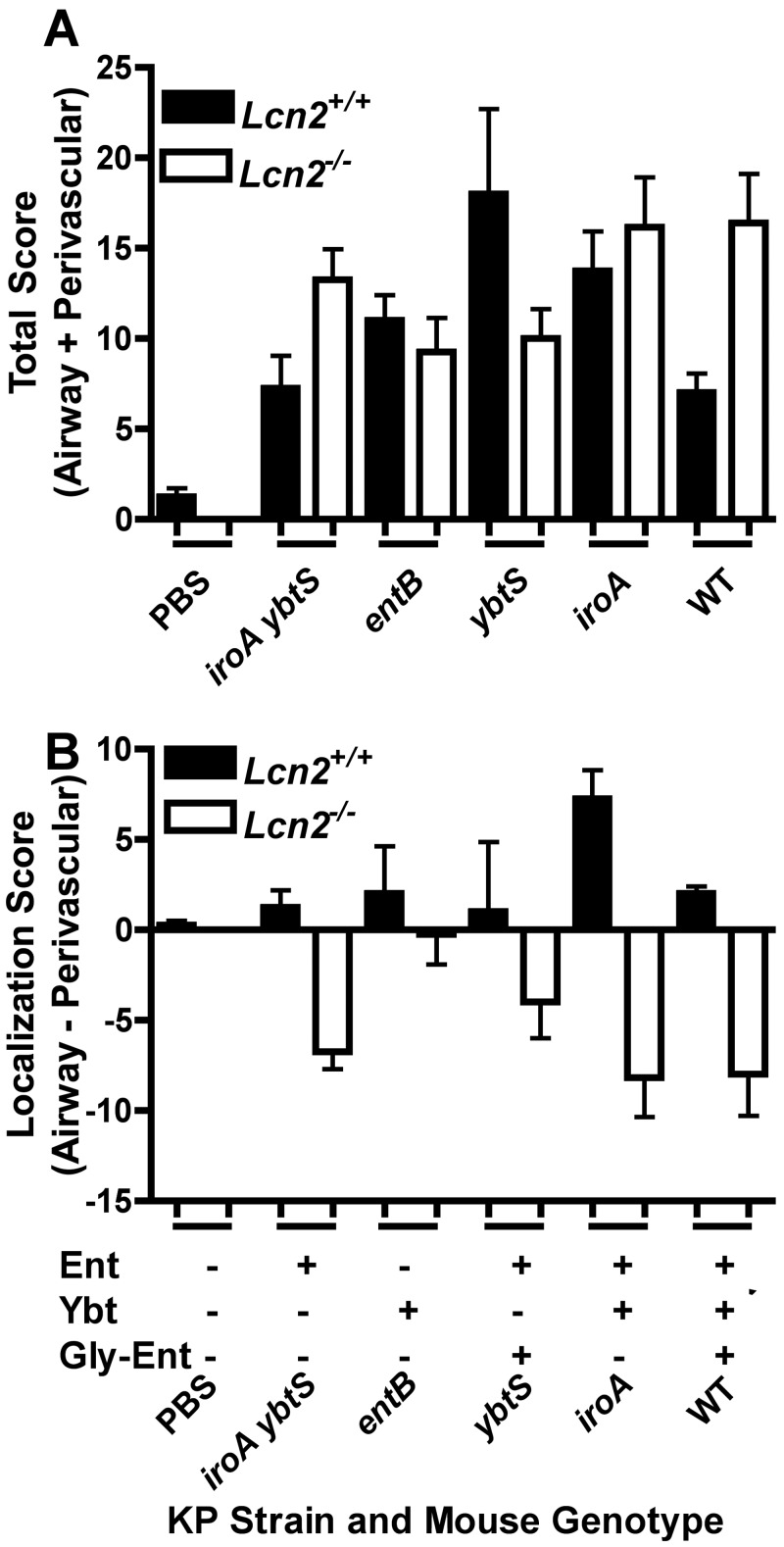
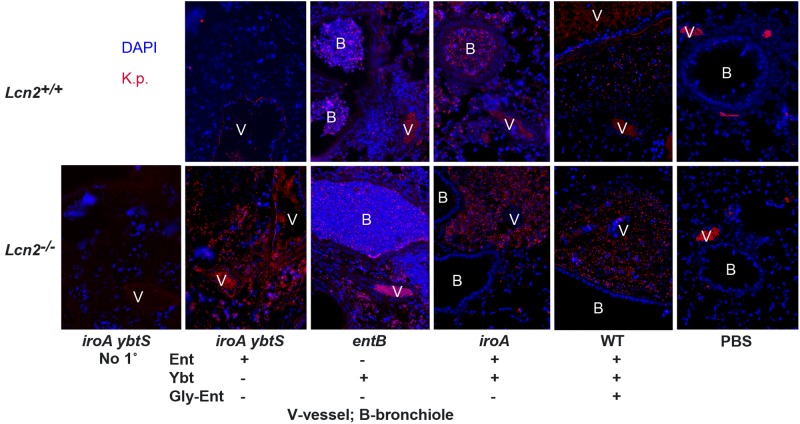
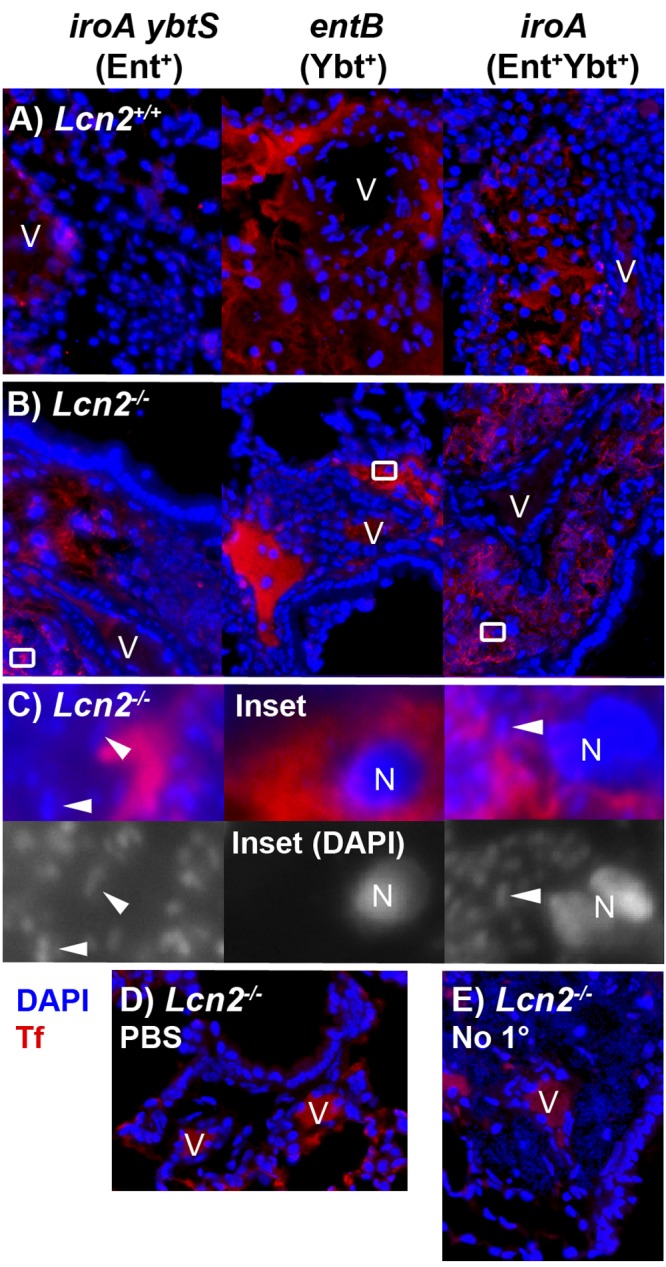
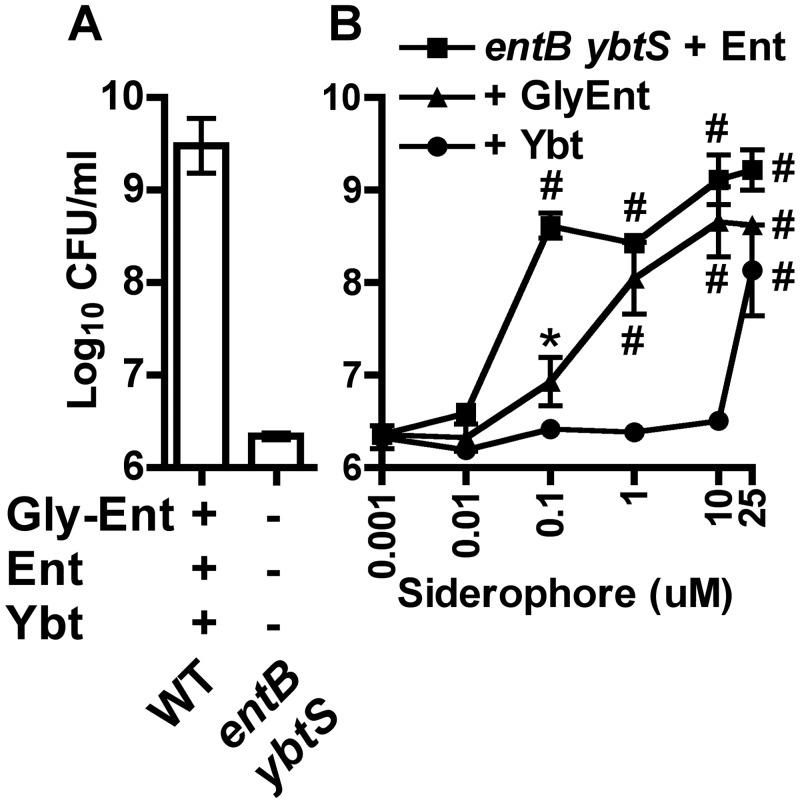
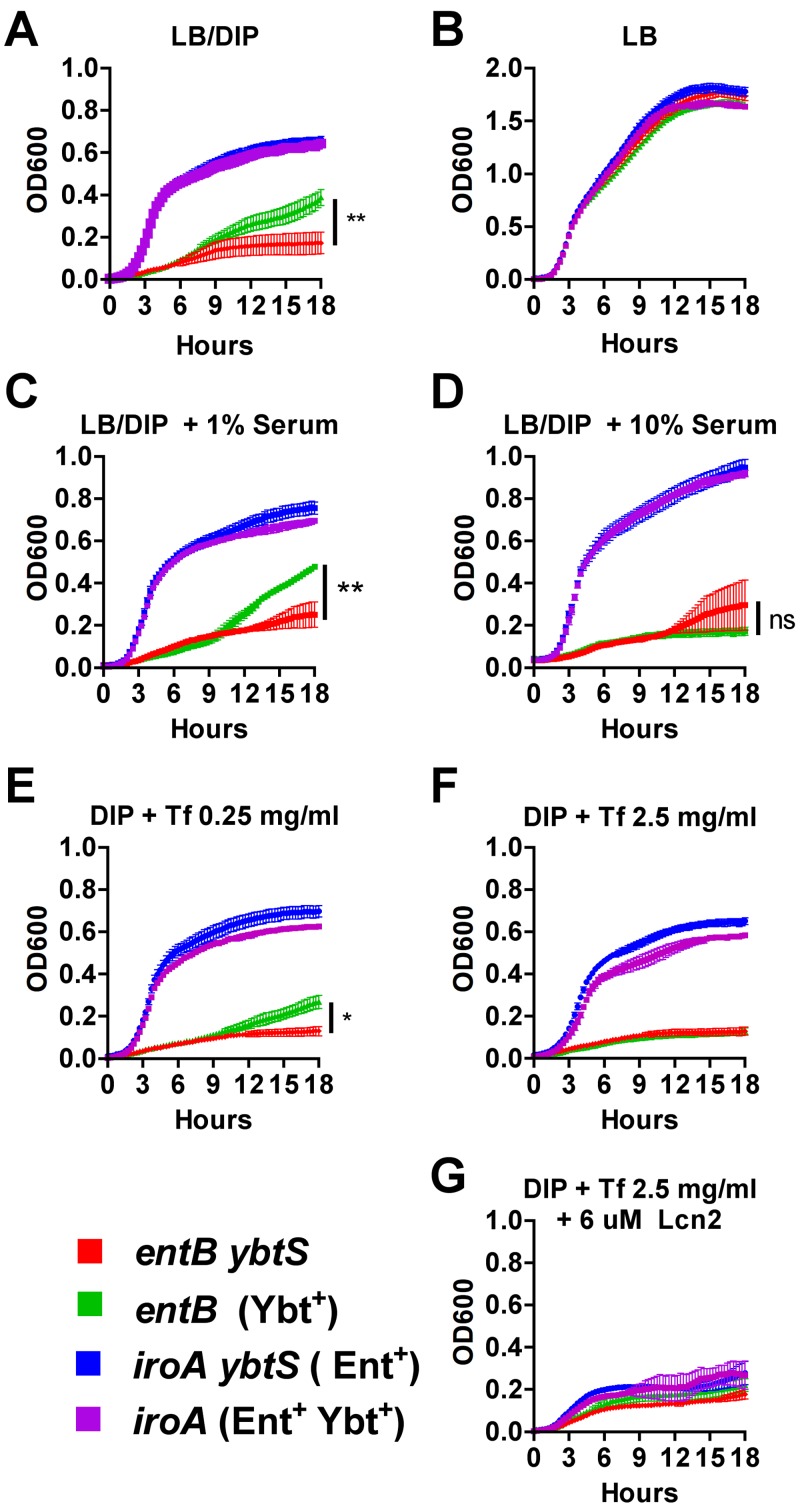
UNLABELLED: Pathogenic bacteria require iron for replication within their host. Klebsiella pneumoniae and other Gram-negative pathogens produce the prototypical siderophore enterobactin (Ent) to scavenge iron in vivo. In response, mucosal surfaces secrete lipocalin 2 (Lcn2), an innate immune protein that binds Ent to disrupt bacterial iron acquisition and promote acute inflammation during colonization. A subset of K. pneumoniae isolates attempt to evade Lcn2 by producing glycosylated Ent (Gly-Ent, salmochelin) or the alternative siderophore yersiniabactin (Ybt). However, these siderophores are not functionally equivalent and differ in their abilities to promote growth in the upper respiratory tract, lungs, and serum. To understand how Lcn2 exploits functional differences between siderophores, isogenic mutants of an Ent(+) Gly-Ent(+) Ybt(+) K. pneumoniae strain were inoculated into Lcn2(+/+) and Lcn2(-/-) mice, and the pattern of pneumonia was examined. Lcn2 effectively protected against the iroA ybtS mutant (Ent(+) Gly-Ent(-) Ybt(-)). Lcn2(+/+) mice had small foci of pneumonia, whereas Lcn2(-/-) mice had many bacteria in the perivascular space. The entB mutant (Ent(-) Ybt(+) Gly-Ent(-)) caused moderate bronchopneumonia but did not invade the transferrin-containing perivascular space. Accordingly, transferrin blocked Ybt-dependent growth in vitro. The wild type and the iroA mutant, which both produce Ent and Ybt, had a mixed phenotype, causing a moderate bronchopneumonia in Lcn2(+/+) mice and perivascular overgrowth in Lcn2(-/-) mice. Together, these data indicate that Lcn2, in combination with transferrin, confines K. pneumoniae to the airways and prevents invasion into tissue containing the pulmonary vasculature. IMPORTANCE: Gram-negative bacteria are a common cause of severe hospital-acquired infections. To cause disease, they must obtain iron and secrete the small molecule enterobactin to do so. Animal models of pneumonia using Klebsiella pneumoniae indicate that enterobactin promotes severe disease. Accordingly, the host defense protein lipocalin 2 exploits this common target by binding enterobactin and disrupting its function. However, pathogenic bacteria often make additional siderophores that lipocalin 2 cannot bind, such as yersiniabactin, which could make this host defense ineffective. This work compares the pattern and severity of pneumonia caused by K. pneumoniae based on which siderophores it produces. The results indicate that enterobactin promotes growth around blood vessels that are rich in the iron-binding protein transferrin, but yersiniabactin does not. Together, transferrin and lipocalin 2 protect this space against all types of K. pneumoniae tested. Therefore, the ability to acquire iron determines where bacteria can grow in the lung.
Overview
The claims and statistics of this paper haven’t been checked yet.
Free: it reads the open-access text and checks the first 5 claims that cite a source we can check. Create a free account to check every claim.
Integrity signals
Registry
Cites
Statistics
Figures
Verification
Claims the paper makes
The claims and statistics of this paper haven’t been checked yet.
Free: it reads the open-access text and checks the first 5 claims that cite a source we can check. Create a free account to check every claim.
Claims other papers make about this one
Each is checked against this paper’s own text: does it say what the citing paper says it does?
The cited source says what the claim attributes to it.
In the citing paper
“In addition, several pathogens are able to acquire TF-bound iron [51–54].”
From Iron deficiency or anemia of inflammation?: Differential diagnosis and mechanisms of anemia of inflammation (2016) · cites this paper as [52]
In the citing paper
“the vertebrate protein lipocalin 2 (also known as siderocalin or NGAL) is a potent innate immunity factor that functions in part through binding and sequestration of siderophores, preventing their uptake by microbes 50, 51.”
From Buried Treasure: Evolutionary Perspectives on Microbial Iron Piracy (2015) · cites this paper as [51]
In the citing paper
“The variety of siderophores produced by any given bacterial strain provides a high level of functional redundancy reflecting the enormous selective pressure imposed on pathogens to acquire Fe under the Fe-withholding conditions of the host (95–97).”
From Innate Nutritional Immunity (2018) · cites this paper as [95]
In the citing paper
“In the lung, enterobactin is not required for Klebsiella pneumoniae pneumonia but is required for invasion into surrounding tissue; its higher Fe3+ binding affinity enables K. pneumoniae to acquire iron from transferrin in the perivascular space (9).”
From Transition Metals and Virulence in Bacteria (2016) · cites this paper as [9]
Self-check
Percentages, sums and reported differences re-computed from the paper’s own numbers.
The self-check needs the paper’s full text.
Citations
Cites
Podschun, R., & Ullmann, U. (1998) · Clinical Microbiology Reviews · doi:10.1128/cmr.11.4.589 · Cited by 2,688
Robbins pathologic basis of disease
Cotran, R. S., Kumar, V., & Collins, T. (1989) · Medical Entomology and Zoology · Cited by 1,944
Lipocalin 2 mediates an innate immune response to bacterial infection by sequestrating iron
Flo, T. H., Smith, K. D., Sato, S., Rodriguez, D. J., Holmes, M. A., Strong, R. K., Akira, S., & Aderem, A. (2004) · Nature · doi:10.1038/nature03104 · Cited by 1,877 · cited 2×
“depend on Ent-scavenged iron for growth in serum (7, 8).”
BackgroundMethodSiderophore-Based Iron Acquisition and Pathogen Control
Miethke, M., & Marahiel, M. A. (2007) · Microbiology and Molecular Biology Reviews · doi:10.1128/mmbr.00012-07 · Cited by 1,774 · cited 1×
“Yersiniabactin (Ybt) is a phenolate-type siderophore that is structurally distinct from Ent (6).”
BackgroundClinical diagnosis and management by laboratory methods
Henry, J. B. (1979) · Medical Entomology and Zoology · Cited by 1,691
The Battle for Iron between Bacterial Pathogens and Their Vertebrate Hosts
Skaar, E. P. (2010) · PLoS Pathogens · doi:10.1371/journal.ppat.1000949 · Cited by 796 · cited 1×
“In the mammalian host, this requires scavenging of iron from carrier proteins, such as transferrin in the blood, lactoferrin present along the mucosal surface, or heme from red blood cells (3).”
BackgroundJones, R. N. (2010) · Clinical Infectious Diseases · doi:10.1086/653053 · Cited by 716
Stoichiometric and site characteristics of the binding of iron to human transferrin
Aisen, P., Leibman, A., & Zweier, J. (1978) · Journal of Biological Chemistry · doi:10.1016/s0021-9258(19)62337-9 · Cited by 601 · cited 1×
“Similarly, Ybt may be unable to scavenge sufficient iron for growth in the presence of competing copper and transferrin, despite promoting growth on transferrin in isolation (11, 25).”
BackgroundKitchel, B., Rasheed, J. K., Patel, J. B., Srinivasan, A., Navon-Venezia, S., Carmeli, Y., Brolund, A., & Giske, C. G. (2009) · Antimicrobial Agents and Chemotherapy · doi:10.1128/aac.00126-09 · Cited by 522 · cited 1×
“isolates resistant to almost all available antibiotics (16).”
BackgroundHenry’s Clinical Diagnosis and Management by Laboratory Methods
Chou, D. (2007) · JAMA · doi:10.1001/jama.297.16.1829 · Cited by 402
Research works printed but not linked: 2
- Earhart CF 1996 Uptake and metabolism of iron and molybdenum. In Neidhart F, E. coli and salmonella. ASM Press, Washington, DC
- Goodman LR 1999 Felson’s principles of chest roentgenology. W.B. Saunders, Philadelphia, PA.
Cited by
Klebsiella pneumoniae: Going on the Offense with a Strong Defense
Paczosa, M. K., & Mecsas, J. (2016) · Microbiology and Molecular Biology Reviews · doi:10.1128/mmbr.00078-15 · Cited by 1,988
Holt, K. E., Wertheim, H., Zadoks, R. N., Baker, S., Whitehouse, C. A., Dance, D., Jenney, A., Connor, T. R., Hsu, L. Y., Severin, J., et al. (2015) · Proceedings of the National Academy of Sciences · doi:10.1073/pnas.1501049112 · Cited by 1,236
“Experimental infection models show that yersiniabactin in CC258 enhances the bacterium’s ability to colonize the respiratory tract and cause pneumonia (60).”
BackgroundPopulation genomics of Klebsiella pneumoniae
Wyres, K. L., Lam, M. M. C., & Holt, K. E. (2020) · Nature Reviews Microbiology · doi:10.1038/s41579-019-0315-1 · Cited by 1,160
Klebsiella pneumoniae infection biology: living to counteract host defences
Bengoechea, J. A., & Sa Pessoa, J. (2019) · FEMS Microbiology Reviews · doi:10.1093/femsre/fuy043 · Cited by 568
Hepatocytes: a key cell type for innate immunity
Zhou, Z., Xu, M.-J., & Gao, B. (2016) · Cellular & Molecular Immunology · doi:10.1038/cmi.2015.97 · Cited by 472
Transition Metals and Virulence in Bacteria
Palmer, L. D., & Skaar, E. P. (2016) · Annual Review of Genetics · doi:10.1146/annurev-genet-120215-035146 · Cited by 449
Lipocalin 2: an emerging player in iron homeostasis and inflammation
Xiao, X., Yeoh, B. S., & Vijay-Kumar, M. (2017) · Annual Review of Nutrition · doi:10.1146/annurev-nutr-071816-064559 · Cited by 426
Porcheron, G., Garénaux, A., Proulx, J., Sabri, M., & Dozois, C. M. (2013) · Frontiers in Cellular and Infection Microbiology · doi:10.3389/fcimb.2013.00090 · Cited by 366
“S. Typhimurium expresses a CueO multicopper oxidase, also called CuiD, which buffers copper toxicity in the periplasm (Arguello et al., 2011; Hodgkinson and Petris, 2012).”
BackgroundMolecular Pathogenesis of Klebsiella Pneumoniae
Li, B., Zhao, Y., Liu, C., Chen, Z., & Zhou, D. (2014) · Future Microbiology · doi:10.2217/fmb.14.48 · Cited by 364
Virulence Factors in Hypervirulent Klebsiella pneumoniae
Zhu, J., Wang, T., Chen, L., & Du, H. (2021) · Frontiers in Microbiology · doi:10.3389/fmicb.2021.642484 · Cited by 320
Shared and distinct mechanisms of iron acquisition by bacterial and fungal pathogens of humans
Caza, M., & Kronstad, J. W. (2013) · Frontiers in Cellular and Infection Microbiology · doi:10.3389/fcimb.2013.00080 · Cited by 306
“Hence, the production of salmochelins contributes to virulence of pathogenic E. coli, S. Typhimurium, and K. pneumoniae (Caza et al., 2008, 2011; Crouch et al., 2008; Bachman et al., 2012).”
BackgroundRusso, T. A., Olson, R., MacDonald, U., Beanan, J., & Davidson, B. A. (2015) · Infection and Immunity · doi:10.1128/iai.00430-15 · Cited by 305
“This finding supports an 503 increasing body of data, which demonstrates that selected siderophores are 504 more important in certain settings (30, 45, 46).”
BackgroundResultRusso, T. A., Olson, R., MacDonald, U., Metzger, D., Maltese, L. M., Drake, E. J., & Gulick, A. M. (2014) · Infection and Immunity · doi:10.1128/iai.01667-13 · Cited by 304
“An increasing body of data has begun to address whether certain SP may be more efficacious in certain settings (41, 49, 50).”
BackgroundIntegrative Physiology of Pneumonia
Quinton, L. J., Walkey, A. J., & Mizgerd, J. P. (2018) · Physiological Reviews · doi:10.1152/physrev.00032.2017 · Cited by 295
Pathogenesis of Gram-Negative Bacteremia
Holmes, C. L., Anderson, M. T., Mobley, H. L. T., & Bachman, M. A. (2021) · Clinical Microbiology Reviews · doi:10.1128/cmr.00234-20 · Cited by 277
Self-citationMicrobiota Metabolites in Health and Disease
McCarville, J. L., Chen, G. Y., Cuevas, V. D., Troha, K., & Ayres, J. S. (2020) · Annual Review of Immunology · doi:10.1146/annurev-immunol-071219-125715 · Cited by 241
Siderophores: Importance in bacterial pathogenesis and applications in medicine and industry
Khasheii, B., Mahmoodi, P., & Mohammadzadeh, A. (2021) · Microbiological Research · doi:10.1016/j.micres.2021.126790 · Cited by 206
Holden, V. I., Breen, P., Houle, S., Dozois, C. M., & Bachman, M. A. (2016) · mBio · doi:10.1128/mbio.01397-16 · Cited by 205
“pneumoniae that secretes Ent, Sal, and Ybt or an isogenic siderophore-negative entB ybtS mutant (4, 27).”
BackgroundSelf-citationGorrie, C. L., Mirčeta, M., Wick, R. R., Judd, L. M., Lam, M. M. C., Gomi, R., Abbott, I. J., Thomson, N. R., Strugnell, R. A., Pratt, N. F., et al. (2022) · Nature Communications · doi:10.1038/s41467-022-30717-6 · Cited by 194
Abbas, R., Chakkour, M., Zein El Dine, H., Obaseki, E. F., Obeid, S. T., Jezzini, A., Ghssein, G., & Ezzeddine, Z. (2024) · Biology · doi:10.3390/biology13020078 · Cited by 193
“Developing new antimicrobials and regimens is essential for treating KPC, with the goal of reallocating resources to improve the efficacy of medical care [139,140].”
BackgroundSiderophore-mediated iron acquisition and modulation of host-bacterial interactions
Ellermann, M., & Arthur, J. C. (2017) · Free Radical Biology and Medicine · doi:10.1016/j.freeradbiomed.2016.10.489 · Cited by 186
Lery, L. M., Frangeul, L., Tomas, A., Passet, V., Almeida, A. S., Bialek-Davenet, S., Barbe, V., Bengoechea, J. A., Sansonetti, P., Brisse, S., et al. (2014) · BMC Biology · doi:10.1186/1741-7007-12-41 · Cited by 181
“Lipocalin2 is for instance a siderophore scavenger for several bacteria, including K. pneumoniae [46], as well as a negative regulator of inflammatory response during Streptococcus pneumoniae pneumonia [47].”
Walker, K. A., & Miller, V. L. (2020) · Current Opinion in Microbiology · doi:10.1016/j.mib.2020.01.006 · Cited by 181
Bloodstream infections: mechanisms of pathogenesis and opportunities for intervention
Holmes, C. L., Albin, O. R., Mobley, H. L. T., & Bachman, M. A. (2024) · Nature Reviews Microbiology · doi:10.1038/s41579-024-01105-2 · Cited by 187
“Siderophore-null mutants of K. pneumoniae are unable to invade and replicate in the perivascular space 79 .”
Self-citationGallium-based anti-infectives: targeting microbial iron-uptake mechanisms
Kelson, A. B., Carnevali, M., & Truong-Le, V. (2013) · Current Opinion in Pharmacology · doi:10.1016/j.coph.2013.07.001 · Cited by 175
Klebsiella: a long way to go towards understanding this enigmatic jet-setter
Broberg, C. A., Palacios, M., & Miller, V. L. (2014) · F1000Prime Reports · doi:10.12703/p6-64 · Cited by 144
“However, lipocalin 2 was shown to inhibit enterobactin-dependent iron acquisition and bacterial growth in the perivascular spaces of the lung during pneumonia [78,79].”
BackgroundNairz, M., Theurl, I., Wolf, D., & Weiss, G. (2016) · Wiener Medizinische Wochenschrift · doi:10.1007/s10354-016-0505-7 · Cited by 152
Klebba, P. E., Newton, S. M. C., Six, D. A., Kumar, A., Yang, T., Nairn, B. L., Munger, C., & Chakravorty, S. (2021) · Chemical Reviews · doi:10.1021/acs.chemrev.0c01005 · Cited by 150
Hu, Y., Anes, J., Devineau, S., & Fanning, S. (2020) · Foodborne Pathogens and Disease · doi:10.1089/fpd.2020.2847 · Cited by 143
“The action of this siderophore can be neutralized by lipocalin-2 (Bachman et al. , 2012).”
Iron and innate antimicrobial immunity-depriving the pathogen, defending the host
Nairz, M., Dichtl, S., Schroll, A., Haschka, D., Tymoszuk, P., Theurl, I., & Weiss, G. (2018) · Journal of Trace Elements in Medicine and Biology · doi:10.1016/j.jtemb.2018.03.007 · Cited by 123
The role of metal ions in the virulence and viability of bacterial pathogens
Neville, S. L. (2019) · Biochemical Society Transactions · doi:10.1042/bst20180275 · Cited by 125
Understanding How Minerals Contribute to Optimal Immune Function
Ştefanache, A., Lungu, I. I., Butnariu, I.-A., Călin, G., Guțu, C., Marcu, C., Grierosu, C., Goroftei, E. R. B., Duceac, L.-D., Dabija, M. G., et al. (2023) · Journal of Immunology Research · doi:10.1155/2023/3355733 · Cited by 124
Neutrophil gelatinase-associated lipocalin and innate immune responses to bacterial infections
Nasioudis, D., & Witkin, S. S. (2015) · Medical Microbiology and Immunology · doi:10.1007/s00430-015-0394-1 · Cited by 123
“However, infection with yersiniabactin-positive strains was associated with a greater extent of lung pathology [54].”
BackgroundRole of iron in the pathogenesis of respiratory disease
Ali, M. K., Kim, R., Karim, R., Mayall, J., Martin, K. L., Shahandeh, A., Abbasian, F., Starkey, M. R., Loustaud-Ratti, V., Johnstone, D. M., et al. (2017) · The International Journal of Biochemistry & Cell Biology · doi:10.1016/j.biocel.2017.05.003 · Cited by 124
Buried Treasure: Evolutionary Perspectives on Microbial Iron Piracy
Barber, M. F., & Elde, N. C. (2015) · Trends in Genetics · doi:10.1016/j.tig.2015.09.001 · Cited by 118
“For example, the vertebrate protein lipocalin 2 (also known as siderocalin or NGAL) is a potent innate immunity factor that functions in part through binding and sequestration of siderophores, preventing their uptake bymicrobes [50,51].”
BackgroundNúñez, G., Sakamoto, K., & Soares, M. P. (2018) · The Journal of Immunology · doi:10.4049/jimmunol.1800325 · Cited by 115
A Dormant Microbial Component in the Development of Preeclampsia
Kell, D. B., & Kenny, L. C. (2016) · Frontiers in Medicine · doi:10.3389/fmed.2016.00060 · Cited by 101
“NgAl (lipocalin 2, Siderocalin) Neutrophil gelatinase-associated lipocalin (NGAL) is a lipocalin that is capable of binding catecholate-based siderophores (125, 823, 824).”
BackgroundKot, B., Piechota, M., Szweda, P., Mitrus, J. M., Wicha, J., Grużewska, A., & Witeska, M. (2023) · Scientific Reports · doi:10.1038/s41598-023-31086-w · Cited by 105
Russo, T. A., & MacDonald, U. (2020) · mSphere · doi:10.1128/msphere.00850-19 · Cited by 106
Lipocalin 2 as a link between ageing, risk factor conditions and age-related brain diseases
Dekens, D. W., Eisel, U. L. M., Gouweleeuw, L., Schoemaker, R. G., Deyn, P. P. D., & Naudé, P. J. W. (2021) · Ageing Research Reviews · doi:10.1016/j.arr.2021.101414 · Cited by 99
“…protection against bacteria that depend on these siderophore types, including for example E. coli and mycobacteria such as M. tuberculosis (Bachman et al., 2012; Berger et al., 2006; Ferreira et al., 2015; Flo et al., 2004; Goetz et al., 2002; Guo et al., 2020; Holmes et al., 2005; Huang…”
BackgroundJoseph, L., Merciecca, T., Forestier, C., Balestrino, D., & Miquel, S. (2021) · Microorganisms · doi:10.3390/microorganisms9061282 · Cited by 95
Hepcidin-mediated iron sequestration protects against bacterial dissemination during pneumonia
Michels, K. R., Zhang, Z., Bettina, A. M., Cagnina, R. E., Stefanova, D., Burdick, M. D., Vaulont, S., Nemeth, E., Ganz, T., & Mehrad, B. (2017) · JCI Insight · doi:10.1172/jci.insight.92002 · Cited by 93
Nonribosomal peptide synthetase biosynthetic clusters of ESKAPE pathogens
Gulick, A. M. (2017) · Natural Product Reports · doi:10.1039/c7np00029d · Cited by 89
Siderophores: More than Stealing Iron
Behnsen, J., & Raffatellu, M. (2016) · mBio · doi:10.1128/mbio.01906-16 · Cited by 79
“pneumoniae in the host (8, 9) and suggests that siderophores contribute to pathogenesis via different mechanisms (10).”
BackgroundComprehensive review of lipocalin 2-mediated effects in lung inflammation
Guardado, E. S., Ojeda-Juárez, D., Kaul, M., & Nordgren, T. M. (2021) · American Journal of Physiology-Lung Cellular and Molecular Physiology · doi:10.1152/ajplung.00080.2021 · Cited by 79
Muraya, A. W., Kyanya, C. K., Kiyaga, S., Smith, H. J., Kibet, C. K., Martin, M. J., Kimani, J., & Musila, L. A. (2022) · Pathogens · doi:10.3390/pathogens11050545 · Cited by 77
“The ubiquitous enterobactin scavenges iron from host cells; however, their activity is neutralized by human lipocalin2 protein (62).”
Innate Immune Signaling Activated by MDR Bacteria in the Airway
Parker, D., Ahn, D. S., Cohen, T. S., & Prince, A. S. (2015) · Physiological Reviews · doi:10.1152/physrev.00009.2015 · Cited by 76
Population Structure of KPC-Producing Klebsiella pneumoniae Isolates from Midwestern U.S. Hospitals
Wright, M. S., Perez, F., Brinkac, L., Jacobs, M. R., Kaye, K., Cober, E., van Duin, D., Marshall, S. H., Hujer, A. M., Rudin, S. D., et al. (2014) · Antimicrobial Agents and Chemotherapy · doi:10.1128/aac.00125-14 · Cited by 72
“For example, an investigation into iron uptake differences between ST258 strains missing full-length entS genes may reveal potential fitness costs during host infection (29).”
BackgroundMalek, A., McGlynn, K. A., Taffner, S. M., Fine, L., Tesini, B. L., Wang, J., Mostafa, H. H., Petry, S., Perkins, A. S., GRAMAN, P. S., et al. (2019) · Antimicrobial Agents and Chemotherapy · doi:10.1128/aac.02577-18 · Cited by 72
“Subsequent studies reported acquisition of the HPI in other clinical Enterobacteriaceae strains (28, 42), and additional functions ascribed to Ybt include evasion of host lipocalin-2 (43) and sequestration/import of heavy metals (44).”
BackgroundHetta, H. F., Alanazi, F. E., Ali, M. A. S., Alatawi, A. D., Aljohani, H. M., Ahmed, R., Alansari, N. A., Alkhathami, F., Albogmi, A. A., Alharbi, B. M., et al. (2025) · Pharmaceuticals · doi:10.3390/ph18050724 · Cited by 70
“This concealment may limit the O1 antigen’s interaction with host immune components, raising questions about its functional role in the context of hvKP pathogenesis [119,120].”
Holden, V. I., Lenio, S., Kuick, R., Ramakrishnan, S. K., Shah, Y. M., & Bachman, M. A. (2014) · Infection and Immunity · doi:10.1128/iai.01849-14 · Cited by 62
“pneumoniae restores bacterial growth, indicating that GlyEnt is able to acquire iron for bacterial growth (52).”
BackgroundSelf-citationBruchmann, S., Feltwell, T., Parkhill, J., & Short, F. L. (2021) · Pathogens and Disease · doi:10.1093/femspd/ftab009 · Cited by 68
“This is consistent with the roles of K. pneumoniae siderophores in murine infections, where enterobactin alone allows replication in serum by sequestering iron from transferrin (Bachman et al. 2012).”
ResultKrapp, F., Morris, A. R., Ozer, E. A., & Hauser, A. R. (2017) · Scientific Reports · doi:10.1038/s41598-017-13524-8 · Cited by 65
The reasons why Klebsiella pneumoniae becomes a leading opportunistic pathogen
Chebotar, I. V., Bocharova, Y. A., Podoprigora, I. V., & Shagin, D. A. (2020) · Clinical Microbiology and Antimicrobial Chemotherapy · doi:10.36488/cmac.2020.1.4-19 · Cited by 64
Whole‐genome analysis of Klebsiella pneumoniae from bovine mastitis milk in the U.S.
Zheng, Z., Gorden, P. J., Xia, X.-Q., Zheng, Y., & Li, G. (2021) · Environmental Microbiology · doi:10.1111/1462-2920.15721 · Cited by 63
Autophagy, cell death, and cytokines in K. pneumoniae infection: therapeutic perspectives
Wei, S., Xu, T., Chen, Y., & Zhou, K. (2022) · Emerging Microbes & Infections · doi:10.1080/22221751.2022.2140607 · Cited by 63
Virulence Factors in Klebsiella pneumoniae: A Literature Review
Monteiro, A. D. S. S., Cordeiro, S. M., & Pedreira, J. N. R. (2024) · Indian Journal of Microbiology · doi:10.1007/s12088-024-01247-0 · Cited by 64
“In K. pneumoniae , it was associated with worsening pulmonary infection compared to an enterobactin-producing strain alone in a murine pneumonia model [121].”
Functions and regulation of lipocalin-2 in gut-origin sepsis: a narrative review
Lu, F., Inoue, K., Kato, J., Minamishima, S., & Morisaki, H. (2019) · Critical Care · doi:10.1186/s13054-019-2550-2 · Cited by 60
Ellermann, M., Gharaibeh, R. Z., Fulbright, L. E., Dogan, B., Moore, L. N., Broberg, C. A., Lopez, L. R., Rothemich, A., Herzog, J., Rogala, A. R., et al. (2019) · Infection and Immunity · doi:10.1128/iai.00587-19 · Cited by 60
“Consistent with our findings, several studies have also reported altered tissue localization of Enterobacteriaceae pathogens with inactivation of the Ybt system in extraintestinal mucosal environments (26, 44, 45).”
Nas, M. Y., & Cianciotto, N. P. (2017) · Microbiology · doi:10.1099/mic.0.000545 · Cited by 57
Human Urinary Composition Controls Antibacterial Activity of Siderocalin*
Shields-Cutler, R. R., Crowley, J. R., Hung, C. S., Stapleton, A. E., Aldrich, C. C., Marschall, J., & Henderson, J. P. (2015) · Journal of Biological Chemistry · doi:10.1074/jbc.m115.645812 · Cited by 56
Olonisakin, T. F., Suber, T. L., Gonzalez-Ferrer, S., Xiong, Z., Peñaloza, H. F., van der Geest, R., Xiong, Y., Osei-Hwedieh, D. O., Tejero, J., Rosengart, M. R., et al. (2021) · Journal of Clinical Investigation · doi:10.1172/jci137468 · Cited by 56
Self-citationRusso, T. A., MacDonald, U., Drayer, Z. J., Davies, C. J., Alvarado, C. L., Hutson, A. D., Luo, T. L., Martin, M. J., McGann, P., & Lebreton, F. (2024) · EBioMedicine · doi:10.1016/j.ebiom.2024.105302 · Cited by 54
“30 – 32 Therefore, it is tempting to speculate that the inability to produce siderophores active in vivo is the mechanism responsible for decreased virulence seen with the loss of pVir/yersiniabactin.”
Sun, Y., Vornhagen, J., Breen, P. A., Forsyth, V. S., Zhao, L., Mobley, H. L. T., & Bachman, M. A. (2019) · PLoS Pathogens · doi:10.1371/journal.ppat.1008010 · Cited by 52
Self-citationClinical and laboratory insights into the threat of hypervirulent Klebsiella pneumoniae
Han, X., Yao, J., He, J., Liu, H., Jiang, Y., Zhao, D., Shi, Q., Zhou, J., Hu, H., Lan, P., et al. (2024) · International Journal of Antimicrobial Agents · doi:10.1016/j.ijantimicag.2024.107275 · Cited by 53
Exploring the Genome and Phenotype of Multi-Drug Resistant Klebsiella pneumoniae of Clinical Origin
Anes, J., Hurley, D., Martins, M., & Fanning, S. (2017) · Frontiers in Microbiology · doi:10.3389/fmicb.2017.01913 · Cited by 51
“These iron-scavenging operons have been associated with invasive K. pneumoniae isolates (Ma et al., 2005; Bachman et al., 2012; Holt et al., 2015).”
BackgroundHolmes, C. L., Wilcox, A. E., Forsyth, V. S., Smith, S. N., Moricz, B. S., Unverdorben, L. V., Mason, S., Wu, W.-S., Zhao, L., Mobley, H. L. T., et al. (2023) · PLoS Pathogens · doi:10.1371/journal.ppat.1011233 · Cited by 47
Self-citationWeber, B. S., Jong, A. M. D., Guo, A. B. Y., Dharavath, S., French, S., Fiebig‐Comyn, A., Coombes, B. K., Magolan, J., & Brown, E. D. (2020) · Cell Reports · doi:10.1016/j.celrep.2020.107927 · Cited by 47
Multi-metal nutrient restriction and crosstalk in metallostasis systems in microbial pathogens
Jordan, M. R., Wang, J., Capdevila, D. A., & Giedroc, D. P. (2020) · Current Opinion in Microbiology · doi:10.1016/j.mib.2020.01.010 · Cited by 44
“A documented role of CPmediated Fe(II) sequestration was initially controversial since Fe starvation of the pathogen had long been attributed to ferric iron restriction by host iron-binding proteins lactoferrin, transferrin, and lipocalin 2 (as Fe(III)-enterobactin complexes) [12,13] at sites of infection.”
BackgroundIron at the host-microbe interface
Gerner, R. R., Nuccio, S.-P., & Raffatellu, M. (2020) · Molecular Aspects of Medicine · doi:10.1016/j.mam.2020.100895 · Cited by 45
Klebsiella pneumoniae liver abscesses: pathogenesis, treatment, and ongoing challenges
Angeles-Solano, M., Tabashsum, Z., Chen, L., & Rowe, S. E. (2025) · Infection and Immunity · doi:10.1128/iai.00508-24 · Cited by 45
“Additionally, lipocalin-2 (Lcn2), also known as neutrophil gelatinase-associated lipocalin (NGAL), is an innate immune protein that plays a critical role in host defense by binding sideophores (44, 45).”
Huang, M., Wang, Z., Yao, L., Zhang, L., Gou, X., Mo, H., Li, H., Hu, L., & Zhou, X. (2023) · International Journal of Antimicrobial Agents · doi:10.1016/j.ijantimicag.2023.106794 · Cited by 45
Singh, R. P., Kapoor, A., Sinha, A., Ma, Y., & Shankar, M. (2025) · The Microbe · doi:10.1016/j.microb.2025.100289 · Cited by 44
Iron Reshapes the Gut Microbiome and Host Metabolism
Botta, A. M., Barra, N. G., Lam, N. H., Chow, S., Pantopoulos, K., Schertzer, J. D., & Sweeney, G. (2021) · Journal of Lipid and Atherosclerosis · doi:10.12997/jla.2021.10.2.160 · Cited by 44
Paczosa, M. K., Silver, R. J., McCabe, A. L., Tai, A., McLeish, C. H., Lazinski, D. W., & Mecsas, J. C. (2020) · Infection and Immunity · doi:10.1128/iai.00034-20 · Cited by 43
“previously published studies (40, 55), were not identified in our analysis.”
ResultAlghoribi, M. F., Alqurashi, M. M., Okdah, L., Alalwan, B., Alhebaishi, Y. S., Almalki, A., Alzayer, M., Alswaji, A. A., Doumith, M., & Barry, M. A. (2021) · Scientific Reports · doi:10.1038/s41598-021-89255-8 · Cited by 44
Holden, V. I., Wright, M. S., Houle, S., Collingwood, A., Dozois, C. M., Adams, M. D., & Bachman, M. A. (2018) · mSphere · doi:10.1128/msphere.00125-18 · Cited by 42
“Growth curves were performed as previously described (27).”
Self-citationBurnside, D. M., Wu, Y., Shafaie, S., & Cianciotto, N. P. (2015) · Infection and Immunity · doi:10.1128/iai.00808-15 · Cited by 42
Han, R., Niu, M., Liu, S., Mao, J., Yu, Y. P., & Du, Y. (2022) · Microbial Pathogenesis · doi:10.1016/j.micpath.2022.105746 · Cited by 41
Gerner, R. R., Hossain, S., Sargun, A., Siada, K., Norton, G. J., Zheng, T., Neumann, W., Nuccio, S., Nolan, E. M., & Raffatellu, M. (2022) · mBio · doi:10.1128/mbio.02184-22 · Cited by 40
Passarelli‐Araujo, H., Palmeiro, J. K., Moharana, K. C., Pedrosa‐Silva, F., Dalla-Costa, L. M., & Venâncio, T. M. (2019) · FEBS Journal · doi:10.1111/febs.15005 · Cited by 40
The role of iron in pulmonary pathology
Khiroya, H., & Turner, A. M. (2015) · Multidisciplinary Respiratory Medicine · doi:10.1186/s40248-015-0031-2 · Cited by 38
“niae and stop them from scavenging iron [54].”
BackgroundIron at the crossroads of host–microbiome interactions in health and disease
Choi, G., & Bessman, N. J. (2025) · Nature Microbiology · doi:10.1038/s41564-025-02001-y · Cited by 36
“Lipocalin-2 scavenges siderophores, iron-chelating small molecules produced by numerous microbes, hampering bacterial iron uptake 38,39 .”
Yersiniabactin is a quorum-sensing autoinducer and siderophore in uropathogenic Escherichia coli
Heffernan, J. R., Wildenthal, J. A., Tran, H. D., Katumba, G. L., McCoy, W. H., & Henderson, J. P. (2024) · mBio · doi:10.1128/mbio.00277-23 · Cited by 33
“In contrast, hTf addition, previously used to create a siderophore-dependent growth condition (27), led to a marked, highly significant UTI89 ΔentBΔybtS growth defect relative to UTI89 ( P 0.0001 after 9 hours) (Fig.”
MethodInfluentialWareth, G., Linde, J., Hammer, P., Pletz, M. W., Neubauer, H., & Sprague, L. (2022) · Microorganisms · doi:10.3390/microorganisms10030564 · Cited by 33
“pneumoniae to overcome host defense and for deep penetration of the tissues [66].”
BackgroundThe role of lipocalin 2 in brain injury and recovery after ischemic and hemorrhagic stroke
Zhang, J., Wang, Z., Zhang, H., Li, S., Li, J., Liu, H., & Cheng, Q. (2022) · Frontiers in Molecular Neuroscience · doi:10.3389/fnmol.2022.930526 · Cited by 32
“Another essential function of LCN2 is to act as a siderophore-binding protein and isolate free iron, which plays a crucial role in tissue iron homeostasis (Holmes et al., 2005; Borregaard and Cowland, 2006; Bachman et al., 2012).”
BackgroundSheldon, J. R., Himmel, L. E., Kunkle, D. E., Monteith, A. J., Maloney, K. N., & Skaar, E. P. (2022) · PLoS Pathogens · doi:10.1371/journal.ppat.1010809 · Cited by 29
Fluorescent sensors of siderophores produced by bacterial pathogens
Kumar, A., Yang, T., Chakravorty, S., Majumdar, A., Nairn, B. L., Six, D. A., Marcondes dos Santos, N., Price, S. L., Lawrenz, M. B., Actis, L. A., et al. (2022) · Journal of Biological Chemistry · doi:10.1016/j.jbc.2022.101651 · Cited by 28
“pneumoniae (39, 40, 45, 52), and we found that hypervirulent K.”
BackgroundNazari, M., Hemmati, J., & Asghari, B. (2024) · Canadian Journal of Infectious Diseases and Medical Microbiology · doi:10.1155/cjid/1403019 · Cited by 27
“To sustain infection, K. pneumoniae requires efcient iron acquisition [14].”
Sukumaran, A., Pladwig, S., & Geddes‐McAlister, J. (2021) · BMC Microbiology · doi:10.1186/s12866-021-02091-8 · Cited by 25
Microenvironmental Factors that Shape Bacterial Metabolites in Inflammatory Bowel Disease
Lopez, L. R., Ahn, J.-H., Alves, T., & Arthur, J. C. (2022) · Frontiers in Cellular and Infection Microbiology · doi:10.3389/fcimb.2022.934619 · Cited by 26
“Host neutrophils and epithelial cells secrete lipocalin-2 (Lcn2) into the mucosa, which binds the Ent-iron complex and inhibits the growth of pathogenic bacteria (Flo et al., 2004; Bachman et al., 2012).”
BackgroundHow Klebsiella pneumoniae controls its virulence
Nguyen, T. N. T., Howells, G., & Short, F. L. (2025) · PLoS Pathogens · doi:10.1371/journal.ppat.1013499 · Cited by 24
“Therefore, production of additional accessory genome-encoded siderophores that are not recognized by lipocalin-2 increases virulence, in a manner that strongly depends on host niche [10,26,122–127].”
The ADP-Heptose Biosynthesis Enzyme GmhB is a Conserved Gram-Negative Bacteremia Fitness Factor
Holmes, C. L., Smith, S. N., Gurczynski, S. J., Severin, G. B., Unverdorben, L. V., Vornhagen, J., Mobley, H. L. T., & Bachman, M. A. (2022) · Infection and Immunity · doi:10.1128/iai.00224-22 · Cited by 24
“pneumoniae from the lung to the bloodstream (12, 31).”
BackgroundSelf-citationCramer, E. P., Dahl, S. L., Rozell, B., Knudsen, K. J., Thomsen, K., Moser, C., Cowland, J. B., & Borregaard, N. (2017) · Blood · doi:10.1182/blood-2016-11-753434 · Cited by 22
Plant-Origin Components: New Players to Combat Antibiotic Resistance in Klebsiella pneumoniae
Luna-Pineda, V. M., Martinez, G. R., Salazar–García, M., & Romo-Castillo, M. (2024) · International Journal of Molecular Sciences · doi:10.3390/ijms25042134 · Cited by 22
“%) are susceptible to infection by hvKpn strains [36,37]. required for many bacterial metabolic processes Bacteria have developed small iron-binding molecules, named siderophores, to bind and transport ions from the host cell, promoting bacterial growth [26,27].”
BackgroundPeltier, F., Choquet, M., Decroix, V., Adjidé, C., Castelain, S., Guihéneuf, R., & Pluquet, E. (2018) · Journal of Medical Microbiology · doi:10.1099/jmm.0.000884 · Cited by 21
Microbiology of Ventilator-Associated Pneumonia
Monteiro‐Neto, V., Neto, L. G. L., Abreu, A. G., & Monteiro, C. R. A. V. (2017) · InTech eBooks · doi:10.5772/intechopen.69430 · Cited by 21
Klebsiella pneumoniae: Host interactions, virulence mechanisms, and novel therapeutic strategies
Abhinand, K., Menon, A. M., Thomas, S. S., Anil, A. B., Mohanan, P. C. P., Arun, K. B., Edison, L. K., Babu, P., Kumar, G. B., Nair, B. G., et al. (2025) · Microbial Pathogenesis · doi:10.1016/j.micpath.2025.107856 · Cited by 20
Julien, L. A., Baron, F., Bonnassié, S., Nau, F., Guérin, C., Jan, S., & Andrews, S. C. (2019) · BioMetals · doi:10.1007/s10534-019-00180-w · Cited by 20
Marcoleta, A. E., Gutiérrez-Cortez, S., Hurtado, F., Argandoña, Y., Corsini, G., Monasterio, O., & Lagos, R. (2018) · PLOS ONE · doi:10.1371/journal.pone.0200835 · Cited by 19
Metadata
- Authors
- Bachman, M. A., Lenio, S., Schmidt, L., Oyler, J. E., & Weiser, J. N.
- Affiliations
- University of Michigan (US)
- University of Pennsylvania (US)
- Venue
- mBio
- Publisher
- American Society for Microbiology
- Published
- 2012-12-31
- Volume
- 3
- Issue
- 6
- ISSN
- 2150-7511 (ISSN-L)
- 2161-2129
- PMC
- PMC3509427
- OpenAlex
- W2155928048
- Cited by
- 168
- References
- 30
- Citations by year
- 2026: 8 · 2025: 19 · 2024: 13 · 2023: 12 · 2022: 20 · 2021: 20 · 2020: 13 · 2019: 11 · 2018: 10 · 2017: 12 · 2016: 10 · 2015: 9 · 2014: 7 · 2013: 4
- FWCI
- 3.84
- Type
- journal article
- Language
- en
- Open access
- gold
- doi.org
- Licence
- cc-by-nc-sa
- creativecommons.org/licenses/by-nc-sa/3.0/ (vor)
- journals.asm.org/non-commercial-tdm-license (tdm)
- Locations
- mBio (publishedVersion, cc-by-nc-sa)
- PubMed Central (publishedVersion, cc-by-nc-sa)
- PubMed (publishedVersion)
- DOAJ (DOAJ: Directory of Open Access Journals) (submittedVersion, cc-by-sa)
- Funders
- National Institute of General Medical Sciences (GM085612, K08GM085612)
- National Institute of Diabetes and Digestive and Kidney Diseases (P30DK50306, P30DK050306)
- Topics
- Life Sciences › Biochemistry, Genetics and Molecular Biology › Genetics › Bacterial Genetics and Biotechnology
- Life Sciences › Immunology and Microbiology › Microbiology › Escherichia coli research studies
- Life Sciences › Biochemistry, Genetics and Molecular Biology › Molecular Biology › Bacterial biofilms and quorum sensing
- Keywords
- transferrin, siderophores, enterobactin, yersiniabactin, salmochelin, Klebsiella pneumoniae, bacterial iron acquisition, pneumonia, host defense, perivascular invasion, airway colonization, iron sequestration, innate immunity, mouse infection model
- MeSH terms
- Lipocalin-2, Acute-Phase Proteins, Animals, Enterobactin, Klebsiella Infections, Klebsiella pneumoniae, Phenols, Protein Binding, Thiazoles, Transferrin, Oncogene Proteins, Mice, Knockout, Pneumonia, Bacterial, Virulence Factors, Mice, Lipocalins, Host-Pathogen Interactions
About these checks
Registry, retraction, Cites and statistics results are computed, not judged, with one exception: a printed reference that no index lists is read once by a model before it counts as a citation error. Claims are extracted by a model and kept only when their quote appears verbatim in the text; each cited source is then checked, with a model’s help, for whether it says what the claim relies on. Those verdicts can be wrong — read the claim’s quote and the cited source before relying on one.
Statistics and arithmetic are recomputed, not judged.
Confidence bands are shown only for fields calibrated on our annotated test set. None is calibrated yet, so no band is shown.
What counts as a claim ›How we measure confidence ›How we check this ›
Are you an author, or do you see a problem with this page? Request a review
Data sources
Bibliographic data: Semantic Scholar, OpenAlex, Crossref.
Contains information from the Semantic Scholar Academic Graph Datasets, made available under the ODC Attribution License (ODC-BY 1.0).
Semantic Scholar’s data is described in: Kinney, R., et al. (2023). The Semantic Scholar Open Data Platform. arXiv:2301.10140.
