

Two Heme-Dependent Terminal Oxidases Power Staphylococcus aureus Organ-Specific Colonization of the Vertebrate Host
Open accessThe DOI matches its Crossref record; 44 of the 44 references it cites were found in a registry or an index.
Abstract
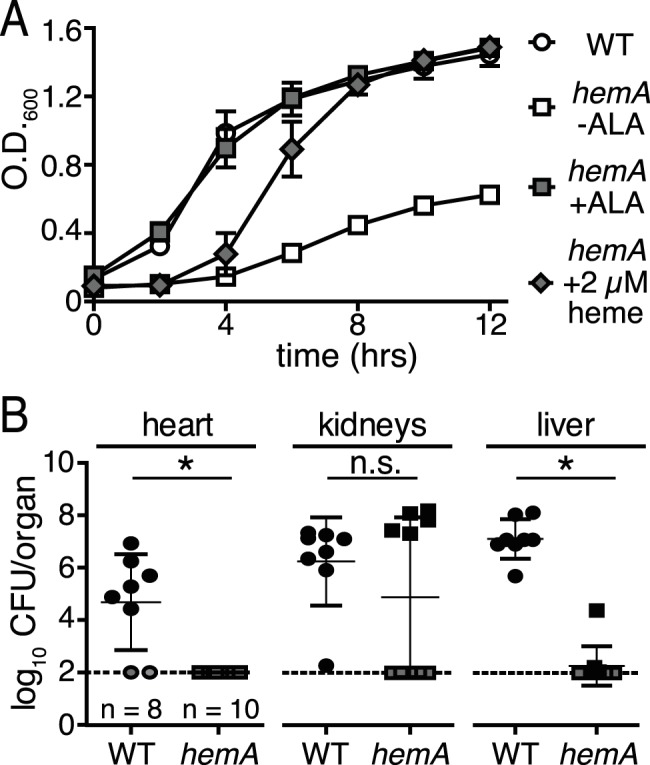
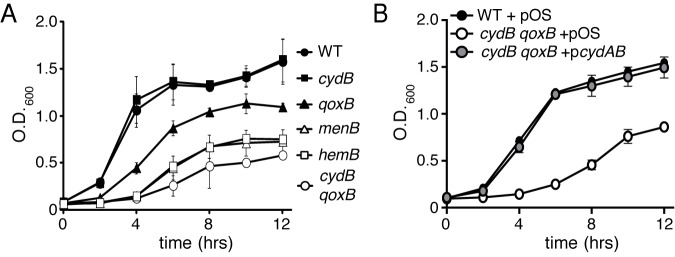
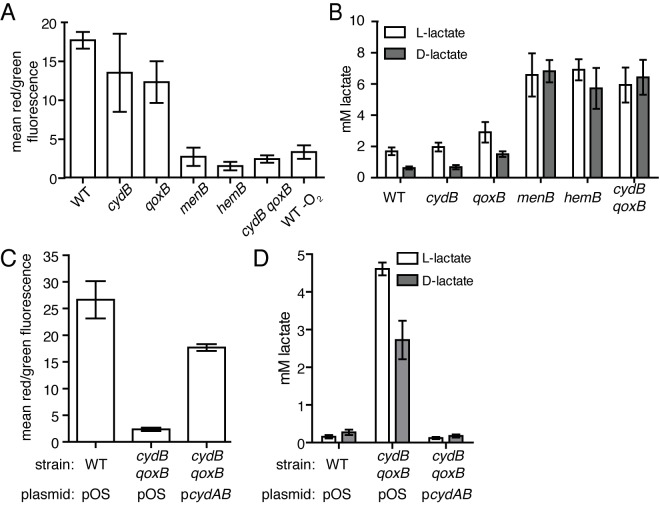
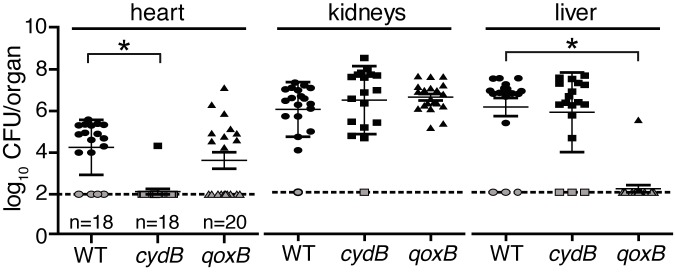
UNLABELLED: Staphylococcus aureus is a significant cause of infections worldwide and is able to utilize aerobic respiration, anaerobic respiration, or fermentation as the means by which it generates the energy needed for proliferation. Aerobic respiration is supported by heme-dependent terminal oxidases that catalyze the final step of aerobic respiration, the reduction of O2 to H2O. An inability to respire forces bacteria to generate energy via fermentation, resulting in reduced growth. Elucidating the roles of these energy-generating pathways during colonization of the host could uncover attractive therapeutic targets. Consistent with this idea, we report that inhibiting aerobic respiration by inactivating heme biosynthesis significantly impairs the ability of S. aureus to colonize the host. Two heme-dependent terminal oxidases support aerobic respiration of S. aureus, implying that the staphylococcal respiratory chain is branched. Systemic infection with S. aureus mutants limited to a single terminal oxidase results in an organ-specific colonization defect, resulting in reduced bacterial burdens in either the liver or the heart. Finally, inhibition of aerobic respiration can be achieved by exposing S. aureus to noniron heme analogues. These data provide evidence that aerobic respiration plays a major role in S. aureus colonization of the host and that this energy-generating process is a viable therapeutic target. IMPORTANCE: Staphylococcus aureus poses a significant threat to public health as antibiotic-resistant isolates of this pathogen continue to emerge. Our understanding of the energy-generating processes that allow S. aureus to proliferate within the host is incomplete. Host-derived heme is the preferred source of nutrient iron during infection; however, S. aureus can synthesize heme de novo and use it to facilitate aerobic respiration. We demonstrate that S. aureus heme biosynthesis powers a branched aerobic respiratory chain composed of two terminal oxidases. The importance of having two terminal oxidases is demonstrated by the finding that each plays an essential role in colonizing distinct organs during systemic infection. Additionally, this process can be targeted by small-molecule heme analogues called noniron protoporphyrins. This study serves to demonstrate that heme biosynthesis supports two terminal oxidases that are required for aerobic respiration and are also essential for S. aureus pathogenesis.
Overview
The claims and statistics of this paper haven’t been checked yet.
Free: it reads the open-access text and checks the first 5 claims that cite a source we can check. Create a free account to check every claim.
Integrity signals
Registry
Cites
Statistics
Figures
Verification
Claims the paper makes
The claims and statistics of this paper haven’t been checked yet.
Free: it reads the open-access text and checks the first 5 claims that cite a source we can check. Create a free account to check every claim.
Claims other papers make about this one
Each is checked against this paper’s own text: does it say what the citing paper says it does?
The cited source says what the claim attributes to it.
In the citing paper
“During systemic infection, this mutant is highly defective at colonizing the murine heart and liver relative to wildtype S. aureus [87].”
From Heme Synthesis and Acquisition in Bacterial Pathogens (2016) · cites this paper as [87]
In the citing paper
“Inactivation of hemA, which renders S. aureus heme deficient, causes the small-colony variant (SCV) phenotype [87].”
From Heme Synthesis and Acquisition in Bacterial Pathogens (2016) · cites this paper as [87]
Self-check
Percentages, sums and reported differences re-computed from the paper’s own numbers.
The self-check needs the paper’s full text.
Citations
Cites
Escherichia coli and Salmonella :cellular and molecular biology
Neidhardt, F. C. (1996) · ASM Press eBooks · Cited by 8,197
Staphylococcus aureus Infections
Lowy, F. D. (1998) · New England Journal of Medicine · doi:10.1056/nejm199808203390806 · Cited by 6,005
Klevens, R. M. (2007) · JAMA · doi:10.1001/jama.298.15.1763 · Cited by 3,726
Lewis, K. (2010) · Annual Review of Microbiology · doi:10.1146/annurev.micro.112408.134306 · Cited by 1,858 · cited 1×
“Given the ability of many microbial pathogens to develop drugresistant persistent subpopulations, the elucidation of the metabolic pathways that sustain the adaptation to the persistent phenotype will aid in the development of treatments for persistent infections (39).”
BackgroundGut inflammation provides a respiratory electron acceptor for Salmonella
Winter, S. E., Thiennimitr, P., Winter, M. G., Butler, B. P., Huseby, D. L., Crawford, R. W., Russell, J. M., Bevins, C. L., Adams, L. G., Tsolis, R. M., et al. (2010) · Nature · doi:10.1038/nature09415 · Cited by 1,290
Proctor, R. A., von Eiff, C., Kahl, B. C., Becker, K., McNamara, P., Herrmann, M., & Peters, G. (2006) · Nature Reviews Microbiology · doi:10.1038/nrmicro1384 · Cited by 1,175
Sims, P. J., Waggoner, A. S., Wang, C.-H., & Hoffman, J. F. (1974) · Biochemistry · doi:10.1021/bi00713a022 · Cited by 951
Gorwitz, R. J., Kruszon‐Moran, D., McAllister, S. K., McQuillan, G., McDougal, L. K., Fosheim, G. E., Jensen, B. J., Killgore, G., Tenover, F. C., & Kuehnert, M. J. (2008) · The Journal of Infectious Diseases · doi:10.1086/533494 · Cited by 926
The physiology and biochemistry of prokaryotes
(1996) · General Pharmacology: The Vascular System · doi:10.1016/0306-3623(96)90070-1 · Cited by 710
Prevalence of Staphylococcus aureus Nasal Colonization in the United States, 2001–2002
Kuehnert, M. J., Kruszon‐Moran, D., Hill, H. A., McQuillan, G., McAllister, S. K., Fosheim, G., McDougal, L. K., Chaitram, J., Jensen, B., Fridkin, S. K., et al. (2006) · The Journal of Infectious Diseases · doi:10.1086/499632 · Cited by 659
Cited by
Items 101–185 of 185
Henry, S. A., Webster, C. M., Shaw, L. N., Torres, N. J., Jobson, M.-E., Totzke, B. C., Jackson, J. K., McGreig, J. E., Wass, M. N., Robinson, G. K., et al. (2024) · The Journal of Infectious Diseases · doi:10.1093/infdis/jiad540 · Cited by 13
The Response of nor and nos Contributes to Staphylococcus aureus Virulence and Metabolism
Favazzo, L. J., Gill, A. L., Farnsworth, C. W., Mooney, R. A., & Gill, S. R. (2019) · Journal of Bacteriology · doi:10.1128/jb.00107-19 · Cited by 13
Transition metals and Enterococcus faecalis: Homeostasis, virulence and perspectives
Ali, I. A. A., Cheung, G. S. P., & Neelakantan, P. (2022) · Molecular Oral Microbiology · doi:10.1111/omi.12391 · Cited by 12
Burtchett, T. A., Shook, J. C., Hesse, L. E., Delekta, P. C., Brzozowski, R., Nouri, A., Calas, A. J., Spanoudis, C. M., Eswara, P. J., & Hammer, N. D. (2023) · Infection and Immunity · doi:10.1128/iai.00550-22 · Cited by 11
Self-citationChoi, S., & Narayanasamy, P. (2023) · ACS Infectious Diseases · doi:10.1021/acsinfecdis.3c00319 · Cited by 11
Maire, J., Philip, G. K., Livingston, J., Judd, L. M., Blackall, L. L., & van Oppen, M. J. H. (2023) · mSystems · doi:10.1128/msystems.00860-23 · Cited by 11
Suzuki, Y., Kawada‐Matsuo, M., Le, M. N., Eng, S., Hisatsune, J., Sugai, M., Sakaguchi, T., & Komatsuzawa, H. (2024) · Applied and Environmental Microbiology · doi:10.1128/aem.00300-24 · Cited by 11
Study in the iron uptake mechanism of Pasteurella multocida
Shen, X., Guan, L., Zhang, J., Xue, Y., Si, L., & Zhao, Z. (2025) · Veterinary Research · doi:10.1186/s13567-025-01469-0 · Cited by 10
Pinene-Based Chiral Bipyridine Ligands Drive Potent Antibacterial Activity in Rhenium(I) Complexes
Horner, J., Demirci, G., Crochet, A., Pavić, A., Mamula, O., & Zobi, F. (2025) · Molecules · doi:10.3390/molecules30153183 · Cited by 9
Rios-Delgado, G., McFarlane, R. A., Zheng, V., Kim, J., Parker, D., Kehl‐Fie, T. E., Lalaouna, D., & Boyd, J. M. (2025) · mBio · doi:10.1128/mbio.01415-25 · Cited by 10
In vivo virulence of Staphylococcus aureus in native versus prosthetic left-sided valve endocarditis
Elgharably, H., Claesen, J., Sangwan, N., Etiwy, M., Houghtaling, P. L., Procop, G. W., Shrestha, N. K. M., Griffin, B. P., Navia, J. L., Svensson, L. G., et al. (2024) · JTCVS Open · doi:10.1016/j.xjon.2024.12.004 · Cited by 9
McKay, L. S., Spandrio, A. R., Johnson, R. M., Sobran, M. A., Marlatt, S. A., Mote, K. B., Dedloff, M. R., Nash, Z. M., Julio, S. M., & Cotter, P. A. (2024) · PLoS Pathogens · doi:10.1371/journal.ppat.1012084 · Cited by 8
Genome-wide mutagenesis identifies factors involved in MRSA vaginal colonization
Lyon, L. M., Marroquin, S. M., Thorstenson, J. C., Joyce, L. R., Fuentes, E. J., Doran, K. S., & Horswill, A. R. (2025) · Cell Reports · doi:10.1016/j.celrep.2025.115421 · Cited by 8
Schindler, K., Demirci, G., Tran, B., Sovari, S. N., Cortat, Y., Sousa, N. F. R. D., Velti, C., Chapuis, B., Crochet, A., Pavić, A., et al. (2025) · ChemBioChem · doi:10.1002/cbic.202500368 · Cited by 7
Microgeography of staphyloccoci in human tissue explains antibiotic failurePreprint
Tripathi, V., Morin, B., Antelo-Varela, M., Loriol, A. A., Kurg, K., Jakonia, S., Ehsan, A., Herbert, S., Ferrand, A., Sauteur, L., et al. (2025) · bioRxiv (Cold Spring Harbor Laboratory) · doi:10.1101/2025.09.12.675782 · Cited by 7
The monotopic quinone reductases from Staphylococcus aureus
Pires, P. M., Santos, D., Calisto, F., & Pereira, M. M. (2024) · Biochimica et Biophysica Acta (BBA) - Bioenergetics · doi:10.1016/j.bbabio.2024.149488 · Cited by 6
Román‐Rodríguez, F., Tyagi, N., Al‐Tameemi, H., & Boyd, J. M. (2025) · Journal of Bacteriology · doi:10.1128/jb.00395-25 · Cited by 6
Photoactive Hydrogels Containing Merocyanine/Spiropyran Units for Wound Dressing Applications
Katariya, H., Chrześcijańska, E., Jerczyński, K., Rutkowski, J., Purohit, V. B., Lipińska, M., Çetinkaya, A., Kissmann, A., Gruber, D., Walter, J.-C., et al. (2025) · Biomacromolecules · doi:10.1021/acs.biomac.5c01956 · Cited by 6
Evolution of polyamine resistance in Staphylococcus aureus through modulation of potassium transport
Campbell, K., Kowalski, C. H., Kohler, K. M., Kebret, M. R., & Barber, M. F. (2025) · mSphere · doi:10.1128/msphere.00613-24 · Cited by 5
Respiration and Small Colony Variants of Staphylococcus aureus
Proctor, R. A. (2019) · ASM Press eBooks · doi:10.1128/9781683670131.ch34 · Cited by 5
Rubio, P. E. A., Molina, R. B., Pedro Eduardo Alvarado Ávila, M. D., Mora, A. G., & López, C. A. G. (2019) · IntechOpen eBooks · doi:10.5772/intechopen.84908 · Cited by 6
Boyd, J. M., Esquilín-Lebrón, K., Campbell, C. J., Kaler, K. R., Norambuena, J., Foley, M. E., Stephens, T. G., Rios, G., Mereddy, G., Zheng, V., et al. (2023) · doi:10.1101/2023.10.03.560778 · Cited by 4
“First, we validated the technique by 224 monitoring O2 consumption in a hemB::Tn mutant which cannot maturate cytochrome 225 oxidases (22).”
MethodSelf-citationA redundant isoprenoid biosynthetic pathway supports Staphylococcus aureus metabolic versatility
Burtchett, T. A., Ottosen, E. N., Jitsukawa, T., Kaneko, M., Yasui, M., Lysne, J. A., Kies, P. J., Bailey, J. A., Thomas, S. M., Fujisaki, S., et al. (2025) · mBio · doi:10.1128/mbio.00353-25 · Cited by 4
Self-citationAdvances in research on small colony variants of Staphylococcus aureus
Ye, Z., Chen, T., Zhang, Q., Huang, W., & He, L. (2025) · The Microbe · doi:10.1016/j.microb.2025.100444 · Cited by 4
Román‐Rodríguez, F., Tyagi, N., Kim, J., Parker, D., & Boyd, J. M. (2025) · Journal of Bacteriology · doi:10.1128/jb.00101-25 · Cited by 4
Dioxygen reductase heterogeneity is crucial for robust aerobic growth physiology of Escherichia coli
Patil, A. V., Shirsath, A. M., & Anand, A. (2024) · iScience · doi:10.1016/j.isci.2024.111498 · Cited by 4
Ran, Z., Hao, M., Guo, B., & Wang, J. (2025) · Frontiers in Microbiology · doi:10.3389/fmicb.2025.1616536 · Cited by 4
Herrin, B. E., Islam, S., Rentschler, K. N., Pert, L. H., Kopanski, S. P., & Wakeman, C. A. (2021) · Microbiology · doi:10.1099/mic.0.001044 · Cited by 4
Quantifying Staphylococcus aureus Membrane Potential Using Flow Cytometry
Hammer, N. D. (2021) · Methods in molecular biology · doi:10.1007/978-1-0716-1550-8_12 · Cited by 4
Self-citationCytochrome bd‐I from Escherichia coli is catalytically active in the absence of the CydH subunit
Goojani, H. G., Besharati, S., Chauhan, P., Asseri, A. H., Lill, H., & Bald, D. (2022) · FEBS Letters · doi:10.1002/1873-3468.14550 · Cited by 4
Fermentative growth decreases the iron demand of Staphylococcus aureus
Boyd, J. M., Rios-Delgado, G., Esquilín-Lebrón, K., Kaler, K. R., Mereddy, G., Norambuena, J., Zheng, V., Beavers, W. N., Kim, J., Parker, D., et al. (2025) · Journal of Inorganic Biochemistry · doi:10.1016/j.jinorgbio.2025.113085 · Cited by 3
Self-citationMonacchio, H. N., Shah, R. S., Montes, C., Wang, G. Z., Walley, J. W., & VanDrisse, C. M. (2026) · ACS Infectious Diseases · doi:10.1021/acsinfecdis.5c00985 · Cited by 3
Schleimer, N., Kaspar, U., Ballhausen, B., Fotiadis, S. A., Streu, J. M., Kriegeskorte, A., Proctor, R. A., & Becker, K. (2019) · Frontiers in Microbiology · doi:10.3389/fmicb.2019.02044 · Cited by 3
Simulating substrate binding sites in the S. aureus Type II NADH Dehydrogenase
Barriga, R. (2023) · Portuguese National Funding Agency for Science, Research and Technology (RCAAP Project by FCT) · Cited by 3
Woods, R. A., Acosta, I. C., Resko, Z. J., Agbavor, C., Svet, L., Yousef, M., Teoh, W. P., Torres, V. J., Cahoon, L. A., & Alonzo, F. (2026) · PLoS Pathogens · doi:10.1371/journal.ppat.1014183 · Cited by 2
The role of cytochrome oxidases in bacterial virulence
McKay, L. S., Camilli, A., & Cotter, P. A. (2026) · Infection and Immunity · doi:10.1128/iai.00609-24 · Cited by 2
Kanesaka, I., Yabuta, J., Jitsukawa, T., Fujisaki, S., Morita, M., Mikawa, T., Katsuse, A. K., Takahashi, H., Ohno, A., & Kobayashi, I. (2024) · Current Microbiology · doi:10.1007/s00284-023-03579-4 · Cited by 2
(2025) · doi:10.1128/msystems.01092-25 · Cited by 1
Sinha, S., Murmu, B., Roy, A. K., Balgote, P. J., & Jayanthi, S. (2025) · Journal of Microbiological Methods · doi:10.1016/j.mimet.2025.107134 · Cited by 1
Black, C. A., So, W., Benavides, R., Mercer, J. A., Dallas, S. S., Shurko, J. F., Bandy, S. M., Encino, B. A., Lipscomb, J. S., Vargus, A. M., et al. (2025) · Microorganisms · doi:10.3390/microorganisms13092023 · Cited by 1
Mills, E. G., Grady, L. M., Chen, E., Shaffer, M. G., Shields, R. K., Tyne, D. V., & Culyba, M. J. (2026) · mSphere · doi:10.1128/msphere.00575-26 · Cited by 1
Chen, S., Li, D., Zhou, F., Huang, Y., Zhang, M., Xin, L., Zhai, Q., Chen, T., Wan, S., Wang, S., et al. (2026) · Biomaterials · doi:10.1016/j.biomaterials.2026.124374 · Cited by 1
Staphylococcus aureus bacteriophage: Antimicrobial potent agent for biocontrol
Ahmed, I. (2026) · Iraqi Journal of Bioscience and Biomedical · Cited by 1
Richardson, A. R. (2019) · ASM Press eBooks · doi:10.1128/9781683670131.ch42 · Cited by 1
Hammer, N. D. (2020) · mSphere · doi:10.1128/msphere.00110-20 · Cited by 1
Self-citationStaphylococcus aureus: the paths and crosstalks that lead to heme
Videira, M. A. M. (2018) · Portuguese National Funding Agency for Science, Research and Technology (RCAAP Project by FCT) · Cited by 1
Détermination du mode d’action et de la cible cellulaire de la tomatidine chez Staphylococcus aureus
Guay, I. (2014) · Knowledge UdeS (Institutional Deposit of the University of Sherbrooke)
Amino Acid Catabolism in Staphylococcus aureus
Halsey, C. R. (2016) · DigitalCommons@UNMC
Neue antibiotische Sekundärmetabolite aus dem Myxobakterium Stigmatella erecta
Lewark, C. A. E. (2014) · Digitale Bibliothek Braunschweig (Verbundzentrale Göttingen (VZG)) · doi:10.24355/dbbs.084-201401271024-0
Interplay between nitric oxide and antimicrobial susceptibility in Escherichia coli
Miller, J. (2017) · Kent Academic Repository (University of Kent)
Langlois, J.-P. (2019) · Knowledge UdeS (Institutional Deposit of the University of Sherbrooke)
Shi, Z. (2019) · DR-NTU (Nanyang Technological University) · doi:10.32657/10356/136786
Quantitative 1 H NMR analyses of immunometabolic modulation in human macrophages
Fuchs, A. L. (2019) · Montana State University ScholarWorks (Montana State University)
Poole, R. K. (2019) · Faculty Opinions – Post-Publication Peer Review of the Biomedical Literature · doi:10.3410/f.727056740.793568894
mSphere of Influence: Metabolic redundancies enhance pathogenesis
Lehman, M. K. (2024) · mSphere · doi:10.1128/msphere.00239-24
Understanding the role of pyruvate dehydrogenase in Listeria monocytogenes virulence
Freeman, M. J., Eral, N. J., Debrine, A. M., Stevenson, D. M., Amador‐Noguez, D., & Sauer, J. (2026) · Infection and Immunity · doi:10.1128/iai.00505-25
Ga-PpIX-Mediated Photodynamic Inactivation of Staphylococcus aureus Small-Colony Variants
Sivasubramaniam, B. P., & Wei, A. (2025) · ACS Infectious Diseases · doi:10.1021/acsinfecdis.5c00738
Drug-repurposing approaches to target bacterial respiratory complexes
Henry, S. A. (2024) · Kent Academic Repository (University of Kent) · doi:10.22024/unikent/01.02.107244
ANTIBIOTIC TREATMENT FAILURE OF STAPHYLOCOCCUS AUREUS IN DIABETIC SKIN AND SOFT TISSUE INFECTIONS
Shook, J. C. (2025) · Carolina Digital Repository (University of North Carolina at Chapel Hill) · doi:10.17615/8hba-0269
ADAPTATION OF BORDETELLA BRONCHISEPTICA TO SURVIVAL WITHIN THE MAMMALIAN RESPIRATORY TRACT
McKay, L. S. (2024) · Carolina Digital Repository (University of North Carolina at Chapel Hill) · doi:10.17615/dykt-1c04
Evolution of Physiology and Virulence in Bordetella
Wolber, A. R. (2025) · Carolina Digital Repository (University of North Carolina at Chapel Hill) · doi:10.17615/4715-s914
Study of putative aminotransferases from Staphylococcus aureus
Leyton Dominguez, A. F. (2024) · UCL Discovery (University College London)
Nitric Oxide Metabolism in CC30 Staphylococcus aureus and its Contribution to Virulence
Favazzo, L. J., & Gill, S. R. (2019) · UR Research (University of Rochester)
Exploring respiratory enzymes from Staphylococcus aureus
Barbosa, C. (2018) · Portuguese National Funding Agency for Science, Research and Technology (RCAAP Project by FCT)
Wu, Y. C., Ndraha, N., Yang, S., He, J., Hsiao, H., Tang, J., & Chen, J. (2026) · SSRN Electronic Journal · doi:10.2139/ssrn.6382359
二成分制御系GraRSおよびSrrABは臨床分離表皮ブドウ球菌の産生するPep5への黄色ブドウ球菌の感受性に影響する
SUZUKI, Y., & SUZUKI, Y. (2025) · Hiroshima University Institutional Repository
Saillant, V. (2020) · theses.fr (ABES) · doi:10.70675/2c50a6ddz7c94z4048z81bdz04e5cce574fc
Contribution des SPATEs SigA et SepA dans la survie de Shigella dans le plasma
Debande, L. (2023) · theses.fr (ABES) · doi:10.70675/85460625z960bz4a5bz973azc24cd1bd4a7d
Molecular mechanism of haem acquisition from hemoglobin by Haemophilus influenzae
Tian, X. (2024) · theses.fr (ABES) · doi:10.70675/2705b108zdd87z4c3eza1daz0c115fa09109
Huang, Y., Ye, Y., Zhu, X., Liang, D. M., Cui, R., Yuan, X., Li, X., Zou, Q., Li, H., & Huang, W. (2026) · EMBO Molecular Medicine · doi:10.1038/s44321-026-00418-4
Hillebrand, G. H., Stephenson, H. A., Giacobe, E. J., Neel, A. S., Carlin, S. M., Kemp, F. D., & Hooven, T. A. (2026) · bioRxiv (Cold Spring Harbor Laboratory) · doi:10.64898/2026.05.15.725516
Fenn, S. J., Recker, M., & Massey, R. C. (2026) · npj Biofilms and Microbiomes · doi:10.1038/s41522-026-01112-6
Li, J., He, M., Hou, W., Zhang, Z., Mai, Z., Tian, X., Zhong, N., Kang, S., & Shi, C. (2026) · bioRxiv (Cold Spring Harbor Laboratory) · doi:10.64898/2026.08.03.742422
Caractérisation de l'activité de la tomatidine et de ses dérivés sur l'ATP synthétase
Isabelle, C. (2018) · Knowledge UdeS (Institutional Deposit of the University of Sherbrooke)
Xue, Z.-J., Huang, M., Jun-feng, W., Zhong, S.-Y., Yang, Z.-C., Xu, J., 金, 波., Chen, N.-P., & Qian, C. (2026) · Virulence · doi:10.1080/21505594.2026.2723683
Liquid Metal Molecular Medicine
Wu, P., Duan, L., & Liu, J. (2026) · Angewandte Chemie · doi:10.1002/ange.8312975
Polyunsaturated fatty acids: host-derived antimicrobials against glycolytic Staphylococcus aureus
Stackhouse, A. R., Iqbal, A., Ross, D. G., Wittliff, W. W., Rico, K. E., Blank, B. J., LeBreton, B. M., Bucher, S. P., MacIntyre, M. Y., & Beavers, W. N. (2026) · Journal of Bacteriology · doi:10.1128/jb.00249-26
Asada, Y., Nishihama, S., Kawada‐Matsuo, M., Ohdan, K., Aikawa, T., Yanamoto, S., & Komatsuzawa, H. (2026) · iScience · doi:10.1016/j.isci.2026.117798
Copper-Mediated Antimicrobial Activity : Targeting Cytochrome c Complexes Across Bacterial SpeciesPreprint
Durand, A., Steunou, A., Khan, M. A., Bourbon, M., Cassier‐Chauvat, C., Chauvat, F., & Ouchane, S. (2026) · bioRxiv (Cold Spring Harbor Laboratory) · doi:10.64898/2026.10.17.759849
Wang, X., Li, W., Wang, W., Wang, S., Xu, T., Chen, J., & Zhang, W. (2021) · doi:10.3389/fmicb.2021.756809.s002
Alst, A. J. V., Demey, L. M., & DiRita, V. J. (2022) · doi:10.1371/journal.ppat.1010102.r001
Metadata
- Authors
- Hammer, N. D., Reniere, M. L., Cassat, J. E., Zhang, Y., Hirsch, A. O., Indriati Hood, M., & Skaar, E. P.
- Affiliations
- Vanderbilt University (US)
- Vanderbilt University School of Medicine, Nashville, Tennessee, USA
- Venue
- mBio
- Publisher
- American Society for Microbiology
- Published
- 2013-08-30
- Volume
- 4
- Issue
- 4
- ISSN
- 2150-7511 (ISSN-L)
- 2161-2129
- PMC
- PMC3735196
- OpenAlex
- W2129353256
- Cited by
- 155
- References
- 44
- Citations by year
- 2026: 10 · 2025: 18 · 2024: 13 · 2023: 9 · 2022: 13 · 2021: 10 · 2020: 13 · 2019: 16 · 2018: 10 · 2017: 15 · 2016: 13 · 2015: 3 · 2014: 9 · 2013: 3
- FWCI
- 6.78
- Type
- journal article
- Language
- en
- Open access
- gold
- doi.org
- Licence
- cc-by-nc-sa
- creativecommons.org/licenses/by-nc-sa/3.0/ (vor)
- journals.asm.org/non-commercial-tdm-license (tdm)
- Locations
- mBio (publishedVersion, cc-by-nc-sa)
- Europe PMC (PubMed Central) (publishedVersion, cc-by-nc-sa)
- PubMed Central (publishedVersion, cc-by-nc-sa)
- PubMed (publishedVersion)
- DOAJ (DOAJ: Directory of Open Access Journals) (submittedVersion, cc-by-sa)
- Funders
- Burroughs Wellcome Fund
- Cystic Fibrosis Foundation
- Vanderbilt University
- Vanderbilt-Ingram Cancer Center
- National Institutes of Health
- National Heart, Lung, and Blood Institute (T32HL007751)
- National Cancer Institute (P30 CA 68485, P30CA068485)
- National Institute of Allergy and Infectious Diseases (AI073843, AI 057157, F32AI091244, L40 AI096516, F32-AI091244-01, AI0169233, R01AI069233, U54AI057157, R01AI073843)
- Topics
- Health Sciences › Medicine › Infectious Diseases › Antimicrobial Resistance in Staphylococcus
- Life Sciences › Biochemistry, Genetics and Molecular Biology › Genetics › Bacterial Genetics and Biotechnology
- Physical Sciences › Chemistry › Inorganic Chemistry › Metal-Catalyzed Oxygenation Mechanisms
- Keywords
- Staphylococcus aureus, heme biosynthesis, terminal oxidase, aerobic respiration, bacterial pathogenesis, electron transport chain, iron acquisition, systemic infection, liver colonization, antibiotic resistance
- MeSH terms
- Heme-Binding Proteins, Aerobiosis, Animals, Animal Structures, Bacterial Proteins, Disease Models, Animal, Female, Hemeproteins, Mice, Inbred BALB C, Oxidoreductases, Staphylococcal Infections, Staphylococcus aureus, Virulence, Virulence Factors, Electron Transport Chain Complex Proteins, Mice
About these checks
Registry, retraction, Cites and statistics results are computed, not judged, with one exception: a printed reference that no index lists is read once by a model before it counts as a citation error. Claims are extracted by a model and kept only when their quote appears verbatim in the text; each cited source is then checked, with a model’s help, for whether it says what the claim relies on. Those verdicts can be wrong — read the claim’s quote and the cited source before relying on one.
Statistics and arithmetic are recomputed, not judged.
Confidence bands are shown only for fields calibrated on our annotated test set. None is calibrated yet, so no band is shown.
What counts as a claim ›How we measure confidence ›How we check this ›
Are you an author, or do you see a problem with this page? Request a review
Data sources
Bibliographic data: Semantic Scholar, OpenAlex, Crossref.
Contains information from the Semantic Scholar Academic Graph Datasets, made available under the ODC Attribution License (ODC-BY 1.0).
Semantic Scholar’s data is described in: Kinney, R., et al. (2023). The Semantic Scholar Open Data Platform. arXiv:2301.10140.
