

Two Heme-Dependent Terminal Oxidases Power Staphylococcus aureus Organ-Specific Colonization of the Vertebrate Host
Open accessThe DOI matches its Crossref record; 44 of the 44 references it cites were found in a registry or an index.
Abstract
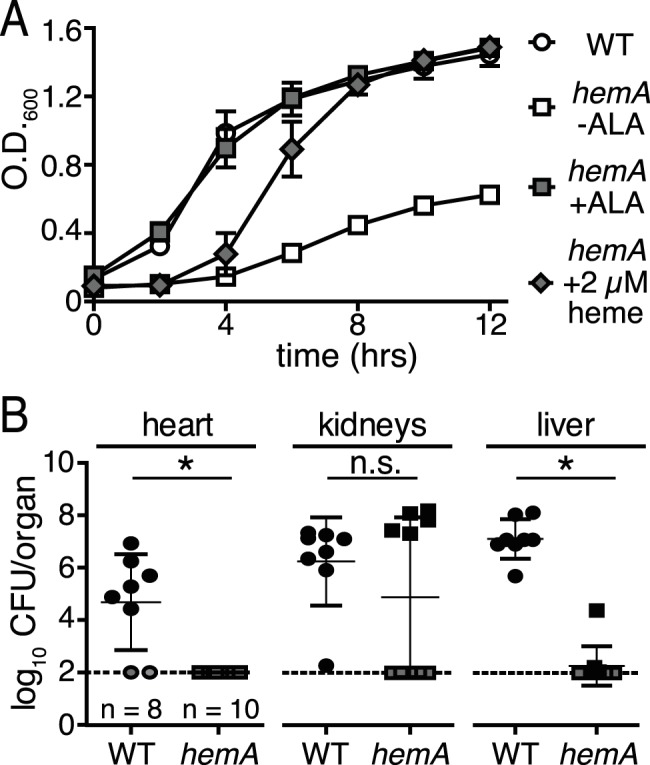
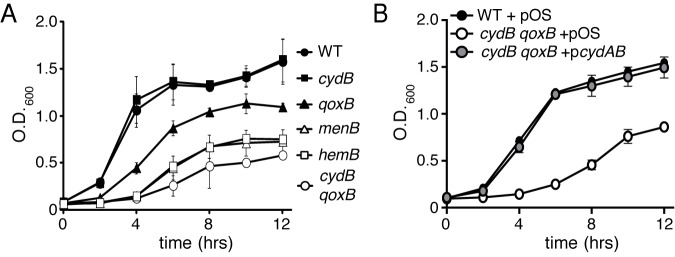
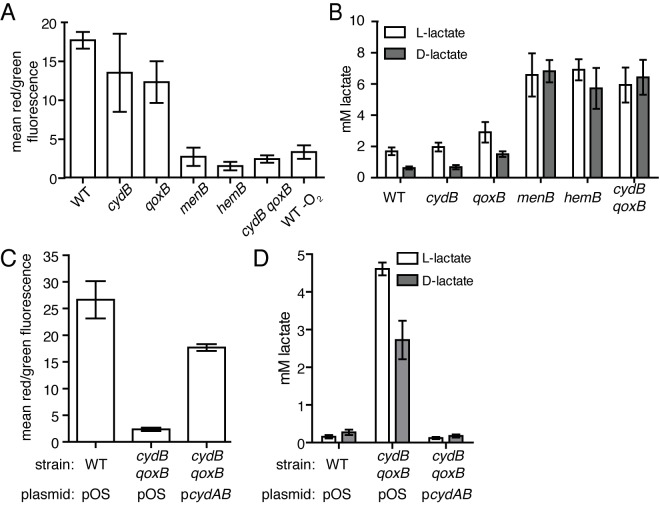
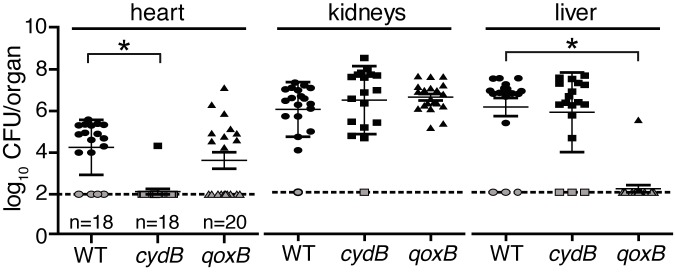
UNLABELLED: Staphylococcus aureus is a significant cause of infections worldwide and is able to utilize aerobic respiration, anaerobic respiration, or fermentation as the means by which it generates the energy needed for proliferation. Aerobic respiration is supported by heme-dependent terminal oxidases that catalyze the final step of aerobic respiration, the reduction of O2 to H2O. An inability to respire forces bacteria to generate energy via fermentation, resulting in reduced growth. Elucidating the roles of these energy-generating pathways during colonization of the host could uncover attractive therapeutic targets. Consistent with this idea, we report that inhibiting aerobic respiration by inactivating heme biosynthesis significantly impairs the ability of S. aureus to colonize the host. Two heme-dependent terminal oxidases support aerobic respiration of S. aureus, implying that the staphylococcal respiratory chain is branched. Systemic infection with S. aureus mutants limited to a single terminal oxidase results in an organ-specific colonization defect, resulting in reduced bacterial burdens in either the liver or the heart. Finally, inhibition of aerobic respiration can be achieved by exposing S. aureus to noniron heme analogues. These data provide evidence that aerobic respiration plays a major role in S. aureus colonization of the host and that this energy-generating process is a viable therapeutic target. IMPORTANCE: Staphylococcus aureus poses a significant threat to public health as antibiotic-resistant isolates of this pathogen continue to emerge. Our understanding of the energy-generating processes that allow S. aureus to proliferate within the host is incomplete. Host-derived heme is the preferred source of nutrient iron during infection; however, S. aureus can synthesize heme de novo and use it to facilitate aerobic respiration. We demonstrate that S. aureus heme biosynthesis powers a branched aerobic respiratory chain composed of two terminal oxidases. The importance of having two terminal oxidases is demonstrated by the finding that each plays an essential role in colonizing distinct organs during systemic infection. Additionally, this process can be targeted by small-molecule heme analogues called noniron protoporphyrins. This study serves to demonstrate that heme biosynthesis supports two terminal oxidases that are required for aerobic respiration and are also essential for S. aureus pathogenesis.
Overview
The claims and statistics of this paper haven’t been checked yet.
Free: it reads the open-access text and checks the first 5 claims that cite a source we can check. Create a free account to check every claim.
Integrity signals
Registry
Cites
Statistics
Figures
Verification
Claims the paper makes
The claims and statistics of this paper haven’t been checked yet.
Free: it reads the open-access text and checks the first 5 claims that cite a source we can check. Create a free account to check every claim.
Claims other papers make about this one
Each is checked against this paper’s own text: does it say what the citing paper says it does?
The cited source says what the claim attributes to it.
In the citing paper
“During systemic infection, this mutant is highly defective at colonizing the murine heart and liver relative to wildtype S. aureus [87].”
From Heme Synthesis and Acquisition in Bacterial Pathogens (2016) · cites this paper as [87]
In the citing paper
“Inactivation of hemA, which renders S. aureus heme deficient, causes the small-colony variant (SCV) phenotype [87].”
From Heme Synthesis and Acquisition in Bacterial Pathogens (2016) · cites this paper as [87]
Self-check
Percentages, sums and reported differences re-computed from the paper’s own numbers.
The self-check needs the paper’s full text.
Citations
Cites
Escherichia coli and Salmonella :cellular and molecular biology
Neidhardt, F. C. (1996) · ASM Press eBooks · Cited by 8,197
Staphylococcus aureus Infections
Lowy, F. D. (1998) · New England Journal of Medicine · doi:10.1056/nejm199808203390806 · Cited by 6,005
Klevens, R. M. (2007) · JAMA · doi:10.1001/jama.298.15.1763 · Cited by 3,726
Lewis, K. (2010) · Annual Review of Microbiology · doi:10.1146/annurev.micro.112408.134306 · Cited by 1,858 · cited 1×
“Given the ability of many microbial pathogens to develop drugresistant persistent subpopulations, the elucidation of the metabolic pathways that sustain the adaptation to the persistent phenotype will aid in the development of treatments for persistent infections (39).”
BackgroundGut inflammation provides a respiratory electron acceptor for Salmonella
Winter, S. E., Thiennimitr, P., Winter, M. G., Butler, B. P., Huseby, D. L., Crawford, R. W., Russell, J. M., Bevins, C. L., Adams, L. G., Tsolis, R. M., et al. (2010) · Nature · doi:10.1038/nature09415 · Cited by 1,290
Proctor, R. A., von Eiff, C., Kahl, B. C., Becker, K., McNamara, P., Herrmann, M., & Peters, G. (2006) · Nature Reviews Microbiology · doi:10.1038/nrmicro1384 · Cited by 1,175
Sims, P. J., Waggoner, A. S., Wang, C.-H., & Hoffman, J. F. (1974) · Biochemistry · doi:10.1021/bi00713a022 · Cited by 951
Gorwitz, R. J., Kruszon‐Moran, D., McAllister, S. K., McQuillan, G., McDougal, L. K., Fosheim, G. E., Jensen, B. J., Killgore, G., Tenover, F. C., & Kuehnert, M. J. (2008) · The Journal of Infectious Diseases · doi:10.1086/533494 · Cited by 926
The physiology and biochemistry of prokaryotes
(1996) · General Pharmacology: The Vascular System · doi:10.1016/0306-3623(96)90070-1 · Cited by 710
Prevalence of Staphylococcus aureus Nasal Colonization in the United States, 2001–2002
Kuehnert, M. J., Kruszon‐Moran, D., Hill, H. A., McQuillan, G., McAllister, S. K., Fosheim, G., McDougal, L. K., Chaitram, J., Jensen, B., Fridkin, S. K., et al. (2006) · The Journal of Infectious Diseases · doi:10.1086/499632 · Cited by 659
Cited by
Transition Metals and Virulence in Bacteria
Palmer, L. D., & Skaar, E. P. (2016) · Annual Review of Genetics · doi:10.1146/annurev-genet-120215-035146 · Cited by 449
Self-citationAnalysis of the chronic wound microbiota of 2,963 patients by 16S rDNA pyrosequencing
Wolcott, R. D., Hanson, J. D., Rees, E. J., Koenig, L. D., Phillips, C. D., Wolcott, R. A., Cox, S. B., & White, J. S. (2016) · Wound Repair and Regeneration · doi:10.1111/wrr.12370 · Cited by 414
Heme Synthesis and Acquisition in Bacterial Pathogens
Choby, J. E., & Skaar, E. P. (2016) · Journal of Molecular Biology · doi:10.1016/j.jmb.2016.03.018 · Cited by 343
Self-citationAmino Acid Catabolism in Staphylococcus aureus and the Function of Carbon Catabolite Repression
Halsey, C. R., Lei, S., Wax, J. K., Lehman, M. K., Nuxoll, A. S., Steinke, L., Sadykov, M., Powers, R., & Fey, P. D. (2017) · mBio · doi:10.1128/mbio.01434-16 · Cited by 233
“aureus bacteria defective in aerobic respiration were unable to mediate infection in the heart or liver but that colonization and abscess formation in the kidney were unaffected (35).”
BackgroundKinkel, T. L., Roux, C. M., Dunman, P. M., & Fang, F. C. (2013) · mBio · doi:10.1128/mbio.00696-13 · Cited by 179
Triple threat: how diabetes results in worsened bacterial infections
Darwitz, B. P., Genito, C. J., & Thurlow, L. R. (2024) · Infection and Immunity · doi:10.1128/iai.00509-23 · Cited by 166
Glycolytic Dependency of High-Level Nitric Oxide Resistance and Virulence in Staphylococcus aureus
Vitko, N. P., Spahich, N. A., & Richardson, A. R. (2015) · mBio · doi:10.1128/mbio.00045-15 · Cited by 158
Energetics of Pathogenic Bacteria and Opportunities for Drug Development
Cook, G. M., Greening, C., Hards, K., & Berney, M. (2014) · Advances in microbial physiology/Advances in Microbial Physiology · doi:10.1016/bs.ampbs.2014.08.001 · Cited by 150
Factors Determining the Susceptibility of Bacteria to Antibacterial Photodynamic Inactivation
Rapacka-Zdończyk, A., Woźniak, A., Michalska, K., Pierański, M. K., Ogonowska, P., Grinholc, M., & Nakonieczna, J. (2021) · Frontiers in Medicine · doi:10.3389/fmed.2021.642609 · Cited by 148
Nguyen, A. T., & Oglesby-Sherrouse, A. G. (2016) · Applied Microbiology and Biotechnology · doi:10.1007/s00253-016-7596-3 · Cited by 136
Mashruwala, A. A., Guchte, A. V. D., & Boyd, J. M. (2017) · eLife · doi:10.7554/elife.23845 · Cited by 130
Vitko, N. P., Grosser, M. R., Khatri, D., Lance, T. R., & Richardson, A. R. (2016) · mBio · doi:10.1128/mbio.00296-16 · Cited by 125
Mechanisms of Pyocyanin Toxicity and Genetic Determinants of Resistance in Staphylococcus aureus
Noto, M. J., Burns, W. J., Beavers, W. N., & Skaar, E. P. (2017) · Journal of Bacteriology · doi:10.1128/jb.00221-17 · Cited by 125
Self-citationSalmonella enterica Serovar Typhimurium Strategies for Host Adaptation
Anderson, C. J., & Kendall, M. M. (2017) · Frontiers in Microbiology · doi:10.3389/fmicb.2017.01983 · Cited by 120
André, A. C., Debande, L., & Marteyn, B. (2021) · Cellular Microbiology · doi:10.1111/cmi.13338 · Cited by 120
Zeden, M. S., Schuster, C. F., Bowman, L., Zhong, Q., Williams, H. D., & Gründling, A. (2018) · Journal of Biological Chemistry · doi:10.1074/jbc.m117.818716 · Cited by 108
Gallium-Protoporphyrin IX Inhibits Pseudomonas aeruginosa Growth by Targeting Cytochromes
Hijazi, S., Visca, P., & Frangipani, E. (2017) · Frontiers in Cellular and Infection Microbiology · doi:10.3389/fcimb.2017.00012 · Cited by 84
Thomsen, I. P., Sapparapu, G., James, D. B. A., Cassat, J. E., Nagarsheth, M., Kose, N., Putnam, N. E., Boguslawski, K. M., Jones, L., Wood, J. B., et al. (2017) · The Journal of Infectious Diseases · doi:10.1093/infdis/jix071 · Cited by 93
Self-citationRespiration and Small Colony Variants of Staphylococcus aureus
Proctor, R. (2019) · Microbiology Spectrum · doi:10.1128/microbiolspec.gpp3-0069-2019 · Cited by 78
Lipoproteins in Gram-Positive Bacteria: Abundance, Function, Fitness
Nguyen, M., Matsuo, M., Niemann, S., Herrmann, M., & Götz, F. (2020) · Frontiers in Microbiology · doi:10.3389/fmicb.2020.582582 · Cited by 90
The acid response network of Staphylococcus aureus
Zhou, C., & Fey, P. D. (2020) · Current Opinion in Microbiology · doi:10.1016/j.mib.2020.03.006 · Cited by 88
Kinkel, T. L., Ramos‐Montañez, S., Pando, J. M., Tadeo, D. V., Strom, E. N., Libby, S. J., & Fang, F. C. (2016) · Nature Microbiology · doi:10.1038/nmicrobiol.2016.224 · Cited by 84
Schurig-Briccio, L. A., Yano, T., Rubin, H. N., & Gennis, R. B. (2014) · Biochimica et Biophysica Acta (BBA) - Bioenergetics · doi:10.1016/j.bbabio.2014.03.017 · Cited by 82
Mashruwala, A. A., Pang, Y. Y., Rosario‐Cruz, Z., Chahal, H. K., Benson, M. A., Mike, L. A., Skaar, E. P., Torres, V. J., Nauseef, W. M., & Boyd, J. M. (2015) · Molecular Microbiology · doi:10.1111/mmi.12860 · Cited by 79
“As a positive control we examined the growth of a strain lacking a cytochrome oxidase (qox), which is defective in respiring dioxygen (Hammer et al., 2013).”
Self-citationStaphylococcus aureus small-colony variants: Formation, infection, and treatment
Zhou, S., Rao, Y., Li, J., Huang, Q., & Rao, X. (2022) · Microbiological Research · doi:10.1016/j.micres.2022.127040 · Cited by 75
Cao, S., Huseby, D. L., Brandis, G., & Hughes, D. (2017) · mBio · doi:10.1128/mbio.00358-17 · Cited by 76
Richardson, A. R. (2019) · Microbiology Spectrum · doi:10.1128/microbiolspec.gpp3-0011-2018 · Cited by 79
Hammer, N. D., Cassat, J. E., Noto, M. J., Lojek, L. J., Chadha, A. D., Schmitz, J. E., Creech, C. B., & Skaar, E. P. (2014) · Cell Host & Microbe · doi:10.1016/j.chom.2014.09.002 · Cited by 72
Self-citationEvaluation of Staphylococcus aureus Lipoproteins: Role in Nutritional Acquisition and Pathogenicity
Shahmirzadi, S. V., Nguyen, M., & Götz, F. (2016) · Frontiers in Microbiology · doi:10.3389/fmicb.2016.01404 · Cited by 72
Jiang, W., Oikonomou, P., & Tavazoie, S. (2020) · Cell · doi:10.1016/j.cell.2020.02.007 · Cited by 72
Genetic Regulation of Metal Ion Homeostasis in Staphylococcus aureus
Price, E. E., & Boyd, J. M. (2020) · Trends in Microbiology · doi:10.1016/j.tim.2020.04.004 · Cited by 63
Maire, J., Tandon, K., Collingro, A., van de Meene, A., Damjanovic, K., Gøtze, C. R., Stephenson, S., Philip, G. K., Horn, M., Cantin, N. E., et al. (2023) · Science Advances · doi:10.1126/sciadv.adg0773 · Cited by 69
Protease-Mediated Growth of Staphylococcus aureus on Host Proteins Is opp3 Dependent
Lehman, M. K., Nuxoll, A. S., Yamada, K. J., Kielian, T., Carson, S. D., & Fey, P. D. (2019) · mBio · doi:10.1128/mbio.02553-18 · Cited by 67
Uribe‐Alvarez, C., Chiquete‐Félix, N., Contreras-Zentella, M. L., Guerrero‐Castillo, S., Peña, A., & Uribe‐Carvajal, S. (2015) · Pathogens and Disease · doi:10.1093/femspd/ftv111 · Cited by 63
Do CVD grown graphene films have antibacterial activity on metallic substrates?
Dellieu, L., Lawarée, E., Reckinger, N., Didembourg, C., Letesson, J., Sarrazin, M., Deparis, O., Matroule, J., & Colomer, J. (2014) · Carbon · doi:10.1016/j.carbon.2014.12.025 · Cited by 62
Ito, T., Gallegos, R., Matano, L. M., Butler, N. L., Hantman, N., Kaili, M., Coyne, M. J., Comstock, L. E., Malamy, M. H., & Barquera, B. (2020) · mBio · doi:10.1128/mbio.03238-19 · Cited by 62
Mashruwala, A. A., Gries, C. M., Scherr, T. D., Kielian, T., & Boyd, J. M. (2017) · Infection and Immunity · doi:10.1128/iai.00157-17 · Cited by 61
Sitte, E., & Senge, M. O. (2020) · European Journal of Organic Chemistry · doi:10.1002/ejoc.202000074 · Cited by 61
Chandrangsu, P., & Helmann, J. D. (2016) · PLOS Genetics · doi:10.1371/journal.pgen.1006515 · Cited by 60
Metabolic control of virulence factor production in Staphylococcus aureus
Rudra, P., & Boyd, J. M. (2020) · Current Opinion in Microbiology · doi:10.1016/j.mib.2020.03.004 · Cited by 51
Choi, S., Britigan, B. E., & Narayanasamy, P. (2019) · Antimicrobial Agents and Chemotherapy · doi:10.1128/aac.02643-18 · Cited by 59
Mascolo, L., & Bald, D. (2019) · Progress in Biophysics and Molecular Biology · doi:10.1016/j.pbiomolbio.2019.11.002 · Cited by 59
Choby, J. E., Mike, L. A., Mashruwala, A. A., Dutter, B. F., Dunman, P. M., Sulikowski, G. A., Boyd, J. M., & Skaar, E. P. (2016) · Cell chemical biology · doi:10.1016/j.chembiol.2016.09.012 · Cited by 56
Self-citationWu, Y., Wu, Y., Zhu, T., Han, H., Liu, H., Xu, T., Francois, P., Fischer, A., Bai, L., Götz, F., et al. (2015) · Journal of Bacteriology · doi:10.1128/jb.02231-14 · Cited by 49
Spahich, N. A., Vitko, N. P., Thurlow, L. R., Temple, B., & Richardson, A. R. (2016) · Molecular Microbiology · doi:10.1111/mmi.13347 · Cited by 41
Korshoj, L. E., & Kielian, T. (2024) · Nature Communications · doi:10.1038/s41467-024-54581-8 · Cited by 51
Ayala, O. D., Wakeman, C. A., Pence, I. J., Gaddy, J. A., Slaughter, J. C., Skaar, E. P., & Mahadevan-Jansen, A. M. (2018) · ACS Infectious Diseases · doi:10.1021/acsinfecdis.8b00029 · Cited by 51
Self-citationMüller, A., Grein, F., Otto, A., Gries, K., Orlov, D., Zarubaev, V., Girard, M., Sher, X., Shamova, O., Roemer, T., et al. (2018) · International Journal of Medical Microbiology · doi:10.1016/j.ijmm.2017.12.002 · Cited by 48
The Staphylococcus aureus NuoL-Like Protein MpsA Contributes to the Generation of Membrane Potential
Mayer, S., Steffen, W., Steuber, J., & Götz, F. (2015) · Journal of Bacteriology · doi:10.1128/jb.02127-14 · Cited by 42
Fyrestam, J., & Östman, C. E. (2017) · Analytical and Bioanalytical Chemistry · doi:10.1007/s00216-017-0610-5 · Cited by 46
Differential activation of Staphylococcus aureus heme detoxification machinery by heme analogues
Wakeman, C. A., Stauff, D. L., Zhang, Y., & Skaar, E. P. (2014) · Journal of Bacteriology · doi:10.1128/jb.01067-13 · Cited by 45
“Previous studies have identified certain noniron metalloporphyrins (MPs) as potent, broadrange antimicrobial compounds (6, 19, 23, 24).”
BackgroundMethodInfluentialSelf-citationCorbett, D., Goldrick, M., Fernandes, V. E., Davidge, K., Poole, R. K., Andrew, P. W., Cavet, J., & Roberts, I. S. (2017) · Infection and Immunity · doi:10.1128/iai.00354-17 · Cited by 44
Role of respiratory NADH oxidation in the regulation of Staphylococcus aureus virulence
Schurig-Briccio, L. A., Solórzano, P. K. P., Lencina, A. M., Radin, J. N., Chen, G. Y., Sauer, J., Kehl‐Fie, T. E., & Gennis, R. B. (2020) · EMBO Reports · doi:10.15252/embr.201845832 · Cited by 44
Götz, F., & Mayer, S. (2013) · mBio · doi:10.1128/mbio.00976-13 · Cited by 44
Saillant, V., Lipuma, D., Ostyn, E., Joubert, L., Boussac, A., Guerin, H., Brandelet, G., Arnoux, P., & Lechardeur, D. (2021) · mBio · doi:10.1128/mbio.03392-20 · Cited by 43
“Gram-positive bacteria that cannot synthesize heme (13, 18).”
BackgroundChaudhari, S. S., Kim, M., Lei, S., Razvi, F., Alqarzaee, A. A., Hutfless, E. H., Powers, R., Zimmerman, M. C., Fey, P. D., & Thomas, V. C. (2017) · mBio · doi:10.1128/mbio.00887-17 · Cited by 43
Joubert, L., Dagieu, J.-B., Fernandez, A., Derré‐Bobillot, A., Borezée‐Durant, E., Fleurot, I., Gruss, A., & Lechardeur, D. (2017) · Scientific Reports · doi:10.1038/srep40435 · Cited by 42
Rhodomyrtone (Rom) is a membrane-active compound
Saising, J., Nguyen, M., Härtner, T., Ebner, P., Bhuyan, A. A. M., Berscheid, A., Mühlenkamp, M. C., Schäkermann, S., Kumari, N., Maier, M. E., et al. (2018) · Biochimica et Biophysica Acta (BBA) - Biomembranes · doi:10.1016/j.bbamem.2018.01.011 · Cited by 42
CtaM Is Required for Menaquinol Oxidase aa 3 Function in Staphylococcus aureus
Hammer, N. D., Schurig-Briccio, L. A., Gerdes, S., Gennis, R. B., & Skaar, E. P. (2016) · mBio · doi:10.1128/mbio.00823-16 · Cited by 41
Self-citationThurlow, L. R., Joshi, G. S., & Richardson, A. R. (2018) · Cell Host & Microbe · doi:10.1016/j.chom.2018.07.001 · Cited by 39
Lensmire, J. M., Dodson, J. P., Hsueh, B. Y., Wischer, M. R., Delekta, P. C., Shook, J. C., Ottosen, E. N., Kies, P. J., Ravi, J., & Hammer, N. D. (2019) · Infection and Immunity · doi:10.1128/iai.00690-19 · Cited by 36
Self-citationImpact of the functional status of saeRS on in vivo phenotypes of Staphylococcus aureus sarA mutants
Beenken, K. E., Mrak, L. N., Zielinska, A. K., Atwood, D. N., Loughran, A. J., Griffin, L. M., Matthews, K. A., Anthony, A. M., Spencer, H. J., Skinner, R. A., et al. (2014) · Molecular Microbiology · doi:10.1111/mmi.12629 · Cited by 36
Listeria monocytogenes requires cellular respiration for NAD+ regeneration and pathogenesis
Rivera‐Lugo, R., Deng, D., Anaya-Sanchez, A., Tejedor-Sanz, S., Tang, E., Ruiz, V. M. R., Smith, H. B., Titov, D. V., Sauer, J.-D., Skaar, E. P., et al. (2022) · eLife · doi:10.7554/elife.75424 · Cited by 35
Self-citationDiverse molecular mechanisms underpinning Staphylococcus aureus small colony variants
Mapar, M., Rydzak, T., Hommes, J. W., Surewaard, B. G. J., & Lewis, I. A. (2024) · Trends in Microbiology · doi:10.1016/j.tim.2024.09.007 · Cited by 34
Staphylococcus aureus HemX Modulates Glutamyl-tRNA Reductase Abundance To Regulate Heme Biosynthesis
Choby, J. E., Grunenwald, C. M., Celis, A. I., Gerdes, S., DuBois, J. L., & Skaar, E. P. (2018) · mBio · doi:10.1128/mbio.02287-17 · Cited by 35
Self-citationMashruwala, A. A., Eilers, B. J., Fuchs, A. L., Norambuena, J., Earle, C. A., van de Guchte, A., Tripet, B., Copié, V., & Boyd, J. M. (2019) · Journal of Bacteriology · doi:10.1128/jb.00188-19 · Cited by 30
Videira, M. A. M., Lobo, S. A. L., Silva, L. S. O., Palmer, D. J., Warren, M. J., PRIETO, M. J. E., Coutinho, A., Filipa L. Sousa, Fernandes, F., & Saraiva, L. M. (2018) · Molecular Microbiology · doi:10.1111/mmi.14060 · Cited by 30
Reslane, I., Halsey, C. R., Stastny, A., Cabrera, B., Ahn, J., Shinde, D. D., Galac, M. R., Sladek, M. F., Razvi, F., Lehman, M. K., et al. (2022) · mBio · doi:10.1128/mbio.00395-22 · Cited by 29
Boot, M., Jim, K. K., Liu, T., Commandeur, S., Lü, P., Verboom, T., Lill, H., Bitter, W., & Bald, D. (2017) · Scientific Reports · doi:10.1038/s41598-017-10944-4 · Cited by 30
James, K. L., Mogen, A. B., Brandwein, J. N., Orsini, S. S., Ridder, M. J., Markiewicz, M. A., Bose, J. L., & Rice, K. C. (2018) · Infection and Immunity · doi:10.1128/iai.00570-18 · Cited by 27
Michalska, K., Rychłowski, M., Krupińska, M., Szewczyk, G. M., Sarna, T., & Nakonieczna, J. (2022) · Molecular Pharmaceutics · doi:10.1021/acs.molpharmaceut.1c00993 · Cited by 26
Vestergaard, M. R., Nøhr-Meldgaard, K., & Ingmer, H. (2017) · International Journal of Antimicrobial Agents · doi:10.1016/j.ijantimicag.2017.08.024 · Cited by 26
Goojani, H. G., Konings, J., Hakvoort, H. W. J., Hong, S., Gennis, R. B., Sakamoto, J., Lill, H., & Bald, D. (2020) · Biochimica et Biophysica Acta (BBA) - Bioenergetics · doi:10.1016/j.bbabio.2020.148175 · Cited by 26
Pandey, S., Sahukhal, G. S., & Elasri, M. O. (2021) · Frontiers in Microbiology · doi:10.3389/fmicb.2021.657753 · Cited by 24
Heme in Bacterial Pathogenesis and as an Antimicrobial Target
Chen, P.-Y., & Skaar, E. P. (2025) · Chemical Reviews · doi:10.1021/acs.chemrev.5c00528 · Cited by 21
Self-citationListeria monocytogenes requires cellular respiration for NAD+ regeneration and pathogenesis
Rivera‐Lugo, R., Deng, D., Anaya-Sanchez, A., Tejedor‐Sanz, S., Tang, E., Reyes Ruiz, V. M., Smith, H. B., Titov, D. V., Sauer, J., Skaar, E. P., et al. (2022) · University of Chicago · doi:10.6082/xrgq5-r4x92 · Cited by 21
Self-citationChoby, J. E., & Skaar, E. P. (2019) · mSphere · doi:10.1128/msphere.00235-19 · Cited by 20
Self-citationWassmann, C. S., Rolsted, A. P., Lyngsie, M. C., Torres-Puig, S., Kronborg, T., Vestergaard, M. R., Ingmer, H., Pontoppidan, S. P., & Klitgaard, J. K. (2022) · Microbiological Research · doi:10.1016/j.micres.2022.126974 · Cited by 20
Batko, I. Z., Flannagan, R. S., Guariglia-Oropeza, V., Sheldon, J. R., & Heinrichs, D. E. (2021) · Journal of Bacteriology · doi:10.1128/jb.00458-21 · Cited by 19
“aureus, and inactivation of these genes results in SCV-like growth (48).”
BackgroundChoi, S., Talmon, G. A., Hearne, K., Woo, J. C., Truong, V. L., Britigan, B. E., & Narayanasamy, P. (2023) · Molecular Pharmaceutics · doi:10.1021/acs.molpharmaceut.3c00223 · Cited by 19
The Respiratory Chain of Bacteria is a Target of the Disinfectant MA-T
Shibata, T., & Konishi, K. (2020) · BPB Reports · doi:10.1248/bpbreports.3.6_174 · Cited by 19
Alst, A. J. V., Demey, L. M., & DiRita, V. J. (2022) · PLoS Pathogens · doi:10.1371/journal.ppat.1010102 · Cited by 19
The role of host heme in bacterial infection
Donegan, R. K. (2022) · Biological Chemistry · doi:10.1515/hsz-2022-0192 · Cited by 19
Bacterial Nitric Oxide Synthase Is Required for the Staphylococcus aureus Response to Heme Stress
Surdel, M. C., Dutter, B. F., Sulikowski, G. A., & Skaar, E. P. (2016) · ACS Infectious Diseases · doi:10.1021/acsinfecdis.6b00081 · Cited by 18
Self-citationLeasure, C. S., Grunenwald, C. M., Choby, J. E., Sauer, J., & Skaar, E. P. (2023) · Journal of Bacteriology · doi:10.1128/jb.00171-23 · Cited by 18
Self-citationTobramycin Stress Induced Differential Gene Expression in Acinetobacter baumannii
Kashyap, S., Sharma, P., & Capalash, N. (2022) · Current Microbiology · doi:10.1007/s00284-022-02788-7 · Cited by 18
Iron restriction induces the small-colony variant phenotype in Staphylococcus aureus
Islam, S., Callender, A. C., Ho, Q. N., & Wakeman, C. A. (2022) · Frontiers in Microbiology · doi:10.3389/fmicb.2022.978859 · Cited by 18
Ng, C.-K., How, K.-Y., Tee, K. K., & Chan, K. (2019) · Genes · doi:10.3390/genes10040282 · Cited by 18
Husain, M., Jones‐Carson, J., Liu, L., Song, M., Saah, J. R., Troxell, B., Mendoza, M., Hassan, H. M., & Vázquez‐Torres, A. (2013) · Infection and Immunity · doi:10.1128/iai.01201-13 · Cited by 17
McLean, K., Holmes, E. A., Penewit, K. M., Lee, D. K., Hardy, S. R., Ren, M., Krist, M. P., Huang, K., Waalkes, A., & Salipante, S. J. (2019) · Infection and Immunity · doi:10.1128/iai.00884-18 · Cited by 17
Wang, X., Li, W., Wang, W., Wang, S., Xu, T., Chen, J., & Zhang, W. (2021) · Frontiers in Microbiology · doi:10.3389/fmicb.2021.756809 · Cited by 17
McClure, J., Lakhundi, S., Kashif, A., Conly, J. M., & Zhang, K. (2018) · Frontiers in Microbiology · doi:10.3389/fmicb.2018.01531 · Cited by 17
Schleimer, N., Kaspar, U., Drescher, M., Seggewiß, J., von Eiff, C., Proctor, R. A., Peters, G., Kriegeskorte, A., & Becker, K. (2018) · Frontiers in Microbiology · doi:10.3389/fmicb.2018.01863 · Cited by 17
Boyd, J. M., Ryan Kaler, K., Esquilín-Lebrón, K., Pall, A., Campbell, C. J., Foley, M. E., Rios-Delgado, G., Mustor, E. M., Stephens, T. G., Bovermann, H., et al. (2024) · mBio · doi:10.1128/mbio.02310-24 · Cited by 14
Self-citationFur regulation of Staphylococcus aureus heme oxygenases is required for heme homeostasis
Lojek, L. J., Farrand, A. J., Weiss, A., & Skaar, E. P. (2018) · International Journal of Medical Microbiology · doi:10.1016/j.ijmm.2018.01.009 · Cited by 14
Self-citationLyell, N. L., Septer, A. N., Dunn, A. K., Duckett, D. J., Stoudenmire, J. L., & Stabb, E. V. (2016) · Applied and Environmental Microbiology · doi:10.1128/aem.02470-16 · Cited by 14
Involvement of Heme in Colony Spreading of Staphylococcus aureus
Liu, C., & Lin, M. (2020) · Frontiers in Microbiology · doi:10.3389/fmicb.2020.00170 · Cited by 13
Investigating the Roles of Listeria monocytogenes Peroxidases in Growth and Virulence
Cesinger, M. R., Schwardt, N. H., Halsey, C. R., Thomason, M. K., & Reniere, M. L. (2021) · Microbiology Spectrum · doi:10.1128/spectrum.00440-21 · Cited by 13
Self-citationStaphylococcus aureus Dormancy: Waiting for Insurgency
Nasser, A., Jahanbakhshi, S., Dallal, M. M. S., Banar, M., Sattari-Maraji, A., & Azimi, T. (2023) · Current Pharmaceutical Biotechnology · doi:10.2174/1389201024666230411110002 · Cited by 13
Jackson, L. K., Dailey, T. A., Anderle, B., Warren, M. J., Bergonia, H. A., Dailey, H. A., & Phillips, J. D. (2023) · Biomolecules · doi:10.3390/biom13101485 · Cited by 14
Metadata
- Authors
- Hammer, N. D., Reniere, M. L., Cassat, J. E., Zhang, Y., Hirsch, A. O., Indriati Hood, M., & Skaar, E. P.
- Affiliations
- Vanderbilt University (US)
- Vanderbilt University School of Medicine, Nashville, Tennessee, USA
- Venue
- mBio
- Publisher
- American Society for Microbiology
- Published
- 2013-08-30
- Volume
- 4
- Issue
- 4
- ISSN
- 2150-7511 (ISSN-L)
- 2161-2129
- PMC
- PMC3735196
- OpenAlex
- W2129353256
- Cited by
- 155
- References
- 44
- Citations by year
- 2026: 10 · 2025: 18 · 2024: 13 · 2023: 9 · 2022: 13 · 2021: 10 · 2020: 13 · 2019: 16 · 2018: 10 · 2017: 15 · 2016: 13 · 2015: 3 · 2014: 9 · 2013: 3
- FWCI
- 6.78
- Type
- journal article
- Language
- en
- Open access
- gold
- doi.org
- Licence
- cc-by-nc-sa
- creativecommons.org/licenses/by-nc-sa/3.0/ (vor)
- journals.asm.org/non-commercial-tdm-license (tdm)
- Locations
- mBio (publishedVersion, cc-by-nc-sa)
- Europe PMC (PubMed Central) (publishedVersion, cc-by-nc-sa)
- PubMed Central (publishedVersion, cc-by-nc-sa)
- PubMed (publishedVersion)
- DOAJ (DOAJ: Directory of Open Access Journals) (submittedVersion, cc-by-sa)
- Funders
- Burroughs Wellcome Fund
- Cystic Fibrosis Foundation
- Vanderbilt University
- Vanderbilt-Ingram Cancer Center
- National Institutes of Health
- National Heart, Lung, and Blood Institute (T32HL007751)
- National Cancer Institute (P30 CA 68485, P30CA068485)
- National Institute of Allergy and Infectious Diseases (AI073843, AI 057157, F32AI091244, L40 AI096516, F32-AI091244-01, AI0169233, R01AI069233, U54AI057157, R01AI073843)
- Topics
- Health Sciences › Medicine › Infectious Diseases › Antimicrobial Resistance in Staphylococcus
- Life Sciences › Biochemistry, Genetics and Molecular Biology › Genetics › Bacterial Genetics and Biotechnology
- Physical Sciences › Chemistry › Inorganic Chemistry › Metal-Catalyzed Oxygenation Mechanisms
- Keywords
- Staphylococcus aureus, heme biosynthesis, terminal oxidase, aerobic respiration, bacterial pathogenesis, electron transport chain, iron acquisition, systemic infection, liver colonization, antibiotic resistance
- MeSH terms
- Heme-Binding Proteins, Aerobiosis, Animals, Animal Structures, Bacterial Proteins, Disease Models, Animal, Female, Hemeproteins, Mice, Inbred BALB C, Oxidoreductases, Staphylococcal Infections, Staphylococcus aureus, Virulence, Virulence Factors, Electron Transport Chain Complex Proteins, Mice
About these checks
Registry, retraction, Cites and statistics results are computed, not judged, with one exception: a printed reference that no index lists is read once by a model before it counts as a citation error. Claims are extracted by a model and kept only when their quote appears verbatim in the text; each cited source is then checked, with a model’s help, for whether it says what the claim relies on. Those verdicts can be wrong — read the claim’s quote and the cited source before relying on one.
Statistics and arithmetic are recomputed, not judged.
Confidence bands are shown only for fields calibrated on our annotated test set. None is calibrated yet, so no band is shown.
What counts as a claim ›How we measure confidence ›How we check this ›
Are you an author, or do you see a problem with this page? Request a review
Data sources
Bibliographic data: Semantic Scholar, OpenAlex, Crossref.
Contains information from the Semantic Scholar Academic Graph Datasets, made available under the ODC Attribution License (ODC-BY 1.0).
Semantic Scholar’s data is described in: Kinney, R., et al. (2023). The Semantic Scholar Open Data Platform. arXiv:2301.10140.
