

Manganese Homeostasis in Group A Streptococcus Is Critical for Resistance to Oxidative Stress and Virulence
Open accessThe DOI matches its Crossref record; 57 of the 57 references it cites were found in a registry or an index.
Abstract
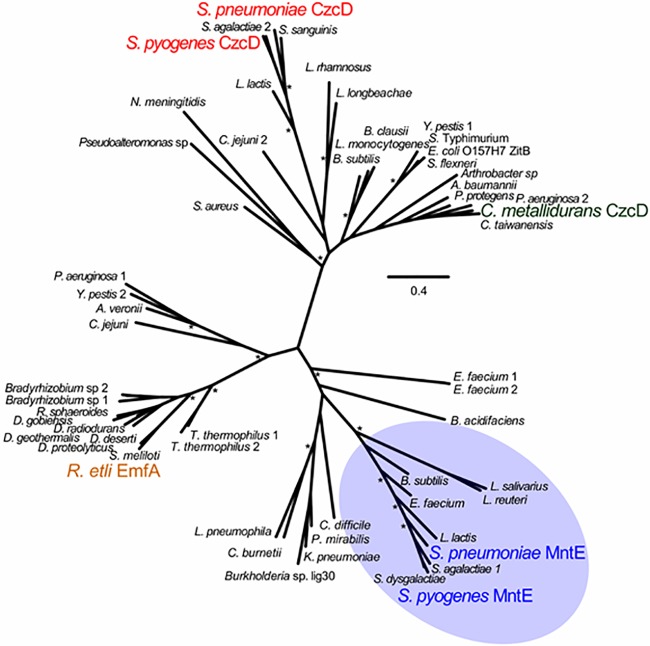
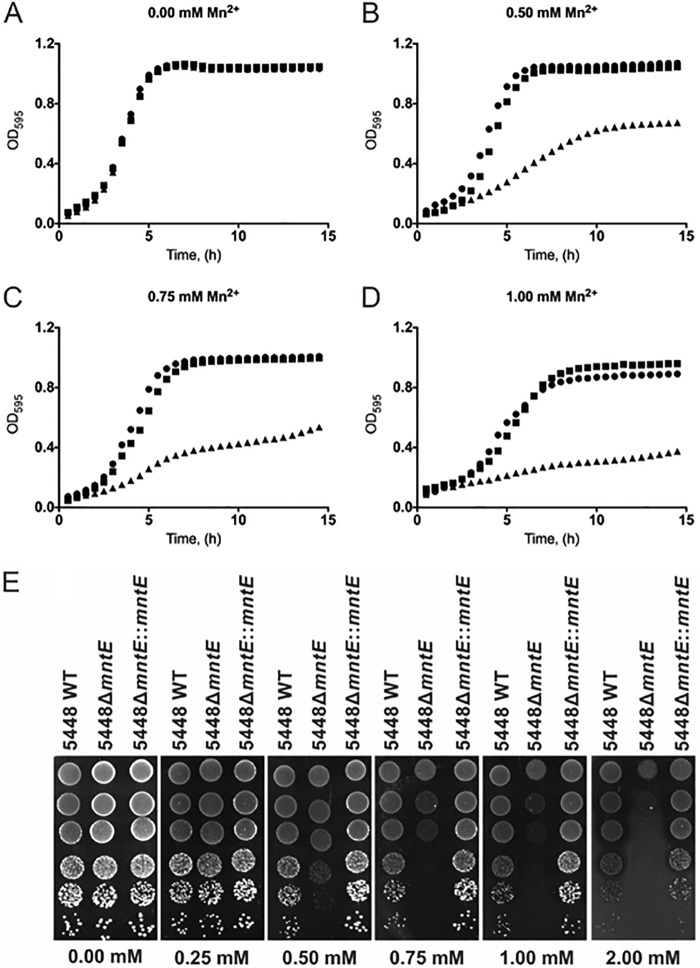
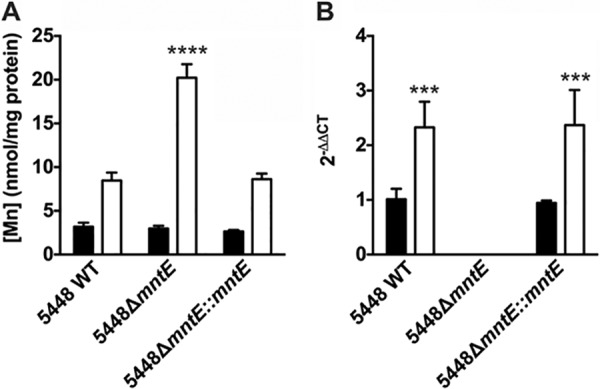
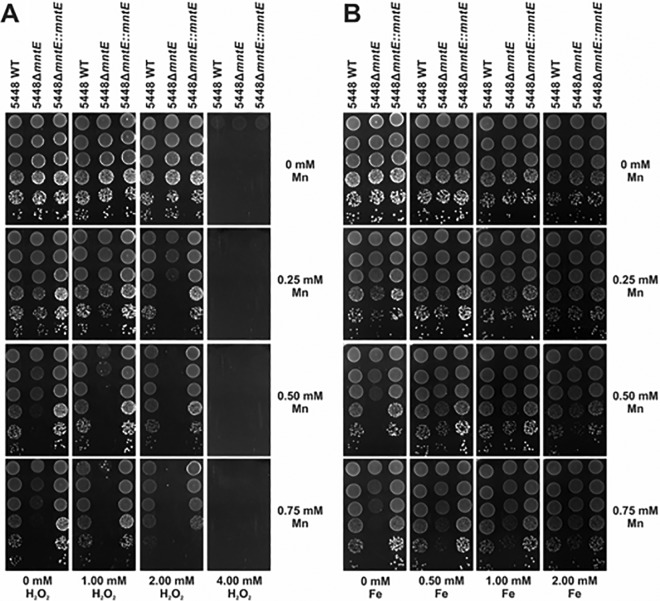
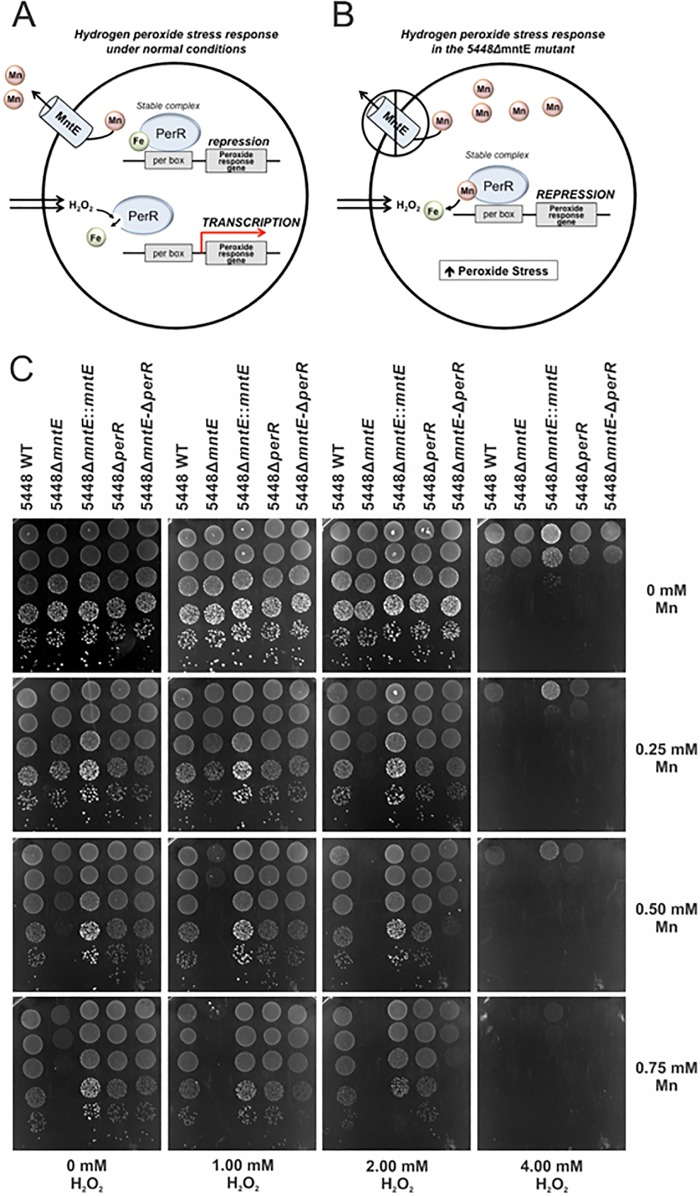
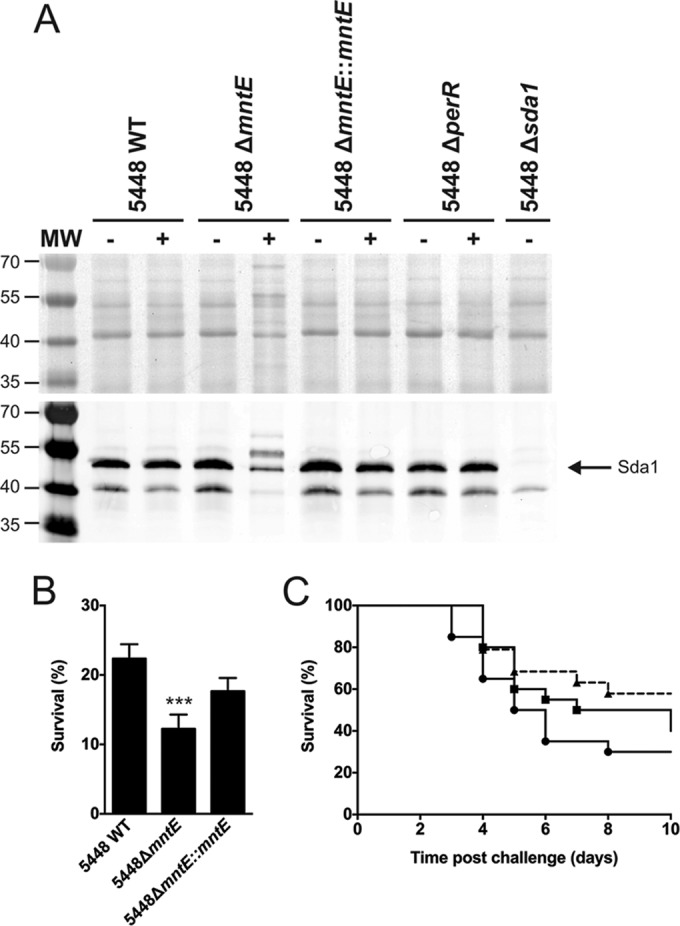
Streptococcus pyogenes (group A Streptococcus [GAS]) is an obligate human pathogen responsible for a spectrum of human disease states. Metallobiology of human pathogens is revealing the fundamental role of metals in both nutritional immunity leading to pathogen starvation and metal poisoning of pathogens by innate immune cells. Spy0980 (MntE) is a paralog of the GAS zinc efflux pump CzcD. Through use of an isogenic mntE deletion mutant in the GAS serotype M1T1 strain 5448, we have elucidated that MntE is a manganese-specific efflux pump required for GAS virulence. The 5448Δ mntE mutant had significantly lower survival following infection of human neutrophils than did the 5448 wild type and the complemented mutant (5448Δ mntE :: mntE ). Manganese homeostasis may provide protection against oxidative stress, explaining the observed ex vivo reduction in virulence. In the presence of manganese and hydrogen peroxide, 5448Δ mntE mutant exhibits significantly lower survival than wild-type 5448 and the complemented mutant. We hypothesize that MntE, by maintaining homeostatic control of cytoplasmic manganese, ensures that the peroxide response repressor PerR is optimally poised to respond to hydrogen peroxide stress. Creation of a 5448Δ mntE -Δ perR double mutant rescued the oxidative stress resistance of the double mutant to wild-type levels in the presence of manganese and hydrogen peroxide. This work elucidates the mechanism for manganese toxicity within GAS and the crucial role of manganese homeostasis in maintaining GAS virulence. IMPORTANCE Manganese is traditionally viewed as a beneficial metal ion to bacteria, and it is also established that most bacteria can tolerate high concentrations of this transition metal. In this work, we show that in group A Streptococcus, mutation of the mntE locus, which encodes a transport protein of the cation diffusion facilitator (CDF) family, results in accumulation of manganese and sensitivity to this transition metal ion. The toxicity of manganese is indirect and is the result of a failure of the PerR regulator to respond to oxidative stress in the presence of high intracellular manganese concentrations. These results highlight the importance of MntE in manganese homeostasis and maintenance of an optimal manganese/iron ratio in GAS and the impact of manganese on resistance to oxidative stress and virulence.
Overview
The claims and statistics of this paper haven’t been checked yet.
Free: it reads the open-access text and checks the first 5 claims that cite a source we can check. Create a free account to check every claim.
Integrity signals
Registry
Cites
Statistics
Figures
Verification
Claims the paper makes
The claims and statistics of this paper haven’t been checked yet.
Free: it reads the open-access text and checks the first 5 claims that cite a source we can check. Create a free account to check every claim.
Claims other papers make about this one
Each is checked against this paper’s own text: does it say what the citing paper says it does?
In the citing paper
“S. pyogenes also requires MntE for virulence and resistance to manganese toxicity and hydrogen peroxide stress, apparently due to dysregulation of metal homeostasis (132).”
From Transition Metals and Virulence in Bacteria (2016) · cites this paper as [132]
Self-check
Percentages, sums and reported differences re-computed from the paper’s own numbers.
The self-check needs the paper’s full text.
Citations
Cites
Analysis of Relative Gene Expression Data Using Real-Time Quantitative PCR and the 2−ΔΔCT Method
Livak, K. J., & Schmittgen, T. D. (2001) · Methods · doi:10.1006/meth.2001.1262 · Cited by 180,860
Guindon, S., Dufayard, J.-F., Lefort, V., Anisimova, M., Hordijk, W., & Gascuel, O. (2010) · Systematic Biology · doi:10.1093/sysbio/syq010 · Cited by 18,376
Fast, scalable generation of high‐quality protein multiple sequence alignments using Clustal Omega
Sievers, F., Wilm, A., Dineen, D., Gibson, T. J., Karplus, K., Li, W., Lopez, R., McWilliam, H., Remmert, M., Söding, J., et al. (2011) · Molecular Systems Biology · doi:10.1038/msb.2011.75 · Cited by 15,355
Metals, Toxicity and Oxidative Stress
Valko, M., Morris, H., & Cronin, M. (2005) · Current Medicinal Chemistry · doi:10.2174/0929867053764635 · Cited by 5,018
Mutation of the mouse klotho gene leads to a syndrome resembling ageing
Kuro-o, M., Matsumura, Y., Aizawa, H., Kawaguchi, H., Suga, T., Utsugi, T., Ohyama, Y., Kurabayashi, M., Kaname, T., Kume, E., et al. (1997) · Nature · doi:10.1038/36285 · Cited by 3,837
The global burden of group A streptococcal diseases
Carapetis, J. R., Steer, A. C., Mulholland, E. K., & Weber, M. (2005) · The Lancet Infectious Diseases · doi:10.1016/s1473-3099(05)70267-x · Cited by 2,998 · cited 1×
“There are more than 18 million cases of severe diseases caused by GAS infections which result in over 500,000 deaths each year (19).”
BackgroundNutritional immunity: transition metals at the pathogen–host interface
Hood, M. I., & Skaar, E. P. (2012) · Nature Reviews Microbiology · doi:10.1038/nrmicro2836 · Cited by 1,535 · cited 1×
“Competition for transition metal ions has emerged as a significant component of the innate immune defense system against pathogens (5), and the ability of the host to withhold metal ions (zinc, iron, and manganese) from bacterial pathogens is an important aspect of nutritional immunity, defined here as the restriction…”
BackgroundTransition Metal Speciation in the Cell: Insights from the Chemistry of Metal Ion Receptors
Finney, L. A., & O'Halloran, T. V. (2003) · Science · doi:10.1126/science.1085049 · Cited by 1,100
Disease Manifestations and Pathogenic Mechanisms of Group A Streptococcus
Walker, M. J., Barnett, T. C., McArthur, J. D., Cole, J. N., Gillen, C. M., Henningham, A., Sriprakash, K. S., Sanderson-Smith, M. L., & Nizet, V. (2014) · Clinical Microbiology Reviews · doi:10.1128/cmr.00101-13 · Cited by 908 · cited 3×
“GAS is an obligate human pathogen responsible for a wide variety of diseases ranging from mild infections such as impetigo and pharyngitis to life-threatening invasive diseases such as streptococcal toxic shock syndrome (STSS) and necrotizing fasciitis (18).”
BackgroundSelf-citationBuchanan, J. T., Simpson, A. J., Aziz, R. K., Liu, G. Y., Kristian, S. A., Kotb, M., Feramisco, J., & Nizet, V. (2006) · Current Biology · doi:10.1016/j.cub.2005.12.039 · Cited by 682 · cited 1×
“Electrotransformation and allelic replacement mutagenesis were undertaken using standard protocols (51, 52).”
Method
Cited by
Metal homeostasis and resistance in bacteria
Chandrangsu, P., Rensing, C., & Helmann, J. D. (2017) · Nature Reviews Microbiology · doi:10.1038/nrmicro.2017.15 · Cited by 812
Transition Metals and Virulence in Bacteria
Palmer, L. D., & Skaar, E. P. (2016) · Annual Review of Genetics · doi:10.1146/annurev-genet-120215-035146 · Cited by 449
Hardwiring microbes via direct interspecies electron transfer: mechanisms and applications
Cheng, Q., & Call, D. F. (2016) · Environmental Science: Processes & Impacts · doi:10.1039/c6em00219f · Cited by 202
Bifunctional antimicrobial conjugates and hybrid antimicrobials
Klahn, P., & Brönstrup, M. (2017) · Natural Product Reports · doi:10.1039/c7np00006e · Cited by 181
Transcriptome, proteome and draft genome of Euglena gracilis
Ebenezer, T. E., Zoltner, M., Burrell, A., Nenarokova, A., Novák Vanclová, A. M. G., Prasad, B., Soukal, P., Santana-Molina, C., O’Neill, E., Nankissoor, N. N., et al. (2019) · BMC Biology · doi:10.1186/s12915-019-0626-8 · Cited by 146
Jia, M., Winkler, M. K. H., & Volcke, E. I. P. (2020) · Environmental Science & Technology · doi:10.1021/acs.est.0c01776 · Cited by 98
Huang, X., Shin, J., Pinochet‐Barros, A., Su, T. T., & Helmann, J. D. (2017) · Molecular Microbiology · doi:10.1111/mmi.13554 · Cited by 93
Chong, G. W., Karbelkar, A. A., & El‐Naggar, M. Y. (2018) · Current Opinion in Chemical Biology · doi:10.1016/j.cbpa.2018.06.007 · Cited by 90
Suligoy, C. M., Lattar, S. M., Llana, M. N., Gonzalez, C. D., Álvarez, L., Robinson, D. A., Gómez, M. I., Buzzola, F. R., & Sordelli, D. O. (2018) · Frontiers in Cellular and Infection Microbiology · doi:10.3389/fcimb.2018.00018 · Cited by 90
Cysteine and resistance to oxidative stress: implications for virulence and antibiotic resistance
Tikhomirova, A., Rahman, M. M., Kidd, S. P., Ferrero, R. L., & Roujeinikova, A. (2023) · Trends in Microbiology · doi:10.1016/j.tim.2023.06.010 · Cited by 89
Lisher, J. P., Tsui, H. T., Ramos‐Montañez, S., Hentchel, K. L., Martin, J. E., Trinidad, J. C., Winkler, M. E., & Giedroc, D. P. (2017) · mSphere · doi:10.1128/msphere.00291-16 · Cited by 77
“In group A streptococci (GAS), Mn toxicity sensitizes the bacteria to neutrophil-mediated killing and H 2 O 2 stress (88).”
Multidomain analyses of a longitudinal human microbiome intestinal cleanout perturbation experiment
Fukuyama, J., Rumker, L., Sankaran, K., Jeganathan, P., Dethlefsen, L., Relman, D. A., & Holmes, S. P. (2017) · PLOS Computational Biology · doi:10.1371/journal.pcbi.1005706 · Cited by 73
The spatial and metabolic basis of colony size variation
Chacón, J. M., Möbius, W., & Harcombe, W. R. (2018) · The ISME Journal · doi:10.1038/s41396-017-0038-0 · Cited by 80
Structure–function analysis of manganese exporter proteins across bacteria
Zeinert, R., Martinez, E., Schmitz, J., Senn, K., Usman, B., Anantharaman, V., Aravind, L., & Waters, L. S. (2018) · Journal of Biological Chemistry · doi:10.1074/jbc.m117.790717 · Cited by 69
“In the absence of either of the manganese exporters mntE or mntP, bacteria are highly sensitive to manganese stress, accumulate excess intracellular manganese, and are less pathogenic (19-22,28).”
BackgroundMycobacteria employ two different mechanisms to cross the blood-brain barrier
van Leeuwen, L. M., Boot, M., Kuijl, C. P., Picavet, D. I., van Stempvoort, G., van der Pol, S. M. A., de Vries, H. E., van der Wel, N. N., van der Kuip, M., van Furth, A. M., et al. (2018) · Cellular Microbiology · doi:10.1111/cmi.12858 · Cited by 75
Grunenwald, C. M., Choby, J. E., Juttukonda, L. J., Beavers, W. N., Weiss, A., Torres, V. J., & Skaar, E. P. (2019) · mBio · doi:10.1128/mbio.02915-18 · Cited by 65
“Streptococcus pyogenes is more susceptible to killing by human neutrophils in vitro when the gene encoding the Mn efflux pump MntE, a member of the cation diffusion facilitator (CDF) protein family, is deleted (19).”
Hu, Y., Hu, Q., Wei, R., Li, R., Zhao, D., Ge, M., Yao, Q., & Yu, X. (2019) · Frontiers in Cellular and Infection Microbiology · doi:10.3389/fcimb.2018.00452 · Cited by 90
“, 2011), iron transporters (Janulczyk et al., 2003; Turner et al., 2015) and oxidant-catalyzing enzymes (Yamamoto et al.”
BackgroundChandrangsu, P., & Helmann, J. D. (2016) · PLOS Genetics · doi:10.1371/journal.pgen.1006515 · Cited by 60
Oliveira, D. M. P. D., Bohlmann, L., Conroy, T., Jen, F. E. ‐., Everest‐Dass, A., Hansford, K. A., Bolisetti, R., El-Deeb, I. M., Forde, B. M., Phan, M., et al. (2020) · Science Translational Medicine · doi:10.1126/scitranslmed.abb3791 · Cited by 64
Self-citationHudspith, M., Rix, L., Achlatis, M., Bougoure, J., Guagliardo, P. R., Clode, P. L., Webster, N. S., Muyzer, G., Pernice, M., & de Goeij, J. M. (2021) · Microbiome · doi:10.1186/s40168-020-00984-w · Cited by 67
Bacterial manganese sensing and homeostasis
Waters, L. S. (2020) · Current Opinion in Chemical Biology · doi:10.1016/j.cbpa.2020.01.003 · Cited by 56
Adhikary, S., Saha, J., Dutta, P., & Pal, A. (2024) · Geomicrobiology Journal · doi:10.1080/01490451.2024.2340517 · Cited by 57
“…and S. pyogenes utilize Mn for virulence (Huang et al. 2017; Hood and Skaar 2012; Neyrolles et al. 2015; Pandey et al. 2015; Tseng et al. 2002; Turner et al. 2015), although it is a crucial regulator of many fundamental cellular processes like protection against oxidative stress and synthesis…”
BackgroundZinc stress induces copper depletion in Acinetobacter baumannii
Hassan, K. A., Pederick, V. G., Elbourne, L. D. H., Paulsen, I. T., Paton, J. C., McDevitt, C. A., & Eijkelkamp, B. A. (2017) · BMC Microbiology · doi:10.1186/s12866-017-0965-y · Cited by 50
“The molecular basis of Zn toxicity is multifactorial with Zn intoxication leading to perturbed transition metal ion homeostasis, impairment of oxidative stress response mechanisms [24, 25] and disruption of central carbon metabolism [26].”
BackgroundMartin, J. E., & Giedroc, D. P. (2016) · Journal of Bacteriology · doi:10.1128/jb.00975-15 · Cited by 49
“Previous studies have consistently shown that pneumococcal cells lacking czcD are specifically sensitive to Zn toxicity, while mntE mutants are sensitive to Mn overload (21, 22, 34, 35).”
BackgroundRedox conduction in biofilms: From respiration to living electronics
Zacharoff, L. A., & El‐Naggar, M. Y. (2017) · Current Opinion in Electrochemistry · doi:10.1016/j.coelec.2017.09.003 · Cited by 45
Vozza, E. G., Mulcahy, M. E., & McLoughlin, R. M. (2021) · Frontiers in Immunology · doi:10.3389/fimmu.2021.667387 · Cited by 44
Bacillus subtilis TerC Family Proteins Help Prevent Manganese Intoxication
Paruthiyil, S., Pinochet-Barros, A., Huang, X., & Helmann, J. D. (2020) · Journal of Bacteriology · doi:10.1128/jb.00624-19 · Cited by 39
Lüftinger, L., Májek, P., Beisken, S., Rattei, T., & Posch, A. E. (2021) · Frontiers in Cellular and Infection Microbiology · doi:10.3389/fcimb.2021.610348 · Cited by 42
Zheng, C., Zhai, Y., Qiu, J., Wang, M. Z., Xu, Z., Chen, X., Zhou, X., & Jiao, X. (2024) · Gut Microbes · doi:10.1080/19490976.2024.2327377 · Cited by 33
“28 Therefore, we sought to explore whether the growth defect of V. parahaemolyticus Δ zntA under excess Zn, Ni, or Cd conditions could be alleviated by Fe(II) supplementation.”
BackgroundTransition Metal Homeostasis in Streptococcus pyogenes and Streptococcus pneumoniae
Turner, A. G., Ong, C. Y., Walker, M. J., Djoko, K. Y., & McEwan, A. G. (2017) · Advances in microbial physiology/Advances in Microbial Physiology · doi:10.1016/bs.ampbs.2017.01.002 · Cited by 40
Self-citationPmtA functions as a ferrous iron and cobalt efflux pump in Streptococcus suis
Zheng, C., Jia, M., Gao, M., Lu, T., Li, L., & Zhou, P. (2019) · Emerging Microbes & Infections · doi:10.1080/22221751.2019.1660233 · Cited by 36
“tems contribute to bacterial virulence [5,6,8,23].”
BackgroundPrabhu, D., Rajamanikandan, S., Satravada, B. A., Chowdary, M. S., Veerapandiyan, M., & Jeyakanthan, J. (2020) · Biology Bulletin · doi:10.1134/s1062359020300019 · Cited by 40
“The identification of such pumps in various bacteria such as E. coli (MntP) (Martin et al., 2015), Streptococcus pneumoniae (MntE) (Turner et al., 2015) and Neisseria spp. (MntX) (Veyrier et al., 2011) play an important role in removing excess manganese before levels become toxic.”
BackgroundMok, T. H., Nihat, A., Luk, C. Y., Sequeira, D., Batchelor, M., Mead, S., Collinge, J., & Jackson, G. S. (2021) · Scientific Reports · doi:10.1038/s41598-021-84527-9 · Cited by 33
Zhang, M. M., Ong, C. Y., Walker, M. J., & McEwan, A. G. (2015) · Pathogens and Disease · doi:10.1093/femspd/ftv122 · Cited by 32
“Growth assays were performed as previously described (Turner et al. 2015).”
MethodSelf-citationWhy is manganese so valuable to bacterial pathogens?
Čapek, J., & Večerek, B. (2023) · Frontiers in Cellular and Infection Microbiology · doi:10.3389/fcimb.2023.943390 · Cited by 32
Dual Role of Hydrogen Peroxide as an Oxidant in Pneumococcal Pneumonia
Mraheil, M. A., Toque, H. A., Pietra, L. L., Hamacher, J., Phanthok, T., Verin, A. D., Gonzales, J., Su, Y., Fulton, D. J., Eaton, D. C., et al. (2020) · Antioxidants and Redox Signaling · doi:10.1089/ars.2019.7964 · Cited by 32
“As a consequence, Spn becomes hypersensitive to oxidative stress, due to a decrease in the activity of MnSOD, which plays an important role in protecting the pathogen against high exogenous H2O2 levels (125).”
BackgroundEraso, J. M., Olsen, R. J., Beres, S. B., Kachroo, P., Porter, A. R., Nasser, W., Bernard, P. E., DeLeo, F. R., & Musser, J. M. (2016) · Infection and Immunity · doi:10.1128/iai.00608-16 · Cited by 31
Ouyang, A., Gasner, K. M., Neville, S. L., McDevitt, C. A., & Frawley, E. R. (2022) · Microbiology Spectrum · doi:10.1128/spectrum.01316-21 · Cited by 31
“S. aureus lackingmntE was more sensitive to sodium hypochlorite (NaOCl), while S. pyogenes was more sensitive to peroxide (H2O2) (20, 22).”
BackgroundAbu-Humaidan, A. H. A., Elvén, M., Sonesson, A., Garred, P., & Sørensen, O. E. (2018) · Frontiers in Immunology · doi:10.3389/fimmu.2018.00396 · Cited by 34
Turner, A. G., Djoko, K. Y., Ong, C.-L. Y., Barnett, T. C., Walker, M. J., & McEwan, A. G. (2019) · Biochemical Journal · doi:10.1042/bcj20180902 · Cited by 29
Self-citationEhira, S., Takeuchi, T., & Higo, A. (2017) · Applied Microbiology and Biotechnology · doi:10.1007/s00253-017-8620-y · Cited by 29
Ganguly, T., Peterson, A. M., Kajfasz, J. K., Abranches, J., & Lemos, J. A. (2021) · Molecular Oral Microbiology · doi:10.1111/omi.12337 · Cited by 26
Turner, A. G., Ong, C.-L. Y., Djoko, K. Y., West, N. P., Davies, M. R., McEwan, A. G., & Walker, M. J. (2017) · Infection and Immunity · doi:10.1128/iai.00140-17 · Cited by 26
“All GAS mutants were constructed according to standard operating procedures (50).”
MethodSelf-citationThe manganese efflux system MntE contributes to the virulence of Streptococcus suis serotype 2
Xu, J., Zheng, C., Cao, M., Zeng, T., Zhao, X., Shi, G., Chen, H., & Bei, W. (2017) · Microbial Pathogenesis · doi:10.1016/j.micpath.2017.06.022 · Cited by 23
Zheng, C., Wei, M., Qiu, J., Jia, M., Zhou, X., & Jiao, X. (2021) · Applied and Environmental Microbiology · doi:10.1128/aem.01375-21 · Cited by 24
“As observed in the present study and previous studies (10, 16),”
ResultManganese impairs the QoxABCD terminal oxidase leading to respiration‐associated toxicity
Sachla, A. J., Luo, Y., & Helmann, J. D. (2021) · Molecular Microbiology · doi:10.1111/mmi.14767 · Cited by 22
Zhang, J., Wang, S., Zeng, Z., Qin, Y., & Li, P. (2019) · 3 Biotech · doi:10.1007/s13205-019-1890-6 · Cited by 21
Lam, L. N., Wong, J. J., Chong, K. K. L., & Kline, K. A. (2020) · Infection and Immunity · doi:10.1128/iai.00058-20 · Cited by 19
DeBofsky, A., Xie, Y., Challis, J. K., Jain, N., Brinkmann, M., Jones, P. D., & Giesy, J. P. (2021) · Environmental Pollution · doi:10.1016/j.envpol.2021.116821 · Cited by 22
Chen, Z., Wang, X., Yang, F., Hu, Q., Tong, H., & Dong, X. (2017) · Journal of Biological Chemistry · doi:10.1074/jbc.m116.764126 · Cited by 21
“Metal homeostasis plays a central role in the anti-oxidative stress of Gram-positive bacteria particularly of the catalase void lactic acid bacteria (1, 2, 4, 12).”
BackgroundInfluentialWang, R., Deng, Y., Deng, Q., Sun, D., Fang, Z., Sun, L., Wang, Y., & Gooneratne, R. (2020) · Frontiers in Microbiology · doi:10.3389/fmicb.2020.00073 · Cited by 21
Respiratory virus-induced heterologous immunity: Part of the problem or part of the solution?
Pusch, E., Renz, H. E., & Skevaki, C. L. (2018) · Allergo Journal International · doi:10.1007/s40629-018-0056-0 · Cited by 20
Randazzo, P., Anba‐Mondoloni, J., Aubert-Frambourg, A., Guillot, A., Péchoux, C., Vidić, J., & Auger, S. (2019) · Journal of Bacteriology · doi:10.1128/jb.00547-19 · Cited by 20
“Pathogenic bacteria deficient in maintaining proper metal homeostasis are less virulent (2, 8, 14, 15).”
BackgroundMetal Homeostasis in Pathogenic Streptococci
Akbari, M. S., Doran, K. S., & Burcham, L. R. (2022) · Microorganisms · doi:10.3390/microorganisms10081501 · Cited by 21
Gozi, K. S., Froes, J. R., Ajude, L. P. T. D., da Silva, C. R., Baptista, R. S., Peiró, J. R., Marinho, M., Mendes, L. C. N., Nogueira, M. C. L., & Casella, T. (2019) · Frontiers in Microbiology · doi:10.3389/fmicb.2019.01394 · Cited by 24
Iron homeostasis in Bacillus subtilis relies on three differentially expressed efflux systems
Steingard, C. H., Pinochet‐Barros, A., Wendel, B. M., & Helmann, J. D. (2023) · Microbiology · doi:10.1099/mic.0.001289 · Cited by 16
“Indeed, this same mechanism accounts for the ability of mutations in the mntE Mn 2+ efflux pump to sensitize Streptococcus pyogenes to H 2 O 2 killing [64].”
Applications of Glycosaminoglycans in the Medical, Veterinary, Pharmaceutical, and Cosmetic Fields
Kovensky, J., Grand, É., & Uhrig, M. L. (2017) · Springer eBooks · doi:10.1007/978-3-319-61288-1_5 · Cited by 15
Redox-Regulated Adaptation of Streptococcus oligofermentans to Hydrogen Peroxide Stress
Tong, H., Dong, Y., Wang, X., Hu, Q., Yang, F., Yi, M., Deng, H., & Dong, X. (2020) · mSystems · doi:10.1128/msystems.00006-20 · Cited by 15
Proteolysis and multimerization regulate signaling along the two-component regulatory system AdeRS
Ouyang, Z., Zheng, F., Zhu, L., Félix, J., Wu, D., Wu, K., Gutsche, I., Wu, Y., Hwang, P. M., She, J., et al. (2021) · iScience · doi:10.1016/j.isci.2021.102476 · Cited by 18
Levy, G. V., Bañuelos, C. P., Níttolo, A. G., Ortiz, G. E., Mendiondo, N., Moretti, G., Tekiel, V., & Sánchez, D. O. (2015) · PLoS ONE · doi:10.1371/journal.pone.0136070 · Cited by 16
Guo, F., Wang, M., Huang, M. N., Yin, J., Gao, Q., Zhu, D., Wang, M., Jia, R., Chen, S., Zhao, X., et al. (2023) · Applied and Environmental Microbiology · doi:10.1128/aem.01835-22 · Cited by 15
“anatipestifer strains as described in previous studies with slight modifications (9, 15).”
BackgroundMethodZhu, L., Yerramilli, P., Pruitt, L., Saavedra, M. O., Cantu, C. C., Olsen, R. J., Beres, S. B., Waller, A. S., & Musser, J. M. (2020) · Infection and Immunity · doi:10.1128/iai.00357-20 · Cited by 17
Detection ofStreptococcus pyogenesusing rapid visual molecular assay
Zhao, X., He, X., Li, H., Zhao, J., Huang, S., Liu, W., Wei, X., Ding, Y., Wang, Z., Zou, D., et al. (2015) · FEMS Microbiology Letters · doi:10.1093/femsle/fnv148 · Cited by 14
Liu, Y., Wang, Z., Wu, S., Yuan, X., & Gao, T. (2022) · Soil Biology and Biochemistry · doi:10.1016/j.soilbio.2022.108659 · Cited by 12
Wu, J., McAuliffe, O. E., & O'Byrne, C. P. (2023) · International Journal of Food Microbiology · doi:10.1016/j.ijfoodmicro.2023.110238 · Cited by 15
Oliveira, D. M. P. D., Keller, B., Hayes, A. J., Ong, C. Y., Harbison-Price, N., El-Deeb, I. M., Li, G., Keller, N., Bohlmann, L., Brouwer, S., et al. (2022) · Antibiotics · doi:10.3390/antibiotics11040449 · Cited by 13
“Replacement of PerR-bound manganese by iron enables the transcription of oxidative stress response genes in GAS [28].”
BackgroundMethodInfluentialSelf-citationChakravarty, D., Sahukhal, G. S., Arick, M. A., Davis, M. L., & Donaldson, J. R. (2021) · Frontiers in Microbiology · doi:10.3389/fmicb.2021.754748 · Cited by 11
Managing Manganese: The Role of Manganese Homeostasis in Streptococcal Pathogenesis
Aggarwal, S., & Kumaraswami, M. (2022) · Frontiers in Cell and Developmental Biology · doi:10.3389/fcell.2022.921920 · Cited by 12
Manganese Transporter Proteins in Salmonella enterica serovar Typhimurium
Ha, N. K., & Lee, E. (2023) · The Journal of Microbiology · doi:10.1007/s12275-023-00027-7 · Cited by 12
Mis-regulation of Zn and Mn homeostasis is a key phenotype of Cu stress in Streptococcus pyogenes
Hong, Y., Mackenzie, E. S., Firth, S. J., Bolton, J., Stewart, L. J., Waldron, K. J., & Djoko, K. Y. (2023) · Metallomics · doi:10.1093/mtomcs/mfad064 · Cited by 10
Metabolic flux analyses of Pseudomonas aeruginosa cystic fibrosis isolates
Opperman, M. J., & Shachar‐Hill, Y. (2016) · Metabolic Engineering · doi:10.1016/j.ymben.2016.09.002 · Cited by 15
Johnsrude, M. J., Pitzer, J. E., Martin, D. W., & Roop, R. M. (2019) · Journal of Bacteriology · doi:10.1128/jb.00357-19 · Cited by 9
Biological characteristics of manganese transporter MntP in Klebsiella pneumoniae
Peng, W., Xu, Y., Yin, Y., Xie, J., Ma, R., Song, G., Zhang, Z., Quan, Q., Jiang, Q., Li, M., et al. (2024) · mSphere · doi:10.1128/msphere.00377-24 · Cited by 9
“When manganese export of bacteria is disrupted, the strain is not able to defend against exogenously produced hydrogen peroxide in excess manganese (33).”
InfluentialBanerji, R., & Saroj, S. D. (2021) · FEMS Microbiology Letters · doi:10.1093/femsle/fnab079 · Cited by 11
Analysis of the Manganese and MntR Regulon in Corynebacterium diphtheriae
Peng, E. D., Lyman, L. R., & Schmitt, M. P. (2021) · Journal of Bacteriology · doi:10.1128/jb.00274-21 · Cited by 9
“import, several pathogens, including Streptococcus pyogenes (15), Neisseria meningitidis”
BackgroundThe S. mutans mntE gene encodes a manganese efflux transporter
O'Brien, J., Pastora, A. B., Stoner, A., & Spatafora, G. A. (2020) · Molecular Oral Microbiology · doi:10.1111/omi.12286 · Cited by 11
“We propose that the functional loss of MntE in S. mutans can lead to reduced fitness and decreased virulence, as it does in streptococcal MntE mutants that are attenuated in a murine model (Rosch et al., 2009; Turner et al., 2015).”
BackgroundKuznetsova, A., Masrati, G., Vigonsky, E., Livnat‐Levanon, N., Rose, J., Grupper, M., Baloum, A., Yang, J. G., Rees, D. C., Ben‐Tal, N., et al. (2021) · Journal of Biological Chemistry · doi:10.1016/j.jbc.2021.101087 · Cited by 8
The role of CopA in Streptococcus pyogenes copper homeostasis and virulence
Dao, T. H., Iverson, A., Neville, S. L., Johnson, M. D. L., McDevitt, C. A., & Rosch, J. W. (2023) · Journal of Inorganic Biochemistry · doi:10.1016/j.jinorgbio.2023.112122 · Cited by 10
Group A Streptococcus adaptation to diverse niches: lessons from transcriptomic studies
Schiavolin, L., Deneubourg, G., Steinmetz, J., Smeesters, P. R., & Botteaux, A. (2023) · Critical Reviews in Microbiology · doi:10.1080/1040841x.2023.2294905 · Cited by 8
“Genes for metal acquisition, like iron ( siaABC, shr, shp, and hupYZ ) (Bates et al. 2003; cook et al. 2019), manganese ( mtsAB ) (turner et al. 2019) and zinc ( adcRCB-adcA ) (Ong et al. 2015; Sanson et al. 2015) were also upregulated (Hirose et al. 2019).”
BackgroundResultThe Transcriptional Regulator CpsY Is Important for Innate Immune Evasion in Streptococcus pyogenes
Vega, L. A., Valdes, K. M., Sundar, G. S., Belew, A. T., Islam, E., Berge, J., Curry, P., Chen, S., El-Sayed, N. M., Breton, Y. S. L., et al. (2016) · Infection and Immunity · doi:10.1128/iai.00925-16 · Cited by 7
Transcriptomic Analysis of Streptococcus suis in Response to Ferrous Iron and Cobalt Toxicity
Jia, M., Wei, M., Zhang, Y., & Zheng, C. (2020) · Genes · doi:10.3390/genes11091035 · Cited by 7
“For example, manganese homeostasis mediated by the manganese efflux pump (MntE) is critical for oxidative stress resistance and virulence in Streptococcus pyogenes and Staphylococcus aureus [17,18], while copper homeostasis conferred by MctB is essential for the virulence of Mycobacterium tuberculosis [19].”
BackgroundExpanding the genetic toolbox for the obligate human pathogen Streptococcus pyogenes
Lautenschläger, N., Schmidt, K., Schiffer, C. J., Wulff, T. F., Hahnke, K., Finstermeier, K., Mansour, M., Elsholz, A. K. W., & Charpentier, E. (2024) · Frontiers in Bioengineering and Biotechnology · doi:10.3389/fbioe.2024.1395659 · Cited by 6
“…promoters, such as the promoter of the copper-speci fi c exporter CopA (Young et al., 2015; Dao et al., 2023) and the cation-diffusion facilitator (CDF) family transporter MntE, a paralog of the zinc exporter CzcD reported to transport manganese (Rosch et al., 2009; Turner et al., 2015).”
An ion for an iron: streptococcal metal homeostasis under oxidative stress
Jakubovics, N. S. (2019) · Biochemical Journal · doi:10.1042/bcj20190017 · Cited by 6
Čapek, J., Procházková, I., Matoušek, T., Hot, D., & Večerek, B. (2021) · mBio · doi:10.1128/mbio.01902-21 · Cited by 4
Antimicrobial Drug Efflux Systems as Components of Bacterial Stress Responses
Poole, K., & Fruci, M. (2016) · Springer eBooks · doi:10.1007/978-3-319-39658-3_26 · Cited by 5
Aikawa, C., Shimizu, A., Nakakido, M., Murase, K., Nozawa, T., Tsumoto, K., & Nakagawa, I. (2023) · Biochemical and Biophysical Research Communications · doi:10.1016/j.bbrc.2023.07.052 · Cited by 2
Coimbra, C., Morais, P. V., & Branco, R. (2024) · Frontiers in Microbiology · doi:10.3389/fmicb.2024.1467386 · Cited by 3
“…to manage metal homeostasis, as reported in various studies concerning manganese (Mn) and zinc (Zn), such as the Zn uptake regulator Zur and the efflux pump MntE for maintaining Zn and Mn homeostasis, respectively (Feng et al., 2008; Turner et al., 2015; Xu et al., 2017; Grunenwald et al., 2019).”
BackgroundYang, R., Han, S., Yu, Y., Li, H., Helmann, J. D., Schaufler, K., Johnson, M. D. L., Yang, Q., & Rensing, C. (2025) · Microbiology Spectrum · doi:10.1128/spectrum.02634-24 · Cited by 5
The Group A Streptococcus (GAS) and Oxidative Stress Interaction
Emene, C. C., Kravchenko, I. E., Zamergrad, M. V., & Rizvanov, A. A. (2016) · BioNanoScience · doi:10.1007/s12668-016-0327-5 · Cited by 2
“The MntE pathway in Streptococcus pyogenes maintains the homoestatic control of cytoplasmic manganese in environments with increased manganese concentrations [31].”
BackgroundChemical biology approaches to identify novel anti-pseudomonas aeruginosa agents
Fong, J. (2019) · DR-NTU (Nanyang Technological University) · doi:10.32657/10356/100420
Rudzite, M., & O’Toole, G. A. (2024) · bioRxiv (Cold Spring Harbor Laboratory) · doi:10.1101/2024.07.12.603315 · Cited by 1
Li, G., El-Deeb, I. M., Whyte, H. G., Blaskovich, M. A. T., Walker, M. J., von Itzstein, M., & Oliveira, D. M. P. D. (2026) · Journal of Antimicrobial Chemotherapy · doi:10.1093/jac/dkag186
Self-citationLiu, S., Yao, Y., Shen, H., & Zhang, X. (2026) · Frontiers in Chemistry · doi:10.3389/fchem.2026.1941361
“…bacterial micronutrient, which participates in the functioning of metalloenzymes and oxidative-stress resistance (Juttukonda and Skaar, 2015; Turner et al., 2015), and nanostructures of manganese dioxide can exhibit antibacterial activity by mechanisms that cannot be extrapolated to…”
Metadata
- Authors
- Turner, A. G., Ong, C.-L. Y., Gillen, C. M., Davies, M. R., West, N. P., McEwan, A. G., & Walker, M. J.
- Affiliations
- The University of Queensland (AU)
- Corresponding author
- Walker, Mark J.
- ORCID
- Venue
- mBio
- Publisher
- American Society for Microbiology
- Published
- 2015-05
- Volume
- 6
- Issue
- 2
- ISSN
- 2150-7511 (ISSN-L)
- 2161-2129
- PMC
- PMC4453566
- OpenAlex
- W2169042769
- Cited by
- 93
- References
- 57
- Citations by year
- 2026: 2 · 2025: 1 · 2024: 6 · 2023: 10 · 2022: 5 · 2021: 14 · 2020: 11 · 2019: 12 · 2018: 7 · 2017: 12 · 2016: 10 · 2015: 3
- FWCI
- 11.44
- Type
- journal article
- Language
- en
- Open access
- gold
- doi.org
- Licence
- cc-by-nc-sa
- creativecommons.org/licenses/by-nc-sa/3.0/ (vor)
- journals.asm.org/non-commercial-tdm-license (tdm)
- Locations
- mBio (publishedVersion, cc-by-nc-sa)
- Europe PMC (PubMed Central) (publishedVersion, cc-by-nc-sa)
- PubMed Central (publishedVersion, cc-by-nc-sa)
- PubMed (publishedVersion)
- Minerva Access (University of Melbourne) (submittedVersion, cc-by-nc-sa)
- DOAJ (DOAJ: Directory of Open Access Journals) (submittedVersion, cc-by-sa)
- Funders
- Medical Research Council
- National Health and Medical Research Council (565526)
- Topics
- Health Sciences › Medicine › Infectious Diseases › Streptococcal Infections and Treatments
- Life Sciences › Biochemistry, Genetics and Molecular Biology › Genetics › Bacterial Genetics and Biotechnology
- Life Sciences › Immunology and Microbiology › Microbiology › Escherichia coli research studies
- Keywords
- Streptococcus pyogenes, manganese homeostasis, MnTe, oxidative stress resistance, virulence, PerR, hydrogen peroxide, cation diffusion facilitator, manganese toxicity, metal homeostasis, neutrophil survival
- MeSH terms
- Animals, Biological Transport, Active, Cells, Cultured, Disease Models, Animal, Genetic Complementation Test, Homeostasis, Humans, Hydrogen Peroxide, Manganese, Mice, Transgenic, Neutrophils, Streptococcal Infections, Streptococcus pyogenes, Virulence, Gene Deletion, Oxidative Stress, Membrane Transport Proteins, Microbial Viability
About these checks
Registry, retraction, Cites and statistics results are computed, not judged, with one exception: a printed reference that no index lists is read once by a model before it counts as a citation error. Claims are extracted by a model and kept only when their quote appears verbatim in the text; each cited source is then checked, with a model’s help, for whether it says what the claim relies on. Those verdicts can be wrong — read the claim’s quote and the cited source before relying on one.
Statistics and arithmetic are recomputed, not judged.
Confidence bands are shown only for fields calibrated on our annotated test set. None is calibrated yet, so no band is shown.
What counts as a claim ›How we measure confidence ›How we check this ›
Are you an author, or do you see a problem with this page? Request a review
Data sources
Bibliographic data: Semantic Scholar, OpenAlex, Crossref.
Contains information from the Semantic Scholar Academic Graph Datasets, made available under the ODC Attribution License (ODC-BY 1.0).
Semantic Scholar’s data is described in: Kinney, R., et al. (2023). The Semantic Scholar Open Data Platform. arXiv:2301.10140.
