

Epidermal Growth Factor Receptor-PI3K Signaling Controls Cofilin Activity To Facilitate Herpes Simplex Virus 1 Entry into Neuronal Cells
Open accessThe DOI matches its Crossref record; 75 of the 75 references it cites were found in a registry or an index.
Abstract
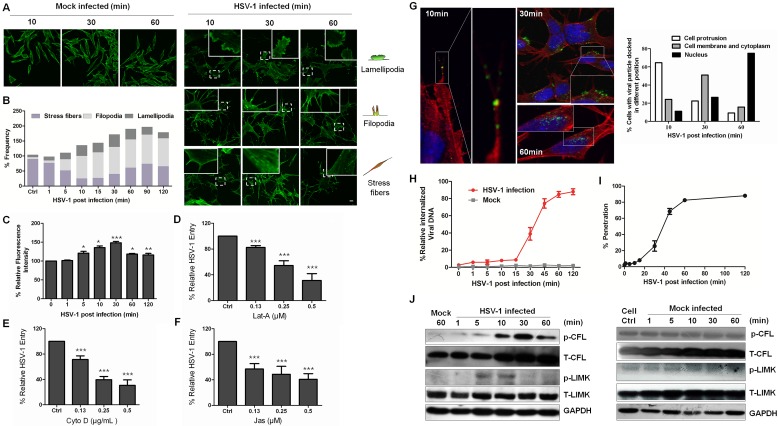
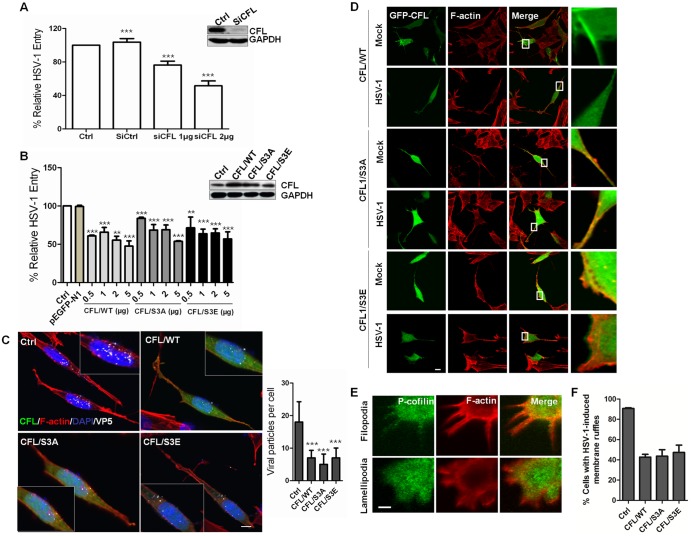
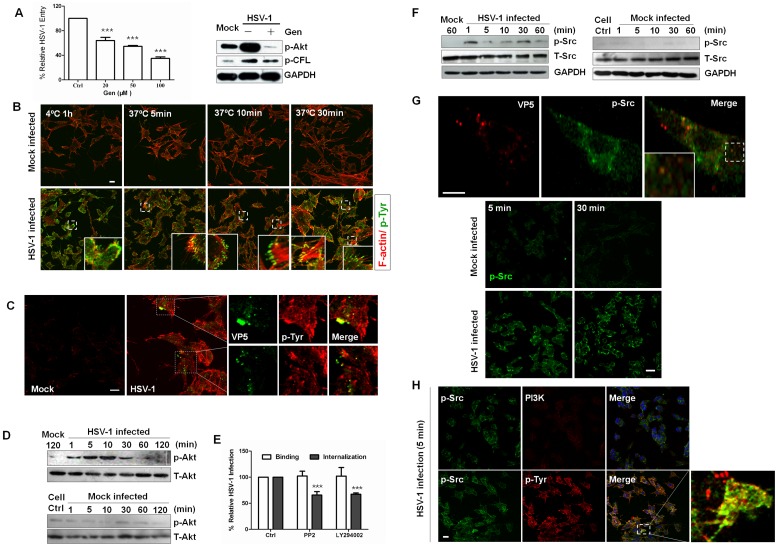
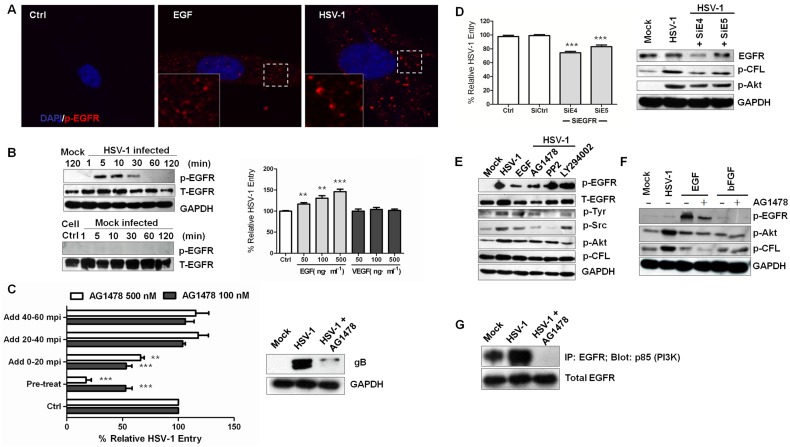
Herpes simplex virus type 1 (HSV-1) establishes latency in neurons and can cause severe disseminated infection with neurological impairment and high mortality. This neurodegeneration is thought to be tightly associated with virus-induced cytoskeleton disruption. Currently, the regulation pattern of the actin cytoskeleton and the involved molecular mechanisms during HSV-1 entry into neurons remain unclear. Here, we demonstrate that the entry of HSV-1 into neuronal cells induces biphasic remodeling of the actin cytoskeleton and an initial inactivation followed by the subsequent activation of cofilin, a member of the actin depolymerizing factor family that is critical for actin reorganization. The disruption of F-actin dynamics or the modulation of cofilin activity by mutation, knockdown, or overexpression affects HSV-1 entry efficacy and virus-mediated cell ruffle formation. Binding of the HSV-1 envelope initiates the epidermal growth factor receptor (EGFR)-phosphatidylinositide 3-kinase (PI3K) signaling pathway, which leads to virus-induced early cofilin phosphorylation and F-actin polymerization. Moreover, the extracellular signal-regulated kinase (ERK) kinase and Rho-associated, coiled-coil-containing protein kinase 1 (ROCK) are recruited as downstream mediators of the HSV-1-induced cofilin inactivation pathway. Inhibitors specific for those kinases significantly reduce the virus infectivity without affecting virus binding to the target cells. Additionally, lipid rafts are clustered to promote EGFR-associated signaling cascade transduction. We propose that HSV-1 hijacks cofilin to initiate infection. These results could promote a better understanding of the pathogenesis of HSV-1-induced neurological diseases. IMPORTANCE The actin cytoskeleton is involved in many crucial cellular processes and acts as an obstacle to pathogen entry into host cells. Because HSV-1 establishes lifelong latency in neurons and because neuronal cytoskeletal disruption is thought to be the main cause of HSV-1-induced neurodegeneration, understanding the F-actin remodeling pattern by HSV-1 infection and the molecular interactions that facilitate HSV-1 entry into neurons is important. In this study, we showed that HSV-1 infection induces the rearrangement of the cytoskeleton as well as the initial inactivation and subsequent activation of cofilin. Then, we determined that activation of the EGFR-PI3K-Erk1/2 signaling pathway inactivates cofilin and promotes F-actin polymerization. We postulate that by regulating actin cytoskeleton dynamics, cofilin biphasic activation could represent the specific cellular machinery usurped by pathogen infection, and these results will greatly contribute to the understanding of HSV-1-induced early and complex changes in host cells that are closely linked to HSV-1 pathogenesis.
Overview
The claims and statistics of this paper haven’t been checked yet.
Free: it reads the open-access text and checks the first 5 claims that cite a source we can check. Create a free account to check every claim.
Integrity signals
Registry
Cites
Statistics
Figures
Verification
Claims the paper makes
The claims and statistics of this paper haven’t been checked yet.
Free: it reads the open-access text and checks the first 5 claims that cite a source we can check. Create a free account to check every claim.
Self-check
Percentages, sums and reported differences re-computed from the paper’s own numbers.
The self-check needs the paper’s full text.
Citations
Cites
RHO GTPASES in neuronal morphogenesis
Luo, L. (2000) · Nature Reviews Neuroscience · doi:10.1038/35044547 · Cited by 986
HSV-1 ICP34.5 Confers Neurovirulence by Targeting the Beclin 1 Autophagy Protein
Orvedahl, A., Alexander, D., Tallóczy, Z., Sun, Q., Wei, Y., Zhang, W., Burns, D., Leib, D. A., & Levine, B. (2007) · Cell Host & Microbe · doi:10.1016/j.chom.2006.12.001 · Cited by 857 · cited 1×
“, Alzheimer’s disease), making them a proper candidate for elucidating the response of neuronal cells to HSV-1 infection and the molecular interaction promoting HSV-1 entry (7, 25).”
BackgroundMultiple neurotransmitter synthesis by human neuroblastoma cell lines and clones.
Biedler, J. L., Roffler-Tarlov, S. K., Schachner, M., & Freedman, L. S. (1978) · PubMed · Cited by 759
Lupberger, J., Zeisel, M. B., Xiao, F., Thumann, C., Fofana, I., Zona, L., Davis, C., Mee, C. J., Turek, M., Gorke, S., et al. (2011) · Nature Medicine · doi:10.1038/nm.2341 · Cited by 706
ADF/Cofilin: a functional node in cell biology
Bernstein, B. W., & Bamburg, J. R. (2010) · Trends in Cell Biology · doi:10.1016/j.tcb.2010.01.001 · Cited by 704 · cited 1×
“Actin-filament dynamics in cells are known to be modulated by cofilin, and the most important physiological function of cofilin is to sever and depolymerize actin filaments, thereby promoting actin dynamics (31).”
BackgroundHerpesviruses and heparan sulfate: an intimate relationship in aid of viral entry
Shukla, D., & Spear, P. G. (2001) · Journal of Clinical Investigation · doi:10.1172/jci13799 · Cited by 567 · cited 1×
“, herpes simplex encephalitis [HSE]) (6).”
Coyne, C. B., & Bergelson, J. M. (2006) · Cell · doi:10.1016/j.cell.2005.10.035 · Cited by 547 · cited 3×
“In addition, Src-family kinases, which are involved in regulating changes in the cytoskeleton during the uptake of various invasive pathogens (12, 41, 42), and PI3K were activated early (Fig.”
BackgroundInfluenza virus propagation is impaired by inhibition of the Raf/MEK/ERK signalling cascade
Pleschka, S., Wolff, T., Ehrhardt, C., Hobom, G., Planz, O., Rapp, U. R., & Ludwig, S. (2001) · Nature Cell Biology · doi:10.1038/35060098 · Cited by 526
Herpesviruses and heparan sulfate: an intimate relationship in aid of viral entry
Shukla, D., & Spear, P. G. (2001) · Journal of Clinical Investigation · doi:10.1172/jci200113799 · Cited by 454
Localization of Epidermal Growth Factor-stimulated Ras/Raf-1 Interaction to Caveolae Membrane
Mineo, C., James, G. L., Smart, E. J., & Anderson, R. G. W. (1996) · Journal of Biological Chemistry · doi:10.1074/jbc.271.20.11930 · Cited by 447 · cited 1×
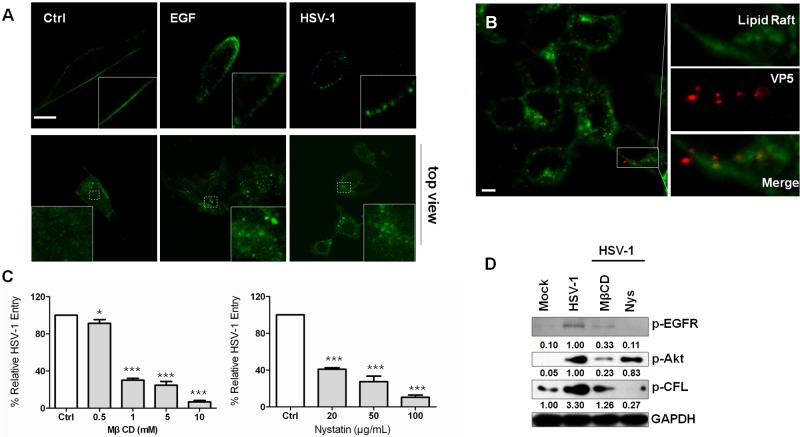
“Because EGFR is localized in lipid raft domains (47) and because lipid rafts may function to concentrate the receptors required for binding or inducing signal transduction upon the binding of the viral protein (48–51), we examined whether lipid rafts regulate HSV-1 entry.”
Background
Cited by
Dynamics of Virus-Receptor Interactions in Virus Binding, Signaling, and Endocytosis
Boulant, S., Stanifer, M., & Lozach, P.-Y. (2015) · Viruses · doi:10.3390/v7062747 · Cited by 193
“EGFR-mediated signaling is believed to promote the penetration of some herpesviruses such as the human cytomegalovirus (CMV) and herpes simplex virus 1 (HSV1) [56,57].”
BackgroundLipid interactions during virus entry and infection: Lipids and Viruses
Mazzon, M., & Mercer, J. (2014) · Cellular Microbiology · doi:10.1111/cmi.12340 · Cited by 163
“, 2011), Herpes simplex virus type 1 (HSV-1) (Zheng et al., 2014), HCV (Berger et al.”
BackgroundThe role of PI3K/Akt in human herpesvirus infection: From the bench to the bedside
Liu, X., & Cohen, J. I. (2015) · Virology · doi:10.1016/j.virol.2015.02.040 · Cited by 131
Infection and Transport of Herpes Simplex Virus Type 1 in Neurons: Role of the Cytoskeleton
Saksena, M. M., Denes, C. E., Diefenbach, R. J., & Cunningham, A. L. (2018) · Viruses · doi:10.3390/v10020092 · Cited by 126
“During infection of neurons, HSV-1 causes a biphasic remodeling of the actin cytoskeleton by causing the inactivation of cofilin-1 followed by its subsequent activation, resulting in F-actin assembly and disassembly during early and late stages of infection, respectively [60,67].”
BackgroundExploitation of Cytoskeletal Networks during Early Viral Infection
Walsh, D., & Naghavi, M. H. (2018) · Trends in Microbiology · doi:10.1016/j.tim.2018.06.008 · Cited by 107
Viral journeys on the intracellular highways
Robinson, M., Schor, S., Barouch‐Bentov, R., & Einav, S. (2018) · Cellular and Molecular Life Sciences · doi:10.1007/s00018-018-2882-0 · Cited by 103
“The HSV-1 protein US3, for example, stabilizes microtubules by activating cytoplasmic linkerassociated proteins (CLASPs), cellular specialized plus-end tracking proteins (+TIPs) that function in both microtubule nucleation at the Golgi apparatus and microtubule capture at the cell periphery, thereby facilitating viral…”
BackgroundViral exploitation of the MEK/ERK pathway – A tale of vaccinia virus and other viruses
Bonjardim, C. A. (2017) · Virology · doi:10.1016/j.virol.2016.12.011 · Cited by 86
Viruses exploit the function of epidermal growth factor receptor
Zheng, K., Kitazato, K., & Wang, Y. (2014) · Reviews in Medical Virology · doi:10.1002/rmv.1796 · Cited by 81
“In addition, an IE protein of HSV-1, infected cell protein 0 (ICP0), has been shown to repress EGFR cell surface expression by forming a complex with CIN85 and Cbl [29].”
BackgroundMethodInfluentialSelf-citationMicrobiota Introduced to Germ-Free Rats Restores Vascular Contractility and Blood Pressure
Joe, B., McCarthy, C. G., Edwards, J. M., Cheng, X., Chakraborty, S., Yang, T., Golonka, R. M., Mell, B., Yeo, J., Bearss, N. R., et al. (2020) · Hypertension · doi:10.1161/hypertensionaha.120.15939 · Cited by 75
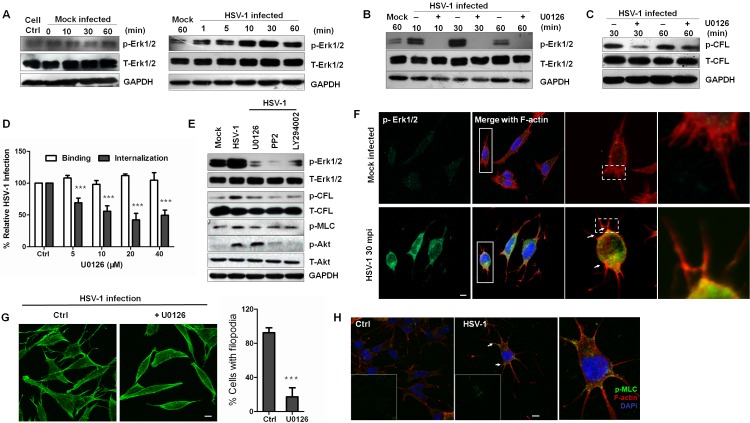
“It has been shown that viral stimulation of phospho ERK1/2 leads to cofilin phosphorylation and inactivation and, subsequently, F-actin polymerization.(30) Corroborating these data, we observed that absence of microbiota leads to decrease in phospho ERK1/2 (Figures 5C and 5D).”
BackgroundAmentoflavone Inhibits HSV-1 and ACV-Resistant Strain Infection by Suppressing Viral Early Infection
Li, F., Song, X., Su, G., Wang, Y., Wang, Y., Jia, J., Qing, S., Huang, L., Wang, Y., Zheng, K., et al. (2019) · Viruses · doi:10.3390/v11050466 · Cited by 76
“As shown in Figure 7A, HSV-1 infection clearly induced the formation of lamellipodia and filopodia (different forms of accumulated F-actin), or the formation of cortical actin in accordance with our previous works [13,26].”
BackgroundMethodResultSelf-citationHeparanase, cell signaling, and viral infections
Koganti, R., Suryawanshi, R., & Shukla, D. (2020) · Cellular and Molecular Life Sciences · doi:10.1007/s00018-020-03559-y · Cited by 67
Schreiber, A., Viemann, D., Schöning, J., Schloer, S., Mecate‐Zambrano, A., Brunotte, L., Faist, A., Schöfbänker, M., Hrincius, E. R., Hoffmann, H., et al. (2022) · Cellular and Molecular Life Sciences · doi:10.1007/s00018-021-04085-1 · Cited by 65
Genital Herpes: Insights into Sexually Transmitted Infectious Disease
Jaishankar, D., & Shukla, D. (2016) · Microbial Cell · doi:10.15698/mic2016.09.528 · Cited by 77
Villalonga-Rosso, E., Mosrin-Huaman, C., Normand, T., Girardin, C., Serrano, A., Žunar, B., Doudeau, M., Godin, F., Bénédetti, H., & Vallée, B. (2023) · Cells · doi:10.3390/cells12050805 · Cited by 66
“The specific inhibition of these pathways significantly limits the virus infectivity [246].”
BackgroundLv, X., Li, Z., Guan, J., Hu, S., Zhang, J., Lan, Y., Zhao, K., Lu, H., Song, D., He, H., et al. (2018) · Journal of Virology · doi:10.1128/jvi.01736-18 · Cited by 66
“PHEV or inactivated PHEV was added to N2a cells at 4°C for 1 h to synchronize infection before the cells were transferred to 37°C to initiate infection, which is a method that has been widely used (23) .”
MethodXu, Q., Cao, M., Song, H., Chen, S., Qian, X., Zhao, P., Ren, H., Tang, H., Wang, Y., Wei, Y., et al. (2016) · Future Microbiology · doi:10.2217/fmb-2016-0002 · Cited by 61
Self-citationMolecular Mechanisms Associated with Neurodegeneration of Neurotropic Viral Infection
Wongchitrat, P., Chanmee, T., & Govitrapong, P. (2023) · Molecular Neurobiology · doi:10.1007/s12035-023-03761-6 · Cited by 74
“The HSV-1 protein can activate the PI3K/AKT signaling pathway to facilitate viral infection, protein synthesis, and reactivation [234, 235].”
BackgroundHu, W., Zhu, L., Yang, X., Lin, J., & Yang, Q. (2016) · Oncotarget · doi:10.18632/oncotarget.7723 · Cited by 60
“EGFR can be activated by many viruses, including influenza A, hepatitis C (HCV), Herpes simplex type 1(HSV-1), and human cytomegalovirus (HCMV) [16-19].”
BackgroundEpidermal growth factor receptor is a co-factor for transmissible gastroenteritis virus entry
Hu, W., Zhang, S., Shen, Y., & Yang, Q. (2018) · Virology · doi:10.1016/j.virol.2018.05.009 · Cited by 60
“The activation of PI3K and ERK1/2 has been found in many virus entry mechanisms, such as: human cytomegalovirus, influenza A, and herpes simplex virus (Eierhoff et al., 2010b; Johnson et al., 2001a Johnson et al., , 2001b Zheng et al., 2014b) .”
BackgroundZhong, M., Zheng, K., Chen, M., Xiang, Y., Jin, F., Ma, K., Qiu, X., Wang, Q.-L., Peng, T., Kitazato, K., et al. (2014) · PLoS ONE · doi:10.1371/journal.pone.0099425 · Cited by 59
“BJ-B11 was synthesized according to previously reported methods [17].”
MethodSelf-citationDiscovery of Novel Small-Molecule Inhibitors of LIM Domain Kinase for Inhibiting HIV-1
Yi, F., Guo, J., Dabbagh, D., Spear, M., He, S., Kehn‐Hall, K., Fontenot, J., Yin, Y. B., Bibian, M., Park, C. M., et al. (2017) · Journal of Virology · doi:10.1128/jvi.02418-16 · Cited by 50
“Recently, studies have suggested that LIMK is also involved in HSV-1 infection of neurons (18).”
BackgroundSelf-citationLaval, K., Favoreel, H. W., Poelaert, K. C. K., Van Cleemput, J., & Nauwynck, H. J. (2015) · Journal of Virology · doi:10.1128/jvi.01589-15 · Cited by 44
Inhibition of herpes simplex virus type 1 entry by chloride channel inhibitors tamoxifen and NPPB
Zheng, K., Chen, M., Xiang, Y., Ma, K., Jin, F., Wang, X., Wang, X., Wang, S., & Wang, Y. (2014) · Biochemical and Biophysical Research Communications · doi:10.1016/j.bbrc.2014.03.050 · Cited by 40
Self-citationWang, Y., 王荣泽, Li, F., Wang, Y., Zhang, Z., Wang, Q., Ren, Z., Jin, F., Kitazato, K., & Wang, Y. (2018) · Molecular Medicine · doi:10.1186/s10020-018-0066-x · Cited by 44
Self-citationTiwari, D., Jakhmola, S., Pathak, D. K., Kumar, R., & Jha, H. C. (2020) · ACS Omega · doi:10.1021/acsomega.0c04525 · Cited by 46
Viral exploitation of actin: force-generation and scaffolding functions in viral infection
Spear, M., & Wu, Y. (2014) · Virologica Sinica · doi:10.1007/s12250-014-3476-0 · Cited by 43
“Similarly, HSV-1 has been shown to utilize a RhoA, tyrosine kinase, and actin-dependent phagocytosis-like route for entry (Clement C, et al., 2006; Zheng K, et al., 2014b).”
Exosomal transmission of viruses, a two-edged biological sword
Mardi, N., Haiaty, S., Rahbarghazi, R., Mobarak, H., Milani, M., Zarebkohan, A., & Nouri, M. (2023) · Cell Communication and Signaling · doi:10.1186/s12964-022-01037-5 · Cited by 43
Prion‐like protein aggregates exploit the RHO GTPase to cofilin‐1 signaling pathway to enter cells
Zhong, Z., Grasso, L., Sibilla, C., Stevens, T. J., Barry, N. P., & Bertolotti, A. (2018) · The EMBO Journal · doi:10.15252/embj.201797822 · Cited by 46
“The role of cofilin-1 in aggregate entry identified here reveals a mechanistic analogy between SOD1 aggregate entry and the entry of some viruses, which also exploits cofilin-1 to remodel actin and enter cells (Yoder et al , 2008; Xiang et al , 2012; Zheng et al , 2013).”
Zhang, X., Ming, Y., Fu, X., Niu, Y., Lin, Q., Liang, H., Luo, X., Liu, L., & Li, N. (2021) · Fish & Shellfish Immunology · doi:10.1016/j.fsi.2021.12.046 · Cited by 39
Viral modulation of lipid rafts and their potential as putative antiviral targets
Gee, Y. J., Sea, Y. L., & Lal, S. K. (2022) · Reviews in Medical Virology · doi:10.1002/rmv.2413 · Cited by 37
“stimulates polymerisation of actin cytoskeleton, resulting in facilitation of viral entry.(49) In fact, the PI3K pathway is one of the most”
BackgroundPan, Q., Xie, Y., Zhang, Y., Guo, X., Wang, J., Liu, M., & Zhang, X. (2024) · Nature Communications · doi:10.1038/s41467-024-44960-6 · Cited by 42
“Many viral infections (e.g., HCV, VSV, and HSV-1) stimulate the EGFR/AKT endocytosis signaling pathways 40 – 43 .”
Decoding protein networks during virus entry by quantitative proteomics
Gerold, G., Bruening, J., & Pietschmann, T. (2015) · Virus Research · doi:10.1016/j.virusres.2015.09.006 · Cited by 37
“A widespread example common to viruses of diverse families including herpesviruses, papillomaviruses and flaviviruses is the triggering of receptor tyrosine kinase signaling (Hahn et al., 2012; Lupberger et al., 2011; Surviladze et al., 2013; Zheng et al., 2014) .”
Preugschas, H. F., Hrincius, E. R., Mewis, C., Tran, G. V. Q., Ludwig, S., & Ehrhardt, C. (2018) · Cellular Microbiology · doi:10.1111/cmi.12955 · Cited by 36
“entry, JC polyomavirus requires ERK activation for viral transcription, and influenza A virus (IAV) hijacks Raf/MEK/ERK activity for efficient viral ribonucleoprotein (vRNP) export (DuShane, Wilczek, Mayberry, & Maginnis, 2018; Pleschka et al., 2001; Zheng et al., 2014).”
BackgroundCheng, Y. F., Lou, J.-X., Liu, C., Liu, Y., Chen, X., Liang, X., Zhang, J., Yang, Q., Go, Y. Y., & Zhou, B. (2021) · Journal of Virology · doi:10.1128/jvi.02436-20 · Cited by 35
“Finally, both of them regulate the rearrangement of the actin cytoskeleton (29, 31).”
BackgroundTargeting of host cell receptor tyrosine kinases by intracellular pathogens
Haqshenas, G., & Doerig, C. (2019) · Science Signaling · doi:10.1126/scisignal.aau9894 · Cited by 32
“In cultured cells, herpes simplex virus type 1 (HSV-1) induces the formation of filopodia, binds to them, and is subsequently translocated to the cell body, where internalization occurs through activation of Cdc42 (49), but the role of RTKs in this process is unknown.”
BackgroundInfluentialNeuronal Signaling Involved in Neuronal Polarization and Growth: Lipid Rafts and Phosphorylation
Igarashi, M., Honda, A., Kawasaki, A., & Nozumi, M. (2020) · Frontiers in Molecular Neuroscience · doi:10.3389/fnmol.2020.00150 · Cited by 36
Wu, Z., Ichinose, T., Naoe, Y., Matsumura, S., Villalobos, I. B., Eissa, I. R., Yamada, S., Miyajima, N., Morimoto, D., Mukoyama, N., et al. (2019) · Molecular Therapy — Oncolytics · doi:10.1016/j.omto.2019.04.004 · Cited by 31
“However, other researchers reported that the interaction between EGFR and PI3K was upregulated and EGFR was transiently activated during HSV-1 infection.(44) We also determined that the expression of EGFR in vitro was temporarily increased after C-REV administration but subsequently decreased (Figure S2).”
BackgroundEGF receptor modulates HEV entry in human hepatocytes
Schrader, J. A., Burkard, T. L., Brüggemann, Y., Gömer, A., Meister, T. L., Fu, R., Mehnert, A.-K., Thi, V. L. D., Behrendt, P., Durantel, D., et al. (2023) · Hepatology · doi:10.1097/hep.0000000000000308 · Cited by 34
“Furthermore, EGFR signaling is utilized for viral entry and replication by remodeling the actin network enabling entry (ie, human cytomegalovirus,[42] herpes simplex virus 1[43]) or inducing favorable environments for replication (ie, Epstein-Barr virus[44]).”
BackgroundCurrent and Potential Treatments for Ubiquitous but Neglected Herpesvirus Infections
Gable, J. E., Acker, T. M., & Craik, C. S. (2014) · Chemical Reviews · doi:10.1021/cr500255e · Cited by 33
Zhang, C., Chen, F., Liu, X., Han, X., Hu, Y., Su, X., Chen, Y., Sun, Y., & Han, L. (2019) · Frontiers in Microbiology · doi:10.3389/fmicb.2019.01345 · Cited by 29
Siniperca chuatsi rhabdovirus (SCRV) induces autophagy via PI3K/Akt-mTOR pathway in CPB cells
Fu, X., Ming, Y., Li, C., Niu, Y., Lin, Q., Liu, L., Liang, H., Huang, Z., & Li, N. (2020) · Fish & Shellfish Immunology · doi:10.1016/j.fsi.2020.04.064 · Cited by 27
“It has been found that Autophagy was triggered by viral hemorrhagic septicemia virus (VHSV) and spring viraemia of carp virus (SVCV) [10].”
BackgroundInfluentialOuwendijk, W. J. D., Dekker, L. J. M., van den Ham, H., Roviš, T. L., Haefner, E. S., Jonjić, S., Haas, J., Luider, T. M., & Verjans, G. M. G. M. (2020) · Frontiers in Microbiology · doi:10.3389/fmicb.2020.01179 · Cited by 27
“Similar to HCMV, HSV-1 (and possibly VZV) may use EGFR signaling-mediated remodeling of the actin cytoskeleton to enhance virus uptake in host cells (Zheng et al., 2014).”
BackgroundShen, C.-H., Chou, C.-C., Lai, T., Hsu, J.-E., Lin, Y.-S., Liu, H., Chen, Y.-K., Ho, I.-L., Hsu, P., Chuang, T., et al. (2021) · Frontiers in Cell and Developmental Biology · doi:10.3389/fcell.2021.642625 · Cited by 29
Bao, Z., Han, X., Chen, F., Jia, X., Zhao, J., Zhang, C., Yong, C., Tian, S., Zhou, X., & Han, L. (2015) · BMC Microbiology · doi:10.1186/s12866-015-0500-y · Cited by 26
“Overexpression of wild-type cofilin (cofilin WT) has been reported to increase cofilin activity, and the expression of a mutant carrying the S3A substitution has also been successfully used to mimic active cofilin [21].”
MethodSabino, C., Bender, D., Herrlein, M., & Hildt, E. (2021) · Journal of Virology · doi:10.1128/jvi.01195-21 · Cited by 27
“This has been described for influenza A virus (IAV) (35), hepatitis C virus (HCV) (36, 37), hepatitis B virus (HBV) (38), human cytomegalovirus (HCMV) (39), Japanese encephalitis virus (JEV) (40), herpes simplex virus 1 (HSV-1) (41), transmissible gastroenteritis virus (TGEV) (42, 43), adeno-associated virus serotype…”
BackgroundLiu, G., Xiang, Y., Guo, C., Pei, Y., Wang, Y., & Kitazato, K. (2014) · Biochemical and Biophysical Research Communications · doi:10.1016/j.bbrc.2014.10.036 · Cited by 26
“IAV infection results in activation of phosphoinositide 3-kinase (PI3K) signaling pathway, which may inactivates cofilin and promote F-actin polymerization [23, 37, 38].”
BackgroundSelf-citationHunziker, A., Glas, I., Pohl, M. O., & Stertz, S. (2022) · Cell Reports · doi:10.1016/j.celrep.2022.110306 · Cited by 24
Wang, R., Wang, X., Wu, J., Ni, B., Wen, L.-B., Huang, L. P., Liao, Y., Tong, G., Ding, C., & Mao, X. (2016) · Virus Research · doi:10.1016/j.virusres.2016.09.005 · Cited by 26
Self-citationPathogenic microbes manipulate cofilin activity to subvert actin cytoskeleton
Zheng, K., Kitazato, K., Wang, Y., & He, Z. (2015) · Critical Reviews in Microbiology · doi:10.3109/1040841x.2015.1010139 · Cited by 24
Self-citationHuang, L., Dong, Z., Dong, F., Yu, X.-B., Hu, Z., Liao, N., Chen, P., Lu, C., & Pan, M. (2020) · International Journal of Biological Macromolecules · doi:10.1016/j.ijbiomac.2020.10.210 · Cited by 22
Syndecan-4, a PRRSV attachment factor, mediates PRRSV entry through its interaction with EGFR
Wang, R., Wang, X., Ni, B., Huan, C., Wu, J., Wen, L., Liao, Y., Tong, G., Ding, C., Fan, H., et al. (2016) · Biochemical and Biophysical Research Communications · doi:10.1016/j.bbrc.2016.05.084 · Cited by 22
Self-citationWang, Y., Song, X., Wang, Y., Huang, L., Luo, W., Li, F., Qin, S., Wang, Y., Xiao, J., Wu, Y., et al. (2020) · Critical Reviews in Microbiology · doi:10.1080/1040841x.2020.1794789 · Cited by 24
Self-citationMartín, C., Leyton, L., Hott, M., Arancibia, Y., Spichiger, C., McNiven, M. A., Court, F. A., Concha, M. I., Burgos, P. V., & Otth, C. (2017) · Frontiers in Cellular and Infection Microbiology · doi:10.3389/fcimb.2017.00371 · Cited by 22
“Another possible mechanism is the one based on the binding of HSV1 to the epidermal growth factor receptor (EGFR), which was previously shown to be quickly and transiently activated and clustered when the virus was added to neuronal cells (Zheng et al., 2014).”
BackgroundBroad-Spectrum Antivirals Derived from Natural Products
Tian, W.-J., & Wang, X. (2023) · Viruses · doi:10.3390/v15051100 · Cited by 26
“Previous reports suggest that HSV-1 entry induces remodeling of the cytoskeleton and regulates the activation of cofilin [52].”
BackgroundSelf-citationJacob, T., den Broeke, C. V., Grauwet, K., Baert, K., Claessen, C., Pelsmaeker, S. D., Waesberghe, C. V., & Favoreel, H. W. (2015) · Veterinary Microbiology · doi:10.1016/j.vetmic.2015.03.023 · Cited by 25
“, 2008) and drugs that affect actin dynamics were found to modulate HSV-1 entry (Zheng et al., 2014).”
BackgroundInfluentialShi, Q., Zhao, R., Chen, L., Liu, T., Di, T., Zhang, C., Zhang, Z., Wang, F., Han, Z., Sun, J., et al. (2024) · Journal of Virology · doi:10.1128/jvi.01915-23 · Cited by 17
“In addition, plasmids encoding the PD mutants Src Y416F, Cav1 Y14F, Dyn2 Y231/597F, PAK2 T402A, MLC S19A, CFN S3A and DN mutants, RhoA T19N, and Cdc42 T17N were constructed via site-directed mutagenesis using specific primers, as described previously (34, 63, 85–89).”
BackgroundMethodBaicalein inhibits PRRSV through direct binding, targeting EGFR, and enhancing immune response
Wu, J., Lu, Q., Hou, J., Qiu, Y., Tian, M., Wang, L., Gao, K., Yang, X., & Jiang, Z. (2025) · Veterinary Research · doi:10.1186/s13567-024-01440-5 · Cited by 21
Graber, K., Khan, F., Glück, B., Weigel, C., Marzo, S., Doshi, H., Ehrhardt, C., Heller, R., Gräler, M. H., & Henke, A. (2019) · Virus Research · doi:10.1016/j.virusres.2019.197835 · Cited by 18
Navigating the Cytoplasm: Delivery of the Alphaherpesvirus Genome to the Nucleus
Smith, G. A. (2020) · Current Issues in Molecular Biology · doi:10.21775/cimb.041.171 · Cited by 16
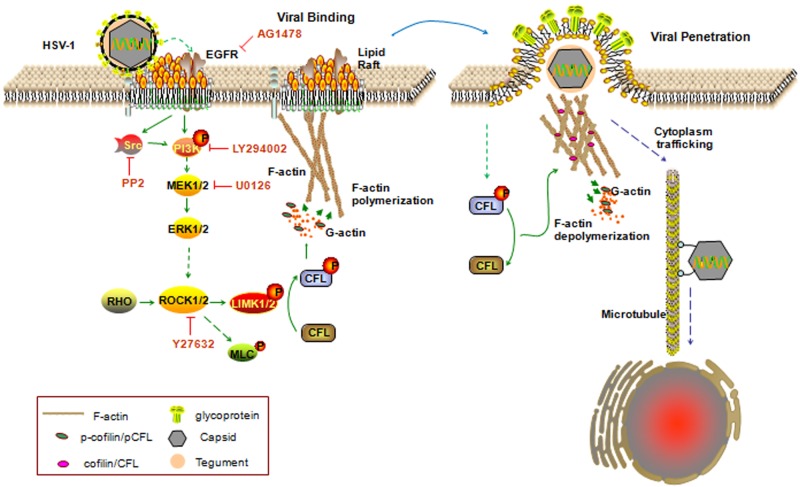
“Nevertheless, one consequence of these events is the phosphorylation and inactivation of the actin-depolymerization protein, cofilin, the result of which may cluster receptors in proximity to the virion by promoting actin polymerization underneath the cell membrane (Van den Broeke et al., 2014; Zheng et al., 2014).”
BackgroundInfluentialDeveloping an Appropriate Evolutionary Baseline Model for the Study of Human Cytomegalovirus
Howell, A. A., Terbot, J. W., Soni, V., Johri, P., Jensen, J. D., & Pfeifer, S. P. (2023) · Genome Biology and Evolution · doi:10.1093/gbe/evad059 · Cited by 16
“These estimates are based on internalization times of 10 min (Bodaghi et al. 1999; Hetzenecker et al. 2016) and 30 min (Zheng et al. 2014), as well as eclipse times of 24–48 h (Jean et al. 1978) and 4 h (Nishide et al. 2019), for HCMV and HSV-1, respectively.”
BackgroundModulation of Endosome Function, Vesicle Trafficking and Autophagy by Human Herpesviruses
Tognarelli, E. I., Reyes, A., Corrales, N., Carreño, L. J., Bueno, S. M., Kalergis, A. M., & González, P. A. (2021) · Cells · doi:10.3390/cells10030542 · Cited by 17
The roles of epidermal growth factor receptor in viral infections
Lai, K. M., & Lee, W.-L. (2022) · Growth Factors · doi:10.1080/08977194.2022.2063123 · Cited by 18
“Treatments of EGFR inhibitor, AG1478 and siRNA inhibit phosphorylation of cofilin and disrupt HSV-1 entry (Figure 3(b)) (Zheng et al. 2014).”
BackgroundInfluentialMeineke, R., Stelz, S., Busch, M., Werlein, C., Kühnel, M., Jonigk, D. D., Rimmelzwaan, G. F., & Elbahesh, H. (2022) · Viruses · doi:10.3390/v14092058 · Cited by 15
Peng, G., Liu, T., Qi, X., Wang, Y., Ren, J., Peng, J., Du, X., Hu, S., Wu, S., Zhao, Y., et al. (2024) · PLoS Pathogens · doi:10.1371/journal.ppat.1012104 · Cited by 16
Self-citationChen, J., Liang, J., Xu, H., Liu, W., Liu, S., Duan, L., Li, F., Wang, Z., Liu, Y., McSharry, B. P., et al. (2021) · Microbiology Spectrum · doi:10.1128/spectrum.00473-21 · Cited by 15
Zheng, K., Xiang, Y., Wang, Q.-L., Jin, F., Chen, M., Ma, K., Ren, Z., & Wang, Y. (2014) · Virus Research · doi:10.1016/j.virusres.2014.03.016 · Cited by 14
Self-citationForces and Structures of the Herpes Simplex Virus (HSV) Entry Mechanism
Clarke, R. W. (2015) · ACS Infectious Diseases · doi:10.1021/acsinfecdis.5b00059 · Cited by 14
Zilch, A., Rien, C., Weigel, C., Huskobla, S., Glück, B., Spengler, K., Sauerbrei, A., Heller, R., Gräler, M. H., & Henke, A. (2018) · Medical Microbiology and Immunology · doi:10.1007/s00430-018-0543-4 · Cited by 14
Soliman, M., Kim, D.-S., Park, J., Kim, J., Alfajaro, M. M., Baek, Y., Cho, E.-H., Park, C. H., Kang, M.-I., Park, S., et al. (2018) · Journal of Virology · doi:10.1128/jvi.01674-18 · Cited by 12
“Moreover, viral internalization and trafficking are known to be initiated and promoted by receptor-mediated activation of host signaling pathways, such as the PI3K/Akt signaling pathway (10, 11, 13, 15, 22, 48, 49).”
BackgroundQiu, W., Chang, L., He, Y., & Zhu, L. (2020) · Viruses · doi:10.3390/v12090927 · Cited by 11
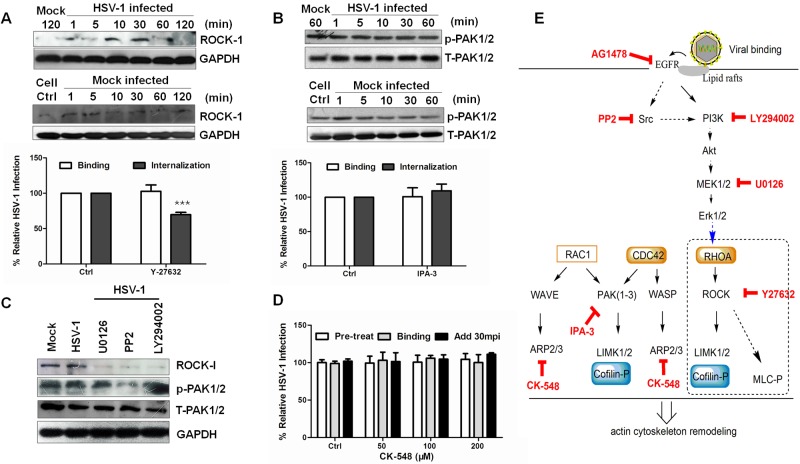
“For example, EGFR acts as a co-receptor for the entry of both human cytomegalovirus (HCMV) and adeno-associated virus 6 (AAV6) [39,40], and the EGFR/PI3K/MEK/Rock/cofilin cascade is manipulated by HSV-1 to promote F-actin polymerization for efficient entry into neuronal cells [41].”
BackgroundRepurposing Amphotericin B and Its Liposomal Formulation for the Treatment of Human Mpox
Peruzzu, D., Fecchi, K., Venturi, G., & Gagliardi, M. C. (2023) · International Journal of Molecular Sciences · doi:10.3390/ijms24108896 · Cited by 11
“Indeed, disruption of lipid rafts by MBCD reduces Herpes Simplex virus-type 1 and Japanese Encephalitis virus infection and impairs PI3K/Akt signaling [58,59].”
BackgroundKhasa, R., Sharma, P., Vaidya, A., Vrati, S., & Kalia, M. (2020) · Microbial Pathogenesis · doi:10.1016/j.micpath.2020.104565 · Cited by 12
Song, X., Wang, Y., Li, F., Cao, W., Zeng, Q., Qin, S., Wang, Z., Jia, J., Xiao, J., Hu, X., et al. (2022) · Frontiers in Microbiology · doi:10.3389/fmicb.2021.799890 · Cited by 12
“…to facilitate its infection of neurons, specifically, HSV-1 infection firstly enhances F-actin polymerization to promote virus binding, which is followed by continuous depolymerization of F-actin during the later stages to facilitate viral penetration (Xiang et al., 2012b; Zheng et al., 2014).”
BackgroundSelf-citationF‐actin dynamics in midgut cells enables virus persistence in vector insects
Wang, H., Liú, Y., Liú, W., Wu, K., & Wang, X. (2022) · Molecular Plant Pathology · doi:10.1111/mpp.13260 · Cited by 10
Self-citationReyes, Y. H., Provost, C., Traesel, C. K., Jacques, M., & Gagnon, C. A. (2018) · Journal of Medical Microbiology · doi:10.1099/jmm.0.000659 · Cited by 12
Deng, L., Min, W., Guo, S., Deng, J., Wu, X., Tong, D., Yuan, A., & Yang, Q. (2024) · Virology Journal · doi:10.1186/s12985-024-02289-y · Cited by 9
“Activation of ERK is essential for infection of herpes simplex virus type 1 (HSV-1) in neuronal cells and human herpesvirus-8 in human dermal microvascular endothelial cells and fibroblasts [37, 38].”
BackgroundRABV induces biphasic actin cytoskeletal rearrangement through Rac1 activity modulation
Liu, X., Xu, J., Zhang, M., Wang, H., Guo, X., Zhao, M., Duan, M., Guan, Z., & Guo, Y. (2024) · Journal of Virology · doi:10.1128/jvi.00606-24 · Cited by 9
“These results”
MethodRole of Virus-Induced EGFR Trafficking in Proviral Functions
Noh, S. S., & Shin, H. J. (2023) · Biomolecules · doi:10.3390/biom13121766 · Cited by 20
“EGFR suppresses the infectivity of HSV-1 without affecting viral binding to the cells [40].”
BackgroundSo, C.-W., Sourisseau, M., Sarwar, S., Evans, M. J., & Randall, G. C. (2023) · PLoS Pathogens · doi:10.1371/journal.ppat.1011887 · Cited by 9
Integrin-Linked Kinase Reduces H3K9 Trimethylation to Enhance Herpes Simplex Virus 1 Replication
Tsai, M.-S., Chen, S., Chang, C., Hsiao, Y.-L., & Wang, L.-C. (2022) · Frontiers in Cellular and Infection Microbiology · doi:10.3389/fcimb.2022.814307 · Cited by 8
“Accordingly, we assessed whether HSV-1 entry into cells is reduced in ILK knockdown cells as previously described (Zheng et al., 2014; Ibanez et al., 2018).”
MethodZhang, C., Liu, X., Chen, F., Hu, Y., Li, Z., Liu, Y., Han, X., Sun, Y., & Han, L. (2018) · Microbial Pathogenesis · doi:10.1016/j.micpath.2018.07.007 · Cited by 8
FGF-Mediated Axon Guidance: Role of Downstream Signaling Pathways in Cytoskeletal Control
Li, J., Gao, H., & Liu, F. (2025) · Cells · doi:10.3390/cells14110777 · Cited by 11
“The activation of ROCK induces the phosphorylation of cofilin, promoting actin filament stability [252].”
Chen, L., Xu, W., Li, Y., Chen, N., Luo, D., Song, Q., Tang, W. F., Huang, Z., Li, Y.-L., Liu, Z., et al. (2020) · Antimicrobial Agents and Chemotherapy · doi:10.1128/aac.00608-20 · Cited by 9
“skeleton reorganization, respectively (25, 26).”
BackgroundLiu, H., Liu, S., Liu, Z. L., Gao, X., Xu, L., Huang, M., Su, Y., Wang, Z., & Wang, T. (2022) · Journal of Virology · doi:10.1128/jvi.00788-22 · Cited by 7
“skeleton rearrangement, which facilitates virus entry into neuronal cells (36).”
BackgroundPIK-24 Inhibits RSV-Induced Syncytium Formation via Direct Interaction with the p85α Subunit of PI3K
Chen, L., Xu, W., Xiong, S., Cai, J.-X., Zhang, J., Li, Y.-L., Li, M., Zhang, H., & Liu, Z. (2022) · Journal of Virology · doi:10.1128/jvi.01453-22 · Cited by 9
“Cofilin has also been regulated by PI3K signaling or Rho family GTPases (24, 34, 35).”
BackgroundInfluentialComparative proteomics reveals Cryptosporidium parvum infection disrupts cellular barriers
Wang, L., Cui, Z., Li, N., Liang, G., Zhang, X., Wang, Y., Li, D., Li, X., Zhang, S., & Zhang, L. (2023) · Journal of Proteomics · doi:10.1016/j.jprot.2023.104969 · Cited by 6
Self-citationTorika, N., Filipovich‐Rimon, T., Asraf, K., Roasso, E., Danon, A., & Fleisher‐Berkovich, S. (2014) · European Journal of Pharmacology · doi:10.1016/j.ejphar.2014.08.013 · Cited by 6
Rap1b: A cytoskeletal regulator Advantageous to viral infection
Zhang, B., Li, S., Ding, J., Guo, J.-X., & Ma, Z. (2024) · iScience · doi:10.1016/j.isci.2024.111023 · Cited by 5
Li, C., Chi, X., Wang, J., Potter, A. L., Wang, X., & Yang, C. J. (2022) · Journal of Medical Virology · doi:10.1002/jmv.28226 · Cited by 5
“Of note, the activation of cofilin facilitates viral internalization and cytoplasm trafficking.(37,38,43,44) RAF265 treatment increased the levels of p‐CFL (inactivation of cofilin) as well as p‐Erk at 2 and 4 h.”
BackgroundSelf-citationRider, P. J. F., Musarrat, F., Nabi, R., Naidu, S. K., & Kousoulas, K. G. (2018) · Current Clinical Microbiology Reports · doi:10.1007/s40588-018-0082-1 · Cited by 5
“It has been reported that PI3K activation is important for actin polymerization critical to virus entry into neuronal cells [79].”
Pan, W., Xia, Y., Wang, H., & He, H. (2022) · Veterinary Microbiology · doi:10.1016/j.vetmic.2022.109488 · Cited by 4
Niu, Y., Fu, X., Lin, Q., Liu, L., Luo, X., Liang, H., & Li, N. (2021) · Aquaculture · doi:10.1016/j.aquaculture.2021.736614 · Cited by 4
Sabino, C. P. (2022) · Publication Server of Goethe University Frankfurt am Main (Goethe University Frankfurt) · doi:10.21248/gups.71583 · Cited by 3
Tian, Y., Tian, B., Cai, D., Xiao, Z., Wang, M., Wu, Y., Yang, Q., Sun, D., Huang, J., Ou, X., et al. (2025) · International Journal of Biological Macromolecules · doi:10.1016/j.ijbiomac.2025.148582 · Cited by 3
Qian, M., Xiao, S., Yang, Y., Yu, F., Wen, J., Lu, L., & Wang, H. (2023) · Virology Journal · doi:10.1186/s12985-023-02026-x · Cited by 3
“Studies have shown that actins including Profilins [50], Cofilin [51, 52] and”
BackgroundWu, Z., Zeng, Y., Cheng, A., Sun, A., Wang, M., Chen, S., Liu, M., Zhu, D., Zhao, X., Wu, Y., et al. (2022) · BMC Genomics · doi:10.1186/s12864-022-08739-7 · Cited by 3
“Also, cofilin, one of the actin-binding proteins, was found to be involved in the process of HSV infection [36].”
BackgroundJoon, A., Chandel, S., & Ghosh, S. (2023) · Microbes and Infection · doi:10.1016/j.micinf.2023.105166 · Cited by 5
Zhang, B., Ding, J., & Ma, Z. (2023) · Viruses · doi:10.3390/v15071457 · Cited by 5
“Furthermore, the inhibition of cell remodeling with the treatment of the F-actin inhibitor CytoD blocked the emergence of virions on the cell surface during early HSV-1 infection, indicating a positive correlation between F-actin, remodeling, endocytosis, and virus entry [70,71].”
BackgroundLi, W.-D., Xu, J., Cui, C., & Liu, H.-P. (2025) · Aquaculture · doi:10.1016/j.aquaculture.2025.742894 · Cited by 1
Sharma, P., Kapoor, D., Singh, S. K., Shen, X., Patil, C. D., & Shukla, D. (2026) · Drug Resistance Updates · doi:10.1016/j.drup.2026.101362 · Cited by 3
“The repurposing should be done with extra caution when combining doxorubicin with oncolytic herpesvirus therapy against cancer, as potential interactions may reduce cancer-targeting efficacy (Zheng et al., 2014; Zhuang et al., 2012).”
Metadata
- Authors
- Zheng, K., Xiang, Y., Wang, X., Wang, Q., Zhong, M., Wang, S., Wang, X., Fan, J., Kitazato, K., & Wang, Y.
- Affiliations
- Jinan University (CN)
- Sun Yat-sen University (CN)
- Guangzhou Jinan Biomedicine Research and Development Center, National Engineering Research Center of Genetic Medicine, Jinan University, Guangzhou, People’s Republic of China
- University of Yamanashi (JP)
- Nagasaki University (JP)
- Venue
- mBio
- Publisher
- American Society for Microbiology
- Published
- 2014-02-28
- Volume
- 5
- Issue
- 1
- Pages
- e00958-13
- ISSN
- 2150-7511 (ISSN-L)
- 2161-2129
- PMC
- PMC3903278
- OpenAlex
- W2170752267
- Cited by
- 118
- References
- 75
- Citations by year
- 2026: 5 · 2025: 5 · 2024: 9 · 2023: 14 · 2022: 18 · 2021: 9 · 2020: 13 · 2019: 5 · 2018: 13 · 2017: 4 · 2016: 5 · 2015: 8 · 2014: 10
- FWCI
- 6.82
- Type
- journal article
- Language
- en
- Open access
- gold
- doi.org
- Licence
- cc-by-nc-sa
- creativecommons.org/licenses/by-nc-sa/3.0/ (vor)
- journals.asm.org/non-commercial-tdm-license (tdm)
- Locations
- mBio (publishedVersion, cc-by-nc-sa)
- Europe PMC (PubMed Central) (publishedVersion, cc-by-nc-sa)
- PubMed Central (publishedVersion, cc-by-nc-sa)
- PubMed (publishedVersion)
- Institutional Repositories DataBase (IRDB) (submittedVersion)
- DOAJ (DOAJ: Directory of Open Access Journals) (submittedVersion, cc-by-sa)
- Nagasaki University's Academic Output SITE (Nagasaki University) (submittedVersion, cc-by-nc-nd)
- Funders
- National Science Foundation
- National Natural Science Foundation of China
- Topics
- Health Sciences › Medicine › Infectious Diseases › Herpesvirus Infections and Treatments
- Life Sciences › Biochemistry, Genetics and Molecular Biology › Molecular Biology › Protein Kinase Regulation and GTPase Signaling
- Health Sciences › Medicine › Epidemiology › Cytomegalovirus and herpesvirus research
- Keywords
- herpes simplex virus type 1, cofilin, actin cytoskeleton remodeling, ERK1/2, ROCK1, F-actin polymerization, lipid rafts, neurodegeneration, viral latency, host-virus interaction, kinase inhibitors, antiviral therapy
- MeSH terms
- Actins, Cell Line, Humans, Neurons, Phosphorylation, Protein Processing, Post-Translational, Signal Transduction, Herpesvirus 1, Human, Phosphatidylinositol 3-Kinases, Actin Depolymerizing Factors, Virus Internalization, Host-Pathogen Interactions, ErbB Receptors
About these checks
Registry, retraction, Cites and statistics results are computed, not judged, with one exception: a printed reference that no index lists is read once by a model before it counts as a citation error. Claims are extracted by a model and kept only when their quote appears verbatim in the text; each cited source is then checked, with a model’s help, for whether it says what the claim relies on. Those verdicts can be wrong — read the claim’s quote and the cited source before relying on one.
Statistics and arithmetic are recomputed, not judged.
Confidence bands are shown only for fields calibrated on our annotated test set. None is calibrated yet, so no band is shown.
What counts as a claim ›How we measure confidence ›How we check this ›
Are you an author, or do you see a problem with this page? Request a review
Data sources
Bibliographic data: Semantic Scholar, OpenAlex, Crossref.
Contains information from the Semantic Scholar Academic Graph Datasets, made available under the ODC Attribution License (ODC-BY 1.0).
Semantic Scholar’s data is described in: Kinney, R., et al. (2023). The Semantic Scholar Open Data Platform. arXiv:2301.10140.
