

Genome-Wide Identification of Acinetobacter baumannii Genes Necessary for Persistence in the Lung
Open accessThe DOI matches its Crossref record; 54 of the 55 references it cites were found in a registry or an index.
Abstract
UNLABELLED: Acinetobacter baumannii is a Gram-negative bacterium that causes diseases such as pneumonia, bacteremia, and soft tissue infections in hospitalized patients. Relatively little is known about how A. baumannii causes these infections. Thus, we used insertion sequencing (INSeq), a combination of transposon mutagenesis and massively parallel next-generation sequencing, to identify novel virulence factors of A. baumannii. To this end, we generated a random transposon mutant library containing 150,000 unique insertions in A. baumannii strain ATCC 17978. The INSeq analysis identified 453 genes required for growth in rich medium. The library was then used in a murine pneumonia model, and the relative levels of abundance of mutants before and after selection in the mouse were compared. When genes required for growth in rich medium were removed from the analysis, 157 genes were identified as necessary for persistence in the mouse lung. Several of these encode known virulence factors of A. baumannii, such as OmpA and ZnuB, which validated our approach. A large number of the genes identified were predicted to be involved in amino acid and nucleotide metabolism and transport. Other genes were predicted to encode an integration host factor, a transmembrane lipoprotein, and proteins involved in stress response and efflux pumps. Very few genes, when disrupted, resulted in an increase in A. baumannii numbers during host infection. The INSeq approach identified a number of novel virulence determinants of A. baumannii, which are candidate targets for therapeutic interventions. IMPORTANCE: A. baumannii has emerged as a frequent cause of serious infections in hospitals and community settings. Due to increasing antibiotic resistance, alternative approaches, such as antivirulence strategies, are desperately needed to fight A. baumannii infections. Thorough knowledge of A. baumannii pathogenicity is essential for such approaches but is currently lacking. With the increasingly widespread use of massively parallel sequencing, a class of techniques known as transposon insertion sequencing has been developed to perform comprehensive virulence screens of bacterial genomes in vivo. We have applied one of these approaches (INSeq) to uncover novel virulence factors in A. baumannii. We identified several such factors, including those predicted to encode amino acid and nucleotide metabolism proteins, an integration host factor protein, stress response factors, and efflux pumps. These results greatly expand the number of A. baumannii virulence factors and uncover potential targets for antivirulence treatments.
Overview
The claims and statistics of this paper haven’t been checked yet.
Free: it reads the open-access text and checks the first 5 claims that cite a source we can check. Create a free account to check every claim.
Integrity signals
Registry
Cites
Statistics
Figures
Verification
Claims the paper makes
The claims and statistics of this paper haven’t been checked yet.
Free: it reads the open-access text and checks the first 5 claims that cite a source we can check. Create a free account to check every claim.
Claims other papers make about this one
Each is checked against this paper’s own text: does it say what the citing paper says it does?
The source backs part of the claim, not all of it — or backs it for a different population, condition or comparison.
In the citing paper
“In addition to B. abortus and S. aureus, the advent of whole genome in vivo analysis of mutants using techniques such as transposon-sequencing and signature tagged mutagenesis has highlighted the role of heme synthesis.”
From Heme Synthesis and Acquisition in Bacterial Pathogens (2016) · cites this paper as [97]
Experimental — accuracy not yet measuredThe cited source says what the claim attributes to it.
In the citing paper
“In these infections, genes with marked mutations that are recovered at a lower frequency from the infected tissue relative to growth in vitro are considered important to infection.”
From Heme Synthesis and Acquisition in Bacterial Pathogens (2016) · cites this paper as [97]
In the citing paper
“Transposon mutants lacking hemE in Acinetobacter baumannii were less effective at colonizing the murine lung [97].”
From Heme Synthesis and Acquisition in Bacterial Pathogens (2016) · cites this paper as [97]
Self-check
Percentages, sums and reported differences re-computed from the paper’s own numbers.
The self-check needs the paper’s full text.
Citations
Cites
The COG database: an updated version includes eukaryotes
Tatusov, R. L., Fedorova, N. D., Jackson, J. D., Jacobs, A. R., Kiryutin, B., Koonin, E. V., Krylov, D. M., Mazumder, R., Mekhedov, S. L., Nikolskaya, A. N., et al. (2003) · BMC Bioinformatics · doi:10.1186/1471-2105-4-41 · Cited by 4,430 · cited 1×
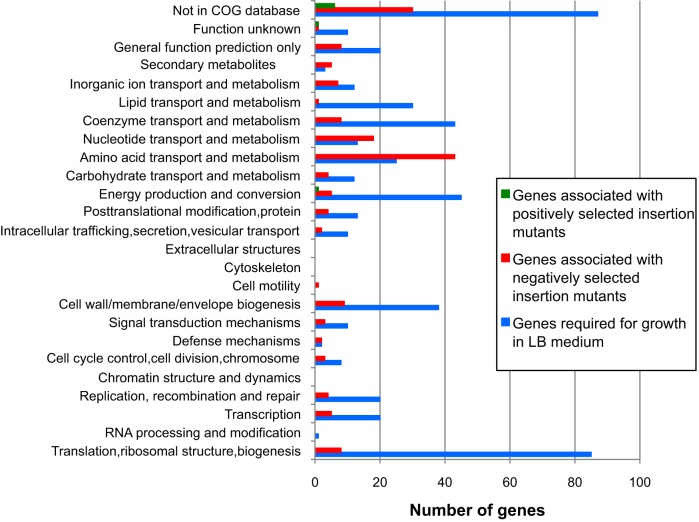
“We functionally categorized genes essential for growth in rich medium, as well as genes that positively and negatively impacted persistence in vivo, based on the Clusters of Orthologous Groups (COG) classifications (19).”
BackgroundACETYLORNITHINASE OF ESCHERICHIA COLI: PARTIAL PURIFICATION AND SOME PROPERTIES
Vogel, H. J., & Bonner, D. M. (1956) · Journal of Biological Chemistry · doi:10.1016/s0021-9258(18)65874-0 · Cited by 3,991
Oxidative stress in bacteria and protein damage by reactive oxygen species.
Cabiscol, E., Tamarit, J., & Ros, J. (2000) · Estudis Romànics (Institut d'Estudis Catalans) · Cited by 1,832
mini-Tn7 insertion in bacteria with single attTn7 sites: example Pseudomonas aeruginosa
Choi, K.-H., & Schweizer, H. P. (2006) · Nature Protocols · doi:10.1038/nprot.2006.24 · Cited by 879
Identifying Genetic Determinants Needed to Establish a Human Gut Symbiont in Its Habitat
Goodman, A. L., McNulty, N. P., Zhao, Y., Leip, D., Mitra, R. D., Lozupone, C. A., Knight, R., & Gordon, J. I. (2009) · Cell Host & Microbe · doi:10.1016/j.chom.2009.08.003 · Cited by 731 · cited 2×
“baumannii transposon insertion library appropriate for the INSeq analysis (14).”
BackgroundMethodAcinetobacter baumannii: human infections, factors contributing to pathogenesis and animal models
McConnell, M. J., Actis, L., & Pachón, J. (2013) · FEMS Microbiology Reviews · doi:10.1111/j.1574-6976.2012.00344.x · Cited by 540 · cited 1×
“wounded military personnel and in community settings (1).”
BackgroundEfflux-Mediated Antibiotic Resistance in Acinetobacter spp
Coyne, S., Courvalin, P., & Périchon, B. (2011) · Antimicrobial Agents and Chemotherapy · doi:10.1128/aac.01388-10 · Cited by 505 · cited 2×
“A. baumannii produces a large number of efflux pumps, including members of the resistance nodulation division (RND) family, the ATP-binding cassette (ABC) superfamily, and the major facilitator superfamily (MFS) (39).”
Transposon insertion sequencing: a new tool for systems-level analysis of microorganisms
van Opijnen, T., & Camilli, A. (2013) · Nature Reviews Microbiology · doi:10.1038/nrmicro3033 · Cited by 494
Large-Scale Identification of Virulence Genes from Streptococcus pneumoniae
Polissi, A., Pontiggia, A., Feger, G., Altieri, M., Mottl, H., Ferrari, L., & Simon, D. (1998) · Infection and Immunity · doi:10.1128/iai.66.12.5620-5629.1998 · Cited by 437
Gawronski, J. D., Wong, S. M. S., Giannoukos, G., Ward, D. V., & Akerley, B. J. (2009) · Proceedings of the National Academy of Sciences · doi:10.1073/pnas.0906627106 · Cited by 371
Cited by
Items 101–200 of 236
Hsieh, Y., Wang, S., Chen, Y., Lin, T., Shie, S., Huang, C., Lee, C., Chen, Y.-C., Quyen, T. L. T., & Pan, Y. (2020) · Emerging Microbes & Infections · doi:10.1080/22221751.2020.1822757 · Cited by 35
“baumannii infection and growth in serum [10,13].”
Vaccines for Antibiotic-Resistant Bacteria: Possibility or Pipe Dream?
García‐Quintanilla, M., Pulido, M. R., Carretero-Ledesma, M., & McConnell, M. J. (2015) · Trends in Pharmacological Sciences · doi:10.1016/j.tips.2015.10.003 · Cited by 37
Lon Protease Has Multifaceted Biological Functions in Acinetobacter baumannii
Ching, C., Yang, B., Onwubueke, C., Lazinski, D. W., Camilli, A., & Godoy, V. G. (2018) · Journal of Bacteriology · doi:10.1128/jb.00536-18 · Cited by 31
“baumannii in an in vivo lung infection (56).”
BackgroundNutrient stress is a target for new antibiotics
Carfrae, L. A., & Brown, E. D. (2023) · Trends in Microbiology · doi:10.1016/j.tim.2023.01.002 · Cited by 36
Perry, B. J., Akter, M. S., & Yost, C. K. (2016) · Frontiers in Microbiology · doi:10.3389/fmicb.2016.01873 · Cited by 35
“In return, the plant host provides fixed carbon and other micro-nutrients to the bacteroids to sustain the symbiosis (Wielbo, 2012; Udvardi and Poole, 2013).”
BackgroundZhu, Y., Lü, J., Zhao, J., Zhang, X., Yu, H. H., Velkov, T., & Li, J. (2020) · International Journal of Medical Microbiology · doi:10.1016/j.ijmm.2020.151412 · Cited by 31
“baumannii AB5075 (in Luria-Bertani media) and ATCC 17978 (in M9 media with citrate as the sole carbon source) were employed to assess the accuracy of gene essentiality prediction (Gallagher et al., 2015; Wang et al., 2014).”
MethodStructure of ATP synthase from ESKAPE pathogen Acinetobacter baumannii
Demmer, J. K., Phillips, B. P., Uhrig, O. L., Filloux, A., Allsopp, L. P., Bublitz, M., & Meier, T. W. (2022) · Science Advances · doi:10.1126/sciadv.abl5966 · Cited by 32
Kim, M. H., Jeong, H., Sim, Y. M., Lee, S., Yong, D., Ryu, C., & Choi, J. Y. (2020) · PLoS ONE · doi:10.1371/journal.pone.0229416 · Cited by 29
“Despite sporadic studies suggesting correlation between the number of virulence genes with organisms’ phenotypic differences [16], the significance of number of virulence genes in association with clinical outcomes and epidemiology has not been investigated.”
BackgroundGenetic tools for manipulating Acinetobacter baumannii genome: an overview
Biswas, I. (2015) · Journal of Medical Microbiology · doi:10.1099/jmm.0.000081 · Cited by 29
Bian, X., Liu, X., Zhang, X., Li, X., Zhang, J., Zheng, H., Song, S., Li, X., & Feng, M. (2021) · BMC Genomics · doi:10.1186/s12864-021-07842-5 · Cited by 34
“Seven tness genes were identi ed in these two studies, suggesting the presence of a core set of tness genes irrespective of the site of infection [14, 15].”
BackgroundPalmer, L. D., Minor, K., Mettlach, J. A., Rivera, E. S., Boyd, K. L., Caprioli, R. M., Spraggins, J. M., Dalebroux, Z. D., & Skaar, E. P. (2020) · Cell Reports · doi:10.1016/j.celrep.2020.108129 · Cited by 29
“Attempted construction of an Δ ispB strain was unsuccessful and insertions in ispB were not recovered in published transposon sequencing datasets, suggesting ispB is also essential in A. baumannii (Gallagher et al., 2015; Wang et al., 2014).”
ESKAPE Pathogens: Looking at Clp ATPases as Potential Drug Targets
Motiwala, T., Mthethwa, Q., Achilonu, I., & Khoza, T. (2022) · Antibiotics · doi:10.3390/antibiotics11091218 · Cited by 31
DksA is a conserved master regulator of stress response in Acinetobacter baumannii
Maharjan, R. P., Sullivan, G. J., Adams, F. G., Shah, B. S., Hawkey, J., Delgado, N. N., Semenec, L., Dinh, H., Li, L., Short, F. L., et al. (2023) · Nucleic Acids Research · doi:10.1093/nar/gkad341 · Cited by 31
Lannan, F. M., O'conor, D. K., Broderick, J. C., Tate, J. F., Scoggin, J. T., Moran, N. A., Husson, C. M., Hegeman, E. M., Ogrydziak, C. E., Singh, S. A., et al. (2016) · Military Medicine · doi:10.7205/milmed-d-15-00437 · Cited by 25
Insights into Acinetobacter baumannii fatty acid synthesis 3-oxoacyl-ACP reductases
Cross, E. M., Adams, F. G., Waters, J. K., Aragão, D., Eijkelkamp, B. A., & Forwood, J. K. (2021) · Scientific Reports · doi:10.1038/s41598-021-86400-1 · Cited by 27
Rafiei, E., Abadi, M. S. S., Zamanzad, B., & Gholipour, A. (2022) · AMB Express · doi:10.1186/s13568-022-01444-4 · Cited by 25
“baumannii are related to the changes in membrane permeability and antibiotic target proteins, as well as the production of β-lactamase enzymes, and multidrug efflux pumps(Wang et al. 2014).”
BackgroundAssessing Acinetobacter baumannii Virulence and Persistence in a Murine Model of Lung Infection
Palmer, L. D., Green, E. R., Sheldon, J. R., & Skaar, E. P. (2019) · Methods in molecular biology · doi:10.1007/978-1-4939-9118-1_26 · Cited by 25
Ireland, P. M., Bullifent, H. L., Senior, N. J., Southern, S. J., Yang, Z. R., Ireland, R. E., Nelson, M., Atkins, H. S., Titball, R. W., & Scott, A. (2019) · Journal of Bacteriology · doi:10.1128/jb.00630-18 · Cited by 28
Update on the Epidemiological Typing Methods for Acinetobacter Baumannii
Rafei, R., Osman, M., Dabboussi, F., & Hamzé, M. (2019) · Future Microbiology · doi:10.2217/fmb-2019-0134 · Cited by 27
Maintenance of bacterial outer membrane lipid asymmetry: insight into MlaA
Kaur, M., & Mingeot-Leclercq, M. P. (2024) · BMC Microbiology · doi:10.1186/s12866-023-03138-8 · Cited by 30
“The Mla system is associated with antibiotic susceptibility and intrinsic resistance [13], vesiculation [14–17], pathogenesis [18–21], and virulence [13, 14, 20, 22–25].”
BackgroundA set of shuttle plasmids for gene expression in Acinetobacter baumannii
Jie, J., Chu, X., Li, D., & Luo, Z. (2021) · PLoS ONE · doi:10.1371/journal.pone.0246918 · Cited by 22
Mora, B. P., Giordano, R., Permingeat, V., Calderone, M., Arana, N., Müller, G. L., Rodríguez, R. E., Krasauskas, R., & Mussi, M. A. (2023) · Scientific Reports · doi:10.1038/s41598-022-26314-8 · Cited by 22
In vivo insertion pool sequencing identifies virulence factors in a complex fungal–host interaction
Uhse, S., Pflug, F., Stirnberg, A., Ehrlinger, K., von Haeseler, A., & Djamei, A. (2018) · PLoS Biology · doi:10.1371/journal.pbio.2005129 · Cited by 21
Streptococcus pyogenes genes that promote pharyngitis in primates
Zhu, L., Olsen, R. J., Beres, S. B., Saavedra, M. O., Kubiak, S. L., Cantu, C. C., Jenkins, L., Waller, A. S., Sun, Z., Palzkill, T. G., et al. (2020) · JCI Insight · doi:10.1172/jci.insight.137686 · Cited by 21
Shedding light on bacteria–host interactions with the aid of TnSeq approaches
Torres, M., Paszti, S., & Eberl, L. (2024) · mBio · doi:10.1128/mbio.00390-24 · Cited by 27
Genome Analysis of Multidrug-Resistant Shewanella algae Isolated From Human Soft Tissue Sample
Huang, Y., Tang, Y.-Y., Cheng, J., Wu, Z., Mao, Y., & Liu, P. (2018) · Frontiers in Pharmacology · doi:10.3389/fphar.2018.00419 · Cited by 21
“The other YHL-specific virulent gene, lpsB, encodes a glycosyltransferase that is essential in lipopolysaccharide synthesis and is an important virulent determinant in many pathogenic Gramnegative bacteria (Parsons et al., 1988; Wang et al., 2014).”
Silver, R. J., Paczosa, M. K., McCabe, A. L., Balada-Llasat, J.-M., Baleja, J., & Mecsas, J. C. (2019) · Antimicrobial Agents and Chemotherapy · doi:10.1128/aac.02674-18 · Cited by 27
Martínez-Guitián, M., Vázquez-Ucha, J. C., Álvarez-Fraga, L., Conde‐Pérez, K., Vallejo, J. A., Perina, A., Bou, G., Poza, M., & Beceiro, A. (2020) · The Journal of Infectious Diseases · doi:10.1093/infdis/jiaa522 · Cited by 21
Kwon, J.-E., Mistry, T. L., Ren, J., Johnson, M. E., & Mehboob, S. (2017) · Bioorganic & Medicinal Chemistry · doi:10.1016/j.bmc.2017.11.018 · Cited by 20
Ramezanalizadeh, F., Rasooli, I., & Owlia, P. (2021) · Future Microbiology · doi:10.2217/fmb-2020-0133 · Cited by 19
Oh, M.-H., Islam, M. M., Kim, N., Choi, C. H., Shin, M., Shin, W. S., & Lee, J. C. (2025) · Journal of Biomedical Science · doi:10.1186/s12929-025-01147-5 · Cited by 25
Wong, Y.-C., Ghany, M. A. E., Ghazzali, R. N., Yap, S.-J., Hoh, C.-C., Pain, A., & Nathan, S. (2018) · Frontiers in Microbiology · doi:10.3389/fmicb.2018.01118 · Cited by 20
Bai, B., Eales, B. M., Huang, W., Ledesma, K. R., Merlau, P. R., Li, G., Yu, Z., & Tam, V. H. (2022) · Virulence · doi:10.1080/21505594.2022.2132053 · Cited by 19
“those involved in zinc/ iron acquisition, capsule/LPS biosynthesis, amino acid metabolism, and acquisition) were also identified by another investigator group using a murine pneumonia model [31].”
MethodZhu, L., Olsen, R. J., Beres, S. B., Saavedra, M. O., Kubiak, S. L., Cantu, C. C., Jenkins, L., Yerramilli, P., Pruitt, L., Charbonneau, A. R. L., et al. (2020) · American Journal Of Pathology · doi:10.1016/j.ajpath.2019.12.003 · Cited by 22
Hubloher, J. J., Schabacker, K., Müller, V., & Averhoff, B. (2021) · Microbiology Spectrum · doi:10.1128/spectrum.01296-21 · Cited by 18
Cheung, B. H., Alisoltani, A., Kochan, T. J., Lebrun-Corbin, M., Nozick, S., Axline, C. M. R., Bachta, K. E. R., Ozer, E. A., & Hauser, A. R. (2023) · mBio · doi:10.1128/mbio.02128-23 · Cited by 21
“E. coli strain PIR1 was used for cloning, and E. coli β3914 [diaminopimelic acid (DAP) auxotroph] was used to mate plasmids into K. pneumoniae (36, 37).”
MethodLuna, B. M., Ulhaq, A., Yan, J., Pantapalangkoor, P., Nielsen, T. B., Davies, B. W., Actis, L. A., & Spellberg, B. J. (2017) · mSphere · doi:10.1128/msphere.00140-17 · Cited by 19
Gebhardt, M. J., Czyż, D. M., Singh, S., Zurawski, D. V., Becker, L., & Shuman, H. A. (2020) · Infection and Immunity · doi:10.1128/iai.00180-20 · Cited by 21
“baumannii to grow within various infection models, including Galleria mellonella larva (8) and murine infection (9, 10) models.”
BackgroundRecent Advances in Genetic Tools for Acinetobacter baumannii
Sykes, E. M. E., Deo, S. R., & Kumar, A. (2020) · Frontiers in Genetics · doi:10.3389/fgene.2020.601380 · Cited by 21
Charoensutthivarakul, S., Thomas, S. E., Curran, A., Brown, K., Belardinelli, J. M., Whitehouse, A., Acebrón-García-de-Eulate, M., Sangan, J., Gramani, S. G., Jackson, M., et al. (2022) · ACS Infectious Diseases · doi:10.1021/acsinfecdis.1c00432 · Cited by 16
Potential for breath test diagnosis of urease positive pathogens in lung infections
Bishai, W. R., & Timmins, G. S. (2019) · Journal of Breath Research · doi:10.1088/1752-7163/ab2225 · Cited by 17
Structural assembly of the bacterial essential interactome
Gómez Borrego, J., & Torrent Burgas, M. (2024) · eLife · doi:10.7554/elife.94919 · Cited by 16
ePath: an online database towards comprehensive essential gene annotation for prokaryotes
Kong, X., Zhu, B., Stone, V. N., Ge, X., Rami, F. E., Donghai, H., & Xu, P. (2019) · Scientific Reports · doi:10.1038/s41598-019-49098-w · Cited by 17
Structural assembly of the bacterial essential interactome
(2023) · doi:10.1101/2023.06.14.544900 · Cited by 16
Toward a structome of Acinetobacter baumannii drug targets
Tillery, L. M., Barrett, K. F., Dranow, D. M., Craig, J. K., Shek, R., Chun, I. K. H., Barrett, L. K., Phan, I. Q., Subramanian, S., Abendroth, J. A., et al. (2020) · Protein Science · doi:10.1002/pro.3826 · Cited by 15
“baumannii persisted in the lung (essentiality = NO, Table 1).(22) There were 18 structures where no close human ortholog could be detected by sequence similarity searches, and these seem reasonable to pursue as potential antibiotic targets in A.”
BackgroundRusso, T. A., Umland, T. C., Deng, X., Mazouni, F. E., Kokkonda, S., Olson, R., MacDonald, U., Beanan, J. M., Alvarado, C. L., Tomchick, D. R., et al. (2022) · Proceedings of the National Academy of Sciences · doi:10.1073/pnas.2213116119 · Cited by 15
“As the reported essentiality of DHODH was based on a whole-genome study, these findings were not fully validated (10).”
InfluentialAdaptation to Potassium-Limitation Is Essential forAcinetobacter baumanniiPneumonia Pathogenesis
Samir, R., Hussein, S. H., Elhosseiny, N. M., Khattab, M. S., Shawky, A., & Attia, A. S. (2016) · The Journal of Infectious Diseases · doi:10.1093/infdis/jiw476 · Cited by 15
“the capsule for the survival of Acinetobacter during infection and that it is essential for resisting serum killing by complement [37, 38].”
BackgroundRaustad, N., Dai, Y., Iinishi, A., Mohapatra, A., Soo, M. W., Hay, E., Hernandez, G. M., & Geisinger, E. (2025) · Nucleic Acids Research · doi:10.1093/nar/gkaf063 · Cited by 19
“…to regulate a number of additional features relevant to infection, including capsule production [ 9 , 10 ], serum resistance [ 6 , 7 ], fitness and virulence in animal models [ 6 , 11 , 12 ], antibiotic resistance and tolerance [ 6 , 7 , 13 ], desiccation tolerance [ 14 , 15 ], and motility [ 16 ].”
Signaling in Acinetobacter baumannii : Quorum sensing and nucleotide second messengers
Cui, B., Peng, G., Wang, L.-E., & Deng, Y. (2025) · Computational and Structural Biotechnology Journal · doi:10.1016/j.csbj.2025.05.032 · Cited by 17
“…capsule [68,82 – 90]; (iv) Other virulence factors such as secretion systems (T1SS, T2SS, T5SS and T6SS) [68,91 – 95], micronutrient acquisition systems [96-107] and outer membrane vesicles (OMVs) [108-113]; An illustration of the virulence determinants identified in A. baumannii is shown in Fig.”
Cheng, M., Pei, D., He, L., Fei, Q., & Yan, X. (2023) · Applied and Environmental Microbiology · doi:10.1128/aem.01883-22 · Cited by 14
“important bacteria have been characterized by Tn-seq or CRISPRi-seq, such as Escherichia coli (8), Pseudomonas aeruginosa (9), Acinetobacter baumannii (10), Salmonella typhi (11), Bacteroides polymorpha (12), Vibrio natriegens (13), and Synechococcus elongates (14).”
BackgroundBacFITBase: a database to assess the relevance of bacterial genes during host infection
Rendón, J. M., Lang, B., Tartaglia, G. G., & Torrent, M. (2019) · Nucleic Acids Research · doi:10.1093/nar/gkz931 · Cited by 13
Role of metAB in Methionine Metabolism and Optimal Chicken Colonization in Campylobacter jejuni
Ruddell, B., Hassall, A., Şahin, O., Zhang, Q., Plummer, P. J., & Kreuder, A. J. (2020) · Infection and Immunity · doi:10.1128/iai.00542-20 · Cited by 14
“aureus (31), and Acinetobacter baumannii (32).”
Tomlinson, B. R., Denham, G. A., Torres, N. J., Brzozowski, R., Allen, J. L., Jackson, J. K., Eswara, P. J., & Shaw, L. N. (2022) · Infection and Immunity · doi:10.1128/iai.00376-22 · Cited by 20
Ahmad, S., Shaker, B., Ahmad, F., Raza, S., & Azam, S. S. (2018) · Journal of Biomolecular Structure and Dynamics · doi:10.1080/07391102.2018.1498805 · Cited by 13
Crépin, S., Ottosen, E. N., Chandler, C. E., Sintsova, A., Ernst, R. K., & Mobley, H. L. T. (2019) · Molecular Microbiology · doi:10.1111/mmi.14407 · Cited by 14
“We and others have previously identified the full set of genes required during infection (Wang et al., 2014; Gebhardt et al., 2015; Subashchandrabose et al., 2016; Murray et al., 2017; Crépin et al., 2018).”
BackgroundAcinetobacter phages use distinct strategies to breach the capsule barrier
McCalla, A. J., Walker, F. C., Bisaro, F., Rodriguez-Anavitate, M., Johannesman, A., Venanzio, G. D., Feldman, M. F., & LeRoux, M. (2025) · PLoS Pathogens · doi:10.1371/journal.ppat.1013536 · Cited by 14
Capsule Protects Acinetobacter baumannii From Inter-Bacterial Competition Mediated by CdiA Toxin
Krasauskas, R., Skerniškytė, J., Martinkus, J., Armalytė, J., & Sužiedėlienė, E. (2020) · Frontiers in Microbiology · doi:10.3389/fmicb.2020.01493 · Cited by 14
Purcell, A. B., Simpson, B. W., & Trent, M. S. (2023) · Journal of Bacteriology · doi:10.1128/jb.00067-23 · Cited by 13
“coli b-3914, which is a diaminopimelic acid auxotroph, was electroporated with pJNW684 to create the donor strain (32).”
MethodJayashree, S., Sivakumar, R., Karthikeyan, R., Gunasekaran, P., & Rajendhran, J. (2021) · Gene · doi:10.1016/j.gene.2021.145890 · Cited by 15
Targeting virulence regulation to disarm Acinetobacter baumannii pathogenesis
Trebosc, V., Lucchini, V., Narwal, M., Wicki, B., Gartenmann, S., Schellhorn, B., Schill, J., Bourotte, M., FREY, D. J., Grünberg, J., et al. (2022) · Virulence · doi:10.1080/21505594.2022.2135273 · Cited by 11
“baumannii ATCC 17978 [43] and AB5075 [26] suggest that OmpR is important for growth in rich media while another transposon mutagenesis study on A.”
BackgroundEfficient transposon mutagenesis mediated by an IPTG-controlled conditional suicide plasmid
Naorem, S. S., Han, J.-Y., Zhang, S. Y., Zhang, J., Graham, L. B., Song, A., Smith, C. V., Rashid, F., & Guo, H. (2018) · BMC Microbiology · doi:10.1186/s12866-018-1319-0 · Cited by 15
Modi, G. P., Marqus, G. M., Vippila, M. R., Gollapalli, D. R., Kim, Y., Manna, A. C., Chacko, S., Maltseva, N., Wang, X., Cullinane, R. T., et al. (2021) · ACS Infectious Diseases · doi:10.1021/acsinfecdis.1c00342 · Cited by 10
Cross-species prediction of essential genes in insects
de Castro, G. M., Hastenreiter, Z., Monteiro, T. A. S., da Silva, T. T. M., & Lobo, F. P. (2022) · Bioinformatics · doi:10.1093/bioinformatics/btac009 · Cited by 10
Warrier, T., Romano, K. P., Clatworthy, A. E., & Hung, D. T. (2022) · Cell chemical biology · doi:10.1016/j.chembiol.2022.04.006 · Cited by 13
Gearing up for battle: Harnessing adaptive T cell immunity against gram-negative pneumonia
Gao, C. A., Morales‐Nebreda, L., & Pickens, C. I. (2022) · Frontiers in Cellular and Infection Microbiology · doi:10.3389/fcimb.2022.934671 · Cited by 9
“Other mechanisms include biofilm formation, nutrient acquisition, and escape from the complement cascade (Russo et al., 2010; Wang et al., 2014; Geisinger and Isberg, 2015).”
BackgroundRead, B. J., Fisher, G., Wissett, O., Machado, T. F. G., Nicholson, J., Mitchell, J. B. O., & da Silva, R. G. (2021) · ACS Infectious Diseases · doi:10.1021/acsinfecdis.1c00539 · Cited by 9
Epidemiological characteristics of multidrug-resistant Acinetobacter baumannii ST369 in Anhui, China
Huang, Y., Ali, M. R., Li, W., Wang, W., Dai, Y., Lu, H., He, Z., Li, Y., & Sun, B. (2023) · mSystems · doi:10.1128/msystems.00731-23 · Cited by 10
Capsular polysaccharide restrains type VI secretion in Acinetobacter baumannii
Flaugnatti, N., Bader, L., Croisier-Coeytaux, M., & Blokesch, M. (2025) · eLife · doi:10.7554/elife.101032 · Cited by 9
Birkle, K., Renschler, F. A., Angelov, A., Wilharm, G., Franz‐Wachtel, M., Maček, B., Bohn, E., Weber, E., Müller, J., Friedrich, L., et al. (2022) · Journal of Bacteriology · doi:10.1128/jb.00054-22 · Cited by 10
Read, B. J., Cadzow, A. F., Alphey, M. S., Mitchell, J. B. O., & da Silva, R. G. (2023) · Biochemistry · doi:10.1021/acs.biochem.3c00551 · Cited by 7
Hernandez-Bird, J., He, B., VanOtterloo, L. M., Billings, E. B., Huo, W., Teodoro, G. I. C., Echlin, H., Rosch, J. W., Trent, M. S., & Isberg, R. R. (2025) · Proceedings of the National Academy of Sciences · doi:10.1073/pnas.2515303123 · Cited by 9
Wong, Y.-C., Naeem, R., Ghany, M. A. E., Hoh, C.-C., Pain, A., & Nathan, S. (2022) · Frontiers in Cellular and Infection Microbiology · doi:10.3389/fcimb.2022.1062682 · Cited by 7
“, 2015) and Acinetobacter baumannii (Wang et al., 2014) virulence factors which are required for in vivo survival such as in the lung of a mouse model of infection.”
BackgroundNimma, R., Kumar, A., Gani, Z., Gahlawat, A., Dilawari, R., Rohilla, R. K., Kumbhar, H., Garg, P., Chopra, S., Raje, M., et al. (2023) · Microbial Pathogenesis · doi:10.1016/j.micpath.2023.105992 · Cited by 7
Fisher, G., Pečaver, E., Read, B. J., Leese, S. K., Laing, E., Dickson, A. L., Czekster, C. M., & da Silva, R. G. (2023) · ACS Catalysis · doi:10.1021/acscatal.3c01111 · Cited by 7
Belisario, J. C., Lee, H. H., Luknauth, H., Rigel, N. W., & Martinez, L. R. (2021) · Pathogens · doi:10.3390/pathogens10020204 · Cited by 10
“baumannii virulence factors required for survival in the lungs [26].”
BackgroundChemical genetic approaches for the discovery of bacterial cell wall inhibitors
Gupta, R., Singh, M., & Pathania, R. (2023) · RSC Medicinal Chemistry · doi:10.1039/d3md00143a · Cited by 7
Cook, D., Flannigan, M. D., Chariker, J. H., & Hare, J. M. (2024) · Frontiers in Cellular and Infection Microbiology · doi:10.3389/fcimb.2023.1324091 · Cited by 7
Leonidou, N., Xia, Y., Friedrich, L., Schütz, M., & Dräger, A. (2024) · PLoS Pathogens · doi:10.1371/journal.ppat.1012528 · Cited by 7
Laar, T. A. V., Chen, T., Childers, B. M., Chen, P., Abercrombie, J. J., & Leung, K. P. (2014) · Genome Announcements · doi:10.1128/genomea.01230-14 · Cited by 6
Saw, W. G., Le, K. C. M., Shin, J. S., Kwek, J. H. M., Wong, C. F., Ragunathan, P., Fong, T. C., Müller, V., & Grüber, G. (2023) · The FASEB Journal · doi:10.1096/fj.202300175rr · Cited by 5
Limongi, D., Scribano, D., Palamara, A. T., & Ambrosi, C. (2026) · Pathogens · doi:10.3390/pathogens15010102 · Cited by 4
“…including those involved in lipopolysaccharide and capsule biosynthesis, amino acid and nucleotide metabolism, specific proteases such as Clp and Lon, and efflux pumps, as well as the integration host factor, a transmembrane lipoprotein, and proteins associated with the stress response [115].”
InfluentialCrippen, C. S., Zhou, B., Andresen, S., Patry, R. T., Muszyński, A., Parker, C. T., Cooper, K. K., & Szymanski, C. M. (2021) · Viruses · doi:10.3390/v13081652 · Cited by 5
“LpsC is homologous to conserved LOS core β-glucosyltransferases found in most Gram-negative bacteria [35].”
BackgroundHamami, E., Huo, W., Neal, K., Neisewander, I., Shivangi, Freundlich, J. S., Geisinger, E., & Isberg, R. R. (2026) · mBio · doi:10.1128/mbio.00902-26 · Cited by 3
“The following day, the cultures were normalized to A 600 of 2.0, and 100 µL of each of the three E. coli cultures was combined with 100 µL of each A. baumannii recipient culture in 600 µL LB, prewarmed to 37°C.”
InfluentialA unique cell division protein critical for the assembly of the bacterial divisomePreprint
Chu, X., Wang, L., Zhu, Y., Feng, Z., Guan, Q., Song, L., & Luo, Z. (2023) · eLife · doi:10.7554/elife.87922 · Cited by 4
Fouts, D. E., Clarke, T. H., Brown, A. N., Ottosen, E. N., Holmes, C. L., Moricz, B. S., Mason, S., Sinha, R., Severin, G. B., Anderson, M. T., et al. (2025) · mBio · doi:10.1128/mbio.01988-25 · Cited by 6
Promising New Targets for the Treatment of Infections Caused by Acinetobacter baumannii: A Review
Borges, K. C. M., Kipnis, A., Neves, B. J., & Junqueira‐Kipnis, A. P. (2024) · Current Drug Targets · doi:10.2174/0113894501319269240819060245 · Cited by 5
Nurjadi, D., & Boutin, S. (2022) · Springer eBooks · doi:10.1007/978-3-030-83217-9_6 · Cited by 5
Ng, H. K., Puah, S. M., Teh, C. S. J., Idris, N., & Chua, K. H. (2023) · PeerJ · doi:10.7717/peerj.15304 · Cited by 3
Simpson, B. W., McLean, A. B., & Trent, M. S. (2025) · Proceedings of the National Academy of Sciences · doi:10.1073/pnas.2529815122 · Cited by 2
“A. baumannii contains a single, essential homolog of FtsN ( 45 , 46 ), suggesting that it retains this cell division reinforcement loop ( Fig.”
De novo or Salvage? Nucleotide Availability as a Driver of Bacterial Adaptation and Virulence
Joshi, R., McEwan, A. G., & Kappler, U. (2026) · MicrobiologyOpen · doi:10.1002/mbo3.70358 · Cited by 3
Critchlow, J. M., Barraza, J. P., Munneke, M. J., Krystofiak, E., Green, E. R., & Skaar, E. P. (2025) · Infection and Immunity · doi:10.1128/iai.00422-24 · Cited by 4
Screening Targeted Legionella pneumophila Mutant Libraries In Vivo Using INSeq
Shames, S. R. (2019) · Methods in molecular biology · doi:10.1007/978-1-4939-9048-1_8 · Cited by 2
Sharifi, A., Rasooli, I., & Jahangiri, A. (2023) · Process Biochemistry · doi:10.1016/j.procbio.2023.05.032 · Cited by 2
Fitness determinants of vancomycin-resistant Enterococcus faecium during growth in human serumPreprint
Zhang, X., Prieto, A. M. G., de Maat, V., Prajsnar, T. K., Bayjanov, J. R., de Been, M., Rogers, M. R. C., Bonten, M. J. M., Mesnage, S., Willems, R. J. L., et al. (2017) · bioRxiv (Cold Spring Harbor Laboratory) · doi:10.1101/101329 · Cited by 2
RecA levels modulate biofilm development in Acinetobacter baumanniiPreprint
Ching, C., Brychcy, M., Nguyen, B., Muller, P. A., Reverdy, A., Downs, M. J., Regan, S., Isley, B. C., Fowle, W. H., Chai, Y., et al. (2019) · bioRxiv (Cold Spring Harbor Laboratory) · doi:10.1101/809392 · Cited by 2
Islam, N., Kazi, M. I., Kang, K. N., Biboy, J., Gray, J., Ahmed, F., Schargel, R. D., Boutte, C. C., Dörr, T., Vollmer, W., et al. (2021) · bioRxiv (Cold Spring Harbor Laboratory) · doi:10.1101/2021.11.23.469614 · Cited by 2
Adaptations of hospital-acquired Enterococcus faecium
de Maat, V. (2022) · Utrecht University Repository (Utrecht University) · doi:10.33540/1179 · Cited by 3
Srisakul, S. (2021) · Chula Digiverse · doi:10.58837/chula.the.2021.250 · Cited by 3
A unique cell division protein critical for the assembly of the bacterial divisome
Chu, X., Wang, L., Zhu, Y., Feng, Z., Guan, Q., Song, L., & Luo, Z. (2024) · eLife · doi:10.7554/elife.87922.4 · Cited by 5
Rajmichael, R., Nagarajan, H., Sangavi, P., Poopandi, S., Vetrivel, U., & Jeyakanthan, J. (2025) · Apmis · doi:10.1111/apm.70070 · Cited by 1
Metadata
- Authors
- Wang, N., Ozer, E. A., Mandel, M. J., & Hauser, A. R.
- Affiliations
- Northwestern University (US)
- Corresponding author
- Hauser, Alan R.
- Venue
- mBio
- Publisher
- American Society for Microbiology
- Published
- 2014-07
- Volume
- 5
- Issue
- 3
- Pages
- e01163-14
- ISSN
- 2150-7511 (ISSN-L)
- 2161-2129
- PMC
- PMC4049102
- OpenAlex
- W2127028391
- Cited by
- 234
- References
- 55
- Citations by year
- 2026: 12 · 2025: 11 · 2024: 14 · 2023: 23 · 2022: 29 · 2021: 21 · 2020: 19 · 2019: 30 · 2018: 20 · 2017: 22 · 2016: 11 · 2015: 20 · 2014: 2
- FWCI
- 8.36
- Type
- journal article
- Language
- en
- Open access
- gold
- doi.org
- Licence
- cc-by-nc-sa
- creativecommons.org/licenses/by-nc-sa/3.0/ (vor)
- journals.asm.org/non-commercial-tdm-license (tdm)
- Locations
- mBio (publishedVersion, cc-by-nc-sa)
- Europe PMC (PubMed Central) (publishedVersion, cc-by-nc-sa)
- PubMed Central (publishedVersion, cc-by-nc-sa)
- PubMed (publishedVersion)
- DOAJ (DOAJ: Directory of Open Access Journals) (submittedVersion, cc-by-sa)
- Funders
- National Institute of Allergy and Infectious Diseases (R01AI099269, AI04831, R01AI053674, AI075191, R21AI088286, AI 053674, AI088286, R01AI075191, AI099269)
- Topics
- Health Sciences › Medicine › Microbiology (medical) › Antibiotic Resistance in Bacteria
- Life Sciences › Biochemistry, Genetics and Molecular Biology › Genetics › Bacterial Genetics and Biotechnology
- Health Sciences › Medicine › Microbiology (medical) › Infections and bacterial resistance
- Keywords
- Acinetobacter baumannii, virulence factors, murine pneumonia model, transposon sequencing, transposon mutant library, efflux pumps, stress response, integration host factor, anti-virulence strategies, OmpA, antibiotic resistance, nosocomial infections
- MeSH terms
- Acinetobacter Infections, Amino Acids, Animals, Disease Models, Animal, DNA Transposable Elements, Female, Genes, Bacterial, Lipopolysaccharides, Mutation, Nucleotides, Pneumonia, Stress, Physiological, Virulence, Reproducibility of Results, Gene Library, Bacterial Capsules, Genome, Bacterial, Virulence Factors, Acinetobacter baumannii, Mice, Genome-Wide Association Study, High-Throughput Nucleotide Sequencing
About these checks
Registry, retraction, Cites and statistics results are computed, not judged, with one exception: a printed reference that no index lists is read once by a model before it counts as a citation error. Claims are extracted by a model and kept only when their quote appears verbatim in the text; each cited source is then checked, with a model’s help, for whether it says what the claim relies on. Those verdicts can be wrong — read the claim’s quote and the cited source before relying on one.
Statistics and arithmetic are recomputed, not judged.
Confidence bands are shown only for fields calibrated on our annotated test set. None is calibrated yet, so no band is shown.
What counts as a claim ›How we measure confidence ›How we check this ›
Are you an author, or do you see a problem with this page? Request a review
Data sources
Bibliographic data: Semantic Scholar, OpenAlex, Crossref.
Contains information from the Semantic Scholar Academic Graph Datasets, made available under the ODC Attribution License (ODC-BY 1.0).
Semantic Scholar’s data is described in: Kinney, R., et al. (2023). The Semantic Scholar Open Data Platform. arXiv:2301.10140.
