

The DOI matches its Crossref record; 77 of the 77 references it cites were found in a registry or an index.
The Metallophore Staphylopine Enables Staphylococcus aureus To Compete with the Host for Zinc and Overcome Nutritional Immunity
Open accessAbstract
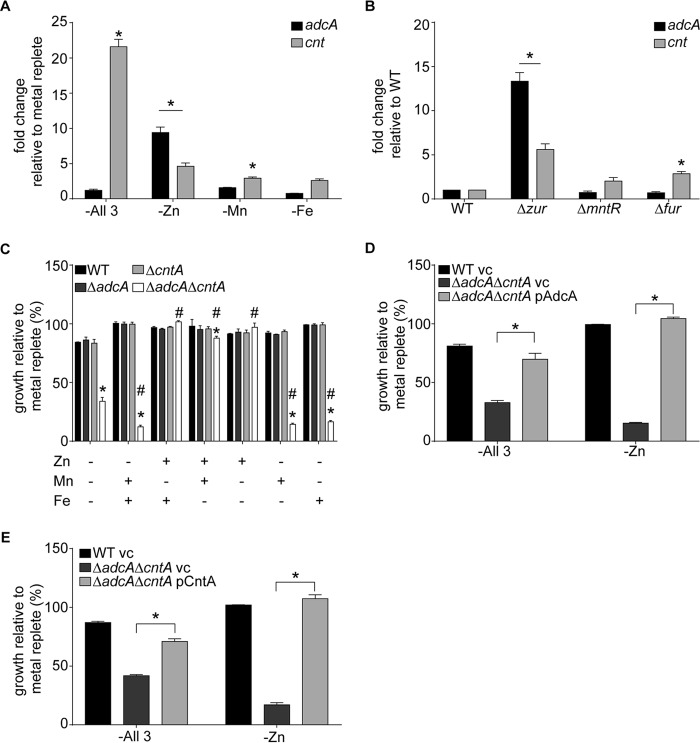
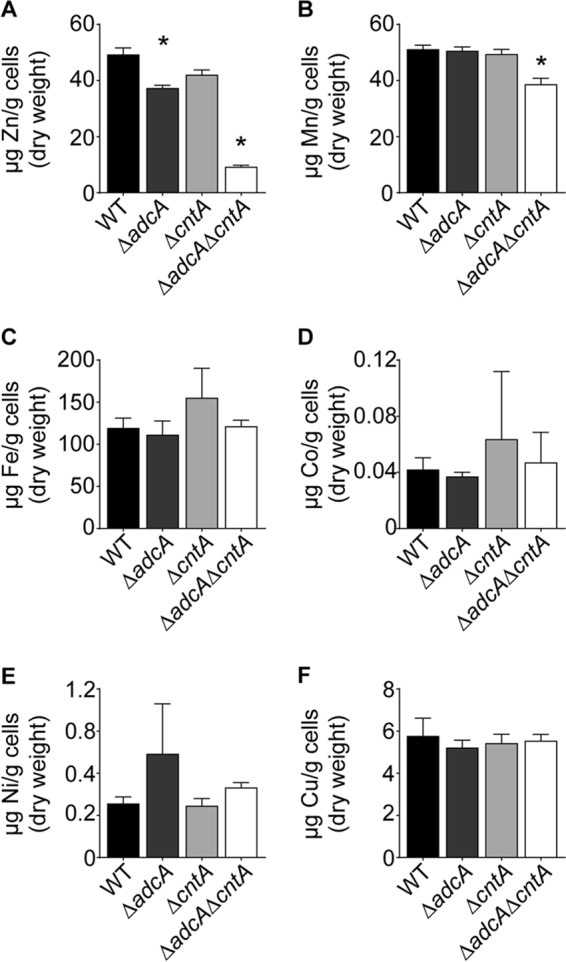
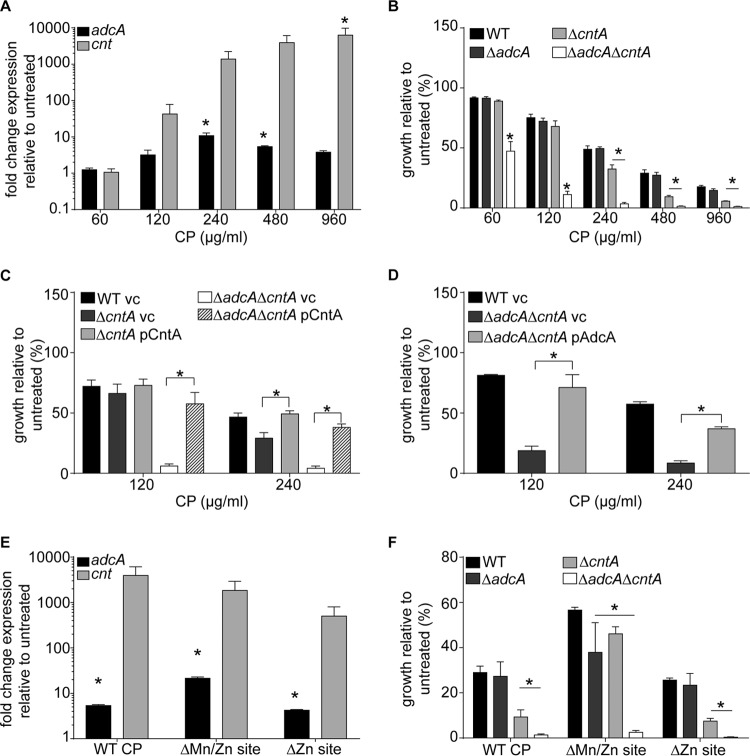
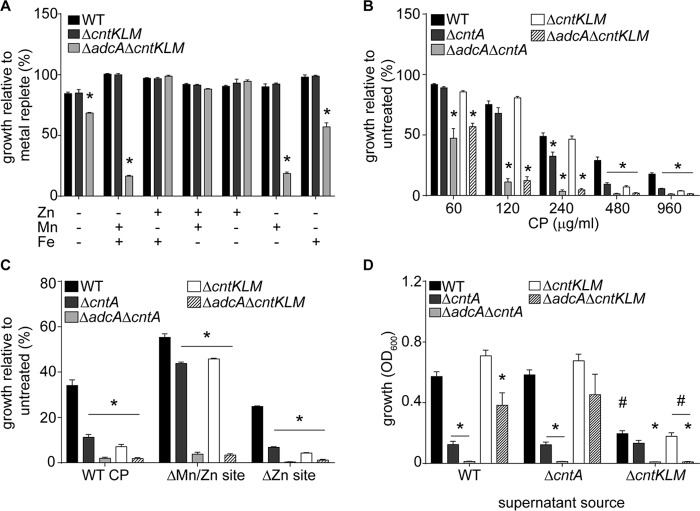
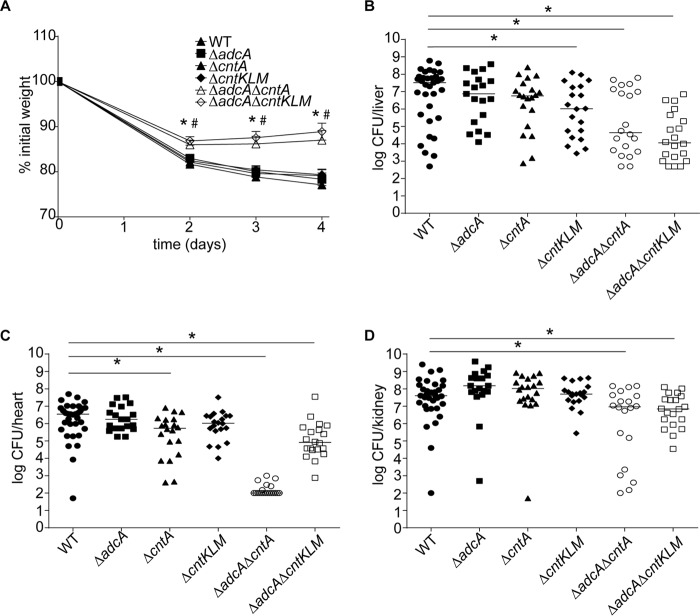
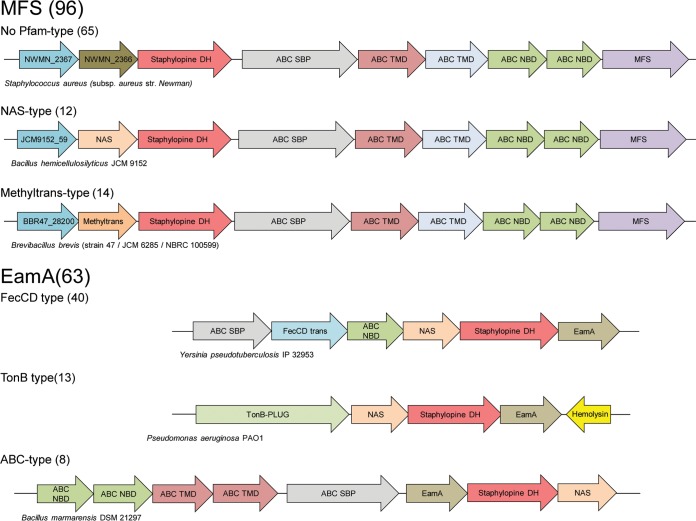
During infection, the host sequesters essential nutrients, such as zinc, to combat invading microbes. Despite the ability of the immune effector protein calprotectin to bind zinc with subpicomolar affinity, Staphylococcus aureus is able to successfully compete with the host for zinc. However, the zinc importers expressed by S. aureus remain unknown. Our investigations have revealed that S. aureus possesses two importers, AdcABC and CntABCDF, which are induced in response to zinc limitation. While AdcABC is similar to known zinc importers in other bacteria, CntABCDF has not previously been associated with zinc acquisition. Concurrent loss of the two systems severely impairs the ability of S. aureus to obtain zinc and grow in zinc-limited environments. Further investigations revealed that the Cnt system is responsible for the ability of S. aureus to compete with calprotectin for zinc in culture and contributes to acquisition of zinc during infection. The cnt locus also enables S. aureus to produce the broad-spectrum metallophore staphylopine. Similarly to the Cnt transporter, loss of staphylopine severely impairs the ability of S. aureus to resist host-imposed zinc starvation, both in culture and during infection. Further investigations revealed that together staphylopine and the Cnt importer function analogously to siderophore-based iron acquisition systems in order to facilitate zinc acquisition by S. aureus . Analogous systems are found in a broad range of Gram-positive and Gram-negative bacterial pathogens, suggesting that this new type of zinc importer broadly contributes to the ability of bacteria to cause infection. IMPORTANCE A critical host defense against infection is the restriction of zinc availability. Despite the subpicomolar affinity of the immune effector calprotectin for zinc, Staphylococcus aureus can successfully compete for this essential metal. Here, we describe two zinc importers, AdcABC and CntABCDF, possessed by S. aureus , the latter of which has not previously been associated with zinc acquisition. The ability of S. aureus to compete with the host for zinc is dependent on CntABCDF and the metallophore staphylopine, both in culture and during infection. These results expand the mechanisms utilized by bacteria to obtain zinc, beyond Adc-like systems, and demonstrate that pathogens utilize strategies similar to siderophore-based iron acquisition to obtain other essential metals during infection. The staphylopine synthesis machinery is present in a diverse collection of bacteria, suggesting that this new family of zinc importers broadly contributes to the ability of numerous pathogens to cause infection.
Overview
The claims and statistics of this paper haven’t been checked yet.
Run the check — free, no account needed. It reads the open-access text and checks the sources it cites.
Integrity signals
Registry
Cites
Statistics
Figures
Verification
Claims the paper makes
The claims and statistics of this paper haven’t been checked yet.
Run the check — free, no account needed. It reads the open-access text and checks the sources it cites.
Claims other papers make about this one
Each is checked against this paper’s own text: does it say what the citing paper says it does?
The cited source says what the claim attributes to it.
In the citing paper
“S. aureus produces and secretes staphylopine with broad metal chelating abilities 123,124 ,”
From Nutritional immunity: the battle for nutrient metals at the host–pathogen interface (2022) · cites this paper as [124]
Self-check
Percentages, sums and reported differences re-computed from the paper’s own numbers.
The self-check needs the paper’s full text.
Citations
Cites
Antibiotic resistance threats in the United States, 2019
(U.S.), C. F. D. C. A. P. (2019) · doi:10.15620/cdc:82532 · Cited by 5,782
Cytoscape 2.8: new features for data integration and network visualization
Smoot, M. E., Ono, K., Ruscheinski, J., Wang, P., & Ideker, T. (2010) · Bioinformatics · doi:10.1093/bioinformatics/btq675 · Cited by 4,770
Klevens, R. M. (2007) · JAMA · doi:10.1001/jama.298.15.1763 · Cited by 3,726
Urban, C. F., Ermert, D., Schmid, M., Abed, U. A., Goosmann, C., Nacken, W. K. F., Brinkmann, V., Jungblut, P. R., & Zychlinsky, A. (2009) · PLoS Pathogens · doi:10.1371/journal.ppat.1000639 · Cited by 1,720
Nutritional immunity: transition metals at the pathogen–host interface
Hood, M. I., & Skaar, E. P. (2012) · Nature Reviews Microbiology · doi:10.1038/nrmicro2836 · Cited by 1,535
Metalloproteins and metal sensing
Waldron, K. J., Rutherford, J. C., Ford, D., & Robinson, N. J. (2009) · Nature · doi:10.1038/nature08300 · Cited by 1,269
Metal ions in biological catalysis: from enzyme databases to general principles
Andreini, C., Bertini, I., Cavallaro, G., Holliday, G. L., & Thornton, J. M. (2008) · JBIC Journal of Biological Inorganic Chemistry · doi:10.1007/s00775-008-0404-5 · Cited by 1,150
Wertheim, H. F. L., Vos, M. D., Ott, A., van Belkum, A., Voß, A., Kluytmans, J. A. J. W., van Keulen, P. H. J., Vandenbroucke‐Grauls, C. M. J. E., Meester, M. H. M., & Verbrugh, H. A. (2004) · The Lancet · doi:10.1016/s0140-6736(04)16897-9 · Cited by 891
Metal Chelation and Inhibition of Bacterial Growth in Tissue Abscesses
Corbin, B. D., Seeley, E. H., Raab, A., Feldmann, J., Miller, M. R., Torres, V. J., Anderson, K. L., Dattilo, B. M., Dunman, P. M., Gerads, R., et al. (2008) · Science · doi:10.1126/science.1152449 · Cited by 857
Gerlt, J. A., Bouvier, J. T., Davidson, D. B., Imker, H. J., Sadkhin, B., Slater, D. R., & Whalen, K. L. (2015) · Biochimica et Biophysica Acta (BBA) - Proteins and Proteomics · doi:10.1016/j.bbapap.2015.04.015 · Cited by 805
Research works printed but not linked: 1
- World Health Organization . 2014. Antimicrobial resistance global report on surveillance. World Health Organization, Geneva, Switzerland.
Cited by
Sorted by citations
Nutritional immunity: the battle for nutrient metals at the host–pathogen interface
Murdoch, C. C., & Skaar, E. P. (2022) · Nature Reviews Microbiology · doi:10.1038/s41579-022-00745-6 · Cited by 701
The Role of Macrophages in Staphylococcus aureus Infection
Pidwill, G. R., Gibson, J. F., Cole, J., Renshaw, S. A., & Foster, S. J. (2021) · Frontiers in Immunology · doi:10.3389/fimmu.2020.620339 · Cited by 360
Transition Metal Sequestration by the Host-Defense Protein Calprotectin
Zygiel, E. M., & Nolan, E. M. (2018) · Annual Review of Biochemistry · doi:10.1146/annurev-biochem-062917-012312 · Cited by 193
Nutrient Zinc at the Host–Pathogen Interface
Lonergan, Z. R., & Skaar, E. P. (2019) · Trends in Biochemical Sciences · doi:10.1016/j.tibs.2019.06.010 · Cited by 129
S-Adenosylmethionine: more than just a methyl donor
Lee, Y., Ren, D., Jeon, B., & Liu, H. (2023) · Natural Product Reports · doi:10.1039/d2np00086e · Cited by 128
Lalaouna, D., Baude, J., Wu, Z., Tomasini, A., Chicher, J., Marzi, S., Vandenesch, F., Romby, P., Caldelari, I., & Moreau, K. (2019) · Nucleic Acids Research · doi:10.1093/nar/gkz728 · Cited by 124
The role of metal ions in the virulence and viability of bacterial pathogens
Neville, S. L. (2019) · Biochemical Society Transactions · doi:10.1042/bst20180275 · Cited by 117
Zinc: Multidimensional Effects on Living Organisms
Cuajungco, M. P., Ramirez, M. S., & Tolmasky, M. E. (2021) · Biomedicines · doi:10.3390/biomedicines9020208 · Cited by 107
Metal binding ability of microbial natural metal chelators and potential applications
Hofmann, M., Retamal-Morales, G., & Tischler, D. (2020) · Natural Product Reports · doi:10.1039/c9np00058e · Cited by 95
Mechanistic insights into staphylopine-mediated metal acquisition
Song, L., Zhang, Y., Chen, W., Gu, T., Zhang, S., & Ji, Q. (2018) · Proceedings of the National Academy of Sciences · doi:10.1073/pnas.1718382115 · Cited by 71
Staphylococcal diversity in atopic dermatitis from an individual to a global scale
Kashaf, S. S., Harkins, C. P., Deming, C., Joglekar, P., Conlan, S., Holmes, C. J., Almeida, A., Finn, R. D., Segre, J. A., & Kong, H. H. (2023) · Cell Host & Microbe · doi:10.1016/j.chom.2023.03.010 · Cited by 69
Ghssein, G., & Ezzeddine, Z. (2022) · Biology · doi:10.3390/biology11101525 · Cited by 69
Richardson, A. R. (2019) · Microbiology Spectrum · doi:10.1128/microbiolspec.gpp3-0011-2018 · Cited by 68
Genetic Regulation of Metal Ion Homeostasis in Staphylococcus aureus
Price, E. E., & Boyd, J. M. (2020) · Trends in Microbiology · doi:10.1016/j.tim.2020.04.004 · Cited by 65
Role of Nickel in Microbial Pathogenesis
Maier, R. J., & Benoit, S. L. (2019) · Inorganics · doi:10.3390/inorganics7070080 · Cited by 65
The Acinetobacter baumannii Znu System Overcomes Host-Imposed Nutrient Zinc Limitation
Hesse, L. E., Lonergan, Z. R., Beavers, W. N., & Skaar, E. P. (2019) · Infection and Immunity · doi:10.1128/iai.00746-19 · Cited by 59
Pseudomonas aeruginosa zinc homeostasis: Key issues for an opportunistic pathogen
Gonzalez, M. R., Ducret, V., Leoni, S., & Perron, K. (2018) · Biochimica et Biophysica Acta (BBA) - Gene Regulatory Mechanisms · doi:10.1016/j.bbagrm.2018.01.018 · Cited by 57
Bacterial Metallostasis: Metal Sensing, Metalloproteome Remodeling, and Metal Trafficking
Capdevila, D. A., Rondón, J. J., Edmonds, K. A., Rocchio, J. S., Dujovne, M. V., & Giedroc, D. P. (2024) · Chemical Reviews · doi:10.1021/acs.chemrev.4c00264 · Cited by 64
The Staphylococcus aureus Transcriptome during Cystic Fibrosis Lung Infection
Ibberson, C. B., & Whiteley, M. (2019) · mBio · doi:10.1128/mbio.02774-19 · Cited by 55
Price, S. L., Vadyvaloo, V., DeMarco, J. K., Brady, A., Gray, P. A., Kehl-Fie, T. E., Garneau-Tsodikova, S., Perry, R. D., & Lawrenz, M. B. (2021) · Proceedings of the National Academy of Sciences · doi:10.1073/pnas.2104073118 · Cited by 49
Self-citationBioinformatic Mapping of Opine-Like Zincophore Biosynthesis in Bacteria
Morey, J. R., & Kehl‐Fie, T. E. (2020) · mSystems · doi:10.1128/msystems.00554-20 · Cited by 51
Self-citationZur: Zinc-Sensing Transcriptional Regulator in a Diverse Set of Bacterial Species
Kandari, D., Joshi, H., & Bhatnagar, R. (2021) · Pathogens · doi:10.3390/pathogens10030344 · Cited by 46
Burcham, L. R., Le Breton, Y., Radin, J. N., Spencer, B. L., Deng, L., Hiron, A., Ransom, M. R., Mendonça, J. D. C., Belew, A. T., El-Sayed, N. M., et al. (2020) · mBio · doi:10.1128/mbio.02302-20 · Cited by 47
Self-citationMehdiratta, K., Singh, S., Sharma, S., Bhosale, R. S., Choudhury, R., Masal, D. P., Manocha, A., Dhamale, B. D., Khan, N. A., Vivekanand, A., et al. (2022) · Proceedings of the National Academy of Sciences · doi:10.1073/pnas.2110293119 · Cited by 48
Independent and cooperative regulation of staphylopine biosynthesis and trafficking by Fur and Zur
Fojcik, C., Arnoux, P., Ouerdane, L., Aigle, M., Alfonsi, L., & Borezée‐Durant, E. (2018) · Molecular Microbiology · doi:10.1111/mmi.13927 · Cited by 43
Multi-metal nutrient restriction and crosstalk in metallostasis systems in microbial pathogens
Jordan, M. R., Wang, J., Capdevila, D. A., & Giedroc, D. P. (2020) · Current Opinion in Microbiology · doi:10.1016/j.mib.2020.01.010 · Cited by 45
McFarlane, J. S., Davis, C. L., & Lamb, A. L. (2018) · Journal of Biological Chemistry · doi:10.1074/jbc.ra118.002007 · Cited by 43
Edmonds, K. A., Jordan, M. R., & Giedroc, D. P. (2021) · Metallomics · doi:10.1093/mtomcs/mfab046 · Cited by 44
Radin, J. N., Zhu, J., Brazel, E. B., McDevitt, C. A., & Kehl‐Fie, T. E. (2018) · Infection and Immunity · doi:10.1128/iai.00642-18 · Cited by 42
Self-citationLaffont, C., & Arnoux, P. (2020) · Metallomics · doi:10.1039/d0mt00150c · Cited by 43
Mechanistic Insights into the Metal-Dependent Activation of ZnII-Dependent Metallochaperones
Jordan, M. R., Wang, J., Weiss, A., Skaar, E. P., Capdevila, D. A., & Giedroc, D. P. (2019) · Inorganic Chemistry · doi:10.1021/acs.inorgchem.9b01173 · Cited by 39
Zarrella, T. M., & Khare, A. (2022) · PLoS Biology · doi:10.1371/journal.pbio.3001679 · Cited by 31
Iron Acquisition by Bacterial Pathogens: Beyond Tris‐Catecholate Complexes
Zhang, Y., Sen, S., & Giedroc, D. P. (2020) · ChemBioChem · doi:10.1002/cbic.201900778 · Cited by 30
Secondary Metabolites Governing Microbiome Interaction of Staphylococcal Pathogens and Commensals
Salazar, B. O. T., Heilbronner, S., Peschel, A., & Krismer, B. (2021) · Microbial Physiology · doi:10.1159/000517082 · Cited by 30
Solórzano, P. K. P., Yao, J., Rock, C. O., & Kehl‐Fie, T. E. (2019) · mBio · doi:10.1128/mbio.01321-19 · Cited by 34
Self-citationStrategies for Zinc Uptake in Pseudomonas aeruginosa at the Host–Pathogen Interface
Wang, S., Cheng, J., Yanting, N., Li, P., Zhang, X., & Lin, J. (2021) · Frontiers in Microbiology · doi:10.3389/fmicb.2021.741873 · Cited by 27
Katumba, G. L., Tran, H., & Henderson, J. P. (2022) · mBio · doi:10.1128/mbio.02391-21 · Cited by 27
Vermilyea, D. M., Crocker, A. W., Gifford, A. H., & Hogan, D. A. (2021) · Journal of Bacteriology · doi:10.1128/jb.00100-21 · Cited by 24
Inhibition of Isoleucyl-tRNA Synthetase by the Hybrid Antibiotic Thiomarinol
Johnson, R. A., Chan, A. N., Ward, R. D., McGlade, C. A., Hatfield, B. M., Peters, J. M., & Ли, Б. (2021) · Journal of the American Chemical Society · doi:10.1021/jacs.1c02622 · Cited by 26
Simple rules govern the diversity of bacterial nicotianamine-like metallophores
Laffont, C., Brutesco, C., Hajjar, C., Cullia, G., Fanelli, R., Ouerdane, L., Cavelier, F., & Arnoux, P. (2019) · Biochemical Journal · doi:10.1042/bcj20190384 · Cited by 26
Remelli, M., Bellotti, D., & Rowińska‐Żyrek, M. (2021) · Current Medicinal Chemistry · doi:10.2174/1389200222666210514012945 · Cited by 25
Effect of Ferredoxin Receptor FusA on the Virulence Mechanism of Pseudomonas plecoglossicida
He, R., Wang, J., Lin, M., Tian, J., Wu, B. J., Tan, X., Zhou, J., Zhang, J., Yan, Q., & Huang, L. (2022) · Frontiers in Cellular and Infection Microbiology · doi:10.3389/fcimb.2022.808800 · Cited by 23
Intracellular accumulation of staphylopine impairs the fitness of Staphylococcus aureus cntE mutant
Chen, C., & Hooper, D. C. (2019) · FEBS Letters · doi:10.1002/1873-3468.13396 · Cited by 22
Grim, K. P., Radin, J. N., Solórzano, P. K. P., Morey, J. R., Frye, K. A., Ganio, K., Neville, S. L., McDevitt, C. A., & Kehl‐Fie, T. E. (2020) · Journal of Bacteriology · doi:10.1128/jb.00014-20 · Cited by 22
Self-citationBearne, S. L. (2020) · Chemistry - A European Journal · doi:10.1002/chem.201905826 · Cited by 22
Calprotectin (S100A8/A9) Is an Innate Immune Effector in Experimental Periodontitis
Johnstone, K. F., Wei, Y., Bittner‐Eddy, P. D., Vreeman, G. W., Stone, I. A., Clayton, J. B., Reilly, C., Walbon, T. B., Wright, E. N., Hoops, S., et al. (2021) · Infection and Immunity · doi:10.1128/iai.00122-21 · Cited by 22
Control by Metals of Staphylopine Dehydrogenase Activity during Metallophore Biosynthesis
Hajjar, C., Fanelli, R., Laffont, C., Brutesco, C., Cullia, G., Tribout, M., Nurizzo, D., Borezée‐Durant, E., Voulhoux, R., Pignol, D., et al. (2019) · Journal of the American Chemical Society · doi:10.1021/jacs.9b01676 · Cited by 21
Solórzano, P. K. P., Bastille, T. S., Radin, J. N., & Kehl‐Fie, T. E. (2023) · mBio · doi:10.1128/mbio.03223-22 · Cited by 21
Self-citationResisting death by metal: metabolism and Cu/Zn homeostasis in bacteria
Sullivan, M. J., Terán, I., Goh, K. G. K., & Ulett, G. C. (2024) · Emerging Topics in Life Sciences · doi:10.1042/etls20230115 · Cited by 22
Neupane, D. P., Kumar, S., & Yukl, E. T. (2018) · Biochemistry · doi:10.1021/acs.biochem.8b00854 · Cited by 21
Luo, S., Ju, Y., Zhou, J., Gu, Q., Xu, J., & Zhou, H. (2019) · International Journal of Biological Macromolecules · doi:10.1016/j.ijbiomac.2019.05.169 · Cited by 21
Occurrence of D-amino acids in natural products
Armstrong, D. W., & Berthod, A. (2023) · Natural Products and Bioprospecting · doi:10.1007/s13659-023-00412-0 · Cited by 20
Metal sequestration by S100 proteins in chemically diverse environments
Rosen, T., Wang, K.-K. A., & Nolan, E. M. (2022) · Trends in Microbiology · doi:10.1016/j.tim.2021.12.006 · Cited by 19
Battle for Metals: Regulatory RNAs at the Front Line
Charbonnier, M., González-Espinoza, G., Kehl‐Fie, T. E., & Lalaouna, D. (2022) · Frontiers in Cellular and Infection Microbiology · doi:10.3389/fcimb.2022.952948 · Cited by 21
Self-citationIncreased flexibility in the use of exogenous lipoic acid by Staphylococcus aureus
Laczkovich, I., Teoh, W. P., Flury, S., Grayczyk, J. P., Zorzoli, A., & Alonzo, F. (2018) · Molecular Microbiology · doi:10.1111/mmi.13970 · Cited by 19
Zinc binding proteome of a phytopathogen Xanthomonas translucens pv. undulosa
Sharma, A., Sharma, D., & Verma, S. K. (2019) · Royal Society Open Science · doi:10.1098/rsos.190369 · Cited by 19
Coordinated adaptation of Staphylococcus aureus to calprotectin-dependent metal sequestration
Ruiz, V. M. R., Freiberg, J. A., Weiss, A., Green, E. R., Jobson, M.-E., Felton, E. A., Shaw, L. N., Chazin, W., & Skaar, E. P. (2024) · mBio · doi:10.1128/mbio.01389-24 · Cited by 19
Wątły, J., Miller, A., Kozłowski, H., & Rowińska‐Żyrek, M. (2021) · Journal of Inorganic Biochemistry · doi:10.1016/j.jinorgbio.2021.111386 · Cited by 19
Burcham, L. R., Akbari, M. S., Alhajjar, N., Keogh, R. A., Radin, J. N., Kehl‐Fie, T. E., Belew, A. T., El-Sayed, N. M., McIver, K. S., & Doran, K. S. (2022) · mBio · doi:10.1128/mbio.00985-22 · Cited by 18
Self-citationStaphylococcus aureus metal acquisition in the mastitic mammary gland
Carlson, S. K., Erickson, D. L., & Wilson, E. (2020) · Microbial Pathogenesis · doi:10.1016/j.micpath.2020.104179 · Cited by 18
A Small-Molecule Modulator of Metal Homeostasis in Gram-Positive Pathogens
Juttukonda, L. J., Beavers, W. N., Unsihuay, D., Kim, K., Pishchany, G., Horning, K. J., Weiss, A., Al‐Tameemi, H., Boyd, J. M., Sulikowski, G. A., et al. (2020) · mBio · doi:10.1128/mbio.02555-20 · Cited by 17
McFarlane, J. S., Zhang, J., Wang, S., Lei, X., Moran, G. R., & Lamb, A. L. (2019) · Journal of Biological Chemistry · doi:10.1074/jbc.ra119.011059 · Cited by 17
Host subversion of bacterial metallophore usage drives copper intoxication
Hossain, S., Morey, J. R., Neville, S. L., Ganio, K., Radin, J. N., Norambuena, J., Boyd, J. M., McDevitt, C. A., & Kehl‐Fie, T. E. (2023) · mBio · doi:10.1128/mbio.01350-23 · Cited by 16
Self-citationMasters, T. L., Johnson, S. P., Jeraldo, P., Greenwood‐Quaintance, K. E., Cunningham, S. A., Abdel, M. P., Chia, N., & Patel, R. (2021) · Journal of Molecular Diagnostics · doi:10.1016/j.jmoldx.2021.05.011 · Cited by 16
Solórzano, P. K. P., Shupe, A. C., & Kehl-Fie, T. E. (2021) · Journal of Bacteriology · doi:10.1128/jb.00422-21 · Cited by 17
Self-citationA Trap-Door Mechanism for Zinc Acquisition by Streptococcus pneumoniae AdcA
Luo, Z., Morey, J. R., Deplazes, E., Motygullina, A., Tan, A., Ganio, K., Neville, S. L., Eleftheriadis, N., Isselstein, M., Pederick, V. G., et al. (2021) · mBio · doi:10.1128/mbio.01958-20 · Cited by 15
Self-citationBoyd, J. M., Ryan Kaler, K., Esquilín-Lebrón, K., Pall, A., Campbell, C. J., Foley, M. E., Rios-Delgado, G., Mustor, E. M., Stephens, T. G., Bovermann, H., et al. (2024) · mBio · doi:10.1128/mbio.02310-24 · Cited by 14
Maret, W. (2024) · Natural Product Communications · doi:10.1177/1934578x241271701 · Cited by 16
Dysbiosis and diabetic foot ulcers: A metabolic perspective of Staphylococcus aureus infection
Liu, R., Feng, J., Ni, Y., Chen, K., Wang, Y., Zhang, T., Zhou, M., & Zhao, C. (2024) · Biomedicine & Pharmacotherapy · doi:10.1016/j.biopha.2024.117498 · Cited by 19
Hermansen, G. M. M., Hansen, M. L., Khademi, S. M. H., & Jelsbak, L. (2018) · Microbiology · doi:10.1099/mic.0.000687 · Cited by 13
Staphylopine dehydrogenase in the apo state
Hajjar, C., & Arnoux, P. (2018) · Worldwide Protein Data Bank · doi:10.2210/pdb6h31/pdb · Cited by 13
Transition metals and Enterococcus faecalis: Homeostasis, virulence and perspectives
Ali, I. A. A., Cheung, G. S. P., & Neelakantan, P. (2022) · Molecular Oral Microbiology · doi:10.1111/omi.12391 · Cited by 12
Souche, A., Vandenesch, F., Doléans-Jordheim, A., & Moreau, K. (2023) · International Journal of Molecular Sciences · doi:10.3390/ijms24076609 · Cited by 12
Sadeghian, Y., Raeeszadeh, M., & Darehabi, H. K. (2024) · Animals · doi:10.3390/ani14010148 · Cited by 12
Zinc acquisition and its contribution to Klebsiella pneumoniae virulence
Maunders, E. A., Giles, M. W., Ganio, K., Cunningham, B. A., Bennett-Wood, V. R., Cole, G. B., Ng, D., Lai, C. C.-L., Neville, S. L., Moraes, T. F., et al. (2024) · Frontiers in Cellular and Infection Microbiology · doi:10.3389/fcimb.2023.1322973 · Cited by 12
Self-citationCrawford, C. L., Dalecki, A. G., Narmore, W. T., Hoff, J. S., Hargett, A. A., Renfrow, M. B., Zhang, M., Kalubowilage, M., Bossmann, S. H., Queern, S. L., et al. (2019) · Metallomics · doi:10.1039/c8mt00316e · Cited by 13
Disruption of Phosphate Homeostasis Sensitizes Staphylococcus aureus to Nutritional Immunity
Kelliher, J. L., Brazel, E. B., Radin, J. N., Joya, E. S., Solórzano, P. K. P., Neville, S. L., McDevitt, C. A., & Kehl‐Fie, T. E. (2020) · Infection and Immunity · doi:10.1128/iai.00102-20 · Cited by 13
Self-citationDeterminants of bacterial survival and proliferation in blood
Lê-Bury, P., Echenique-Rivera, H., Pizarro‐Cerdá, J., & Dussurget, O. (2024) · FEMS Microbiology Reviews · doi:10.1093/femsre/fuae013 · Cited by 11
Luo, Z., Luo, S., Ju, Y., Ding, P., Xu, J., Gu, Q., & Zhou, H. (2021) · The FASEB Journal · doi:10.1096/fj.202002287rr · Cited by 12
Identification of zinc and Zur-regulated genes in Corynebacterium diphtheriae
Peng, E. D., & Schmitt, M. P. (2019) · PLoS ONE · doi:10.1371/journal.pone.0221711 · Cited by 11
Kramarska, E., Toumi, E., Squeglia, F., Laverde, D., Napolitano, V., Frapy, E., Autiero, I., Sadonès, O., Hüebner, J., Skurnik, D., et al. (2024) · npj Vaccines · doi:10.1038/s41541-024-00940-x · Cited by 9
Peng, M., Xu, Y., Dou, B., Yang, F., He, Q., Liu, Z., Gao, T., Liu, W., Yang, K., Guo, R., et al. (2023) · Microbiology Spectrum · doi:10.1128/spectrum.04337-22 · Cited by 10
Felgate, H., Sethi, D., Faust, K., Kiy, C., Härtel, C., Rupp, J., Clifford, R., Dean, R., Tremlett, C. H., Wain, J. R., et al. (2023) · Microbial Genomics · doi:10.1099/mgen.0.001106 · Cited by 9
Pseudomonas aeruginosa transcriptome analysis of metal restriction in ex vivo cystic fibrosis sputum
Neff, S. L., Doing, G., Reiter, T. E., Hampton, T. H., Greene, C. S., & Hogan, D. A. (2024) · Microbiology Spectrum · doi:10.1128/spectrum.03157-23 · Cited by 8
Maurakis, S. A., & Cornelissen, C. N. (2020) · Journal of Visualized Experiments · doi:10.3791/60903 · Cited by 9
Elhakim, Y. A., Ali, A. E., Hosny, A. E.-D. M. S., & Abdeltawab, N. F. (2021) · Pathogens · doi:10.3390/pathogens10101228 · Cited by 8
Dynamic Relay of Protein-Bound Lipoic Acid in Staphylococcus aureus
Teoh, W. P., Resko, Z. J., Flury, S., & Alonzo, F. (2019) · Journal of Bacteriology · doi:10.1128/jb.00446-19 · Cited by 9
Opine Metallophore Biosynthesis
McFarlane, J. S., & Lamb, A. L. (2019) · Elsevier eBooks · doi:10.1016/b978-0-12-409547-2.14800-0 · Cited by 9
Potential next generation targets for antibacterial agent's discovery and development
Gupta, P., Yadav, P., Lata, M., Chaudhary, S., Telang, V., Kishore, R., Kishan, J., Goswami, K., Arockiaraj, J., Singh, L. R., et al. (2025) · European Journal of Medicinal Chemistry · doi:10.1016/j.ejmech.2025.118188 · Cited by 8
Transcriptomic analysis of Streptococcus agalactiae periprosthetic joint infection
Cho, H., Masters, T. L., Greenwood‐Quaintance, K. E., Johnson, S. P., Jeraldo, P., Chia, N., Pu, M., Abdel, M. P., & Patel, R. (2021) · MicrobiologyOpen · doi:10.1002/mbo3.1256 · Cited by 6
Secli, V., Biagio, C. D., Martini, A., Michetti, E., Pacello, F., Ammendola, S., & Battistoni, A. (2023) · International Journal of Molecular Sciences · doi:10.3390/ijms24020944 · Cited by 7
Shull, L. M., Wolter, D. J., Kunkle, D. E., Legg, K. A., Giedroc, D. P., Skaar, E. P., Hoffman, L. R., & Reniere, M. L. (2025) · mBio · doi:10.1128/mbio.00374-25 · Cited by 6
Microbial homeostasis and dysbiosis in physiological and pathological skin
Gan, Y., Zhang, J., Qi, F., Grice, E. A., Garza, L. A., & Wang, G. (2025) · Med · doi:10.1016/j.medj.2025.100847 · Cited by 6
Mujchariyakul, W., Walsh, C. J., Giulieri, S. G., Cramond, C., Cao, K. L., Stinear, T. P., Howden, B. P., Guérillot, R., & Hachani, A. (2026) · mSystems · doi:10.1128/msystems.01183-25 · Cited by 6
Iron Sequestration by Murine Calprotectin Induces Starvation Responses in Pseudomonas aeruginosa
Peet, J. J. Y., Phan, A. D., Oglesby, A. G., & Nolan, E. M. (2024) · ACS Infectious Diseases · doi:10.1021/acsinfecdis.3c00539 · Cited by 5
Wang, J., Capdevila, D. A., & Giedroc, D. P. (2019) · Elsevier eBooks · doi:10.1016/b978-0-12-409547-2.14675-x · Cited by 5
Dey, P., Das, G. C., & Ramesh, A. (2020) · Langmuir · doi:10.1021/acs.langmuir.9b03073 · Cited by 5
Microgeography of staphyloccoci in human tissue explains antibiotic failurePreprint
Tripathi, V., Morin, B., Antelo-Varela, M., Loriol, A. A., Kurg, K., Jakonia, S., Ehsan, A., Herbert, S., Ferrand, A., Sauteur, L., et al. (2025) · bioRxiv (Cold Spring Harbor Laboratory) · doi:10.1101/2025.09.12.675782 · Cited by 7
Metadata
- Authors
- Grim, K. P., San Francisco, B., Radin, J. N., Brazel, E. B., Kelliher, J. L., Párraga Solórzano, P. K., Kim, P. C., McDevitt, C. A., & Kehl-Fie, T. E.
- Affiliations
- University of Illinois Urbana-Champaign (US)
- Institute for Genomic Biology, University of Illinois Urbana-Champaign, Urbana, Illinois, USA
- The University of Adelaide (AU)
- Department of Microbiology, University of Illinois Urbana-Champaign, Urbana, Illinois, USA
- Venue
- mBio
- Publisher
- American Society for Microbiology
- Published
- 2017-11-08
- Volume
- 8
- Issue
- 5
- ISSN
- 2150-7511 (ISSN-L)
- 2161-2129
- PMC
- PMC5666155
- OpenAlex
- W2767136855
- Cited by
- 152
- References
- 77
- Citations by year
- 2026: 19 · 2025: 18 · 2024: 17 · 2023: 13 · 2022: 15 · 2021: 22 · 2020: 18 · 2019: 21 · 2018: 9
- FWCI
- 8.89
- Type
- journal article
- Language
- en
- Open access
- gold
- doi.org
- Licence
- Locations
- mBio (publishedVersion, cc-by)
- PubMed Central (publishedVersion, cc-by)
- PubMed (publishedVersion)
- Adelaide Research & Scholarship (AR&S) (University of Adelaide) (submittedVersion, other-oa)
- DOAJ (DOAJ: Directory of Open Access Journals) (submittedVersion, cc-by-sa)
- DOAJ (DOAJ: Directory of Open Access Journals) (submittedVersion)
- Minerva Access (University of Melbourne) (submittedVersion, cc-by)
- Repositorio Institucional de la Universidad de las Fuerzas Armadas ESPE (Universidad de las Fuerzas Armadas ESPE) (submittedVersion, other-oa)
- Greater South Information System
- Funders
- Institute for Genomic Biology Post Doctoral Fellowship
- HHS | National Institutes of Health (K22 AI104805, R01 AI118880)
- Department of Health | National Health and Medical Research Council (1080784, 1122582)
- Australian Research Council (DP150104515, DP170102102)
- March of Dimes Foundation
- Topics
- Life Sciences › Biochemistry, Genetics and Molecular Biology › Genetics › Bacterial Genetics and Biotechnology
- Health Sciences › Medicine › Infectious Diseases › Antimicrobial Resistance in Staphylococcus
- Health Sciences › Nursing › Nutrition and Dietetics › Trace Elements in Health
- Keywords
- Staphylococcus aureus, metallophores, zinc uptake, nutritional immunity, calprotectin, zinc starvation, bacterial virulence
- MeSH terms
- Bacterial Proteins, Imidazoles, Staphylococcal Infections, Staphylococcus aureus, Zinc, Gene Expression Regulation, Bacterial, Siderophores, Membrane Transport Proteins, Leukocyte L1 Antigen Complex, Host-Pathogen Interactions
About these checks
Registry, retraction, Cites and statistics results are computed, not judged, with one exception: a printed reference that no index lists is read once by a model before it counts as a citation error. Claims are extracted by a model and kept only when their quote appears verbatim in the text; each cited source is then checked, with a model’s help, for whether it says what the claim relies on. Those verdicts can be wrong — read the claim’s quote and the cited source before relying on one.
Statistics and arithmetic are recomputed, not judged.
Confidence bands are shown only for fields calibrated on our annotated test set. None is calibrated yet, so no band is shown.
What counts as a claim ›How we measure confidence ›How we check this ›
Are you an author, or do you see a problem with this page? Request a review
