

The DOI matches its Crossref record; 77 of the 77 references it cites were found in a registry or an index.
The Metallophore Staphylopine Enables Staphylococcus aureus To Compete with the Host for Zinc and Overcome Nutritional Immunity
Open accessAbstract
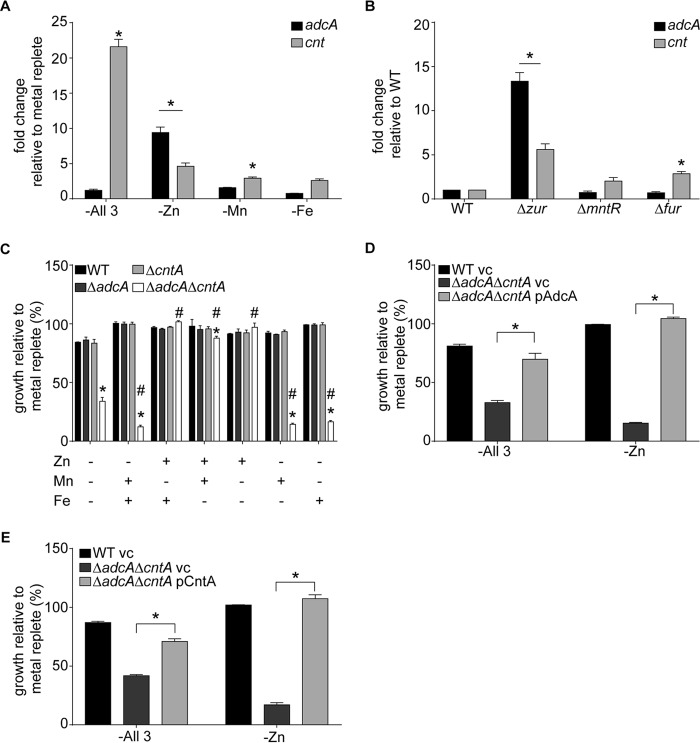
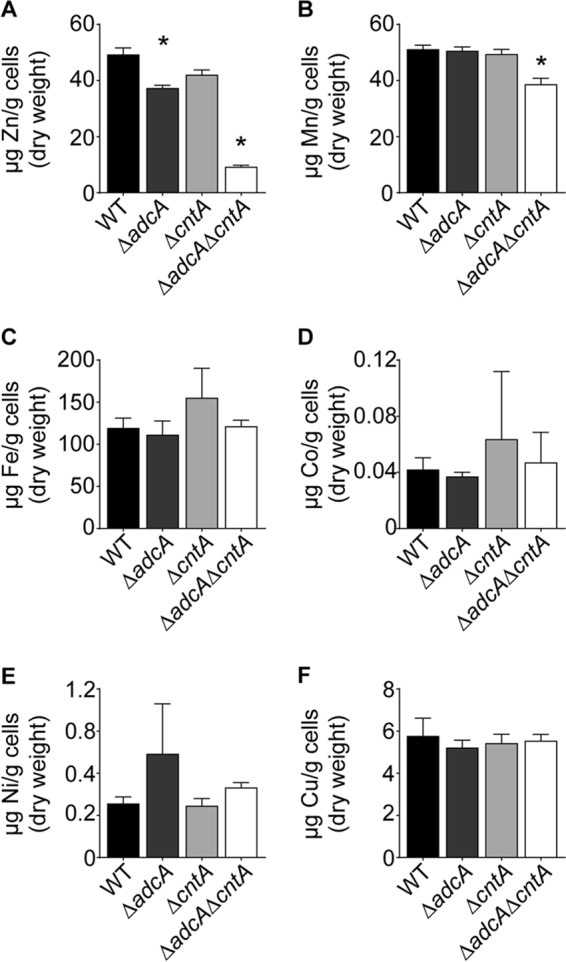
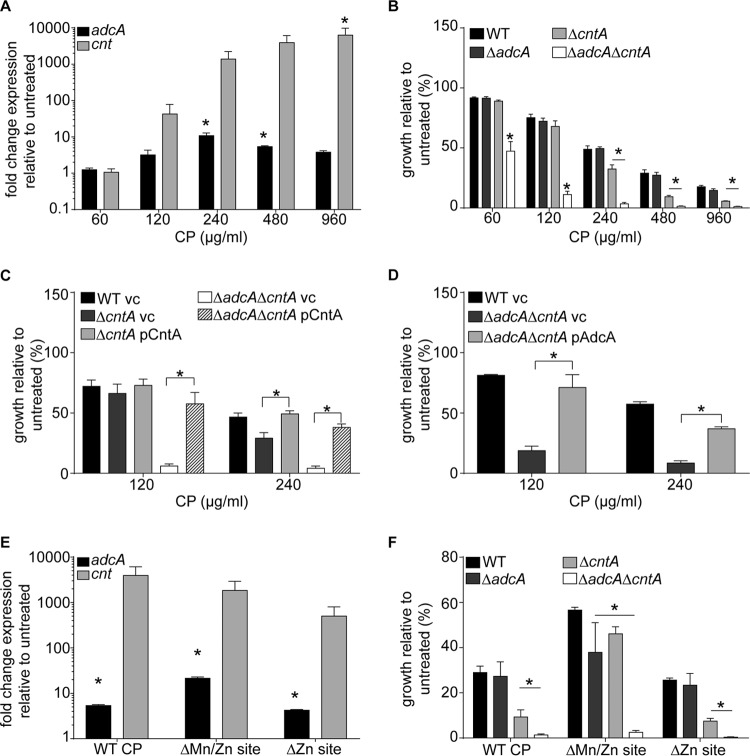
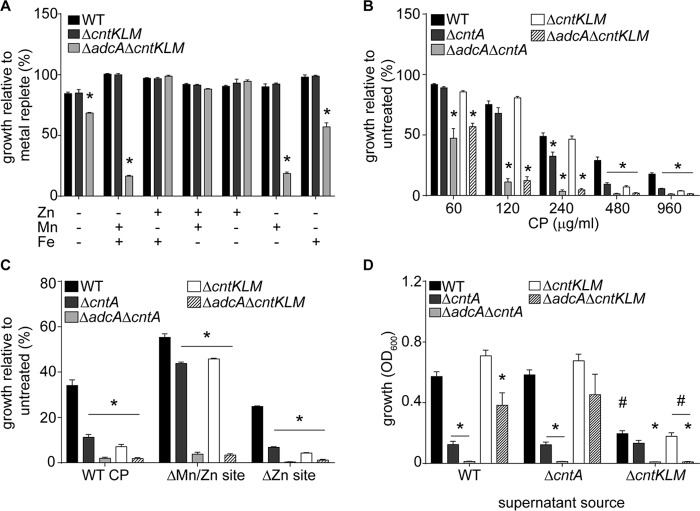
During infection, the host sequesters essential nutrients, such as zinc, to combat invading microbes. Despite the ability of the immune effector protein calprotectin to bind zinc with subpicomolar affinity, Staphylococcus aureus is able to successfully compete with the host for zinc. However, the zinc importers expressed by S. aureus remain unknown. Our investigations have revealed that S. aureus possesses two importers, AdcABC and CntABCDF, which are induced in response to zinc limitation. While AdcABC is similar to known zinc importers in other bacteria, CntABCDF has not previously been associated with zinc acquisition. Concurrent loss of the two systems severely impairs the ability of S. aureus to obtain zinc and grow in zinc-limited environments. Further investigations revealed that the Cnt system is responsible for the ability of S. aureus to compete with calprotectin for zinc in culture and contributes to acquisition of zinc during infection. The cnt locus also enables S. aureus to produce the broad-spectrum metallophore staphylopine. Similarly to the Cnt transporter, loss of staphylopine severely impairs the ability of S. aureus to resist host-imposed zinc starvation, both in culture and during infection. Further investigations revealed that together staphylopine and the Cnt importer function analogously to siderophore-based iron acquisition systems in order to facilitate zinc acquisition by S. aureus . Analogous systems are found in a broad range of Gram-positive and Gram-negative bacterial pathogens, suggesting that this new type of zinc importer broadly contributes to the ability of bacteria to cause infection. IMPORTANCE A critical host defense against infection is the restriction of zinc availability. Despite the subpicomolar affinity of the immune effector calprotectin for zinc, Staphylococcus aureus can successfully compete for this essential metal. Here, we describe two zinc importers, AdcABC and CntABCDF, possessed by S. aureus , the latter of which has not previously been associated with zinc acquisition. The ability of S. aureus to compete with the host for zinc is dependent on CntABCDF and the metallophore staphylopine, both in culture and during infection. These results expand the mechanisms utilized by bacteria to obtain zinc, beyond Adc-like systems, and demonstrate that pathogens utilize strategies similar to siderophore-based iron acquisition to obtain other essential metals during infection. The staphylopine synthesis machinery is present in a diverse collection of bacteria, suggesting that this new family of zinc importers broadly contributes to the ability of numerous pathogens to cause infection.
Overview
The claims and statistics of this paper haven’t been checked yet.
Run the check — free, no account needed. It reads the open-access text and checks the sources it cites.
Integrity signals
Registry
Cites
Statistics
Figures
Verification
Claims the paper makes
The claims and statistics of this paper haven’t been checked yet.
Run the check — free, no account needed. It reads the open-access text and checks the sources it cites.
Claims other papers make about this one
Each is checked against this paper’s own text: does it say what the citing paper says it does?
The cited source says what the claim attributes to it.
In the citing paper
“S. aureus produces and secretes staphylopine with broad metal chelating abilities 123,124 ,”
From Nutritional immunity: the battle for nutrient metals at the host–pathogen interface (2022) · cites this paper as [124]
Self-check
Percentages, sums and reported differences re-computed from the paper’s own numbers.
The self-check needs the paper’s full text.
Citations
Cites
Antibiotic resistance threats in the United States, 2019
(U.S.), C. F. D. C. A. P. (2019) · doi:10.15620/cdc:82532 · Cited by 5,782
Cytoscape 2.8: new features for data integration and network visualization
Smoot, M. E., Ono, K., Ruscheinski, J., Wang, P., & Ideker, T. (2010) · Bioinformatics · doi:10.1093/bioinformatics/btq675 · Cited by 4,770
Klevens, R. M. (2007) · JAMA · doi:10.1001/jama.298.15.1763 · Cited by 3,726
Urban, C. F., Ermert, D., Schmid, M., Abed, U. A., Goosmann, C., Nacken, W. K. F., Brinkmann, V., Jungblut, P. R., & Zychlinsky, A. (2009) · PLoS Pathogens · doi:10.1371/journal.ppat.1000639 · Cited by 1,720
Nutritional immunity: transition metals at the pathogen–host interface
Hood, M. I., & Skaar, E. P. (2012) · Nature Reviews Microbiology · doi:10.1038/nrmicro2836 · Cited by 1,535
Metalloproteins and metal sensing
Waldron, K. J., Rutherford, J. C., Ford, D., & Robinson, N. J. (2009) · Nature · doi:10.1038/nature08300 · Cited by 1,269
Metal ions in biological catalysis: from enzyme databases to general principles
Andreini, C., Bertini, I., Cavallaro, G., Holliday, G. L., & Thornton, J. M. (2008) · JBIC Journal of Biological Inorganic Chemistry · doi:10.1007/s00775-008-0404-5 · Cited by 1,150
Wertheim, H. F. L., Vos, M. D., Ott, A., van Belkum, A., Voß, A., Kluytmans, J. A. J. W., van Keulen, P. H. J., Vandenbroucke‐Grauls, C. M. J. E., Meester, M. H. M., & Verbrugh, H. A. (2004) · The Lancet · doi:10.1016/s0140-6736(04)16897-9 · Cited by 891
Metal Chelation and Inhibition of Bacterial Growth in Tissue Abscesses
Corbin, B. D., Seeley, E. H., Raab, A., Feldmann, J., Miller, M. R., Torres, V. J., Anderson, K. L., Dattilo, B. M., Dunman, P. M., Gerads, R., et al. (2008) · Science · doi:10.1126/science.1152449 · Cited by 857
Gerlt, J. A., Bouvier, J. T., Davidson, D. B., Imker, H. J., Sadkhin, B., Slater, D. R., & Whalen, K. L. (2015) · Biochimica et Biophysica Acta (BBA) - Proteins and Proteomics · doi:10.1016/j.bbapap.2015.04.015 · Cited by 805
S100A8 and S100A9 in inflammation and cancer
Gebhardt, C., Németh, J., Angel, P., & Hess, J. (2006) · Biochemical Pharmacology · doi:10.1016/j.bcp.2006.05.017 · Cited by 696
Zinc through the Three Domains of Life
Andreini, C., Banci, L., Bertini, I., & Rosato, A. (2006) · Journal of Proteome Research · doi:10.1021/pr0603699 · Cited by 648
Nutritional immunity beyond iron: a role for manganese and zinc
Kehl-Fie, T. E., & Skaar, E. P. (2010) · Current Opinion in Chemical Biology · doi:10.1016/j.cbpa.2009.11.008 · Cited by 634
Self-citationAllelic replacement in Staphylococcus aureus with inducible counter-selection
Bae, T., & Schneewind, O. (2005) · Plasmid · doi:10.1016/j.plasmid.2005.05.005 · Cited by 624
A structural classification of substrate‐binding proteins
Berntsson, R. P. ‐., Smits, S. H. J., Schmitt, L., Slotboom, D.-J., & Poolman, B. (2010) · FEBS Letters · doi:10.1016/j.febslet.2010.04.043 · Cited by 565
Iron availability and infection
Weinberg, E. D. (2009) · Biochimica et Biophysica Acta (BBA) - General Subjects · doi:10.1016/j.bbagen.2008.07.002 · Cited by 516
The ZnuABC high‐affinity zinc uptake system and its regulator Zur in Escherichia coli
Patzer, S. I., & Hantke, K. (1998) · Molecular Microbiology · doi:10.1046/j.1365-2958.1998.00883.x · Cited by 490
Siderophores from Neighboring Organisms Promote the Growth of Uncultured Bacteria
Donofrio, A. E., Crawford, J. M., Stewart, E. J., Witt, K., Gavrish, E., Epstein, S. S., Clardy, J., & Lewis, K. (2010) · Chemistry & Biology · doi:10.1016/j.chembiol.2010.02.010 · Cited by 457
Kehl-Fie, T. E., Chitayat, S., Hood, M. I., Damo, S., Restrepo, N., Garcia, C., Munro, K. A., Chazin, W. J., & Skaar, E. P. (2011) · Cell Host & Microbe · doi:10.1016/j.chom.2011.07.004 · Cited by 419
Self-citationDamo, S. M., Kehl-Fie, T. E., Sugitani, N., Holt, M. E., Rathi, S., Murphy, W. J., Zhang, Y., Betz, C., Hench, L., Fritz, G., et al. (2013) · Proceedings of the National Academy of Sciences · doi:10.1073/pnas.1220341110 · Cited by 388
Self-citationLiu, J. Z., Jellbauer, S., Poe, A. J., Ton, V., Pesciaroli, M., Kehl-Fie, T. E., Restrepo, N. A., Hosking, M. P., Edwards, R. A., Battistoni, A., et al. (2012) · Cell Host & Microbe · doi:10.1016/j.chom.2012.01.017 · Cited by 328
Self-citationThe pathogen-associated iroA gene cluster mediates bacterial evasion of lipocalin 2
Fischbach, M. A., Lin, H., Zhou, L., Yu, Y., Abergel, R. J., Liu, D. R., Raymond, K. N., Wanner, B. L., Strong, R. K., Walsh, C. T., et al. (2006) · Proceedings of the National Academy of Sciences · doi:10.1073/pnas.0604636103 · Cited by 319
Bacterial zinc uptake and regulators
Hantke, K. (2005) · Current Opinion in Microbiology · doi:10.1016/j.mib.2005.02.001 · Cited by 319
Horsburgh, M. J., Ingham, E., & Foster, S. J. (2001) · Journal of Bacteriology · doi:10.1128/jb.183.2.468-475.2001 · Cited by 316
Human calprotectin is an iron-sequestering host-defense protein
Nakashige, T. G., Zhang, B., Krebs, C., & Nolan, E. M. (2015) · Nature Chemical Biology · doi:10.1038/nchembio.1891 · Cited by 291
Korndörfer, I. P., Brueckner, F., & Skerra, A. (2007) · Journal of Molecular Biology · doi:10.1016/j.jmb.2007.04.065 · Cited by 284
Diverging roles of bacterial siderophores during infection
Holden, V. I., & Bachman, M. A. (2015) · Metallomics · doi:10.1039/c4mt00333k · Cited by 274 · cited 1×
“In the context of infection, examples of the latter two strategies, which include siderophores and heme/hemoglobin transporters, have been largely restricted to the acquisition of Fe (32, 34).”
BackgroundRecent developments in understanding the iron acquisition strategies of gram positive pathogens
Sheldon, J. R., & Heinrichs, D. E. (2015) · FEMS Microbiology Reviews · doi:10.1093/femsre/fuv009 · Cited by 272
Hood, M. I., Mortensen, B. L., Moore, J. L., Zhang, Y., Kehl-Fie, T. E., Sugitani, N., Chazin, W. J., Caprioli, R. M., & Skaar, E. P. (2012) · PLoS Pathogens · doi:10.1371/journal.ppat.1003068 · Cited by 255
Self-citationBianchi, M., Niemiec, M. J., Siler, U., Urban, C. F., & Reichenbach, J. (2011) · Journal of Allergy and Clinical Immunology · doi:10.1016/j.jaci.2011.01.021 · Cited by 254
Horsburgh, M. J., Wharton, S. J., Cox, A. G., Ingham, E., Peacock, S., & Foster, S. J. (2002) · Molecular Microbiology · doi:10.1046/j.1365-2958.2002.02944.x · Cited by 228
Role of Iron Uptake Systems in Pseudomonas aeruginosa Virulence and Airway Infection
Minandri, F., Imperi, F., Frangipani, E., Bonchi, C., Visaggio, D., Facchini, M., Pasquali, P., Bragonzi, A., & Visca, P. (2016) · Infection and Immunity · doi:10.1128/iai.00098-16 · Cited by 228
Biosynthesis of a broad-spectrum nicotianamine-like metallophore in Staphylococcus aureus
Ghssein, G., Brutesco, C., Ouerdane, L., Fojcik, C., Izaute, A., Wang, S., Hajjar, C., Lobinski, R., Lemaire, D., Richaud, P., et al. (2016) · Science · doi:10.1126/science.aaf1018 · Cited by 227
Nickel Homeostasis and Nickel Regulation: An Overview
Li, Y., & Zamble, D. B. (2009) · Chemical Reviews · doi:10.1021/cr900010n · Cited by 217
Kehl-Fie, T. E., Zhang, Y., Moore, J. L., Farrand, A. J., Hood, M. I., Rathi, S., Chazin, W. J., Caprioli, R. M., & Skaar, E. P. (2013) · Infection and Immunity · doi:10.1128/iai.00420-13 · Cited by 213
Self-citationCalprotectin‐Mediated Zinc Chelation as a Biostatic Mechanism in Host Defence
Clohessy, P. A., & Golden, B. E. (1995) · Scandinavian Journal of Immunology · doi:10.1111/j.1365-3083.1995.tb03695.x · Cited by 210
Anthrax pathogen evades the mammalian immune system through stealth siderophore production
Abergel, R. J., Wilson, M. K., Arceneaux, J. E. L., Hoette, T. M., Strong, R. K., Byers, B. R., & Raymond, K. N. (2006) · Proceedings of the National Academy of Sciences · doi:10.1073/pnas.0607055103 · Cited by 198
Fluorescent reporters for Staphylococcus aureus
Malone, C. L., Boles, B. R., Lauderdale, K. J., Thoendel, M., Kavanaugh, J. S., & Horswill, A. R. (2009) · Journal of Microbiological Methods · doi:10.1016/j.mimet.2009.02.011 · Cited by 193
An improved tetracycline-inducible expression vector for Staphylococcus aureus
Corrigan, R. M., & Foster, T. J. (2008) · Plasmid · doi:10.1016/j.plasmid.2008.10.001 · Cited by 188
Calcium Ion Gradients Modulate the Zinc Affinity and Antibacterial Activity of Human Calprotectin
Brophy, M. B., Hayden, J. A., & Nolan, E. M. (2012) · Journal of the American Chemical Society · doi:10.1021/ja307974e · Cited by 158
Runyen-Janecky, L. J., Reeves, S. A., Gonzales, E. G., & Payne, S. M. (2003) · Infection and Immunity · doi:10.1128/iai.71.4.1919-1928.2003 · Cited by 155
Remy, L., Carrière, M., Derré‐Bobillot, A., Martini, C., Sanguinetti, M., & Borezée‐Durant, E. (2013) · Molecular Microbiology · doi:10.1111/mmi.12126 · Cited by 139 · cited 7×
“Consistent with prior results (45), the cnt locus was induced in response to Zn limitation (Fig.”
BackgroundResultInfluentialZnuA and zinc homeostasis in Pseudomonas aeruginosa
Pederick, V. G., Eijkelkamp, B. A., Begg, S. L., Ween, M. P., McAllister, L. J., Paton, J. C., & McDevitt, C. A. (2015) · Scientific Reports · doi:10.1038/srep13139 · Cited by 138
Self-citationImperfect coordination chemistry facilitates metal ion release in the Psa permease
Couñago, R. M., Ween, M. P., Neville, S. L., Bajaj, M., Zuegg, J., O’Mara, M. L., Cooper, M. A., McEwan, A. G., Paton, J. C., Kobe, B., et al. (2013) · Nature Chemical Biology · doi:10.1038/nchembio.1382 · Cited by 138
Self-citationBayle, L., Chimalapati, S., Schoehn, G., Brown, J., Vernet, T., & Durmort, C. (2011) · Molecular Microbiology · doi:10.1111/j.1365-2958.2011.07862.x · Cited by 137
Achouiti, A., Vogl, T., Urban, C. F., Röhm, M., Hommes, T. J., van Zoelen, M. A. D., Florquin, S., Roth, J., van 't Veer, C., de Vos, A. F., et al. (2012) · PLoS Pathogens · doi:10.1371/journal.ppat.1002987 · Cited by 135
Hayden, J. A., Brophy, M. B., Cunden, L. S., & Nolan, E. M. (2012) · Journal of the American Chemical Society · doi:10.1021/ja3096416 · Cited by 131
Neville, S. L., Eijkelkamp, B. A., Luo, Z., Couñago, R. M., Morey, J. R., Maher, M. J., Ong, C. Y., McEwan, A. G., Kobe, B., O’Mara, M. L., et al. (2015) · Nature Communications · doi:10.1038/ncomms7418 · Cited by 130
Self-citationPetrarca, P., Ammendola, S., Pasquali, P., & Battistoni, A. (2010) · Journal of Bacteriology · doi:10.1128/jb.01310-09 · Cited by 129
Garcia, Y. M., Barwinska‐Sendra, A., Tarrant, E., Skaar, E. P., Waldron, K. J., & Kehl‐Fie, T. E. (2017) · PLoS Pathogens · doi:10.1371/journal.ppat.1006125 · Cited by 128
Self-citationSabri, M., Houle, S., & Dozois, C. M. (2009) · Infection and Immunity · doi:10.1128/iai.01082-08 · Cited by 118
Role and regulation of heme iron acquisition in gram-negative pathogens
Runyen-Janecky, L. J. (2013) · Frontiers in Cellular and Infection Microbiology · doi:10.3389/fcimb.2013.00055 · Cited by 117
Mammalian Siderophores, Siderophore-binding Lipocalins, and the Labile Iron Pool
Correnti, C., & Strong, R. K. (2012) · Journal of Biological Chemistry · doi:10.1074/jbc.r111.311829 · Cited by 115
The role of ATP-binding cassette transporters in bacterial pathogenicity
Lewis, V. G., Ween, M. P., & McDevitt, C. A. (2012) · PROTOPLASMA · doi:10.1007/s00709-011-0360-8 · Cited by 114
Self-citationCompetition for zinc binding in the host-pathogen interaction
Cerasi, M., Ammendola, S., & Battistoni, A. (2013) · Frontiers in Cellular and Infection Microbiology · doi:10.3389/fcimb.2013.00108 · Cited by 114
Grossoehme, N., Kehl-Fie, T. E., Ma, Z., Adams, K. W., Cowart, D. M., Scott, R. A., Skaar, E. P., & Giedroc, D. P. (2011) · Journal of Biological Chemistry · doi:10.1074/jbc.m111.220012 · Cited by 101
Self-citationPlumptre, C. D., Eijkelkamp, B. A., Morey, J. R., Behr, F. M., Couñago, R. M., Ogunniyi, A. D., Kobe, B., O’Mara, M. L., Paton, J. C., & McDevitt, C. A. (2013) · Molecular Microbiology · doi:10.1111/mmi.12504 · Cited by 101
Self-citationHiron, A., Posteraro, B., Carrière, M., Remy, L., Delporte, C., La Sorda, M., Sanguinetti, M., Juillard, V., & Borezée-Durant, E. (2010) · Molecular Microbiology · doi:10.1111/j.1365-2958.2010.07287.x · Cited by 97
Zhao, S., Sakai, A., Zhang, X., Vetting, M. W., Kumar, R., Hillerich, B., Francisco, B. S., Solbiati, J., Steves, A., Brown, S. D., et al. (2014) · eLife · doi:10.7554/elife.03275 · Cited by 93
Gaddy, J. A., Radin, J. N., Loh, J. T., Piazuelo, M. B., Kehl-Fie, T. E., Delgado, A. G., Ilca, F. T., Peek, R. M., Cover, T. L., Chazin, W. J., et al. (2014) · PLoS Pathogens · doi:10.1371/journal.ppat.1004450 · Cited by 87
Self-citationLindsay, J. A., & Foster, S. J. (2001) · Microbiology · doi:10.1099/00221287-147-5-1259 · Cited by 84
Desrosiers, D. C., Bearden, S. W., Mier, I., Abney, J., Paulley, J. T., Fetherston, J. D., Salazar, J. C., Radolf, J. D., & Perry, R. D. (2010) · Infection and Immunity · doi:10.1128/iai.00732-10 · Cited by 78
Radin, J. N., Kelliher, J. L., Solórzano, P. K. P., & Kehl‐Fie, T. E. (2016) · PLoS Pathogens · doi:10.1371/journal.ppat.1006040 · Cited by 77
Self-citationJuttukonda, L. J., Chazin, W., & Skaar, E. P. (2016) · mBio · doi:10.1128/mbio.01475-16 · Cited by 74
Corbett, D., Wang, J., Schuler, S., Lopez-Castejon, G., Glenn, S., Brough, D., Andrew, P. W., Cavet, J. S., & Roberts, I. S. (2012) · Infection and Immunity · doi:10.1128/iai.05904-11 · Cited by 71
A novel siderophore system is essential for the growth of Pseudomonas aeruginosa in airway mucus
Gi, M., Lee, K., Kim, S. C., Yoon, J., Yoon, S. S., & Choi, J. Y. (2015) · Scientific Reports · doi:10.1038/srep14644 · Cited by 70
D’Orazio, M., Mastropasqua, M. C., Cerasi, M., Pacello, F., Consalvo, A., Chirullo, B., Mortensen, B. L., Skaar, E. P., Ciavardelli, D., Pasquali, P., et al. (2015) · Metallomics · doi:10.1039/c5mt00017c · Cited by 68
Joshi, F. R., Archana, G., & Desai, A. J. (2006) · Current Microbiology · doi:10.1007/s00284-005-0400-8 · Cited by 64
Characterization of Zur-dependent genes and direct Zur targets in Yersinia pestis
Li, Y., Qiu, Y., Gao, H., Guo, Z., Han, Y., Song, Y., Du, Z., Wang, X., Zhou, D., & Yang, R. (2009) · BMC Microbiology · doi:10.1186/1471-2180-9-128 · Cited by 63
Nakashige, T. G., Stephan, J. R., Cunden, L. S., Brophy, M. B., Wommack, A. J., Keegan, B. C., Shearer, J., & Nolan, E. M. (2016) · Journal of the American Chemical Society · doi:10.1021/jacs.6b06845 · Cited by 57
Perry, R. D., Craig, S. K., Abney, J., Bobrov, A. G., Kirillina, O., Mier, I., Truszczynska, H., & Fetherston, J. D. (2012) · Microbiology · doi:10.1099/mic.0.053710-0 · Cited by 50
Ding, Y., Fu, Y., Lee, J. C., & Hooper, D. C. (2012) · Journal of Bacteriology · doi:10.1128/jb.01414-12 · Cited by 50
Dual Zinc Transporter Systems in Vibrio cholerae Promote Competitive Advantages over Gut Microbiome
Sheng, Y., Fan, F., Jensen, O., Zhong, Z., Kan, B., Wang, H., & Zhu, J. (2015) · Infection and Immunity · doi:10.1128/iai.00447-15 · Cited by 48
Lebrette, H., Brochier‐Armanet, C., Zambelli, B., Reuse, H. D., Borezée‐Durant, E., Ciurli, S., & Cavazza, C. (2014) · Structure · doi:10.1016/j.str.2014.07.012 · Cited by 40
Brozyna, J. R., Sheldon, J. R., & Heinrichs, D. E. (2014) · MicrobiologyOpen · doi:10.1002/mbo3.162 · Cited by 33
Nickel recognition by bacterial importer proteins
Chivers, P. T. (2015) · Metallomics · doi:10.1039/c4mt00310a · Cited by 33
Multiple ABC transporters are involved in the acquisition of petrobactin in Bacillus anthracis
Dixon, S. D., Janes, B. K., Bourgis, A. E. T., Carlson, P. E., & Hanna, P. C. (2012) · Molecular Microbiology · doi:10.1111/j.1365-2958.2012.08028.x · Cited by 19
Research works printed but not linked: 1
- World Health Organization . 2014. Antimicrobial resistance global report on surveillance. World Health Organization, Geneva, Switzerland.
Cited by
Sorted by citations
Nutritional immunity: the battle for nutrient metals at the host–pathogen interface
Murdoch, C. C., & Skaar, E. P. (2022) · Nature Reviews Microbiology · doi:10.1038/s41579-022-00745-6 · Cited by 701
The Role of Macrophages in Staphylococcus aureus Infection
Pidwill, G. R., Gibson, J. F., Cole, J., Renshaw, S. A., & Foster, S. J. (2021) · Frontiers in Immunology · doi:10.3389/fimmu.2020.620339 · Cited by 360
Transition Metal Sequestration by the Host-Defense Protein Calprotectin
Zygiel, E. M., & Nolan, E. M. (2018) · Annual Review of Biochemistry · doi:10.1146/annurev-biochem-062917-012312 · Cited by 193
Nutrient Zinc at the Host–Pathogen Interface
Lonergan, Z. R., & Skaar, E. P. (2019) · Trends in Biochemical Sciences · doi:10.1016/j.tibs.2019.06.010 · Cited by 129
S-Adenosylmethionine: more than just a methyl donor
Lee, Y., Ren, D., Jeon, B., & Liu, H. (2023) · Natural Product Reports · doi:10.1039/d2np00086e · Cited by 128
Metadata
- Authors
- Grim, K. P., San Francisco, B., Radin, J. N., Brazel, E. B., Kelliher, J. L., Párraga Solórzano, P. K., Kim, P. C., McDevitt, C. A., & Kehl-Fie, T. E.
- Affiliations
- University of Illinois Urbana-Champaign (US)
- Institute for Genomic Biology, University of Illinois Urbana-Champaign, Urbana, Illinois, USA
- The University of Adelaide (AU)
- Department of Microbiology, University of Illinois Urbana-Champaign, Urbana, Illinois, USA
- Venue
- mBio
- Publisher
- American Society for Microbiology
- Published
- 2017-11-08
- Volume
- 8
- Issue
- 5
- ISSN
- 2150-7511 (ISSN-L)
- 2161-2129
- PMC
- PMC5666155
- OpenAlex
- W2767136855
- Cited by
- 152
- References
- 77
- Citations by year
- 2026: 19 · 2025: 18 · 2024: 17 · 2023: 13 · 2022: 15 · 2021: 22 · 2020: 18 · 2019: 21 · 2018: 9
- FWCI
- 8.89
- Type
- journal article
- Language
- en
- Open access
- gold
- doi.org
- Licence
- Locations
- mBio (publishedVersion, cc-by)
- PubMed Central (publishedVersion, cc-by)
- PubMed (publishedVersion)
- Adelaide Research & Scholarship (AR&S) (University of Adelaide) (submittedVersion, other-oa)
- DOAJ (DOAJ: Directory of Open Access Journals) (submittedVersion, cc-by-sa)
- DOAJ (DOAJ: Directory of Open Access Journals) (submittedVersion)
- Minerva Access (University of Melbourne) (submittedVersion, cc-by)
- Repositorio Institucional de la Universidad de las Fuerzas Armadas ESPE (Universidad de las Fuerzas Armadas ESPE) (submittedVersion, other-oa)
- Greater South Information System
- Funders
- Institute for Genomic Biology Post Doctoral Fellowship
- HHS | National Institutes of Health (K22 AI104805, R01 AI118880)
- Department of Health | National Health and Medical Research Council (1080784, 1122582)
- Australian Research Council (DP150104515, DP170102102)
- March of Dimes Foundation
- Topics
- Life Sciences › Biochemistry, Genetics and Molecular Biology › Genetics › Bacterial Genetics and Biotechnology
- Health Sciences › Medicine › Infectious Diseases › Antimicrobial Resistance in Staphylococcus
- Health Sciences › Nursing › Nutrition and Dietetics › Trace Elements in Health
- Keywords
- Staphylococcus aureus, metallophores, zinc uptake, nutritional immunity, calprotectin, zinc starvation, bacterial virulence
- MeSH terms
- Bacterial Proteins, Imidazoles, Staphylococcal Infections, Staphylococcus aureus, Zinc, Gene Expression Regulation, Bacterial, Siderophores, Membrane Transport Proteins, Leukocyte L1 Antigen Complex, Host-Pathogen Interactions
About these checks
Registry, retraction, Cites and statistics results are computed, not judged, with one exception: a printed reference that no index lists is read once by a model before it counts as a citation error. Claims are extracted by a model and kept only when their quote appears verbatim in the text; each cited source is then checked, with a model’s help, for whether it says what the claim relies on. Those verdicts can be wrong — read the claim’s quote and the cited source before relying on one.
Statistics and arithmetic are recomputed, not judged.
Confidence bands are shown only for fields calibrated on our annotated test set. None is calibrated yet, so no band is shown.
What counts as a claim ›How we measure confidence ›How we check this ›
Are you an author, or do you see a problem with this page? Request a review
