

The DOI matches its Crossref record; 42 of the 42 references it cites were found in a registry or an index.
Membership and Behavior of Ultra-Low-Diversity Pathogen Communities Present in the Gut of Humans during Prolonged Critical Illness
Open accessAbstract
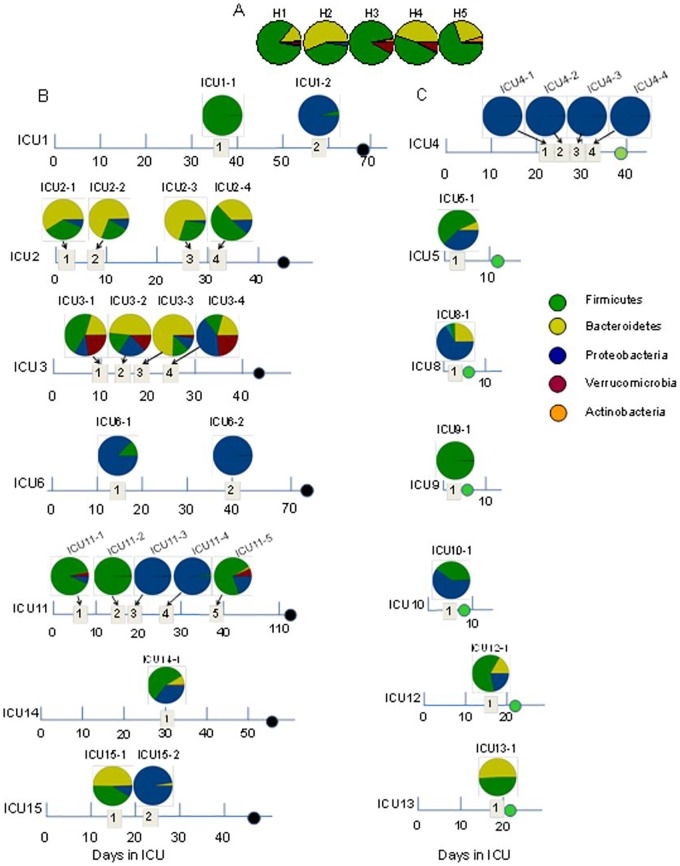
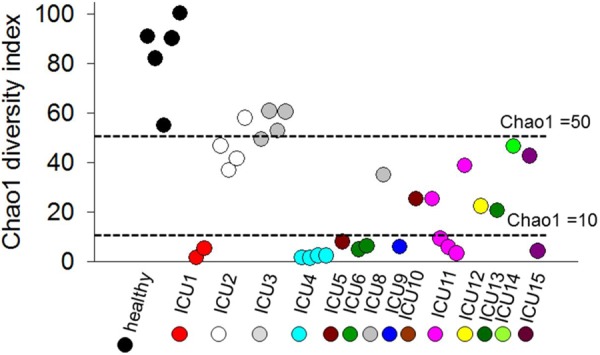
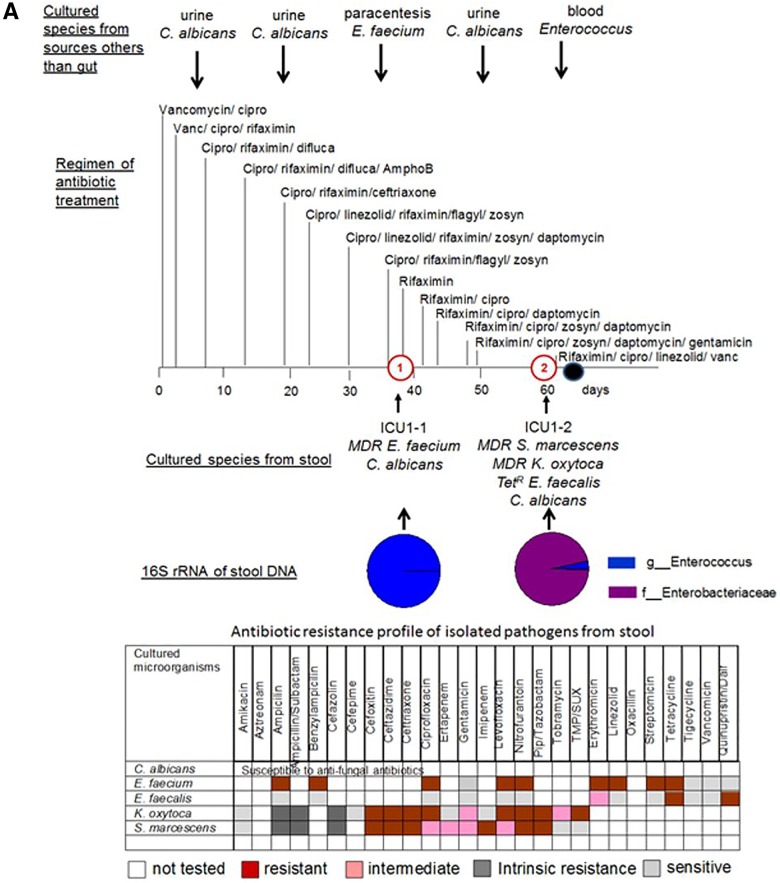
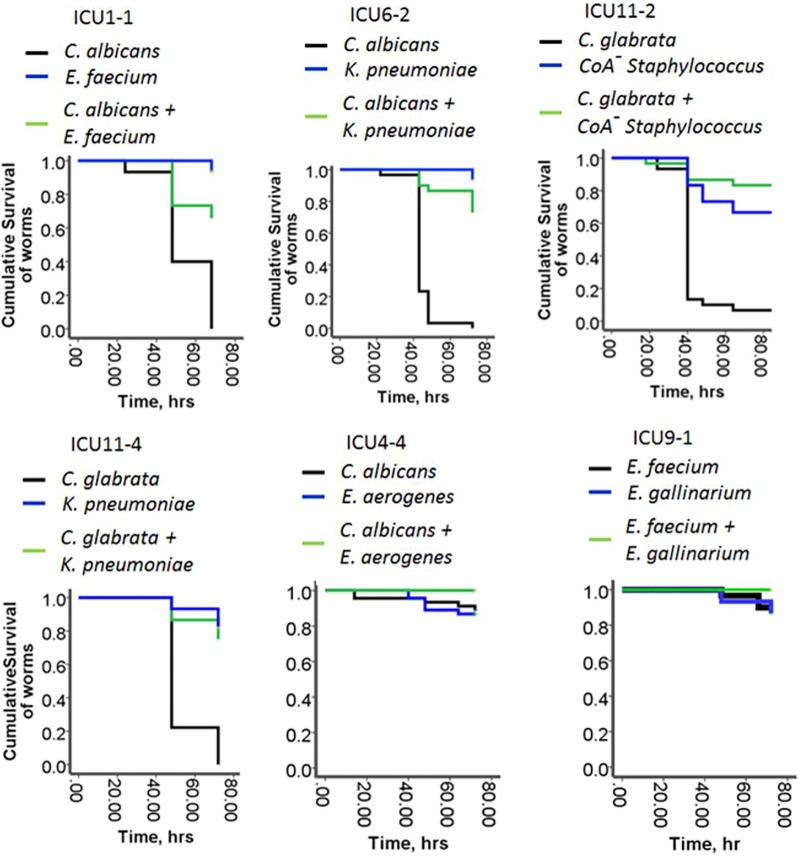
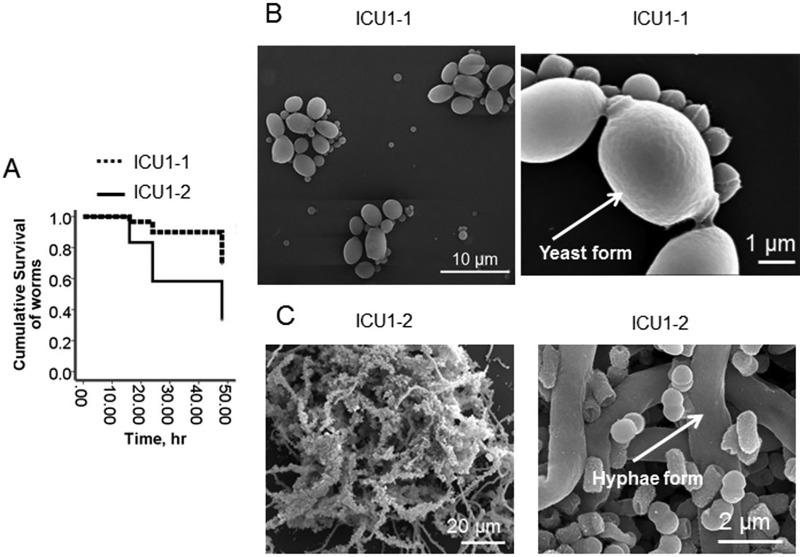
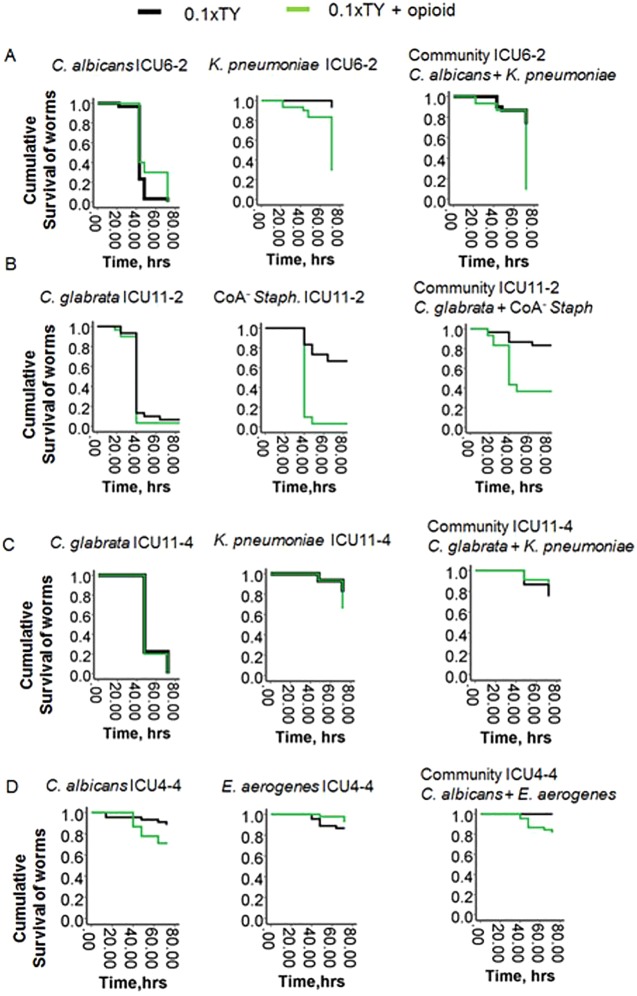
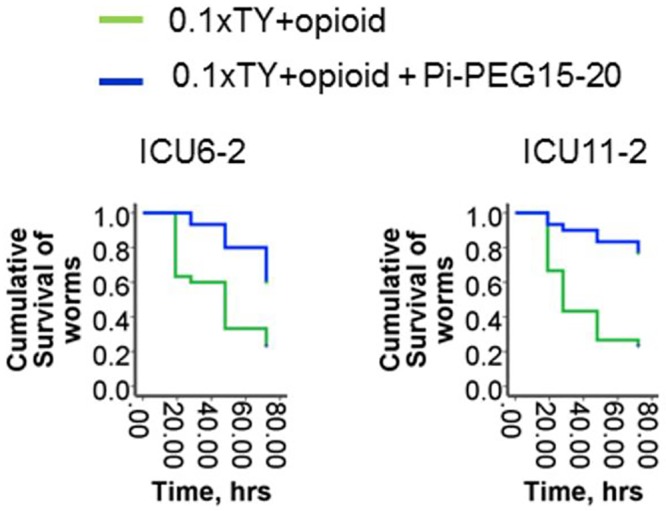
UNLABELLED: We analyzed the 16S rRNA amplicon composition in fecal samples of selected patients during their prolonged stay in an intensive care unit (ICU) and observed the emergence of ultra-low-diversity communities (1 to 4 bacterial taxa) in 30% of the patients. Bacteria associated with the genera Enterococcus and Staphylococcus and the family Enterobacteriaceae comprised the majority of these communities. The composition of cultured species from stool samples correlated to the 16S rRNA analysis and additionally revealed the emergence of Candida albicans and Candida glabrata in ~75% of cases. Four of 14 ICU patients harbored 2-member pathogen communities consisting of one Candida taxon and one bacterial taxon. Bacterial members displayed a high degree of resistance to multiple antibiotics. The virulence potential of the 2-member communities was examined in C. elegans during nutrient deprivation and exposure to opioids in order to mimic local conditions in the gut during critical illness. Under conditions of nutrient deprivation, the bacterial members attenuated the virulence of fungal members, leading to a "commensal lifestyle." However, exposure to opioids led to a breakdown in this commensalism in 2 of the ultra-low-diversity communities. Application of a novel antivirulence agent (phosphate-polyethylene glycol [Pi-PEG]) that creates local phosphate abundance prevented opioid-induced virulence among these pathogen communities, thus rescuing the commensal lifestyle. To conclude, the gut microflora in critically ill patients can consist of ultra-low-diversity communities of multidrug-resistant pathogenic microbes. Local environmental conditions in gut may direct pathogen communities to adapt to either a commensal style or a pathogenic style. IMPORTANCE: During critical illness, the normal gut microbiota becomes disrupted in response to host physiologic stress and antibiotic treatment. Here we demonstrate that the community structure of the gut microbiota during prolonged critical illness is dramatically changed such that in many cases only two-member pathogen communities remain. Most of these ultra-low-membership communities display low virulence when grouped together (i.e., a commensal lifestyle); individually, however, they can express highly harmful behaviors (i.e., a pathogenic lifestyle). The commensal lifestyle of the whole community can be shifted to a pathogenic one in response to host factors such as opioids that are released during physiologic stress and critical illness. This shift can be prevented by using compounds such as Pi-PEG15-20 that interrupt bacterial virulence expression. Taking the data together, this report characterizes the plasticity seen with respect to the choice between a commensal lifestyle and a pathogenic lifestyle among ultra-low-diversity pathogen communities that predominate in the gut during critical illness and offers novel strategies for prevention of sepsis.
Overview
The claims and statistics of this paper haven’t been checked yet.
Run the check — free, no account needed. It reads the open-access text and checks the sources it cites.
Integrity signals
Registry
Cites
Statistics
Figures
Verification
Claims the paper makes
The claims and statistics of this paper haven’t been checked yet.
Run the check — free, no account needed. It reads the open-access text and checks the sources it cites.
Claims other papers make about this one
Each is checked against this paper’s own text: does it say what the citing paper says it does?
In the citing paper
“The lower gastrointestinal tract, which in healthy people contains hundreds of distinct bacterial species, loses diversity, and the community is overrun by a few (in some cases only one) bacterial species.”
From The microbiome and critical illness (2016) · cites this paper as [20]
In the citing paper
“Dominant species include S aureus, Enterococcus spp, and members of the Enterobacteriaceae family (including E coli and Klebsiella spp).”
From The microbiome and critical illness (2016) · cites this paper as [20]
In the citing paper
“In studies of the gut microbiome in critically ill patients, butyrate-producing bacteria are uncommon or absent,20,69–71 and butyrate production is at a minimum.”
From The microbiome and critical illness (2016) · cites this paper as [20]
In the citing paper
“P aeruginosa, which is normally low in abundance, grows in prominence.”
From The microbiome and critical illness (2016) · cites this paper as [20]
In the citing paper
“normally rare fungi, such as Candida spp, bloom and thrive;20 culture-based detection of candidaemia is a marker of disease severity and predictive of a poor outcome.”
From The microbiome and critical illness (2016) · cites this paper as [20]
In the citing paper
“The virulence of pathogens familiar in intensive care is promoted by conditions of nutrient scarcity, competition from neighbouring community members, disruption of stabilising commensal relationships,20 and exposure to the mediators of the host stress response”
From The microbiome and critical illness (2016) · cites this paper as [20]
Self-check
Percentages, sums and reported differences re-computed from the paper’s own numbers.
The self-check needs the paper’s full text.
Citations
Cites
R: A Language and Environment for Statistical Computing
R Core Team (2000) · doi:10.32614/r.manuals · Cited by 355,893
QIIME allows analysis of high-throughput community sequencing data
Caporaso, J. G., Kuczynski, J., Stombaugh, J., Bittinger, K., Bushman, F. D., Costello, E. K., Fierer, N., Peña, A. G., Goodrich, J. K., Gordon, J. I., et al. (2010) · Nature Methods · doi:10.1038/nmeth.f.303 · Cited by 34,887
Search and clustering orders of magnitude faster than BLAST
Edgar, R. C. (2010) · Bioinformatics · doi:10.1093/bioinformatics/btq461 · Cited by 21,098
Naive Bayesian Classifier for Rapid Assignment of rRNA Sequences into the New Bacterial Taxonomy
Wang, Q., Garrity, G. M., Tiedje, J. M., & Cole, J. R. (2007) · Applied and Environmental Microbiology · doi:10.1128/aem.00062-07 · Cited by 20,145
Greengenes, a Chimera-Checked 16S rRNA Gene Database and Workbench Compatible with ARB
DeSantis, T. Z., Hugenholtz, P., Larsen, N., Rojas, M., Brodie, E. L., Keller, K., Huber, T., Dalevi, D., Hu, P., & Andersen, G. L. (2006) · Applied and Environmental Microbiology · doi:10.1128/aem.03006-05 · Cited by 10,891
Kindt, R., & Coe, R. L. (2006) · Cited by 1,024
Bacteria–host communication: the language of hormones
Sperandio, V., Torres, A. G., Jarvis, B., Nataro, J. P., & Kaper, J. B. (2003) · Proceedings of the National Academy of Sciences · doi:10.1073/pnas.1537100100 · Cited by 902
Human intestinal bacteria as reservoirs for antibiotic resistance genes
Salyers, A. A., GUPTA, A., & WANG, Y. (2004) · Trends in Microbiology · doi:10.1016/j.tim.2004.07.004 · Cited by 847
Lyte, M. (2013) · PLoS Pathogens · doi:10.1371/journal.ppat.1003726 · Cited by 399
Opioid receptors in the gastrointestinal tract
Holzer, P. D. (2009) · Regulatory Peptides · doi:10.1016/j.regpep.2009.03.012 · Cited by 378
Cited by
Sorted by citations
Items 301–362 of 362
(2020) · Bulletin of Russian State Medical University · doi:10.24075/brsmu.2020-05 · Cited by 1
Gut Microbiome Dynamics and Associations with Mortality in Critically Ill PatientsPreprint
Salameh, T. J., Roth, K., Schultz, L., Ma, Z., Bonavia, A. S., Broach, J. R., Hu, B., & Howrylak, J. A. (2022) · Research Square · doi:10.21203/rs.3.rs-1898512/v1 · Cited by 1
Gut Microbiome Dynamics and Associations with Mortality in Critically Ill PatientsPreprint
Salameh, T. J., Roth, K., Schultz, L., Ma, Z., Bonavia, A. S., Broach, J. R., Hu, B., & Howrylak, J. A. (2022) · Research Square · doi:10.21203/rs.3.rs-1898512/v2 · Cited by 1
Saed, M. R., & Mathkor, T. H. (2024) · Preprints.org · doi:10.20944/preprints202405.1194.v1 · Cited by 1
Capatos, G. (2018) · The Egyptian Journal of Critical Care Medicine · doi:10.1016/j.ejccm.2018.12.012
Osuka, A., 和弘, 米., 大介, 工., 健太郎, 清., & 裕司, 小. (2017) · Nihon Kyukyu Igakukai Zasshi Journal of Japanese Association for Acute Medicine · doi:10.1002/jja2.12231
Fluids, Nutrition, and Acute Kidney Injury in Pediatric Acute Respiratory Distress Syndrome
Akcan‐Arikan, A., & Typpo, K. (2019) · Springer eBooks · doi:10.1007/978-3-030-21840-9_12
Assaying the Microbiome During Critical Illness
Bansal, S. (2018) · TSpace (University of Toronto)
Should We Fiddle with Gut Microbiome in Critically Ill?
Venkatachalam, B., & Abraham, B. K. (2020) · Indian Journal of Critical Care Medicine · doi:10.5005/jp-journals-10071-23627
The Role of Microbiota in Gut Inflammation and Sepsis
Glibetić, N., Aan, F. J., Montoya-Uribe, V., & Matter, M. L. (2021) · Elsevier eBooks · doi:10.1016/b978-0-12-819265-8.00023-1
Harnessing the Microbiome to Optimize Surgical Outcomes in the COVID-19 Era
Toni, T., & Alverdy, J. C. (2021) · Annals of Surgery Open · doi:10.1097/as9.0000000000000056
Intestinal Dysbiosis in Infectious Diseases
Anastasopoulou, A. N., Mastrogianni, E., Gkoufa, A., & Samarkos, M. (2021) · Elsevier eBooks · doi:10.1016/b978-0-12-819265-8.00042-5
Schmitt, F. C. F., Lipinski, A. L., Hofer, S., Uhle, F., Nußhag, C., Hackert, T., Dalpke, A. H., Weigand, M. A., Brenner, T., & Boutin, S. (2019) · doi:10.21203/rs.2.16928/v1
Protivovirusnyy vrozhdonnyy immunitet
(2020) · Вестник Российского государственного медицинского университета · doi:10.24075/vrgmu.2020-05
Jakab, Á., Kovács, F., Balla, N., Tóth, Z., Ragyák, Á. Z., Sajtos, Z., Csillag, K., Nagy-Köteles, C., Nemes, D., Pócsi, I., et al. (2022) · bioRxiv (Cold Spring Harbor Laboratory) · doi:10.1101/2022.04.19.488861
Mechanisms and prevention of intestinal barrier function damage in traumatic hemorrhagic shock
Chen, F., Chu, C., & Ding, W. (2022) · World Chinese Journal of Digestology · doi:10.11569/wcjd.v30.i12.547
Páez, P. A. V., López, F. E., Montalvo-Villagómez, M., Moscoso, S. X. A., Montero, C. G. V., Jara, F. E., Torres-Cabezas, P. R., Torres-Carpio, D. A., & Vélez-Páez, J. L. (2022) · Horizonte Médico (Lima) · doi:10.24265/horizmed.2022.v22n2.13
The Microbiome in Critically Ill Patients
Tulli, G., & Zuanetti, G. (2022) · Springer eBooks · doi:10.1007/978-3-031-14612-1_7
The Microbiome in Critical Illness
Werner, M., & Vigani, A. (2023) · Advances in Small Animal Care · doi:10.1016/j.yasa.2023.04.005
Keskey, R. C., Nicholson, S. E., & Alverdy, J. C. (2023) · Elsevier eBooks · doi:10.1016/b978-0-323-69787-3.00111-8
Machulina, I. A., Шестопалов, А. Е., & Попова, Т. С. (2024) · Medical alphabet · doi:10.33667/2078-5631-2023-35-7-11
Dynamics of Commensals Virulence: Preventive Phenotypical Mutability
Chepur, S. V., Nn, P., Sayganov, S. A., Chubar, O. V., Сергеевна, Б. Л., & Litvinenko, I. (2023) · Успехи современной биологии · doi:10.31857/s0042132423030043
Le microbiote intestinal et l’impact des antibiotiques
Ruppé, É. (2024) · Revue Francophone des Laboratoires · doi:10.1016/s1773-035x(24)76116-4 · Cited by 1
The role of glutamine in the treatment of severe acute pancreatitis
Machulina, I. A., & Шестопалов, А. Е. (2024) · Russian Journal of Anesthesiology and Reanimatology · doi:10.17116/anaesthesiology202404197
Fu, Z., Jiang, Z., Zhao, F., Gou, T., & Jiang, L. (2025) · Medicine · doi:10.1097/md.0000000000041631
The Role of the Microbiome in Surgical Diseases and Their Management
Thomas, R. M. (2025) · Success in academic surgery · doi:10.1007/978-3-031-83034-1_18
Destruction of the Anaerobic Gut Microbiota in Hospitalized Patients Increases the Risk of Sepsis
Nv, B. (2025) · IntechOpen eBooks · doi:10.5772/intechopen.1012483
Александровна, Ч. Е., Sorokina, E., Polyakov, P. A., Михайлович, Г. К., Kovaleva, N., Zakharchenko, V., & Nv, B. (2025) · International Journal of Molecular Sciences · doi:10.3390/ijms26199778
Nomogram Prediction Model for Risk Factors of Secondary Infection in Sepsis Patients
Lu, J., Liu, S., Zhang, J., & Shi, G. (2025) · Clinical and Applied Thrombosis/Hemostasis · doi:10.1177/10760296251375942
Endotoxin and the gut microbiome
Harris, B. R. E., Barwatt, J., Gajic, O., & Karnatovskaia, L. V. (2025) · Elsevier eBooks · doi:10.1016/b978-0-443-33074-2.00008-1
Evans, T., Ali, U., Anderton, R., Raby, E., Manning, L., & Litton, E. (2024) · Figshare · doi:10.6084/m9.figshare.26562751
Patrier, J., Villageois-Tran, K., Szychowiak, P., Ruckly, S., Gschwind, R., Wicky, P.-H., Gueye, S., Armand-Lefèvre, L., Marzouk, M., Sonneville, R., et al. (2022) · Figshare · doi:10.6084/m9.figshare.21269134
Liu, Y., Guo, Y., Hu, S., Wang, Y., Zhang, L., Yu, L., & Geng, F. (2023) · Figshare · doi:10.6084/m9.figshare.24159297
Evans, T., Ali, U., Anderton, R., Raby, E., Manning, L., & Litton, E. (2024) · Figshare · doi:10.6084/m9.figshare.26562748
Prével, R., Enaud, R., Orieux, A., Camino, A., Berger, P., Boyer, A., Delhaès, L., & Gruson, D. (2022) · Figshare · doi:10.6084/m9.figshare.19593987
Liu, Y., Guo, Y., Hu, S., Wang, Y., Zhang, L., Yu, L., & Geng, F. (2023) · Figshare · doi:10.6084/m9.figshare.24159291
Evans, T., Ali, U., Anderton, R., Raby, E., Manning, L., & Litton, E. (2024) · Figshare · doi:10.6084/m9.figshare.26562754
Liu, Y., Guo, Y., Hu, S., Wang, Y., Zhang, L., Yu, L., & Geng, F. (2023) · Figshare · doi:10.6084/m9.figshare.24159294
Surgical modulation of the gut microbiota: a review of intestinal procedures and microbial outcomes
Suchańska, K., Gonos, J., & Śnieg, J. (2025) · Medical Journal of Cell Biology · doi:10.2478/acb-2025-0006
Kryukov, E. V., Ivchenko, E. V., Vb, G., Першко, А. М., Ефимов, И. В., & Sorokin, A. N. (2026) · Bulletin of the Russian Military Medical Academy · doi:10.17816/brmma676910
The Role of the Microbiome in Sepsis and the Critically Ill Cancer Patient
Franco, D. M., & Estrada, V. H. N. (2026) · Springer eBooks · doi:10.1007/978-3-319-74698-2_208-1
Li, X. Y., & Ao, F. (2026) · Journal of Inflammation Research · doi:10.2147/jir.s593405
Pal, D., Anandhi, A., Keerthi, A. R., Nanda, N., & Kate, V. (2026) · Journal of Gastrointestinal Cancer · doi:10.1007/s12029-026-01449-3
Cathomas, M., Zamir, E., Keller, M. I., Gobin, T., Jötten, L., Gauer, E., Heckler, M., Kong, B., Gaiser, R. A., Rompen, I. F., et al. (2026) · bioRxiv (Cold Spring Harbor Laboratory) · doi:10.64898/2026.05.19.719953
Dumitrana, A.-E., Leucuta, D., & Bodolea, C. (2026) · MicrobiologyOpen · doi:10.1002/mbo3.70322
The Gut-as-Motor of MODS Revisited: Dysbiosis-Driven Multi-Organ Dysfunction in Critical Illness
OYELEKE, S., Adebayo, A. A., Oladokun David, O., & Ikotun, O. (2026) · European Journal of Medical and Health Research · doi:10.59324/ejmhr.2026.4(4).07
Yusuf, S., Abdel-Rahim, M. H., El-Badawy, O., Hadiya, S., Thabit, A. G., AbdelWahab, R. A., Hammad, H. A., Ahmed, S. H., Samir, M., Liu, X., et al. (2026) · Microorganisms · doi:10.3390/microorganisms14071438
Gut–Kidney Crosstalk in Acute Kidney Injury: Gut as a Modifier of AKI
Yang, J., & Jo, S. (2026) · Kidney and Dialysis · doi:10.3390/kidneydial6030044
Theocharidou, C.-C., Tsinaris, Z., Peristeri, A.-M., Akritidou, O., & Nikopoulou, A. (2026) · Critical Care Science · doi:10.62675/2965-2774.20260392
Alhankawi, A. R., Holle, A. M., Renfree, S. P., Braithwaite, C. L., Verhey, J. T., Deckey, D. G., & Bingham, J. S. (2026) · The Journal of Arthroplasty · doi:10.1016/j.arth.2026.07.016
Liu, X.-Y., Liu, T., Chai, J., Wu, Y., Liu, H.-S., Qu, Y., Zhou, H., Xu, C., & Chi, Y. (2026) · Frontiers in Immunology · doi:10.3389/fimmu.2026.1855955
Tian, L., Xu, S., Xie, X., Wang, M., & Huang, L. (2026) · Frontiers in Gastroenterology · doi:10.3389/fgstr.2026.1902608
Bile acid dysregulation in sepsis: mechanisms, clinical implications, and future perspectives
Wang, J., Xia, L., Xu, S., Wu, F., Shi, S., Wang, Y., Wei, Y., Li, J., Zhang, X., Chen, X., et al. (2026) · Frontiers in Cellular and Infection Microbiology · doi:10.3389/fcimb.2026.1752527
Tumor Location and Preoperative Biliary Stenting Shape Gut Microbiome Diversity in Pancreatic Cancer
Cathomas, M., Fortunato, F., Zamir, E., Keller, M. I., Gobin, T., Jötten, L., Gauer, E., Heckler, M., Kong, B., Gaiser, R. A., et al. (2026) · Cancers · doi:10.3390/cancers18162617
Short-Chain Fatty Acids in Sepsis: Mechanisms of Action and Therapeutic Advances
Wang, Z., Wen, X., Yuan, S., Zhang, J., & Xu, D. (2026) · Biomedicines · doi:10.3390/biomedicines14091992
Oliynyk, O. V., Barg, W., Yashan, O., Krenov, K., Kovalchuk, Y., Yaroslavska, S., & Rorat, M. (2026) · Journal of Clinical Medicine · doi:10.3390/jcm15207896
Wu, C., & Liu, R. (2026) · Frontiers in Microbiology · doi:10.3389/fmicb.2026.1975307
Oral colonization patterns according to ventilatory support modality in critically ill patients
Oliveira, L. V., Antoniassi, M. E. C., Alcântara, S. F. M., Pereira, L. J., Carvalho, I. C., Pereira, C. V., & Garcia, N. G. (2026) · Journal of Infection Prevention · doi:10.1177/17571774261502347
Metadata
- Authors
- Zaborin, A., Smith, D., Garfield, K., Quensen, J., Shakhsheer, B., Kade, M., Tirrell, M., Tiedje, J., Gilbert, J. A., Zaborina, O., & Alverdy, J. C.
- Affiliations
- University of Chicago (US)
- Argonne National Laboratory (US)
- Michigan State University (US)
- Corresponding author
- Zaborina, Olga
- Alverdy, John C.
- ORCID
- Venue
- mBio
- Publisher
- American Society for Microbiology
- Published
- 2014-10-31
- Volume
- 5
- Issue
- 5
- Pages
- e01361-14
- ISSN
- 2150-7511 (ISSN-L)
- 2161-2129
- PMC
- PMC4173762
- OpenAlex
- W2112208246
- Cited by
- 367
- References
- 42
- Citations by year
- 2026: 32 · 2025: 31 · 2024: 19 · 2023: 36 · 2022: 40 · 2021: 30 · 2020: 39 · 2019: 31 · 2018: 34 · 2017: 34 · 2016: 28 · 2015: 12 · 2014: 1
- FWCI
- 10.19
- Type
- journal article
- Language
- en
- Open access
- gold
- doi.org
- Licence
- Locations
- mBio (publishedVersion, cc-by-nc-sa)
- Europe PMC (PubMed Central) (publishedVersion, cc-by-nc-sa)
- PubMed Central (publishedVersion, cc-by-nc-sa)
- PubMed (publishedVersion)
- DOAJ (DOAJ: Directory of Open Access Journals) (submittedVersion, cc-by-sa)
- eScholarship (California Digital Library) (submittedVersion)
- eScholarship (California Digital Library) (submittedVersion, cc-by-nc-sa)
- OSTI OAI (U.S. Department of Energy Office of Scientific and Technical Information) (submittedVersion)
- Funders
- National Institutes of Health (UL1TR000430)
- National Institute of General Medical Sciences (R01 2R01GM062344-13A1, R01GM062344)
- National Center for Advancing Translational Sciences
- Topics
- Life Sciences › Biochemistry, Genetics and Molecular Biology › Molecular Biology › Gut microbiota and health
- Health Sciences › Medicine › Infectious Diseases › Clostridium difficile and Clostridium perfringens research
- Health Sciences › Medicine › Microbiology (medical) › Antibiotic Resistance in Bacteria
- Keywords
- gut microbiota, critical illness, intensive care unit patients, multidrug resistance, Enterococcus, Staphylococcus, Enterobacteriaceae, Candida albicans, Candida glabrata, commensalism, fungal-bacterial interactions, anti-virulence agents, nutrient deprivation
- MeSH terms
- Animals, Anti-Bacterial Agents, Candida albicans, Enterobacteriaceae, Feces, Humans, Intensive Care Units, RNA, Ribosomal, 16S, Staphylococcus, Critical Illness, Enterococcus, Caenorhabditis elegans, Sepsis, Gene Expression Profiling, Drug Resistance, Bacterial, Drug Resistance, Fungal, Virulence Factors, Gastrointestinal Tract, Microbiota
About these checks
Registry, retraction, Cites and statistics results are computed, not judged, with one exception: a printed reference that no index lists is read once by a model before it counts as a citation error. Claims are extracted by a model and kept only when their quote appears verbatim in the text; each cited source is then checked, with a model’s help, for whether it says what the claim relies on. Those verdicts can be wrong — read the claim’s quote and the cited source before relying on one.
Statistics and arithmetic are recomputed, not judged.
Confidence bands are shown only for fields calibrated on our annotated test set. None is calibrated yet, so no band is shown.
What counts as a claim ›How we measure confidence ›How we check this ›
Are you an author, or do you see a problem with this page? Request a review
