

The DOI matches its Crossref record; 20 of the 20 references it cites were found in a registry or an index.
The Multifunctional Fungal Ergosterol
Open accessAbstract
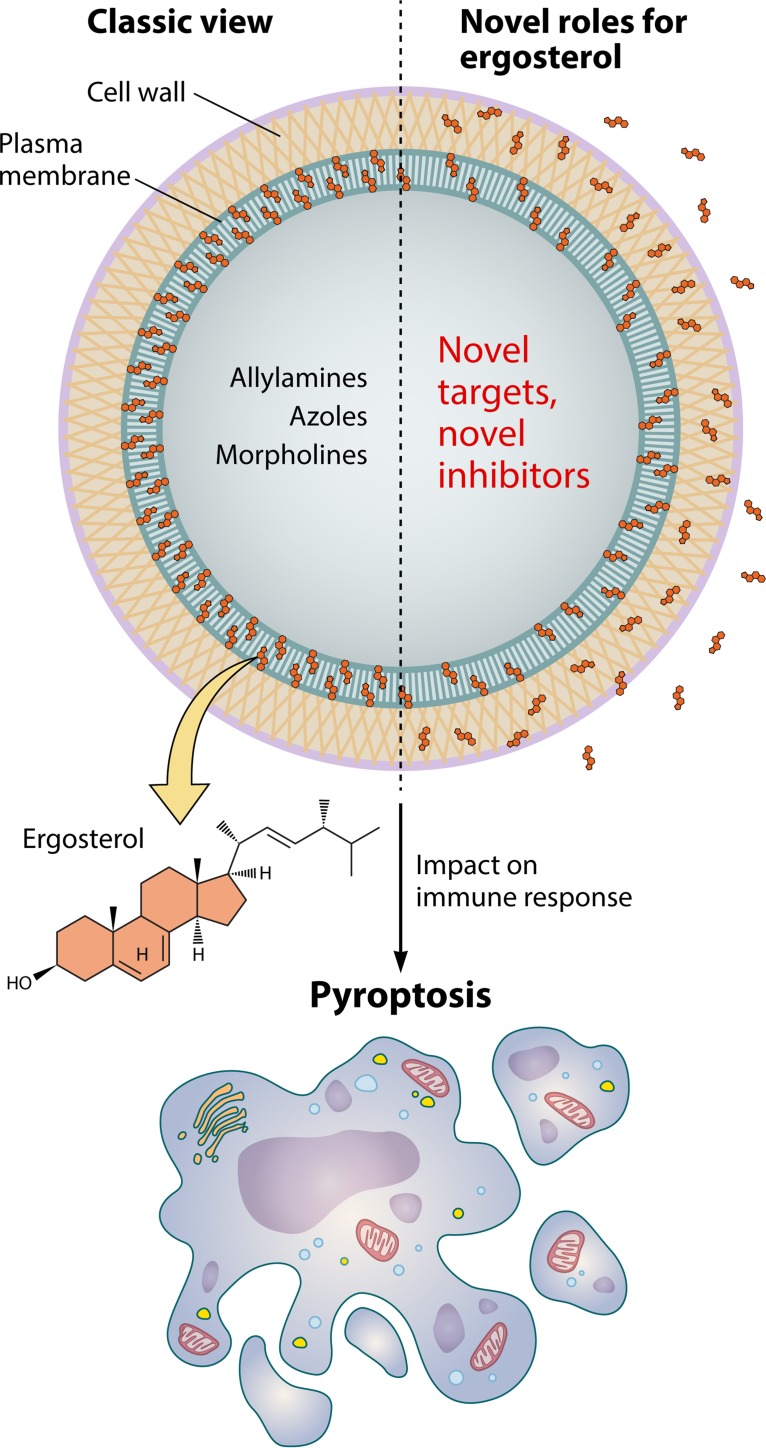
The roles of ergosterol in the regulation of membrane fluidity and structure, as well its role as a target for the activity of antifungals, have been known for decades. Two recent studies, however, demonstrated that ergosterol is an immunologically active lipid that induces pyroptosis and that virtually all steps of its biosynthetic process are potential drug targets.
Overview
The claims and statistics of this paper haven’t been checked yet.
Run the check — free, no account needed. It reads the open-access text and checks the sources it cites.
Integrity signals
Registry
Cites
Statistics
Figures
Verification
Claims the paper makes
The claims and statistics of this paper haven’t been checked yet.
Run the check — free, no account needed. It reads the open-access text and checks the sources it cites.
Claims other papers make about this one
Each is checked against this paper’s own text: does it say what the citing paper says it does?
The source backs part of the claim, not all of it — or backs it for a different population, condition or comparison.
In the citing paper
“The ergosterol biosynthesis pathway has been identified as a traditional therapeutic target for addressing invasive candidiasis55.”
From Impairing the interaction between Erg11 and cytochrome P450 reductase Ncp1 enhances azoles’ antifungal activities (2025) · cites this paper as [55]
Experimental — accuracy not yet measuredThe source backs part of the claim, not all of it — or backs it for a different population, condition or comparison.
In the citing paper
“Other studies mentioned that the antifungal activates of ATO and other statin drugs can be attributed to the inhibition of ergosterol and isoprenoid-biosynthesis are thought to result in these antifungal properties (Rahal et al. 2015; Rodrigues 2018; Lima et al. 2019)”
From In vitro study on the potential fungicidal effects of atorvastatin in combination with some azole drugs against multidrug resistant Candida albicans (2021) · cites this paper as Rodrigues 2018
Experimental — accuracy not yet measured
Self-check
Percentages, sums and reported differences re-computed from the paper’s own numbers.
The self-check needs the paper’s full text.
Citations
Cites
Man, S. M., Karki, R., & Kanneganti, T. (2017) · Immunological Reviews · doi:10.1111/imr.12534 · Cited by 1,684
The Fungal Cell Wall: Structure, Biosynthesis, and Function
Gow, N. A. R., Latge, J.-P., & Munro, C. A. (2017) · Microbiology Spectrum · doi:10.1128/microbiolspec.funk-0035-2016 · Cited by 1,423
Rodrigues, M. L., Nimrichter, L., Oliveira, D. L., Frasés, S., de Miranda, K. R., Zaragoza, Ó., Alvarez, M., Nakouzi, A. S., Feldmesser, M., & Casadevall, A. (2006) · Eukaryotic Cell · doi:10.1128/ec.00318-06 · Cited by 495
Self-citationCompositional and immunobiological analyses of extracellular vesicles released by Candida albicans
Vargas, G., Rocha, J., Oliveira, D. L., Albuquerque, P., Frases, S., Santos, S. S., Nosanchuk, J., Gomes, A. M. O., Medeiros, L., Miranda, K., et al. (2015) · Cellular Microbiology · doi:10.1111/cmi.12374 · Cited by 274
Self-citationKarki, R., Man, S. M., Malireddi, R. K. S., Gurung, P., Vogel, P., Lamkanfi, M., & Kanneganti, T.-D. (2015) · Cell Host & Microbe · doi:10.1016/j.chom.2015.01.006 · Cited by 272
Global analysis of fungal morphology exposes mechanisms of host cell escape
O’Meara, T. R., Veri, A. O., Ketela, T., Jiang, B., Roemer, T., & Cowen, L. E. (2015) · Nature Communications · doi:10.1038/ncomms7741 · Cited by 243
Candida albicans Triggers NLRP3-Mediated Pyroptosis in Macrophages
Wellington, M., Koselny, K., Sutterwala, F. S., & Krysan, D. J. (2014) · Eukaryotic Cell · doi:10.1128/ec.00336-13 · Cited by 227
Role of Candida albicans Transcription Factor Upc2p in Drug Resistance and Sterol Metabolism
Silver, P. M., Oliver, B. G., & White, T. C. (2004) · Eukaryotic Cell · doi:10.1128/ec.3.6.1391-1397.2004 · Cited by 216
Bhattacharya, S., Esquivel, B. D., & White, T. C. (2018) · mBio · doi:10.1128/mbio.01291-18 · Cited by 210
Plasma membrane lipids and their role in fungal virulence
Rella, A., Farnoud, A. M., & Poeta, M. D. (2015) · Progress in Lipid Research · doi:10.1016/j.plipres.2015.11.003 · Cited by 150
Research works printed but not linked: 1
- GAFFI. 2018. Global fund for fungal infections. GAFFI, Geneva, Switzerland.
Cited by
Sorted by citations
Candida auris: Epidemiology, biology, antifungal resistance, and virulence
Du, H., Bing, J., Hu, T., Ennis, C. L., Nobile, C. J., & Huang, G. (2020) · PLOS Pathogens · doi:10.1371/journal.ppat.1008921 · Cited by 609
Regulation of Ergosterol Biosynthesis in Saccharomyces cerevisiae
Jordá, T., & Puig, S. (2020) · Genes · doi:10.3390/genes11070795 · Cited by 489
Amphotericin B and Other Polyenes—Discovery, Clinical Use, Mode of Action and Drug Resistance
Carolus, H., Pierson, S., Lagrou, K., & Dijck, P. V. (2020) · Journal of Fungi · doi:10.3390/jof6040321 · Cited by 387
Virulence Factors in Candida species
Staniszewska, M. (2019) · Current Protein and Peptide Science · doi:10.2174/1389203720666190722152415 · Cited by 285
Carvacrol—A Natural Phenolic Compound with Antimicrobial Properties
Mączka, W. K., Twardawska, M., Grabarczyk, M., & Wińska, K. (2023) · Antibiotics · doi:10.3390/antibiotics12050824 · Cited by 272
Piperidine Derivatives: Recent Advances in Synthesis and Pharmacological Applications
Frolov, N. A., & Vereshchagin, A. N. (2023) · International Journal of Molecular Sciences · doi:10.3390/ijms24032937 · Cited by 179
Papoutsis, K., Grasso, S., Menon, A., Brunton, N. P., Lyng, J. G., Jacquier, J., & Bhuyan, D. J. (2020) · Trends in Food Science & Technology · doi:10.1016/j.tifs.2020.03.005 · Cited by 161
Phytosterols: Potential Metabolic Modulators in Neurodegenerative Diseases
Sharma, N., Tan, M. A., & An, S. S. A. (2021) · International Journal of Molecular Sciences · doi:10.3390/ijms222212255 · Cited by 118
The Genus Cladosporium: A Rich Source of Diverse and Bioactive Natural Compounds
Salvatore, M. M., Andolfi, A., & Nicoletti, R. (2021) · Molecules · doi:10.3390/molecules26133959 · Cited by 102
Highly Antifungal Activity of Biosynthesized Copper Oxide Nanoparticles against Candida albicans
García-Marín, L. E., Juárez‐Moreno, K., Vilchis-Nestor, A. R., & Castro‐Longoria, E. (2022) · Nanomaterials · doi:10.3390/nano12213856 · Cited by 102
Progress in antileishmanial drugs: Mechanisms, challenges, and prospects
Zhang, H., Yan, R., Liu, Y., Yu, M., He, Z., Xiao, J., Li, K., Liu, G., Ning, Q., & Li, Y. (2025) · PLoS neglected tropical diseases · doi:10.1371/journal.pntd.0012735 · Cited by 101
Blumfield, M., Abbott, K. A., Duve, E., Cassettari, T., Marshall, S., & Fayet‐Moore, F. (2020) · The Journal of Nutritional Biochemistry · doi:10.1016/j.jnutbio.2020.108453 · Cited by 94
Afroz, M., Akter, S., Ahmed, A., Rouf, R., Shilpi, J. A., Tiralongo, E., Sarker, S. D., Göransson, U., & Uddin, S. J. (2020) · Frontiers in Pharmacology · doi:10.3389/fphar.2020.00565 · Cited by 93
What Do We Know about Candida auris? State of the Art, Knowledge Gaps, and Future Directions
García-Bustos, V., Cabañero-Navalón, M. D., Ruiz‐Saurí, A., Gaitán, A. C. R., Salavert, M., Tormo‐Más, M. Á., & Pemán, J. (2021) · Microorganisms · doi:10.3390/microorganisms9102177 · Cited by 83
Halat, D. H., Younes, S., Mourad, N., & Rahal, M. K. (2022) · Membranes · doi:10.3390/membranes12121171 · Cited by 81
Antifungal peptides produced by actinomycetes and their biological activities against plant diseases
Zhang, D., Lu, Y., Chen, H., Wu, C., Zhang, H., Chen, L., & Chen, X. (2020) · The Journal of Antibiotics · doi:10.1038/s41429-020-0287-4 · Cited by 82
Padmavathi, A. R., Sriyutha Murthy, P., Das, A., Priya, A., Sushmitha, T. J., Pandian, S. K., & Rao, T. S. (2020) · Biofouling · doi:10.1080/08927014.2020.1715371 · Cited by 81
Zhang, W., Chen, X., Eleftherianos, I., Mohamed, A. A., Bastin, A., & Keyhani, N. O. (2024) · FEMS Microbiology Reviews · doi:10.1093/femsre/fuae003 · Cited by 70
Structure and Biological Activity of Ergostane-Type Steroids from Fungi
Zhabinskii, V. N., Drašar, P., & Khripach, V. A. (2022) · Molecules · doi:10.3390/molecules27072103 · Cited by 65
Ergosterol distribution controls surface structure formation and fungal pathogenicity
Choy, H. L., Gaylord, E. A., & Doering, T. L. (2023) · mBio · doi:10.1128/mbio.01353-23 · Cited by 63
Ali, S. G., Haseen, U., JALAL, M. S., Khan, R. A., Alsalme, A., Ahmad, H., & Khan, H. M. (2023) · Molecules · doi:10.3390/molecules28227499 · Cited by 62
Fernandes, C. M., & Poeta, M. D. (2020) · Expert Review of Anti-infective Therapy · doi:10.1080/14787210.2020.1792288 · Cited by 61
Erg6 affects membrane composition and virulence of the human fungal pathogen Cryptococcus neoformans
de Oliveira, F. F. M., Paes, H. C., Peconick, L. D. F., Fonseca, F. L., Marina, C. L., Bocca, A. L., Homem-de-Mello, M., Rodrigues, M. L., Albuquerque, P., Nicola, A. M., et al. (2020) · Fungal Genetics and Biology · doi:10.1016/j.fgb.2020.103368 · Cited by 52
Self-citationSaqallah, F. G., Hamed, W. M. A. A. S., Talib, W. H., Dianita, R., & Wahab, H. A. (2022) · Heliyon · doi:10.1016/j.heliyon.2022.e10391 · Cited by 46
Update on fungal lipid biosynthesis inhibitors as antifungal agents
Vishwakarma, M., Haider, T., & Soni, V. (2023) · Microbiological Research · doi:10.1016/j.micres.2023.127517 · Cited by 47
Recent drug development and treatments for fungal infections
Roy, M., Karhana, S., Shamsuzzaman, M., & Khan, M. A. (2023) · Brazilian Journal of Microbiology · doi:10.1007/s42770-023-00999-z · Cited by 47
Marena, G. D., Ramos, M. A. D. S., de Lima, L. C., Chorilli, M., & Bauab, T. M. (2021) · The Science of The Total Environment · doi:10.1016/j.scitotenv.2021.151023 · Cited by 42
Recent developments in membrane targeting antifungal agents to mitigate antifungal resistance
Mehta, D., Saini, V., & Bajaj, A. (2023) · RSC Medicinal Chemistry · doi:10.1039/d3md00151b · Cited by 44
Insights into the role of sterol metabolism in antifungal drug resistance: a mini-review
Tanwar, S., Kalra, S., & Bari, V. K. (2024) · Frontiers in Microbiology · doi:10.3389/fmicb.2024.1409085 · Cited by 44
Zhang, D., Yang, Y., Yao, B., Hu, T., Ma, Z., Shi, W., & Ye, Y. (2023) · Food Research International · doi:10.1016/j.foodres.2023.112646 · Cited by 40
A mechanistic and empirical review of antcins, a new class of phytosterols of formosan fungi origin
Kumar, K. J. S., Vani, M. G., Chen, C.-Y., Hsiao, W.-W., Li, J., Lin, Z., Chu, F., Yen, G., & Wang, S. (2019) · Journal of Food and Drug Analysis · doi:10.1016/j.jfda.2019.09.001 · Cited by 36
Perczyk, P., Wójcik, A., Wydro, P., & Broniatowski, M. (2019) · Biochimica et Biophysica Acta (BBA) - Biomembranes · doi:10.1016/j.bbamem.2019.183136 · Cited by 36
Barone, R., Napoli, L. D., Mayol, L., Paolucci, M., Volpe, M. G., D’Elia, L., Pollio, A., Guida, M., Gambino, E., Carraturo, F., et al. (2020) · Marine Drugs · doi:10.3390/md18030169 · Cited by 37
Sterol-Response Pathways Mediate Alkaline Survival in Diverse Fungi
Brown, H. E., Telzrow, C. L., Saelens, J. W., Fernandes, L., & Alspaugh, J. A. (2020) · mBio · doi:10.1128/mbio.00719-20 · Cited by 36
Kittimongkolsuk, P., Roxo, M., Li, H., Chuchawankul, S., Wink, M., & Tencomnao, T. (2021) · Pharmaceuticals · doi:10.3390/ph14020093 · Cited by 36
Wong-Deyrup, S. W., Song, X., Ng, T.-W., Liu, X.-B., Zeng, J.-G., Qing, Z., Deyrup, S. T., He, Z.-D., & Zhang, H. (2020) · Biomedicine & Pharmacotherapy · doi:10.1016/j.biopha.2021.111348 · Cited by 36
Zheng, Y., Shang, Y., Li, M., Li, Y., & Ouyang, W. (2021) · Molecules · doi:10.3390/molecules26144263 · Cited by 36
Sharma, K., Parmanu, P. K., & Sharma, M. (2024) · Archives of Microbiology · doi:10.1007/s00203-023-03824-1 · Cited by 36
Xie, J., Rybak, J. M., Martín‐Vicente, A., Guruceaga, X., Thorn, H. I., Nywening, A. V., Ge, W., Parker, J. E., Kelly, S. L., Rogers, P. D., et al. (2024) · Nature Communications · doi:10.1038/s41467-024-48767-3 · Cited by 36
Xu, J., Luo, Y., Wang, J., Tu, W., Yi, X., Xu, X., Song, Y., Tang, Y., Hua, X., Yu, Y., et al. (2023) · Frontiers in Microbiology · doi:10.3389/fmicb.2023.1125676 · Cited by 34
Gutierrez-Perez, C., & Cramer, R. A. (2025) · npj Antimicrobials and Resistance · doi:10.1038/s44259-025-00093-4 · Cited by 35
Yongxia, Z., Jian, X., Suyuan, H., Aixin, N., & Lihong, Z. (2020) · Journal de Mycologie Médicale · doi:10.1016/j.mycmed.2020.101038 · Cited by 33
Antifungal activity of polymethyl methacrylate/Si3N4 composites against Candida albicans
Pezzotti, G., Asai, T., Adachi, T., Ohgitani, E., Yamamoto, T., Kanamura, N., Boschetto, F., Zhu, W., Zanocco, M., Marin, E., et al. (2021) · Acta Biomaterialia · doi:10.1016/j.actbio.2021.03.023 · Cited by 33
Dai, B., Wang, Y., Zhou, H., Wang, L., Zhou, L., Mao, J., Zhang, S., Shen, S., Zheng, X., & Chen, H. (2024) · Postharvest Biology and Technology · doi:10.1016/j.postharvbio.2024.113134 · Cited by 32
Baracaldo-Santamaría, D., Cala-García, J., Medina-Rincón, G. J., Rojas-Rodríguez, L. C., & Calderón‐Ospina, C. (2022) · Antibiotics · doi:10.3390/antibiotics11050645 · Cited by 35
Phan, N., Huynh, T., Nguyen, H.-P., Le, Q., Nguyen, T., Ngo, K., Nguyen, T., Ton, A., Thai, K., & Hoang, T. (2023) · ACS Omega · doi:10.1021/acsomega.3c03530 · Cited by 31
Joradon, P., Rungsardthong, V., Ruktanonchai, U., Suttisintong, K., Thumthanaruk, B., Vatanyoopaisarn, S., Uttapap, D., & Mendes, A. C. (2023) · The Journal of Supercritical Fluids · doi:10.1016/j.supflu.2023.106162 · Cited by 29
Ballard, E., Weber, J., Melchers, W. J. G., Tammireddy, S. R., Whitfield, P. D., Brakhage, A. A., Brown, A. J. P., Verweij, P. E., & Warris, A. (2019) · Fungal Genetics and Biology · doi:10.1016/j.fgb.2019.05.005 · Cited by 30
Viana, R., Dias, Ó., Lagoa, D., Galocha, M., Rocha, I., & Teixeira, M. C. (2020) · Journal of Fungi · doi:10.3390/jof6030171 · Cited by 32
Eugenol-Acacia Gum-Based Bifunctional Nanofibers as A Potent Antifungal Transdermal Substitute
Gupta, P., Mishra, P., Mehra, L., Rastogi, K., Prasad, R., Mittal, G., & Poluri, K. M. (2021) · Nanomedicine · doi:10.2217/nnm-2021-0274 · Cited by 28
Vu, B. G., & Moye-Rowley, S. (2022) · Antimicrobial Agents and Chemotherapy · doi:10.1128/aac.02098-21 · Cited by 30
Wang, J., Zhang, J., Ma, J., Liu, L., Li, J., Shen, T., & Tian, Y. (2022) · Journal of Applied Microbiology · doi:10.1111/jam.15458 · Cited by 28
Singh, A., Kaur, K., Kaur, H., Mohana, P., Arora, S., Bedi, N., Chadha, R., & Bedi, P. M. S. (2022) · Journal of Molecular Structure · doi:10.1016/j.molstruc.2022.134456 · Cited by 28
Siwulski, M., Budzyńska, S., Rzymski, P., Gąsecka, M., Niedzielski, P., Kalač, P., & Mleczek, M. (2019) · European Food Research and Technology · doi:10.1007/s00217-019-03299-9 · Cited by 27
Hu, Z., Hu, H., Hu, Z., Zhong, X., Guan, Y., Zhao, Y., Wang, L., Ye, L., Ming, L., Rajoka, M. S. R., et al. (2022) · Frontiers in Microbiology · doi:10.3389/fmicb.2022.908461 · Cited by 27
Araújo, N. M. S., Dias, L. P., da Costa, H. P. S., Sousa, D. O. B., Vasconcelos, I. M., de Morais, G. A., & Oliveira, J. T. A. (2019) · Biochimica et Biophysica Acta (BBA) - Biomembranes · doi:10.1016/j.bbamem.2019.183032 · Cited by 29
Mahmoud, D. E., Faraag, A. H. I., & Abu El-Wafa, W. M. (2021) · World Journal of Microbiology and Biotechnology · doi:10.1007/s11274-021-03158-4 · Cited by 26
“2015; Rodrigues 2018; Lima et al.”
Terpinen-4-ol from tea tree oil prevents Aspergillus flavus growth in postharvest wheat grain
Jing, R., Wang, Y.-M., Zhang, S., Lv, Y., Zhai, H.-C., Wei, S., Ma, P.-A., & Hu, Y. (2024) · International Journal of Food Microbiology · doi:10.1016/j.ijfoodmicro.2024.110741 · Cited by 26
Li, L., Xue, H., Bi, Y., Zhang, R., Kouasseu, C. J., Liu, Q., Nan, M., Pu, L., & Prusky, D. (2021) · Postharvest Biology and Technology · doi:10.1016/j.postharvbio.2021.111796 · Cited by 26
Gene-by-environment interactions are pervasive among natural genetic variants
Chen, S.-A. A., Kern, A., Ang, R. M. L., Xie, Y., & Fraser, H. B. (2023) · Cell Genomics · doi:10.1016/j.xgen.2023.100273 · Cited by 25
Lima, H. V. D., Cavalcante, C. S. D. P., & Rádis‐Baptista, G. (2020) · Antibiotics · doi:10.3390/antibiotics9060354 · Cited by 25
van Riel, S. J. J. M., Lardenoije, C. M. J. G., Oudhuis, G. J., & Cremers, N. A. J. (2021) · Journal of Fungi · doi:10.3390/jof7080664 · Cited by 22
The Significance of Mono‐ and Dual‐Effective Agents in the Development of New Antifungal Strategies
Zobi, C., & Algül, Ö. (2025) · Chemical Biology & Drug Design · doi:10.1111/cbdd.70045 · Cited by 24
Alekseyeva, K. S., Mähnert, B., Berthiller, F., Breyer, E., Herndl, G. J., & Baltar, F. (2021) · Journal of Fungi · doi:10.3390/jof7090690 · Cited by 22
Huo, Y., Li, T., Yang, J. F., Huang, H., Chen, C., Xu, F., & Dong, X. (2021) · Chemistry & Biodiversity · doi:10.1002/cbdv.202100638 · Cited by 22
Creydt, M., & Fischer, M. J. (2022) · Molecular Omics · doi:10.1039/d2mo00088a · Cited by 22
Akpomie, K. G., Ghosh, S. B., Gryzenhout, M., & Conradie, J. (2021) · Biomass Conversion and Biorefinery · doi:10.1007/s13399-021-01515-9 · Cited by 22
Wang, G., Wang, Y., Wang, B., Su, M., Zhou, S., Luo, P., & Chen, L. (2023) · Journal of Functional Foods · doi:10.1016/j.jff.2023.105621 · Cited by 22
Zhgun, A. A., Nuraeva, G. K., & Eldarov, M. A. (2019) · Applied Biochemistry and Microbiology · doi:10.1134/s0003683819060176 · Cited by 21
RNA-dependent sterol aspartylation in fungi
Yakobov, N., Fischer, F., Mahmoudi, N., Saga, Y., Grube, C. D., Roy, H., Senger, B., Grob, G., Tatematsu, S., Yokokawa, D., et al. (2020) · Proceedings of the National Academy of Sciences · doi:10.1073/pnas.2003266117 · Cited by 21
Pruitt, H. M., Zhu, J., Riley, S. P., & Shi, M. (2025) · Journal of Fungi · doi:10.3390/jof11030236 · Cited by 20
Pezzotti, G., Kobara, M., Nakaya, T., Imamura, H., Asai, T., Miyamoto, N., Adachi, T., Yamamoto, T., Kanamura, N., Ohgitani, E., et al. (2022) · Frontiers in Microbiology · doi:10.3389/fmicb.2022.896359 · Cited by 20
Gorshkov, A. P., Kusakin, P. G., Borisov, Y. G., Tsyganova, A. V., & Tsyganov, V. E. (2023) · International Journal of Molecular Sciences · doi:10.3390/ijms24108646 · Cited by 20
Mamouei, Z., Singh, S., Lemire, B., Gu, Y., Alqarihi, A., Nabeela, S., Li, D., Ibrahim, A., & Uppuluri, P. (2021) · PLOS Biology · doi:10.1371/journal.pbio.3000957 · Cited by 19
Matilla, M. A., Evans, T. J., Martı́n, J., Udaondo, Z., Lomas‐Martínez, C., Rico‐Jiménez, M., Reyes, F., & Salmond, G. P. C. (2022) · Microbial Biotechnology · doi:10.1111/1751-7915.14193 · Cited by 19
Ianutsevich, E. A., Danilova, O. A., Kurilov, D. V., Zavarzin, I. V., & Tereshina, V. M. (2020) · Extremophiles · doi:10.1007/s00792-020-01163-3 · Cited by 19
Thak, E. J., Son, Y. J., Lee, D.-J., Kim, H., Kim, J. H., Lee, S., Jang, Y.-B., Bahn, Y., Nichols, C. B., Alspaugh, J. A., et al. (2022) · mBio · doi:10.1128/mbio.02112-22 · Cited by 18
Bergin, S. A., Doorley, L. A., Rybak, J. M., Wolfe, K. H., Butler, G., Cuomo, C. A., & Rogers, P. D. (2024) · Antimicrobial Agents and Chemotherapy · doi:10.1128/aac.01619-23 · Cited by 19
Ramesh, S., Madduri, M., Rudramurthy, S. M., & Roy, U. (2023) · Microbiology Spectrum · doi:10.1128/spectrum.01583-22 · Cited by 17
Li, T.-Z., Lv, M., Wen, H., Du, J., Wang, Z., Zhang, S., & Xu, H. (2023) · Pest Management Science · doi:10.1002/ps.7457 · Cited by 17
Carlson, T., Lupinacci, E., Moseley, K., & Chandrasekaran, S. (2021) · FEMS Microbiology Letters · doi:10.1093/femsle/fnab040 · Cited by 17
Bioactive properties of ZnO nanoparticles synthesized using Cocos nucifera leaves
Gharpure, S., Yadwade, R., Chakraborty, B., Makar, R., Chavhan, P., Kamble, S., Pawar, P., & Ankamwar, B. G. (2022) · 3 Biotech · doi:10.1007/s13205-022-03110-9 · Cited by 16
Amphotericin B and 5-flucytosine as fungicides against Penicillium italicum for citrus fruit rot
Zhao, Y., Qin, X., Wang, Z., Jin, Q., Wang, X., Chen, S.-S., & Luo, X. (2022) · Postharvest Biology and Technology · doi:10.1016/j.postharvbio.2022.112058 · Cited by 16
Bhattacharya, S. (2021) · Elsevier eBooks · doi:10.1016/b978-0-12-819990-9.00070-6 · Cited by 16
Nguyen, T.-P., Meng, D.-R., Chang, C., Su, P., Ou, C.-A., Hou, P.-F., Sung, H., Chou, C., Ohme‐Takagi, M., & Huang, H.-J. (2023) · mSphere · doi:10.1128/msphere.00324-23 · Cited by 15
Diverse signatures of convergent evolution in cactus-associated yeasts
Gonçalves, C., Harrison, M., Steenwyk, J. L., Opulente, D. A., LaBella, A. L., Wolters, J. F., Zhou, X., Shen, X., Groenewald, M., Hittinger, C. T., et al. (2024) · PLoS Biology · doi:10.1371/journal.pbio.3002832 · Cited by 15
Faoro, F., Faccio, A., & Balestrini, R. (2022) · Frontiers in Fungal Biology · doi:10.3389/ffunb.2021.805739 · Cited by 15
Diab, H. M., Elwahy, A. H. M., Ragheb, M. A., Abdelhamid, I. A., & Mahmoud, H. K. (2023) · Journal of Molecular Structure · doi:10.1016/j.molstruc.2023.135721 · Cited by 15
Liu, K., Liu, Y., Liu, Y., Huang, X., Jia, Y., Ji, L., Tian, S., & Chen, T. (2024) · Food Microbiology · doi:10.1016/j.fm.2024.104681 · Cited by 15
Zhang, Y., Du, H.-F., Song, J., Zhang, J., Chen, F., An, H., Cao, F., & Luo, D. (2025) · Journal of Agricultural and Food Chemistry · doi:10.1021/acs.jafc.4c11578 · Cited by 14
Fungicide control of Gnomoniopsis smithogilvyi, causal agent of chestnut rot in Australia
Silva-Campos, M., Islam, M. T., & Cahill, D. M. (2022) · Australasian Plant Pathology · doi:10.1007/s13313-022-00879-4 · Cited by 14
Tan, M. I. S. M. H., Jamlos, M. F., Omar, A., Kamarudin, K., & Jamlos, M. F. (2022) · Chemometrics and Intelligent Laboratory Systems · doi:10.1016/j.chemolab.2022.104718 · Cited by 14
Li, W., Whiteway, M., Hang, S., Yu, J., Lu, H., & Jiang, Y. (2025) · Nature Communications · doi:10.1038/s41467-025-62131-z · Cited by 13
“The ergosterol biosynthesis pathway has been identi fi ed as a traditional therapeutic target for addressing invasive candidiasis 55 .”
Extracellular Vesicles From Fungal Infection in Humans: A Key Player in Immunological Responses
Rezende, C. P., dos Santos, P. W. D. S., Piraine, R. E. A., Silvestrini, V. C., Barbosa, J. C. J., Valera, F. C. P., Tamashiro, E., Gondim, G. G. P., Quintana, S. M., Calado, R. T., et al. (2025) · Journal of Extracellular Biology · doi:10.1002/jex2.70065 · Cited by 14
Self-citationSułkowska‐Ziaja, K., Robak, J., Szczepkowski, A., Gunia‐Krzyżak, A., Popiół, J., Piotrowska, J., Rospond, B., Szewczyk, A., Kała, K., & Muszyńska, B. (2023) · Molecules · doi:10.3390/molecules28134907 · Cited by 13
Koren, V., Ben‐Zeev, E., Voronov, I., & Fridman, M. (2024) · JACS Au · doi:10.1021/jacsau.4c00479 · Cited by 13
Chemical Screening of Metabolites Profile from Romanian Tuber spp.
Segneanu, A., Cepan, M., Bobica, A., Stanusoiu, I., Dragomir, I. C., Părău, A. F., & Grozescu, I. (2021) · Plants · doi:10.3390/plants10030540 · Cited by 13
Genome mining of secondary metabolites from a marine-derived Aspergillus terreus B12
Du, X., Li, H., Qi, J., Chen, C., Lu, Y., & Wang, Y. (2021) · Archives of Microbiology · doi:10.1007/s00203-021-02548-4 · Cited by 13
Li, K., Liu, D., Pan, X., Yan, S., Song, J.-Q., Liu, D., Wang, Z., Xie, Y., Dai, J., Liu, J., et al. (2022) · Toxins · doi:10.3390/toxins14070503 · Cited by 13
Somsesta, N., Chamamporn, C., Wongsopanakun, N., Sonaka, P., & Hongrattanavichit, I. (2025) · Scientific Reports · doi:10.1038/s41598-025-10306-5 · Cited by 13
Metadata
- Authors
- Rodrigues, M. L.
- Affiliations
- Instituto Carlos Chagas, Fundação Oswaldo Cruz (Fiocruz), Curitiba, Brazil
- ORCID
- Rodrigues, Marcio L.
- Venue
- mBio
- Publisher
- American Society for Microbiology
- Published
- 2018-11-07
- Volume
- 9
- Issue
- 5
- ISSN
- 2150-7511 (ISSN-L)
- 2161-2129
- PMC
- PMC6143734
- OpenAlex
- W2890570825
- Cited by
- 275
- References
- 20
- Citations by year
- 2026: 36 · 2025: 58 · 2024: 40 · 2023: 42 · 2022: 32 · 2021: 32 · 2020: 26 · 2019: 9
- FWCI
- 12.65
- Type
- journal article
- Language
- en
- Open access
- gold
- doi.org
- Licence
- Locations
- mBio (publishedVersion, cc-by)
- Europe PMC (PubMed Central) (publishedVersion, cc-by)
- PubMed Central (publishedVersion, cc-by)
- PubMed (publishedVersion)
- Arca - Repositório Institucional da Fiocruz (submittedVersion, other-oa)
- DOAJ (DOAJ: Directory of Open Access Journals) (submittedVersion, cc-by-sa)
- DOAJ (DOAJ: Directory of Open Access Journals) (submittedVersion)
- Funders
- MCTI | Conselho Nacional de Desenvolvimento Científico e Tecnológico (443586/2014-4)
- Fundação Carlos Chagas Filho de Amparo à Pesquisa do Estado do Rio de Janeiro (E-26/202.997/2015)
- Topics
- Health Sciences › Medicine › Infectious Diseases › Antifungal resistance and susceptibility
- Life Sciences › Biochemistry, Genetics and Molecular Biology › Molecular Biology › Lipid Membrane Structure and Behavior
- Life Sciences › Biochemistry, Genetics and Molecular Biology › Molecular Biology › Fungal and yeast genetics research
- Keywords
- ergosterol, fungal cell membrane, membrane fluidity, antifungal drug targets, ergosterol biosynthesis, pyroptosis, fungal immunology
- MeSH terms
- Pyroptosis, Antifungal Agents, Candida albicans, Ergosterol, Macrophages, Microbial Sensitivity Tests, Saccharomyces cerevisiae
About these checks
Registry, retraction, Cites and statistics results are computed, not judged, with one exception: a printed reference that no index lists is read once by a model before it counts as a citation error. Claims are extracted by a model and kept only when their quote appears verbatim in the text; each cited source is then checked, with a model’s help, for whether it says what the claim relies on. Those verdicts can be wrong — read the claim’s quote and the cited source before relying on one.
Statistics and arithmetic are recomputed, not judged.
Confidence bands are shown only for fields calibrated on our annotated test set. None is calibrated yet, so no band is shown.
What counts as a claim ›How we measure confidence ›How we check this ›
Are you an author, or do you see a problem with this page? Request a review
