

The DOI matches its Crossref record; 61 of the 62 references it cites were found in a registry or an index.
Lambda Interferon Restructures the Nasal Microbiome and Increases Susceptibility to Staphylococcus aureus Superinfection
Open accessAbstract
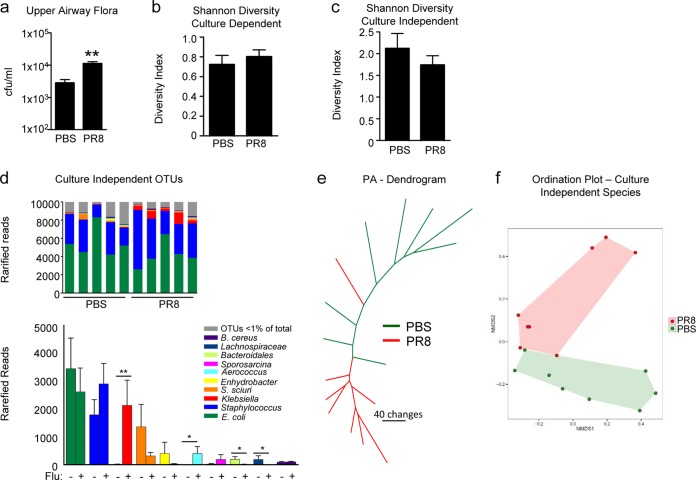
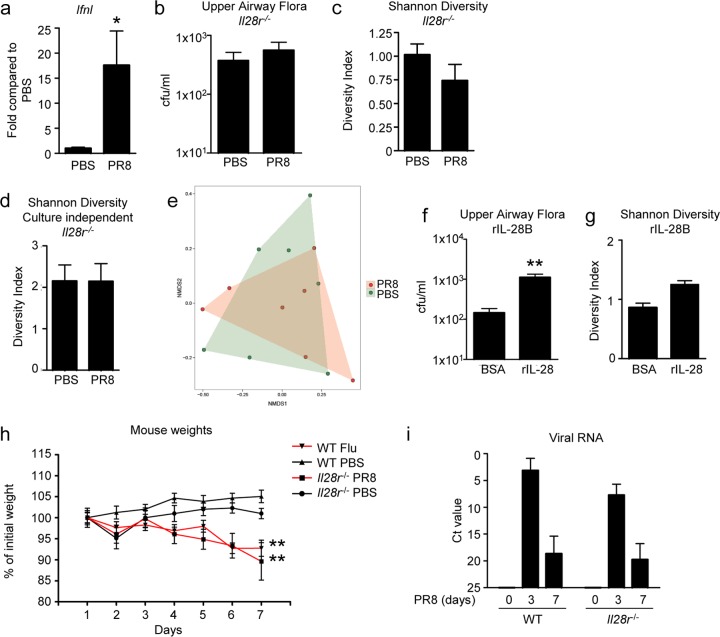
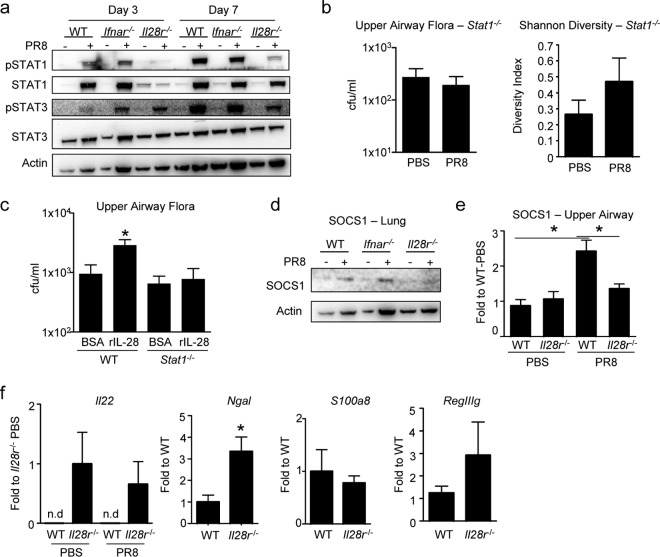
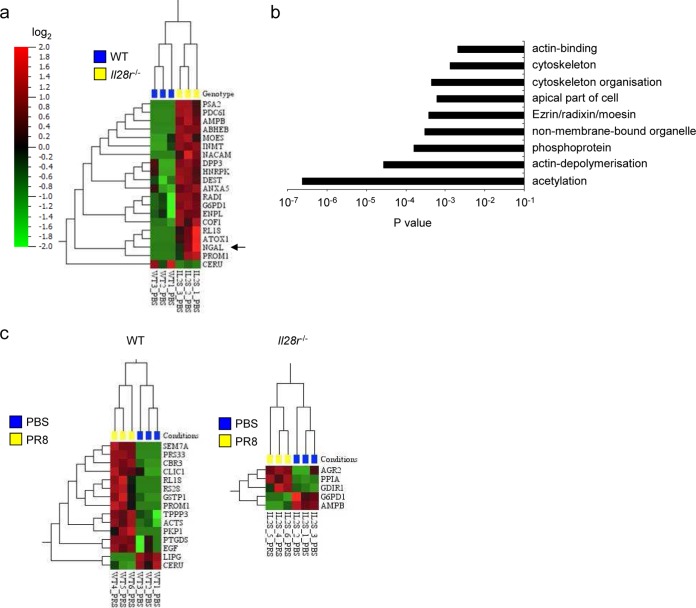
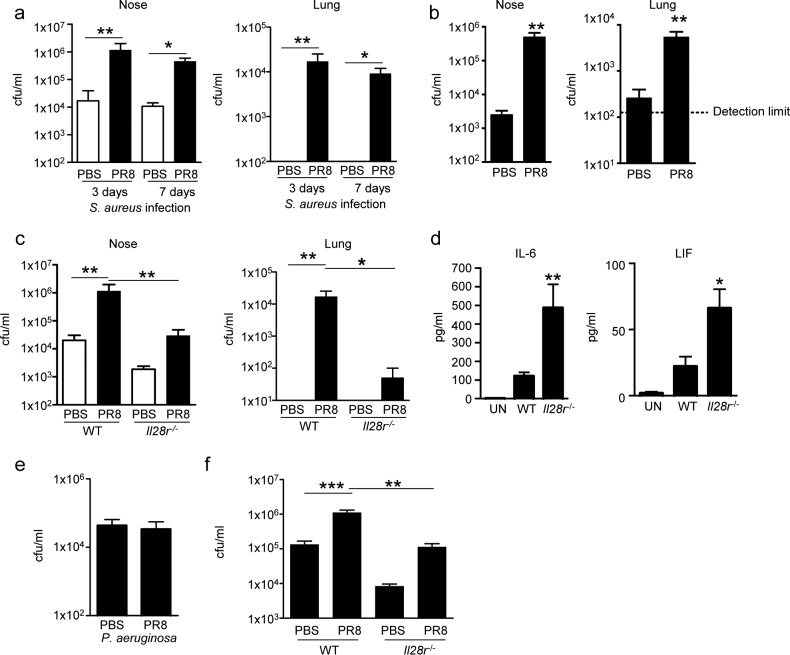
UNLABELLED: Much of the morbidity and mortality associated with influenza virus respiratory infection is due to bacterial coinfection with pathogens that colonize the upper respiratory tract such as methicillin-resistant Staphylococcus aureus (MRSA) and Streptococcus pneumoniae. A major component of the immune response to influenza virus is the production of type I and III interferons. Here we show that the immune response to infection with influenza virus causes an increase and restructuring of the upper respiratory microbiota in wild-type (WT) mice but not in Il28r(-/-) mutant mice lacking the receptor for type III interferon. Mice lacking the IL-28 receptor fail to induce STAT1 phosphorylation and expression of its regulator, SOCS1. Il28r(-/-) mutant mice have increased expression of interleukin-22 (IL-22), as well as Ngal and RegIIIγ, in the nasal cavity, the source of organisms that would be aspirated to cause pneumonia. Proteomic analysis reveals changes in several cytoskeletal proteins that contribute to barrier function in the nasal epithelium that may contribute to the effects of IL-28 signaling on the microbiota. The importance of the effects of IL-28 signaling in the pathogenesis of MRSA pneumonia after influenza virus infection was confirmed by showing that WT mice nasally colonized before or after influenza virus infection had significantly higher levels of infection in the upper airways, as well as significantly greater susceptibility to MRSA pneumonia than Il28r(-/-) mutant mice did. Our results suggest that activation of the type III interferon in response to influenza virus infection has a major effect in expanding the upper airway microbiome and increasing susceptibility to lower respiratory tract infection. IMPORTANCE: S. aureus and influenza virus are important respiratory pathogens, and coinfection with these organisms is associated with significant morbidity and mortality. The ability of influenza virus to increase susceptibility to S. aureus infection is less well understood. We show here that influenza virus leads to a change in the upper airway microbiome in a type III interferon-dependent manner. Mice lacking the type III interferon receptor have altered STAT1 and IL-22 signaling. In coinfection studies, mice without the type III interferon receptor had significantly less nasal S. aureus colonization and subsequent pneumonia than infected WT mice did. This work demonstrates that type III interferons induced by influenza virus contribute to nasal colonization and pneumonia due to S. aureus superinfection.
Overview
The claims and statistics of this paper haven’t been checked yet.
Run the check — free, no account needed. It reads the open-access text and checks the sources it cites.
Integrity signals
Registry
Cites
Statistics
Figures
Verification
Claims the paper makes
The claims and statistics of this paper haven’t been checked yet.
Run the check — free, no account needed. It reads the open-access text and checks the sources it cites.
Claims other papers make about this one
Each is checked against this paper’s own text: does it say what the citing paper says it does?
In the citing paper
“Although the data are still preliminary, animal studies have suggested that antiviral immune activation contributes to changes in the URT microbiome and facilitate colonization by potential pathogens, such as S. aureus.”
From Respiratory viral infection-induced microbiome alterations and secondary bacterial pneumonia. (2018) · cites this paper as [123]
In the citing paper
“Increased upper respiratory tract persistence of S. aureus as well as increased risk of S. aureus pneumonia was observed in flu-infected wildtype mice compared to mice lacking the type III IFN receptor (123).”
From Respiratory viral infection-induced microbiome alterations and secondary bacterial pneumonia. (2018) · cites this paper as [123]
In the citing paper
“Type III IFN, which is also induced during influenza infections, led to changes in the nasal microbiome, including increased numbers of culturable bacteria.”
From Respiratory viral infection-induced microbiome alterations and secondary bacterial pneumonia. (2018) · cites this paper as [123]
Self-check
Percentages, sums and reported differences re-computed from the paper’s own numbers.
The self-check needs the paper’s full text.
Citations
Cites
Systematic and integrative analysis of large gene lists using DAVID bioinformatics resources
Huang, D. W., Sherman, B. T., & Lempicki, R. A. (2009) · Nature Protocols · doi:10.1038/nprot.2008.211 · Cited by 35,890
QIIME allows analysis of high-throughput community sequencing data
Caporaso, J. G., Kuczynski, J., Stombaugh, J., Bittinger, K., Bushman, F. D., Costello, E. K., Fierer, N., Peña, A. G., Goodrich, J. K., Gordon, J. I., et al. (2010) · Nature Methods · doi:10.1038/nmeth.f.303 · Cited by 34,887
vegan: Community Ecology Package
Oksanen, J., Simpson, G. L., Blanchet, F. G., Kindt, R., Legendre, P., Minchin, P. R., O’Hara, R. B., Sólymos, P., Stevens, M. H. H., Szöcs, E., et al. (2001) · doi:10.32614/cran.package.vegan · Cited by 27,099
Naive Bayesian Classifier for Rapid Assignment of rRNA Sequences into the New Bacterial Taxonomy
Wang, Q., Garrity, G. M., Tiedje, J. M., & Cole, J. R. (2007) · Applied and Environmental Microbiology · doi:10.1128/aem.00062-07 · Cited by 20,145
UPARSE: highly accurate OTU sequences from microbial amplicon reads
Edgar, R. C. (2013) · Nature Methods · doi:10.1038/nmeth.2604 · Cited by 16,770
Ultra-high-throughput microbial community analysis on the Illumina HiSeq and MiSeq platforms
Caporaso, J. G., Lauber, C. L., Walters, W. A., Berg-Lyons, D., Huntley, J., Fierer, N., Owens, S. M., Betley, J., Fraser, L., Bauer, M., et al. (2012) · The ISME Journal · doi:10.1038/ismej.2012.8 · Cited by 8,839
(2009) · Cited by 6,571
Vegan : community ecology package. R package version 1.17-9
Oksanen, J. (2007) · Medical Entomology and Zoology · Cited by 6,549
McDonald, D. T., Price, M. N., Goodrich, J. K., Nawrocki, E. P., DeSantis, T. Z., Probst, A. J., Andersen, G. L., Knight, R. D., & Hugenholtz, P. (2011) · The ISME Journal · doi:10.1038/ismej.2011.139 · Cited by 5,144
Elias, J. E., & Gygi, S. P. (2007) · Nature Methods · doi:10.1038/nmeth1019 · Cited by 3,925
Cited by
Sorted by citations
Respiratory viral infection-induced microbiome alterations and secondary bacterial pneumonia.
Hanada, S., Pirzadeh, M., Carver, K. Y., & Deng, J. C. (2018) · Frontiers in Immunology · doi:10.3389/fimmu.2018.02640 · Cited by 495
Type III interferons disrupt the lung epithelial barrier upon viral recognition
Broggi, A., Ghosh, S., Sposito, B., Spreafico, R., Balzarini, F., Cascio, A. L., Clementi, N., Santis, M. D., Mancini, N., Granucci, F., et al. (2020) · Science · doi:10.1126/science.abc3545 · Cited by 403
Sencio, V., Barthélémy, A., Tavares, L. P., Machado, M. G., Soulard, D., Cuinat, C., Queiroz‐Junior, C. M., Noordine, M.-L., Salomé‐Desnoulez, S., Deryuter, L., et al. (2020) · Cell Reports · doi:10.1016/j.celrep.2020.02.013 · Cited by 367
Yildiz, S., Mazel-Sanchez, B., Kandasamy, M., Manicassamy, B., & Schmolke, M. (2018) · Microbiome · doi:10.1186/s40168-017-0386-z · Cited by 264
COVID-19 and emerging viral infections: The case for interferon lambda
Prokunina‐Olsson, L., Alphonse, N., Dickenson, R. E., Durbin, J. E., Glenn, J. S., Hartmann, R., Kotenko, S. V., Lazear, H. M., OʼBrien, T. R., Odendall, C., et al. (2020) · The Journal of Experimental Medicine · doi:10.1084/jem.20200653 · Cited by 200
Interferon Lambda: Modulating Immunity in Infectious Diseases
Syedbasha, M., & Egli, A. (2017) · Frontiers in Immunology · doi:10.3389/fimmu.2017.00119 · Cited by 170
Pathogenesis of Respiratory Viral and Fungal Coinfections
Salazar, F., Bignell, E., Brown, G. D., Cook, P. C., & Warris, A. (2021) · Clinical Microbiology Reviews · doi:10.1128/cmr.00094-21 · Cited by 164
Type III interferons: Balancing tissue tolerance and resistance to pathogen invasion
Broggi, A., Granucci, F., & Zanoni, I. (2019) · The Journal of Experimental Medicine · doi:10.1084/jem.20190295 · Cited by 155
Covid-19: Perspectives on Innate Immune Evasion
Taefehshokr, N., Taefehshokr, S., Hemmat, N., & Heit, B. (2020) · Frontiers in Immunology · doi:10.3389/fimmu.2020.580641 · Cited by 152
Viral recognition and the antiviral interferon response
Dalskov, L., Gad, H. H., & Hartmann, R. (2023) · The EMBO Journal · doi:10.15252/embj.2022112907 · Cited by 139
Viral-Bacterial Co-infections in the Cystic Fibrosis Respiratory Tract
Kiedrowski, M. R., & Bomberger, J. M. (2018) · Frontiers in Immunology · doi:10.3389/fimmu.2018.03067 · Cited by 136
Type III IFNs: Beyond antiviral protection
Kotenko, S. V., Rivera, A., Parker, D., & Durbin, J. E. (2019) · Seminars in Immunology · doi:10.1016/j.smim.2019.101303 · Cited by 125
Host–Bacterial Crosstalk Determines Staphylococcus aureus Nasal Colonization
Mulcahy, M. E., & McLoughlin, R. M. (2016) · Trends in Microbiology · doi:10.1016/j.tim.2016.06.012 · Cited by 121
Kaul, D., Rathnasinghe, R., Marcela Ferrés, G., Tan, G. S., Barrera, A., Pickett, B. E., Methé, B. A., Das, S. R., O, I. B., Halpin, R., et al. (2020) · Nature Communications · doi:10.1038/s41467-020-16429-9 · Cited by 107
Viral and Bacterial Co-Infections in the Lungs: Dangerous Liaisons
Oliva, J., & Terrier, O. (2021) · Viruses · doi:10.3390/v13091725 · Cited by 113
Host-Pathogen Interactions in Gram-Positive Bacterial Pneumonia
Grousd, J. A., Rich, H. E. A., & Alcorn, J. F. (2019) · Clinical Microbiology Reviews · doi:10.1128/cmr.00107-18 · Cited by 105
Kim, H. J., Jo, A., Jeon, Y. J., An, S., Lee, K., Yoon, S. S., & Choi, J. Y. (2019) · Microbiome · doi:10.1186/s40168-019-0691-9 · Cited by 92
Mechanisms of Bacterial Superinfection Post-influenza: A Role for Unconventional T Cells
Paget, C., & Trottein, F. (2019) · Frontiers in Immunology · doi:10.3389/fimmu.2019.00336 · Cited by 91
Critical role of interferons in gastrointestinal injury repair
Constance, M., Espinosa, V., Lin, J.-D., Jianya, P., Raghavendra, S., Dutta, O., Hsiang-Chi, T., Sv, S., Risman, H. P., Sandoval, M. J., et al. (2021) · Nature Communications · doi:10.1038/s41467-021-22928-0 · Cited by 85
Piters, W. A. A. D. S., Watson, R. L., de Koff, E. M., Hasrat, R., Arp, K., Chu, M. L. J. N., de Groot, P. C. M., van Houten, M. A., Sanders, E. A. M., & Bogaert, D. (2022) · Nature Microbiology · doi:10.1038/s41564-021-01043-2 · Cited by 83
Staphylococcus aureus and Influenza A Virus: Partners in Coinfection
Mulcahy, M. E., & McLoughlin, R. M. (2016) · mBio · doi:10.1128/mbio.02068-16 · Cited by 80
Salk, H. M., Simon, W. L., Lambert, N. D., Kennedy, R. B., Grill, D. E., Kabat, B. F., & Poland, G. A. (2016) · PLoS ONE · doi:10.1371/journal.pone.0162803 · Cited by 75
“While the specific mechanisms leading to increased species richness following intra-nasal administration of LAIV– along with the mechanisms impacting immune response–require further investigation, it has been suggested that activation of the type-III interferon response after influenza infection has an effect on incre…”
BackgroundDistinct Effects of Type I and III Interferons on Enteric Viruses
Ingle, H., Peterson, S. T., & Baldridge, M. T. (2018) · Viruses · doi:10.3390/v10010046 · Cited by 59
IL-22 Plays a Critical Role in Maintaining Epithelial Integrity During Pulmonary Infection
Alcorn, J. F. (2020) · Frontiers in Immunology · doi:10.3389/fimmu.2020.01160 · Cited by 60
Korten, I., Mika, M., Klenja, S., Kieninger, E., Mack, I., Barbani, M. T., Gorgievski, M., Frey, U., Hilty, M., & Latzin, P. (2016) · mSphere · doi:10.1128/msphere.00312-16 · Cited by 60
Insights Into Type I and III Interferons in Asthma and Exacerbations
Rich, H. E. A., Antos, D., Melton, N. R., Alcorn, J. F., & Manni, M. L. (2020) · Frontiers in Immunology · doi:10.3389/fimmu.2020.574027 · Cited by 61
Dulek, D. E., Fuhlbrigge, R. C., Tribble, A. C., Connelly, J. A., Loi, M. M., Chebib, H. E., Chandrakasan, S., Otto, W. R., Diorio, C. J., Keim, G. P., et al. (2020) · Journal of the Pediatric Infectious Diseases Society · doi:10.1093/jpids/piaa098 · Cited by 56
Interferon Lambda Inhibits Bacterial Uptake during Influenza Superinfection
Rich, H. E. A., McCourt, C. C., Zheng, W. Q., McHugh, K. J., Robinson, K. M., Wang, J., & Alcorn, J. F. (2019) · Infection and Immunity · doi:10.1128/iai.00114-19 · Cited by 55
Off balance: Interferons in COVID-19 lung infections
Akamatsu, M. A., de Castro, J. T., Takano, C. Y., & Ho, P. L. (2021) · EBioMedicine · doi:10.1016/j.ebiom.2021.103642 · Cited by 57
Humanized Mouse Models of Staphylococcus aureus Infection
Parker, D. (2017) · Frontiers in Immunology · doi:10.3389/fimmu.2017.00512 · Cited by 52
Kiedrowski, M. R., Gaston, J. R., Kocak, B. R., Coburn, S. L., Lee, S., Pilewski, J. M., Myerburg, M. M., & Bomberger, J. M. (2018) · mSphere · doi:10.1128/msphere.00341-18 · Cited by 55
The Microbiota/Host Immune System Interaction in the Nose to Protect from COVID-19
Stadio, A. D., Costantini, C., Renga, G., Pariano, M., Ricci, G., & Romani, L. R. (2020) · Life · doi:10.3390/life10120345 · Cited by 55
Characterization of SARS-CoV-2 Evasion: Interferon Pathway and Therapeutic Options
Znaidia, M., Demeret, C., van der Werf, S., & Komarova, A. V. (2022) · Viruses · doi:10.3390/v14061247 · Cited by 57
Pires, S., & Parker, D. (2018) · European Journal of Immunology · doi:10.1002/eji.201847556 · Cited by 51
Salzano, F. A., Marino, L., Salzano, G., Botta, R. M., Cascone, G., Fiorenza, U. D., Selleri, C., & Casolaro, V. (2018) · Journal of Immunology Research · doi:10.1155/2018/2724951 · Cited by 49
Viral strategies predisposing to respiratory bacterial superinfections
Rossi, G. A., Fanous, H., & Colin, A. A. (2020) · Pediatric Pulmonology · doi:10.1002/ppul.24699 · Cited by 54
Immunosuppressive Mechanisms in Brucellosis in Light of Chronic Bacterial Diseases
Pellegrini, J. M., Gorvel, J., & Mémet, S. (2022) · Microorganisms · doi:10.3390/microorganisms10071260 · Cited by 49
IL-22-binding protein exacerbates influenza, bacterial super-infection
Abood, R. N., McHugh, K. J., Rich, H. E. A., Ortiz, M. A., Tobin, J. M., Ramanan, K., Robinson, K. M., Bomberger, J. M., Kolls, J. K., Manni, M. L., et al. (2019) · Mucosal Immunology · doi:10.1038/s41385-019-0188-7 · Cited by 51
Interferon responses in viral pneumonias
Grajales-Reyes, G. E., & Colonna, M. (2020) · Science · doi:10.1126/science.abd2208 · Cited by 46
The Key Roles of Interferon Lambda in Human Molecular Defense against Respiratory Viral Infections
Lozhkov, A. A., Klotchenko, S. A., Ramsay, E. S., Moshkoff, H. D., Moshkoff, D. A., Vasin, A. V., & Salvato, M. S. (2020) · Pathogens · doi:10.3390/pathogens9120989 · Cited by 46
Melvin, J. A., & Bomberger, J. M. (2016) · PLoS Pathogens · doi:10.1371/journal.ppat.1005797 · Cited by 41
Ahn, D. S., & Prince, A. S. (2020) · Frontiers in Cellular and Infection Microbiology · doi:10.3389/fcimb.2020.00300 · Cited by 38
Yildiz, S., Bonifacio, J. P. P., Bergé, M., González‐Ruiz, V., Baud, D., Kloehn, J., Boal‐Carvalho, I., Schären, O. P., Schotsaert, M., Hathaway, L. J., et al. (2020) · eLife · doi:10.7554/elife.53581 · Cited by 41
The Unexpected Impact of Vaccines on Secondary Bacterial Infections Following Influenza
Smith, A. M., & Huber, V. C. (2017) · Viral Immunology · doi:10.1089/vim.2017.0138 · Cited by 36
Haak, B. W., Brands, X., Davids, M., Sengers, H. P., Kullberg, R. F. J., van Houdt, R., Hugenholtz, F., Faber, D. R., Zaaijer, H. L., Scicluna, B. P., et al. (2021) · Clinical Infectious Diseases · doi:10.1093/cid/ciab568 · Cited by 38
Verma, A. K., Bauer, C. D., Palani, S., Metzger, D. W., & Sun, K. (2021) · The Journal of Immunology · doi:10.4049/jimmunol.2100328 · Cited by 36
Ran, C., Li, Y., Ma, X., Xie, Y., Xie, M., Zhang, Y., Zhou, W., Yang, Y., Zhang, Z., Zhou, L., et al. (2021) · Science China Life Sciences · doi:10.1007/s11427-020-1721-5 · Cited by 32
Primary human nasal epithelial cells: a source of poly (I:C) LMW-induced IL-6 production
Ramezanpour, M., Bolt, H., Psaltis, A. J., Wormald, P., & Vreugde, S. (2018) · Scientific Reports · doi:10.1038/s41598-018-29765-0 · Cited by 29
Jeon, Y. J., Gil, C. H., Won, J., Jo, A., & Kim, H. J. (2020) · BMC Microbiology · doi:10.1186/s12866-020-01974-6 · Cited by 28
IFN-λ1 enhances Staphylococcus aureus clearance in healthy nasal mucosa but not in nasal polyps
Lan, F., Zhong, H., Zhang, N., Johnston, S. L., Wen, W., Papadopoulos, N. G., Zhang, L., & Bachert, C. (2018) · Journal of Allergy and Clinical Immunology · doi:10.1016/j.jaci.2018.09.041 · Cited by 27
Gosens, R., Hiemstra, P. S., Adcock, I. M., Bracke, K. R., Dickson, R. P., Hansbro, P. M., Krauss‐Etschmann, S., Smits, H. H., Stassen, F. R. M., & Bartel, S. (2020) · European Respiratory Journal · doi:10.1183/13993003.02320-2019 · Cited by 28
Broquet, A. H., Besbes, A., Martin, J. P. D., Jacqueline, C., Vourc’h, M., Roquilly, A., Caillon, J., Josien, R., & Asehnoune, K. (2019) · Molecular Immunology · doi:10.1016/j.molimm.2019.12.003 · Cited by 26
Pierangeli, A., Statzu, M., Nenna, R., Santinelli, L., Petrarca, L., Frassanito, A., Gentile, M., Antonelli, G., Midulla, F., & Scagnolari, C. (2018) · Journal of Clinical Virology · doi:10.1016/j.jcv.2018.03.003 · Cited by 22
Ménage à trois: Virus, Host, and Microbiota in Experimental Infection Models
Mazel‐Sanchez, B., Yildiz, S., & Schmolke, M. (2019) · Trends in Microbiology · doi:10.1016/j.tim.2018.12.004 · Cited by 25
Niño, G., Rodríguez‐Martínez, C. E., & Gutierrez, M. J. (2021) · Children · doi:10.3390/children8050413 · Cited by 22
Ge, C., Monk, I. R., Monard, S., Bedford, J. G., Braverman, J., Stinear, T. P., & Wakim, L. M. (2020) · Immunology and Cell Biology · doi:10.1111/imcb.12343 · Cited by 22
Microbial pathogenesis and type III interferons
Cohen, T. S., & Parker, D. (2016) · Cytokine & Growth Factor Reviews · doi:10.1016/j.cytogfr.2016.02.005 · Cited by 21
Exposing the Two Contrasting Faces of STAT2 in Inflammation
Duodu, P., Sosa, G., Canar, J., Chhugani, O., & Gamero, A. M. (2022) · Journal of Interferon & Cytokine Research · doi:10.1089/jir.2022.0117 · Cited by 19
Pseudomonas aeruginosa Modulates the Antiviral Response of Bronchial Epithelial Cells
Sørensen, M. A., Kantorek, J., Byrnes, L., Boutin, S., Mall, M. A., Lasitschka, F., Zabeck, H., Nguyen, D. M., & Dalpke, A. H. (2020) · Frontiers in Immunology · doi:10.3389/fimmu.2020.00096 · Cited by 19
Parker, D. (2016) · The Journal of Infectious Diseases · doi:10.1093/infdis/jiw466 · Cited by 17
Interleukin 28 is a potential therapeutic target for sepsis
Luo, Q., Liu, Y., Liu, S., Yin, Y., Xu, B., & Cao, J. (2019) · Clinical Immunology · doi:10.1016/j.clim.2019.05.012 · Cited by 17
Ritchie, N. D., Ijaz, U. Z., & Evans, T. J. (2017) · BMC Genomics · doi:10.1186/s12864-017-4215-3 · Cited by 17
Malainou, C., & Herold, S. (2019) · Der Internist · doi:10.1007/s00108-019-00670-6 · Cited by 15
Functions of IFNλs in Anti-Bacterial Immunity at Mucosal Barriers
Alphonse, N., Dickenson, R. E., Alrehaili, A., & Odendall, C. (2022) · Frontiers in Immunology · doi:10.3389/fimmu.2022.857639 · Cited by 16
Topography of respiratory tract and gut microbiota in mice with influenza A virus infection
Chen, Q., Liu, M., Lin, Y., Wang, K., Li, J., Li, P., Yang, L., Jia, L., Zhang, B., Guo, H., et al. (2023) · Frontiers in Microbiology · doi:10.3389/fmicb.2023.1129690 · Cited by 16
Influenza sequelae: from immune modulation to persistent alveolitis
Cipolla, E., Huckestein, B. R., & Alcorn, J. F. (2020) · Clinical Science · doi:10.1042/cs20200050 · Cited by 14
Palani, S., Bansal, S., Verma, A. K., Bauer, C. D., Shao, S., Uddin, M. B., & Sun, K. (2022) · The Journal of Immunology · doi:10.4049/jimmunol.2101135 · Cited by 14
Ji, J.-Y., Jo, A., Won, J., Gil, C. H., Shin, H., Kim, S.-J., Jeon, Y. J., & Kim, H. J. (2021) · iScience · doi:10.1016/j.isci.2021.103172 · Cited by 13
Roles and Effects of Interferon Lambda Signaling in the Context of Bacterial Infections
Johnson, D., & Carbonetti, N. H. (2023) · Journal of Interferon & Cytokine Research · doi:10.1089/jir.2023.0037 · Cited by 14
Yan, Y., Liu, S., Li, M., Zhao, Y., Shao, X., Hang, M., & Bu, X. (2018) · Thoracic Cancer · doi:10.1111/1759-7714.12857 · Cited by 13
Robinson, K. M., Ramanan, K., Tobin, J. M., Nickolich, K. L., Pilewski, M. J., Kallewaard, N. L., Sellman, B. R., Cohen, T. S., & Alcorn, J. F. (2019) · JCI Insight · doi:10.1172/jci.insight.125554 · Cited by 13
Yadav, A., & Pandey, R. (2022) · Frontiers in Immunology · doi:10.3389/fimmu.2022.1056036 · Cited by 11
Interferon-Lambda 1 Inhibits Staphylococcus aureus Colonization in Human Primary Keratinocytes
Wu, X., Zhao, Y. P., Gu, Y., Li, K., Wang, X., & Zhang, J. (2021) · Frontiers in Pharmacology · doi:10.3389/fphar.2021.652302 · Cited by 11
Differential signaling by type-I and type-III interferons in mucosa
Stanifer, M. L., & Boulant, S. (2023) · Current Opinion in Immunology · doi:10.1016/j.coi.2023.102400 · Cited by 10
Chen, Q., Liu, M., Guo, H., Wang, K., Liu, J., Wang, Y., Lin, Y., Li, J., Li, P., Yang, L., et al. (2023) · Microbiology Spectrum · doi:10.1128/spectrum.05247-22 · Cited by 10
Respiratory and Neurological Disease across Different Ethnic Groups Is Influenced by the Microbiome
Odiase, P., Rachakonda, K., Kress, M., Villalta, F., & Rachakonda, G. (2021) · Microorganisms · doi:10.3390/microorganisms9091965 · Cited by 10
Ahn, D. S., & Prince, A. S. (2017) · The Journal of Infectious Diseases · doi:10.1093/infdis/jiw405 · Cited by 10
Polymicrobial Interactions Operative during Pathogen Transmission
Rowe, H. M., & Rosch, J. W. (2021) · mBio · doi:10.1128/mbio.01027-21 · Cited by 9
Martínez-Espinoza, I., & Guerrero-Plata, A. (2023) · ImmunoHorizons · doi:10.4049/immunohorizons.2200010 · Cited by 9
Antos, D., Parks, O. B., Duray, A. M., Abraham, N., Michel, J. J., Kupul, S., Westcott, R., & Alcorn, J. F. (2024) · PLoS Pathogens · doi:10.1371/journal.ppat.1012498 · Cited by 7
Rich, H. E. A., Antos, D., McCourt, C. C., Zheng, W. Q., DeVito, L., McHugh, K. J., Gopal, R., Wang, J., & Alcorn, J. F. (2021) · PLoS ONE · doi:10.1371/journal.pone.0255309 · Cited by 7
The Microbiome and Pulmonary Immune Function
Baker, J. M., & Dickson, R. P. (2024) · Clinics in Chest Medicine · doi:10.1016/j.ccm.2024.10.006 · Cited by 6
Type I Interferon Targets Alveolar Macrophages to Promote Bacterial Pneumonia after Viral Infection
Palani, S., Uddin, M. B., McKelvey, M. C., Shao, S., Wu, W., Bao, X., Sun, J., & Sun, K. (2025) · American Journal of Respiratory Cell and Molecular Biology · doi:10.1165/rcmb.2024-0552oc · Cited by 8
The Role of Type III Interferons in Human Disease
Malik, A. E., Issekutz, T. B., & Dérfalvi, B. (2021) · Clinical and investigative medicine · doi:10.25011/cim.v44i2.36622 · Cited by 15
IFNλ: balancing the light and dark side in pulmonary infection
Antos, D., & Alcorn, J. F. (2023) · mBio · doi:10.1128/mbio.02850-22 · Cited by 7
Type III interferon drives pathogenicity to Staphylococcus aureus via the airway epithelium
Pires, S., Kaiser, K., & Parker, D. (2024) · mBio · doi:10.1128/mbio.01130-24 · Cited by 5
Therapeutic Agents Rounding Up the Immunopathology of COVID-19
Li, H. P., He, X., Zhang, L., Li, C. X., Li, S. Q., & Li, Q. Y. (2021) · Therapeutics and Clinical Risk Management · doi:10.2147/tcrm.s313003 · Cited by 5
Interferons lambda - therapeutic application
Кихтенко, Н. А., Олейник, Л. А., Makarov, V. K., Nagorskaya, E., & Мадонов, П. Г. (2020) · Сибирский научный медицинский журнал · doi:10.15372/ssmj20200202 · Cited by 4
Aksakal, A., Kılıç, A. F., Tanülkü, U., Tavacı, T., & Baygutalp, N. K. (2023) · Thoracic research and practice · doi:10.5152/thoracrespract.2023.22146 · Cited by 3
Comparing sputum microbiota characteristics between severe and critically ill influenza patients
Gu, Z., Zhang, Y., Zhao, X., Liu, T., Sheng, S., Song, R., & Jin, R. (2023) · Frontiers in Cellular and Infection Microbiology · doi:10.3389/fcimb.2023.1297946 · Cited by 3
Kaul, D., Rathnasinghe, R., Marcela Ferrés, G., Tan, G. S., Barrera, A., Pickett, B. E., Methé, B. A., Das, S. R., O, I. B., Halpin, R., et al. (2018) · bioRxiv (Cold Spring Harbor Laboratory) · doi:10.1101/325324 · Cited by 3
Cytokines in influenza in children (literature review)
Дмитриевна, К. Е., Петрова, А. Г., Рычкова, Л. В., & Darenskaya, M. A. (2024) · Сибирский научный медицинский журнал · doi:10.18699/ssmj20240113 · Cited by 2
Samarasinghe, A. E., Randell, S. H., Kulkarni, H. S., Weiser, J. N., Quinton, L. J., Dickson, R. P., Mizgerd, J. P., Orihuela, C. J., Parker, D., Robinson, K. M., et al. (2025) · American Journal of Respiratory Cell and Molecular Biology · doi:10.1165/rcmb.2025-0322st · Cited by 3
Pérez‐García, F., Jiménez‐Sousa, M. Á., Soria, S., Jorge-Monjas, P., Fernández‐Rodríguez, A., Gómez‐Sánchez, E., Heredia‐Rodríguez, M., Gómez‐Pesquera, E., Martínez-Paz, P., Tamayo, E., et al. (2020) · Frontiers in Medicine · doi:10.3389/fmed.2020.00186 · Cited by 2
Holmes, I. A., & Gründler, M. C. (2022) · Molecular Ecology · doi:10.1111/mec.16733 · Cited by 2
Lozhkov, A. A., Dobrovolskaya, O., Romanovskaya-Romanko, E., Shishlyannikov, S. M., Elpaeva, E. A., Валерьевна, Г. А., Zabrodskaya, Y. A., Shaldzhyan, A. A., Egorov, V. V., & Vasin, A. V. (2025) · International Journal of Antimicrobial Agents · doi:10.1016/j.ijantimicag.2025.107491 · Cited by 2
Li, L., Jiang, M., Wei, H., Liang, L., Song, Y., Xia, D., Luo, Q., Huang, H., Xu, L., Yang, H., et al. (2025) · Journal of Pharmaceutical Analysis · doi:10.1016/j.jpha.2025.101399 · Cited by 1
Feng, J., Kim, J., Wang, V., Chang, D., Liu, H., Bain, W., Robinson, K. M., Jie, Z., Kotenko, S. V., Cruz, C. S. D., et al. (2024) · Physiological Reports · doi:10.14814/phy2.70104 · Cited by 1
Cytokines in Influenza in Children (Literature Review)
Дмитриевна, К. Е., Петрова, А. Г., Рычкова, Л. В., & Darenskaya, M. A. (2024) · Cell and Tissue Biology · doi:10.1134/s1990519x24700536 · Cited by 1
Colvin, K. L., Elliott, R. J., Goodman, D. M., Harral, J. W., Barrett, E. G., & Yeager, M. E. (2023) · FASEB BioAdvances · doi:10.1096/fba.2023-00091
Metadata
- Authors
- Planet, P. J., Parker, D., Cohen, T. S., Smith, H., Leon, J. D., Ryan, C., Hammer, T. J., Fierer, N., Chen, E. I., & Prince, A. S.
- Affiliations
- American Museum of Natural History (US)
- Columbia University (US)
- Herbert Irving Comprehensive Cancer Center (US)
- University of Colorado Boulder (US)
- Cooperative Institute for Research in Environmental Sciences (US)
- Columbia University Irving Medical Center (US)
- Corresponding author
- Prince, Alice S.
- ORCID
- Venue
- mBio
- Publisher
- American Society for Microbiology
- Published
- 2016-03-02
- Volume
- 7
- Issue
- 1
- Pages
- e01939-15
- ISSN
- 2150-7511 (ISSN-L)
- 2161-2129
- PMC
- PMC4752601
- OpenAlex
- W2261043905
- Cited by
- 113
- References
- 62
- Citations by year
- 2026: 1 · 2025: 4 · 2024: 7 · 2023: 10 · 2022: 9 · 2021: 16 · 2020: 27 · 2019: 13 · 2018: 13 · 2017: 6 · 2016: 7
- FWCI
- 7.87
- Type
- journal article
- Language
- en
- Open access
- gold
- doi.org
- Licence
- Locations
- mBio (publishedVersion, cc-by-nc-sa)
- PubMed Central (publishedVersion, cc-by-nc-sa)
- PubMed (publishedVersion)
- CU Scholar (University of Colorado Boulder) (submittedVersion)
- DOAJ (DOAJ: Directory of Open Access Journals) (submittedVersion, cc-by-sa)
- DOAJ (DOAJ: Directory of Open Access Journals) (submittedVersion)
- Funders
- HHS | National Institutes of Health (K08AI101005, HL079395, P30CA013696, R56HL125653)
- Topics
- Life Sciences › Immunology and Microbiology › Immunology › interferon and immune responses
- Health Sciences › Medicine › Epidemiology › Influenza Virus Research Studies
- Health Sciences › Medicine › Epidemiology › Respiratory viral infections research
- Keywords
- interferon lambda, influenza virus, Staphylococcus aureus, MRSA pneumonia, upper respiratory tract microbiome, nasal microbiota, secondary bacterial infection, IL-22, STAT1 signaling, SOCS1, nasal epithelial barrier, cytoskeletal proteins, bacterial co-infection
- MeSH terms
- Interferon Lambda, Animals, Interleukins, Nasal Cavity, Orthomyxoviridae Infections, Pneumonia, Staphylococcal, Staphylococcus aureus, Superinfection, Cytokines, Mice, Knockout, Mice, Microbiota
About these checks
Registry, retraction, Cites and statistics results are computed, not judged, with one exception: a printed reference that no index lists is read once by a model before it counts as a citation error. Claims are extracted by a model and kept only when their quote appears verbatim in the text; each cited source is then checked, with a model’s help, for whether it says what the claim relies on. Those verdicts can be wrong — read the claim’s quote and the cited source before relying on one.
Statistics and arithmetic are recomputed, not judged.
Confidence bands are shown only for fields calibrated on our annotated test set. None is calibrated yet, so no band is shown.
What counts as a claim ›How we measure confidence ›How we check this ›
Are you an author, or do you see a problem with this page? Request a review
