

Syntrophy via Interspecies H 2 Transfer between Christensenella and Methanobrevibacter Underlies Their Global Cooccurrence in the Human Gut
Open accessPublished version of a preprint
The DOI matches its Crossref record; 70 of the 70 references it cites were found in a registry or an index.
Abstract
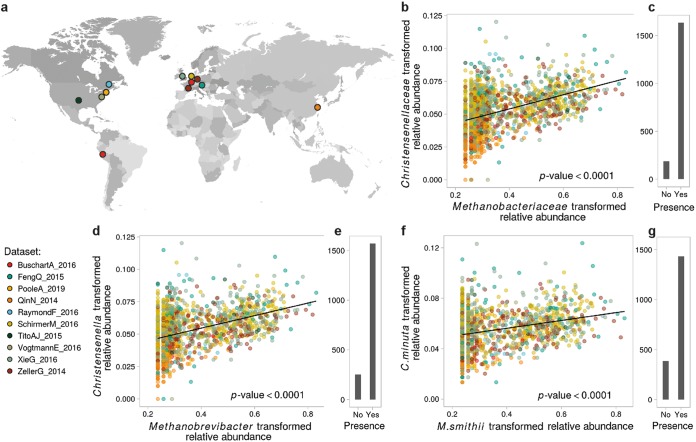
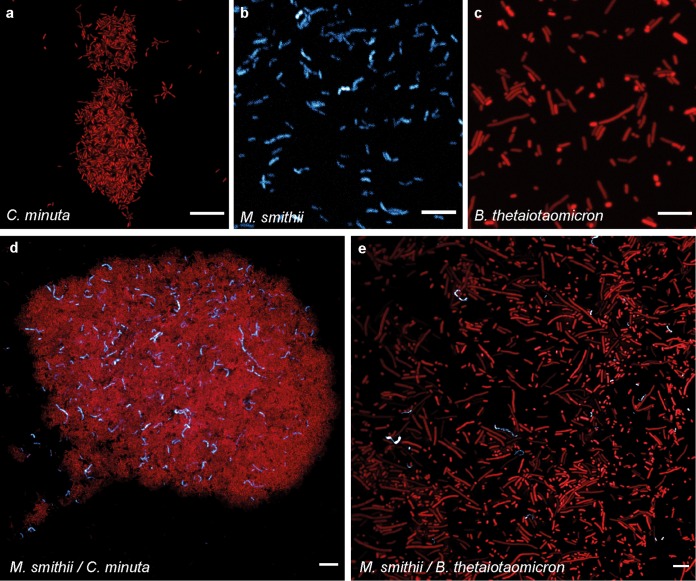
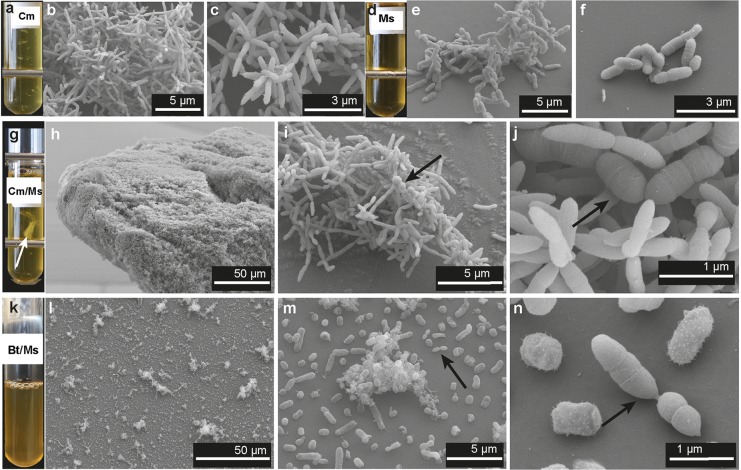
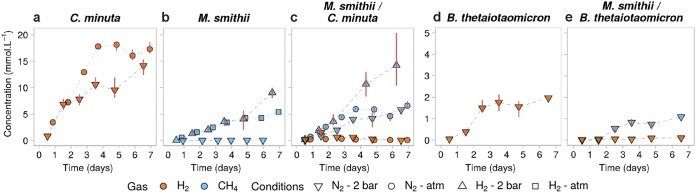
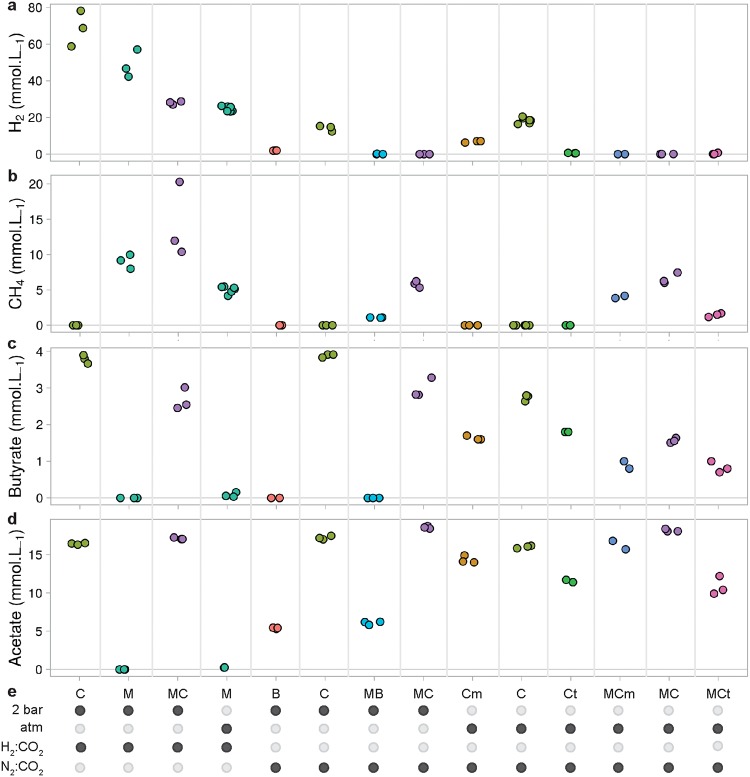
The human gut microbiome is made of trillions of microbial cells, most of which are Bacteria , with a subset of Archaea . The bacterial family Christensenellaceae and the archaeal family Methanobacteriaceae are widespread in human guts. They correlate with each other and with a lean body type. Whether species of these two families interact and how they affect the body type are unanswered questions. Here, we show that species within these families correlate with each other across people. We also demonstrate that particular species of these two families grow together in dense flocs, wherein the bacteria provide hydrogen gas to the archaea, which then make methane. When the archaea are present, the ratio of bacterial products (which are nutrients for humans) is changed. These observations indicate that when these species grow together, their products have the potential to affect the physiology of their human host.
Overview
The claims and statistics of this paper haven’t been checked yet.
Free: it reads the open-access text and checks the first 5 claims that cite a source we can check. Create a free account to check every claim.
Integrity signals
Registry
Cites
Statistics
Figures

Verification
Claims the paper makes
The claims and statistics of this paper haven’t been checked yet.
Free: it reads the open-access text and checks the first 5 claims that cite a source we can check. Create a free account to check every claim.
Claims other papers make about this one
Each is checked against this paper’s own text: does it say what the citing paper says it does?
The cited source says what the claim attributes to it.
In the citing paper
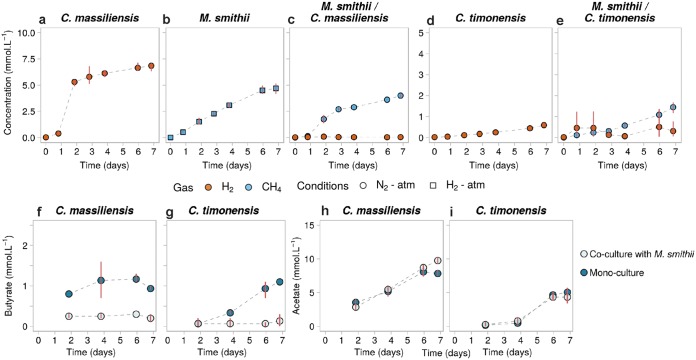
“The Christensenellaceae family coexist with the Methanobacteriaceae family, and in particular, the Christensenellaceae support M. smithii metabolism via hydrogen production that is then consumed by M. smithii for methane production.”
From Oral Iron Supplementation—Gastrointestinal Side Effects and the Impact on the Gut Microbiota (2021) · cites this paper as [63]
The cited source says what the claim attributes to it.
In the citing paper
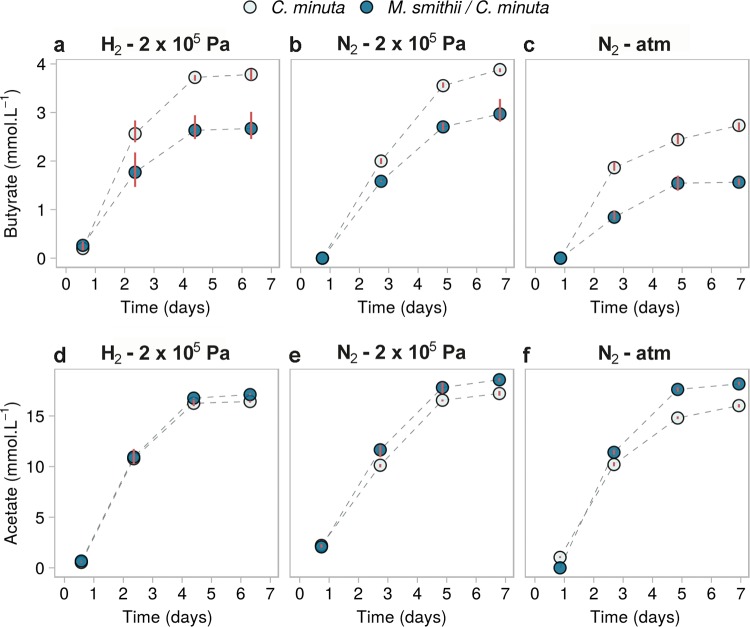
“In addition, the presence of M. smithii causes an alteration in the short-chain fatty acid production of Christensella minuta towards acetate over butyrate [63], which can then be used for acetotrophic methanogenesis.”
From Oral Iron Supplementation—Gastrointestinal Side Effects and the Impact on the Gut Microbiota (2021) · cites this paper as [63]
Self-check
Percentages, sums and reported differences re-computed from the paper’s own numbers.
The self-check needs the paper’s full text.
Citations
Cites
1 retracted
Million, M., Maraninchi, M., Henry, M., Armougom, F., Richet, H., Carrieri, P., Valero, R., Raccah, D., Vialettes, B., & Raoult, D. (2012) · International Journal of Obesity · doi:10.1038/ijo.2011.153 · Cited by 663
RetractedR: A Language and Environment for Statistical Computing
R Core Team (2025) · doi:10.32614/r.manuals · Cited by 352,181
Fiji: an open-source platform for biological-image analysis
Schindelin, J., Arganda-Carreras, I., Frise, E., Kaynig, V., Longair, M., Pietzsch, T., Preibisch, S., Rueden, C., Saalfeld, S., Schmid, B., et al. (2012) · Nature Methods · doi:10.1038/nmeth.2019 · Cited by 66,890 · cited 2×
“Images were acquired with the ZEN Black 2.3 SP1 software and processed with FIJI (62).”
InfluentialAn obesity-associated gut microbiome with increased capacity for energy harvest
Turnbaugh, P. J., Ley, R. E., Mahowald, M. A., Magrini, V., Mardis, E. R., & Gordon, J. I. (2006) · Nature · doi:10.1038/nature05414 · Cited by 12,444 · cited 4×
“smithii would 401 promote the breakdown of non-digestible carbon sources by fermenters, such as 402 acetogens, thereby increasing the amount of acetate or other SCFA that can be 403 absorbed and utilized by the host and promoting fat storage (2, 44).”
BackgroundInfluentialSelf-citationMultiQC: summarize analysis results for multiple tools and samples in a single report
Ewels, P., Magnusson, M., Lundin, S., & Käller, M. (2016) · Bioinformatics · doi:10.1093/bioinformatics/btw354 · Cited by 10,143
Human gut microbes associated with obesity
Ley, R. E., Turnbaugh, P. J., Klein, S., & Gordon, J. I. (2006) · Nature · doi:10.1038/4441022a · Cited by 8,785 · cited 1×
“Obesity was the first human disease phenotype to be associated with an altered 60 microbial ecology of the gut (1, 2).”
BackgroundSelf-citationA core gut microbiome in obese and lean twins
Turnbaugh, P. J., Hamady, M., Yatsunenko, T., Cantarel, B. L., Duncan, A., Ley, R. E., Sogin, M. L., Jones, W. J., Roe, B. A., Affourtit, J. P., et al. (2009) · Nature · doi:10.1038/nature07540 · Cited by 7,823
Self-citationden Besten, G., van Eunen, K., Groen, A. K., Venema, K., Reijngoud, D.-J., & Bakker, B. M. (2013) · Journal of Lipid Research · doi:10.1194/jlr.r036012 · Cited by 5,048
Metagenomic Analysis of the Human Distal Gut Microbiome
Gill, S. R., Pop, M., DeBoy, R. T., Eckburg, P. B., Turnbaugh, P. J., Samuel, B. S., Gordon, J. I., Relman, D. A., Fraser-Liggett, C. M., & Nelson, K. E. (2006) · Science · doi:10.1126/science.1124234 · Cited by 4,699
Kraken: ultrafast metagenomic sequence classification using exact alignments
Wood, D. E., & Salzberg, S. L. (2014) · Genome Biology · doi:10.1186/gb-2014-15-3-r46 · Cited by 4,521
Research works printed but not linked: 1
- 59. Mangiafico SS. 2016. Summary and analysis of extension program evaluation in R, version 1.15.0. Rutgers Cooperative Extension, New Brunswick, NJ: https://rcompanion.org/handbook/.
Cited by
Items 101–161 of 161
Identification of beneficial symbiont candidates in commensalism as potential oral gatekeepers
Hanawa, S., Son, A., Kato, T., Matsuo, Y., Omae, T., Omori, Y., Yoshikawa, K., Yamanegi, K., Hirota, K., Ohno, H., et al. (2025) · Microbiology Spectrum · doi:10.1128/spectrum.01588-25 · Cited by 3
“Because bacterial syntrophic interactions have been previously demonstrated through exploring the co-occurrence of bacteria (12), we assessed whether any bacterial genera show co-occurrence with the genera Rothia or Streptococcus in the subjects.”
Villa, R., Martin‐Gallausiaux, C., Gribaldo, S., & Borrel, G. (2025) · Trends in Microbiology · doi:10.1016/j.tim.2025.10.003 · Cited by 3
Fan, Y., Xiao, Y., Zhang, S., Bai, W., & Chen, J. (2024) · Food Science and Human Wellness · doi:10.26599/fshw.2024.9250129 · Cited by 4
“Additionally, C. minuta produces SCFAs such as butyrate and acetate [25] .”
InfluentialPető, Á., Kósa, D., Szilvássy, Z., Fehér, P. S., Ujhelyi, Z., Kovács, G. E., Német, I., Pócsi, I., & Bácskay, I. (2023) · Fermentation · doi:10.3390/fermentation9080767 · Cited by 4
Functional prediction of proteins from the human gut archaeome
Novikova, P. V., Busi, S. B., Probst, A. J., May, P., & Wilmes, P. (2024) · ISME Communications · doi:10.1093/ismeco/ycad014 · Cited by 3
Archaeal diversity in the microbiomes of four wild bird species
Hunter, T., Chance, L., Elphick, C. S., & Hird, S. M. (2025) · Microbiology Spectrum · doi:10.1128/spectrum.02870-24 · Cited by 2
“Methanogenic Archaea can form syntrophic relationships with fermentative Bacteria that break down cellulose (4, 84).”
InfluentialMethanobrevibacter smithii activates immune microenvironment of intestinum tenue in a mouse model
Jin, M., Hu, J., Tian, C., Wu, H., Wang, B., Wang, Y., Yang, X., Ma, C., & Li, F. (2026) · Archives of Microbiology · doi:10.1007/s00203-026-04772-2 · Cited by 2
“M.smithii was found to have connections with bacteria (Ruaud et al. 2020 ), fungi(Joblin et al. 2002), and viruses(Cao et al. 2022) which form an extensive network(Malat et al. 2024).”
Dynamics of Virulence of Commensals: Preventive Phenotypical Mutability
Chepur, S. V., Nn, P., Sayganov, S. A., Chubar, O. V., Сергеевна, Б. Л., & Litvinenko, I. (2023) · Biology Bulletin Reviews · doi:10.1134/s207908642306004x · Cited by 2
“…mutualistic metabolism, which ensures the neutralization of toxic substances and the exchange of reducing equivalents, including sulfur and nitrogen compounds, between members of the metabolic consortium (Fis-chbach and Sonnenburg, 2011; Morris et al., 2013; Smith et al., 2019; Ruaud et al., 2020).”
BackgroundOs, M., Ivanova, A. Y., Belousova, M. A., Toshchakov, S. V., Krylova, A. S., Shirokov, I. V., Оболенская, О. Н., Kuropatkina, T. A., Bondarenko, G. N., & Gartseev, I. B. (2024) · Advances in biochemistry in health and disease · doi:10.1007/978-3-031-47375-3_20 · Cited by 4
Zhao, X., Sukhbaatar, O., Kou, L., Cheng, X., Wanapat, M., Kamal, M., Norovsambuu, T., Sun, Z., & Cheng, Y. (2025) · Animal Bioscience · doi:10.5713/ab.24.0836 · Cited by 1
“It has also been confirmed that it can directly transfer electrons to methanogens [36].”
Xu, F., Sieverding, J., Zhou, P., Sah, S., Weinberger, V., Moissl‐Eichinger, C., Wohlers, I., & Heine, H. (2026) · Nature Communications · doi:10.1101/2025.09.30.679018 · Cited by 2
Ngwese, M. M., Loum, S., Berg, L. I. T., Tyakht, A., Youngblut, N. D., Adegnika, A. A., Kremsner, P. G., Ley, R. E., & Marsh, J. W. (2026) · Future Microbiology · doi:10.1080/17460913.2026.2645510 · Cited by 3
Self-citationExploring the role of gut methanogenic archaea in childhood stunting in Aceh Province, Indonesia
Rinanda, T., Riani, C., Artarini, A., & Sasongko, L. (2026) · Anaerobe · doi:10.1016/j.anaerobe.2026.103040 · Cited by 1
Lin, A., Ghosh, S., Kirs, M., & Wang, Z. (2026) · Environmental Microbiology · doi:10.1111/1462-2920.70303 · Cited by 1
Li, D., Kyawt, Y., Wang, Q., Gao, J., Wang, R., Wang, M., Duan, C., Lv, D., Zhu, W., Wanapat, M., et al. (2026) · Veterinary World · doi:10.14202/vetworld.2026.2339-2357 · Cited by 1
“Previous studies have demonstrated that Christensenellaceae R-7 group can directly transfer electrons to methanogens and that [FeFe]-hydrogenases produced by this group may promote hydrogenotrophic methane synthesis [57].”
The architecture of gut microecological networks and the governance of host metabolic homeostasis
Chen, X. G., You, W., & Zhou, S. H. E. N. G. H. (2026) · Mycology: An International Journal on Fungal Biology · doi:10.1080/21501203.2026.2684091 · Cited by 1
Larik, G. N. F., Canfora, E. E., van Schothorst, E. M., & Blaak, E. E. (2026) · Gut Microbes · doi:10.1080/19490976.2026.2701495 · Cited by 2
“66,94 These results are not completely consistent as one study reported that co-culturing Methanobrevibacter smithii with a hydrogenotrophic acetogen actually increased butyrate production.”
Methane emissions from upland tree stems reflect a balance of microbial production and consumptionPreprint
Gewirtzman, J., Arnold, W., Taylor, M., Burrows, H., Merenstein, C., Woodbury, D. J., Whitlock, N., Kraut, K., González, L. F., Brodersen, C. R., et al. (2025) · bioRxiv (Cold Spring Harbor Laboratory) · doi:10.1101/2025.09.30.679632 · Cited by 2
Development and dynamics of the normal gut microbiota
Olsson, L. M. (2020) · Gothenburg University Publications Electronic Archive (Gothenburg University)
Archaea du microbiome intestinal animal : abondance, diversité et adaptation
Thomas, C. M. (2021) · theses.fr (ABES) · doi:10.70675/56eadf89zf4ebz4756z80a3z7adeff2a7569
Dynamics of Commensals Virulence: Preventive Phenotypical Mutability
Chepur, S. V., Nn, P., Sayganov, S. A., Chubar, O. V., Сергеевна, Б. Л., & Litvinenko, I. (2023) · Успехи современной биологии · doi:10.31857/s0042132423030043
van der Vossen, E. W. J., Davids, M., Bresser, L. R. F., Galenkamp, H., van den Born, B. H., Zwinderman, A. H., Levin, E., Nieuwdorp, M., & de Goffau, M. C. (2024) · Figshare · doi:10.6084/m9.figshare.26587719
Balvers, M., de Goffau, M. C., van Riel, N. A. W., van den Born, B. H., Galenkamp, H., Zwinderman, K. H., Nieuwdorp, M., & Levin, E. (2024) · Figshare · doi:10.6084/m9.figshare.26695881
Balvers, M., de Goffau, M. C., van Riel, N. A. W., van den Born, B. H., Galenkamp, H., Zwinderman, K. H., Nieuwdorp, M., & Levin, E. (2024) · Figshare · doi:10.6084/m9.figshare.25449028
Balvers, M., de Goffau, M. C., van Riel, N. A. W., van den Born, B. H., Galenkamp, H., Zwinderman, K. H., Nieuwdorp, M., & Levin, E. (2024) · Figshare · doi:10.6084/m9.figshare.26695887
van der Vossen, E. W. J., Davids, M., Bresser, L. R. F., Galenkamp, H., van den Born, B. H., Zwinderman, A. H., Levin, E., Nieuwdorp, M., & de Goffau, M. C. (2024) · Figshare · doi:10.6084/m9.figshare.26587728
van der Vossen, E. W. J., Davids, M., Bresser, L. R. F., Galenkamp, H., van den Born, B. H., Zwinderman, A. H., Levin, E., Nieuwdorp, M., & de Goffau, M. C. (2024) · Figshare · doi:10.6084/m9.figshare.26587734
van der Vossen, E. W. J., Davids, M., Bresser, L. R. F., Galenkamp, H., van den Born, B. H., Zwinderman, A. H., Levin, E., Nieuwdorp, M., & de Goffau, M. C. (2024) · Figshare · doi:10.6084/m9.figshare.26587749
van der Vossen, E. W. J., Davids, M., Bresser, L. R. F., Galenkamp, H., van den Born, B. H., Zwinderman, A. H., Levin, E., Nieuwdorp, M., & de Goffau, M. C. (2024) · Figshare · doi:10.6084/m9.figshare.26587737
van der Vossen, E. W. J., Davids, M., Bresser, L. R. F., Galenkamp, H., van den Born, B. H., Zwinderman, A. H., Levin, E., Nieuwdorp, M., & de Goffau, M. C. (2024) · Figshare · doi:10.6084/m9.figshare.26587722
Balvers, M., de Goffau, M. C., van Riel, N. A. W., van den Born, B. H., Galenkamp, H., Zwinderman, K. H., Nieuwdorp, M., & Levin, E. (2024) · Figshare · doi:10.6084/m9.figshare.26695878
van der Vossen, E. W. J., Davids, M., Bresser, L. R. F., Galenkamp, H., van den Born, B. H., Zwinderman, A. H., Levin, E., Nieuwdorp, M., & de Goffau, M. C. (2024) · Figshare · doi:10.6084/m9.figshare.26587725
Balvers, M., de Goffau, M. C., van Riel, N. A. W., van den Born, B. H., Galenkamp, H., Zwinderman, K. H., Nieuwdorp, M., & Levin, E. (2024) · Figshare · doi:10.6084/m9.figshare.25449175
van der Vossen, E. W. J., Davids, M., Bresser, L. R. F., Galenkamp, H., van den Born, B. H., Zwinderman, A. H., Levin, E., Nieuwdorp, M., & de Goffau, M. C. (2024) · Figshare · doi:10.6084/m9.figshare.26587716
Balvers, M., de Goffau, M. C., van Riel, N. A. W., van den Born, B. H., Galenkamp, H., Zwinderman, K. H., Nieuwdorp, M., & Levin, E. (2024) · Figshare · doi:10.6084/m9.figshare.26695884
van der Vossen, E. W. J., Davids, M., Bresser, L. R. F., Galenkamp, H., van den Born, B. H., Zwinderman, A. H., Levin, E., Nieuwdorp, M., & de Goffau, M. C. (2024) · Figshare · doi:10.6084/m9.figshare.26587743
van der Vossen, E. W. J., Davids, M., Bresser, L. R. F., Galenkamp, H., van den Born, B. H., Zwinderman, A. H., Levin, E., Nieuwdorp, M., & de Goffau, M. C. (2024) · Figshare · doi:10.6084/m9.figshare.26587755
Kuznetsova, V., Tyakht, A., Akhmadishina, L. V., Odintsova, V., Klimenko, N., Kostryukova, E., Vakhitova, M., Grigoryeva, T., Malanin, S., Vladimirtsev, V. A., et al. (2020) · Figshare · doi:10.6084/m9.figshare.13269828
van der Vossen, E. W. J., Davids, M., Bresser, L. R. F., Galenkamp, H., van den Born, B. H., Zwinderman, A. H., Levin, E., Nieuwdorp, M., & de Goffau, M. C. (2024) · Figshare · doi:10.6084/m9.figshare.26587731
van der Vossen, E. W. J., Davids, M., Bresser, L. R. F., Galenkamp, H., van den Born, B. H., Zwinderman, A. H., Levin, E., Nieuwdorp, M., & de Goffau, M. C. (2024) · Figshare · doi:10.6084/m9.figshare.26587740
van der Vossen, E. W. J., Davids, M., Bresser, L. R. F., Galenkamp, H., van den Born, B. H., Zwinderman, A. H., Levin, E., Nieuwdorp, M., & de Goffau, M. C. (2024) · Figshare · doi:10.6084/m9.figshare.26587752
Balvers, M., de Goffau, M. C., van Riel, N. A. W., van den Born, B. H., Galenkamp, H., Zwinderman, K. H., Nieuwdorp, M., & Levin, E. (2024) · Figshare · doi:10.6084/m9.figshare.26695890
van der Vossen, E. W. J., Davids, M., Bresser, L. R. F., Galenkamp, H., van den Born, B. H., Zwinderman, A. H., Levin, E., Nieuwdorp, M., & de Goffau, M. C. (2024) · Figshare · doi:10.6084/m9.figshare.26587746
Payling, L. M. (2022) · Massey Research Online (Massey University) · Cited by 1
Smith, N. (2020) · Massey Research Online (Massey University)
Deng, X., Li, H., Huang, S., He, J., Dai, Z., Wu, A., Mao, X., Yu, M., zhang, J., Wang, X., et al. (2026) · Animal Advances · doi:10.48130/animadv-0025-0039 · Cited by 1
Xu, H., Hei, S., Yang, G., Fu, W., Zhang, X., Liang, P., Pan, B., & Huang, X. (2026) · Journal of Environmental Sciences · doi:10.1016/j.jes.2026.02.030
Indrebø, T. S., Ghimire, N., Flatabø, G. Ø., Bergland, W. H., & Samarakoon, G. (2026) · Preprints.org · doi:10.20944/preprints202603.2254.v1
Un nouveau monde microbien chez l’homme : les candidate phyla radiation (CPR)
Naud, S. (2021) · theses.fr (ABES) · doi:10.70675/2c6ab74fz802bz4a59z8eb9z97ba8ac4edd6
Sources et dynamique des méthanogènes chez l'Homme
Guindo, C. O. (2022) · theses.fr (ABES) · doi:10.70675/073f315bze8e2z4cc4za517z25aa737e615b
Modélisation de la dégradation des protéines alimentaires par le microbiote intestinal humain
Paulay, A. (2024) · theses.fr (ABES) · doi:10.70675/41f1d6ecz7fa4z4c7azb50ez413305795258
Does Intrarectal Administration of Christensenella minuta DSM22607 Impact Body Weight?
Zsálig, D., Molnár, Á., Kerényi, M., Péter, F., Gerencsér, G., & Polyák, É. (2026) · Nutrients · doi:10.3390/nu18101593
“One proposed mechanism for this effect is the production of short-chain fatty acids (SCFAs), which modulate lipogenesis and lipolysis, thereby regulating visceral fat levels [36].”
Xu, Q., Sun, L., Han, X., Zhang, Q., Jiang, W., & Zhu, S. (2026) · Science China Life Sciences · doi:10.1007/s11427-025-3247-9 · Cited by 1
Roques, S., Tournayre, J., Dou, P. S., Yanibada, B., Boudra, H., Popova, M., & Morgavi, D. (2026) · Microbiology Spectrum · doi:10.1128/spectrum.00269-26
“Oscillospiraceae have been associated with methano gens in fecal microbiota centenarian (45), while Christensenellaceae, also associated with methanogens in the same study, exhibit physical association with Methanobrevi bacter smithii (46).”
Xu, J., Riabchenko, M., Bartolomaeus, T. U. P., Mueller, A., Hannibal, L., Huber, R., Jeitler, M., Jarquín‐Díaz, V. H., Forslund, S. K., & Storz, M. A. (2026) · bioRxiv (Cold Spring Harbor Laboratory) · doi:10.64898/2026.07.24.740531
Methanogens: vital but threatened members of the human microbiome?
Subrahmanian, A., Patel, A., Veerus, L., Domínguez-Bello, M. G., & Blaser, M. J. (2026) · Trends in Microbiology · doi:10.1016/j.tim.2026.08.008
Biotemplated Archaella Nanoswimmers
Jermyn, S., Escalona, A., Hayati, L., Bisht, S., Allen, A. N., & Ali, J. (2026) · ACS Materials Letters · doi:10.1021/acsmaterialslett.6c00924
Effect of overabundance over the gut microbiome and feeding behavior in a large wild herbivore
Torres‐Blas, I. (2026) · Tesis Doctorals en Xarxa (Consorci de Serveis Universitaris de Catalunya)
Jin, Y., Xia, Z., Sun, H., Guo, X., Ma, B., Wa, Y., Zhang, C., Guan, C., Qu, H., Ma, W., et al. (2026) · International Dairy Journal · doi:10.1016/j.idairyj.2026.106857
Byrd, E., Harris, B. W., Zhang, H., Warren, W. E., Kolli, S. H., Putelo, A. M., McGinty, M. T., Solga, M. D., Rutkowski, M. R., & Kendall, M. M. (2026) · Proceedings of the National Academy of Sciences · doi:10.1073/pnas.2610622123 · Cited by 1
Metadata
- Authors
- Ruaud, A., Esquivel-Elizondo, S., de la Cuesta-Zuluaga, J., Waters, J. L., Angenent, L. T., Youngblut, N. D., & Ley, R. E.
- Affiliations
- Max Planck Institute for Developmental Biology (DE)
- Department of Microbiome Science, Max Planck Institute for Developmental Biology, Tübingen, Germany
- University of Tübingen (DE)
- Corresponding author
- Ley, Ruth E.
- ORCID
- Venue
- mBio
- Publisher
- American Society for Microbiology
- Published
- 2020-02-25
- Volume
- 11
- Issue
- 1
- ISSN
- 2150-7511 (ISSN-L)
- 2161-2129
- PMC
- PMC7002349
- OpenAlex
- W3005165702
- Cited by
- 149
- References
- 70
- Citations by year
- 2026: 17 · 2025: 25 · 2024: 38 · 2023: 15 · 2022: 16 · 2021: 24 · 2020: 14
- FWCI
- 5.59
- Type
- journal article
- Language
- en
- Open access
- gold
- doi.org
- Licence
- cc-by
- creativecommons.org/licenses/by/4.0/ (vor)
- journals.asm.org/non-commercial-tdm-license (tdm)
- Locations
- mBio (publishedVersion, cc-by)
- PubMed Central (publishedVersion, cc-by)
- PubMed (publishedVersion)
- DOAJ (DOAJ: Directory of Open Access Journals) (submittedVersion, cc-by-sa)
- DOAJ (DOAJ: Directory of Open Access Journals) (submittedVersion)
- Funders
- Max Planck Society
- Alexander von Humboldt-Stiftung
- Topics
- Life Sciences › Biochemistry, Genetics and Molecular Biology › Molecular Biology › Gut microbiota and health
- Physical Sciences › Energy › Renewable Energy, Sustainability and the Environment › Anaerobic Digestion and Biogas Production
- Health Sciences › Dentistry › Periodontics › Oral microbiology and periodontitis research
- Keywords
- Methanobrevibacter, interspecies hydrogen transfer, syntrophy, Christensenellaceae, Methanobacteriaceae, human gut microbiome, methane production, bacterial flocs
- MeSH terms
- Eubacteriales, Gastrointestinal Microbiome, Acetates, Butyrates, Feces, Fermentation, Humans, Hydrogen, Methane, Obesity, RNA, Ribosomal, 16S, Meta-Analysis as Topic, Body Mass Index, Methanobrevibacter, Microbial Interactions
About these checks
Registry, retraction, Cites and statistics results are computed, not judged, with one exception: a printed reference that no index lists is read once by a model before it counts as a citation error. Claims are extracted by a model and kept only when their quote appears verbatim in the text; each cited source is then checked, with a model’s help, for whether it says what the claim relies on. Those verdicts can be wrong — read the claim’s quote and the cited source before relying on one.
Statistics and arithmetic are recomputed, not judged.
Confidence bands are shown only for fields calibrated on our annotated test set. None is calibrated yet, so no band is shown.
What counts as a claim ›How we measure confidence ›How we check this ›
Are you an author, or do you see a problem with this page? Request a review
Data sources
Bibliographic data: Semantic Scholar, OpenAlex, Crossref.
Contains information from the Semantic Scholar Academic Graph Datasets, made available under the ODC Attribution License (ODC-BY 1.0).
Semantic Scholar’s data is described in: Kinney, R., et al. (2023). The Semantic Scholar Open Data Platform. arXiv:2301.10140.
