

Syntrophy via Interspecies H 2 Transfer between Christensenella and Methanobrevibacter Underlies Their Global Cooccurrence in the Human Gut
Open accessPublished version of a preprint
The DOI matches its Crossref record; 70 of the 70 references it cites were found in a registry or an index.
Abstract
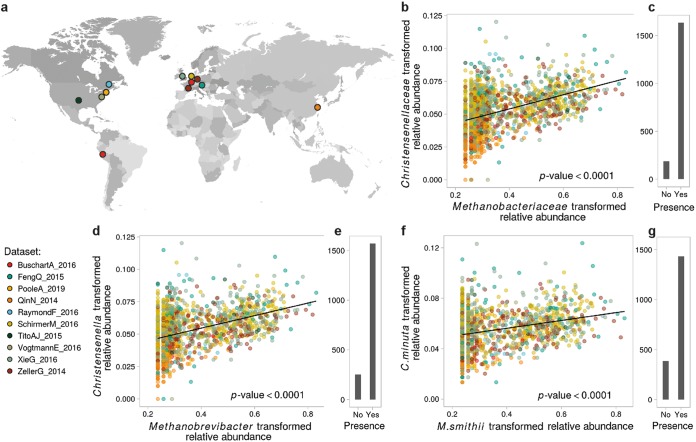
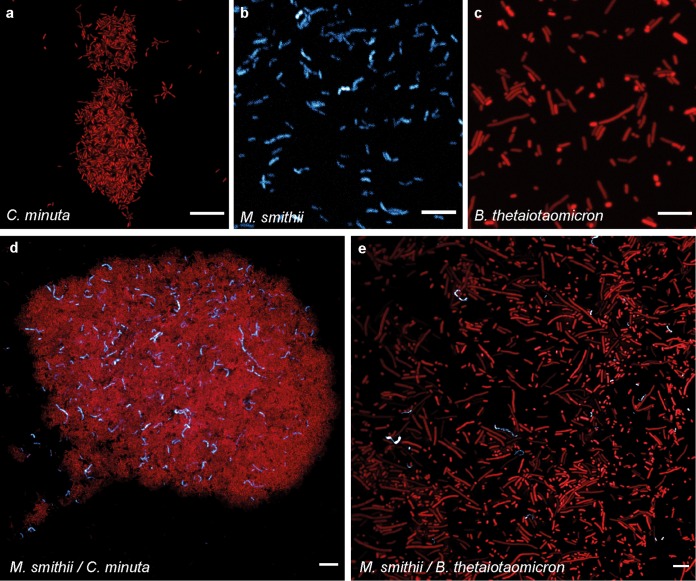
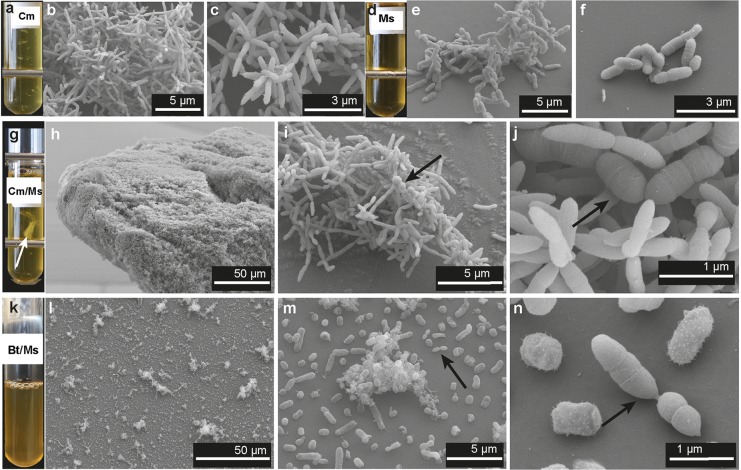
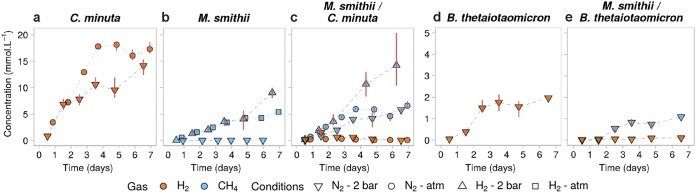
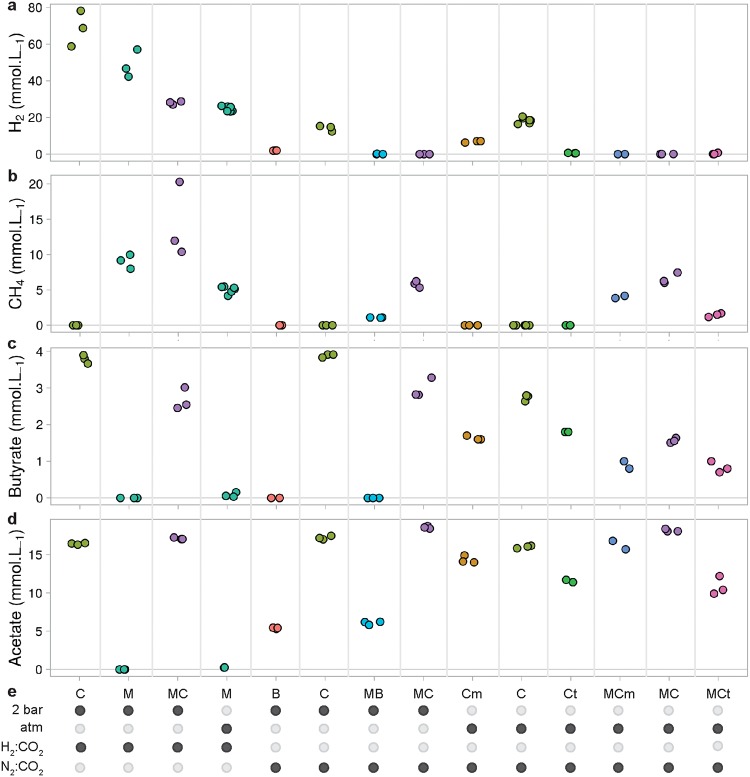
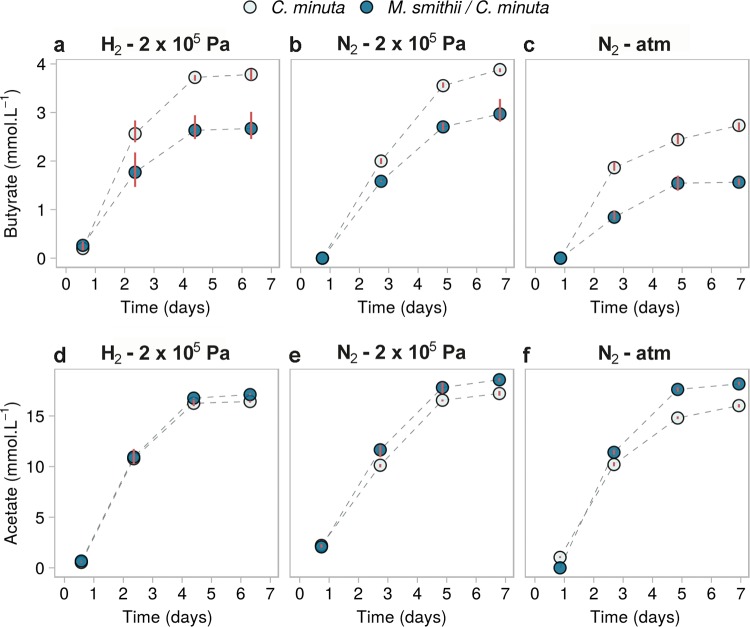
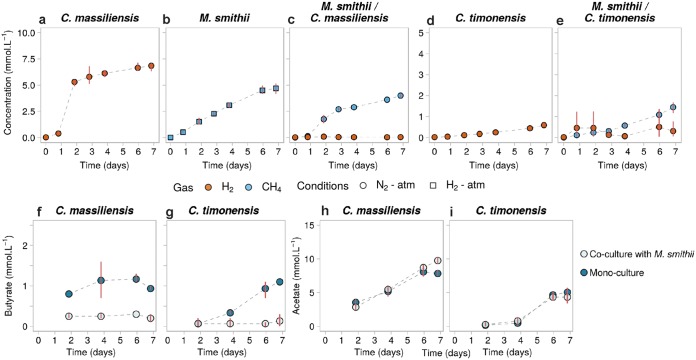
The human gut microbiome is made of trillions of microbial cells, most of which are Bacteria , with a subset of Archaea . The bacterial family Christensenellaceae and the archaeal family Methanobacteriaceae are widespread in human guts. They correlate with each other and with a lean body type. Whether species of these two families interact and how they affect the body type are unanswered questions. Here, we show that species within these families correlate with each other across people. We also demonstrate that particular species of these two families grow together in dense flocs, wherein the bacteria provide hydrogen gas to the archaea, which then make methane. When the archaea are present, the ratio of bacterial products (which are nutrients for humans) is changed. These observations indicate that when these species grow together, their products have the potential to affect the physiology of their human host.
Overview
The claims and statistics of this paper haven’t been checked yet.
Free: it reads the open-access text and checks the first 5 claims that cite a source we can check. Create a free account to check every claim.
Integrity signals
Registry
Cites
Statistics
Figures

Verification
Claims the paper makes
The claims and statistics of this paper haven’t been checked yet.
Free: it reads the open-access text and checks the first 5 claims that cite a source we can check. Create a free account to check every claim.
Claims other papers make about this one
Each is checked against this paper’s own text: does it say what the citing paper says it does?
The cited source says what the claim attributes to it.
In the citing paper
“The Christensenellaceae family coexist with the Methanobacteriaceae family, and in particular, the Christensenellaceae support M. smithii metabolism via hydrogen production that is then consumed by M. smithii for methane production.”
From Oral Iron Supplementation—Gastrointestinal Side Effects and the Impact on the Gut Microbiota (2021) · cites this paper as [63]
The cited source says what the claim attributes to it.
In the citing paper
“In addition, the presence of M. smithii causes an alteration in the short-chain fatty acid production of Christensella minuta towards acetate over butyrate [63], which can then be used for acetotrophic methanogenesis.”
From Oral Iron Supplementation—Gastrointestinal Side Effects and the Impact on the Gut Microbiota (2021) · cites this paper as [63]
Self-check
Percentages, sums and reported differences re-computed from the paper’s own numbers.
The self-check needs the paper’s full text.
Citations
Cites
1 retracted
Million, M., Maraninchi, M., Henry, M., Armougom, F., Richet, H., Carrieri, P., Valero, R., Raccah, D., Vialettes, B., & Raoult, D. (2012) · International Journal of Obesity · doi:10.1038/ijo.2011.153 · Cited by 663
RetractedR: A Language and Environment for Statistical Computing
R Core Team (2025) · doi:10.32614/r.manuals · Cited by 352,181
Fiji: an open-source platform for biological-image analysis
Schindelin, J., Arganda-Carreras, I., Frise, E., Kaynig, V., Longair, M., Pietzsch, T., Preibisch, S., Rueden, C., Saalfeld, S., Schmid, B., et al. (2012) · Nature Methods · doi:10.1038/nmeth.2019 · Cited by 66,890 · cited 2×
“Images were acquired with the ZEN Black 2.3 SP1 software and processed with FIJI (62).”
InfluentialAn obesity-associated gut microbiome with increased capacity for energy harvest
Turnbaugh, P. J., Ley, R. E., Mahowald, M. A., Magrini, V., Mardis, E. R., & Gordon, J. I. (2006) · Nature · doi:10.1038/nature05414 · Cited by 12,444 · cited 4×
“smithii would 401 promote the breakdown of non-digestible carbon sources by fermenters, such as 402 acetogens, thereby increasing the amount of acetate or other SCFA that can be 403 absorbed and utilized by the host and promoting fat storage (2, 44).”
BackgroundInfluentialSelf-citationMultiQC: summarize analysis results for multiple tools and samples in a single report
Ewels, P., Magnusson, M., Lundin, S., & Käller, M. (2016) · Bioinformatics · doi:10.1093/bioinformatics/btw354 · Cited by 10,143
Human gut microbes associated with obesity
Ley, R. E., Turnbaugh, P. J., Klein, S., & Gordon, J. I. (2006) · Nature · doi:10.1038/4441022a · Cited by 8,785 · cited 1×
“Obesity was the first human disease phenotype to be associated with an altered 60 microbial ecology of the gut (1, 2).”
BackgroundSelf-citationA core gut microbiome in obese and lean twins
Turnbaugh, P. J., Hamady, M., Yatsunenko, T., Cantarel, B. L., Duncan, A., Ley, R. E., Sogin, M. L., Jones, W. J., Roe, B. A., Affourtit, J. P., et al. (2009) · Nature · doi:10.1038/nature07540 · Cited by 7,823
Self-citationden Besten, G., van Eunen, K., Groen, A. K., Venema, K., Reijngoud, D.-J., & Bakker, B. M. (2013) · Journal of Lipid Research · doi:10.1194/jlr.r036012 · Cited by 5,048
Metagenomic Analysis of the Human Distal Gut Microbiome
Gill, S. R., Pop, M., DeBoy, R. T., Eckburg, P. B., Turnbaugh, P. J., Samuel, B. S., Gordon, J. I., Relman, D. A., Fraser-Liggett, C. M., & Nelson, K. E. (2006) · Science · doi:10.1126/science.1124234 · Cited by 4,699
Kraken: ultrafast metagenomic sequence classification using exact alignments
Wood, D. E., & Salzberg, S. L. (2014) · Genome Biology · doi:10.1186/gb-2014-15-3-r46 · Cited by 4,521
Research works printed but not linked: 1
- 59. Mangiafico SS. 2016. Summary and analysis of extension program evaluation in R, version 1.15.0. Rutgers Cooperative Extension, New Brunswick, NJ: https://rcompanion.org/handbook/.
Cited by
Romano, S., Savva, G. M., Bedarf, J. R., Charles, I. G., Hildebrand, F., & Narbad, A. (2021) · npj Parkinson's Disease · doi:10.1038/s41531-021-00156-z · Cited by 707
Cross-feeding in the gut microbiome: Ecology and mechanisms
Culp, E. J., & Goodman, A. L. (2023) · Cell Host & Microbe · doi:10.1016/j.chom.2023.03.016 · Cited by 504
The microbiome-shaping roles of bacteriocins
Heilbronner, S., Krismer, B., Brötz-Oesterhelt, H., & Peschel, A. (2021) · Nature Reviews Microbiology · doi:10.1038/s41579-021-00569-w · Cited by 395
Borrel, G., Brugère, J.-F., Gribaldo, S., Schmitz, R. A., & Moissl-Eichinger, C. (2020) · Nature Reviews Microbiology · doi:10.1038/s41579-020-0407-y · Cited by 265
Extracellular Metabolism Sets the Table for Microbial Cross-Feeding
Fritts, R. K., McCully, A. L., & McKinlay, J. B. (2021) · Microbiology and Molecular Biology Reviews · doi:10.1128/mmbr.00135-20 · Cited by 174
“Human hosts might also benefit by receiving more acetate and less butyrate, which correlates with less obesity (220).”
BackgroundVillanueva-Millán, M. J., Leite, G., Wang, J., Morales, W., Parodi, G., Pimentel, M. L., Barlow, G. M., Mathur, R., Rezaie, A. R., Sanchez, M., et al. (2022) · The American Journal of Gastroenterology · doi:10.14309/ajg.0000000000001997 · Cited by 173
“(36) demonstrated that Christensenella spp can transfer H2 toMethanobrevibacter spp, confirming the syntrophic relationship between these species.”
Methanogenic archaea in the human gastrointestinal tract
Högenauer, C., Hammer, H. F., Mahnert, A., & Moissl‐Eichinger, C. (2022) · Nature Reviews Gastroenterology & Hepatology · doi:10.1038/s41575-022-00673-z · Cited by 146
Oral Iron Supplementation—Gastrointestinal Side Effects and the Impact on the Gut Microbiota
Bloor, S. R., Schutte, R., & Hobson, A. R. (2021) · Microbiology Research · doi:10.3390/microbiolres12020033 · Cited by 117
The emerging role of the gut microbiota and its application in inflammatory bowel disease
Xiu, W., Peng, J., Cai, P., Xia, Y., Yi, C., Shang, A., Akanyibah, F. A., & Mao, F. (2024) · Biomedicine & Pharmacotherapy · doi:10.1016/j.biopha.2024.117302 · Cited by 121
Factors shaping the abundance and diversity of the gut archaeome across the animal kingdom
Thomas, C. M., Quéméner, E. D., Gribaldo, S., & Borrel, G. (2022) · Nature Communications · doi:10.1038/s41467-022-31038-4 · Cited by 116
Gut bacteria convert glucocorticoids into progestins in the presence of hydrogen gas
McCurry, M. D., D’Agostino, G. D., Walsh, J. T., Bisanz, J. E., Zalosnik, M. I., Dong, X., Morris, D. J., Korzenik, J. R., Edlow, A. G., Balskus, E. P., et al. (2024) · Cell · doi:10.1016/j.cell.2024.05.005 · Cited by 122
The role of the microbiota in human genetic adaptation
Suzuki, T. A., & Ley, R. E. (2020) · Science · doi:10.1126/science.aaz6827 · Cited by 110
“Recent evidence points to metabolic interactions between these partners that may affect metabolite availability to the host (71).”
BackgroundSelf-citationClinical translation of microbiome research
Gilbert, J. A., Azad, M. B., Bäckhed, F., Blaser, M. J., Byndloss, M. X., Chiu, C. Y., Chu, H., Dugas, L. R., Elinav, E., Gibbons, S. M., et al. (2025) · Nature Medicine · doi:10.1038/s41591-025-03615-9 · Cited by 124
“Studies in humans have shown that Christensenel-laceae are associated with low body mass index (BMI) 90,91 and other health indicators such as low levels of triglycerides 92–94 .”
Self-citationKropp, C., Corf, K. L., Relizani, K., Tambosco, K., Martinez, C., Chain, F., Rawadi, G., Langella, P., Claus, S. P., & Martín, R. (2021) · Scientific Reports · doi:10.1038/s41598-021-90885-1 · Cited by 121
Esquivel‐Elizondo, S., Bağcı, C., Temovska, M., Jeon, B. S., Bessarab, I. N., Williams, R. B. H., Huson, D. H., & Angenent, L. T. (2021) · Frontiers in Microbiology · doi:10.3389/fmicb.2020.594524 · Cited by 106
Self-citationState of the Art in the Culture of the Human Microbiota: New Interests and Strategies
Alou, M. T., Naud, S., Khelaifia, S., Bonnet, M., Lagier, J., & Raoult, D. (2020) · Clinical Microbiology Reviews · doi:10.1128/cmr.00129-19 · Cited by 101
Emerging connections between gut microbiome bioenergetics and chronic metabolic diseases
Daisley, B. A., Koenig, D. W., Engelbrecht, K. C., Doney, L., Hards, K., Al, K. F., Reid, G., & Burton, J. P. (2021) · Cell Reports · doi:10.1016/j.celrep.2021.110087 · Cited by 92
Campbell, A., Gdanetz, K., Schmidt, A. W., & Schmidt, T. M. (2023) · Microbiome · doi:10.1186/s40168-023-01565-3 · Cited by 100
Tudela, H., Claus, S. P., & Saleh, M. (2021) · Frontiers in Cell and Developmental Biology · doi:10.3389/fcell.2021.719072 · Cited by 88
Kumpitsch, C., Fischmeister, F. P. S., Mahnert, A., Lackner, S., Wilding, M., Sturm, C., Springer, A., Madl, T., Holasek, S. J., Högenauer, C., et al. (2021) · Microbiome · doi:10.1186/s40168-021-01130-w · Cited by 81
“We can state that the consumption of formate and acetate by Methanobrevibacter has large-scale influence on the microbiome composition and functionality, pulling the metabolism strongly towards small carbon compounds in high-methane emitters (see also [51]).”
BackgroundHydrogen and formate production and utilisation in the rumen and the human colon
Kelly, W. J., Mackie, R. I., Attwood, G. T., Janssen, P. H., McAllister, T. A., & Leahy, S. C. (2022) · Animal Microbiome · doi:10.1186/s42523-022-00174-z · Cited by 83
Vertebrate host phylogeny influences gut archaeal diversity
Youngblut, N. D., Reischer, G. H., Dauser, S., Maisch, S., Walzer, C., Stalder, G. L., Farnleitner, A. H., & Ley, R. E. (2021) · Nature Microbiology · doi:10.1038/s41564-021-00980-2 · Cited by 98
Self-citationPutting microbial interactions back into community contexts
Pierce, E. C., & Dutton, R. J. (2021) · Current Opinion in Microbiology · doi:10.1016/j.mib.2021.10.008 · Cited by 74
Chen, J., Levy, A., Tian, A.-L., Huang, X., Cai, G., Fidelle, M., Rauber, C., Ly, P., Pizzato, E., Sitterle, L., et al. (2025) · Cancer Cell · doi:10.1016/j.ccell.2025.02.010 · Cited by 67
Bellais, S., Nehlich, M., Ania, M., Duquenoy, A., Mazier, W., van den Engh, G., Baijer, J., Treichel, N. S., Clavel, T., Belotserkovsky, I., et al. (2022) · Microbiome · doi:10.1186/s40168-021-01206-7 · Cited by 77
“Interestingly, the presence of members of the Christensenellaceae family in the gut microbiota was reported to be associated with the presence of methanogenic archaea [17], with both groups being late colonizers of the gut ecosystem [35], which could be due to syntrophy via interspecies hydrogen transfer between Chris…”
BackgroundMohammadzadeh, R., Mahnert, A., Duller, S., & Moissl‐Eichinger, C. (2022) · Current Opinion in Microbiology · doi:10.1016/j.mib.2022.102146 · Cited by 75
Bacteria and Methanogens in the Human Microbiome: a Review of Syntrophic Interactions
Djemai, K., Drancourt, M., & Alou, M. T. (2021) · Microbial Ecology · doi:10.1007/s00248-021-01796-7 · Cited by 72
“While methanogenesis has been extensively described in the literature, syntrophic interactions between bacteria and methanogens remain underreported, with few studies describing the microorganisms involved in these interactions and their metabolism [7, 8].”
BackgroundNitric Oxide Impacts Human Gut Microbiota Diversity and Functionalities
Leclerc, M., Bedu-Ferrari, C., Etienne‐Mesmin, L., Mariadassou, M., Lebreuilly, L., Tran, S., Brazeau, L., Mayeur, C., Delmas, J., Rué, O., et al. (2021) · mSystems · doi:10.1128/msystems.00558-21 · Cited by 71
“syntrophy between H2 and CO2 producers and obligatory hydrogenotrophic Archaeamethanogens (17).”
BackgroundAng, W.-S., Law, J. W., Letchumanan, V., Hong, K., Wong, S. H., Mutalib, N. A., Chan, K., Lee, L., & Tan, L. T. (2023) · Foods · doi:10.3390/foods12132485 · Cited by 63
“minuta forms a co-occurrence network with other heritable microbiota, namely Methanobrevibacter smithii, a methanogenic archaea belonging to the family of Methanobacteriaceae [32].”
BackgroundElectron flow: key to mitigating ruminant methanogenesis
Leahy, S. C., Janssen, P. H., Attwood, G. T., Mackie, R. I., McAllister, T. A., & Kelly, W. J. (2022) · Trends in Microbiology · doi:10.1016/j.tim.2021.12.005 · Cited by 54
Ignatyeva, O. A., Tolyneva, D., Kovalyov, A., Matkava, L. R., Terekhov, M. V., Kashtanova, D. A., Zagaynova, A. V., Ivanov, M., Yudin, V. S., Makarov, V. V., et al. (2024) · Frontiers in Microbiology · doi:10.3389/fmicb.2023.1241259 · Cited by 57
Evidence for the contribution of the gut microbiome to obesity and its reversal
de Wit, D. F., Hanssen, N. M. J., Wortelboer, K., Herrema, H., Rampanelli, E., & Nieuwdorp, M. (2023) · Science Translational Medicine · doi:10.1126/scitranslmed.adg2773 · Cited by 51
Smitka, K., Procházková, P., Roubalová, R., Dvořák, J., Papežová, H., Hill, M., Pokorny, J., Kittnar, O., Bilej, M., & Tlaskalová‐Hogenová, H. (2021) · Frontiers in Endocrinology · doi:10.3389/fendo.2021.613983 · Cited by 55
Hullar, M. A. J., Jenkins, I., Randolph, T. W., Curtis, K. R., Monroe, K. R., Ernst, T. M., Shepherd, J., Stram, D. O., Cheng, I. C., Kristal, B. S., et al. (2021) · Gut Microbes · doi:10.1080/19490976.2021.1965463 · Cited by 53
Dissecting mechanisms of fecal microbiota transplantation efficacy in disease
Andary, C. M., Al, K. F., Chmiel, J. A., Gibbons, S., Daisley, B. A., Parvathy, S. N., Vareki, S. M., Bowdish, D. M. E., Silverman, M., & Burton, J. P. (2024) · Trends in Molecular Medicine · doi:10.1016/j.molmed.2023.12.005 · Cited by 48
Microbiota assembly, structure, and dynamics among Tsimane horticulturalists of the Bolivian Amazon
Sprockett, D. D., Martin, M. A., Costello, E. K., Burns, A. R., Holmes, S., Gurven, M., & Relman, D. A. (2020) · Nature Communications · doi:10.1038/s41467-020-17541-6 · Cited by 50
de la Cuesta‐Zuluaga, J., Spector, T. D., Youngblut, N. D., & Ley, R. E. (2021) · mSystems · doi:10.1128/msystems.00939-20 · Cited by 52
Self-citationDiversity of Methanogens in Animals’ Gut
Guindo, C. O., Davoust, B., Drancourt, M., & Grine, G. (2020) · Microorganisms · doi:10.3390/microorganisms9010013 · Cited by 49
“Methanogens were classified into three biochemical groups based on the substrates used for hydrogen production: hydrogenotrophic, aceticlastic, and methylotrophic [2,4,5].”
van der Vossen, E. W. J., Davids, M., Bresser, L. R. F., Galenkamp, H., van den Born, B. H., Zwinderman, A. H., Levin, E., Nieuwdorp, M., & de Goffau, M. C. (2023) · Microbiome · doi:10.1186/s40168-023-01488-z · Cited by 46
“The syntrophic relationship between Christensenellaceae and Methanobrevibacter, indicator species of this cluster, is well described as the Archaea Methanobrevibacter consumes the hydrogen produced by the Christensenellaceae bacteria converting it into methane [28].”
BackgroundResultWarmbrunn, M. V., Boulund, U., Aron‐Wisnewsky, J., de Goffau, M. C., Abeka, R. E., Davids, M., Bresser, L. R. F., Levin, E., Clément, K., Galenkamp, H., et al. (2024) · Cardiovascular Research · doi:10.1093/cvr/cvae018 · Cited by 43
“31 Christensenellaceae are known to co-occur with Methanobrevibacter , 29,30,32 which is based on the cross-feeding relationship between these two groups as C. minuta produces H 2 , which is a substrate for Methanobrevibacter smithii .”
BackgroundMohr, A. E., Mach, N., Pugh, J. N., Grosicki, G. J., Allen, J. M., Karl, J. P., & Whisner, C. M. (2025) · FEMS Microbiology Reviews · doi:10.1093/femsre/fuaf037 · Cited by 40
“Coculturing experiments suggest a syntrophic relationship between Christensenella species and M. smithii , possibly through interspecies hydrogen transfer (Ruaud et al. 2020 ).”
Digestive tract methanodrome: Physiological roles of human microbiota-associated methanogens
Guindo, C. O., Drancourt, M., & Grine, G. (2020) · Microbial Pathogenesis · doi:10.1016/j.micpath.2020.104425 · Cited by 41
Puig‐Castellví, F., Midoux, C., Guenne, A., Conteau, D., Franchi, Ó., Bureau, C., Madigou, C., Bouveresse, D. J., Kroff, P., Mazéas, L., et al. (2021) · Bioresource Technology · doi:10.1016/j.biortech.2021.126612 · Cited by 38
Runge, S., & Rosshart, S. P. (2021) · Frontiers in Immunology · doi:10.3389/fimmu.2021.702378 · Cited by 41
Chen, L., Xu, D. S., Liang, J., Zhang, Y., Fang, W., Zhang, P., & Zhang, G. (2023) · Journal of Water Process Engineering · doi:10.1016/j.jwpe.2023.104230 · Cited by 36
From Microbial Communities to Distributed Computing Systems
Karkaria, B. D., Treloar, N. J., Barnes, C. P., & Fedorec, A. J. H. (2020) · Frontiers in Bioengineering and Biotechnology · doi:10.3389/fbioe.2020.00834 · Cited by 38
“Syntrophy commonly occurs within bacterial communities, for example during methanogenesis (Zhu et al., 2020), and the metabolic reactions within the human gut (Ruaud et al., 2020).”
BackgroundAge-related dynamics of predominant methanogenic archaea in the human gut microbiome
Mohammadzadeh, R., Mahnert, A., Shinde, T., Kumpitsch, C., Weinberger, V., Schmidt, H., & Moissl‐Eichinger, C. (2025) · BMC Microbiology · doi:10.1186/s12866-025-03921-9 · Cited by 35
“The co-occurrence of Christensenella with M. smithii or Ca. M. intestini was consistent with previous research that demonstrated a mutually beneficial relationship between Christensenella and Methano-brevibacter through interspecies hydrogen transfer [76].”
Luo, J., Li, Y., Li, H., Li, Y., Lin, L., Li, Y., Huang, W., Cao, J., & Wu, Y. (2021) · Bioresource Technology · doi:10.1016/j.biortech.2021.126318 · Cited by 30
Xu, T., Ma, X., Zhou, X., Qian, M., Yang, Z., Cao, P., & Han, X. (2022) · Journal of Animal Science · doi:10.1093/jas/skac088 · Cited by 27
Proteomic and metabolomic profiling of extracellular vesicles produced by human gut archaea
Weinberger, V., Darnhofer, B., Thapa, H. B., Mertelj, P., Stentz, R., Jones, E. J., Grabmann, G., Mohammadzadeh, R., Shinde, T., Karner, C., et al. (2025) · Nature Communications · doi:10.1038/s41467-025-60271-w · Cited by 33
“This complex communication system, regulating the metabolic processes of both partners, is believed to be mediated by Methanobrevibacter surface adhesins, leading to signi fi cant physiological changes in the involved microorganisms 66 .”
The Role of Methanogenic Archaea in Inflammatory Bowel Disease—A Review
Cisek, A. A., Szymańska, E., Aleksandrzak‐Piekarczyk, T., & Cukrowská, B. (2024) · Journal of Personalized Medicine · doi:10.3390/jpm14020196 · Cited by 28
Stothart, M. R., McLoughlin, P. D., Medill, S. A., Greuel, R. J., Wilson, A. J., & Poissant, J. (2024) · Nature Communications · doi:10.1038/s41467-024-49963-x · Cited by 28
“This could be because low partial pressures of H 2 are thermodynamically favorable for acetate formation but rate-limiting for propionate synthesis whichrequirehydrogenincorporatingsteps 31,48 .”
InfluentialA widespread hydrogenase supports fermentative growth of gut bacteria in healthy people
Welsh, C., Cabotaje, P. R., Marcelino, V. R., Watts, T. D., Kountz, D. J., Jespersen, M., Gould, J. A., Doan, N. Q., Lingford, J. P., Koralegedara, T., et al. (2025) · Nature Microbiology · doi:10.1038/s41564-025-02154-w · Cited by 30
Zhang, Y., Mu, C., Liu, S., & Zhu, W. (2022) · Animal nutrition · doi:10.1016/j.aninu.2022.08.005 · Cited by 25
“Methanobrevibacter is well known to utilize hydrogen and produce methane, which reduces intestinal hydrogen pressure and ultimately accelerates carbohydrate fermentation (Ungerfeld, 2015; Ruaud et al., 2020).”
BackgroundGut Microbiota Interactions With Obesity
Falalyeyeva, T. M., Chornenka, N., Cherkasova, L., Tsyryuk, O., Molchek, N., Kovalchuk, O. I., Kyriachenko, Y., Остапченко, Л. І., & Kobyliak, N. M. (2021) · Elsevier eBooks · doi:10.1016/b978-0-12-819265-8.00030-9 · Cited by 28
Methanobrevibacter smithii cell variants in human physiology and pathology: A review
Malat, I., Drancourt, M., & Grine, G. (2024) · Heliyon · doi:10.1016/j.heliyon.2024.e36742 · Cited by 28
“Furthermore, the H 2 produced by Christensenella minuta enhances and supports the metabolic activities of M. smithii more efficiently than the presence of Bacteroides thetaiotaomicron [129].”
BackgroundThe impact of novel probiotics isolated from the human gut on the gut microbiota and health
Caesar, R. (2024) · Diabetes Obesity and Metabolism · doi:10.1111/dom.16129 · Cited by 24
Multi-omic definition of metabolic obesity through adipose tissue–microbiome interactions
Chakaroun, R., Pradhan, M., Björnson, E., Arvidsson, D., Fridolfsson, J., Gummesson, A., Schoeler, M., Mitteregger, M., Smith, G. J., Larsson, I., et al. (2026) · Nature Medicine · doi:10.1038/s41591-025-04009-7 · Cited by 31
“These findings align with previous studies associating enhanced methanogenic potential with leanness and improved metabolic health 16,42 .”
Duller, S., Vrbancic, S., Szydłowski, Ł., Mahnert, A., Blohs, M., Predl, M., Kumpitsch, C., Zrim, V., Högenauer, C., Kosciolek, T., et al. (2024) · Nature Communications · doi:10.1038/s41467-024-52037-7 · Cited by 21
“23.”
InfluentialHughes, E. R., Winter, M. G., da Silva, L. A., Muramatsu, M. K., Jimenez, A. G., Gillis, C. C., Spiga, L., Chanin, R. B., Santos, R. L., Zhu, W., et al. (2021) · eLife · doi:10.7554/elife.58609 · Cited by 24
Wang, T., van Dijk, L., Rijnaarts, I., Hermes, G. D. A., de Roos, N. M., Witteman, B. J. M., de Wit, N. J. W., Govers, C., Smidt, H., & Zoetendal, E. G. (2022) · Microbiology Spectrum · doi:10.1128/spectrum.01653-22 · Cited by 23
Ivanova, A. Y., Shirokov, I. V., Toshchakov, S. V., Kozlova, A. D., Оболенская, О. Н., Mariasina, S. S., Ивлев, В. А., Gartseev, I. B., & Os, M. (2023) · Pharmaceuticals · doi:10.3390/ph16050686 · Cited by 20
Candeliere, F., Sola, L., Raimondi, S., Rossi, M., & Amaretti, A. (2024) · Synthetic and Systems Biotechnology · doi:10.1016/j.synbio.2023.12.007 · Cited by 18
“Interspecies H 2 transfer is expected to be at the basis of trophic relationships involving hydro-genotrophic methanogens [40].”
BackgroundGut microbial interactions based on network construction and bacterial pairwise cultivation
Jiang, M.-Z., Liu, C., Xu, C., Jiang, H., Wang, Y., & Liu, S. (2024) · Science China Life Sciences · doi:10.1007/s11427-023-2537-0 · Cited by 23
“…demonstrated the consistent results between the statistical associations inferred from cross-sectional or longitudinal cohorts and validating experiments conducted in vitro (Clavel et al., 2006; Kanazawa et al., 2021; Liu et al., 2022; Lohia et al., 2022; Petrov et al., 2017; Ruaud et al., 2020).”
Gut microbiome links obesity to type 2 diabetes: insights from Mendelian randomization
Fu, L., Baranova, A. V., Cao, H., & Zhang, F. (2025) · BMC Microbiology · doi:10.1186/s12866-025-03968-8 · Cited by 26
“This symbiotic metabolic activity helps maintain a lower BMI [100], and these taxa are associated with low-level inflammation, which contributes to reducing the impact on T2D [101].”
Recent insights into the role of microbiome in the pathogenesis of obesity
van der Vossen, E. W. J., de Goffau, M. C., Levin, E., & Nieuwdorp, M. (2022) · Therapeutic Advances in Gastroenterology · doi:10.1177/17562848221115320 · Cited by 21
Akbuğa-Schön, T., Suzuki, T. A., Jakob, D., Vu, D. L., Waters, J. L., & Ley, R. E. (2023) · mBio · doi:10.1128/mbio.02836-23 · Cited by 23
“We know that C. minuta can act as a sole source of H 2 and CO 2 for methanogens in culture (7).”
BackgroundInfluentialSelf-citationHuman gut microbiota and Parkinson's disease
Pant, A., Bisht, K. S., Aggarwal, S., & Maiti, T. K. (2022) · Progress in molecular biology and translational science · doi:10.1016/bs.pmbts.2022.08.004 · Cited by 18
Daisley, B. A., & Allen‐Vercoe, E. (2024) · Annals of the New York Academy of Sciences · doi:10.1111/nyas.15237 · Cited by 20
Villanueva-Millán, M. J., Leite, G., Mathur, R., Rezaie, A. R., Fajardo, C. M., Germano, J. D. F., Morales, W., Sanchez, M., Rivera, I., Parodi, G., et al. (2025) · Digestive Diseases and Sciences · doi:10.1007/s10620-025-09156-y · Cited by 22
Villette, R., Novikova, P. V., Laczny, C. C., Mollenhauer, B., May, P., & Wilmes, P. (2025) · npj Biofilms and Microbiomes · doi:10.1038/s41522-025-00780-0 · Cited by 17
“Multiple studies have uncovered evidence for dysbiosis in the gut microbiome of individuals with PD characterised by shifts in bacterial and archaeal taxa including Akkermansia, Roseburia, Methanobrevibacter 13 – 18 .”
Christensenella minuta interacts with multiple gut bacteria
Xu, C., Jiang, H., Feng, L., Jiang, M.-Z., Wang, Y., & Liu, S. (2024) · Frontiers in Microbiology · doi:10.3389/fmicb.2024.1301073 · Cited by 21
Balvers, M., de Goffau, M. C., van Riel, N. A. W., van den Born, B. H., Galenkamp, H., Zwinderman, A. H., Nieuwdorp, M., & Levin, E. (2024) · Genome Medicine · doi:10.1186/s13073-024-01295-7 · Cited by 17
“The study of Ruaud et al. (2020) shows that this cooccurrence between Christensenel-laceae and Methanobrevibacter is functional rather than just due to shared environmental preferences [51].”
BackgroundWang, H., Yang, Q., Yan, Q., & Wen, Q. (2020) · Journal of environmental chemical engineering · doi:10.1016/j.jece.2020.104723 · Cited by 16
Weinberger, V., Mohammadzadeh, R., Blohs, M., Kalt, K., Mahnert, A., Moser, S. S., Cecovini, M., Mertelj, P., Zurabishvili, T., Arora, B., et al. (2025) · INTERNATIONAL JOURNAL OF SYSTEMATIC AND EVOLUTIONARY MICROBIOLOGY · doi:10.1099/ijsem.0.006751 · Cited by 22
“1; for M. smithii DSM 861 [=PS T ] morphology, see also [41, 42]).”
Wilder‐Smith, C. H., Lee, S. H., Olesen, S. S., Low, J. Y., Kioh, D. Y. Q., Ferraris, R. P., Materna, A., & Chan, E. C. Y. (2021) · Neurogastroenterology & Motility · doi:10.1111/nmo.14150 · Cited by 14
Chen, J., Lin, Y., Li, T., Zhu, H., Huang, F., Yang, C., & Guo, F. (2022) · Food & Function · doi:10.1039/d1fo04358g · Cited by 13
Archaea produce peptidoglycan hydrolases that kill bacteria
Strock, R., Soo, V. W. C., Misson, P., Roumelioti, G., Shliaha, P. V., Hocher, A., & Warnecke, T. (2025) · PLoS Biology · doi:10.1371/journal.pbio.3003235 · Cited by 12
Zhu, M., Yang, J., Zhao, H., Qiu, Y., Lin, Y., Hong, J., & Cao, W. (2025) · Foods · doi:10.3390/foods14091600 · Cited by 11
Opportunities to improve environmental sustainability of pork production through genetics
Dekkers, J. C. M. (2025) · Journal of Animal Science · doi:10.1093/jas/skaf042 · Cited by 11
Mohammadzadeh, R., Mahnert, A., Zurabishvili, T., Wink, L., Kumpitsch, C., Habisch, H., Sprengel, J., Filek, K., Mertelj, P., Pernitsch, D., et al. (2026) · Nature Communications · doi:10.1038/s41467-026-69711-7 · Cited by 13
“14).”
InfluentialMidani, F. S., & David, L. A. (2023) · Frontiers in Microbiology · doi:10.3389/fmicb.2022.910390 · Cited by 10
“Microbes including Bacteroides can thus coexist on limited nutrients through cross feeding, syntrophy, and cooperation (Rakoff-Nahoum et al., 2014, 2016; Ruaud et al., 2020; Pacheco et al., 2021).”
BackgroundThe Association between Gut Microbiota and Serum Biomarkers in Children with Atopic Dermatitis
Kalashnikova, I., Nekrasova, A. I., Korobeinikova, A. V., Bobrova, M. M., Ashniev, G. A., Bakoev, S. Y., Zagainova, A. V., Lukashina, M. V., Tolkacheva, L. R., Petriaikina, E. S., et al. (2024) · Biomedicines · doi:10.3390/biomedicines12102351 · Cited by 11
“Our findings suggest that specific microbial profiles in the gut might have conferred an increased risk for the development of atopic dermatitis in children and could have modulated immune responses.”
BackgroundTeigen, L. M., Mathai, P. P., Matson, M., Lopez, S., Kozysa, D., Kabage, A. J., Hamilton, M. J., Vaughn, B. P., Sadowsky, M. J., & Khoruts, A. (2020) · Digestive Diseases and Sciences · doi:10.1007/s10620-020-06721-5 · Cited by 11
“facilitated hydrogen transfer to the methanogens [46].”
Wang, T., Leibrock, N., Plugge, C. M., Smidt, H., & Zoetendal, E. G. (2023) · Gut Microbes · doi:10.1080/19490976.2023.2261784 · Cited by 15
“smithii and the species of the bacterial family Christensenellaceae indicated a syntrophic relationship via interspecies hydrogen transfer, resulting in higher acetate but lower butyrate production compared to monocultures of Christensenellaceae strains.(33) Although B.”
BackgroundInterpreting tree ensemble machine learning models with endoR
Ruaud, A., Pfister, N., Ley, R. E., & Youngblut, N. D. (2022) · PLoS Computational Biology · doi:10.1371/journal.pcbi.1010714 · Cited by 11
Self-citationMigration effects on the intestinal microbiota of Tibetans
Liang, T., Liu, F., Ma, L., Zhang, Z., Liu, L., Huang, T., Li, J., Dong, W., Zhang, H., Li, Y., et al. (2021) · PeerJ · doi:10.7717/peerj.12036 · Cited by 10
“Archaea consumes hydrogen to generate methane and inhibits the fermentation pathway of short-chain fatty acids, which leads to an increase in the production of short-chain fatty acids (Ruaud et al., 2020).”
BackgroundInfluentialExploring Bacterial Attributes That Underpin Symbiont Life in the Monogastric Gut
Tannock, G. W. (2022) · Applied and Environmental Microbiology · doi:10.1128/aem.01128-22 · Cited by 8
Ivashkin, V. T., Fomin, V. V., Ткачева, О. Н., Os, M., Poluektova, E. A., Abdulganieva, D. I., Abdulkhakov, S. R., Alekseeva, O. P., Alekseenko, S. A., Андреев, Д. Н., et al. (2024) · Russian Journal of Gastroenterology Hepatology Coloproctology · doi:10.22416/1382-4376-2024-954 · Cited by 9
Łopucki, R., Sajnaga, E., Ożga, K., Stępień–Pyśniak, D., Jastrzębski, A., Świątek, M., Kloch, M., Sadok, I., Nasiadka, P., Kjellander, P., et al. (2025) · Scientific Reports · doi:10.1038/s41598-025-14933-w · Cited by 8
“On the other hand, this bacterial family has emerged as a potentially more consistent marker of microbiota resilience and host metabolic state via a methane-associated energy loss mechanism 69,70 .”
Mies, U. S., Zheng, H., Platt, K., Radek, R., Paczia, N., Treitli, S. C., & Brune, A. (2025) · Systematic and Applied Microbiology · doi:10.1016/j.syapm.2025.126606 · Cited by 9
Beyond the Gut: Unveiling Methane's Role in Broader Physiological Systems
Kerr, M., Ball, M. L., Nagalingam, N. A., Pinto‐Lopes, R., Allsworth, M., & Boyle, B. (2025) · FASEB BioAdvances · doi:10.1096/fba.2025-00036 · Cited by 7
“In this setting, SCFA production is shifted more towards acetate and away from butyrate [50].”
Roques, S., Koning, L., van Riel, J., Bossers, A., Schokker, D., Kar, S. K., & Šebek, L. B. J. (2023) · Animal Feed Science and Technology · doi:10.1016/j.anifeedsci.2023.115716 · Cited by 6
Woh, P. Y., Chen, Y., Kumpitsch, C., Mohammadzadeh, R., Schmidt, L., & Moissl‐Eichinger, C. (2025) · Microbiology Spectrum · doi:10.1128/spectrum.02183-24 · Cited by 6
Potential and Challenges of Christensenella minuta as a Next-Generation Probiotic
Song, R., Wang, X., Zhang, M., & Xie, M. (2025) · Foods · doi:10.3390/foods14234085 · Cited by 5
“M . smithii consumes H 2 produced by C. minuta to generate CH 4 , and this metabolic cross-feeding is enhanced via the formation of dense flocs in which the archaea embed within bacterial clusters, optimizing energy harvest in anaerobic niches [38].”
Kuznetsova, V., Tyakht, A., Akhmadishina, L. V., Odintsova, V. Y., Klimenko, N. S., Kostryukova, E., Vakhitova, M. T., Grigoryeva, T. V., Malanin, S., Vladimirtsev, V. A., et al. (2020) · Orphanet Journal of Rare Diseases · doi:10.1186/s13023-020-01612-4 · Cited by 7
Kumpitsch, C., Fischmeister, F. P. S., Mahnert, A., Lackner, S., Wilding, M., Sturm, C., Springer, A., Madl, T., Holasek, S. J., Högenauer, C., et al. (2020) · bioRxiv (Cold Spring Harbor Laboratory) · doi:10.1101/2020.12.21.423794 · Cited by 5
Celiac Disease and a Gluten-Free Diet Lead to Loss of Methanobrevibacter from the Gut Microbiome
Rawson, C., Hooper, V., Hansen, R., & Gazdik, M. A. (2023) · Undergraduate Research in Natural and Clinical Science and Technology (URNCST) Journal · doi:10.26685/urncst.393 · Cited by 4
Tong, Q. Z., & Wen, X.-H. (2025) · World Journal of Gastroenterology · doi:10.3748/wjg.v31.i2.100827 · Cited by 5
“This extended exposure can enhance their absorption by the intestinal epithelium or lead to damage to the intestinal epithelial barrier, thereby increasing the risk of pathogen translocation[54].”
Gao, S., Xiao, A. Y., Zou, S., Li, T., Deng, H., & Wang, Y. (2025) · Food & Function · doi:10.1039/d4fo04366a · Cited by 3
Metadata
- Authors
- Ruaud, A., Esquivel-Elizondo, S., de la Cuesta-Zuluaga, J., Waters, J. L., Angenent, L. T., Youngblut, N. D., & Ley, R. E.
- Affiliations
- Max Planck Institute for Developmental Biology (DE)
- Department of Microbiome Science, Max Planck Institute for Developmental Biology, Tübingen, Germany
- University of Tübingen (DE)
- Corresponding author
- Ley, Ruth E.
- ORCID
- Venue
- mBio
- Publisher
- American Society for Microbiology
- Published
- 2020-02-25
- Volume
- 11
- Issue
- 1
- ISSN
- 2150-7511 (ISSN-L)
- 2161-2129
- PMC
- PMC7002349
- OpenAlex
- W3005165702
- Cited by
- 149
- References
- 70
- Citations by year
- 2026: 17 · 2025: 25 · 2024: 38 · 2023: 15 · 2022: 16 · 2021: 24 · 2020: 14
- FWCI
- 5.59
- Type
- journal article
- Language
- en
- Open access
- gold
- doi.org
- Licence
- cc-by
- creativecommons.org/licenses/by/4.0/ (vor)
- journals.asm.org/non-commercial-tdm-license (tdm)
- Locations
- mBio (publishedVersion, cc-by)
- PubMed Central (publishedVersion, cc-by)
- PubMed (publishedVersion)
- DOAJ (DOAJ: Directory of Open Access Journals) (submittedVersion, cc-by-sa)
- DOAJ (DOAJ: Directory of Open Access Journals) (submittedVersion)
- Funders
- Max Planck Society
- Alexander von Humboldt-Stiftung
- Topics
- Life Sciences › Biochemistry, Genetics and Molecular Biology › Molecular Biology › Gut microbiota and health
- Physical Sciences › Energy › Renewable Energy, Sustainability and the Environment › Anaerobic Digestion and Biogas Production
- Health Sciences › Dentistry › Periodontics › Oral microbiology and periodontitis research
- Keywords
- Methanobrevibacter, interspecies hydrogen transfer, syntrophy, Christensenellaceae, Methanobacteriaceae, human gut microbiome, methane production, bacterial flocs
- MeSH terms
- Eubacteriales, Gastrointestinal Microbiome, Acetates, Butyrates, Feces, Fermentation, Humans, Hydrogen, Methane, Obesity, RNA, Ribosomal, 16S, Meta-Analysis as Topic, Body Mass Index, Methanobrevibacter, Microbial Interactions
About these checks
Registry, retraction, Cites and statistics results are computed, not judged, with one exception: a printed reference that no index lists is read once by a model before it counts as a citation error. Claims are extracted by a model and kept only when their quote appears verbatim in the text; each cited source is then checked, with a model’s help, for whether it says what the claim relies on. Those verdicts can be wrong — read the claim’s quote and the cited source before relying on one.
Statistics and arithmetic are recomputed, not judged.
Confidence bands are shown only for fields calibrated on our annotated test set. None is calibrated yet, so no band is shown.
What counts as a claim ›How we measure confidence ›How we check this ›
Are you an author, or do you see a problem with this page? Request a review
Data sources
Bibliographic data: Semantic Scholar, OpenAlex, Crossref.
Contains information from the Semantic Scholar Academic Graph Datasets, made available under the ODC Attribution License (ODC-BY 1.0).
Semantic Scholar’s data is described in: Kinney, R., et al. (2023). The Semantic Scholar Open Data Platform. arXiv:2301.10140.
