

Individualised risk assessment for diabetic retinopathy and optimisation of screening intervals: a scientific approach to reducing healthcare costs
Open accessThe DOI matches its Crossref record; 12 of the 12 references it cites were found in a registry or an index.
Abstract
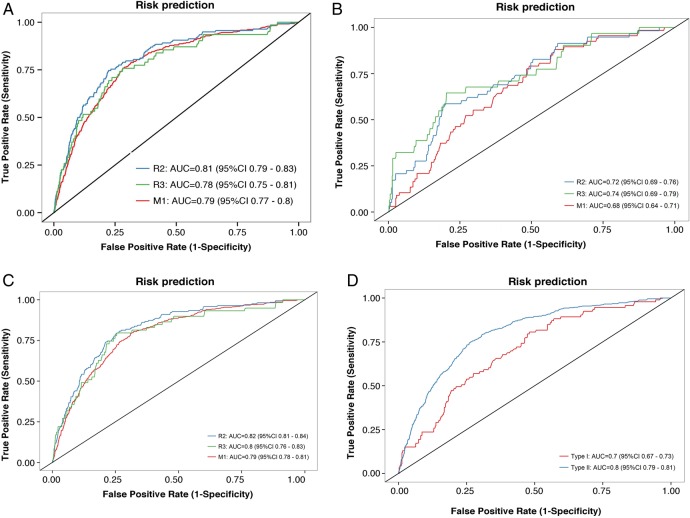
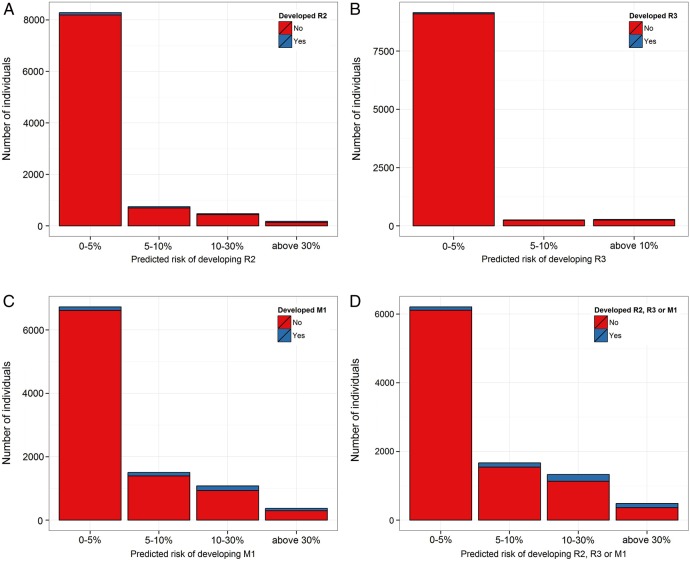
OBJECTIVE: To validate a mathematical algorithm that calculates risk of diabetic retinopathy progression in a diabetic population with UK staging (R0-3; M1) of diabetic retinopathy. To establish the utility of the algorithm to reduce screening frequency in this cohort, while maintaining safety standards. RESEARCH DESIGN AND METHODS: The cohort of 9690 diabetic individuals in England, followed for 2 years. The algorithms calculated individual risk for development of preproliferative retinopathy (R2), active proliferative retinopathy (R3A) and diabetic maculopathy (M1) based on clinical data. Screening intervals were determined such that the increase in risk of developing certain stages of retinopathy between screenings was the same for all patients and identical to mean risk in fixed annual screening. Receiver operating characteristic curves were drawn and area under the curve calculated to estimate the prediction capability. RESULTS: The algorithm predicts the occurrence of the given diabetic retinopathy stages with area under the curve =80% for patients with type II diabetes (CI 0.78 to 0.81). Of the cohort 64% is at less than 5% risk of progression to R2, R3A or M1 within 2 years. By applying a 2 year ceiling to the screening interval, patients with type II diabetes are screened on average every 20 months, which is a 40% reduction in frequency compared with annual screening. CONCLUSIONS: The algorithm reliably identifies patients at high risk of developing advanced stages of diabetic retinopathy, including preproliferative R2, active proliferative R3A and maculopathy M1. Majority of patients have less than 5% risk of progression between stages within a year and a small high-risk group is identified. Screening visit frequency and presumably costs in a diabetic retinopathy screening system can be reduced by 40% by using a 2 year ceiling. Individualised risk assessment with 2 year ceiling on screening intervals may be a pragmatic next step in diabetic retinopathy screening in UK, in that safety is maximised and cost reduced by about 40%.
Overview
The claims and statistics of this paper haven’t been checked yet.
Free: it reads the open-access text and checks the first 5 claims that cite a source we can check. Create a free account to check every claim.
Integrity signals
Registry
Cites
Statistics
Figures
Verification
Claims the paper makes
The claims and statistics of this paper haven’t been checked yet.
Free: it reads the open-access text and checks the first 5 claims that cite a source we can check. Create a free account to check every claim.
Claims other papers make about this one
Each is checked against this paper’s own text: does it say what the citing paper says it does?
The source backs part of the claim, not all of it — or backs it for a different population, condition or comparison.
In the citing paper
“Higher levels of glycemia and BP, as well as the presence of nerve and renal diabetic complications, are associated with a greater likelihood of developing retinopathy.496,497”
From American Association of Clinical Endocrinology Clinical Practice Guideline: Developing a Diabetes Mellitus Comprehensive Care Plan-2022 Update. (2022) · cites this paper as [497]
Experimental — accuracy not yet measured
Self-check
Percentages, sums and reported differences re-computed from the paper’s own numbers.
The self-check needs the paper’s full text.
Citations
Cites
The meaning and use of the area under a receiver operating characteristic (ROC) curve.
Hanley, J. A., & McNeil, B. J. (1982) · Radiology · doi:10.1148/radiology.143.1.7063747 · Cited by 21,856
Liew, G., Michaelides, M., & Bunce, C. (2014) · BMJ Open · doi:10.1136/bmjopen-2013-004015 · Cited by 663
Screening and prevention of diabetic blindness
Stefánsson, E., Bek, T., Porta, M., Larsen, N., Kristinsson, J. K., & Agardh, E. (2000) · Acta Ophthalmologica Scandinavica · doi:10.1034/j.1600-0420.2000.078004374.x · Cited by 292
Self-citationAspelund, T., Þórisdóttir, Ó., Ólafsdottir, E., Gudmundsdottir, A., Einarsdóttir, A. B., Mehlsen, J., Einarsson, S., Pálsson, Ó., Einarsson, G., Bek, T., et al. (2011) · Diabetologia · doi:10.1007/s00125-011-2257-7 · Cited by 167
Self-citationBiennial eye screening in patients with diabetes without retinopathy: 10-year experience
Olafsdottir, E., & Stefansson, E. (2007) · British Journal of Ophthalmology · doi:10.1136/bjo.2007.123810 · Cited by 105
Self-citationA Simple Risk Stratification for Time to Development of Sight-Threatening Diabetic Retinopathy
Stratton, I. M., Aldington, S. J., Taylor, D. J., Adler, A. I., & Scanlon, P. H. (2013) · Diabetes Care · doi:10.2337/dc12-0625 · Cited by 83
Misra, A., Bachmann, M. O., Greenwood, R. H., Jenkins, C., Shaw, A., Barakat, O., Flatman, M., & Jones, C. D. (2009) · Diabetic Medicine · doi:10.1111/j.1464-5491.2009.02820.x · Cited by 72
Validation of a model to estimate personalised screening frequency to monitor diabetic retinopathy
van der Heijden, A. A. W. A., Walraven, I., Riet, E. V. ‘., Aspelund, T., Lund, S. H., Elders, P. J. M., Polak, B. C. P., Moll, A. C., KEUNEN, J. E. E., Dekker, J. M., et al. (2014) · Diabetologia · doi:10.1007/s00125-014-3246-4 · Cited by 44
Self-citationScreening for diabetic retinopathy: Initiation and frequency
Kristinsson, J. K., Guðmundsson, J. R., Stefánsson, E., Jónasson, F., Gíslason, I., & Þórsson, Á. V. (1995) · Acta Ophthalmologica Scandinavica · doi:10.1111/j.1600-0420.1995.tb00329.x · Cited by 43
Self-citationSoto‐Pedre, E., Piniés, J. A., & Hernáez-Ortega, M. C. (2015) · Journal of Diabetes and its Complications · doi:10.1016/j.jdiacomp.2014.12.020 · Cited by 28
Cited by
Screening for diabetic retinopathy: new perspectives and challenges
Vujosevic, S., Aldington, S. J., Silva, P., Hernández, C., Scanlon, P., Peto, T., & Simó, R. (2020) · The Lancet Diabetes & Endocrinology · doi:10.1016/s2213-8587(19)30411-5 · Cited by 671
Blonde, L., Umpierrez, G. E., Reddy, S. S., McGill, J. B., Berga, S. L., Bush, M., Chandrasekaran, S., DeFronzo, R. A., Einhorn, D., Galindo, R. J., et al. (2022) · Endocrine Practice · doi:10.1016/j.eprac.2022.08.002 · Cited by 507
The English National Screening Programme for diabetic retinopathy 2003–2016
Scanlon, P. H. (2017) · Acta Diabetologica · doi:10.1007/s00592-017-0974-1 · Cited by 440
A deep learning system for predicting time to progression of diabetic retinopathy
Dai, L., Sheng, B., Chen, T., Wu, Q., Liu, R., Cai, C., Wu, L., Yang, D., Hamzah, H., Liu, Y., et al. (2024) · Nature Medicine · doi:10.1038/s41591-023-02702-z · Cited by 339
“…disease 12 , and it is feasible to approximate progression risk for subgroups of patients with similar risk factors and DR severity levels 13 , it has been challenging to extend screening intervals from 1 year to 2 years (or even 3 years) 14 because of the difficulty in accurately…”
Interventions to increase attendance for diabetic retinopathy screening
Lawrenson, J. G., Graham-Rowe, E., Lorencatto, F., Burr, J., Bunce, C., Francis, J. J., Aluko, P., Rice, S., Vale, L., Peto, T., et al. (2018) · Cochrane Database of Systematic Reviews · doi:10.1002/14651858.cd012054.pub2 · Cited by 92
Retinal vascular geometry and 6 year incidence and progression of diabetic retinopathy
Cheung, C. Y.-L., Sabanayagam, C., Law, A. K. P., Neelam, K., Ting, D. S. W., Tan, G. S. W., Mitchell, P. L. R., Cheng, C., & Wong, T. Y. (2017) · Diabetologia · doi:10.1007/s00125-017-4333-0 · Cited by 88
“vals; for example, those with lower risk may need only 2-yearly screening [49, 50].”
BackgroundEvidence‐based Danish guidelines for screening of diabetic retinopathy
Grauslund, J., Andersen, N., Andresen, J., Flesner, P., Haamann, P., Heegaard, S., Larsen, M., Laugesen, C. S., Schielke, K. C., Skov, J., et al. (2018) · Acta Ophthalmologica · doi:10.1111/aos.13936 · Cited by 82
“2012) and reduce the number of screening episodes by 40% (Aspelund et al. 2011; Lund et al. 2016).”
BackgroundFundamental principles of an effective diabetic retinopathy screening program
Lanzetta, P., Sarao, V., Scanlon, P. H., Barratt, J., Porta, M., Bandello, F. M., & Loewenstein, A. (2020) · Acta Diabetologica · doi:10.1007/s00592-020-01506-8 · Cited by 81
The unmet need for better risk stratification of non‐proliferative diabetic retinopathy
Sivaprasad, S., & Pearce, E. (2018) · Diabetic Medicine · doi:10.1111/dme.13868 · Cited by 71
Huemer, J. C., Wagner, S. K., & Sim, D. A. (2020) · Clinical ophthalmology · doi:10.2147/opth.s261629 · Cited by 68
Liew, G., Wong, V. W., & Ho, I. (2017) · Ophthalmic Epidemiology · doi:10.1080/09286586.2016.1259638 · Cited by 63
Screening Intervals for Diabetic Retinopathy and Implications for Care
Scanlon, P. H. (2017) · Current Diabetes Reports · doi:10.1007/s11892-017-0928-6 · Cited by 59
van der Heijden, A. A. W. A., Nijpels, G., Badloe, F. M. S., Lovejoy, H. L., Peelen, L. M., Feenstra, T., Moons, K. G. M., Slieker, R. C., Herings, R. M. C., Elders, P. J. M., et al. (2020) · Diabetologia · doi:10.1007/s00125-020-05134-3 · Cited by 56
“In the DCS we already have experience tailoring retinopathy care after implementation of the model developed by Aspelund et al. This model additionally provides a tailored screening interval ranging from 6 months to a maximum of 5 years based on the estimated retinopathy risk and hence is instrumental in adapting imag…”
ResultInfluentialZiemssen, F., Lemmen, K. D., Bertram, B., Hammes, H., & Agostini, H. T. (2016) · Der Ophthalmologe · doi:10.1007/s00347-016-0315-8 · Cited by 50
“Statistische Modelle weisen entsprechende Kosteneinsparungen nach, wenn für die Menschen mit geringem Risiko die Kontrollintervalle verlängert werden [62, 63].”
BackgroundStrutton, R., Du Chemin, A., Stratton, I. M., & Forster, A. S. (2016) · BMJ Open · doi:10.1136/bmjopen-2015-010952 · Cited by 38
Update on Screening for Sight-Threatening Diabetic Retinopathy
Scanlon, P. H. (2019) · Ophthalmic Research · doi:10.1159/000499539 · Cited by 43
Bek, T. (2020) · Diabetologia · doi:10.1007/s00125-020-05234-0 · Cited by 42
Almulhim, A. N., Hartley, H., Norman, P., Caton, S. J., Doğru, O. C., & Goyder, E. (2023) · BMC Public Health · doi:10.1186/s12889-022-14874-3 · Cited by 39
“Individualised, self-management approaches for noncommunicable conditions such as T2DM are increasingly being advocated [8, 9].”
BackgroundPrognostic prediction models for diabetic retinopathy progression: a systematic review
Haider, S., Sadiq, S. N., Moore, D., Price, M. J., & Nirantharakumar, K. (2019) · Eye · doi:10.1038/s41433-018-0322-x · Cited by 35
Diabetic Retinopathy in Italy: Epidemiology Data and Telemedicine Screening Programs
Vujosevic, S., & Midena, E. (2016) · Journal of Diabetes Research · doi:10.1155/2016/3627465 · Cited by 35
“Biennial screening showed long safety record in Iceland and Sweden [42, 43].”
BackgroundTelemedicine in diabetic retinopathy screening in India
Ramasamy, K., Mishra, C., Kannan, N. B., Namperumalsamy, P., & Sen, S. (2021) · Indian Journal of Ophthalmology · doi:10.4103/ijo.ijo_1442_21 · Cited by 33
Jacoba, C. M. P., Celi, L. A., & Silva, P. S. (2021) · Seminars in Ophthalmology · doi:10.1080/08820538.2021.1893351 · Cited by 31
“This corresponds to a 40% reduction in frequency of visits without compromising patient safety, compared to the standard shorter follow-up appointment recommendations.(40)”
ResultLalithadevi, B., Krishnaveni, S., & Gnanadurai, J. S. C. (2023) · Journal of Medical Systems · doi:10.1007/s10916-023-01976-7 · Cited by 30
“These findings indicate the significant prevalence of retinal diseases like different severity states of DR and highlight the necessity of DR screening programme and follow-up treatment to be implemented in the primary health care centres [35].”
Diabetic Retinopathy Screening Using Telemedicine Tools: Pilot Study in Hungary
Eszes, D. J., Szabó, D. J., Russell, G., Kirby, P., Paulik, E., Nagymajtényi, L., Facskó, A., Moe, M. C., & Petrovski, B. É. (2016) · Journal of Diabetes Research · doi:10.1155/2016/4529824 · Cited by 30
“The results so far have been very promising, with each study being reported to date pointing out the high sensitivity for detecting several fundus lesions in the initial stages of DR by a standard fundus camera and a grading software [15].”
BackgroundSelf-citationImproving the screening of risk factors in diabetic retinopathy
Scanlon, P. H. (2022) · Expert Review of Endocrinology & Metabolism · doi:10.1080/17446651.2022.2078305 · Cited by 26
Kalavar, M., Al-khersan, H., Sridhar, J. S., Gorniak, R., Lakhani, P. C., Flanders, A. E., & Kuriyan, A. E. (2020) · International Ophthalmology Clinics · doi:10.1097/iio.0000000000000333 · Cited by 24
Validation of a model for the prediction of retinopathy in persons with type 1 diabetes
Schreur, V., Ng, H., Nijpels, G., Stefánsson, E., Tack, C. J., Klevering, B. J., de Jong, E. K., Hoyng, C. B., KEUNEN, J. E. E., & van der Heijden, A. A. W. A. (2019) · British Journal of Ophthalmology · doi:10.1136/bjophthalmol-2018-313539 · Cited by 21
Self-citationSivaprasad, S., Netuveli, G., Wittenberg, R., Khobragade, R. N., Sadanandan, R., Gopal, B. K., Premnazir, L., Conroy, D. M., Srinath, J., Ramakrishnan, R., et al. (2021) · BMJ Open · doi:10.1136/bmjopen-2020-040577 · Cited by 19
Estil, S., Steinarsson, Æ. Þ., Einarsson, S., Aspelund, T., & Stefánsson, E. (2020) · Acta Ophthalmologica · doi:10.1111/aos.14425 · Cited by 18
“The Retinarisk algorithm has been reported to improve cost-effectiveness of diabetic eye screening through individualized and variable screening intervals (Aspelund et al. 2011; Lund et al. 2016).”
MethodSelf-citationA personalised screening strategy for diabetic retinopathy: a cost-effectiveness perspective
Emamipour, S., van der Heijden, A. A. W. A., Nijpels, G., Elders, P. J. M., Beulens, J. W. J., Postma, M. J., van Boven, J. F. M., & Feenstra, T. (2020) · Diabetologia · doi:10.1007/s00125-020-05239-9 · Cited by 18
Automatic Diagnosis of Diabetic Retinopathy Stage Focusing Exclusively on Retinal Hemorrhage
徳田, 芳., Tabuchi, H., Nagasawa, T., Tanabe, M., Deguchi, H., Yoshizumi, Y., Ohara, Z., & Takahashi, H. (2022) · Medicina · doi:10.3390/medicina58111681 · Cited by 18
Thomas, R., Winfield, T. G., Prettyjohns, M., Dunstan, F., Cheung, W., Anderson, P. M., Peter, R., Luzio, S. D., & Owens, D. R. (2020) · The European Journal of Health Economics · doi:10.1007/s10198-020-01191-y · Cited by 18
“Previous studies that have assessed the cost effectiveness of extending screening intervals have either focussed solely on people with T2DM [22, 23] or have combined people with T1DM and T2DM into one group [10, 25] and found that increasing screening intervals to 2-5 years to be safe and cost effective in those at lo…”
BackgroundLimwattanayingyong, J., Nganthavee, V., Seresirikachorn, K., Singalavanija, T., Soonthornworasiri, N., Ruamviboonsuk, V., Rao, C., Raman, R., Grzybowski, A. E., Schaekermann, M., et al. (2020) · Journal of Diabetes Research · doi:10.1155/2020/8839376 · Cited by 18
“It may be advisable to stratify DR screening patients by their expected risk of developing STDR [27, 30, 31] and initiating biennial screening only for patients in the low-risk group.”
BackgroundSharif, A., JENDLE, J. H., & Hellgren, K. (2020) · Diabetes Therapy · doi:10.1007/s13300-020-00957-0 · Cited by 17
Innovations in personalised diabetes care and risk management
Nijpels, G., Beulens, J. W. J., van der Heijden, A. A. W. A., & Elders, P. J. M. (2019) · European Journal of Preventive Cardiology · doi:10.1177/2047487319880043 · Cited by 18
“Previous studies showed that this method to tailor screening frequency is safe, and reducing the average screening frequency and implementation of this model in clinical practice would reduce screening frequency by 61% compared to annual screening and 23% compared to biennial screening.(25,26) Aiming for a further imp…”
ResultNderitu, P., Nunez do Rio, J. M., Webster, L., Mann, S., Cardoso, M. J., Modat, M., Hopkins, D., Bergeles, C., & Jackson, T. L. (2024) · Communications Medicine · doi:10.1038/s43856-024-00590-z · Cited by 16
“Systemic risk factor models frequently require HbA1c and lipid biochemistry, necessitating invasive blood tests which are not be contemporaneously collected by DR screening services 12,13,17,18 , requiring complex data linkage or imputation to implement 12 .”
Buzzetti, R., Prudente, S., Copetti, M., Dauriz, M., Zampetti, S., Garofolo, M., Penno, G., & Trischitta, V. (2016) · Nutrition Metabolism and Cardiovascular Diseases · doi:10.1016/j.numecd.2016.08.005 · Cited by 16
Artificial Intelligence-Based Screening System for Diabetic Retinopathy in Primary Care
Baget‐Bernaldiz, M., Póveda, B. F., Romero‐Aroca, P., Navarro-Gil, R., Hernando-Comerma, A., Bautista-Pérez, Á., Llagostera-Serra, M., Morente-Lorenzo, C., Vizcarro, M., & Mira-Puerto, A. (2024) · Diagnostics · doi:10.3390/diagnostics14171992 · Cited by 10
“In the Netherlands, the algorithm was tested by Van der Heijden [36], who obtained an AUC of 0.83, and in the UK, Lund [26] reported an AUC of 0.83 when predicting the onset of DR for T2DM patients.”
MethodInfluentialAlmulhim, A. N., Goyder, E., & Caton, S. J. (2022) · International Journal of Environmental Research and Public Health · doi:10.3390/ijerph192215089 · Cited by 10
A systematic review of diabetic retinopathy screening intervals
Drinkwater, J. J., Kalantary, A., & Turner, A. W. (2023) · Acta Ophthalmologica · doi:10.1111/aos.15788 · Cited by 9
“…three determined optimal screening intervals (Chamard et al., 2021; Hughes et al., 2017; Vujosevic et al., 2017) and the others tested and/or developed a risk equation for DR screening (Eleuteri et al., 2017; Lund et al., 2016; Ochs et al., 2019; Schreur et al., 2021; Soto-Pedre et al., 2015).”
BackgroundMethodInfluentialRao, B. N., Quinn, N. B., Januszewski, A. S., Pető, T., Brazionis, L., Aryal, N. R., O'Connell, R. L., Li, L., Summanen, P. A., Scott, R. S., et al. (2022) · Diabetes Research and Clinical Practice · doi:10.1016/j.diabres.2022.109835 · Cited by 8
Thomas, R., & Ng, S. M. (2020) · Journal of Diabetes and Clinical Research · doi:10.33696/diabetes.1.021 · Cited by 8
“Evidence has also been building since screening began for the extension of screening intervals from annual to biennial and recently supporting the implementation of risk based screening for DR [59-64].”
BackgroundSMITH, J. J., Wright, D. M., STRATTON, I. M., Scanlon, P. H., & Lois, N. (2021) · British Journal of Ophthalmology · doi:10.1136/bjophthalmol-2020-318570 · Cited by 8
Tuli, N., Moroz, H., Jaffer, A., Kulbay, M., Tanya, S. M., Aslan, F. Ş., Ozdemir, D., Ali, S. K., & Qian, C. X. (2026) · Diagnostics · doi:10.3390/diagnostics16030392 · Cited by 7
“…regimens [251,252], forecasting progression via glucose dynamics [253], identifying comorbidities through EHR-based and imaging risk stratification [254,255], prioritizing screening urgency via clinical biomarkers [256], and decoding molecular mechanisms via liquid biopsy proteomics [257].”
Luong, A., Cheung, J., McMurtry, S., Nelson, C., Najac, T., Ortiz, P. A., Aronoff, S. C., Henderer, J. D., & Zhang, Y. (2024) · Ophthalmology Science · doi:10.1016/j.xops.2024.100592 · Cited by 7
Harding, S. P., Alshukri, A., Appelbe, D., Broadbent, D., Burgess, P. I., Byrne, P., Cheyne, C. P., Eleuteri, A., Fisher, A., García‐Fiñana, M., et al. (2023) · Programme Grants for Applied Research · doi:10.3310/hrfa3155 · Cited by 6
Romero‐Aroca, P., Verges, R., Pascual-Fontanilles, J., Valls, A., Franch‐Nadal, J., Mundet, X., Moreno, A., Basora, J., Garcia‐Curto, E., & Baget‐Bernaldiz, M. (2024) · Diagnostics · doi:10.3390/diagnostics14080833 · Cited by 5
“Finally, in the UK, Lund [11], using a sample of 9690 DM patients followed for 2 years, reported that the algorithm predicted the onset of DR stages with AUC values of 0.833 for the T2DM patients.”
MethodInfluentialReal-world outcomes of a clinical decision support system for diabetic retinopathy in Spain
Romero‐Aroca, P., Verges, R., Maaroof, N., Mateu, A. V., Latorre, A., Moreno, A., Sagarra-Alamo, R., Basora, J., Cristiano, J., & Baget‐Bernaldiz, M. (2022) · BMJ Open Ophthalmology · doi:10.1136/bmjophth-2022-000974 · Cited by 5
Screening for Diabetic Retinopathy in Denmark
Grauslund, J. (2023) · Springer eBooks · doi:10.1007/978-3-031-24052-2_24 · Cited by 4
Aravindhan, A., Fenwick, E., Chan, A. W. D., Man, R. E. K., Tan, N. C., Wong, W. T., Soo, W. F., Lim, S. W., Wee, S. Y.-M., Sabanayagam, C., et al. (2024) · BMC Public Health · doi:10.1186/s12889-024-18287-2 · Cited by 4
“Studies conducted elsewhere have concluded that the interval between diabetic eye screening visits could be safely extended beyond 12 months [17] with high adherence rates [18] and no undue delays in treatment for ref-erable DR in patients with diabetes without DR [19–21], Moreover, extending the…”
BackgroundThe Danish Ophthalmological Society guidelines for screening of diabetic retinopathy
Grauslund, J., Andersen, N., Andresen, J. L., Bek, T., Knudsen, S. T., & Subhi, Y. (2025) · AJO International · doi:10.1016/j.ajoint.2025.100141 · Cited by 4
McKay, A. J., Gunn, L. H., Nugawela, M. D., Sathish, T., Majeed, A., Vamos, E. P., Molina, G., & Sivaprasad, S. (2021) · Diabetes Obesity and Metabolism · doi:10.1111/dom.14344 · Cited by 4
“The incidence of STDR observed in this study of 15.12 per 1000 person-years among individuals with DR concurs with the declining incidence of STDR observed in other reports, despite including severe NPDR and diabetic maculopathy as an STDR event.26 Although the definition of progression of DR varied between studies, t…”
BackgroundInfluentialWays of technical science development in ophthalmology
Vorobyeva, I. V., Delver, E. P., & Aa, B. (2020) · E3S Web of Conferences · doi:10.1051/e3sconf/202021505007 · Cited by 4
Haider, S., Adderley, N. J., Tallouzi, M., Sadiq, S. N., STEEL, D. H., Chavan, R., Sheikh, I., Nirantharakumar, K., & Snell, K. I. E. (2023) · BMJ Open · doi:10.1136/bmjopen-2023-073015 · Cited by 3
Olivieri, C., Salato, M., Campanella, A., Marolo, P., Parisi, G., Neri, G., Toro, M. D., Scarmozzino, A., Broglio, F., Borrelli, E., et al. (2024) · Acta Diabetologica · doi:10.1007/s00592-024-02354-6 · Cited by 3
“However, in these cases it is extremely important to differentiate patients into low-risk and high-risk groups, as doing so has the potential to further enhance cost-effectivenes [32, 33].”
Precision Medicine Approaches for Management of Type 2 Diabetes
Chen, D., Fulcher, J., SCOTT, E. S., & Jenkins, A. J. (2022) · Springer eBooks · doi:10.1007/978-3-030-98927-9_1 · Cited by 4
Zhu, X., Xu, Y., Lu, L., & Zou, H. (2022) · BMC Health Services Research · doi:10.1186/s12913-022-07500-w · Cited by 3
“Furthermore, personalized risk-based screening schedules should be examined to optimize workload and time in telescreening programs for diabetic eye diseases [28, 29].”
BackgroundKotsiliti, E., Al-Diri, B., & Hunter, A. (2017) · Modeling and Artificial Intelligence in Ophthalmology · doi:10.35119/maio.v1i4.47 · Cited by 2
Cribado de patología oftalmológica
Bravo, L. J. N., & García, R. A. A. (2019) · FMC - Formación Médica Continuada en Atención Primaria · doi:10.1016/j.fmc.2018.10.011 · Cited by 2
Romero‐Aroca, P., Baget‐Bernaldiz, M., Navarro-Gil, R., Feliu, A., Maarof, N., Moreno, A., Cristiano, J., & Valls, A. (2022) · Clinical ophthalmology · doi:10.2147/opth.s351790 · Cited by 2
Diabetic retinopathy screening and treatment
Nissen, T. P. H. (2023) · VBN Forskningsportal (Aalborg Universitet) · doi:10.54337/aau588589522 · Cited by 2
Association between endothelin-1 and diabetic retinopathy: a systematic review and meta-analysis
Sun, X., An, Y., Zeng, X., & Jiang, Y. (2026) · Frontiers in Endocrinology · doi:10.3389/fendo.2026.1754896 · Cited by 1
Brown, R. (2021) · Enlighten: Theses (The University of Glasgow) · doi:10.5525/gla.thesis.82173 · Cited by 1
Conservative shock filtering of numerical solutions of the 1-D Euler equations
Breuß, M. (2006) · Publications of the UdS (Saarland University) · doi:10.22028/d291-26341 · Cited by 1
Petersen, G. B. (2024) · VBN Forskningsportal (Aalborg Universitet) · doi:10.54337/aau715862415 · Cited by 1
Al-Rawashdeh, I. (2017) · White Rose eTheses Online (University of Leeds, The University of Sheffield, University of York)
Collar, M. D. C. V. (2017) · UVaDOC UVaDOC University of Valladolid Documentary Repository (University of Valladolid) · doi:10.35376/10324/27502
Incidental Meningioma: Modelling Growth Characteristics and Predicting Failure of Monitoring
Islim, A. I. (2018) · University of Liverpool · doi:10.17638/03025726
Optimising the cost-effectiveness of risk-based screening for diabetic retinopathy
Sampson, C. (2020) · Nottingham ePrints (University of Nottingham)
Retinal Practice in COVID-19 Era
Mishra, N., & Saxena, S. (2021) · Springer eBooks · doi:10.1007/978-981-33-4168-5_43
“recommend that patients who have stable diabetic retinopathy with no urgent or referable indication can have retinal screening at 18–24 months interval during the COVID-19 pandemic [41].”
BackgroundAgarwal, D., Kumar, A., & Kumar, A. (2021) · Indian Journal of Ophthalmology · doi:10.4103/ijo.ijo_2556_21
“This individualized risk‐based assessment will help in providing personalized and optimized screening intervals, reducing the burden on the healthcare system.[6,7] Use of smartphone imaging and artificial intelligence can help bring out meaningful trends based on analysis of large population data.”
BackgroundA simple, fast and low-cost approach to screening for common eye diseases
Russel, G. J. A. (2021) · SZTE Repository of Dissertations (University of Szeged) · doi:10.14232/phd.11027
Ventura-Abreu, N., Biarnés, M., Batlle-Ferrando, S., Donderis, M. C., Castro-Domínguez, R., Royo, M. J. M., Millá, E., Moreno‐Montañés, J., & Pazos, M. (2022) · Translational Vision Science & Technology · doi:10.1167/tvst.11.7.14
Tele-Ophthalmology for Diabetic Retinopathy in the UK
Scanlon, P. H. (2023) · Springer eBooks · doi:10.1007/978-3-031-24052-2_23
Mdala, S. Y., Kayange, P., Zungu, T. L., Heatley, A. C., Gordon, I., Evans, J. R., Marques, A. P., Burton, M. J., & Bascarán, C. (2025) · Research Square · doi:10.21203/rs.3.rs-5886984/v1
Aravindhan, A., Fenwick, E., Chan, A. W. D., Man, R. E. K., Tan, N. C., Wong, W. T., Soo, W. F., Lim, S. W., Wee, S. Y.-M., Sabanayagam, C., et al. (2024) · Figshare · doi:10.6084/m9.figshare.25405956
Aravindhan, A., Fenwick, E., Chan, A. W. D., Man, R. E. K., Tan, N. C., Wong, W. T., Soo, W. F., Lim, S. W., Wee, S. Y.-M., Sabanayagam, C., et al. (2024) · Figshare · doi:10.6084/m9.figshare.25406100
Zhu, X., Xu, Y., Lu, L., & Zou, H. (2022) · Figshare · doi:10.6084/m9.figshare.19136090
Zhu, X., Xu, Y., Lu, L., & Zou, H. (2022) · Figshare · doi:10.6084/m9.figshare.19136087
Almulhim, A. N., Hartley, H., Norman, P., Caton, S. J., Doğru, O. C., & Goyder, E. (2023) · Figshare · doi:10.6084/m9.figshare.22598573
Zhu, X., Xu, Y., Lu, L., & Zou, H. (2022) · Figshare · doi:10.6084/m9.figshare.19136093
Cleemen, C. (2023) · Common Library Network (Der Gemeinsame Bibliotheksverbund)
Stewart, C., Al-duhaimi, M., Bhangu, J. S., John, R., Williams, G. S., & Awad, M. H. (2025) · Clinical Optometry · doi:10.2147/opto.s533954
“2,31 Recent studies 32–34 suggest that personalised risk-based screening could be more effective than annual reviews.”
Nguyen, T. X., Wang, Y. M., Ling, A., Zheng, C., Lai, K. H. W., Tang, Z., Liu, J. H. K., & Cheung, C. Y.-L. (2026) · Eye and Vision · doi:10.1186/s40662-025-00471-z
“Traditional risk factors do not fully explain the risk of an individual DR risk [2–4], while current annual fundus photogra‑ phy screening may be unnecessarily frequent for many without vision‑threatening disease [5–9].”
Gardner, T. W. (2026) · Elsevier eBooks · doi:10.1016/b978-0-443-11985-9.00020-2
Menna, F., Meduri, A., Lupo, S., Luca, L. D., Baldascino, A., & Vingolo, E. M. (2026) · Medicina · doi:10.3390/medicina62112099
Metadata
- Authors
- Lund, S. H., Aspelund, T., Kirby, P., Russell, G., Einarsson, S., Palsson, O., & Stefánsson, E.
- Affiliations
- University of Iceland (IS)
- Corresponding author
- Stefánsson, E
- Venue
- British Journal of Ophthalmology
- Publisher
- BMJ
- Published
- 2015-09-16
- Volume
- 100
- Issue
- 5
- Pages
- 683-687
- ISSN
- 0007-1161 (ISSN-L)
- 1468-2079
- PMC
- PMC4853547
- OpenAlex
- W2264654258
- Cited by
- 84
- References
- 12
- Citations by year
- 2026: 5 · 2025: 3 · 2024: 11 · 2023: 10 · 2022: 13 · 2021: 9 · 2020: 13 · 2019: 5 · 2018: 4 · 2017: 6 · 2016: 4
- FWCI
- 4.48
- Type
- journal article
- Language
- en
- Open access
- hybrid
- doi.org
- Licence
- cc-by-nc
- Locations
- British Journal of Ophthalmology (publishedVersion, cc-by-nc)
- PubMed Central (publishedVersion, cc-by-nc)
- PubMed (publishedVersion)
- HighWire Press Open Archive (submittedVersion)
- Hirsla (Landspítali University Hospital) (submittedVersion)
- Topics
- Health Sciences › Medicine › Ophthalmology › Retinal Diseases and Treatments
- Health Sciences › Medicine › Radiology, Nuclear Medicine and Imaging › Retinal Imaging and Analysis
- Health Sciences › Medicine › Endocrinology, Diabetes and Metabolism › Diabetes Management and Research
- Keywords
- diabetic retinopathy, risk prediction algorithm, type 2 diabetes, proliferative diabetic retinopathy, diabetic maculopathy, retinopathy progression, healthcare cost reduction, screening safety
- MeSH terms
- Algorithms, Diabetes Mellitus, Type 2, Diabetic Retinopathy, England, False Positive Reactions, Female, Humans, Male, Mass Screening, Mathematics, Predictive Value of Tests, ROC Curve, Time Factors, Health Care Costs, Disease Progression, Risk Assessment, Area Under Curve
About these checks
Registry, retraction, Cites and statistics results are computed, not judged, with one exception: a printed reference that no index lists is read once by a model before it counts as a citation error. Claims are extracted by a model and kept only when their quote appears verbatim in the text; each cited source is then checked, with a model’s help, for whether it says what the claim relies on. Those verdicts can be wrong — read the claim’s quote and the cited source before relying on one.
Statistics and arithmetic are recomputed, not judged.
Confidence bands are shown only for fields calibrated on our annotated test set. None is calibrated yet, so no band is shown.
What counts as a claim ›How we measure confidence ›How we check this ›
Are you an author, or do you see a problem with this page? Request a review
Data sources
Bibliographic data: Semantic Scholar, OpenAlex, Crossref.
Contains information from the Semantic Scholar Academic Graph Datasets, made available under the ODC Attribution License (ODC-BY 1.0).
Semantic Scholar’s data is described in: Kinney, R., et al. (2023). The Semantic Scholar Open Data Platform. arXiv:2301.10140.
