

The DOI matches its Crossref record; 44 of the 44 references it cites were found in a registry or an index.
Air pollution deaths attributable to fossil fuels: observational and modelling study
Open accessAbstract
OBJECTIVES: To estimate all cause and cause specific deaths that are attributable to fossil fuel related air pollution and to assess potential health benefits from policies that replace fossil fuels with clean, renewable energy sources. DESIGN: Observational and modelling study. METHODS: An updated atmospheric composition model, a newly developed relative risk model, and satellite based data were used to determine exposure to ambient air pollution, estimate all cause and disease specific mortality, and attribute them to emission categories. DATA SOURCES: Data from the global burden of disease 2019 study, observational fine particulate matter and population data from National Aeronautics and Space Administration (NASA) satellites, and atmospheric chemistry, aerosol, and relative risk modelling for 2019. RESULTS: Globally, all cause excess deaths due to fine particulate and ozone air pollution are estimated at 8.34 million (95% confidence interval 5.63 to 11.19) deaths per year. Most (52%) of the mortality burden is related to cardiometabolic conditions, particularly ischaemic heart disease (30%). Stroke and chronic obstructive pulmonary disease both account for 16% of mortality burden. About 20% of all cause mortality is undefined, with arterial hypertension and neurodegenerative diseases possibly implicated. An estimated 5.13 million (3.63 to 6.32) excess deaths per year globally are attributable to ambient air pollution from fossil fuel use and therefore could potentially be avoided by phasing out fossil fuels. This figure corresponds to 82% of the maximum number of air pollution deaths that could be averted by controlling all anthropogenic emissions. Smaller reductions, rather than a complete phase-out, indicate that the responses are not strongly non-linear. Reductions in emission related to fossil fuels at all levels of air pollution can decrease the number of attributable deaths substantially. Estimates of avoidable excess deaths are markedly higher in this study than most previous studies for these reasons: the new relative risk model has implications for high income (largely fossil fuel intensive) countries and for low and middle income countries where the use of fossil fuels is increasing; this study accounts for all cause mortality in addition to disease specific mortality; and the large reduction in air pollution from a fossil fuel phase-out can greatly reduce exposure. CONCLUSION: Phasing out fossil fuels is deemed to be an effective intervention to improve health and save lives as part the United Nations' goal of climate neutrality by 2050. Ambient air pollution would no longer be a leading, environmental health risk factor if the use of fossil fuels were superseded by equitable access to clean sources of renewable energy.
Overview
The claims and statistics of this paper haven’t been checked yet.
Run the check — free, no account needed. It reads the open-access text and checks the sources it cites.
Integrity signals
Registry
Cites
Statistics
Figures
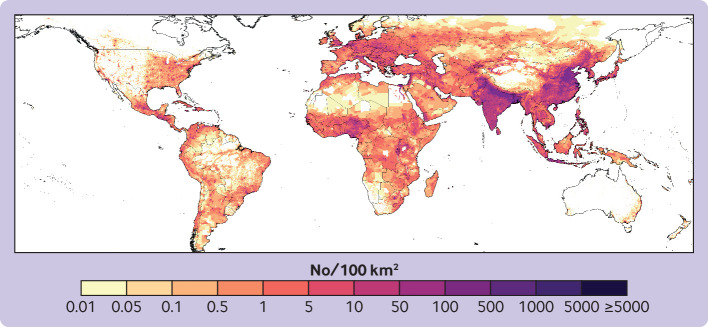
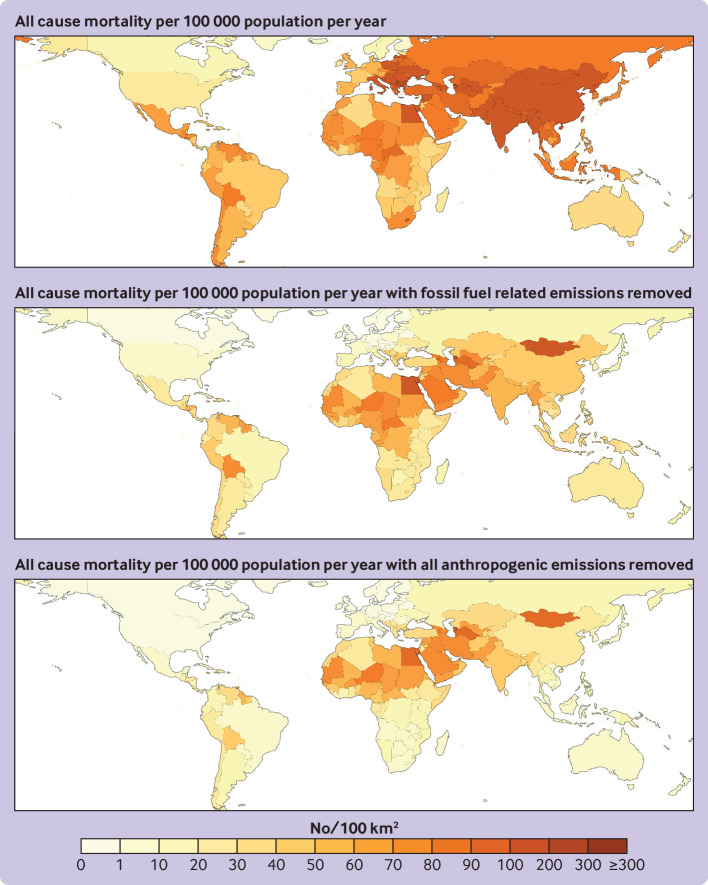
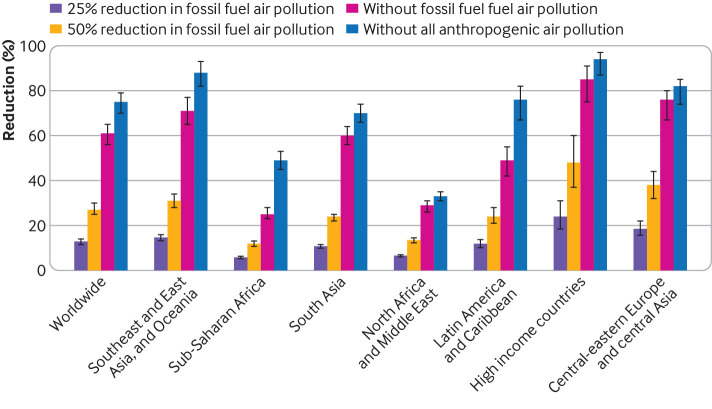
Verification
Claims the paper makes
The claims and statistics of this paper haven’t been checked yet.
Run the check — free, no account needed. It reads the open-access text and checks the sources it cites.
Claims other papers make about this one
Each is checked against this paper’s own text: does it say what the citing paper says it does?
The cited source doesn’t support the claim as written.
In the citing paper
“The extensively validated model used in this indicator suggests that exposure to fossil fuel-derived outdoor PM2·5 pollution contributed to 2·09 million of these deaths, with coal burning accounting for nearly 980 000 deaths.273”
From The 2024 report of the Lancet Countdown on health and climate change: facing record-breaking threats from delayed action (2024) · cites this paper as [273]
Checked by a reasoning model — may be wrong.
Experimental — accuracy not yet measuredThe check wasn’t confident either way, so it gives no verdict — never disputed.
In the citing paper
“The extensively validated model used in this indicator suggests that exposure to fossil fuel-derived outdoor PM2·5 pollution contributed to 2·09 million of these deaths, with coal burning accounting for nearly 980 000 deaths.273”
From The 2024 report of the Lancet Countdown on health and climate change: facing record-breaking threats from delayed action (2024) · cites this paper as [273]
Experimental — accuracy not yet measured
Self-check
Percentages, sums and reported differences re-computed from the paper’s own numbers.
The self-check needs the paper’s full text.
Citations
Cites
Hersbach, H., Bell, B., Berrisford, P., Hirahara, S., Horányi, A., Muñoz‐Sabater, J., Nicolas, J., Peubey, C., Radu, R., Schepers, D., et al. (2020) · Quarterly Journal of the Royal Meteorological Society · doi:10.1002/qj.3803 · Cited by 31,882
Murray, C. J. L., Aravkin, A. Y., Zheng, P., Abbafati, C., Abbas, K. M., Abbasi-Kangevari, M., Abd-Allah, F., Abdelalim, A., Abdollahi, M., Abdollahpour, I., et al. (2020) · The Lancet · doi:10.1016/s0140-6736(20)30752-2 · Cited by 9,854
(IPCC), I. P. O. C. C. (2023) · doi:10.1017/9781009157896 · Cited by 6,972
The contribution of outdoor air pollution sources to premature mortality on a global scale
Lelieveld, J., Evans, J. S., Fnais, M., Giannadaki, D., & Pozzer, A. (2015) · Nature · doi:10.1038/nature15371 · Cited by 5,977
Self-citationGuenther, A., Jiang, X., Heald, C. L., Sakulyanontvittaya, T., Duhl, T. R., Emmons, L. K., & Wang, X. (2012) · Geoscientific model development · doi:10.5194/gmd-5-1471-2012 · Cited by 4,126
Global estimates of mortality associated with long-term exposure to outdoor fine particulate matter
Burnett, R., Chen, H., Szyszkowicz, M., Fann, N., Hubbell, B., Pope, C. A., Apte, J. S., Brauer, M., Cohen, A., Weichenthal, S., et al. (2018) · Proceedings of the National Academy of Sciences · doi:10.1073/pnas.1803222115 · Cited by 2,504
Self-citationGinoux, P. A., Prospero, J. M., Gill, T. E., Hsu, N.-Y. C., & Zhao, M. (2012) · Reviews of Geophysics · doi:10.1029/2012rg000388 · Cited by 1,722
Emission of trace gases and aerosols from biomass burning – an updated assessment
Andreae, M. O. (2019) · Atmospheric Chemistry and Physics · doi:10.5194/acp-19-8523-2019 · Cited by 1,091
Effects of fossil fuel and total anthropogenic emission removal on public health and climate
Lelieveld, J., Klingmüller, K., Pozzer, A., Burnett, R. T., Haines, A., & Ramanathan, V. (2019) · Proceedings of the National Academy of Sciences · doi:10.1073/pnas.1819989116 · Cited by 984
Self-citationLoss of life expectancy from air pollution compared to other risk factors: a worldwide perspective
Lelieveld, J., Pozzer, A., Pöschl, U., Fnais, M. S., Haines, A., & Münzel, T. F. (2020) · Cardiovascular Research · doi:10.1093/cvr/cvaa025 · Cited by 861
Self-citation
Cited by
Sorted by citations
Items 201–289 of 289
Beyond Green Hype: Attitude, Trust & Ethics For E-Motors
Wiradharma, P. M., & Muna, N. (2024) · Dinasti International Journal of Economics Finance & Accounting · doi:10.38035/dijefa.v5i5.3632
Air Pollution Emergency and Human Health Crisis – Doable Risk Reduction Strategies
Dyriam, H. C., Panneer, S., & Christy, J. (2024) · Indian Journal of Community Health · doi:10.47203/ijch.2024.v36i06.003
Sustaining the planet by sustaining ourselves
Omary, R. A. (2025) · BJC Reports · doi:10.1038/s44276-025-00121-w
„Umwelteinflüsse auf die kardiovaskuläre Gesundheit“
Münzel, T. F., Stamm, P., Lelieveld, J., & Daiber, A. (2025) · Zeitschrift für Herz- Thorax- und Gefäßchirurgie · doi:10.1007/s00398-025-00692-3
Self-citationPortable and Low-Cost PM Dust Concentration Sensor Device for Vietnamese Asthma Patients
Gia, K., Duy, H. L. N., & Tien, D. N. (2025) · American Journal of Health Research · doi:10.11648/j.ajhr.20251302.11
Charting a path to health for all at net-zero emissions
Rodin, J., Bratburd, J. R., Duff, N., Patz, J. A., Frumkin, H., Woteki, C. E., Whitmee, S., Toplitz, M., Dzau, V. J., & Haines, A. (2025) · The Lancet · doi:10.1016/s0140-6736(25)00813-x · Cited by 1
Self-citationDecoding the Complexity of Energy Transition in East Asia
Phoumin, H., Shi, X., & Kimura, F. (2025) · Climate Change and Energy Transition. · doi:10.1007/978-981-96-1754-8_1
Place, Environment, and Planetary Health
Clements-Croome, D. J. (2025) · Cambridge University Press eBooks · doi:10.1017/9781009391573.009
Impacto da Imputação de Dados na Predição da Qualidade do Ar: Um Estudo de Caso em Congonhas-MG
Silva, J. A. D. S., & Cunha, F. D. (2025) · Anais do Workshop de Computação Urbana (CoUrb) · doi:10.5753/courb.2025.8700
The Chemistry of the Environment: Processes, Pollutants, and Protection
Sultani, H. K. H. A., Yousif, M. A. H., Kashash, M. F. K., & Zahra, E. H. A. (2025) · Bright Sky Publications eBooks · doi:10.62906/bs.book.398
Study on the Mechanism of Polymer and Surfactant in Dust Suppressant for Coal Railway TransportationPreprint
Li, P., Huo, Y., Xu, N., Yan, S., Li, X., Fan, G., & Zhang, W. (2025) · SSRN Electronic Journal · doi:10.2139/ssrn.5340486
The role of agriculture in air pollution
Luo, L., Ismaeel, A., & Tai, A. P. K. (2025) · Elsevier eBooks · doi:10.1016/b978-0-443-15976-3.00111-2
Desidério, G. A., Cavalcanti, P. V. D. S., de Andrade, A. M. L., Manuel, M. I. Z., Desiderio, A. C. L., & Aiub, C. A. F. (2025) · Caderno Pedagógico · doi:10.54033/cadpedv22n9-384
Valderrama, C. P., & Patino, D. A. (2025) · Frontiers in Energy Research · doi:10.3389/fenrg.2025.1618696
Auswirkungen des Klimawandels auf die menschliche Gesundheit: Eine Übersicht
Frei, T. (2025) · Globale Ziele für nachhaltige Entwicklung. · doi:10.1007/978-3-662-70588-9_13
Study on the Mechanism of Polymer and Surfactant in Dust Suppressant for Coal Railway TransportationPreprint
Li, P., Huo, Y., Xu, N., Yan, S., Li, X., Fan, G., & Zhang, W. (2025) · SSRN Electronic Journal · doi:10.2139/ssrn.5374919
Kumar, V., Bhawar, R. L., & SIRDAŞ, S. A. (2025) · Elsevier eBooks · doi:10.1016/b978-0-443-23965-6.00015-0
A Data-Driven Approach to Air Quality Forecasting in Congonhas-MG
Silva, J. A. D. S., & Cunha, F. D. (2025) · International Conference on Distributed Computing in Smart Systems and the Internet of Things (DCOSS-IoT) · doi:10.1109/dcoss-iot65416.2025.00102
Planetary Health: At the Crossroads of CVD Prevention
Khawaja, T., & Rajagopalan, S. (2025) · Current Cardiology Reports · doi:10.1007/s11886-025-02272-1
Air Quality in Kampala, Uganda: A Review of the Causes of Low Air Quality and its Impacts
Obaroh, I. O., Allan, G., Ugo, A. E., & Manjula, V. S. (2025) · Trends in Environmental Sciences · doi:10.21124/tes.2025.01.07
Hassan, F. U., Basit, A., Islam, M. S., Abiye, W., Toriman, M. E., Ahmad, R., Bashir, M. A., Rehim, A., & Raza, H. M. A. (2025) · Frontier studies in soil science · doi:10.1007/978-3-031-91114-9_13
Muhammad, S. U., Umar, A. F., Gushit, J. S., Babangida, A., & Wan, S. A. (2025) · AMPLITUDO Journal of Science & Technology Innovation · doi:10.56566/amplitudo.v4i2.336
Cassarino, M., Cibin, R., Venables, D. S., Cahill, D., & Ryan, K. (2025) · Energy, climate and the environment · doi:10.1007/978-3-031-95020-9_4
Prenatal Pollution and Programmed Hypertension: Nrf-2/NLRP3 at the Crossroads
Münzel, T. F., Kuntić, M., & Daiber, A. (2025) · Hypertension · doi:10.1161/hypertensionaha.125.25912
Self-citationBookman, S., Doyle, A., Eckes, C., McKenzie, K., Tigre, M. A., & Wegener, L. (2025) · doi:10.31752/idea.2025.70 · Cited by 1
Air pollution and hip fracture risk in older people: a multi-center time-series DLNM study
Liu, S., Chen, W., Han, Y., Di, L., Zhou, S., Xiao, Q., Hou, G., Wang, Y., Li, W., Shi, J., et al. (2025) · BMC Geriatrics · doi:10.1186/s12877-025-06409-3
Understanding the Economic Burden of Environmental Degradation on Health in North Africa
Javeid, U., Akhtar, M., Abbas, Z., & Habchi, F. (2025) · Perspectives on Global Development and Technology · doi:10.1163/15691497-12341715
Nguyen, D. A. L., Hoang, T. X., & Pham, D. (2025) · Energy Sources Part B Economics Planning and Policy · doi:10.1080/15567249.2025.2577908
Khosla, R., Clark, H., Swaminathan, S., Nordström, A., & Bustreo, F. (2025) · Nature Medicine · doi:10.1038/d41591-025-00066-0
Yang, H., Yang, D., Cai, J., Ji, Y., Zhou, T. H., Zhang, J., & Yi, J. (2026) · Global Transitions · doi:10.1016/j.glt.2026.05.002
Investigating the link between urban air quality, energy consumption, and respiratory health
Chaudhary, E., Sekar, A., Ghosh, S., Singh, T., & Saha, S. (2025) · Elsevier eBooks · doi:10.1016/b978-0-443-40407-8.00013-8
Natural Products as Promising Drug Candidates for Management of Lifestyle Diseases
Sakr, H. F., & Sirasanagandla, S. R. (2025) · Springer eBooks · doi:10.1007/978-981-95-0575-3_25
Whitman, M. (2025) · Clinical Microbiology Newsletter · doi:10.1016/j.clinmicnews.2025.12.002
Junglas, T., Daiber, A., Kuntić, I., Valar, A., Zheng, J., Oelze, M. W., Strohm, L., Ubbens, H., Hahad, O., Jiménez, M. T. B., et al. (2026) · Antioxidants · doi:10.3390/antiox15010106
Self-citationCurrent Status of Research on Geogenic Pollution and Disease in Africa
Makhathini, T. P., & Davies, T. C. (2026) · SpringerBriefs in earth system sciences · doi:10.1007/978-3-032-13754-8_2
New Models of Impact on European Energy Sustainability Using Panel Data Analysis
Forțea, C. (2026) · Springer eBooks · doi:10.1007/978-3-032-10326-0_5
Qamruzzaman, M., Amir, M. T., Alomair, A., & Alomair, M. A. (2026) · F1000Research · doi:10.12688/f1000research.177010.1
A novel In ₂ O ₃ nanorods/graphene heterostructure for enhanced photocatalysis
Liu, J., Hou, B., You, Z., Ou, K., & Xia, Y. (2026) · Nanotechnology · doi:10.1088/1361-6528/ae423a
Bustos, D., Garcia, D., Rojas, N. Y., López-Barrera, E. A., Peña, C., & Casallas, A. (2026) · Earth Systems and Environment · doi:10.1007/s41748-026-01052-3
Understanding the discontinuation of biogas practice in Bangladesh
Anik, A. R., Khan, S. W., Talukdar, M. R. I., Tasnim, M. J., Kamal, E., & Kabir, M. H. (2026) · Energy Sustainable Development/Energy for sustainable development · doi:10.1016/j.esd.2026.101972
Achey, R., Manangan, A. P., Fujii, Y., Makhlouf, M., Chekuri, B., Gillespie, E., O’Connor, T., Bain, M., Moore, N. Z., Hussain, M. S., et al. (2026) · Journal of Stroke and Cerebrovascular Diseases · doi:10.1016/j.jstrokecerebrovasdis.2026.108632
(2026) · Emerald Group Publishing Limited eBooks · doi:10.1108/978-1-83662-500-120261013
Vehicular Emissions and their Contribution to Urban Air Pollution
Yadav, M. (2024) · Journal for Research in Applied Sciences and Biotechnology · doi:10.55544/jrasb.3.4.25
21st century osteopathic medicine: a modern perspective
Déry, M. (2026) · Journal of Osteopathic Medicine · doi:10.1515/jom-2024-0100
Chen, S., Du, Y., & Guo, X. (2026) · Next Energy · doi:10.1016/j.nxener.2026.100634
Zhou, Z., Luo, D., Jin, T., Fu, L., & Hu, J. (2026) · Journal of Interventional Cardiology · doi:10.1155/joic/2361488
Financial Development, Governance, Environmental Pressure, and Health Expenditure: A Panel Analysis
Qamruzzaman, M., Amir, M. T., Alomair, A., & Alomair, M. A. (2026) · F1000Research · doi:10.12688/f1000research.177010.3
Yang, L., Yang, J., Peng, J., Wei, J., Wang, S., & Li, Y. (2026) · Journal of Photochemistry and Photobiology A Chemistry · doi:10.1016/j.jphotochem.2026.117327
Stabilising 100% Renewable Grids: The Integrated FIRM Strategy
Lu, B. (2025) · Net Zero · doi:10.66967/netzero.2025.v1i104
Abderrahmen, N., Moussa, I., & Khedher, A. (2026) · IEEE International Conference on Advanced Systems and Emergent Technologies (IC_ASET) · doi:10.1109/ic_aset69920.2026.11502388
High‐Entropy Prussian Blue Analogues for Electrochemical Energy Storage
Wang, C., Wang, F., Li, R., Wang, N., Liu, M., Han, X., Ruan, M., & Li, Q. (2026) · ChemistrySelect · doi:10.1002/slct.73459
Korving, A. V. R., Montazeri, P., Maître, L., Márquez, S., Urquiza, J., Güil-Oumrait, N., Valentín, A., Gražulevičienė, R., Gützkow, K. B., Lepeule, J., et al. (2026) · Environmental Research · doi:10.1016/j.envres.2026.124892
Behavioral eco-wellness: Definition, conceptual framework, and research agenda
Barrett, B., Cornwall, K. J., Grabow, M., & Goldberg, S. B. (2026) · Journal of Environmental Psychology · doi:10.1016/j.jenvp.2026.103095
Roncero-Tarazona, M., Aparisi-Cerdá, I., Pineda-Soler, J., Gomar-Pascual, J., & Ribó-Pérez, D. (2026) · SSRN Electronic Journal · doi:10.2139/ssrn.6912540
Towards an integrated understanding of circularity, urban design, planetary stability and well-being
Kopp, M., Berrill, P., Desing, H., Javaid, A., Mastrucci, A., Milojevic-Dupont, N., Nachtigall, F., Napiontek, J., Schlesier, H., Silva, M., et al. (2026) · Journal of Industrial Ecology · doi:10.1007/s44498-026-00108-x
Das kardiovaskuläre Exposom: Handlungsfelder für Prävention und praktische Kardiologie
Daiber, A., Münzel, T. F., Maack, C., Hahad, O., & Kuntić, M. (2026) · Herz · doi:10.1007/s00059-026-05380-y
Self-citationMapping Air Pollution Mitigation Enablers: An Interpretive Structural Modelling (ISM) Analysis
Anjali, & Lal, M. (2026) · Water Air & Soil Pollution · doi:10.1007/s11270-026-09635-6
B doping induced surface reconstruction of NiFeP Boosting efficient oxygen evolution reaction
Liu, X., Kui, L., Chen, L., Chen, X., Xie, K., Wang, H., Wen, J., Ma, X., Hu, M., Liu, Q., et al. (2026) · Fuel · doi:10.1016/j.fuel.2026.140518
Residual emissions may perpetuate community-scale inequalities in US air pollution
Bergero, C., Cheng, J., Zhang, Q., Ou, Y., McJeon, H., Edwards, M. R., Nock, D. S., Azevedo, I. L., & Davis, S. J. (2026) · Nature Climate Change · doi:10.1038/s41558-026-02675-0 · Cited by 1
Maack, C., Daiber, A., Schneider, A. E., Lelieveld, J., & Hahad, O. (2026) · Herz · doi:10.1007/s00059-026-05384-8
Self-citationInvestigating news framing of air pollution in Indian print media
Lal, M., Haokip, O. M., Chandra, A., & Anjali (2026) · Discover Sustainability · doi:10.1007/s43621-026-03749-x
Understanding the Health and Environmental Impacts of Air Pollutants
Bhargava, S., Agrawal, S., Grover, K., & Kodape, A. (2026) · Springer eBooks · doi:10.1007/978-3-032-09215-1_2
Zhong, M., Jiang, C., & Zeng, G. (2026) · Environment Development and Sustainability · doi:10.1007/s10668-026-07914-0
Global associations of adolescent health with inclusive and sustainable well-being, 2010–2035
Huang, T., Liu, Y. F., Cheng, H., Cai, S., Dang, J. J., Li, J., Yang, R., Yang, J., Song, Y., Baird, S., et al. (2026) · Journal of Global Health · doi:10.7189/jogh.16.04188
Delayed associations between air pollution and population health across the life coursePreprint
Bentley, R. A., & Ozeryansky, L. (2026) · medRxiv · doi:10.64898/2026.06.25.26356581
Junoh, H., Mohamed, H., Aziz, N. A. M., Yu, K. L., Zainal, B. S., Ong, H. C., Ker, P. J., Awang, N., Mahlia, T. M. I., Othman, F. E. C., et al. (2026) · Renewable and Sustainable Energy Reviews · doi:10.1016/j.rser.2026.117282
Cibin, R., Horgan, L., Reddy, C., Felberbauer, C., Ciolfi, L., Murphy, G., Dockray, S., Pitt, I. J., Cahill, D., Ryan, K., et al. (2026) · ACM SIGCAS/SIGCHI Conference on Computing and Sustainable Societies (COMPASS) · doi:10.1145/3811242.3819103
Nowak, D. J. (2026) · Elsevier eBooks · doi:10.1016/b978-0-443-32912-8.00026-5
The Role of Hospice and Palliative Care in Addressing Climate Change
Carlson, E. S., Shah, N., Denny, J., Schroll, A., Mahoney, D., Schear, S., Jennings, K., Uzuegbu, C., Harris, D., Chekuri, B., et al. (2026) · American Journal of Hospice and Palliative Medicine® · doi:10.1177/10499091261477656
Eight urban action domains for improved climate-health outcomes
Creutzig, F., Simpson, N. P., Haines, A., Colette, A., Szopa, S., Minx, J. C., Waddington, H. S., Cai, W., & van den Hurk, B. (2026) · Nature Health · doi:10.1038/s44360-026-00198-8
Self-citationThe impact of London’s Ultra Low Emission Zone on respiratory prescribing: a synthetic control studyPreprint
Williams, G. H., & Allen, T. (2026) · medRxiv · doi:10.64898/2026.08.27.26361515
Ayele, A., Hiruy, A. M., & Tegegne, E. B. (2026) · Health Services Insights · doi:10.1177/11786329261487535
Szafraniec, M., & Wałek, T. (2026) · Energies · doi:10.3390/en19184287
A Bibliometric Review and Visualization of Research Progress in Computational Modeling for Biofuels
Ahmad, R. S., Fayyaz, H., Hashmi, J., Quraishi, K. S., Aleem, W., & Qamar, S. (2026) · Applied Research · doi:10.1002/appl.70198
Lin, Y., Zhang, X., Li, W., & Lv, Q. (2026) · Research Square · doi:10.21203/rs.3.rs-10585989/v1
Ni(II) complex of a bidentate thiosemicarbazone chelator/CuO nanocomposite for methanol oxidation
El‐Samanody, E. A., Madkour, M., Abdel-wahab, M. S., & Hussein, M. R. (2026) · Journal of Physics and Chemistry of Solids · doi:10.1016/j.jpcs.2026.114145
Non optimal temperatures and chronic cardiovascular diseases
Münzel, T. F., Kuntić, M., Lelieveld, J., Molitor, M., Hahad, O., Stamm, P., Daiber, A., & Schneider, A. (2026) · Seminars in Immunopathology · doi:10.1007/s00281-026-01085-w
Self-citationDewi, A. L., Prasetyo, A., Kurniawan, J. S., & Salim, C. N. W. (2026) · Procedia Computer Science · doi:10.1016/j.procs.2026.08.265
Li, Y., Zhang, Y., Wang, T., Li, Z., Zhang, G., Xu, C., & Lei, M. (2026) · Fuel · doi:10.1016/j.fuel.2026.141554
Foo, F., Mihailidou, A. S., Chaseling, G. K., White, H. D., Curtis, E., Colgan, J., Katzenellenbogan, J., Thompson, E., Cehic, D., Gibson, S. C., et al. (2026) · Heart Lung and Circulation · doi:10.1016/j.hlc.2026.08.004
Role of Nanotechnology in Air Pollution Control
Sharma, A. K., & Pandit, J. (2026) · Springer eBooks · doi:10.1007/978-3-032-29108-0_11
Ran, S., Zheng, D., Yang, Z., Yang, Y., Wei, S., Hu, P., Zhang, J., Tian, F., & Lin, H. (2026) · Journal of Advanced Research · doi:10.1016/j.jare.2026.10.021
Air pollution and sectoral anthropogenic emissions in Pakistan: a comprehensive review
Rasheed, M. H., Guo, S., Wang, S., & Yao, Z. (2026) · Air Quality Atmosphere & Health · doi:10.1007/s11869-026-02132-z
Social Work and the Physical Environment
Mapp, S. C. (2026) · Oxford University Press eBooks · doi:10.1093/9780197757925.003.0009
Roncero-Tarazona, M., Aparisi-Cerdá, I., Pineda-Soler, J., Gomar-Pascual, J., & Ribó-Pérez, D. (2026) · Sustainable Cities and Society · doi:10.1016/j.scs.2026.108014
Amankwah, B., Dzikunu, P., & Gikunoo, E. (2026) · Ionics · doi:10.1007/s11581-026-07608-7
Kona, A., Čađenović, R., Gavros, A., Monforti-Ferrario, F., Minnebo, P., & Belis, C. A. (2026) · Energy Reports · doi:10.1016/j.egyr.2026.109802
Metadata
- Authors
- Lelieveld, J., Haines, A., Burnett, R., Tonne, C., Klingmüller, K., Münzel, T., & Pozzer, A.
- Affiliations
- Cyprus Institute (CY)
- London School of Hygiene & Tropical Medicine (GB)
- University of Washington (US)
- Universitat Pompeu Fabra (ES)
- Max Planck Institute for Chemistry (DE)
- University Medical Center of the Johannes Gutenberg University Mainz (DE)
- Corresponding author
- Lelieveld, Jos
- ORCID
- Venue
- BMJ
- Publisher
- BMJ
- Published
- 2023-11-29
- Volume
- 383
- Pages
- e077784
- ISSN
- 1756-1833 (ISSN-L)
- PMC
- PMC10686100
- OpenAlex
- W4389154806
- Cited by
- 289
- References
- 44
- Citations by year
- 2026: 82 · 2025: 120 · 2024: 83 · 2023: 4
- FWCI
- 33.12
- Type
- journal article
- Language
- en
- Open access
- hybrid
- doi.org
- Licence
- Locations
- BMJ (publishedVersion, cc-by-nc)
- PubMed Central (publishedVersion, cc-by-nc)
- PubMed (publishedVersion)
- White Rose Research Online (University of Leeds, The University of Sheffield, University of York) (acceptedVersion)
- LSHTM Research Online (London School of Hygiene and Tropical Medicine) (acceptedVersion, other-oa)
- Repositori digital de la UPF (Universitat Pompeu Fabra) (submittedVersion, cc-by-nc-nd)
- HighWire Press Open Archive (submittedVersion)
- Funders
- European Union Agency for Cybersecurity
- Oak Foundation
- Wellcome Trust
- Topics
- Physical Sciences › Environmental Science › Health, Toxicology and Mutagenesis › Air Quality and Health Impacts
- Physical Sciences › Environmental Science › Pollution › Energy and Environment Impacts
- Physical Sciences › Environmental Science › Global and Planetary Change › COVID-19 impact on air quality
- Keywords
- air pollution mortality, fossil fuel phase-out, PM2.5, ozone, ischemic heart disease, stroke, chronic obstructive pulmonary disease, relative risk model, anthropogenic emissions, renewable energy transition, climate neutrality, global health burden, atmospheric chemistry modeling, low- and middle-income countries
- MeSH terms
- Air Pollutants, Air Pollution, Fossil Fuels, Humans, Income, Ozone, Particulate Matter
About these checks
Registry, retraction, Cites and statistics results are computed, not judged, with one exception: a printed reference that no index lists is read once by a model before it counts as a citation error. Claims are extracted by a model and kept only when their quote appears verbatim in the text; each cited source is then checked, with a model’s help, for whether it says what the claim relies on. Those verdicts can be wrong — read the claim’s quote and the cited source before relying on one.
Statistics and arithmetic are recomputed, not judged.
Confidence bands are shown only for fields calibrated on our annotated test set. None is calibrated yet, so no band is shown.
What counts as a claim ›How we measure confidence ›How we check this ›
Are you an author, or do you see a problem with this page? Request a review
