

The DOI matches its Crossref record; 50 of the 50 references it cites were found in a registry or an index; none of the 26 sources its claims cite is checked for support yet.
SPIRIT 2025 statement: updated guideline for protocols of randomised trials
Open accessAbstract
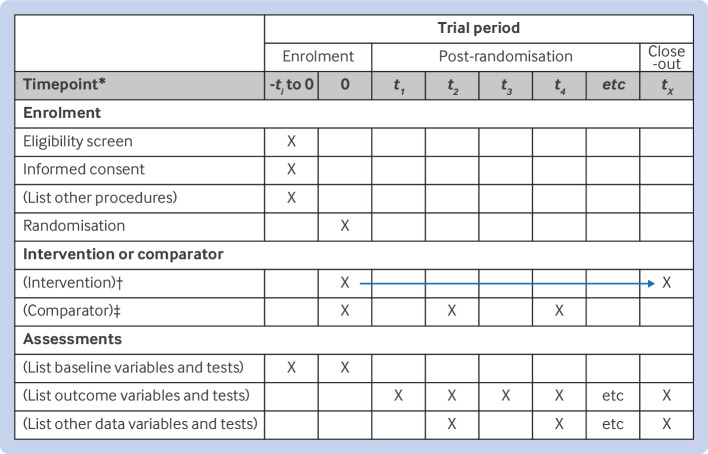
Importance: The protocol of a randomised trial is the foundation for study planning, conduct, reporting, and external review. However, trial protocols vary in their completeness and often do not address key elements of design and conduct. The SPIRIT (Standard Protocol Items: Recommendations for Interventional Trials) statement was first published in 2013 as guidance to improve the completeness of trial protocols. Periodic updates incorporating the latest evidence and best practices are needed to ensure that the guidance remains relevant to users. Objective: To systematically update the SPIRIT recommendations for minimum items to address in the protocol of a randomised trial. Design: We completed a scoping review and developed a project specific database of empirical and theoretical evidence to generate a list of potential changes to the SPIRIT 2013 checklist. The list was enriched with recommendations provided by lead authors of existing SPIRIT/CONSORT (Consolidated Standards of Reporting Trials) extensions (Harms, Outcomes, Non-pharmacological Treatment) and other reporting guidelines (TIDieR). The potential modifications were rated in a three-round Delphi survey followed by a consensus meeting. Findings: Overall, 317 individuals participated in the Delphi consensus process and 30 experts attended the consensus meeting. The process led to the addition of two new protocol items, revision to five items, deletion/merger of five items, and integration of key items from other relevant reporting guidelines. Notable changes include a new open science section, additional emphasis on the assessment of harms and description of interventions and comparators, and a new item on how patients and the public will be involved in trial design, conduct, and reporting. The updated SPIRIT 2025 statement consists of an evidence based checklist of 34 minimum items to address in a trial protocol, along with a diagram illustrating the schedule of enrolment, interventions, and assessments for trial participants. To facilitate implementation, we also developed an expanded version of the SPIRIT 2025 checklist and an accompanying explanation and elaboration document. Conclusions and relevance: Widespread endorsement and adherence to the updated SPIRIT 2025 statement have the potential to enhance the transparency and completeness of trial protocols for the benefit of investigators, trial participants, patients, funders, research ethics committees, journals, trial registries, policymakers, regulators, and other reviewers.
Overview
AI snapshot
Written from the paper’s full text.
TL;DR
SPIRIT 2025 is an updated evidence-based guideline for minimum items to address in randomised trial protocols, replacing SPIRIT 2013. It provides a 34-item checklist, a schedule-of-assessments diagram, and expanded explanation and elaboration materials.
Key findings
- The updated SPIRIT 2025 statement consists of a checklist of 34 minimum protocol items plus a diagram illustrating the schedule of enrolment, interventions, and assessments.
- The update process involved 317 Delphi participants and 30 experts at a consensus meeting; it led to two new protocol items, revision of five items, deletion/merger of five items, and integration of key items from other reporting guidelines.
- Notable changes include a new open science section, greater emphasis on harms and on describing interventions/comparators, and a new item on patient and public involvement in trial design, conduct, and reporting.
- SPIRIT 2025 supersedes SPIRIT 2013, which “should no longer be used or cited.”
Methods
- The authors conducted a scoping review of literature from 2013 to 2022 and a broader search for empirical and theoretical evidence from 2013 to 2024, producing the SPIRIT-CONSORT Evidence Bibliographic database; this was enriched with recommendations from SPIRIT/CONSORT extensions (Harms, Outcomes, Non-pharmacological Treatment) and TIDieR, plus user feedback.
- Potential modifications were rated in a three-round international online Delphi survey with 317 participants; high agreement was defined as at least 80% of respondents rating importance as high (4 or 5) or low (1 or 2).
- A two-day online consensus meeting in March 2023 was attended by 30 invited international experts; the executive group then drafted and finalised the checklist after further review.
Limitations
- The paper states that SPIRIT 2025 is a minimum standard focused on the most common two-group parallel randomised trial and may not encompass every protocol item relevant for a particular trial; factorial trials and trials evaluating patient-reported outcomes have additional considerations.
- The paper states that existing SPIRIT extensions should continue to be used until a process aligns them with SPIRIT 2025.
- The paper states that SPIRIT 2025 is intended to promote transparency and description of what is planned, not to prescribe trial design or conduct, and should not be used to appraise trial quality; it also does not focus on protocol format.
- Evident from the text: no prospective evaluation of SPIRIT 2025’s effect on protocol completeness or trial outcomes is reported; potential impacts are described as potential, with prior evidence cited mainly for SPIRIT 2013.
Model-written summary. Check it against the paper before relying on it.
Integrity signals
Registry
Cites
Statistics
Figures
Verification
Claims the paper makes
18 Not checked yet · 16 Own interpretation · 5 Own result · 4 No basis given
In the paper
“It is feasible to address all SPIRIT 2025 checklist items in a single protocol document, as illustrated by the examples we identified from existing protocols for every item.28”
§ SPIRIT 2025 statement: updated guideline for protocols of randomised trials > Scope of SPIRIT 2025
What the sources say
- Not checked yetcites [28] source
plain- Asserted: passes — The authors put it forward as true.
- Checkable: passes — It can be checked against evidence.
- Load-bearing: unclear — It is unclear whether the paper’s conclusions depend on it.
- Based: passes — The paper gives a reason why it holds.
In the paper
“Meta-research reviews of protocols have found improved completeness of protocol content after SPIRIT 2013 was introduced.10 11 48 49”
§ SPIRIT 2025 statement: updated guideline for protocols of randomised trials > Potential impact
What the sources say
- Not checked yetcites 10 11 48 49
plaindirect- Asserted: passes — The authors put it forward as true.
- Checkable: passes — It can be checked against evidence.
- Load-bearing: unclear — It is unclear whether the paper’s conclusions depend on it.
- Based: passes — The paper gives a reason why it holds.
In the paper
“Improved completeness of protocols may improve the efficiency of external review by reducing avoidable queries to investigators about incomplete or unclear protocol related information.50 51”
§ SPIRIT 2025 statement: updated guideline for protocols of randomised trials > Potential impact
What the sources say
- Not checked yetcites 50 51
hedgedconditional- Asserted: passes — The authors put it forward as true.
- Checkable: passes — It can be checked against evidence.
- Load-bearing: passes — The paper’s conclusions depend on it.
- Based: passes — The paper gives a reason why it holds.
In the paper
“These benefits of SPIRIT based protocols can only be fully realised when trial protocols are routinely made publicly available through trial registries (eg, PDF upload), journals, and online repositories.7 54 55”
§ SPIRIT 2025 statement: updated guideline for protocols of randomised trials > Potential impact
What the sources say
- Not checked yetcites 7 54 55
plaindirect- Asserted: passes — The authors put it forward as true.
- Checkable: passes — It can be checked against evidence.
- Load-bearing: passes — The paper’s conclusions depend on it.
- Based: passes — The paper gives a reason why it holds.
- Rests on an assumption: High quality protocols provide important information about trial methods and conduct that is usually not available in trial registries or publications reporting completed trials.
In the paper
“Further, adherence to SPIRIT 2025 may help ensure that protocols contain the requisite information for critical appraisal and trial interpretation by peer reviewers, funders, REC/IRBs, and journals.7”
§ SPIRIT 2025 statement: updated guideline for protocols of randomised trials > Potential impact
What the sources say
- Not checked yetcites [7] source
hedgedconditional- Asserted: passes — The authors put it forward as true.
- Checkable: unclear — It is unclear whether it could be checked against evidence.
- Load-bearing: passes — The paper’s conclusions depend on it.
- Based: passes — The paper gives a reason why it holds.
In the paper
“As a transparent record of the investigators’ original intent, comparison of protocols with reports of completed trials helps to identify selective reporting of results and undisclosed amendments, such as changes to primary outcomes or analyses.52 53”
§ SPIRIT 2025 statement: updated guideline for protocols of randomised trials > Potential impact
What the sources say
- Not checked yetcites 52 53
plaindirect- Asserted: passes — The authors put it forward as true.
- Checkable: passes — It can be checked against evidence.
- Load-bearing: passes — The paper’s conclusions depend on it.
- Based: passes — The paper gives a reason why it holds.
A conclusion the paper draws from its own results — it cites no other source for it, so there is none to check. The quote shows it is in the paper.
In the paper
“The checklist should not be used to appraise the quality of trial design or conduct, as it is possible for the protocol of a poorly designed trial to address all checklist items by fully describing its inadequate design and conduct features.”
§ SPIRIT 2025 statement: updated guideline for protocols of randomised trials > Scope of SPIRIT 2025
hedged- Asserted: passes — The authors put it forward as true.
- Checkable: passes — It can be checked against evidence.
- Load-bearing: passes — The paper’s conclusions depend on it.
- Based: passes — The paper gives a reason why it holds.
- Probably not a substantial claim. 32
- It may state two separate claims as one. 17
The paper states this without a source or data behind it here, so there is nothing to check it against. The quote shows it is in the paper.
In the paper
“Item 29: added item on trial monitoring (replaces prior item on auditing)”
§ SPIRIT 2025 statement: updated guideline for protocols of randomised trials > Main changes > Addition of new checklist items:
plaindirect- Asserted: passes — The authors put it forward as true.
- Checkable: passes — It can be checked against evidence.
- Load-bearing: fails — The paper’s conclusions may not depend on it.
- Based: passes — The paper gives a reason why it holds.
Probably not a substantial claim. The paper’s conclusions may not depend on it. It may state two separate claims as one.
None of the sources cited for this claim have been checked yet.
In the paper
“To facilitate implementation, we also developed an expanded version of the SPIRIT 2025 checklist and an accompanying explanation and elaboration document.”
- Also stated in: § Updated SPIRIT 2025 statement · plain
“To present the recommendations in diverse formats, we also developed an expanded version of the SPIRIT 2025 checklist with bullet points of key issues to consider for each item (appendix 1), as done with other initiatives.29 30 31”
§ SPIRIT 2025 statement: updated guideline for protocols of randomised trials > Abstract > Findings
What the sources say
plaindirect- Asserted: passes — The authors put it forward as true.
- Checkable: passes — It can be checked against evidence.
- Load-bearing: fails — The paper’s conclusions may not depend on it.
- Based: passes — The paper gives a reason why it holds.
Probably not a substantial claim. The paper’s conclusions may not depend on it. It may state two separate claims as one.
- Also stated in: § Updated SPIRIT 2025 statement · plain
The paper states this without a source or data behind it here, so there is nothing to check it against. The quote shows it is in the paper.
In the paper
“We have also harmonised the wording between SPIRIT and CONSORT checklist items and clarified the wording of some items.”
§ SPIRIT 2025 statement: updated guideline for protocols of randomised trials > Main changes
plaindirect- Asserted: passes — The authors put it forward as true.
- Checkable: passes — It can be checked against evidence.
- Load-bearing: fails — The paper’s conclusions may not depend on it.
- Based: passes — The paper gives a reason why it holds.
Probably not a substantial claim. The paper’s conclusions may not depend on it. It may state two separate claims as one.
The paper states this without a source or data behind it here, so there is nothing to check it against. The quote shows it is in the paper.
In the paper
“Item 11: added item on how patients and the public are involved in the design, conduct, and reporting of the trial”
§ SPIRIT 2025 statement: updated guideline for protocols of randomised trials > Main changes > Addition of new checklist items:
plain- Asserted: passes — The authors put it forward as true.
- Checkable: passes — It can be checked against evidence.
- Load-bearing: fails — The paper’s conclusions may not depend on it.
- Based: passes — The paper gives a reason why it holds.
Probably not a substantial claim. The paper’s conclusions may not depend on it.
A result the paper reports from its own data — it cites no other source for it, so there is none to check. The quote shows it is in the paper.
In the paper
“The updated SPIRIT 2025 statement consists of an evidence based checklist of 34 minimum items to address in a trial protocol, along with a diagram illustrating the schedule of enrolment, interventions, and assessments for trial participants.”
- Also stated in: § Updated SPIRIT 2025 statement · plain
“The SPIRIT 2025 statement comprises a checklist of 34 minimum protocol items (table 1) and a diagram illustrating the schedule of enrolment, interventions, and assessments (fig 1).”
§ SPIRIT 2025 statement: updated guideline for protocols of randomised trials > Abstract > Findings
plain- Asserted: passes — The authors put it forward as true.
- Checkable: passes — It can be checked against evidence.
- Load-bearing: passes — The paper’s conclusions depend on it.
- Based: passes — The paper gives a reason why it holds.
Probably not a substantial claim. It may state two separate claims as one.
- Also stated in: § Updated SPIRIT 2025 statement · plain
A result the paper reports from its own data — it cites no other source for it, so there is none to check. The quote shows it is in the paper.
In the paper
“Notable changes include a new open science section, additional emphasis on the assessment of harms and description of interventions and comparators, and a new item on how patients and the public will be involved in trial design, conduct, and reporting.”
§ SPIRIT 2025 statement: updated guideline for protocols of randomised trials > Abstract > Findings
plain- Asserted: passes — The authors put it forward as true.
- Checkable: passes — It can be checked against evidence.
- Load-bearing: passes — The paper’s conclusions depend on it.
- Based: passes — The paper gives a reason why it holds.
Probably not a substantial claim. It may state two separate claims as one.
A result the paper reports from its own data — it cites no other source for it, so there is none to check. The quote shows it is in the paper.
In the paper
“Overall, 317 individuals participated in the Delphi consensus process and 30 experts attended the consensus meeting.”
- Also stated in: § Methods · plain
“The Delphi survey results were then discussed at a two-day online consensus meeting in March 2023, attended by 30 invited international experts representing a range of relevant groups.”
§ SPIRIT 2025 statement: updated guideline for protocols of randomised trials > Abstract > Findings
plain- Asserted: passes — The authors put it forward as true.
- Checkable: passes — It can be checked against evidence.
- Load-bearing: fails — The paper’s conclusions may not depend on it.
- Based: passes — The paper gives a reason why it holds.
Probably not a substantial claim. The paper’s conclusions may not depend on it. It may state two separate claims as one.
- Also stated in: § Methods · plain
None of the sources cited for this claim have been checked yet.
In the paper
“The process led to the addition of two new protocol items, revision to five items, deletion/merger of five items, and integration of key items from other relevant reporting guidelines.”
- Also stated in: § Main changes · plain
“We added two new checklist items, revised the content of five items, deleted three items, merged two items, and integrated key items from CONSORT Harms 2022,24 SPIRIT-Outcomes 2022,25 and TIDieR27 into the main checklist and explanatory document.”
§ SPIRIT 2025 statement: updated guideline for protocols of randomised trials > Abstract > Findings
What the sources say
plaindirect- Asserted: passes — The authors put it forward as true.
- Checkable: passes — It can be checked against evidence.
- Load-bearing: passes — The paper’s conclusions depend on it.
- Based: passes — The paper gives a reason why it holds.
It may state two separate claims as one.
- Also stated in: § Main changes · plain
The paper states this without a source or data behind it here, so there is nothing to check it against. The quote shows it is in the paper.
In the paper
“We also restructured the SPIRIT checklist and created a new open science section consolidating items critical to promoting access to information about trial methods and results, including trial registration; sharing of the full protocol, statistical analysis plan, and de-identified participant level data; and disclosure of funding sources and conflicts of interest.”
§ SPIRIT 2025 statement: updated guideline for protocols of randomised trials > Main changes
plaindirect- Asserted: passes — The authors put it forward as true.
- Checkable: passes — It can be checked against evidence.
- Load-bearing: passes — The paper’s conclusions depend on it.
- Based: passes — The paper gives a reason why it holds.
Probably not a substantial claim. It may state two separate claims as one.
A result the paper reports from its own data — it cites no other source for it, so there is none to check. The quote shows it is in the paper.
In the paper
“Participants represented a broad range of roles in clinical trials, including statisticians/methodologists/epidemiologists (n=198), trial investigators (n=73), systematic reviewers/guideline developers (n=73), clinicians (n=58), journal editors (n=47), and patients and members of the public (n=17) (numbers are not mutually exclusive).”
§ SPIRIT 2025 statement: updated guideline for protocols of randomised trials > Methods
plainn = 317- Asserted: passes — The authors put it forward as true.
- Checkable: passes — It can be checked against evidence.
- Load-bearing: fails — The paper’s conclusions may not depend on it.
- Based: passes — The paper gives a reason why it holds.
Probably not a substantial claim. The paper’s conclusions may not depend on it. It may state two separate claims as one.
In the paper
“An accompanying SPIRIT 2025 explanation and elaboration document provides background and context for each checklist item along with examples of good reporting.28”
§ SPIRIT 2025 statement: updated guideline for protocols of randomised trials > Updated SPIRIT 2025 statement
What the sources say
- Not checked yetcites [28] source
plain- Asserted: passes — The authors put it forward as true.
- Checkable: passes — It can be checked against evidence.
- Load-bearing: fails — The paper’s conclusions may not depend on it.
- Based: passes — The paper gives a reason why it holds.
Probably not a substantial claim. The paper’s conclusions may not depend on it.
In the paper
“The expanded checklist comprises an abridged version of elements presented in the SPIRIT 2025 explanation and elaboration document,28 with examples and references removed.”
§ SPIRIT 2025 statement: updated guideline for protocols of randomised trials > Updated SPIRIT 2025 statement
What the sources say
- Not checked yetcites [28] source
plain- Asserted: passes — The authors put it forward as true.
- Checkable: passes — It can be checked against evidence.
- Load-bearing: fails — The paper’s conclusions may not depend on it.
- Based: passes — The paper gives a reason why it holds.
Probably not a substantial claim. The paper’s conclusions may not depend on it.
A result the paper reports from its own data — it cites no other source for it, so there is none to check. The quote shows it is in the paper.
In the paper
“Overall, 317 individuals participated in the Delphi consensus process and 30 experts attended the consensus meeting.”
- Also stated in: § Methods · plain
“A total of 317 participants were recruited through professional research networks, societies, and the project website.”
§ SPIRIT 2025 statement: updated guideline for protocols of randomised trials > Abstract > Findings
plainn = 317- Asserted: passes — The authors put it forward as true.
- Checkable: passes — It can be checked against evidence.
- Load-bearing: fails — The paper’s conclusions may not depend on it.
- Based: passes — The paper gives a reason why it holds.
Probably not a substantial claim. The paper’s conclusions may not depend on it.
- Also stated in: § Methods · plain
A conclusion the paper draws from its own results — it cites no other source for it, so there is none to check. The quote shows it is in the paper.
In the paper
“Widespread adoption of SPIRIT 2025 as a common standard across REC/IRBs, funding agencies, regulatory agencies, and journals could simplify the work of trial investigators and sponsors because a SPIRIT based protocol would then fulfil the harmonised application requirements of multiple groups.”
§ SPIRIT 2025 statement: updated guideline for protocols of randomised trials > Potential impact
hedgedconditional- Asserted: passes — The authors put it forward as true.
- Checkable: fails — It may be too vague to check against evidence.
- Load-bearing: fails — The paper’s conclusions may not depend on it.
- Based: passes — The paper gives a reason why it holds.
Probably not a substantial claim. It may be too vague to check against evidence. The paper’s conclusions may not depend on it.
In the paper
“Gaps in protocol content can lead to avoidable protocol amendments,13 inconsistent or poor trial conduct, and lack of transparency in terms of what was planned and implemented.”
§ SPIRIT 2025 statement: updated guideline for protocols of randomised trials > Introduction
What the sources say
- Not checked yetcites [13] source
plaindirect- Asserted: passes — The authors put it forward as true.
- Checkable: passes — It can be checked against evidence.
- Load-bearing: passes — The paper’s conclusions depend on it.
- Based: passes — The paper gives a reason why it holds.
It may state two separate claims as one.
A conclusion the paper draws from its own results — it cites no other source for it, so there is none to check. The quote shows it is in the paper.
In the paper
“In addition to improved reporting, adherence to SPIRIT 2025 may promote high quality trial design and implementation because SPIRIT is used during the planning stage of a trial.”
§ SPIRIT 2025 statement: updated guideline for protocols of randomised trials > Potential impact
hedgedconditional- Asserted: passes — The authors put it forward as true.
- Checkable: passes — It can be checked against evidence.
- Load-bearing: passes — The paper’s conclusions depend on it.
- Based: passes — The paper gives a reason why it holds.
Probably not a substantial claim. It may state two separate claims as one.
- Rests on an assumption: Better protocols can help study personnel to implement the trial consistently across sites.
None of the sources cited for this claim have been checked yet.
In the paper
“However, trial protocols vary in their completeness and often do not address key elements of design and conduct.”
- Also stated in: § Introduction · plain
“Despite the central role of protocols, there is substantial variation in the completeness of protocol content.10 11 Many trial protocols do not adequately describe important elements including the primary outcomes, treatment allocation methods, use of blinding, measurement of adverse events, sample size calculations, data analysis methods, dissemination policies, and roles of sponsors and Investig”
§ SPIRIT 2025 statement: updated guideline for protocols of randomised trials > Abstract > Importance
What the sources say
plain- Asserted: passes — The authors put it forward as true.
- Checkable: passes — It can be checked against evidence.
- Load-bearing: passes — The paper’s conclusions depend on it.
- Based: passes — The paper gives a reason why it holds.
It may state two separate claims as one.
- Also stated in: § Introduction · plain
A conclusion the paper draws from its own results — it cites no other source for it, so there is none to check. The quote shows it is in the paper.
In the paper
“SPIRIT 2025 addresses the minimum content of a protocol, focusing on the most common type of randomised trial—the two-group parallel design.”
§ SPIRIT 2025 statement: updated guideline for protocols of randomised trials > Scope of SPIRIT 2025
plain- Asserted: passes — The authors put it forward as true.
- Checkable: passes — It can be checked against evidence.
- Load-bearing: passes — The paper’s conclusions depend on it.
- Based: passes — The paper gives a reason why it holds.
Probably not a substantial claim. It may state two separate claims as one.
None of the sources cited for this claim have been checked yet.
In the paper
“The SPIRIT (Standard Protocol Items: Recommendations for Interventional Trials) statement was first published in 2013 as guidance to improve the completeness of trial protocols.”
- Also stated in: § Introduction · plain
“In response to these protocol deficiencies, the SPIRIT (Standard Protocol Items: Recommendations for Interventional Trials) guidance was first published in 2013.14 15”
§ SPIRIT 2025 statement: updated guideline for protocols of randomised trials > Abstract > Importance
plain- Asserted: passes — The authors put it forward as true.
- Checkable: passes — It can be checked against evidence.
- Load-bearing: fails — The paper’s conclusions may not depend on it.
- Based: passes — The paper gives a reason why it holds.
Probably not a substantial claim. The paper’s conclusions may not depend on it. It may state two separate claims as one.
- Also stated in: § Introduction · plain
A conclusion the paper draws from its own results — it cites no other source for it, so there is none to check. The quote shows it is in the paper.
In the paper
“Widespread endorsement and adherence to the updated SPIRIT 2025 statement have the potential to enhance the transparency and completeness of trial protocols for the benefit of investigators, trial participants, patients, funders, research ethics committees, journals, trial registries, policymakers, regulators, and other reviewers.”
§ SPIRIT 2025 statement: updated guideline for protocols of randomised trials > Abstract > Conclusions and relevance
hedgedconditional- Asserted: passes — The authors put it forward as true.
- Checkable: fails — It may be too vague to check against evidence.
- Load-bearing: passes — The paper’s conclusions depend on it.
- Based: fails — The paper may give no reason why it holds.
Probably not a substantial claim. It may be too vague to check against evidence. The paper may give no reason why it holds.
- Rests on an assumption: A complete, transparent, and accessible protocol is critical for the planning, conduct, reporting, and external review of randomised trials.
In the paper
“High quality protocols addressing all SPIRIT items may also help to reduce the number and burden of protocol amendments during the trial—many of which can be avoided with careful consideration of key issues when developing the protocol.13 33”
§ SPIRIT 2025 statement: updated guideline for protocols of randomised trials > Potential impact
What the sources say
- Not checked yetcites 13 33
hedgedconditional- Asserted: passes — The authors put it forward as true.
- Checkable: passes — It can be checked against evidence.
- Load-bearing: unclear — It is unclear whether the paper’s conclusions depend on it.
- Based: passes — The paper gives a reason why it holds.
It may state two separate claims as one.
In the paper
“Harmonising the reporting recommendations could help improve usability and adherence.18”
§ SPIRIT 2025 statement: updated guideline for protocols of randomised trials > Introduction
What the sources say
- Not checked yetcites [18] source
hedgedconditional- Asserted: passes — The authors put it forward as true.
- Checkable: fails — It may be too vague to check against evidence.
- Load-bearing: passes — The paper’s conclusions depend on it.
- Based: passes — The paper gives a reason why it holds.
Probably not a substantial claim. It may be too vague to check against evidence.
None of the sources cited for this claim have been checked yet.
In the paper
“SPIRIT 2025 encompasses and builds upon recommendations from the International Council for Harmonization Good Clinical Practice E6(R3) guidance36 and 2024 Declaration of Helsinki,32 including the Declaration of Helsinki’s requirement that the protocol address potential conflicts of interest and provision of post-trial care.”
§ SPIRIT 2025 statement: updated guideline for protocols of randomised trials > Scope of SPIRIT 2025
What the sources say
- Not checked yetcites [36] International Council for Harmonisation of Technical Requirements for Pharmaceuticals for Human Use. International Council for Harmonisation (ICH) harmonised guideline: Guideline for good clinical practice, E6(R3). 6 January 2025. https://www.ich.org/page/efficacy-guidelines.
- Not checked yetcites [32] source
plain- Asserted: passes — The authors put it forward as true.
- Checkable: passes — It can be checked against evidence.
- Load-bearing: fails — The paper’s conclusions may not depend on it.
- Based: passes — The paper gives a reason why it holds.
Probably not a substantial claim. The paper’s conclusions may not depend on it. It may state two separate claims as one.
In the paper
“In brief, we followed the EQUATOR Network guidance for developers of health research guidelines.21”
§ SPIRIT 2025 statement: updated guideline for protocols of randomised trials > Methods
What the sources say
- Not checked yetcites [21] source
plain- Asserted: passes — The authors put it forward as true.
- Checkable: passes — It can be checked against evidence.
- Load-bearing: fails — The paper’s conclusions may not depend on it.
- Based: passes — The paper gives a reason why it holds.
Probably not a substantial claim. The paper’s conclusions may not depend on it.
A conclusion the paper draws from its own results — it cites no other source for it, so there is none to check. The quote shows it is in the paper.
In the paper
“However, most of the SPIRIT items are relevant to any type of trial.”
§ SPIRIT 2025 statement: updated guideline for protocols of randomised trials > Scope of SPIRIT 2025
plain- Asserted: passes — The authors put it forward as true.
- Checkable: passes — It can be checked against evidence.
- Load-bearing: fails — The paper’s conclusions may not depend on it.
- Based: fails — The paper may give no reason why it holds.
Probably not a substantial claim. The paper’s conclusions may not depend on it. The paper may give no reason why it holds.
In the paper
“SPIRIT 2025 has been designed to complement and enhance the expanding trial registration requirements mandated by legislation, journals, and funding policies.35”
§ SPIRIT 2025 statement: updated guideline for protocols of randomised trials > Scope of SPIRIT 2025
What the sources say
- Not checked yetcites [35] source
plaindirect- Asserted: passes — The authors put it forward as true.
- Checkable: passes — It can be checked against evidence.
- Load-bearing: fails — The paper’s conclusions may not depend on it.
- Based: passes — The paper gives a reason why it holds.
Probably not a substantial claim. The paper’s conclusions may not depend on it.
A conclusion the paper draws from its own results — it cites no other source for it, so there is none to check. The quote shows it is in the paper.
In the paper
“The checklist also does not focus on the protocol format, which is often subject to local regulations or practice.”
§ SPIRIT 2025 statement: updated guideline for protocols of randomised trials > Scope of SPIRIT 2025
plain- Asserted: passes — The authors put it forward as true.
- Checkable: passes — It can be checked against evidence.
- Load-bearing: fails — The paper’s conclusions may not depend on it.
- Based: passes — The paper gives a reason why it holds.
Probably not a substantial claim. The paper’s conclusions may not depend on it.
A conclusion the paper draws from its own results — it cites no other source for it, so there is none to check. The quote shows it is in the paper.
In the paper
“The SPIRIT 2025 statement supersedes the SPIRIT 2013 statement, which should no longer be used or cited.”
§ SPIRIT 2025 statement: updated guideline for protocols of randomised trials > Implementation
plaindirect- Asserted: passes — The authors put it forward as true.
- Checkable: passes — It can be checked against evidence.
- Load-bearing: passes — The paper’s conclusions depend on it.
- Based: passes — The paper gives a reason why it holds.
Probably not a substantial claim.
A conclusion the paper draws from its own results — it cites no other source for it, so there is none to check. The quote shows it is in the paper.
In the paper
“The main purpose of SPIRIT 2025 is to promote transparency and an adequate description of what is planned—not to prescribe how a trial should be designed or conducted.”
§ SPIRIT 2025 statement: updated guideline for protocols of randomised trials > Scope of SPIRIT 2025
plain- Asserted: passes — The authors put it forward as true.
- Checkable: passes — It can be checked against evidence.
- Load-bearing: passes — The paper’s conclusions depend on it.
- Based: passes — The paper gives a reason why it holds.
Probably not a substantial claim. It may state two separate claims as one.
A conclusion the paper draws from its own results — it cites no other source for it, so there is none to check. The quote shows it is in the paper.
In the paper
“The explicit incorporation of an open science section in the SPIRIT checklist will support the growing global push for greater transparency and sharing of trial materials and outputs to facilitate evidence synthesis and reproducibility of research.”
§ SPIRIT 2025 statement: updated guideline for protocols of randomised trials > Potential impact
plaindirect- Asserted: passes — The authors put it forward as true.
- Checkable: fails — It may be too vague to check against evidence.
- Load-bearing: passes — The paper’s conclusions depend on it.
- Based: fails — The paper may give no reason why it holds.
Probably not a substantial claim. It may be too vague to check against evidence. The paper may give no reason why it holds.
A conclusion the paper draws from its own results — it cites no other source for it, so there is none to check. The quote shows it is in the paper.
In the paper
“Widespread endorsement and adoption of the updated recommendations have the potential to improve protocol content and implementation; facilitate registration, oversight, and appraisal of trials; and ultimately enhance transparency and translation to better healthcare.”
§ SPIRIT 2025 statement: updated guideline for protocols of randomised trials > Potential impact
hedgedconditional- Asserted: passes — The authors put it forward as true.
- Checkable: fails — It may be too vague to check against evidence.
- Load-bearing: passes — The paper’s conclusions depend on it.
- Based: passes — The paper gives a reason why it holds.
Probably not a substantial claim. It may be too vague to check against evidence.
A conclusion the paper draws from its own results — it cites no other source for it, so there is none to check. The quote shows it is in the paper.
In the paper
“This provides an opportunity to improve the validity and successful completion of trials by reminding investigators about important issues to consider before the study begins.”
§ SPIRIT 2025 statement: updated guideline for protocols of randomised trials > Potential impact
plainconditional- Asserted: passes — The authors put it forward as true.
- Checkable: fails — It may be too vague to check against evidence.
- Load-bearing: passes — The paper’s conclusions depend on it.
- Based: passes — The paper gives a reason why it holds.
Probably not a substantial claim. It may be too vague to check against evidence.
A conclusion the paper draws from its own results — it cites no other source for it, so there is none to check. The quote shows it is in the paper.
In the paper
“The SPIRIT 2025 statement incorporates new evidence and emerging perspectives to ensure that the guidance remains relevant to users.”
§ SPIRIT 2025 statement: updated guideline for protocols of randomised trials > Potential impact
plaindirect- Asserted: passes — The authors put it forward as true.
- Checkable: passes — It can be checked against evidence.
- Load-bearing: passes — The paper’s conclusions depend on it.
- Based: passes — The paper gives a reason why it holds.
Probably not a substantial claim.
A conclusion the paper draws from its own results — it cites no other source for it, so there is none to check. The quote shows it is in the paper.
In the paper
“Widespread endorsement and adoption of the updated recommendations have the potential to improve protocol content and implementation; facilitate registration, oversight, and appraisal of trials; and ultimately enhance transparency and translation to better healthcare.”
§ SPIRIT 2025 statement: updated guideline for protocols of randomised trials > Potential impact
hedgedconditional- Asserted: passes — The authors put it forward as true.
- Checkable: fails — It may be too vague to check against evidence.
- Load-bearing: passes — The paper’s conclusions depend on it.
- Based: passes — The paper gives a reason why it holds.
Probably not a substantial claim. It may be too vague to check against evidence.
A conclusion the paper draws from its own results — it cites no other source for it, so there is none to check. The quote shows it is in the paper.
In the paper
“SPIRIT 2025 will continue to serve as an educational resource for new investigators, trainees, peer reviewers, and REC/IRB members.”
§ SPIRIT 2025 statement: updated guideline for protocols of randomised trials > Potential impact
plain- Asserted: passes — The authors put it forward as true.
- Checkable: fails — It may be too vague to check against evidence.
- Load-bearing: fails — The paper’s conclusions may not depend on it.
- Based: passes — The paper gives a reason why it holds.
Probably not a substantial claim. It may be too vague to check against evidence. The paper’s conclusions may not depend on it.
A conclusion the paper draws from its own results — it cites no other source for it, so there is none to check. The quote shows it is in the paper.
In the paper
“Widespread endorsement and adoption of the updated recommendations have the potential to improve protocol content and implementation; facilitate registration, oversight, and appraisal of trials; and ultimately enhance transparency and translation to better healthcare.”
§ SPIRIT 2025 statement: updated guideline for protocols of randomised trials > Potential impact
hedgedconditional- Asserted: passes — The authors put it forward as true.
- Checkable: fails — It may be too vague to check against evidence.
- Load-bearing: passes — The paper’s conclusions depend on it.
- Based: passes — The paper gives a reason why it holds.
Probably not a substantial claim. It may be too vague to check against evidence.
The paper relies on this without support.
A complete, transparent, and accessible protocol is critical for the planning, conduct, reporting, and external review of randomised trials.
“The protocol of a randomised trial is the foundation for study planning, conduct, reporting, and external review.”
“A complete, transparent, and accessible protocol is critical for the planning, conduct, reporting, and external review of randomised trials”
The paper relies on this without support.
The SPIRIT 2013 and CONSORT 2010 statements were conceptually linked with overlapping content and implementation strategies.
“As the SPIRIT 2013 and CONSORT 2010 statements were conceptually linked with overlapping content and implementation strategies, the two groups decided to merge into the joint SPIRIT-CONSORT executive group and to update both checklists simultaneously.”
The paper relies on this without support.
Better protocols can help study personnel to implement the trial consistently across sites.
“Better protocols can also help study personnel to implement the trial consistently across sites.”
The paper relies on this without support.
High quality protocols provide important information about trial methods and conduct that is usually not available in trial registries or publications reporting completed trials.
“High quality protocols provide important information about trial methods and conduct that is usually not available in trial registries or publications reporting completed trials.”
Claims other papers make about this one
Each is checked against this paper’s own text: does it say what the citing paper says it does?
The source backs part of the claim, not all of it — or backs it for a different population, condition or comparison.
In the citing paper
“These features align with emerging trial protocol guidance (SPIRIT-AI; SPIRIT 2025).15,16”
From Transforming oncology clinical trial matching through neuro-symbolic, multi-agent AI and an oncology-specific knowledge graph: a prospective evaluation in 3804 patients (2026) · cites this paper as [16]
Experimental — accuracy not yet measuredIn the citing paper
“an international group developed and published the updated SPIRIT 2025 statement13—consisting of a 34 item checklist of the minimum recommended protocol items (table 1); a diagram illustrating the schedule of enrolment, interventions, and assessments (fig 1).”
From SPIRIT 2025 explanation and elaboration: updated guideline for protocols of randomised trials (2025) · cites this paper as [13]
Self-check
Percentages, sums and reported differences re-computed from the paper’s own numbers.
Each contradiction between two passages listed here was confirmed by an independent check.
Rated minor: it would not touch a result — a value no result rests on, a p-value that stays on the same side of the significance level, or a conflict that is clerical, resolved elsewhere in the paper, or outside its own findings.
In the paper
§ SPIRIT 2025 statement: updated guideline for protocols of randomised trials > Main changes > Deletion/merger of checklist items
“Merged item on access to data for trial investigators with item on data management (item 26)”
§ SPIRIT 2025 statement: updated guideline for protocols of randomised trials > Updated SPIRIT 2025 statement
“Plans for data entry, coding, security, and storage, including any related processes to promote data quality (eg, double data entry; range checks for data values). Reference to where details of data management procedures can be accessed, if not in the protocol”
Citations
Cites
The PRISMA 2020 statement: an updated guideline for reporting systematic reviews
Page, M. J., McKenzie, J. E., Bossuyt, P. M., Boutron, I., Hoffmann, T. C., Mulrow, C. D., Shamseer, L., Tetzlaff, J. M., Akl, E. A., Brennan, S. E., et al. (2021) · Systematic Reviews · doi:10.1186/s13643-021-01626-4 · Cited by 13,874
Self-citationHoffmann, T. C., Glasziou, P. P., Boutron, I., Milne, R., Perera, R., Moher, D., Altman, D. G., Barbour, V., Macdonald, H., Johnston, M., et al. (2014) · BMJ · doi:10.1136/bmj.g1687 · Cited by 10,548
Self-citationSPIRIT 2013 Statement: Defining Standard Protocol Items for Clinical Trials
Chan, A.-W., Tetzlaff, J. M., Altman, D. G., Laupacis, A., Gøtzsche, P. C., Krleža-Jerić, K., Hróbjartsson, A., Mann, H., Dickersin, K., Berlin, J. A., et al. (2013) · Annals of Internal Medicine · doi:10.7326/0003-4819-158-3-201302050-00583 · Cited by 7,363
Self-citationSPIRIT 2013 explanation and elaboration: guidance for protocols of clinical trials
Chan, A.-W., Tetzlaff, J. M., Gotzsche, P. C., Altman, D. G., Mann, H., Berlin, J. A., Dickersin, K., Hrobjartsson, A., Schulz, K. F., Parulekar, W. R., et al. (2013) · BMJ · doi:10.1136/bmj.e7586 · Cited by 6,251
Self-citationChan, A.-W., Hróbjartsson, A., Haahr, M. T., Gøtzsche, P. C., & Altman, D. G. (2004) · JAMA · doi:10.1001/jama.291.20.2457 · Cited by 1,845
Self-citationWorld Medical Association (2025) · JAMA · doi:10.1001/jama.2024.21972 · Cited by 1,695
Boutron, I., Altman, D. G., Moher, D., Schulz, K. F., Ravaud, P., & for the CONSORT NPT Group* (2017) · Annals of Internal Medicine · doi:10.7326/m17-0046 · Cited by 1,538
Self-citationGuidance for Developers of Health Research Reporting Guidelines
Moher, D., Schulz, K. F., Simera, I., & Altman, D. G. (2010) · PLoS Medicine · doi:10.1371/journal.pmed.1000217 · Cited by 1,437
Self-citationCONSORT 2025 statement: updated guideline for reporting randomised trials
Hopewell, S., Chan, A.-W., Collins, G. S., Hróbjartsson, A., Moher, D., Schulz, K. F., Tunn, R., Aggarwal, R., Berkwits, M., Berlin, J. A., et al. (2025) · BMJ · doi:10.1136/bmj-2024-081123 · Cited by 1,195
Self-citationCruz Rivera, S., Liu, X., Chan, A.-W., Denniston, A. K., Calvert, M. J., The SPIRIT-AI and CONSORT-AI Working Group, SPIRIT-AI and CONSORT-AI Steering Group, Darzi, A., Holmes, C., Yau, C., et al. (2020) · Nature Medicine · doi:10.1038/s41591-020-1037-7 · Cited by 933
Self-citation
Cited by
Sorted by citations
Items 201–300 of 460
Zafeiroudi, A., Tsartsapakis, I., & Kouthouris, C. (2026) · Methods and Protocols · doi:10.3390/mps9020037
Wittkowski, A., Lemetyinen, H., Reid, H. E., Perruzza-Powell, T., & Gregg, L. (2026) · Frontiers in Psychiatry · doi:10.3389/fpsyt.2026.1766060
Hannon, K., Daly, D., & Smith, V. A. (2026) · Trials · doi:10.1186/s13063-026-09580-z
Alberton, C. L., Gomes, M. B., Ferreira, H. S., de Oliveira, F. B., Ogonowska-Słodownik, A., Güeita‐Rodríguez, J., Reichert, T. L., Junkes-Cunha, M., Pinheiro, V. H. G., & Andrade, L. S. (2026) · BMC Geriatrics · doi:10.1186/s12877-026-07084-8
Wang, W. J., Wei, C., Chen, S., Wu, G., Xu, W., Gao, X., Du, Y., Liu, M., Zhang, M., & Sun, Y. (2026) · BMC Geriatrics · doi:10.1186/s12877-026-07308-x
Laying the groundwork and designing for trust: why research protocols matter
Davies, E. (2026) · Advances in Simulation · doi:10.1186/s41077-026-00430-1 · Cited by 1
Gooding, P. A., Awenat, Y. F., Drake, R., Emsley, R., Jones, S. H., Kapur, N., Lobban, F. A., Peters, S., Pratt, D., Elliott, R. A., et al. (2025) · Efficacy and Mechanism Evaluation · doi:10.3310/gjpg0530
Huang, L., Gui, W.-H., Zhu, Y., Lu, Y.-D., Liu, H., Shan, X.-S., Ji, F., & Peng, K. (2026) · Annals of Medicine · doi:10.1080/07853890.2026.2642476
Mendelson, M., Coudurier, M., Doutreleau, S., Guinot, M., Flore, P., Bailly, S., Baillieul, S., Destors, M., Tamisier, R., Pépin, J., et al. (2026) · BMC Public Health · doi:10.1186/s12889-026-26959-4
Smith, V., Gillies, K., Corbett, G. A., Horgan, P., Taylor, R. S., Kroll, T., Parker, A., Smith, A., Zgaga, L., Doran, P., et al. (2026) · HRB Open Research · doi:10.12688/hrbopenres.14305.1
Self-citationAmako¹, C. A., Vahwere¹&, B. M., Kiswezi, A., Mwebwa², T., Kyomukama, L., Alao³, S. A., Hakizimana, T., Mugenyi, M., & Lionel, M. S. (2026) · Research Square · doi:10.21203/rs.3.rs-8329219/v1
Azim, L., Al-Ashmori, S., Butcher, C., Cipriani, A., Chew-Graham, C. A., Clare, E., Clark, E., Cole, M., Carella, S., Dixon, L., et al. (2026) · BMJ Open · doi:10.1136/bmjopen-2025-112677
McLennan, C., Hassett, L. M., Tilden, W., Naganathan, V., Haynes, A. S., Jennings, M. D., Chróinín, D. N., Richards, B. L., Hallahan, A. R., Biswas, R. K., et al. (2026) · BMJ Open · doi:10.1136/bmjopen-2025-111744
Elkins, J. S., Scheadler, T. R., & Rummo, P. E. (2026) · JMIR Research Protocols · doi:10.2196/86310
YILMAZ, B. Ü., Deveci, E. E., Kutlu, G., & Aktaş, N. (2026) · British Journal Of Nutrition · doi:10.1017/s0007114526106850
Justo‐Henriques, S. I., Padeiro, M., Silva, R. C. G., Macedo, J., Borges-Machado, F., João, R. M. V. D. S., & Ribeiro, O. (2026) · Acta Médica Portuguesa · doi:10.20344/amp.24360
Cabelguen, C., Challet‐Bouju, G., Thiabaud, E., Donnio, Y., Lefebvre, L., Hardouin, J.-B., & Grall‐Bronnec, M. (2026) · BMJ Open · doi:10.1136/bmjopen-2025-111698
Bouloukaki, I., Christodoulakis, A., Peraki, S., van den Brand, F. A., Siddiqui, F., Krasanakis, T., Aravantinou-Karlatou, A., Abhyankar, P., Williams, S., van Koeveringe, J. M., et al. (2026) · Healthcare · doi:10.3390/healthcare14070938
Tan, Q., Hu, X., Fu, C., Zhao, W., Wang, Y., Ying, Y., Zhang, Z., Liu, H., Meng, L., Zhang, J., et al. (2026) · Annals of Medicine · doi:10.1080/07853890.2026.2657098
Worm, M. S., Møller, M. H., Bruun, N. H., Brøchner, A. C., Bestle, M. H., Rasmussen, B. S., & Schjørring, O. L. (2026) · Acta Anaesthesiologica Scandinavica · doi:10.1111/aas.70233
Bell, K. J., Bradshaw, J., Clegg, J., Whiteside, K., Baird, K., Peck, C., Scantlebury, A., Wang, H., Adamson, J., Allard, A., et al. (2026) · Trials · doi:10.1186/s13063-026-09669-5
Wu, M., Yan, T., Hu, P., Wang, C., Ye, M., Yu, Z., Wang, Y., Mao, G., Xiao, B., Gong, Y., et al. (2026) · Trials · doi:10.1186/s13063-026-09716-1
Woo, E. J. (2026) · Clinical Orthopaedics and Related Research · doi:10.1097/corr.0000000000003935
Pouplier, A., Fridh, M. K., Schmidt‐Andersen, P., Hoffmann, M. H., Winther, H., Christensen, J., & Larsen, H. B. (2026) · Frontiers in Pediatrics · doi:10.3389/fped.2026.1768975
Ye, Q., Yang, Y., Cai, W., Wen, J., & Lan, Y. (2026) · Trials · doi:10.1186/s13063-026-09705-4
Zheng, X., Yang, Z., Wu, H., Zhao, M., Que, C., Xiong, X., Mu, Y., Zhang, G., Kang, L., Gao, Y., et al. (2026) · Frontiers in Medicine · doi:10.3389/fmed.2026.1754648
Zhu, N., Chong, Y., Chen, K., Dou, W., Ji, F., Sudhan, N., Chen, S.-M., & Peng, K. (2026) · Annals of Medicine · doi:10.1080/07853890.2026.2658279
Yu, B., Tang, Q., Hu, Y., Zuo, H., Yang, B., Pan, J. H., Jia, P., Reinhardt, J., & Yang, S. X. (2026) · BMJ Open · doi:10.1136/bmjopen-2025-109980
van Loon, I. G., Ooms, E., Luik, A. I., Sunamura, M., Wally, T., Boersma, E. H., Vromen, T., Limpt, N. T. V., Bussmann, H., Boon, M. R., et al. (2026) · BMJ Open · doi:10.1136/bmjopen-2026-117963
Dépret, F., Chousterman, B. G., Roger, C., Garnier, M., Lalande, R., Kerforne, T., Rouve, E., Lukaszewicz, A., Ouattara, A., Merdji, H., et al. (2026) · BMJ Open · doi:10.1136/bmjopen-2025-108119
When the SPIRIT moves you: protocol changes can introduce bias in non-inferiority trials
Greenhalgh, T., Lovell, S., Vipond, J., Ungrin, M., & Nabuurs, M. J. (2026) · BMJ · doi:10.1136/bmj.s725
Staton, M., Annett, J., Carey, P., Yang, Y., Jones, O., Bills, L., Logan, T., Tillson, M. D., Oser, C. B., & Knight, K. (2026) · Trials · doi:10.1186/s13063-026-09715-2
Defining estimands in anaesthesia clinical trials: a scoping review and framework
Siriwardena, G. A., Luu, S., Gunaratne, R. K., Simpson, J. A., Leslie, K., Braat, S., & Silva, A. P. D. (2026) · British Journal of Anaesthesia · doi:10.1016/j.bja.2026.03.026
Zhang, Z., Yang, X., Qin, Y., Gao, B., Wang, Y., Ji, J., Gao, J., Huang, M., Wang, L., Zheng, Z., et al. (2026) · BMJ Open · doi:10.1136/bmjopen-2025-110057 · Cited by 1
de Lima, D. C., Schönthal, A. H., da Fonseca, C. O., Reis, F., Lima, C. S. P., & Foglio, M. A. (2026) · Future Oncology · doi:10.1080/14796694.2026.2652540
Luo, Z., Wu, H., Pan, J., Liu, H.-R., Huang, Y., Xu, H., Wang, Q., Wu, L., & Zhu, L. (2026) · Journal of Pain Research · doi:10.2147/jpr.s595927
Protocol for a feasibility study of a peer support program for trauma survivors
Wasilewski, M. B., Reis, L., Ahmed, Y. H. E., Alitawi, R., Hitzig, S. L., Mayo, A. L., Vogt, K., McFarlan, A., Haas, B., Kuluski, K., et al. (2026) · Pilot and Feasibility Studies · doi:10.1186/s40814-026-01820-y
Riquelme-Hernández, C., Reyes-Barría, J. P., Mancilla, C. S., Cavero‐Redondo, I., Vásquez-Carrasco, E., Sepúlveda, P., Sandoval-Vásquez, C., & Cigarroa, I. (2026) · Frontiers in Public Health · doi:10.3389/fpubh.2026.1806558
Buist, N. C., Poppe, A., Ćurĉić‐Blake, B., Pijnenborg, G. H. M., & van der Meer, L. (2026) · European Archives of Psychiatry and Clinical Neuroscience · doi:10.1007/s00406-026-02245-7
Design of the School-Based SI! Program Reintervention Trial for Child Health Promotion
Santos-Beneit, G., de Cos-Gandoy, A., Bodega, P., Orrit, X., Rodríguez, C., de Miguel, M., Montilla, N., Fernández-Alvira, J. M., Martínez‐Gómez, J., Díaz‐Muñoz, R., et al. (2026) · JACC Advances · doi:10.1016/j.jacadv.2026.102748
Sinha, B., Biswas, R., Dhabhai, N., Nangia, S., Goyal, N., Yadav, R., More, D., Banerjee, D., Farooqui, S., Puri, M., et al. (2026) · Trials · doi:10.1186/s13063-026-09745-w
Deniau, B., Moreau, A., Monsel, A., Faitot, V., Pottecher, J., Zoric, L., Suria, S., Bankole, E., Michelet, D., Poirier, N., et al. (2026) · BMJ Open · doi:10.1136/bmjopen-2025-109391
Groen, F., de Rooij, M., Kloek, C. J. J., Veenhof, C., Klein, M. C. A., Al-Janabi, A., van Haeringen, E. S., Ronteltap, A., Cijs, B., van Dongen, B., et al. (2026) · JMIR Research Protocols · doi:10.2196/94709
Aumeerally, M. I., Gillespie, C., Warwick, A. M., Bryant, A., Hooper, K. E., Ong, F., Burstow, M. J., & Walkenhorst, M. (2026) · BMJ Open · doi:10.1136/bmjopen-2025-116035
Mindfulness-Based Training Program in Bariatric Surgery Patients: An Action Research Study Protocol
BAYRAKTAR, D. D., Çatal, E., & Çiyiltepe, H. (2026) · Hemşirelikte araştırma geliştirme dergisi. · doi:10.69487/hemarge.1779207
Zhang, C., Yang, Y., Zhu, X., Liu, H., Zuo, T., Yan, S., Zhao, W., Luo, S., Zeng, H., & Zeng, X. (2026) · BMC Geriatrics · doi:10.1186/s12877-026-07562-z
Virk, A., Lal, D., Sharma, S., Goel, A., Bhardwaj, A., Nadda, A., Kumar, A., Bharti, B., & Singh, S. (2026) · Trials · doi:10.1186/s13063-026-09724-1
Patient and Public Involvement and Engagement in Research: Building Partnerships for Impact
Richards, D. P., Catalá-López, F., & Moher, D. (2026) · Archivos de Bronconeumología · doi:10.1016/j.arbres.2026.04.014
Self-citationZheng, H., Pan, R., Yuan, F., Li, J., & Xu, A. (2026) · BMJ Open · doi:10.1136/bmjopen-2026-118277
Bills, C. B., Hochheimer, C. J., Roberts, S. C., Fishchuk, R., Peers, J., Simon, S., Omelianenko, O. V., Herych, H. L., Altanets, O. V., Beley, N. A., et al. (2026) · The Journal of Trauma: Injury, Infection, and Critical Care · doi:10.1097/ta.0000000000005017
Okumu, M.-R., Haid-Schmallenberg, L., Sand, N., Stöcker, A., Volkert, A. M., & Scholten, N. (2026) · BMJ Open · doi:10.1136/bmjopen-2025-114260
Pedrosa-Vazquez, C., Ayuso-Margañón, R., Lidón-Moyano, C., Morales, P., Canas, L., Garriga-Salvó, C., Farfan-Dominguez, B., Rey-Vitó, S., & Llistosella, M. (2026) · BMJ Open · doi:10.1136/bmjopen-2026-118438
Yue, J., Wang, Q., Tang, Q., Zhou, R., & Zhou, L. (2026) · Trials · doi:10.1186/s13063-026-09784-3
Camuccio, C. A., Tiatto, P., Diamanti, O., Bisinella, E., Loro, R., Bernardi, A. D., Berto, M., Turchet, F., Rostirolla, A., Reginato, E., et al. (2026) · Nursing Reports · doi:10.3390/nursrep16050165
Reporting pediatric randomized trials: why SPIRIT-C 2026 and CONSORT-C 2026 matter now
Upton, J. E. M., Gill, P. J., Molloy, E. J., & Bearer, C. F. (2026) · Pediatric Research · doi:10.1038/s41390-026-05055-8
El‐Awaisi, A., Mustafa, D. N., Hajj, M. S. E., Major, S. C., Brown, M., Mahfoud, Z. R., O’Hara, L., Elhage, A., & Hariri, M. A. (2026) · BMJ Open · doi:10.1136/bmjopen-2025-115084
Nirwan, L. K., & Banode, P. J. (2026) · F1000Research · doi:10.12688/f1000research.180447.1
Vigfusdottir, J., Breivik, E., Mork, E., Lien, L., Stenmark, H. I., & Jonsbu, E. (2026) · Pilot and Feasibility Studies · doi:10.1186/s40814-026-01834-6
Constraint Generative Theory: Typed Constraint Effects and Scientific AvailabilityPreprint
Takahashi, K. (2026) · Zenodo (CERN European Organization for Nuclear Research) · doi:10.5281/zenodo.20199440
Zhao, Z., Zhou, T., Liu, M., Wang, N., Li, Y., Yang, C., Qiu, Y., Wang, J., Wu, W., Bai, Y., et al. (2026) · BMJ Open · doi:10.1136/bmjopen-2025-113503
Wane, S., Aveyard, P. N., Wielsøe, S., Larsen, S. C., Scragg, J., Lindschou, J., Jakobsen, J. C., Engstrøm, J., Specht, I. O., Christiansen, A.-K. L., et al. (2026) · BMJ Open · doi:10.1136/bmjopen-2025-107240
Sieswerda, E., Cook, A., Schultes, M.-T., Minotti, C., Berkell, M., Clack, L., Malhotra‐Kumar, S., Piening, B., van Werkhoven, C. H., Bielicki, J. A., et al. (2026) · Research Square · doi:10.21203/rs.3.rs-9150066/v1
Jahromi, N. J., Hessam, M., Saadat, M., & Mehravar, M. (2026) · Trials · doi:10.1186/s13063-026-09809-x
Ma, J., Chen, L., tong, S., Li, G., Wu, S., Luo, Q., Yang, X., Li, H., Xiong, J., Hong, C., et al. (2026) · Trials · doi:10.1186/s13063-026-09810-4
Dutta, A., & Chatterjee, K. (2026) · doi:10.2196/preprints.102315
Forbes, N., Guo, H., Kruk, A., Ficaccio, S., Cartwright, S., Howarth, M., Malik, G., Nietert, P. J., Smith, Z. L., Li, S., et al. (2026) · BMJ Open · doi:10.1136/bmjopen-2026-119154
Chen, Y., Wang, L., Gao, J., Xiao, R., Yan, S., Pan, X., Yu, Y., Yuan, C., & Yuan, Y. Z. (2026) · BMJ Open · doi:10.1136/bmjopen-2026-116731
Pan, Y., Zhang, Y., Yang, Z., Chen, Y., Min, Y., Huang, X., Zhang, S., Li, J., & Wu, D. (2026) · BMJ Open · doi:10.1136/bmjopen-2026-117540
Brutto, V. J. D., Leal, G., Mera, R. M., Rumbea, D. A., Abad, M. J., & Brutto, Ó. H. D. (2026) · BMJ Open · doi:10.1136/bmjopen-2026-118544
Chen, N., Xu, M., Wang, J., Wang, D., Luo, K., Hao, Y.-B., Chen, K., Yang, X., Ren, H., Fang, J., et al. (2026) · Journal of Pain Research · doi:10.2147/jpr.s616735
Milanović, D., Lushchaeva, T., Ha, H. M., Covrig, R.-C., Scheller, C., Stein, K.-P., Sandalcioglu, I. E., Wiede, A., Glowka, A., & Medenwald, D. (2026) · Radiation · doi:10.3390/radiation6020019
Rajani, M. I., Yaya, H., Vandehei, E., Passa, A.-M. D., McIntyre‐Wood, C., Prokop-Millar, S., Krzyzanowski, D., Zhang, M., Fein, A. J., MacKillop, E., et al. (2026) · medRxiv · doi:10.64898/2026.05.30.26354496
Krawczyk, A., Czerwińska‐Osipiak, A., Wójcicka, L., Michalik, A., & Gruszecka, A. (2026) · Frontiers in Public Health · doi:10.3389/fpubh.2026.1832201
Kang‐Yi, C. D., & Nakash, O. (2026) · Pilot and Feasibility Studies · doi:10.1186/s40814-026-01857-z
larsson, B. W., Zebis, M. K., Vismann, J., Ørner, F. F., Tireli, E. D., Clausen, K. D., Fenger, I., Shacham, D. A., Tireli, D., Haraldsson, B. T., et al. (2026) · JMIR Research Protocols · doi:10.2196/93795
Mee, P., Otambo, W. O., Skovdal, M., Harling, G., Pickles, M., Dobra, A., Hallett, T. B., Bärnighausen, T., McGowan, M., Inghels, M., et al. (2026) · Research Square · doi:10.21203/rs.3.rs-9814858/v1 · Cited by 1
da Silva, W. L., Cerbaro, J. T., & de Amorim, R. L. O. (2026) · Research Square · doi:10.21203/rs.3.rs-9839211/v1
Guo, N., Chai, S., Wang, R., Gu, X., Chen, J., Zhao, H., Qie, K., Ni, W., & Shi, J. (2026) · Frontiers in Medicine · doi:10.3389/fmed.2026.1861226
Peter, S., Doering, W., Disch, T., & Mortsiefer, A. (2026) · Journal of Public Health · doi:10.1007/s10389-026-02814-z
Mittal, N., Singhal, S. R., & Mittal, R. (2026) · Trials · doi:10.1186/s13063-026-09534-5
Arnold, M., Gscheidle, S., Lange, S., Haring, M., Stegmeier, E., Klampfleitner, H., Kurscheid, C., Schluttig, M., Borchers, U., Stampa, S., et al. (2026) · Trials · doi:10.1186/s13063-026-09831-z
Souza, M. C. D. C. D., Bella, Z. I. K. D. J. D., Bianchi-Ferraro, A. M. H. D. M., Souza, S. D. L., Mandetta, A. R. H., Sobral, A. P. T., Ribeiro, C. D. P. V., Bussadori, S. K., Fernandes, K. P. S., Chavantes, M. C., et al. (2026) · BMJ Open · doi:10.1136/bmjopen-2026-117269
Acupuncture for Early Parkinson’s Motor Symptoms: A Multicenter Randomized Controlled Trial Protocol
Zhang, J. I.-X., Xie, Y., Huang, W., Wu, J., Feng, L., Li, H., Jia, X., Zhang, X. R., Tang, X., Yu, F., et al. (2026) · Neuropsychiatric Disease and Treatment · doi:10.2147/ndt.s608205
Ridwan, A.-R., Carter, L., Benton, J. S., & Anderson, J. (2026) · Frontiers in Digital Health · doi:10.3389/fdgth.2026.1742191
Portal, P. H. G., Peixoto, G. N., de Matos, M. R., Silva, L. C. S., Alexandrino, G. B., Dutra, P. H., Carniel, B. P., & da Rocha, N. S. (2026) · BMJ Open · doi:10.1136/bmjopen-2025-111421
How Lived Experience Advisory Groups Contribute to the Design and Conduct of Mental Health Research
Evans, J., Keightley, S., Sweeney, A., Hill, R., Khayri, E., Markham, S., & Wykes, T. (2026) · Health Expectations · doi:10.1111/hex.70722
Song, R., Huang, Y., Liu, J., Wang, X., Liu, Y., Wang, F., Wu, F., Li, X., Liu, Y., Cao, L., et al. (2026) · Frontiers in Neurology · doi:10.3389/fneur.2026.1804153
Hernandez-Garcia, E., Edkins, A., Chrysikou, E. G., Ordóñez-Mena, J. M., Nekhlyudov, L., Kim, J. B., McLean, G. R., Frost, H., & Panigrahy, D. (2026) · BMJ Open · doi:10.1136/bmjopen-2025-111748
Ipsen, E. Ø., Lundstrøm, L. H., Lodenius, Å., Fisker, G., Hovind, M. F., Nielsen, C. L., Oskarsdottir, H., Strøm, C., Rosenstock, C. V., Madsen, K. P. D., et al. (2026) · Acta Anaesthesiologica Scandinavica · doi:10.1111/aas.70277
Parra-Guerra, A. D., Sánchez-Dueñas, L. E., Quintero-Loreto, M. L., Quiñones-Hernández, D. G., Moreno-Alanis, J. A., Sevilla-González, F. K., Ramos‐Cavazos, C. J., Mendoza, D. G., Villarreal‐Villarreal, C. D., & Chejfec‐Ciociano, J. M. (2026) · Frontiers in Medicine · doi:10.3389/fmed.2026.1821858
Yang, G., Guo, S., Wen, F., Han, X., & Zhang, H. (2026) · Integrative Cancer Therapies · doi:10.1177/15347354261464521
Marcus, S. C., Bowden, C. F., Lynch, K. G., & Olfson, M. (2026) · BMJ Open · doi:10.1136/bmjopen-2026-121721
Liebetrau, B., Grejs, A. M., Meyer, M., Andersen, L. P. K., Möller, S., Mølstrøm, S., Møller, J. E., Schmidt, H., Christensen, S., Kjærgaard, J., et al. (2026) · Acta Anaesthesiologica Scandinavica · doi:10.1111/aas.70289
Alghafri, T. S., Harthi, S. A., Ishaq, A. B., AlHarthi, H., Muaini, M. A., Al-Ghadani, R., (, A. A., AlHarb, M., AlSaadi, A., Abdesselam, A., et al. (2026) · JMIR Research Protocols · doi:10.2196/99626
Mijnster, R. J. M., van Lennep, J. E. R., Rietdijk, W. J. R., Akgöl, K., Kemper, E. M., van den Berg, D. T. N. A., van der Kuy, P. H. M., & Lafeber, M. (2026) · BMJ Open · doi:10.1136/bmjopen-2025-110978
Rehn, J., Andréll, C., Hansson, J., Troberg, K., Isendahl, P., Bråbäck, M., Svensson, L., Byrsell, F., Claesson, A., & Håkansson, A. (2026) · BMJ Open · doi:10.1136/bmjopen-2025-115692
Zorlak, A., Naddi, L., Borgquist, O., & Kander, T. (2026) · BMJ Open · doi:10.1136/bmjopen-2026-119213
Anan, K., Kataoka, Y., Taguri, M., Ichikado, K., Tachikawa, R., Tobino, K., Kawamura, K., Shirakawa, C., Kawabata, T., & Yamamoto, Y. (2026) · BMJ Open Respiratory Research · doi:10.1136/bmjresp-2025-003818
Poß-Doering, R., Brinkmöller, S., Balzer, A., Feißt, M., Wurmbach, V. S., Stolz, R., Zugaj, M. R., Tesarz, J., Wensing, M., & Straßner, C. (2026) · Qeios · doi:10.32388/mzzya7.2
Metadata
- Authors
- Chan, A.-W., Boutron, I., Hopewell, S., Moher, D., Schulz, K. F., Collins, G. S., Tunn, R., Aggarwal, R., Berkwits, M., Berlin, J. A., Bhandari, N., Butcher, N. J., Campbell, M. K., Chidebe, R. C. W., Elbourne, D. R., Farmer, A. J., Fergusson, D. A., Golub, R. M., Goodman, S. N., Hoffmann, T. C., Ioannidis, J. P. A., Kahan, B. C., Knowles, R. L., Lamb, S. E., Lewis, S., Loder, E., Offringa, M., Ravaud, P., Richards, D. P., Rockhold, F. W., Schriger, D. L., Siegfried, N. L., Staniszewska, S., Taylor, R. S., Thabane, L., Torgerson, D. J., Vohra, S., White, I. R., & Hróbjartsson, A.
- Affiliations
- University of Toronto (CA)
- Inserm (FR)
- University of Oxford (GB)
- Ottawa Hospital Research Institute (CA)
- University of North Carolina at Chapel Hill (US)
- UK EQUATOR Centre, Centre for Statistics in Medicine, University of Oxford, Oxford, UK
- Jawaharlal Institute of Post Graduate Medical Education and Research (IN)
- Centers for Disease Control and Prevention (US)
- Rutgers, The State University of New Jersey (US)
- Society for Applied Studies (IN)
- University of Aberdeen (GB)
- Miami University (US)
- London School of Hygiene & Tropical Medicine (GB)
- Nuffield Department of Primary Care Health Sciences, University of Oxford, Oxford, UK
- Northwestern University (US)
- Stanford University (US)
- Bond University (AU)
- MRC Clinical Trials Unit at UCL (GB)
- University College London (GB)
- University of Exeter (GB)
- University of Edinburgh (GB)
- Harvard University (US)
- Hospital for Sick Children (CA)
- MaRS (CA)
- Duke Medical Center (US)
- University of California, Los Angeles (US)
- South African Medical Research Council (ZA)
- University of Warwick (GB)
- MRC/CSO Social and Public Health Sciences Unit (GB)
- St. Joseph’s Healthcare Hamilton (CA)
- University of York (GB)
- University of Alberta (CA)
- University of Southern Denmark (DK)
- Corresponding author
- Chan, An-Wen
- ORCID
- Chan, An-Wen
- Boutron, Isabelle
- Hopewell, Sally
- Moher, David
- Schulz, Kenneth F
- Collins, Gary S
- Tunn, Ruth
- Aggarwal, Rakesh
- Berkwits, Michael
- Berlin, Jesse A
- Bhandari, Nita
- Butcher, Nancy J
- Campbell, Marion K
- Chidebe, Runcie C W
- Elbourne, Diana R
- Farmer, Andrew J
- Fergusson, Dean A
- Golub, Robert M
- Goodman, Steven N
- Hoffmann, Tammy C
- Ioannidis, John P A
- Kahan, Brennan C
- Knowles, Rachel L
- Lamb, Sarah E
- Lewis, Steff
- Loder, Elizabeth
- Offringa, Martin
- Ravaud, Philippe
- Richards, Dawn P
- Rockhold, Frank W
- Schriger, David L
- Siegfried, Nandi L
- Staniszewska, Sophie
- Taylor, Rod S
- Thabane, Lehana
- Torgerson, David J
- Vohra, Sunita
- White, Ian R
- Hróbjartsson, Asbjørn
- Venue
- BMJ
- Publisher
- BMJ
- Published
- 2025-04-28
- Volume
- 389
- Pages
- e081477
- ISSN
- 1756-1833 (ISSN-L)
- PMC
- PMC12035670
- OpenAlex
- W4409878505
- Semantic Scholar
- b25ba6e6e04e13b6436a8810b68d757fd853d913
- Cited by
- 460
- References
- 50
- Citations by year
- 2026: 358 · 2025: 102
- FWCI
- 294.22
- Type
- journal article
- Language
- en
- Open access
- hybrid
- doi.org
- Locations
- BMJ (publishedVersion, cc-by)
- PubMed Central (publishedVersion, cc-by)
- PubMed (publishedVersion)
- University of Southern Denmark Research Portal (University of Southern Denmark) (publishedVersion, cc-by)
- University of Birmingham Research Portal (University of Birmingham) (acceptedVersion, cc-by)
- ENLIGHTEN (Jurnal Bimbingan dan Konseling Islam) (acceptedVersion, cc-by-sa)
- Aberdeen University Research Archive (Aberdeen University) (submittedVersion, cc-by)
- Pure Amsterdam UMC (submittedVersion, cc-by)
- Bond University Research Portal (Bond University) (submittedVersion, cc-by)
- Funders
- National Institute for Health and Care Research
- Department of Health and Social Care
- Medical Research Council (MR/W020483/1)
- Topics
- Social Sciences › Decision Sciences › Statistics, Probability and Uncertainty › Meta-analysis and systematic reviews
- Social Sciences › Sociology and Political Science › Delphi Technique in Research
- Physical Sciences › Mathematics › Statistics and Probability › Statistical Methods in Clinical Trials
- Keywords
- trial protocol reporting, randomised trials, patient and public involvement, open science, trial design and conduct, reporting guidelines, CONSORT, TIDieR, Delphi consensus
- MeSH terms
- Clinical Trial Protocols as Topic, Delphi Technique, Humans, Research Design, Randomized Controlled Trials as Topic, Consensus, Checklist
About these checks
Registry, retraction, Cites and statistics results are computed, not judged, with one exception: a printed reference that no index lists is read once by a model before it counts as a citation error. Claims are extracted by a model and kept only when their quote appears verbatim in the text; each cited source is then checked, with a model’s help, for whether it says what the claim relies on. Those verdicts can be wrong — read the claim’s quote and the cited source before relying on one.
A language model drew the claims from the paper on 2026-10-07, under version 3 of the claim definition (model deepseek-v4.1-flash, prompt extract-v3).
A second model labelled each claim on 2026-10-07 (model jev-1.13-20260917, definition revision gold-guideline-v0.2).
Statistics and arithmetic are recomputed, not judged.
Confidence bands are shown only for fields calibrated on our annotated test set. None is calibrated yet, so no band is shown.
What counts as a claim ›How we measure confidence ›How we check this ›
Are you an author, or do you see a problem with this page? Request a review
