

Impact of growth hormone therapy on adult height of children with idiopathic short stature: systematic review
Open accessThe DOI matches its Crossref record; 24 of the 24 references it cites were found in a registry or an index; none of the 17 sources its claims cite is checked for support yet.
Abstract
OBJECTIVE: To systematically determine the impact of growth hormone therapy on adult height of children with idiopathic short stature. DESIGN: Systematic review. DATA SOURCES: Cochrane Central Register of Controlled Trials, Medline, and the bibliographic references from retrieved articles of randomised and non-randomised controlled trials from 1985 to April 2010. DATA EXTRACTION: Height in adulthood (standard deviation score) and overall gain in height (SD score) from baseline measurement in childhood. STUDY SELECTION: Randomised and non-randomised controlled trials with height measurements for adults. Inclusion criteria were initial short stature (defined as height >2 SD score below the mean), peak growth hormone responses >10 μg/L, prepubertal stage, no previous growth hormone therapy, and no comorbid conditions that would impair growth. Adult height was considered achieved when growth rate was <1.5 cm/year or bone age was 15 years in females and 16 years in males. RESULTS: Three randomised controlled trials (115 children) met the inclusion criteria. The adult height of the growth hormone treated children exceeded that of the controls by 0.65 SD score (about 4 cm). The mean height gain in treated children was 1.2 SD score compared with 0.34 SD score in untreated children. A slight difference of about 1.2 cm in adult height was observed between the two growth hormone dose regimens. In the seven non-randomised controlled trials the adult height of the growth hormone treated group exceeded that of the controls by 0.45 SD score (about 3 cm). CONCLUSIONS: Growth hormone therapy in children with idiopathic short stature seems to be effective in partially reducing the deficit in height as adults, although the magnitude of effectiveness is on average less than that achieved in other conditions for which growth hormone is licensed. The individual response to therapy is highly variable, and additional studies are needed to identify the responders.
Overview
CoChat Summary
TL;DR
In children with idiopathic short stature, growth hormone therapy increased adult height compared with untreated controls, but the average gain was modest: about 4 cm in randomised controlled trials and about 3 cm in non-randomised controlled trials. The evidence base was limited, no study met criteria for high-quality evidence and strong recommendation, and individual response was highly variable.
Key findings
- Three randomised controlled trials (115 children: 79 treated, 36 controls) met inclusion criteria. Treated children’s adult height exceeded controls by 0.65 SD score (about 4 cm) (95% confidence interval 0.40 to 0.91; P<0.001). Mean height gain was 1.20 SD score (7.2 cm) in treated children versus 0.34 SD score (2.0 cm) in untreated children, a mean difference of 0.79 SD score (4.7 cm) (95% CI 0.50 to 1.09; P<0.001).
- Seven non-randomised controlled trials (477 children: 181 cases, 296 controls) found treated children’s adult height exceeded controls by 0.45 SD score (about 3 cm) (95% CI 0.18 to 0.73; P=0.001). Mean height gain was 1.28 SD score (8 cm) in treated children versus 0.6 SD score (4 cm) in untreated children, a mean difference of 0.71 SD score (5 cm) (95% CI 0.42 to 0.99; P<0.001).
- In two randomised trials reporting mid-parental height, mean adult height corrected for mid-parental height was −0.4 SD score in treated children versus −1.01 SD score in untreated children, a mean difference of 0.87 SD score (95% CI 0.28 to 1.46; P=0.004).
- One randomised trial and one non-randomised trial reported a dose-dependent effect of growth hormone on adult height; only the non-randomised trial showed a difference in adult height between untreated children and children treated with high-dose growth hormone of more than 0.9 SD score. The three randomised trials were of low or moderate quality, and all received a weak recommendation because none achieved the prespecified efficacy goals.
Methods
- Systematic review and meta-analysis of randomised and non-randomised controlled trials published from 1985 to April 2010, identified from the Cochrane Central Register of Controlled Trials, Medline, and bibliographic references of retrieved articles; no language restrictions were applied.
- Inclusion criteria were initial short stature (height more than 2 SD scores below the mean), peak growth hormone responses greater than 10 μg/L, prepubertal stage, no previous growth hormone therapy, and no comorbid conditions that would impair growth. Adult height was considered achieved when growth rate was <1.5 cm/year or bone age was 15 years in females and 16 years in males.
- Primary outcome was the difference in adult height between treated and untreated children; a mean difference of more than 0.9 SD score (about 6 cm) was considered a satisfactory response. Secondary outcomes were height gain from inclusion to adulthood (at least ≥1 SD score) and difference between adult height and mid-parental height (at least ≥1 SD score). Effect sizes were pooled with fixed and random effects models, with I² for heterogeneity, funnel plot assessment for publication bias, and sensitivity analysis; analyses used Review Manager 5.
Limitations
- The paper states potential limitations of pooling heterogeneous populations, the effect of study dropouts on validity, small sample size with a high chance of false positive results, and the “file-drawer” effect whereby negative studies may remain unpublished.
- The paper states that no single high-quality evidence randomised controlled trial has been carried out up to adult height; only one study included a placebo control group, and that trial had high dropout (40% in the growth hormone treated group and 65% in the placebo group, with adult height measured in six treated children and only three placebo children). One trial was classed as low quality because the study population was small (seven treated and six randomised untreated girls), no power calculation was described, and near final height was reported in both groups.
- Evident from the text: the randomised evidence rests on only three trials and 115 children, while the remaining seven included studies were non-randomised, so the pooled estimates are based on a small randomised base with substantial variability in individual response.
Model-written summary. Check it against the paper before relying on it.
Integrity signals
Registry
Cites
Statistics
Figures
Verification
Claims the paper makes
0 Valid · 0 Not valid · 29 Not checked · 51 Own results and interpretations
In the paper
“Occasionally, a dose dependent increase of insulin-like growth factor-I concentrations reaching values above 3 SD score was reported.11”
§ Impact of growth hormone therapy on adult height of children with idiopathic short stature: systematic review > Implications for clinicians and policymakers
What the sources say
- Not matchedcites [11]
The reference list we hold has no entry [11].
hedgedstates an association- Asserted: passes — The authors put it forward as true.
- Checkable: passes — It can be checked against evidence.
- Load-bearing: unclear — It is unclear whether the paper’s conclusions depend on it.
- Based: passes — The paper gives a reason why it holds.
- Not matched
None of the sources cited for this claim have been checked yet.
In the paper
“In one study the mean height gain in treated children was 1.38 SD score (8.28 cm) compared with 0.18 SD score (1.08 cm) in untreated children (fig 2).9”
§ Impact of growth hormone therapy on adult height of children with idiopathic short stature: systematic review > Height gain
plain- Asserted: passes — The authors put it forward as true.
- Checkable: passes — It can be checked against evidence.
- Load-bearing: passes — The paper’s conclusions depend on it.
- Based: passes — The paper gives a reason why it holds.
None of the sources cited for this claim have been checked yet.
In the paper
“In one of the randomised controlled trials, children with a baseline SD score for height of -2.5 and treated for about 6.2 years achieved an average near final height of -1.1 SD score compared with -2.4 SD score in untreated children (fig 2).9”
§ Impact of growth hormone therapy on adult height of children with idiopathic short stature: systematic review > Adult height
plainstates a cause- Asserted: passes — The authors put it forward as true.
- Checkable: passes — It can be checked against evidence.
- Load-bearing: passes — The paper’s conclusions depend on it.
- Based: passes — The paper gives a reason why it holds.
A result the paper reports from its own data — it cites no other source for it, so there is none to check. The quote shows it is in the paper.
In the paper
“In the third study 11 the overall difference was 0.6 SD score (3.6 cm).”
§ Impact of growth hormone therapy on adult height of children with idiopathic short stature: systematic review > Adult height
plain- Asserted: passes — The authors put it forward as true.
- Checkable: passes — It can be checked against evidence.
- Load-bearing: unclear — It is unclear whether the paper’s conclusions depend on it.
- Based: passes — The paper gives a reason why it holds.
In the paper
“This study is, however, affected by the extreme variability of results.”
§ Impact of growth hormone therapy on adult height of children with idiopathic short stature: systematic review > Quality of evidence and strength of recommendation
What the sources say
- Not matchedcites [18]
The reference list we hold has no entry [18].
plain- Asserted: passes — The authors put it forward as true.
- Checkable: passes — It can be checked against evidence.
- Load-bearing: unclear — It is unclear whether the paper’s conclusions depend on it.
- Based: passes — The paper gives a reason why it holds.
- Not matched
39 more claims
Create a free account to see all 80 claims and every source verdict.
- Probably not a substantial claim. 14
- The quote only partly states this claim. 1
- It may state two separate claims as one. 23
Claims other papers make about this one
Each is checked against this paper’s own text: does it say what the citing paper says it does?
In the citing paper
“structured exercise presents a viable adjunct or alternative, particularly for children with limited access to medication or those experiencing suboptimal response.”
From Effects of 24-week jumping exercise on bone mineral density and linear growth in children with short stature: a prospective controlled trial (2025) · cites this paper as [24]
Statistics recomputed
Every reported test result, recomputed from its test statistic and degrees of freedom. A result shows as not adding up only once an independent check has confirmed it.
- Consistentz = 5.06reported p < .001 · recomputed p < .001
“z=5.06,p < .001”
- Consistentz = 5.34reported p < .001 · recomputed p < .001
“z=5.34,p < .001”
- Consistentz = 3.27reported p = .001 · recomputed p = .001
“z=3.27,p = .001”
Self-check
Percentages, sums and reported differences re-computed from the paper’s own numbers.
Each contradiction between two passages listed here was confirmed by an independent check.
Rated minor: it would not touch a result — a value no result rests on, a p-value that stays on the same side of the significance level, or a conflict that is clerical, resolved elsewhere in the paper, or outside its own findings.
In the paper
§ Impact of growth hormone therapy on adult height of children with idiopathic short stature: systematic review > Quality of evidence and strength of recommendation
“the study population was small (seven treated and six randomised untreated girls)”
§ Impact of growth hormone therapy on adult height of children with idiopathic short stature: systematic review > Conclusions
“| Treated | 8 | 6.24 (0.38) | 0.04 | 6.2 (range 5.5-6.5) | -2.52 (0.26) | -1.14 (1.06) | 1.38 (0.7) | 1.23 | |”
Rated minor: it would not touch a result — a value no result rests on, a p-value that stays on the same side of the significance level, or a conflict that is clerical, resolved elsewhere in the paper, or outside its own findings.
In the paper
“The children treated with a daily dose of 0.067 mg/kg achieved a mean adult height of -1.5 SD score compared with -1.7 SD score for children treated with 0.033 mg/kg/day, corresponding to a mean difference of 2 cm.”
§ Impact of growth hormone therapy on adult height of children with idiopathic short stature: systematic review > Adult height
Reported 2 · recomputed 1.2
Citations
Cites
Cohen, P., Rogol, A. D., Deal, C. L., Saenger, P., Reiter, E. O., Ross, J. L., Chernausek, S. D., Savage, M. O., Wit, J. M., & participants, O. B. O. T. 2. I. C. W. (2008) · The Journal of Clinical Endocrinology & Metabolism · doi:10.1210/jc.2008-0509 · Cited by 737
The power of statistical tests in meta-analysis
Hedges, L. V., & Pigott, T. D. (2001) · Psychological Methods · doi:10.1037/1082-989x.6.3.203 · Cited by 716 · cited 1×
“For primary analysis we calculated the effect size for each randomised controlled trial. The effect size was computed as the mean difference (treated minus untreated) and the changes (adult height minus baseline height) for each trial. We present these scores in a paired analysis with their 95% confidence intervals. T…”
MethodSwiglo, B. A., Murad, M. H., Schünemann, H. J., Kunz, R., Vigersky, R. A., Guyatt, G. H., & Montori, V. M. (2008) · The Journal of Clinical Endocrinology & Metabolism · doi:10.1210/jc.2007-1907 · Cited by 302
Towards a Consensus on the Definition of Idiopathic Short Stature
Ranke, M. B. (1996) · Hormone Research · doi:10.1159/000184851 · Cited by 278
Idiopathic short stature: Definition, epidemiology, and diagnostic evaluation
Wit, J. M., Clayton, P. E., Rogol, A. D., Savage, M. O., Saenger, P. H., & Cohen, P. (2008) · Growth Hormone & IGF Research · doi:10.1016/j.ghir.2007.11.004 · Cited by 260 · cited 1×
“According to this definition, most children referred for short stature will be classed as having idiopathic short stature at the end of the diagnostic investigation.”
BackgroundLeschek, E. W., Rose, S. R., Yanovski, J. A., Troendle, J. F., Quigley, C. A., Chipman, J. J., Crowe, B. J., Ross, J. L., Cassorla, F. G., Blum, W. F., et al. (2004) · The Journal of Clinical Endocrinology & Metabolism · doi:10.1210/jc.2003-031457 · Cited by 228 · cited 1×
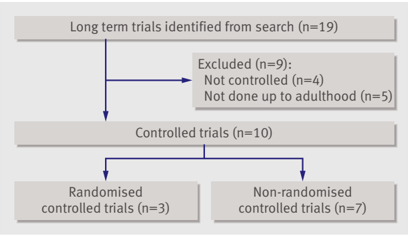
“The search strategy identified 19 long term studies (>3 years). Nine studies were excluded; five were not carried out up to adulthood and four were not controlled trials. Three”
BackgroundFinkelstein, B. S., Imperiale, T. F., Speroff, T., Marrero, U., Radcliffe, D. J., & Cuttler, L. (2002) · Archives of Pediatrics & Adolescent Medicine · doi:10.1001/archpedi.156.3.230 · Cited by 220
Wit, J. M., Rekers-Mombarg, L. T. M., Cutler, G. B., Crowe, B. J., Beck, T., Roberts, K., Gill, A. M., Chaussain, J., Frisch, H., Yturriaga, R., et al. (2005) · The Journal of Pediatrics · doi:10.1016/j.jpeds.2004.08.055 · Cited by 164
Recombinant growth hormone for idiopathic short stature in children and adolescents
Bryant, J., Baxter, L., Cave, C. B., & Milne, R. (2007) · Cochrane Database of Systematic Reviews · doi:10.1002/14651858.cd004440.pub2 · Cited by 161
Final height of short normal children treated with growth hormone
Hindmarsh, P. C., & Brook, C. G. D. (1996) · The Lancet · doi:10.1016/s0140-6736(96)01038-0 · Cited by 151
Research works printed but not linked: 1
- Lopez-Siguero JP, Martinez-Aedo MJ, Moreno-Molina JA. Final height after growth hormone therapy in children with idiopathic short stature and a subnormal growth rate. Acta Pediatr 1996;85:113-47.
Cited by
Grimberg, A., DiVall, S. A., Polychronakos, C., Allen, D. B., Cohen, L. E., Quintos, J. B., Rossi, W. C., Feudtner, C., Murad, M. H., & on behalf of the Drug and Therapeutics Committee and Ethics Committee of the Pediatric Endocrine Society (2016) · Hormone Research in Paediatrics · doi:10.1159/000452150 · Cited by 821
“A systematic review by Deodati et al [199] reported that the mean height gain of GH-treated children in these three RCT exceeded that of control children by 0.”
BackgroundThe Use of Bone Age in Clinical Practice – Part 1
Martin, D. D., Wit, J. M., Hochberg, Z., Sävendahl, L., van Rijn, R. R., Fricke, O., Cameron, N., Caliebe, J., Hertel, T., Kiepe, D., et al. (2011) · Hormone Research in Paediatrics · doi:10.1159/000329372 · Cited by 200
Short Stature in Childhood — Challenges and Choices
Allen, D. B., & Cuttler, L. (2013) · New England Journal of Medicine · doi:10.1056/nejmcp1213178 · Cited by 137
Early Detection, Referral, Investigation, and Diagnosis of Children with Growth Disorders
Savage, M. O., Backeljauw, P. F., Calzada, R., Cianfarani, S., Dunkel, L., Koledova, E. B., Wit, J. M., & Yoo, H. (2016) · Hormone Research in Paediatrics · doi:10.1159/000444525 · Cited by 56
Self-citationSotos, J. F., & Tokar, N. J. (2014) · International Journal of Pediatric Endocrinology · doi:10.1186/1687-9856-2014-15 · Cited by 52
“Nevertheless, the use of growth hormone has remained controversial [17-19], mainly because of the modest benefit [20,21] and high cost [22,23].”
InfluentialGrowth hormone therapy in children with CKD after more than two decades of practice
Rees, L. (2015) · Pediatric Nephrology · doi:10.1007/s00467-015-3179-2 · Cited by 47
Height and Health-Related Quality of Life: A Nationwide Population Study
Coste, J., Pouchot, J., & Carel, J. (2012) · The Journal of Clinical Endocrinology & Metabolism · doi:10.1210/jc.2012-1543 · Cited by 46
Growth failure: ‘idiopathic’ only after a detailed diagnostic evaluation
Rapaport, R., Wit, J. M., & Savage, M. O. (2021) · Endocrine Connections · doi:10.1530/ec-20-0585 · Cited by 43
“Notably, the ISS patients treated with rhGH responded inconsistently and in particular, growth during year 1 of therapy did not predict the response in year 2, which emphasised the marked heterogeneity of patients carrying the ISS label (37).”
BackgroundRoss, J. L., Lee, P. A., Gut, R., & Germak, J. A. (2015) · Growth Hormone & IGF Research · doi:10.1016/j.ghir.2015.08.006 · Cited by 42
“Attainment of target height is an important treatment goal for GH therapy in children with growth disorders because of the positive benefits it has on healthrelated quality of life and on physical and psychosocialwell-being [5–8].”
BackgroundGrowth hormone treatment in non-growth hormone-deficient children
Loche, S., Carta, L., Ibba, A., & Guzzetti, C. (2014) · Annals of Pediatric Endocrinology & Metabolism · doi:10.6065/apem.2014.19.1.1 · Cited by 40
GeNeSIS National Board on behalf of the GeNeSIS Italian Investigators, Cappa, M., Iughetti, L., Loche, S., Maghnie, M., & Vottero, A. (2016) · Journal of Endocrinological Investigation · doi:10.1007/s40618-015-0418-0 · Cited by 40
Dietary arginine and linear growth: the Copenhagen School Child Intervention Study
van Vught, A. J. A. H., Dagnelie, P. C., Arts, I. C. W., Froberg, K., Andersen, L. B., El-Naaman, B., Bugge, A., Nielsen, B. M., & Heitman, B. L. (2013) · British Journal of Nutrition · doi:10.1017/s0007114512002942 · Cited by 25
“The education level of the mother was divided into three categories: (1) #10 years elementary school, (2) high school or short non-university programmes less than 3 years, (3) college or university degree over 3 years.”
BackgroundInfluentialLong-Acting Growth Hormone Preparations and Their Use in Children with Growth Hormone Deficiency
Pampanini, V., Deodati, A., Inzaghi, E., & Cianfarani, S. (2022) · Hormone Research in Paediatrics · doi:10.1159/000523791 · Cited by 39
“Efficacy and safety of rhGH administered daily have been widely documented [1–6].”
BackgroundSelf-citationThe Rationale for Growth Hormone Therapy in Children with Short Stature
Deodati, A., & Cianfarani, S. (2018) · Journal of Clinical Research in Pediatric Endocrinology · doi:10.4274/jcrpe.2017.s003 · Cited by 38
“Results of metaanalysis according to random model (69) in children with idiopathic short stature (ISS).”
BackgroundMethodSelf-citationPaltoglou, G., Dimitropoulos, I., Kourlaba, G., & Charmandari, E. (2020) · Journal of Pediatric Endocrinology and Metabolism · doi:10.1515/jpem-2020-0287 · Cited by 37
“These analyses and the present data show that rhGH therapy in children with ISS, although not as effective as in other conditions for which rhGH is licensed, is effective in partially reducing the deficit in AH [50].”
MethodPozzobon, G. C., Partenope, C., Mora, S., Garbetta, G., Weber, G., & Barera, G. (2019) · Endocrine · doi:10.1007/s12020-019-02057-x · Cited by 36
The Impact of Growth Hormone Therapy on Adult Height in Noonan Syndrome: A Systematic Review
Giacomozzi, C., Deodati, A., Shaikh, M. G., Ahmed, S. F., & Cianfarani, S. (2015) · Hormone Research in Paediatrics · doi:10.1159/000371635 · Cited by 36
Self-citationConcerns and Expectations of Parents Seeking Subspecialist Care for Their Child’s Short Stature
Hitt, T. A., Ginsburg, K. R., Cousounis, P., Lipman, T. H., Cucchiara, A. J., Stallings, V. A., & Grimberg, A. (2019) · Hormone Research in Paediatrics · doi:10.1159/000506739 · Cited by 33
Chung, S., Yoo, J. H., Choi, J. H., Rhie, Y., Chae, H. W., Kim, J. H., Hwang, I. T., Shin, C. H., Kim, E. Y., & Lee, K. (2018) · Annals of Pediatric Endocrinology & Metabolism · doi:10.6065/apem.2018.23.1.43 · Cited by 30
Growth and Growth Disorders in Children and Adolescents
Graber, E., & Rapaport, R. (2012) · Pediatric Annals · doi:10.3928/00904481-20120307-07 · Cited by 30
Choi, S., Fan, D., Hwang, M.-S., Lee, H.-K., & Hwang, C. (2016) · Journal of the Formosan Medical Association · doi:10.1016/j.jfma.2016.05.011 · Cited by 30
Ross, J. L., Lee, P. A., Gut, R., & Germak, J. (2015) · International Journal of Pediatric Endocrinology · doi:10.1186/1687-9856-2015-1 · Cited by 28
“Attaining adult height within the normal range is an important treatment goal for GHT in children with short stature or growth failure disorders, especially with respect to the potential benefits in health-related quality of life (HRQoL) and physical and psychosocial wellbeing [5,6].”
BackgroundChild, C. J., Quigley, C. A., Cutler, G. B., Moore, W. V., Wintergerst, K. A., Ross, J. L., Rosenfeld, R. G., & Blum, W. F. (2019) · Hormone Research in Paediatrics · doi:10.1159/000500087 · Cited by 28
Dias, C., Giordano, M., Fréchette, R., Bellone, S., Polychronakos, C., Legault, L., Deal, C., & Goodyer, C. G. (2017) · Journal of Cellular and Molecular Medicine · doi:10.1111/jcmm.13210 · Cited by 28
Yuan, J., Wang, Y., Huang, Y., Li, S., Zhang, X., Wu, Z., Zhao, W., Zhu, J., Zhang, J., Huang, G., et al. (2024) · Advanced Science · doi:10.1002/advs.202309559 · Cited by 24
GH Resistance Is a Component of Idiopathic Short Stature: Implications for rhGH Therapy
Savage, M. O., & Storr, H. L. (2021) · Frontiers in Endocrinology · doi:10.3389/fendo.2021.781044 · Cited by 23
Lazar, L., Levy, S., Oron, T., Meyerovitch, J., de Vries, L., Shalitin, S., Tenenbaum, A., Phillip, M., & Lebenthal, Y. (2019) · The Journal of Clinical Endocrinology & Metabolism · doi:10.1210/jc.2019-00233 · Cited by 21
Deal, C., Kirsch, S. E., Chanoine, J., Lawrence, S. L., Cummings, E. A., Rosolowsky, E. T., Marks, S. D., Jia, N., & Child, C. J. (2018) · CMAJ Open · doi:10.9778/cmajo.20180020 · Cited by 22
“§Includes patients with primary diagnoses of ectopic posterior pituitary (76), septo-optic dysplasia (67), pituitary hypoplasia (18), pituitary aplasia (10) and pituitary stalk defect (8).”
BackgroundWu, D., Chen, R., Chen, S., Liu, G., Chen, L., Yang, Y. H., Wang, X., Peng, Y., & Gong, C. (2020) · BMC Pediatrics · doi:10.1186/s12887-020-02034-8 · Cited by 22
Sommer, R., Daubmann, A., Quitmann, J., Ravens‐Sieberer, U., & Bullinger, M. (2014) · European Journal of Pediatrics · doi:10.1007/s00431-014-2480-6 · Cited by 21
“Clinical trials have shown the effectiveness of growth hormone treatment in increasing patient’s height [4, 10, 11, 14, 19], but the impact of treatment on HrQoL is still not thoroughly investigated [8].”
BackgroundGrowth hormone in combination with leuprorelin in pubertal children with idiopathic short stature
Benabbad, I., Rosilio, M., Tauber, M., Paris, E., Paulsen, A., Berggren, L., Patel, H., Carel, J.-C., & _, _. (2018) · Endocrine Connections · doi:10.1530/ec-18-0137 · Cited by 14
Miller, B. S., Ross, J., & Ostrow, V. (2020) · International Journal of Pediatric Endocrinology · doi:10.1186/s13633-020-00089-z · Cited by 14
Debate: Idiopathic short stature should be treated with growth hormone
Ambler, G. R., Fairchild, J. M., & Wilkinson, D. J. C. (2012) · Journal of Paediatrics and Child Health · doi:10.1111/j.1440-1754.2012.02465.x · Cited by 18
Dotremont, H., France, A., Heinrichs, C., Tenoutasse, S., Brachet, C., Cools, M., Waele, K. D., Massa, G., Lebrethon, M.-C., Gies, I., et al. (2023) · Frontiers in Endocrinology · doi:10.3389/fendo.2023.1113750 · Cited by 18
Al‐Abdulrazzaq, D., Al‐Taiar, A., Hassan, K., & Al-Basari, I. (2015) · BMC Endocrine Disorders · doi:10.1186/s12902-015-0073-7 · Cited by 17
“It has been reported that the effectiveness of rGH for children with ISS is on average less than that achieved in other conditions for which the therapy is licensed [21].”
BackgroundGrowth Hormone Treatment for Non-GHD Disorders: Excitement Tempered by Biology
Grimberg, A., & Hawkes, C. P. (2023) · The Journal of Clinical Endocrinology & Metabolism · doi:10.1210/clinem/dgad417 · Cited by 16
Predicting Response to Growth Hormone Treatment
Patel, L., & Clayton, P. (2011) · The Indian Journal of Pediatrics · doi:10.1007/s12098-011-0611-x · Cited by 16
Height outcomes in Korean children with idiopathic short stature receiving growth hormone treatment
Chae, H. W., Hwang, I.-T., Lee, J. E., So, C. H., Rhie, Y., Lim, J. S., Kwon, E. B., Yi, K. H., Kim, E. Y., Jo, C.-K., et al. (2022) · Frontiers in Endocrinology · doi:10.3389/fendo.2022.925102 · Cited by 14
“Parents of ISS children may feel sadness, guilt, and frustration for administering drugs to their children with a needle syringe, so the appropriate device type may help increase dosing compliance (27, 32, 43, 44).”
BackgroundGrowth hormone in children with idiopathic short stature
Albertsson-Wikland, K. G. (2011) · BMJ · doi:10.1136/bmj.d1248 · Cited by 13
Dauber, A. N., Phillip, M., Ferran, J.-M., Kelepouris, N., Nedjatian, N., Olsen, A. H., & Jorge, A. A. L. (2024) · Hormone Research in Paediatrics · doi:10.1159/000542579 · Cited by 13
“GH treatment (GHT) is administered to children with ISS to achieve normal adult height [4], and several studies have shown that it is effective in achieving adult height within the expected range [5 – 8].”
Kumari, S., Wang, X., Liu, Y., Gu, Y., Huang, Y., Qing, Z., Liu, L., Ge, M., Wu, H., Sun, S., et al. (2020) · BMC Public Health · doi:10.1186/s12889-020-08475-1 · Cited by 12
Rothenbühler, A., Ormières, B., Kalifa, G., & Bougneres, P. F. (2015) · Growth Hormone & IGF Research · doi:10.1016/j.ghir.2015.01.002 · Cited by 12
“Indeed, common sense is that if rhGH is administered close to or within puberty [5,14,24], the duration of the treatment will be too short to allow a significant benefit.”
BackgroundRodari, G., Profka, E., Giacchetti, F., Cavenaghi, I., Arosio, M., & Giavoli, C. (2021) · Scientific Reports · doi:10.1038/s41598-021-93963-6 · Cited by 10
Jiménez, A. B. A., Gea, I. L., Ollero, M. J. M.-A., & López‐Siguero, J. P. (2021) · Journal of Clinical Medicine · doi:10.3390/jcm10214988 · Cited by 10
“45 SD (3 cm) in non-randomized groups, in comparison to untreated patients [28].”
ResultGalazzi, E., & Persani, L. (2021) · Minerva Endocrinology · doi:10.23736/s0391-1977.20.03228-9 · Cited by 10
Recent updates on recombinant human growth hormone outcomes and adverse events
Watson, S. E., & Rogol, A. D. (2013) · Current Opinion in Endocrinology Diabetes and Obesity · doi:10.1097/med.0b013e32835b7ea8 · Cited by 10
Li, S., Wang, X., Zhao, Y., Ji, W. S., Mao, J., Nie, M., & Wu, X. (2020) · Endocrine · doi:10.1007/s12020-020-02375-5 · Cited by 10
Fixed-functional appliance treatment combined with growth hormone therapy
Jung, M. (2017) · American Journal of Orthodontics and Dentofacial Orthopedics · doi:10.1016/j.ajodo.2016.08.030 · Cited by 10
“Although there is still controversy regarding the effect of GH therapy in children without GH deficiency, a recent systematic review showed that GH therapy seems to be effective in partially reducing the deficit in height as adults.(41) At the beginning of orthodontic treatment, the height of this patient was near the…”
BackgroundResultJang, K. M., & Ko, C. W. (2017) · Annals of Pediatric Endocrinology & Metabolism · doi:10.6065/apem.2017.22.3.208 · Cited by 9
Li, Y., Chen, X., Liu, Z., & Yang, J. (2022) · PLoS ONE · doi:10.1371/journal.pone.0270511 · Cited by 8
“Discussion There are no proven treatments for ISS, and GH treatment is expensive and controversial [8, 9].”
BackgroundLee, B., Kwon, C., & Jang, S. (2022) · Integrative Medicine Research · doi:10.1016/j.imr.2022.100832 · Cited by 8
Kamoun, C., Largent, E. A., & Grimberg, A. (2024) · Current Opinion in Pediatrics · doi:10.1097/mop.0000000000001363 · Cited by 8
Wit, J. M., & Joustra, S. D. (2023) · European Journal of Endocrinology · doi:10.1093/ejendo/lvac005 · Cited by 8
Alyahyawi, N. Y. (2024) · Cureus · doi:10.7759/cureus.54904 · Cited by 8
“Growth hormone deficiency (GHD) in children is a complex endocrine disorder characterized by impaired linear growth, delayed skeletal maturation, and various physical and psychological complications [1,2].”
BackgroundShort stature in PRMT7 Mutations: first evidence of response to growth hormone treatment
Rodari, G., Villa, R., Porro, M., Gangi, S., Iascone, M. R., Elli, F. M., Giacchetti, F., Profka, E., Collini, V., Dall'Antonia, A., et al. (2022) · European Journal of Human Genetics · doi:10.1038/s41431-022-01220-9 · Cited by 8
“Furthermore, studies conducted in patients with ISS treated with rGH showed good response in the first year of treatment, though followed by a relatively reduced growth in the ensuing years [24].”
BackgroundZhou, B., Liu, S., Wang, J., Zhang, T., Yuan, Y., Niu, W., Zhang, Z., & Wang, L. (2022) · Endocrine · doi:10.1007/s12020-021-02970-0 · Cited by 8
“rhGH was approved in the USA to treat ISS in 2003, but it has not been approved in the EU [4].”
BackgroundWang, K., Ye, F., Wang, D.-Y., Lai, P.-J., & Zhang, L.-Q. (2024) · BMC Pediatrics · doi:10.1186/s12887-024-05301-0 · Cited by 7
GH Therapy in Non–Growth Hormone-Deficient Children
Guzzetti, C., Ibba, A., Incandela, V., & Loche, S. (2024) · Children · doi:10.3390/children12010003 · Cited by 7
Lee, B., Kwon, C., & Jang, S. (2020) · Medicine · doi:10.1097/md.0000000000022856 · Cited by 7
Bai, X., Zhou, Z., Guo, X., He, Y., Zhang, Y., Wang, F., Feng, F., Yang, H., Chen, S., Gong, F., et al. (2023) · World Journal of Pediatrics · doi:10.1007/s12519-023-00758-y · Cited by 7
LCN2 is a new diagnostic biomarker and potential therapeutic target in idiopathic short stature
Liu, X., Zhang, J., Yuan, J., Ding, R., Liu, T., & Jia, J. (2022) · Journal of Cellular and Molecular Medicine · doi:10.1111/jcmm.17408 · Cited by 7
Alzahrani, A. K., Algethami, A. K., Barnawi, G. M., Meftah, I., Alshanqiti, A., Al-Hashmi, H., Khan, M. A., & Felimban, N. (2020) · Cureus · doi:10.7759/cureus.7319 · Cited by 7
“ISS is a condition in which the height is below two standard deviations (SD) of the mean for age in the absence of any endocrine, metabolic, or any other disease that explains the short stature [4-9].”
BackgroundMethodMuammar, T., & Alhasaeri, M. (2024) · Journal of Diabetes and Endocrine Practice · doi:10.1055/s-0043-1778678 · Cited by 6
“17 In addition, a high economic burden is caused by the high cost of GH treatment worldwide.”
BackgroundMa, Y., Sheng, J., Wang, L., Zhang, Y., & Liu, L. (2024) · Medicine · doi:10.1097/md.0000000000038350 · Cited by 6
“Adult height difference between treated and untreated children with ISS is considered the primary efficacy outcome measure, [15] and one study showed that a mean difference in height of more than 0.9 standard deviation score (about 6 cm) was considered a satisfactory response to rhGH treatment.”
BackgroundInfluentialCost-Conscious Growth-Promoting Treatment: When Discretion Is the Better Part of Value
Allen, D. B. (2018) · Hormone Research in Paediatrics · doi:10.1159/000493397 · Cited by 6
Jang, S., & Lee, B. (2022) · Evidence-based Complementary and Alternative Medicine · doi:10.1155/2022/1505643 · Cited by 6
Effectiveness of growth hormone on growth and final height in paediatric chronic kidney disease
Aldridge, M., Trnka, P., Francis, A., & McTaggart, S. J. (2021) · Pediatric Nephrology · doi:10.1007/s00467-021-05259-6 · Cited by 6
Jorge, A. A. L., Collett‐Solberg, P. F., & Boguszewski, M. C. D. S. (2026) · Archives of Endocrinology and Metabolism · doi:10.20945/2359-4292-2026-0067 · Cited by 5
“…controversial, partly because some short children experience spontaneous catch-up growth during puberty (19), and partly because of the variable treat-ment response (20,21), likely reflecting the genetic Healthy short stature Arch Endocrinol Metab, 2026, v.70(4), 1-6, e260067. heterogeneity of ISS.”
Bridges, N. (2013) · Medicine · doi:10.1016/j.mpmed.2013.07.013 · Cited by 4
Feng, Y., Wang, J., Tao, Z., & Jiang, H. (2022) · Journal of Endocrinological Investigation · doi:10.1007/s40618-022-01979-0 · Cited by 4
“It has also been demonstrated in previous studies that ISS generally has a poor response to rhGH [30, 36].”
ResultRahmati, S., Pourattar, N., Azami, M., Depisheh, A., Najafi, R., & Sayehmiri, K. (2017) · Journal of Endocrinology and Metabolism · doi:10.14740/jem411w · Cited by 4
Lee, B., & Kwon, C.-Y. (2021) · Medicine · doi:10.1097/md.0000000000024871 · Cited by 4
Growth Hormone for Treatment of Idiopathic Short Stature in Children.
Zayed, S., & Madlon-Kay, D. J. (2015) · PubMed · Cited by 4
Wang, H. M., Wang, X., Wu, X., Yu, K., Jia, S., & Jiang, W. (2025) · BMC Sports Science, Medicine and Rehabilitation · doi:10.1186/s13102-025-01376-z · Cited by 3
Zhi, D., Yuan, J., Wu, Z., Chen, Q., Liu, X., & Jia, J. (2022) · Endocrinology · doi:10.1210/endocr/bqac138 · Cited by 3
Brusa, J., Maggio, M. C., Zangla, D., Giustino, V., Thomas, E., Palma, R., Messina, G., Palma, A., Corsello, G., & Bellafiore, M. (2020) · Sustainability · doi:10.3390/su12093639 · Cited by 3
“Idiopathic short stature (ISS) is defined as a disorder of the short stature disturbances group characterized by a non-identifiable cause in which children present a height greater than 2 standard deviations (SD) below the corresponding mean height for age, gender and population [1,2].”
BackgroundKim, S. M., Lee, J. Y., Chang, G. T., Hwangbo, S. M., & Lee, S. H. (2022) · Medicine · doi:10.1097/md.0000000000031567 · Cited by 3
“[3] A previous study proposed that the ISS should not be treated with GH (grade 2C) because there are considerable disadvantages regarding the cost and burden of long-term treatment.”
Leem, J., Kim, J., Suh, K.-S., Lim, Y., & Lee, J. (2018) · 대한한의학회지 · doi:10.13048/jkm.18031 · Cited by 3
Hellgren, G., Glad, C. A. M., Jönsson, B., Johannsson, G., & Albertsson-Wikland, K. G. (2015) · Growth Hormone & IGF Research · doi:10.1016/j.ghir.2015.02.003 · Cited by 3
“Growth hormone (GH) treatment of children classified as ISS has been shown to increase height velocity and adult height [2–6], and was approved for this indication by the United States Food and Drug Administration in 2003.”
BackgroundInhibidores de la aromatasa para estatura baja en niños y adolescentes de sexo masculino
Barajas-Nava, L. A., & Castilla-Peón, M. F. (2021) · Boletín Médico del Hospital Infantil de México · doi:10.24875/bmhim.20000353 · Cited by 3
Mreish, S., Kaplan, W., & Chedid, F. D. (2017) · Oman Medical Journal · doi:10.5001/omj.2017.90 · Cited by 3
Human GH Use By Athletes With Short Stature Without GH Deficiency: Therapeutic Use Exemptions
Allen, D. B., Vernec, A. R., Branco, P., Cappa, M., Horikawa, R., Banon, T., Dozono, Y., & Rogol, A. D. (2025) · The Journal of Clinical Endocrinology & Metabolism · doi:10.1210/clinem/dgae897 · Cited by 3
Estatura final en niños con talla baja idiopática tratados con hormona del crecimiento
Espinoza, C. A., Melero, C. B., Martínez‐Aguayo, A., & Bruce, H. G. (2015) · Revista chilena de pediatría · doi:10.1016/j.rchipe.2015.10.013 · Cited by 3
Is growth hormone treatment ethical or cost effective?
Wales, J. K. (2011) · BMJ · doi:10.1136/bmj.d2142 · Cited by 2
Normal Variant and Idiopathic Short Stature
Feldman, P. M., & Lee, M. (2018) · Springer eBooks · doi:10.1007/978-3-319-73782-9_3 · Cited by 2
Growth Hormone Therapy in Neurosecretory Dysfunction
Çetiner, E. B., Donbaloğlu, Z., Singin, B., Çetin, K., Tuhan, H., & Parlak, M. (2025) · Turkish Archives of Pediatrics · doi:10.5152/turkarchpediatr.2025.24319 · Cited by 2
GH Treatment in Children of Normal Height
Mendonca, B. B., & Arnhold, I. J. P. (2024) · The Journal of Clinical Endocrinology & Metabolism · doi:10.1210/clinem/dgae457 · Cited by 2
Cavalcante, J. D. M., Cellin, L. D. P., Damião, A. L. S., Funari, M. F. A., Malaquias, A. C., da Silva, L. D. V., Montenegro, A. P. D. R., Arrais, R. F., Jaime, V. C. B., Beltrão, C. B., et al. (2026) · Hormone Research in Paediatrics · doi:10.1159/000551045 · Cited by 1
Sun, Y., Zhou, Z., Qiang, J., Wang, F., Chen, S., & Pan, H. (2025) · Endocrine · doi:10.1007/s12020-025-04398-2 · Cited by 1
“Previous studies have demonstrated significant variability in the response to GHT, influenced by factors such as etiology of growth retardation, age at therapy initiation, sex, bone age (BA), familial background, and treatment duration [3, 7].”
Styne, D. M. (2016) · Springer eBooks · doi:10.1007/978-3-319-18371-8_5 · Cited by 1
Styne, D. M. (2023) · Springer eBooks · doi:10.1007/978-3-031-09512-2_5 · Cited by 1
Soriano‐Guillén, L., & Argente, J. (2011) · Anales de Pediatría · doi:10.1016/j.anpedi.2011.10.009 · Cited by 1
Laboratory Diagnosis of Growth Hormone Deficiency in Children
Polychronakos, C. (2016) · Growth Hormone Deficiency · doi:10.1007/978-3-319-28038-7_8 · Cited by 1
Yang, Y., Ge, L., Liu, F., Guo, J., & Zhang, D. (2026) · Hormone Research in Paediatrics · doi:10.1159/000550406 · Cited by 1
Sommer, R., Bullinger, M., Pleil, A. M., Mauras, N., Ross, J. L., Newfield, R. S., Fox, J. L., & Quitmann, J. (2016) · Open Journal of Endocrine and Metabolic Diseases · doi:10.4236/ojemd.2016.611027 · Cited by 1
“While clinical studies have shown the effectiveness of GH treatment in increasing height [21] [22] [23] [24] [25], the impact of treatment on HrQoL has still not been thoroughly investigated [26].”
BackgroundGider, T., Ünal, E., Yel, S., Kolbaşı, B., & Düzgün, H. (2026) · Endocrine · doi:10.1007/s12020-026-04658-9 · Cited by 1
“Numerous studies have demonstrated that somatropin is effective and safe in the treatment of GHD [2–7].”
Long-Acting PEGylated Growth Hormone in Children with Idiopathic Short Stature: 2-Year Results
Hou, L., Yang, Y., Zhao, S., Dong, G., Chen, L., Li, P., Ma, Y., Gong, C. X., Luo, F., Xu, X., et al. (2026) · Hormone Research in Paediatrics · doi:10.1159/000550510 · Cited by 1
Las campañas de vacunación frente a la gripe tienen escasa respuesta entre el personal sanitario
Carreazo, N. Y., & Valdés, J. J. C. (2011) · Evidencias en pediatría · Cited by 1
Erravelli, B., Bandi, L., Srujith, C. H., Kodamala, P. R., Ravulakollu, K. K., Sambangi, S. S. S., & Kuthadi, D. (2026) · Research Square · doi:10.21203/rs.3.rs-9190460/v1 · Cited by 1
From Replacement to Tailoring: Evolving Concepts in the Therapy for Short Stature
Cianfarani, S. (2025) · Hormone Research in Paediatrics · doi:10.1159/000548478 · Cited by 1
Self-citation
Metadata
- Authors
- Deodati, A., & Cianfarani, S.
- Affiliations
- University of Rome Tor Vergata (IT)
- Corresponding author
- Cianfarani, S.
- Venue
- BMJ
- Publisher
- BMJ
- Published
- 2011-03-11
- Volume
- 342
- Issue
- mar11 1
- Pages
- c7157-c7157
- ISSN
- 0007-1447 (ISSN-L)
- 0959-8138
- 1468-5833
- OpenAlex
- W2149880057
- Semantic Scholar
- 99e69516a1d652d0434888b3ce52a8e415f600ea
- Cited by
- 140
- References
- 24
- Citations by year
- 2026: 14 · 2025: 10 · 2024: 11 · 2023: 6 · 2022: 14 · 2021: 9 · 2020: 10 · 2019: 8 · 2018: 8 · 2017: 7 · 2016: 8 · 2015: 11 · 2014: 6 · 2013: 4 · 2012: 7
- FWCI
- 0.82
- Type
- journal article
- Language
- en
- Open access
- hybrid
- doi.org
- Licence
- cc-by-nc
- Locations
- BMJ (publishedVersion, cc-by-nc)
- PubMed (publishedVersion)
- Cineca Institutional Research Information System (Tor Vergata University) (submittedVersion)
- Cineca Institutional Research Information System (Tor Vergata University) (submittedVersion, other-oa)
- INFM-OAR (INFN Catania) (submittedVersion, other-oa)
- Topics
- Health Sciences › Medicine › Endocrinology, Diabetes and Metabolism › Growth Hormone and Insulin-like Growth Factors
- Health Sciences › Medicine › Reproductive Medicine › Hypothalamic control of reproductive hormones
- Health Sciences › Medicine › Endocrinology, Diabetes and Metabolism › Pituitary Gland Disorders and Treatments
- Keywords
- growth hormone therapy, idiopathic short stature, adult height, height gain, children, short stature
- MeSH terms
- Adolescent, Adult, Body Height, Child, Dwarfism, Female, Humans, Male, Randomized Controlled Trials as Topic, Treatment Outcome, Human Growth Hormone
About these checks
Registry, retraction, Cites and statistics results are computed, not judged, with one exception: a printed reference that no index lists is read once by a model before it counts as a citation error. Claims are extracted by a model and kept only when their quote appears verbatim in the text; each cited source is then checked, with a model’s help, for whether it says what the claim relies on. Those verdicts can be wrong — read the claim’s quote and the cited source before relying on one.
A language model drew the claims from the paper on 2026-11-28, under version 3 of the claim definition (model deepseek-v4.1-flash, prompt extract-v3).
A second model labelled each claim on 2026-11-28 (model jev-1.13-20260917, definition revision gold-guideline-v0.2).
Statistics and arithmetic are recomputed, not judged.
Confidence bands are shown only for fields calibrated on our annotated test set. None is calibrated yet, so no band is shown.
What counts as a claim ›How we measure confidence ›How we check this ›
Are you an author, or do you see a problem with this page? Request a review
Data sources
Bibliographic data: Semantic Scholar, OpenAlex, Crossref.
Contains information from the Semantic Scholar Academic Graph Datasets, made available under the ODC Attribution License (ODC-BY 1.0).
Semantic Scholar’s data is described in: Kinney, R., et al. (2023). The Semantic Scholar Open Data Platform. arXiv:2301.10140.
