

The DOI matches its Crossref record; 41 of the 42 references it cites were found in a registry or an index.
Impact of 2008 global economic crisis on suicide: time trend study in 54 countries.
Open accessAbstract
OBJECTIVE: To investigate the impact of the 2008 global economic crisis on international trends in suicide and to identify sex/age groups and countries most affected. DESIGN: Time trend analysis comparing the actual number of suicides in 2009 with the number that would be expected based on trends before the crisis (2000-07). SETTING: Suicide data from 54 countries; for 53 data were available in the World Health Organization mortality database and for one (the United States) data came the CDC online database. POPULATION: People aged 15 or above. MAIN OUTCOME MEASURES: Suicide rate and number of excess suicides in 2009. RESULTS: There were an estimated 4884 (95% confidence interval 3907 to 5860) excess suicides in 2009 compared with the number expected based on previous trends (2000-07). The increases in suicide mainly occurred in men in the 27 European and 18 American countries; the suicide rates were 4.2% (3.4% to 5.1%) and 6.4% (5.4% to 7.5%) higher, respectively, in 2009 than expected if earlier trends had continued. For women, there was no change in European countries and the increase in the Americas was smaller than in men (2.3%). Rises in European men were highest in those aged 15-24 (11.7%), while in American countries men aged 45-64 showed the largest increase (5.2%). Rises in national suicide rates in men seemed to be associated with the magnitude of increases in unemployment, particularly in countries with low levels of unemployment before the crisis (Spearman's rs=0.48). CONCLUSIONS: After the 2008 economic crisis, rates of suicide increased in the European and American countries studied, particularly in men and in countries with higher levels of job loss.
Overview
The claims and statistics of this paper haven’t been checked yet.
Run the check — free, no account needed. It reads the open-access text and checks the sources it cites.
Integrity signals
Registry
Cites
Statistics
Figures
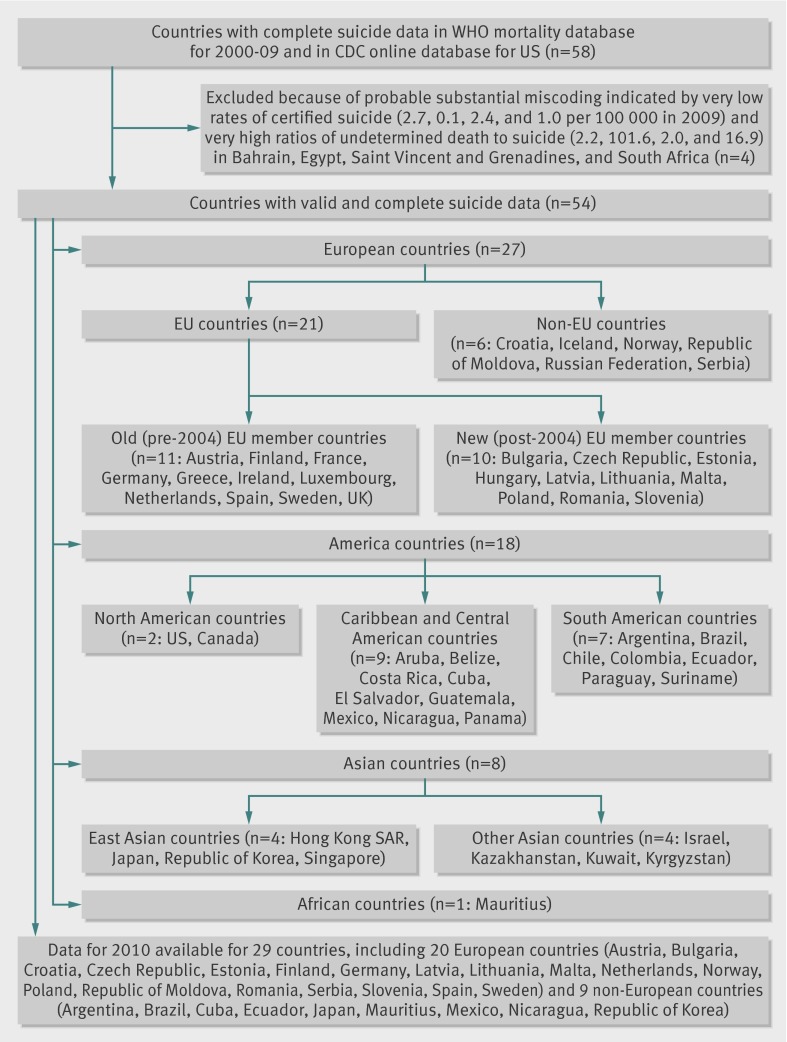
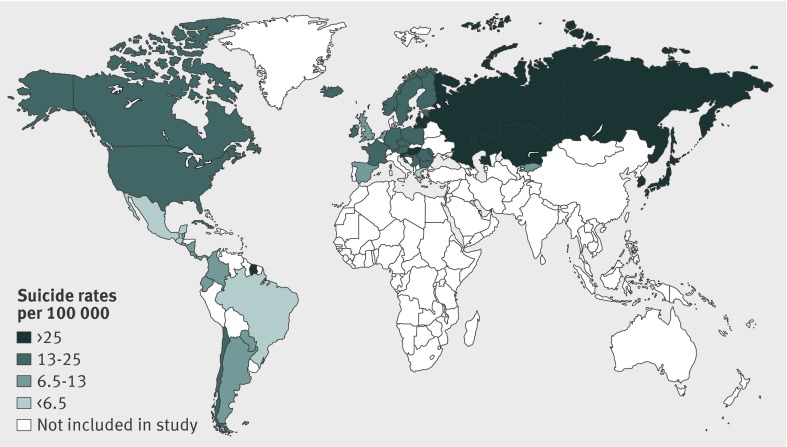
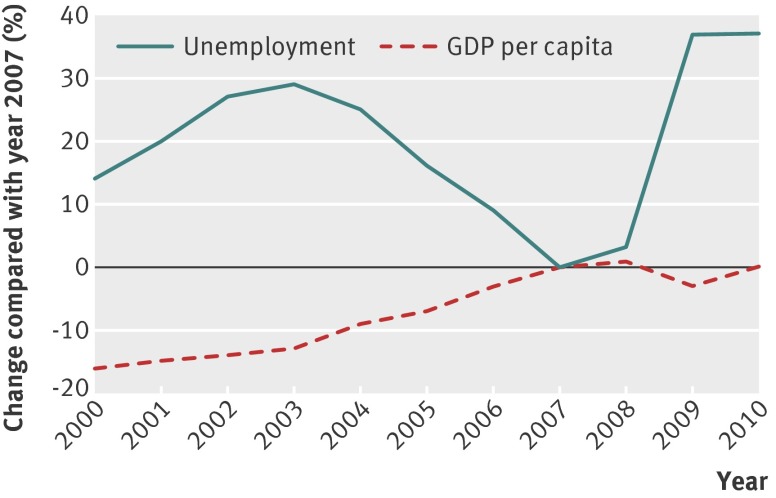
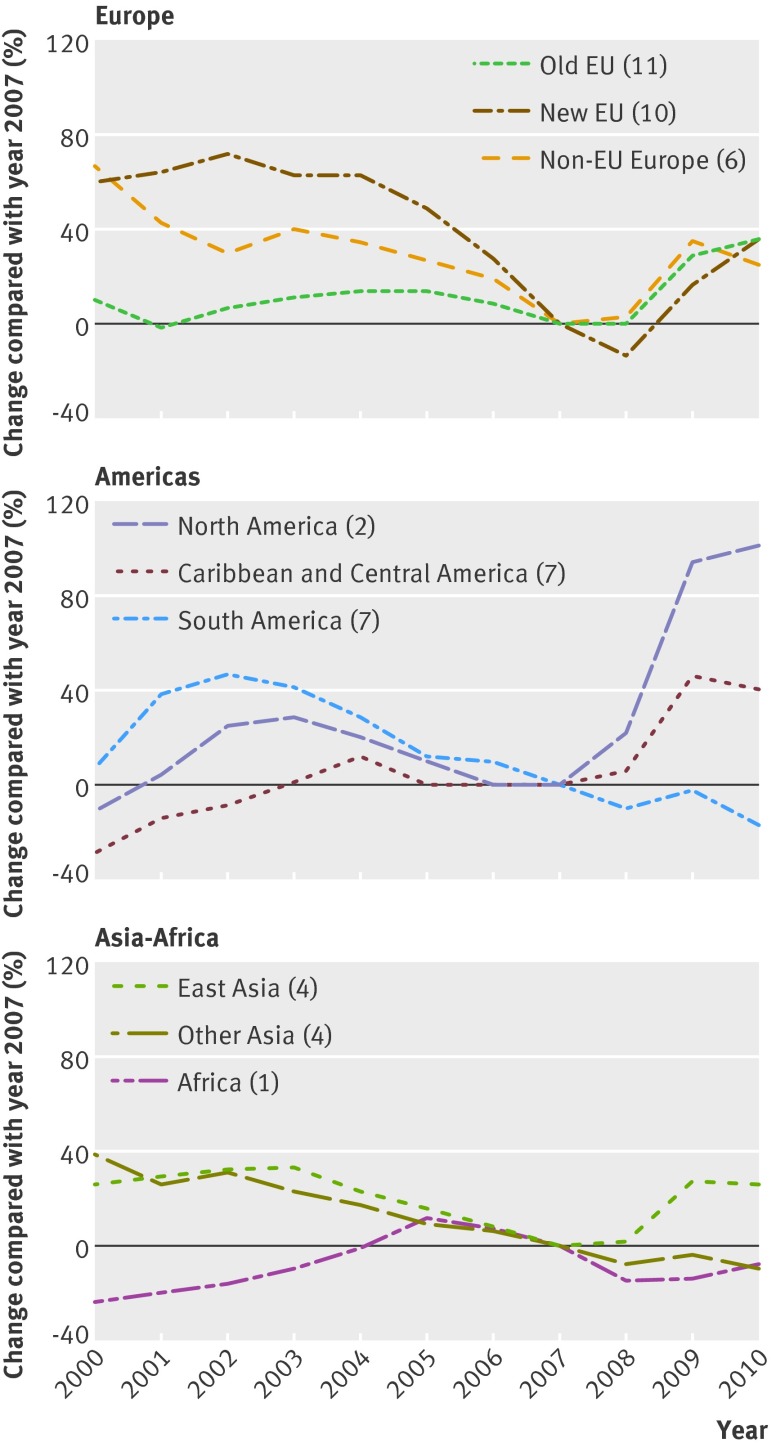
Verification
Claims the paper makes
The claims and statistics of this paper haven’t been checked yet.
Run the check — free, no account needed. It reads the open-access text and checks the sources it cites.
Claims other papers make about this one
Each is checked against this paper’s own text: does it say what the citing paper says it does?
In the citing paper
“an economic recession may have an adverse impact on suicide rates ( Chang et al., 2013; Stuckler et al., 2009).”
From The impact of the COVID-19 pandemic on self-harm and suicidal behaviour: update of living systematic review (2021) · cites this paper as Chang et al., 2013
In the citing paper
“Each was based on different assumptions, but the models largely focused on the well-characterised impact on suicide rates of periods of economic recession and rises in unemployment ( Chang et al., 2013; Stuckler et al., 2009).”
From The impact of the COVID-19 pandemic on self-harm and suicidal behaviour: a living systematic review (2020) · cites this paper as Chang et al., 2013
In the citing paper
“More recently, studies found evidence that there was an upturn in suicide rates during the financial crisis of 2007/2008 set against this overall decline.”
From The global burden of injury: incidence, mortality, disability-adjusted life years and time trends from the Global Burden of Disease study 2013 (2016) · cites this paper as [38]
In the citing paper
“Across 54 countries globally, suicide rates increased in many age groups, including those aged 15-24 years, following the 2008 global economic crisis (Chang et al., 2013).”
From Social media use, economic recession and income inequality in relation to trends in youth suicide in high-income countries: a time trends analysis (2020) · cites this paper as Chang et al., 2013
Self-check
Percentages, sums and reported differences re-computed from the paper’s own numbers.
The self-check needs the paper’s full text.
Citations
Cites
AGE STANDARDIZATION OF RATES: A NEW WHO STANDARD
Ahmad, O. B., Boschi-Pinto, C., López, A. D., Murray, C. J. L., Lozano, R., & Inoue, M. (2000) · Cited by 1,793
Stuckler, D., Basu, S., Suhrcke, M., Coutts, A., & McKee, M. (2009) · The Lancet · doi:10.1016/s0140-6736(09)61124-7 · Cited by 1,486
Financial crisis, austerity, and health in Europe
Karanikolos, M., Mladovsky, P., Cylus, J., Thomson, S., Basu, S., Stückler, D., Mackenbach, J. P., & McKee, M. (2013) · The Lancet · doi:10.1016/s0140-6736(13)60102-6 · Cited by 1,460
The International Handbook of Suicide and Attempted Suicide
(2000) · doi:10.1002/9780470698976 · Cited by 819
Borges, G., Nock, M. K., Haro Abad, J. M., Hwang, I., Sampson, N. A., Alonso, J., Andrade, L. H., Angermeyer, M. C., Beautrais, A., Bromet, E., et al. (2010) · The Journal of Clinical Psychiatry · doi:10.4088/jcp.08m04967blu · Cited by 796
Schmidtke, A., Bille‐Brahe, U., DeLeo, D., Kerkhof, A. J. F. M., Bjerke, T., Crepef, P., Häring, C., Hawton, K., Lönnqvist, J. K., Michel, K., et al. (1996) · Acta Psychiatrica Scandinavica · doi:10.1111/j.1600-0447.1996.tb10656.x · Cited by 784
Gili, M., Roca, M., Basu, S., McKee, M., & Stückler, D. (2012) · European Journal of Public Health · doi:10.1093/eurpub/cks035 · Cited by 592
Värnik, P. (2012) · International Journal of Environmental Research and Public Health · doi:10.3390/ijerph9030760 · Cited by 483
Effects of the 2008 recession on health: a first look at European data
Stückler, D., Basu, S., Suhrcke, M., Coutts, A. P., & McKee, M. (2011) · The Lancet · doi:10.1016/s0140-6736(11)61079-9 · Cited by 480
Suicides associated with the 2008-10 economic recession in England: time trend analysis
Barr, B., Taylor-Robinson, D., Scott-Samuel, A., McKee, M., & Stuckler, D. (2012) · BMJ · doi:10.1136/bmj.e5142 · Cited by 452
Research works printed but not linked: 1
- [22]Brock A, Griffiths C. Trends in suicide by method in England and Wales, 1979-2001. Health Stat Q 2003; 20: 7-17.
Cited by
Sorted by citations
Pierce, M., Hope, H., Ford, T., Hatch, S., Hotopf, M., John, A., Kontopantelis, E., Webb, R., Wessely, S., McManus, S., et al. (2020) · The Lancet Psychiatry · doi:10.1016/s2215-0366(20)30308-4 · Cited by 2,621
Why is depression more common among women than among men?
Kuehner, C. (2017) · The Lancet Psychiatry · doi:10.1016/s2215-0366(16)30263-2 · Cited by 1,752
The integrated motivational–volitional model of suicidal behaviour
O'Connor, R. C., & Kirtley, O. J. (2018) · Philosophical Transactions of the Royal Society B: Biological Sciences · doi:10.1098/rstb.2017.0268 · Cited by 1,781
Haagsma, J. A., Graetz, N., Bolliger, I., Naghavi, M., Higashi, H., Mullany, E. C., Abera, S. F., Abraham, J. P., Adofo, K., Alsharif, U., et al. (2016) · Injury Prevention · doi:10.1136/injuryprev-2015-041616 · Cited by 1,302
Self-citationTurecki, G., Brent, D. A., Gunnell, D., O’Connor, R. C., Oquendo, M. A., Pirkis, J., & Stanley, B. H. (2019) · Nature Reviews Disease Primers · doi:10.1038/s41572-019-0121-0 · Cited by 1,074
Self-citation
Metadata
- Authors
- Chang, S.-S., Stuckler, D., Yip, P., & Gunnell, D.
- Affiliations
- University of Bristol (GB)
- Hong Kong Jockey Club (HK)
- Corresponding author
- Chang, S.-S.
- ORCID
- Venue
- BMJ
- Publisher
- BMJ
- Published
- 2013-09-17
- Volume
- 347
- Issue
- sep17 1
- Pages
- f5239-f5239
- ISSN
- 1756-1833 (ISSN-L)
- PMC
- PMC3776046
- OpenAlex
- W2053391121
- Cited by
- 799
- References
- 42
- Citations by year
- 2026: 28 · 2025: 25 · 2024: 39 · 2023: 47 · 2022: 83 · 2021: 94 · 2020: 85 · 2019: 40 · 2018: 52 · 2017: 51 · 2016: 104 · 2015: 66 · 2014: 77 · 2013: 7
- FWCI
- 94.20
- Type
- journal article
- Language
- en
- Open access
- hybrid
- doi.org
- Licence
- cc-by-nc
- Locations
- BMJ (publishedVersion, cc-by-nc)
- Europe PMC (PubMed Central) (publishedVersion, cc-by-nc)
- PubMed Central (publishedVersion, cc-by-nc)
- PubMed (publishedVersion)
- Explore Bristol Research (publishedVersion)
- The HKU Scholars Hub (University of Hong Kong) (submittedVersion, cc-by-nc-nd)
- Funders
- National Institute for Health and Care Research (NF-SI-0512-10068)
- Topics
- Social Sciences › Psychology › Clinical Psychology › Suicide and Self-Harm Studies
- Social Sciences › Sociology and Political Science › Homicide, Infanticide, and Child Abuse
- Health Sciences › Medicine › Public Health, Environmental and Occupational Health › Employment and Welfare Studies
- Keywords
- suicide, economic recession, excess mortality, unemployment, sex differences, age differences, suicide rates, Europe, Americas, job loss
- MeSH terms
- Adolescent, Adult, Aged, 80 and over, Europe, Female, Humans, Inflation, Economic, Male, Regression Analysis, Social Conditions, Suicide, Unemployment, United States, Global Health, World Health Organization, Databases, Factual, Age Distribution, Sex Distribution
About these checks
Registry, retraction, Cites and statistics results are computed, not judged, with one exception: a printed reference that no index lists is read once by a model before it counts as a citation error. Claims are extracted by a model and kept only when their quote appears verbatim in the text; each cited source is then checked, with a model’s help, for whether it says what the claim relies on. Those verdicts can be wrong — read the claim’s quote and the cited source before relying on one.
Statistics and arithmetic are recomputed, not judged.
Confidence bands are shown only for fields calibrated on our annotated test set. None is calibrated yet, so no band is shown.
What counts as a claim ›How we measure confidence ›How we check this ›
Are you an author, or do you see a problem with this page? Request a review
