

The DOI matches its Crossref record; 74 of the 76 references it cites were found in a registry or an index.
Mortality risk during and after opioid substitution treatment: systematic review and meta-analysis of cohort studies.
Open accessAbstract
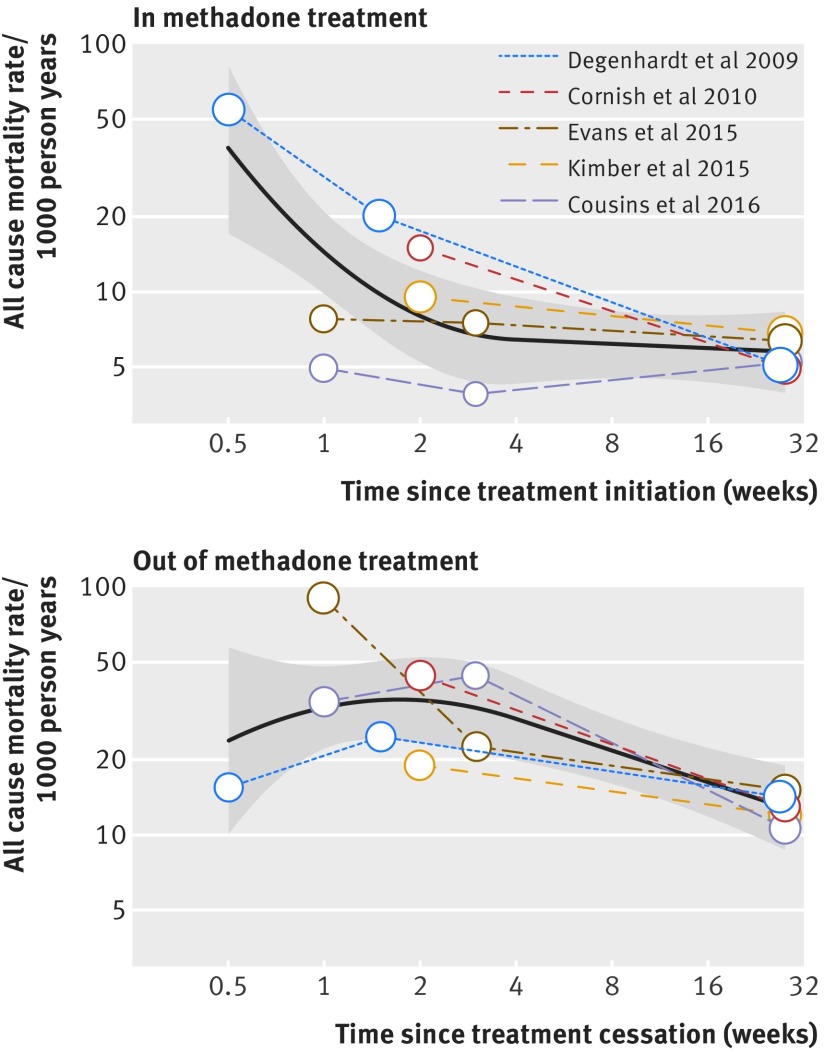
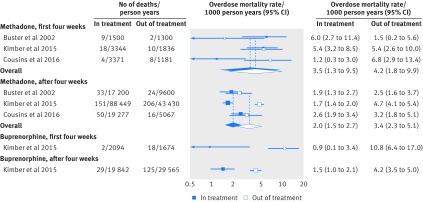
Objective To compare the risk for all cause and overdose mortality in people with opioid dependence during and after substitution treatment with methadone or buprenorphine and to characterise trends in risk of mortality after initiation and cessation of treatment. Design Systematic review and meta-analysis. Data sources Medline, Embase, PsycINFO, and LILACS to September 2016. Study selection Prospective or retrospective cohort studies in people with opioid dependence that reported deaths from all causes or overdose during follow-up periods in and out of opioid substitution treatment with methadone or buprenorphine. Data extraction and synthesis Two independent reviewers performed data extraction and assessed study quality. Mortality rates in and out of treatment were jointly combined across methadone or buprenorphine cohorts by using multivariate random effects meta-analysis. Results There were 19 eligible cohorts, following 122 885 people treated with methadone over 1.3-13.9 years and 15 831 people treated with buprenorphine over 1.1-4.5 years. Pooled all cause mortality rates were 11.3 and 36.1 per 1000 person years in and out of methadone treatment (unadjusted out-to-in rate ratio 3.20, 95% confidence interval 2.65 to 3.86) and reduced to 4.3 and 9.5 in and out of buprenorphine treatment (2.20, 1.34 to 3.61). In pooled trend analysis, all cause mortality dropped sharply over the first four weeks of methadone treatment and decreased gradually two weeks after leaving treatment. All cause mortality remained stable during induction and remaining time on buprenorphine treatment. Overdose mortality evolved similarly, with pooled overdose mortality rates of 2.6 and 12.7 per 1000 person years in and out of methadone treatment (unadjusted out-to-in rate ratio 4.80, 2.90 to 7.96) and 1.4 and 4.6 in and out of buprenorphine treatment. Conclusions Retention in methadone and buprenorphine treatment is associated with substantial reductions in the risk for all cause and overdose mortality in people dependent on opioids. The induction phase onto methadone treatment and the time immediately after leaving treatment with both drugs are periods of particularly increased mortality risk, which should be dealt with by both public health and clinical strategies to mitigate such risk. These findings are potentially important, but further research must be conducted to properly account for potential confounding and selection bias in comparisons of mortality risk between opioid substitution treatments, as well as throughout periods in and out of each treatment.
Overview
The claims and statistics of this paper haven’t been checked yet.
Run the check — free, no account needed. It reads the open-access text and checks the sources it cites.
Integrity signals
Registry
Cites
Statistics
Figures
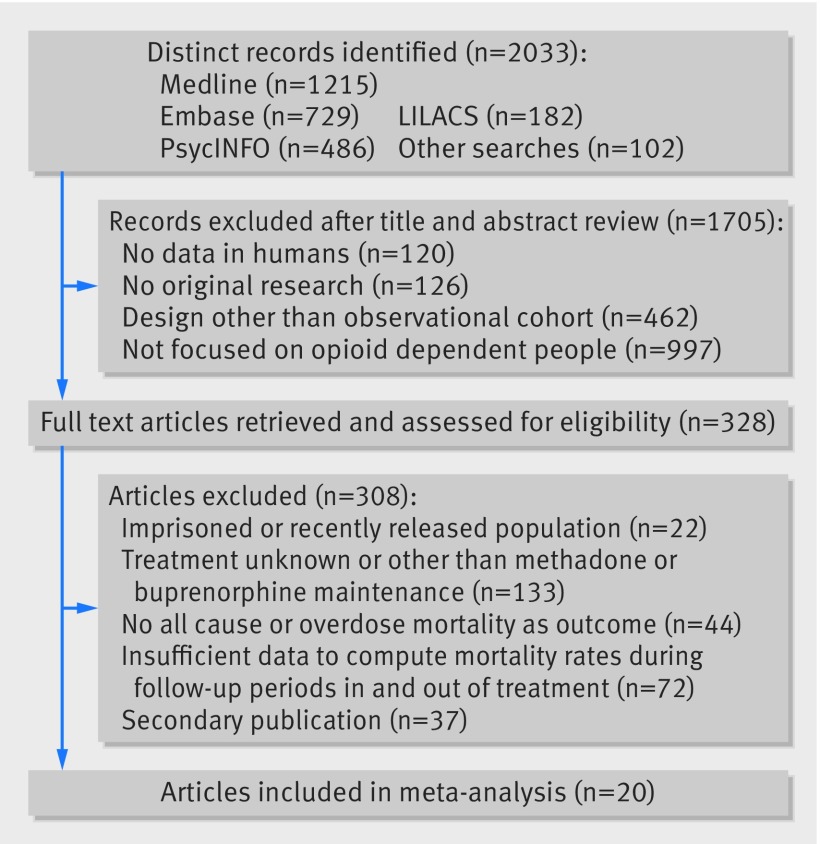
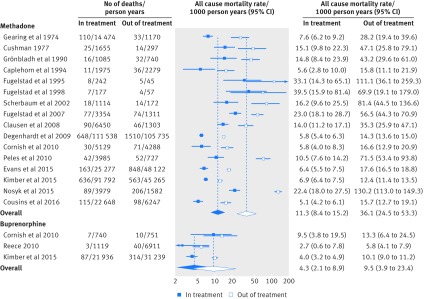
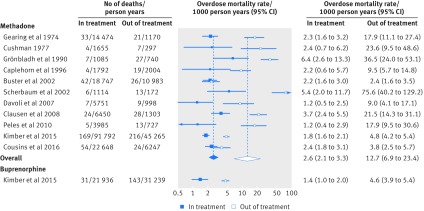
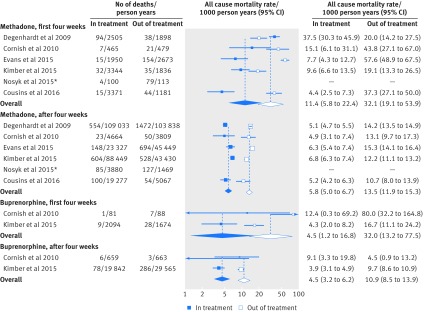
Verification
Claims the paper makes
The claims and statistics of this paper haven’t been checked yet.
Run the check — free, no account needed. It reads the open-access text and checks the sources it cites.
Claims other papers make about this one
Each is checked against this paper’s own text: does it say what the citing paper says it does?
The source backs part of the claim, not all of it — or backs it for a different population, condition or comparison.
In the citing paper
“The monthly rate of overdose among individuals treated with transmucosal buprenorphine or extended-release buprenorphine is 2.72 per 1000 people.4,32”
From Economic Evaluation of Extended-Release Buprenorphine for Persons With Opioid Use Disorder (2023) · cites this paper as [4]
Experimental — accuracy not yet measuredThe cited source says what the claim attributes to it.
In the citing paper
“Evidence shows that medications for opioid use disorder (MOUD) are a tool that helps reduce opioid-related overdose mortality.2,3,4”
From Economic Evaluation of Extended-Release Buprenorphine for Persons With Opioid Use Disorder (2023) · cites this paper as [4]
Self-check
Percentages, sums and reported differences re-computed from the paper’s own numbers.
The self-check needs the paper’s full text.
Citations
Cites
Yaşlı Kadınlarda Üreme Sağlığı
Kokanalı, D., & Engin Üstün, Y. (n.d.) · DergiPark (Istanbul University) · Cited by 170,090
Preferred Reporting Items for Systematic Reviews and Meta-Analyses: the PRISMA statement
Moher, D., Liberati, A., Tetzlaff, J., Altman, D. G., & for the PRISMA Group (2009) · BMJ · doi:10.1136/bmj.b2535 · Cited by 83,823
Bias in meta-analysis detected by a simple, graphical test
Egger, M., Smith, G. D., Schneider, M., & Minder, C. (1997) · BMJ · doi:10.1136/bmj.315.7109.629 · Cited by 56,722
Preferred reporting items for systematic reviews and meta-analyses: the PRISMA Statement.
(2009) · PubMed Central · Cited by 44,859
(2014) · Medical Entomology and Zoology · Cited by 17,633
Correspondence - Tranexamic acid for traumatic brain injury
(2005) · London School of Economics and Political Science Theses Online (London School of Economics and Political Science) · doi:10.1016/s0140-6736 · Cited by 11,894
Marginal Structural Models and Causal Inference in Epidemiology
Robins, J. M., Hernán, M. Á., & Brumback, B. (2000) · Epidemiology · doi:10.1097/00001648-200009000-00011 · Cited by 5,581
Buprenorphine maintenance versus placebo or methadone maintenance for opioid dependence
Mattick, R. P., Breen, C. L., Kimber, J., & Davoli, M. (2014) · Cochrane Database of Systematic Reviews · doi:10.1002/14651858.cd002207.pub4 · Cited by 2,312
Increases in drug and opioid-involved overdose deaths – United States, 2010-2015
Rudd, R. A., Seth, P., David, F., & Scholl, L. (2016) · MMWR. Morbidity and Mortality Weekly Report · doi:10.15585/mmwr.mm655051e1 · Cited by 2,194
Methadone maintenance therapy versus no opioid replacement therapy for opioid dependence
Mattick, R. P., Breen, C., Kimber, J., & Davoli, M. (2009) · Cochrane Database of Systematic Reviews · doi:10.1002/14651858.cd002209.pub2 · Cited by 1,654
Research works printed but not linked: 1
- [15]Degenhardt L, Calabria B, Nelson P, et al, and Global Burden of Disease Mental Disorders and Illicit Drug Use Expert group. Methodology used in a systematic review of evidence on the prevalence of amphetamine use and dependence. 2009. Sydney, National Drug and Alcohol Research Centre, University of NSW. Illicit drugs discussion paper No.13.
Cited by
Sorted by citations
Items 301–400 of 1,000
Lin, L. A., Fortney, J. C., Bohnert, A. S. B., Coughlin, L. N., Zhang, L., & Piette, J. D. (2021) · Journal of Substance Abuse Treatment · doi:10.1016/j.jsat.2021.108492 · Cited by 34
Drainoni, M., Knudsen, H. K., Adams, K., Andrews-Higgins, S., Auritt, V., Back, S., Barkowski, L. K., Batty, E. J., Behrooz, M. R., Bell, S., et al. (2022) · Journal of Substance Abuse Treatment · doi:10.1016/j.jsat.2022.108731 · Cited by 33
Foreman-Mackey, A., Pauly, B., Ivsins, A., Urbanoski, K. A., Mansoor, M., & Bardwell, G. (2022) · Substance Abuse Treatment Prevention and Policy · doi:10.1186/s13011-022-00494-y · Cited by 33
“Though OAT programs have demonstrated effectiveness in treating opioid use disorder [15, 19] and reducing all-cause mortality among people with opioid use disorder [20], certain people who use drugs are not being reached nor sufficiently accommodated, including people who do not inject substances, those in rural and r…”
BackgroundKrawczyk, N., Joudrey, P. J., Simon, R., Russell, D. M., & Frank, D. (2023) · Health Affairs Scholar · doi:10.1093/haschl/qxad018 · Cited by 32
“2 Other countries have successfully mitigated such risks, particularly in the early stages of treatment, through policies that allow for a combination of supervised and take-home dosing programs from pharmacies that can be tailored to individual patient circumstances.”
BackgroundExtended-Release 7-Day Injectable Buprenorphine for Patients With Minimal to Mild Opioid Withdrawal
D’Onofrio, G., Herring, A. A., Perrone, J., Hawk, K. F., Samuels, E. A., Cowan, E. A., Anderson, E. S., McCormack, R. P., Huntley, K., Owens, P. H., et al. (2024) · JAMA Network Open · doi:10.1001/jamanetworkopen.2024.20702 · Cited by 32
Suggested Paths to Fixing the Opioid Crisis
Samet, J. H., & Kertesz, S. G. (2018) · JAMA Network Open · doi:10.1001/jamanetworkopen.2018.0218 · Cited by 32
Long-term Outcomes of Injection Drug-related Infective Endocarditis Among People Who Inject Drugs
Suzuki, J., Johnson, J. A., Montgomery, M. W., Hayden, M. C., Price, C. N., Solomon, D. A., Liebschutz, J. M., Schnipper, J. L., & Weiss, R. D. (2019) · Journal of Addiction Medicine · doi:10.1097/adm.0000000000000572 · Cited by 32
“U 2020 American Society of Addiction Medicine Given that medications for OUD have been shown to reduce overall mortality and suppress illicit opioid use (Mattick et al., 2014; Sordo et al., 2017; Larochelle et al., 2018), medications should be offered to every OUD patient during the initial hospitalization.”
BackgroundRoxburgh, A., Hall, W., Gisev, N., & Degenhardt, L. J. (2019) · Drug and Alcohol Dependence · doi:10.1016/j.drugalcdep.2019.06.035 · Cited by 33
Quaye, A., Potter, K. W., Roth, S., Acampora, G. A., Mao, J., & Zhang, Y. (2020) · Pain Medicine · doi:10.1093/pm/pnaa020 · Cited by 32
Refusals After Prehospital Administration of Naloxone during the COVID-19 Pandemic
Glenn, M. J., Rice, A. D., Primeau, K., Hollen, A., Jado, I., Hannan, P. L., McDonough, S., Arcaris, B., Spaite, D. W., & Gaither, J. B. (2020) · Prehospital Emergency Care · doi:10.1080/10903127.2020.1834656 · Cited by 32
Sattler, S., Zolala, F., Baneshi, M. R., Ghasemi, J., & Googhari, S. A. (2021) · Frontiers in Public Health · doi:10.3389/fpubh.2021.652876 · Cited by 35
“, with methadone or buprenorphine) could help to reduce the especially high stigma toward women using stronger drugs (heroin instead of opioids) and it could also reduce the risk of death by overdose (106).”
BackgroundHarris, M. T. H., Lambert, A. M., Maschke, A., Bagley, S. M., Walley, A. Y., & Gunn, C. M. (2021) · Journal of Substance Abuse Treatment · doi:10.1016/j.jsat.2021.108655 · Cited by 32
Swartz, N., Adnan, T., Peréa, F. C., Baggett, T. P., & Chatterjee, A. (2022) · Journal of Substance Abuse Treatment · doi:10.1016/j.jsat.2022.108752 · Cited by 32
Kitchen, S. A., Campbell, T. J., Men, S., Bozinoff, N., Tadrous, M., Antoniou, T., Wyman, J., Werb, D., Munro, C., & Gomes, T. (2022) · International Journal of Drug Policy · doi:10.1016/j.drugpo.2022.103644 · Cited by 32
Tilhou, A. S., Dague, L., Saloner, B. K., Beemon, D., & Burns, M. E. (2022) · JAMA Health Forum · doi:10.1001/jamahealthforum.2022.0093 · Cited by 32
Selfridge, M., Card, K., Kandler, T., Flanagan, E., Lerhe, E., Heaslip, A., Nguyen, A., Moher, M., Pauly, B., Urbanoski, K., et al. (2022) · The International journal on drug policy · doi:10.1016/j.drugpo.2022.103709 · Cited by 29
Performance Measurement for Opioid Use Disorder Medication Treatment and Care Retention
Williams, A. R., Mauro, C., Feng, T., Wilson, A., Cruz, A., Olfson, M., Crystal, S., Samples, H., & Chiodo, L. M. (2022) · American Journal of Psychiatry · doi:10.1176/appi.ajp.20220456 · Cited by 32
Buprenorphine in Neonatal Abstinence Syndrome
Kraft, W. K. (2017) · Clinical Pharmacology & Therapeutics · doi:10.1002/cpt.930 · Cited by 32
Amiri, S., Hirchak, K. A., Lutz, R. B., McDonell, M. G., McPherson, S., Roll, J. M., & Amram, O. (2018) · Drug and Alcohol Dependence · doi:10.1016/j.drugalcdep.2018.08.024 · Cited by 32
Commentary Article: Opioid use Disorder Cascade of Care Framework Design: A Roadmap
Williams, A. R., Johnson, K., Parks, C. L., Reif, S., Socias, M. E., Henry, B. F., Neighbors, C. J., Gordon, A. J., Horgan, C. M., Nosyk, B., et al. (2022) · Substance Abuse · doi:10.1080/08897077.2022.2074604 · Cited by 33
Cannabidiol Analogue CIAC001 for the Treatment of Morphine-Induced Addiction by Targeting PKM2
Jin, S., Lin, C., Wang, Y., Wang, H., Wen, X., Xiao, P., Li, X., Peng, Y., Sun, J., Lu, Y., et al. (2023) · Journal of Medicinal Chemistry · doi:10.1021/acs.jmedchem.3c01029 · Cited by 31
Hamill, V., Wong, S., Benselin, J., Krajden, M., Hayes, P. C., Mutimer, D., Yu, A., Dillon, J. F., Gelson, W., García, H. A. V., et al. (2023) · BMJ · doi:10.1136/bmj-2022-074001 · Cited by 31
Heimer, R., Black, A. C., Lin, H., Grau, L. E., Fiellin, D. A., Howell, B. A., Hawk, K. F., D’Onofrio, G., & Becker, W. C. (2023) · Drug and Alcohol Dependence · doi:10.1016/j.drugalcdep.2023.111040 · Cited by 31
US Emergency Department Visits for Acute Harms From Prescription Opioid Use, 2016–2017
Lovegrove, M. C., Dowell, D., Geller, A. I., Goring, S. K., Rose, K. O., Weidle, N. J., & Budnitz, D. S. (2019) · American Journal of Public Health · doi:10.2105/ajph.2019.305007 · Cited by 33
Seval, N., Eaton, E., & Springer, S. A. (2019) · Open Forum Infectious Diseases · doi:10.1093/ofid/ofz539 · Cited by 31
“Unfortunately, this is more often than not a missed opportunity; however, it is not due to a lack of efficacy of MOUD, which has demonstrated improved retention in treatment and a mortality benefit through a reduction in illicit opioid use and overdoses [3, 4].”
BackgroundOpioid overdose and inpatient care for substance use disorder care in Massachusetts
Morgan, J. R., Wang, J., Barocas, J. A., Jaeger, J. L., Durham, N. N., Babakhanlou‐Chase, H., Bharel, M., Walley, A. Y., & Linas, B. P. (2020) · Journal of Substance Abuse Treatment · doi:10.1016/j.jsat.2020.01.017 · Cited by 31
“One way of achieving this may be to incorporate medications for opioid use disorder (MOUD), which are associated with reduced overdose risk (J. Morgan, Schackman, Weinstein, Walley, & Linas, 2019; Pierce et al., 2016; Sordo et al., 2017) and improved retention in care, into inpatient detoxification.”
BackgroundAndersson, L., Håkansson, A., Krantz, P., & Johnson, B. (2020) · Harm Reduction Journal · doi:10.1186/s12954-019-0354-y · Cited by 31
Operationalizing and selecting outcome measures for the HEALing Communities Study
Slavova, S. S., Larochelle, M. R., Root, E. D., Feaster, D. J., Villani, J., Knott, C. E., Talbert, J., Mack, A., Crane, D. A., Bernson, D., et al. (2020) · Drug and Alcohol Dependence · doi:10.1016/j.drugalcdep.2020.108328 · Cited by 31
“Observational studies have identified that buprenorphine and methadone are associated with reduced mortality (Larochelle et al., 2018; Sordo et al., 2017).”
Association Between Buprenorphine for Opioid Use Disorder and Mortality Risk
Vakkalanka, J. P., Lund, B. C., Arndt, S. V., Field, W., Charlton, M. E., Ward, M. M., & Carnahan, R. M. (2021) · American Journal of Preventive Medicine · doi:10.1016/j.amepre.2021.02.026 · Cited by 31
Schoenfeld, E. M., Soares, W. E., Schaeffer, E. M., Gitlin, J. A., Burke, K., & Westafer, L. M. (2021) · Academic Emergency Medicine · doi:10.1111/acem.14369 · Cited by 31
Health Professionals’ Attitudes toward Medications for Opioid use Disorder
Brown, A. (2021) · Substance Abuse · doi:10.1080/08897077.2021.1975872 · Cited by 31
“Thankfully, there are established treatment protocols for OUD which drastically reduce mortality among those addicted to opioids.(7) Pharmacological treatments such as opioid agonist treatments are the most effective treatments available for OUD.”
BackgroundZolopa, C., Høj, S. B., Minoyan, N., Bruneau, J., Makarenko, I., & Larney, S. (2022) · Addiction · doi:10.1111/add.15813 · Cited by 33
“Harm reduction programmes, first widely introduced in the 1980s, helped to reduce premature mortality of PWUD through prevention of infectious diseases and overdose [15].”
BackgroundCepeda, J., Feder, K. A., Astemborski, J. A., Schluth, C. G., Kirk, G. D., Mehta, S. H., & Genberg, B. L. (2022) · Public Health Reports · doi:10.1177/00333549221110299 · Cited by 31
Postpartum Opioid-Related Mortality in Patients With Public Insurance
Suarez, E. A., Huybrechts, K. F., Straub, L., Hernández–Dı́az, S., Creanga, A. A., Connery, H. S., Gray, K. J., Vine, S. M., Jones, H. E., & Bateman, B. T. (2023) · Obstetrics and Gynecology · doi:10.1097/aog.0000000000005115 · Cited by 30
Availability of naloxone in Canadian pharmacies:a population-based survey
Cressman, A. M., Mazereeuw, G., Guan, Q., Jia, W., Gomes, T., & Juurlink, D. N. (2017) · CMAJ Open · doi:10.9778/cmajo.20170123 · Cited by 30
Rapid Induction Therapy for Opioid-Use Disorder Using Buprenorphine Transdermal Patch: A Case Series
Saal, D. B., & Lee, F. (2020) · The Permanente Journal · doi:10.7812/tpp/19.124 · Cited by 30
Macmadu, A., Adams, J. W., Bessey, S. E., Brinkley‐Rubinstein, L., Martin, R. A., Clarke, J. G., Green, T. C., Rich, J. D., & Marshall, B. D. L. (2020) · International Journal of Drug Policy · doi:10.1016/j.drugpo.2020.102841 · Cited by 30
“discontinuation 2p at 2 weeks post-discontinuation Informed by relevant literature (Sordo et al., 2017), calibrated”
MethodModeling dynamics of fatal opioid overdose by state and across time
Cooper, R. L., Thompson, J., Edgerton, R. D., Watson, J. A., MacMaster, S. A., Kalliny, M., Huffman, M., Juárez, P. D., Matthews-Juarez, P., Tabatabai, M., et al. (2020) · Preventive Medicine Reports · doi:10.1016/j.pmedr.2020.101184 · Cited by 30
Winhusen, T. M., Wilder, C. M., Kropp, F. B., Theobald, J., Lyons, M. S., & Lewis, D. F. (2020) · Drug and Alcohol Dependence · doi:10.1016/j.drugalcdep.2020.108270 · Cited by 30
“, methadone- or buprenorphine-maintenance) significantly reduces the likelihood of opioid overdose (Larochelle et al., 2019; Sordo et al., 2017).”
Concomitant drugs with buprenorphine user deaths
Mariottini, C., Kriikku, P., & Ojanperä, I. A. (2020) · Drug and Alcohol Dependence · doi:10.1016/j.drugalcdep.2020.108345 · Cited by 30
Socias, M. E., Choi, J., Lake, S., Wood, E., Valleriani, J., Hayashi, K., Kerr, T. H., & Milloy, M. (2020) · Drug and Alcohol Dependence · doi:10.1016/j.drugalcdep.2020.108420 · Cited by 30
“Although the mortality benefits of OAT are well established (Sordo et al., 2017), there is limited data on the effectiveness of these medications in the context of the fentanyl crisis (Stone et al.”
BackgroundSmith, A. T., Hansen, J., & Colvard, M. D. (2021) · Journal of Substance Abuse Treatment · doi:10.1016/j.jsat.2021.108440 · Cited by 30
Acceptance of medications for opioid use disorder in recovery housing programs in Missouri
Wood, C. A., Duello, A., Miles, J., Lohmann, B., Gochez‐Kerr, T., Richardson, K., Anderson-Harper, R., & Winograd, R. (2022) · Journal of Substance Abuse Treatment · doi:10.1016/j.jsat.2022.108747 · Cited by 30
Whiteside, L., D’Onofrio, G., Fiellin, D. A., Edelman, E. J., Richardson, L. D., O’Connor, P. G., Rothman, R. E., Cowan, E. A., Lyons, M. S., Fockele, C. E., et al. (2022) · Annals of Emergency Medicine · doi:10.1016/j.annemergmed.2022.05.010 · Cited by 30
Top Ten Tips Palliative Care Clinicians Should Know About Buprenorphine
Neale, K., Weimer, M. B., Davis, M. P., Jones, K. F., Kullgren, J. G., Kale, S. S., Childers, J. W., Broglio, K., Merlin, J. S., Peck, S., et al. (2022) · Journal of Palliative Medicine · doi:10.1089/jpm.2022.0399 · Cited by 30
“75 As with any chronic disease treatment, some individuals taking buprenorphine for OUD continue to show signs of active disease.”
Opioid substitution treatment is linked to reduced risk of death in opioid use disorder
Manhapra, A., Rosenheck, R. A., & Fiellin, D. A. (2017) · BMJ · doi:10.1136/bmj.j1947 · Cited by 32
Safety of Rapid Inpatient Methadone Initiation Protocol: A Retrospective Cohort Study
Racha, S., Patel, S., Harfouch, L. B., Berger, O., & Buresh, M. E. (2022) · Journal of Substance Use and Addiction Treatment · doi:10.1016/j.josat.2023.209004 · Cited by 29
Prada-Ramallal, G., Roque, F., Herdeiro, M. T., Takkouche, B., & Figueiras, A. (2018) · BMC Medical Research Methodology · doi:10.1186/s12874-018-0561-3 · Cited by 45
Elbatarny, M., Bahji, A., Bisleri, G., & Hamilton, A. (2019) · General Hospital Psychiatry · doi:10.1016/j.genhosppsych.2019.01.008 · Cited by 29
Opioid Use Disorder and Incarceration — Hope for Ensuring the Continuity of Treatment
Binswanger, I. A. (2019) · New England Journal of Medicine · doi:10.1056/nejmp1900069 · Cited by 29
Rhee, T. G., & Rosenheck, R. A. (2019) · Addiction · doi:10.1111/add.14733 · Cited by 30
Morozova, O., Crawford, F. W., Cohen, T., Paltiel, A. D., & Altice, F. L. (2019) · Addiction · doi:10.1111/add.14797 · Cited by 30
“This is a conservative assumption given costs associated with higher rates of overdose and emergency room utilization among untreated POUD compared to those receiving OAT [37].”
ResultWinhusen, T. M., Wilder, C. M., Lyons, M. S., Theobald, J., Kropp, F. B., & Lewis, D. F. (2020) · Drug and Alcohol Dependence · doi:10.1016/j.drugalcdep.2020.108265 · Cited by 30
At the intersection of sleep deficiency and opioid use: mechanisms and therapeutic opportunities
Greenwald, M. K., Moses, T. E. H., & Roehrs, T. (2021) · Translational research · doi:10.1016/j.trsl.2021.03.006 · Cited by 29
Spadaro, A., Faude, S., Perrone, J., Thakrar, A. P., Lowenstein, M., Delgado, M. K., & Kilaru, A. S. (2023) · Journal of the American College of Emergency Physicians Open · doi:10.1002/emp2.12880 · Cited by 29
Dissemination of Contingency Management for the Treatment of Opioid Use Disorder
DeFulio, A. (2023) · Perspectives on Behavior Science · doi:10.1007/s40614-022-00328-z · Cited by 28
“Medications such as methadone and buprenorphine (Suboxone®) are effective in promoting abstinence from illicit opioids and preventing drug overdose (Sordo et al., 2017; Strain et al., 1994).”
BackgroundSchoenfeld, E. M., Westafer, L. M., Beck, S. A., Potee, B. G., Vysetty, S., Simon, C., Tozloski, J. M., Girardin, A. L., & Soares, W. E. (2022) · Academic Emergency Medicine · doi:10.1111/acem.14507 · Cited by 29
“Additionally, participants felt that: (1) both buprenorphine and methadone should be offered; (2) because “one person's pro is another person's con,” clinicians will need to understand the facets of the options; (3) clinicians will need to have these conversations without appearing judgmental; and (4) many patients ma…”
BackgroundSocias, M. E., Wood, E., Foll, B. L., Lim, R., Choi, J. C., Mok, W. Y., Bruneau, J., Rehm, J. T., Wild, T. C., Bozinoff, N., et al. (2022) · Addiction · doi:10.1111/add.15954 · Cited by 32
Thakrar, A. P., Pytell, J. D., Stoller, K. B., Walters, V., Weiss, R. D., & Chander, G. (2023) · Journal of Substance Use and Addiction Treatment · doi:10.1016/j.josat.2023.209055 · Cited by 29
Hui, D. S. C., Weinstein, Z., Cheng, D. M., Quinn, E. K., Kim, H. W., LaBelle, C. T., & Samet, J. H. (2017) · Journal of Substance Abuse Treatment · doi:10.1016/j.jsat.2017.05.010 · Cited by 28
“(Bart, 2012; Dunn, Sigmon, Strain, Heil, & Higgins, 2011; Fudala et al., 2003; Kakko, Svanborg, Kreek, & Heilig, 2003; Sordo et al., 2017) Successful buprenorphine treatment retention is associated with reduced mortality, improved social function, decreased illicit drug use, and improved quality of…”
BackgroundOpioid use disorder in primary care: PEER umbrella systematic review of systematic reviews.
Korownyk, C. S., Perry, D., Ton, J., Kolber, M. R., Garrison, S., Thomas, B., Allan, G. M., Dugré, N., Finley, C. R., Ting, R., et al. (2019) · Europe PMC (PubMed Central) · Cited by 29
Managing Pain in the Setting of Opioid Use Disorder
Marie, B. S., & Broglio, K. (2019) · Pain Management Nursing · doi:10.1016/j.pmn.2019.08.003 · Cited by 31
“Buprenorphine may be a safer option than methadone owing to its ceiling effect (Sordo et al., 2017), decreased risk of QTc”
BackgroundAldabergenov, D., Reynolds, L., Scott, J., Kelleher, M., Strang, J., Copeland, C. S., & Kalk, N. J. (2022) · International Journal of Drug Policy · doi:10.1016/j.drugpo.2022.103877 · Cited by 28
Hedrich, D., & Hartnoll, R. (2020) · Textbook of Addiction Treatment · doi:10.1007/978-3-030-36391-8_52 · Cited by 38
Saucier, R., Wolfe, D., & Dasgupta, N. (2018) · Drug Safety · doi:10.1007/s40264-018-0653-3 · Cited by 28
Russolillo, A., Moniruzzaman, A., & Somers, J. M. (2018) · PLoS Medicine · doi:10.1371/journal.pmed.1002625 · Cited by 28
Larney, S., Hickman, M., Fiellin, D. A., Dobbins, T., Nielsen, S., Jones, N. R., Mattick, R. P., Ali, R. L., & Degenhardt, L. J. (2018) · BMJ Open · doi:10.1136/bmjopen-2018-025204 · Cited by 30
“26–28 Additional adverse outcomes during OAT may include non-fatal overdoses, accidents 29 or cardiac problems resulting from QT interval prolongation.”
BackgroundTruong, C., Krawczyk, N., Dejman, M., Marshall-Shah, S., Tormohlen, K. N., Agus, D., & Bass, J. (2019) · Addictive Behaviors · doi:10.1016/j.addbeh.2019.01.020 · Cited by 28
“Medication-assisted therapies (MAT) for OUD have been found to be safe, significantly reduce risk of overdose, increase treatment adherence, and decrease transmission of infectious disease (Voklow, Frieden, Hyde, & Cha, 2014; Sordo et al., 2017; Mattick, Breen, Kimber, & Davoli, 2009; Tsui, Evans & Lum, 2014; Metzger…”
BackgroundThylstrup, B., Seid, A. K., Tjagvad, C., & Hesse, M. (2019) · Drug and Alcohol Dependence · doi:10.1016/j.drugalcdep.2019.107714 · Cited by 28
Discharges “Against Medical Advice” in Patients With Opioid-related Hospitalizations
Santos, C. J., Shofer, F. S., Lowenstein, M., & Perrone, J. (2020) · Journal of Addiction Medicine · doi:10.1097/adm.0000000000000688 · Cited by 28
“methadone and buprenorphine – improve a number of outcomes including reductions in overdose and all-cause mortality, illicit drug use, and transmission of infectious disease (Mattick et al., 2009; Mattick et al., 2014; Volkow et al., 2014; Alderks, 2017; Sordo et al., 2017).”
BackgroundJones, N. R., Nielsen, S., Farrell, M., Ali, R. L., Gill, A., Larney, S., & Degenhardt, L. J. (2020) · Drug and Alcohol Dependence · doi:10.1016/j.drugalcdep.2020.108464 · Cited by 28
“The risk of death is halved while on OAT as compared to out-of-treatment (Degenhardt et al., 2019; Sordo et al., 2017), survival benefits increase with cumulative exposure to treatment (Kimber et al.”
BackgroundCallister, C., Lockhart, S., Holtrop, J. S., Hoover, K., & Calcaterra, S. L. (2021) · Substance Abuse · doi:10.1080/08897077.2021.1975873 · Cited by 28
Chaillon, A., Bharat, C., Stone, J., Jones, N., Degenhardt, L. J., Larney, S., Farrell, M., Vickerman, P. T., Hickman, M., Martin, N. K., et al. (2021) · Addiction · doi:10.1111/add.15736 · Cited by 28
Lambdin, B. H., Bluthenthal, R. N., Tookes, H. E., Wenger, L. D., Morris, T., LaKosky, P. A., & Kral, A. H. (2022) · Drug and Alcohol Dependence · doi:10.1016/j.drugalcdep.2022.109504 · Cited by 28
“Buprenorphine, a MOUD approved by the US Food and Drug Administration in 2002, has a strong evidence-base and has been shown to reduce opioid overdose mortality (US Department of Health and Human Services, 2020; Sordo et al., 2017).”
BackgroundBergman, B. G., Ashford, R. D., & Kelly, J. F. (2019) · Experimental and Clinical Psychopharmacology · doi:10.1037/pha0000325 · Cited by 28
“Opioid use disorder (OUD) agonist medications, such as methadone, and partial agonist medications, such as buprenorphine (typically prescribed in a formulation with naloxone that can be taken sublingually, marketed in the United States as Suboxone), reduce the likelihood of illicit opioid use and opioid-involved overd…”
BackgroundGlanz, J. M., Binswanger, I. A., Clarke, C. L., Nguyen, A. P., Ford, M. A., Ray, G. T., Xu, S., Hechter, R. C., Yarborough, B. J. H., Roblin, D. W., et al. (2022) · Addiction · doi:10.1111/add.15998 · Cited by 27
“Published studies have documented higher mortality in the first 4 weeks off treatment [5]; therefore, Kaplan – Meier curves for all-cause mortality were generated to visually examine the survival probabilities across groups over time.”
InfluentialThe projected costs and benefits of a supervised injection facility in Seattle, WA, USA
Hood, J. E., Behrends, C. N., Irwin, A., Schackman, B. R., Chan, D., Hartfield, K., Hess, J., Banta‐Green, C. J., Whiteside, L., Finegood, B., et al. (2019) · International Journal of Drug Policy · doi:10.1016/j.drugpo.2018.12.015 · Cited by 27
Get Waivered: A Resident-Driven Campaign to Address the Opioid Overdose Crisis
Martin, A., Kunzler, N. M., Nakagawa, J., Lee, B., Wakeman, S. E., Weiner, S. G., & Raja, A. S. (2019) · Annals of Emergency Medicine · doi:10.1016/j.annemergmed.2019.04.035 · Cited by 27
Bukten, A., Stavseth, M. R., & Clausen, T. (2019) · BMC Health Services Research · doi:10.1186/s12913-019-4382-9 · Cited by 27
“In a recent meta-analysis, Sordo and colleagues [14] synthesised evidence from cohort studies Table 2 All cause and cause-specific mortality rates, before, during and after treatment; crude mortality rates (CMR) per 1000 person-years and 95% confidence interval”
BackgroundResultBahji, A., Carlone, D., & Altomare, J. (2019) · Addiction · doi:10.1111/add.14946 · Cited by 27
Stahler, G. J., & Mennis, J. L. (2020) · Drug and Alcohol Dependence · doi:10.1016/j.drugalcdep.2020.108067 · Cited by 27
Finlay, A. K., Morse, E. F., Stimmel, M. A., Taylor, E. N., Timko, C., Harris, A. H. S., Smelson, D. A., Yu, M., Blue‐Howells, J., & Binswanger, I. A. (2020) · Journal of General Internal Medicine · doi:10.1007/s11606-020-05944-6 · Cited by 27
Tiako, M. J. N., Culhane, J. F., South, E. C., Srinivas, S. K., & Meisel, Z. F. (2020) · JAMA Network Open · doi:10.1001/jamanetworkopen.2020.29043 · Cited by 27
Hatch‐Maillette, M. A., Peavy, K. M., Tsui, J. I., Banta‐Green, C. J., Woolworth, S., & Grekin, P. (2020) · Journal of Substance Abuse Treatment · doi:10.1016/j.jsat.2020.108223 · Cited by 27
Overcoming Barriers to Treatment of Opioid Use Disorder
Olsen, Y. K., Fitzgerald, R. M., & Wakeman, S. E. (2021) · JAMA · doi:10.1001/jama.2021.1741 · Cited by 27
Sokol, R. G., Tammaro, E., Kim, J. Y., & Stopka, T. J. (2021) · Substance Use & Misuse · doi:10.1080/10826084.2021.1906280 · Cited by 27
“…disorder (MOUD), such as buprenorphine-naloxone (B/N), methadone, and naltrexone, have been proven to cut mortality rates by more than three-fold (Sordo et al., 2017), only two in five patients with opioid use disorder (OUD) receive these evidence-based treatments (Larochelle et al., 2018;…”
BackgroundSamuels, E. A., Wentz, A. E., McCormick, M., McDonald, J., Marshall, B. D. L., Friedman, C., Koziol, J. A., & Alexander-Scott, N. E. (2021) · Annals of Emergency Medicine · doi:10.1016/j.annemergmed.2021.02.004 · Cited by 27
Zhang, P., Tossone, K., Ashmead, R., Bickert, T., Bailey, E., Doogan, N., Mack, A., Schmidt, S., & Bonny, A. E. (2021) · Journal of Substance Abuse Treatment · doi:10.1016/j.jsat.2021.108686 · Cited by 27
Lambdin, B. H., Kan, D., & Kral, A. H. (2022) · Substance Abuse Treatment Prevention and Policy · doi:10.1186/s13011-022-00483-1 · Cited by 27
“Buprenorphine, a MOUD approved by the US Food and Drug Administration in 2002, has a strong evidence-base showing reductions in opioid use and opioid overdose mortality [2, 3].”
BackgroundChatterjee, A., Weitz, M., Savinkina, A. A., Macmadu, A., Madushani, R. W. M. A., Potee, R. A., Ryan, D., Murphy, S. M., Walley, A. Y., & Linas, B. P. (2023) · JAMA Network Open · doi:10.1001/jamanetworkopen.2023.7036 · Cited by 27
Jakubowski, A. U., Singh‐Tan, S., Torres‐Lockhart, K., Nahvi, S., Stein, M., Fox, A. D., & Lu, T. Y. (2023) · Addiction Science & Clinical Practice · doi:10.1186/s13722-023-00386-x · Cited by 27
“Differences between initiators and non‐initiators Among those who had initiated buprenorphine and/or methadone, the median number of patients initiated was 2 [Q1, Q3] = [1, 2] for buprenorphine and 3 [Q1, Q3] = [1, 5] for methadone.”
BackgroundLong‐Term Retention in an Outpatient Behavioral Health Clinic With Buprenorphine
Montalvo, C., Stankiewicz, B., Brochier, A., Henderson, D. C., & Borba, C. P. C. (2019) · American Journal on Addictions · doi:10.1111/ajad.12896 · Cited by 26
Methadone treatment of arrestees: A randomized clinical trial
Schwartz, R. P., Kelly, S. M., Mitchell, S. G., O’Grady, K. E., Sharma, A., & Jaffe, J. H. (2019) · Drug and Alcohol Dependence · doi:10.1016/j.drugalcdep.2019.107680 · Cited by 26
“, 2009) and reduced drug-related mortality (Sordo et al., 2017).”
Harvey, L. M., Fan, W., Cano, M. Á., Vaughan, E. L., Arbona, C., Essa, S., Sanchez, H. F., & de Dios, M. A. (2020) · Journal of Substance Abuse Treatment · doi:10.1016/j.jsat.2020.01.016 · Cited by 26
Diagnosis and Management of Opioid Use Disorder in Hospitalized Patients
Herscher, M., Fine, M., Navalurkar, R., Hirt, L., & Wang, L. (2020) · Medical Clinics of North America · doi:10.1016/j.mcna.2020.03.003 · Cited by 26
Cheema, E. U., McGuinness, K., Hadi, M. A., Paudyal, V., Elnaem, M. H., Alhifany, A. A., Elrggal, M. E., & Hamid, A. A. (2020) · Journal of Pain Research · doi:10.2147/jpr.s280462 · Cited by 28
Emergency department‐initiated buprenorphine protocols: A national evaluation
Guo, C. Z., D’Onofrio, G., Fiellin, D. A., Edelman, E. J., Hawk, K. F., Herring, A. A., McCormack, R. P., Perrone, J., & Cowan, E. A. (2021) · Journal of the American College of Emergency Physicians Open · doi:10.1002/emp2.12606 · Cited by 26
Russell, C., Nafeh, F., Pang, M., MacDonald, S. F., Derkzen, D. M., Rehm, J. T., & Fischer, B. (2022) · BMC Public Health · doi:10.1186/s12889-022-12685-0 · Cited by 26
“Furthermore, correctional populations face high odds of substance userelated relapse and overdose upon release, which can be mediated by OAT provision [48, 60].”
BackgroundBemanian, M., Vold, J. H., Chowdhury, R., Aas, C. F., Gjestad, R., Johansson, K. A., & Fadnes, L. T. (2022) · International Journal of Environmental Research and Public Health · doi:10.3390/ijerph19095754 · Cited by 26
Mintz, C. M., Xu, K. Y., Presnall, N. J., Hartz, S. M., LEVIN, F. R., Scherrer, J. F., Bierut, L. J., & Grucza, R. A. (2022) · JAMA Network Open · doi:10.1001/jamanetworkopen.2022.11634 · Cited by 26
Metadata
- Authors
- Sordo, L., Barrio, G., Bravo, M. J., Indave, B. I., Degenhardt, L., Wiessing, L., Ferri, M., & Pastor-Barriuso, R.
- Affiliations
- Universidad Complutense de Madrid (ES)
- Instituto de Salud Carlos III (ES)
- The University of Melbourne (AU)
- European Monitoring Centre for Drugs and Drug Addiction (PT)
- Corresponding author
- Barrio, Gregorio
- Venue
- BMJ
- Publisher
- BMJ
- Published
- 2017-04-26
- Volume
- 357
- Pages
- j1550
- ISSN
- 1756-1833 (ISSN-L)
- 0959-8138
- PMC
- PMC5421454
- OpenAlex
- W2608446001
- Cited by
- 1,816
- References
- 76
- Citations by year
- 2026: 156 · 2025: 194 · 2024: 201 · 2023: 239 · 2022: 228 · 2021: 261 · 2020: 213 · 2019: 187 · 2018: 99 · 2017: 32
- FWCI
- 23.58
- Type
- journal article
- Language
- en
- Open access
- hybrid
- doi.org
- Licence
- Locations
- BMJ (publishedVersion, cc-by-nc)
- Europe PMC (PubMed Central) (publishedVersion, cc-by-nc)
- PubMed Central (publishedVersion, cc-by-nc)
- PubMed (publishedVersion)
- LA Referencia (Red Federada de Repositorios Institucionales de Publicaciones Científicas) (submittedVersion, cc-by-nc-sa)
- Minerva Access (University of Melbourne) (submittedVersion, cc-by-nc)
- HighWire Press Open Archive (submittedVersion)
- Topics
- Health Sciences › Medicine › Public Health, Environmental and Occupational Health › Opioid Use Disorder Treatment
- Health Sciences › Medicine › Epidemiology › Substance Abuse Treatment and Outcomes
- Health Sciences › Medicine › Epidemiology › HIV, Drug Use, Sexual Risk
- Keywords
- opioid substitution therapy, methadone, buprenorphine, opioid use disorder, all-cause mortality, drug overdose deaths, treatment retention, treatment discontinuation, harm reduction, opioid antagonists
- MeSH terms
- Buprenorphine, Humans, Methadone, Opioid-Related Disorders, Narcotics, Risk, Opiate Substitution Treatment, Drug Overdose
About these checks
Registry, retraction, Cites and statistics results are computed, not judged, with one exception: a printed reference that no index lists is read once by a model before it counts as a citation error. Claims are extracted by a model and kept only when their quote appears verbatim in the text; each cited source is then checked, with a model’s help, for whether it says what the claim relies on. Those verdicts can be wrong — read the claim’s quote and the cited source before relying on one.
Statistics and arithmetic are recomputed, not judged.
Confidence bands are shown only for fields calibrated on our annotated test set. None is calibrated yet, so no band is shown.
What counts as a claim ›How we measure confidence ›How we check this ›
Are you an author, or do you see a problem with this page? Request a review
