

Medication adherence and glycemic control among newly diagnosed diabetes patients
Open accessThe DOI matches its Crossref record; 31 of the 32 references it cites were found in a registry or an index.
Abstract
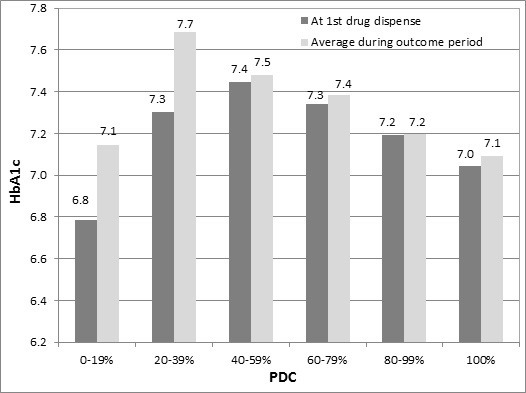
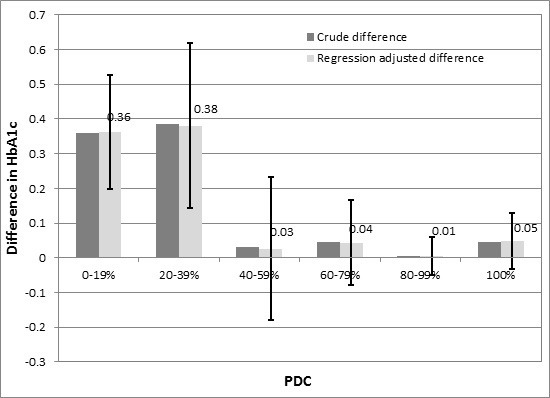
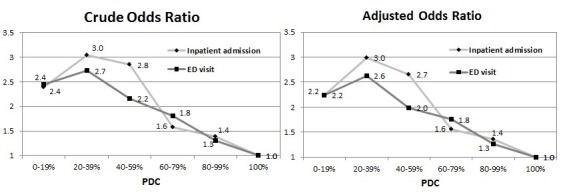
Background: Poor medication adherence can have negative consequences for the patients, the provider, the physician, and the sustainability of the healthcare system. To our knowledge, the association between medication adherence and glycemic control among newly diagnosed diabetes patients has not been studied. This study aims to bridge the gap. Method: This is a retrospective cohort study of 2463 patients managed in the National Healthcare Group in Singapore with newly diagnosed diabetes. Patients were followed up for the first two years from their first medication dispensed for measuring medication adherence, proportion of days covered (PDC); and for another three years for investigating outcomes of glycemic control, emergency department visit, and hospitalization. Multivariable regressions were performed to study the association between medication adherence and the outcomes as well as the risk factors of poor adherence. Results: The prevalence of medication adherence (PDC≥80%) was 65.0% (95% CI 63.1% to 66.9%) among newly diagnosed diabetes patients in Singapore. Male, Indian, or patients without hypertension or dyslipidemia were associated with poorer medication adherence. The HbA1c level of poor adherent patients (PDC <40%) increased by 0.4 (95% CI 0.2 to 0.5) over the two years, and they were also more likely to have hospitalization (OR 2.6,95% CI 1.7 to 3.8) or emergency department visit (OR 2.4,95% CI 1.7 to 3.4) compared with the fully adherent patients (PDC=100%). Conclusions: The medication adherence in the early stage of diabetes is important for maximizing the effectiveness of pharmaceutical therapy. Health policies or interventions targeting the improvement of medication adherence among newly diagnosed diabetes patients are in need.
Overview
The claims and statistics of this paper haven’t been checked yet.
Free: it reads the open-access text and checks the first 5 claims that cite a source we can check. Create a free account to check every claim.
Integrity signals
Registry
Cites
Statistics
Figures
Verification
Claims the paper makes
The claims and statistics of this paper haven’t been checked yet.
Free: it reads the open-access text and checks the first 5 claims that cite a source we can check. Create a free account to check every claim.
Claims other papers make about this one
Each is checked against this paper’s own text: does it say what the citing paper says it does?
In the citing paper
“Treatment adherence, particularly in the early stages of T2D, is important for augmenting the effectiveness of pharmaceutical therapy and improving glycemic outcomes [32].”
Self-check
Percentages, sums and reported differences re-computed from the paper’s own numbers.
The self-check needs the paper’s full text.
Citations
Cites
Impact of Medication Adherence on Hospitalization Risk and Healthcare Cost
Sokol, M. C., McGuigan, K. A., Verbrugge, R. R., & Epstein, R. S. (2005) · Medical Care · doi:10.1097/01.mlr.0000163641.86870.af · Cited by 1,729 · cited 1×
“…glycemic control 9–16 ; of eight studies that evaluated hospitalization, seven showed higher adher-ences were associated with fewer hospitalizations 9 14 17–22 ; and of three studies that evaluated emergency department (ED) visits, two found higher adherences were associated with fewer visits.”
BackgroundHo, P. M., Rumsfeld, J. S., Masoudi, F. A., McClure, D. L., Plomondon, M. E., Steiner, J. F., & Magid, D. J. (2006) · Archives of Internal Medicine · doi:10.1001/archinte.166.17.1836 · Cited by 1,135
Morris, A. D., Boyle, D. I., McMahon, A. D., Greene, S. A., MacDonald, T. M., & Newton, R. W. (1997) · The Lancet · doi:10.1016/s0140-6736(97)06234-x · Cited by 507
Health Beliefs, Disease Severity, and Patient Adherence: A Meta-Analysis
DiMatteo, M. R., Haskard, K. B., & Williams, S. L. (2007) · Medical Care · doi:10.1097/mlr.0b013e318032937e · Cited by 482 · cited 1×
“They concluded that better patient adherence was associated with objectively poorer health only for patients experiencing disease conditions lower in seriousness; among conditions higher in seriousness, worse adherence was associated with objectively poorer health.(34) The relationship between medication adherence and…”
BackgroundA Review of Diabetes Treatment Adherence and the Association with Clinical and Economic Outcomes
Asche, C., LaFleur, J., & Conner, C. (2011) · Clinical Therapeutics · doi:10.1016/j.clinthera.2011.01.019 · Cited by 420
Clinical Outcomes and Adherence to Medications Measured by Claims Data in Patients With Diabetes
Pladevall, M., Williams, L. K., Potts, L. A., Divine, G., Xi, H., & Elston Lafata, J. (2004) · Diabetes Care · doi:10.2337/diacare.27.12.2800 · Cited by 404
Measuring concurrent adherence to multiple related medications.
Choudhry, N. K., Shrank, W. H., Levin, R., Lee, J. L.-Y., Jan, S. A., Brookhart, M. A., & Solomon, D. H. (2009) · PubMed · Cited by 383
The association between diabetes metabolic control and drug adherence in an indigent population
Schectman, J. M., Nadkarni, M. M., & Voss, J. D. (2002) · Diabetes Care · doi:10.2337/diacare.25.6.1015 · Cited by 373 · cited 1×
“16%.(35) Ho et al found that each 25% increase in medication adherence to oral hypoglycemics was associated with −0.”
Backgroundfor the ADVANCE Collaborative Group, Zoungas, S., Chalmers, J., Ninomiya, T., Li, Q., Cooper, M. E., Colagiuri, S., Fulcher, G., de Galan, B. E., Harrap, S., et al. (2012) · Diabetologia · doi:10.1007/s00125-011-2404-1 · Cited by 358
Lau, D. T., & Nau, D. P. (2004) · Diabetes Care · doi:10.2337/diacare.27.9.2149 · Cited by 318
Research works printed but not linked: 1
- Gottlieb H. Medication nonadherence: finding solutions to a costly medical problem CME. Drug Benefit Trends 2000;12:57-62.
Cited by
Items 101–121 of 121
Machine Learning Approaches for Type 2 Diabetes Prediction and Care ManagementPreprint
Lim, A., Singh, A. P., Chiam, J., Eckert, C., Kumar, V., Ahmad, M. A., & Teredesai, A. M. (2021) · arXiv (Cornell University) · doi:10.48550/arxiv.2104.07820 · Cited by 4
Efficacy of dulaglutide: an evidence-based review of its potential indications
Biryukova, E. V., & Solovyeva, I. V. (2021) · Meditsinskiy sovet = Medical Council · doi:10.21518/2079-701x-2021-7-18-30
Prevalence and Determinants of Drug Adherence in Type 2 Diabetes Mellitus Patients
Mendrofa, T. K., Girsang, E., Nasution, S. L. R., & Ginting, C. N. (2022) · Jurnal Aisyah Jurnal Ilmu Kesehatan · doi:10.30604/jika.v7i1.873
“Previous studies have shown that DM medication adherence should be maximized (Lin et al., 2017; Vervloet et al., 2012).”
BackgroundInfluentialKlinovszky, A. (2022) · SZTE Repository of Dissertations (University of Szeged) · doi:10.14232/phd.11080 · Cited by 2
Wong, S. K. W. (2022) · DR-NTU (Nanyang Technological University) · doi:10.32657/10356/163576 · Cited by 2
Jarujumrus, I. (2020) · Chula Digiverse · doi:10.58837/chula.the.2020.428
Arasyi, H. A. N., Razantira, D. L., Rizqiyah, F. J., Prasetya, S. Z., Ernadiyanto, D. A., & Utomo, B. (2023) · Journal of Community Medicine and Public Health Research · doi:10.20473/jcmphr.v4i1.44310
Marcianò, G., Vocca, C., Casarella, A., Gallelli, L., Rania, V., Sarro, C. D., Palleria, C., Citraro, R., Bianco, R. C., Fera, I., et al. (2023) · Preprints.org · doi:10.20944/preprints202308.1661.v1
SIRIPATH, N. (2019) · Chula Digiverse · doi:10.58837/chula.the.2019.463 · Cited by 1
Eyob, M., Desalegn, Y., Mohammed, A., & Egata, G. (2024) · Research Square · doi:10.21203/rs.3.rs-3881464/v1 · Cited by 1
Khdir, D., & Mohammed, M. (2023) · Journal of Zankoy Sulaimani - Part A · doi:10.17656/jzs.10892
Eyob, M., Egata, G., Desalegn, Y., & Ahmed, A. (2024) · Research Square · doi:10.21203/rs.3.rs-4659131/v1
Fifteen-year trends in diabetes drug management and control in French-speaking Switzerland
Pauli, A., Alkandari, A., & Marques-Vidal, P. M. (2025) · Diabetology & Metabolic Syndrome · doi:10.1186/s13098-025-01620-z
Yap, H. L., & Tang, W. E. (2025) · Singapore Medical Journal · doi:10.4103/singaporemedj.smj-2024-072
Kim, J. S., Kim, C., Kim, D. J., & Schlenk, E. A. (2025) · The Science of Diabetes Self-Management and Care · doi:10.1177/26350106251361372
Unmasking the Emotional and Behavioral Determinants of Glycemic Control in Diabetes Management
Ganguly, S., Mohanty, I. R., & Rai, S. (2025) · Cureus · doi:10.7759/cureus.92635 · Cited by 1
“High adherence was strongly associated with better glycemic outcomes, consistent with findings by Lin et al., who linked poor adherence to elevated HbA1c levels in newly diagnosed patients [30].”
Chan, S. L., Yap, C. J. Q., Xu, Y.-Q., Chia, S. Y., Salim, N. N. M., Lim, D. M., Choke, E. T. C., Carmody, D., Tan, G. C. S., Goh, S., et al. (2025) · BMJ Open · doi:10.1136/bmjopen-2024-098650
Cheng, C. W. S., Stevens, K. N., Poirier, S. E., Kodsy, M. M., Dong, O., Lee, A., & Bafus, B. T. (2025) · Journal of the American Academy of Orthopaedic Surgeons · doi:10.5435/jaaos-d-23-00593
Ubiquitination of glucose and lipid metabolic proteins is altered in diabetic rat livers
Abo‐Ali, E. M., Shetty, D. K., Khairnar, R., Kumar, S., & Dukhande, V. V. (2025) · Life Sciences · doi:10.1016/j.lfs.2025.124120 · Cited by 1
Ge, L., Heng, B. H., & Yap, C. W. (2023) · Figshare · doi:10.6084/m9.figshare.24030991
Self-citation
Metadata
- Authors
- Lin, L.-K., Sun, Y., Heng, B. H., Chew, D. E. K., & Chong, P.-N.
- Affiliations
- National Healthcare Group (SG)
- National University of Singapore (SG)
- Corresponding author
- Sun, Yan
- Venue
- BMJ Open Diabetes Research & Care
- Publisher
- BMJ
- Published
- 2017-07
- Volume
- 5
- Issue
- 1
- Pages
- e000429
- ISSN
- 2052-4897 (ISSN-L)
- PMC
- PMC5574459
- OpenAlex
- W2741555471
- Cited by
- 123
- References
- 32
- Citations by year
- 2026: 1 · 2025: 13 · 2024: 16 · 2023: 24 · 2022: 19 · 2021: 13 · 2020: 15 · 2019: 16 · 2018: 4 · 2017: 1
- FWCI
- 10.25
- Type
- journal article
- Language
- en
- Open access
- gold
- doi.org
- Licence
- cc-by-nc
- Locations
- BMJ Open Diabetes Research & Care (publishedVersion, cc-by-nc)
- PubMed Central (publishedVersion, cc-by-nc)
- PubMed (publishedVersion)
- Funders
- National Healthcare Group
- Topics
- Health Sciences › Medicine › Family Practice › Medication Adherence and Compliance
- Health Sciences › Medicine › Endocrinology, Diabetes and Metabolism › Diabetes Management and Education
- Health Sciences › Medicine › Endocrinology, Diabetes and Metabolism › Diabetes Treatment and Management
- Keywords
- medication adherence, glycemic control, newly diagnosed diabetes, proportion of days covered, HbA1c, hospitalization, emergency department visits, hypertension, dyslipidemia, ethnic differences, Singapore
About these checks
Registry, retraction, Cites and statistics results are computed, not judged, with one exception: a printed reference that no index lists is read once by a model before it counts as a citation error. Claims are extracted by a model and kept only when their quote appears verbatim in the text; each cited source is then checked, with a model’s help, for whether it says what the claim relies on. Those verdicts can be wrong — read the claim’s quote and the cited source before relying on one.
Statistics and arithmetic are recomputed, not judged.
Confidence bands are shown only for fields calibrated on our annotated test set. None is calibrated yet, so no band is shown.
What counts as a claim ›How we measure confidence ›How we check this ›
Are you an author, or do you see a problem with this page? Request a review
Data sources
Bibliographic data: Semantic Scholar, OpenAlex, Crossref.
Contains information from the Semantic Scholar Academic Graph Datasets, made available under the ODC Attribution License (ODC-BY 1.0).
Semantic Scholar’s data is described in: Kinney, R., et al. (2023). The Semantic Scholar Open Data Platform. arXiv:2301.10140.
