

Barriers and facilitators for implementation of electronic consultations (eConsult) to enhance access to specialist care: a scoping review
Open accessThe DOI matches its Crossref record; 101 of the 115 references it cites were found in a registry or an index; 10 of the 18 sources its claims cite were checked for support.
Abstract
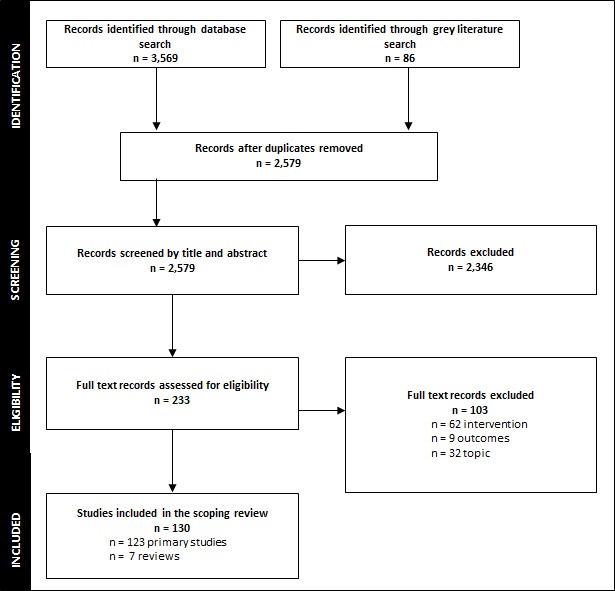
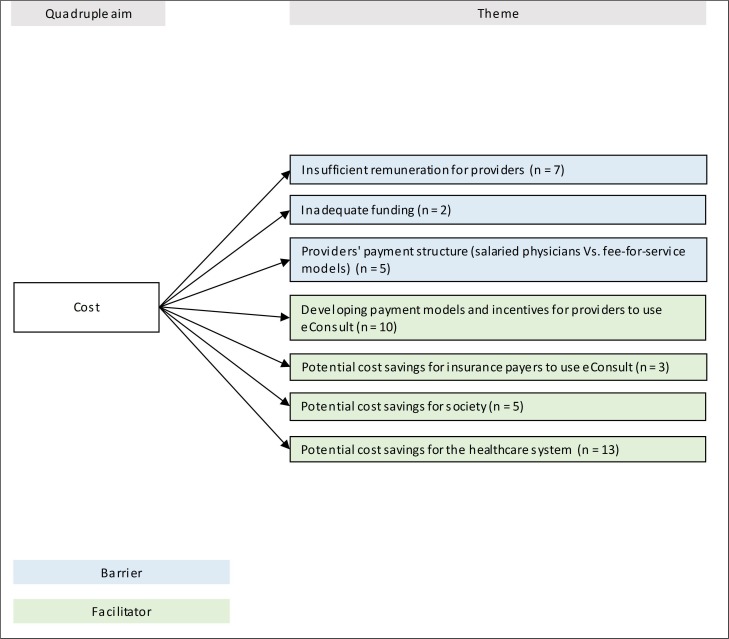
INTRODUCTION: Electronic consultation (eConsult)-provider-to-provider electronic asynchronous exchanges of patient health information at a distance-is emerging as a potential tool to improve the interface between primary care providers and specialists. Despite growing evidence that eConsult has clinical benefits, it is not widely adopted. We investigated factors influencing the adoption and implementation of eConsult services. METHODS: We applied established methods to guide the review, and the recently published Preferred Reporting Items for Systematic Reviews and Meta-Analyses extension for scoping reviews to report our findings. We searched five electronic databases and the grey literature for relevant studies. Two reviewers independently screened titles and full texts to identify studies that reported barriers to and/or facilitators of eConsult (asynchronous (store-and-forward) use of telemedicine to exchange patient health information between two providers (primary and secondary) at a distance using secure infrastructure). We extracted data on study characteristics and key barriers and facilitators were analysed thematically and classified using the Quadruple Aim framework taxonomy. No date or language restrictions were applied. RESULTS: Among the 2579 publications retrieved, 130 studies met eligibility for the review. We identified and summarised key barriers to and facilitators of eConsult adoption and implementation across four domains: provider, patient, healthcare system and cost. Key barriers were increased workload for providers, privacy concerns and insufficient reimbursement for providers. Main facilitators were remote residence location, timely responses from specialists, utilisation of referral coordinators, addressing medicolegal concerns and incentives for providers to use eConsult. CONCLUSION: There are multiple barriers to and facilitators of eConsult adoption across the domains of Quadruple Aim framework. Our findings will inform the development of practice tools to support the wider adoption and scalability of eConsult implementation.
Overview
CoChat Summary
## TL;DR
This scoping review mapped barriers and facilitators to implementing electronic consultations (eConsult) across 130 studies from eight countries and organized them into provider, patient, healthcare system, and cost domains. The most common barriers were increased provider workload, privacy concerns, and lack of reimbursement, while key facilitators included remote patient location, timely specialist responses, referral coordinators, medicolegal support, and incentives.
## Key findings
- The review retrieved 2579 publications and included 130 studies (123 primary studies and 7 reviews).
- Included primary studies covered 30 unique eConsult programmes; platforms were mainly EMR-based (n=10) or web-based (n=13).
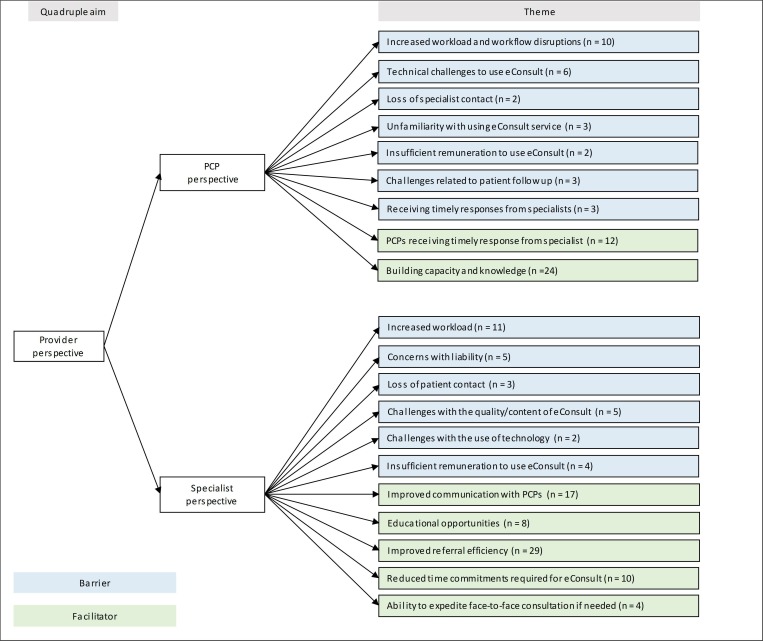
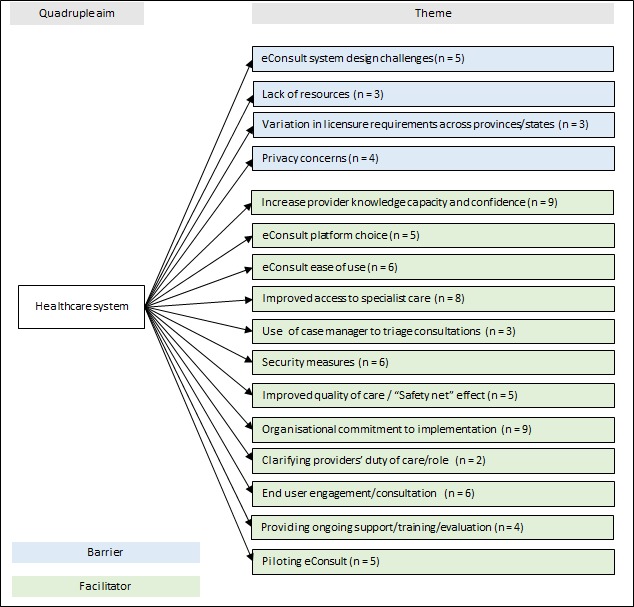
- Key barriers identified across studies were increased workload for providers, privacy concerns, and insufficient reimbursement for providers.
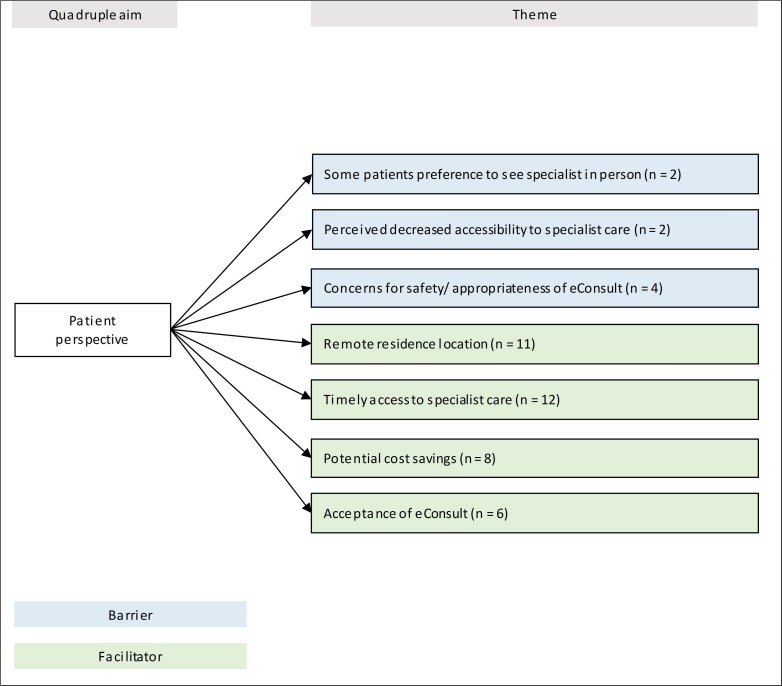
- Main facilitators were remote residence location, timely responses from specialists, utilisation of referral coordinators, addressing medicolegal concerns, and incentives for providers to use eConsult.
## Methods
- The authors conducted a scoping review using Arksey and O’Malley’s approach, modified by Levac et al., and reported it using PRISMA-ScR guidance.
- They searched five bibliographic databases plus grey literature sources, with no date, language, or publication-type restrictions; searches ran through 7 December 2017.
- Two reviewers independently screened studies and extracted data; barriers and facilitators were analyzed thematically and classified using a modified Quadruple Aim framework.
## Limitations
- The paper states that it could not find any study in low-income and middle-income countries that met the inclusion criteria.
- The authors note limited published work on health economic evaluations of eConsult development and implementation.
- Evident from the text: this is a scoping review, and the authors state they did not perform risk of bias assessment or quality appraisal of included studies.
Model-written summary. Check it against the paper before relying on it.
Integrity signals
Registry
Cites
Statistics
Figures
Verification
Claims the paper makes
7 Valid · 1 Not valid · 15 Not checked · 40 Own results and interpretations
The cited sources support only part of this claim — read each source’s verdict below.
In the paper
“In a systematic review investigating interventions affecting the nexus between primary and specialist care, interventions aimed at changing the process of care were found to be most effective.10”
§ Barriers and facilitators for implementation of electronic consultations (eConsult) to enhance access to specialist care: a scoping review > Introduction
What the sources say
- Partly supportedcites [10] Blank L, Baxter S, Woods HB, et al Referral interventions from primary to specialist care: a systematic review of international evidence. Br J Gen Pract 2014; 64: e765– 74. 10.3399/bjgp14X682837 25452541 PMC4240149 sourceExperimental — accuracy not yet measured
The DISCUSSION Summary of Blank et al. (2014) does contain a close analogue — 'Process changes appear to be most effective when they result in the specialist being provided with more or better quality information about the patient; either electronically or through specialist consultation prior to the formal referral being made' — so the review does single out process changes, but only conditionally and with the hedge 'appear'. The claim states unconditionally that process-of-care interventions 'were found to be most effective', dropping that qualifier; the RESULTS section instead describes the overall picture for referral-process interventions as 'mixed', with stronger evidence only for electronic referral systems and pre-referral specialist consultation, and the DISCUSSION attributes the 'strongest positive effect on referral outcomes' to certain system changes (community provision of specialist services by trained GPs, specialist outreach, return of inappropriate referrals). The review also frames the category as changes to the referral process specifically, not the process of care generally. (LLM, conf=0.78)
plainstates a cause- Asserted: passes — The authors put it forward as true.
- Checkable: passes — It can be checked against evidence.
- Load-bearing: passes — The paper’s conclusions depend on it.
- Based: passes — The paper gives a reason why it holds.
- Partly supported
Every source the paper cites for this claim was checked and supports it.
In the paper
“Within this category, two types of interventions—specialist consultation before referral and electronic referrals—demonstrated the strongest positive effects.10”
§ Barriers and facilitators for implementation of electronic consultations (eConsult) to enhance access to specialist care: a scoping review > Introduction
What the sources say
- Supportedcites [10] Blank L, Baxter S, Woods HB, et al Referral interventions from primary to specialist care: a systematic review of international evidence. Br J Gen Pract 2014; 64: e765– 74. 10.3399/bjgp14X682837 25452541 PMC4240149 source
In the process-change section (Box 1/results summary, p. e767-e772 area) our copy states that within process-of-care interventions 'the overall picture ... is mixed. Stronger evidence exists for electronic referral interventions ... and interventions including specialist consultation prior to referral', listing their positive effects — these are the only two process types identified as having stronger evidence. The DISCUSSION Summary repeats this: 'Process changes appear to be most effective when they result in the specialist being provided with more or better quality information about the patient; either electronically or through specialist consultation prior to the formal referral being made.' The claim's 'strongest positive effects' is a fair paraphrase of 'stronger evidence'/'most effective' within that category. (LLM, conf=0.88)
boostedstates a cause- Asserted: passes — The authors put it forward as true.
- Checkable: passes — It can be checked against evidence.
- Load-bearing: passes — The paper’s conclusions depend on it.
- Based: passes — The paper gives a reason why it holds.
- Supported
Every source the paper cites for this claim was checked and supports it.
In the paper
“In a systematic review, Vimalananda and colleagues identified implementation studies as one of key deficiencies in the current eConsult literature.15”
§ Barriers and facilitators for implementation of electronic consultations (eConsult) to enhance access to specialist care: a scoping review > Introduction
What the sources say
- Supportedcites [15] Vimalananda VG, Gupte G, Seraj SM, et al Electronic consultations (e-consults) to improve access to specialty care: a systematic review and narrative synthesis. J Telemed Telecare 2015; 21: 323– 30. 10.1177/1357633X15582108 25995331 PMC4561452 source
In Discussion > Future research directions, the review lists implementation studies among five major research priorities. Its Implementation studies subsection says that factors affecting e-consult use are not well described in the literature, supporting the claim that this is a gap. (LLM, conf=0.93)
plain- Asserted: passes — The authors put it forward as true.
- Checkable: passes — It can be checked against evidence.
- Load-bearing: passes — The paper’s conclusions depend on it.
- Based: passes — The paper gives a reason why it holds.
- Supported
The cited sources that could be checked couldn’t confirm or dispute this claim.
In the paper
“However, little evidence exists about these factors and how they influence eConsult adoption and implementation.16”
§ Barriers and facilitators for implementation of electronic consultations (eConsult) to enhance access to specialist care: a scoping review > Introduction
What the sources say
- Could not verifycites [16] Tuot DS, Leeds K, Murphy EJ, et al Facilitators and barriers to implementing electronic referral and/or consultation systems: a qualitative study of 16 health organizations. BMC Health Serv Res 2015; 15: 568 10.1186/s12913-015-1233-1 26687507 PMC4684927 sourceExperimental — accuracy not yet measured
The Methods (Analysis) mention previously published factors influencing eCR adoption, and the Results identify drivers and facilitators in the organizations studied. Neither passage assesses whether evidence about those factors or their influence on eConsult adoption and implementation is scarce. Searches for statements about limited evidence and few prior studies found no such assessment in our copy. (LLM, conf=0.68)
plain- Asserted: passes — The authors put it forward as true.
- Checkable: passes — It can be checked against evidence.
- Load-bearing: passes — The paper’s conclusions depend on it.
- Based: passes — The paper gives a reason why it holds.
- Could not verify
The cited sources support only part of this claim — read each source’s verdict below.
In the paper
“It also appears that the existence of a compensation model for providers time rather than a specific payment structure, such as fee-for-service or salary, is a key facilitator for eConsult adoption.83”
§ Barriers and facilitators for implementation of electronic consultations (eConsult) to enhance access to specialist care: a scoping review > Discussion
What the sources say
- Partly supportedcites [83] Uhlman M, Lakose S, Dietzler D, et al Implementation of the three E's (efficiency, education, and e-consults) to improve urology access within the Veterans health administration. Journal of Urology 2016; 1: e244. sourceExperimental — accuracy not yet measured
The Conclusions of our copy (INTRODUCTION AND OBJECTIVES section) state only that the 3-E bundle, including e-consults, 'might only be cost-effective in a non fee-for-service model such as one found in the VHA,' while adding it 'may become useful even for fee-for-service practices' — so payment model is discussed as a determinant of cost-effectiveness of the whole package, not as a facilitator of e-consult adoption specifically, and the paper never separates 'existence of compensation for provider time' from 'which payment structure.' The Methods/Results describe e-consults (65 completed, 15% requiring formal consult) without any statement on compensation as an adoption facilitator. Thus the source supports the general idea that provider compensation/payment structure bears on the viability of e-consults in a salaried system, but not the claim's assertion that the specific structure is irrelevant while mere existence of a compensation model is a key facilitator. (LLM, conf=0.65)
hedgedstates a cause- Asserted: passes — The authors put it forward as true.
- Checkable: passes — It can be checked against evidence.
- Load-bearing: passes — The paper’s conclusions depend on it.
- Based: passes — The paper gives a reason why it holds.
- Partly supported
40 more claims
Create a free account to see all 63 claims and to verify the 1 reference still open.
- Probably not a substantial claim. 17
- It may state two separate claims as one. 3
Claims other papers make about this one
Each is checked against this paper’s own text: does it say what the citing paper says it does?
The source backs part of the claim, not all of it — or backs it for a different population, condition or comparison.
In the citing paper
“Furthermore, increased clinician workload and the lack of a definitive reimbursement model cause asynchronous teledermatology to be a substantial burden or gamble for many practices [54-56].”
From Store-and-Forward Images in Teledermatology: Narrative Literature Review (2022) · cites this paper as [55]
Experimental — accuracy not yet measuredThe cited source says what the claim attributes to it.
In the citing paper
“These challenges are consistent with previous research concerning small-scale implementation and diffusion of video consulting services and the scale-up and spread of other eHealth interventions [67,68].”
From Spread, Scale-up, and Sustainability of Video Consulting in Health Care: Systematic Review and Synthesis Guided by the NASSS Framework (2021) · cites this paper as [67]
Self-check
Percentages, sums and reported differences re-computed from the paper’s own numbers.
Rated major: it would touch a result — a value a result rests on, reported and recomputed p-values on opposite sides of the significance level, two passages that conflict with no sign which is right, or a cited work retracted before this paper was published.
In the paper
“The 123 primary studies included in our review covered 30 unique eConsult programme: 18 based in the USA, 3 in the UK, and 2 in Canada, Brazil, Finland, Spain, and 1 programme in the Netherlands and Ireland (online supplementary eTable 1).”
§ Barriers and facilitators for implementation of electronic consultations (eConsult) to enhance access to specialist care: a scoping review > Results > eConsult programme
Reported 30 · recomputed 31
Citations
Cites
PRISMA Extension for Scoping Reviews (PRISMA-ScR): Checklist and Explanation
Tricco, A. C., Lillie, E., Zarin, W., O'Brien, K. K., Colquhoun, H., Levac, D., Moher, D., Peters, M. D. J., Horsley, T., Weeks, L., et al. (2018) · Annals of Internal Medicine · doi:10.7326/m18-0850 · Cited by 43,565 · cited 1×
“We followed the recently published extension to the Preferred Reporting Items for Systematic Reviews and Meta-Analyses reporting guidelines for scoping reviews developed by Tricco and colleagues.(25)”
Scoping studies: towards a methodological framework
Arksey, H., & O'Malley, L. (2005) · International Journal of Social Research Methodology · doi:10.1080/1364557032000119616 · Cited by 36,742 · cited 1×
“22 Our review was guided by the method first described by Arksey and O’Malley 23 with modifications based on Levac et al ’s recommendations.”
The qualitative content analysis process
Elo, S., & Kyngäs, H. (2008) · Journal of Advanced Nursing · doi:10.1111/j.1365-2648.2007.04569.x · Cited by 22,617 · cited 1×
“We analysed and presented the data qualitatively using both deductive (preidentified themes) and inductive (newly identified themes) approaches.(36) We coded textual data from included papers individually using a broad-based coding scheme (MO) and documented common themes across papers textually (thematic analysis) an…”
Scoping studies: advancing the methodology
Levac, D., Colquhoun, H., & O'Brien, K. K. (2010) · Implementation Science · doi:10.1186/1748-5908-5-69 · Cited by 15,268 · cited 1×
“Our review was guided by the method first described by Arksey and O’Malley(23) with modifications based on Levac et al’s recommendations.(24) We followed the recently published extension to the Preferred Reporting Items for Systematic Reviews and Meta-Analyses reporting guidelines for scoping reviews developed by Tric…”
Guidance for conducting systematic scoping reviews
Peters, M. D. J., Godfrey, C. M., Khalil, H., McInerney, P., Parker, D., & Soares, C. B. (2015) · International Journal of Evidence-Based Healthcare · doi:10.1097/xeb.0000000000000050 · Cited by 7,472 · cited 2×
“21 24 25 synthesis of results We used the four domains of the Quadruple Aim evaluation framework to synthesise and report identified barriers and facilitators into tables and figures.”
BackgroundMethodContribution of Primary Care to Health Systems and Health
STARFIELD, B., SHI, L., & MACINKO, J. (2005) · The Milbank Quarterly · doi:10.1111/j.1468-0009.2005.00409.x · Cited by 5,507 · cited 2×
“care at lower cost.(3) 4 Therefore, an effective, efficient partnership between the two levels of care would seem important(5) and has long been the focus of attention for primary care reforms.”
From Triple to Quadruple Aim: Care of the Patient Requires Care of the Provider
Bodenheimer, T., & Sinsky, C. (2014) · The Annals of Family Medicine · doi:10.1370/afm.1713 · Cited by 3,462 · cited 2×
“32 33 This framework for optimising health system performance has been used previously to evaluate eConsult; however, this is the first time it has been used to evaluate eConsult implementation.”
A scoping review of scoping reviews: advancing the approach and enhancing the consistency
Pham, M. T., Rajić, A., Greig, J. D., Sargeant, J. M., Papadopoulos, A., & McEwen, S. A. (2014) · Research Synthesis Methods · doi:10.1002/jrsm.1123 · Cited by 3,078 · cited 1×
“Scoping reviews are broad by nature, with limited or no focus on a specific research question and/or hypothesis; typically, the goal is to address broad and complex questions as our study.(104) Another common limitation with this kind of reviews is the lack of comprehensiveness in the search for relevant literature.”
Improving Primary Care for Patients With Chronic Illness
Bodenheimer, T. (2002) · JAMA · doi:10.1001/jama.288.14.1775 · Cited by 2,961
Designing and evaluating complex interventions to improve health care
Campbell, N. C., Murray, E., Darbyshire, J., Emery, J., Farmer, A., Griffiths, F., Guthrie, B., Lester, H., Wilson, P., & Kinmonth, A. L. (2007) · BMJ · doi:10.1136/bmj.39108.379965.be · Cited by 1,331 · cited 1×
“Designing new interventions that may inadvertently disrupt healthcare delivery is challenging.(12) Furthermore, there is a lack of sustained implementation of new programme, especially in health information technology.”
Research works printed but not linked: 6
- Liddy C, Rowan MS, Afkham A, et al Building access to specialist care through e-consultation. Open Med 2013; 7: e1– 8. 23687533 PMC3654501
- Johnston D, Murto K, Kurzawa J, et al Use of electronic consultation system to improve access to care in paediatric hematology/oncology. Pediatr Blood Cancer 2017; 64: S27. 28437292
- Ackerman SL, Shipman S, Moody D, et al Comparing patients' experiences with econsult and referral from primary to specialty care: results from a national survey. Journal of General Internal Medicine 2017; 32(2 Supplement 1): S144– S145.
- Ackerman S, Intinarelli G, Gleason N, et al "Have you thought about sending that as an econsult?": Primary care providers' experiences with electronic consultations at an academic medical center. J Gen Intern Med 2014; 29: S3.
- Haverhals LM, Sayre G, Helfrich C, et al Identification of facilitators and barriers to implementation of e-consults using the consolidated framework for implementation research. J Gen Intern Med 2013; 28: S437.
- Keely E, Liddy C Critical requirements and considerations for establishing and participating in an eConsultation service: lessons learned from the Champlain BASE team. Electronic Healthc Law Rev 2015; 5: 5– 6.
Cited by
Barriers and facilitators to utilizing digital health technologies by healthcare professionals
Borges do Nascimento, I. J., Abdulazeem, H., Vasanthan, L. T., Martinez, E. Z., Zucoloto, M. L., Østengaard, L., Azzopardi-Muscat, N., Zapata, T., & Novillo-Ortiz, D. (2023) · npj Digital Medicine · doi:10.1038/s41746-023-00899-4 · Cited by 673
Improving Access to Care: Telemedicine Across Medical Domains
Barbosa, W., Zhou, K., Waddell, E., Myers, T., & Dorsey, E. R. (2021) · Annual Review of Public Health · doi:10.1146/annurev-publhealth-090519-093711 · Cited by 299
James, H. M., Papoutsi, C., Wherton, J., Greenhalgh, T., & Shaw, S. E. (2021) · Journal of Medical Internet Research · doi:10.2196/23775 · Cited by 164
“These challenges are consistent with previous research concerning small-scale implementation and diffusion of video consulting services and the scale-up and spread of other eHealth interventions [67,68].”
ResultQi, M., Cui, J., Li, X., & Han, Y. (2021) · Journal of Medical Internet Research · doi:10.2196/21834 · Cited by 75
“Many studies have found that the key barriers of using e-consultation for patients are privacy concerns and security of their data [5,19,64].”
Telehealth, Telemedicine, and Obstructive Sleep Apnea
Schutte-Rodin, S. (2020) · Sleep Medicine Clinics · doi:10.1016/j.jsmc.2020.05.003 · Cited by 37
Store-and-Forward Images in Teledermatology: Narrative Literature Review (Preprint)
(2022) · doi:10.2196/preprints.37517 · Cited by 32
Store-and-Forward Images in Teledermatology: Narrative Literature Review
Jiang, S. W., Flynn, M. S., Kwock, J. T., & Nicholas, M. W. (2022) · JMIR Dermatology · doi:10.2196/37517 · Cited by 32
“Furthermore, increased clinician workload and the lack of a definitive reimbursement model cause asynchronous teledermatology to be a substantial burden or gamble for many practices [54-56].”
BackgroundFluhr, J. W., Guéguen, A., Legoupil, D., Brenaut, E., Abasq‐Thomas, C., Araújo, H., & Misery, L. (2021) · Dermatology · doi:10.1159/000514029 · Cited by 26
Aldana, D. R., Mazón-Ramos, P., Portela‐Romero, M., Cinza‐Sanjurjo, S., Álvarez, B. Á., Agra-Bermejo, R., Rigueiro-Veloso, P., Espasandín-Domínguez, J., Gude-Sampedro, F., & González-Juanatey, J. R. (2022) · Circulation Cardiovascular Quality and Outcomes · doi:10.1161/circoutcomes.121.008130 · Cited by 28
Jew, O. S., Murthy, A. S., Danley, K., & McMahon, P. J. (2020) · Pediatric Dermatology · doi:10.1111/pde.14226 · Cited by 24
“Focused differential diagnosis with treatment recommendations 6 (13)”
BackgroundOhannessian, R., Yaghobian, S., Duong, T. A., de Bustos, E. M., Douarin, Y.-M. L., Moulin, T., & Salles, N. (2020) · Telemedicine Journal and e-Health · doi:10.1089/tmj.2020.0083 · Cited by 26
Osman, M. A., Schick‐Makaroff, K., Thompson, S., Featherstone, R. M., Bialy, L. M., Kurzawa, J., Okpechi, I. G., Habib, S., Shojai, S., Jindal, K. K., et al. (2018) · BMJ Open · doi:10.1136/bmjopen-2018-022733 · Cited by 21
Self-citationWilliams, S., Barnard, A. S., Collis, P., de Sousa, J. C., Ghimire, S., Habib, G. M., Jelen, T., Kanniess, F., Mak, V., Martins, S., et al. (2022) · Journal of Health Services Research & Policy · doi:10.1177/13558196221140318 · Cited by 25
“Without appropriate reimbursement to incentivize behaviour for patient benefit, remote consultations are unlikely to become a routine part of primary care delivery post-pandemic.(25) The pandemic has revealed and relied on health care activity that may not normally have been reimbursed; now leaders of health care syst…”
BackgroundAsynchronous telemedicine for isotretinoin management: A direct care pilot
Das, S., Su, M. Y., Kvedar, J. C., & Smith, G. P. (2022) · Journal of the American Academy of Dermatology · doi:10.1016/j.jaad.2021.01.039 · Cited by 16
Anderson, E., Vimalananda, V. G., Orlander, J. D., Cutrona, S. L., Strymish, J. L., Bokhour, B. G., & Rinne, S. T. (2021) · Medical Care · doi:10.1097/mlr.0000000000001575 · Cited by 16
Implementing a general practitioner-to-general physician eConsult service (eConsultant) in Australia
Job, J., Nicholson, C., Calleja, Z., Jackson, C. L., & Donald, M. (2022) · BMC Health Services Research · doi:10.1186/s12913-022-08663-2 · Cited by 17
“Planning early for sustainability has been proposed as a key element to implementation of eConsultant and adequate eConsult funding for specialist time to respond to RFA will support expansion of the program to additional specialties [42, 43].”
BackgroundElectronic consultations and clinician burnout: An antidote to our emotional pandemic?
Lee, M. S., & Nambudiri, V. E. (2020) · Journal of the American Medical Informatics Association · doi:10.1093/jamia/ocaa300 · Cited by 15
“A previous study showed that key barriers for PCPs and specialists included increased workload and workflow change, privacy concerns, technical challenges, and lack of adequate reimbursement.(16) There are also systems-level barriers including differing licensure requirements across jurisdictions, need for ongoing inf…”
BackgroundEsteve‐Matalí, L., Vargas, Í., Amigo, F., Plaja, P., Cots, F., Mayer, E. F., Garrote, J. M. P.-C., & Vázquez, M. L. (2021) · International Journal of Environmental Research and Public Health · doi:10.3390/ijerph18063224 · Cited by 15
“However, evidence on the factors [23–25] and barriers [12,26,27] hindering the use of care coordination mechanisms generally focuses on a single type of mechanism, despite the fact that these factors and barriers may influence the use of each coordination mechanism differently [28], and that in real life conditions, h…”
BackgroundJob, J., Donald, M., Borg, S. J., Nicholson, C., Chaffey, J., O'Hara, K., Fagermo, N., & Jackson, C. L. (2021) · Australian Journal of General Practice · doi:10.31128/ajgp-11-20-5707 · Cited by 10
“7,8,19 However, applications in the Australian setting are limited, with the exception of a ‘store and forward’ teledermatology initiative with specialist input using clinical photos from doctors in rural and remote communities.”
BackgroundeConsults' Impact on Care Access and Wait Times in Rheumatology
Malcolm, E. J., Brandon, Z., Wilson, L. E., Shoup, J. P., King, H. A., Lewinski, A. A., Greiner, M. A., Malone, S., Miller, J., Keenan, R. T., et al. (2022) · JCR Journal of Clinical Rheumatology · doi:10.1097/rhu.0000000000001825 · Cited by 14
“Health systems can now bill Medicare for eConsults through 2 interprofessional codes (99451 and 99452), but without public-private payer alignment of eConsult reimbursement or payment reform, it will remain difficult to broadly scale and sustain the intervention.(27,28) Ongoing efforts to define eConsult appropriate u…”
BackgroundBehera, R. K., Bala, P. K., Panigrahi, P. K., & Rana, N. P. (2022) · Benchmarking An International Journal · doi:10.1108/bij-01-2022-0025 · Cited by 13
Catapan, S. D. C., Bruckmann, G., Nilson, L. G., Caffery, L. J., Kelly, J. T., Calvo, M. C. M., & Boing, A. F. (2024) · Journal of Telemedicine and Telecare · doi:10.1177/1357633x241235426 · Cited by 14
“19 Further studies could qualitatively analyse the development of eConsult requests per primary care professional to verify if the complexity of cases or queries changes.”
Tensen, E., Kuziemsky, C. E., Jaspers, M., & Peute, L. (2023) · JMIR Dermatology · doi:10.2196/46682 · Cited by 12
“A scoping review by Osman et al [51] confirmed that primary care providers’perspectives about facilitators of digital consultations include obtaining timely responses from specialists and establishing knowledge.”
Nyoni, T., Evers, E. C., Pérez, M., Jeffe, D. B., Fritz, S. A., Colditz, G. A., & Burnham, J. P. (2023) · Journal of Telemedicine and Telecare · doi:10.1177/1357633x221149461 · Cited by 10
“16,18,19 Context-speci fi c pre-implementation research is needed to identify key factors in fl uencing tele-ID consult uptake.”
Liddy, C. E., Boulay, E., Crowe, L., Pilon, M. D., Drimer, N., Farrell, G., Ireland, L., Kirvan, C., Nabelsi, V., Singer, A. G., et al. (2021) · CMAJ Open · doi:10.9778/cmajo.20200210 · Cited by 9
“Major barriers identified by multiple studies include increases in physician workload, 14–16 a lack of resources or funding 15–17 and resistance to change.”
BackgroundSelf-citationBreton, M., Smithman, M. A., Lamoureux‐Lamarche, C., Keely, E., Farrell, G., Singer, A. G., Pilon, M. D., Bush, P. L., Nabelsi, V., Gaboury, I., et al. (2023) · Evaluation and Program Planning · doi:10.1016/j.evalprogplan.2023.102329 · Cited by 9
Self-citationBossert, J., Forstner, J., Villalobos, M., Siegle, A., Jung, C., Deis, N., Thomas, M., Wensing, M., & Krug, K. (2020) · BMJ Open · doi:10.1136/bmjopen-2019-036495 · Cited by 15
Sanavro, S. M., van der Worp, H., Jansen, D. E. M. C., Stoffelen, J. M. T., Schers, H., Postma, M. J., Koning, P., de Boer, M. R., Janus, G. J. M., & Blanker, M. H. (2022) · BMJ Open · doi:10.1136/bmjopen-2021-060222 · Cited by 8
Bifulco, L., Grzejszczak, L., Velez, I., Angelocci, T., & Anderson, D. (2023) · BMC Health Services Research · doi:10.1186/s12913-023-10086-6 · Cited by 10
“Limited research suggests that patients and PCPs have a positive opinion of eConsults [17, 29, 30]. while few studies have explored uninsured patients’ perceptions about specialty care and the referral process.”
BackgroundA Systematic Review on the Impact of Electronic Consultations on Diabetes Care
Naous, E., Achkar, A., Morin, R. A., & Mitri, J. (2025) · Endocrine Practice · doi:10.1016/j.eprac.2025.03.001 · Cited by 9
Neuroethics in the Era of Teleneurology
Young, M. J. (2022) · Seminars in Neurology · doi:10.1055/s-0041-1741496 · Cited by 7
Vemu, P. L., Zurlo, J., & Lew, S. Q. (2023) · International Urology and Nephrology · doi:10.1007/s11255-023-03627-9 · Cited by 6
Xu, D., Huang, Y., Tsuei, S. H., Fu, H., & Yip, W. C.-M. (2023) · Journal of Global Health · doi:10.7189/jogh.13.04103 · Cited by 6
The Use of Electronic Consultations in Outpatient Surgery Clinics: Synthesized Narrative Review
Payne, T., Kevric, J., Stelmach, W., & To, H. (2022) · JMIR Perioperative Medicine · doi:10.2196/34661 · Cited by 5
“Electronic referrals (eReferrals) differ slightly from eConsults in that their primary goal is to expedite a patient’s workup before an in-person specialist visit; however, terminology in this field is variable [47], and, for the purpose of this review, these terms were combined.”
BackgroundTeleconsultation as a strategy to support primary health care professionals: A scoping review
Almeida, R. D. S., Amorim, F. F., Teixeira, J. S., Fortaleza, C. S., Salgado, C. A., Silva, J. S., da Silva, P. R. G., Peccin, M. S., Göttems, L. B. D., & Imoto, A. M. (2025) · Health Policy and Technology · doi:10.1016/j.hlpt.2024.100971 · Cited by 9
Rankine, J., Yeramosu, D., Matheo, L., Sequeira, G. M., Miller, E. P., & Ray, K. N. (2021) · JMIR Human Factors · doi:10.2196/25568 · Cited by 6
“new concerns may arise during implementation [34,35].”
Ip, W., Prahalad, P., Palma, J. P., & Chen, J. H. (2022) · JMIR Medical Informatics · doi:10.2196/30104 · Cited by 6
“Asynchronous electronic consults or synchronous telemedicine consults are emerging approaches for referring providers to solicit specialists’ opinions on the need of referral and initial workup [12-16], with potential advantages of streamlining the referral process and empowering primary care providers.”
BackgroundDesigning and describing an electronic referral system to facilitate direct hospital admissions
Montellier, M., Delpech, R., Mion, M., Boué, F., & Metzger, M.-H. (2022) · BMC Family Practice · doi:10.1186/s12875-022-01656-4 · Cited by 8
“Moreover, the satisfaction of PCPs with this type of system has been found in the international literature [29].”
BackgroundNabelsi, V., & Lévesque-Chouinard, A. (2024) · JMIR Formative Research · doi:10.2196/52921 · Cited by 7
Gellatly, Z. S., Lagha, I. B., Ternov, N. K., Berry, E., Nelson, K. C., & Seiverling, E. V. (2023) · Current Dermatology Reports · doi:10.1007/s13671-023-00407-7 · Cited by 7
“Validation of this form of care delivery is well established in multiple specialties and for both adult and pediatric patients [7–10].”
Cinza‐Sanjurjo, S., Mazón‐Ramos, P., Aldana, D. R., García‐Vega, D., Portela‐Romero, M., Rodríguez‐Mañero, M., Sestayo‐Fernández, M., Lage, R., López‐López, R., & González‐Juanatey, J. R. (2024) · European Journal of Clinical Investigation · doi:10.1111/eci.14197 · Cited by 5
“25,26 In many cases, the clinician can manage the care demand with guidance from the specialist provided via e-consultation, reducing the need for in-person visits.”
Guglani, S., Liddy, C. E., Afkham, A., Mitchell, R., & Keely, E. (2022) · JMIR Formative Research · doi:10.2196/32101 · Cited by 7
“To our knowledge, this is the only eConsult service that offers PCPs 2 models of accessing specialist advice on one eConsult platform [12,13].”
BackgroundSelf-citationFrench, E. K., Kanter, J. E., Winger, M. E., Williams, K. R., Grumski, T., Schuster, J., & Beckjord, E. B. (2023) · Population Health Management · doi:10.1089/pop.2023.0008 · Cited by 5
Albin, J. L., Mignucci, A., Siler, M. D., Dungan, D. D., Neff, C., Faris, B., McCardell, C., & Harlan, T. S. (2024) · Journal of Multidisciplinary Healthcare · doi:10.2147/jmdh.s461377 · Cited by 6
“31 With reduced reliance on face-to-face visits that can instead be answered electronically, patients can minimize time missed from work as well as travel and childcare costs.”
BackgroundStevens, E. R., Fawole, A., Abadi, Y. R., Fernando, J., Appleton, N., King, C., Mazumdar, M., Shelley, D., Barron, C. T., Bergmann, L., et al. (2024) · Journal of Substance Use and Addiction Treatment · doi:10.1016/j.josat.2024.209528 · Cited by 6
Verfürth, M. (2020) · Research Square · doi:10.21203/rs.3.rs-60425/v1 · Cited by 5
“Trust in Telemedicine Center Degree of personal trust in the contact person at the telemedicine center as well as organizational trust that the center itself will treat the HCP’s patients as required and in accordance with the standards [66,67] TRU1 General trust Generally, I can trust other people.”
BackgroundImplementation of E-Consults in an Integrated Health System for a Value Population
Kurek, A. A., Boone-Sautter, K. M., Rizor, M., Vermeesch, K., & Ahmed, A. (2023) · Population Health Management · doi:10.1089/pop.2023.0141 · Cited by 3
Championing eHealth in Clinical Care
Hickey, M. (2020) · Clinical journal of oncology nursing · doi:10.1188/20.cjon.s1.4-9 · Cited by 4
Formalizing the curbside: digitally enhancing access to specialty care
Bradley, C., Smith, L., Youens, K., White, B. A. A., & Couchman, G. (2023) · Proceedings · doi:10.1080/08998280.2023.2240364 · Cited by 3
“Metrics often cited in E-consult success revolve around specialty clinics: reduced wait times and increase in acuity level of their overall clinic.(14,16,18,19) This could also permit increased flexibility of specialty workday practice with the recognition that reimbursement does not replace full-scope, full-time spec…”
BackgroundWong, A. K. C., Liu, L. Z., Wong, F. K. Y., Liang, J., Tong, D. W. K., Chan, M. L., Wong, M. K., Wong, B. C., Tang, C. Y. S., Ho, W. H., et al. (2025) · Frontiers in Digital Health · doi:10.3389/fdgth.2025.1665424 · Cited by 5
Hellingman, T., van Beneden, M., den Bakker, C. M., Zonderhuis, B. M., & Kazemier, G. (2023) · BMC Health Services Research · doi:10.1186/s12913-023-09408-5 · Cited by 6
Nketia, M. O., & Maharaj, M. S. (2023) · Journal of Information Systems and Informatics · doi:10.51519/journalisi.v5i3.553 · Cited by 4
“The Netherlands found cost-effectiveness and improved outcomes for chronic conditions [11].”
BackgroundVerfürth, M. (2020) · doi:10.21203/rs.3.rs-77065/v1 · Cited by 4
Shukla, M., Carcone, A. I., Mooney, M., Kannikeswaran, N., & Ellis, D. A. (2023) · Journal of Asthma · doi:10.1080/02770903.2023.2257318 · Cited by 6
“Poor patient-provider communication, gaps in HCP knowledge & medical experience, and internal biases, such as beliefs about patients’ socioeconomic status, access to resources, and abilities can also impact HCPs’ decisions about whether to use a referral portal (25).”
BackgroundEkanayake, S., Ward, A., Heart, D., Valery, P. C., & Soar, J. (2023) · BMJ Open · doi:10.1136/bmjopen-2022-068927 · Cited by 3
Electronic Consultations for Endocrine Conditions: A Scoping Review
Abdellatif, B., Natarajan, V., Leibowitz, A. J., Sitter, K. E., & Vimalananda, V. G. (2024) · Journal of the Endocrine Society · doi:10.1210/jendso/bvae170 · Cited by 2
Implementation of a pharmacy e-interconsultation integrated in patient medical record
Barrueta, O. I., Ibarra-García, E., & Pérez-Díez, E. (2020) · European Journal of Hospital Pharmacy · doi:10.1136/ejhpharm-2020-002224 · Cited by 4
Pehlivanlı, A., Akyel, H., Yaman, B. K., & Başgut, B. (2025) · Journal of Pharmaceutical Policy and Practice · doi:10.1080/20523211.2025.2509860 · Cited by 3
“In a recent review, Osman et al. stated that the barriers to e-consultation service include increased workload, privacy issues, and the absence of a reimbursement model by providers (Osman et al., 2019).”
Shi, W., DaoPeng, D., Dong, S., Yu, Z., & Li, J. (2025) · Journal of Medical Internet Research · doi:10.2196/72297 · Cited by 3
“E-Consulting, introduced in the early 2000s [28,29], has seen significant adoption in countries such as England and Canada [30-32], although its uptake has been slower in low-and middle-income countries [33].”
Sanavro, S. M., van der Worp, H., Schers, H., Stoffelen, J. M. T., van den Bosch, C., van Dijk, J., Buist, P., de Boer, M. R., Janus, G. J. M., & Blanker, M. H. (2025) · Family Practice · doi:10.1093/fampra/cmaf071 · Cited by 2
Global Health Initiatives: International Physician-to-Physician Consultation Programs
Goldberg-Stein, S. A., Varghese, J., WANG, J. J., Berkowitz, J., Armstrong, B., Hatcher, M., Hirschorn, D. S., & Barish, M. A. (2024) · Journal of the American College of Radiology · doi:10.1016/j.jacr.2024.04.023 · Cited by 5
Verfürth, M. (2020) · Research Square · doi:10.21203/rs.3.rs-60425/v2 · Cited by 3
Telehealth Modality Usage by US Physicians in 2022
Carder, D. B., Jeon, S., Baker, M. C., Hu, X., Dill, M. J., & Chew, L. D. (2025) · Journal of General Internal Medicine · doi:10.1007/s11606-024-09287-4 · Cited by 2
Mathews, L. M., Miller, E. R., Cooper, L. A., Marsteller, J. A., Ndumele, C. E., Antoine, D. G., Carson, K. A., Ahima, R. S., Daumit, G. L., Oduwole, M. O., et al. (2024) · Quality Management in Health Care · doi:10.1097/qmh.0000000000000500 · Cited by 2
Reflections on remote consultation
Capelo, M., Lopes, N., Rosa, B. S., & Silvestre, M. (2023) · Revista Bioética · doi:10.1590/1983-803420233274en · Cited by 2
“Even so, the use of ICT in the provision of healthcare services, not least due to its fast progress, will continue to raise ethical questions which will serve as a guide for action in search of solutions and the reduction of vulnerabilities. http://dx.doi.org/10.1590/1983-803420233274EN”
InfluentialAntonacci, G., Benevento, E., Bonavitacola, S., Cannavacciuolo, L., Foglia, E., Fusi, G., Garagiola, E., Ponsiglione, C., & Stefanini, A. (2022) · Research Square · doi:10.21203/rs.3.rs-2326477/v1 · Cited by 1
Valverde‐López, F., Jiménez, M. L., García, R. F., Vezza, T., Heredia-Carrasco, C., Ruíz, M. L. D. H., Gálvez, J., Jiménez‐Rosales, R., & Redondo‐Cerezo, E. (2024) · Healthcare · doi:10.3390/healthcare12020194 · Cited by 1
“Access to specialty care poses a potential barrier leading to diagnosis delays and adverse patient outcomes [14].”
BackgroundTelemedicine adoption from the perspective of healthcare providers: barriers and challenges
Hamdan, I., & ALKHADER, E. A. (2025) · Journal of Pharmaceutical Health Services Research · doi:10.1093/jphsr/rmaf019 · Cited by 2
(2020) · doi:10.2196/preprints.23775 · Cited by 164
Implementation and Impact of a Dermoscopy-Enabled Dermatology eConsult Application in Primary Care
Bifulco, L., Anderson, D., Ternov, N. K., & Seiverling, E. V. (2025) · Journal of Primary Care & Community Health · doi:10.1177/21501319251403076 · Cited by 2
“44,45 In addition, despite our efforts, a full 10% of clinicians did not receive training in the use of the new process.”
Huang, H., Yen, D. W., Li, M. Y., Jutras, G., Deng, L. X., McCulloch, C. E., Pletcher, M. J., Lai, J. C., Hameed, B., & Ge, J. (2026) · Hepatology Communications · doi:10.1097/hc9.0000000000000983 · Cited by 1
Schrage, T., Glissmann, C., Thomalla, G., Rimmele, D. L., Schmidt, H., Rosenkranz, M., Boskamp, S., Härter, M. C., & Kriston, L. (2025) · Neurological Research and Practice · doi:10.1186/s42466-024-00360-1 · Cited by 1
“Reviews reveal that barriers to e-health services are common and include difficulties in usability, fit of the design, and adaption to local software programs [33–35].”
Harada, T., Morikawa, T., Furuya, H., Sato, T., Kakehi, M., Yamada, H., & Shimizu, T. (2024) · Cureus · doi:10.7759/cureus.76690 · Cited by 1
Landazábal, D. C., Vargas, Í., & Vázquez, M. L. (2024) · Digital Health · doi:10.1177/20552076241271854 · Cited by 7
“Some analyse the barriers and facilitators associated with implementing mechanisms like the EHR 20 – 23 or electronic consultations via EHR, 19,24,25 as well as decision support systems such as alert systems and reminders.”
BackgroundInfluentialReflexión ética sobre la teleconsulta
Capelo, M., Lopes, N., Rosa, B. S., & Silvestre, M. (2023) · Revista Bioética · doi:10.1590/1983-803420233274es
Telemedicina: princípios de atendimento em saúde
Utagawa, C. Y., Braz, I. D., Junior, A. D. S. M., & Ribeiro, C. M. (2022) · Editora FOA eBooks · doi:10.47385/foa9786588877517med131022 · Cited by 1
Recomendações para os profissionais de saúde
Aguiar, V. D. Q., & de Camargo, R. R. (2022) · Editora FOA eBooks · doi:10.47385/foa9786588877517med131022cap9
15 years of expanding eConsult services across Canada: from a trickle to a flood
Liddy, C. E., Afkham, A., & Keely, E. (2026) · Health Policy and Technology · doi:10.1016/j.hlpt.2026.101249
Self-citationBonilla, C., Palchaudhuri, S., Thiim, M., Wasfy, J. H., Goldstein, S. A., Changela, M., & Richter, J. M. (2026) · Gastro Hep Advances · doi:10.1016/j.gastha.2026.100987
Apellániz, J. S., Mascuñano, R. C., SILLERO, P. L., Coronel, C. P., Pfang, B., García, M. A. V., González, A. H., Martínez, A. P., Alonso, A. A., Hernández-Sanchez, A. M., et al. (2026) · BMJ Open · doi:10.1136/bmjopen-2025-115195
Oliveira, M. L. P. D., Goulart, J. C., & de Souza, C. M. (2022) · Editora FOA eBooks · doi:10.47385/foa9786588877517med131022cap2
A framework for using AI to drive care model transformation: building cars rather than faster horses
Li, R., Rosengaus, L., Gohil, L., Sharp, C., Pfeffer, M. A., Sehgal, N. L., Entwistle, D., & Hofmann, L. V. (2026) · npj Health Systems · doi:10.1038/s44401-026-00071-6 · Cited by 1
Leveraging Patient Views for Optimal Remote Care
Pinho-Costa, L., Pereira, A. L., Amorim, L., & Coelho, L. (2025) · TELe-Health · doi:10.1007/978-3-031-89661-3_12
Hidding, C. Y., Buist, P., Peeters, K. M. M., Cals, J., Jansen, J., Haan, N. S., Stoffelen, J. M. T., Blanker, M. H., van der Worp, H., Sanavro, S. M., et al. (2025) · Family Practice · doi:10.1093/fampra/cmaf074 · Cited by 1
Bento, G. M. R., Souza, I. N., & Branca, L. R. P. (2022) · Editora FOA eBooks · doi:10.47385/foa9786588877517med131022cap8
Telemedicina e formas de acesso
Abreu, B. C. B., & de Almeida, J. L. (2022) · Editora FOA eBooks · doi:10.47385/foa9786588877517med131022cap5
Patel, V. (2022) · Springer eBooks · doi:10.1007/978-3-031-00936-5_4
Implementing a General Practitioner-to-General Physician eConsult service (eConsultant) in AustraliaPreprint
Job, J., Nicholson, C., Calleja, Z., Jackson, C. L., & Donald, M. (2022) · Research Square · doi:10.21203/rs.3.rs-1691204/v1
Landazábal, D. C., Vargas, Í., Sánchez, E., Cots, F., Plaja, P., Garrote, J. M. P.-C., Hidalgo, A. S., & Vázquez, M. L. (2024) · BMC Health Services Research · doi:10.1186/s12913-024-11445-7 · Cited by 1
“…for mentally stressed and exhausted doctors to perform an adequate anamnesis [48, 49] and thus make proper referrals and, on the other, the increased use of ICT-based mechanisms may have exacerbated the stress [50, 51] and increased the unnecessary referrals to SC to release work overload [52].”
BackgroundGraever, L., Mafra, P. C., Figueira, V. K., Miler, V. N., Sobreiro, J. D. S. L., da Silva, G. P. D. C., Issa, A. F. C., Savassi, L. C. M., Dias, M. B., Melo, M. M., et al. (2025) · JMIR Cardio · doi:10.2196/64438 · Cited by 4
Ética médica, segurança e consentimento do paciente
Mendonça, A. D. S., Ribeiro, C. M., Oliveira, M. L. P. D., Fonseca, J. C. G., & de Souza, C. M. (2022) · Editora FOA eBooks · doi:10.47385/foa9786588877517med131022cap4
Developing an Interprofessional e-Consult Checklist for Family Nurse Practitioner Students
Conelius, J. (2022) · Nursing Education Perspectives · doi:10.1097/01.nep.0000000000000982 · Cited by 1
Reflexão ética sobre a teleconsulta
Capelo, M., Lopes, N., Rosa, B. S., & Silvestre, M. (2023) · Revista Bioética · doi:10.1590/1983-803420233274pt · Cited by 6
(2021) · doi:10.2196/preprints.32101
Self-citation
Metadata
- Authors
- Osman, M. A., Schick-Makaroff, K., Thompson, S., Bialy, L., Featherstone, R., Kurzawa, J., Zaidi, D., Okpechi, I., Habib, S., Shojai, S., Jindal, K., Braam, B., Keely, E., Liddy, C., Manns, B., Tonelli, M., Hemmelgarn, B., Klarenbach, S., & Bello, A. K.
- Affiliations
- University of Alberta (CA)
- Faculty of Nursing, University of Alberta, Edmonton, Alberta, Canada
- University of Cape Town (ZA)
- University of Ottawa (CA)
- University of Calgary (CA)
- Corresponding author
- Bello, Aminu K
- ORCID
- Venue
- BMJ Global Health
- Publisher
- BMJ
- Published
- 2019-09
- Volume
- 4
- Issue
- 5
- Pages
- e001629
- ISSN
- 2059-7908 (ISSN-L)
- PMC
- PMC6747903
- OpenAlex
- W2972320355
- Cited by
- 108
- References
- 115
- Citations by year
- 2026: 6 · 2025: 16 · 2024: 14 · 2023: 20 · 2022: 30 · 2021: 9 · 2020: 12
- FWCI
- 2.35
- Type
- journal article
- Language
- en
- Open access
- gold
- doi.org
- Licence
- cc-by-nc
- Locations
- BMJ Global Health (publishedVersion, cc-by-nc)
- PubMed Central (publishedVersion, cc-by-nc)
- PubMed (publishedVersion)
- DOAJ (DOAJ: Directory of Open Access Journals) (submittedVersion, cc-by-sa)
- Funders
- Interdisciplinary Chronic Disease Collaboration
- Northern Alberta Renal Program
- Topics
- Health Sciences › Medicine › Public Health, Environmental and Occupational Health › Healthcare Systems and Technology
- Health Sciences › Medicine › Public Health, Environmental and Occupational Health › Telemedicine and Telehealth Implementation
- Health Sciences › Health Professions › Health Information Management › Electronic Health Records Systems
- Keywords
- e-consultation, barriers and facilitators, access to specialist care, telemedicine, store-and-forward telemedicine, provider workload, privacy concerns, reimbursement, medicolegal issues
About these checks
Registry, retraction, Cites and statistics results are computed, not judged, with one exception: a printed reference that no index lists is read once by a model before it counts as a citation error. Claims are extracted by a model and kept only when their quote appears verbatim in the text; each cited source is then checked, with a model’s help, for whether it says what the claim relies on. Those verdicts can be wrong — read the claim’s quote and the cited source before relying on one.
The claim verdicts this report counts are experimental: their accuracy is not yet measured.
A language model drew the claims from the paper on 2026-10-10, under version 3 of the claim definition (model deepseek-v4.1-flash, prompt extract-v3).
A second model labelled each claim on 2026-10-10 (model jev-1.13-20260917, definition revision gold-guideline-v0.2).
Cited sources are checked with a language model’s help (qwen3.8-omni-flash and gpt-6-sol).
Statistics and arithmetic are recomputed, not judged.
Confidence bands are shown only for fields calibrated on our annotated test set. None is calibrated yet, so no band is shown.
What counts as a claim ›How we measure confidence ›How we check this ›
Are you an author, or do you see a problem with this page? Request a review
Data sources
Bibliographic data: Semantic Scholar, OpenAlex, Crossref.
Contains information from the Semantic Scholar Academic Graph Datasets, made available under the ODC Attribution License (ODC-BY 1.0).
Semantic Scholar’s data is described in: Kinney, R., et al. (2023). The Semantic Scholar Open Data Platform. arXiv:2301.10140.
