

Intimate partner violence in 46 low-income and middle-income countries: an appraisal of the most vulnerable groups of women using national health surveys
Open accessThe DOI matches its Crossref record; 36 of the 37 references it cites were found in a registry or an index.
Abstract
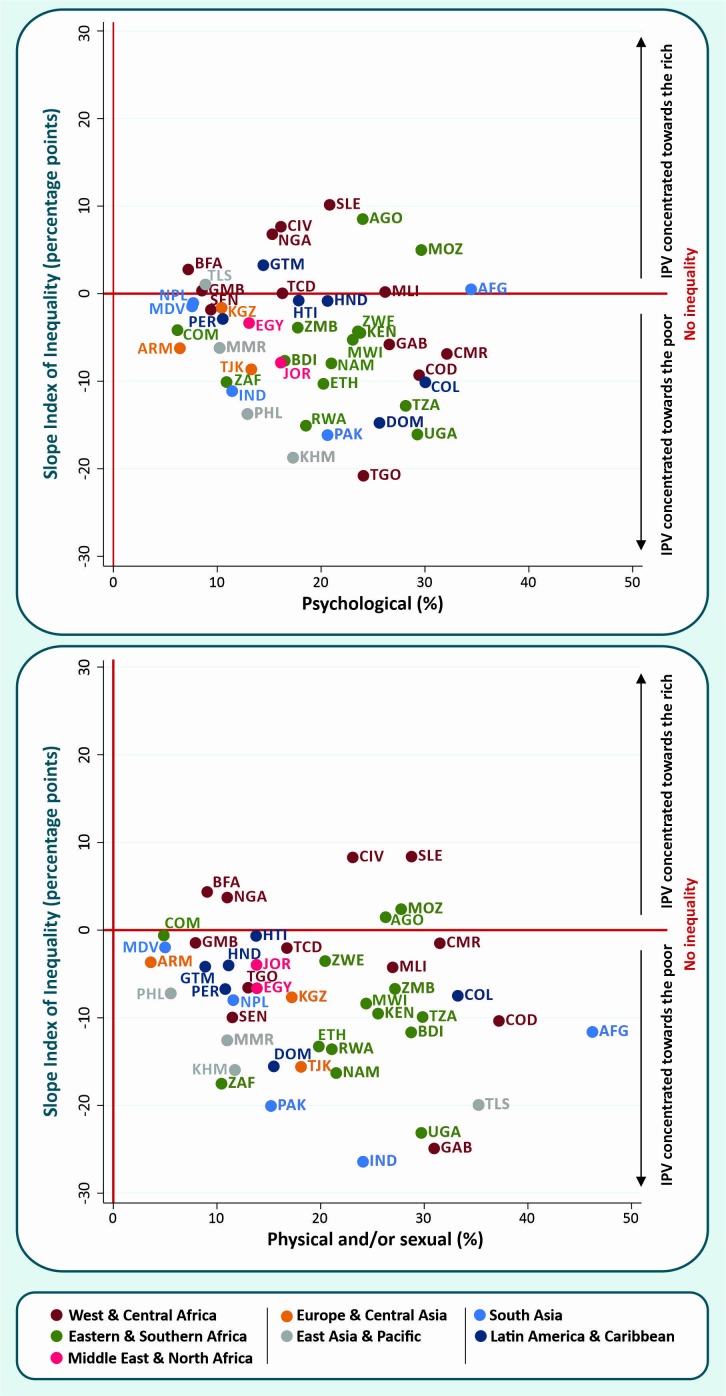
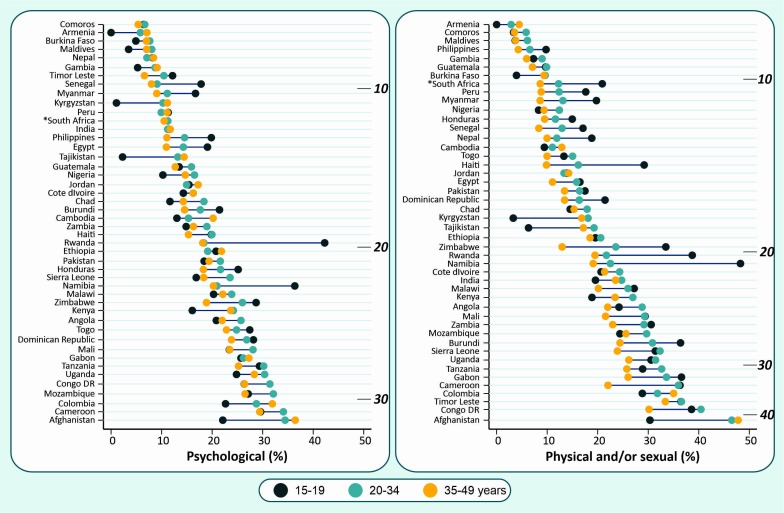
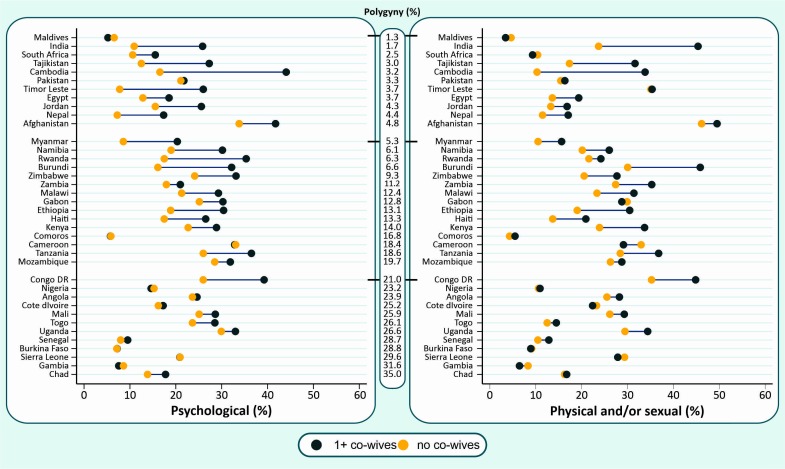
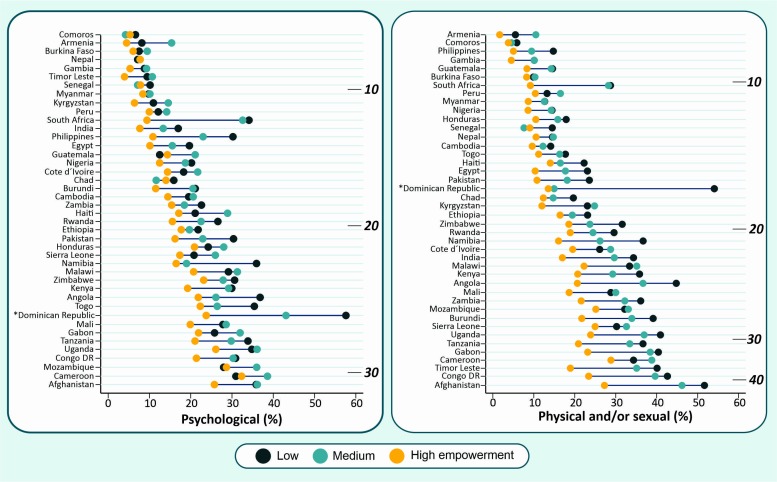
Introduction: Intimate partner violence (IPV) against women is a critical public health issue that transcends social and economic boundaries and considered to be a major obstacle to the progress towards the 2030 women, children and adolescents’ health goals in low-income and middle-income countries (LMICs). Standardised IPV measures have been increasingly incorporated into Demographic and Health Surveys carried out in LMICs. Routine reporting and disaggregated analyses at country level are essential to identify populational subgroups that are particularly vulnerable to IPV exposure. Methods: We examined data from 46 countries with surveys carried out between 2010 and 2017 to assess the prevalence and inequalities in recent psychological, physical and sexual IPV among ever-partnered women aged 15–49 years. Inequalities were assessed by disaggregating the data according to household wealth, women’s age, women’s empowerment level, polygyny status of the relationship and area of residence. Results: National levels of reported IPV varied widely across countries—from less than 5% in Armenia and Comoros to more than 40% in Afghanistan. Huge inequalities within countries were also observed. Generally, richer and more empowered women reported less IPV, as well as those whose partners had no cowives. Different patterns across countries were observed according to women’s age and area of residence but in most cases younger women and those living in rural areas tend to be more exposed to IPV. Conclusion: The present study advances the current knowledge by providing a global panorama of the prevalence of different forms of IPV across LMICs, helping the identification of the most vulnerable groups of women and for future monitoring of leaving no one behind towards achieving the elimination of all forms of violence among women and girls.
Overview
The claims and statistics of this paper haven’t been checked yet.
Free: it reads the open-access text and checks the first 5 claims that cite a source we can check. Create a free account to check every claim.
Integrity signals
Registry
Cites
Statistics
Figures
Verification
Claims the paper makes
The claims and statistics of this paper haven’t been checked yet.
Free: it reads the open-access text and checks the first 5 claims that cite a source we can check. Create a free account to check every claim.
Claims other papers make about this one
Each is checked against this paper’s own text: does it say what the citing paper says it does?
The source backs part of the claim, not all of it — or backs it for a different population, condition or comparison.
In the citing paper
“Data from a high-income context is unlikely to accurately depict the experiences of IPV in low-middle-income countries (LMIC) based on notable cultural and socioeconomic differences (Cerna-Turoff et al., 2021;Coll et al., 2020).”
From The Intergenerational Transmission of Emotional Intimate Partner Violence: a Systematic Review and Meta-Analysis (2025) · cites this paper as Coll et al., 2020
Experimental — accuracy not yet measured
Self-check
Percentages, sums and reported differences re-computed from the paper’s own numbers.
The self-check needs the paper’s full text.
Citations
Cites
The world report on violence and health
Krug, E. G., Mercy, J. A., Dahlberg, L. L., & Zwi, A. B. (2002) · The Lancet · doi:10.1016/s0140-6736(02)11133-0 · Cited by 9,110
Filmer, D., & Pritchett, L. H. (2001) · Demography · doi:10.1353/dem.2001.0003 · Cited by 5,238
García‐Moreno, C., Pallitto, C., Devries, K. M., Stöckl, H., Watts, C. G., & Abrahams, N. (2013) · Cited by 3,523
Self-citationGarcia-Moreno, C., Jansen, H. A., Ellsberg, M., Heise, L., & Watts, C. H. (2006) · The Lancet · doi:10.1016/s0140-6736(06)69523-8 · Cited by 3,176
Self-citationFilmer, D., & Pritchett, L. H. (2001) · Demography · doi:10.2307/3088292 · Cited by 2,972
Intimate partner violence: causes and prevention
Jewkes, R. (2002) · The Lancet · doi:10.1016/s0140-6736(02)08357-5 · Cited by 1,993
Abramsky, T., Watts, C. H., Garcia-Moreno, C., Devries, K., Kiss, L., Ellsberg, M., Jansen, H. A., & Heise, L. (2011) · BMC Public Health · doi:10.1186/1471-2458-11-109 · Cited by 1,413
Self-citationWorld Report on Violence and Health
(2002) · New South Wales Public Health Bulletin · doi:10.1071/nb02075 · Cited by 1,028
Garcia‐Moreno, C. (2001) · DigitalGeorgetown (Georgetown University Library) · Cited by 933
Heise, L. L., & Kotsadam, A. (2015) · The Lancet Global Health · doi:10.1016/s2214-109x(15)00013-3 · Cited by 605 · cited 1×
“30 From either side, our results support the potential effectiveness of interventions that promote women’s empowerment by addressing norms that justify wife beating for IPV reduction.”
Result
Research works printed but not linked: 1
- United Nations Human development indices and indicators. 2018 statistical update. 27 United Nations Development Programme, 2018: 123 http://hdr.undp.org/sites/default/files/2018_human_development_statistical_update.pdf
Cited by
Items 101–200 of 236
Akbary, M. F., Taqaddausi, M. T., Han, L., & Jiang, Q. (2025) · Journal of Interpersonal Violence · doi:10.1177/08862605251398457 · Cited by 7
Bazo‐Alvarez, J. C., Copez-Lonzoy, A. J. E., Ipanaqué-Zapata, M., Bazalar-Palacios, J., Rivera, E. L., & Flores, E. C. (2024) · BMC Public Health · doi:10.1186/s12889-024-18467-0 · Cited by 11
Physical violence against women by an intimate partner: analysis of VIVA Survey 2017
de Vasconcelos, N. M., de Andrade, F. M. D., Gomes, C. S., Bernal, R. T. I., & Malta, D. C. (2022) · Ciência & Saúde Coletiva · doi:10.1590/1413-812320222710.08162022en · Cited by 24
“Cien Saude Colet 2018; 23(6):1811-1818.”
Fernandes, B., Dias, P. C., & Lopes, S. (2022) · The Family Journal · doi:10.1177/10664807221147026 · Cited by 7
“…a current worldwide issue assumed as being a multidimensional phenomenon (Martín-Fernández et al., 2019; World Health Organization [WHO], 2019), which occurs regardless of social and economic strata, religion, culture, gender, race, or color, affecting mostly women as victims (Coll et al., 2020).”
BackgroundCommunity perceptions of causes of violence against young women in Botswana: fuzzy cognitive mapping
Sarmiento, I., Field, M., Kgakole, L., Molatlhwa, P., Girish, I., Andersson, N., & Cockcroft, A. (2024) · Vulnerable Children and Youth Studies · doi:10.1080/17450128.2023.2262413 · Cited by 5
Analysis of the geographic pattern of the police reports for domestic violence in Girona (Spain)
Serra, L., Vall-llosera, L., Varga, D., Saurina, C., Sáez, M., & Renart, G. (2022) · BMC Public Health · doi:10.1186/s12889-022-12916-4 · Cited by 9
“It is known that the reluctance of victims of domestic violence to report incidents has a strong socioeconomic and cultural component that makes the victim unable to make a new life away from their aggressor [41].”
BackgroundSignorelli, M. C., da Silva, V. L. C., Evans, D. P., Prado, S. M., & Glass, N. E. (2022) · Journal of Family Violence · doi:10.1007/s10896-022-00409-2 · Cited by 5
Dagenbrink, M., Bland, M., & Ariel, B. (2023) · International Criminal Justice Review · doi:10.1177/10575677231199047 · Cited by 4
“Globally, there are wide variations in male-victim IPV prevalence between nations (Coll et al., 2020): some studies suggest higher IPV prevalence against heterosexual female victims compared to heterosexual male victims (see Rozmann & Ariel, 2018); others indicate equal or higher rates of physical…”
Tadesse, G., Nakie, G., Tinsae, T., Fentahun, S., Andualem, F., Kelebie, M. A., Segon, T., Kibralew, G., & Rtbey, G. (2026) · Archives of Public Health · doi:10.1186/s13690-026-01881-8 · Cited by 5
“The prevalence of IPV among women in 28 European countries was estimated at 51.7% [14], while the prevalence of IPV in low-income countries varied widely, with rates as low as under 5% in Armenia and Comoros, while exceeding 40% in Afghanistan [15].”
InfluentialDimbuene, Z. T., Ahinkorah, B. O., & Amugsi, D. A. (2024) · PLoS ONE · doi:10.1371/journal.pone.0302627 · Cited by 4
Ekeigwe, T. O., Ikpeama, C. R., & Ene, J. C. (2024) · Journal of Religion & Spirituality in Social Work Social Thought · doi:10.1080/15426432.2024.2418951 · Cited by 5
Tadesse, M., Adegeh, S. C., & Fenta, H. M. (2025) · PLoS ONE · doi:10.1371/journal.pone.0310039 · Cited by 4
Luoga, P., Abihudi, S., Adam, J., & Mwakilasa, M. T. (2025) · BMC Women s Health · doi:10.1186/s12905-025-03760-w · Cited by 4
“These variables have been used in other similar studies and they showed to significantly related to the outcome variable of ever experienced IPV in lifetime among women [12, 35–39].”
Dalal, K., Biswas, A., Chakraborty, S., & Davis, C. (2025) · Shiraz E-Medical Journal · doi:10.5812/semj-148693 · Cited by 4
Enduring Intimate Partner Violence in Marriage: Myths and realities
Ubelejit-Nte, A. A., & Nwakanma, E. (2023) · International Journal of Sociology and Anthropology Research · doi:10.37745/ijsar.15/vol9n1124 · Cited by 5
Measuring Lineage: Implications for Family Violence Research in Sub-Saharan Africa
Tenkorang, E. Y., & Owusu, A. Y. (2024) · Sociology of Race and Ethnicity · doi:10.1177/23326492241239027 · Cited by 4
“…research-article 2024 1 Memorial University of Newfoundland, St. John’s, NL, Canada 2 University of Ghana, Accra, Ghana economic marginalization (Coll et al. 2020; Gibbs, Jacobson, and Wilson 2017; Peterman et al. 2017; Peterman, Valli, and Palermo 2022; Sedziafa, Tenkorang, and Owusu 2018)…”
Engmann, S. T., Lamptey, R., Lawson, H. J. O., & Ofori-Amankwah, G. (2024) · PLoS ONE · doi:10.1371/journal.pone.0310169 · Cited by 4
Baeza, M. J., Rana, G., Zhandire, T., Lanyo, T. N., Shadare, O., Compton, S. D., Afolabi, A. A., Randa, M. B., Mwiseneza, M. J., Akinyemi, A. I., et al. (2026) · Trauma Violence & Abuse · doi:10.1177/15248380251401929 · Cited by 5
Akbary, M. F., MAREFAT, M. B., Dordana, R. A. S. A., Han, L., & Akbari, M. R. (2026) · Scientific Reports · doi:10.1038/s41598-026-36161-6 · Cited by 5
Al-Masaeid, M. (2026) · Journal of Economic Studies · doi:10.1108/jes-11-2025-0873 · Cited by 4
Kamalov, E., & Sergeeva, I. (2026) · Sociological Methods & Research · doi:10.1177/00491241261436407 · Cited by 4
Dorji, N., Tshering, S., Wangmo, D., & Dorji, T. (2022) · Clinical Case Reports · doi:10.1002/ccr3.5749 · Cited by 3
Prevalence, Risks and Prevention of Child Maltreatment in the Middle East
Kiyumi, M. H. A., Shidhani, A. S. A., Sumri, S. A., Harrasi, A. A., Kiyumi, M. A., & Alsaidi, Y. (2023) · Journal of Pediatrics Research Reviews & Reports · doi:10.47363/jprrr/2023(5)156 · Cited by 3
Nipa, S. I., Islam, A., Disha, F. A., & Raigangar, V. L. (2024) · Journal of Women s & Pelvic Health Physical Therapy · doi:10.1097/jwh.0000000000000296 · Cited by 3
“21 Our study found that a significant proportion of study participants were living with chronic diseases such as LBP, UI, postpartum complications, and cardiac complications.”
BackgroundYost, M. T., Blair, K. J., Poppens, M. J., Mallahi, M., Dang, L. E., Oke, R. A., Carvalho, M., Etoundi-Mballa, G. A., Hubbard, A., Ngamby, M. K., et al. (2024) · PLOS Global Public Health · doi:10.1371/journal.pgph.0003408 · Cited by 3
Ortiz, E. (2024) · Feminist Economics · doi:10.1080/13545701.2024.2418314 · Cited by 3
“Women living in poverty and those with lower levels of education are also more vulnerable to GBV (Coll et al. 2020).”
The Impact of Intimate Partner Violence on Healthcare Utilization: Evidence From Vietnam
Le, D. D., & Giang, L. T. (2024) · Review of Economics of the Household · doi:10.1007/s11150-024-09751-4 · Cited by 3
“These consequences, coupled with the high prevalence of IPV, pose signi fi cant challenges to achieving women ’ s rights and Sus-tainable Development Goal 5.2, which aims to eradicate all forms of VAW and violence against girls (Coll et al., 2020).”
InfluentialViolência nos relacionamentos amorosos de estudantes universitários
Bobato, S. T., Alves, B., Benvinuti, J. D. N., & Becker, A. P. S. (2021) · Psicologia Argumento · doi:10.7213/psicolargum39.107.ao10 · Cited by 3
Mulheres violentadas: caracterização dos casos registrados no estado do Maranhão/Brasil, 2011-2019
Oliveira, M. G. R., Dantas, J. R., da Conceição, H. N., Cardoso, G. G. S., da Conceição, H. N., & Silva, Í. R. C. (2023) · O Mundo da Saúde · doi:10.15343/0104-7809.202347e13932022p · Cited by 3
Fseifes, M., & Etowa, J. B. (2023) · Women · doi:10.3390/women3040039 · Cited by 3
Naik, S. N., & Aslam, A. (2024) · Bulletin of Business and Economics (BBE) · doi:10.61506/01.00183 · Cited by 4
“Lower wealth status and financial dependence of women in a household are primary factors which influence likelihood of VAW (Owusu et al. 2016; Sajid & Ali, 2018; Coll et al., 2020).”
BackgroundDimbuene, Z. T., Ahinkorah, B. O., & Amugsi, D. A. (2025) · Reproductive Health · doi:10.1186/s12978-025-02037-7 · Cited by 3
Nakie, G., Tadesse, G., Fentahun, S., Rtbey, G., Andualem, F., Kibralew, G., Kelebie, M. A., Melkam, M., Kassa, M. A., Mengistie, B. A., et al. (2025) · Journal of Interpersonal Violence · doi:10.1177/08862605251368842 · Cited by 2
“…on IPV determinants (Abota et al., 2022; Bar-bier et al., 2022; Black et al., 2019; Buunk & Massar, 2021; Cepeda et al., 2022; Chirwa et al., 2018; Coll et al., 2020; Dalal et al., 2014; Dartnall & Jewkes, 2013; Devries et al., 2013; Enaifoghe et al., 2021; Gao et al., 2021; García-Moreno et al.,…”
Maguele, M. S. B., Taylor, M., & Khuzwayo, N. (2023) · SAGE Open · doi:10.1177/21582440231172742 · Cited by 5
“…male partners are the main perpetrators of violence against women and physical violence is one of the most frequently reported forms of violence, which is used to inflict pain (Aboagye et al., 2021; Coll et al., 2020; Cruz et al., 2014; INE e MISAU, 2013; Russell et al., 2014; Shamu et al., 2016).”
Kim, E. E., Alemi, Q., Ortiz, L., & Nichols, M. (2023) · International Journal on Social and Education Sciences · doi:10.46328/ijonses.582 · Cited by 3
“Another comparative study of 46 LMICs by Coll et al. (2020) revealed findings similar to Yount et al., supporting the concern about the disproportionate rate of IPV in various forms in Afghanistan.”
InfluentialChipalo, E. (2023) · Texila international journal of public health · doi:10.21522/tijph.2013.11.04.art030 · Cited by 3
Başaran, A. G., Çol, B. K., & Köse, B. G. (2024) · Risk Management and Healthcare Policy · doi:10.2147/rmhp.s477798 · Cited by 2
Rivera, E., & Monteiro, A. L. (2025) · Psychiatry Psychology and Law · doi:10.1080/13218719.2024.2441800 · Cited by 2
“In lower income countries like Peru, DV is often linked to mental illness in both perpetrators and victims, reflecting beliefs about specific personality traits and mental health issues (Coll et al., 2020).”
InfluentialKurbi, H. A., Abebe, S. M., Mengistu, N. W., Toni, A. T., & Ayele, T. A. (2025) · PLOS mental health. · doi:10.1371/journal.pmen.0000260 · Cited by 2
Abebe, K. A., Kebede, T. N., Taye, B. T., Silesh, M., Tadese, M., Chekole, M. S., Demisse, T. L., Workineh, B. B., Solomon, A. A., Rade, B. K., et al. (2025) · Frontiers in Global Women s Health · doi:10.3389/fgwh.2025.1408703 · Cited by 2
Mabunda, A., Mokgatle, M. M., & Madiba, S. (2025) · International Journal of Environmental Research and Public Health · doi:10.3390/ijerph22060880 · Cited by 5
“The prevalence of all types of IPV is consistently higher in SSA compared to other global regions [5], and global estimates show that more women in Africa are subject to lifetime IPV (45.6”
InfluentialOkedare, O. O. (2023) · International Journal of Adolescent Medicine and Health · doi:10.1515/ijamh-2023-0035 · Cited by 2
How does empowering men affect intimate partner violence? Evidence from Bangladesh
Francis‐Tan, A. (2024) · SSM - Population Health · doi:10.1016/j.ssmph.2024.101656 · Cited by 5
“The prevalence of intimate partner violence (IPV) varies considerably across the world, and it remains a critical public health issue (Coll et al., 2020).”
BackgroundKurbi, H. A., Abebe, S. M., Mengistu, N. W., Ayele, T. A., & Toni, A. T. (2023) · Research Square · doi:10.21203/rs.3.rs-3587797/v1 · Cited by 5
Dealing with rape cases in Ghana: The law, the victim and the offender
Agboli, J. M. (2023) · Sexual Offending Theory Research and Prevention · doi:10.5964/sotrap.12319 · Cited by 1
“Yet, statistics and research suggest that sexual offences are quite common in low-income and middle-income countries like Ghana as well (Coll et al., 2020; Hardt et al., 2023).”
BackgroundQureshi, M. J., Miller, A. P., Mugamba, S., Kyasanku, E., Nalugoda, F. K., Bulamba, R., Kigozi, G., Nakigozi, G. F., Nkale, J. M., Kato, P., et al. (2024) · Heliyon · doi:10.1016/j.heliyon.2024.e30216 · Cited by 2
Psychosis and Gender: A Focus on Women in the Global South
Barber, S., Mulushoa, A., Hanlon, C., & MALLA, A. K. (2024) · The Canadian Journal of Psychiatry · doi:10.1177/07067437241295301 · Cited by 1
da Silva, E. P., Macena, R. H. M., & Araújo, L. F. (2025) · Journal of Interpersonal Violence · doi:10.1177/08862605251326074 · Cited by 1
“In general, it is possible to observe a higher prevalence of recurrent violence among women with lower economic power, with a particular emphasis on physical and sexual violence (Coll et al., 2020).”
Mottley, J., Devries, K. M., Edwards, P., & Rathod, S. D. (2025) · SAGE Open · doi:10.1177/21582440251342107 · Cited by 2
“Intimate partner violence (IPV) is a global phenomenon that disproportionately affects developing countries and poorer women (Coll et al., 2020).”
Njagi, D. M., Njoroge, M., & Musau, J. (2025) · The University Journal · doi:10.59952/tuj.v7i1.371 · Cited by 1
“Using data from 46 low-middle-income nations, (Coll et al., 2020) examined the dominance of the various IPV types in these countries.”
Xu, X., Huang, Z., Liu, Z., Li, F., Zhong, X., Yin, X., Li, J., Chen, R., & Zhang, S. (2025) · BMJ Open · doi:10.1136/bmjopen-2025-103432 · Cited by 2
Daruwalla, N., Abas, M., Ahmad, A., Bentley, A., Bhatia, U., Datta, R., Devakumar, D., Gupta, D., Kiss, L., Lohia, P., et al. (2025) · Global Health Research · doi:10.3310/dhsu8843 · Cited by 1
Status Compatibility, Decision-Making, and Intimate Partner Violence (IPV) Among Nigerian Couples
Dim, E. E. (2026) · Journal of Aggression Maltreatment & Trauma · doi:10.1080/10926771.2026.2660180 · Cited by 1
“Gender inequalities are often established and reinforced through cultural norms surrounding gender roles, which shape men’s and women’s perspectives on decision-making within relationships (Coll et al., 2020; Kyei et al., 2024).”
Akbary, M. F., Dordana, R. A. S. A., Taqaddausi, M. T., Han, L., & Jiang, Q. (2026) · Violence Against Women · doi:10.1177/10778012261443481 · Cited by 2
Bracho‐Sanchez, E., Stonbraker, S., Halpern, M., Wood, S. M., & Lowenthal, E. D. (2022) · International Journal of STD & AIDS · doi:10.1177/09564624221097753 · Cited by 1
“Recent estimates of 12-month physical IPV prevalence among women in the DR report rates from 12-16%.(33,34) Our study is among the first to report IPV prevalence among PLHIV in the DR and is not consistent with studies in other settings showing higher rates of IPV among PLHIV compared with the general population.”
ResultThe impact of the COVID-19 pandemic on domestic abuse against Turkish immigrant women in Germany
Cindik-Herbrüggen, E., & Demirkol, R. (2022) · The European Research Journal · doi:10.18621/eurj.1166478 · Cited by 1
How Domestic Violence Associates with Work and Family Conflicts by Religiosity Among Married Persons
Olasupo, M. O. (2023) · European Review of Applied Sociology · doi:10.2478/eras-2023-0009 · Cited by 1
Okoh, E. O., Ismaila, E., Noel, N. B., Sodipo Olutomi, Y., Dauda, G., & Chingle, M. P. (2024) · Journal of Women and Child Health · doi:10.62807/jowach.v2i1.2024.21-27 · Cited by 1
“IPV is one of the vile acts still perpetrated against women and has become a public health concern [17].”
BackgroundMontesanti, S. R., Sehgal, A., Zaeem, L., McManus, C., Squires, S., & Silverstone, P. H. (2024) · BMC Family Practice · doi:10.1186/s12875-024-02396-3 · Cited by 2
Inequality and Cultural Obstacles of Women Empowerment
Yusuf, H., Fahrudin, A., & Fahrudin, F. I. (2024) · Springer eBooks · doi:10.1007/978-3-030-68127-2_493-1 · Cited by 1
Abreu, L. P., Batalha, M. A., Aristizábal, L. Y. G., Costa, L. C., & Batista, R. F. L. (2024) · Cadernos de Saúde Pública · doi:10.1590/0102-311xen094223 · Cited by 1
“This instrument proved to be appropriate for the assessment of intimate partner violence against women, and it was used in other studies that also investigated the prevalence of intimate partner violence during pregnancy 9,52,53 .”
MethodKatuli, F., & Wandwi, G. (2025) · Open Journal of Social Sciences · doi:10.4236/jss.2025.136007
Substance Use and Forensic Psychiatry in South Asia
Bhad, R., & Kaur, M. (2025) · Springer eBooks · doi:10.1007/978-981-96-7206-6_10 · Cited by 1
Navigating the Coalface: Religion, State, Pacific Communities and Family Violence in New Zealand
Searell, J. (2020) · doi:10.26686/wgtn.17151101.v1 · Cited by 1
Tsegaw, M., Mulat, B., & Shitu, K. (2022) · Research Square · doi:10.21203/rs.3.rs-1457156/v1 · Cited by 1
Factors Determining Intimate Partner Violence (IPV) Among Married Women in BhutanPreprint
Jamtsho, C. (2023) · Research Square · doi:10.21203/rs.3.rs-3283346/v1 · Cited by 1
Maguele, M. S. B. (2021) · ResearchSpace (University of KwaZulu-Natal) · doi:10.29086/10413/22862 · Cited by 2
Simangolwa, W. M., & Govender, K. (2021) · Preprints.org · doi:10.20944/preprints202108.0275.v1
“The effects of GBV are intergenerational and can result in exposed children of mothers experiencing GBV having a higher risk of under-five mortality, poor growth and development in children with an increased risk of perpetrating GBV later in life (Coll et al., 2020).”
BackgroundColl, C. V. N., Wendt, A. T., Santos, T. M., Bhatia, A., & Barros, A. J. D. (2021) · SSRN Electronic Journal · doi:10.2139/ssrn.3990826
Self-citationReynolds, T. A. (2022) · Archives of Sexual Behavior · doi:10.1007/s10508-022-02378-5
“Indeed, women’s involvement in polygynous marriages places them at increased risk of victimization by intimate partner violence (Ahinkorah, 2021; Coll et al., 2020).”
BackgroundEspinoza-Turcios, E., Zambrano, L. I., Sosa-Mendoza, C. A., Ramos, H. N. C., Arias-Chávez, D., & Mejia, C. R. (2023) · medRxiv · doi:10.1101/2023.02.04.23285439
Characterizing Intimate Partner Violence against Married Women in Ethiopia with Machine LearningPreprint
Mengesha, A. T., Abuhay, T. M., & Mamuye, A. L. (2023) · Research Square · doi:10.21203/rs.3.rs-3035046/v1
Oliveira, M. G. R., Dantas, J. R., da Conceição, H. N., Cardoso, G. G. S., da Conceição, H. N., & Silva, Í. R. C. (2023) · O Mundo da Saúde · doi:10.15343/0104-7809.202347e13932022i
Marriage, Taliban Rule, Norms and Women’s Empowerment in AfghanistanPreprint
Gitter, S. R., Larocque, G., & Akinloye, M. (2023) · Research Square · doi:10.21203/rs.3.rs-3239895/v1
Intimate Partner Violence Against Women: The Case of Hakkari
POLAT, O., ASLAN, M., Doksat, N. G., İNCESU, M., Karayazı, H., Polat, N., & Uysal, C. (2023) · The International Journal of Social Sciences and Humanities Invention · doi:10.18535/ijsshi/v10i08.04
The Impact of Income on Gender-Based Violence: A Case of Matabeleland South
Chimhore, M., Makochekanwa, A., Stanzia, M., & Marvellous, M. (2023) · Journal of Economics and Behavioral Studies · doi:10.22610/jebs.v15i2(j).3375
“Coll et al. (2020) also examined data from 46 countries collected through surveys undertaken between 2010 and 2017 to evaluate the prevalence and disparities of current emotional, physical, and sexual intimate partner violence among women aged 15 to 49 who have ever been in a committed relationship.”
Charvat, E. J. (2023) · MOspace Institutional Repository (University of Missouri) · doi:10.32469/10355/96951
Simiyu, R. N., Kanini, C. M., Owaka, I. O., & Ojwang, N. M. (2023) · International Journal of Community Medicine and Public Health · doi:10.18203/2394-6040.ijcmph20234113
Is intimate partner violence declining? It's still an open question – Authors' reply
Ma, N., Song, Y., & Li, Z. (2024) · The Lancet Global Health · doi:10.1016/s2214-109x(24)00028-7
Abreu, L. P., Batalha, M. A., Aristizábal, L. Y. G., Costa, L. C., & Batista, R. F. L. (2024) · Cadernos de Saúde Pública · doi:10.1590/0102-311xpt094223
“Esse instrumento se revelou apropriado para avaliar a violência de gênero contra mulheres, cometida por seus parceiros íntimos, sendo utilizado em outros estudos que também investigaram a prevalência de violência por parceiro íntimo na gestação 9,52,53 .”
Evaluación del conocimiento de emociones en población clínica paraguaya con el modelo de Rasch
Amarilla, R. F. (2023) · Gredos (University of Salamanca) · doi:10.14201/gredos.159237
Tihnje, M. A., Ajeh, R. A., & Honoré, N. J. H. (2024) · Open Journal of Social Sciences · doi:10.4236/jss.2024.128032 · Cited by 2
Kothari, R., Husain, Z., & Dutta, M. (2024) · Sustainable development goals series · doi:10.1007/978-981-97-6761-8_1
Violence against Women: An Unending Social Scourge
Das, T. K. (2024) · Space and Culture India · doi:10.20896/saci.v12i3.1645
de Freitas, G. A., Marcon, G. E. B., Welch, J. R., & da Silva, C. M. F. P. (2024) · Ciência & Saúde Coletiva · doi:10.1590/1413-812320242912.10312024esp
de Freitas, G. A., Marcon, G. E. B., Welch, J. R., & da Silva, C. M. F. P. (2024) · Ciência & Saúde Coletiva · doi:10.1590/1413-812320242912.10312024en
de Freitas, G. A., Marcon, G. E. B., Welch, J. R., & da Silva, C. M. F. P. (2024) · Ciência & Saúde Coletiva · doi:10.1590/1413-812320242912.10312024
Musa-Maliki, A. U., & Duma, S. E. (2025) · Universal Library of Clinical Nursing · doi:10.70315/uloap.ulcnu.2025.0201001
Baeza, M. J., Santis, J. P. D., Cianelli, R., & Iriarte, E. (2025) · Journal of Family Violence · doi:10.1007/s10896-025-00865-6 · Cited by 1
Ajonye, A. A., Ogwuche, C. H., Atime, S. M., & Omudu, E. A. (2025) · African Journal of Social Sciences and Humanities Research · doi:10.52589/ajsshr-zkhpx6pt
Lee, K. A., Priestley, S. R., & Hylton, K. K. (2025) · Journal of Family Violence · doi:10.1007/s10896-025-00886-1
Exploring Perceptions and Resources for Addressing Gender-Based Violence in Rural Botswana
Kowal, M., Petrina, G. E., & Khanna, S. K. (2025) · Violence Against Women · doi:10.1177/10778012251356950
“Rates of GBV are often higher in low-and middle-income countries where gender inequalities may be more severe (Coll et al., 2020).”
Um, S., Suong, S., Sieng, C., Heng, S., Ku, G. M., & Heng, S. (2025) · medRxiv · doi:10.1101/2025.08.28.25334636
Mejía-Sánchez, R., Cárcamo-Zepeda, E., Echeverri, A., Gómez-Raudales, E. P., Alvarado, G. F., Valencia, P. D., Godoy, G. E. M., & Torres-Guffanti, A. (2025) · Violence and Gender · doi:10.1177/23267836251366874
Kaisi, L. A., Khwepeya, M., Tsai, T., Goffat, W. H., Changole, J., Njala, F., Gondwe, K. W., & Tembo, A. K. (2025) · Research Square · doi:10.21203/rs.3.rs-7331950/v1
Espinoza-Turcios, E., Zambrano, L. I., Sosa-Mendoza, C. A., Ramos, H. N. C., Arias-Chávez, D., & Mejia, C. R. (2025) · Critical Public Health · doi:10.1080/09581596.2025.2557016 · Cited by 1
“…intimate partner violence. additionally, younger women and those residing in rural areas were more likely to experience intimate partner violence (coll et al., 2020). the implementation of movement restrictions has led to an increase in child abuse, internet addiction, domestic violence, divorce…”
Dowllah, I. M., Barman, A. K., Faruqui, M. K., Syafira, A., Joarder, M., Hanna, R. R., & Nasir, M. (2025) · Journal of Aggression, Maltreatment & Trauma · doi:10.1080/10926771.2025.2562540
“Previous findings also indicate that the encounter of abusive experience is inversely proportional to social support (Coll et al., 2020; Sylaska & Edwards, 2013).”
Not Alone, but Together: Community Level Empowerment of Women and Intimate Partner Violence in India
Sinha, D. U., Mitra, C., Dhar, P., Sam, S., Dutta, M., & Husain, Z. (2025) · Spatial Demography · doi:10.1007/s40980-025-00148-0
“Less empowered, poor, and younger women—especially those residing in rural areas—comprise some of the most vulnerable populations at high risk of experienc - ing spousal violence (Coll et al., 2020).”
Social network diffusion effects of an intimate partner violence prevention program in rural Nepal
(Shakya), H. B., Tomar, S., Negi, J., Shervinskie, A., Ferguson, G., & Clark, C. J. (2025) · Global Public Health · doi:10.1080/17441692.2025.2567537
“Intimate partner violence (IPV) is a pervasive global health and human rights issue that transcends geographical boundaries and socioeconomic strata (Coll et al., 2020; Guruge, 2012; Stöckl & Sorenson, 2024).”
Kiwuwa-Muyingo, S., Mulwa, S. N., & Kadengye, D. T. (2025) · Journal of Interpersonal Violence · doi:10.1177/08862605251384943
Metadata
- Authors
- Coll, C. V. N., Ewerling, F., García-Moreno, C., Hellwig, F., & Barros, A. J. D.
- Affiliations
- Universidade Federal de Pelotas (BR)
- Reproductive Health and Research, WHO, Geneve, GE, Switzerland
- International Center for Equity in Health, Universidade Federal de Pelotas, Pelotas, RS, Brazil
- Corresponding author
- Coll, Carolina V N
- Venue
- BMJ Global Health
- Publisher
- BMJ
- Published
- 2020-01
- Volume
- 5
- Issue
- 1
- Pages
- e002208
- ISSN
- 2059-7908 (ISSN-L)
- PMC
- PMC7042580
- OpenAlex
- W3002907999
- Cited by
- 240
- References
- 37
- Citations by year
- 2026: 35 · 2025: 45 · 2024: 39 · 2023: 48 · 2022: 41 · 2021: 23 · 2020: 9
- FWCI
- 16.69
- Type
- journal article
- Language
- en
- Open access
- gold
- doi.org
- Locations
- BMJ Global Health (publishedVersion, cc-by)
- Europe PMC (PubMed Central) (publishedVersion, cc-by)
- PubMed Central (publishedVersion, cc-by)
- PubMed (publishedVersion)
- DOAJ (DOAJ: Directory of Open Access Journals) (submittedVersion, cc-by-sa)
- Funders
- Bill and Melinda Gates Foundation (OPP1148933)
- Wellcome Trust (101815/Z/13/Z)
- Topics
- Social Sciences › Health › Intimate Partner and Family Violence
- Health Sciences › Medicine › Geriatrics and Gerontology › Elder Abuse and Neglect
- Social Sciences › Sociology and Political Science › Gender, Violence, Rights in Latin America
- Keywords
- intimate partner violence, violence against women, low- and middle-income countries, psychological violence, physical violence, sexual violence, IPV prevalence, socioeconomic disparities, women's empowerment, polygyny, household wealth, urban-rural differences, maternal age, vulnerable populations, Demographic and Health Surveys
- MeSH terms
- Intimate Partner Violence, Adolescent, Adult, Developing Countries, Female, Health Surveys, Humans, Middle Aged, Poverty, Vulnerable Populations, Young Adult
About these checks
Registry, retraction, Cites and statistics results are computed, not judged, with one exception: a printed reference that no index lists is read once by a model before it counts as a citation error. Claims are extracted by a model and kept only when their quote appears verbatim in the text; each cited source is then checked, with a model’s help, for whether it says what the claim relies on. Those verdicts can be wrong — read the claim’s quote and the cited source before relying on one.
Statistics and arithmetic are recomputed, not judged.
Confidence bands are shown only for fields calibrated on our annotated test set. None is calibrated yet, so no band is shown.
What counts as a claim ›How we measure confidence ›How we check this ›
Are you an author, or do you see a problem with this page? Request a review
Data sources
Bibliographic data: Semantic Scholar, OpenAlex, Crossref.
Contains information from the Semantic Scholar Academic Graph Datasets, made available under the ODC Attribution License (ODC-BY 1.0).
Semantic Scholar’s data is described in: Kinney, R., et al. (2023). The Semantic Scholar Open Data Platform. arXiv:2301.10140.
