

Intimate partner violence in 46 low-income and middle-income countries: an appraisal of the most vulnerable groups of women using national health surveys
Open accessThe DOI matches its Crossref record; 36 of the 37 references it cites were found in a registry or an index.
Abstract
Introduction: Intimate partner violence (IPV) against women is a critical public health issue that transcends social and economic boundaries and considered to be a major obstacle to the progress towards the 2030 women, children and adolescents’ health goals in low-income and middle-income countries (LMICs). Standardised IPV measures have been increasingly incorporated into Demographic and Health Surveys carried out in LMICs. Routine reporting and disaggregated analyses at country level are essential to identify populational subgroups that are particularly vulnerable to IPV exposure. Methods: We examined data from 46 countries with surveys carried out between 2010 and 2017 to assess the prevalence and inequalities in recent psychological, physical and sexual IPV among ever-partnered women aged 15–49 years. Inequalities were assessed by disaggregating the data according to household wealth, women’s age, women’s empowerment level, polygyny status of the relationship and area of residence. Results: National levels of reported IPV varied widely across countries—from less than 5% in Armenia and Comoros to more than 40% in Afghanistan. Huge inequalities within countries were also observed. Generally, richer and more empowered women reported less IPV, as well as those whose partners had no cowives. Different patterns across countries were observed according to women’s age and area of residence but in most cases younger women and those living in rural areas tend to be more exposed to IPV. Conclusion: The present study advances the current knowledge by providing a global panorama of the prevalence of different forms of IPV across LMICs, helping the identification of the most vulnerable groups of women and for future monitoring of leaving no one behind towards achieving the elimination of all forms of violence among women and girls.
Overview
The claims and statistics of this paper haven’t been checked yet.
Free: it reads the open-access text and checks the first 5 claims that cite a source we can check. Create a free account to check every claim.
Integrity signals
Registry
Cites
Statistics
Figures
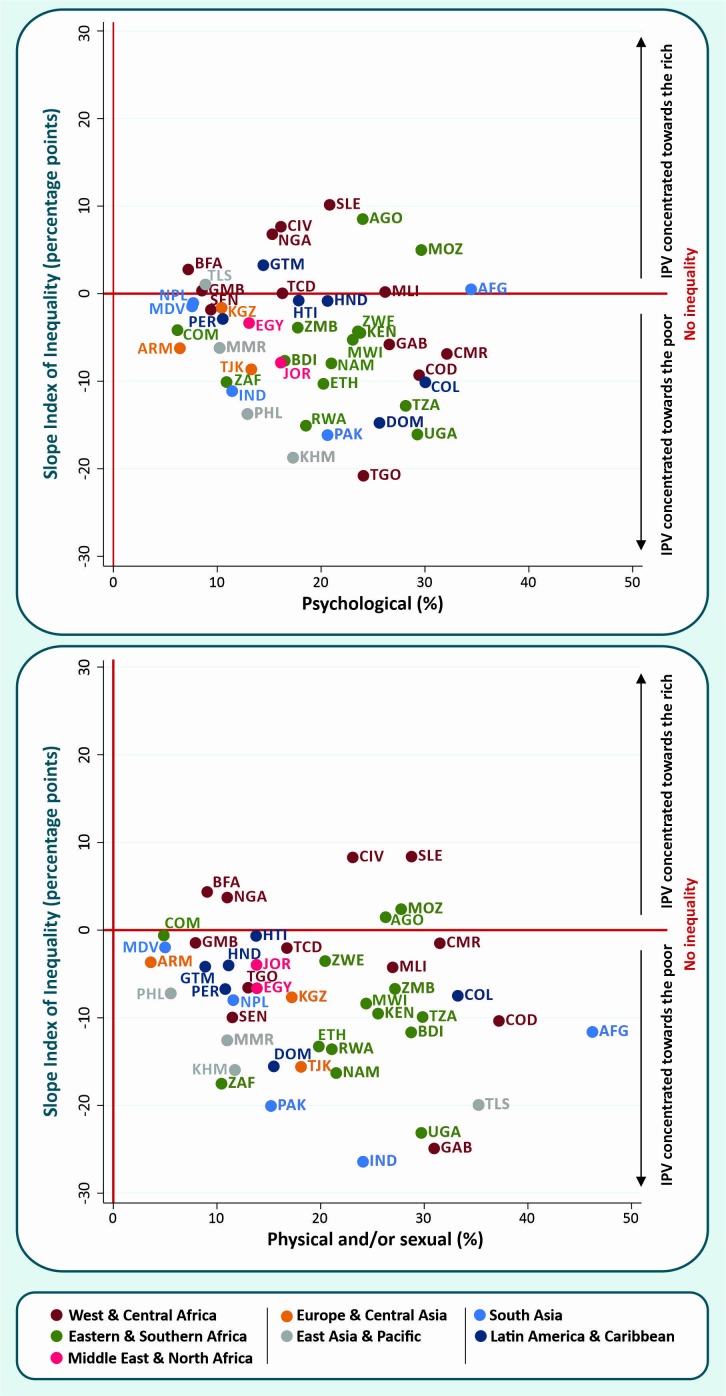
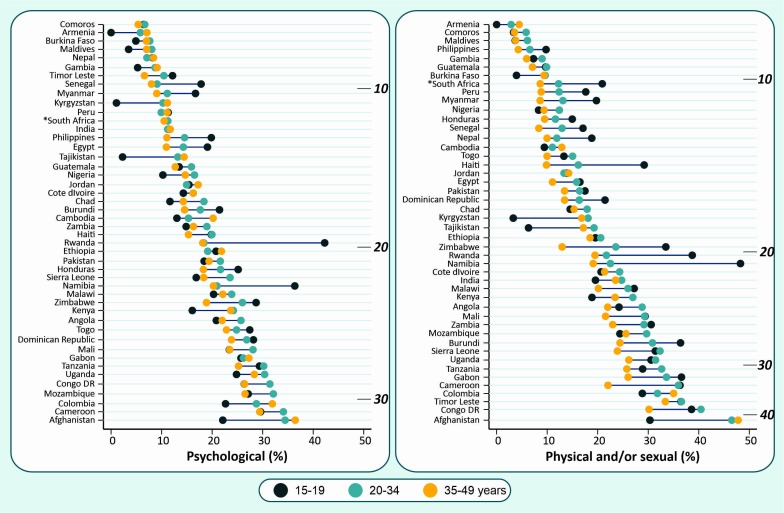
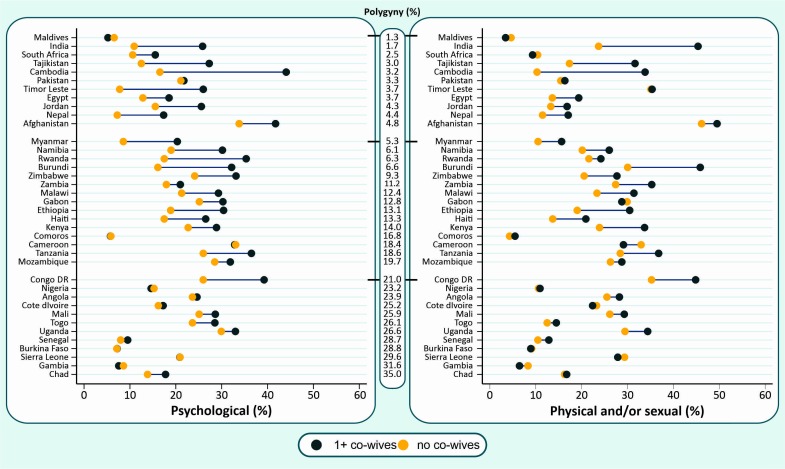
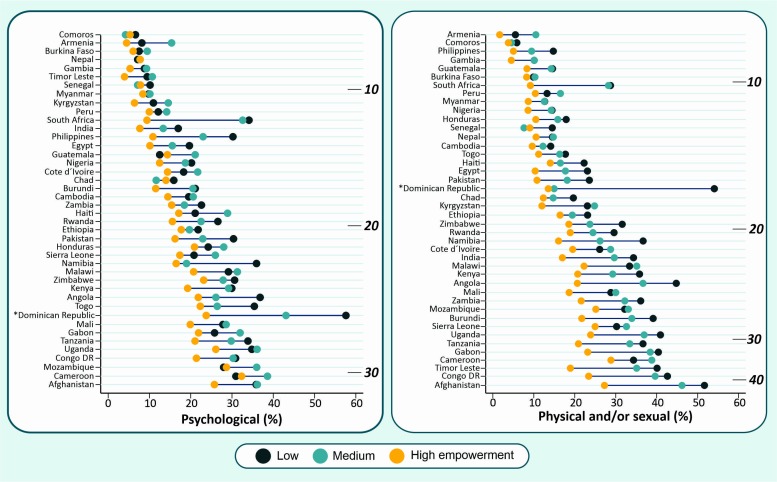
Verification
Claims the paper makes
The claims and statistics of this paper haven’t been checked yet.
Free: it reads the open-access text and checks the first 5 claims that cite a source we can check. Create a free account to check every claim.
Claims other papers make about this one
Each is checked against this paper’s own text: does it say what the citing paper says it does?
The source backs part of the claim, not all of it — or backs it for a different population, condition or comparison.
In the citing paper
“Data from a high-income context is unlikely to accurately depict the experiences of IPV in low-middle-income countries (LMIC) based on notable cultural and socioeconomic differences (Cerna-Turoff et al., 2021;Coll et al., 2020).”
From The Intergenerational Transmission of Emotional Intimate Partner Violence: a Systematic Review and Meta-Analysis (2025) · cites this paper as Coll et al., 2020
Experimental — accuracy not yet measured
Self-check
Percentages, sums and reported differences re-computed from the paper’s own numbers.
The self-check needs the paper’s full text.
Citations
Cites
The world report on violence and health
Krug, E. G., Mercy, J. A., Dahlberg, L. L., & Zwi, A. B. (2002) · The Lancet · doi:10.1016/s0140-6736(02)11133-0 · Cited by 9,110
Filmer, D., & Pritchett, L. H. (2001) · Demography · doi:10.1353/dem.2001.0003 · Cited by 5,238
García‐Moreno, C., Pallitto, C., Devries, K. M., Stöckl, H., Watts, C. G., & Abrahams, N. (2013) · Cited by 3,523
Self-citationGarcia-Moreno, C., Jansen, H. A., Ellsberg, M., Heise, L., & Watts, C. H. (2006) · The Lancet · doi:10.1016/s0140-6736(06)69523-8 · Cited by 3,176
Self-citationFilmer, D., & Pritchett, L. H. (2001) · Demography · doi:10.2307/3088292 · Cited by 2,972
Intimate partner violence: causes and prevention
Jewkes, R. (2002) · The Lancet · doi:10.1016/s0140-6736(02)08357-5 · Cited by 1,993
Abramsky, T., Watts, C. H., Garcia-Moreno, C., Devries, K., Kiss, L., Ellsberg, M., Jansen, H. A., & Heise, L. (2011) · BMC Public Health · doi:10.1186/1471-2458-11-109 · Cited by 1,413
Self-citationWorld Report on Violence and Health
(2002) · New South Wales Public Health Bulletin · doi:10.1071/nb02075 · Cited by 1,028
Garcia‐Moreno, C. (2001) · DigitalGeorgetown (Georgetown University Library) · Cited by 933
Heise, L. L., & Kotsadam, A. (2015) · The Lancet Global Health · doi:10.1016/s2214-109x(15)00013-3 · Cited by 605 · cited 1×
“30 From either side, our results support the potential effectiveness of interventions that promote women’s empowerment by addressing norms that justify wife beating for IPV reduction.”
Result
Research works printed but not linked: 1
- United Nations Human development indices and indicators. 2018 statistical update. 27 United Nations Development Programme, 2018: 123 http://hdr.undp.org/sites/default/files/2018_human_development_statistical_update.pdf
Cited by
Items 201–236 of 236
Experiences of women facing intimate partner violence during the revocation of protective orders
Rodrigues, P. S., Vernasque, J. R. D. S., de Souza, A. P., Sponchiado, V. B. Y., Gimenez, F. V. M., & Marín, M. J. S. (2025) · Revista da Escola de Enfermagem da USP · doi:10.1590/1980-220x-reeusp-2025-0010en · Cited by 1
“In this context, journeys in search of help in legal and police contexts are permeated by intense feelings and suffering, in addition to progressive and cyclical expressions of violence (16) .”
Rodrigues, P. S., Vernasque, J. R. D. S., de Souza, A. P., Sponchiado, V. B. Y., Gimenez, F. V. M., & Marín, M. J. S. (2025) · Revista da Escola de Enfermagem da USP · doi:10.1590/1980-220x-reeusp-2025-0010pt · Cited by 2
Rodrigues, P. S., Vernasque, J. R. D. S., de Souza, A. P., Sponchiado, V. B. Y., Gimenez, F. V. M., & Marín, M. J. S. (2025) · Revista da Escola de Enfermagem da USP · doi:10.1590/1980-220x-reeusp-2025-0010es
Reproductive health issues among young people in southern Africa
Mhele, K., Tsawe, M., & Palamuleni, M. E. (2025) · doi:10.4102/aosis.2025.bk374
Malisha, L., & Tsawe, M. (2025) · doi:10.4102/aosis.2025.bk374.09 · Cited by 1
Kebede, S. A., Weldesenbet, A. B., & Tusa, B. S. (2022) · Figshare · doi:10.6084/m9.figshare.19382428
Serra, L., Vall-llosera, L., Varga, D., Saurina, C., Sáez, M., & Renart, G. (2022) · Figshare · doi:10.6084/m9.figshare.19395736
Sen, M., Rajvanshi, S., Khandelwal, S., & Ghosh, S. (2025) · SSRN Electronic Journal · doi:10.2139/ssrn.5383098
The Relationship Between Intimate Partner Violence and Spontaneous Abortion: A Systematic Review
Bavi, L., & Arai, L. (2025) · Women s Reproductive Health · doi:10.1080/23293691.2025.2589210
Nisar, A., Park, S., Liaqat, R., Zaidi, A., Malik, A., Atif, N., Rahman, A., & Surkan, P. J. (2026) · BMC Public Health · doi:10.1186/s12889-026-26528-9
“In Pakistan, nearly one in three ever-married women reports experiencing physical or emotional IPV, with emotional abuse being most preva[10, 11].”
Terefe, B., Kebede, F. B., Gatira, D. N., Assefa, S. K., Shiferaw, Y. F., Assimamaw, N. T., Andargie, T. A., & Asgedom, D. K. (2026) · Scientific Reports · doi:10.1038/s41598-026-44933-3
“According to this study, age was significantly associated with IPV, women aged 25–34 and 35–49 experience significantly higher odds of physical and emotional violence compared to younger women aged 15–24.”
Intimate partner violence among pregnant women in Limpopo Province, South Africa
Alam, S., Marincowitz, G. J. O., & Marincowitz, C. (2026) · South African Family Practice · doi:10.4102/safp.v68i1.6292
“19,20,25 We also found no association between marital status and IPV, although the literature suggests that unmarried women are more prone to IPV.”
Moshfeghinia, R., Mostafavi, S., Sanaei, E., Ayano, G., & Vardanjani, H. M. (2026) · International Journal for Equity in Health · doi:10.1186/s12939-026-02833-y
Munro‐Kramer, M. L., Baeza, M. J., & Asumah, M. N. (2026) · Springer eBooks · doi:10.1007/978-3-032-06072-3_17
Wang, X., Zha, J., Qi, J., Zhang, N., Ye, X., & Chen, Y. (2026) · BMJ Global Health · doi:10.1136/bmjgh-2025-022886
“…prevention and response strategies may be strengthened by shifting from siloed, single-issue models to integrated, multisectoral approaches better aligned with the overlapping vulnerabilities women face, particularly in settings characterised by a high prevalence of the concurrence of risk factors.”
Kurbi, H. A., Abebe, S. M., Mengistu, N. W., Toni, A. T., & Ayele, T. A. (2026) · Depression and Anxiety · doi:10.1155/da/2781884
Mutasha, S., & Makwenda, R. (2026) · Research Square · doi:10.21203/rs.3.rs-9345250/v1
Muthuri, S. K., Habteyesus, D. F., Odwe, G., Nur, A., Obare, F., Kisaakye, P., Seruwagi, G. K., Wado, Y. D., Dessie, Y., Wandera, B., et al. (2026) · Conflict and Health · doi:10.1186/s13031-026-00797-y
“The burden of VAWC is disproportionately higher in low-and middle-income countries (LMICs), significantly compromising the health and well-being of affected individuals [5].”
Latitudinal psychology of intimate partner violence across 157 countries
de Vliert, E. V., & de Koning, E. C. (2026) · Current Research in Ecological and Social Psychology · doi:10.1016/j.cresp.2026.100274
Gyan, S. E., Owuor, P. M., Naidoo, K., & Boateng, G. O. (2026) · AIDS and Behavior · doi:10.1007/s10461-026-05152-z
Sen, M., Rajvanshi, S., Khandelwal, S., & Ghosh, S. (2026) · Behavioral Sciences · doi:10.3390/bs16050814
“Global estimates suggest that approximately 27–30% of women have experienced physical or sexual IPV in their lifetime, with prevalence rates in South Asia exceeding global averages (World Health Organization, 2021; Coll et al., 2020).”
Pacífico, N., Perner, M. S., Godoy, M. P., Ekuma, O., Brownridge, D. A., & Urquia, M. L. (2026) · BMJ Public Health · doi:10.1136/bmjph-2025-003137
Zhang, C., Ramaiya, A., Mandeville, J., Godongwana, M., Babbar, K., & Gupta, J. (2026) · Global Public Health · doi:10.1080/17441692.2026.2683738
Moreno‐Verduzco, E. R., Duran, J. P., Monroy-Muñoz, I. E., Solis‐Paredes, J. M., y Sosa, S. E., Martinez-Portilla, R. J., & Torres‐Torres, J. (2026) · International Journal of Gynecology & Obstetrics · doi:10.1002/ijgo.71189
Adhikari, S., Mishra, J., & Singh, S. (2026) · Cureus · doi:10.7759/cureus.111586
“A broadly similar pattern was described by Coll et al. (2020) in their analysis covering 46 LMICs, where women from poorer households and those with limited autonomy consistently reported higher IPV exposure [15].”
Abio, A., Subramanian, S., MohammadNamdar, M., Mugerwa, M., & Waila, J. M. (2026) · Health Science Reports · doi:10.1002/hsr2.72763
Kurbi, H. A., Abebe, S. M., Mengistu, N. W., Toni, A. T., & Ayele, T. A. (2026) · BMC Pregnancy and Childbirth · doi:10.1186/s12884-026-09609-w
“Preterm birth was considered as a birth occurring before 37 completed weeks of gestation [38]. psychological, physical, and sexual violence, and one affirmative response indicated the occurrence of violence [44].”
Bezie, A. E., Kassaw, A. B., Kabtyimer, A. M., Jemil, H. W., Keleb, A., & Mankelkl, G. (2026) · Women s Health · doi:10.1177/17455057261473443
Causes of Domestic Violence Against Women Through the Lenses of Young Kuwaiti Adults
Al-Rasheed, M. (2026) · Journal of Interpersonal Violence · doi:10.1177/08862605261467688
Polygyny as a determinant of migration
Koopmans, R., & Meierrieks, D. (2026) · Journal of Population Economics · doi:10.1007/s00148-026-01199-3
“…that polygyny correlates with outcomes associated with gender inequality such as domestic violence against women and poor women’s reproductive and mental health (e.g., McCloskey et al. 2005; Bove and Valeggia 2009; Tabi et al. 2010; McDermott 2018; Pesando 2020; Coll et al. 2020; Ahinkorah 2021).”
Çelik, N. A., & Aslan, R. (2026) · BMC Women s Health · doi:10.1186/s12905-026-04946-6
“Research across low-and middle-income countries has reported variation in IPV exposure according to multiple demographic and socioeconomic characteristics [27].”
John, M., Dushimirimana, T., & Koray, M. H. (2026) · Frontiers in Global Women s Health · doi:10.3389/fgwh.2026.1929589
Seidu, A., Kundu, S., Aggrey, P. A., Demoze, L., Beattie, E., & Emeto, T. I. (2026) · Sexual & Reproductive Healthcare · doi:10.1016/j.srhc.2026.101293
Dogbanya, G., & Mittal, M. J. (2026) · Healthcare · doi:10.3390/healthcare14203508
“Intimate partner violence (IPV) during pregnancy is a major public health and human rights concern that affects women across diverse sociocultural contexts [1].”
Inequality and Cultural Obstacles of Women Empowerment
Yusuf, H., Fahrudin, A., & Fahrudin, F. I. (2026) · Springer eBooks · doi:10.1007/978-3-032-35717-5_493
Silverman, J. G., Uysal, J., Undie, C., Liambila, W., McDougal, L., Pearson, E., Boyce, S. C., Johns, N. E., & Wendoh, S. (2026) · medRxiv · doi:10.64898/2026.10.21.26366167
Metadata
- Authors
- Coll, C. V. N., Ewerling, F., García-Moreno, C., Hellwig, F., & Barros, A. J. D.
- Affiliations
- Universidade Federal de Pelotas (BR)
- Reproductive Health and Research, WHO, Geneve, GE, Switzerland
- International Center for Equity in Health, Universidade Federal de Pelotas, Pelotas, RS, Brazil
- Corresponding author
- Coll, Carolina V N
- Venue
- BMJ Global Health
- Publisher
- BMJ
- Published
- 2020-01
- Volume
- 5
- Issue
- 1
- Pages
- e002208
- ISSN
- 2059-7908 (ISSN-L)
- PMC
- PMC7042580
- OpenAlex
- W3002907999
- Cited by
- 240
- References
- 37
- Citations by year
- 2026: 35 · 2025: 45 · 2024: 39 · 2023: 48 · 2022: 41 · 2021: 23 · 2020: 9
- FWCI
- 16.69
- Type
- journal article
- Language
- en
- Open access
- gold
- doi.org
- Locations
- BMJ Global Health (publishedVersion, cc-by)
- Europe PMC (PubMed Central) (publishedVersion, cc-by)
- PubMed Central (publishedVersion, cc-by)
- PubMed (publishedVersion)
- DOAJ (DOAJ: Directory of Open Access Journals) (submittedVersion, cc-by-sa)
- Funders
- Bill and Melinda Gates Foundation (OPP1148933)
- Wellcome Trust (101815/Z/13/Z)
- Topics
- Social Sciences › Health › Intimate Partner and Family Violence
- Health Sciences › Medicine › Geriatrics and Gerontology › Elder Abuse and Neglect
- Social Sciences › Sociology and Political Science › Gender, Violence, Rights in Latin America
- Keywords
- intimate partner violence, violence against women, low- and middle-income countries, psychological violence, physical violence, sexual violence, IPV prevalence, socioeconomic disparities, women's empowerment, polygyny, household wealth, urban-rural differences, maternal age, vulnerable populations, Demographic and Health Surveys
- MeSH terms
- Intimate Partner Violence, Adolescent, Adult, Developing Countries, Female, Health Surveys, Humans, Middle Aged, Poverty, Vulnerable Populations, Young Adult
About these checks
Registry, retraction, Cites and statistics results are computed, not judged, with one exception: a printed reference that no index lists is read once by a model before it counts as a citation error. Claims are extracted by a model and kept only when their quote appears verbatim in the text; each cited source is then checked, with a model’s help, for whether it says what the claim relies on. Those verdicts can be wrong — read the claim’s quote and the cited source before relying on one.
Statistics and arithmetic are recomputed, not judged.
Confidence bands are shown only for fields calibrated on our annotated test set. None is calibrated yet, so no band is shown.
What counts as a claim ›How we measure confidence ›How we check this ›
Are you an author, or do you see a problem with this page? Request a review
Data sources
Bibliographic data: Semantic Scholar, OpenAlex, Crossref.
Contains information from the Semantic Scholar Academic Graph Datasets, made available under the ODC Attribution License (ODC-BY 1.0).
Semantic Scholar’s data is described in: Kinney, R., et al. (2023). The Semantic Scholar Open Data Platform. arXiv:2301.10140.
