

Prevalence and global estimates of unsafe listening practices in adolescents and young adults: a systematic review and meta-analysis
Open accessThe DOI matches its Crossref record; 60 of the 60 references it cites were found in a registry or an index.
Abstract
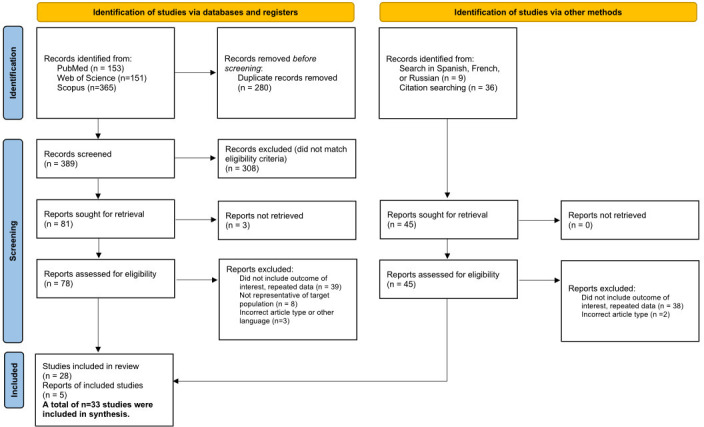
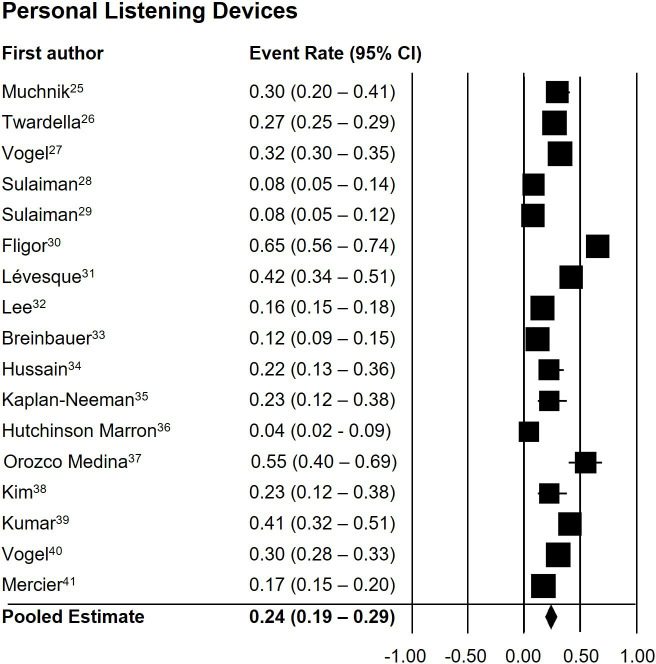
Introduction: This study aimed to determine the prevalence of unsafe listening practices from exposure to personal listening devices (PLDs) and loud entertainment venues in individuals aged 12–34 years, and to estimate the number of young people who could be at risk of hearing loss from unsafe listening worldwide. Methods: We conducted a systematic review and meta-analysis to estimate the prevalence of unsafe listening practices from PLDs and loud entertainment venues. We searched three databases for peer-reviewed articles published between 2000 and 2021 that reported unsafe listening practices in individuals aged 12–34 years. Pooled prevalence estimates (95% CI) of exposed populations were calculated using random effects models or ascertained from the systematic review. The number of young people who could be at risk of hearing loss worldwide was estimated from the estimated global population aged 12–34 years, and best estimates of exposure to unsafe listening ascertained from this review. Results: Thirty-three studies (corresponding to data from 35 records and 19 046 individuals) were included; 17 and 18 records focused on PLD use and loud entertainment venues, respectively. The pooled prevalence estimate of exposure to unsafe listening from PLDs was 23.81% (95% CI 18.99% to 29.42%). There was limited certainty (p>0.50) in our pooled prevalence estimate for loud entertainment venues. Thus, we fitted a model as a function of intensity thresholds and exposure duration to identify the prevalence estimate as 48.20%. The global estimated number of young people who could be at risk of hearing loss from exposure to unsafe listening practices ranged from 0.67 to 1.35 billion. Conclusions: Unsafe listening practices are highly prevalent worldwide and may place over 1 billion young people at risk of hearing loss. There is an urgent need to prioritise policy focused on safe listening. The World Health Organization provides comprehensive materials to aid in policy development and implementation.
Overview
The claims and statistics of this paper haven’t been checked yet.
Free: it reads the open-access text and checks the first 5 claims that cite a source we can check. Create a free account to check every claim.
Integrity signals
Registry
Cites
Statistics
Figures
Verification
Claims the paper makes
The claims and statistics of this paper haven’t been checked yet.
Free: it reads the open-access text and checks the first 5 claims that cite a source we can check. Create a free account to check every claim.
Claims other papers make about this one
Each is checked against this paper’s own text: does it say what the citing paper says it does?
The cited source doesn’t support the claim as written.
In the citing paper
“For example, acute changes in hearing often precede permanent damage, which can be cured when identified early.25”
From Next generation brain health: transforming global research and public health to promote prevention of dementia and reduce its risk in young adult populations (2024) · cites this paper as [25]
Checked by a reasoning model — may be wrong.
Experimental — accuracy not yet measuredIn the citing paper
“Up to one billion young adults (aged 18–34 years) globally are estimated to be at risk of permanent, avoidable hearing loss caused by exposure to loud noise and unsafe listening practices.25”
In the citing paper
“For example, acute changes in hearing often precede permanent damage, which can be cured when identified early.25”
Self-check
Percentages, sums and reported differences re-computed from the paper’s own numbers.
The self-check needs the paper’s full text.
Citations
Cites
The PRISMA 2020 Statement: An Updated Guideline for Reporting Systematic Reviews
Page, M. J., McKenzie, J. E., Bossuyt, P. M., Boutron, I., Hoffmann, T. C., Mulrow, C. D., Shamseer, L., Tetzlaff, J. M., Akl, E. A., Brennan, S. E., et al. (2021) · International Journal of Surgery · doi:10.1016/j.ijsu.2021.105906 · Cited by 11,748
Auditory and non-auditory effects of noise on health
Basner, M., Babisch, W., Davis, A., Brink, M., Clark, C., Janssen, S., & Stansfeld, S. (2014) · The Lancet · doi:10.1016/s0140-6736(13)61613-x · Cited by 2,473
Adding Insult to Injury: Cochlear Nerve Degeneration after “Temporary” Noise-Induced Hearing Loss
Kujawa, S. G., & Liberman, M. C. (2009) · The Journal of Neuroscience · doi:10.1523/jneurosci.2845-09.2009 · Cited by 2,456
Acceleration of Age-Related Hearing Loss by Early Noise Exposure: Evidence of a Misspent Youth
Kujawa, S. G., & Liberman, M. C. (2006) · The Journal of Neuroscience · doi:10.1523/jneurosci.4985-05.2006 · Cited by 697
The world report on hearing, 2021
Chadha, S., Kamenov, K., & Cieza, A. (2021) · Bulletin of the World Health Organization · doi:10.2471/blt.21.285643 · Cited by 563
Self-citationChange in Prevalence of Hearing Loss in US Adolescents
Shargorodsky, J. (2010) · JAMA · doi:10.1001/jama.2010.1124 · Cited by 494
Does noise affect learning? A short review on noise effects on cognitive performance in children
Klatte, M., Bergström, K., & Lachmann, T. (2013) · Frontiers in Psychology · doi:10.3389/fpsyg.2013.00578 · Cited by 446
Aging and Hearing Health: The Life-course Approach
Davis, A., McMahon, C. M., Pichora-Fuller, K. M., Russ, S., Lin, F., Olusanya, B. O., Chadha, S., & Tremblay, K. L. (2016) · The Gerontologist · doi:10.1093/geront/gnw033 · Cited by 402
Self-citationMechanisms of noise-induced hearing loss indicate multiple methods of prevention
Le Prell, C. G., Yamashita, D., Minami, S. B., Yamasoba, T., & Miller, J. M. (2007) · Hearing Research · doi:10.1016/j.heares.2006.10.006 · Cited by 369
Cellular mechanisms of noise-induced hearing loss
Kurabi, A., Keithley, E. M., Housley, G. D., Ryan, A. F., & Wong, A. C.-Y. (2017) · Hearing Research · doi:10.1016/j.heares.2016.11.013 · Cited by 360 · cited 1×
“63 66 These physiological changes likely result in progressive and incremental, yet permanent, changes to hearing thresholds and/or the onset of tinnitus.”
Background
Research works printed but not linked: 2
- Lévesque B, Fiset R, Isabelle L. Le baladeur numérique: une technologie risque?. Bulletin d’information en Santé Environnementale, 2010.
- Kopke RD, Coleman JKM, Liu J. Mechanisms of noise-induced hearing loss and otoprotective strategies. In: Van De Water TR, Staecker H, eds. Otolaryngology: basic science and clinical review. New York: Thieme, 2006: 395– 408.
Cited by
Natarajan, N., Batts, S., & Stankovic, K. M. (2023) · Journal of Clinical Medicine · doi:10.3390/jcm12062347 · Cited by 254
“Clinical trials have been conducted to assess HBOT and corticosteroids as treatments for NIHL, primarily focusing on acute acoustic trauma (AAT) (Table 3).”
Farina, F. R., Bridgeman, K., Gregory, S., Crivelli, L., Foote, I. F., Jutila, O.-E. I., Kucikova, L., Mariano, L. I., Nguyen, K.-H., Thayanandan, T., et al. (2024) · The Lancet Healthy Longevity · doi:10.1016/j.lanhl.2024.100665 · Cited by 45
“25 Possible access points for interventions include primary care, sexual and reproductive health, mental health and substance abuse disorder, or wellness services.”
Nigg, J. T., Bruton, A. M., Kozlowski, M. B., Johnstone, J. M., & Karalunas, S. L. (2024) · Journal of the American Academy of Child & Adolescent Psychiatry · doi:10.1016/j.jaac.2023.12.014 · Cited by 41
Elmazoska, I., Mäki‐Torkko, E., Granberg, S., & Widén, S. (2024) · Journal of Speech Language and Hearing Research · doi:10.1044/2023_jslhr-23-00397 · Cited by 35
Young adult brain capital: a new opportunity for dementia prevention
Farina, F. R., Booi, L., Occhipinti, J.-A., Quoidbach, V., Destrebecq, F., Muniz-Terrera, G., & Eyre, H. A. (2023) · Journal of Alzheimer's Disease · doi:10.3233/jad-230260 · Cited by 17
Zhuang, H., Li, Q., Sun, C., Xu, D., Gan, G., Zhang, C., Chen, C., Yuan, Y., Liu, L., Xiao, Y. M., et al. (2023) · Brain Behavior and Immunity · doi:10.1016/j.bbi.2023.09.002 · Cited by 16
Towards universal access: A review of global efforts in ear and hearing care
Patterson, R. H., Suleiman, O. A., Hapunda, R., Wilson, B. S., Chadha, S. K., & Tucci, D. L. (2024) · Hearing Research · doi:10.1016/j.heares.2024.108973 · Cited by 15
Self-citationNoise: a public health problem
Banks, J. L., & Hubal, E. A. C. (2025) · Journal of Exposure Science & Environmental Epidemiology · doi:10.1038/s41370-025-00748-4 · Cited by 9
Hearing Function Moderates Age‐Related Differences in Brain Morphometry in the HCP Aging Cohort
Kirschen, R. M., & Leaver, A. M. (2024) · Human Brain Mapping · doi:10.1002/hbm.70074 · Cited by 11
“Yet, hearing loss also occurs in younger adults (with risk increasing in recent years (Dillard et al. 2022)), and may impact the brain independently of age in some brain systems, while accelerating the pace of age-related changes in others.”
Dillard, L. K., Mulas, P., Der, C., Fu, X., & Chadha, S. K. (2024) · BMJ Public Health · doi:10.1136/bmjph-2023-000253 · Cited by 8
Self-citationFatty acid binding protein type 7 deficiency preserves auditory function in noise-exposed mice
Suzuki, J., Hemmi, T., Maekawa, M., Watanabe, M., Inada, H., Ikushima, H., Oishi, T., Ikeda, R., Honkura, Y., Kagawa, Y., et al. (2023) · Scientific Reports · doi:10.1038/s41598-023-48702-4 · Cited by 7
Safe Listening at Venues and Events with Amplified Music — United States, 2022
Eichwald, J., Themann, C. L., & Scinicariello, F. (2023) · MMWR Morbidity and Mortality Weekly Report · doi:10.15585/mmwr.mm7213a3 · Cited by 7
AlOmari, H., Hani, H. A. B., Alhanbali, S., Addasi, Z. A., & AlMasri, M. (2024) · Journal of Multidisciplinary Healthcare · doi:10.2147/jmdh.s471986 · Cited by 6
Gajendran, A., Devi Rajendiran, G., Prateep, A., Satindra, H., & Rajendran, R. (2024) · Journal of Clinical Medicine · doi:10.3390/jcm14010049 · Cited by 10
Alkharabsheh, A., Alshurafa, S., Alhanbali, S., & Garadat, S. N. (2025) · PLoS ONE · doi:10.1371/journal.pone.0319665 · Cited by 8
The summating potential polarity encodes the ear health condition
Hakizimana, P. (2023) · Cellular and Molecular Life Sciences · doi:10.1007/s00018-023-04809-5 · Cited by 5
“Recently, it has been discovered that the widespread use of personal listening devices at unsafe levels puts more than 1 billion teenagers and young adults at risk of hearing loss [11].”
BackgroundEditorial: Noise-induced hearing loss: From basic to clinical research
Huang, Z., Qiu, W., Zhang, V. W., Wang, H., Ye, B., & Wang, Q. (2023) · Frontiers in Integrative Neuroscience · doi:10.3389/fnint.2023.1172081 · Cited by 8
“In addition to occupational noise exposures, other noises may stem from everyday occurrences, and there are growing concerns about the increasing incidence of NIHL in children and adolescents who are potentially exposed to an array of loud sounds on a daily basis (Dillard et al., 2022).”
BackgroundWang, N., Zhang, S., Zhang, H. F., Li, Z., Wang, G., Zheng, Z., & Wu, J. (2025) · Preventive Medicine · doi:10.1016/j.ypmed.2025.108311 · Cited by 7
Liu, K., Li, Q., Sun, C., Cao, G., Liang, Z., Zhu, H., Liu, S., & Liu, L. (2025) · Experimental Neurology · doi:10.1016/j.expneurol.2025.115428 · Cited by 4
Vera-Ponce, V. J., Ballena-Caicedo, J., Valladolid-Sandoval, L. A. M., & Montoya, F. E. Z. (2026) · International Journal of Statistics in Medical Research · doi:10.6000/1929-6029.2026.15.01 · Cited by 6
Gottfriedová, N., Škerková, M., Zbořilová, M., Kovaľová, M., Tomášková, H., & Mrázková, E. (2025) · Otolaryngologia Polska · doi:10.5604/01.3001.0054.8776 · Cited by 7
Non-reflective traveling waves in finite thin beams: A parametric study
Soroor, A. O., & Tarazaga, P. A. (2024) · Thin-Walled Structures · doi:10.1016/j.tws.2024.112839 · Cited by 4
“Of all the natural phenomena discussed above, the BM's dynamic behavior is of particular interest in this work, as a recent study has revealed that unsafe listening practices have endangered more than a billion young individuals' hearing [29].”
BackgroundWaechter, S., & Brännström, K. J. (2023) · The Journal of the Acoustical Society of America · doi:10.1121/10.0022255 · Cited by 4
Ear and hearing health in children
Brown, T. H., & Chadha, S. K. (2024) · Paediatrics and Child Health · doi:10.1016/j.paed.2024.02.004 · Cited by 4
Self-citationPreclinical prospects of investigational agents for hearing loss treatment
Prell, C. G. L. (2023) · Expert Opinion on Investigational Drugs · doi:10.1080/13543784.2023.2253141 · Cited by 3
“Concerns that exposure to loud sound during recreational activities may result in hearing loss (or other auditory dysfunction) in adolescents and young adults have focused attention on hearing loss prevention as a public health issue in recent years [9].”
BackgroundL’enveloppe sonore du Soi, quarante-sept ans après Didier Anzieu
Brault, A. (2024) · Bulletin de psychologie · doi:10.3917/bupsy.585.0037 · Cited by 3
Senninger, S., Gerstner, D. G., Huß, J., Stadler, A., Schreiber, F., Herr, C. E. W., Heinze, S., & Weilnhammer, V. (2023) · International Journal of Audiology · doi:10.1080/14992027.2023.2261075 · Cited by 4
Mayo, P. G., Vaden, K. I., Matthews, L. J., & Dubno, J. R. (2025) · Journal of Medical Systems · doi:10.1007/s10916-025-02146-7 · Cited by 2
Murray, C., Guest, H., Prendergast, G., Munro, K. J., Millman, R. E., Roberts, S. A., Kluk, K., & Plack, C. J. (2025) · Frontiers in Audiology and Otology · doi:10.3389/fauot.2025.1635615 · Cited by 2
Srivastava, R., Goyal, S., & Bhat, J. S. (2025) · Noise and Health · doi:10.4103/nah.nah_66_25 · Cited by 2
Gao, E., Armache, M., Kim, J. S., Arar, C., Thompson, E., Wang, C., Chasin, M., McRackan, T. R., & Chern, A. (2026) · Otolaryngology · doi:10.1002/ohn.70340 · Cited by 3
Understanding Hearing Health: A Cross-Sectional Study of Determinants in a Metropolitan Area
Pennino, F., Lillo, M. D., Sorrentino, M., Fiorilla, C., Parisi, A., Mirizzi, P. D., Simone, B. D., Montuori, P., Triassi, M., & Nardone, A. (2023) · Healthcare · doi:10.3390/healthcare11162253 · Cited by 2
“35 billion adolescents and young adults [8].”
Blankenship, C. M., Hickson, L. M., Quigley, T. M., Larsen, E., Lin, L., & Hunter, L. L. (2024) · Ear and Hearing · doi:10.1097/aud.0000000000001621 · Cited by 2
“In children and adolescents, common sources of noise exposure are recreational firearms (Laffoon et al. 2019) and music activities including personal listening devices and loud entertainment venues (Sulaiman et al. 2013, 2014; Serra et al. 2014; Dillard et al. 2022).”
Elmazoska, I., Bengtsson, S., & Widén, S. (2025) · International Journal of Qualitative Studies on Health and Well-Being · doi:10.1080/17482631.2025.2480966 · Cited by 3
“Dillard et al. (2022) estimate that 23.81% of young people listen to music daily at volumes or durations above safe thresholds.”
InfluentialSoares, L. F. B., de Almeida, B. L., Teixeira, I. A. S., Maciel, M. L. F. L., Monteiro, J. V. L., Martins, L. S., Scott, M. C. P., & Penido, N. D. O. (2025) · Brazilian Journal of Otorhinolaryngology · doi:10.1016/j.bjorl.2025.101617 · Cited by 2
“25 According to Balk et al., recreational exposure to noise has become increasingly significant, especially affecting adolescents and young adults.”
Generational Differences in Audiometric and Self-Reported Hearing and Hearing Aid Use
Dillard, L. K., Matthews, L. J., & Dubno, J. R. (2025) · Journal of the Association for Research in Otolaryngology · doi:10.1007/s10162-025-00993-2 · Cited by 2
Self-citationThe development and evaluation of an online hearing loss prevention program
Thulin, A., Kähäri, K. R., & Malmberg, M. (2023) · Preventive Medicine Reports · doi:10.1016/j.pmedr.2023.102298 · Cited by 2
“A recent systematic review showed that unsafe listening is highly prevalent in young individuals aged 12–34 years (Dillard et al., 2022).”
BackgroundHearing loss prevention at loud music events via real-time visuo-haptic feedback
Turchet, L., Luiten, S., Treub, T., van der Burgt, M., Siani, C., & Boem, A. (2023) · Journal on Multimodal User Interfaces · doi:10.1007/s12193-023-00419-4 · Cited by 3
Huß, J., Gerstner, D. G., Senninger, S., Szperalski, J., Schreiber, F., Weilnhammer, V., Herr, C. E. W., Quartucci, C., & Heinze, S. (2024) · International Journal of Audiology · doi:10.1080/14992027.2024.2422385 · Cited by 1
“For the prevalence of risky noise exposure from PLDs (rock, pop), a pooled estimate of 23.8% was calculated by Dillard et al. (2022) in a meta-analysis that included 17 studies.”
InfluentialEstimating Earphone Level and Dose Using Real-Ear Measures and Ecological Momentary Assessment
Jorgensen, E. J., Reynolds, I., Saxena, T., Thomas, M., & Werner, M. (2025) · American Journal of Audiology · doi:10.1044/2024_aja-24-00192 · Cited by 2
Sajjadi, A., McBride, M., Guettler, K., Janasko, S., House, S., Bergsten, C., Antwi, N., Marker, M., Todatry, S., Rabusch, S., et al. (2025) · Otolaryngology · doi:10.1002/ohn.1192 · Cited by 1
Serpanos, Y. C., DiBlasi, T., & Butler, J. (2025) · Audiology Research · doi:10.3390/audiolres15030068 · Cited by 4
“Global estimates suggest that half of those aged 12 to 35 years listen with PLDs at levels considered unsafe for hearing [3], creating risk for hearing loss in approximately 1.35 billion people [4].”
InfluentialSaniasiaya, J., Kulasegarah, J., Seluakumaran, K., & Prepageran, N. (2025) · Annals of Otology Rhinology & Laryngology · doi:10.1177/00034894251372217 · Cited by 1
Reijers, S. N. H., Vroegop, J. L., Paping, D. E., Pronk, M., Goedegebure, A., Kremer, B., & van der Schroeff, M. P. (2025) · Otolaryngology · doi:10.1002/ohn.70042 · Cited by 3
Elmorsy, E. M., Alrwaili, M. R. A., Alanazi, A. S. D., Alshammari, R. S. B., Alenazi, O. M. M., Alanazi, S. S. N., Alshammari, J. H. J., & Fawzy, M. S. (2025) · Healthcare · doi:10.3390/healthcare13233059 · Cited by 2
“These findings align with global trends indicating a rise in NIHL among young and middle-aged adults, which is associated with the increasing use of PLDs [15].”
InfluentialAlmazán-Catalán, J., Carpizo-Zaragoza, P., Penalba-Iglesias, D., Sánchez, M. L., González-Reguero, D., Bueno, S., Robas-Mora, M., Varela‐Moreiras, G., Partearroyo, T., & Jiménez, P. A. (2025) · Antibiotics · doi:10.3390/antibiotics14121241 · Cited by 1
“This increase is largely attributed to recreational and occupational noise exposure, including attendance at loud music events and the use of personal listening devices (PLDs) or other unsafe listening practices [3–5].”
Headphone Listening Levels, Attitudes to Noise, and Auditory Symptoms Among Children and Adolescents
Elmazoska, I., Waye, K. P., Mäki‐Torkko, E., & Widén, S. (2025) · Journal of Speech Language and Hearing Research · doi:10.1044/2025_jslhr-25-00397 · Cited by 1
Fujihira, H., Higashi, R., Yamagishi, S., Furukawa, S., Kashino, M., & Mori, S. (2026) · Trends in Hearing · doi:10.1177/23312165261417086 · Cited by 1
“A more recent review re-ported that 1.3 billion young adults are at risk of permanent, avoidable hearing loss, primarily due to unsafe listening practices (e.g., ampli fi ed music) (Dillard et al., 2022).”
InfluentialKumar, M., Linnertz, C., Bizup, B. T., Huang, W., Ai, H., & Tzounopoulos, T. (2026) · Science Advances · doi:10.1126/sciadv.aee9298 · Cited by 1
“Over 48 million adults in the United States and 430 million people worldwide are affected, and the World Health Organization estimates that more than one billion individuals are at risk due to excessive noise exposure ( 1 ).”
TACHE, O.-C., VODĂ, I. A., Mischianu, D. L. D., & Sîrbu, C. A. (2023) · Annals of the Academy of Romanian Scientists Series of Medicine · doi:10.56082/annalsarscimed.2023.2.29 · Cited by 1
Was ist Glück? Und was hat die HNO-Heilkunde damit zu tun?
Dobel, C., Richter, D., & Guntinas‐Lichius, O. (2025) · HNO · doi:10.1007/s00106-025-01604-5 · Cited by 1
Hearing function moderates age-related changes in brain morphometry in the HCP Aging cohortPreprint
Kirschen, R. M., & Leaver, A. M. (2024) · bioRxiv (Cold Spring Harbor Laboratory) · doi:10.1101/2024.04.22.590589 · Cited by 1
“Yet, hearing loss also occurs in younger adults (with risk increasing in recent years [Dillard et al., 2022]), and may impact the brain independently of age in some brain systems, while accelerating the pace of age-related changes in others.”
Hakizimana, P. (2023) · Pflügers Archiv - European Journal of Physiology · doi:10.1007/s00424-023-02883-z
The Acoustic Environment and People with Hearing Impairments during the COVID-19 Pandemic
Hasegawa, Y. (2022) · Convention of the European Acoustics Association Forum Acusticum · doi:10.61782/fa.2023.0018
“While hearing loss is most prevalent for those older than 50 years [2], more than 1 billion young people worldwide could be at risk of hearing loss from exposure to unsafe listening practices [3].”
BackgroundPuel, J., & Wang, J. (2024) · EMC - Otorrinolaringología · doi:10.1016/s1632-3475(23)48679-1 · Cited by 1
Improving the Level of Ear Health Literacy in Teenager: Policy Brief
Naderifar, H., & Najafi‐Vosough, R. (2023) · Pajouhan Scientific Journal · doi:10.61186/psj.21.1.61
Headphone use and hearing in medical students at a public university in Lima, Peru
Universidad Nacional Federico Villarreal. Lima, P., Pinedo, F. C., Tito, L. K. C., Jauregui, F., Fuertes, J. G. A., Otorrinolaringólogo, M., Médico, T., & Cirujano, M. (2024) · Revista de la Facultad de Medicina Humana · doi:10.25176/rfmh.v24i2.6423
Prevention of noise-induced hearing loss in children – recommendations for safe listening at eventsPreprint
Gáborján, A., Koscsó, G., Garai, R., László, T., Vicsi, K., & Hacki, T. (2024) · Research Square · doi:10.21203/rs.3.rs-4467179/v1
L’enveloppe sonore du Soi, quarante-sept ans après Didier Anzieu
Brault, A. (2024) · Bulletin de psychologie · doi:10.3917/bupsy.pr1.015
Gáborján, A., Koscsó, G., Garai, R., Tamás, L. T., Vicsi, K., & Hacki, T. (2025) · International Journal of Audiology · doi:10.1080/14992027.2025.2467789 · Cited by 1
“…the prevalence of unsafe listening practices resulting from exposure to personal listening devices and loud entertainment venues in children over 12 years of age and young adults (Dillard et al. 2022; Eichwald and Scinicariello 2020; Jiang et al. 2016; Shargorodsky et al. 2010; Vogel et al. 2010).”
Tuz, D., Sarıçamlık, S., Bodur, C., Kirazlı, G., & Akmeşe, P. P. (2025) · Noise and Health · doi:10.4103/nah.nah_137_24 · Cited by 3
Personal Listening Devices (PLD): A Boon or Bane? Perceptions among the Urban Indian Population
Sharma, S., Shah, P., Patel, D., Tadvi, P. B., & Sharma, P. (2025) · Indian Journal of Otolaryngology and Head & Neck Surgery · doi:10.1007/s12070-025-05682-3
Ceccato, J.-C., Wang, J., & Puel, J. (2025) · Encyclopédie médico-chirurgicale. Oto-rhino-laryngologie · doi:10.1016/s0246-0351(25)48306-8
Saniasiaya, J., Kulasegarah, J., Seluakumaran, K., & Prepageran, N. (2025) · Clinical Otolaryngology · doi:10.1111/coa.70005
Association between leisure noise exposure and hearing status in young Croatian adults
Cvijetić, S., Kujundžić, M., Franić, Z., Malić, M., Šušković, D., Fajt, S., & Macan, J. (2025) · Archives of Industrial Hygiene and Toxicology · doi:10.2478/aiht-2025-76-3968
“A recent review article (12) shows that the prevalence of exposure to excessive noise from headphones/speakers of 23.81 % is similar across age groups.”
InfluentialKowal-Summek, L. (2025) · Springer eBooks · doi:10.1007/978-3-658-48858-1_4
Tinnitus: The Hidden Cost of Earbuds
Jasim, S. H., & Yaseen, E. T. (2025) · Al-Rafidain Journal of Medical Sciences · doi:10.54133/ajms.v9i2.2490
IMPACTOS AUDITIVOS ASSOCIADOS AO USO RECREATIVO DE FONES DE OUVIDO: UMA REVISÃO INTEGRATIVA
Brito, L. A. A. L., & de Macedo, L. D. E. D. (2025) · Revista Contemporânea · doi:10.56083/rcv5n12-017
Qian, T., Wang, G., Li, P., Zhang, N., Lu, C., Wu, Y., Gao, X., Tang, Y.-Q., Li, H., & Sun, S. (2026) · Environment & Health · doi:10.1021/envhealth.5c00512
Alkahtani, R., Alghayhab, R., Alanazi, A. K., Alahmari, L. A., Almohammadi, L., Almanie, A., Alsaleh, H., & Elbeltagy, R. (2026) · The Egyptian Journal of Otolaryngology · doi:10.1186/s43163-026-01005-7 · Cited by 1
Borre, E. D., Deleger, J. N., Dillard, L. K., Pavon, J. M., Shah, S., Dubno, J. R., Smith, S. L., Freedberg, K. A., Francis, H. W., Ritchie, C. S., et al. (2026) · The Journals of Gerontology Series A · doi:10.1093/gerona/glaf295
Self-citationSrikumar, P., S, F. I. K., & Edwin, D. (2026) · Indian Journal of Otolaryngology and Head & Neck Surgery · doi:10.1007/s12070-026-06411-0
Lee, B., Kwon, T.-J., Kim, H. T., & Kim, U.-K. (2026) · Genes & Genomics · doi:10.1007/s13258-026-01748-w · Cited by 1
“Risk depends on the intensity– duration dose of exposure, and repeated high-level recreational listening has been associated with early auditory changes in multiple populations (Dillard et al. 2022).”
Seifer, B., Minor, L. A., & Detweiler, R. (2026) · Global Advances in Integrative Medicine and Health · doi:10.1177/27536130261434488
Škerková, M., Mrázková, E., Kovaľová, M., Kocurková, L., & Gottfriedová, N. (2026) · European Annals of Otorhinolaryngology Head and Neck Diseases · doi:10.1016/j.anorl.2026.01.011
ОСОБЛИВОСТІ ВПЛИВУ АКУСТИЧНОГО НАВАНТАЖЕННЯ ПРИ ВИКОРИСТАННІ НАВУШНИКІВ НА САМОПОЧУТТЯ
Чуприна, М. В., Батюк, Л. В., Kalashnyk-Vakulenko, Y. M., & Lupyr, A. V. (2026) · ГРААЛЬ НАУКИ · doi:10.36074/grail-of-science.03.04.2026.093
Kolesnichenko, V. (2026) · OTORHINOLARYNGOLOGY · doi:10.37219/2n89dz81
Noise exposure and dizziness in middle-aged adults: a nationally representative study
Kim, H., & Kim, K. (2026) · Frontiers in Neurology · doi:10.3389/fneur.2026.1818481
Reijers, S. N. H., Meerkerk‐Meijer, A. E., Vroegop, J. L., Geleijnse, G., Kremer, B., & van der Schroeff, M. P. (2026) · Otolaryngology · doi:10.1002/ohn.70284
Moiz, A., Khan, N., Javed, A., Mubeen, S., & Ejaz, M. (2026) · The Healer Journal of Physiotherapy and Rehabilitation Sciences · doi:10.55735/pkp8bn19
Lwin, S., Rodzi, A. R. M., Amin, A. N. N., Yusof, R. H. F. R. M., Mazuki, W. M. E. S. B. W., Nwe, T. M., Yee, K. T., Yi, M. S., & Latt, S. S. (2026) · Research Journal of Pharmacy and Technology · doi:10.52711/0974-360x.2026.00316
Škerková, M., Mrázková, E., Kovaľová, M., Kocurková, L., & Gottfriedová, N. (2026) · Annales françaises d Oto-rhino-laryngologie et de Pathologie Cervico-faciale · doi:10.1016/j.aforl.2026.04.004
A Prospective Assessment of Hearing Threshold Variability in Personal Listening Device Users
Chauhan, B., Godara, S., Jayan, A., Gupta, K., & Datta, G. (2026) · Cureus · doi:10.7759/cureus.110339
Feder, K. P., Marro, L., Fitzpatrick, E. P., Lessard-Dostie, H., & Adrian Fuente, C. (2026) · International Journal of Audiology · doi:10.1080/14992027.2026.2678286 · Cited by 1
Mkwandah, C., Msukuma, M., Mategula, D., Munharo, S., & Joabe, A. (2026) · Noise and Health · doi:10.4103/nah.nah_127_25
KOCH, M. J., Betz, R., Kurotschka, P. K., & Simmenroth, A. (2026) · Frontiers in Medicine · doi:10.3389/fmed.2026.1872805
“Assumed causes include unsafe listening practices (6), ototoxic or viral exposure, chronic illness (e.g., hypertension, diabetes mellitus, central obesity, otosclerosis), smoking, or sensorineural degeneration (2).”
Akbarlou, M. A., Tavanai, E., Rahimi, V., Farahani, A., & Azimi, S. (2026) · Health Promotion Practice · doi:10.1177/15248399261466160
Evaluation of an online intervention to promote hearing protective behavior in young people
de Zeeuw, T. I., Peters, G.-J., de Regt, L., Pronk, M., Verboon, P., & Bolman, C. A. W. (2026) · Internet Interventions · doi:10.1016/j.invent.2026.100996
“This risk is even greater when added to other situations in which young people are exposed to loud sounds, most notably during amplified music venues visits (Dillard et al., 2022; de Zeeuw et al., 2026a).”
Classroom noise exposure and evaluation of an acoustic intervention among Chinese students
Yang, Q., Tian, Y., Zhang, X., Chen, Y., Biyue, Z., Jiang, J., Zhang, D., Yuemei, L., Yi, Z., Li, C., et al. (2026) · International Journal of Environmental Health Research · doi:10.1080/09603123.2026.2708093
Annual noise exposure among Malaysian young adults
Liew, K. L., Maamor, N., Ishak, W. S., Chu, S. Y., & Lee, O. W. (2026) · Environmental Epidemiology · doi:10.1097/ee9.0000000000000511
Murri, A., Pantaleo, A., Lippolis, M., Sicolo, A., Curatoli, L., Turchetta, R., Cristofari, E., Cuda, D., & Quaranta, N. A. A. (2026) · International Journal of Audiology · doi:10.1080/14992027.2026.2715828
Association Between Headphone usage and Vestibular Function in Young Adults: An Observational Study
Kshirsagar, D. A., Vadhel, R., & Shinde, D. S. D. (2026) · PAIN JOINTS SPINE · doi:10.1922/pjs.16.7s.2026.1130
Kravos, A. (2026) · Children · doi:10.3390/children13091179
“Earphones used for listening to music are becoming increasingly popular [29].”
Govindarajan, P., Indumathi, S., L, P. H., Raga Shree, B., Sanjana, J., Perumalsamy, M., & Prasad, R. K. (2026) · Discover Internet of Things · doi:10.1007/s43926-026-00484-7
Applying the health action process approach to safe listening behavior among young adults
Nagamine, D., Amazaki, M., Kemuriyama, C., & Shinriki, R. (2026) · Journal of Health Psychology Research · doi:10.11560/jhpr.250521161
Bhagwanrao, S., Kotalwa, P., & Bansode, S. (2026) · Intemed International Journal of Research in Integrated Medical Sciences (IJ-RIMS) · doi:10.68108/intemed.v2.i9.1
Influence of recreational noise on temporal fine structure processing in college going students
Thavarayil, V., Leelavathi, T., Ganapathy, K., & Palaniswamy, H. P. (2026) · Brazilian Journal of Otorhinolaryngology · doi:10.1016/j.bjorl.2026.101927
Potupchik, T., Khabibulina, М., & Paklin, N. (2026) · Meditsinskaya sestra · doi:10.29296/25879979-2026-06-09
Prolonged use of personal listening devices and hearing loss: a systematic review and meta-analysis
Golshaniniya, P., PorkarKhatibi, M., Rouhi, A. J., Moghaddam, Y. J., Zabet, S., Salehi-Pourmehr, H., & Shahsavarinia, K. (2026) · BMC Public Health · doi:10.1186/s12889-026-29110-5
Metadata
- Authors
- Dillard, L. K., Arunda, M. O., Lopez-Perez, L., Martinez, R. X., Jiménez, L., & Chadha, S.
- Affiliations
- Medical University of South Carolina (US)
- Lund University (SE)
- World Health Organization (CH)
- Octoma, Octoma, Mexico
- Corresponding author
- Dillard, Lauren K
- Venue
- BMJ Global Health
- Publisher
- BMJ
- Published
- 2022-11
- Volume
- 7
- Issue
- 11
- Pages
- e010501
- ISSN
- 2059-7908 (ISSN-L)
- PMC
- PMC9723884
- OpenAlex
- W4309191448
- Cited by
- 99
- References
- 60
- Citations by year
- 2026: 34 · 2025: 29 · 2024: 18 · 2023: 17 · 2022: 1
- FWCI
- 3.24
- Type
- journal article
- Language
- en
- Open access
- gold
- doi.org
- Licence
- Locations
- BMJ Global Health (publishedVersion, cc-by-nc)
- PubMed Central (publishedVersion, cc-by-nc)
- PubMed (publishedVersion)
- DOAJ (DOAJ: Directory of Open Access Journals) (submittedVersion, cc-by-sa)
- Lund University Publications (Lund University) (submittedVersion)
- Funders
- World Health Organization
- Topics
- Life Sciences › Neuroscience › Sensory Systems › Hearing, Cochlea, Tinnitus, Genetics
- Health Sciences › Health Professions › Speech and Hearing › Hearing Loss and Rehabilitation
- Physical Sciences › Physics and Astronomy › Acoustics and Ultrasonics › Noise Effects and Management
- Keywords
- personal listening devices, noise-induced hearing loss, adolescents, young adults, prevalence
- MeSH terms
- Adolescent, Humans, World Health Organization, Prevalence, Hearing Loss, Young Adult
About these checks
Registry, retraction, Cites and statistics results are computed, not judged, with one exception: a printed reference that no index lists is read once by a model before it counts as a citation error. Claims are extracted by a model and kept only when their quote appears verbatim in the text; each cited source is then checked, with a model’s help, for whether it says what the claim relies on. Those verdicts can be wrong — read the claim’s quote and the cited source before relying on one.
Statistics and arithmetic are recomputed, not judged.
Confidence bands are shown only for fields calibrated on our annotated test set. None is calibrated yet, so no band is shown.
What counts as a claim ›How we measure confidence ›How we check this ›
Are you an author, or do you see a problem with this page? Request a review
Data sources
Bibliographic data: Semantic Scholar, OpenAlex, Crossref.
Contains information from the Semantic Scholar Academic Graph Datasets, made available under the ODC Attribution License (ODC-BY 1.0).
Semantic Scholar’s data is described in: Kinney, R., et al. (2023). The Semantic Scholar Open Data Platform. arXiv:2301.10140.
