

Impact of DSMES app interventions on medication adherence in type 2 diabetes mellitus: systematic review and meta-analysis
Open accessThe DOI matches its Crossref record; 43 of the 44 references it cites were found in a registry or an index.
Abstract
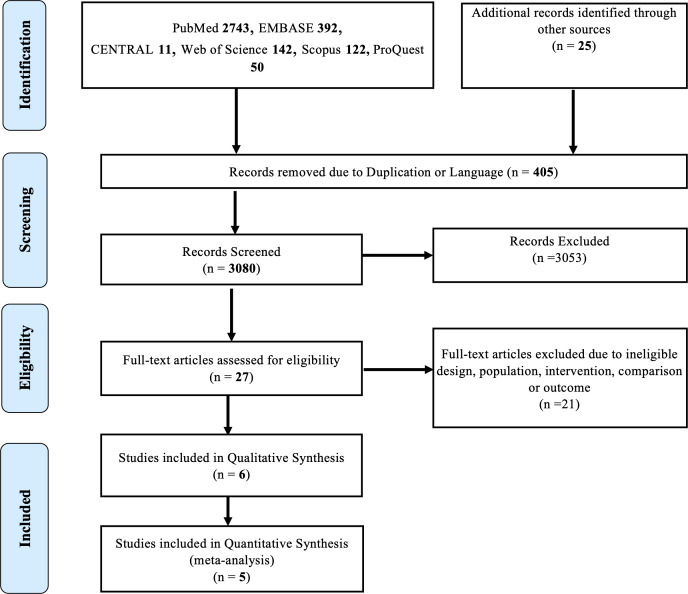
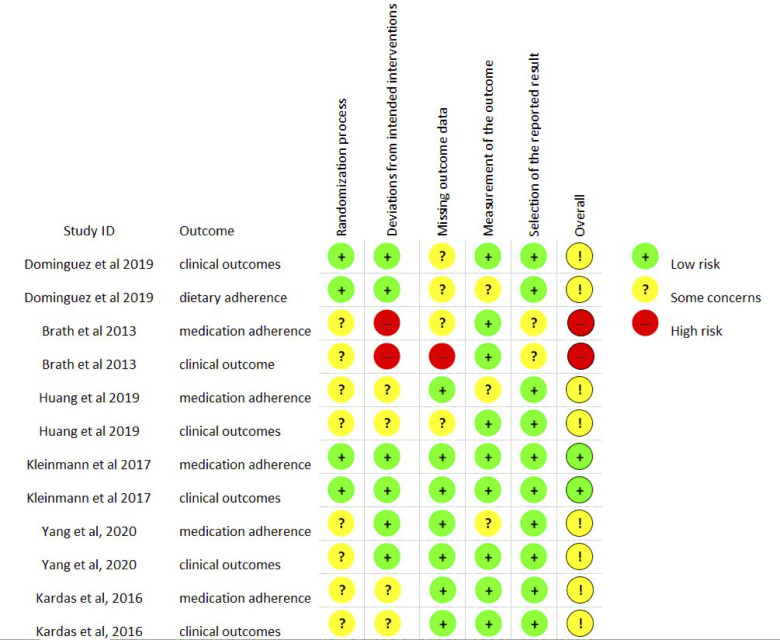
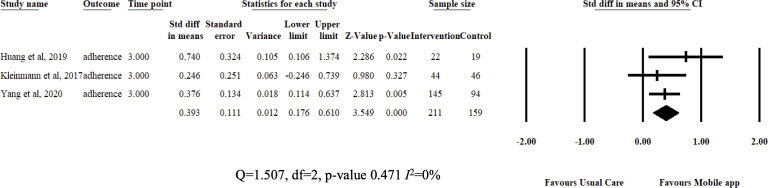
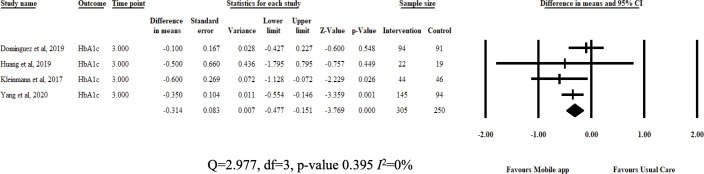
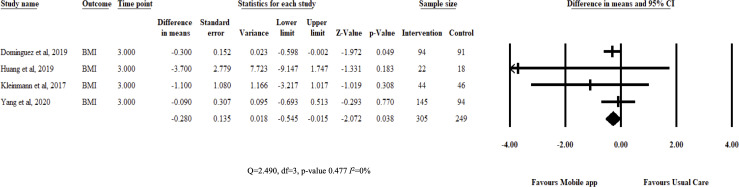
Objectives: To conduct systematic review and meta-analysis of interventional studies to investigate the impact of diabetes self-management education and support (DSMES) apps on adherence in patients with type 2 diabetes mellitus (T2D). Methods: PubMed, Embase, CENTRAL, Web of Science, Scopus and ProQuest were searched, in addition to references of identified articles and similar reviews. Experimental studies, reported in English, assessing DSMES app intervention’s impact on adherence and clinical outcomes of patients with T2D compared with usual care were included. Study bias was assessed using Cochrane Risk of Bias V.2.0 tool. Analysis plan involved narrative synthesis, moderator and meta-analysis. Results: Six randomised controlled trials were included, involving 696 participants (average age 57.6 years, SD 10.59). Mobile apps were mostly used for imputing clinical data, dietary intake or physical activity, and transmitting information to the provider. At 3 months, DSMES apps proved effective in improving medication adherence (standardized mean difference (SMD)=0.393, 95% CI 0.17 to 0.61), glycated haemoglobin (HbA1c) (mean difference (MD)=−0.314, 95% CI −0.477 to –0.151) and Body Mass Index (BMI) (MD=−0.28, 95% CI −0.545 to –0.015). All pooled estimates had low heterogeneity (I 2 0%). Four studies had moderate risk of bias while one each was judged to be low and high risks, respectively. Conclusion: DSMES apps had significant small to moderate effects on medication adherence, HbA1c and BMI of patients with T2D compared with usual care. Apps were described as reliable, easy to use and convenient, though participants were required to be phone literate. Evidence comes from feasibility trials with generally moderate risk of bias. Larger trials with longer follow-up periods using theory-based interventions are required to improve current evidence.
Overview
The claims and statistics of this paper haven’t been checked yet.
Free: it reads the open-access text and checks the first 5 claims that cite a source we can check. Create a free account to check every claim.
Integrity signals
Registry
Cites
Statistics
Figures
Verification
Claims the paper makes
The claims and statistics of this paper haven’t been checked yet.
Free: it reads the open-access text and checks the first 5 claims that cite a source we can check. Create a free account to check every claim.
Claims other papers make about this one
Each is checked against this paper’s own text: does it say what the citing paper says it does?
The check wasn’t confident either way, so it gives no verdict — never disputed.
In the citing paper
“Emerging evidence demonstrates the bene fi ts of telehealth or web-based DSMES programs (33), and these were used with success during the coronavirus disease 2019 (COVID-19) pandemic (34 -36).”
From Management of Hyperglycemia in Type 2 Diabetes, 2022. A Consensus Report by the American Diabetes Association (ADA) and the European Association for the Study of Diabetes (EASD) (2022) · cites this paper as [34]
Experimental — accuracy not yet measured
Self-check
Percentages, sums and reported differences re-computed from the paper’s own numbers.
The self-check needs the paper’s full text.
Citations
Cites
Preferred Reporting Items for Systematic Reviews and Meta-Analyses: the PRISMA statement
Moher, D., Liberati, A., Tetzlaff, J., Altman, D. G., & for the PRISMA Group (2009) · BMJ · doi:10.1136/bmj.b2535 · Cited by 83,823
Preferred Reporting Items for Systematic Reviews and Meta-Analyses: The PRISMA Statement
Moher, D., Liberati, A., Tetzlaff, J., Altman, D. G., & The PRISMA Group (2009) · PLoS Medicine · doi:10.1371/journal.pmed.1000097 · Cited by 64,042
Measuring inconsistency in meta-analyses
Higgins, J. P. T., Thompson, S. G., Deeks, J. J., & Altman, D. G. (2003) · BMJ · doi:10.1136/bmj.327.7414.557 · Cited by 63,139
Preferred reporting items for systematic reviews and meta-analyses: the PRISMA Statement.
(2009) · PubMed Central · Cited by 44,859
RoB 2: a revised tool for assessing risk of bias in randomised trials
Sterne, J. A. C., Savović, J., Page, M. J., Elbers, R. G., Blencowe, N. S., Boutron, I., Cates, C. J., Cheng, H.-Y., Corbett, M. S., Eldridge, S. M., et al. (2019) · BMJ · doi:10.1136/bmj.l4898 · Cited by 34,787
Cochrane Handbook for Systematic Reviews of Interventions: Cochrane Book Series
(2008) · doi:10.1002/9780470712184 · Cited by 25,048
Wan, X., Wang, W., Liu, J., & Tong, T. (2014) · BMC Medical Research Methodology · doi:10.1186/1471-2288-14-135 · Cited by 11,735
Estimating the mean and variance from the median, range, and the size of a sample
Hozo, S. P., Djulbegovic, B., & Hozo, I. (2005) · BMC Medical Research Methodology · doi:10.1186/1471-2288-5-13 · Cited by 9,062
A new taxonomy for describing and defining adherence to medications
Vrijens, B., De Geest, S., Hughes, D. A., Przemyslaw, K., Demonceau, J., Ruppar, T., Dobbels, F., Fargher, E., Morrison, V., Lewek, P., et al. (2012) · British Journal of Clinical Pharmacology · doi:10.1111/j.1365-2125.2012.04167.x · Cited by 2,028 · cited 1×
“36 The current review shows that DSMES apps could help by acting as reminders and communication channels, scheduling and calculating doses as well.”
BackgroundMedication adherence measures: An overview
Lam, W. Y., & Fresco, P. (2015) · BioMed Research International · doi:10.1155/2015/217047 · Cited by 1,308
Research works printed but not linked: 2
- Cochrane Public Health. Review authors: cochrane collaboration, 2019. Available: https://ph.cochrane.org/review-authors
- Higgins JP, Green S. Cochrane Handbook for systematic reviews of interventions. John Wiley & Sons, 2011.
Cited by
Davies, M. J., Aroda, V. R., Collins, B. S., Gabbay, R. A., Green, J., Maruthur, N. M., Rosas, S. E., Del Prato, S., Mathieu, C., Mingrone, G., et al. (2022) · Diabetes Care · doi:10.2337/dci22-0034 · Cited by 2,104
“In particular, interventions using apps as tools to support DSMES have been shown to have an impact on outcomes (34).”
MethodDavies, M. J., Aroda, V. R., Collins, B. S., Gabbay, R. A., Green, J., Maruthur, N. M., Rosas, S. E., Del Prato, S., Mathieu, C., Mingrone, G., et al. (2022) · Diabetologia · doi:10.1007/s00125-022-05787-2 · Cited by 1,048
“In particular, interventions using apps as tools to support DSMES have been shown to have an impact on outcomes [34].”
Piragine, E., Petri, D., Martelli, A., Calderone, V., & Lucenteforte, E. (2023) · Journal of Clinical Medicine · doi:10.3390/jcm12051981 · Cited by 149
Sun, S., Simonsson, O., McGarvey, S. T., Torous, J. B., & Goldberg, S. B. (2024) · The Lancet Digital Health · doi:10.1016/s2589-7500(24)00119-5 · Cited by 78
An umbrella review of effectiveness and efficacy trials for app-based health interventions
Chong, S. O. K., Pedron, S., Abdelmalak, N., Laxy, M., & Stephan, A. (2023) · npj Digital Medicine · doi:10.1038/s41746-023-00981-x · Cited by 60
“Most reviews targeted speci fi c indications, including type 2 diabetes (T2DM) ( n = 5) 19,20,22,23,26 , hypertension ( n = 4) 15,27,31,38 , depression ( n = 3) 33,53,61 , overweight/obesity ( n = 3) 40,41,52 , chronic obstructive pulmonary disease (COPD) ( n = 2) 35,39 , urinary incontinence ( n =…”
BackgroundBelete, A. M., Negese, B., Akalu, T. Y., Aynalem, Y. A., & Shiferaw, W. S. (2023) · BMC Endocrine Disorders · doi:10.1186/s12902-023-01268-8 · Cited by 50
“Similarly, this finding is consistent with a systematic review of diabetic self-management education and support apps interventions to improve medication adherence from slight to moderate effects [32].”
ResultLanke, V., Trimm, K., Habib, B., & Tamblyn, R. M. (2025) · Journal of Medical Internet Research · doi:10.2196/60822 · Cited by 44
“Previous systematic reviews have shown apps to be effective in increasing medication adherence in specific chronic conditions like cardiovascular disease [20] and hypertension [18,42], other chronic conditions [11], diabetes [43], and general conditions [19,21].”
HIGHTON, P. J., Funnell, M. P., Gupta, P., Zaccardi, F., Lim, L., Seidu, S., & Khunti, K. (2025) · Diabetologia · doi:10.1007/s00125-025-06617-x · Cited by 36
“…adherence or test result monitoring, or educational information on disease and life-style management (as described above); facilitating interactions with clinicians or shared decision making; or providing cloud-based functionality and gamification of disease and adherence management [75, 86].”
InfluentialBonikowska, I., Szwamel, K., & Uchmanowicz, I. (2022) · Journal of Clinical Medicine · doi:10.3390/jcm11061707 · Cited by 36
Tarricone, R., Petracca, F., Svae, L., Cucciniello, M., & Ciani, O. (2024) · eBioMedicine · doi:10.1016/j.ebiom.2024.105091 · Cited by 26
“122 While a prior study revealed a moderate and signi fi cant effect of mobile apps on medication adherence in type 2 diabetes, 123 it was beyond our scope to provide a quantitative estimate of this relationship.”
BackgroundLiang, W., Lo, S. H. S., Tola, Y. O., & Chow, K. M. (2021) · International Journal of Clinical Practice · doi:10.1111/ijcp.14636 · Cited by 26
Rivera, B. D., Nurse, C., Shah, V., Roldan, C., Jumbo, A. E., Faysel, M. A., Levine, S. R., Kaufman, D. R., & Afable, A. (2023) · BMC Public Health · doi:10.1186/s12889-023-17255-6 · Cited by 17
“There is strong evidence that mobile applications can decrease HbA1c [47, 53, 56, 63– 65], fasting blood sugar [65], blood pressure [67], measures of anthropometry [50, 63, 67], and cholesterol [53].”
Backgroundde Barros, K. A. A. L., Praxedes, M. F. D. S., Ribeiro, A. L. P., & Martins, M. A. P. (2023) · International Journal of Medical Informatics · doi:10.1016/j.ijmedinf.2023.105206 · Cited by 13
López‐Alcalde, J., Wieland, L. S., Yan, Y., Barth, J., Khami, M. R., Shivalli, S., Lokker, C., Kaur, H., Macharia, P. M., Yun, S., et al. (2024) · Journal of Medical Internet Research · doi:10.2196/53187 · Cited by 11
“One example is apps that monitor users and collect information, such as exercise, heart rate, or medication adherence [7].”
Awakening Sleep Medicine: The Transformative Role of Artificial Intelligence in Sleep Health
Bhatt, A. N., Sengupta, S., Abolhassani, A., Brower, D., Forehand, C. C., Keats, K. R., Kwon, Y., & Healy, W. J. (2025) · Current Sleep Medicine Reports · doi:10.1007/s40675-025-00328-w · Cited by 12
Patient Adherence for Oral Combination Therapies in Diabetes Management: A Scoping Review
Zarrinkamar, M., Geran, M., & Geran, M. (2025) · Health Science Reports · doi:10.1002/hsr2.70780 · Cited by 11
“The methodology included searching multiple databases for interventional studies, assessing study bias, and conducting meta ‐ analyses to determine the effect of DSMES apps on adherence and clinical outcomes [42].”
Gbaba, S., Turkson‐Ocran, R., Renda, S., Ogungbe, O., Somervell, H., Harne‐Britner, S., Commodore-Mensah, Y. Y., & Baptiste, D. (2025) · Journal of Advanced Nursing · doi:10.1111/jan.16719 · Cited by 11
UNDERWOOD, P. C., Ruscitti, B., Nguyen, T. H., Magny‐Normilus, C., Wentzell, K., Watts, S. A., & H, D. B. M. P. (2025) · Health Systems & Reform · doi:10.1080/23288604.2025.2503648 · Cited by 10
“…success of both DPP and DSME interventions on diabetes clinical outcomes including lower hemoglobin A1c (HbA1c), lowering BMI, and improving medication adherence 12,20–26 Despite the demonstrated effectiveness of DPP and DSME programs, there have been several barriers in implementing both programs.”
Cabral, D. F., Bigliassi, M., Morris, T. P., Gomes‐Osman, J., & Fried, P. J. (2025) · Neuroscience & Biobehavioral Reviews · doi:10.1016/j.neubiorev.2025.106103 · Cited by 7
Tengah, A., Yusoff, W. F. W., Sajali, H., Sookkumnerd, T., & Vinh, H. X. (2025) · Journal of Health Innovation and Environmental Education. · doi:10.37251/jhiee.v2i2.2597 · Cited by 5
Zakwan, M., Thamrin, N., Shauri, R. L. A., Jailani, R., Manaf, H., & Mustapa, N. A. (2024) · International Journal of Advanced Technology and Engineering Exploration · doi:10.19101/ijatee.2023.10102368 · Cited by 5
Ghozali, M. T. (2025) · Media Publikasi Promosi Kesehatan Indonesia (MPPKI) · doi:10.56338/mppki.v8i9.7391 · Cited by 6
“A number of clinical studies and systematic reviews have explored the effectiveness of the apps in diabetes management (11).”
Evaluating telemedicine diabetes mellitus: a mobile health app for type-2 diabetes
Karim, M. Z. A., Thamrin, N. M., Shauri, R. L. A., Jailani, R., Manaf, H., & Mustapa, A. (2024) · International Journal of Advances in Applied Sciences · doi:10.11591/ijaas.v13.i4.pp787-795 · Cited by 4
IoT framework of telerehabilitation system with wearable sensors for diabetes mellitus patients
Karim, M. Z. A., Jailani, R., Shauri, R. L. A., & Thamrin, N. M. (2023) · Indonesian Journal of Electrical Engineering and Computer Science · doi:10.11591/ijeecs.v31.i2.pp1023-1031 · Cited by 5
Ruslan, N. A. S. A., Mizher, H. A. A., Tawpik, N. H. N. M., & Zaini, S. (2025) · Journal of Pharmacy Practice and Research · doi:10.1002/jppr.70028 · Cited by 3
Höld, E., Hemetek, U., Tremmel, K., Aubram, T., Grüblbauer, J., Wiesholzer, M., Schwanda, M., & Stieger, S. (2025) · Diabetology · doi:10.3390/diabetology6050044 · Cited by 3
Amin, S. M., Ghallab, E., Dreidi, M. M., Alrimawi, I., & Mohamed, S. R. M. (2025) · Worldviews on Evidence-Based Nursing · doi:10.1111/wvn.70055 · Cited by 2
Andersen, J. A., McElfish, P. A., Selig, J. P., Li, J., Rowland, B., Hudson, J. S., Kraleti, S. S., Henske, J. A., & Mayberry, L. S. (2025) · Diabetes Research and Clinical Practice · doi:10.1016/j.diabres.2025.113063 · Cited by 2
Self-Management Counseling Increases Compliance in Diabetes Mellitus Patients
Mulyaningsih, M., Ardika, N. A., Wahyuni, W., & Hermawati, H. (2025) · Jurnal Berita Ilmu Keperawatan · doi:10.23917/bik.v18i2.8759 · Cited by 4
“However, adherence to treating patients with diabetes and other chronic diseases is still not good (Nkhoma et al., 2021).”
Al-Qerem, W. A., Khdair, S. I., Basem, D., Jarab, A., & Eberhardt, J. (2025) · Health Science Reports · doi:10.1002/hsr2.71672 · Cited by 2
Aplicaciones móviles para mejorar el cumplimiento terapéutico
de Tomás, J. F. Á., Velasco, A. P., & Mínguez, S. C. (2024) · FMC - Formación Médica Continuada en Atención Primaria · doi:10.1016/j.fmc.2023.11.002 · Cited by 1
Vijay, V., Trueman, P., Arunraj, M., Palani, G., Devarajan, A., Kumpatla, S., & Viswanathan, V. (2026) · International Journal of Diabetes in Developing Countries · doi:10.1007/s13410-026-01659-2 · Cited by 1
Subiyanto, P., Saifulaman, M., & Sitorus, R. (2025) · Journal of Tropical Life Science · doi:10.11594/jtls.15.01.03 · Cited by 3
Vasiloglou, M. F., Kotzakioulafi, E., Mainardi, F., Ahmed, M., Staiano, A. E., Dimidi, E., Salathé, M., Maher, C., Vandelanotte, C., & Mantzoros, C. S. (2026) · The Lancet Digital Health · doi:10.1016/j.landig.2026.101009 · Cited by 1
A Review of Interventions to Improve Medication Adherence of Patients with Chronic Diseases in Asia
Dumo, E. D., Guzman, A. C. P., Marcon, C. M., Necesito, K. J., & Yson, H. (2023) · International Journal of Research Publication and Reviews · doi:10.55248/gengpi.2023.4103 · Cited by 1
Research on User Behavior of College English Mobile Learning App
Sun, K. (2023) · Lecture notes of the Institute for Computer Sciences, Social Informatics and Telecommunications Engineering · doi:10.1007/978-3-031-23944-1_28
Availability of Evidence-Based Diabetes Programs in U.S. Children’s Hospitals
Hughes, A. S., Gutiérrez, Á., Flint, J., & Franz, B. A. (2023) · Journal of Primary Care & Community Health · doi:10.1177/21501319231189952
Users’ Perception on Quality Medication Adherence Applications
Zainal, M., Abidin, A. I. Z., & Sulaiman, S. B. (2023) · Lecture notes on data engineering and communications technologies · doi:10.1007/978-3-031-36258-3_55
Kamillah, S. K. S., Panduragan, S. L., Poddar, S., & Bhaumik, A. (2023) · Malaysian Journal of Medicine and Health Sciences · doi:10.47836/mjmhs.19.s9.31 · Cited by 1
Future Research and Practice Changes
Rosenthal, M. (2025) · Springer eBooks · doi:10.1007/978-3-031-88835-9_17
Implementing DSMES for Type II Diabetics in a Rural Clinic
Sondag, S., & Sondag, S. (2023) · UA Campus Repository (The University of Arizona)
Ivanova, S., Tenev, D., Pavlova, Z., & Zagorchev, P. (2025) · Archives of Pharmacy Practice · doi:10.51847/uhqbdvmsdv
Shima, T., Ohya, A., Makino, H., Omura‐Ohata, Y., Tamanaha, T., Tochiya, M., Koezuka, R., Matsubara, M., Tomita, T., Noguchi, M., et al. (2026) · BMC Psychology · doi:10.1186/s40359-025-03930-3
Aftab, R. A., Ramlan, M. F. B., Asim, Z., & Shaik, I. (2026) · Journal of Public Health · doi:10.1007/s10389-026-02716-0
Digital Therapeutics in Type 2 Diabetes: Transforming Self-Management Through Technology-Driven Care
Sharf, A., Divyadharshini, R., Gopal, S., Gowrishankar, V., Hemavathi, P., & Suriya, U. (2026) · International Journal of Innovative Science and Research Technology (IJISRT) · doi:10.38124/ijisrt/26feb1254
Ory, M. G., Esquivel, C. H., Han, G., Towne, S. D. C., Jr., Ahn, S., & Smith, M. L. (2026) · JMIR Diabetes · doi:10.2196/87364
Fąfara, M., Jeczkało, M., Kosiorowska, M., Kowalczyk, A., Lasoń, J., Makulska, M., Płachta, W., Sęk, W., Sieradzka, A., & Wegenko, C. M. (2026) · International Journal of Innovative Technologies in Social Science · doi:10.31435/ijitss.2(50).2026.5796
Zienkiewicz, N., Rachoń, J., Dzwonkowska, A., Dzwonkowski, J., Kozłowska, A., Trocka, D., Przybysz, K., Stadnik, L., Woroniecka, N., & Szerenos, N. (2026) · International Journal of Innovative Technologies in Social Science · doi:10.31435/ijitss.3(51).2026.6023
Bulandari, Qodir, A., & Amalia, W. (2026) · JURNAL KEPERAWATAN SUAKA INSAN (JKSI) · doi:10.51143/jksi.v11i1.1161
“Consistent with these findings, Nikhoma et al. (2021) reported in a systematic review and meta-analysis that mobile application-based diabetes self-management education and support significantly improved medication adherence, glycemic control, and overall diabetes self-management among adults with…”
Ferreira, J. M., Álvarez, Á. M., Tourinho, F. S. V., das Neves, F. B., Fabrizzio, G. C., Both, C. T., Echevarría-Guanilo, M. E., ARCENO, A. P., & de Souza, L. R. (2026) · Global Academic Nursing Journal · doi:10.5935/2675-5602.20200584
Aspilcueta, H. T., Gómez-Guizado, G., & Egoavil, L. D. L. C. (2026) · Cátedra Villarreal · doi:10.24039/rcv20261412022
Approaches to Diabetes Self-Management Education in Europe: An Extensive Literature Review
Borsoi, L., Falivena, C., & Callea, G. (2026) · Clinical Therapeutics · doi:10.1016/j.clinthera.2026.07.014
A Scoping Review of Digital Behavioral Approaches to Improve Medication Adherence in Type 2 Diabetes
Huang, Y., Tiao, P.-H., & Shiyanbola, O. O. (2026) · Current Diabetes Reports · doi:10.1007/s11892-026-01642-5 · Cited by 1
Moore, R. A., McElfish, P. A., Teeter, B. S., Mayberry, L. S., Andersen, J. A., Hudson, J. S., Mayo, R., Macechko, M. D., Over, D. R., Curran, G. M., et al. (2026) · Patient Education and Counseling · doi:10.1016/j.pec.2026.109868
Prakash, D. (2025) · University of Hertfordshire Research Archive (University of Hertfordshire)
Ibraheem Saeed Alzahrani, N. A., Alzahrani, N., Damanhouri, N., Allehyani, M., Alzahrani, A., Awadh, F., Al-Hindi, H., Al-Subhi, M., & Al-Mehmadi, A. (2025) · The Review of Diabetic Studies · doi:10.70082/rr96vh76
Rossi, M., & Conti, G. (2026) · Clinical Journal for Medicine Health and Pharmacy · doi:10.66892/cjmhp/v4i2/4.2.01
Metadata
- Authors
- Enricho Nkhoma, D., Jenya Soko, C., Joseph Banda, K., Greenfield, D., Li, Y.-C. (., & Iqbal, U.
- Affiliations
- Nkhata Bay District Health Office, Nkhata Bay District Hospital, Nkhata Bay, Malawi
- Global Health and Development Department, College of Public Health, Taipei Medical University, Taipei, Taiwan
- PhD Program in Nursing, College of Nursing, Taipei Medical University, Taipei, Taiwan
- University of Tasmania (AU)
- Wan Fang Hospital (TW)
- Taipei Medical University (TW)
- Corresponding author
- Iqbal, Usman
- Venue
- BMJ Health & Care Informatics
- Publisher
- BMJ
- Published
- 2021-04
- Volume
- 28
- Issue
- 1
- Pages
- e100291
- ISSN
- 2632-1009 (ISSN-L)
- PMC
- PMC8054079
- OpenAlex
- W3153943804
- Cited by
- 46
- References
- 44
- Citations by year
- 2026: 11 · 2025: 15 · 2024: 5 · 2023: 11 · 2022: 3 · 2021: 1
- FWCI
- 1.03
- Type
- journal article
- Language
- en
- Open access
- gold
- doi.org
- Licence
- Locations
- BMJ Health & Care Informatics (publishedVersion, cc-by-nc)
- PubMed Central (publishedVersion, cc-by-nc)
- PubMed (publishedVersion)
- UNSWorks (University of New South Wales, Sydney, Australia) (submittedVersion, cc-by-nc-nd)
- DOAJ (DOAJ: Directory of Open Access Journals) (submittedVersion, cc-by-sa)
- Funders
- Ministry of Science and Technology, Taiwan (MOST109-2221-E-038-015)
- Topics
- Health Sciences › Health Professions › General Health Professions › Mobile Health and mHealth Applications
- Health Sciences › Medicine › Family Practice › Medication Adherence and Compliance
- Health Sciences › Medicine › Endocrinology, Diabetes and Metabolism › Diabetes Management and Education
- Keywords
- diabetes self-management education and support, mobile health apps, medication adherence, type 2 diabetes, HbA1c, body mass index, digital health interventions, patient-reported outcomes
- MeSH terms
- Self-Management, Assessment of Medication Adherence, Diabetes Mellitus, Type 2, Humans, Hypoglycemic Agents, Middle Aged, Drug Monitoring, Medication Adherence, Text Messaging, Mobile Applications
About these checks
Registry, retraction, Cites and statistics results are computed, not judged, with one exception: a printed reference that no index lists is read once by a model before it counts as a citation error. Claims are extracted by a model and kept only when their quote appears verbatim in the text; each cited source is then checked, with a model’s help, for whether it says what the claim relies on. Those verdicts can be wrong — read the claim’s quote and the cited source before relying on one.
Statistics and arithmetic are recomputed, not judged.
Confidence bands are shown only for fields calibrated on our annotated test set. None is calibrated yet, so no band is shown.
What counts as a claim ›How we measure confidence ›How we check this ›
Are you an author, or do you see a problem with this page? Request a review
Data sources
Bibliographic data: Semantic Scholar, OpenAlex, Crossref.
Contains information from the Semantic Scholar Academic Graph Datasets, made available under the ODC Attribution License (ODC-BY 1.0).
Semantic Scholar’s data is described in: Kinney, R., et al. (2023). The Semantic Scholar Open Data Platform. arXiv:2301.10140.
