

Impact of DSMES app interventions on medication adherence in type 2 diabetes mellitus: systematic review and meta-analysis
Open accessThe DOI matches its Crossref record; 43 of the 44 references it cites were found in a registry or an index.
Abstract
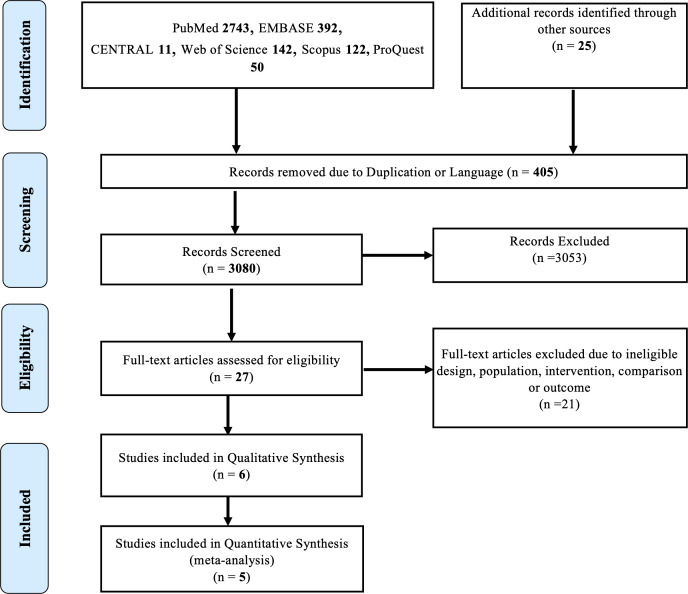
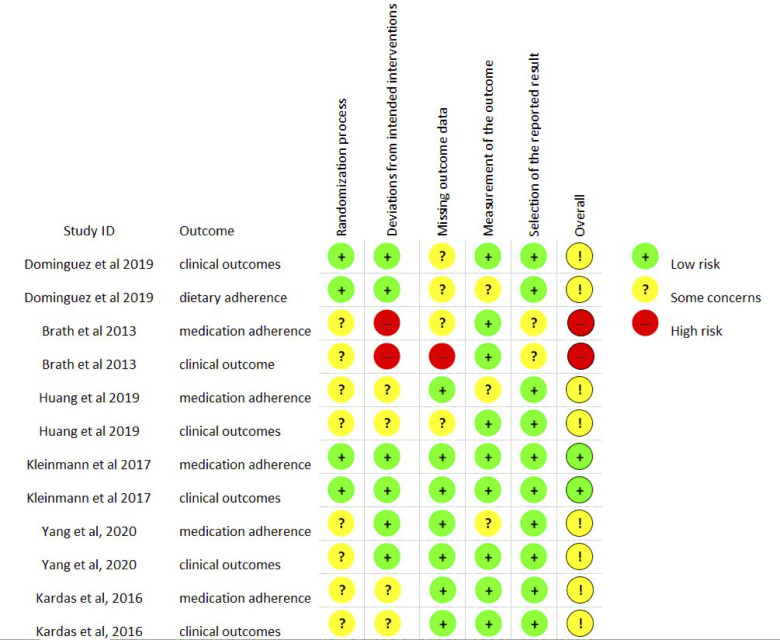
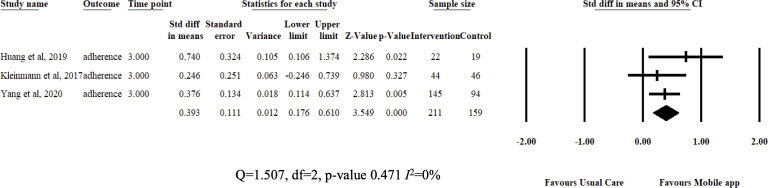
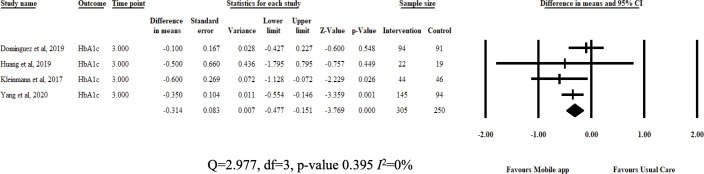
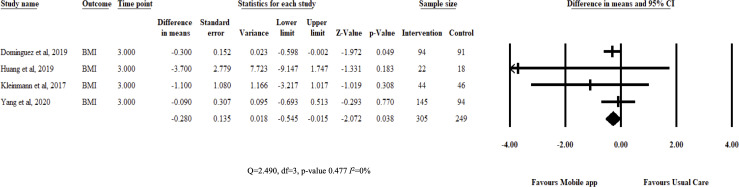
Objectives: To conduct systematic review and meta-analysis of interventional studies to investigate the impact of diabetes self-management education and support (DSMES) apps on adherence in patients with type 2 diabetes mellitus (T2D). Methods: PubMed, Embase, CENTRAL, Web of Science, Scopus and ProQuest were searched, in addition to references of identified articles and similar reviews. Experimental studies, reported in English, assessing DSMES app intervention’s impact on adherence and clinical outcomes of patients with T2D compared with usual care were included. Study bias was assessed using Cochrane Risk of Bias V.2.0 tool. Analysis plan involved narrative synthesis, moderator and meta-analysis. Results: Six randomised controlled trials were included, involving 696 participants (average age 57.6 years, SD 10.59). Mobile apps were mostly used for imputing clinical data, dietary intake or physical activity, and transmitting information to the provider. At 3 months, DSMES apps proved effective in improving medication adherence (standardized mean difference (SMD)=0.393, 95% CI 0.17 to 0.61), glycated haemoglobin (HbA1c) (mean difference (MD)=−0.314, 95% CI −0.477 to –0.151) and Body Mass Index (BMI) (MD=−0.28, 95% CI −0.545 to –0.015). All pooled estimates had low heterogeneity (I 2 0%). Four studies had moderate risk of bias while one each was judged to be low and high risks, respectively. Conclusion: DSMES apps had significant small to moderate effects on medication adherence, HbA1c and BMI of patients with T2D compared with usual care. Apps were described as reliable, easy to use and convenient, though participants were required to be phone literate. Evidence comes from feasibility trials with generally moderate risk of bias. Larger trials with longer follow-up periods using theory-based interventions are required to improve current evidence.
Overview
The claims and statistics of this paper haven’t been checked yet.
Free: it reads the open-access text and checks the first 5 claims that cite a source we can check. Create a free account to check every claim.
Integrity signals
Registry
Cites
Statistics
Figures
Verification
Claims the paper makes
The claims and statistics of this paper haven’t been checked yet.
Free: it reads the open-access text and checks the first 5 claims that cite a source we can check. Create a free account to check every claim.
Claims other papers make about this one
Each is checked against this paper’s own text: does it say what the citing paper says it does?
The check wasn’t confident either way, so it gives no verdict — never disputed.
In the citing paper
“Emerging evidence demonstrates the bene fi ts of telehealth or web-based DSMES programs (33), and these were used with success during the coronavirus disease 2019 (COVID-19) pandemic (34 -36).”
From Management of Hyperglycemia in Type 2 Diabetes, 2022. A Consensus Report by the American Diabetes Association (ADA) and the European Association for the Study of Diabetes (EASD) (2022) · cites this paper as [34]
Experimental — accuracy not yet measured
Self-check
Percentages, sums and reported differences re-computed from the paper’s own numbers.
The self-check needs the paper’s full text.
Citations
Cites
Preferred Reporting Items for Systematic Reviews and Meta-Analyses: the PRISMA statement
Moher, D., Liberati, A., Tetzlaff, J., Altman, D. G., & for the PRISMA Group (2009) · BMJ · doi:10.1136/bmj.b2535 · Cited by 83,823
Preferred Reporting Items for Systematic Reviews and Meta-Analyses: The PRISMA Statement
Moher, D., Liberati, A., Tetzlaff, J., Altman, D. G., & The PRISMA Group (2009) · PLoS Medicine · doi:10.1371/journal.pmed.1000097 · Cited by 64,042
Measuring inconsistency in meta-analyses
Higgins, J. P. T., Thompson, S. G., Deeks, J. J., & Altman, D. G. (2003) · BMJ · doi:10.1136/bmj.327.7414.557 · Cited by 63,139
Preferred reporting items for systematic reviews and meta-analyses: the PRISMA Statement.
(2009) · PubMed Central · Cited by 44,859
RoB 2: a revised tool for assessing risk of bias in randomised trials
Sterne, J. A. C., Savović, J., Page, M. J., Elbers, R. G., Blencowe, N. S., Boutron, I., Cates, C. J., Cheng, H.-Y., Corbett, M. S., Eldridge, S. M., et al. (2019) · BMJ · doi:10.1136/bmj.l4898 · Cited by 34,787
Cochrane Handbook for Systematic Reviews of Interventions: Cochrane Book Series
(2008) · doi:10.1002/9780470712184 · Cited by 25,048
Wan, X., Wang, W., Liu, J., & Tong, T. (2014) · BMC Medical Research Methodology · doi:10.1186/1471-2288-14-135 · Cited by 11,735
Estimating the mean and variance from the median, range, and the size of a sample
Hozo, S. P., Djulbegovic, B., & Hozo, I. (2005) · BMC Medical Research Methodology · doi:10.1186/1471-2288-5-13 · Cited by 9,062
A new taxonomy for describing and defining adherence to medications
Vrijens, B., De Geest, S., Hughes, D. A., Przemyslaw, K., Demonceau, J., Ruppar, T., Dobbels, F., Fargher, E., Morrison, V., Lewek, P., et al. (2012) · British Journal of Clinical Pharmacology · doi:10.1111/j.1365-2125.2012.04167.x · Cited by 2,028 · cited 1×
“36 The current review shows that DSMES apps could help by acting as reminders and communication channels, scheduling and calculating doses as well.”
BackgroundMedication adherence measures: An overview
Lam, W. Y., & Fresco, P. (2015) · BioMed Research International · doi:10.1155/2015/217047 · Cited by 1,308
A systematic review of adherence with medications for diabetes
Cramer, J. A. (2004) · Diabetes Care · doi:10.2337/diacare.27.5.1218 · Cited by 1,203
(2010) · Archives of Internal Medicine · doi:10.1001/archinternmed.2010.334 · Cited by 1,162
Global Economic Burden of Diabetes in Adults: Projections From 2015 to 2030
Bommer, C., Sagalova, V., Heesemann, E., Manne-Goehler, J., Atun, R., Bärnighausen, T., Davies, J., & Vollmer, S. (2018) · Diabetes Care · doi:10.2337/dc17-1962 · Cited by 1,130
The Association between Job Strain and Atrial Fibrillation: Results from the Swedish WOLF Study
Fransson, E. I., Stadin, M., Nordin, M., Malm, D., Knutsson, A., Alfredsson, L., & Westerholm, P. J. M. (2015) · BioMed Research International · doi:10.1155/2015/371905 · Cited by 914
Castaneda, C., Layne, J. E., Munoz-Orians, L., Gordon, P. L., Walsmith, J., Foldvari, M., Roubenoff, R., Tucker, K. L., & Nelson, M. E. (2002) · Diabetes Care · doi:10.2337/diacare.25.12.2335 · Cited by 844
Mobile Telephone Text Messaging for Medication Adherence in Chronic Disease: A Meta-analysis
Thakkar, J., Kurup, R., Laba, T.-L., Santo, K., Thiagalingam, A., Rodgers, A., Woodward, M., Redfern, J., & Chow, C. K. (2016) · JAMA Internal Medicine · doi:10.1001/jamainternmed.2015.7667 · Cited by 685 · cited 1×
“In addition, medication adherence may have also influenced glycaemic control.”
4. Lifestyle Management: Standards of Medical Care in Diabetes—2018
American Diabetes Association (2018) · Diabetes Care · doi:10.2337/dc18-s004 · Cited by 563 · cited 1×
“18 However, studies reported assistance to participants whenever it was required.”
A journey into a Mediterranean diet and type 2 diabetes: a systematic review with meta-analyses
Esposito, K., Maiorino, M. I., Bellastella, G., Chiodini, P., Panagiotakos, D., & Giugliano, D. (2015) · BMJ Open · doi:10.1136/bmjopen-2015-008222 · Cited by 501 · cited 1×
“Most treatment protocols, of course, include life-style management.”
Smartphone medication adherence apps: Potential benefits to patients and providers
Dayer, L., Heldenbrand, S., Anderson, P., Gubbins, P. O., & Martin, B. C. (2013) · Journal of the American Pharmacists Association · doi:10.1331/japha.2013.12202 · Cited by 473
Adherence to diabetes medication: a systematic review
Krass, I., Schieback, P., & Dhippayom, T. (2015) · Diabetic Medicine · doi:10.1111/dme.12651 · Cited by 453
A Review of Diabetes Treatment Adherence and the Association with Clinical and Economic Outcomes
Asche, C., LaFleur, J., & Conner, C. (2011) · Clinical Therapeutics · doi:10.1016/j.clinthera.2011.01.019 · Cited by 420
Hou, C., Carter, B., Hewitt, J., Francisa, T., & Mayor, S. (2016) · Diabetes Care · doi:10.2337/dc16-0346 · Cited by 411
Diabetes structured self-management education programmes: a narrative review and current innovations
Chatterjee, S., Davies, M. J., Heller, S., Speight, J., Snoek, F. J., & Khunti, K. (2018) · The Lancet Diabetes & Endocrinology · doi:10.1016/s2213-8587(17)30239-5 · Cited by 372
Vermeire, E. I., Wens, J., Van Royen, P., Biot, Y., Hearnshaw, H., & Lindenmeyer, A. (2005) · Cochrane Database of Systematic Reviews · doi:10.1002/14651858.cd003638.pub2 · Cited by 290
2017 National Standards for Diabetes Self-Management Education and Support
Beck, J., Greenwood, D. A., Blanton, L., Bollinger, S. T., Butcher, M. K., Condon, J. E., Cypress, M., Faulkner, P., Fischl, A. H., Francis, T., et al. (2018) · The Diabetes Educator · doi:10.1177/0145721718754797 · Cited by 288 · cited 1×
“Interventions acted as a medium of communication, increasing frequency of interactions from usual month or quarterly consultation to at time weekly.”
Klein, S., Sheard, N. F., Pi-Sunyer, X., Daly, A., Wylie-Rosett, J., Kulkarni, K., & Clark, N. G. (2004) · The American Journal of Clinical Nutrition · doi:10.1093/ajcn/80.2.257 · Cited by 275 · cited 2×
“18 However, studies reported assistance to participants whenever it was required.”
Global Prevalence of Type 2 Diabetes over the Next Ten Years (2018-2028)
KAISER, A. B., ZHANG, N., & DER PLUIJM, W. V. (2018) · Diabetes · doi:10.2337/db18-202-lb · Cited by 263
Wu, X., Guo, X., & Zhang, Z. (2019) · JMIR mHealth and uHealth · doi:10.2196/12297 · Cited by 249
Lunde, P., Nilsson, B. B., Bergland, A., Kværner, K. J., & Bye, A. (2018) · Journal of Medical Internet Research · doi:10.2196/jmir.9751 · Cited by 214 · cited 1×
“19 20 However, to our knowledge, no review was found to evaluate impact of mobile app-delivered DSMES on adherence specifically in the T2D population.”
Liu, K., Xie, Z., & Or, C. K. (2020) · JMIR mHealth and uHealth · doi:10.2196/15779 · Cited by 181 · cited 1×
“18 However, studies reported assistance to participants whenever it was required.”
7. Diabetes Technology: Standards of Medical Care in Diabetes—2019
American Diabetes Association (2019) · Diabetes Care · doi:10.2337/dc19-s007 · Cited by 179
Adherence to Treatment: The Key for Avoiding Long-Term Complications of Diabetes
Lerman, I. (2005) · Archives of Medical Research · doi:10.1016/j.arcmed.2004.12.001 · Cited by 169
Wabe, N., Angamo, M., & Hussein, S. (2011) · North American Journal of Medical Sciences · doi:10.4297/najms.2011.3418 · Cited by 157 · cited 1×
“18 However, studies reported assistance to participants whenever it was required.”
Peng, Y., Wang, H., Fang, Q., Xie, L., Shu, L., Sun, W., & Liu, Q. (2020) · Journal of Managed Care & Specialty Pharmacy · doi:10.18553/jmcp.2020.26.4.550 · Cited by 149
Yang, Y., Lee, E. Y., Kim, H.-S., Lee, S.-H., Yoon, K.-H., & Cho, J.-H. (2020) · JMIR mHealth and uHealth · doi:10.2196/16266 · Cited by 148
Brath, H., Morak, J., Kästenbauer, T., Modre‐Osprian, R., Strohner‐Kästenbauer, H., Schwarz, M., Kort, W., & Schreier, G. (2013) · British Journal of Clinical Pharmacology · doi:10.1111/bcp.12184 · Cited by 121 · cited 1×
“Interventions acted as a medium of communication, increasing frequency of interactions from usual month or quarterly consultation to at time weekly.”
Kleinman, N. J., Shah, A., Shah, S., Phatak, S., & Viswanathan, V. (2017) · Telemedicine and e-Health · doi:10.1089/tmj.2016.0265 · Cited by 116 · cited 2×
“18 However, studies reported assistance to participants whenever it was required.”
Farmer, A. J., McSharry, J., Rowbotham, S., McGowan, L., Ricci‐Cabello, I., & French, D. P. (2016) · Diabetic Medicine · doi:10.1111/dme.12987 · Cited by 106
Huang, Z., Tan, E., Lum, E., Sloot, P., Boehm, B. O., & Car, J. (2019) · JMIR mHealth and uHealth · doi:10.2196/14914 · Cited by 97
Alonso-Domínguez, R., García-Ortiz, L., Patino-Alonso, M. C., Sánchez-Aguadero, N., Gómez-Marcos, M. A., & Recio-Rodríguez, J. I. (2019) · Nutrients · doi:10.3390/nu11010162 · Cited by 90
Manganaro, L., D’Ambrosio, I., Gigli, S., Pastena, F. D., Giraldi, G., Tardioli, S., Framarino‐dei‐Malatesta, M., Porfiri, L. M., & Ballesio, L. (2015) · BioMed Research International · doi:10.1155/2015/806368 · Cited by 43
Smartphone App Use for Diabetes Management: Evaluating Patient Perspectives
Lithgow, K., Edwards, A., & Rabi, D. (2017) · JMIR Diabetes · doi:10.2196/diabetes.6643 · Cited by 40
Type 2 Diabetes Patients Benefit from the COMODITY12 mHealth System: Results of a Randomised Trial
Kardas, P., Lewandowski, K., & Bromuri, S. (2016) · Journal of Medical Systems · doi:10.1007/s10916-016-0619-x · Cited by 18 · cited 1×
“Changing precorrelation/postcor-relation from 0.5 to 0.2 and 0.8 did not significantly alter review effect estimates (see online supplemental figures S2–7).”
Influential
Research works printed but not linked: 2
- Cochrane Public Health. Review authors: cochrane collaboration, 2019. Available: https://ph.cochrane.org/review-authors
- Higgins JP, Green S. Cochrane Handbook for systematic reviews of interventions. John Wiley & Sons, 2011.
Cited by
Davies, M. J., Aroda, V. R., Collins, B. S., Gabbay, R. A., Green, J., Maruthur, N. M., Rosas, S. E., Del Prato, S., Mathieu, C., Mingrone, G., et al. (2022) · Diabetes Care · doi:10.2337/dci22-0034 · Cited by 2,104
“In particular, interventions using apps as tools to support DSMES have been shown to have an impact on outcomes (34).”
MethodDavies, M. J., Aroda, V. R., Collins, B. S., Gabbay, R. A., Green, J., Maruthur, N. M., Rosas, S. E., Del Prato, S., Mathieu, C., Mingrone, G., et al. (2022) · Diabetologia · doi:10.1007/s00125-022-05787-2 · Cited by 1,048
“In particular, interventions using apps as tools to support DSMES have been shown to have an impact on outcomes [34].”
Piragine, E., Petri, D., Martelli, A., Calderone, V., & Lucenteforte, E. (2023) · Journal of Clinical Medicine · doi:10.3390/jcm12051981 · Cited by 149
Sun, S., Simonsson, O., McGarvey, S. T., Torous, J. B., & Goldberg, S. B. (2024) · The Lancet Digital Health · doi:10.1016/s2589-7500(24)00119-5 · Cited by 78
An umbrella review of effectiveness and efficacy trials for app-based health interventions
Chong, S. O. K., Pedron, S., Abdelmalak, N., Laxy, M., & Stephan, A. (2023) · npj Digital Medicine · doi:10.1038/s41746-023-00981-x · Cited by 60
“Most reviews targeted speci fi c indications, including type 2 diabetes (T2DM) ( n = 5) 19,20,22,23,26 , hypertension ( n = 4) 15,27,31,38 , depression ( n = 3) 33,53,61 , overweight/obesity ( n = 3) 40,41,52 , chronic obstructive pulmonary disease (COPD) ( n = 2) 35,39 , urinary incontinence ( n =…”
Background
Metadata
- Authors
- Enricho Nkhoma, D., Jenya Soko, C., Joseph Banda, K., Greenfield, D., Li, Y.-C. (., & Iqbal, U.
- Affiliations
- Nkhata Bay District Health Office, Nkhata Bay District Hospital, Nkhata Bay, Malawi
- Global Health and Development Department, College of Public Health, Taipei Medical University, Taipei, Taiwan
- PhD Program in Nursing, College of Nursing, Taipei Medical University, Taipei, Taiwan
- University of Tasmania (AU)
- Wan Fang Hospital (TW)
- Taipei Medical University (TW)
- Corresponding author
- Iqbal, Usman
- Venue
- BMJ Health & Care Informatics
- Publisher
- BMJ
- Published
- 2021-04
- Volume
- 28
- Issue
- 1
- Pages
- e100291
- ISSN
- 2632-1009 (ISSN-L)
- PMC
- PMC8054079
- OpenAlex
- W3153943804
- Semantic Scholar
- d0dcf6b3bcfecb8c928e82564a292a291fa510ee
- Cited by
- 46
- References
- 44
- Citations by year
- 2026: 11 · 2025: 15 · 2024: 5 · 2023: 11 · 2022: 3 · 2021: 1
- FWCI
- 1.03
- Type
- journal article
- Language
- en
- Open access
- gold
- doi.org
- Licence
- Locations
- BMJ Health & Care Informatics (publishedVersion, cc-by-nc)
- PubMed Central (publishedVersion, cc-by-nc)
- PubMed (publishedVersion)
- UNSWorks (University of New South Wales, Sydney, Australia) (submittedVersion, cc-by-nc-nd)
- DOAJ (DOAJ: Directory of Open Access Journals) (submittedVersion, cc-by-sa)
- Funders
- Ministry of Science and Technology, Taiwan (MOST109-2221-E-038-015)
- Topics
- Health Sciences › Health Professions › General Health Professions › Mobile Health and mHealth Applications
- Health Sciences › Medicine › Family Practice › Medication Adherence and Compliance
- Health Sciences › Medicine › Endocrinology, Diabetes and Metabolism › Diabetes Management and Education
- Keywords
- diabetes self-management education and support, mobile health apps, medication adherence, type 2 diabetes, HbA1c, body mass index, digital health interventions, patient-reported outcomes
- MeSH terms
- Self-Management, Assessment of Medication Adherence, Diabetes Mellitus, Type 2, Humans, Hypoglycemic Agents, Middle Aged, Drug Monitoring, Medication Adherence, Text Messaging, Mobile Applications
About these checks
Registry, retraction, Cites and statistics results are computed, not judged, with one exception: a printed reference that no index lists is read once by a model before it counts as a citation error. Claims are extracted by a model and kept only when their quote appears verbatim in the text; each cited source is then checked, with a model’s help, for whether it says what the claim relies on. Those verdicts can be wrong — read the claim’s quote and the cited source before relying on one.
Statistics and arithmetic are recomputed, not judged.
Confidence bands are shown only for fields calibrated on our annotated test set. None is calibrated yet, so no band is shown.
What counts as a claim ›How we measure confidence ›How we check this ›
Are you an author, or do you see a problem with this page? Request a review
Data sources
Bibliographic data: Semantic Scholar, OpenAlex, Crossref.
Contains information from the Semantic Scholar Academic Graph Datasets, made available under the ODC Attribution License (ODC-BY 1.0).
Semantic Scholar’s data is described in: Kinney, R., et al. (2023). The Semantic Scholar Open Data Platform. arXiv:2301.10140.
