

The DOI matches its Crossref record; 36 of the 36 references it cites were found in a registry or an index.
Conducting a fully mobile and randomised clinical trial for depression: access, engagement and expense
Open accessAbstract
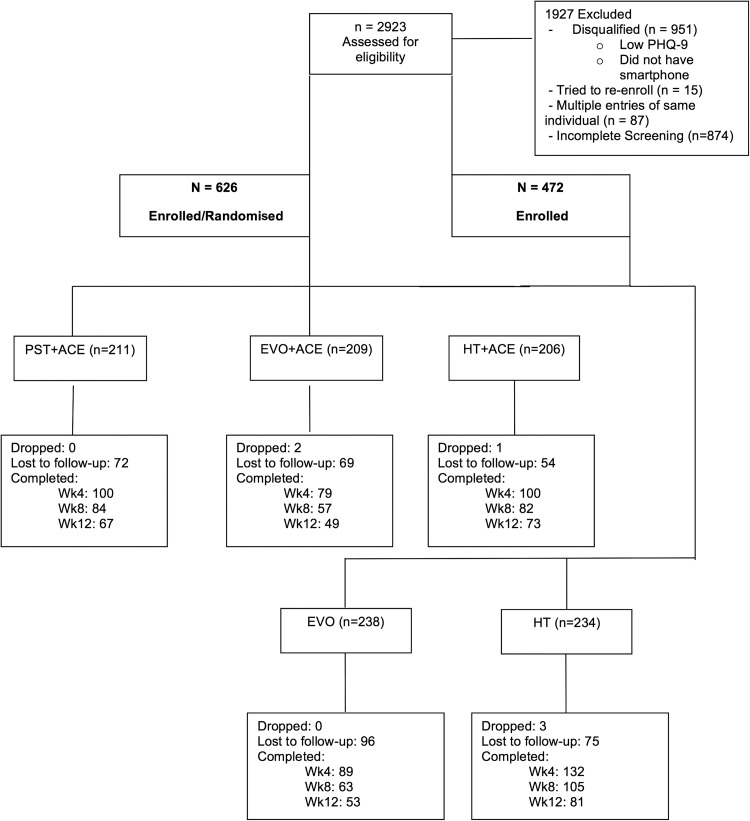
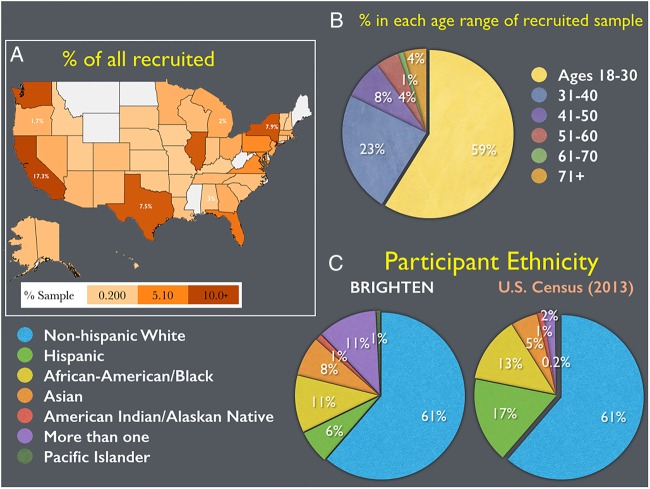
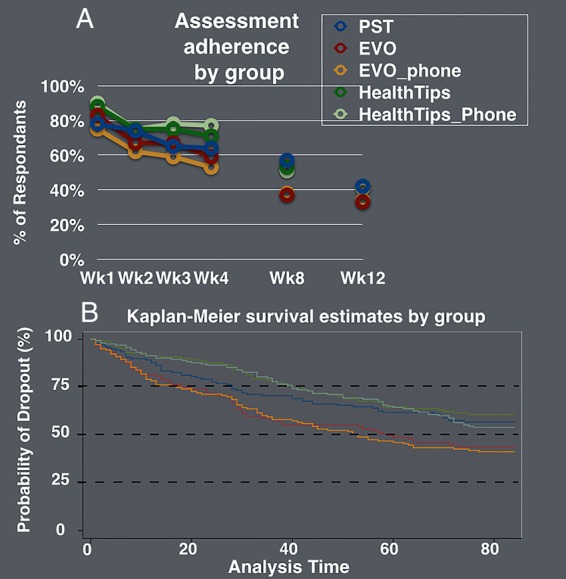
Importance: Advances in mobile technology have resulted in federal and industry-level initiatives to facilitate large-scale clinical research using smart devices. Although the benefits of technology to expand data collection are obvious, assumptions about the reach of mobile research methods (access), participant willingness to engage in mobile research protocols (engagement), and the cost of this research (cost) remain untested. Objective: To assess the feasibility of a fully mobile randomised controlled trial using assessments and treatments delivered entirely through mobile devices to depressed individuals. Design: Using a web-based research portal, adult participants with depression who also owned a smart device were screened, consented and randomised to 1 of 3 mental health apps for treatment. Assessments of self-reported mood and cognitive function were conducted at baseline, 4, 8 and 12 weeks. Physical and social activity was monitored daily using passively collected phone use data. All treatment and assessment tools were housed on each participant's smart phone or tablet. Interventions: A cognitive training application, an application based on problem-solving therapy, and a mobile-sensing application promoting daily activities. Results: Access: We screened 2923 people and enrolled 1098 participants in 5 months. The sample characteristics were comparable to the 2013 US census data. Recruitment via Craigslist.org yielded the largest sample. Engagement: Study engagement was high during the first 2 weeks of treatment, falling to 44% adherence by the 4th week. Cost: The total amount spent on for this project, including staff costs and β testing, was $314 264 over 2 years. Conclusions and relevance: These findings suggest that mobile randomised control trials can recruit large numbers of participants in a short period of time and with minimal cost, but study engagement remains challenging. Trial registration number: NCT00540865.
Overview
The claims and statistics of this paper haven’t been checked yet.
Run the check — free, no account needed. It reads the open-access text and checks the sources it cites.
Integrity signals
Registry
Cites
Statistics
Figures
Verification
Claims the paper makes
The claims and statistics of this paper haven’t been checked yet.
Run the check — free, no account needed. It reads the open-access text and checks the sources it cites.
Claims other papers make about this one
Each is checked against this paper’s own text: does it say what the citing paper says it does?
In the citing paper
“In depression, mobile apps have tracked changes in patient-reported mood [27-29] and have been used as part of randomized controlled trials to evaluate treatment efficacy [30].”
From Wearable technology for high-frequency cognitive and mood assessment in major depressive disorder: longitudinal observational study (2019) · cites this paper as [30]
Self-check
Percentages, sums and reported differences re-computed from the paper’s own numbers.
The self-check needs the paper’s full text.
Citations
Cites
The PHQ-9: Validity of a brief depression severity measure
Kroenke, K., Spitzer, R. L., & Williams, J. B. W. (2001) · Journal of General Internal Medicine · doi:10.1046/j.1525-1497.2001.016009606.x · Cited by 44,910
The Patient Health Questionnaire-2: Validity of a Two-Item Depression Screener
Kroenke, K., Spitzer, R. L., & Williams, J. B. W. (2003) · Medical Care · doi:10.1097/01.mlr.0000093487.78664.3c · Cited by 6,359
Ferrari, A. J., Charlson, F. J., Norman, R. E., Patten, S. B., Freedman, G., Murray, C. J. L., Vos, T., & Whiteford, H. A. (2013) · PLoS Medicine · doi:10.1371/journal.pmed.1001547 · Cited by 3,115 · cited 1×
“15 It is the leading cause of disability world-wide, 16 17 and the enrolment of depressed individuals into clinical trials is difficult.”
Sheehan, D. V., Harnett-Sheehan, K., & Raj, B. A. (1996) · International Clinical Psychopharmacology · doi:10.1097/00004850-199606003-00015 · Cited by 1,440
Assessing Psychiatric Impairment in Primary Care with the Sheehan Disability Scale
Leon, A. C., Olfson, M., Portera, L., Farber, L., & Sheehan, D. V. (1997) · The International Journal of Psychiatry in Medicine · doi:10.2190/t8em-c8yh-373n-1uwd · Cited by 987 · cited 1×
“27 28 We also asked participants to rate their health on a scale of excellent to poor.”
BackgroundmHealth: A Mechanism to Deliver More Accessible, More Effective Mental Health Care
Price, M., Yuen, E. K., Goetter, E. M., Herbert, J. D., Forman, E. M., Acierno, R., & Ruggiero, K. J. (2014) · Clinical Psychology & Psychotherapy · doi:10.1002/cpp.1855 · Cited by 488
Measuring the global burden of disease and epidemiological transitions: 2002–2030
López, A. D., & Mathers, C. D. (2006) · Annals of Tropical Medicine and Parasitology · doi:10.1179/136485906x97417 · Cited by 462 · cited 1×
“15 It is the leading cause of disability world-wide, 16 17 and the enrolment of depressed individuals into clinical trials is difficult.”
Increasing recruitment to randomised trials: a review of randomised controlled trials
Watson, J. M., & Torgerson, D. J. (2006) · BMC Medical Research Methodology · doi:10.1186/1471-2288-6-34 · Cited by 333
Strategies for Increasing Recruitment to Randomised Controlled Trials: Systematic Review
Caldwell, P. H. Y., Hamilton, S., Tan, A., & Craig, J. C. (2010) · PLoS Medicine · doi:10.1371/journal.pmed.1000368 · Cited by 307 · cited 1×
“12 13 However, retention issues are particularly problematic for internet studies, with one recent internet-based trial reporting a drop-out rate of over 90% in a sample of 3000 individuals.”
BackgroundImproving Primary Care for Depression in Late Life: The Design of a Multicenter Randomized Trial
Unützer, J., Katon, W. J., Williams, J. W., Callahan, C. M., Harpole, L. H., Hunkeler, E. M., Hoffing, M., Areán, P. A., Hegel, M. T., Schoenbaum, M., et al. (2001) · Medical Care · doi:10.1097/00005650-200108000-00005 · Cited by 288 · cited 1×
“…information on mental health status using the PHQ-9 24 for depression, the generalized anxiety disorder (GAD)-7, 22 for generalised anxiety, a four-item mania and psychosis-screening instrument 25 and the four-item National Institute on Alcohol Abuse and Alcoholism (NIAAA) Alcohol Screening Test.”
MethodSelf-citation
Cited by
Sorted by citations
Items 101–172 of 172
Older Adults' Perspectives on Clinical Research: A Focus Group and Survey Study
Lenze, E. J., Ramsey, A. T., Brown, P. J., Reynolds, C. F., Mulsant, B. H., Lavretsky, H., & Roose, S. P. (2016) · American Journal of Geriatric Psychiatry · doi:10.1016/j.jagp.2016.07.022 · Cited by 12
von Niederhäusern, B., Saccilotto, R. T., Schädelin, S., Ziesenitz, V. C., Benkert, P., Decker, M.-L., Hammann, A., Bielicki, J. A., Pfister, M., & Pauli‐Magnus, C. (2017) · BMC Medical Research Methodology · doi:10.1186/s12874-017-0438-x · Cited by 12
“However, data quality has been reported to be problematic [8, 9], and combinations of mobile technologies with appropriate interactive guidance by study staff were suggested to be more successful [3, 4].”
BackgroundA Tablet-Based Assessment of Rhythmic Ability
Zanto, T. P., Padgaonkar, N. T., Nourishad, A., & Gazzaley, A. H. (2019) · Frontiers in Psychology · doi:10.3389/fpsyg.2019.02471 · Cited by 15
“A cognitive battery was administered using the Adaptive Cognitive Evaluation (ACE) platform presented on an iPad (see Anguera et al., 2016 for details).”
MethodSelf-citationValidation of At-Home Application of a Digital Cognitive Screener for Older Adults
Arioli, M., Rini, J. F., Anguera‐Singla, R., Gazzaley, A. H., & Wais, P. E. (2022) · Frontiers in Aging Neuroscience · doi:10.3389/fnagi.2022.907496 · Cited by 12
“Collection of data from far larger samples with broader social diversity has become a key aim given the increasing importance for population mental health research and cognitive aging in particular (Anguera et al., 2016; Peterson et al., 2018; Koenig et al., 2021).”
BackgroundSelf-citationRobinson, H., Appelbe, D., Dodd, S. R., Flowers, S., Johnson, S., Jones, S. H., Mateus, C., Mezes, B., Murray, E., Rainford, N., et al. (2020) · JMIR Mental Health · doi:10.2196/15878 · Cited by 11
“Since then, there have been a number of reviews of the methodological challenges associated with evaluating digital interventions [5-7], and many studies have focused on specific challenges such as recruitment [8-11], retention [12-19], and intervention engagement [17,18,20-26].”
BackgroundLenze, E. J., Torous, J. B., & Areán, P. A. (2023) · Neuropsychopharmacology · doi:10.1038/s41386-023-01664-7 · Cited by 11
“Along with this advantage is the ability to enrich sample demographics for those participants who have historically been under-represented in research [23, 30 – 33].”
BackgroundMethodSelf-citationPromoting participation in remote digital health studies: An expert interview study
Daniore, P., Nittas, V., Gille, F., & von Wyl, V. (2023) · Digital Health · doi:10.1177/20552076231212063 · Cited by 10
“9,10 Furthermore, they aim to make digital health studies more inclusive by leveraging widespread smartphone ownership and internet access.”
BackgroundKaylor‐Hughes, C., Rawsthorne, M., Coulson, N., Simpson, S., Simons, L., Guo, B., James, M., Moran, P., Simpson, J., Hollis, C. P., et al. (2017) · JMIR Research Protocols · doi:10.2196/resprot.8061 · Cited by 10
“The protocol is ambitious, but the feasibility of conducting a fully mobile randomized clinical trial for depression has been demonstrated recently with the randomization of 626 participants [46].”
BackgroundUscher‐Pines, L., Demirci, J. R., Waymouth, M., Lawrence, R., Parks, A. M., Mehrotra, A., Ray, K. N., DeYoreo, M., & Kapinos, K. A. (2022) · Trials · doi:10.1186/s13063-021-05846-w · Cited by 9
“After inflating the sample size to account for 25% dropout, which is common for digital trials [32, 33], we would need to enroll approximately 2400 participants (800 in each subgroup).”
Methodde Bézieux, H. R., Bullard, J., Kolterman, O., Souza, M., & Perraudeau, F. (2021) · JMIR Formative Research · doi:10.2196/20175 · Cited by 8
“CGM devices can also be used in coordination with other sensors (eg, smartwatches and mobility data from the smartphone) that could be complementary with little added burden on the patient [41,42].”
BackgroundDetecting Acute Otitis Media Symptom Episodes Using a Mobile App: Cohort Study
Ginkel, A. C. P.-V., de Hoog, M. L. A., Uiterwaal, C. S. P. M., Smit, H. A., & Bruijning-Verhagen, P. C. J. L. (2017) · JMIR mhealth and uhealth · doi:10.2196/mhealth.7505 · Cited by 7
White, K. M., Matcham, F., Leightley, D., Carr, E., Conde, P., Dawe‐Lane, E., Ranjan, Y., Simblett, S. K., Henderson, C., & Hotopf, M. H. (2021) · JMIR Research Protocols · doi:10.2196/32653 · Cited by 7
Elmagboul, N., Coburn, B. W., Foster, J., Mudano, A. S., Melnick, J. A., Bergman, D. A., Yang, S., Redden, D. T., Chen, L., Filby, C., et al. (2019) · Arthritis Research & Therapy · doi:10.1186/s13075-019-1944-5 · Cited by 7
“applications [29, 30], a phenomenon that we saw in our study and would be anticipated in longer studies.”
ResultDigital Mental Health for Older Adults
Alexopoulos, G. S. (2019) · American Journal of Geriatric Psychiatry · doi:10.1016/j.jagp.2019.06.013 · Cited by 7
Younger, J. W., Schaerlaeken, S., Anguera, J. A., & Gazzaley, A. H. (2024) · Trends in Neuroscience and Education · doi:10.1016/j.tine.2024.100237 · Cited by 11
“Similarly, the same task could be compared with students of different ages, genders, races, and cultures [30,33].”
MethodResultSelf-citationAreán, P. A., Pullmann, M. D., Fillipo, I. G., Wu, J., Mosser, B. A., Chen, S., Heagerty, P. J., & Hull, T. D. (2024) · Psychiatric Services · doi:10.1176/appi.ps.20230176 · Cited by 6
Self-citationFacilitating Thought Progression to Reduce Depressive Symptoms: Randomized Controlled Trial
Yatziv, S.-L., Pedrelli, P., Baror, S., DeCaro, S. A., Shachar, N., Sofer, B., Hull, S., Curtiss, J. E., & Bar, M. (2024) · Journal of Medical Internet Research · doi:10.2196/56201 · Cited by 6
“…phone apps as an additional platform for delivering care, encompassing clear advantages given their extensive accessibility, immediacy, low cost, and the ability for patients to use these tools at their convenience without having to wait for mental health professionals to be available [10,11].”
Hamitouche, D., Barkat, Y., Parekh, D., Hammer, E., & Benrimoh, D. A. (2025) · JMIR Human Factors · doi:10.2196/69464 · Cited by 7
“The study evaluated 3 interventions over 12 weeks: (1) iProblem-Solve (iPST), an app designed by UCSF for problem-solving therapy [25,29,30]; (2) Project: EVO (Akili Interactive Labs), a therapeutic video game; and (3) Health Tips, an app offering strategies to improve mood [28].”
InfluentialThompson, A., Naidoo, D., Becker, E., Trentino, K. M., Rooprai, D., & Lee, K. (2024) · Healthcare · doi:10.3390/healthcare12202084 · Cited by 7
“Having a greater understanding of patient experiences is critical to effectively design new services or improve existing services, particularly where a lack of technology acceptance and service engagement can pose significant challenges for implementing changes [31,32].”
BackgroundNeumayr, C., Voderholzer, U., & Schlegl, S. (2020) · Verhaltenstherapie · doi:10.1159/000510954 · Cited by 5
Pullyblank, K. L., Brunner, W. M., Scribani, M., Krupa, N. L., Ory, M. G., & Smith, M. L. (2022) · Preventive Medicine Reports · doi:10.1016/j.pmedr.2022.101761 · Cited by 5
“(Anguera et al., 2016; Arnobit et al., 2021; Salvy et al., 2020) Meanwhile, previous studies have shown that older rural adults are more likely to engage in a program if they hear about it from their provider or another trusted community source (Dibartolo and McCrone, 2003) and are then contacted by a study team membe…”
BackgroundGholamrezaei, A., Magee, M. R., McNeilage, A. G., Dwyer, L., Jafari, H., Sim, A., Ferreira, M. L., Darnall, B. D., Glare, P. A., & Ashton-James, C. E. (2023) · BMJ Open · doi:10.1136/bmjopen-2023-073297 · Cited by 5
“62 63 Also, we acknowledge that there may be substantial variation in opioid dose changes attempted by participants over the 12-week study period, and there is likely to be significant variation in participants’ satisfaction, engagement with and adherence to the ‘usual care’.”
BackgroundTowards neural abstractive clinical trial text summarization with sequence to sequence models
Cintas, C., Ogallo, W., Walcott-Bryant, A., Remy, S. L., Akinwande, V., & Osebe, S. (2019) · IEEE International Conference on Healthcare Informatics (ICHI) · doi:10.1109/ichi.2019.8904526 · Cited by 5
“Newer methods for running clinical trials, such as site-less or eClinical trials, have started to take advantage of technology, internet, social media, and telemedicine to address the recruitment and enrollment problems, and to automate data collection, improve control over intervention content and format, as well as…”
MethodAssessment of digital therapeutics in decentralized clinical trials: A scoping review
Koller, C. N., Blanchard, M., & Hügle, T. (2025) · PLOS Digital Health · doi:10.1371/journal.pdig.0000905 · Cited by 4
Kaplan, M. A. (2022) · Advances in wireless technologies and telecommunication book series · doi:10.4018/978-1-6684-6620-9.ch002 · Cited by 4
Delage, N., Cantagrel, N., Soriot‐Thomas, S., Frost, M., Deleens, R., Giniès, P., Eschalier, A., Corteval, A., Laveyssière, A., Phalip, J., et al. (2024) · JMIR mhealth and uhealth · doi:10.2196/54579 · Cited by 5
Reist, C., Li, P., Nguyen, T. L., & Süßmuth, S. D. (2024) · Clinical and Translational Science · doi:10.1111/cts.70102 · Cited by 4
“22 23–25 However, the BRIGHTEN studies screened patients primarily based on smartphone or iPad ownership, 24,25 whereas the present DCT employed stringent medical inclusion and exclusion criteria.”
Digital applications: the future in psychiatry?
Thibaut, F. (2016) · Dialogues in Clinical Neuroscience · doi:10.31887/dcns.2016.18.2/fthibaut · Cited by 4
An Ecological Momentary Intervention for people with social anxiety: A descriptive case study
Gee, B. L., Batterham, P. J., Gulliver, A., Reynolds, J., & Griffiths, K. M. (2021) · Informatics for Health and Social Care · doi:10.1080/17538157.2021.1896525 · Cited by 4
“A similar study showed high usage during the first 2 weeks of their mHealth intervention, which fell to 44% adherence by the 4th week of the mHealth intervention.(93) Despite the poor study attrition and usage of the EMI, it appears that participants who used the app for their social anxiety were generally satisfied w…”
MethodMore alike than different: Novel methods for measuring and modeling executive function developmentPreprint
Younger, J. W., O’Laughlin, K. D., Anguera, J. A., Bunge, S. A., Ferrer, E. E., Hoeft, F., McCandliss, B. D., Mishra, J., Rosenberg‐Lee, M., Gazzaley, A. H., et al. (2021) · Research Square · doi:10.21203/rs.3.rs-1032581/v1 · Cited by 6
Self-citationMore alike than different: Novel methods for measuring and modeling executive function developmentPreprint
Younger, J. W., O’Laughlin, K. D., Anguera, J. A., Bunge, S. A., Ferrer, E. E., Hoeft, F., McCandliss, B. D., Mishra, J., Rosenberg‐Lee, M., Gazzaley, A. H., et al. (2021) · Research Square · doi:10.21203/rs.3.rs-1032581/v2 · Cited by 4
Self-citationWhite, K. M., Williamson, C., Bergou, N., Oetzmann, C., de Angel, V., Matcham, F., Henderson, C., & Hotopf, M. H. (2022) · Research Square · doi:10.21203/rs.3.rs-1625589/v1 · Cited by 4
Science‐Based Mobile Apps for Reducing Anxiety: A Systematic Review and Meta‐Analysis
Doğan, T., Koçtürk, N., Akın, E., Kurnaz, M. F., Öztürk, C. D., Şen, A., & Yalçın, M. (2024) · Clinical Psychology & Psychotherapy · doi:10.1002/cpp.3058 · Cited by 8
Fine, S. L., Willis, K., Lucas, I. L., Siebach, K. F., Glick, J. L., Valentine-Graves, M., Winter, S., Smith, M. S., Waltz, T. J., Herring, G. B., et al. (2025) · BMC Public Health · doi:10.1186/s12889-024-21151-y · Cited by 10
“We will examine the potential for these biases as the study is being conducted and employ statistical approaches to address systematic biases in missing data if necessary [110, 111].”
Fowler, J. C., Skubiak, T., Engelhardt, K., Furst, B. A., Zhao, S. J., Nyilas, M., Profit, D., & Carson, W. H. (2021) · Journal of Scientific Innovation in Medicine · doi:10.29024/jsim.84 · Cited by 3
Sieberts, S. K., Burn, A., Carey, E., Carlson, S., Fernandes, B., Kalha, J., Lindani, S., Marten, C., Neelakantan, L., Ranganathan, S., et al. (2023) · Wellcome Open Research · doi:10.12688/wellcomeopenres.19383.1 · Cited by 2
Self-citationA pilot study of a targeted cognitive intervention for cancer survivors
Anguera, J. A., Snowberg, K. E., Paul, S. M., Cooper, B. A., Oppegaard, K. R., Harris, C., & Miaskowski, C. A. (2025) · Supportive Care in Cancer · doi:10.1007/s00520-025-09321-z · Cited by 2
“Based on the significant findings in three independent samples [20, 35, 36], survivors were instructed to use the TCI for 25 min a day, 5 days a week, for one month.”
Self-citationMorimoto, S. S., Manning, K. J., Kim, J. U., & Cote, S. E. (2018) · Current Behavioral Neuroscience Reports · doi:10.1007/s40473-018-0158-5 · Cited by 2
“that encouraged home use resulted in only 44% compliance in depressed older adults [84], whereas similar protocols that included contact with study staff lead to 91–100% compliance”
BackgroundAinsworth, N. J., Wright, H., Tereshchenko, K., Blumberger, D. M., Flint, A. J., Lenze, E. J., Perivolaris, A., & Mulsant, B. H. (2023) · American Journal of Geriatric Psychiatry · doi:10.1016/j.jagp.2023.01.021 · Cited by 2
Mobile Mental Health for Depression Assistance
Rodrigues, J. M., Oliveira, F., Ribeiro, C. P., & Santos, R. C. (2021) · Advances in psychology, mental health, and behavioral studies (APMHBS) book series · doi:10.4018/978-1-7998-8634-1.ch002 · Cited by 2
Talbot, M. B., Lipschitz, J. M., & Costilla-Reyes, O. (2025) · Journal of Affective Disorders · doi:10.1016/j.jad.2025.120416 · Cited by 1
“We used all available records in the Brighten Version 1 dataset (Anguera et al., 2016).”
InfluentialSchaham, N. G., Pasqualotto, A., Lerner, N., Fanourakis, M., Menestrina, Z., Bavelier, D., & Nahum, M. (2025) · Comprehensive Psychiatry · doi:10.1016/j.comppsych.2025.152645 · Cited by 1
Rueda, A., Martin, J., Parkington, K. B., Perivolaris, A., Teferra, B. G., Lee, G. H., Tassone, V. K., Lin, Q., Ivanov, M., Darnell, B. C., et al. (2026) · JMIR Formative Research · doi:10.2196/77818 · Cited by 1
“%) substantially exceed those reported in large-scale remote digital health studies, where median retention ranges from days to a few weeks [32] and where attrition in mobile mental health trials is common [31].”
Stamatis, C. A., Heusser, A. C., Alailima, T., Flannery, J., Simon, T. J., & Kollins, S. H. (2024) · Procedia Computer Science · doi:10.1016/j.procs.2024.10.367 · Cited by 1
Examining the Impact of Variations in Executive Functions on Students’ Problem-Solving Behaviors
Liu, T. (2024) · IEEE Access · doi:10.1109/access.2024.3513544 · Cited by 1
“These aspects of EFs are measured using ACE tasks—a mobile cognitive control assessment battery that includes standardized tests targeting these specific cognitive processes [63], which were developed by the University of California, San Francisco (UCSF) [4].”
Bracken, B. K., Potoczny-Jones, I., Wolcott, J., Raffaele, E., Woodward, L., Gogoel, C., Kiourtis, N., Schulte, B., Areán, P. A., & Farry, M. (2020) · Proceedings of the Human Factors and Ergonomics Society Annual Meeting · doi:10.1177/1071181320641428 · Cited by 1
“During one recent study comparing three mobile apps for depression, 3,000 participants were screened and 2,923 were recruited in only five weeks (Anguera et al., 2016).”
BackgroundSelf-citationStand-Alone KVT-basierte Interventionen via Smartphone zur Förderung der psychischen Gesundheit
Marciniak, M. A., Shanahan, L., Rohde, J., Ehrt‐Schäfer, Y., Schulz, A., Wackerhagen, C., Kobylińska, D., Tüscher, O., Binder, H., Walter, H., et al. (2021) · Nervenheilkunde · doi:10.1055/a-1488-4943 · Cited by 1
“PMID: 29187342 [17] Anguera JA, Jordan JT, Castaneda D et al.”
BackgroundPsychiatry: The State of the Art
Fountoulakis, K. Ν. (2021) · Springer eBooks · doi:10.1007/978-3-030-86541-2_18 · Cited by 2
"Can Digital Technology Change the Face of Clinical Trials? A Narrative Review"
Penaforte-Saboia, J. G. (2023) · Biomedical Journal of Scientific & Technical Research · doi:10.26717/bjstr.2023.52.008289
Remote Digital Psychiatry: MindLogger for Mobile Mental Health Assessment and TherapyPreprint
Klein, A., Clucas, J. C., Krishnakumar, A., Ghosh, S., Auken, W. V., Thonet, B., Sabram, I., Acuna, N., Keshavan, A., Rossiter, H., et al. (2020) · bioRxiv (Cold Spring Harbor Laboratory) · doi:10.1101/2020.11.16.385880 · Cited by 1
Analysis and Development of a Platform for Generating Context-Aware Apps for Mental Health
Miralles, I. (2019) · Tesis Doctorals en Xarxa (Consorci de Serveis Universitaris de Catalunya) · doi:10.6035/14101.2019.142529
Marciniak, M. A., Shanahan, L., Rohde, J., Schulz, A., Wackerhagen, C., Kobylińska, D., Tüscher, O., Binder, H., Walter, H., Kalisch, R., et al. (2020) · doi:10.31234/osf.io/r4vwz
Schultz, D. M., Beukenhorst, A. L., Yimer, B. B., Cook, L., Pisaniello, H. L., House, T., Gamble, C., Sergeant, J. C., McBeth, J., & Dixon, W. G. (2020) · Bulletin of the American Meteorological Society · doi:10.1175/bams-d-19-0265.a
New Research in Obsessive-Compulsive Disorder and Major Depression
Aouizerate, B., & Haffen, É. (2019) · MDPI eBooks · doi:10.3390/books978-3-03921-091-6
Daniore, P., Nittas, V., & von Wyl, V. (2022) · doi:10.2196/preprints.39910
Li, S., Halabi, R., Selvarajan, R., Woerner, M., Fillipo, I. G., Banerjee, S., Mosser, B. A., Jain, F. A., Areán, P. A., & Pratap, A. (2022) · doi:10.2196/preprints.40765
Self-citationPhysical and Mental Health Problem’s Technical Resolutions
Joshi, P., Bhardwaj, S., Patel, A., & Priyanka, P. (2022) · Lecture notes in networks and systems · doi:10.1007/978-981-19-4193-1_5
Schaerlaeken, S., Younger, J. W., Anguera, J. A., & Gazzaley, A. H. (2023) · SSRN Electronic Journal · doi:10.2139/ssrn.4455726
Self-citationIntegrated Digital Platforms for Clinical Care
Larsen, M. E., Vo, L. C., Pratap, A., & Peters, D. (2023) · Springer eBooks · doi:10.1007/978-3-030-42825-9_148-1
Vojjala, M., Wysota, C. N., Oketunbi, O., King, Q., Rogers, E., & Ward, K. (2023) · The Journal of Smoking Cessation · doi:10.1155/2023/8165232
“With respect to populations and settings, low levels of engagement in mobile interventions and high rates of attrition are common in people with MHCs [17, 23, 24], potentially due to mental health symptoms (e.”
Integrated Digital Platforms for Clinical Care
Larsen, M. E., Vo, L. C., Pratap, A., & Peters, D. (2024) · Springer eBooks · doi:10.1007/978-3-030-51366-5_148
Subotic-Kerry, M., Mackinnon, A. J., Gallen, D., Baker, S. T. E., Parker, B., Achilles, M. R., Chakouch, C., Cockayne, N. L., Christensen, H. M., & O’Dea, B. (2025) · medRxiv · doi:10.1101/2025.02.14.25322324
Comtois, K. A., Smythe, P., Kerbrat, A. H., Kim, E. H., Crouch, N., Homiar, A., Mosser, B. A., Sams, N., Harvey, M. L., Bagge, C. L., et al. (2025) · doi:10.2196/preprints.83637
Self-citationPark, C., Zhu, J., Man, R. H. C., Rosenblat, J. D., Iacobucci, M., Gill, H., Mansur, R. B., & McIntyre, R. S. (2019) · Annals of Clinical Psychiatry · doi:10.1177/154733251903100409
“34 If shorter intervention periods produce more favorable effects (ie, reduce depressive symptoms and are capable of producing sustained responses), this could inform patient care (ie, user engagement and motivation can be sustained more easily over shorter periods).”
Subotic-Kerry, M., Mackinnon, A. J., Gallen, D., Baker, S. T. E., Parker, B., Achilles, M. R., Chakouch, C., Cockayne, N. L., Christensen, H. M., & O’Dea, B. (2025) · Child and Adolescent Psychiatry and Mental Health · doi:10.1186/s13034-025-00975-5
“A recent review found that app-based programs offering monetary incentives achieved higher retention rates compared to those without incentives [22, 23].”
Comtois, K. A., Smythe, P., Kerbrat, A. H., Kim, E., Crouch, N., Homiar, A., Mosser, B., Sams, N., Harvey, M. L., Bagge, C. L., et al. (2026) · Journal of Medical Internet Research · doi:10.2196/83637
Self-citationBergmann, M., Schröfel, J., Zimmermann, L., Fastenau, A., Pafel, S., Sauermann, P., Fecht, J., Philipsen, A., & Lux, S. (2026) · Journal of Psychiatric Research · doi:10.1016/j.jpsychires.2026.05.021 · Cited by 1
Markiewicz, A., Vuillermoz, E., Davis, C., & Riley, M. (2026) · doi:10.2196/preprints.103489
Kodish, T., Segovia, F. A. R., Pichon, P. V., Wolitzky-Taylor, K. B., Craske, M. G., Mohr, D. C., & Chavira, D. A. (2026) · JMIR Formative Research · doi:10.2196/84640
“Outside of college student populations, the literature similarly underscores low rates of user uptake of digital mental health interventions [11,12].”
Giannakopoulou, A., Gordon, A. M., Gallen, C. L., Seaman, M., Fedele, D., & Anguera, J. A. (2026) · npj Digital Medicine · doi:10.1038/s41746-026-03233-w
Self-citationOved, N., Lerner, N., Assa, N., Bukowski, E., Simkin, T., Menestrina, Z., Pasqualotto, A., Fanourakis, M., Bavelier, D., Lipskaya‐Velikovsky, L., et al. (2026) · JMIR Serious Games · doi:10.2196/94986
Saulnier, K. G., VanTil, M., Kerbrat, A. H., Smythe, P., Ren, X., Cohen, T., Comtois, K. A., & Bagge, C. L. (2026) · Psychiatry Research · doi:10.1016/j.psychres.2026.117482
Metadata
- Authors
- Anguera, J. A., Jordan, J. T., Castaneda, D., Gazzaley, A., & Areán, P. A.
- Affiliations
- University of California, San Francisco (US)
- University of Washington (US)
- Corresponding author
- Areán, Patricia A
- Venue
- BMJ Innovations
- Publisher
- BMJ
- Published
- 2016-01
- Volume
- 2
- Issue
- 1
- Pages
- 14-21
- ISSN
- 2055-642X (ISSN-L)
- 2055-8074
- PMC
- PMC4789688
- OpenAlex
- W2261303017
- Cited by
- 172
- References
- 34
- Citations by year
- 2026: 7 · 2025: 10 · 2024: 19 · 2023: 13 · 2022: 19 · 2021: 22 · 2020: 21 · 2019: 22 · 2018: 17 · 2017: 16 · 2016: 6
- FWCI
- 31.18
- Type
- journal article
- Language
- en
- Open access
- hybrid
- doi.org
- Licence
- cc-by-nc
- Locations
- BMJ Innovations (publishedVersion, cc-by-nc)
- PubMed Central (publishedVersion, cc-by-nc)
- PubMed (publishedVersion)
- eScholarship (California Digital Library) (submittedVersion)
- eScholarship (California Digital Library) (submittedVersion, cc-by-nc)
- Funders
- University of California, San Francisco
- National Institute of Mental Health (MH100466, R34MH100466, K24MH074717, T32MH018261)
- Topics
- Social Sciences › Psychology › Applied Psychology › Digital Mental Health Interventions
- Health Sciences › Health Professions › General Health Professions › Mobile Health and mHealth Applications
- Social Sciences › Psychology › Experimental and Cognitive Psychology › Mental Health Research Topics
- Keywords
- depression, mobile health apps, participant recruitment, participant engagement, trial costs, cognitive training, problem-solving therapy, mobile sensing, self-reported mood, cognitive function
About these checks
Registry, retraction, Cites and statistics results are computed, not judged, with one exception: a printed reference that no index lists is read once by a model before it counts as a citation error. Claims are extracted by a model and kept only when their quote appears verbatim in the text; each cited source is then checked, with a model’s help, for whether it says what the claim relies on. Those verdicts can be wrong — read the claim’s quote and the cited source before relying on one.
Statistics and arithmetic are recomputed, not judged.
Confidence bands are shown only for fields calibrated on our annotated test set. None is calibrated yet, so no band is shown.
What counts as a claim ›How we measure confidence ›How we check this ›
Are you an author, or do you see a problem with this page? Request a review
