

The DOI matches its Crossref record.
Asthma and atopic dermatitis are associated with increased risk of clinical Plasmodium falciparum malaria
Abstract
Objectives: To assess the impact of atopy and allergy on the risk of clinical malaria. Design: A clinical and immunological allergy cross-sectional survey in a birth cohort of 175 children from 1 month to 14 years of age followed for up to 15 years in a longitudinal open cohort study of malaria in Senegal. Malaria incidence data were available for 143 of these children (aged 4 months to 14 years of age) for up to 15 years. Mixed-model regression analysis was used to determine the impact of allergy status on malaria incidence, adjusting for age, gender, sickle-cell trait and force of infection. Main outcome measures: Asthma, allergic rhinoconjunctivitis and atopic dermatitis status, the number of clinical Plasmodium falciparum malaria episodes since birth and associated parasite density. Results: 12% of the children were classified as asthmatic and 10% as having atopic dermatitis. These groups had respectively a twofold (OR 2.12 95%; CI 1.46 to 3.08; p=8×10 −5 ) and threefold (OR 3.15; 1.56 to 6.33; p=1.3×10 −3 ) increase in the risk of clinical P falciparum malaria once older than the age of peak incidence of clinical malaria (3–4 years of age). They also presented with higher P falciparum parasite densities (asthma: mean 105.3 parasites/μL±SE 41.0 vs 51.3±9.7; p=6.2×10 −3 . Atopic dermatitis: 135.4±70.7 vs 52.3±11.0; p=0.014). There was no effect of allergy on the number of non-malaria clinical presentations. Individuals with allergic rhinoconjunctivitis did not have an increased risk of clinical malaria nor any difference in parasite densities. Conclusions: These results demonstrate that asthma and atopic dermatitis delay the development of clinical immunity to P falciparum . Despite the encouraging decrease in malaria incidence rates in Africa, a significant concern is the extent to which the increase in allergy will exacerbate the burden of malaria. Given the demonstrated antiparasitic effect of antihistamines, administration to atopic children will likely reduce the burden of clinical malaria in these children, increase the efficacy of first-line treatment antimalarials and alleviate the non-infectious consequences of atopy.
Overview
The claims and statistics of this paper haven’t been checked yet.
Run the check — free, no account needed. It reads the open-access text and checks the sources it cites.
Integrity signals
Registry
Cites
Statistics
Figures
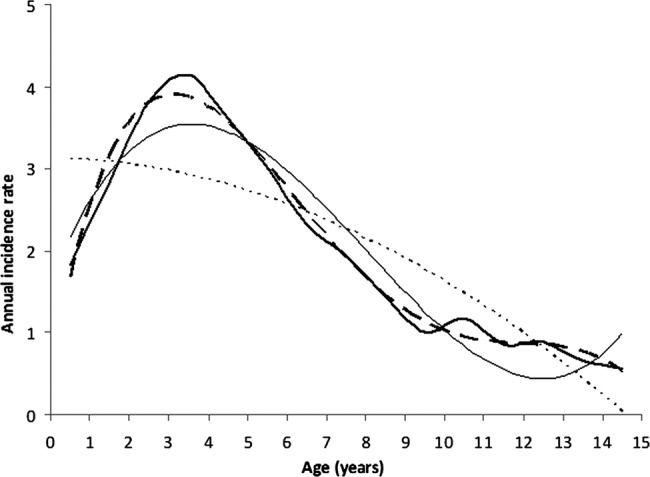
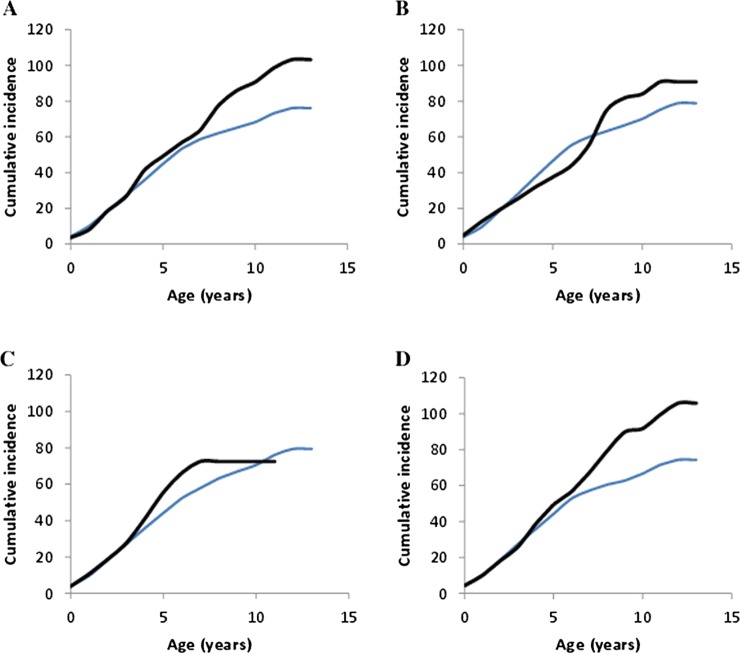
Verification
Claims the paper makes
The claims and statistics of this paper haven’t been checked yet.
Run the check — free, no account needed. It reads the open-access text and checks the sources it cites.
Claims other papers make about this one
Each is checked against this paper’s own text: does it say what the citing paper says it does?
In the citing paper
“Malaria, a disease caused by protozoa of the Plasmodium genus, can exert multifaceted effects on immune function, possibly altering the risk of allergy development, although the specific mechanisms involved have not yet been fully elucidated (Herrant et al. 2013).”
From Parasites and allergies: a complex bidirectional relationship from evolutionary origins to modern therapeutics (2026) · cites this paper as Herrant et al. 2013
Self-check
Percentages, sums and reported differences re-computed from the paper’s own numbers.
The self-check needs the paper’s full text.
Citations
Cites
No references could be resolved yet.
Research works printed but not linked: 48
- 10.1016/S0140-6736(06)69283-0 · DOI · Paper page
- 10.1146/annurev.iy.07.040189.001045 · DOI · Paper page
- 10.1182/blood-2008-05-078154 · DOI
- 10.1046/j.1365-2249.1997.4401337.x · DOI
- 10.1016/S0165-2478(98)00120-5 · DOI
- 10.1186/1475-2875-8-286 · DOI
- 10.1038/192733a0 · DOI
- Perlmann, 1994, IgE elevation and IgE anti-malarial antibodies in Plasmodium falciparum malaria:association of high IgE levels with cerebral malaria, Clin Exp Immunol, 97, 284, 10.1111/j.1365-2249.1994.tb06082.x · DOI
- 10.1186/1475-2875-6-1 · DOI
- 10.1016/S0140-6736(98)10321-5 · DOI
- 10.1164/rccm.200406-730OC · DOI
- 10.1016/S0140-6736(96)91617-7 · DOI
- 10.1038/425576a · DOI
- 10.1126/science.275.5296.77 · DOI
- Gould, 2007, The allergic march from Staphylococcus aureus superantigens to immunoglobulin E, Chem Immunol Allergy, 93, 106, 10.1159/000100861 · DOI
- 10.1038/sj.gene.6364169 · DOI
- 10.1016/j.jaci.2006.04.036 · DOI
- Zhang, 2003, Positional cloning of a quantitative trait locus on chromosome 13q14 that influences immunoglobulin E levels and asthma, Nat Genet, 34, 181, 10.1038/ng1166 · DOI
- 10.1371/journal.pone.0002000 · DOI
- 10.1086/511051 · DOI · Paper page
- 10.1016/j.jaci.2004.10.024 · DOI
- 10.1007/s002510000286 · DOI
- 10.1084/jem.20071548 · DOI
- 10.1016/0035-9203(76)90004-3 · DOI
- Bhattacharya, 1988, Histamine & kinin system in experimental malaria, Indian J Med Res, 88, 558
- 10.1016/S1473-3099(11)70194-3 · DOI
- 10.1038/ng786 · DOI
- 10.1183/09031936.95.08030483 · DOI · Paper page
- Yamada, 2002, International Study of Asthma and Allergies in Childhood (ISAAC): validation of the written questionnaire (eczema component) and prevalence of atopic eczema among Brazilian children, J Investig Allergol Clin Immunol, 12, 34
- 10.1016/S1471-4922(01)02117-1 · DOI
- 10.1126/science.296.5567.490 · DOI
- 10.1128/IAI.06414-11 · DOI
- Machado A Loucoubar C Grange L . Human genetic contribution to the outcome of infection with malaria parasites. In: Okwa O . ed. Malaria parasites, Rijeka: INTECH, 2012:267–292. · DOI
- 10.1128/CMR.00025-08 · DOI
- 10.1098/rstb.1997.0124 · DOI
- 10.1590/S0074-02761994000600013 · DOI
- Lell, 2001, Atopy and malaria, Wien Klin Wochenschr, 113, 927
- 10.1046/j.1365-2222.2003.01540.x · DOI
- 10.4049/jimmunol.168.4.1704 · DOI
- 10.1080/00034989859366 · DOI
- Mecheri, 2011, Contribution of allergic inflammatory response to the pathogenesis of malaria disease, Biochim Biophys Acta, 1822, 49, 10.1016/j.bbadis.2011.02.005 · DOI
- Sowunmi, 2007, Enhancement of the antimalarial efficacy of amodiaquine by chlorpheniramine in vivo, Mem Inst Oswaldo Cruz, 102, 417, 10.1590/S0074-02762007005000038 · DOI
- 10.1038/nchembio806 · DOI
- 10.1073/pnas.201191498 · DOI
- De Silva PM Marshall JM . Factors contributing to urban malaria transmission in sub-Saharan Africa: a systematic review. J Trop Med 2012:819563. doi: 10.1155/2012/819563 · DOI · Paper page
- Bob, 2010, Parasite polymorphism and severe malaria in Dakar (Senegal): a West African urban area, PLoS ONE, 5, e9817, 10.1371/journal.pone.0009817 · DOI
- Musonda, 2009, Chloroquine-astemizole hybrids with potent in vitro and in vivo antiplasmodial activity, Bioorg Med Chem Lett, 19, 481, 10.1016/j.bmcl.2008.11.047 · DOI
- 10.1097/QCO.0b013e3282f1673a · DOI
Cited by
Sorted by citations
Packi, K., Świerczewski, D., Klimczak, S., Ochab, D., Gałęziewska, J., Gromek, P., Kruczkowska, W., Płuciennik, E., Kałuzińska-Kołat, Ż., & Kołat, D. (2026) · Antonie van Leeuwenhoek · doi:10.1007/s10482-026-02425-4
Metadata
- Authors
- Herrant, M., Loucoubar, C., Bassène, H., Gonçalves, B., Boufkhed, S., Diene Sarr, F., Fontanet, A., Tall, A., Baril, L., Mercereau-Puijalon, O., Mécheri, S., Sakuntabhai, A., & Paul, R.
- Venue
- BMJ Open
- Publisher
- BMJ
- Published
- 2013-07
- Volume
- 3
- Issue
- 7
- Pages
- e002835
- ISSN
- 2044-6055
- PMC
- PMC3731724
- Cited by
- 15
- References
- 0
- Language
- en
About these checks
Registry, retraction, Cites and statistics results are computed, not judged, with one exception: a printed reference that no index lists is read once by a model before it counts as a citation error. Claims are extracted by a model and kept only when their quote appears verbatim in the text; each cited source is then checked, with a model’s help, for whether it says what the claim relies on. Those verdicts can be wrong — read the claim’s quote and the cited source before relying on one.
Statistics and arithmetic are recomputed, not judged.
Confidence bands are shown only for fields calibrated on our annotated test set. None is calibrated yet, so no band is shown.
What counts as a claim ›How we measure confidence ›How we check this ›
Are you an author, or do you see a problem with this page? Request a review
