

Reporting of harms data in RCTs: a systematic review of empirical assessments against the CONSORT harms extension
Open accessThe DOI matches its Crossref record; 19 of the 19 references it cites were found in a registry or an index.
Abstract
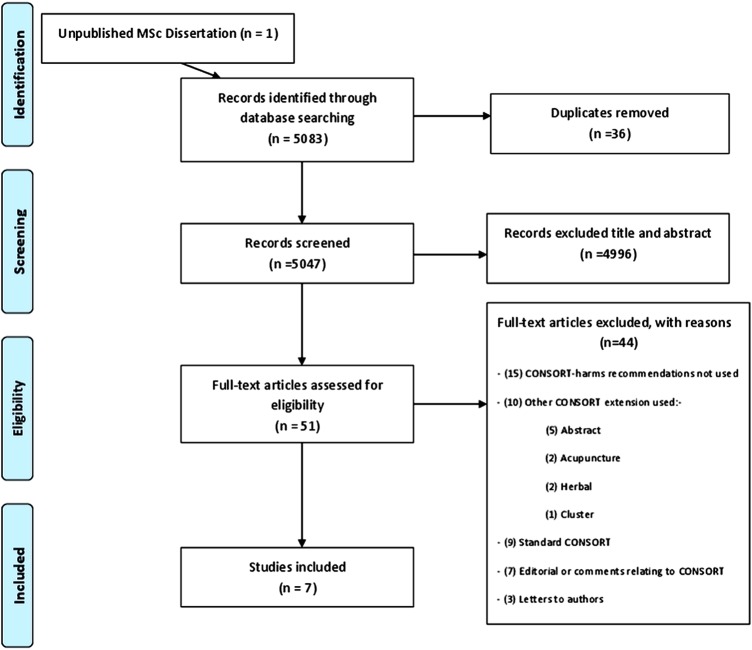
Objective: To determine the standard of reporting of harms-related data, in randomised controlled trials (RCTs) according to the Consolidated Standards of Reporting Trials (CONSORT) statement extension for harms. Design: Systematic review. Data sources: The Cochrane library, Ovid MEDLINE, Scopus and ISI Web of Knowledge were searched for relevant literature. Eligibility criteria for selecting studies: We included publications of studies that used the CONSORT harms extension to assess the reporting of harms in RCTs. Results: We identified 7 studies which included between 10 and 205 RCTs. The clinical areas of the 7 studies were: hypertension (1), urology (1), epilepsy (1), complimentary medicine (2) and two not restricted to a clinical topic. Quality of the 7 studies was assessed by a risk of bias tool and was found to be variable. Adherence to the CONSORT harms criteria reported in the 7 studies was inadequate and variable across the items in the checklist. Adverse events are poorly defined, with 6 studies failing to exceed 50% adherence to the items in the checklist. Conclusions: Readers of RCT publications need to be able to balance the trade-offs between benefits and harms of interventions. This systematic review suggests that this is compromised due to poor reporting of harms which is evident across a range of clinical areas. Improvements in quality could be achieved by wider adoption of the CONSORT harms criteria by journals reporting RCTs.
Overview
The claims and statistics of this paper haven’t been checked yet.
Free: it reads the open-access text and checks the first 5 claims that cite a source we can check. Create a free account to check every claim.
Integrity signals
Registry
Cites
Statistics
Figures
Verification
Claims the paper makes
The claims and statistics of this paper haven’t been checked yet.
Free: it reads the open-access text and checks the first 5 claims that cite a source we can check. Create a free account to check every claim.
Claims other papers make about this one
Each is checked against this paper’s own text: does it say what the citing paper says it does?
The source backs part of the claim, not all of it — or backs it for a different population, condition or comparison.
In the citing paper
“Another important reason for data extraction errors might be the poor reporting of adverse events in randomised controlled trials, which have varying terminology, poorly defined categories, and diverse data sources. 30 31 32”
From Validity of data extraction in evidence synthesis practice of adverse events: reproducibility study (2022) · cites this paper as [31]
Experimental — accuracy not yet measured
Self-check
Percentages, sums and reported differences re-computed from the paper’s own numbers.
The self-check needs the paper’s full text.
Citations
Cites
Better Reporting of Harms in Randomized Trials: An Extension of the CONSORT Statement
Ioannidis, J. P. A., Evans, S. J. W., Gøtzsche, P. C., O'Neill, R. T., Altman, D. G., Schulz, K., Moher, D., & for the CONSORT Group* (2004) · Annals of Internal Medicine · doi:10.7326/0003-4819-141-10-200411160-00009 · Cited by 1,593 · cited 2×
“(9) Subgroup Analysis – – – – NR NR 53 (43, 63) (10) Balanced discussion 5 (1, 17) 10i) 61 (50, 71) 10ii) 14 (7, 23) 10iii) 44 (33, 55) – 10a) 68 (60, 76) 10b) 61 (54, 70) 10c) 41 (34, 50) NR NR 83 (76, 91)”
MethodKirkham, J. J., Dwan, K. M., Altman, D. G., Gamble, C., Dodd, S., Smyth, R., & Williamson, P. R. (2010) · BMJ · doi:10.1136/bmj.c365 · Cited by 1,133
Self-citationMoher, D., Jones, A., Lepage, L., & for the CONSORT Group (2001) · JAMA · doi:10.1001/jama.285.15.1992 · Cited by 1,027 · cited 1×
“(5) Analysis of harms 0 (0, 9) 76 (66, 84) 6 (3, 10) 5a) 36 (28, 44) 5b) 7 (4, 13) 20 (3, 56) 12 (7, 19) 44 (34, 54)”
Plint, A. C., Moher, D., Morrison, A., Schulz, K., Altman, D. G., Hill, C., & Gaboury, I. (2006) · Medical Journal of Australia · doi:10.5694/j.1326-5377.2006.tb00557.x · Cited by 872
Turner, L., Shamseer, L., Altman, D. G., Weeks, L., Peters, J., Kober, T., Dias, S., Schulz, K. F., Plint, A. C., & Moher, D. (2012) · Cochrane Database of Systematic Reviews · doi:10.1002/14651858.mr000030.pub2 · Cited by 740
Cobo, E., Cortes, J., Ribera, J. M., Cardellach, F., Selva-O'Callaghan, A., Kostov, B., Garcia, L., Cirugeda, L., Altman, D. G., Gonzalez, J. A., et al. (2011) · BMJ · doi:10.1136/bmj.d6783 · Cited by 290 · cited 3×
“(5) Analysis of harms 0 (0, 9) 76 (66, 84) 6 (3, 10) 5a) 36 (28, 44) 5b) 7 (4, 13) 20 (3, 56) 12 (7, 19) 44 (34, 54)”
Reporting of Safety Results in Published Reports of Randomized Controlled Trials
(2009) · Archives of Internal Medicine · doi:10.1001/archinternmed.2009.306 · Cited by 287 · cited 2×
“CONSORT Recommendation % of trials (95% CI) that adhered to each recommendation (1) Title & Abstract 20 (9, 35) 12 (6, 20) 1i) 12 (6, 20)”
MethodFrequency and reasons for outcome reporting bias in clinical trials: interviews with trialists
Smyth, R. M. D., Kirkham, J. J., Jacoby, A., Altman, D. G., Gamble, C., & Williamson, P. R. (2011) · BMJ · doi:10.1136/bmj.c7153 · Cited by 220 · cited 3×
“(7) Number of patients analysed 17 (7, 32) 35 (25, 45) 18 (13, 24) 7a) 78 (72, 85) 7b) 40 (32, 48) NR 84 (77, 90) 74 (64, 82)”
Self-citationAre Peer Reviewers Encouraged to Use Reporting Guidelines? A Survey of 116 Health Research Journals
Hirst, A., & Altman, D. G. (2012) · PLoS ONE · doi:10.1371/journal.pone.0035621 · Cited by 200
Cuervo, L. G., & Aronson, J. K. (2004) · BMJ · doi:10.1136/bmj.329.7456.1 · Cited by 151 · cited 3×
“(9) Subgroup Analysis – – – – NR NR 53 (43, 63) (10) Balanced discussion 5 (1, 17) 10i) 61 (50, 71) 10ii) 14 (7, 23) 10iii) 44 (33, 55) – 10a) 68 (60, 76) 10b) 61 (54, 70) 10c) 41 (34, 50) NR NR 83 (76, 91)”
BackgroundMethod
Research works printed but not linked: 1
- Bagul NB Kirkham JJ The reporting of harms in randomized controlled trials of hypertension using the CONSORT criteria for harm reporting. Clin Exp Hypertens 2012; 34: 548– 54 22571478 · DOI · Paper page
Cited by
Junqueira, D. R., Zorzela, L., Golder, S., Loke, Y., Gagnier, J. J., Julious, S. A., Li, T., Mayo-Wilson, E., Pham, B., Phillips, R., et al. (2023) · BMJ · doi:10.1136/bmj-2022-073725 · Cited by 281
Golder, S., Loke, Y. K., Wright, K., & Norman, G. (2016) · PLOS Medicine · doi:10.1371/journal.pmed.1002127 · Cited by 277
Bougioukas, K. I., Liakos, A., Tsapas, A., Ntzani, E., & Haidich, A.-B. (2018) · Journal of Clinical Epidemiology · doi:10.1016/j.jclinepi.2017.10.002 · Cited by 251
“As soon as there is reliance on published data we need to be aware of relevant scientific caveats when looking at data evaluating harms [65].”
BackgroundStevens, A., Shamseer, L., Weinstein, E., Yazdi, F., Turner, L., Thielman, J., Altman, D. G., Hirst, A., Hoey, J., Palepu, A., et al. (2014) · BMJ · doi:10.1136/bmj.g3804 · Cited by 242
Saini, P., Loke, Y. K., Gamble, C., Altman, D. G., Williamson, P. R., & Kirkham, J. J. (2014) · BMJ · doi:10.1136/bmj.g6501 · Cited by 209
Self-citationGillies, M. B., Ranakusuma, A., Hoffmann, T., Thorning, S., McGuire, T., Glasziou, P., & Mar, C. D. (2014) · Canadian Medical Association Journal · doi:10.1503/cmaj.140848 · Cited by 173
Adverse events in people taking macrolide antibiotics versus placebo for any indication
Hansen, M. P., Scott, A. M., McCullough, A. R., Thorning, S., Aronson, J. K., Beller, E., Glasziou, P., Hoffmann, T., Clark, J. M., & Mar, C. D. (2019) · Cochrane Database of Systematic Reviews · doi:10.1002/14651858.cd011825.pub2 · Cited by 158
Tang, E., Ravaud, P., Riveros, C., Perrodeau, E., & Dechartres, A. (2015) · BMC Medicine · doi:10.1186/s12916-015-0430-4 · Cited by 128
“Despite the extension of the Consolidated Standards of Reporting Trials (CONSORT) statement published in 2004, which provides guidelines on reporting harms-related data [7], reporting of safety data in published articles of clinical trials continues to be suboptimal [5, 16, 19, 20], with poor adherence to the statemen…”
MethodAhmed, H., Davies, F., Francis, N. A., Farewell, D. M., Butler, C., & Paranjothy, S. (2017) · BMJ Open · doi:10.1136/bmjopen-2016-015233 · Cited by 118
Lineberry, N., Berlin, J. A., Mansi, B., Glasser, S., Berkwits, M., Klem, C., Bhattacharya, A., Citrome, L., Enck, R., Fletcher, J., et al. (2016) · BMJ · doi:10.1136/bmj.i5078 · Cited by 113
Blood pressure lowering efficacy of renin inhibitors for primary hypertension
Musini, V. M., Lawrence, K. A., Fortin, P. M., Bassett, K., & Wright, J. M. (2017) · Cochrane Database of Systematic Reviews · doi:10.1002/14651858.cd007066.pub3 · Cited by 98
Validity of data extraction in evidence synthesis practice of adverse events: reproducibility study
Xu, C., Yu, T., Furuya-Kanamori, L., Lin, L., Zorzela, L., Zhou, X., Dai, H., Loke, Y., & Vohra, S. (2022) · BMJ · doi:10.1136/bmj-2021-069155 · Cited by 82
Time to improve the reporting of harms in randomized controlled trials
Junqueira, D. R., Phillips, R., Zorzela, L., Golder, S., Loke, Y. K., Moher, D., Ioannidis, J. P. A., & Vohra, S. (2021) · Journal of Clinical Epidemiology · doi:10.1016/j.jclinepi.2021.04.020 · Cited by 71
Bolton, M. J., Hodkinson, A., Boda, S., Mould, A., Panagioti, M., Rhodes, S., Riste, L., & van Marwijk, H. (2019) · BMC Medicine · doi:10.1186/s12916-018-1242-0 · Cited by 68
Self-citationJunqueira, D. R., Zorzela, L., Golder, S., Loke, Y., Gagnier, J. J., Julious, S. A., Li, T., Mayo-Wilson, E., Pham, B., Phillips, R., et al. (2023) · Journal of Clinical Epidemiology · doi:10.1016/j.jclinepi.2023.04.005 · Cited by 67
Harms in Systematic Reviews Paper 1: An introduction to research on harms
Qureshi, R., Mayo-Wilson, E., & Li, T. (2022) · Journal of Clinical Epidemiology · doi:10.1016/j.jclinepi.2021.10.023 · Cited by 63
The Benefits and Harms of Antibiotic Prophylaxis for Urinary Tract Infection in Older Adults
Langford, B. J., Brown, K. A., Diong, C. C., Marchand‐Austin, A., Adomako, K., Saedi, A., Schwartz, K. L., Johnstone, J., MacFadden, D. R., Matukas, L. M., et al. (2021) · Clinical Infectious Diseases · doi:10.1093/cid/ciab116 · Cited by 62
Hodkinson, A., Gamble, C., & Smith, C. T. (2016) · Trials · doi:10.1186/s13063-016-1327-z · Cited by 55
“However, inadequate reporting of harms is still noticeable, even after the release of the CONSORT-harms extension [19], as the findings from our recent review [29] suggest.”
ResultSelf-citationHibberd, P. L., Kleimola, L., Fiorino, A., Botelho, C. A., Haverkamp, M. R., Andreyeva, I., Poutsiaka, D. D., Fraser, C. M., Solano-Aguilar, G. I., & Snydman, D. R. (2014) · PLoS ONE · doi:10.1371/journal.pone.0113456 · Cited by 56
“We conducted the FDA/ CBER required Phase I open label study in healthy elderly paying particular attention to the CONSORT Statement Extension of better reporting of harms in randomized trials [38] and the recent call for improvements in adverse event reporting [39, 40].”
Höxtermann, M. D., Haller, H., Aboudamaah, S., Bachemir, A., Dobos, G., Cramer, H., & Voiß, P. (2022) · Cancer · doi:10.1002/cncr.34165 · Cited by 50
Voss, T., Krag, M., Martiny, F., Heleno, B., Jørgensen, K. J., & Brodersen, J. (2023) · Cancer Epidemiology · doi:10.1016/j.canep.2023.102352 · Cited by 45
“This points to the poor reporting of harms in general, although such guidance is available.[2, 67, 68].”
BackgroundHuaringa-Marcelo, J., Huamán, M. R., Brañez‐Condorena, A., Villacorta-Landeo, P., Pinto-Ruiz, D. F., Urday-Ipanaqué, D., García‐Gomero, D., Montes, P., & Miranda, A. L. (2021) · Journal of Gastrointestinal and Liver Diseases · doi:10.15403/jgld-3191 · Cited by 45
“Previous SRs found similar results in both outcomes [10, 11, 37, 43].”
ResultJunqueira, D. R., Bennett, D., Huh, S. Y., Fahrbach, K. R., Neupane, B., & Betts, M. B. (2023) · Drugs in R&D · doi:10.1007/s40268-023-00413-x · Cited by 43
“This limitation was expected since the reporting of AEs in clinical trials has been shown to be suboptimal [57, 58], and a similar pattern was anticipated to impact the reporting of observational studies despite the lack of objective evidence.”
BackgroundFerner, R. E., & McGettigan, P. (2018) · BMJ · doi:10.1136/bmj.k4051 · Cited by 37
Most systematic reviews of adverse effects did not include unpublished data
Golder, S., Loke, Y. K., Wright, K., & Sterrantino, C. (2016) · Journal of Clinical Epidemiology · doi:10.1016/j.jclinepi.2016.05.003 · Cited by 30
Anderson, P. A., Nassr, A. N., Currier, B. L., Sebastian, A. S., Arnold, P. M., Fehlings, M. G., Mroz, T. E., & Riew, K. D. (2017) · Global Spine Journal · doi:10.1177/2192568216688195 · Cited by 31
“Furthermore, peer-reviewed publications in general have poor reporting of adverse events in randomized controlled trials.(4,5) This leads to uncertainty and makes recommendation for their use more difficult.”
BackgroundLima, J. P., Chowdhury, S. R., Tangamornsuksan, W., Zhai, C., Chu, X., Silva, J. M., Kabir, H., Chowdhury, M. R., Couban, R., Walsh, M., et al. (2025) · JAMA Network Open · doi:10.1001/jamanetworkopen.2025.34953 · Cited by 29
Reporting quality of trial abstracts—improved yet suboptimal: A systematic review and meta‐analysis
Chhapola, V., Tiwari, S., Brar, R., & Kanwal, S. K. (2018) · Journal of Evidence-Based Medicine · doi:10.1111/jebm.12294 · Cited by 27
Hadi, M. A., McHugh, G. A., & Conaghan, P. G. (2017) · BMJ Evidence-Based Medicine · doi:10.1136/ebmed-2017-110715 · Cited by 27
Black, R. J., Robson, J. C., Goodman, S. M., Hoon, E. A., Lai, L. Y. H., Simon, L. S., Harrison, E., Neill, L. M., Richards, P., Nelsen, L. M., et al. (2017) · The Journal of Rheumatology · doi:10.3899/jrheum.161083 · Cited by 26
“This may be because AE are poorly identified in randomized controlled trials (RCT), or may reflect differences in AE when GC are prescribed for different indications and doses 10,11,12,13,14 .”
BackgroundWestergren, T., Narum, S., & Klemp, M. (2022) · Basic & Clinical Pharmacology & Toxicology · doi:10.1111/bcpt.13791 · Cited by 25
“Many trials are not published, or safety data are not presented in full.(1,4,7,23,24) Some papers merely state that no major adverse effects were observed, fail to mention TAB L E 1 Aspects of adverse effects reporting in assessed trials”
BackgroundStubenrouch, F. E., Cohen, E. S., Bossuyt, P. M., Koelemay, M. J. W., van der Vet, P. C. R., & Ubbink, D. T. (2020) · BJS Open · doi:10.1002/bjs5.50240 · Cited by 24
Honvo, G., Bannuru, R. R., Bruyère, O., Rannou, F., Herrero‐Beaumont, G., Uebelhart, D., Cooper, C. C., Arden, N., Conaghan, P. G., Reginster, J., et al. (2019) · Drugs & Aging · doi:10.1007/s40266-019-00667-8 · Cited by 24
Bandholm, T., Thorborg, K., Ardern, C. L., Christensen, R., & Henriksen, M. (2022) · British Journal of Sports Medicine · doi:10.1136/bjsports-2021-105058 · Cited by 23
“There is poor reporting of harms in trial reports across many clinical areas, 64 which makes it difficult to obtain a true estimate of the benefit-harms ratio.”
BackgroundKhan, M. S., Shaikh, A., Ochani, R. K., Akhtar, T., Fatima, K., Khan, S. U., Mookadam, F., Murad, M. H., Figueredo, V. M., Doukky, R., et al. (2019) · Circulation: Cardiovascular Quality and Outcomes · doi:10.1161/circoutcomes.118.005260 · Cited by 21
Paludan‐Müller, A. S., Créquit, P., & Boutron, I. (2021) · BMC Medicine · doi:10.1186/s12916-021-01955-0 · Cited by 23
“A lack of transparency or missing information on harms is common [3, 5].”
BackgroundMoskowitz, A. L., Andersen, L. W., Holmberg, M. J. J., Grossestreuer, A. V., Berg, K. M., & Granfeldt, A. (2020) · Critical Care · doi:10.1186/s13054-020-03113-z · Cited by 20
“These populations have included cardiovascular health [10], urology [11], epilepsy [6], alternative medical therapies [12], and various mixed populations [13, 14] In one systematic review, there was substantial heterogeneity in adherence to various CONSORT harms reporting checklist items [15].”
BackgroundSteegmans, P. A. J., Girolamo, N. D., & Reynders, R. M. (2019) · Research Integrity and Peer Review · doi:10.1186/s41073-019-0084-4 · Cited by 19
Carmichael, K., Nevitt, S. J., Weston, J., Smith, C. T., & Marson, A. G. (2015) · Epilepsy Research · doi:10.1016/j.eplepsyres.2015.04.019 · Cited by 18
Anderson, J. M., Howard, C., Staggs, J., Steele, R. J., Strasser, T., Small, T. J., Vassar, M. B., & Checketts, J. X. (2022) · The Journal of Arthroplasty · doi:10.1016/j.arth.2022.06.004 · Cited by 17
Eisner, E., Richardson, C., Thomas, N., Rus‐Calafell, M., Syrett, S., Firth, J., Gumley, A. I., Hardy, A., Allan, S., Kabir, T., et al. (2024) · Schizophrenia Bulletin · doi:10.1093/schbul/sbae048 · Cited by 16
“8,9 Patients, healthcare professionals, policymakers, regulators, and funding bodies need this information when deciding whether to use, recommend, certify, prescribe, and/or fund a specific intervention.”
BackgroundJefferson, T., & Jørgensen, L. (2018) · BMJ Evidence-Based Medicine · doi:10.1136/bmjebm-2018-110918 · Cited by 16
Katiri, R., Hall, D. A., Hoare, D. J., Fackrell, K., Horobin, A. J., Hogan, N., Buggy, N., de Heyning, P. V., Firszt, J. B., Bruce, I. A., et al. (2022) · Trials · doi:10.1186/s13063-022-06702-1 · Cited by 15
“Despite this, a systematic review showed that reporting of harms’ data in randomised controlled trials across a range of clinical specialties failed to meet the Consolidated Standards of Reporting Trials (CONSORT) harms criteria [34], and is rarely reported in trials of SSD interventions [7].”
BackgroundBeytout, Q., Afach, S., Guelimi, R., Sbidian, É., & Cleach, L. L. (2024) · Journal of Clinical Epidemiology · doi:10.1016/j.jclinepi.2024.111406 · Cited by 14
Steegmans, P. A. J., Bipat, S., & Reynders, R. M. (2019) · Systematic Reviews · doi:10.1186/s13643-019-1000-1 · Cited by 12
Anderson, J. M., Howard, C., Hardin, J., Phelps, C. R., Hanson, C. D., Anderson, R. M., Vassar, M. B., & Checketts, J. X. (2022) · Journal of Shoulder and Elbow Surgery · doi:10.1016/j.jse.2022.06.021 · Cited by 12
Broad Medical Uncertainty and the ethical obligation for openness
Brown, R. C. H., de Barra, M., & Earp, B. D. (2022) · Synthese · doi:10.1007/s11229-022-03666-2 · Cited by 12
“Systematic review and meta-analysis of multiple RCTs evaluating a treatment are often used to inform policy.”
BackgroundInfluentialLalu, M. M., Leung, G. J., Dong, Y., Montroy, J. R., Butler, C., Auer, R. C., & Fergusson, D. A. (2019) · BMJ Open · doi:10.1136/bmjopen-2019-029475 · Cited by 11
Berthelsen, D. B., Simon, L. S., Ioannidis, J. P. A., Voshaar, M., Richards, P., Goel, N., Strand, V., Nielsen, S. M., Shea, B., Tugwell, P., et al. (2023) · Seminars in Arthritis and Rheumatism · doi:10.1016/j.semarthrit.2023.152288 · Cited by 10
Xu, Z. Y., Azuara‐Blanco, A., Kadonosono, K., Murray, T. G., Natarajan, S., Sii, S. S. Z., Smiddy, W. S., STEEL, D. H., Wolfensberger, T. J., Lois, N., et al. (2021) · JAMA Ophthalmology · doi:10.1001/jamaophthalmol.2021.1836 · Cited by 10
Declaración de transparencia para las publicaciones científicas
Catalá-López, F., Hutton, B., & Moher, D. (2014) · Medicina Clínica · doi:10.1016/j.medcli.2014.01.035 · Cited by 9
Kshirsagar, K., Bhate, K., Shete, A. V., & Kakodkar, P. V. (2021) · Journal of Oral and Maxillofacial Surgery · doi:10.1016/j.joms.2021.01.032 · Cited by 9
Leveraging Virtual Technology to Conduct Clinical Trials in Inflammatory Bowel Disease.
Noor, N. M., & Siegel, C. A. (2023) · PubMed Central · Cited by 8
Steegmans, P. A. J., Girolamo, N. D., & Reynders, R. M. (2023) · Systematic Reviews · doi:10.1186/s13643-023-02269-3 · Cited by 8
Fonseca, L., Najarro-Quispe, R., Rodríguez-Hernández, A., Torné, R., Gándara, D., Arikán, F., & Baños-Carrasco, P. (2018) · Neurocirugía · doi:10.1016/j.neucir.2018.02.005 · Cited by 7
Berthelsen, D. B., WOODWORTH, T. G., Goel, N., Ioannidis, J. P. A., Tugwell, P., Devoe, D. J. A., Williamson, P. R., Terwee, C. B., Suarez-Almazor, M. E., Strand, V., et al. (2021) · Seminars in Arthritis and Rheumatism · doi:10.1016/j.semarthrit.2020.09.023 · Cited by 7
Steegmans, P. A. J., Girolamo, N. D., Bipat, S., & Reynders, R. M. (2023) · Systematic Reviews · doi:10.1186/s13643-023-02273-7 · Cited by 7
Catalá-López, F., Peiró, S., Hutton, B., Andrés, C. P., & Moher, D. (2014) · Revista Española de Salud Pública · doi:10.4321/s1135-57272014000200001 · Cited by 6
Oxman, M., Chesire, F., Mugisha, M., Ssenyonga, R., Ngatia, B., Nsangi, A., Lewin, S. A., Moberg, J., Sewankambo, N. K., Kaseje, M., et al. (2024) · F1000Research · doi:10.12688/f1000research.158042.1 · Cited by 6
Berthelsen, D. B., Nielsen, S. M., Rasmussen, M. U., Voshaar, M., Richards, P., Bartlett, S. J., Hazlewood, G. S., Shea, B., Tugwell, P., Ellingsen, T., et al. (2024) · Rheumatology · doi:10.1093/rheumatology/keae223 · Cited by 5
Mathes, T., Mann, N., Thürmann, P., Sönnichsen, A. C., & Pieper, D. (2022) · BMC Medical Research Methodology · doi:10.1186/s12874-022-01715-5 · Cited by 5
“Usually, the evidence is weaker for safety than for effectiveness outcomes because of inconsistent measurement, imprecision (studies are not powered for safety outcomes, rare events) and poor reporting of harms [7, 8].”
BackgroundHemmerich, C. E., Corcoran, A., Johnson, A., Wilson, A., Orris, O., Arellanes, R., & Vassar, M. B. (2024) · Otolaryngology · doi:10.1002/ohn.765 · Cited by 4
Evidence-based Plastic Surgery: Assessing Progress over Two 5-year Periods from 2009 to 2019
Mihailidis, T. H., & Al‐Benna, S. (2021) · Plastic & Reconstructive Surgery Global Open · doi:10.1097/gox.0000000000003337 · Cited by 4
“19 Furthermore, several RCTs lacked a diagram illustrating participant flow: it is encouraged that all RCTs include such a chart for clear illustration to readership of participant flow throughout the trial, with clear indication of withdrawals.”
Lo, B. M., Carpenter, C. R., Milne, K., Panagos, P. D., Haukoos, J. S., Diercks, D. B., Diercks, D. B., Anderson, J. D., Byyny, R. L., Carpenter, C. R., et al. (2024) · Annals of Emergency Medicine · doi:10.1016/j.annemergmed.2024.07.023 · Cited by 4
Kavka, T. (2022) · Journal of Back and Musculoskeletal Rehabilitation · doi:10.3233/bmr-220081 · Cited by 4
“This is of importance because the subjective nature of assessment of harms reporting (e.g. multiple components in only one item) probably causes inconsistencies in assessments across assessors and reviews [55,56].”
Brown, J., DiCicco, L., Shepard, S., Hughes, G. K., Bennett, S., Anderson, J. M., Hanson, C. D., & Heckler, M. (2024) · The American Journal of Sports Medicine · doi:10.1177/03635465241259738 · Cited by 3
“3,10,15,20,23 Given the recent update to the ACL guideline, we have a valuable opportunity to assess whether a similar pattern of harms reporting is present in the CPG for ACL injury management.”
Prioritization and Selection of Harms for Inclusion in Systematic Reviews
Chou, R., Baker, W. L., Bañez, L. L., Iyer, S., Myers, E. R., Newberry, S. J., Pincock, L., Robinson, K. A., Sardenga, L., Sathe, N. A., et al. (2017) · doi:10.23970/ahrqepcmethguide1 · Cited by 3
Robust Randomized Controlled Data Is Lacking in Total Joint Arthroplasty
Chen, Z., Bains, S. S., Hameed, D., Dubin, J. A., Stern, J. M., & Mont, M. A. (2022) · The Journal of Knee Surgery · doi:10.1055/s-0042-1758550 · Cited by 3
Elghzali, A., Chaudhry, M., Khan, S. M., Khan, A., & Vassar, M. B. (2025) · Scientific Reports · doi:10.1038/s41598-025-24290-3 · Cited by 2
Ozdag, Y., Hayes, D. S., Callahan, C., Koussaify, J. E., Warnick, E., Foster, B. K., Klena, J. C., & Grandizio, L. C. (2023) · Journal of Hand Surgery Global Online · doi:10.1016/j.jhsg.2023.06.004 · Cited by 2
“27 Hodkinson et al 28 noted that readers should be able to balance AEs and bene fi ts; however, low compliance with the CONSORT Harms checklist jeopardizes the objectivity of these results and makes a balanced interpretation more dif fi cult.”
BackgroundUnwirksamkeit, Schaden und nicht intendierte Folgen der Implementierung von Interventionen
Meyer, G., Balzer, K., Wilborn, D., Fleischer, S., Berg, A., & Köpke, S. (2015) · Springer eBooks · doi:10.1007/978-3-658-08137-9_9 · Cited by 2
Chauhan, A., Kotlier, J. L., Thompson, A. A., Mayfield, C. K., Abu-Zahra, M., Hwang, N. M., Bolia, I. K., Petrigliano, F. A., & Liu, J. N. (2023) · Journal of Shoulder and Elbow Surgery · doi:10.1016/j.jse.2023.09.030 · Cited by 2
Adverse Events Reported in Trials Assessing Manual Therapy to the Extremities: A Systematic Review
Ferguson, J. J., Fritsch, A., Rhon, D. I., & Young, J. L. (2024) · Journal of Integrative and Complementary Medicine · doi:10.1089/jicm.2023.0009 · Cited by 2
“24 There is a paucity of information about how well AEs are reported in clinical trials investigating the use of MT for extremity conditions.”
Katakam, K. K., Sethi, N. J., Jakobsen, J. C., & Gluud, C. N. (2019) · Acta Neuropsychiatrica · doi:10.1017/neu.2019.24 · Cited by 2
“…the reporting of adverse event data is still suboptimal even after introduction of some standards (e.g. CONSORT) for reporting of adverse events (Ioannidis, 2009; Haidich et al., 2011; Shukralla et al., 2011; Bagul & Kirkham, 2012; Smith et al., 2012; Hodkinson et al., 2013; Péron et al., 2013).”
Catt, H., & Senior, S. L. (2020) · medRxiv · doi:10.1101/2020.02.04.20020396 · Cited by 2
“gaming/gambling [12–16].”
Li, J., Zhou, Y., Lu, X., & Bian, Y. (2024) · medRxiv · doi:10.1101/2024.10.15.24315538 · Cited by 2
Ward, S., Ezell, K., Wise, A., Garrett, M., Rucker, B., Lestersmith, D., Emam, M., & Vassar, M. B. (2023) · Regenerative Medicine · doi:10.2217/rme-2023-0058 · Cited by 1
de Souza, J. M., Cardoso, D. C. R., da Silva, S. T., de Azevedo, J. A., de Oliveira, S. K. R., Borges, L. R. D. D. M., Gomes, L. A., Quirino, M. A. F., & Ribeiro, T. S. (2025) · Neurorehabilitation · doi:10.1177/10538135241308805 · Cited by 1
“However, there has been a perceived low quality and inconsistency in the reported data concerning adverse events in clinical trials, with de fi ciencies observed in the measurement, analysis, and reporting of these events (Hodkinson et al., 2013).”
O'Connell, N. E., Shaheed, C. A., Qureshı, R., Richards, G. C., Soliman, N., Fisher, E., Cashin, A. G., & Ferraro, M. C. (2025) · Pain · doi:10.1097/j.pain.0000000000003796 · Cited by 1
Mihailidis, T. H., & Al‐Benna, S. (2021) · Burns · doi:10.1016/j.burns.2021.11.005 · Cited by 1
Modi, J., Magee, T., Rucker, B., Flores, H., Wise, A., Kee, M. D., Garrett, M., Roberts, W., & Vassar, M. B. (2022) · British Journal of Anaesthesia · doi:10.1016/j.bja.2022.08.007 · Cited by 1
Reporting Quality of Adverse Events in Temporomandibular Disorders Treatment: A Systematic Review
Li, C., Li, Y., Zheng, Y., Li, W., Wo, P., Park, J. W., Wang, J., & Xiong, X. (2025) · Oral Diseases · doi:10.1111/odi.70032 · Cited by 1
Safety and Efficacy of Inactivated Influenza Vaccines in Children
Collignon, P., Doshi, P., Mar, C. D., & Jefferson, T. (2014) · Clinical Infectious Diseases · doi:10.1093/cid/ciu835 · Cited by 1
Nagler, E. V. (2015) · Ghent University Academic Bibliography (Ghent University)
Quality checklist to improve harms reporting. Is evidence‐based medicine delivering on its promise?
Shahinas, J. (2016) · Oral Diseases · doi:10.1111/odi.12500
Hancock, M. (2017) · ERA: Education and Research Archive (University of Alberta) · doi:10.7939/r34q7r41c
Jefferson, T., & Jørgensen, L. N. (2018) · Recenti Progressi in Medicina · doi:10.1701/2896.29190
Allen, E. (2015) · Open University of Cape Town (University of Cape Town)
Validity of data extraction in acupuncture meta-analysis: a reproducibility study protocol
Duan, Y., Zhao, P., Deng, Y., Luo, W., Chen, Z., Liu, S., Zhou, J., Xu, Z., Tang, B., & Yu, L. (2024) · BMJ Open · doi:10.1136/bmjopen-2024-088736
“RCTs exhibit variations in terminology, 27 unclearly defined categories 28 and diverse data sources.”
Sources of Bias in Randomised Controlled Trials
Crombie, I. (2021) · Wiley eBooks · doi:10.1002/9781394322183.ch2
Appendix 2: Initiatives to Improve the Quality of Research
Crombie, I. (2021) · Wiley eBooks · doi:10.1002/9781394322183.app2
Almazam, S. A. (2025) · Enlighten: Theses (The University of Glasgow) · doi:10.5525/gla.thesis.84908
Katiri, R., Hall Deborah, A., Hoare, D. J., Fackrell, K., Horobin, A. J., Hogan, N., Buggy, N., Van de Heyning, P. H., Firszt, J. B., Bruce, I. A., et al. (2022) · Figshare · doi:10.6084/m9.figshare.21069654
Λουφόπουλος, Α. (2019) · University of Thessaly Institutional Repository (University of Thessaly) · doi:10.26253/heal.uth.7376
Steegmans, P. A. J., Di Girolamo, N., & Reynders, R. M. (2024) · Figshare · doi:10.6084/m9.figshare.26598293
Katiri, R., Hall Deborah, A., Hoare, D. J., Fackrell, K., Horobin, A. J., Hogan, N., Buggy, N., Van de Heyning, P. H., Firszt, J. B., Bruce, I. A., et al. (2022) · Figshare · doi:10.6084/m9.figshare.21069645
Moskowitz, A., Andersen, L. W., Holmberg, M. J. J., Grossestreuer, A. V., Berg, K. M., & Granfeldt, A. (2020) · Figshare · doi:10.6084/m9.figshare.12629647
Steegmans, P. A. J., Di Girolamo, N., Bipat, S., & Reynders, R. M. (2024) · Figshare · doi:10.6084/m9.figshare.26601580
Steegmans, P. A. J., Di Girolamo, N., & Reynders, R. M. (2024) · Figshare · doi:10.6084/m9.figshare.26598299
Metadata
- Authors
- Hodkinson, A., Kirkham, J. J., Tudur-Smith, C., & Gamble, C.
- Affiliations
- Department of Biostatistics, MRC North West Hub for Trials Methodology Research, University of Liverpool, Liverpool, UK
- University of Liverpool (GB)
- Venue
- BMJ Open
- Publisher
- BMJ
- Published
- 2013-09
- Volume
- 3
- Issue
- 9
- Pages
- e003436
- ISSN
- 2044-6055 (ISSN-L)
- PMC
- PMC3787508
- OpenAlex
- W2112658951
- Cited by
- 111
- References
- 19
- Citations by year
- 2026: 3 · 2025: 7 · 2024: 17 · 2023: 11 · 2022: 18 · 2021: 13 · 2020: 4 · 2019: 9 · 2018: 4 · 2017: 8 · 2016: 5 · 2015: 3 · 2014: 9
- FWCI
- 1.16
- Type
- journal article
- Language
- en
- Open access
- gold
- doi.org
- Licence
- cc-by
- Locations
- BMJ Open (publishedVersion, cc-by)
- Europe PMC (PubMed Central) (publishedVersion, cc-by)
- PubMed Central (publishedVersion, cc-by)
- PubMed (publishedVersion)
- Research Explorer (The University of Manchester) (publishedVersion)
- Funders
- York University
- Medical Research Council (G0800792, G1000397, G1000397-1/1)
- Topics
- Social Sciences › Decision Sciences › Statistics, Probability and Uncertainty › Meta-analysis and systematic reviews
- Physical Sciences › Mathematics › Statistics and Probability › Statistical Methods in Clinical Trials
- Health Sciences › Nursing › Issues, ethics and legal aspects › Pharmaceutical industry and healthcare
- Keywords
- harms reporting, adverse events, randomized controlled trials, reporting quality, benefit-harm balance, adverse event definitions, trial reporting guidelines
About these checks
Registry, retraction, Cites and statistics results are computed, not judged, with one exception: a printed reference that no index lists is read once by a model before it counts as a citation error. Claims are extracted by a model and kept only when their quote appears verbatim in the text; each cited source is then checked, with a model’s help, for whether it says what the claim relies on. Those verdicts can be wrong — read the claim’s quote and the cited source before relying on one.
Statistics and arithmetic are recomputed, not judged.
Confidence bands are shown only for fields calibrated on our annotated test set. None is calibrated yet, so no band is shown.
What counts as a claim ›How we measure confidence ›How we check this ›
Are you an author, or do you see a problem with this page? Request a review
Data sources
Bibliographic data: Semantic Scholar, OpenAlex, Crossref.
Contains information from the Semantic Scholar Academic Graph Datasets, made available under the ODC Attribution License (ODC-BY 1.0).
Semantic Scholar’s data is described in: Kinney, R., et al. (2023). The Semantic Scholar Open Data Platform. arXiv:2301.10140.
