

Reporting of Adverse Events in Published and Unpublished Studies of Health Care Interventions: A Systematic Review
Open accessThe DOI matches its Crossref record; 54 of the 54 references it cites were found in a registry or an index.
Abstract
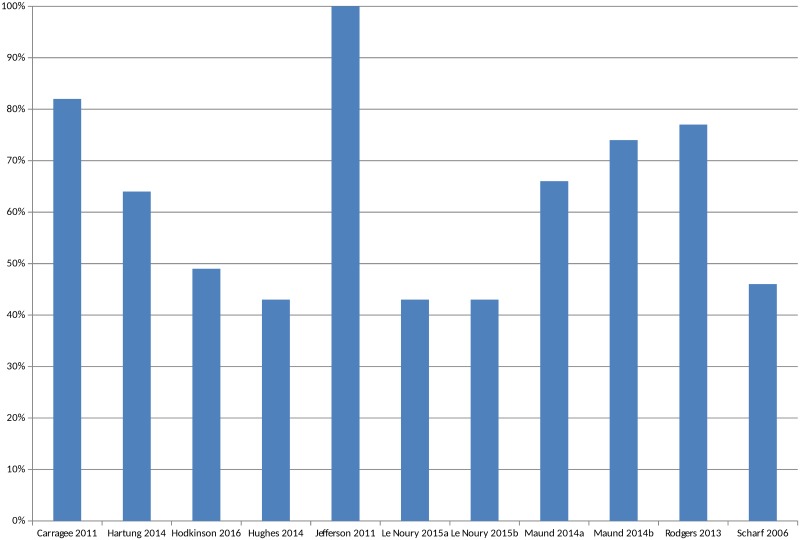
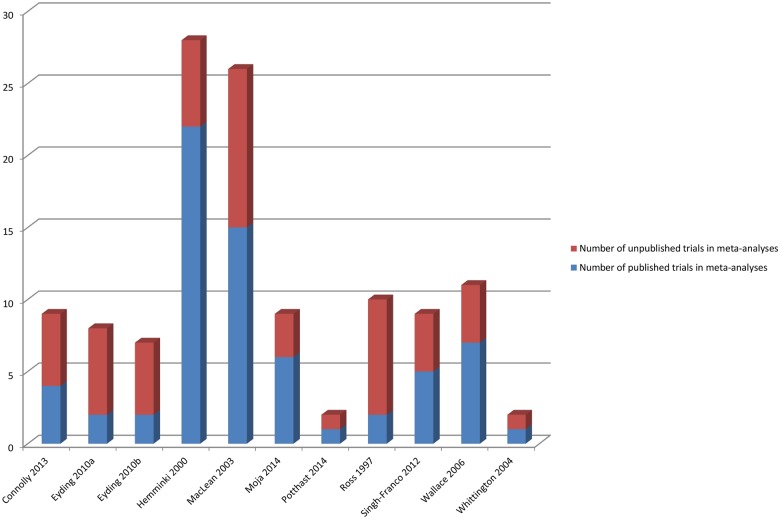
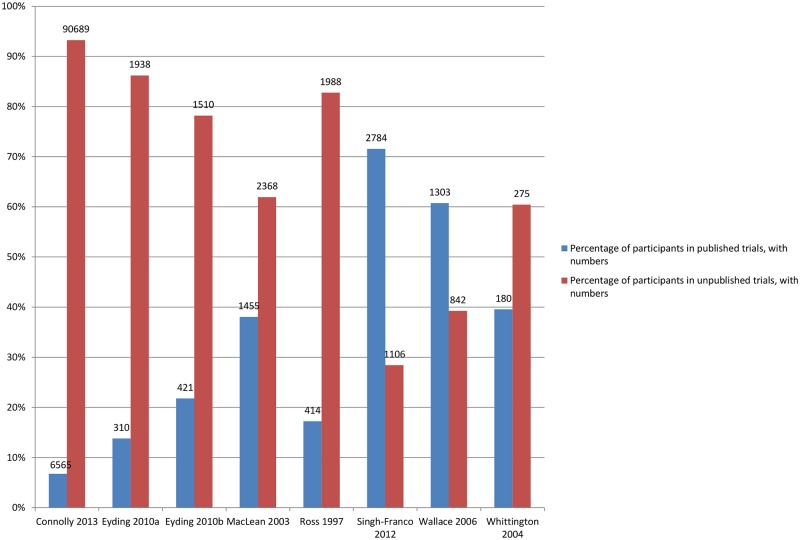
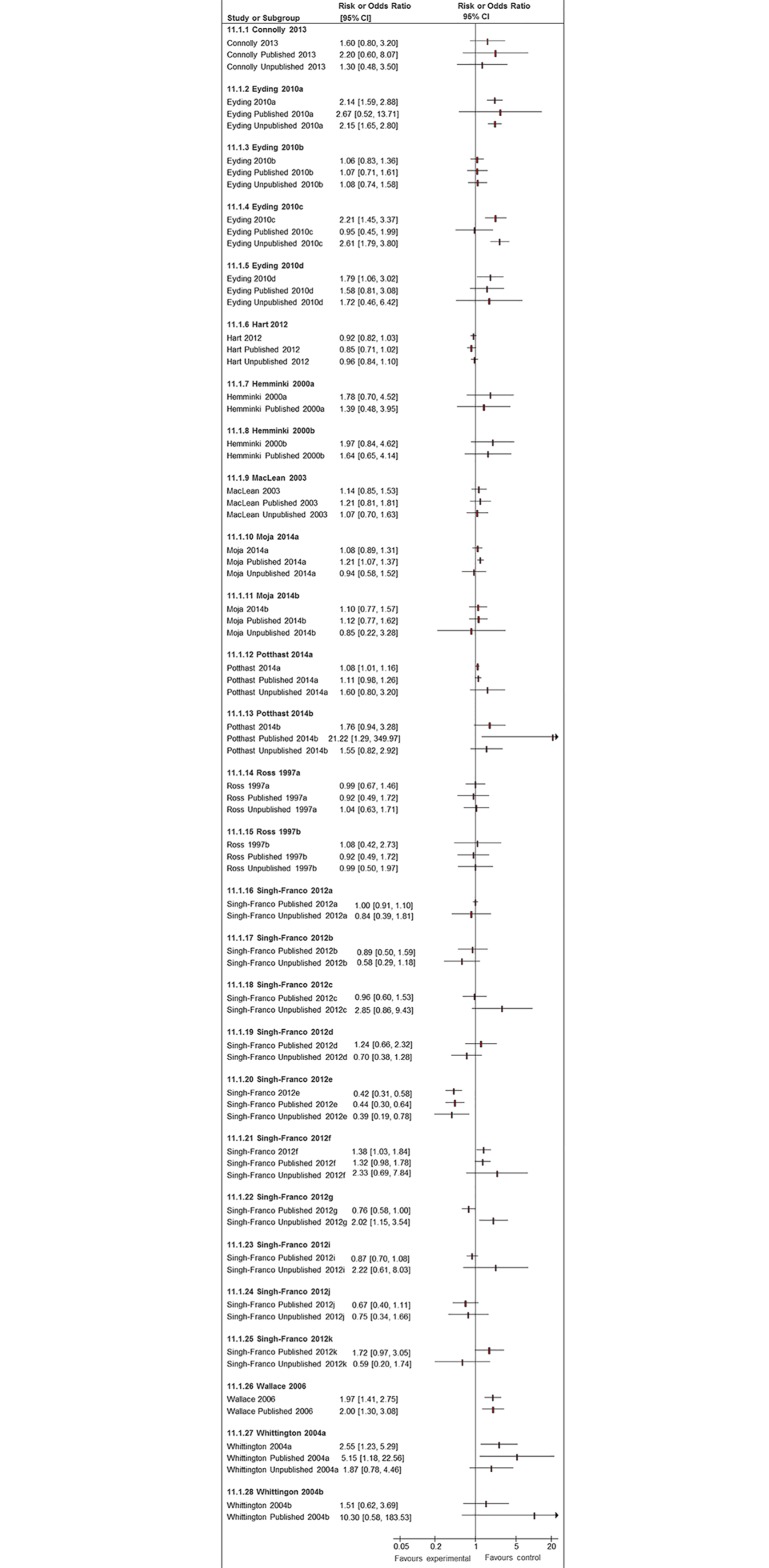
BACKGROUND: We performed a systematic review to assess whether we can quantify the underreporting of adverse events (AEs) in the published medical literature documenting the results of clinical trials as compared with other nonpublished sources, and whether we can measure the impact this underreporting has on systematic reviews of adverse events. METHODS AND FINDINGS: Studies were identified from 15 databases (including MEDLINE and Embase) and by handsearching, reference checking, internet searches, and contacting experts. The last database searches were conducted in July 2016. There were 28 methodological evaluations that met the inclusion criteria. Of these, 9 studies compared the proportion of trials reporting adverse events by publication status. The median percentage of published documents with adverse events information was 46% compared to 95% in the corresponding unpublished documents. There was a similar pattern with unmatched studies, for which 43% of published studies contained adverse events information compared to 83% of unpublished studies. A total of 11 studies compared the numbers of adverse events in matched published and unpublished documents. The percentage of adverse events that would have been missed had each analysis relied only on the published versions varied between 43% and 100%, with a median of 64%. Within these 11 studies, 24 comparisons of named adverse events such as death, suicide, or respiratory adverse events were undertaken. In 18 of the 24 comparisons, the number of named adverse events was higher in unpublished than published documents. Additionally, 2 other studies demonstrated that there are substantially more types of adverse events reported in matched unpublished than published documents. There were 20 meta-analyses that reported the odds ratios (ORs) and/or risk ratios (RRs) for adverse events with and without unpublished data. Inclusion of unpublished data increased the precision of the pooled estimates (narrower 95% confidence intervals) in 15 of the 20 pooled analyses, but did not markedly change the direction or statistical significance of the risk in most cases. The main limitations of this review are that the included case examples represent only a small number amongst thousands of meta-analyses of harms and that the included studies may suffer from publication bias, whereby substantial differences between published and unpublished data are more likely to be published. CONCLUSIONS: There is strong evidence that much of the information on adverse events remains unpublished and that the number and range of adverse events is higher in unpublished than in published versions of the same study. The inclusion of unpublished data can also reduce the imprecision of pooled effect estimates during meta-analysis of adverse events.
Overview
The claims and statistics of this paper haven’t been checked yet.
Free: it reads the open-access text and checks the first 5 claims that cite a source we can check. Create a free account to check every claim.
Integrity signals
Registry
Cites
Statistics
Figures
Verification
Claims the paper makes
The claims and statistics of this paper haven’t been checked yet.
Free: it reads the open-access text and checks the first 5 claims that cite a source we can check. Create a free account to check every claim.
Claims other papers make about this one
Each is checked against this paper’s own text: does it say what the citing paper says it does?
The check wasn’t confident either way, so it gives no verdict — never disputed.
In the citing paper
“For example, Mayo-Wilson et al. found that depending on whether the study data source was a journal article, conference abstract, regulatory document, or individual participant dataset, they were able to produce a meta-analytic result showing that an agent was effective for pain relief in some instances and ineffective in others 36”
From Investigating and dealing with publication bias and other reporting biases in meta-analyses of health research: a review (2021) · cites this paper as [36]
Experimental — accuracy not yet measured
Self-check
Percentages, sums and reported differences re-computed from the paper’s own numbers.
The self-check needs the paper’s full text.
Citations
Cites
GRADE: an emerging consensus on rating quality of evidence and strength of recommendations
Guyatt, G. H., Oxman, A. D., Vist, G. E., Kunz, R., Falck-Ytter, Y., Alonso-Coello, P., & Schünemann, H. J. (2008) · BMJ · doi:10.1136/bmj.39489.470347.ad · Cited by 23,305 · cited 1×
“We also found that the inclusion of unpublished data often leads to more precise risk estimates (with narrower 95% confidence intervals), thus representing higher evidence strength according to the GRADE (Grades of Recommendation, Assessment, Development and Evaluation) classification, in which strength of evidence is…”
ResultHoffmann, T. C., Glasziou, P. P., Boutron, I., Milne, R., Perera, R., Moher, D., Altman, D. G., Barbour, V., Macdonald, H., Johnston, M., et al. (2014) · BMJ · doi:10.1136/bmj.g1687 · Cited by 10,548
Carragee, E. J., Hurwitz, E. L., & Weiner, B. K. (2011) · The Spine Journal · doi:10.1016/j.spinee.2011.04.023 · Cited by 1,395 · cited 4×
“In three instances, the numbers of adverse events were the same [18,25,28], whilst in another three instances (all from the same study), the numbers of gastrointestinal and/or digestive or neurological and/or nervous system adverse events were higher in the published trial [28].”
BackgroundResultInfluentialWhittington, C. J., Kendall, T., Fonagy, P., Cottrell, D., Cotgrove, A., & Boddington, E. (2004) · The Lancet · doi:10.1016/s0140-6736(04)16043-1 · Cited by 1,058 · cited 1×
“A total of 11 studies considered named adverse events [18,19,24,25,28–31,37,39,42], with 8 looking at both named adverse events and all adverse events [16,18,25,28,31,37,39,42].”
Finding What Works in Health Care: Standards for Systematic Reviews
Eden, J., Levit, L. A., Berg, A. O., & Morton, S. C. (2013) · Cited by 948
Eyding, D., Lelgemann, M., Grouven, U., Harter, M., Kromp, M., Kaiser, T., Kerekes, M. F., Gerken, M., & Wieseler, B. (2010) · BMJ · doi:10.1136/bmj.c4737 · Cited by 588 · cited 2×
“of increased risk (published studies alone) became statistically significant after unpublished data was added (Eyding 2010a [20], Eyding 2010c [20], and Singh-Franco 2012e [39]).”
BackgroundCompliance with Results Reporting at ClinicalTrials.gov
Anderson, M. L., Chiswell, K., Peterson, E. D., Tasneem, A., Topping, J., & Califf, R. M. (2015) · New England Journal of Medicine · doi:10.1056/nejmsa1409364 · Cited by 380
Le Noury, J., Nardo, J. M., Healy, D., Jureidini, J., Raven, M., Tufanaru, C., & Abi-Jaoude, E. (2015) · BMJ · doi:10.1136/bmj.h4320 · Cited by 329 · cited 6×
“There were 11 included studies that compared the actual numbers of adverse events, such as number of deaths or number of suicides [16,18,22,25,26,28,34,36,38,40,46] (S4 Table) (although in 2 studies the numbers were not explicitly reported).”
BackgroundResultInfluentialPrayle, A. P., Hurley, M. N., & Smyth, A. R. (2012) · BMJ · doi:10.1136/bmj.d7373 · Cited by 290
Finding What Works in Health Care: Standards for Systematic Reviews
Committee on Standards for Systematic Reviews of Comparative Effectiveness Research, Board on Health Care Services, & Institute of Medicine (2011) · doi:10.17226/13059 · Cited by 289
Research works printed but not linked: 3
- Hart BL, Lundh A, Bero LA. Adding unpublished Food and Drug Administration (FDA) data changes the results of meta-analyses. Poster presentation at the 19th Cochrane Colloquium; 2011 Oct 19–22; Madrid, Spain. 2011; 344: 128– 129.
- Pang C, Loke Y. Publication bias: Extent of unreported outcomes in conference abstracts and journal articles when compared with the full report in the GSK trials register. Br J Clin Pharmacol. 2011; 71(6): 984.
- Hodkinson A. Assessment of harms in clinical trials [PhD thesis]. Liverpool: University of Liverpool; 2015. http://repository.liv.ac.uk/2023762/
Cited by
Industry sponsorship and research outcome
Lundh, A., Lexchin, J., Mintzes, B., Schroll, J. B., & Bero, L. (2017) · Cochrane Database of Systematic Reviews · doi:10.1002/14651858.mr000033.pub3 · Cited by 1,697
Why clinical trial outcomes fail to translate into benefits for patients
Heneghan, C., Goldacre, B., & Mahtani, K. R. (2017) · Trials · doi:10.1186/s13063-017-1870-2 · Cited by 404
“A further review of 11 studies comparing adverse events in published and unpublished documents reported that 43% to 100% (median 64%) of adverse events (including outcomes such as death or suicide) were missed when journal publications were solely relied on [45].”
BackgroundHartling, L., Featherstone, R., Nuspl, M., Shave, K., Dryden, D. M., & Vandermeer, B. (2017) · BMC Medical Research Methodology · doi:10.1186/s12874-017-0347-z · Cited by 324
“Other methods research has also observed the contribution of unpublished studies to reduce or change effect estimates of SRs [9–12] and to expose underestimates of harms in published studies [10, 12, 13].”
MethodPage, M. J., Sterne, J. A. C., Higgins, J. P. T., & Egger, M. (2021) · Research Synthesis Methods · doi:10.1002/jrsm.1468 · Cited by 294
Junqueira, D. R., Zorzela, L., Golder, S., Loke, Y., Gagnier, J. J., Julious, S. A., Li, T., Mayo-Wilson, E., Pham, B., Phillips, R., et al. (2023) · BMJ · doi:10.1136/bmj-2022-073725 · Cited by 281
Self-citation
Metadata
- Authors
- Golder, S., Loke, Y. K., Wright, K., & Norman, G.
- Affiliations
- University of York (GB)
- University of East Anglia (GB)
- University of Manchester (GB)
- Corresponding author
- Golder, Su
- Venue
- PLOS Medicine
- Publisher
- Public Library of Science (PLoS)
- Published
- 2016-09-20
- Volume
- 13
- Issue
- 9
- Pages
- e1002127
- ISSN
- 1549-1277 (ISSN-L)
- 1549-1676
- PMC
- PMC5029817
- OpenAlex
- W2523042213
- Cited by
- 277
- References
- 54
- Citations by year
- 2026: 27 · 2025: 33 · 2024: 39 · 2023: 26 · 2022: 19 · 2021: 28 · 2020: 40 · 2019: 23 · 2018: 21 · 2017: 17 · 2016: 4
- FWCI
- 7.78
- Type
- journal article
- Language
- en
- Open access
- gold
- doi.org
- Licence
- Locations
- PLoS Medicine (publishedVersion, cc-by)
- PubMed Central (publishedVersion, cc-by)
- PubMed (publishedVersion)
- RePEc: Research Papers in Economics (publishedVersion)
- White Rose Research Online (University of Leeds, The University of Sheffield, University of York) (acceptedVersion)
- UEA Digital Repository (University of East Anglia) (acceptedVersion)
- DOAJ (DOAJ: Directory of Open Access Journals) (submittedVersion, cc-by-sa)
- Figshare (submittedVersion, cc-by)
- Research Explorer (The University of Manchester) (submittedVersion, cc-by)
- Funders
- National Institute for Health Research (2014-07-041)
- Topics
- Social Sciences › Decision Sciences › Statistics, Probability and Uncertainty › Meta-analysis and systematic reviews
- Health Sciences › Nursing › Issues, ethics and legal aspects › Pharmaceutical industry and healthcare
- Life Sciences › Pharmacology, Toxicology and Pharmaceutics › Toxicology › Pharmacovigilance and Adverse Drug Reactions
- Keywords
- underreporting of adverse events, publication bias, adverse event reporting, clinical trial registries
- MeSH terms
- Clinical Trials as Topic, Humans, Review Literature as Topic, Meta-Analysis as Topic, Publication Bias, Risk Assessment, Drug-Related Side Effects and Adverse Reactions
About these checks
Registry, retraction, Cites and statistics results are computed, not judged, with one exception: a printed reference that no index lists is read once by a model before it counts as a citation error. Claims are extracted by a model and kept only when their quote appears verbatim in the text; each cited source is then checked, with a model’s help, for whether it says what the claim relies on. Those verdicts can be wrong — read the claim’s quote and the cited source before relying on one.
Statistics and arithmetic are recomputed, not judged.
Confidence bands are shown only for fields calibrated on our annotated test set. None is calibrated yet, so no band is shown.
What counts as a claim ›How we measure confidence ›How we check this ›
Are you an author, or do you see a problem with this page? Request a review
How to cite
Cite CoChat for the checks on this page, and the paper for its own findings.
- This page
- CoChat. (2026). Citation check: Reporting of Adverse Events in Published and Unpublished Studies of Health Care Interventions: A Systematic Review. https://app.cochat.ai/papers/10.1371/journal.pmed.1002127
- The paper
- Golder, S., Loke, Y. K., Wright, K., & Norman, G. (2016). Reporting of Adverse Events in Published and Unpublished Studies of Health Care Interventions: A Systematic Review. PLOS Medicine. https://doi.org/10.1371/journal.pmed.1002127
Data sources
Bibliographic data: Semantic Scholar, OpenAlex, Crossref.
Contains information from the Semantic Scholar Academic Graph Datasets, made available under the ODC Attribution License (ODC-BY 1.0).
Semantic Scholar’s data is described in: Kinney, R., et al. (2023). The Semantic Scholar Open Data Platform. arXiv:2301.10140.
