

The DOI matches its Crossref record; 52 of the 58 references it cites were found in a registry or an index.
Methadone maintenance treatment programme reduces criminal activity and improves social well-being of drug users in China: a systematic review and meta-analysis
Open accessAbstract
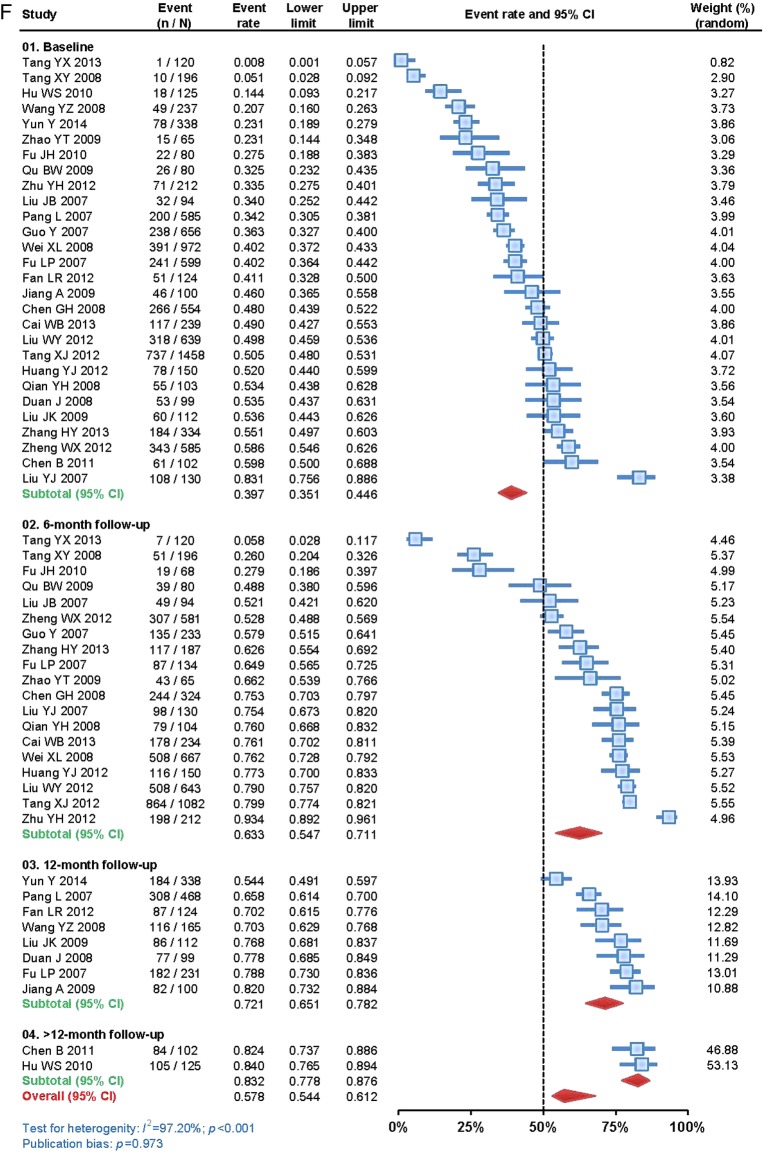
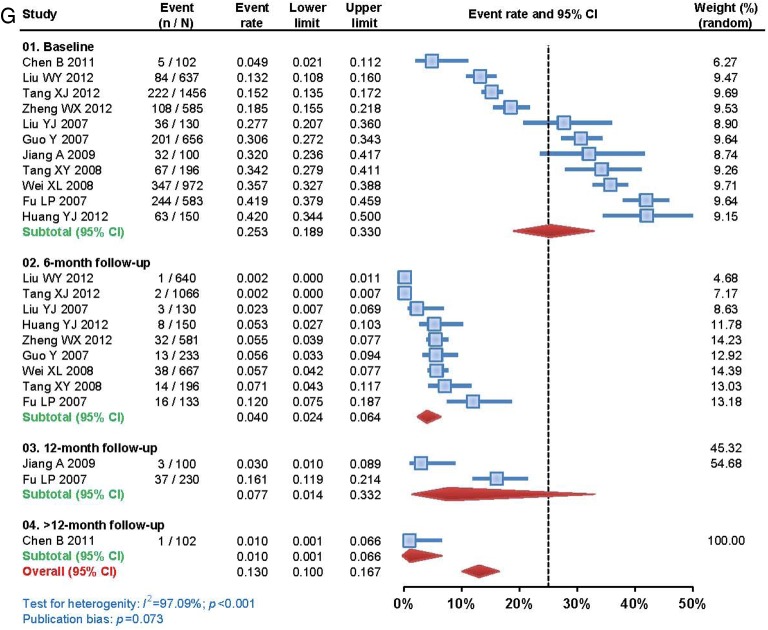
Objective: Methadone maintenance treatment (MMT) has been implemented in China since 2004 and has expanded into a nationwide programme. This study aims to evaluate changes in social functioning, family relations and drug-related criminal behaviour among MMT clients in China. Design: Systematic review and meta-analysis. Methods: Both English and Chinese literature databases, including PubMed, Chongqing VIP Chinese Science and Technology Journals Database (CQVIP), China National Knowledge Infrastructure (CNKI) and Wanfang Data, were comprehensively searched over the period 2004–2014 for studied indicators. Study selection, quality assessment and data extraction were conducted according to the PRISMA (preferred reporting items for systematic reviews and meta-analyses) Statement. Meta-analyses were conducted using Comprehensive Meta-Analysis Biostat software. Results: Thirty-eight articles were included in this review (1 in English and 37 in Chinese). The self-reported arrest rate decreased from 13.1% (95% CI 9.1% to 18.5%) at baseline to 3.4% (95% CI 1.5% to 7.7%) and 4.3% (95% CI 1.6% to 11.4%) after 6 and 12 months of MMT intervention, respectively. The rate of drug selling decreased from 7.6% (95% CI 3.8% to 14.8%) at baseline to 1.9% (95% CI 0.6% to 6.2%) and 3.0% (95% CI 1.0% to 8.9%) after 6 and 12 months of intervention, respectively. Similarly, the rates of selling sex for drugs and drug-related crime decreased from 5.3% (95% CI 2.4% to 11.1%) and 9.9% (95% CI 6.8% to 14.2%) at baseline to 1.1% (95% CI 0.5% to 2.3%) and 3.4% (95% CI 2.5% to 4.5%) at 6 months, then to 0.8% (95% CI 0.3% to 1.9%) and 3.4% (95% CI 0.8% to 13.1%) at 12 months after treatment initiation, respectively. In contrast, the rate of employment of clients and the proportion of clients having a good relationship with their family increased substantially from 26.4% (95% CI 22.9% to 30.1%) and 37.9% (95% CI 32.0% to 44.2%) to 41.6% (95% CI 36.6% to 48.0%) and 59.6% (95% CI 48.1% to 70.2%) at 6 months, then to 59.8% (95% CI 52.4% to 66.8%) and 75.0% (95% CI 69.0% to 80.2%) at 12 months after treatment initiation, respectively. Conclusions: MMT has significantly reduced criminal activity, and improved employment rate and social well-being, of clients of the MMT programme. MMT is an effective measure to help drug users to resume societal and familial functions in China.
Overview
The claims and statistics of this paper haven’t been checked yet.
Run the check — free, no account needed. It reads the open-access text and checks the sources it cites.
Integrity signals
Registry
Cites
Statistics
Figures
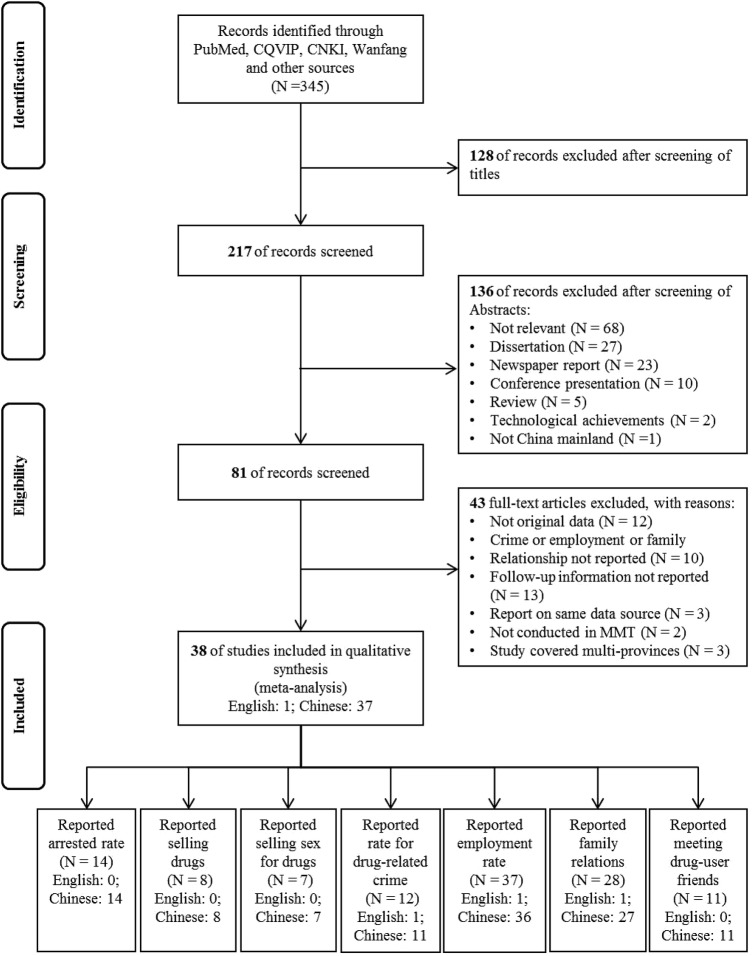
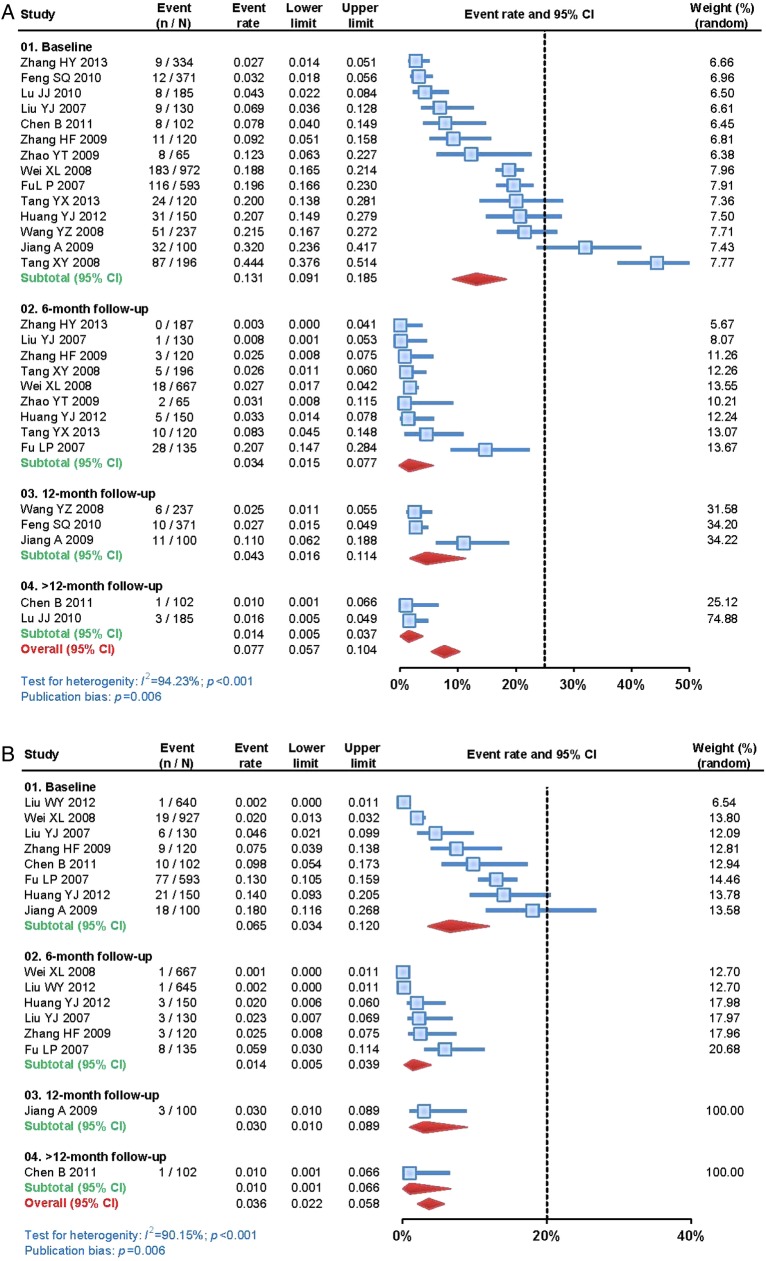
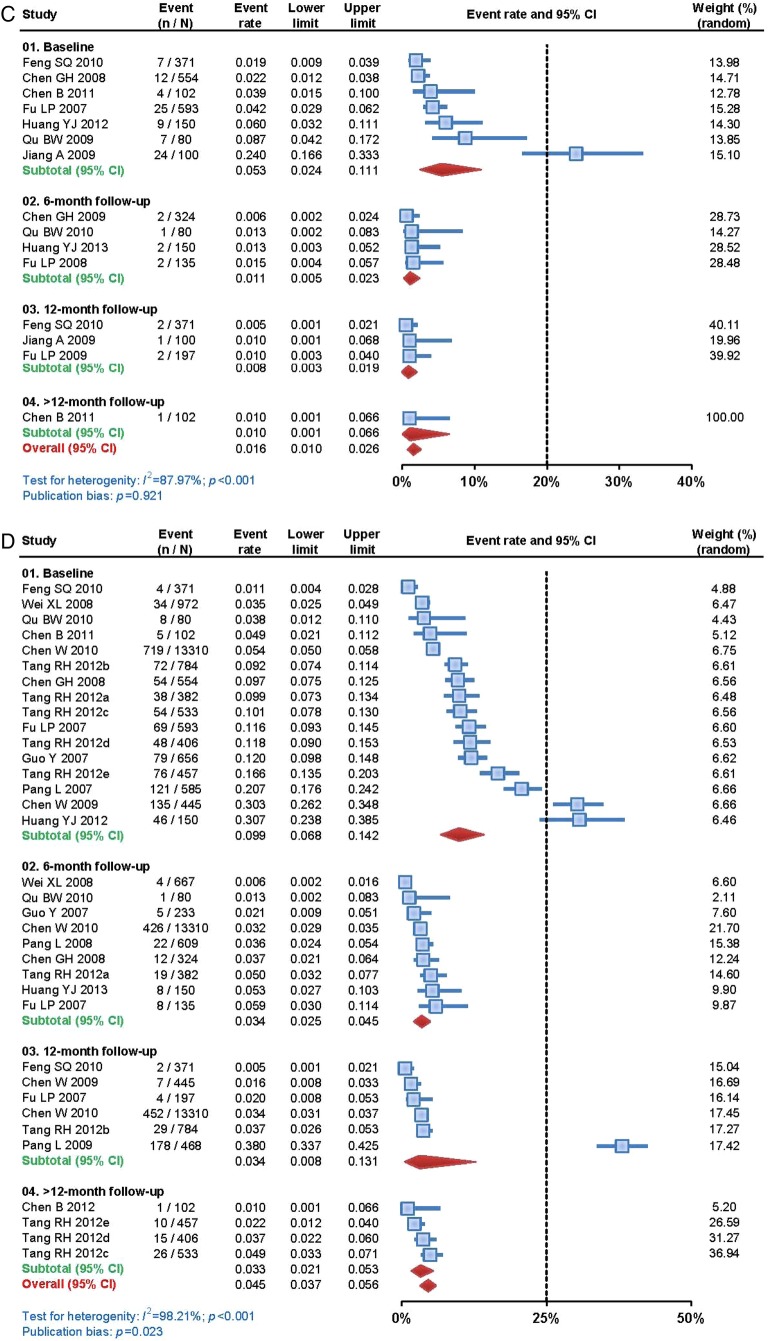
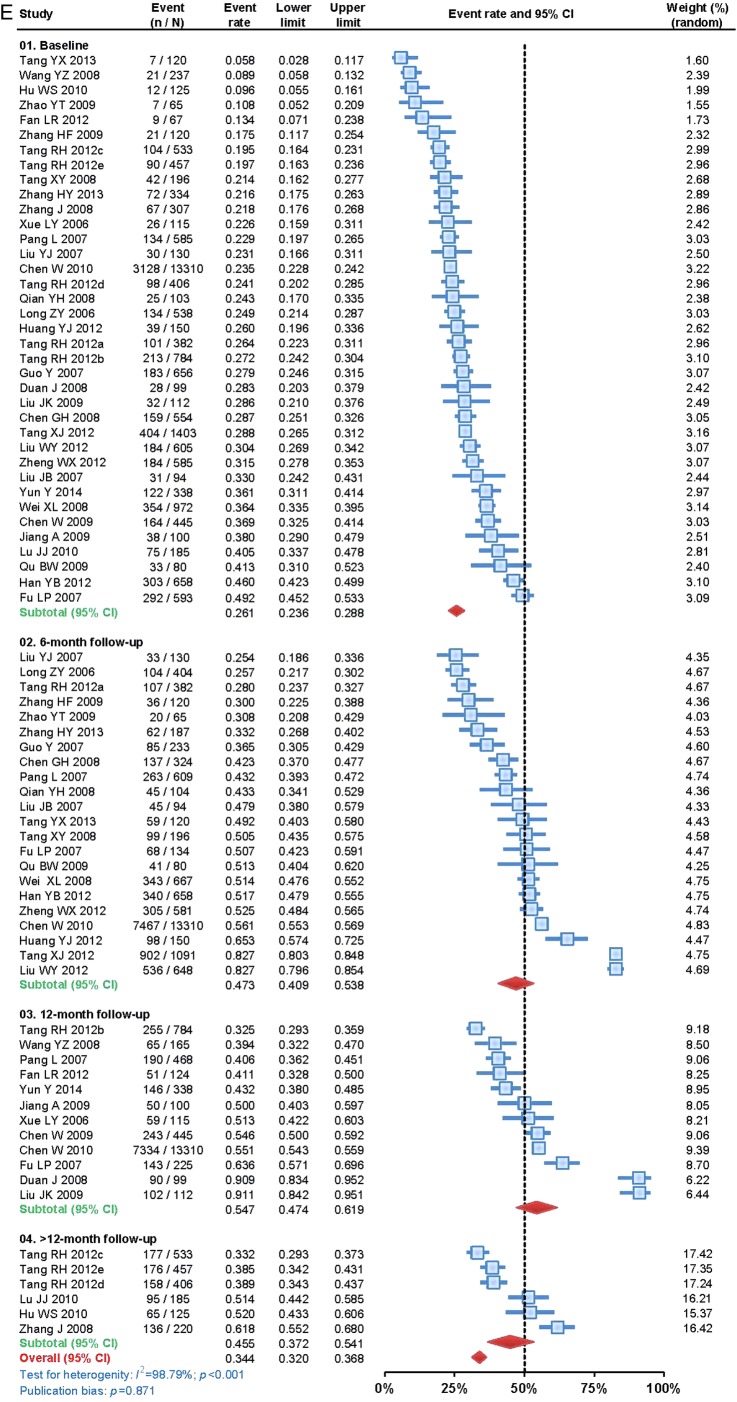
Verification
Claims the paper makes
The claims and statistics of this paper haven’t been checked yet.
Run the check — free, no account needed. It reads the open-access text and checks the sources it cites.
Claims other papers make about this one
Each is checked against this paper’s own text: does it say what the citing paper says it does?
The source backs part of the claim, not all of it — or backs it for a different population, condition or comparison.
In the citing paper
“In justice- involved populations, evidence- based SUD treat ment is effective in reducing substance use as well as re- offending and re- incarceration, and in facilitating recovery 343- 346 .”
From Substance use disorders: a comprehensive update of classification, epidemiology, neurobiology, clinical aspects, treatment and prevention (2023) · cites this paper as [345]
Experimental — accuracy not yet measured
Self-check
Percentages, sums and reported differences re-computed from the paper’s own numbers.
The self-check needs the paper’s full text.
Citations
Cites
Preferred Reporting Items for Systematic Reviews and Meta-Analyses: the PRISMA statement
Moher, D., Liberati, A., Tetzlaff, J., Altman, D. G., & for the PRISMA Group (2009) · BMJ · doi:10.1136/bmj.b2535 · Cited by 83,823
Preferred Reporting Items for Systematic Reviews and Meta-Analyses: The PRISMA Statement
Moher, D., Liberati, A., Tetzlaff, J., Altman, D. G., & The PRISMA Group (2009) · PLoS Medicine · doi:10.1371/journal.pmed.1000097 · Cited by 64,042
Wang, G., Ma, R., Qiao, G., Wada, K., Aizawa, Y., & Satoh, T. (2015) · Integrative Medicine International · doi:10.1159/000368408 · Cited by 18,762
Dole, V. P. (1965) · JAMA · doi:10.1001/jama.1965.03090080008002 · Cited by 1,240
The Effectiveness of Methadone Maintenance Treatment
Ball, J. C., & Ross, A. (1991) · Springer eBooks · doi:10.1007/978-1-4613-9089-3 · Cited by 1,088
The Effectiveness of Methadone Maintenance Treatment: Patients, Programs, Services, and Outcome
Ball, J. C., & Ross, A. O. (1991) · Cited by 903
A systematic review of rapid diagnostic tests for the detection of tuberculosis infection
Dinnes, J., Deeks, J., Kunst, H., Gibson, A., Cummins, E., Waugh, N., Drobniewski, F., & Lalvani, A. (2007) · Health Technology Assessment · doi:10.3310/hta11030 · Cited by 666
Connock, M., Juarez-Garcia, A., Jowett, S., Frew, E., Liu, Z., Taylor, R., Fry-Smith, A., Day, E., Lintzeris, N., Roberts, T. E., et al. (2007) · Health Technology Assessment · doi:10.3310/hta11090 · Cited by 610
Overview of 1-year follow-up outcomes in the Drug Abuse Treatment Outcome Study (DATOS).
Hubbard, R. L., Craddock, S. G., Flynn, P. M., Anderson, J., & Etheridge, R. M. (1997) · Psychology of Addictive Behaviors · doi:10.1037/0893-164x.11.4.261 · Cited by 603
Effective Medical Treatment of Opiate Addiction
Addiction, N. C. D. P. O. E. M. T. O. O. (1998) · JAMA: The Journal of the American Medical Association · doi:10.1001/jama.280.22.1936 · Cited by 577
Research works printed but not linked: 7
- Ball, 1998, HIV prevention among injecting drug users: responses in developing and transitional countries, Public Health Rep, 113, S170
- Ttrathdee, 2001, The effectiveness of needle exchange programs: a review of the science and policy, AIDScience, 1, 1
- 10.1176/appi.ajp.105.12.909 · DOI
- Joseph, 1995, A point in time: the impact of expanded methadone maintenance treatment on citywide crime and public health in New York City 1971–1973, Arch public health, 53, 215
- Wu Z . Landmark government methadone maintenance program in mainland China. 15th International AIDS Conference; 2004.
- Wu Z . Methadone maintenance program in mainland China: from pilot to scale-up. International Conference on the Reduction of Drug Related Harm; 20–24. 2005.
- Chen, 2008, Effectiveness evaluation of six month community-based methadone treatment in Jiangsu Province, Chin J AIDS STD, 14, 590
Cited by
Sorted by citations
Public health and international drug policy
Csete, J., Kamarulzaman, A., Kazatchkine, M. D., Altice, F. L., Balicki, M., Buxton, J., Cepeda, J., Comfort, M. L., Goosby, E., Goulão, J., et al. (2016) · The Lancet · doi:10.1016/s0140-6736(16)00619-x · Cited by 680
Volkow, N. D., & Blanco, C. (2023) · World psychiatry · doi:10.1002/wps.21073 · Cited by 503
Cost-effectiveness of Treatments for Opioid Use Disorder
Fairley, M., Humphreys, K. N., Joyce, V. R., Bounthavong, M., Trafton, J. A., Combs, A., Oliva, E. M., Goldhaber‐Fiebert, J. D., Asch, S. M., Brandeau, M. L., et al. (2021) · JAMA Psychiatry · doi:10.1001/jamapsychiatry.2021.0247 · Cited by 163
Galié, S., Canudas, S., Muralidharan, J., García-Gavilán, J. F., Bulló, M., & Salas‐Salvadó, J. (2019) · Advances in Nutrition · doi:10.1093/advances/nmz107 · Cited by 134
Nguyen, H. V., Nguyen, H. L. T., Thi, H., Le, H. Q., Tran, B. X., Hoang, C. D., Le, H. T., Nguyen, C. T., Tran, T. D., Latkin, C. A., et al. (2017) · Harm Reduction Journal · doi:10.1186/s12954-016-0127-9 · Cited by 77
Metadata
- Authors
- Sun, H.-M., Li, X.-Y., Chow, E. P. F., Li, T., Xian, Y., Lu, Y.-H., Tian, T., Zhuang, X., & Zhang, L.
- Affiliations
- Nantong University (CN)
- Department of Epidemiology and Biostatistics, School of Public Health, Nantong University, Jiangsu, China
- The Alfred Hospital (AU)
- Corresponding author
- Zhang, Lei
- Venue
- BMJ Open
- Publisher
- BMJ
- Published
- 2015-01
- Volume
- 5
- Issue
- 1
- Pages
- e005997
- ISSN
- 2044-6055 (ISSN-L)
- PMC
- PMC4289728
- OpenAlex
- W2010754558
- Cited by
- 114
- References
- 58
- Citations by year
- 2026: 2 · 2025: 6 · 2024: 11 · 2023: 7 · 2022: 10 · 2021: 10 · 2020: 8 · 2019: 15 · 2018: 8 · 2017: 19 · 2016: 15 · 2015: 3
- FWCI
- 2.16
- Type
- journal article
- Language
- en
- Open access
- gold
- doi.org
- Licence
- cc-by-nc
- Locations
- BMJ Open (publishedVersion, cc-by-nc)
- Europe PMC (PubMed Central) (publishedVersion, cc-by-nc)
- PubMed Central (publishedVersion, cc-by-nc)
- PubMed (publishedVersion)
- Minerva Access (University of Melbourne) (submittedVersion, cc-by-nc)
- Funders
- National Natural Science Foundation of China (81373060)
- Nantong University
- Topics
- Health Sciences › Medicine › Public Health, Environmental and Occupational Health › Opioid Use Disorder Treatment
- Health Sciences › Medicine › Epidemiology › Substance Abuse Treatment and Outcomes
- Health Sciences › Medicine › Epidemiology › HIV, Drug Use, Sexual Risk
- Keywords
- methadone maintenance treatment, opioid use disorder, drug offenses, arrest rates, drug selling, social functioning, family relationships, social well-being, China, harm reduction, drug users
- MeSH terms
- Adolescent, Adult, China, Crime, Employment, Female, Humans, Interpersonal Relations, Male, Methadone, Middle Aged, Opioid-Related Disorders, Narcotics, Drug Users, Young Adult, Opiate Substitution Treatment, Maintenance Chemotherapy, Social Skills
About these checks
Registry, retraction, Cites and statistics results are computed, not judged, with one exception: a printed reference that no index lists is read once by a model before it counts as a citation error. Claims are extracted by a model and kept only when their quote appears verbatim in the text; each cited source is then checked, with a model’s help, for whether it says what the claim relies on. Those verdicts can be wrong — read the claim’s quote and the cited source before relying on one.
Statistics and arithmetic are recomputed, not judged.
Confidence bands are shown only for fields calibrated on our annotated test set. None is calibrated yet, so no band is shown.
What counts as a claim ›How we measure confidence ›How we check this ›
Are you an author, or do you see a problem with this page? Request a review
