

A randomised controlled study of the long-term effects of exercise training on mortality in elderly people: study protocol for the Generation 100 study
Open accessThe DOI matches its Crossref record; 71 of the 73 references it cites were found in a registry or an index.
Abstract
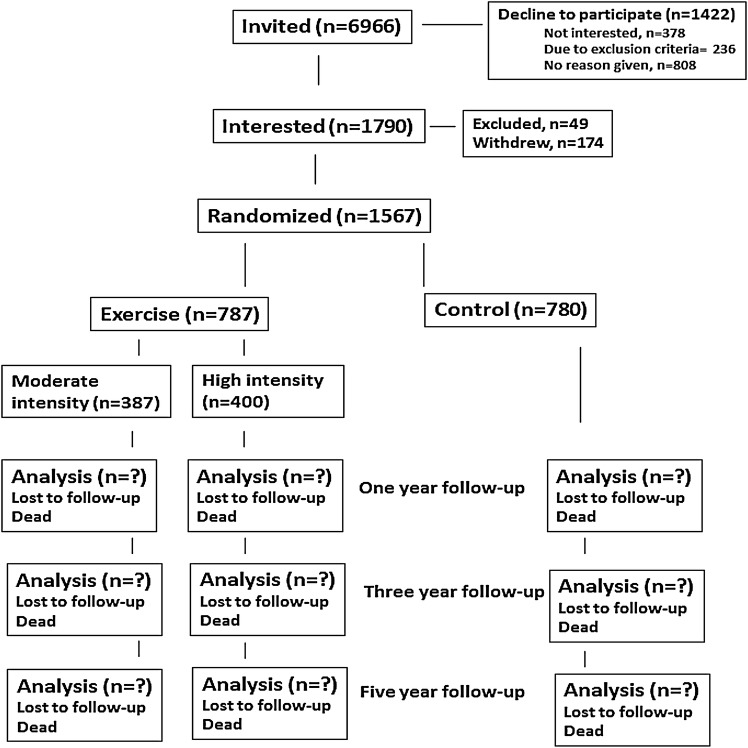
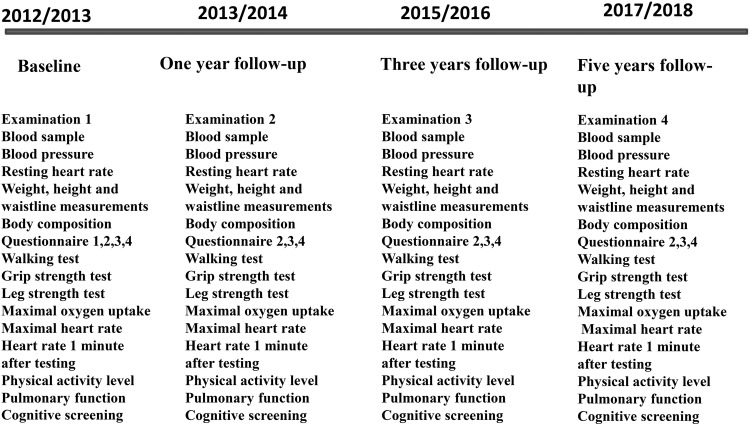
Introduction: Epidemiological studies suggest that exercise has a tremendous preventative effect on morbidity and premature death, but these findings need to be confirmed by randomised trials. Generation 100 is a randomised, controlled study where the primary aim is to evaluate the effects of 5 years of exercise training on mortality in an elderly population. Methods and analysis: All men and women born in the years 1936–1942 (n=6966), who were residents of Trondheim, Norway, were invited to participate. Between August 2012 and June 2013, a total of 1567 individuals (790 women) were included and randomised to either 5 years of two weekly sessions of high-intensity training (10 min warm-up followed by 4×4 min intervals at ∼90% of peak heart rate) or, moderate-intensity training (50 min of continuous work at ∼70% of peak heart rate), or to a control group that followed physical activity advice according to national recommendations. Clinical examinations, physical tests and questionnaires will be administered to all participants at baseline, and after 1, 3 and 5 years. Participants will also be followed up by linking to health registries until year 2035. Ethics and dissemination: The study has been conducted according to the SPIRIT statement. All participants signed a written consent form, and the study has been approved by the Regional Committee for Medical Research Ethics, Norway. Projects such as this are warranted in the literature, and we expect that data from this study will result in numerous papers published in world-leading clinical journals; we will also present the results at international and national conferences. Trial registration number: Clinical trial gov NCT01666340 .
Overview
The claims and statistics of this paper haven’t been checked yet.
Free: it reads the open-access text and checks the first 5 claims that cite a source we can check. Create a free account to check every claim.
Integrity signals
Registry
Cites
Statistics
Figures
Verification
Claims the paper makes
The claims and statistics of this paper haven’t been checked yet.
Free: it reads the open-access text and checks the first 5 claims that cite a source we can check. Create a free account to check every claim.
Claims other papers make about this one
Each is checked against this paper’s own text: does it say what the citing paper says it does?
The cited source says what the claim attributes to it.
In the citing paper
“Thirdly, selection bias might have influenced our results, as participants were more active and had better overall health than non-included participants.12”
From Effect of exercise training for five years on all cause mortality in older adults—the Generation 100 study: randomised controlled trial (2020) · cites this paper as [12]
The cited source says what the claim attributes to it.
In the citing paper
“Non-adherence was defined as having performed less than 50% of the prescribed training sessions over the five years.12”
From Effect of exercise training for five years on all cause mortality in older adults—the Generation 100 study: randomised controlled trial (2020) · cites this paper as [12]
Self-check
Percentages, sums and reported differences re-computed from the paper’s own numbers.
The self-check needs the paper’s full text.
Citations
Cites
Folstein, M. F., Folstein, S. E., & McHugh, P. R. (1975) · Journal of Psychiatric Research · doi:10.1016/0022-3956(75)90026-6 · Cited by 88,282
Hirono, N., Mori, E., Ikejiri, Y., Imamura, T., Shimomura, T., Hashimoto, M., Yamashita, H., & Ikeda, M. (1997) · Brain and nerve · Cited by 21,039
Kok, J. S., Berg, I. J., & Scherder, E. J. A. (2013) · Dementia and Geriatric Cognitive Disorders Extra · doi:10.1159/000353441 · Cited by 20,589
Older Adults' Reasons for Using Technology while Aging in Place
Peek, S. T. M., Luijkx, K. G., Rijnaard, M. D., Nieboer, M. E., van der Voort, C. S., Aarts, S., van Hoof, J., Vrijhoef, H. J. M., & Wouters, E. J. M. (2016) · Gerontology · doi:10.1159/000430949 · Cited by 19,690
Sensitivity and False Alarm Rate of a Fall Sensor in Long-Term Fall Detection in the Elderly
Kangas, M., Korpelainen, R., Vikman, I., Nyberg, L., & Jämsä, T. (2015) · Gerontology · doi:10.1159/000362720 · Cited by 18,909
Psychophysical bases of perceived exertion
BORG, G. A. V. (1982) · Medicine & Science in Sports & Exercise · doi:10.1249/00005768-198205000-00012 · Cited by 16,580
Miller, M. R., Hankinson, J., Brusasco, V., Burgos, F., Casaburi, R., Coates, A., Crapo, R., Enright, P., van der Grinten, C. P. M., Gustafsson, P., et al. (2005) · European Respiratory Journal · doi:10.1183/09031936.05.00034805 · Cited by 15,627
Exercise and Physical Activity for Older Adults
Chodzko-Zajko, W. J., Proctor, D. N., Fiatarone Singh, M. A., Minson, C. T., Nigg, C. R., Salem, G. J., & Skinner, J. S. (2009) · Medicine & Science in Sports & Exercise · doi:10.1249/mss.0b013e3181a0c95c · Cited by 5,153
American College of Sports Medicine position stand
Otis, C. L. (1997) · Medical Entomology and Zoology · Cited by 4,407
Exercise capacity and mortality among men referred for exercise testing
Myers, J., Prakash, M., Froelicher, V., Do, D., Partington, S., & Atwood, J. E. (2002) · New England Journal of Medicine · doi:10.1056/nejmoa011858 · Cited by 4,114 · cited 1×
“Even a small difference in fitness appears to make a substantial impact on survival.(39) Furthermore, epidemiological studies have suggested that physical activity is associated with lower risk for developing diabetes,(40) hypertension,(41) depression,(42) dementia,(43) breast cancer,(44) colon cancer(45) and of accid…”
Cited by
High Intensity Interval Training for Maximizing Health Outcomes
Karlsen, T., Aamot, I.-L., Haykowsky, M., & Rognmo, Ø. (2017) · Progress in Cardiovascular Diseases · doi:10.1016/j.pcad.2017.03.006 · Cited by 234
Self-citationBeauchet, O., Allali, G., Sekhon, H., Verghese, J., Guilain, S., Steinmetz, J.-P., Kressig, R. W., Barden, J. M., Szturm, T., Launay, C. P., et al. (2017) · Frontiers in Human Neuroscience · doi:10.3389/fnhum.2017.00353 · Cited by 205
“The primary aim of this study is to examine the effects of 5 years of exercise training on mortality in the elderly (Stensvold et al., 2015).”
BackgroundMethodInfluentialSelf-citationStensvold, D., Viken, H., Steinshamn, S. L., Dalen, H., Støylen, A., Loennechen, J. P., Reitlo, L. S., Zisko, N., Bækkerud, F. H., Tari, A. R., et al. (2020) · BMJ · doi:10.1136/bmj.m3485 · Cited by 154
Self-citationWilliams, C. J., Gurd, B. J., Bonafiglia, J. T., Voisin, S., Li, Z., Harvey, N., Croci, I., Taylor, J. L., Gajanand, T., Ramos, J. S., et al. (2019) · Frontiers in Physiology · doi:10.3389/fphys.2019.00019 · Cited by 117
“Likely adverse responders were from studies with elderly participants; three participants came from a MICT intervention (Stensvold et al., 2015) and two participants came from a high-volume HIIT intervention (Stensvold et al.”
BackgroundResultSelf-citationDo weather changes influence physical activity level among older adults? – The Generation 100 study
Aspvik, N. P., Viken, H., Ingebrigtsen, J. E., Zisko, N., Mehus, I., Wisløff, U., & Stensvold, D. (2018) · PLoS ONE · doi:10.1371/journal.pone.0199463 · Cited by 91
Self-citationKujala, U. M. (2018) · British Journal of Sports Medicine · doi:10.1136/bjsports-2017-098639 · Cited by 83
Gray, S. R., Ferguson, C., Birch, K., Forrest, L. J., & Gill, J. M. R. (2016) · British Journal of Sports Medicine · doi:10.1136/bjsports-2015-095705 · Cited by 76
Reitlo, L. S., Sandbakk, S. B., Viken, H., Aspvik, N. P., Ingebrigtsen, J. E., Tan, X., Wisløff, U., & Stensvold, D. (2018) · BMC Geriatrics · doi:10.1186/s12877-018-0900-6 · Cited by 71
Self-citationBouaziz, W., Malgoyre, A., Schmitt, E., Lang, P. O., Vogel, T., & Kanagaratnam, L. (2020) · International Journal of Clinical Practice · doi:10.1111/ijcp.13490 · Cited by 60
Bouaziz, W., Kanagaratnam, L., Vogel, T., Schmitt, E., Dramé, M., Kaltenbach, G., Geny, B., & Lang, P. O. (2018) · Rejuvenation Research · doi:10.1089/rej.2017.1988 · Cited by 44
Craighead, D. H., Heinbockel, T. C., Hamilton, M. N., Bailey, E. F., MacDonald, M. J., Gibala, M. J., & Seals, D. R. (2019) · Journal of Applied Physiology · doi:10.1152/japplphysiol.00381.2019 · Cited by 54
Cardiorespiratory Reference Data in Older Adults: The Generation 100 Study
STENSVOLD, D., BUCHER SANDBAKK, S., VIKEN, H., ZISKO, N., REITLO, L. S., NAUMAN, J., GAUSTAD, S. E., HASSEL, E., MOUFACK, M., BRØNSTAD, E., et al. (2017) · Medicine & Science in Sports & Exercise · doi:10.1249/mss.0000000000001343 · Cited by 46
“The baseline-data from Generation 100 are used as basis for the present study (37).”
BackgroundMethodInfluentialSelf-citationPredictors of Dropout in Exercise Trials in Older Adults: The Generation 100 Study
Viken, H., Reitlo, L. S., Zisko, N., Nauman, J., Aspvik, N. P., Ingebrigtsen, J. E., Wisløff, U., & Stensvold, D. (2018) · Medicine & Science in Sports & Exercise · doi:10.1249/mss.0000000000001742 · Cited by 49
Self-citationTaraldsen, K., Mikolaizak, A. S., Maier, A. B., Boulton, E., Aminian, K., Ancum, J. M. V., Bandinelli, S., Becker, C., Bergquist, R., Chiari, L., et al. (2019) · BMJ Open · doi:10.1136/bmjopen-2018-023526 · Cited by 49
Self-citationAssociation between pulmonary function and peak oxygen uptake in elderly: the Generation 100 study
Hassel, E., Stensvold, D., Halvorsen, T., Wisløff, U., Langhammer, A., & Steinshamn, S. (2015) · Respiratory Research · doi:10.1186/s12931-015-0317-0 · Cited by 41
“The ongoing Generation 100 Study invited all inhabitants in the city of Trondheim, Norway, born between 01 January 1936 and 31 December 1942 (n = 6966) to a randomized controlled trial on the effect of exercise intervention on morbidity and mortality in an ageing population [11].”
BackgroundSelf-citationZotcheva, E., Håberg, A. K., Wisløff, U., Salvesen, Ø., Selbæk, G., Stensvold, D., & Ernstsen, L. (2022) · Sports Medicine · doi:10.1007/s40279-021-01608-5 · Cited by 43
“Volunteer bias [48] may have been present, as included participants were more active and more likely to report good health than nonparticipants [22].”
BackgroundMethodInfluentialSelf-citationIdentification of novel genetic variants associated with cardiorespiratory fitness
Bye, A., Klevjer, M., Ryeng, E., da Silva, G. J. J., Moreira, J. B. N., Stensvold, D., & Wisløff, U. (2020) · Progress in Cardiovascular Diseases · doi:10.1016/j.pcad.2020.02.001 · Cited by 47
“Close relatives were excluded both by using data from Statistics Norway, and by searching for segmental sharing using PLINK.12 In the validation cohort, DNA-samples were analyzed from 718 participants from the Generation 100 Study.13 This cohort includes both men and women, aged 70–77 years, who performed a gold-stand…”
MethodSelf-citationBallin, M., & Nordström, P. (2021) · Journal of Internal Medicine · doi:10.1111/joim.13353 · Cited by 47
Letnes, J. M., Berglund, I., Johnson, K. E., Dalen, H., Nes, B. M., Lydersen, S., Viken, H., Hassel, E., Steinshamn, S., Vesterbekkmo, E. K., et al. (2021) · European Heart Journal · doi:10.1093/eurheartj/ehab721 · Cited by 42
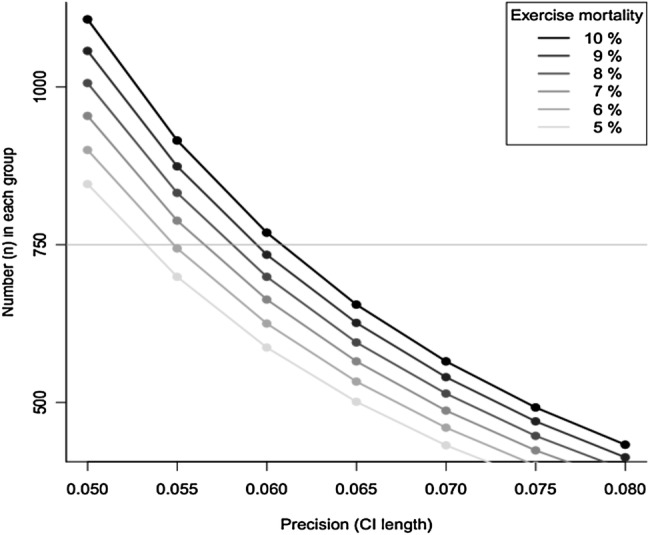
“The study aimed to include 1500 participants to allow for up to 20% of dropouts.(15,16) Here, we address pre-specified secondary outcomes including VO2peak and traditional cardiovascular risk factors.”
BackgroundSelf-citationBourke, A. K., Ihlen, E. A. F., Bergquist, R., Wik, P. B., Vereijken, B., & Helbostad, J. L. (2017) · Sensors · doi:10.3390/s17030559 · Cited by 41
“These projects include the FARSEEING project [23], the Generation 100 project [24], the PreventIT project [25] and the HUNT population-based study [26].”
MethodSelf-citationAre Older Adults Physically Active Enough – A Matter of Assessment Method? The Generation 100 Study
Aspvik, N. P., Viken, H., Zisko, N., Ingebrigtsen, J. E., Wisløff, U., & Stensvold, D. (2016) · PLoS ONE · doi:10.1371/journal.pone.0167012 · Cited by 39
“Detailed protocol for assessment of body weight (kg), body height (cm) and body mass index (BMI; kg m) has been published elsewhere [18].”
BackgroundInfluentialSelf-citationPani, J., Reitlo, L. S., Evensmoen, H. R., Lydersen, S., Wisløff, U., Stensvold, D., & Haberg, A. K. (2021) · Clinical Interventions in Aging · doi:10.2147/cia.s318679 · Cited by 36
Self-citationZisko, N., Carlsen, T., Salvesen, Ø., Aspvik, N. P., Ingebrigtsen, J. E., Wisløff, U., & Stensvold, D. (2015) · BMC Geriatrics · doi:10.1186/s12877-015-0093-1 · Cited by 32
Self-citationSokołowski, D. R., Hansen, T. I., Rise, H. H., Reitlo, L. S., Wisløff, U., Stensvold, D., & Haberg, A. K. (2021) · Frontiers in Aging Neuroscience · doi:10.3389/fnagi.2021.742587 · Cited by 34
Self-citationMoe‐Nilssen, R., & Helbostad, J. L. (2020) · Gait & Posture · doi:10.1016/j.gaitpost.2020.09.009 · Cited by 36
Self-citationMeyler, S., Swinton, P. A., Bottoms, L. M., Dalleck, L. C., Hunter, B., Sarzynski, M. A., Wellsted, D. M., Williams, C. J., & Muniz‐Pumares, D. (2024) · Sports Medicine · doi:10.1007/s40279-024-02125-x · Cited by 33
Wisløff, U., Coombes, J. S., & Rognmo, Ø. (2015) · The Journal of Physiology · doi:10.1113/jp271041 · Cited by 33
“Such studies are needed and at least one has been initiated including more than 1500 elderly who exercise using either moderate or high intensity where the primary outcome is mortality (Stensvold et al. 2015).”
BackgroundSelf-citationPani, J., Eikenes, L., Reitlo, L. S., Stensvold, D., Wisløff, U., & Haberg, A. K. (2022) · Frontiers in Aging Neuroscience · doi:10.3389/fnagi.2022.859383 · Cited by 29
“The data collection is described in detail by Stensvold et al. (2015).”
BackgroundMethodInfluentialSelf-citationViken, H., Aspvik, N. P., Ingebrigtsen, J. E., Zisko, N., Wisløff, U., & Stensvold, D. (2015) · Journal of Aging and Physical Activity · doi:10.1123/japa.2015-0148 · Cited by 27
“The analyzed sample was relatively healthy and more educated compared to the invited, but not participating, subjects (Stensvold et al., 2015), so any generalization regarding our findings on other populations are cautioned.”
BackgroundMethodResultSelf-citationEgerton, T., Paterson, K. L., & Helbostad, J. L. (2016) · Journal of Aging and Physical Activity · doi:10.1123/japa.2015-0252 · Cited by 29
Self-citationSandbakk, S. B., Nauman, J., Zisko, N., Sandbakk, Ø. B., Aspvik, N. P., Stensvold, D., & Wisløff, U. (2016) · Mayo Clinic Proceedings · doi:10.1016/j.mayocp.2016.07.020 · Cited by 33
Self-citationLong-Term Physical Exercise for Preventing CKD in Older Adults: A Randomized Clinical Trial
Hallan, S. I., Øvrehus, M. A., Shlipak, M. G., Potok, O. A., Romundstad, S., Aspvik, N. P., Wisløff, U., Ix, J. H., Stensvold, D., & Langlo, K. A. R. (2025) · Journal of the American Society of Nephrology · doi:10.1681/asn.0000000636 · Cited by 23
“15,16 Participants were assigned at random to one of three groups: ( 1 ) following national guidelines for physical activity (control group), 18,19 ( 2 ) supervised MICT, or ( 3 ) supervised HIIT.”
Self-citationEkkekakis, P., & Tiller, N. B. (2022) · Kinesiology Review · doi:10.1123/kr.2022-0003 · Cited by 22
Berglund, I., Vesterbekkmo, E. K., Retterstøl, K., Anderssen, S. A., Singh, M. A. F., Helge, J. W., Lydersen, S., Wisløff, U., & Stensvold, D. (2021) · Mayo Clinic Proceedings Innovations Quality & Outcomes · doi:10.1016/j.mayocpiqo.2021.07.002 · Cited by 19
Self-citationHerrero-Larrea, A., Miñarro, A., Narvaiza, L., Gálvez‐Barrón, C., Gonzalo, N., Valldosera, E., Felipe, E., Valverde, R. A., Kruse, L., Bosch, J., et al. (2018) · Scientific Reports · doi:10.1038/s41598-018-31507-1 · Cited by 19
Shiroma, E. J., & Lee, I.-M. M. (2018) · British Journal of Sports Medicine · doi:10.1136/bjsports-2018-099185 · Cited by 20
Arild, A., Vangberg, T. R., Nikkels, H., Lydersen, S., Wisløff, U., Stensvold, D., & Haberg, A. K. (2022) · Aging · doi:10.18632/aging.203843 · Cited by 18
“This information was obtained from the physical activity questionnaires at the one-, three- and five-year followups [28].”
BackgroundMethodInfluentialSelf-citationCurrent Concepts in Healthy Aging and Physical Activity: A Viewpoint
Boutros, G. E. H., Morais, J. A., & Karelis, A. D. (2019) · Journal of Aging and Physical Activity · doi:10.1123/japa.2018-0208 · Cited by 21
Pani, J., Marzi, C., Stensvold, D., Wisløff, U., Haberg, A. K., & Diciotti, S. (2022) · NeuroImage · doi:10.1016/j.neuroimage.2022.119226 · Cited by 19
Self-citationJames, C. E., Müller, D., Müller, C. A. H., van de Looij, Y., ALTENMÜLLER, E. O., Kliegel, M., Ville, D. V. D., & Marié, D. (2024) · Heliyon · doi:10.1016/j.heliyon.2024.e26674 · Cited by 20
“Where aerobic interventions are concerned, the five-year study by Pani et al. (2021) [72], part of the Generation 100 studies [69, 106], stands out and provides food for thought.”
Blood Volume, Hemoglobin Mass, and Peak Oxygen Uptake in Older Adults: The Generation 100 Study
Lundgren, K. M., Aspvik, N. P., Langlo, K. A. R., Braaten, T., Wisløff, U., Stensvold, D., & Karlsen, T. (2021) · Frontiers in Sports and Active Living · doi:10.3389/fspor.2021.638139 · Cited by 14
Self-citationEgerton, T., Helbostad, J. L., Stensvold, D., & CHASTIN, S. F. M. (2016) · Journal of Aging and Physical Activity · doi:10.1123/japa.2015-0237 · Cited by 20
Self-citationZisko, N., Nauman, J., Sandbakk, S. B., Aspvik, N. P., Salvesen, Ø. O., Carlsen, T., Viken, H., Ingebrigtsen, J. E., Wisløff, U., & Stensvold, D. (2017) · BMC Geriatrics · doi:10.1186/s12877-017-0497-1 · Cited by 16
“Our population is a good representation of the general older Norwegian population, with similar co-morbidity prevalence as described in the 2015 Norwegian Institute of Public Health report [19, 32].”
BackgroundMethodInfluentialSelf-citationSandbakk, S. B., Nauman, J., Lavie, C. J., Wisløff, U., & Stensvold, D. (2017) · Mayo Clinic Proceedings Innovations Quality & Outcomes · doi:10.1016/j.mayocpiqo.2017.05.001 · Cited by 15
“Clinical Examination Clinical examinations were carried out between August 22, 2012, and June 30, 2013, by trained personnel and followed standardized routines described in detail previously.(34) Briefly, body mass, %BF, visceral fat, and muscle mass were measured using bioelectrical impedance (Inbody 720, Biospace Co…”
BackgroundMethodResultInfluentialSelf-citationSurvival of the fittest? Peak oxygen uptake and all-cause mortality among older adults in Norway
Tari, A. R., Brissach, D. E., Ingeström, E., Nauman, J., Tyrell, T., Foster, C., Radtke, K., Porcari, J. P., Lydersen, S., Kaminsky, L. A., et al. (2024) · Progress in Cardiovascular Diseases · doi:10.1016/j.pcad.2024.11.004 · Cited by 14
Self-citationExercise, the Brain, and Hypertension
Peri-Okonny, P., Fu, Q., Zhang, R., & Vongpatanasin, W. (2015) · Current Hypertension Reports · doi:10.1007/s11906-015-0593-6 · Cited by 15
Participation and engagement in online cognitive testing
Sokołowski, D. R., Pani, J., Hansen, T. I., & Haberg, A. K. (2024) · Scientific Reports · doi:10.1038/s41598-024-65617-w · Cited by 13
Reitlo, L. S., Mihailovic, J. M., Stensvold, D., Wisløff, U., Hyder, F., & Haberg, A. K. (2023) · GeroScience · doi:10.1007/s11357-022-00719-9 · Cited by 10
Self-citationHassel, E., Stensvold, D., Halvorsen, T., Wisløff, U., Langhammer, A., & Steinshamn, S. (2017) · PLoS ONE · doi:10.1371/journal.pone.0174058 · Cited by 7
“This is a randomized controlled study on the effects of an exercise intervention in elderly, previously described in detail [17, 18].”
BackgroundSelf-citationStudy on the impact of the therapeutic swimming on elderly women diagnosed with osteoporosis
VIZITIU, E. L., & Constantinescu, M. A. (2022) · Balneo and PRM Research Journal · doi:10.12680/balneo.2022.495 · Cited by 7
“A randomized study published in 2015 evaluated the effect of physical activity on morbidity in an elderly population, highlighting the preventive effect for chronic diseases and their role in improving the quality of life and ensuring active aging (23).”
BackgroundSchaffer, M. A., Kalfoss, M. H., & Glavin, K. (2017) · Journal of Nursing Education and Practice · doi:10.5430/jnep.v7n11p92 · Cited by 5
Bloch‐Ibenfeldt, M., Demnitz, N., Gates, A. T., Garde, E., Siebner, H. R., Kjær, M., & Boraxbekk, C. (2025) · BMC Geriatrics · doi:10.1186/s12877-025-05778-z · Cited by 4
“One exception is the Generation 100 study [12].”
Carlsen, T., Stensvold, D., Wisløff, U., Ernstsen, L., & Halvorsen, T. (2022) · BMC Geriatrics · doi:10.1186/s12877-022-03262-6 · Cited by 4
“Generation 100 study protocol has previously been published [25].”
BackgroundMethodSelf-citationThomas, J. J. C., Daley, A., Esliger, D., Kettle, V. E., Coombe, A., Stamatakis, E., & Sanders, J. P. (2023) · Journal of Medical Internet Research · doi:10.2196/45599 · Cited by 3
“Data sets were identified in 5 continents, with the majority being retrieved from Europe and North America (n=85 data sets) [5,21,22,24,25,28,31-36,39-45,48-50,52,55-58,60-63,66,67,70-72, 74,75,77-80,82,84-86,89,91-96,98-102,104,105,107-109,111-115,117, 119,121,124,125,128,129,131,132,140].”
Bednarska, N. G., Reitlo, L. S., Beisvåg, V., Stensvold, D., & Haberg, A. K. (2025) · Microorganisms · doi:10.3390/microorganisms13112582 · Cited by 2
“Dementia at baseline or diagnosed during the study was an exclusion criterion [10].”
InfluentialSelf-citationContemporary concepts in ‘exercise as medicine’ and related fields
Craighead, D. H., Simonsen, C., Legaard, G. E., Durrer, C. G., Ellingsgaard, H., Nyberg, A., Barnes, J. N., Deane, C. S., Rossiter, H. B., Bailey, D. M., et al. (2026) · Experimental Physiology · doi:10.1113/ep093577 · Cited by 2
Reitlo, L. S., Pani, J., Stensvold, D., Wisløff, U., & Haberg, A. K. (2026) · Sports Medicine · doi:10.1007/s40279-026-02434-3 · Cited by 2
“To support adherence to the prescribed HR, participants were instructed to use the Borg 6–20 RPE scale to guide their exercise intensity [38].”
InfluentialSelf-citationRodrigues, J. A. L., Stenvold, D., de Almeida, M. L., Sobrinho, A. C. S., Rodrigues, G., & Júnior, C. R. B. (2020) · Journal of Public Health · doi:10.1093/pubmed/fdaa144 · Cited by 3
Parametric extraction of spatiotemporal gait features using wireless foot sensor module
Das, R., Khera, P., & Kumar, N. (2025) · Computer Methods in Biomechanics & Biomedical Engineering · doi:10.1080/10255842.2025.2555398 · Cited by 1
Le, A. D. K., Lydersen, S., Brissach, D. E., Haberg, A. K., Walker, T. L., Schaumberg, M. A., Berg, H. H., Stensvold, D., & Tari, A. R. (2026) · Medicine & Science in Sports & Exercise · doi:10.1249/mss.0000000000003903 · Cited by 1
“…a 2:1:1 ratio into either a control group ( n = 780) or an exercise training intervention group, which was further randomized to follow an exercise training program with high-intensity interval training (HIIT; n = 400) or moderate-intensity continuous training (MICT: n = 387) for 5 years (23).”
InfluentialSelf-citationBakken, J., Brissach, D. E., Ingeström, E., Midttun, S., Walker, T. L., Stensvold, D., & Tari, A. R. (2025) · Sports Medicine - Open · doi:10.1186/s40798-025-00956-0 · Cited by 1
“The recruitment procedures have been described in detail previously [19], and the inclusion and exclusion criteria are summarized in Box 1.”
InfluentialSelf-citationStene, G. B., Lequerica, M. J., Stensvold, D., Balstad, T. R., Lydersen, S., Wisløff, U., & Helbostad, J. L. (2026) · Journal of Cachexia Sarcopenia and Muscle · doi:10.1002/jcsm.70279 · Cited by 1
“Participants with serious heart conditions, diagnosed dementia, cancer, chronic communicable infectious diseases, illness or disabilities that precluded exercise, or participation in other exercise trials, were not eligible in the study as previously reported [28, 29].”
InfluentialSelf-citationMidttun, S., Lydersen, S., Kaminsky, L. A., Wisløff, U., & Stensvold, D. (2026) · Medicine & Science in Sports & Exercise · doi:10.1249/mss.0000000000004028 · Cited by 1
Self-citationBrissach, D. E., Berg, H. H., Stensvold, D., Ingeström, E., Walker, T. L., Laukkanen, J. A. R. I., Vasankari, T. J., Sando, S. B., Tari, A. R., & Wisløff, U. (2026) · Medicine & Science in Sports & Exercise · doi:10.1249/mss.0000000000004064 · Cited by 1
“Detailed descriptions of study design, examination protocols, and inclusion and exclusion criteria have been published (19).”
InfluentialSelf-citationHaberg, A. K., Reitlo, L. S., & Vangberg, T. R. (2026) · Human Brain Mapping · doi:10.1002/hbm.70639 · Cited by 1
“…Population Registry as independently living citizens of Trondheim munic-ipality were personally invited by letter in the regular mail in 2012 to a 5-year RCT on the effect of exercising on mortality, the Generation 100 Study (NCT01666340, Clini calTr ials. gov registry) (Stensvold et al. 2015).”
InfluentialRebuttal from Ulrik Wisløff, Jeff Coombes and Øivind Rognmo
Wisløff, U., Coombes, J. S., & Rognmo, Ø. (2015) · The Journal of Physiology · doi:10.1113/jp271580 · Cited by 1
“We do agree with Drs Holloway and Spriet that there exists no large randomized clinical trial with hard endpoints (e.g. mortality) using both HIIT and ET, and we are doing this now (Stensvold et al. 2015).”
MethodSelf-citationSolberg, A., Aspvik, N. P., Lydersen, S., Midttun, S., Reitlo, L. S., Steinshamn, S., Ingebrigtsen, J. E., Helbostad, J. L., Wisløff, U., & Stensvold, D. (2025) · Journal of Physical Activity and Health · doi:10.1123/jpah.2024-0767 · Cited by 1
Self-citationPhysical activity and exercise among older adults - The Generation 100 study
Viken, H. (2016) · NVA (Nasjonalt vitenarkiv)
Self-citationThe Effect of Long-term Aerobic Exercise and Training Intensity on Blood Pressure in the Elderly
Ingeström, E. (2018) · BIBSYS Brage (BIBSYS (Norway)) · Cited by 1
Physical activity and cognitive function in older adults
Bjerkan, S. (2018) · NVA (Nasjonalt vitenarkiv)
Cabral, T. P. D., Caliman, L. C., Leopoldo, A. S., & Lunz, W. (2020) · SportRxiv (OSF Preprints) · doi:10.31236/osf.io/645e7
Carlsen, T., Stensvold, D., Wisløff, U., Ernstsen, L., & Halvorsen, T. (2022) · Figshare · doi:10.6084/m9.figshare.20307640
Self-citationMarum, L. C. B. (2019) · NVA (Nasjonalt vitenarkiv)
The Effect of Intensity Prescription on Individual Responses to Exercise
Meyler, S. (2024) · University of Hertfordshire Research Archive (University of Hertfordshire)
Hassan, B., Waterhouse, A., Rapaport, P., & Marchant, N. L. (2026) · Journal of Applied Gerontology · doi:10.1177/07334648261430521
Midttun, S., Dalen, H., Lund, E., Vesterbekkmo, E. K., Aksetøy, I. A., Kaminsky, L. A., Coombes, J. S., Wisløff, U., & Stensvold, D. (2026) · European Journal of Preventive Cardiology · doi:10.1093/eurjpc/zwag450
Self-citationBerg, J., Tømmerdal, K. H., Coombes, J. S., Follestad, T., Salvesen, Ø. O., Madssen, E., Selbæk, G., Dalen, H., Bjørnelv, G. M. W., Devlin, B. L., et al. (2026) · medRxiv · doi:10.64898/2026.09.23.26363212
Self-citationIndiana Jones and the V˙O2peak of Destiny: A cross-sectional analysis from the Generation 100 Study
Midttun, S., Helbostad, J. L., Berg, J., Stensvold, D., & Wisløff, U. (2026) · Sports Medicine and Health Science · doi:10.1016/j.smhs.2026.10.002
Self-citationTrajectories of odor identification during and after a 5-year exercise intervention in older adults
Reitlo, L. S., Holmvik, S., Dyrvik, A.-K. Ø., Wisløff, U., Stensvold, D., & Haberg, A. K. (2026) · Frontiers in Physiology · doi:10.3389/fphys.2026.1907534
Self-citation
Metadata
- Authors
- Stensvold, D., Viken, H., Rognmo, Ø., Skogvoll, E., Steinshamn, S., Vatten, L. J., Coombes, J. S., Anderssen, S. A., Magnussen, J., Ingebrigtsen, J. E., Fiatarone Singh, M. A., Langhammer, A., Støylen, A., Helbostad, J. L., & Wisløff, U.
- Affiliations
- Norwegian University of Science and Technology (NO)
- The University of Queensland (AU)
- Norwegian School of Sport Sciences (NO)
- Corresponding author
- Stensvold, Dorthe
- ORCID
- Venue
- BMJ Open
- Publisher
- BMJ
- Published
- 2015-02
- Volume
- 5
- Issue
- 2
- Pages
- e007519
- ISSN
- 2044-6055 (ISSN-L)
- PMC
- PMC4330327
- OpenAlex
- W2132714657
- Cited by
- 70
- References
- 73
- Citations by year
- 2026: 7 · 2025: 6 · 2024: 4 · 2023: 2 · 2022: 7 · 2021: 7 · 2020: 6 · 2019: 4 · 2018: 7 · 2017: 9 · 2016: 5 · 2015: 6
- FWCI
- 6.63
- Type
- journal article
- Language
- en
- Open access
- gold
- doi.org
- Licence
- cc-by-nc
- Locations
- BMJ Open (publishedVersion, cc-by-nc)
- Europe PMC (PubMed Central) (publishedVersion, cc-by-nc)
- PubMed Central (publishedVersion, cc-by-nc)
- PubMed (publishedVersion)
- BIBSYS Brage (BIBSYS (Norway)) (submittedVersion, cc-by-nc)
- NORA - Norwegian Open Research Archives (submittedVersion, cc-by-nc)
- NORA - Norwegian Open Research Archives (submittedVersion, other-oa)
- Funders
- Helse Midt-Norge
- Topics
- Health Sciences › Medicine › Public Health, Environmental and Occupational Health › Physical Activity and Health
- Health Sciences › Medicine › Physiology (medical) › Cardiovascular and exercise physiology
- Health Sciences › Medicine › Cardiology and Cardiovascular Medicine › Cardiovascular Effects of Exercise
- Keywords
- exercise training, mortality, older adults, high-intensity interval training, moderate-intensity continuous training, long-term training effects, physical activity guidelines, Trondheim
- MeSH terms
- Aged, Female, Health Services for the Aged, Heart Rate, Humans, Male, Mortality, Surveys and Questionnaires, Research Design, Time Factors, Exercise, Treatment Outcome, Mortality, Premature
About these checks
Registry, retraction, Cites and statistics results are computed, not judged, with one exception: a printed reference that no index lists is read once by a model before it counts as a citation error. Claims are extracted by a model and kept only when their quote appears verbatim in the text; each cited source is then checked, with a model’s help, for whether it says what the claim relies on. Those verdicts can be wrong — read the claim’s quote and the cited source before relying on one.
Statistics and arithmetic are recomputed, not judged.
Confidence bands are shown only for fields calibrated on our annotated test set. None is calibrated yet, so no band is shown.
What counts as a claim ›How we measure confidence ›How we check this ›
Are you an author, or do you see a problem with this page? Request a review
Data sources
Bibliographic data: Semantic Scholar, OpenAlex, Crossref.
Contains information from the Semantic Scholar Academic Graph Datasets, made available under the ODC Attribution License (ODC-BY 1.0).
Semantic Scholar’s data is described in: Kinney, R., et al. (2023). The Semantic Scholar Open Data Platform. arXiv:2301.10140.
